


 Скачать презентацию Communicative skills and the autonomous learner Leni Dam
476b725dada5247c16e75f06c9063718.ppt
- Количество слайдов: 26
 Communicative skills and the autonomous learner Leni Dam, Denmark lenidam@hotmail. com 46. BAG Englisch an Gesamtschulen Villigst/Ruhr 30. 4. - 3. 5. 2008 ©BAG Englisch / Gesellschaft zur Förderung des Englischunterrichts an Gesamtschulen e. V.
 Outline of talk • Introduction • Something about teaching and learning and communication • Communication in the autonomous classroom • With what results? • Questions or comments • Final remarks
 ’Communication’ – an example (1) J: I’m going to have a family with two ehm childrens, and I’m going to live in a big house. I: When is your birthday? J: My birthday is now. I: Ah, my birthday is on the sixteen ah ja of ehm of May. When is your sister’s birthday? J: My sister’s birthday is in is on the twentyseventh of February. I: What films do you like? (GTG)
 ’Communication’ – an example (2) D: L: What did / what should you do today? Today I ehm I shall have my birthday. Have you birthday today? Yes. Happy birthday. Thank you. So I should home and, and make made a cake to my. D: Birthday cake? L: Cake, yes, so I should have this cake and, so to, afternoon my eh my friend is coming and my Dad and Mum’s friend is coming too, so I should have birthday [? ]. (DAG) (Legenhausen, 1999: 178 -179)
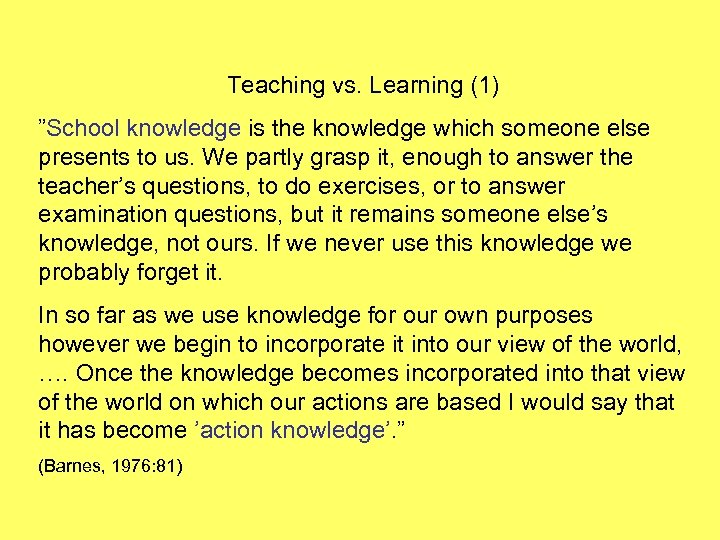 Teaching vs. Learning (1) ”School knowledge is the knowledge which someone else presents to us. We partly grasp it, enough to answer the teacher’s questions, to do exercises, or to answer examination questions, but it remains someone else’s knowledge, not ours. If we never use this knowledge we probably forget it. In so far as we use knowledge for our own purposes however we begin to incorporate it into our view of the world, …. Once the knowledge becomes incorporated into that view of the world on which our actions are based I would say that it has become ’action knowledge’. ” (Barnes, 1976: 81)
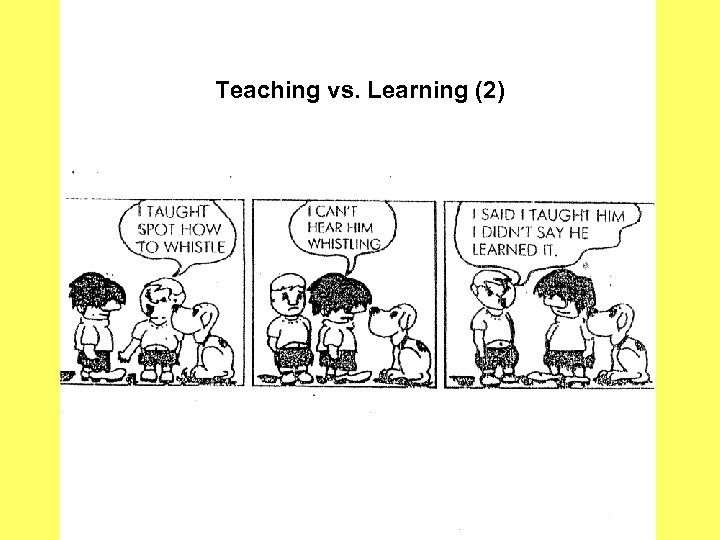 Teaching vs. Learning (2)
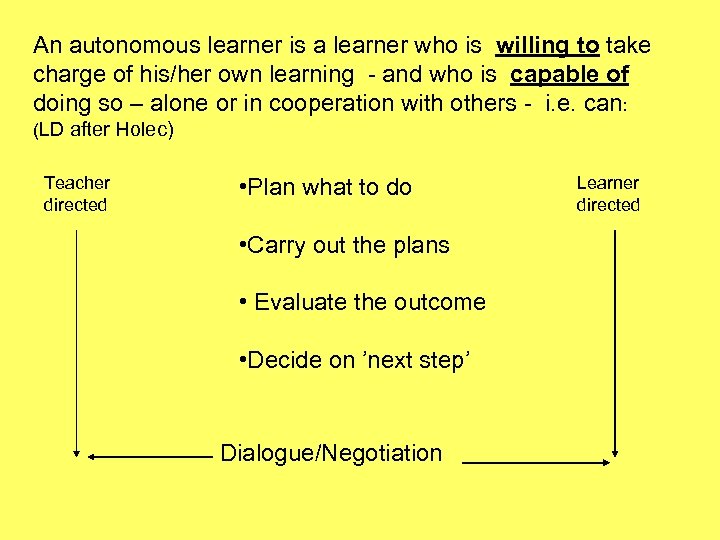 An autonomous learner is a learner who is willing to take charge of his/her own learning - and who is capable of doing so – alone or in cooperation with others - i. e. can: (LD after Holec) Teacher directed • Plan what to do • Carry out the plans • Evaluate the outcome • Decide on ’next step’ Dialogue/Negotiation Learner directed
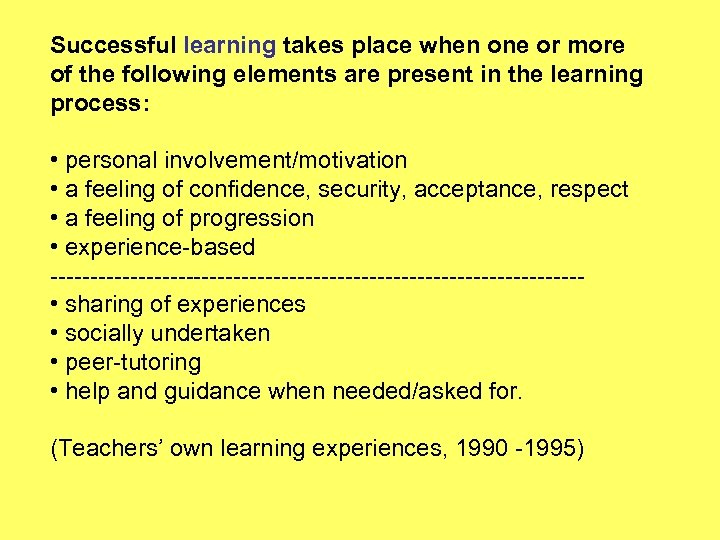 Successful learning takes place when one or more of the following elements are present in the learning process: • personal involvement/motivation • a feeling of confidence, security, acceptance, respect • a feeling of progression • experience-based --------------------------------- • sharing of experiences • socially undertaken • peer-tutoring • help and guidance when needed/asked for. (Teachers’ own learning experiences, 1990 -1995)
 Successful communication takes place when one or more of the following elements are present in the process: • personal involvement/motivation • a feeling of confidence, security, acceptance, respect • a feeling of progression • experience-based (factors inside yourself) ------------------------------------- • sharing of experiences • socially undertaken • peer-tutoring • help and guidance when needed/asked for (factors outside yourself)
 The autonomous classroom Learners actively involved in their own learning will ensure : • personal involvement/motivation • a feeling of confidence, security, accept, respect Pair work / group work will ensure : • that the activities are socially undertaken • peer-tutoring • sharing of experiences Evaluation, especially self-evaluation, will ensure : • a feeling of progression Focus on learning rather than teaching will ensure: • help and guidance when needed/asked for. (Dam, 1994: “How to recognize the autonomous classroom”)
 Developing communicative skills - important issues • Authentic communication (authenticity and negotiation of meaning) • A recipient / an audience • The activities undertaken should be: • Learner- and/or learning-centred • Meaning-focused • Awareness-raising
 Authentic communication including negotiation of meaning will take place when the learners are: • Planning what to do - and discussing why • Carrying out the plans – in pairs or smaller groups • Evaluating the process as well as the outcome • Deciding on ’next step’ e. g. ’homework’ - activities undertaken by autonomous learners in the language class - among themselves or in negotiation/dialogue with the teacher.
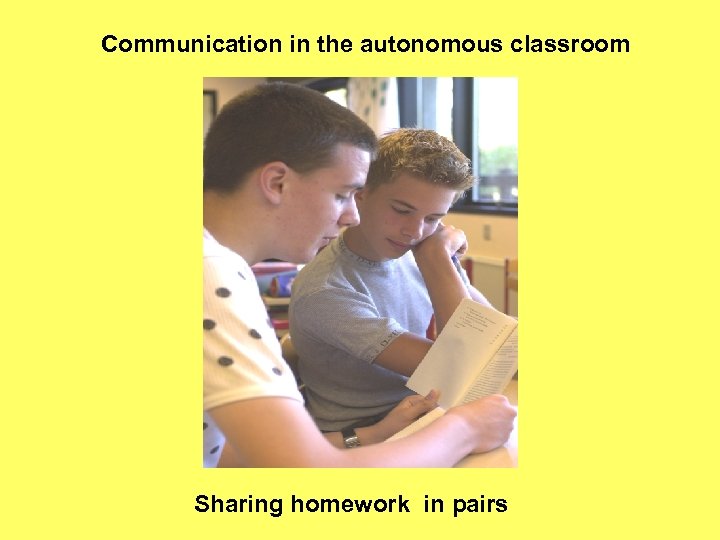 Communication in the autonomous classroom Sharing homework in pairs
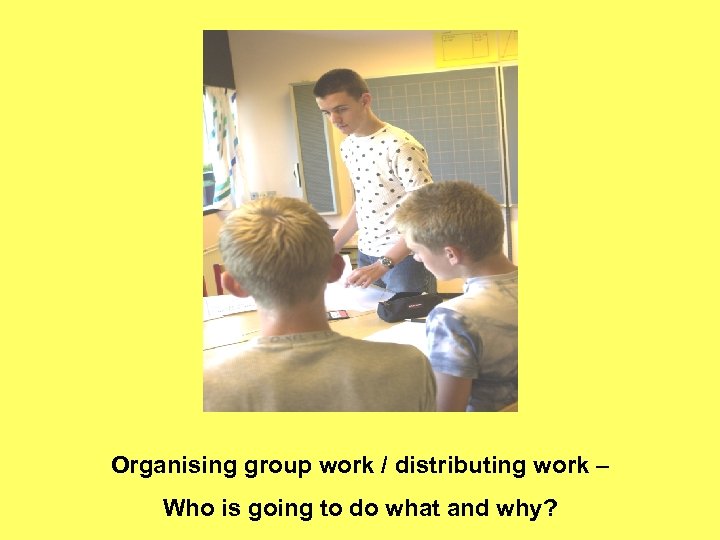 Organising group work / distributing work – Who is going to do what and why?
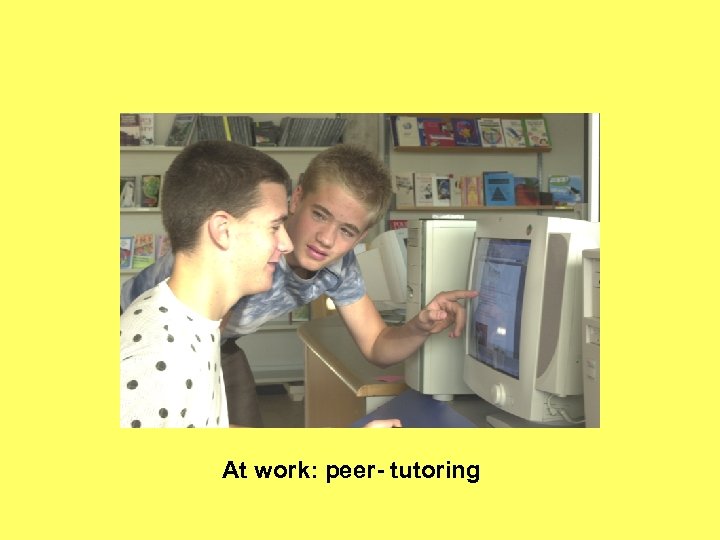 At work: peer- tutoring
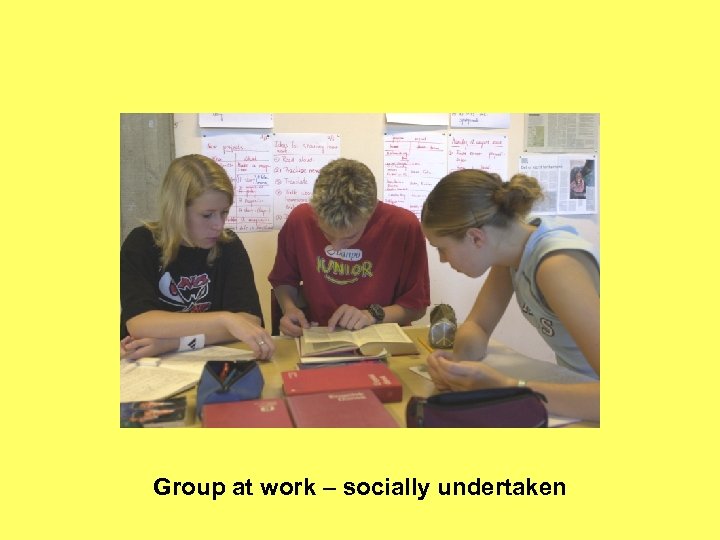 Group at work – socially undertaken
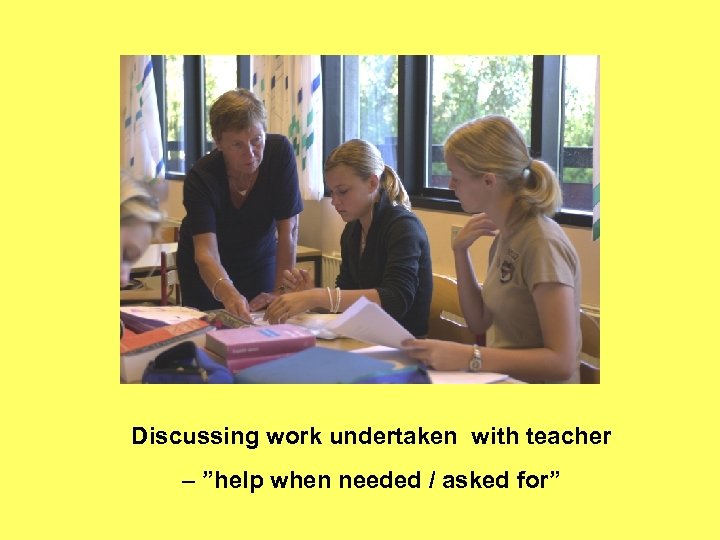 Discussing work undertaken with teacher – ”help when needed / asked for”
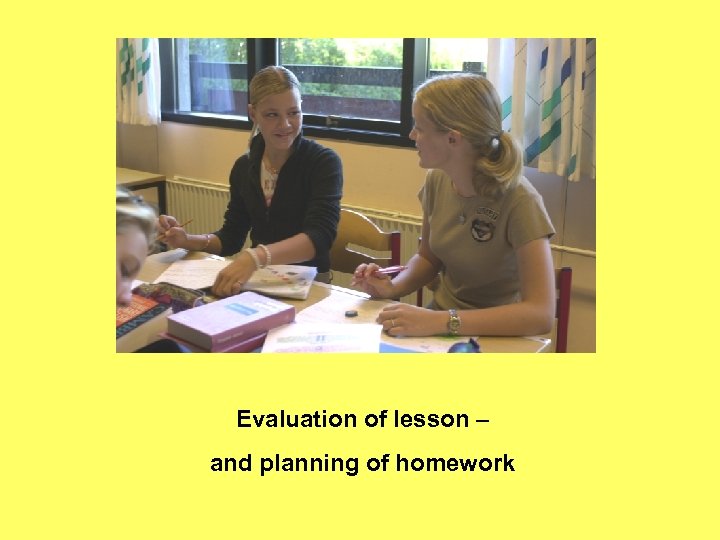 Evaluation of lesson – and planning of homework
 With what results? 1. Research results from the LAALE project: Communicative skills / communicative competence and grammatical correctness (see Legenhausen) 2. Observations during the daily work and in the learners’ logbooks: Awareness of own competence and of learning – high self-esteem (see e. g. Dam 2006) LAALE: Language Acquisition in an Autonomous Learning Environment
 Negotioation of meaning N: Ma: N: M: N: Have you wri. . only written one letter to him [=pen-friend] and that he not He did not answer the letter, so I think that it was. . . yeah, the end of your relationship. Relationship? Relationship, friendship. Yes. Friendship, okay. I’m not gay! Okay. I still have contact with my friend Anieska. (Nanna / Max 1996, 4 th year of English)
 Sentence sharing and repair work La: M: La: M: What are you going to do in your new school. . . isn’t it a special school? No, it’s just a. . . ordinary school? No, it’s an after school? After school? I don’t know what it’s called in English. It’s (pause) I think it’s a kind of private school maybe. Are you going to live there? Yeah, go. . . only going home in the (pause) weekends? Yeah, every second holiday of the weekend. . . I don’t know.
 The use of gambits AM: An: AM: Well, I'm not sure I am going to be allowed to be on the beach at night. You can say your going to somewhere else. Yeah, I can say that, but I'm not sure if she would trust me. . . my mom and dad are going to trust me. Well, I think they do. Yeah. . . I. . . you can also say you're going to my place. Oh yeah, and she can call you and find out I'm not there Then my father says that they be going to the beach and take a walk or something. Oh yeah, good idea. So , that's. . . that ain't so bad. Okay.
 Pushed output D: L: What should you do tomorrow? I don’t know. Try to think of something. Eh, I cannot think about this. Eh. Should you up and ride your horse? No (Dennis and Louise 1994, 2 nd year of English)
 Awareness of own linguistic competence I’ve got a 10 and I am very satisfied with it, but I also think it is a fair grade, because last time I had a 9, and I have improved since, especially in my articulation, but also in my vocabulary, which now is containing much more grown-up language. So the conclusion must be that is a good grade. Boy – 4 th year of English Awareness of learning A good group work is work everybody takes part in, and discuss everything, and they like each other. Everybody has to talk English all the time. Everybody has to do something for the group. When you learn something from the group. Boy – 4 th year of English
 Questions or comments?
 Final remarks / Dennis the Menace The best thing you can do is to become extremely good at being yourself!