 Скачать презентацию Communications Laboratory Australian digital TV — status http
452b8b08a11f5af87d4ae413356133ef.ppt
- Количество слайдов: 50



Communications Laboratory Australian digital TV - status http: //www. commslab. gov. au/ Presentation by: Neil Pickford 1
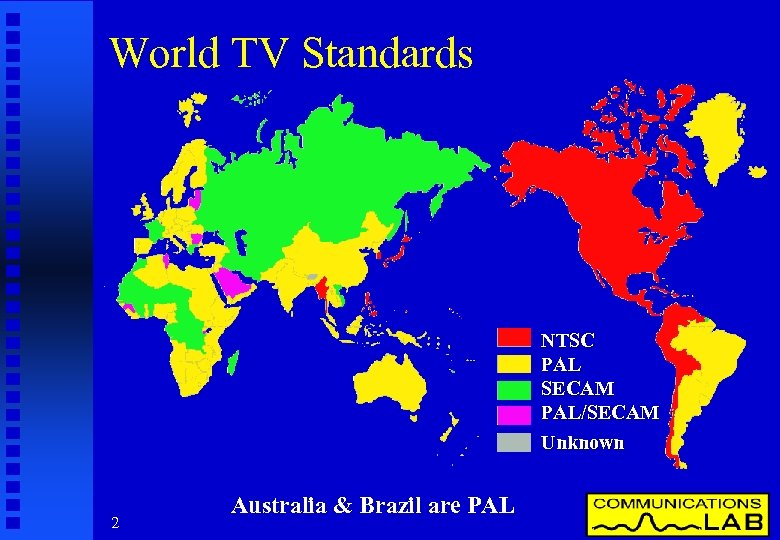
World TV Standards NTSC PAL SECAM PAL/SECAM Unknown 2 Australia & Brazil are PAL
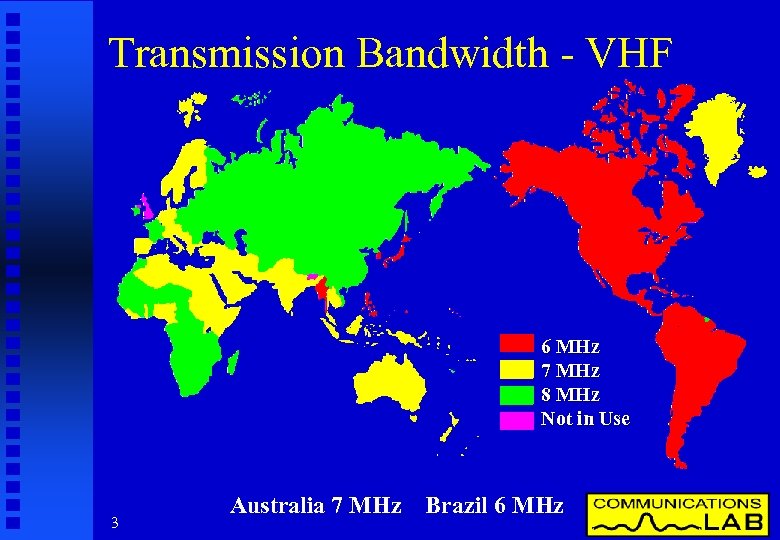
Transmission Bandwidth - VHF 6 MHz 7 MHz 8 MHz Not in Use 3 Australia 7 MHz Brazil 6 MHz
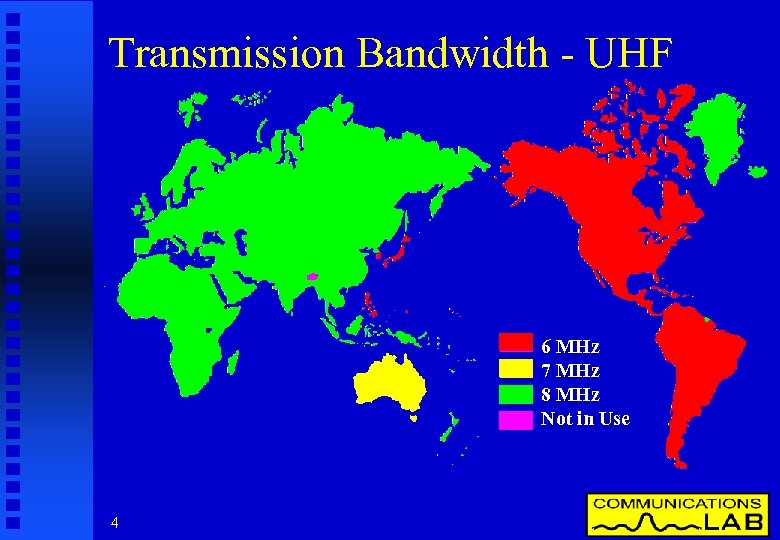
Transmission Bandwidth - UHF 6 MHz 7 MHz 8 MHz Not in Use 4
Frame Refresh Rates Australia PAL-B - 50 Hz field rate in 7 MHz n Brazil PAL-M - 60 Hz field rate in 6 MHz n Y Australia and Brazil share a common problem. Y An existing broadcast infrastructure which is different to the major overseas developers of Digital TV 5
The Australian Broadcasting Environment n n 6 The unique broadcasting environment of Australia has had a major influence on the way we have looked at digital television. What are the main defining aspects of the Australian television environment?
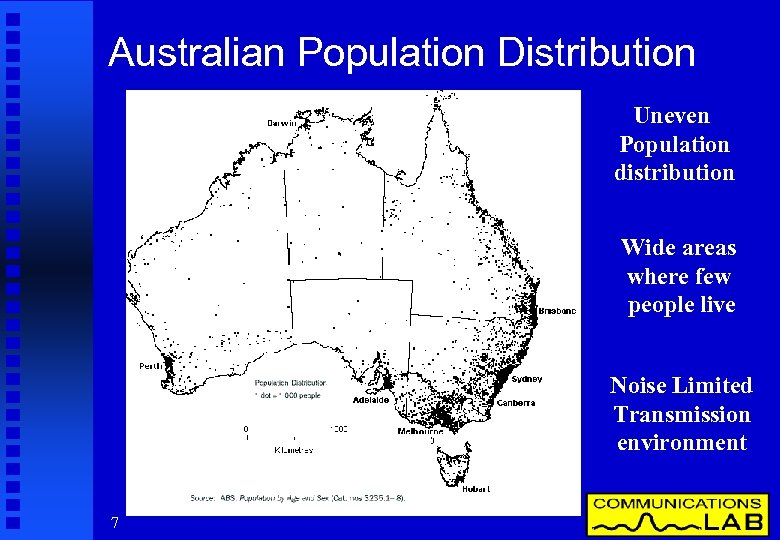
Australian Population Distribution Uneven Population distribution Wide areas where few people live Noise Limited Transmission environment 7
Free To Air Television (FTA) n n Majority of Australian audience is watching n No television receiving licences n 8 Important part of Australian entertainment National broadcasters funded from taxation
Free To Air Broadcasters (Cont) Total of 5 FTA broadcasters n 2 national broadcasters (ABC & SBS) n 3 commercial broadcasters (Seven, Nine & TEN networks) s s 9 Commercial broadcasters have affiliated regional networks similar to US industry Limits on ownership of media outlets (including television) imposed by government
Pay TV - Cable, MDS & Satellite Only a small business in Australia n Less then 400, 000 subscribers n Less than 7% of households n Indoor reception n 10 Around 30% of Australians watch FTA using indoor antennas
Program Quality Vs Quantity êAustralians have a low number of available television channels êTelevision program budget is spread between fewer programs êAustralians used to watching high quality programming at high technical quality. 11
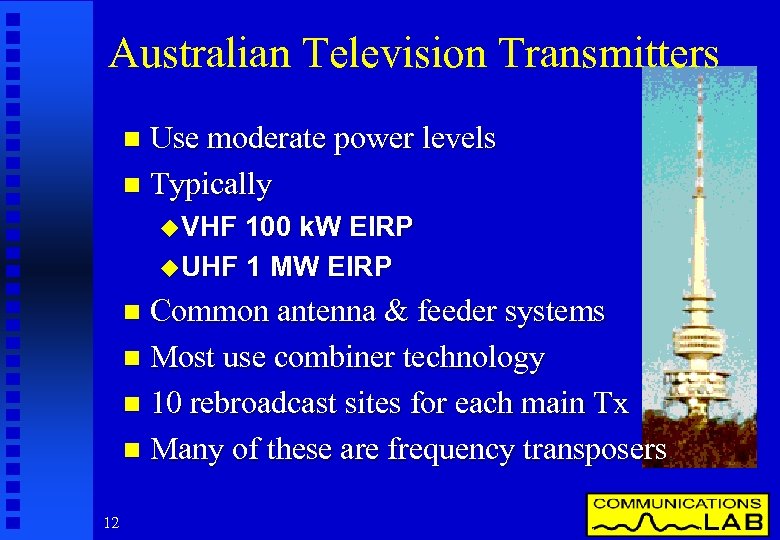
Australian Television Transmitters Use moderate power levels n Typically n u VHF 100 k. W EIRP u UHF 1 MW EIRP Common antenna & feeder systems n Most use combiner technology n 10 rebroadcast sites for each main Tx n Many of these are frequency transposers n 12
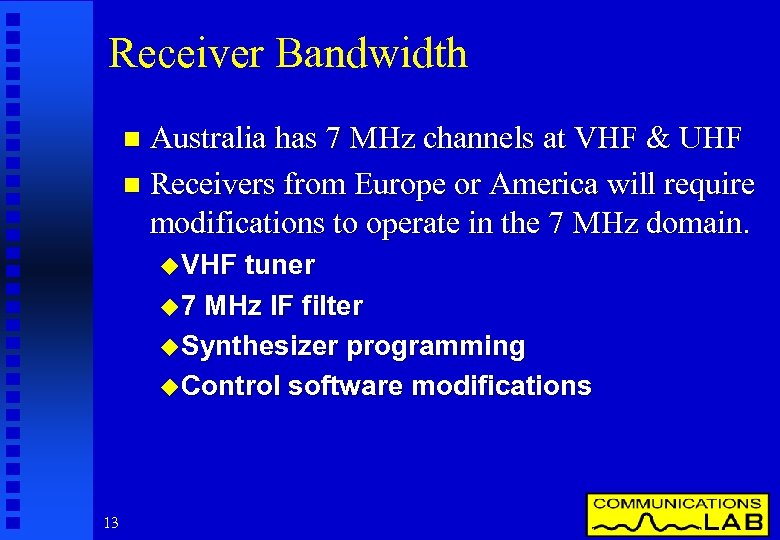
Receiver Bandwidth Australia has 7 MHz channels at VHF & UHF n Receivers from Europe or America will require modifications to operate in the 7 MHz domain. n u VHF tuner u 7 MHz IF filter u Synthesizer programming u Control software modifications 13
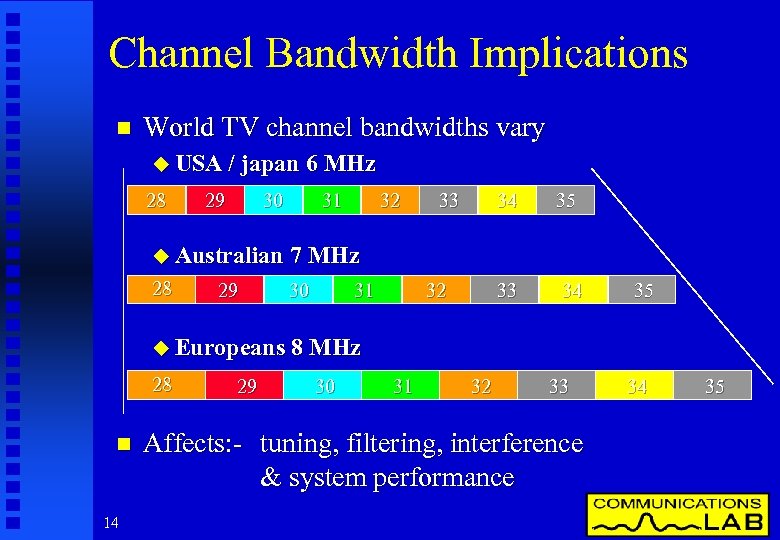
Channel Bandwidth Implications n World TV channel bandwidths vary u USA / japan 6 MHz 28 29 30 31 32 33 34 35 u Australian 7 MHz 28 29 30 31 32 33 34 35 u Europeans 8 MHz 28 n 14 29 30 31 32 33 Affects: - tuning, filtering, interference & system performance 34 35
Australian Television Environment We have a unique television environment n This is why we have been keen to investigate digital transmission technology n Australia has been an early implementer before. n B-MAC was introduced for remote area broadcasting in 1985. n Australia is leading again with HDTV plans. 15
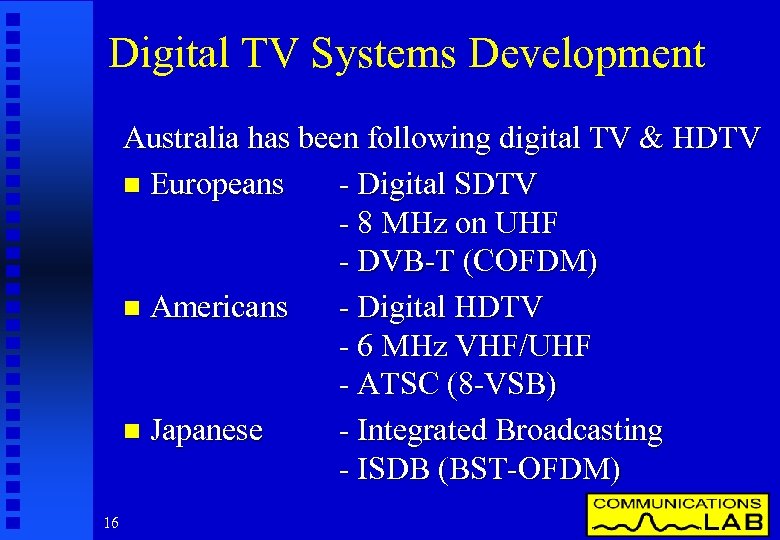
Digital TV Systems Development Australia has been following digital TV & HDTV n Europeans - Digital SDTV - 8 MHz on UHF - DVB-T (COFDM) n Americans - Digital HDTV - 6 MHz VHF/UHF - ATSC (8 -VSB) n Japanese - Integrated Broadcasting - ISDB (BST-OFDM) 16
Digital TV Developers are Focusing on their Own Countries Needs First 17
Only European and American systems are sufficiently developed to allow implementation by 2001 18
Australia is looking for a system to satisfy its OWN Future Broadcasting Needs 19
Australia’s Involvement in DTV Testing MPEG 1 & 2 SW profiles in early 90 s n ITU-R study groups 10 & 11 n Initiated formation of ITU-R task group 11/3 n TG 11/3 fostered convergence of systems n u Source coding the same u Modulation different 1993 ABA inquiry into planning & system implications of DTTB n 1997 recommended HDTV n 20
HDTV - Why Do We Want It? HDTV has been coming for a long time & Australia has been following it for a long time n Australia believes HDTV will be the FUTURE television viewing format. n Any system we implement NOW must cater for HDTV in the FUTURE n If HDTV is not designed in at the outset then you will be constrained by the lowest common denominator in the TV market. n 21
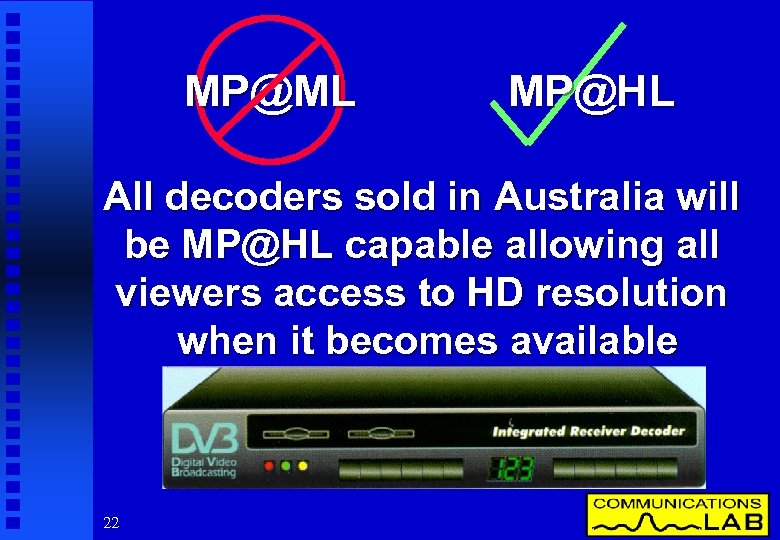
MP@ML MP@HL All decoders sold in Australia will be MP@HL capable allowing all viewers access to HD resolution when it becomes available 22
FACTS - Specialists Group n Federation of Australian commercial television stations (FACTS) have formed the advanced television specialists group u Investigate all aspects of future television technology u Digital TV - transmission & distribution u HDTV technology u Digital encoding, interchange & distribution for current SDTV 23
The Benefits of Digital TV The user will see the following benefits. ¶ More predictable/reliable reception · A change in aspect ratio of pictures 4: 3 16: 9 ¸ Higher resolution pictures – high definition for those with HD displays ¹ Multichannel digital surround sound technology. º More capacity for additional services 24
The Testing Communications laboratory function is to advise the Australian government on new communications technology n 1990 - L-band Eureka 147 DAB experiments including coverage, gap fillers & SFNs n 1994 - CCI & ACI testing of PAL receivers using noise to simulate digital transmissions. n 1996 HD-divine COFDM modem - BER & interference testing n 25
1996 DVB-T Demonstration NDS built a VHF 7 MHz receiver in 4 weeks n Complete 2 K DVB-T transmission system loaned to FACTS n November 1996 - DVB-T demonstrated at ITU-R TG 11/3 final meeting in Sydney n Minister switched on first Australian SDTV 16: 9 digital program at FACTS dinner n Transmission system remained in Australia for further testing. n 26
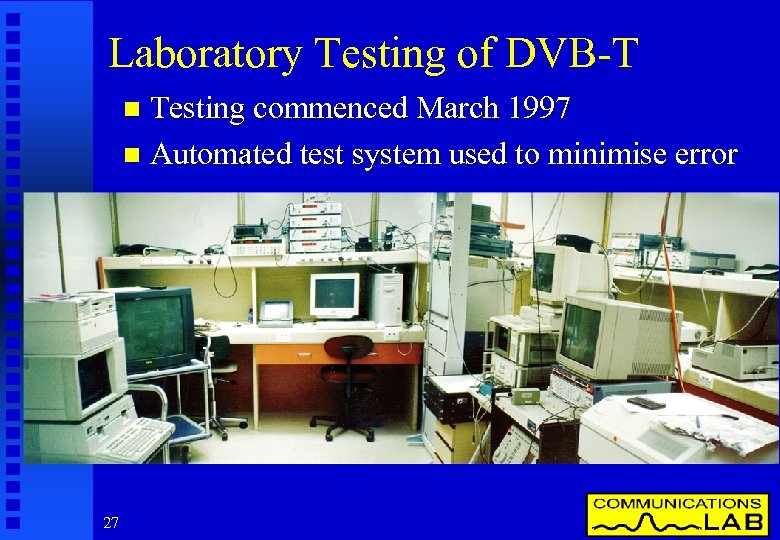
Laboratory Testing of DVB-T Testing commenced March 1997 n Automated test system used to minimise error n 27
Laboratory Testing of DVB-T n n Analog system interference assessed by subjective evaluation using Limit of Perceptibility (LOP) and Subjective Comparison Method (SCM) techniques. n 28 Digital failure primarily determined by bit error rate measurement Tests designed to evaluate Australian conditions
ATSC Testing During DVB-T tests efforts were made to obtain & evaluate the ATSC system n ATSC system was made available over 4 week period in July 1997 n The same measurements preformed on DVB-T were repeated for ATSC. n Australian operational conditions were used throughout treating the 6 MHz ATSC system the same as a 7 MHz system. n 29
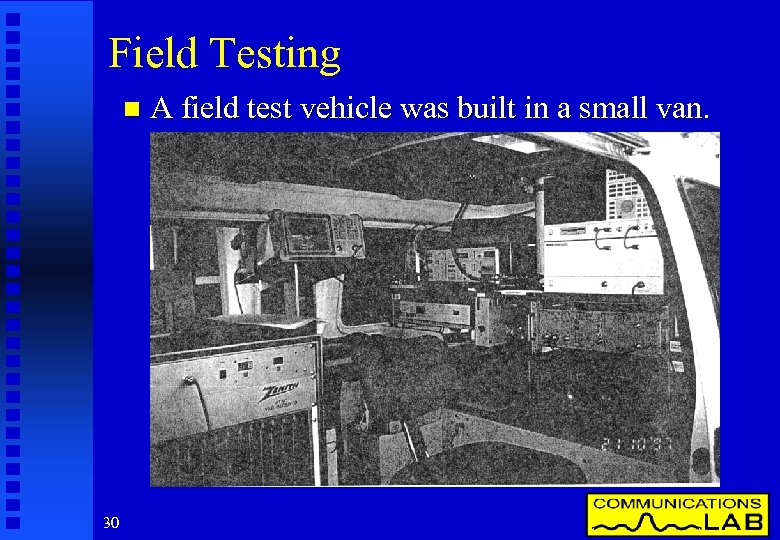
Field Testing n 30 A field test vehicle was built in a small van.
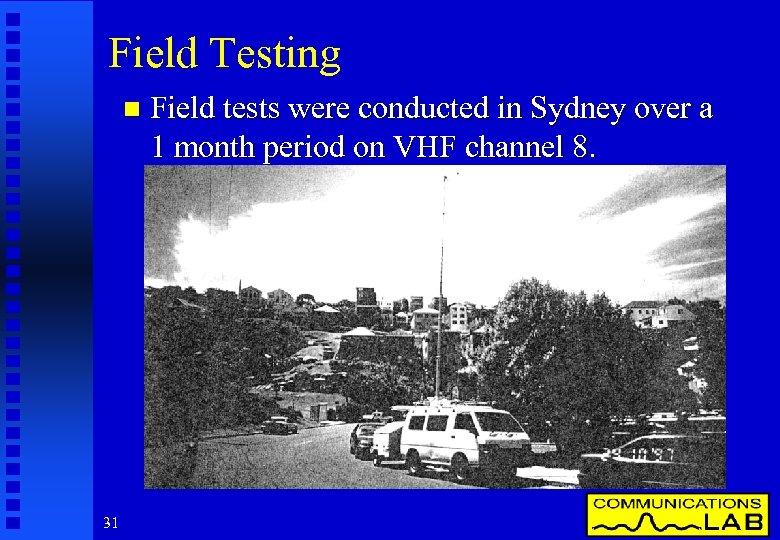
Field Testing n 31 Field tests were conducted in Sydney over a 1 month period on VHF channel 8.
Field Testing Over 115 sites were measured n Power level for the field test was 14 d. B below adjacent analog television channels 7 & 9 n Analog and digital television performance for both systems were evaluated at each site. n 32
The Tests - Some World Firsts k. First independent direct comparative tests between the two digital modulation systems k. First extensive tests of both systems in a 7 MHz PAL-B channel environment k. First tests of VHF adjacent channel operation k. First test of ATSC in a PAL environment k. First test of DVB-T in the VHF band 33
HDTV - Demonstrations n n 34 In October and November 1997 the ATSC and DVB-T system proponents both demonstrated their systems by transmitting HDTV programs to audiences in Sydney. These demonstrations showed that both systems were HDTV capable.
Test Reports Lab and field data was compiled and factually presented in detailed reports. n Aim to present data in an unbiased way without drawing conclusions based on single parameters n Summary reports for both the laboratory and field trials were also produced, concentrating on the interesting data. n These reports provided a solid technical basis to assess the two DTTB modulation systems. n 35
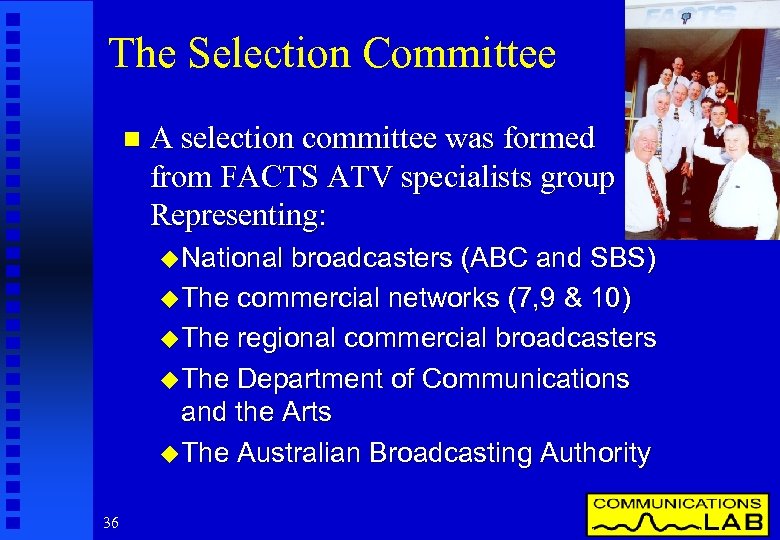
The Selection Committee n A selection committee was formed from FACTS ATV specialists group Representing: u National broadcasters (ABC and SBS) u The commercial networks (7, 9 & 10) u The regional commercial broadcasters u The Department of Communications and the Arts u The Australian Broadcasting Authority 36
Selection Panel - Responsibility n n Establishing the relevance of the performance differences to Australian broadcasting n 37 Analysing the comparative tests and other available factual information Recommending the system to be used
Selection Criteria Derived a set of selection criteria relevant to the Australian transmission environment n The criteria were weighted an overall average used to rank the selection criteria n Assessed each of the selection criteria elements for each modulation system n Some criteria were put aside as it was felt there was not enough information to factually score those criteria n 38
Selection Result - June 1998 n The selection committee unanimously selected the 7 MHz DVB-T modulation system for use in Australia n 39 The criteria that were set aside would, however, not have changed the selection decision
More Selections n Sub-committees formed to investigate: u Service information data standard u Multichannel audio system u HDTV video production format n July 1998 3 further recommendations u SI data standard be based on DVB-SI u AC 3 multichannel audio is the preferred audio encoding format u 1920/1080/50 Hz interlaced 1125 lines is the preferred video production format 40
Government Legislation n 41 While the selection process was underway the Australian government considered legislation to define the implementation of digital television services in Australia. Two Acts have been passed. u. Television broadcasting services (digital conversion) Act 1998 u. Datacasting charge (imposition) Act 1998
The Digital Conversion Act - 1 Mandates HDTV content level requirement n 5 FTA broadcasters get a free loan of adjacent channel spectrum to start DTV n Simulcasting of digital and analog services is required for at least 8 years after digital startup n Jan 1 2001 commencement in metro markets n Commencement by 2004 in regional markets n Multi-channel and subscription services not allowed for commercial broadcasters n 42
The Digital Conversion Act - 2 Multi-view programs may be allowed subject to review n Review before 2000 if National broadcasters should be allowed some multi-channelling to address community needs n No new commercial broadcasting services until 2007 n Closed captioning is required on some services n Minister can determine digital system standard n 43
The Datacasting Imposition Act - 1 Datacasting defined as services “other than a broadcasting service” delivered using broadcasting spectrum n Unused spectrum after planning of digital TV services - available to datacasters - via auction n FTA broadcasters unable to bid for datacasting spectrum allocations n Community television access is to be provided by datacaster free of charge n 44
The Datacasting Imposition Act - 2 Review before 2000 to determine the types of services to be allowed as datacasting n Datacasters not allowed to provide de-facto broadcast or Pay TV type services n FTA Broadcasters may use spare transmission capacity for datacasting n FTA broadcasters will be charged if they provide datacast services n 45
What Are the Next Steps? n Standards Australia - RC/5 committees u Starting now u Develop transmission standards u Develop reception equipment standards u Draft standards ready by end of 1998 46
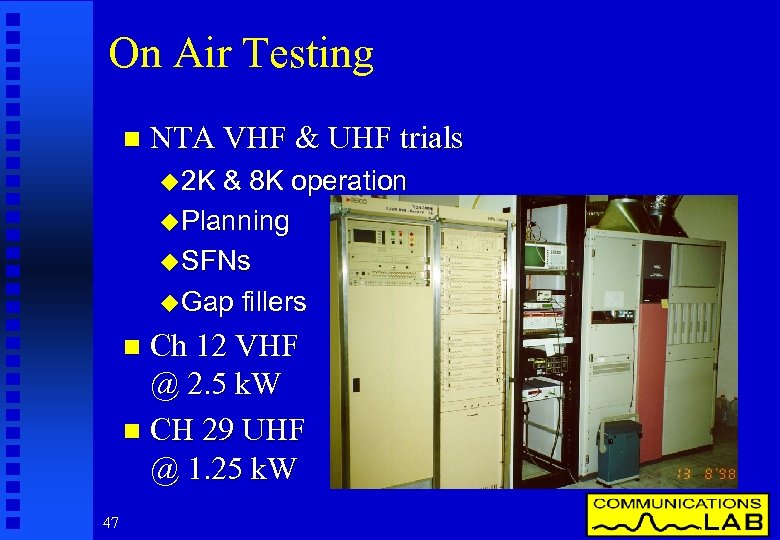
On Air Testing n NTA VHF & UHF trials u 2 K & 8 K operation u Planning u SFNs u Gap fillers Ch 12 VHF @ 2. 5 k. W n CH 29 UHF @ 1. 25 k. W n 47
Channel 9 A n SBS want to use band III 6 MHz channel 9 A in metro areas options: u Truncation of 7 MHz COFDM u Transmission of 6 MHz COFDM u Offsetting digital/analog transmissions 48
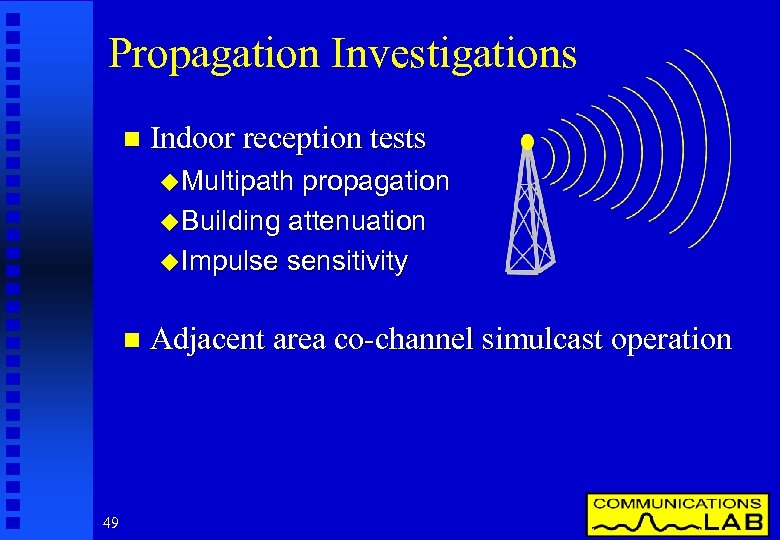
Propagation Investigations n Indoor reception tests u Multipath propagation u Building attenuation u Impulse sensitivity n 49 Adjacent area co-channel simulcast operation
The End Thank you for your attention Any questions? 50
Скачать презентацию Communications Laboratory Australian digital TV — status http
452b8b08a11f5af87d4ae413356133ef.ppt