


 Скачать презентацию COMMON CHILDHOOD INFECTIONS AND RASHES Sue Lowe Oct
94836a4bdbfcb14ff2ecd2c68af7271a.ppt
- Количество слайдов: 42
 COMMON CHILDHOOD INFECTIONS AND RASHES Sue Lowe Oct 2005
 OBJECTIVES n n n n Bacterial infections Viral rashes Fungal infections Parasitic infestations Rashes associated with systemic disease Neonatal and congenital rashes Quiz!
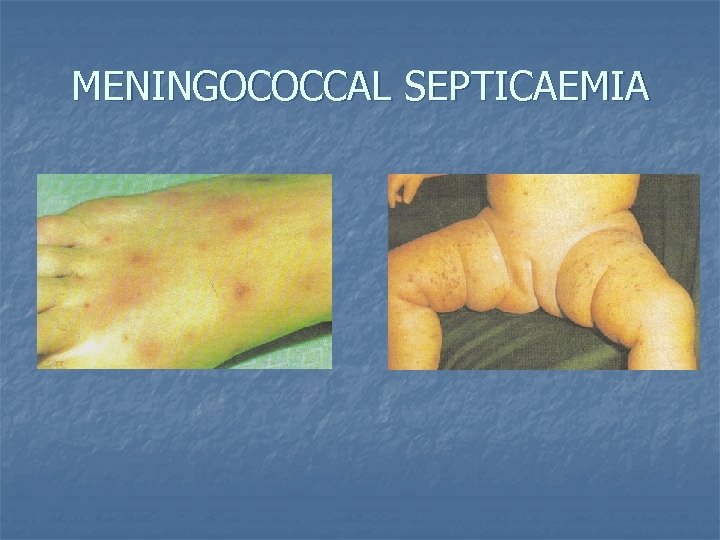
 MENINGOCOCCAL SEPTICAEMIA n n MORTALITY 5 -10% (90% if DIC) MORBIDITY 10% (Deafness, neurological problems, amputations) Peak incidence < 4 yrs Immunisation programme includes Men C 60% of bacterial meningitis in UK due to Men B
 MENINGOCOCCAL SEPTICAEMIA n n CLINICAL FEATURES: Fever, non-specific malaise, lethargy, vomiting, meningism, resp distress, irritability, seizures n Maculopapular rash common early in disease n Petechial rash seen in 50 -60%
 MENINGOCOCCAL SEPTICAEMIA n MANAGEMENT IN PRIMARY CARE n IMMEDIATE IV/IM ANTIBIOTICS n Benzylpenicillin 1. 2 g > 10 yrs Benzylpenicillin 600 mg 1 -9 yrs Benzylpenicillin 300 mg < 1 yr n CONTACT PROPHYLAXIS n n n Rifampicin 600 mg bd 2/7 > 12 yrs Rifampicin 10 mg/kg bd 2/7 1 -12 yrs Rifampicin 5 mg/kg bd 2/7 < 1 yr
 MENINGOCOCCAL SEPTICAEMIA
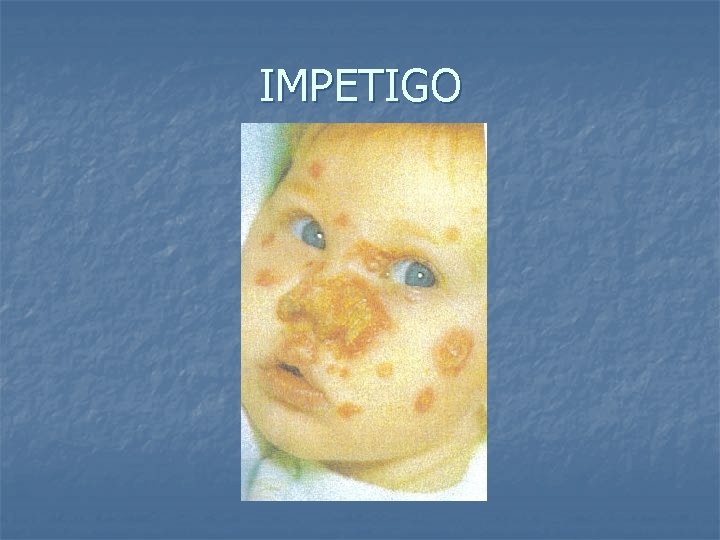
 IMPETIGO n n n n Staph Aureus or Gp A Strep Pyogenes Classically ruptured vesicles with honey-coloured crusting May be bullous More common in pre-existing skin disease Very contagious, rapid spread Commonly starts around face/mouth Rx. Topical fusidic acid or oral flucloxacillin Advice re nursery/school
 IMPETIGO
 STAPHYLOCOCCAL SCALDED SKIN n n n n Caused by Staphylococcal exfoliative toxin Erythematous tender skin, progressing to desquamation after 24 -48 hrs Nikolsky sign 62% < 2 yrs, 98% < 5 yrs BCs usually negative in children Usually febrile, may rapidly progress to dehydration/shock Rx. Systemic antistaphylococcal abx. , emollients, may need IV fluids
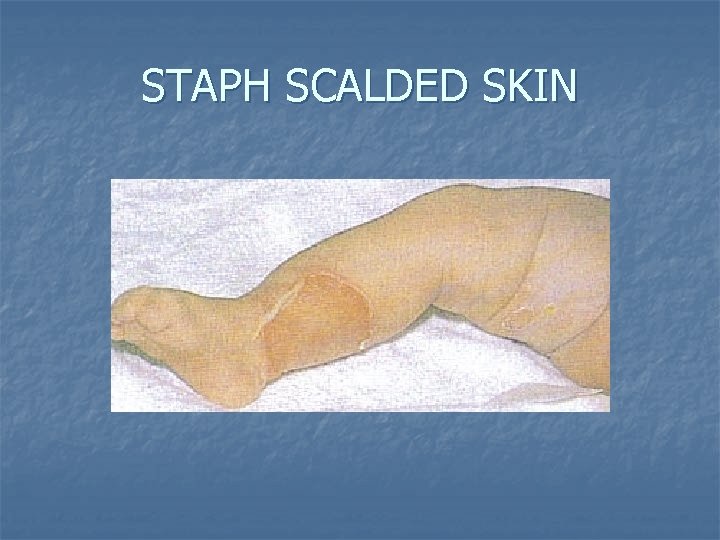 STAPH SCALDED SKIN
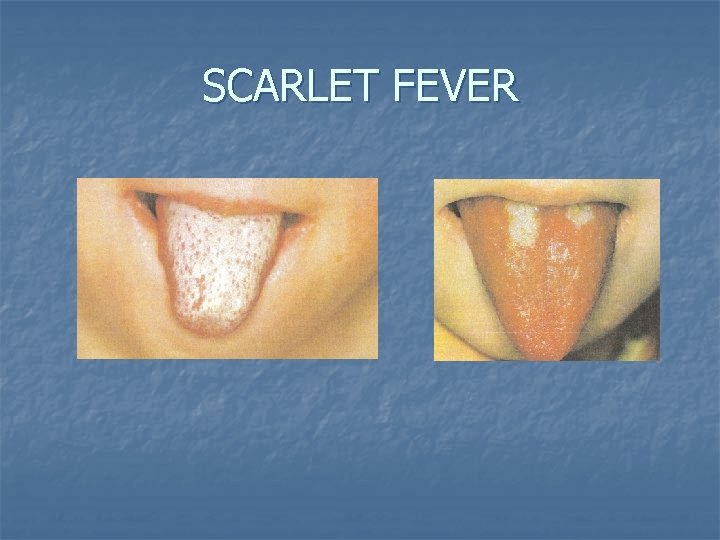
 SCARLET FEVER n n n Gp A beta-haemolytic Strep 2 -4 days post-Streptococcal pharyngitis Fever, headache, sore throat, unwell Flushed face with circumoral pallor Rash may extend to whole body Rough ‘sandpaper’ skin Desquamation after 5/7, particularly soles and palms School age children White strawberry tongue Dx. Throat swab, ASO titres Rx. Penicillin 10/7
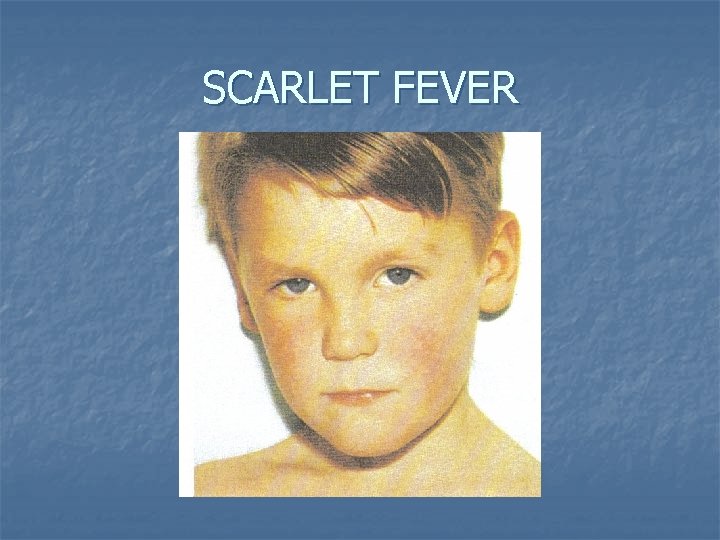 SCARLET FEVER
 SCARLET FEVER
 VARICELLA n n n Incubation 14 -21 days Mild prodromal illness Rash: Face, scalp, trunk, spreads centrifugally Macules – papules – vesicles – pustules – crusts Complications: encephalitis, pneumonia, superceded Staphylococcal infection, disseminated disease in immunocompromised Advice to pregnant mothers
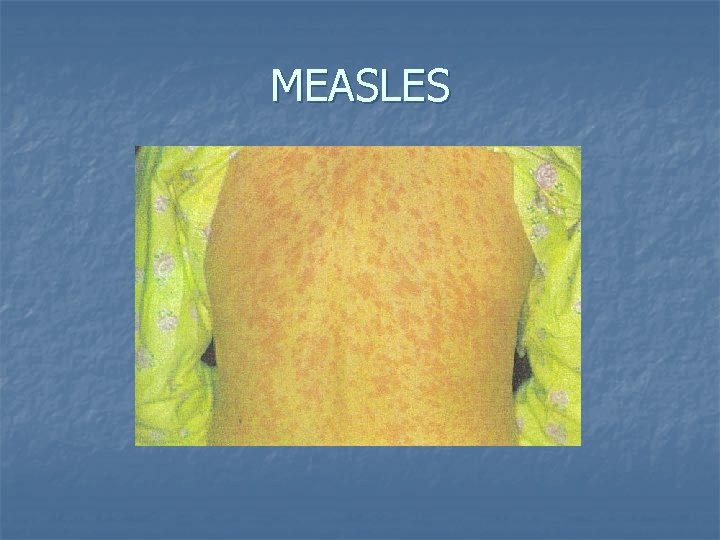
 MEASLES n n n Unwell child Incubation 7 -14 days Fever, conjunctival suffusion, coryza Maculopapular rash starting on face and progressing to whole body Koplik’s spots are pathognomonic Complications: Otitis media, pneumonia, hepatitis, myocarditis, encephalomyelitis, SSPE
 MEASLES
 MUMPS n n n Incubation 14 -21 days, infectious for 1 week after parotid swelling develops Painful salivary gland in 2/3 Bilat or unilat May be parotid (60%) or parotid and submandibular (10%) Complications: Encephalitis, transient deafness, epididymo-orchitis, pancreatitis, myocarditis
 OTHER COMMON VIRAL INFECTIONS n n n n Slapped cheek = Fifth disease = Parvovirus B 19 = Erythema infectiosum Hand, foot and mouth (Coxsackie A and B) Roseala infantum (HHV-6) HSV Molluscum Rubella EBV HPV
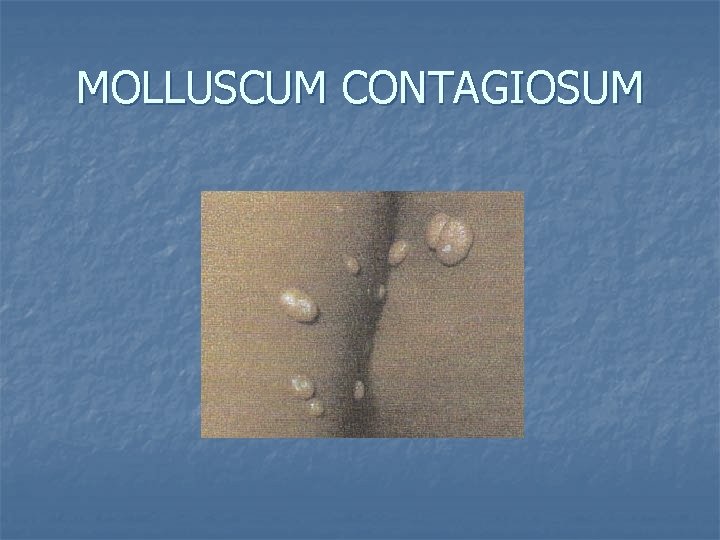 MOLLUSCUM CONTAGIOSUM
 FUNGAL INFECTIONS n n n n n Dermatophyte fungi (Trichophyton, Epidermophyton, Microsporum) Tinea capitis Tinea cruris Tinea pedis Tinea ungium Tinea corporis Annular, scaling, erythematous lesions Systemic Rx usually required for scalp and nail infections (obtain mycological confirmation first)
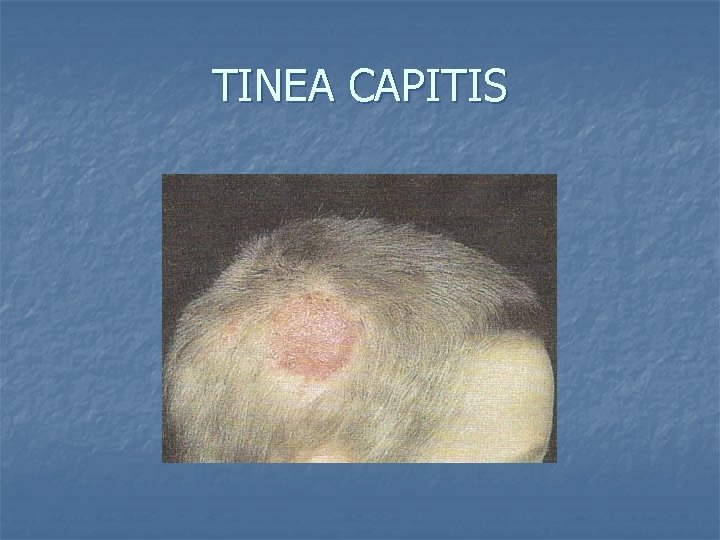 TINEA CAPITIS
 FUNGAL INFECTIONS n n n n n PITYRIASIS VERSICOLOUR Hypopigmented patches on upper chest, neck, arms Usually settle spontaneously CANDIDA Classically causes oral thrush and nappy rash in infants Vulvovaginitis in adolescent girls Intertriginous lesions (neck, groin, axilla) Chronic mucocutaneous Candidiasis may occur in cellmediated immune deficiencies Disseminated disease may be life-threatening in immunocompromised individuals
 PARASITIC INFECTIONS n n n HEAD LICE Most common aged 4 -11 years Treatments include wet combing, permethrin or malathion (use lotions in preference to shampoos) Repeat treatment after 1 week to ensure all unhatched ova killed Do not need to treat whole family but screen with thorough wet combing
 PARASITIC INFECTIONS n n n n SCABIES Highly contagious, spread by skin contact Commonly papules, vesicles, pustules, nodules Burrows are pathognomonic Intractable pruritus, worse at night and in web spaces Rx. With permethrin, malathion or crotamiton (use aqueous preparations in children as alcoholic preparations may cause stinging and wheeze) Repeat treatment after 1 week Treat whole household
 PARASITIC INFECTIONS n n n THREADWORMS Usually present with pruritus ani May see worms in faeces Diagnosis on history or ‘sticky tape’ test Rx. Mebendazole 100 mg – repeat 14 days later Treat whole family
 RASHES ASSOCIATED WITH SYSTEMIC DISEASE n n n n n Erythema multiforme Stevens Johnson syndrome Erythema nodosum SLE Dermatomyositis JIA Malignancy Drugs Kawasaki’s Familial Mediterrean Fever
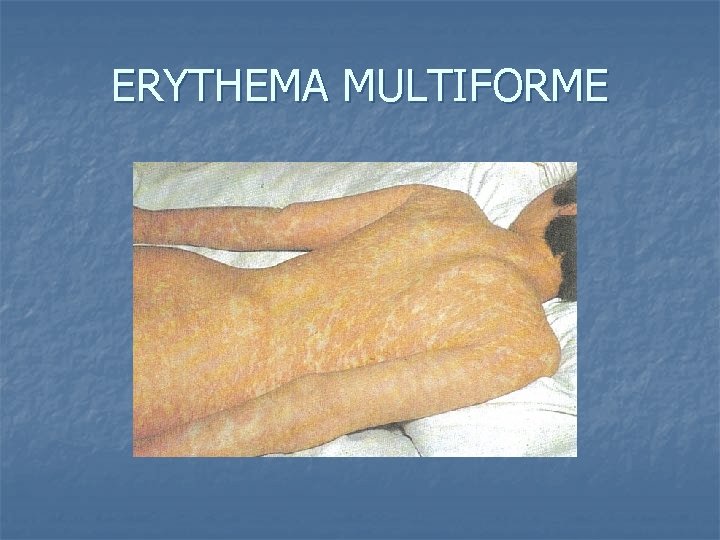 ERYTHEMA MULTIFORME
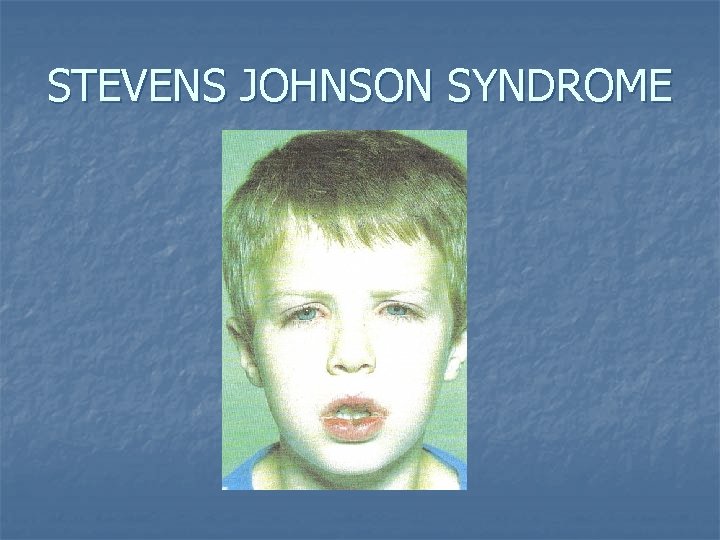 STEVENS JOHNSON SYNDROME
 NAPPY RASH n n n Irritant/ammoniacal Candida Seborrhoeic dermatitis Atopic eczema Psoriasis Non-accidental injury
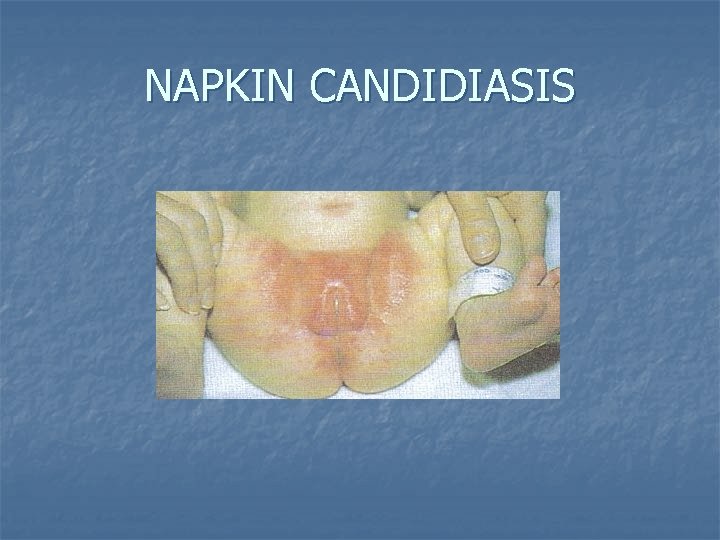 NAPKIN CANDIDIASIS
 COMMON NEONATAL RASHES n n n n Milia Salmon patch (stork mark) Mongolian blue spot Erythema toxicum neonatorum Strawberry naevus (capillary haemangioma) Port wine stain (naevus flammeus) Sebaceous naevi Congenital melanocytic naevus
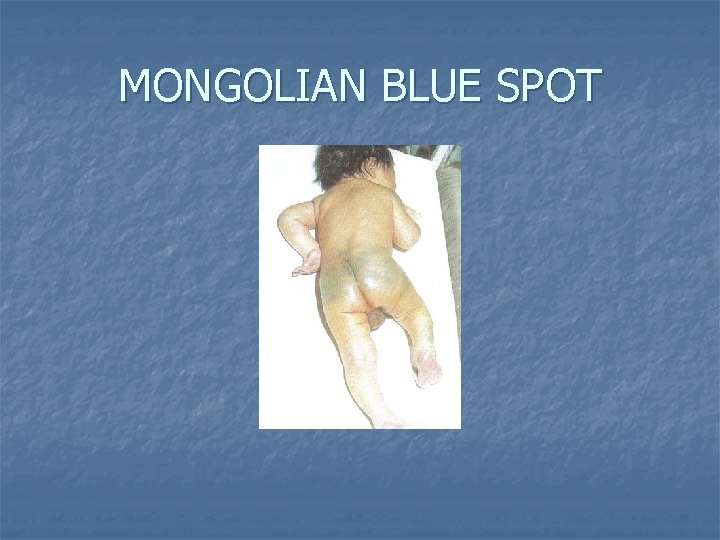 MONGOLIAN BLUE SPOT
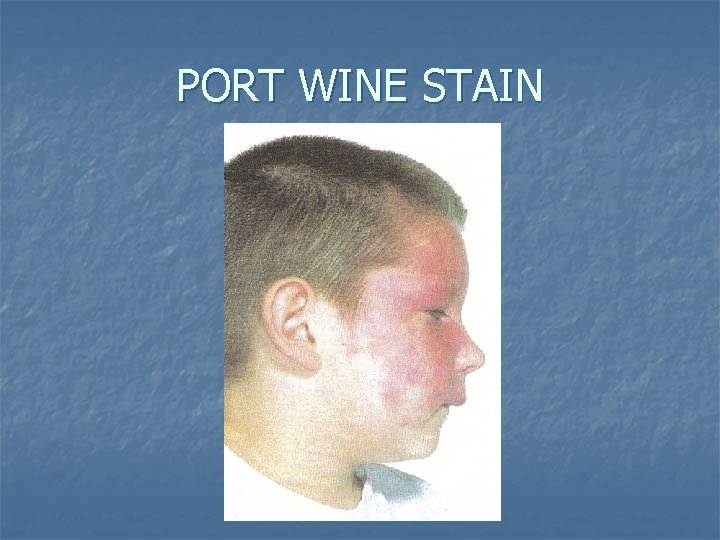 PORT WINE STAIN
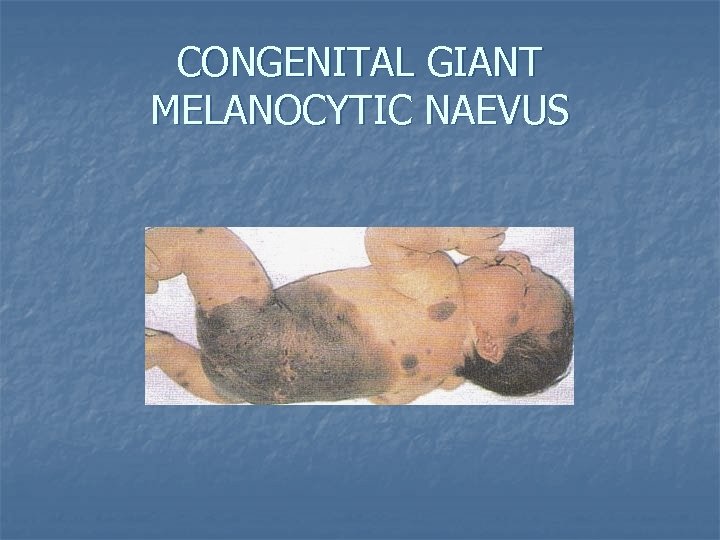 CONGENITAL GIANT MELANOCYTIC NAEVUS
 QUIZ n 1 yr old Amy presents with a history of coryzal symptoms, general malaise and high fever (390 C). After 3 days, her temperature returns to normal. 12 hours later, she develops a maculopapular rash over her trunk. What is the most likely diagnosis?
 QUIZ n n n The following are associated with infection with Group A beta haemolytic Streptococcus? Neonatal meningitis Glomerulonephritis Scarlet fever Toxic shock syndrome Pneumonia
 QUIZ n n n The following are included in the current UK immunisation programme: Men C at pre-school booster BCG at birth MMR at 2 months DT and polio at 15 years Pertussis at pre-school booster
 QUIZ n n n The following may cause fever and a widespread rash? Ulcerative colitis Acute lymphoblastic leukaemia Familial Mediterrean Fever Candidiasis Juvenile idiopathic arthritis
 QUIZ n 13 year old Neville is a homozygote for sickle cell disease and usually has a Hb of 8. 0 g/l. Following a mild URTI, he presents to his GP complaining of increased lethargy. A FBC reveals Hb 5. 0, WCC 4. 0, plt 90. What is the most likely cause?
 QUIZ n True or false: n Topical antifungals are effective in tinea capitis n Oral antifungals are always indicated in pityriasis versicolour n Candida is the most likely cause of a vaginal discharge in a continent school age child n Genital warts are common in children
 QUIZ n n n Which of the following are notifiable diseases? Meningococcal meningitis Rubella CMV Campylobacter Parvovirus B 19
 QUIZ n n n Which of the following are required to make a diagnosis of Kawasaki’s disease? Fever of 2 days duration Purulent conjunctivitis Polymorphous rash Mucosal involvement Involvement of hands and feet