


 Скачать презентацию Commercializing Scientific Research and development Legislation Contracts Royalty
8b9e7c27261d4bc509896854ba1a1bc5.ppt
- Количество слайдов: 22
 Commercializing Scientific Research and development Legislation, Contracts, Royalty rates INT MARKT 46978 Minsk, 06 -07 February 2012 Anne K. S. Jensen Senior Examiner, M. Sc. EE Danish Patent and Trademark Office Rikke Louise Vinther Senior Examiner, M. Sc. Biochemistry Danish Patent and Trademark Office
 Agenda – Legislation – Royalty rates – Technology marketing : searching for buyers for a technology – Types of agreements
 Notification and evaluation (§§ 10 -11) Notification: The employee shall notify the instituion of inventions made as part of his/her work without undue delay 2 -months evaluation period: Within 2 - months of the notification, the institution shall evaluate its possibility of commercial exploitation. The employee is not entitled to publish the invention during this 2 -months period.
 Distribution of the rights to inventions – § 7: The rights to inventions made by an employee are accorded to the employee. The institution is entitled to a reasonable payment upon commercial exploitation (§ 12. 2). – § 8: The rights to inventions made by an employee are transferred to the institution. The employee is entitled to a reasonable remuneration (§ 12. 1). Remuneration may be made by way of equity shares. – § 9 The Institution may upon prior agreement, renouce it´s rights to inventions made by a project which is completed in cooperation with or financed partly by a party not included in the Act.
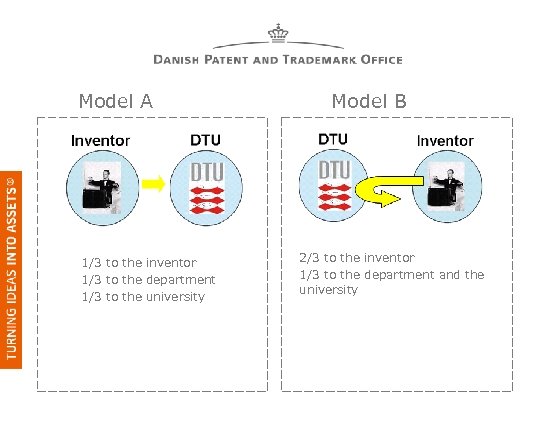 Model A 1/3 to the inventor 1/3 to the department 1/3 to the university Model B 2/3 to the inventor 1/3 to the department and the university
 Technology Transfer – There are two main activities needed to support technology transfer: – Evaluating technology: – "what is my technology worth? " – Includes research of – intellectual properties – competitors – Valuation methodologies: – comparing existing agreements would be ideal, but most of the agreements are secret
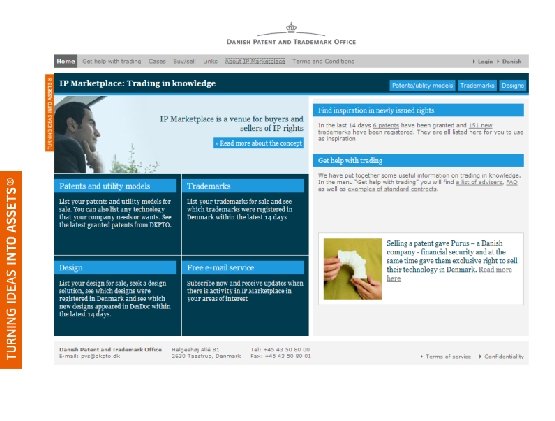
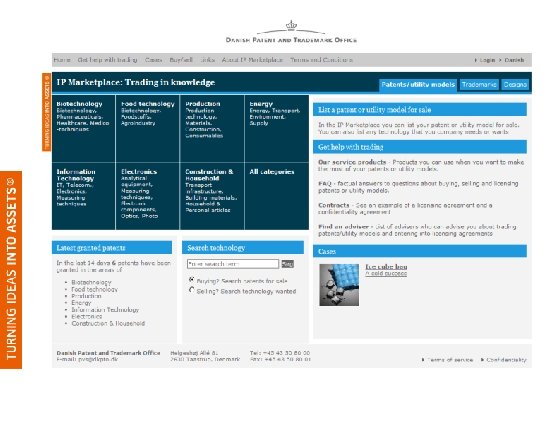
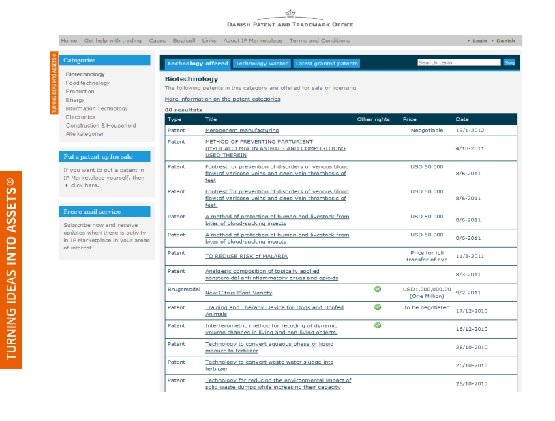
 Technology marketing : searching for buyers for a technology Marketing of IP to industrial partners IP databases can be a tool – DKPTO: IP Marketplace (http: //www. ip-marketplace. org/) – Patents, utility models, trademarks and designs offered for sale/licensing – Request technology that you would like to buy/license
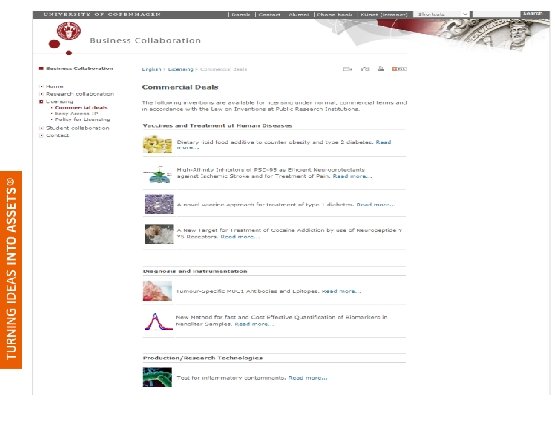
 Technology marketing : searching for buyers for a technology Copenhagen University: – Commercial Deals (http: //erhverv. ku. dk/english/licensing/commercialdeals/) – Inventions from the University which available for licensing
 Transfer of IPR ownership or use? – Own (sales agreement) – Use (licence agreement)
 Confidentiality agreements The parties: Who is contracting? Who is the agreement for? Purpose: What is the purpose of maintaining the confidentiality of information? Obligations of the Parties: What obligations should the Parties undertake? Duration: How long are the parties obliged to keep secret? Delinquency: What happens if a party fails to comply with its obligations?
 Sales agreement – Holder of IP right (X) transferes the currently applicable rights to another company or person (Y) – Upon transfer X loses any right to disposal of the IP right in question – ie. all rights are assigned to Y – Y engages – the right to decide whether – the privilege should be abandoned – the privilege should be reassigned – the right to prohibit third parties to perform acts which conflict with the exclusivity
 License agreements An agreement between two parties Licensor gives the licensee permission to use the privilege of the right in question when paying a fee (License fee) A licensing agreement is an assignment to use and not to own The licensee only have the right to dispose the right in the way that the terms of the license agreement defines
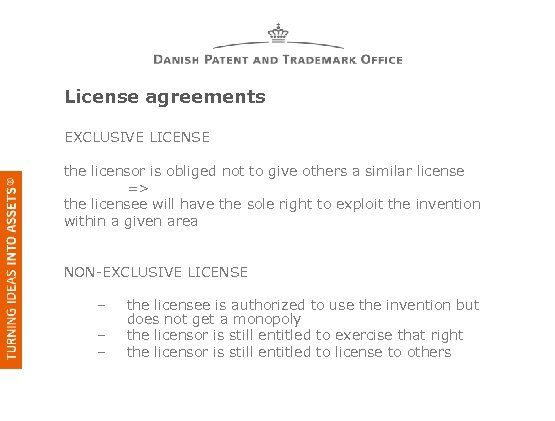 License agreements EXCLUSIVE LICENSE the licensor is obliged not to give others a similar license => the licensee will have the sole right to exploit the invention within a given area NON-EXCLUSIVE LICENSE – – – the licensee is authorized to use the invention but does not get a monopoly the licensor is still entitled to exercise that right the licensor is still entitled to license to others
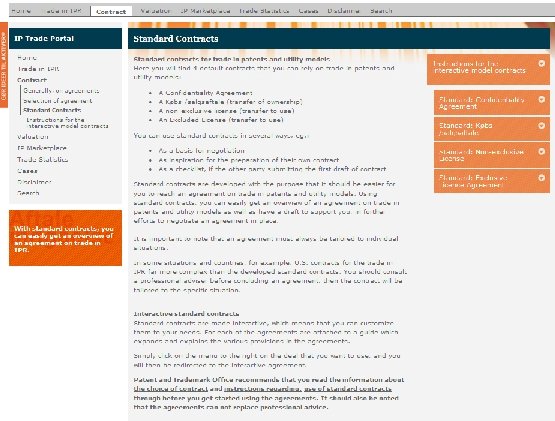
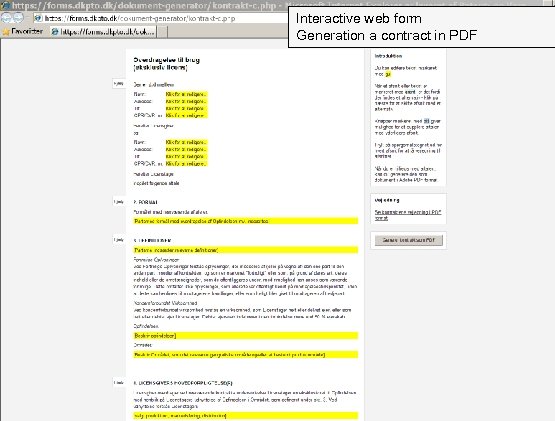 Interactive web form Generation a contract in PDF
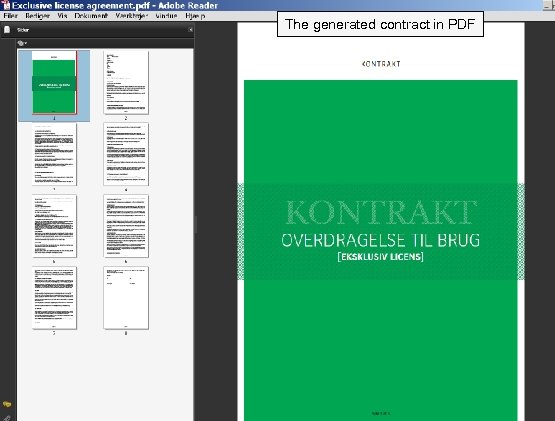 The generated contract in PDF
 TURNING IDEAS INTO ASSETS ®