 Скачать презентацию Combustible Dust National Emphasis Program Ignition Source Dispersion
6384a43a13ff89af6051fabe4c034a0e.ppt
- Количество слайдов: 77



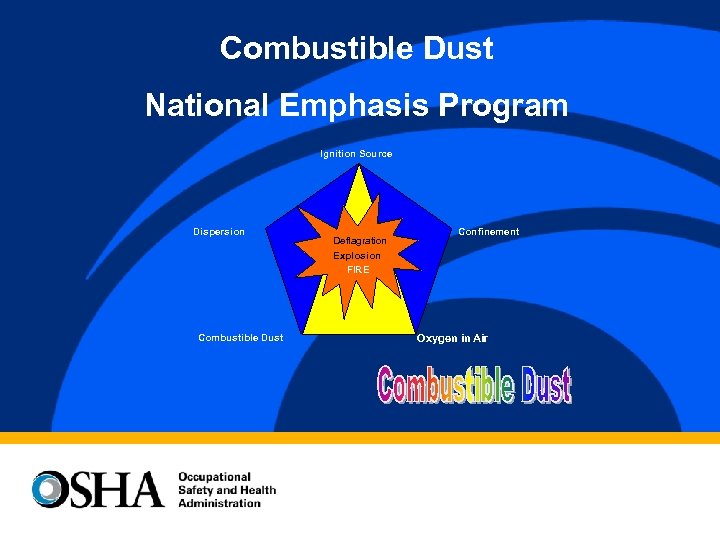
Combustible Dust National Emphasis Program Ignition Source Dispersion Combustible Dust Deflagration Explosion FIRE Confinement Oxygen in Air
Background • History of Combustible Dust Incidents • Overview of Combustible Dust NEP • Hazard Mitigation Techniques • Resources
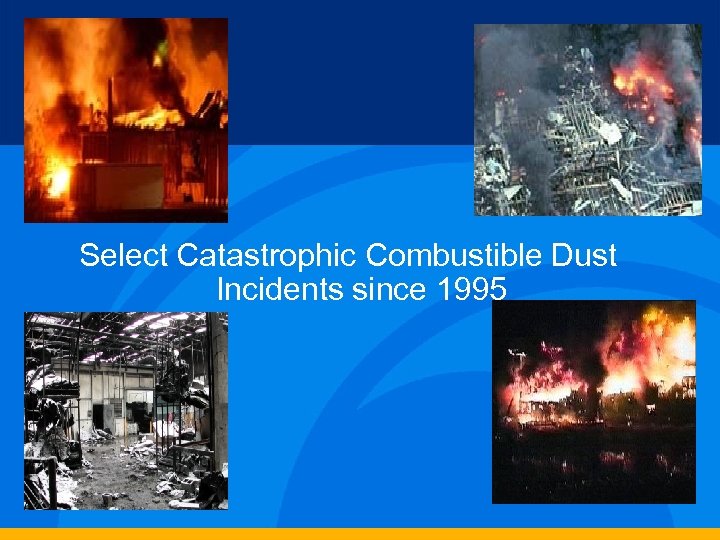
Select Catastrophic Combustible Dust Incidents since 1995
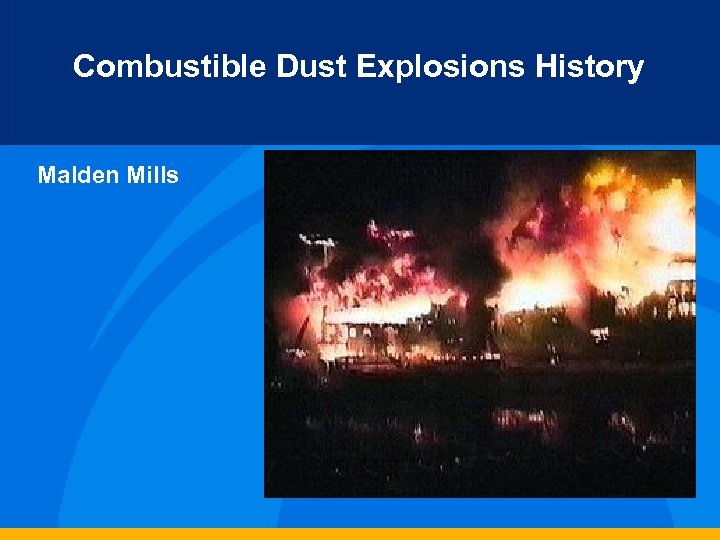
Combustible Dust Explosions History Malden Mills
Malden Mills • • • 12/11/1995 Lawrence , MA 13 hospitalized No citations Made nylon fibers and suspected the static electricity ignited the fibers that were glues to make fibers stand on end in the fleece making process.
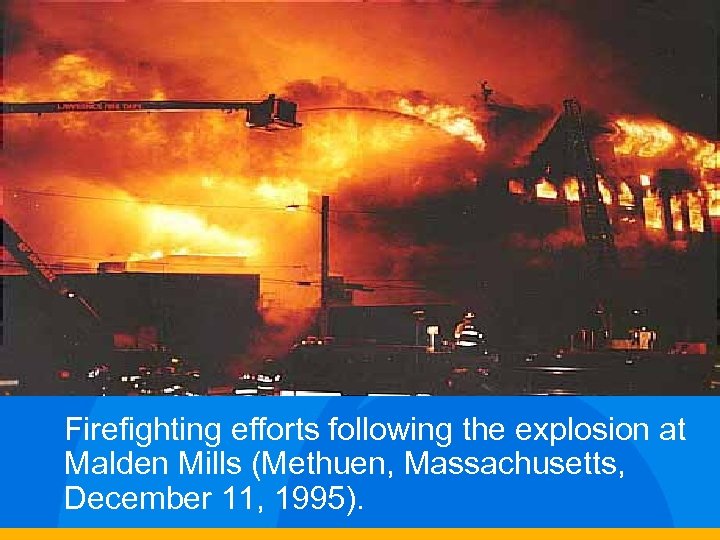
Firefighting efforts following the explosion at Malden Mills (Methuen, Massachusetts, December 11, 1995).
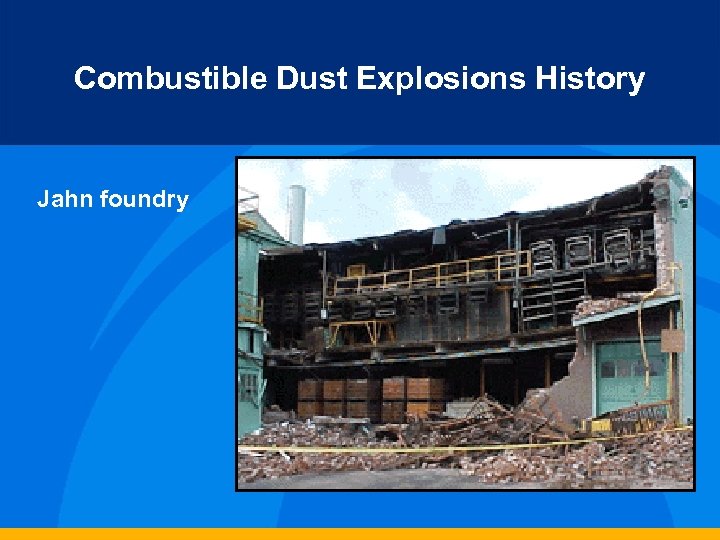
Combustible Dust Explosions History Jahn foundry
Jahn Foundry • • 2/25/1999 Springfield, MA 3 fatalities, 9 hospitalized General duty, electrical and housekeeping. $115 k • Secondary explosion ignited phenol formaldehyde resin. Initial cause is not sure. • Heavy deposits of resin dust were found in the flexible exhaust ducts serving the ovens in the shell molding stations
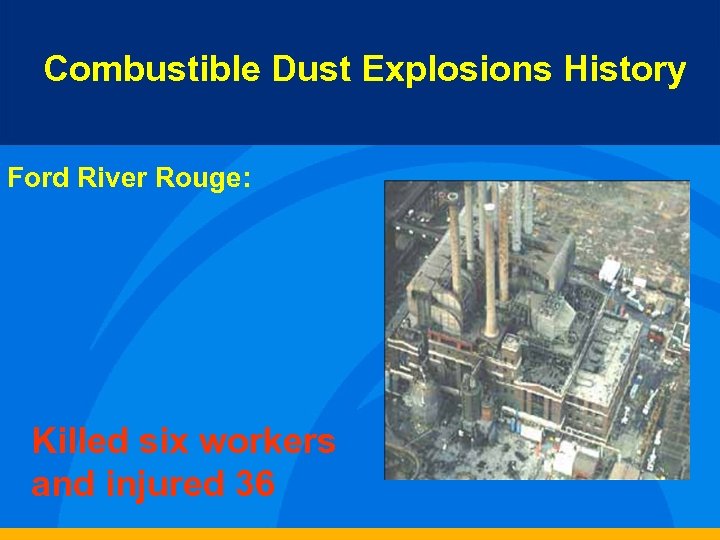
Combustible Dust Explosions History Ford River Rouge: Killed six workers and injured 36
Ford River Rouge Power Plant • • 2/1/1999 Dearborn , MI General Duty egregious, 1. 5 M Natural gas boiler explosion triggered secondary coal dust explosion that had accumulated on building and equipment surfaces
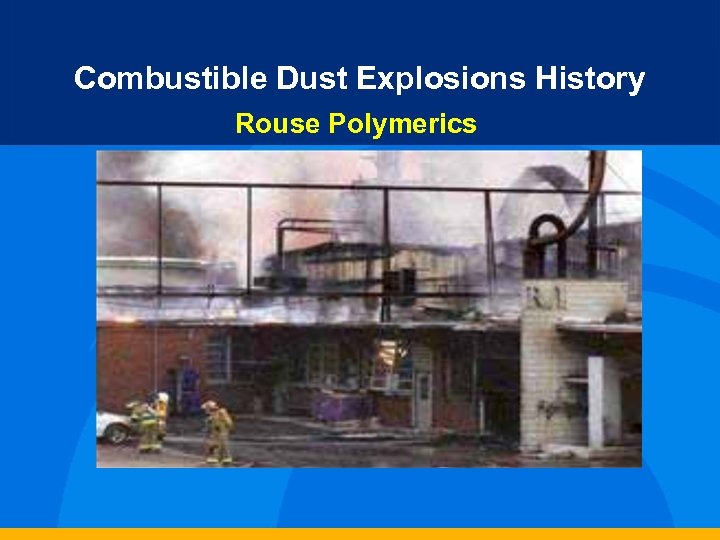
Combustible Dust Explosions History Rouse Polymerics
Rouse Polymerics • • • 5/16/2002 Vicksburg, MS 5 fatalities, 7 injured 23 serious, 2 unclassified 210 K to 187 k Fire in the baghouse, then rubber dust explosion
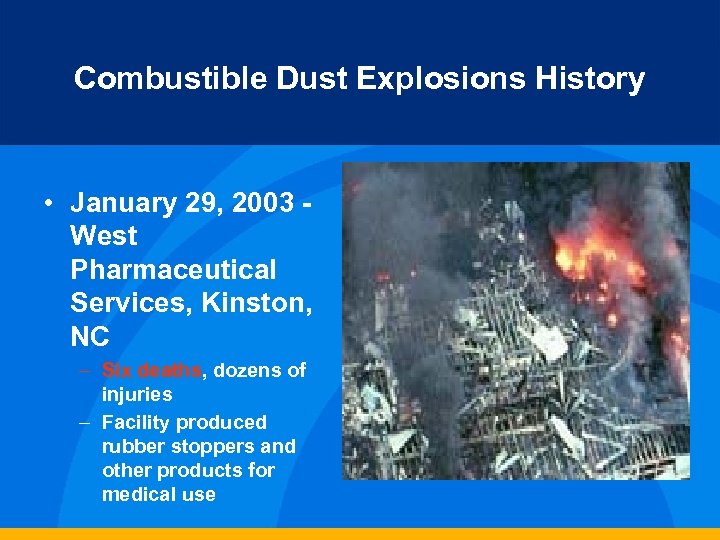
Combustible Dust Explosions History • January 29, 2003 West Pharmaceutical Services, Kinston, NC – Six deaths, dozens of injuries – Facility produced rubber stoppers and other products for medical use
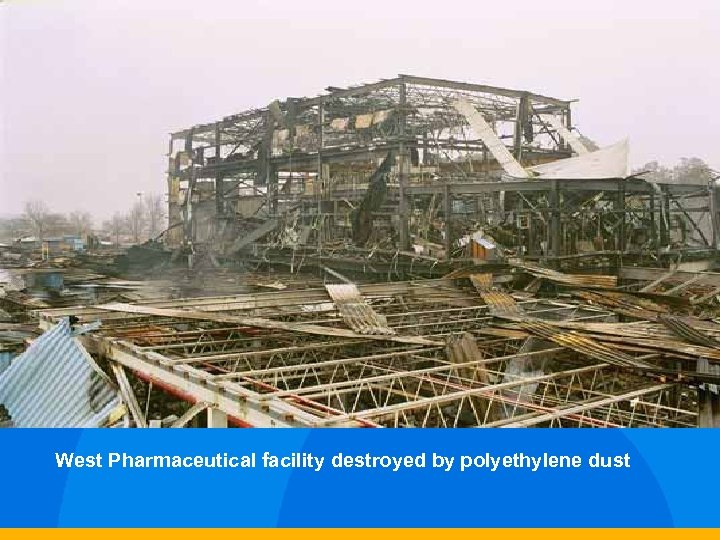
West Pharmaceutical facility destroyed by polyethylene dust
West Pharmaceutical Services • Combustible dust was ignited by some ignition source causing an initial explosion in the Milling Room, which dislodged ceiling tiles, steel beams, and wall panels, and also putting a large quantity of combustible dust from these areas into suspension, which was added fuel to the blast wave from the first explosion, creating a second and larger explosion.
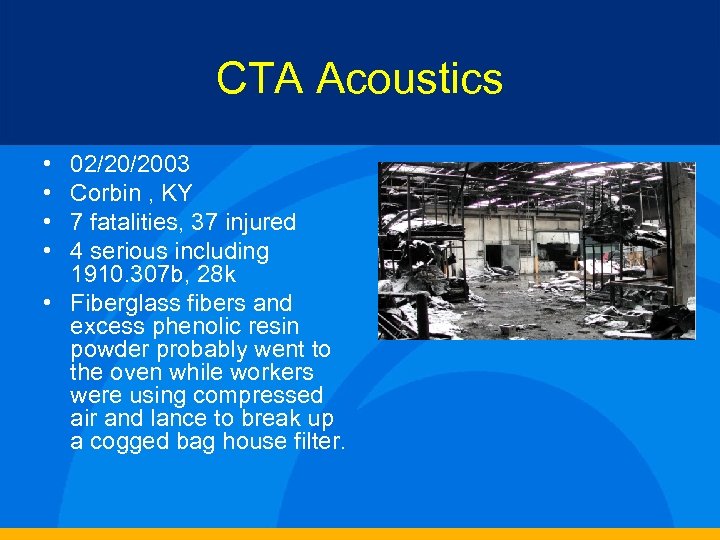
CTA Acoustics • • 02/20/2003 Corbin , KY 7 fatalities, 37 injured 4 serious including 1910. 307 b, 28 k • Fiberglass fibers and excess phenolic resin powder probably went to the oven while workers were using compressed air and lance to break up a cogged bag house filter.
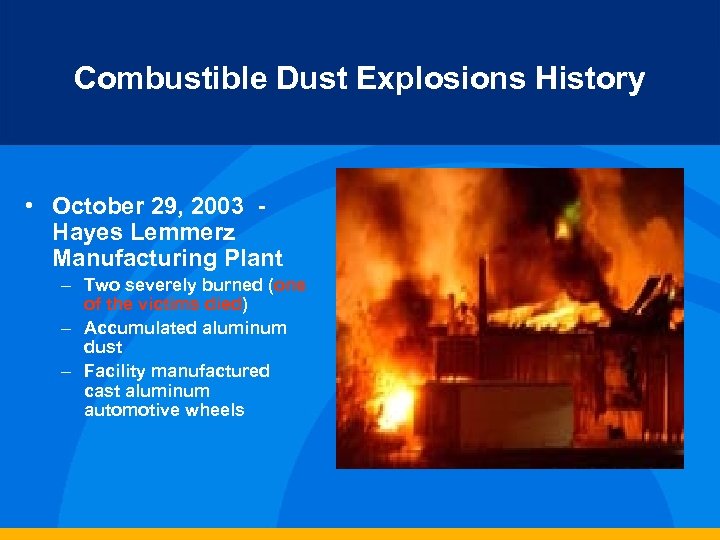
Combustible Dust Explosions History • October 29, 2003 Hayes Lemmerz Manufacturing Plant – Two severely burned (one of the victims died) – Accumulated aluminum dust – Facility manufactured cast aluminum automotive wheels
Hayes Lemmerz International • • • 10/29/2003 Huntington IN One fatality, one injured 6 serious, 42 k General duty and 1910. 307 b cited A dust collector attached to the recycling equipment exploded. The explosion propagated through piping to a furnace where the burned employees were working
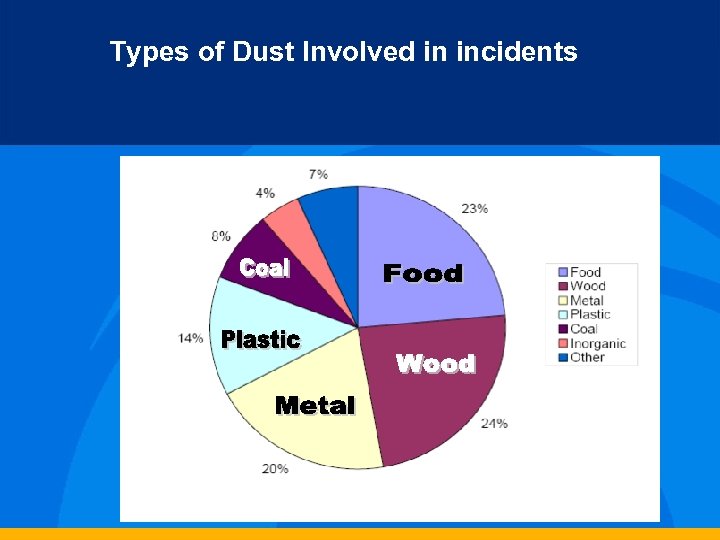
Types of Dust Involved in incidents
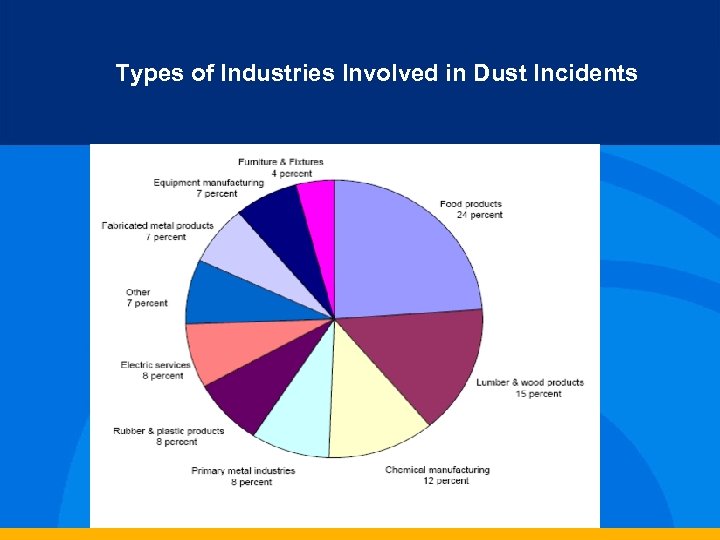
Types of Industries Involved in Dust Incidents
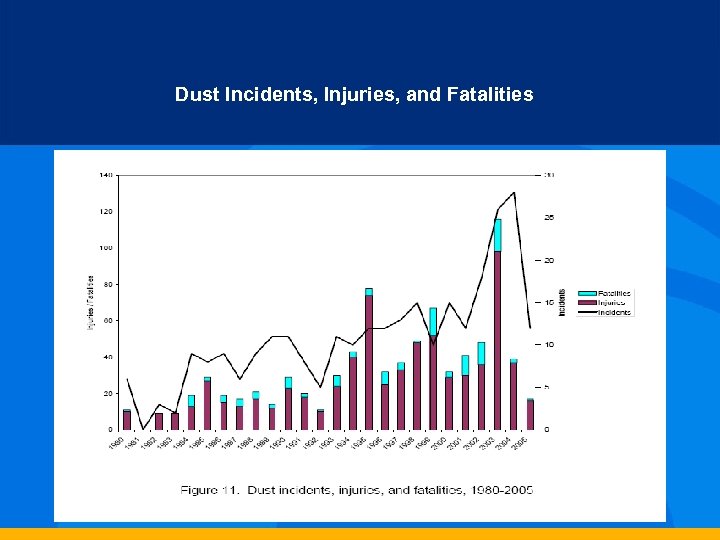
Dust Incidents, Injuries, and Fatalities
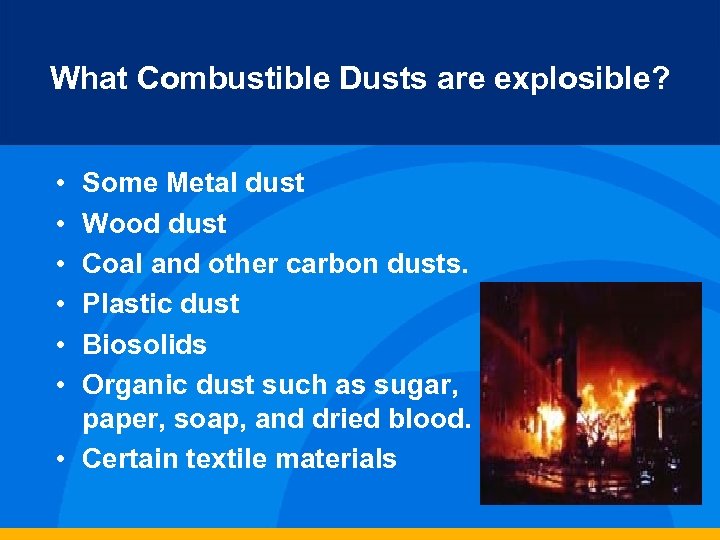
What Combustible Dusts are explosible? • • • Some Metal dust Wood dust Coal and other carbon dusts. Plastic dust Biosolids Organic dust such as sugar, paper, soap, and dried blood. • Certain textile materials
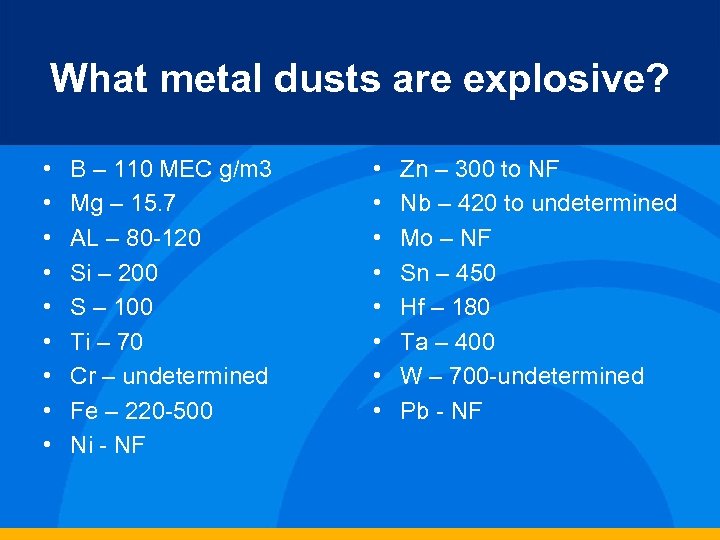
What metal dusts are explosive? • • • B – 110 MEC g/m 3 Mg – 15. 7 AL – 80 -120 Si – 200 S – 100 Ti – 70 Cr – undetermined Fe – 220 -500 Ni - NF • • Zn – 300 to NF Nb – 420 to undetermined Mo – NF Sn – 450 Hf – 180 Ta – 400 W – 700 -undetermined Pb - NF
Which Industries have Potential Dust Explosion Hazards? • • Agriculture Chemical Textile Forest and furniture products Metal Processing Paper products Pharmaceuticals Recycling operations (metal, paper, and plastic recycling operations. ) • Coal Power plants and coal processing facilities
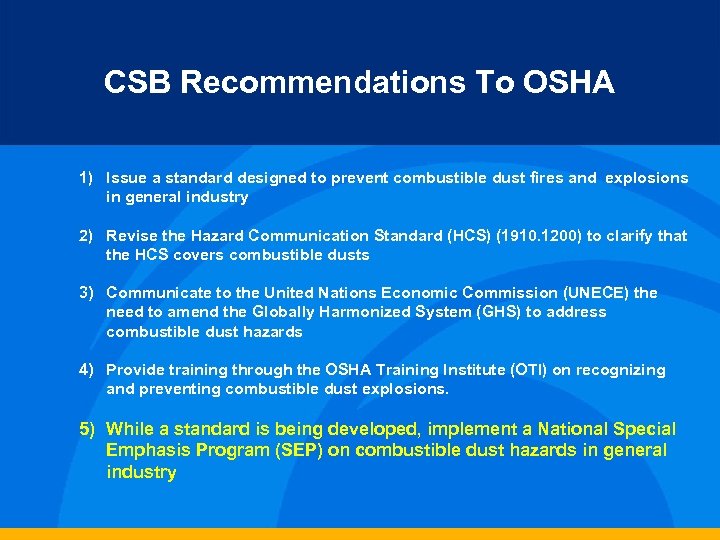
CSB Recommendations To OSHA 1) Issue a standard designed to prevent combustible dust fires and explosions in general industry 2) Revise the Hazard Communication Standard (HCS) (1910. 1200) to clarify that the HCS covers combustible dusts 3) Communicate to the United Nations Economic Commission (UNECE) the need to amend the Globally Harmonized System (GHS) to address combustible dust hazards 4) Provide training through the OSHA Training Institute (OTI) on recognizing and preventing combustible dust explosions. 5) While a standard is being developed, implement a National Special Emphasis Program (SEP) on combustible dust hazards in general industry
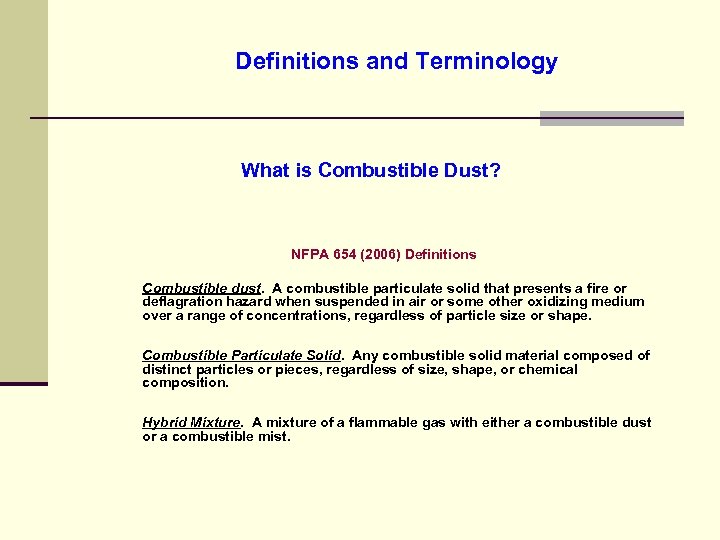
Definitions and Terminology What is Combustible Dust? NFPA 654 (2006) Definitions Combustible dust. A combustible particulate solid that presents a fire or deflagration hazard when suspended in air or some other oxidizing medium over a range of concentrations, regardless of particle size or shape. Combustible Particulate Solid. Any combustible solid material composed of distinct particles or pieces, regardless of size, shape, or chemical composition. Hybrid Mixture. A mixture of a flammable gas with either a combustible dust or a combustible mist.
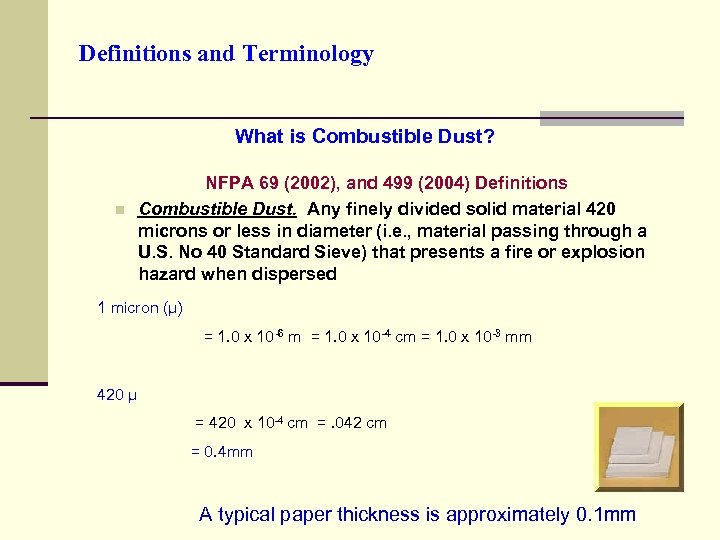
Definitions and Terminology What is Combustible Dust? n NFPA 69 (2002), and 499 (2004) Definitions Combustible Dust. Any finely divided solid material 420 microns or less in diameter (i. e. , material passing through a U. S. No 40 Standard Sieve) that presents a fire or explosion hazard when dispersed 1 micron (µ) = 1. 0 x 10 -6 m = 1. 0 x 10 -4 cm = 1. 0 x 10 -3 mm 420 µ = 420 x 10 -4 cm =. 042 cm = 0. 4 mm A typical paper thickness is approximately 0. 1 mm
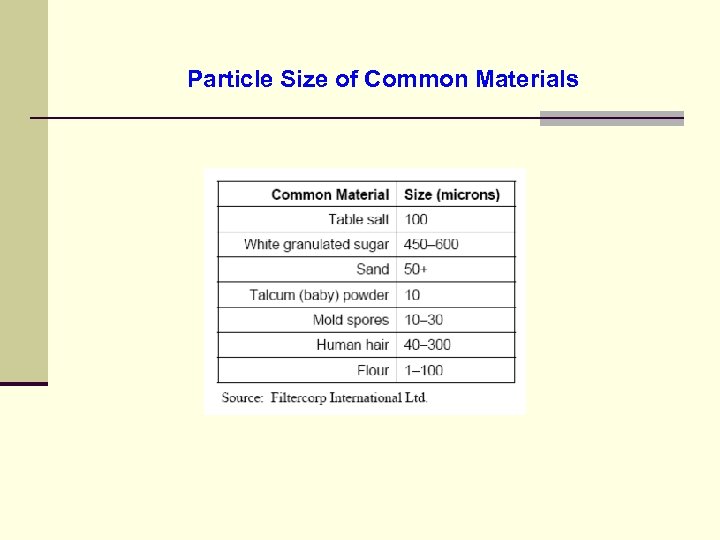
Particle Size of Common Materials
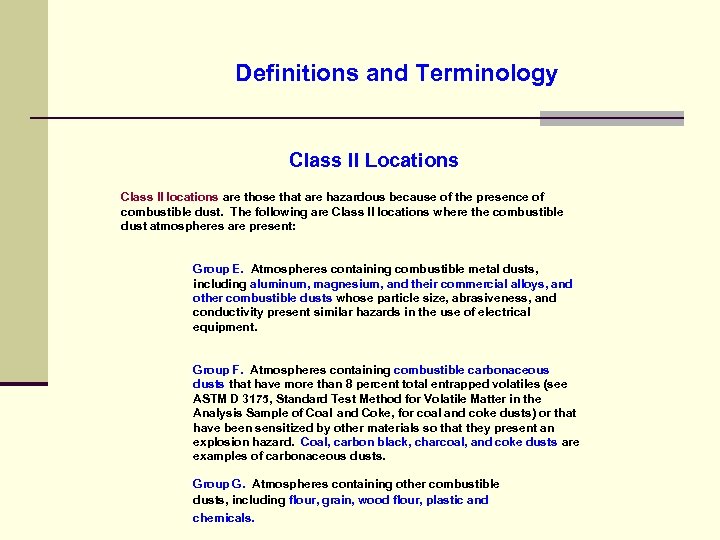
Definitions and Terminology Class II Locations Class II locations are those that are hazardous because of the presence of combustible dust. The following are Class II locations where the combustible dust atmospheres are present: Group E. Atmospheres containing combustible metal dusts, including aluminum, magnesium, and their commercial alloys, and other combustible dusts whose particle size, abrasiveness, and conductivity present similar hazards in the use of electrical equipment. Group F. Atmospheres containing combustible carbonaceous dusts that have more than 8 percent total entrapped volatiles (see ASTM D 3175, Standard Test Method for Volatile Matter in the Analysis Sample of Coal and Coke, for coal and coke dusts) or that have been sensitized by other materials so that they present an explosion hazard. Coal, carbon black, charcoal, and coke dusts are examples of carbonaceous dusts. Group G. Atmospheres containing other combustible dusts, including flour, grain, wood flour, plastic and chemicals.
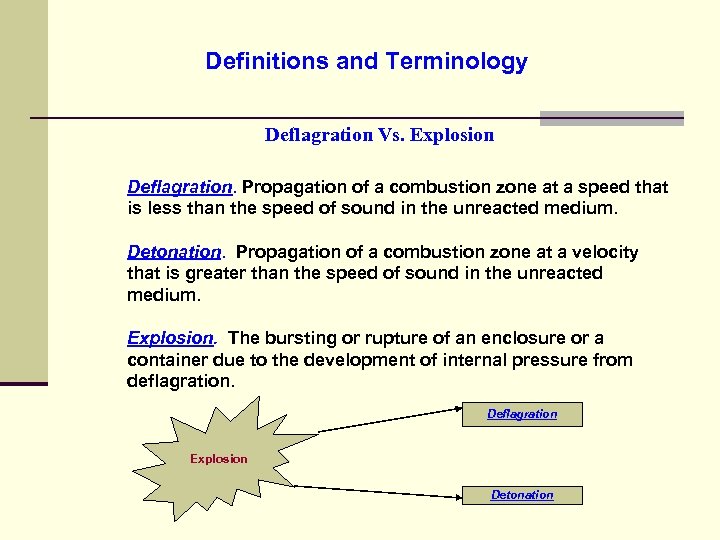
Definitions and Terminology Deflagration Vs. Explosion Deflagration. Propagation of a combustion zone at a speed that is less than the speed of sound in the unreacted medium. Detonation. Propagation of a combustion zone at a velocity that is greater than the speed of sound in the unreacted medium. Explosion. The bursting or rupture of an enclosure or a container due to the development of internal pressure from deflagration. Deflagration Explosion Detonation
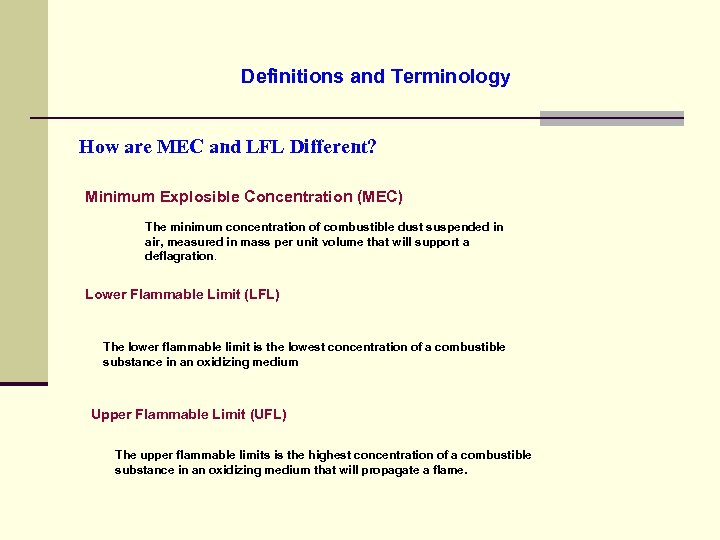
Definitions and Terminology How are MEC and LFL Different? Minimum Explosible Concentration (MEC) The minimum concentration of combustible dust suspended in air, measured in mass per unit volume that will support a deflagration. Lower Flammable Limit (LFL) The lower flammable limit is the lowest concentration of a combustible substance in an oxidizing medium Upper Flammable Limit (UFL) The upper flammable limits is the highest concentration of a combustible substance in an oxidizing medium that will propagate a flame.
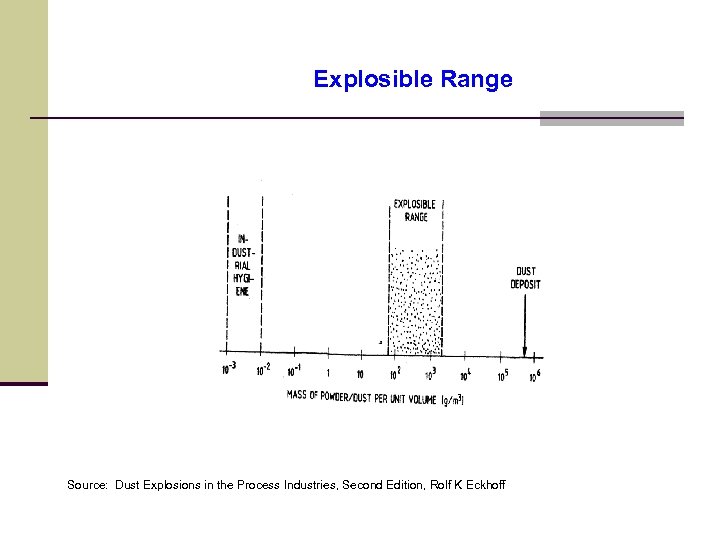
Explosible Range Source: Dust Explosions in the Process Industries, Second Edition, Rolf K Eckhoff
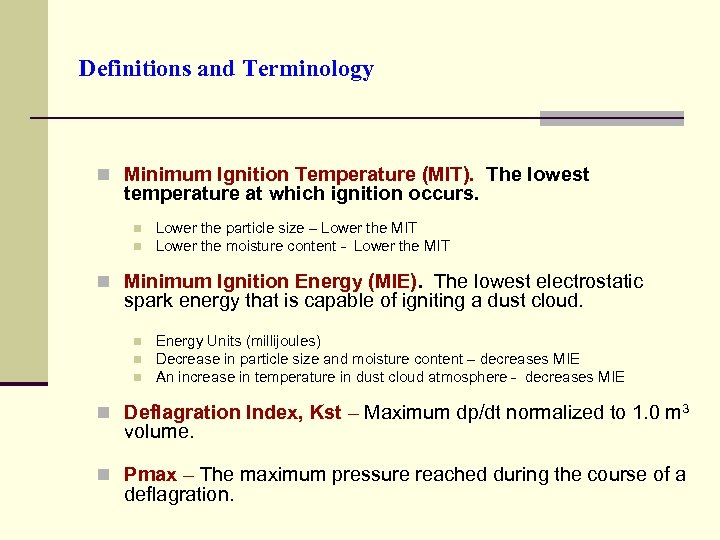
Definitions and Terminology n Minimum Ignition Temperature (MIT). The lowest temperature at which ignition occurs. n n Lower the particle size – Lower the MIT Lower the moisture content - Lower the MIT n Minimum Ignition Energy (MIE). The lowest electrostatic spark energy that is capable of igniting a dust cloud. n n n Energy Units (millijoules) Decrease in particle size and moisture content – decreases MIE An increase in temperature in dust cloud atmosphere - decreases MIE n Deflagration Index, Kst – Maximum dp/dt normalized to 1. 0 m 3 volume. n Pmax – The maximum pressure reached during the course of a deflagration.
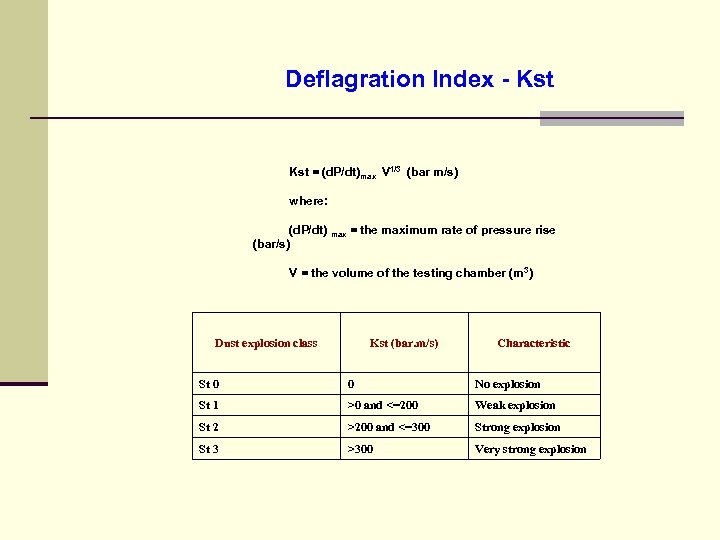
Deflagration Index - Kst = (d. P/dt)max V 1/3 (bar m/s) where: (d. P/dt) max = the maximum rate of pressure rise (bar/s) V = the volume of the testing chamber (m 3) Dust explosion class Kst (bar. m/s) Characteristic St 0 0 No explosion St 1 >0 and <=200 Weak explosion St 2 >200 and <=300 Strong explosion St 3 >300 Very strong explosion
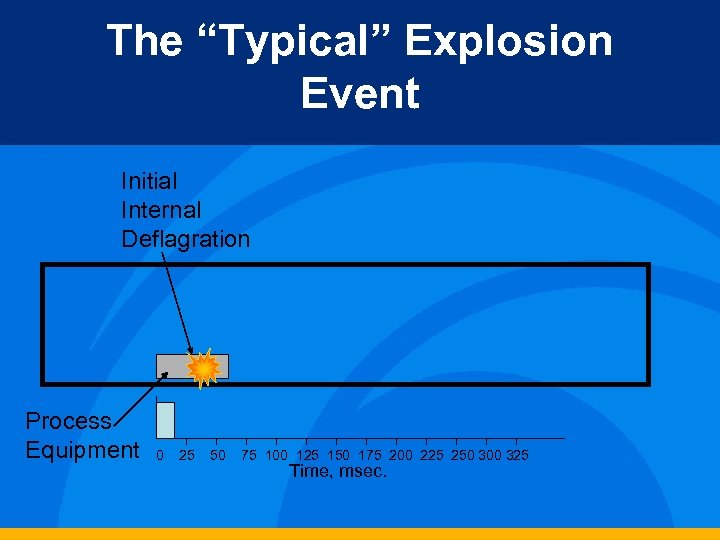
The “Typical” Explosion Event Initial Internal Deflagration Process Equipment 0 25 50 75 100 125 150 175 200 225 250 300 325 Time, msec.
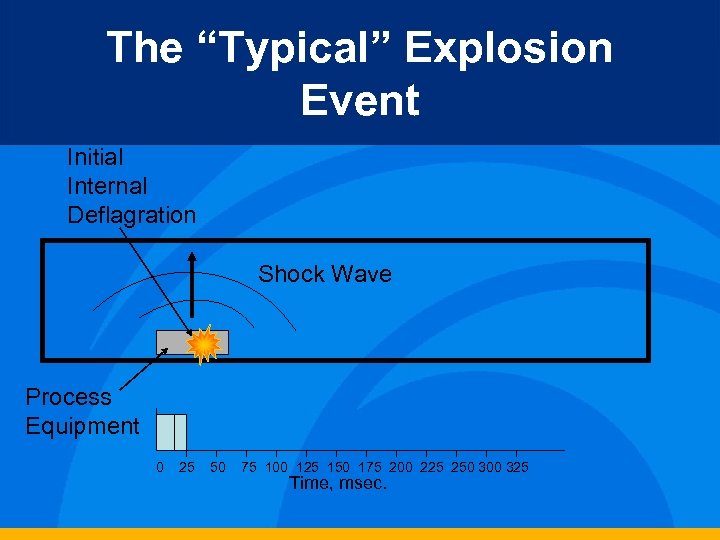
The “Typical” Explosion Event Initial Internal Deflagration Shock Wave Process Equipment 0 25 50 75 100 125 150 175 200 225 250 300 325 Time, msec.
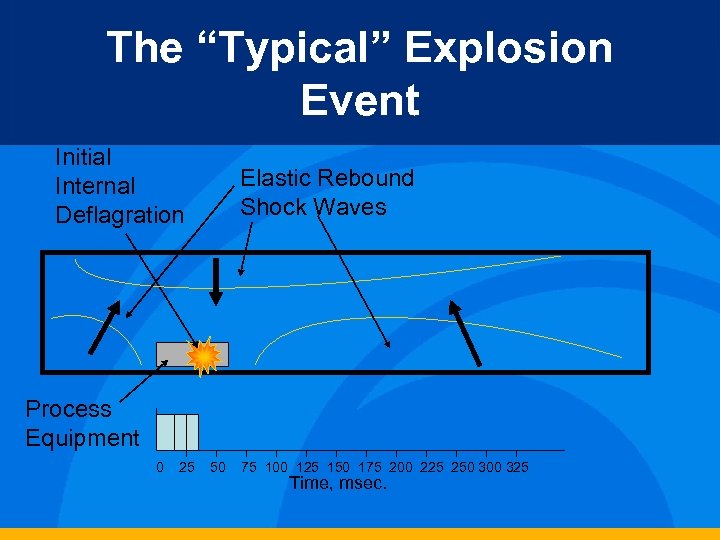
The “Typical” Explosion Event Initial Internal Deflagration Elastic Rebound Shock Waves Process Equipment 0 25 50 75 100 125 150 175 200 225 250 300 325 Time, msec.
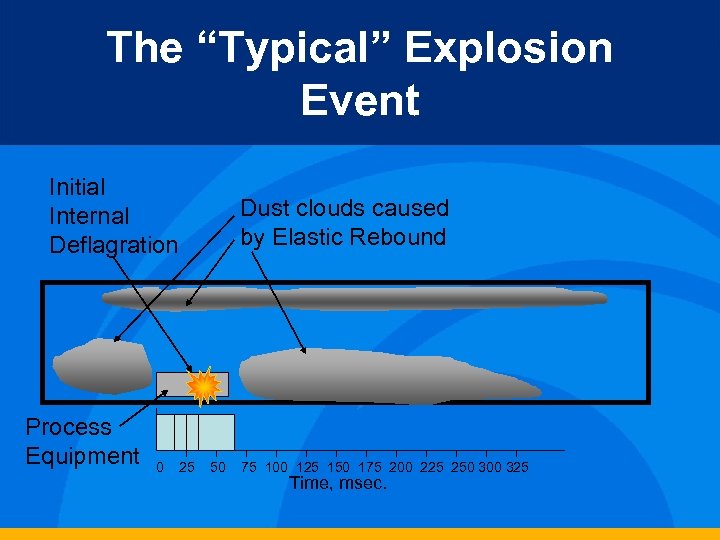
The “Typical” Explosion Event Initial Internal Deflagration Process Equipment Dust clouds caused by Elastic Rebound 0 25 50 75 100 125 150 175 200 225 250 300 325 Time, msec.
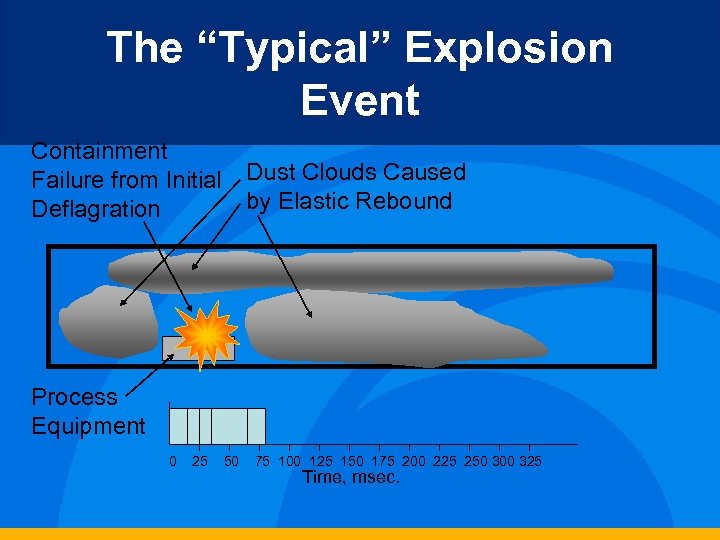
The “Typical” Explosion Event Containment Failure from Initial Deflagration Dust Clouds Caused by Elastic Rebound Process Equipment 0 25 50 75 100 125 150 175 200 225 250 300 325 Time, msec.
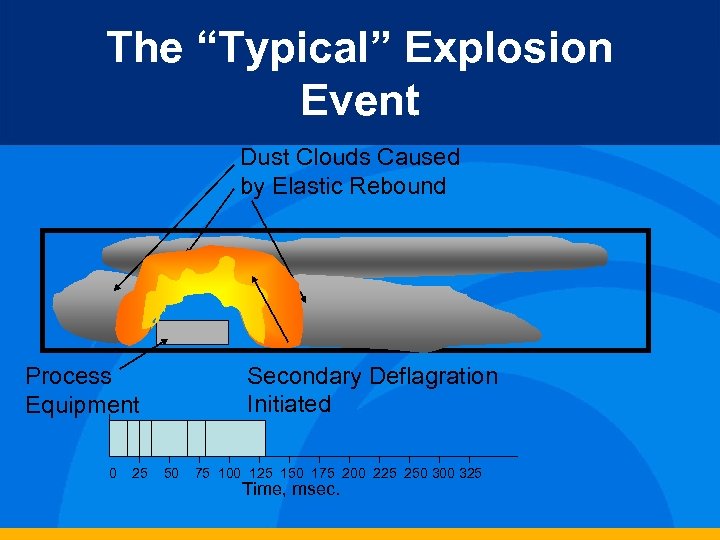
The “Typical” Explosion Event Dust Clouds Caused by Elastic Rebound Process Equipment Secondary Deflagration Initiated 0 25 50 75 100 125 150 175 200 225 250 300 325 Time, msec.
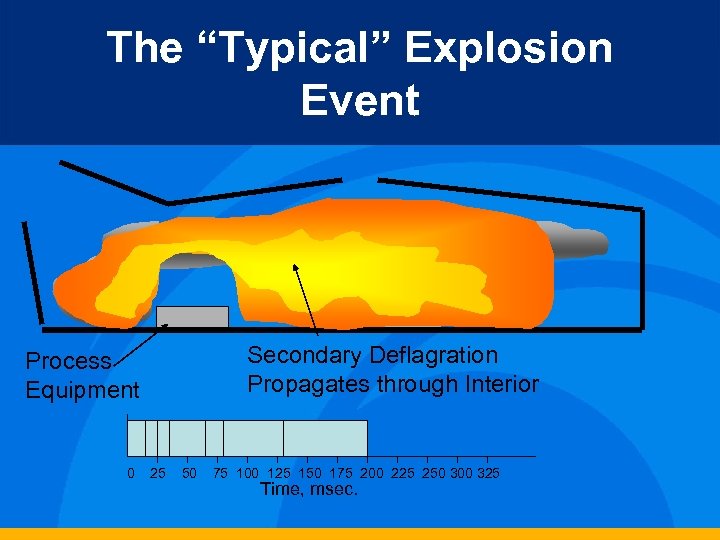
The “Typical” Explosion Event Process Equipment Secondary Deflagration Propagates through Interior 0 25 50 75 100 125 150 175 200 225 250 300 325 Time, msec.
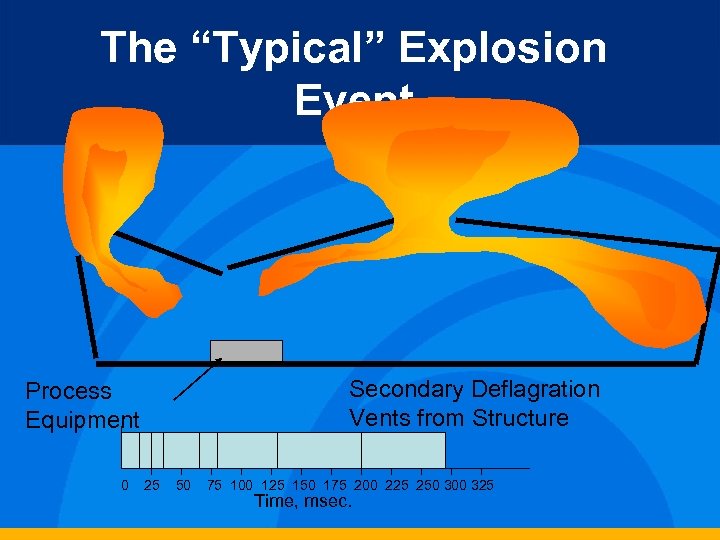
The “Typical” Explosion Event Process Equipment Secondary Deflagration Vents from Structure 0 25 50 75 100 125 150 175 200 225 250 300 325 Time, msec.
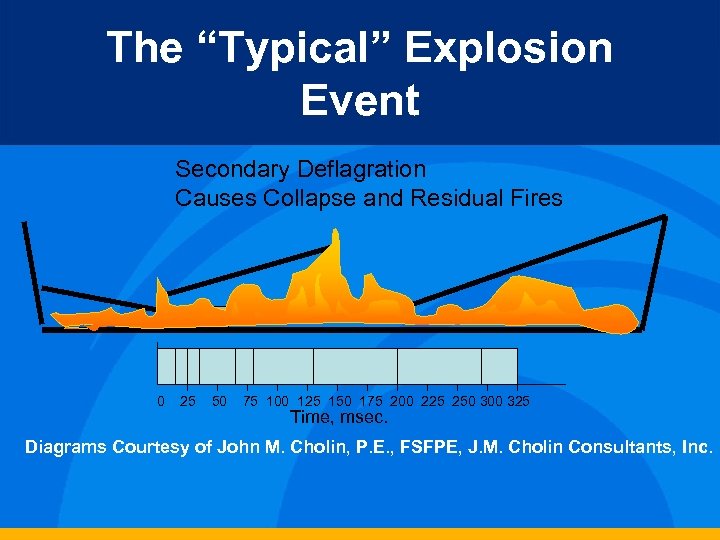
The “Typical” Explosion Event Secondary Deflagration Causes Collapse and Residual Fires 0 25 50 75 100 125 150 175 200 225 250 300 325 Time, msec. Diagrams Courtesy of John M. Cholin, P. E. , FSFPE, J. M. Cholin Consultants, Inc.
Dust Handling Equipment
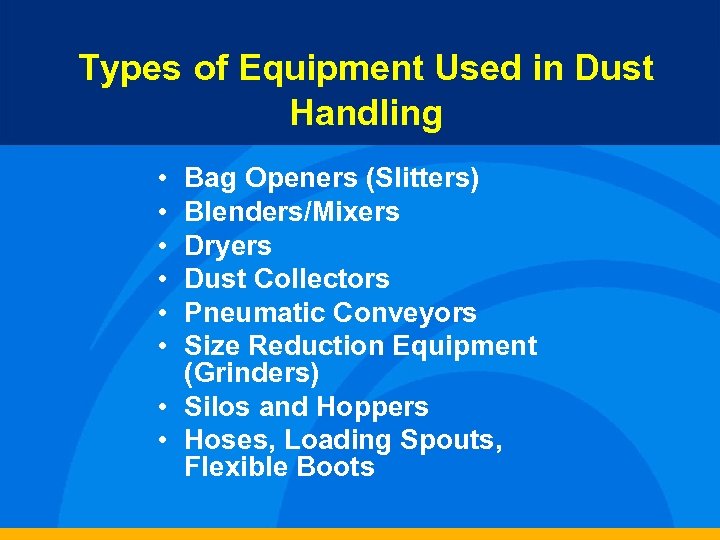
Types of Equipment Used in Dust Handling • • • Bag Openers (Slitters) Blenders/Mixers Dryers Dust Collectors Pneumatic Conveyors Size Reduction Equipment (Grinders) • Silos and Hoppers • Hoses, Loading Spouts, Flexible Boots
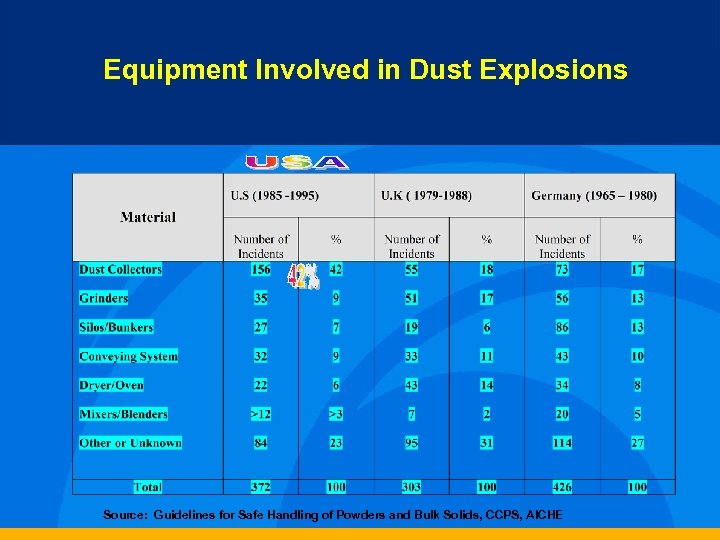
Equipment Involved in Dust Explosions Source: Guidelines for Safe Handling of Powders and Bulk Solids, CCPS, AICHE
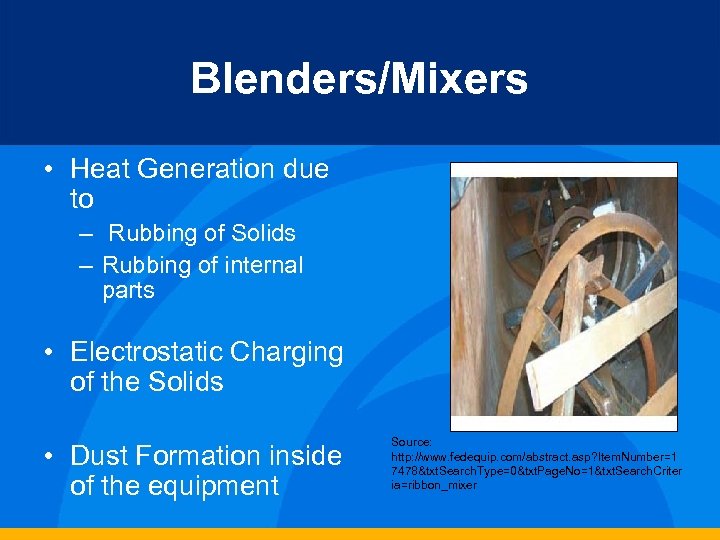
Blenders/Mixers • Heat Generation due to – Rubbing of Solids – Rubbing of internal parts • Electrostatic Charging of the Solids • Dust Formation inside of the equipment Source: http: //www. fedequip. com/abstract. asp? Item. Number=1 7478&txt. Search. Type=0&txt. Page. No=1&txt. Search. Criter ia=ribbon_mixer
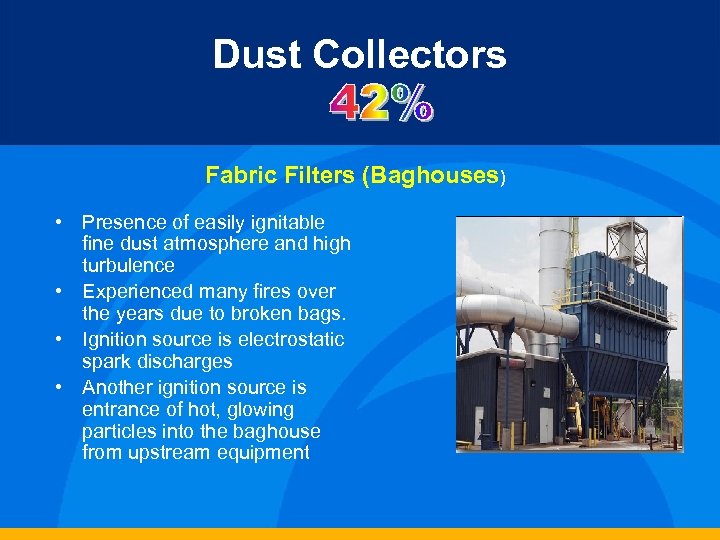
Dust Collectors Fabric Filters (Baghouses) • Presence of easily ignitable fine dust atmosphere and high turbulence • Experienced many fires over the years due to broken bags. • Ignition source is electrostatic spark discharges • Another ignition source is entrance of hot, glowing particles into the baghouse from upstream equipment
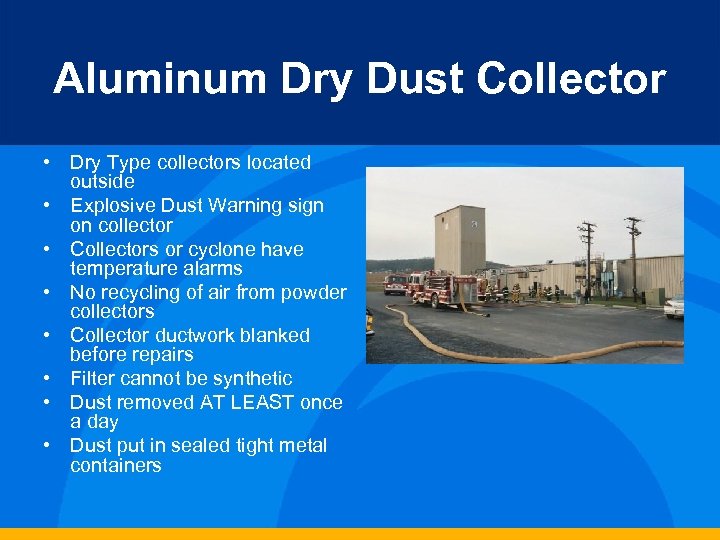
Aluminum Dry Dust Collector • Dry Type collectors located outside • Explosive Dust Warning sign on collector • Collectors or cyclone have temperature alarms • No recycling of air from powder collectors • Collector ductwork blanked before repairs • Filter cannot be synthetic • Dust removed AT LEAST once a day • Dust put in sealed tight metal containers
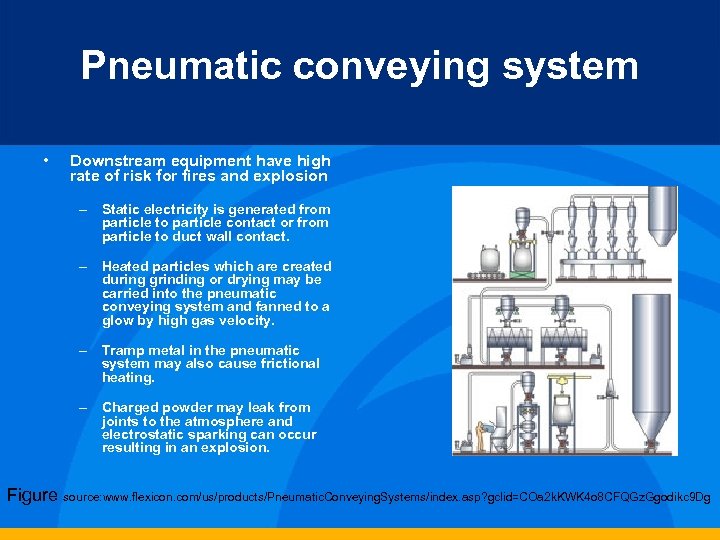
Pneumatic conveying system • Downstream equipment have high rate of risk for fires and explosion – Static electricity is generated from particle to particle contact or from particle to duct wall contact. – Heated particles which are created during grinding or drying may be carried into the pneumatic conveying system and fanned to a glow by high gas velocity. – Tramp metal in the pneumatic system may also cause frictional heating. – Charged powder may leak from joints to the atmosphere and electrostatic sparking can occur resulting in an explosion. Figure source: www. flexicon. com/us/products/Pneumatic. Conveying. Systems/index. asp? gclid=COa 2 k. KWK 4 o 8 CFQGz. Ggodikc 9 Dg
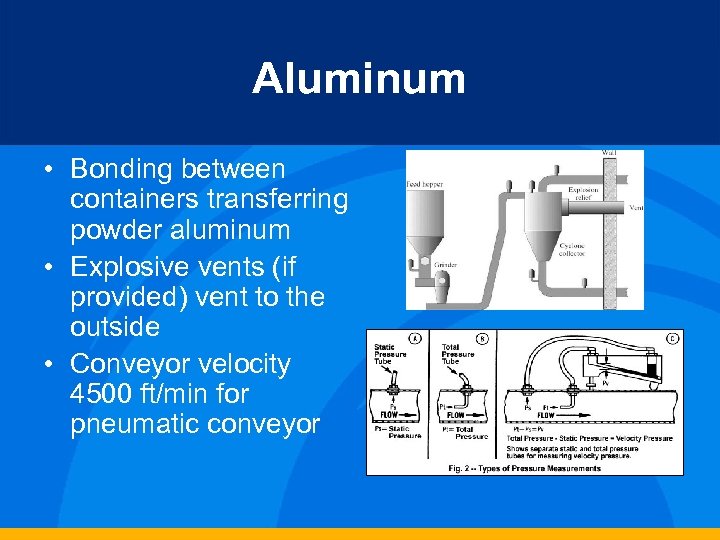
Aluminum • Bonding between containers transferring powder aluminum • Explosive vents (if provided) vent to the outside • Conveyor velocity 4500 ft/min for pneumatic conveyor
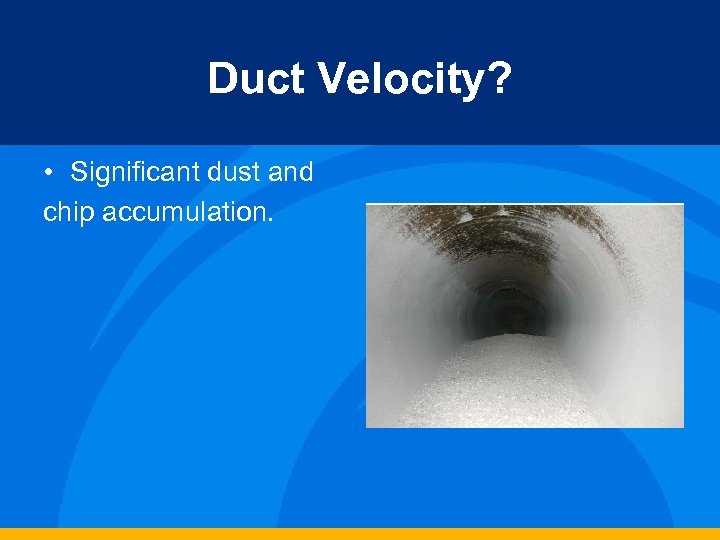
Duct Velocity? • Significant dust and chip accumulation.
Pneumatic conveying systems (Cont. ) • Prevention and Protection systems – Venting – Suppression – Pressure Containment – Deflagration Isolation – Spark detection and extinguishing system – Use of inert conveying gas
Silos and Hoppers • No inter-silo Venting • Silos and hoppers shall be located outside the buildings with some exceptions • Air cannons not to be used to break bridges in silos • Detection of smoldering fires in silos and hoppers can be achieved with methane and carbon monoxide detectors • Pressure containment, inerting, and suppression systems to protect against explosions • Venting is the most widely used protection against explosions
Hazard Mitigation
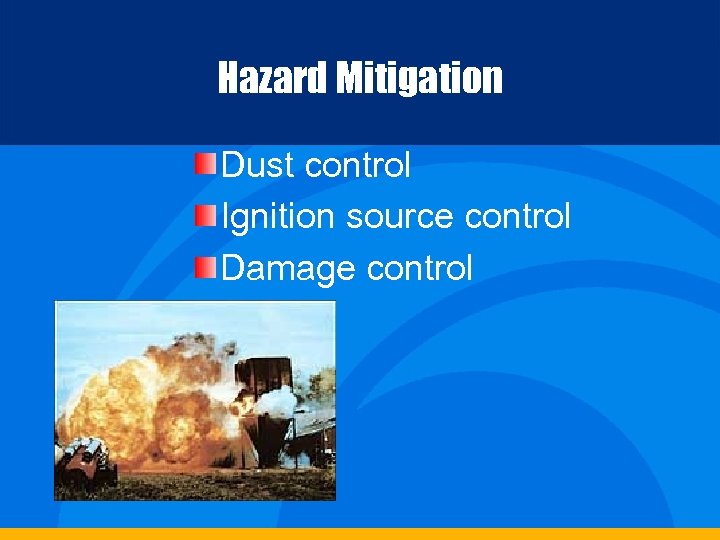
Hazard Mitigation Dust control Ignition source control Damage control
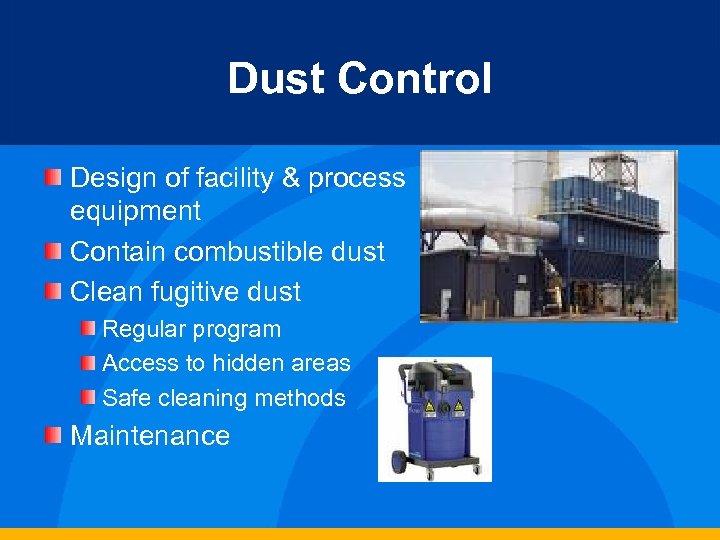
Dust Control Design of facility & process equipment Contain combustible dust Clean fugitive dust Regular program Access to hidden areas Safe cleaning methods Maintenance
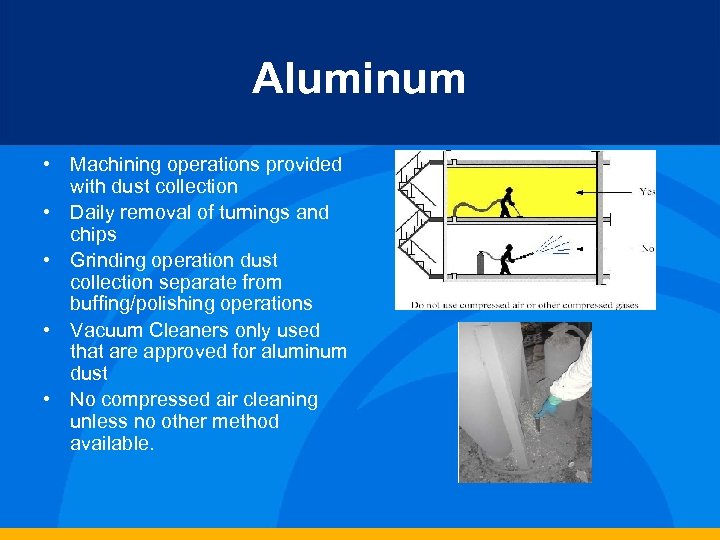
Aluminum • Machining operations provided with dust collection • Daily removal of turnings and chips • Grinding operation dust collection separate from buffing/polishing operations • Vacuum Cleaners only used that are approved for aluminum dust • No compressed air cleaning unless no other method available.
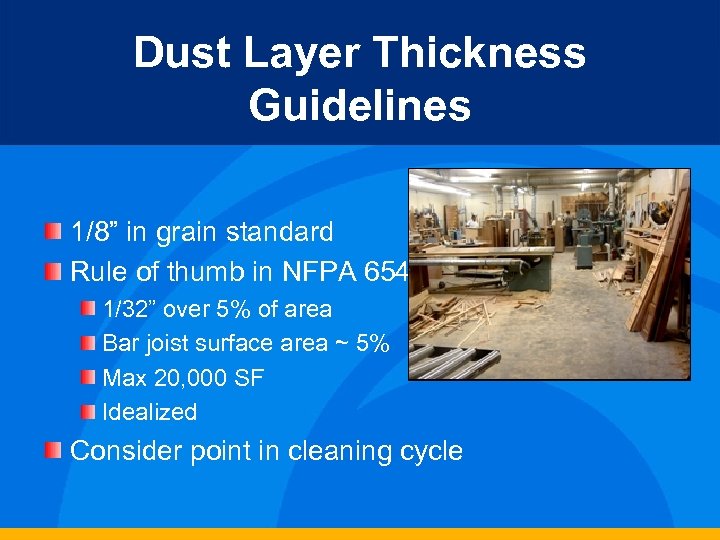
Dust Layer Thickness Guidelines 1/8” in grain standard Rule of thumb in NFPA 654 1/32” over 5% of area Bar joist surface area ~ 5% Max 20, 000 SF Idealized Consider point in cleaning cycle
Housekeeping • Maintain dust free as possible • No blow down unless All electrical power and processes have been shutdown. • No welding, cutting or grinding unless under hot-work permit • Comfort heating equipment shall obtain combustion air from clean outside source.
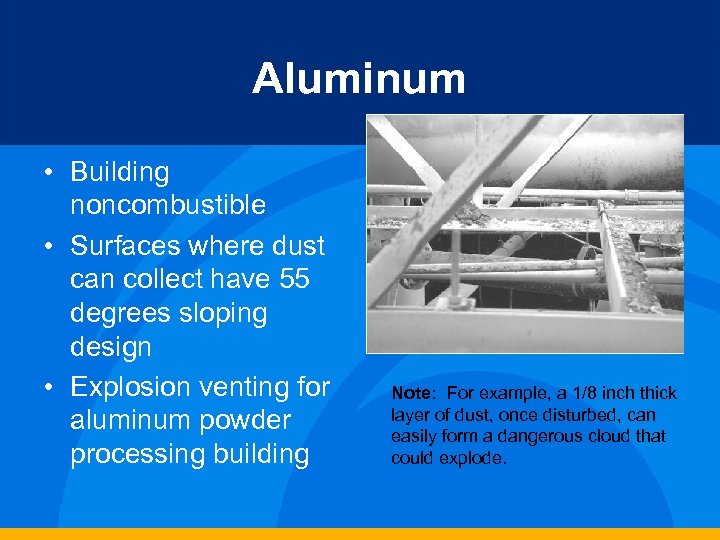
Aluminum • Building noncombustible • Surfaces where dust can collect have 55 degrees sloping design • Explosion venting for aluminum powder processing building Note: For example, a 1/8 inch thick layer of dust, once disturbed, can easily form a dangerous cloud that could explode.
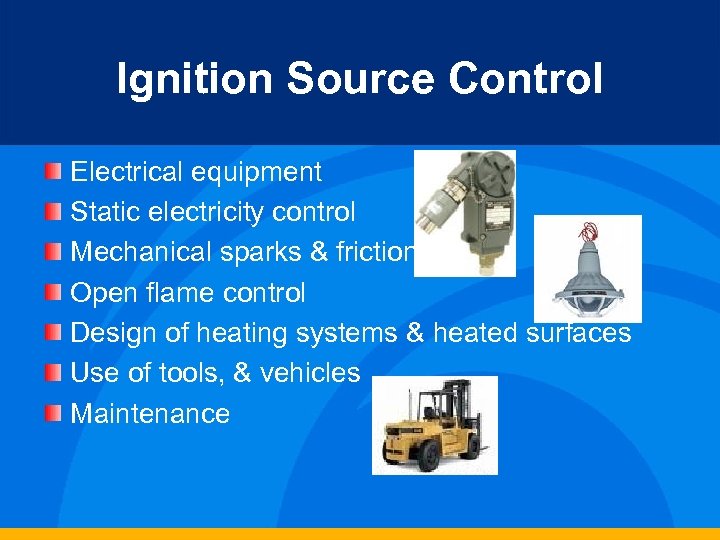
Ignition Source Control Electrical equipment Static electricity control Mechanical sparks & friction Open flame control Design of heating systems & heated surfaces Use of tools, & vehicles Maintenance
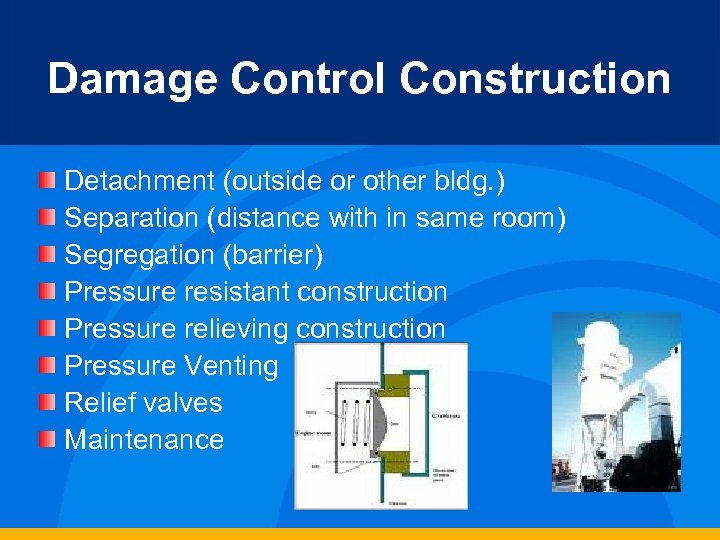
Damage Control Construction Detachment (outside or other bldg. ) Separation (distance with in same room) Segregation (barrier) Pressure resistant construction Pressure relieving construction Pressure Venting Relief valves Maintenance
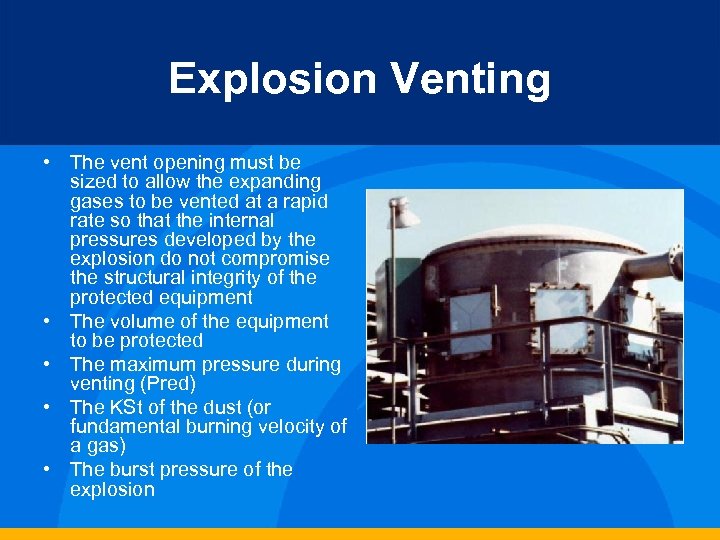
Explosion Venting • The vent opening must be sized to allow the expanding gases to be vented at a rapid rate so that the internal pressures developed by the explosion do not compromise the structural integrity of the protected equipment • The volume of the equipment to be protected • The maximum pressure during venting (Pred) • The KSt of the dust (or fundamental burning velocity of a gas) • The burst pressure of the explosion
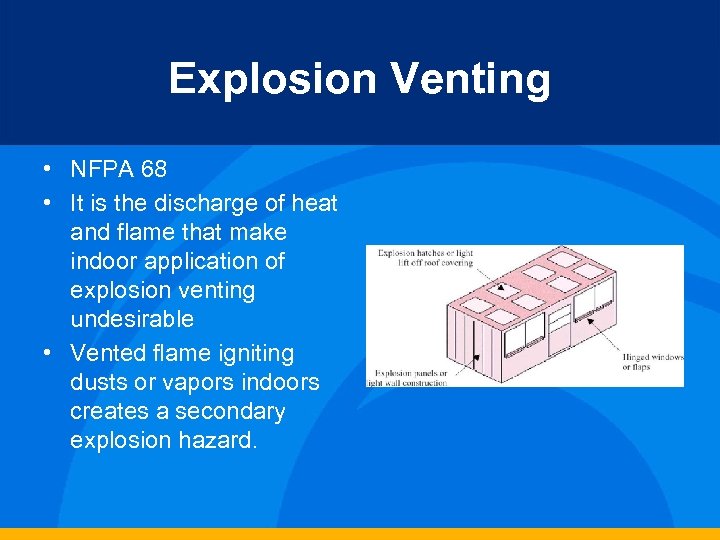
Explosion Venting • NFPA 68 • It is the discharge of heat and flame that make indoor application of explosion venting undesirable • Vented flame igniting dusts or vapors indoors creates a secondary explosion hazard.
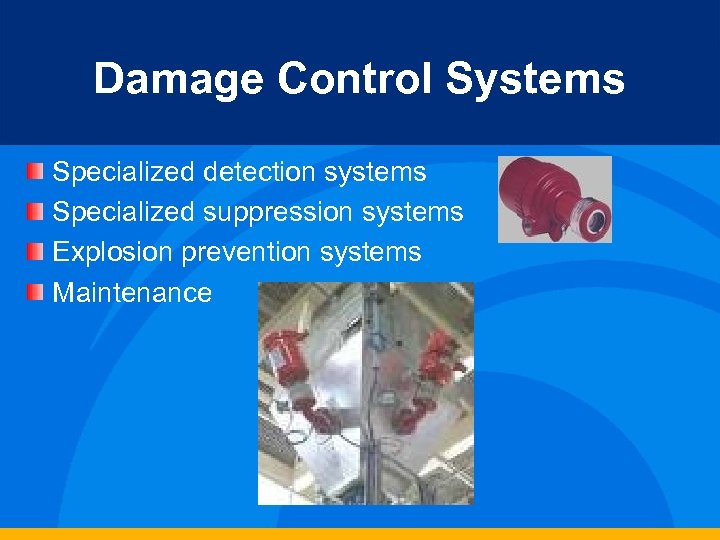
Damage Control Systems Specialized detection systems Specialized suppression systems Explosion prevention systems Maintenance
NEP/ Industry Application – – – – – Agriculture Chemicals Textiles Forest and furniture products Metal processing Tire and rubber manufacturing plants Paper products Pharmaceuticals Wastewater treatment Recycling operations (metal, paper, and plastic. ) – Coal dust in coal handling and processing facilities.
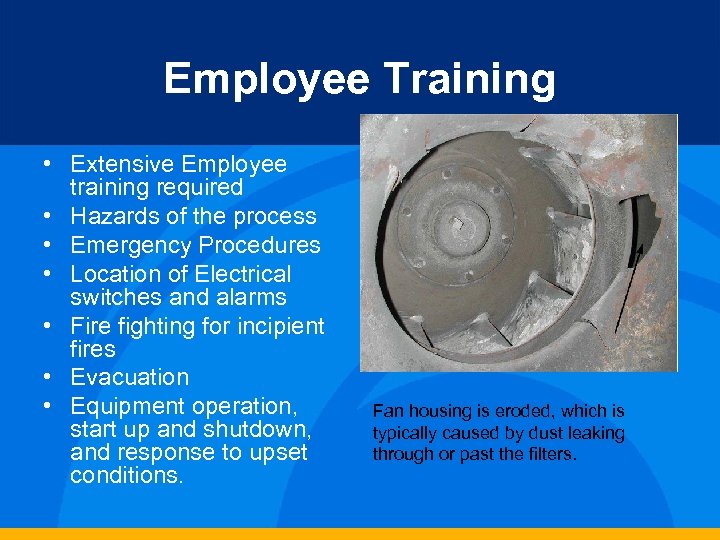
Employee Training • Extensive Employee training required • Hazards of the process • Emergency Procedures • Location of Electrical switches and alarms • Fire fighting for incipient fires • Evacuation • Equipment operation, start up and shutdown, and response to upset conditions. Fan housing is eroded, which is typically caused by dust leaking through or past the filters.
Other Programs § State plan participation in this national emphasis effort is strongly encouraged but is not required. § does not replace the grain handling facility directive, OSHA Instruction CPL 02 -01 -004, Inspection of Grain Handling Facilities, 29 CFR 1910. 272. § not intended for inspections of explosives and pyrotechnics manufacturing facilities covered by the Process Safety Management (PSM) standard (1910. 119) § does not exclude facilities that manufacture or handle other types of combustible dusts (such as ammonium perchlorate) covered under the PSM standard.
CSHOs Safety and Health • PPE and Nonspark Producing Clothing • Use of Cameras • Use of Safe Practices when collecting dust samples
Primary Applicable OSHA Standards 1910. 22 General – Housekeeping 1910. 307 Hazardous (Classified) Locations 1910. 178 Powered Industrial Trucks 1910. 263 Bakery Equipment 1910. 265 Sawmills 1910. 272 Grain Handling General Duty Clause

Resources
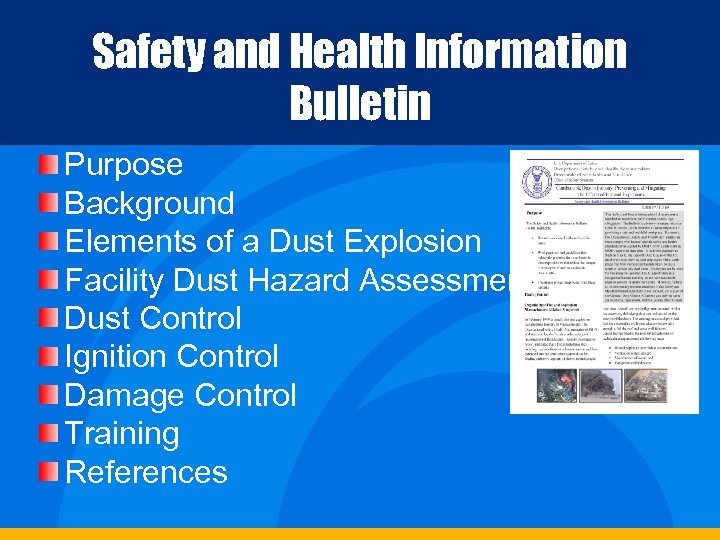
Safety and Health Information Bulletin Purpose Background Elements of a Dust Explosion Facility Dust Hazard Assessment Dust Control Ignition Control Damage Control Training References
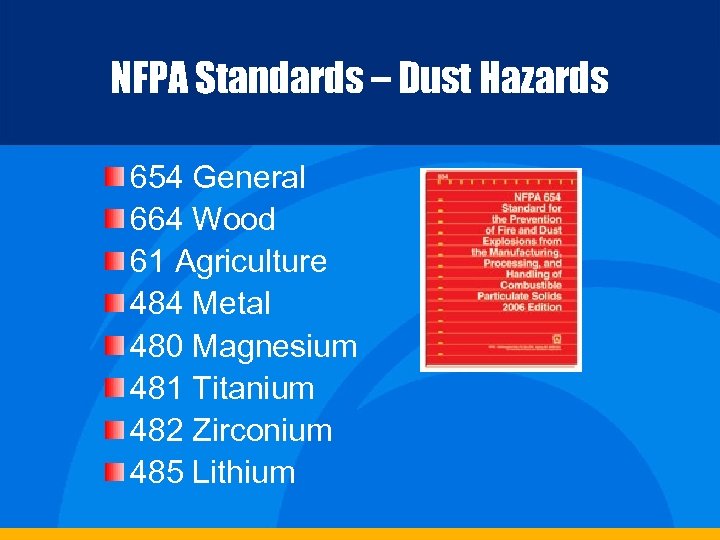
NFPA Standards – Dust Hazards 654 General 664 Wood 61 Agriculture 484 Metal 480 Magnesium 481 Titanium 482 Zirconium 485 Lithium
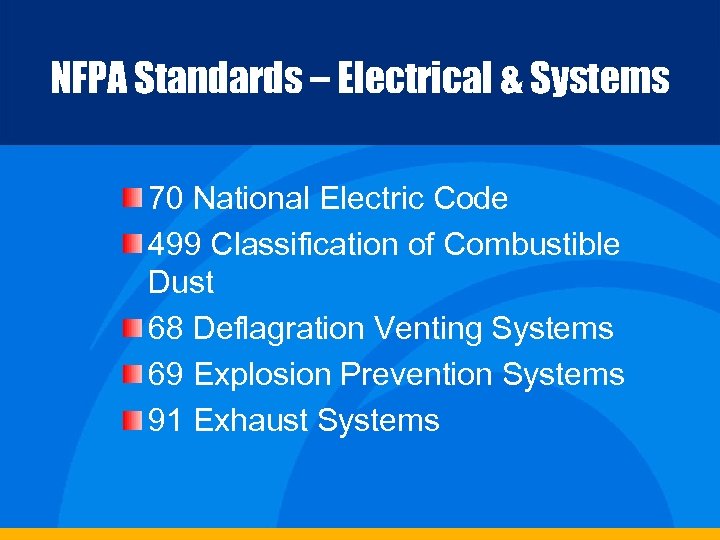
NFPA Standards – Electrical & Systems 70 National Electric Code 499 Classification of Combustible Dust 68 Deflagration Venting Systems 69 Explosion Prevention Systems 91 Exhaust Systems
Combustible Dust NEP • Any Questions?
 Скачать презентацию Combustible Dust National Emphasis Program Ignition Source Dispersion
6384a43a13ff89af6051fabe4c034a0e.ppt