 Скачать презентацию Combining Acoustic Doppler Current Profilers ADCPs with Acoustic
0c7b7185cc097d3ae82ac47905f8d32d.ppt
- Количество слайдов: 44



Combining Acoustic Doppler Current Profilers (ADCPs) with Acoustic Arrays to Enhance Interpretation of Fish Movements. Roger A. Rulifson, Jennifer Cudney-Burch, Ryan Mulligan 1, and Andrea Dell’Apa Institute for Coastal Science and Policy East Carolina University 1 Queen’s University, Kingston, Ontario Mid-Atlantic Regional Association Coastal Ocean Observing System Baltimore, November 1, 2012
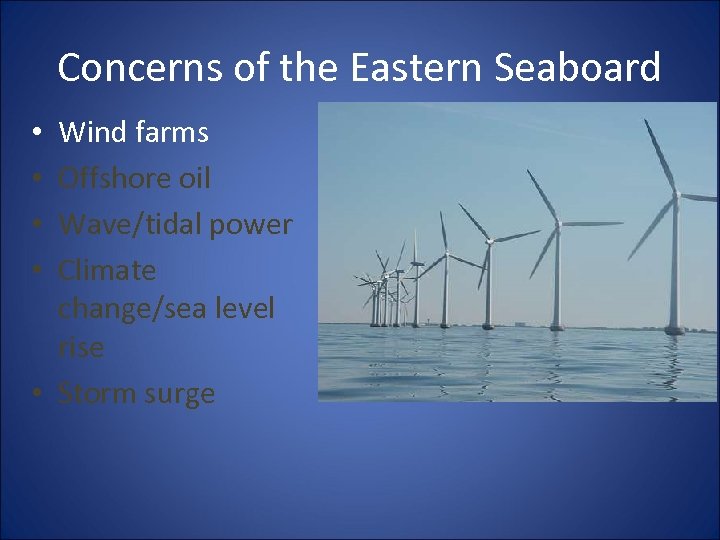
Concerns of the Eastern Seaboard Wind farms Offshore oil Wave/tidal power Climate change/sea level rise • Storm surge • •
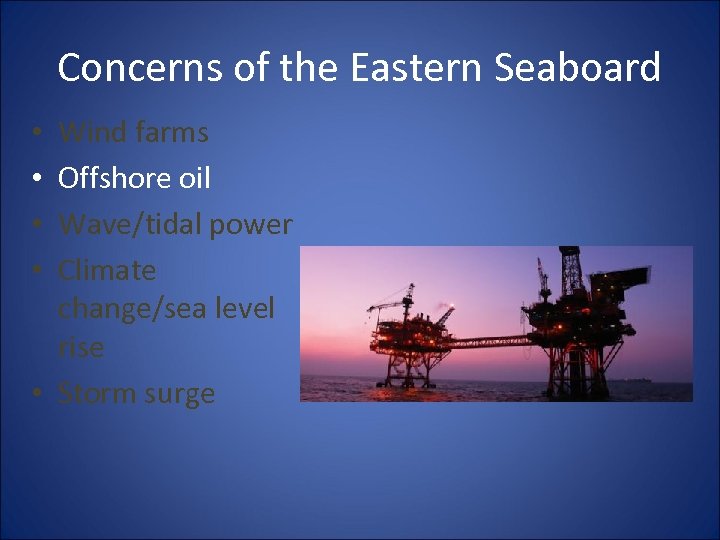
Concerns of the Eastern Seaboard Wind farms Offshore oil Wave/tidal power Climate change/sea level rise • Storm surge • •
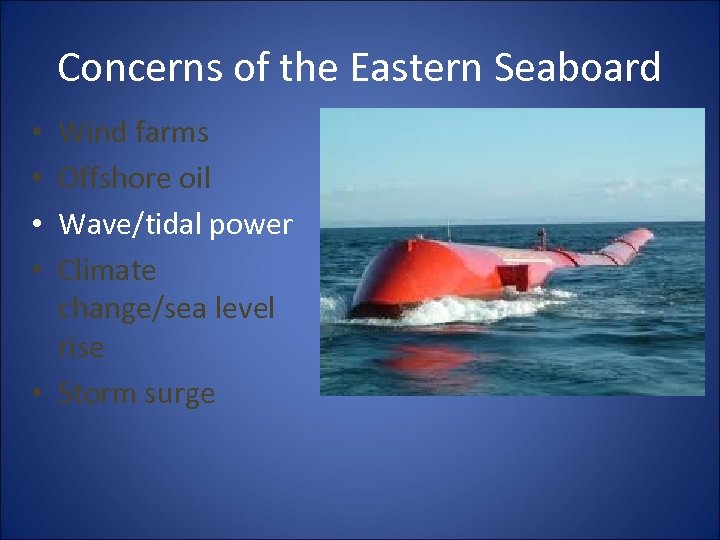
Concerns of the Eastern Seaboard Wind farms Offshore oil Wave/tidal power Climate change/sea level rise • Storm surge • •
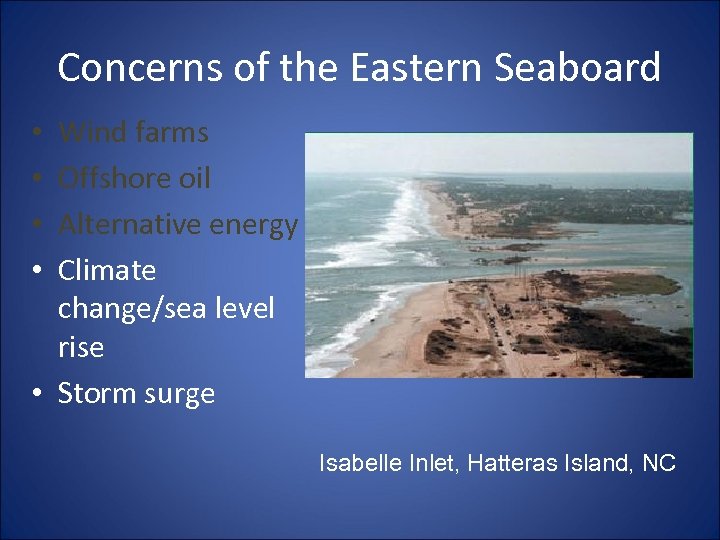
Concerns of the Eastern Seaboard Wind farms Offshore oil Alternative energy Climate change/sea level rise • Storm surge • • Isabelle Inlet, Hatteras Island, NC
North Carolina Concerns • Wind farms • Offshore exploration for natural gas • Barrier Island development/ inlet stabilization • Wave and tidal energy • Military uses – acoustics, bombing ranges, etc. • Sustainability of commercial & sport fisheries • Sea level rise/storm surge A migratory fish
Coastal Migratory Pathways • Marine mammals • Sea turtles • Atlantic and shortnose sturgeons • Coastal pelagic sharks, skates and rays • Anadromous fishes (striped bass, shads, river herrings) • Coastal & estuarine dependent species Basic Questions - • What influences seasonal migrations along the coast? • What role does Cape Hatteras play in influencing timing and continuance of coastal migratory pathways?
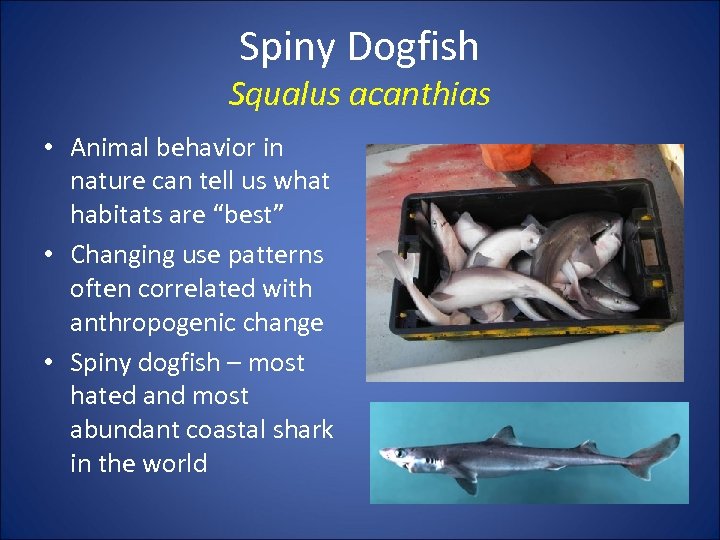
Spiny Dogfish Squalus acanthias • Animal behavior in nature can tell us what habitats are “best” • Changing use patterns often correlated with anthropogenic change • Spiny dogfish – most hated and most abundant coastal shark in the world
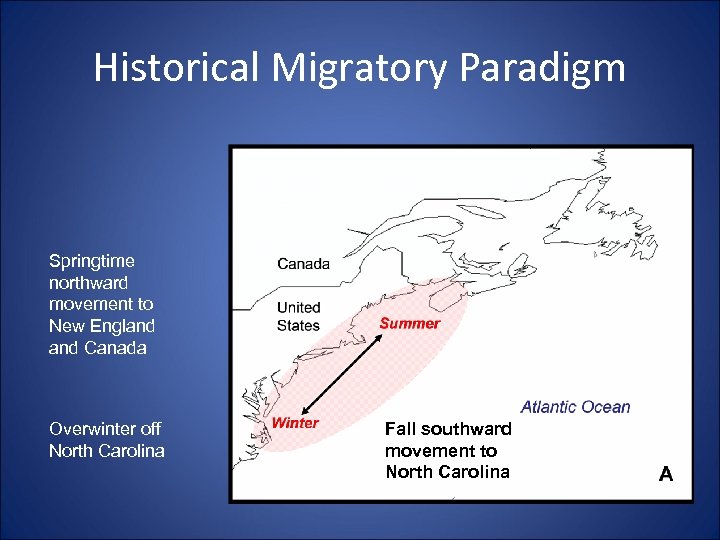
Historical Migratory Paradigm Springtime northward movement to New England Canada Overwinter off North Carolina Fall southward movement to North Carolina
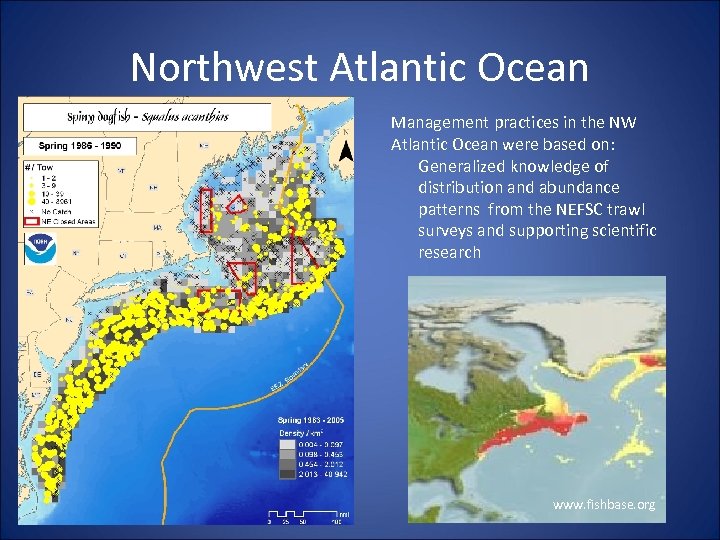
Northwest Atlantic Ocean Management practices in the NW Atlantic Ocean were based on: Generalized knowledge of distribution and abundance patterns from the NEFSC trawl surveys and supporting scientific research www. fishbase. org
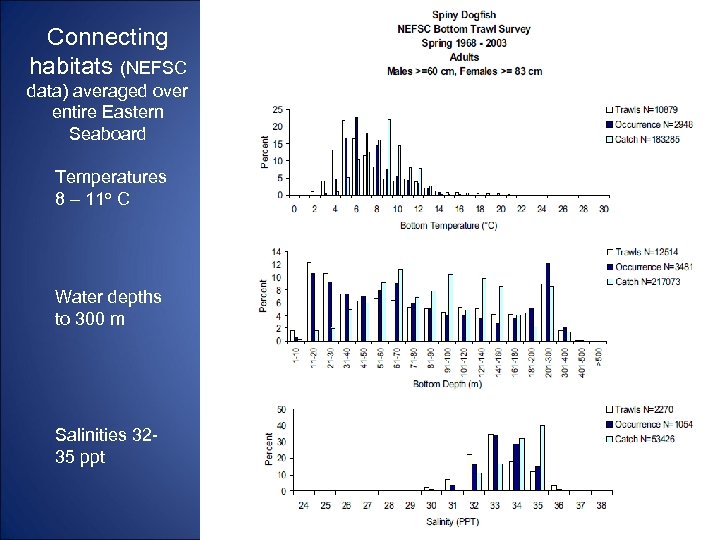
Connecting habitats (NEFSC data) averaged over entire Eastern Seaboard Temperatures 8 – 11 o C Water depths to 300 m Salinities 3235 ppt
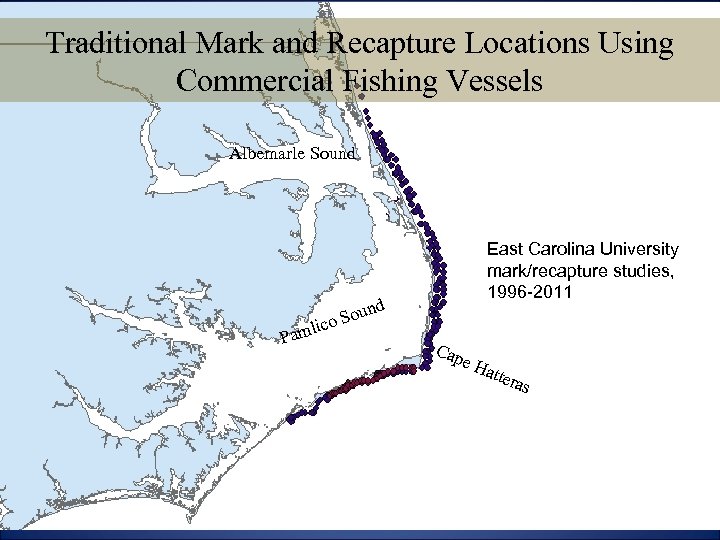
Traditional Mark and Recapture Locations Using Commercial Fishing Vessels Albemarle Sound P nd Sou co amli East Carolina University mark/recapture studies, 1996 -2011 Cap e. H atte ras
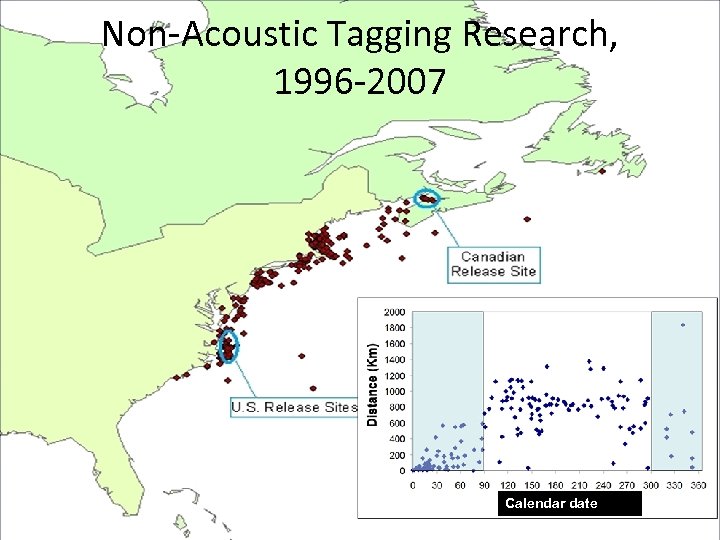
Non-Acoustic Tagging Research, 1996 -2007 Calendar date
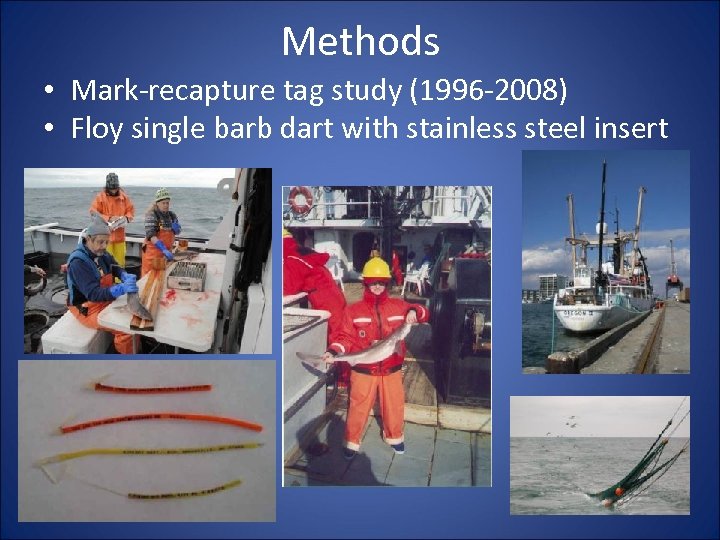
Methods • Mark-recapture tag study (1996 -2008) • Floy single barb dart with stainless steel insert
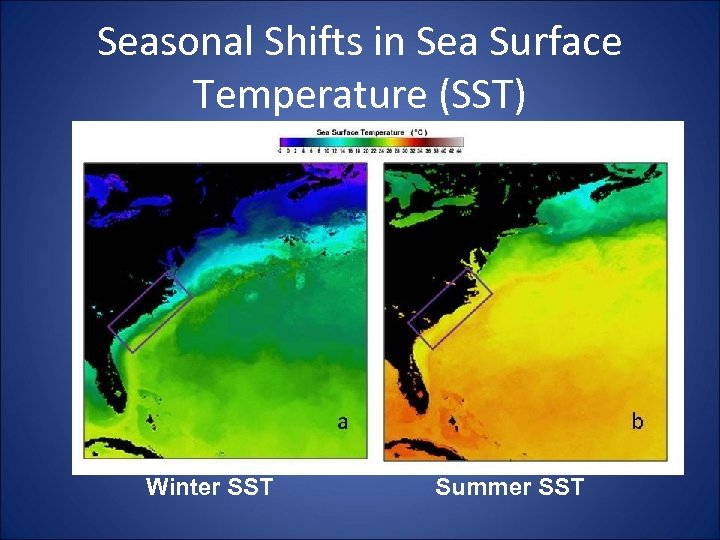
Seasonal Shifts in Sea Surface Temperature (SST) Winter SST Summer SST
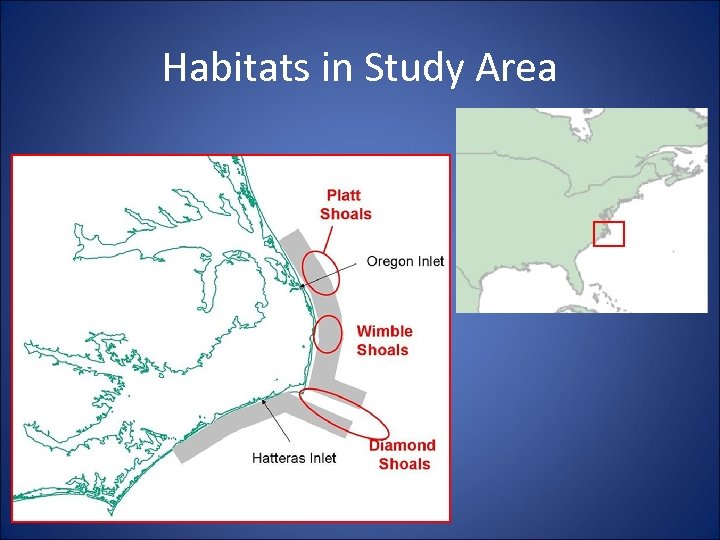
Habitats in Study Area Cape Hatteras Cape Lookout (wind data)
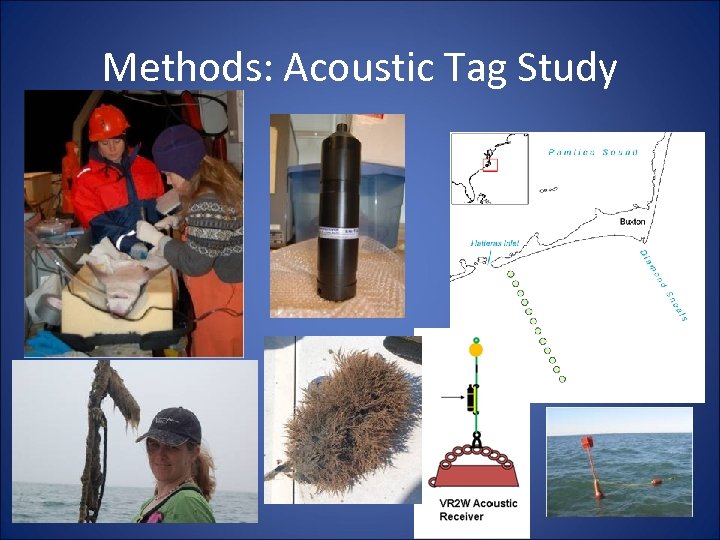
Methods: Acoustic Tag Study
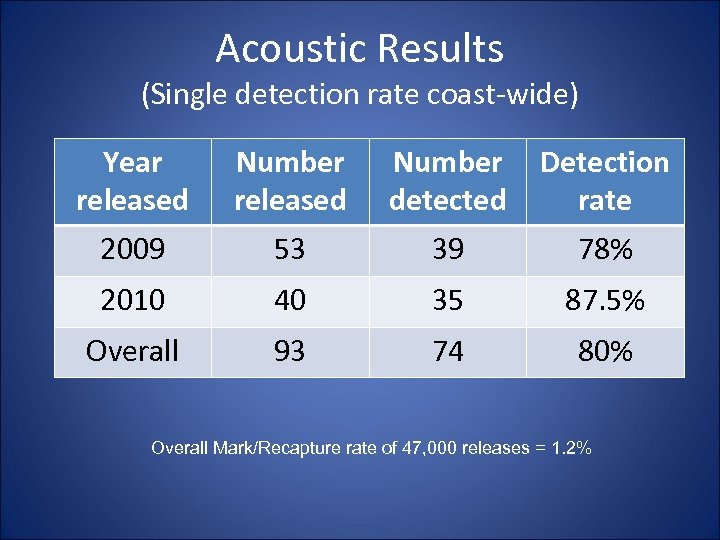
Acoustic Results (Single detection rate coast-wide) Year released Number detected Detection rate 2009 53 39 78% 2010 40 35 87. 5% Overall 93 74 80% Overall Mark/Recapture rate of 47, 000 releases = 1. 2%
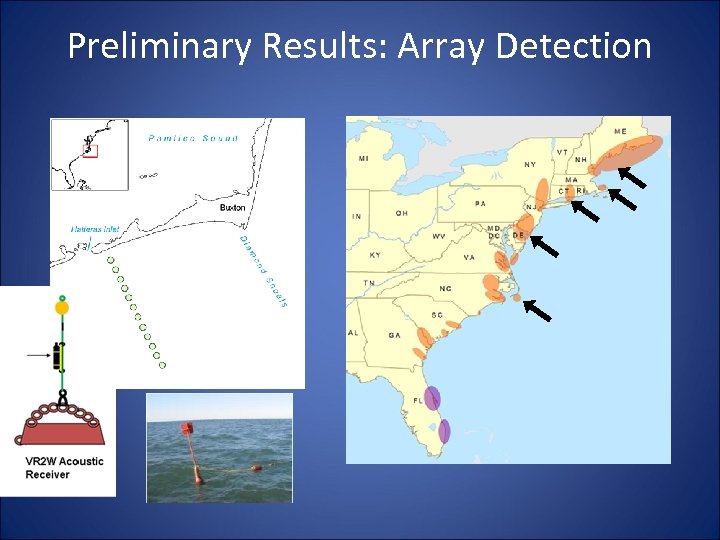
Preliminary Results: Array Detection
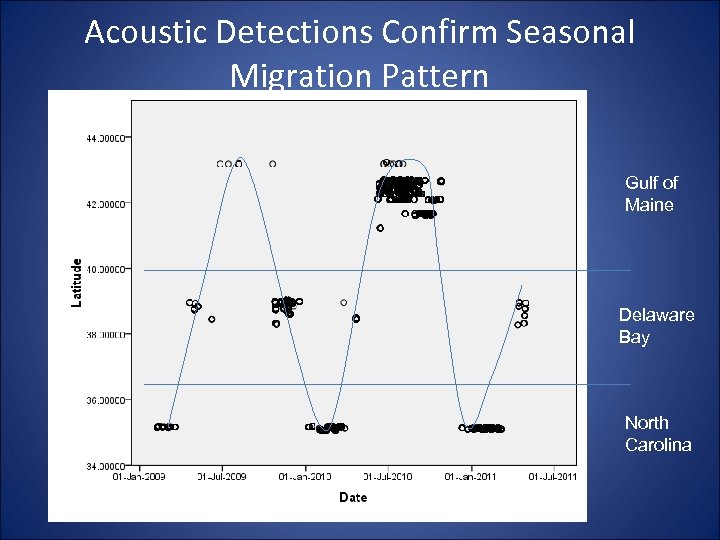
Acoustic Detections Confirm Seasonal Migration Pattern Gulf of Maine Delaware Bay North Carolina
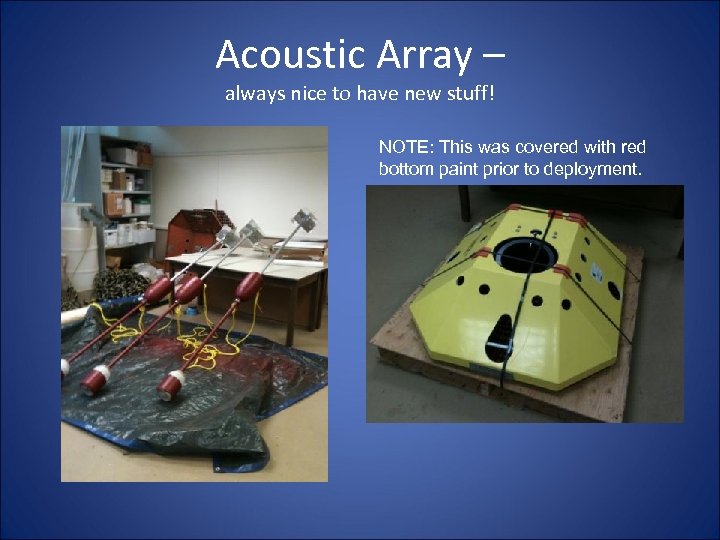
Acoustic Array – always nice to have new stuff! NOTE: This was covered with red bottom paint prior to deployment.
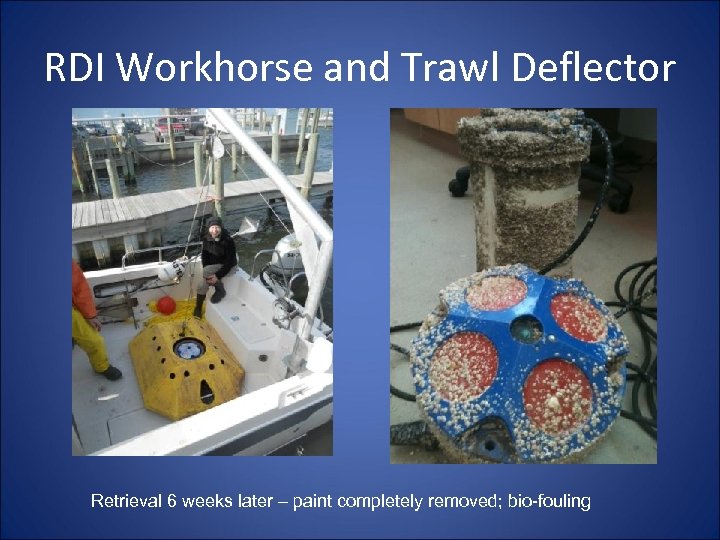
RDI Workhorse and Trawl Deflector Retrieval 6 weeks later – paint completely removed; bio-fouling
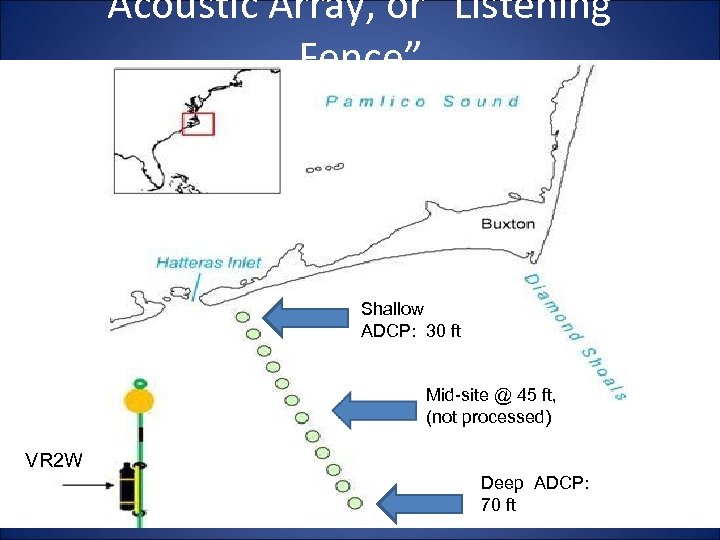
Acoustic Array, or “Listening Fence” Shallow ADCP: 30 ft Mid-site @ 45 ft, (not processed) VR 2 W Deep ADCP: 70 ft
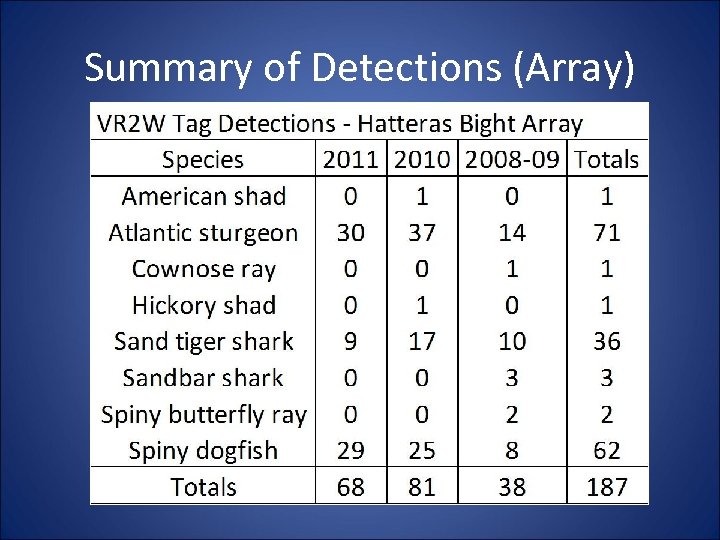
Summary of Detections (Array)
Bottom water temperature (C) Dogfish Passage, Jan-Apr 2009 Detected on multiple receivers mid-array
Deep Currents - 2009 East U West North South V
Deep Currents - 2009 East West North South
Shallow Currents - 2009 East u West North South v
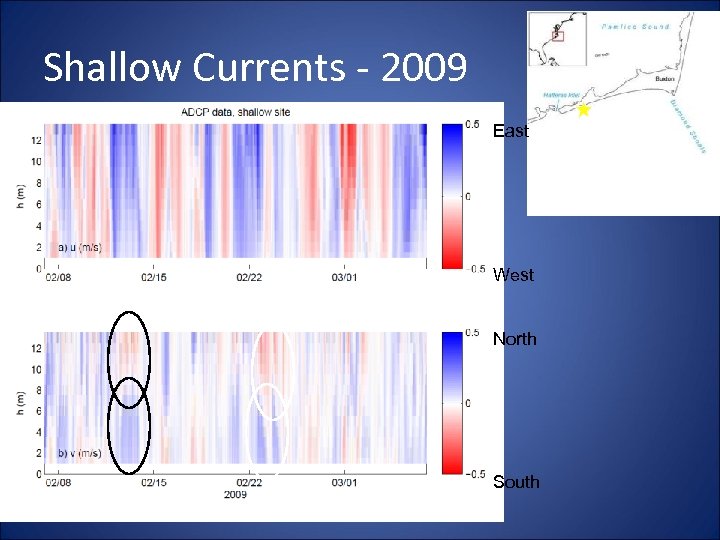
Shallow Currents - 2009 East West North South
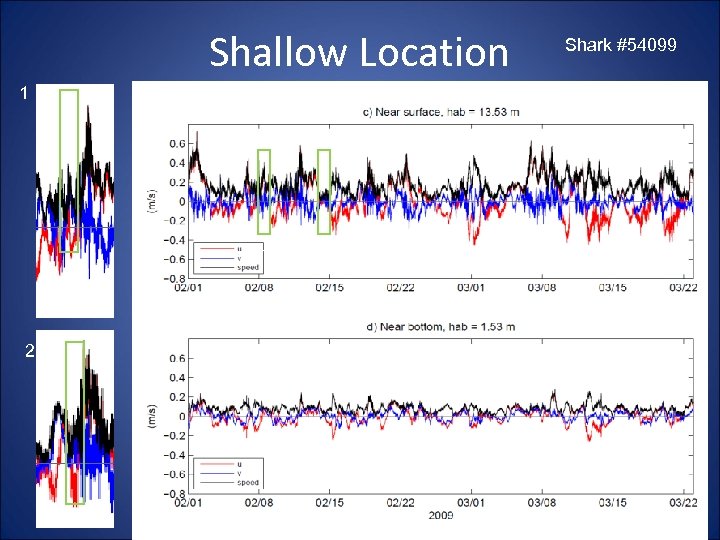
Shallow Location 1 1 2 2 Shark #54099
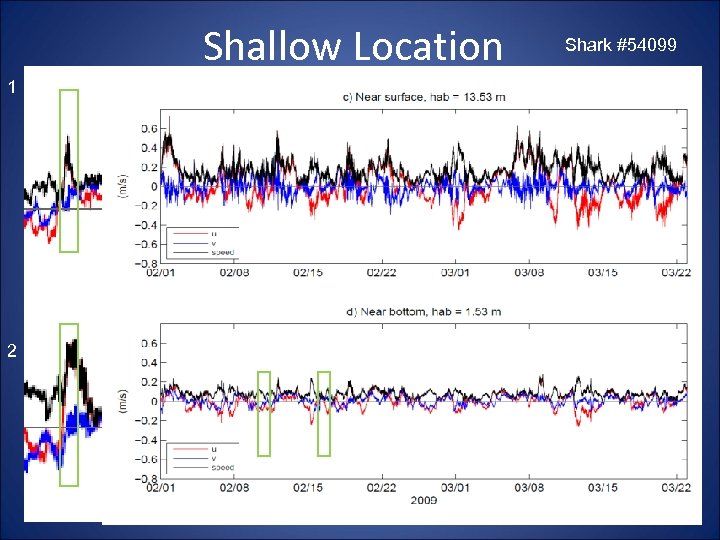
Shallow Location 1 2 Shark #54099
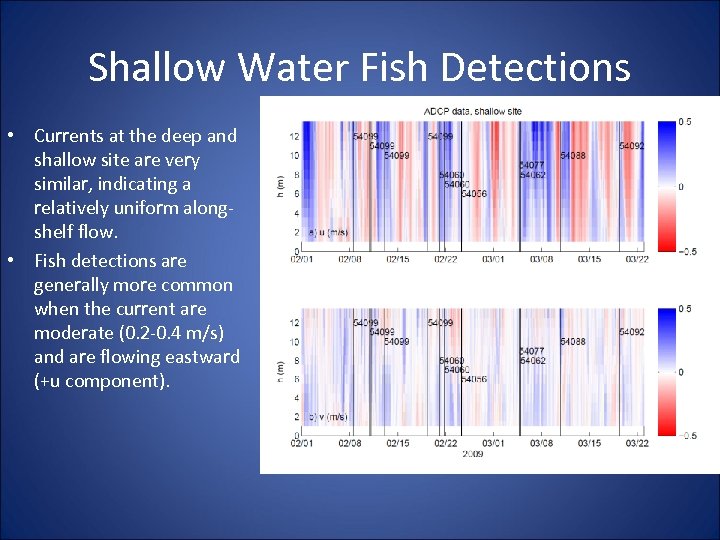
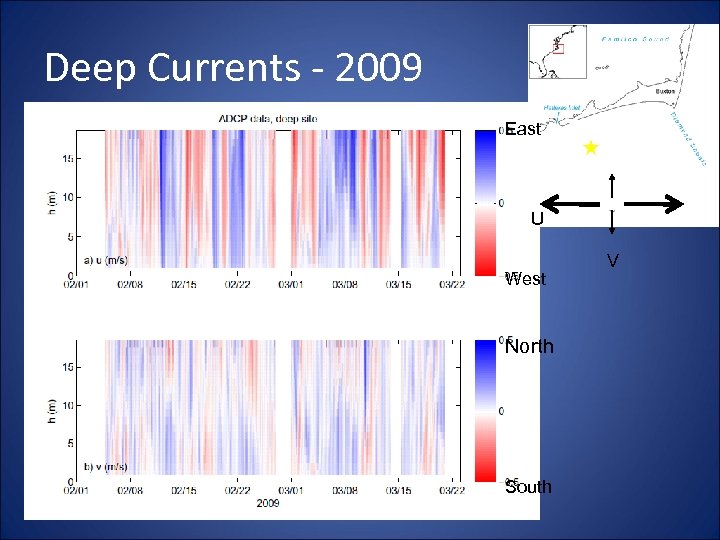
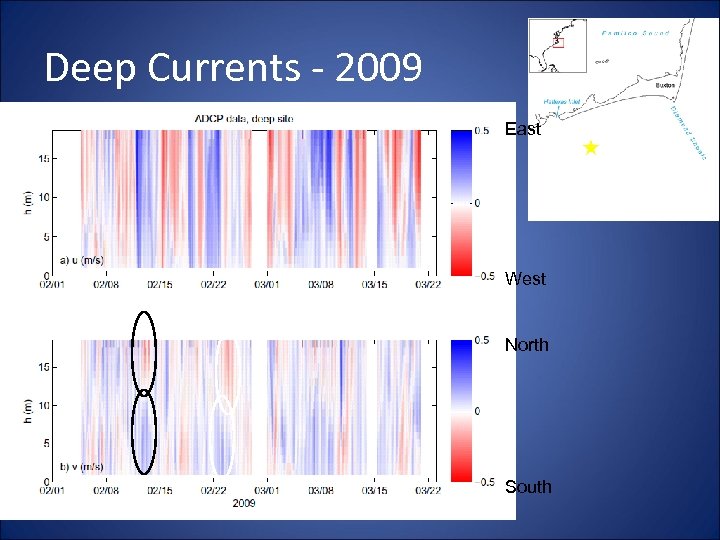
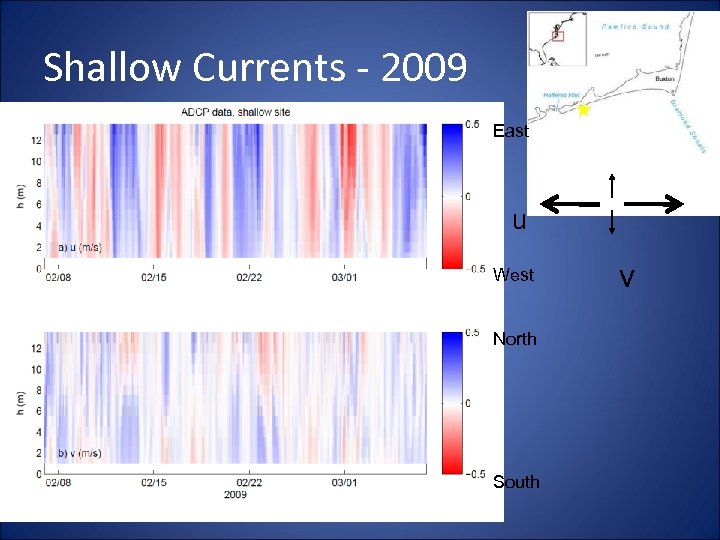
Shallow Water Fish Detections U • Currents at the deep and shallow site are very similar, indicating a relatively uniform alongshelf flow. • Fish detections are generally more common when the current are moderate (0. 2 -0. 4 m/s) and are flowing eastward (+u component). East West V
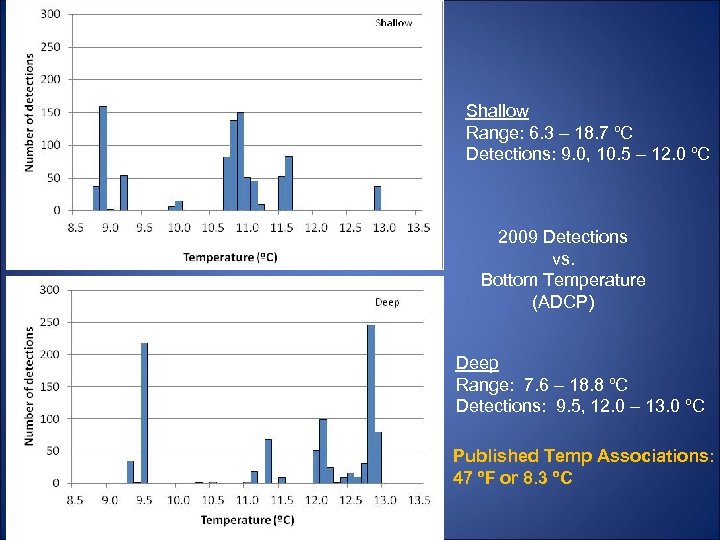
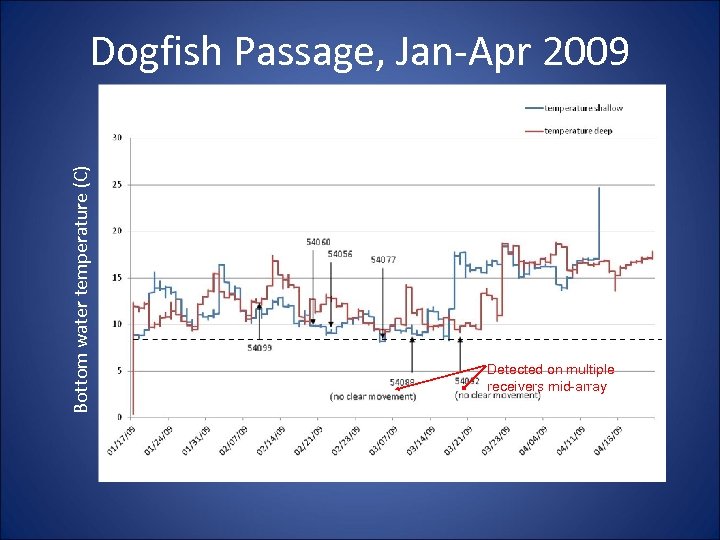
Shallow Range: 6. 3 – 18. 7 ºC Detections: 9. 0, 10. 5 – 12. 0 ºC 2009 Detections vs. Bottom Temperature (ADCP) Deep Range: 7. 6 – 18. 8 ºC Detections: 9. 5, 12. 0 – 13. 0 ºC Published Temp Associations: 47 ºF or 8. 3 ºC
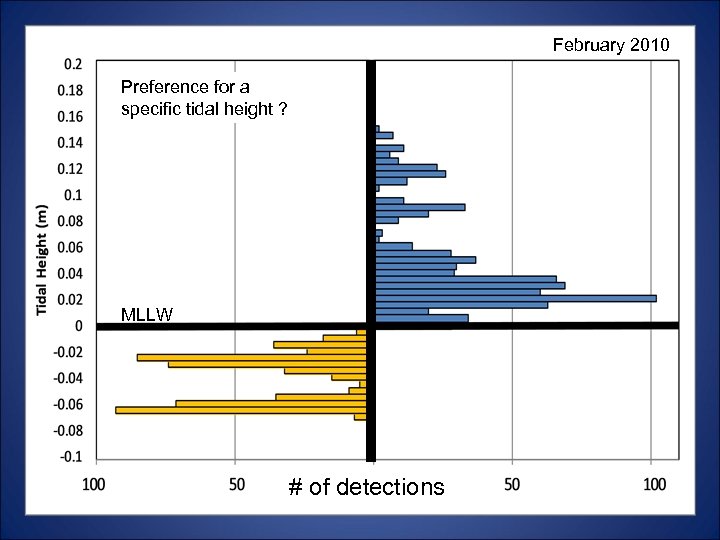
February 2010 Preference for a specific tidal height ? MLLW # of detections
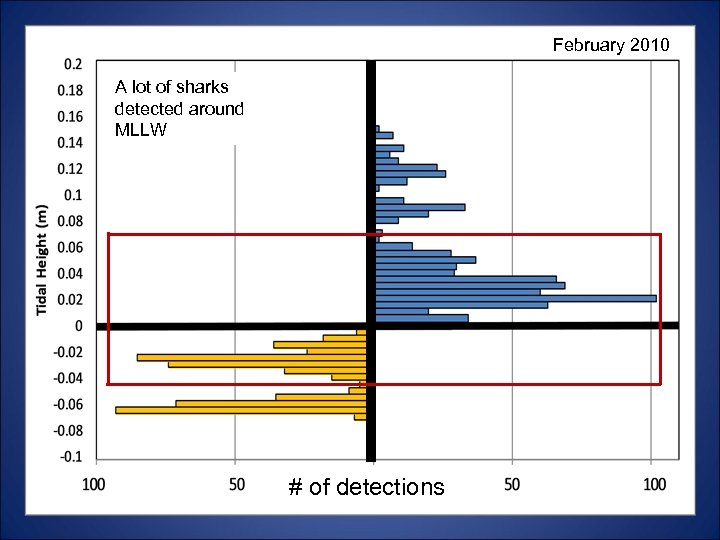
February 2010 A lot of sharks detected around MLLW # of detections
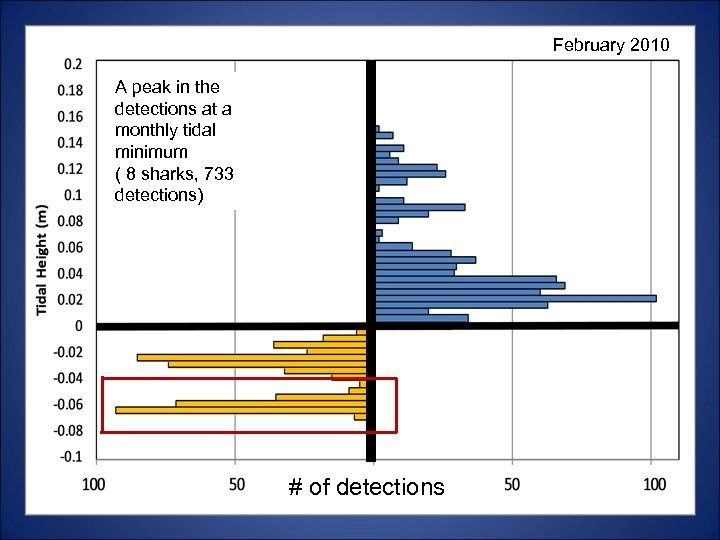
February 2010 A peak in the detections at a monthly tidal minimum ( 8 sharks, 733 detections) # of detections
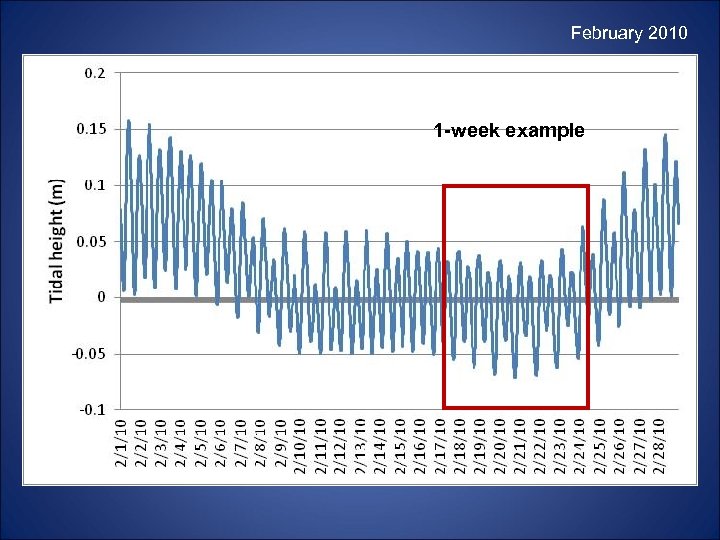
February 2010 1 -week example
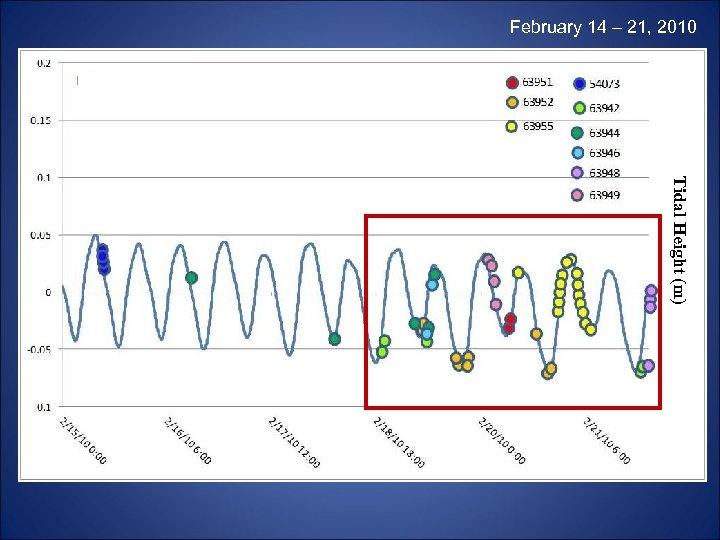
February 14 – 21, 2010 Tidal Height (m)
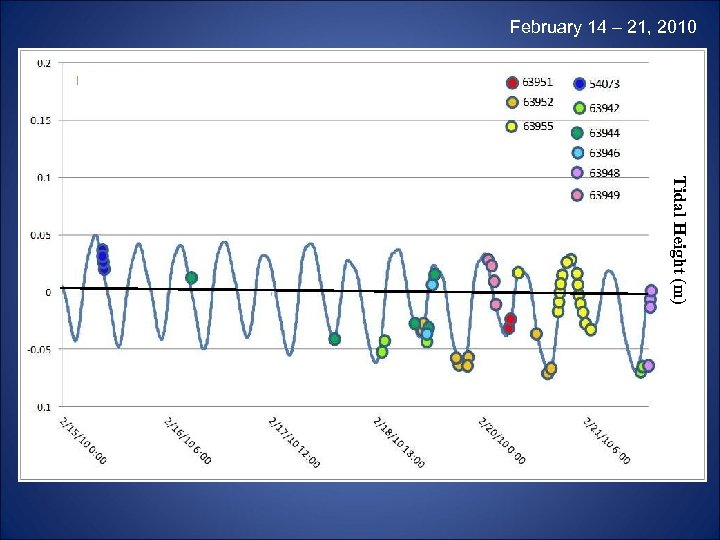
February 14 – 21, 2010 Tidal Height (m)
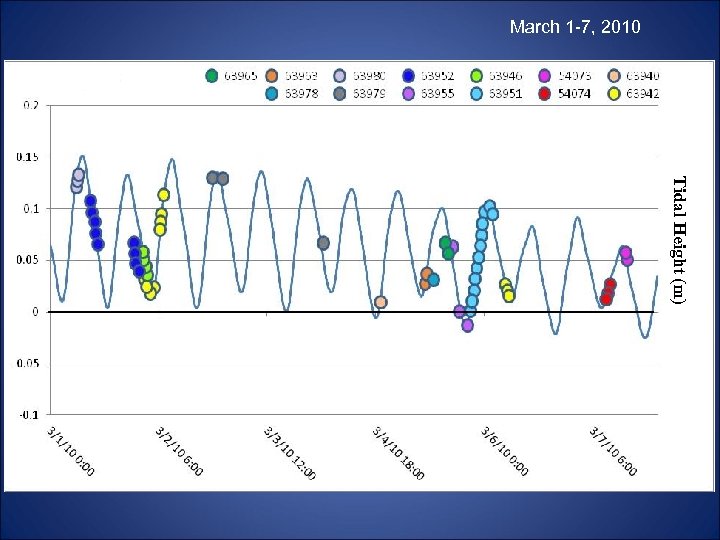
March 1 -7, 2010 Tidal Height (m)
Biological Observations • 1/3 of the tagged sharks moved around Cape Hatteras • Redetection rates are very high (80%) compared to conventional floy tag studies (1 -4%) • Sharks encountered the array multiple times within a season (2 -8 separate days) • Residence time varied (10 minutes – 24 hours; multiple days in a row) • Crepuscular onshore / offshore movements ? ? ? • Hatteras Bight is an important migration pathway for species of concern (Atlantic sturgeon & sand tiger sharks)
Remaining Challenges • Behavioral data needs to be coupled with environmental data for context – WHY do these animals move when they do? • Hatteras Bight is very dynamic – need to combine multiple types of environmental data together to understand the system • Better methods for array deployment including receivers, ADCPs, and passive acoustic devices (high energy, commercial fishing)
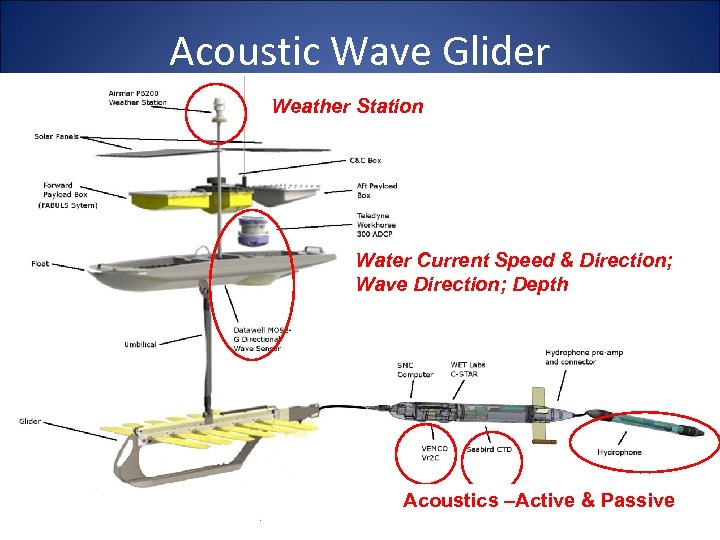
Acoustic Wave Glider Weather Station Water Current Speed & Direction; Wave Direction; Depth Acoustics –Active && Salinity Passive Temperature
Acknowledgements • • • • • North Carolina Sea Grant • Dewey Hemilright (F/V Tar. Baby) • Chris Hickman (F/V Bout. Time) • • Coastal Resources Management Ph. D • Program, ECU • ICSP, ECU • Office of Diving / Water Safety, ECU • Department of Biology, ECU • • Department of Physics, ECU • Department of Geography, ECU • U. S. Fish and Wildlife Service • • Atlantic States Marine Fisheries • Commission • Island Hide-A-Way Campground • (Buxton, NC) • N. C. Division of Marine Fisheries • Oden’s Dock Marina (Hatteras, NC) • • Avon Seafood (Hatteras, NC) • Vemco sales and support team • Knauss Fellowship Team / NOAA / • National Sea Grant Office Hans Vogelsong, ECU Lauriston King John Rummel Steve Sellers Eric Diaddorio Mike Baker Mark Keusenkothen Sara Miribilio Cecilia Krahforst Andrea del’Apa Katie Kleber Lyndell Bade Dan Furinsky Tim Wamer Jim Saupe Gene Oakley Chris Bonnerup Garry Wright Chuck Bangley Craig Harms, DVM (NCSU) Dorcas O’Rourke, DVM (ECU IACUC) Tom Savoy (CTDEP) Dewayne Fox (DSU) Bill Hoffman (Mass. DMF) Paul Music (WHOI) And the friends, family, and colleagues whose names don’t fit!
Скачать презентацию Combining Acoustic Doppler Current Profilers ADCPs with Acoustic
0c7b7185cc097d3ae82ac47905f8d32d.ppt