 Скачать презентацию Combating Health Disparities for People with DD A
6b6241e769bd69932a98787abd324867.ppt
- Количество слайдов: 1



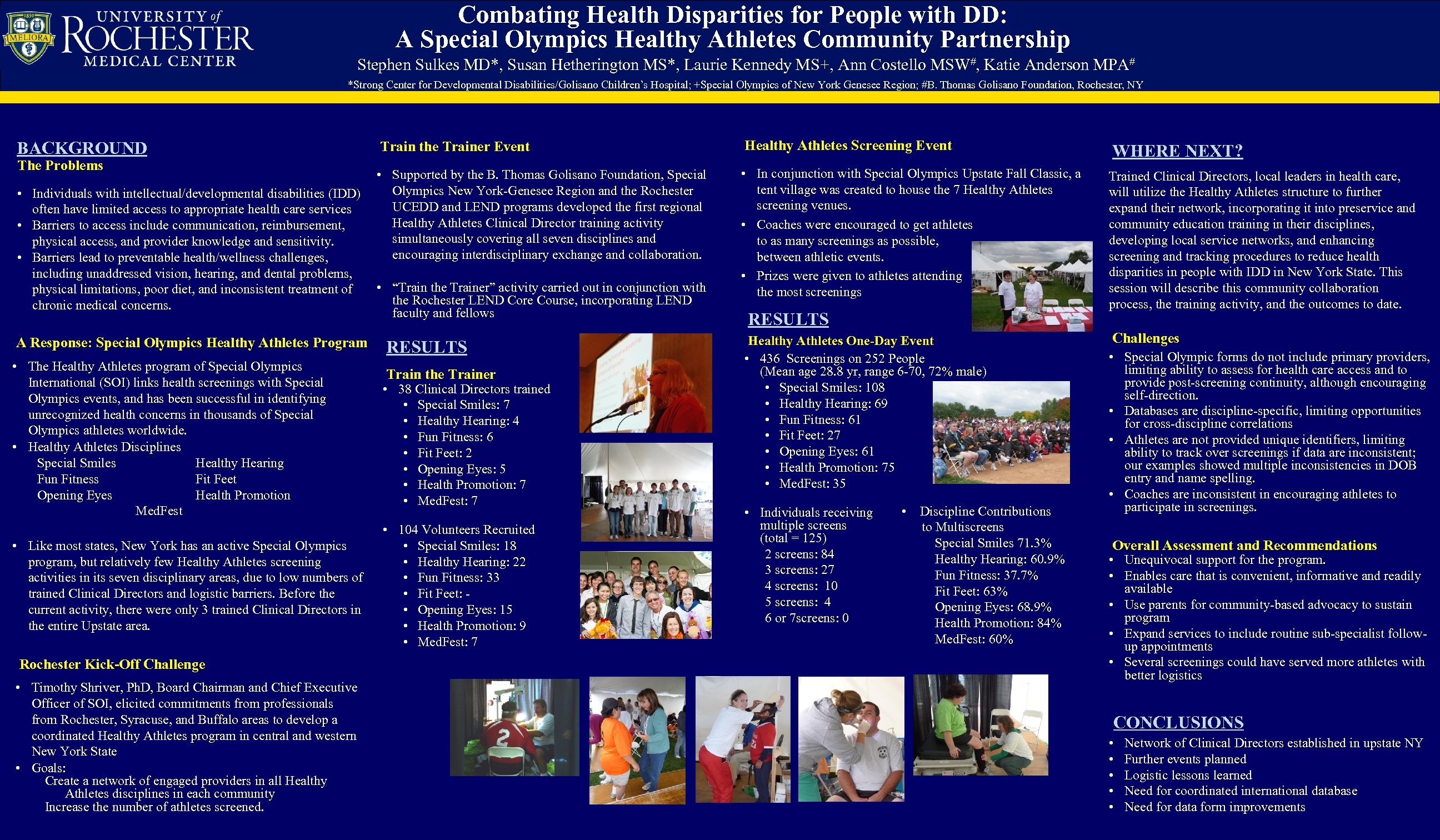
Combating Health Disparities for People with DD: A Special Olympics Healthy Athletes Community Partnership Stephen Sulkes MD*, Susan Hetherington MS*, Laurie Kennedy MS+, Ann Costello MSW#, Katie Anderson MPA# *Strong Center for Developmental Disabilities/Golisano Children’s Hospital; +Special Olympics of New York Genesee Region; #B. Thomas Golisano Foundation, Rochester, NY BACKGROUND The Problems • Individuals with intellectual/developmental disabilities (IDD) often have limited access to appropriate health care services • Barriers to access include communication, reimbursement, physical access, and provider knowledge and sensitivity. • Barriers lead to preventable health/wellness challenges, including unaddressed vision, hearing, and dental problems, physical limitations, poor diet, and inconsistent treatment of chronic medical concerns. A Response: Special Olympics Healthy Athletes Program Train the Trainer Event Healthy Athletes Screening Event WHERE NEXT? • Supported by the B. Thomas Golisano Foundation, Special Olympics New York-Genesee Region and the Rochester UCEDD and LEND programs developed the first regional Healthy Athletes Clinical Director training activity simultaneously covering all seven disciplines and encouraging interdisciplinary exchange and collaboration. • In conjunction with Special Olympics Upstate Fall Classic, a tent village was created to house the 7 Healthy Athletes screening venues. • Coaches were encouraged to get athletes to as many screenings as possible, between athletic events. • Prizes were given to athletes attending the most screenings Trained Clinical Directors, local leaders in health care, will utilize the Healthy Athletes structure to further expand their network, incorporating it into preservice and community education training in their disciplines, developing local service networks, and enhancing screening and tracking procedures to reduce health disparities in people with IDD in New York State. This session will describe this community collaboration process, the training activity, and the outcomes to date. • “Train the Trainer” activity carried out in conjunction with the Rochester LEND Core Course, incorporating LEND faculty and fellows RESULTS • The Healthy Athletes program of Special Olympics International (SOI) links health screenings with Special Olympics events, and has been successful in identifying unrecognized health concerns in thousands of Special Olympics athletes worldwide. • Healthy Athletes Disciplines Special Smiles Healthy Hearing Fun Fitness Fit Feet Opening Eyes Health Promotion Med. Fest • 38 Clinical Directors trained • Special Smiles: 7 • Healthy Hearing: 4 • Fun Fitness: 6 • Fit Feet: 2 • Opening Eyes: 5 • Health Promotion: 7 • Med. Fest: 7 • Like most states, New York has an active Special Olympics program, but relatively few Healthy Athletes screening activities in its seven disciplinary areas, due to low numbers of trained Clinical Directors and logistic barriers. Before the current activity, there were only 3 trained Clinical Directors in the entire Upstate area. • 104 Volunteers Recruited • Special Smiles: 18 • Healthy Hearing: 22 • Fun Fitness: 33 • Fit Feet: • Opening Eyes: 15 • Health Promotion: 9 • Med. Fest: 7 Rochester Kick-Off Challenge • Timothy Shriver, Ph. D, Board Chairman and Chief Executive Officer of SOI, elicited commitments from professionals from Rochester, Syracuse, and Buffalo areas to develop a coordinated Healthy Athletes program in central and western New York State • Goals: Create a network of engaged providers in all Healthy Athletes disciplines in each community Increase the number of athletes screened. Train the Trainer RESULTS Healthy Athletes One-Day Event • 436 Screenings on 252 People (Mean age 28. 8 yr, range 6 -70, 72% male) • Special Smiles: 108 • Healthy Hearing: 69 • Fun Fitness: 61 • Fit Feet: 27 • Opening Eyes: 61 • Health Promotion: 75 • Med. Fest: 35 • Individuals receiving multiple screens (total = 125) 2 screens: 84 3 screens: 27 4 screens: 10 5 screens: 4 6 or 7 screens: 0 • Discipline Contributions to Multiscreens Special Smiles 71. 3% Healthy Hearing: 60. 9% Fun Fitness: 37. 7% Fit Feet: 63% Opening Eyes: 68. 9% Health Promotion: 84% Med. Fest: 60% Challenges • Special Olympic forms do not include primary providers, limiting ability to assess for health care access and to provide post-screening continuity, although encouraging self-direction. • Databases are discipline-specific, limiting opportunities for cross-discipline correlations • Athletes are not provided unique identifiers, limiting ability to track over screenings if data are inconsistent; our examples showed multiple inconsistencies in DOB entry and name spelling. • Coaches are inconsistent in encouraging athletes to participate in screenings. Overall Assessment and Recommendations • Unequivocal support for the program. • Enables care that is convenient, informative and readily available • Use parents for community-based advocacy to sustain program • Expand services to include routine sub-specialist followup appointments • Several screenings could have served more athletes with better logistics CONCLUSIONS • • • Network of Clinical Directors established in upstate NY Further events planned Logistic lessons learned Need for coordinated international database Need for data form improvements
Скачать презентацию Combating Health Disparities for People with DD A
6b6241e769bd69932a98787abd324867.ppt