


 Скачать презентацию Colon Cancer Chemoprevention UWCCC Chemoprevention Program And Mayo
d4fe2a0f1530c5f2c822db93675d1069.ppt
- Количество слайдов: 43
 Colon Cancer Chemoprevention UWCCC Chemoprevention Program And Mayo Clinic Chemoprevention Program Spirit of Eagles September 6, 2007 Howard Bailey, MD and Paul Limburg, MD, MPH
 Colon Cancer Chemoprevention § Need/Rationale § 150, 000 expected to be diagnosed with colorectal cancer in 2007 § >50, 000 expected to die from colorectal cancer in 2007
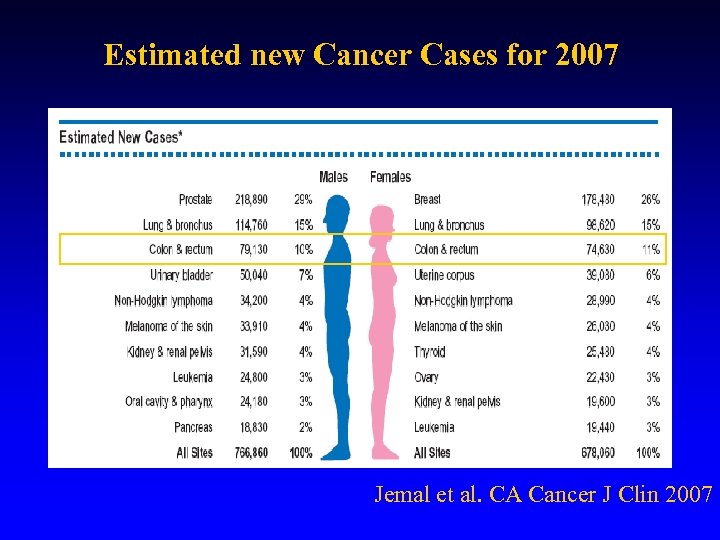 Estimated new Cancer Cases for 2007 Jemal et al. CA Cancer J Clin 2007
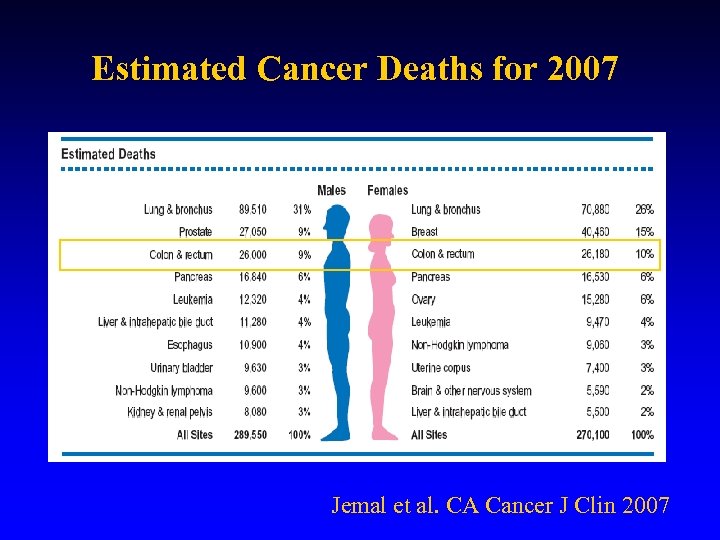 Estimated Cancer Deaths for 2007 Jemal et al. CA Cancer J Clin 2007
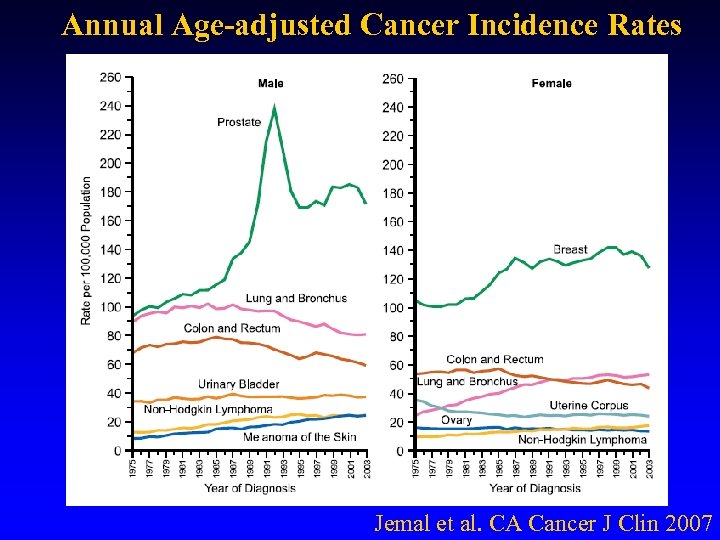 Annual Age-adjusted Cancer Incidence Rates Jemal et al. CA Cancer J Clin 2007
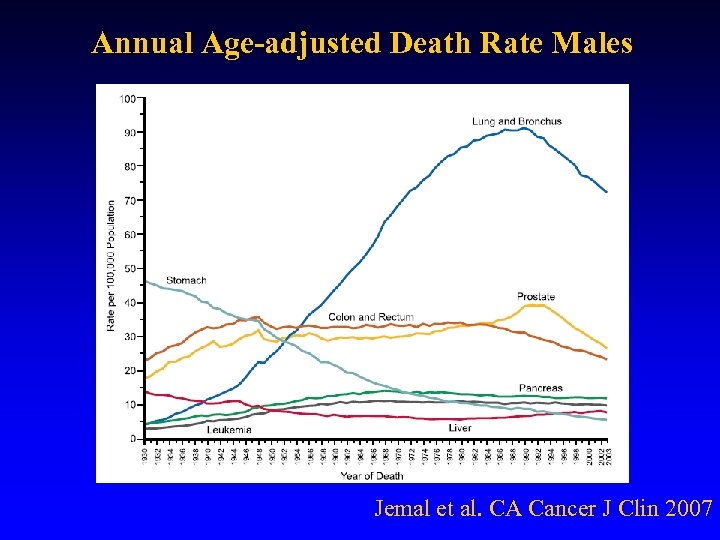 Annual Age-adjusted Death Rate Males Jemal et al. CA Cancer J Clin 2007
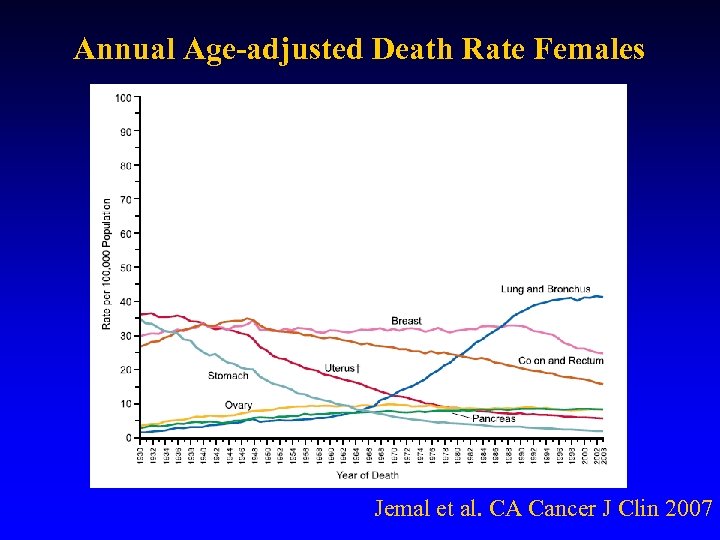 Annual Age-adjusted Death Rate Females Jemal et al. CA Cancer J Clin 2007
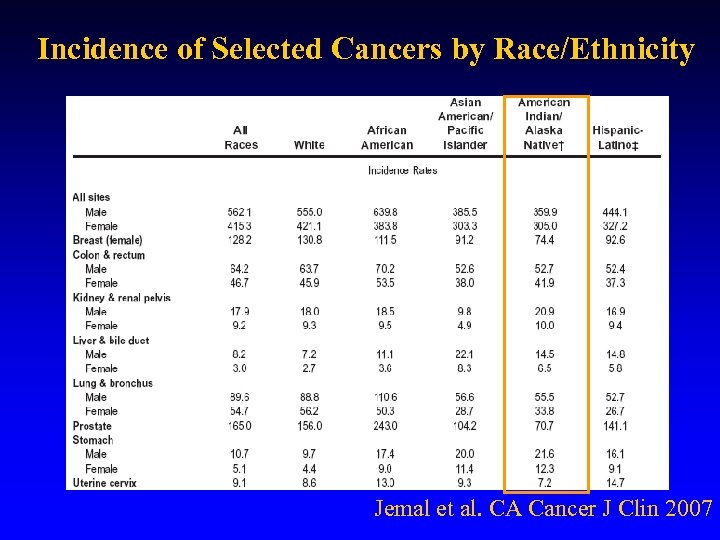 Incidence of Selected Cancers by Race/Ethnicity Jemal et al. CA Cancer J Clin 2007
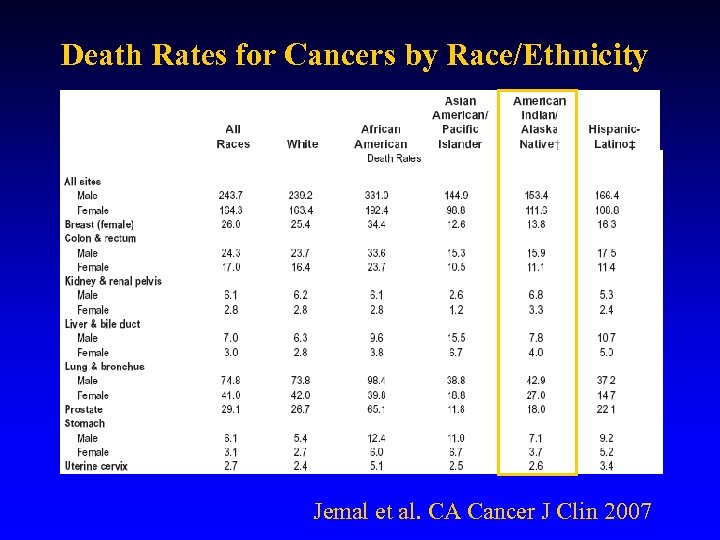 Death Rates for Cancers by Race/Ethnicity Jemal et al. CA Cancer J Clin 2007
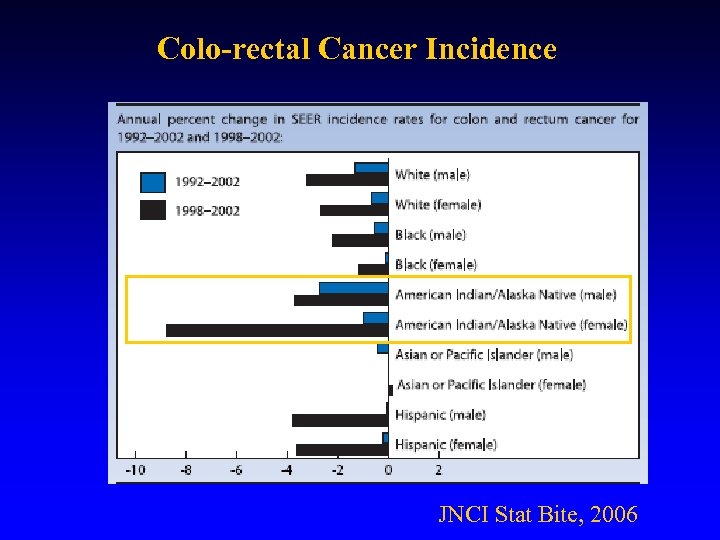 Colo-rectal Cancer Incidence JNCI Stat Bite, 2006
 Colon Cancer • Above data implies while colorectal cancer remains a significant health issue, it appears to be lessening including for American Indians/Alaska Natives. • Cancer mortality, in general, is less in American Indians/Alaska Natives than general population 165 compared to 201 per 100, 000; however mortality rates for Alaska Natives and Northern Plains Tribes is higher, especially for colorectal, lung, liver, stomach, gall bladder and kidney cancers.
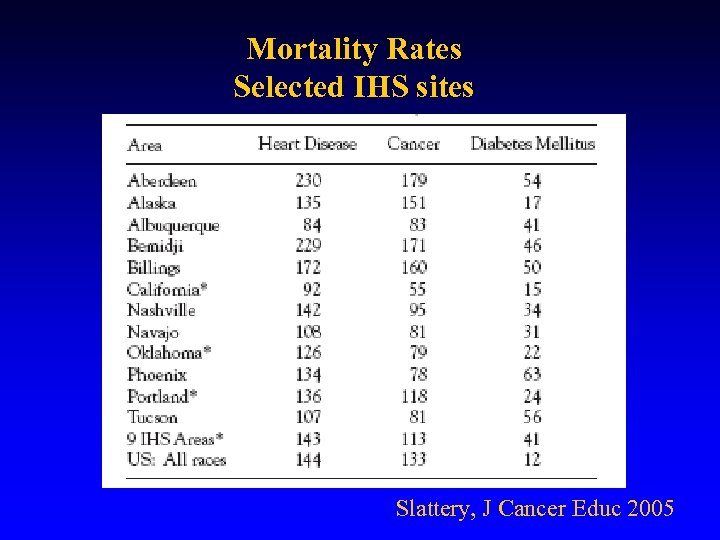 Mortality Rates Selected IHS sites Slattery, J Cancer Educ 2005
 Colon Cancer in Indian Country • Harwell et al. (Am J Prev Med 30: 493, 2006) – Age adjusted 6 -yr cancer incidence rates in Montana, 1991 -96 and 1997 -2002 – All cancers incidence rates higher in American Indians than whites – Colon cancer incidence twice as high in American Indian males as white males
 Colon Cancer Prevention • For the US population it remains important despite decreasing incidence and mortality • This appears especially true for Northern Plains Tribes and Alaska Natives • Many ways to accomplish this through lifestyle, screening, etc. . • Will focus on the potential of chemoprevention of colon cancer
 Chemoprevention of Cancer § The study of carcinogenesis has led to the current dogma that human carcinogenesis is a multi-year process § Example – normal colonic mucosa to hyperplastic polyps to adenomatous polyps to carcinoma may take 10 -30 years § Thus providing an opportunity to intervene prior to accumulated mutations or phenotypic changes
 Candidate Agents • COX-2 inhibitors, selective or nonselective • Diet and Nutraceuticals • Antioxidants/Vitamins • Statins • Difluoromethylornithine (DFMO) • Others
 Selective COX-2 Inhibitors • Celecoxib: FDA approved for adenomatous polyp prevention for individuals with Familial Adenomatous Polyposis – These data and retrospective data have led to extensive study of COX-2 inhibitors for sporadic adenomas as well
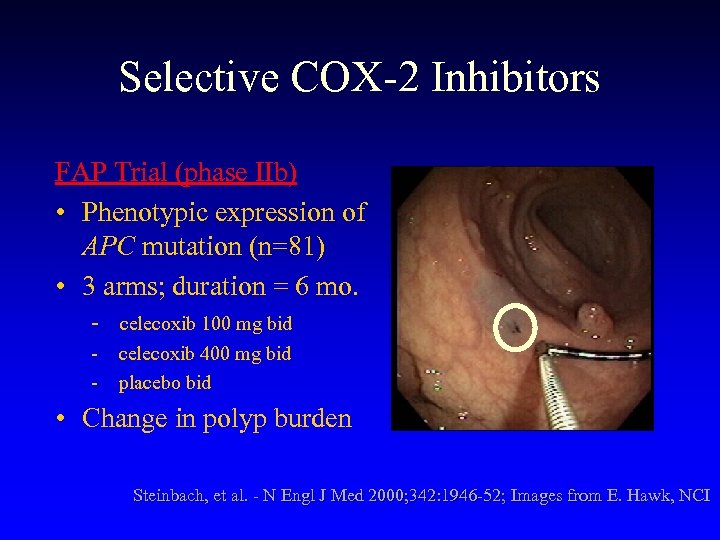 Selective COX-2 Inhibitors FAP Trial (phase IIb) • Phenotypic expression of APC mutation (n=81) • 3 arms; duration = 6 mo. - celecoxib 100 mg bid - celecoxib 400 mg bid placebo bid • Change in polyp burden Steinbach, et al. - N Engl J Med 2000; 342: 1946 -52; Images from E. Hawk, NCI
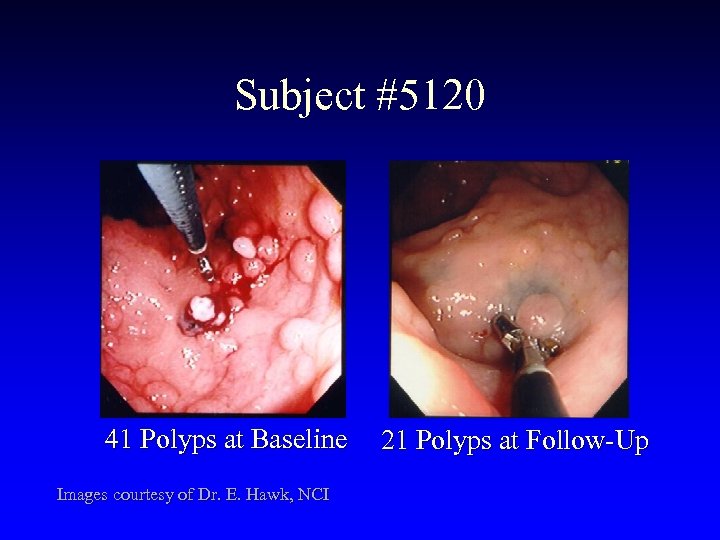 Subject #5120 41 Polyps at Baseline Images courtesy of Dr. E. Hawk, NCI 21 Polyps at Follow-Up
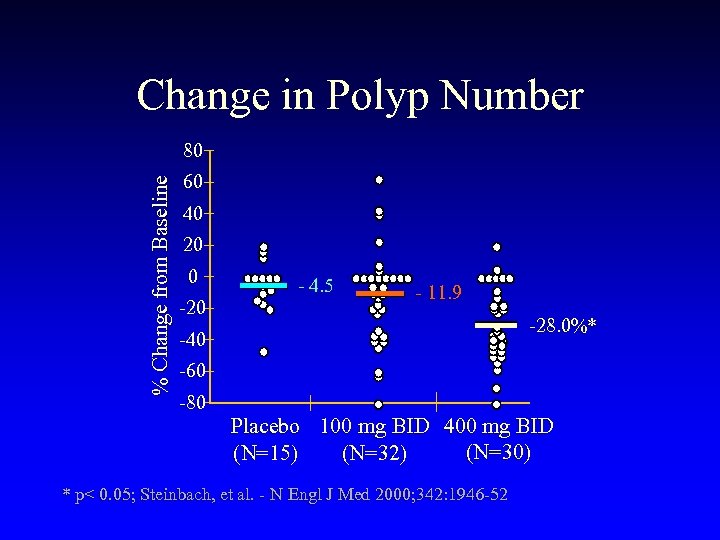 Change in Polyp Number % Change from Baseline 80 60 40 20 0 -20 - 4. 5 - 11. 9 -28. 0%* -40 -60 -80 Placebo 100 mg BID 400 mg BID (N=30) (N=32) (N=15) * p< 0. 05; Steinbach, et al. - N Engl J Med 2000; 342: 1946 -52
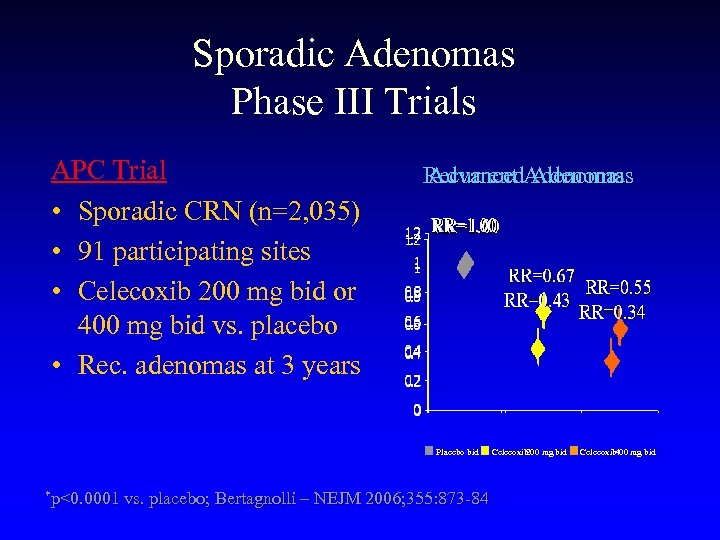 Sporadic Adenomas Phase III Trials APC Trial • Sporadic CRN (n=2, 035) • 91 participating sites • Celecoxib 200 mg bid or 400 mg bid vs. placebo • Rec. adenomas at 3 years Advanced Adenomas Recurrent Adenomas Placebo bid *p<0. 0001 vs. placebo; Bertagnolli – NEJM 2006; 355: 873 -84 Celecoxib mg bid 200 Celecoxib 400 mg bid
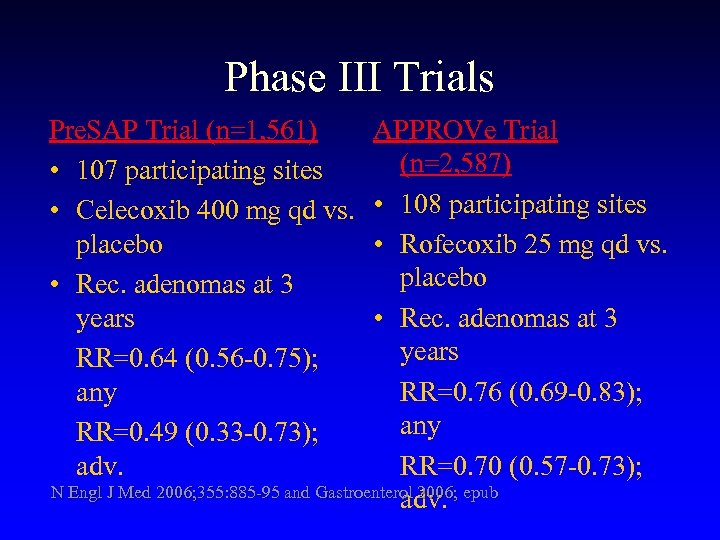 Phase III Trials Pre. SAP Trial (n=1, 561) • 107 participating sites • Celecoxib 400 mg qd vs. placebo • Rec. adenomas at 3 years RR=0. 64 (0. 56 -0. 75); any RR=0. 49 (0. 33 -0. 73); adv. APPROVe Trial (n=2, 587) • 108 participating sites • Rofecoxib 25 mg qd vs. placebo • Rec. adenomas at 3 years RR=0. 76 (0. 69 -0. 83); any RR=0. 70 (0. 57 -0. 73); N Engl J Med 2006; 355: 885 -95 and Gastroenterol 2006; epub adv.
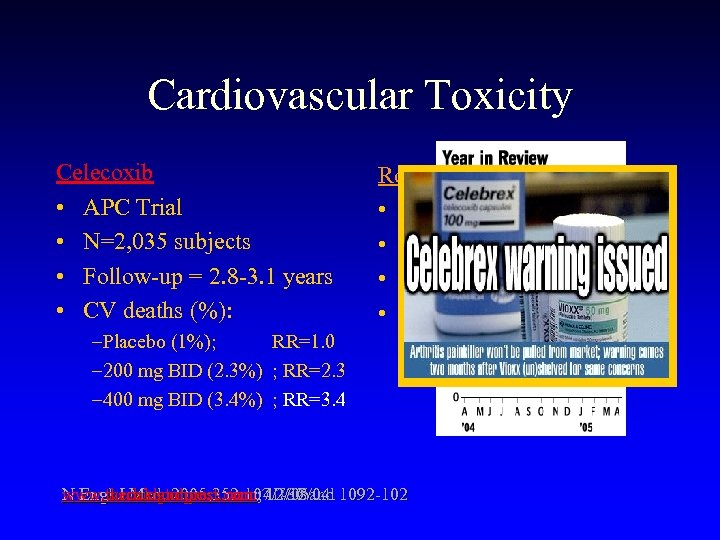 Cardiovascular Toxicity Celecoxib • APC Trial • N=2, 035 subjects • Follow-up = 2. 8 -3. 1 years • CV deaths (%): Rofecoxib • APPROVe Trial • N=2, 586 subjects • Follow-up = 3, 327 pt-years • CV Adverse events (%): –Placebo (1%); RR=1. 0 – 200 mg BID (2. 3%) ; RR=2. 3 – 400 mg BID (3. 4%) ; RR=3. 4 www. theoaklandpress. com 12/18/04 www. washingtonpost. com; ; 4/7/05 and 1092 -102 N Engl J Med. 2005; 352: 1071 -80 –Placebo (2%); RR=1. 0 – 25 mg QD (3. 6%); RR=1. 9
 Celecoxib and Colon Cancer Prevention • Psaty and Potter (NEJM 355: 950, 2006) – Reviewed APC and Pre. SAP trials and concluded the following – Celecoxib decreases adenoma formation – Celecoxib increases the risk of cardiovascular adverse events – The potential increase in CV event/mortality outweighs the projected decrease in colon cancer incidence
 Non-selective COX-2 inhibitors • Retrospective data supporting potential preventive effects • Cardiovascular issues appear less, but remain • Aspirin § Sandler et al. NEJM 348: 883, 2003 § 635 subjects with previous colo-rectal CA randomized to ASA 325 mg/d or placebo § 1 or more adenomas in 27% of placebo vs 17% ASA
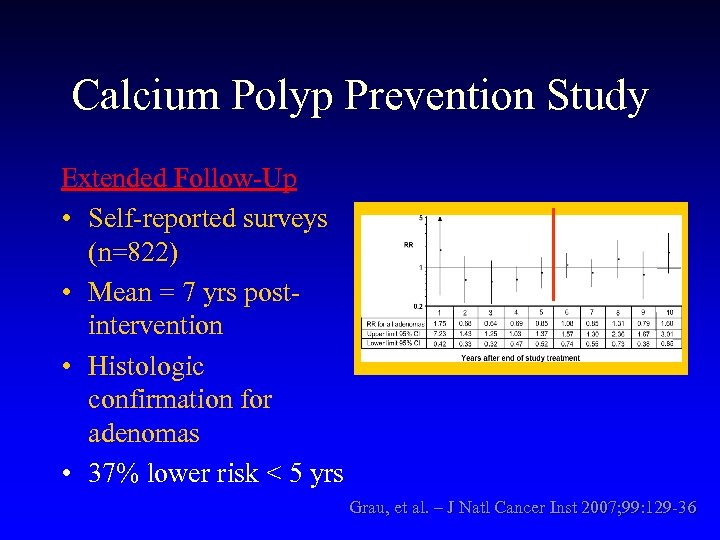 Calcium Polyp Prevention Study Extended Follow-Up • Self-reported surveys (n=822) • Mean = 7 yrs postintervention • Histologic confirmation for adenomas • 37% lower risk < 5 yrs Grau, et al. – J Natl Cancer Inst 2007; 99: 129 -36
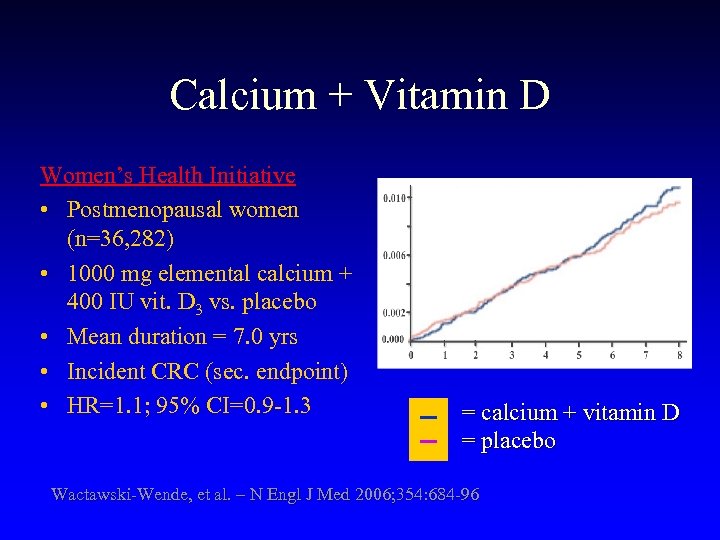 Calcium + Vitamin D Women’s Health Initiative • Postmenopausal women (n=36, 282) • 1000 mg elemental calcium + 400 IU vit. D 3 vs. placebo • Mean duration = 7. 0 yrs • Incident CRC (sec. endpoint) • HR=1. 1; 95% CI=0. 9 -1. 3 = calcium + vitamin D = placebo Wactawski-Wende, et al. – N Engl J Med 2006; 354: 684 -96
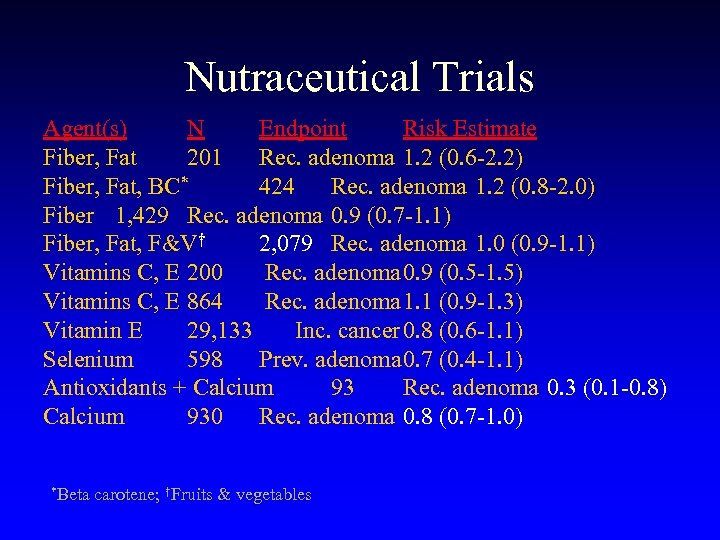 Nutraceutical Trials Agent(s) N Endpoint Risk Estimate Fiber, Fat 201 Rec. adenoma 1. 2 (0. 6 -2. 2) Fiber, Fat, BC* 424 Rec. adenoma 1. 2 (0. 8 -2. 0) Fiber 1, 429 Rec. adenoma 0. 9 (0. 7 -1. 1) Fiber, Fat, F&V† 2, 079 Rec. adenoma 1. 0 (0. 9 -1. 1) Vitamins C, E 200 Rec. adenoma 0. 9 (0. 5 -1. 5) Vitamins C, E 864 Rec. adenoma 1. 1 (0. 9 -1. 3) Vitamin E 29, 133 Inc. cancer 0. 8 (0. 6 -1. 1) Selenium 598 Prev. adenoma 0. 7 (0. 4 -1. 1) Antioxidants + Calcium 93 Rec. adenoma 0. 3 (0. 1 -0. 8) Calcium 930 Rec. adenoma 0. 8 (0. 7 -1. 0) *Beta carotene; †Fruits & vegetables
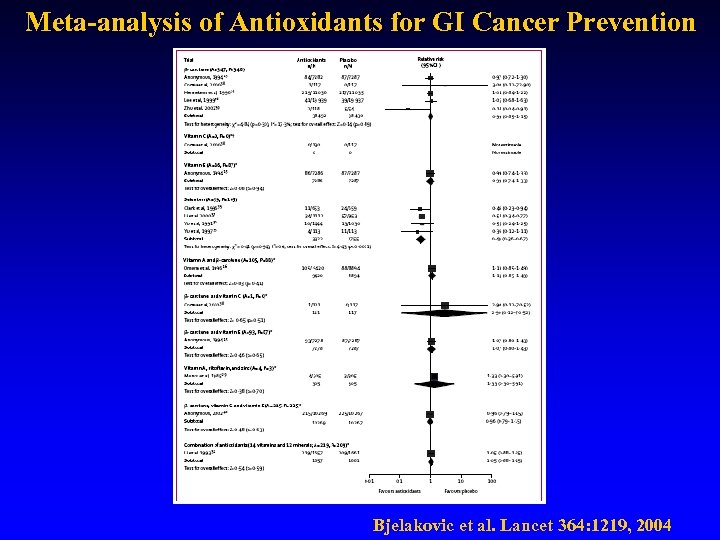 Meta-analysis of Antioxidants for GI Cancer Prevention Bjelakovic et al. Lancet 364: 1219, 2004
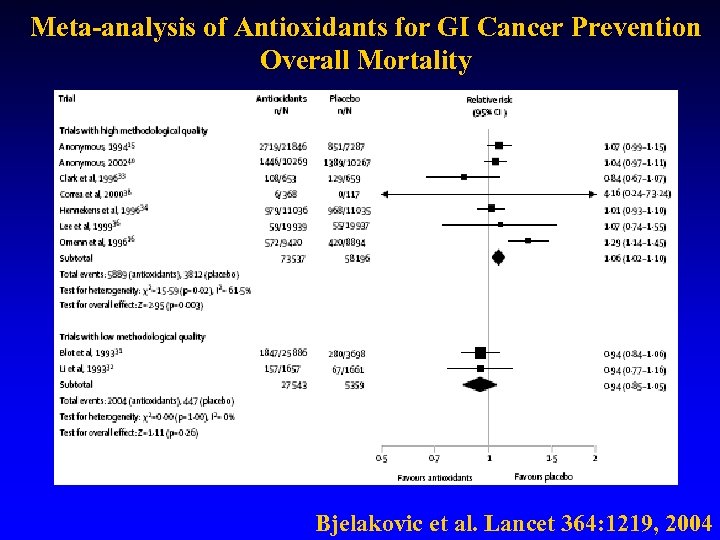 Meta-analysis of Antioxidants for GI Cancer Prevention Overall Mortality Bjelakovic et al. Lancet 364: 1219, 2004
 Statins and Colon Cancer • Lipid lowering agents have been associated with decreased incidence of various cancers • Dale et al (JAMA 295: 74, 2006) performed metaanalysis of randomized through 2005 and observed no effect on cancer incidence or death rate • Poynter et al. (NEJM 352: 2184, 2005) case control study in Israel of approx 2000 colon cancer patients vs 2000 controls; statin use of >5 yrs was associated with a 50% risk reduction
 Difluoromethylornithine (DFMO) • DFMO is a specific polyamine inhibitor approved for treatment of African Sleeping sickness • Phase 2 and 3 studies in other tissue sites have observed safety and tolerability; longer duration studies are pending including in preventing colonic polyps
 Chemoprevention of Colon Cancer • Promising results with COX-2 inhibitors have been severely compromised by other organ toxicity • Dietary measures or nutrient-based supplements have mainly been negative, potential exceptions include calcium ± vitamin D and selenium • We continue to explore other options for the chemoprevention of colon cancer
 Chemoprevention of Colon Cancer • Future directions – Earlier markers of risk • Protein signatures • Aberrant crypt formation within colon • Genomic signatures – Less invasive measures of ongoing chemopreventive effectiveness • Finding the equivalent of checking your cholesterol level for risk of heart disease
 Chemoprevention of Colon Cancer • Future directions cont. – Combinations; low dose non-selective COX-2 inhibitors + other agents • DFMO + sulindac • Green tea + non-selective COX-2 – Test interventions as more health maintenance rather than just trying to prevent a specific cancer • Studies like the Women’s Health Initiative
 Colon Cancer Prevention • Currently there are more established/costeffective measures to reduce the burden of colo-rectal cancer; • Chemoprevention of colon cancer currently is not an established approach. • For many reasons pursuing non-invasive interventions for colon cancer risk reduction is important.


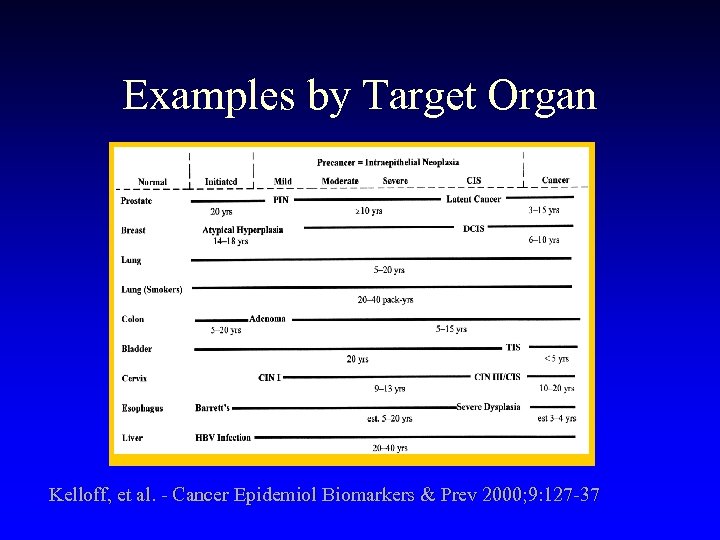 Examples by Target Organ Kelloff, et al. - Cancer Epidemiol Biomarkers & Prev 2000; 9: 127 -37
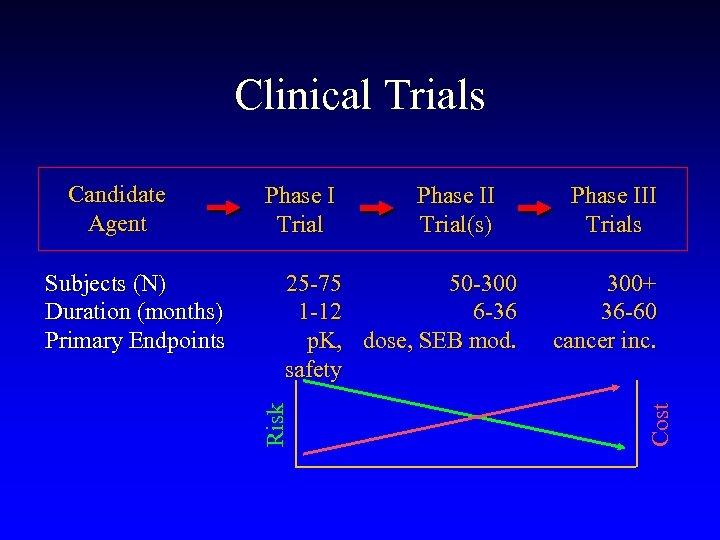 Clinical Trials Phase II Trial(s) 25 -75 50 -300 1 -12 6 -36 p. K, dose, SEB mod. safety Phase III Trials 300+ 36 -60 cancer inc. Cost Subjects (N) Duration (months) Primary Endpoints Phase I Trial Risk Candidate Agent
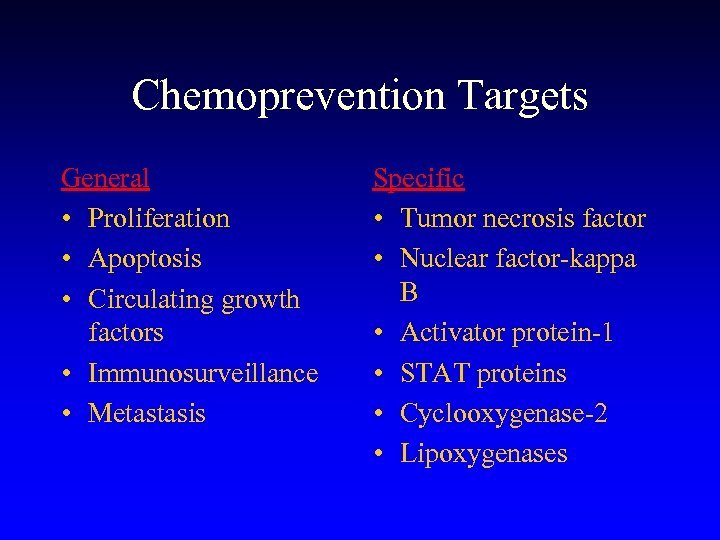 Chemoprevention Targets General • Proliferation • Apoptosis • Circulating growth factors • Immunosurveillance • Metastasis Specific • Tumor necrosis factor • Nuclear factor-kappa B • Activator protein-1 • STAT proteins • Cyclooxygenase-2 • Lipoxygenases
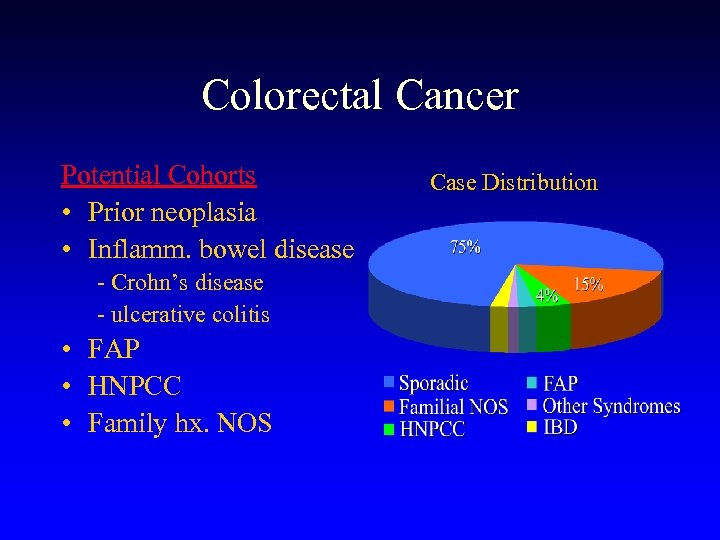 Colorectal Cancer Potential Cohorts • Prior neoplasia • Inflamm. bowel disease - Crohn’s disease - ulcerative colitis • FAP • HNPCC • Family hx. NOS Case Distribution
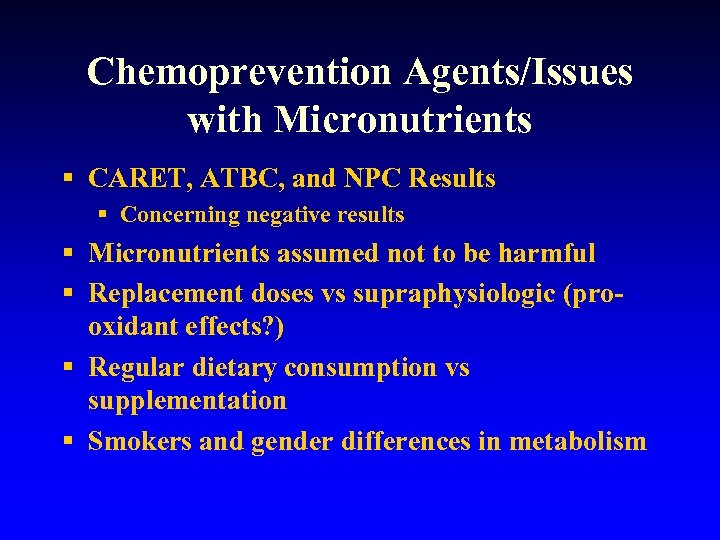 Chemoprevention Agents/Issues with Micronutrients § CARET, ATBC, and NPC Results § Concerning negative results § Micronutrients assumed not to be harmful § Replacement doses vs supraphysiologic (prooxidant effects? ) § Regular dietary consumption vs supplementation § Smokers and gender differences in metabolism