 Скачать презентацию Collections Information Database CID Gabriele Popp BFI Head
a634930f4134bf76f236cf2ccd049d75.ppt
- Количество слайдов: 32



Collections Information Database (CID) Gabriele Popp BFI Head of Information & Stephen Mc. Connachie Collections Information Data Manager
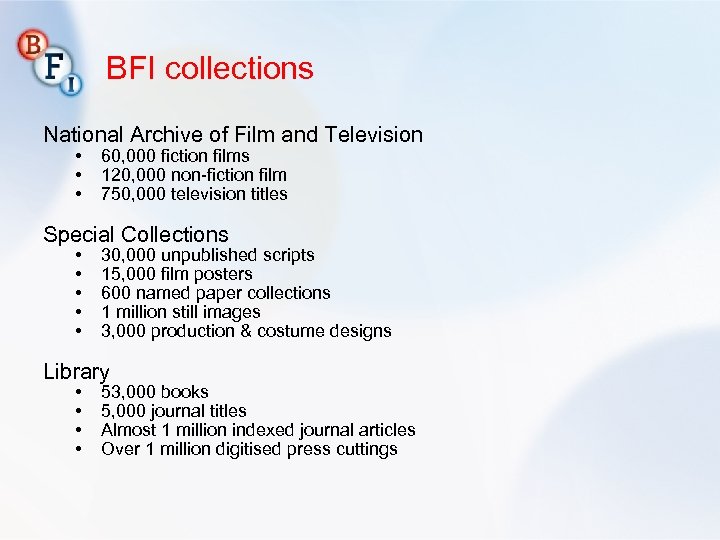
BFI collections National Archive of Film and Television • • • 60, 000 fiction films 120, 000 non-fiction film 750, 000 television titles Special Collections • • • 30, 000 unpublished scripts 15, 000 film posters 600 named paper collections 1 million still images 3, 000 production & costume designs Library • • 53, 000 books 5, 000 journal titles Almost 1 million indexed journal articles Over 1 million digitised press cuttings
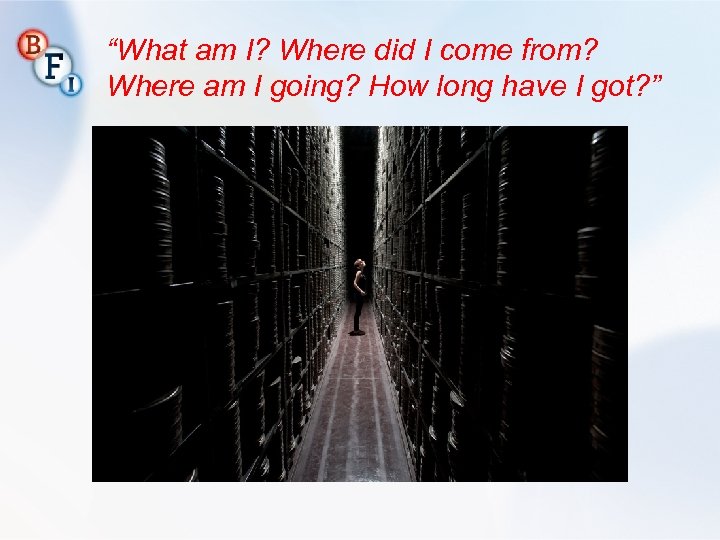
“What am I? Where did I come from? Where am I going? How long have I got? ”
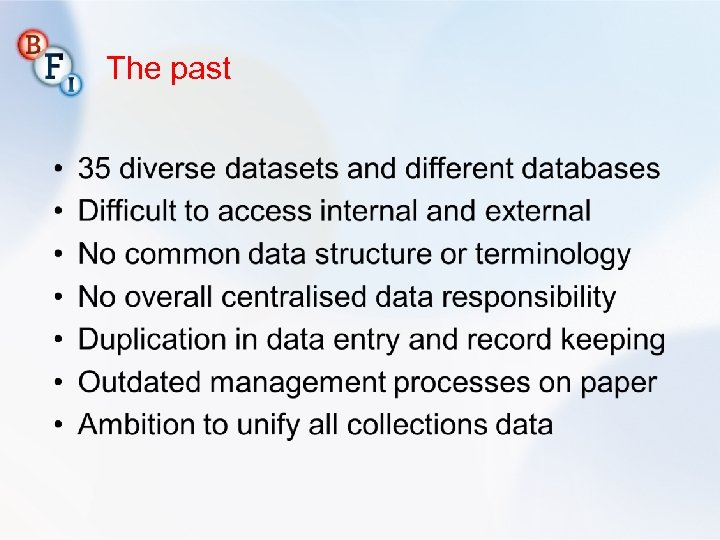
The past
The future El Cid – data in safe hands
CID phase one Combine moving image collection datasets into one single database, incl. • • • Tec. Rec: archive holdings (ca. 1. 4 m items) BID: filmographic records (800 k works / variants) SIDX: subject index / thesaurus (50 k entries) DDE: direct data entry project data (50 k) Barcoding: standalone item tracking data (ca. 120 k) And build a workflow management system…
BFI collections management • High volume of access provision to film and video collections – direct access to viewing materials or online • Four sites in different geographical locations from Central London to Hertfordshire and Warwickshire • Conservation programmes on a large scale – from nitrate film to obsolete video
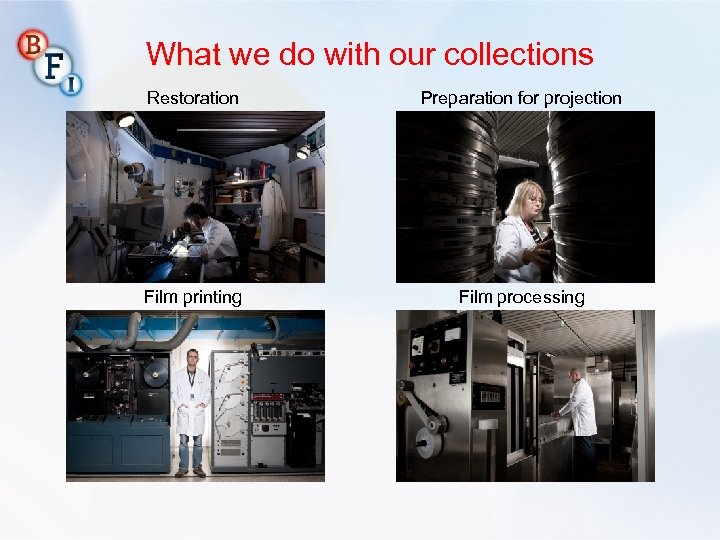
What we do with our collections Restoration Preparation for projection Film printing Film processing
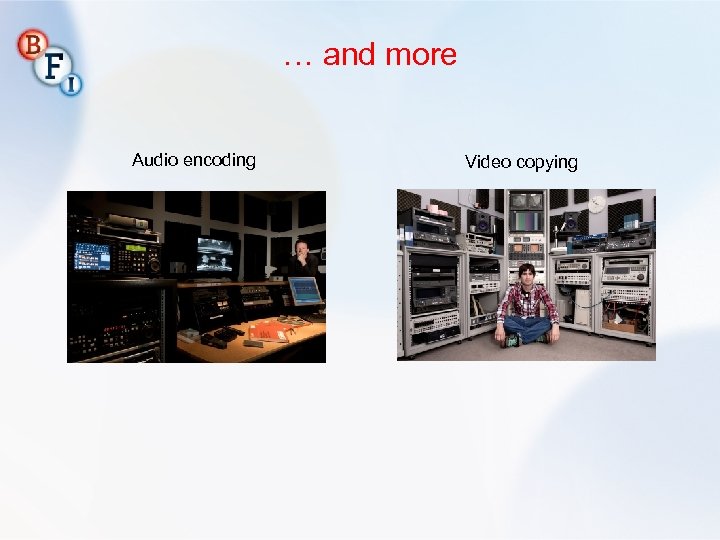
… and more Audio encoding Video copying
What we wanted Workflow to deliver • Standard approach regardless of activity or combination of activities • Multiple activities grouped under jobs • Defined activities with the ability to repeat as required • Automated pick and return lists for retrieval from vaults • Assignment of staff resources • Working to deadlines for individual activities and the job overall • Tracking items as they move through workflow • Status for activities, items and jobs: In Progress, Finished, Cancelled or On hold
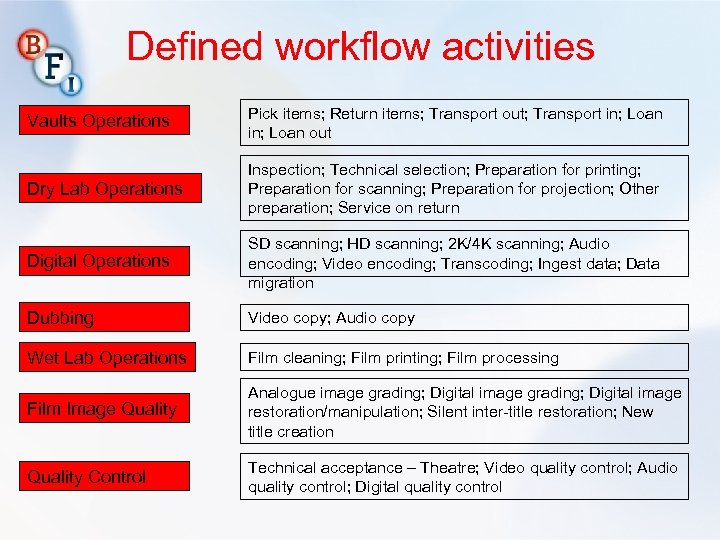
Defined workflow activities Vaults Operations Pick items; Return items; Transport out; Transport in; Loan out Dry Lab Operations Inspection; Technical selection; Preparation for printing; Preparation for scanning; Preparation for projection; Other preparation; Service on return Digital Operations SD scanning; HD scanning; 2 K/4 K scanning; Audio encoding; Video encoding; Transcoding; Ingest data; Data migration Dubbing Video copy; Audio copy Wet Lab Operations Film cleaning; Film printing; Film processing Film Image Quality Analogue image grading; Digital image restoration/manipulation; Silent inter-title restoration; New title creation Quality Control Technical acceptance – Theatre; Video quality control; Audio quality control; Digital quality control
Who and How? Supplier: Adlib Off-the shelf • Archival data standard ISAD(G) for hierarchy • Museum standard Spectrum for collections management New development of • CEN compliant hierarchical data structure and • Workflow
Timeline • • • Project initiation (Nov 2008) Tender process starts (Oct 2009) Appointment of supplier (March 2010) Contract signed (May 2010) Development starts (Aug 2010) System goes live on 14 September 2011 Remaining collections (library, posters, stills and designs) added by end of 2012
Lessons learnt Opportunities • Being the first • In-house vs. external supplier Legacy data – a problem that lasts forever? Change management • New department, new roles & responsibilities, e. g. Information Specialists • Turning a project into business as usual
A new BFI policy BFI consults widely on new Collection Policy http: //www. bfi. org. uk/about-bfi/policy-strategy/bfi-nationalarchive-collections-policy (publ. 16 Nov 2011) Includes documentation principles • Fitness for purpose, Efficiency and Quality Commitment to standards • Cataloguing, Format, Information architecture and Vocabularies Roles and responsibilities • Overall ownership, data quality, training
The future in action – BFI vocabularies Film and Television genre terms • Revision project began October 2010 on a flat list of 365 genres • Final list of 95 preferred and 66 non-preferred terms in a hierarchical structure • Data cleaning and enrichment on-going: so far over 200, 000 records cleaned Old genres: Compilations, Outtakes, Trailers, N-Lit, Film Noir, Adult films… New genre term: Artists’ Moving Image SN Works which use experimentation to subvert mainstream cinema and television practices UF Abstract film Avant-garde Experimental Structural films Underground films
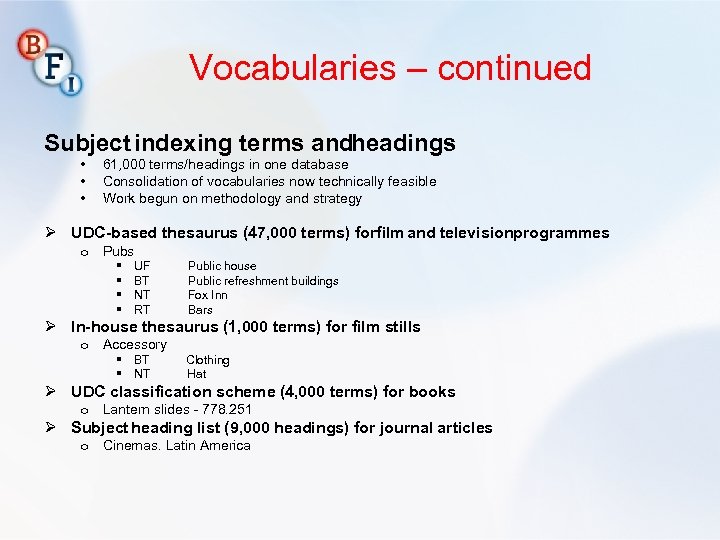
Vocabularies – continued Subject indexing terms andheadings • • • 61, 000 terms/headings in one database Consolidation of vocabularies now technically feasible Work begun on methodology and strategy Ø UDC-based thesaurus (47, 000 terms) forfilm and televisionprogrammes o Pubs § § UF BT NT RT Public house Public refreshment buildings Fox Inn Bars Ø In-house thesaurus (1, 000 terms) for film stills o Accessory § BT Clothing § NT Hat Ø UDC classification scheme (4, 000 terms) for books o Lantern slides - 778. 251 Ø Subject heading list (9, 000 headings) for journal articles o Cinemas. Latin America
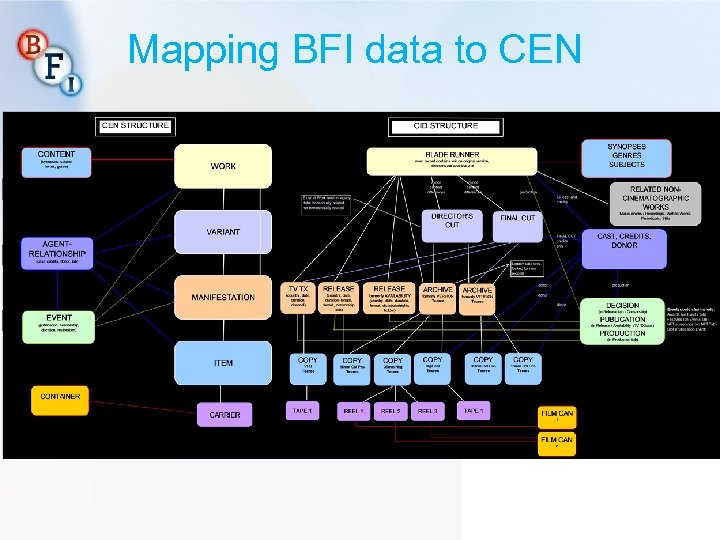
Meanwhile, in Europe … A new European metadata standard on cataloguing and indexing of cinematographic works emerges… • EN 15907: 2010 Film identification – Enhancing interoperability of metadata – Element sets and structures • Based on FRBR • More info at www. filmstandards. org BFI becomes first implementer of new standard
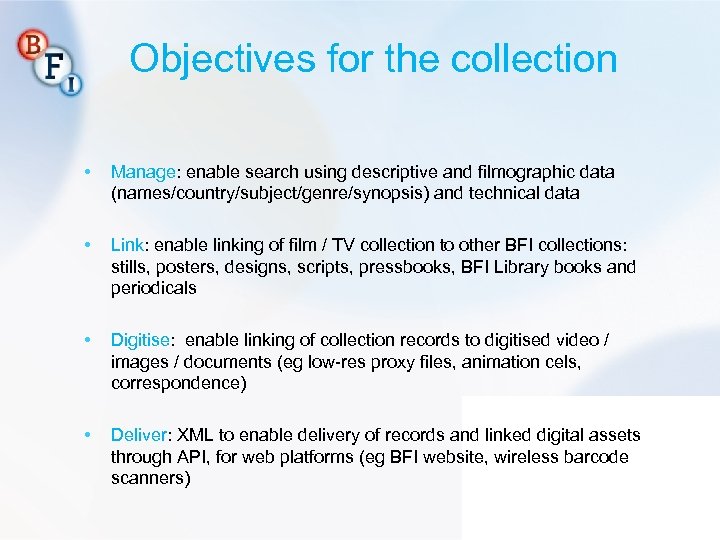
Objectives for the collection • Manage: enable search using descriptive and filmographic data (names/country/subject/genre/synopsis) and technical data • Link: enable linking of film / TV collection to other BFI collections: stills, posters, designs, scripts, pressbooks, BFI Library books and periodicals • Digitise: enable linking of collection records to digitised video / images / documents (eg low-res proxy files, animation cels, correspondence) • Deliver: XML to enable delivery of records and linked digital assets through API, for web platforms (eg BFI website, wireless barcode scanners)
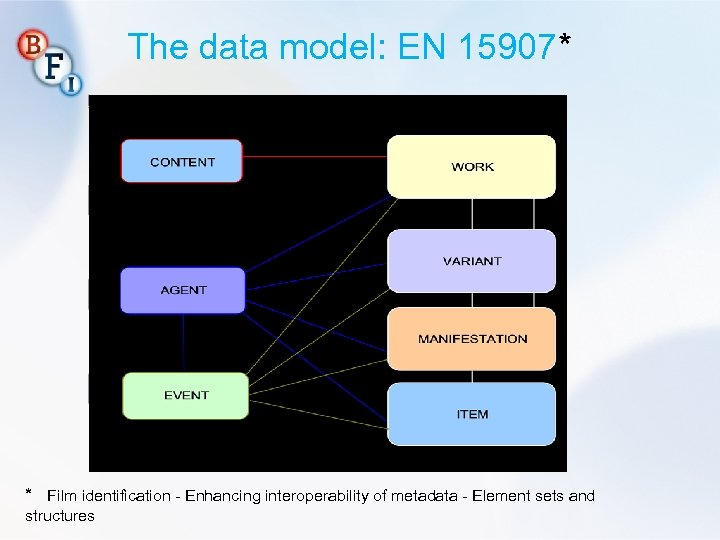
The data model: EN 15907* * Film identification - Enhancing interoperability of metadata - Element sets and structures
Mapping BFI data to CEN
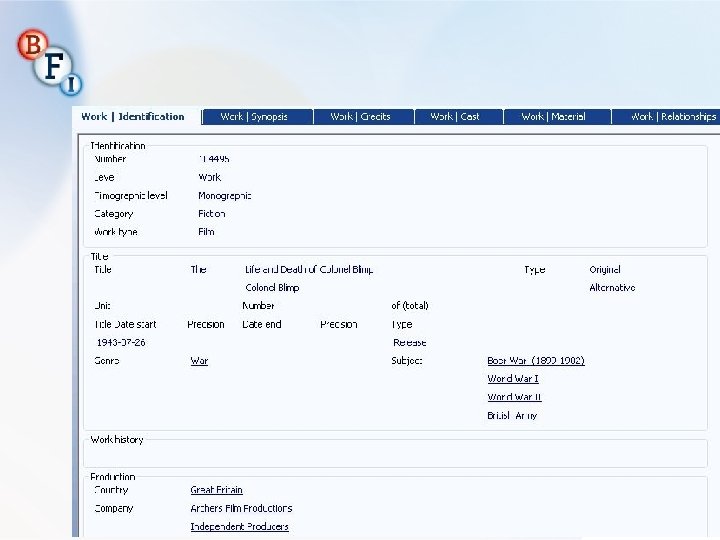
Work • Top level of the ladder: describes the general / abstract qualities of a moving image creation • Provides a single access point to all Manifestations / Items • Enables collection search using descriptive filmographic as well as technical data – eg country of production / director) • Can be standalone, collection, series or component part of larger work
Work • Can define any moving image creation: • film • television • web • medical • surveillance • training video • recorded sporting events • etc
Work • Includes content descriptions: • Descriptive text: • synopsis • shotlist • Descriptive terms: • subject indexing • genre
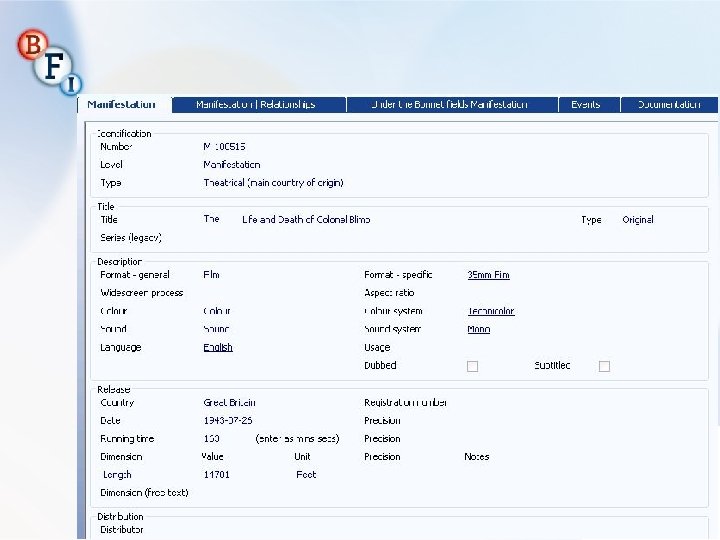
Manifestation • An embodiment of a Work – includes information about specific release / distribution context, or the place in the life-cycle of the Work: • theatrical release • non-theatrical (community, training, prison, etc) • home viewing (blu-ray, laserdisc, etc) • pre-release (assembly edit, censorship submission, etc) • web exhibition / distribution • television transmission etc.
Manifestation • Includes information about: • format (eg DCP, 35 mm Film, Umatic) • language / usage (eg French dialogue, English subtitles) • sound / silent • colour / black and white • running time / duration / footage • distributing / exhibiting person or institution • date (of release, submission, publication, or other relevant contextualising date) • place (of release, submission, publication, etc)
Item • The object-level record for an archive holding, a single example of a Manifestation. • Includes analogue objects (film, video cassettes and discs, etc) and digital files • Encompasses fragments or otherwise incomplete or defective objects (eg single reel of multi-reeler, mute print of sound film)
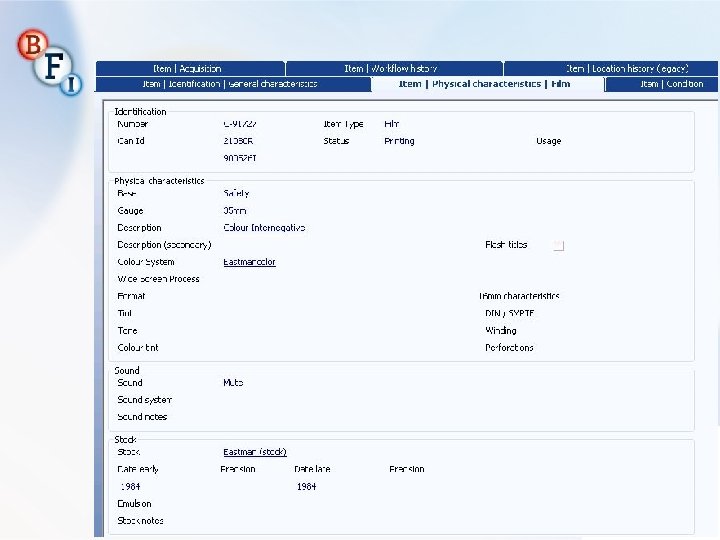
Item • Includes all object-level technical data: • format / description (eg Camera Negative, Separation, Internegative, Digital Betacam, Umatic) • gauge / width (eg 35 mm, 8 mm, 1 inch) • sound detail (eg combined as sound, mute) • colour detail (eg 2 Strip Technicolor, Ektachrome) • running time / duration / footage • condition / preservation requirements and priorities • acquisition history / status / access conditions • completeness / number of carriers / components etc
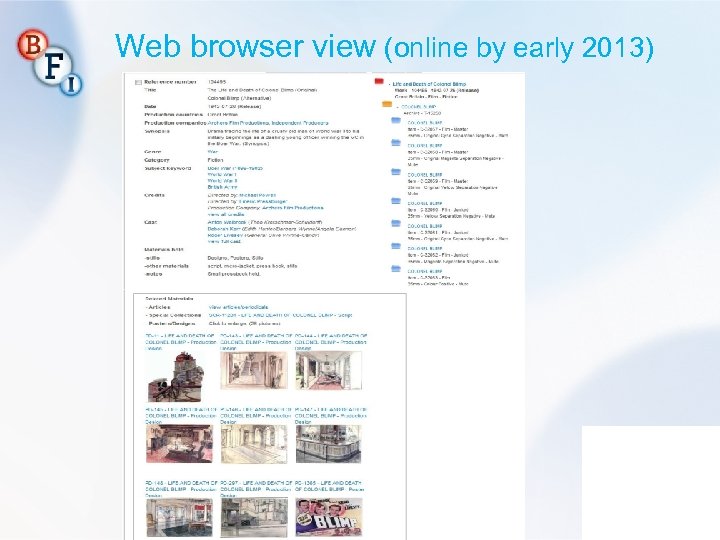
Web browser view (online by early 2013)
Скачать презентацию Collections Information Database CID Gabriele Popp BFI Head
a634930f4134bf76f236cf2ccd049d75.ppt