 Скачать презентацию Collaborations that facilitate the scholarship of teaching Working
ea4cb9cad5f5856e31585028552910f2.ppt
- Количество слайдов: 26




Collaborations that facilitate the scholarship of teaching: Working with education professionals and more! Ann C. Smith Jennifer Hayes-Klosteridis Paulette Robinson University of Maryland College Park MD ASM Division W, Washington D. C. 2003
Knowing what works How People Learn (2000) Bransford, Brown and Cocking eds • Active learning strategies – Allowing students to become involved and take control of their own learning
Showing what works • What are the best methods to employ? • What strategies will be required to implement the methods. • How can success be assessed?
Active learning – our goal • Variety of strategies – Involve student participation – Give context to content – Discussion – Writing – Group work • Problem based, Inquiry based, Case based
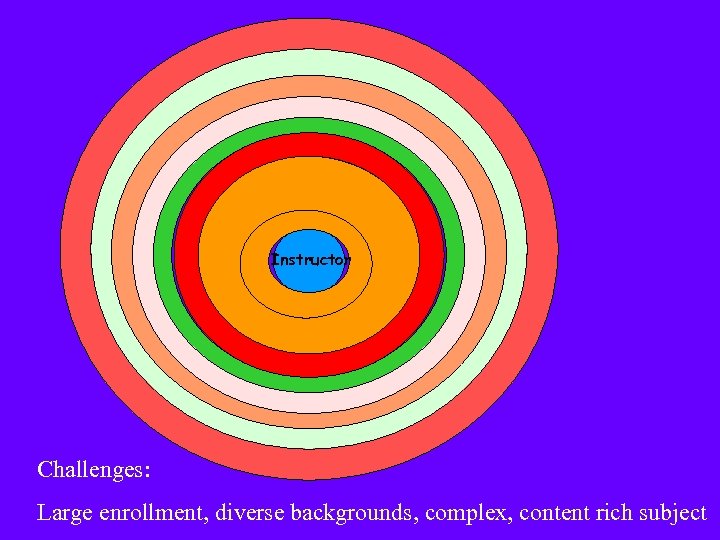
Instructor Challenges: Large enrollment, diverse backgrounds, complex, content rich subject
BSCI 223 General Microbiology • Pre- requisite: One course in General Biology • Student population: Science students – Including biology, microbiology, soil science, kinesiology, psychology • Large Lecture- 250 students • Laboratory component
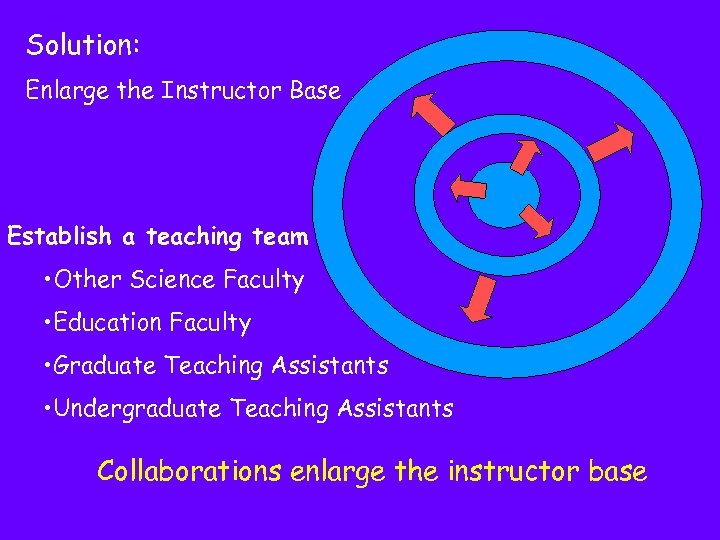
Solution: Enlarge the Instructor Base Establish a teaching team • Other Science Faculty • Education Faculty • Graduate Teaching Assistants • Undergraduate Teaching Assistants Collaborations enlarge the instructor base
Teaching Team – Science Faculty • Faculty instructors – – Ann Smith – Instructor Patty Shields - Instructor Richard Stewart & Jon Dinman – Associate Professors Robert Yuan – Full Professor • All Ph. D microbiologists each providing unique perspective to the team – Time spent with students, awareness of needs of our Undergraduates, Current Research topics, Global perspective of Science,
Teaching Team: Education Professionals Jennifer Hayes-Klosteridis – Masters degree in Biology – Ph. D candidate Education Policy, Planning and Leadership, UM College of Education • Paulette Robinson – Ph. D. Education Policy, Planning and Leadership – Manager, Teaching Learning Support, OIT, UM • Provide education perspective, knowledge of learning theory, and teaching methods, experience in education research.
Teaching Team: Graduate Assistants • Life Sciences graduate students – Knowledge of the field – Experiences as a student, – Liaison with students
Teaching Team: UTA • Undergraduate Teaching Assistants – Alumni of the course – Enroll for elective credit • Undergraduate Technology Apprentice Program – Trained in technology – Knowledge of behind the scenes
Benefits of Collaboration Ø We can do more, Learn from each other • Students become teaching “apprentices” • Education professionals can ask questions about application of education theory to the discipline • OIT professionals can ask questions about the use of technology by faculty and students. • Science Faculty can ask questions about methods that facilitate the education of future scientists, or best attract students to the study of science. Ø Our teaching has evolved to scholarship
Costs of Collaboration • Costs – No monetary cost • Lab fees, University and Department grants – technology and travel. • Goal was to use existing resources – Faculty/TA’s have to relinquish some control – Need for time to co-ordinate/meet discuss
Communication • Add technology
Goal: Active Learning in a Large Enrollment Microbiology Class Approach • Establish a teaching team where members work collaboratively to design, implement, and assess active learning strategies • Use technology to establish an on-line learning center to provide a site/time for communication, organization, and active learning options
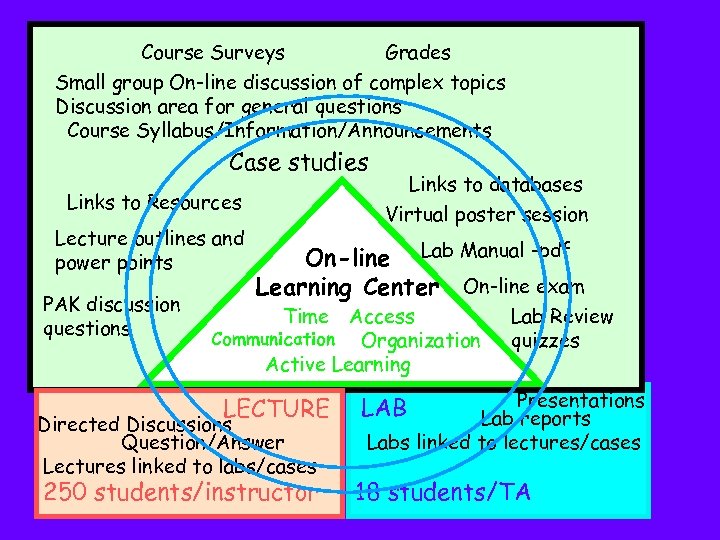
Course Surveys Grades Small group On-line discussion of complex topics Discussion area for general questions Course Syllabus/Information/Announcements Case studies Links to Resources Lecture outlines and power points PAK discussion questions Links to databases Virtual poster session On-line Lab Manual -pdf Learning Center On-line exam Time Access Communication Organization Active Learning LECTURE Directed Discussions Question/Answer Lectures linked to labs/cases 250 students/instructor Lab Review quizzes Presentations Lab reports Labs linked to lectures/cases LAB 18 students/TA
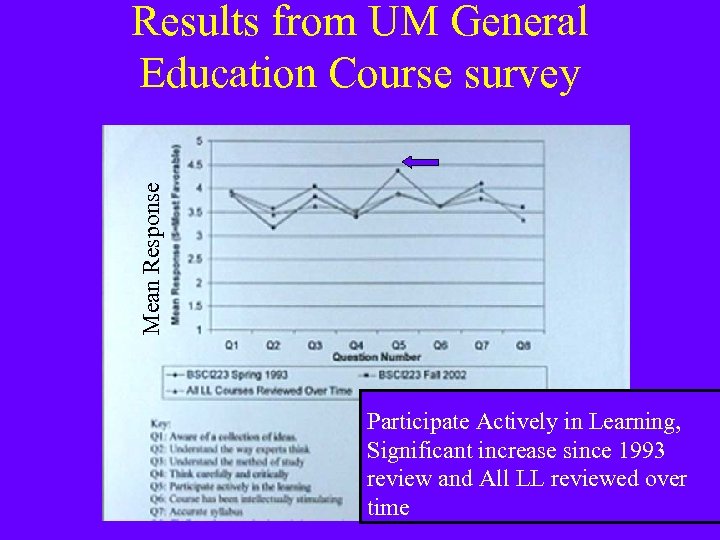
Mean Response Results from UM General Education Course survey Participate Actively in Learning, Significant increase since 1993 review and All LL reviewed over time
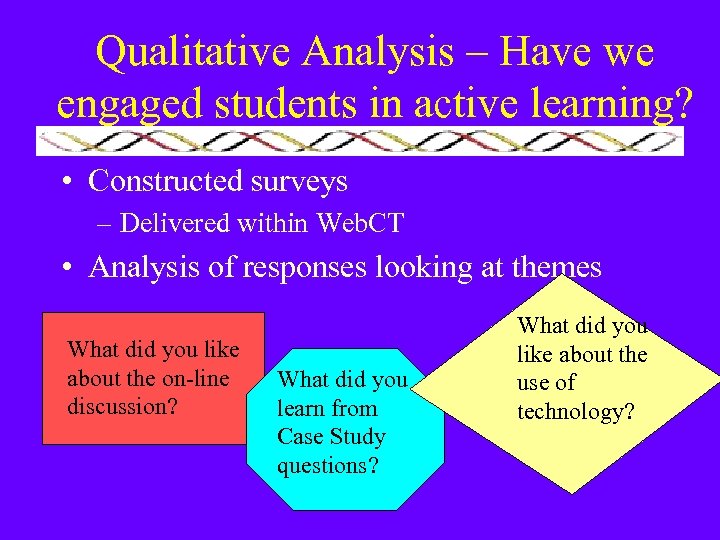
Qualitative Analysis – Have we engaged students in active learning? • Constructed surveys – Delivered within Web. CT • Analysis of responses looking at themes What did you like about the on-line discussion? What did you learn from Case Study questions? What did you like about the use of technology?
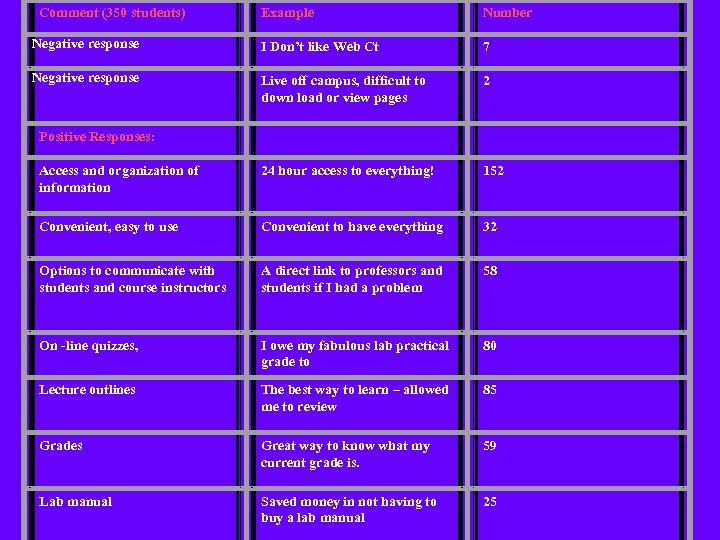
Comment (350 students) Example Number Negative response I Don’t like Web Ct 7 Negative response Live off campus, difficult to down load or view pages 2 Positive Responses: Access and organization of information 24 hour access to everything! 152 Convenient, easy to use Convenient to have everything 32 Options to communicate with students and course instructors A direct link to professors and students if I had a problem 58 On -line quizzes, I owe my fabulous lab practical grade to 80 Lecture outlines The best way to learn – allowed me to review 85 Grades Great way to know what my current grade is. 59 Lab manual Saved money in not having to buy a lab manual 25
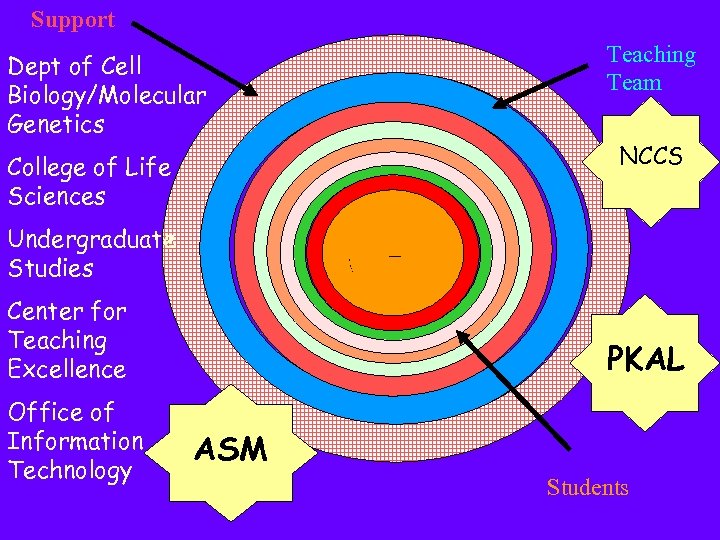
Support Dept of Cell Biology/Molecular Genetics College of Life Sciences Teaching Team NCCS Undergraduate Studies Center for Teaching Excellence Office of Information Technology PKAL ASM Students

Questions?




Questions?
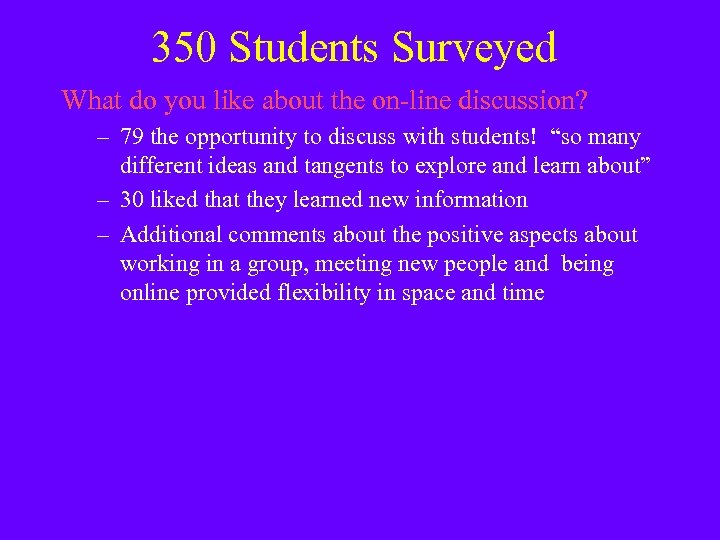
350 Students Surveyed What do you like about the on-line discussion? – 79 the opportunity to discuss with students! “so many different ideas and tangents to explore and learn about” – 30 liked that they learned new information – Additional comments about the positive aspects about working in a group, meeting new people and being online provided flexibility in space and time
Скачать презентацию Collaborations that facilitate the scholarship of teaching Working
ea4cb9cad5f5856e31585028552910f2.ppt