


 Скачать презентацию COGNITIVE SCIENCE 17 Why Emotions Are Necessary Part
924fe619518fd724623b28b4b60dae85.ppt
- Количество слайдов: 23
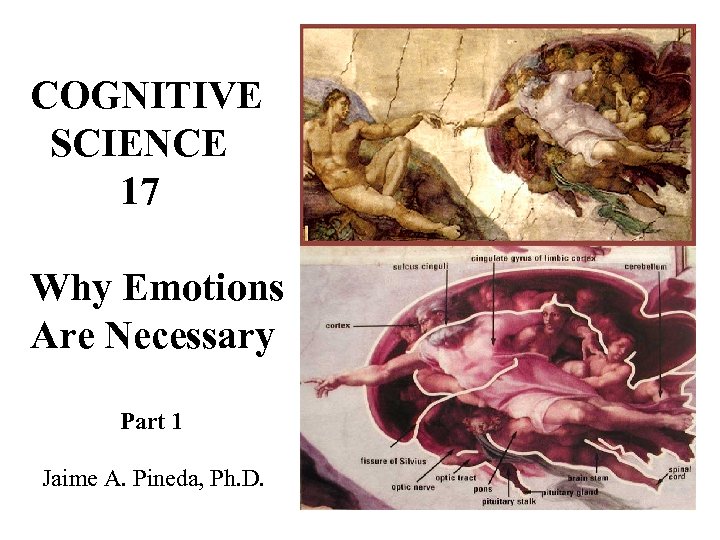 COGNITIVE SCIENCE 17 Why Emotions Are Necessary Part 1 Jaime A. Pineda, Ph. D.
 Emotions Responses of the whole organism, involving. . . physiological arousal (autonomic/hormonal) l expressive behaviors (behavioral) l conscious experience (cognitive) l
 Evolutionary Advantage to Emotion l For example: l l Fight or flight response but can basic emotions help or overwhelm rational thinking?
 A Biological Purpose for Emotion? l l l Signaling function (that we might take action) Provide strong impulse to take action Promote unique, stereotypical patterns of physiological change and behavior
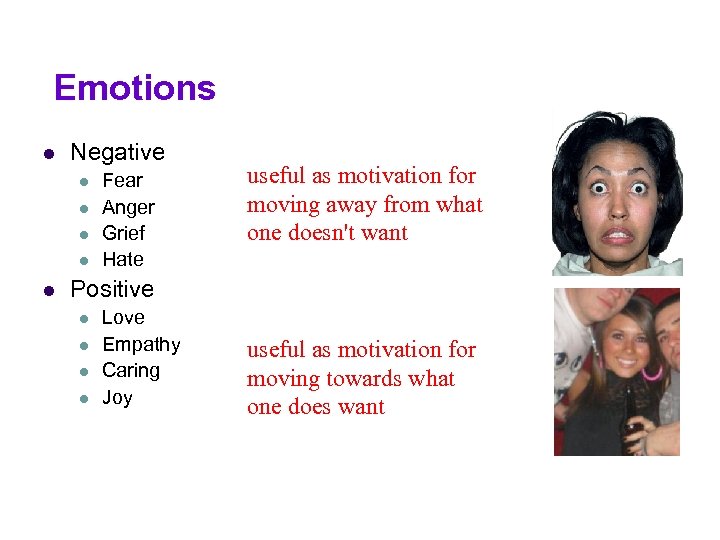 Emotions l Negative l l l Fear Anger Grief Hate useful as motivation for moving away from what one doesn't want Positive l l Love Empathy Caring Joy useful as motivation for moving towards what one does want
 Psychological Reasons for Experiencing Emotion l Catharsis l l l energy release catharsis hypothesis l “releasing” aggressive energy (through action or fantasy) relieves aggressive urges Feel-good, do-good phenomenon l people’s tendency to be helpful when already in a good mood
 Psychological Reasons for Experiencing Emotion l Subjective State of Well-Being l l self-perceived happiness or satisfaction with life used along with measures of objective wellbeing l physical and economic indicators to evaluate people’s quality of life
 Are Emotions Universal? Basic Emotions--presumed to be hard wired and physiologically distinctive l l l Joy Surprise Sadness Anger Disgust Fear
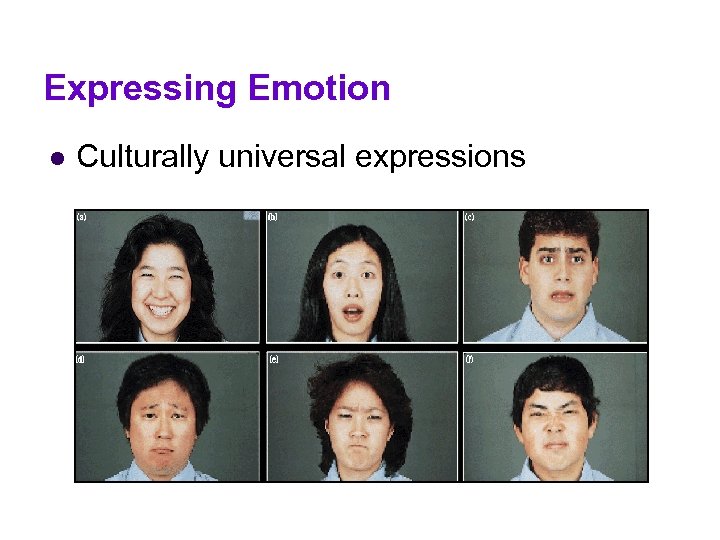 Expressing Emotion l Culturally universal expressions
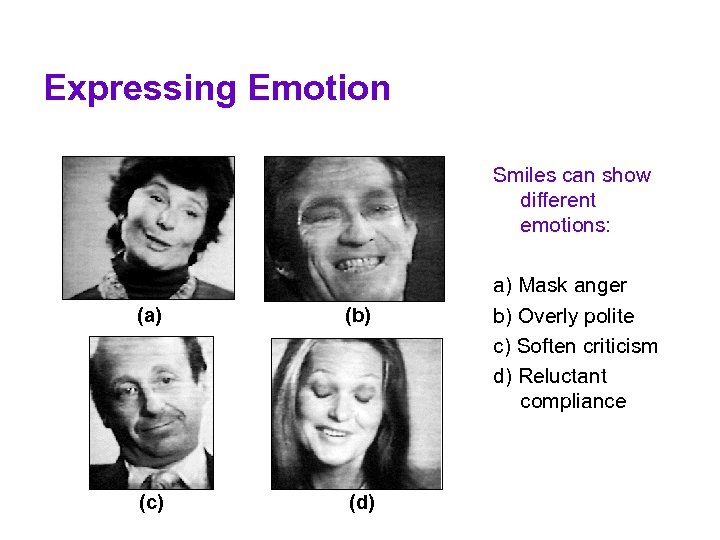 Expressing Emotion Smiles can show different emotions: (a) (b) (c) (d) a) Mask anger b) Overly polite c) Soften criticism d) Reluctant compliance
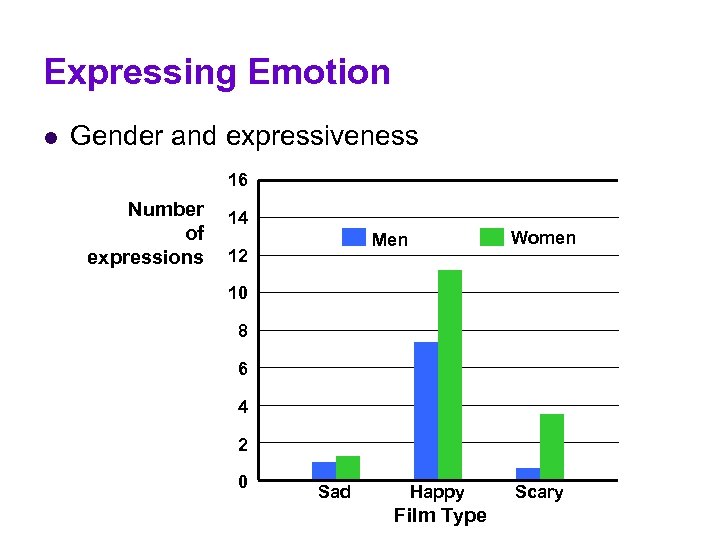 Expressing Emotion l Gender and expressiveness 16 Number of expressions 14 Women Men 12 10 8 6 4 2 0 Sad Happy Film Type Scary
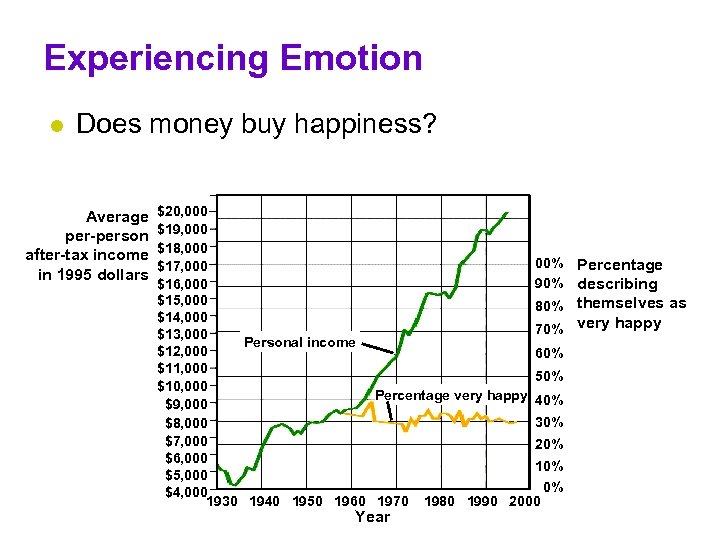 Experiencing Emotion l Does money buy happiness? Average per-person after-tax income in 1995 dollars $20, 000 $19, 000 $18, 000 100% $17, 000 90% $16, 000 $15, 000 80% $14, 000 70% $13, 000 Personal income $12, 000 60% $11, 000 50% $10, 000 Percentage very happy 40% $9, 000 30% $8, 000 $7, 000 20% $6, 000 10% $5, 000 0% $4, 000 1930 1940 1950 1960 1970 1980 1990 2000 Year Percentage describing themselves as very happy
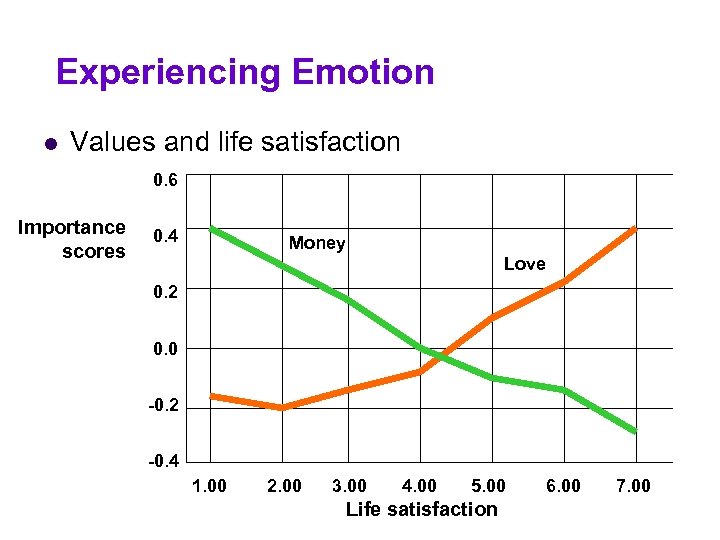 Experiencing Emotion l Values and life satisfaction 0. 6 Importance scores 0. 4 Money Love 0. 2 0. 0 -0. 2 -0. 4 1. 00 2. 00 3. 00 4. 00 5. 00 Life satisfaction 6. 00 7. 00
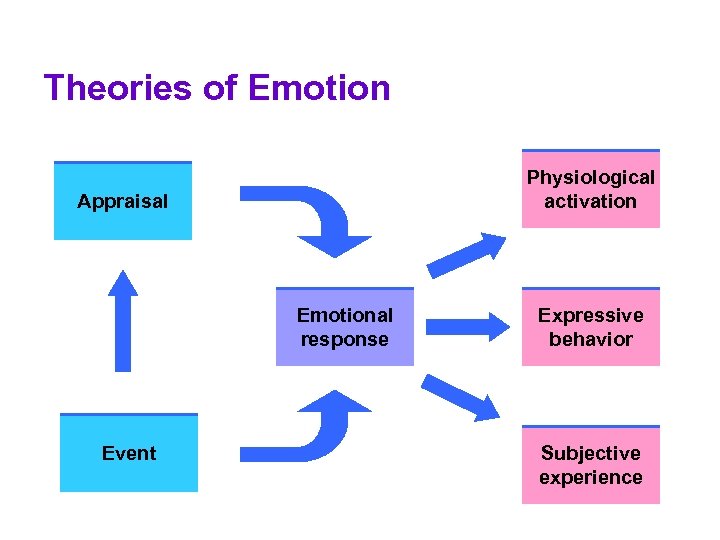 Theories of Emotion Physiological activation Appraisal Emotional response Event Expressive behavior Subjective experience
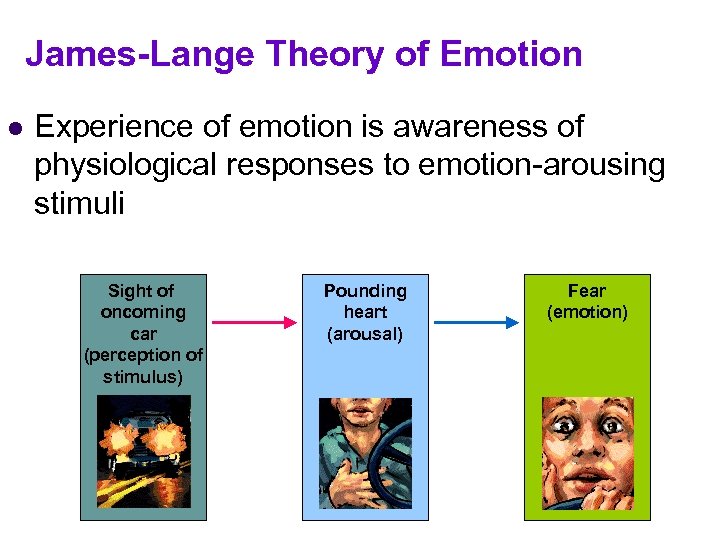 James-Lange Theory of Emotion l Experience of emotion is awareness of physiological responses to emotion-arousing stimuli Sight of oncoming car (perception of stimulus) Pounding heart (arousal) Fear (emotion)
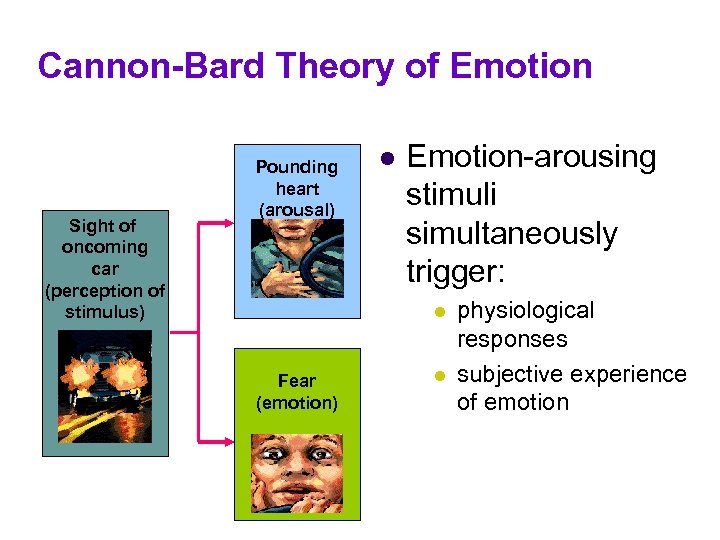 Cannon-Bard Theory of Emotion Sight of oncoming car (perception of stimulus) Pounding heart (arousal) l Emotion-arousing stimuli simultaneously trigger: l Fear (emotion) l physiological responses subjective experience of emotion
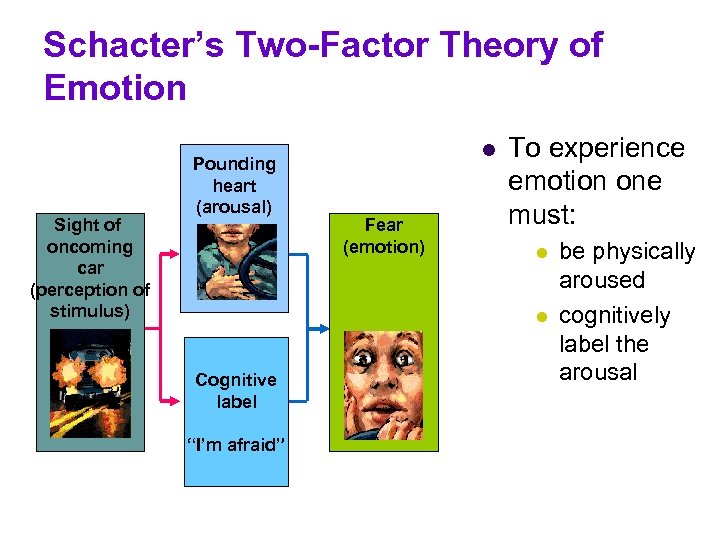 Schacter’s Two-Factor Theory of Emotion Sight of oncoming car (perception of stimulus) Pounding heart (arousal) l Fear (emotion) To experience emotion one must: l l Cognitive label “I’m afraid” be physically aroused cognitively label the arousal
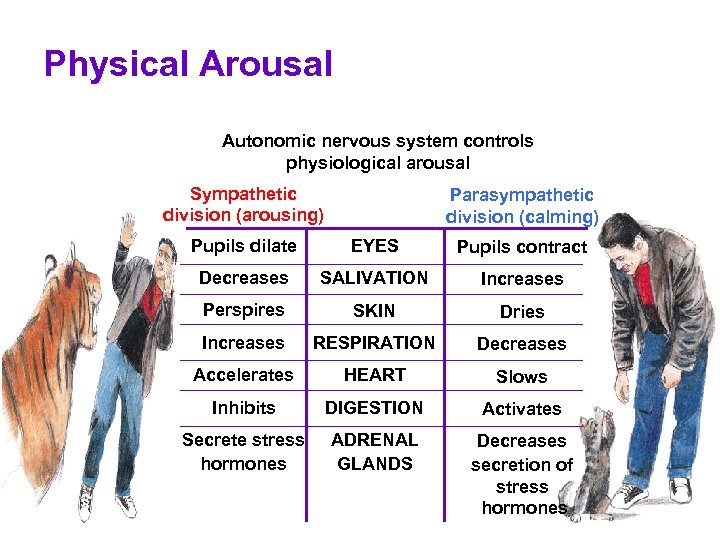 Physical Arousal Autonomic nervous system controls physiological arousal Sympathetic division (arousing) Parasympathetic division (calming) Pupils dilate EYES Pupils contract Decreases SALIVATION Increases Perspires SKIN Dries Increases RESPIRATION Decreases Accelerates HEART Slows Inhibits DIGESTION Activates Secrete stress hormones ADRENAL GLANDS Decreases secretion of stress hormones
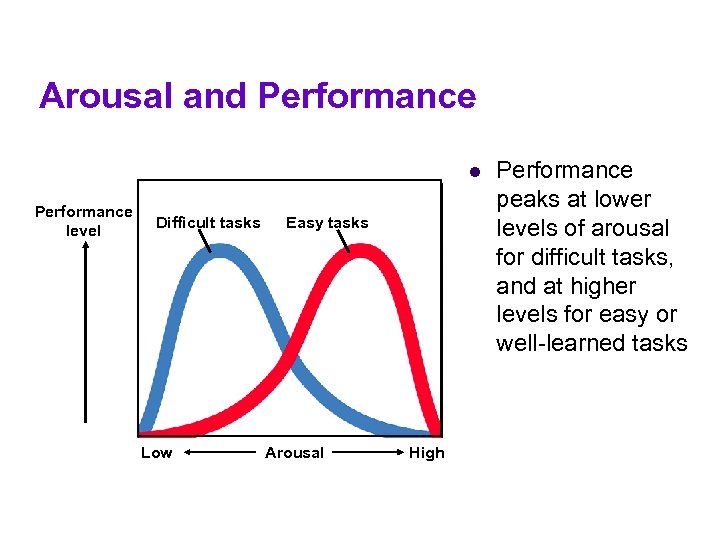 Arousal and Performance level Difficult tasks Low Easy tasks Arousal High Performance peaks at lower levels of arousal for difficult tasks, and at higher levels for easy or well-learned tasks
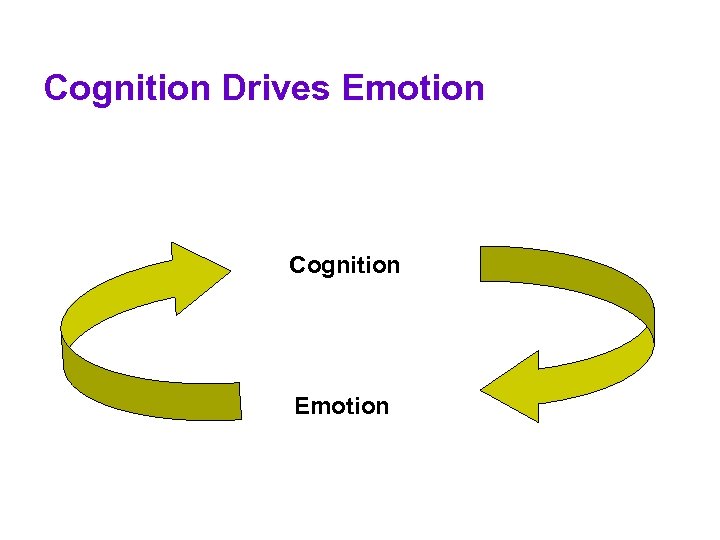 Cognition Drives Emotion Cognition Emotion
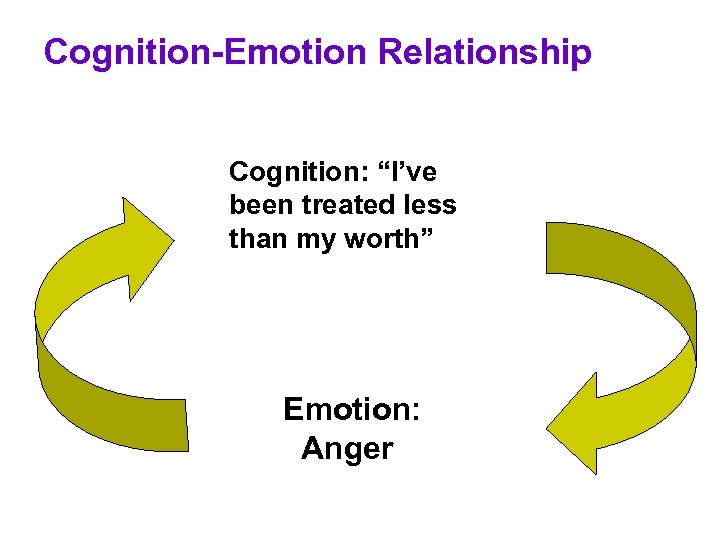 Cognition-Emotion Relationship Cognition: “I’ve been treated less than my worth” Emotion: Anger
 Behavior Drives Emotion Behavior Emotion
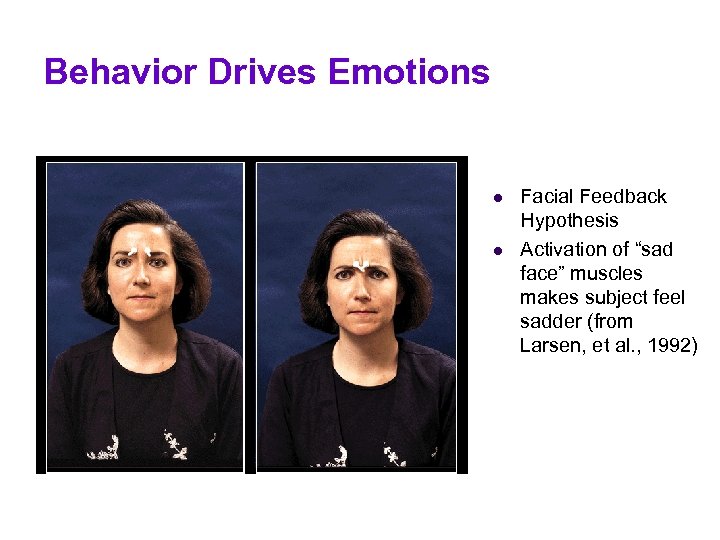 Behavior Drives Emotions l l Facial Feedback Hypothesis Activation of “sad face” muscles makes subject feel sadder (from Larsen, et al. , 1992)