


 Скачать презентацию COGN 21 Methods of Media Production l Professor
cc3f91f5a8c43c12a57dd42d1371acbe.ppt
- Количество слайдов: 60
 COGN 21: Methods of Media Production l. Professor Brian Goldfarb, Dept of Comm l. Office hours Wednesday 10: 30 - 12 pm, MCC 102 l. Email bgoldfarb@ucsd. edu l. TA’s 21: Katrina Boulding, Rachel Cody, Terra Eggink, and Chuk Moran, l. TA’s 22: Lauren Berliner , Emma Johnson, and Eduardo Santana
 l. COGN 21 all sections fully enrolled. If students drop, wait-listers will be added in the second week. Offered twice a year (winter and spring) l. COGN 22 sections open. Extra space in: A 01 609446 Tue 9: 30 – 12: 20 Eduardo A 03 609448 Wed 9: 00 – 11: 50 Emma A 04 609449 Thur 9: 30 – 12: 30 Lauren A 05 609450 Thur 12: 30 – 3: 20 Lauren A 06 609451 Fri 9: 00 – 11: 50 Emma
 l. Books: Price Center bookstore and reserve in library l. Readings not in the books are on electronic reserve (through Roger) l. Additional handouts linked to Course Web Site (CWS) l. Official (up to date) version of syllabus: http: //communication. ucsd. edu/goldfarb/cogn 21 w 08
 Goals of the Course Learn the language of (cinematic) media production n Gain elementary skills in media producing n Connect media production to other areas of the Communication major n Begin to translate theoretical ideas into media projects (and vice versa) n Become a more ACTIVE & ENGAGED viewer / listener n
 Analysis of Audio-Visual Media n Frames n Intention n Interpretation n Style, Form, Formal Systems n Genre
 Media Clips for Today Safe, by Todd Haynes, 1995 n American Beauty, Sam Mendes, 1999, 122 min. n Scenes from the House Dream, (Media Installations) by David Hoffos, 2003 -present n n Trip to the Moon, George Méliès, France, 1902 n The Most Beautiful Man in the World, by Alicia Duffy, Great Britain, 2002.
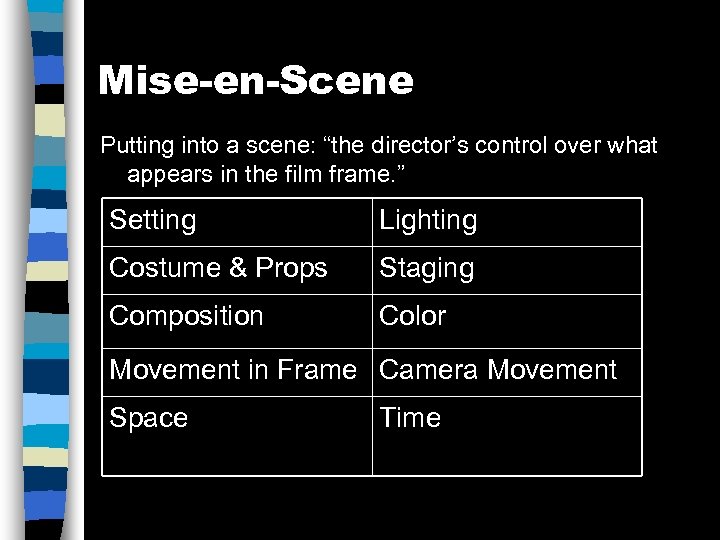 Mise-en-Scene Putting into a scene: “the director’s control over what appears in the film frame. ” Setting Lighting Costume & Props Staging Composition Color Movement in Frame Camera Movement Space Time
 Scenes from the House Dream I have sought to reveal and examine the sources David Hoffos: of illusion found within genre movies, stage magic, theme park attractions, 19 th century parlours, and museum displays. The evolution of my work has been a steady process of accumulating and inventing techniques and devices and then applying and refining them. In 2002 I embarked on a fiveyear/five-phased project which will result in a series of fifteen to twenty small installations down a long hallway, forming a sort of dream narrative. The installations incorporate multiple channels of video and audio, miniature models, mirrors, lighting effects, video projections, phantom figures, hidden doorways and false walls down a dark hallway.
 Scenes from the House Dream Experimental § Installation work § Reflexive (directs us to think about the conventions of the medium and it’s history) §
 Trip to the Moon George Méliès, France, 1902 Early narrative construction n Inspired by novels by Jules Verne and H G Wells n Series of single shot scenes n Used cinema in new ways to extend theatrical staging and magic shows n
 Constructing Images Framing and the frame
 Elements of a “Good” Shot n No rules that can’t be broken n Elements - cohesive? n Eye Trace n Thought provoking n Cues
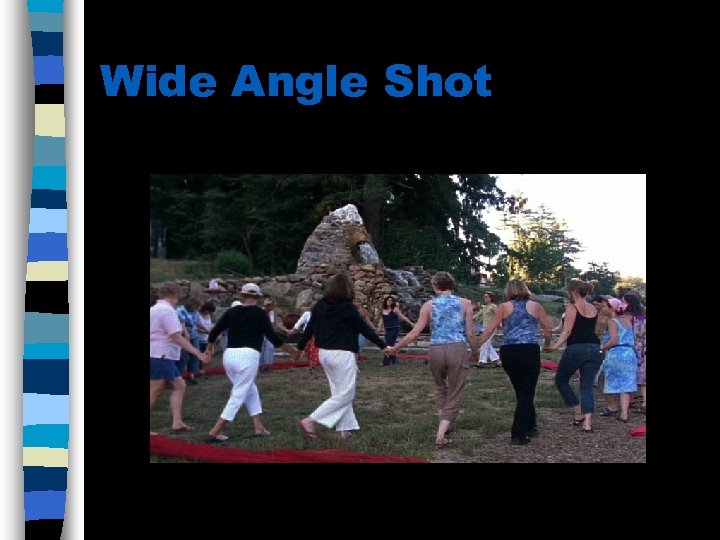
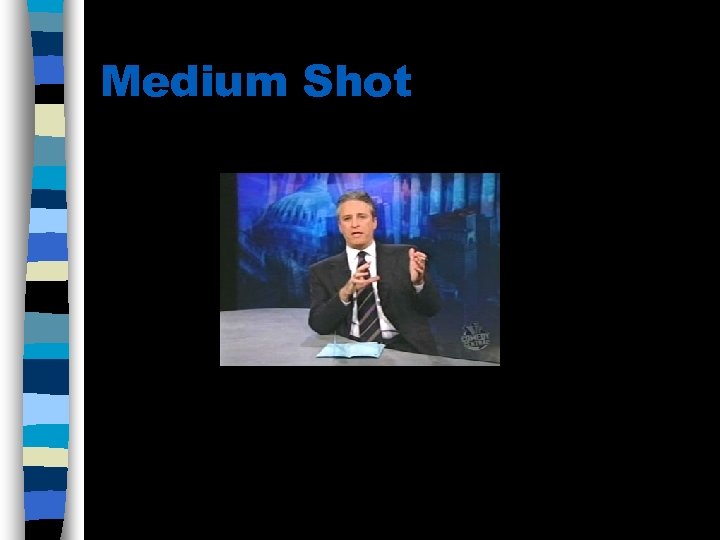
 Photography Framing Composition: X, Y and Z axes Type of Shot: Medium, Wide, Close Up, Extreme Close up Depth of Field Camera Angle Lighting Color
 Framing n Removing unnecessary, confusing or competing elements.
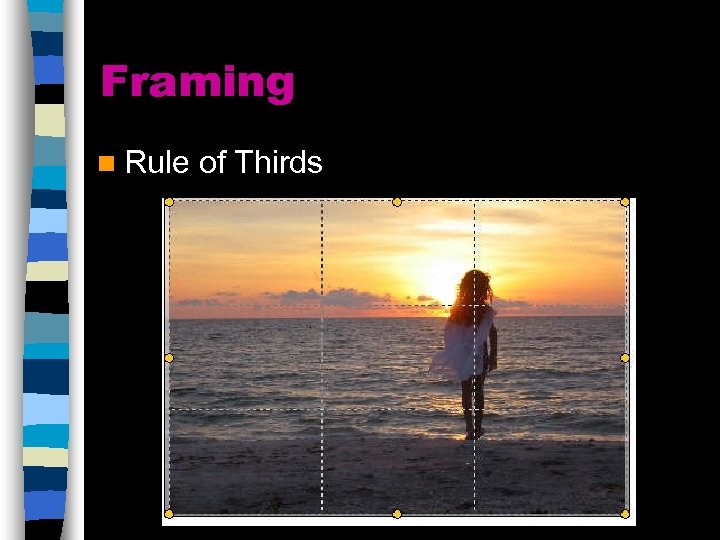 Framing n Rule of Thirds
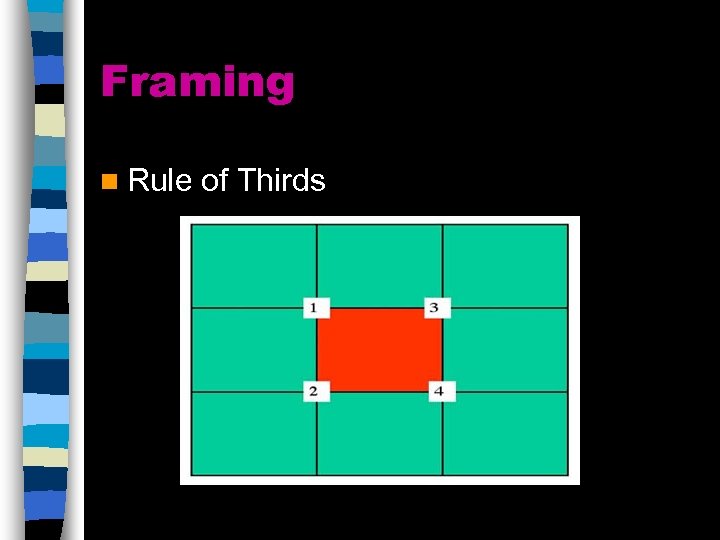 Framing n Rule of Thirds
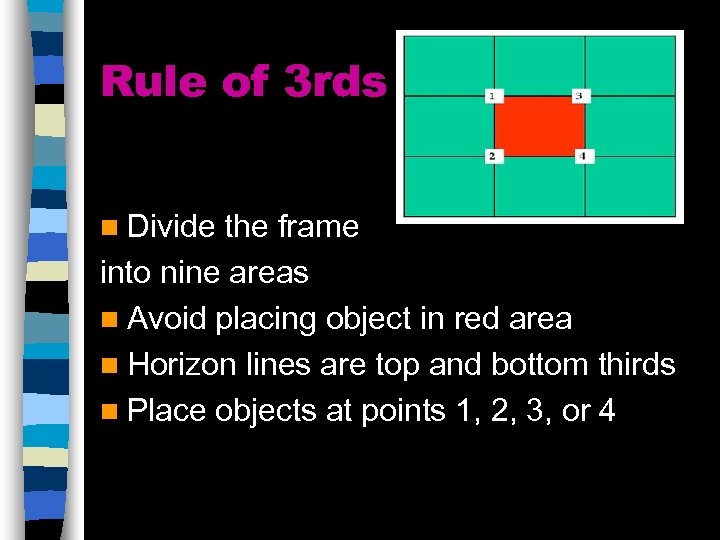 Rule of 3 rds n Divide the frame into nine areas n Avoid placing object in red area n Horizon lines are top and bottom thirds n Place objects at points 1, 2, 3, or 4
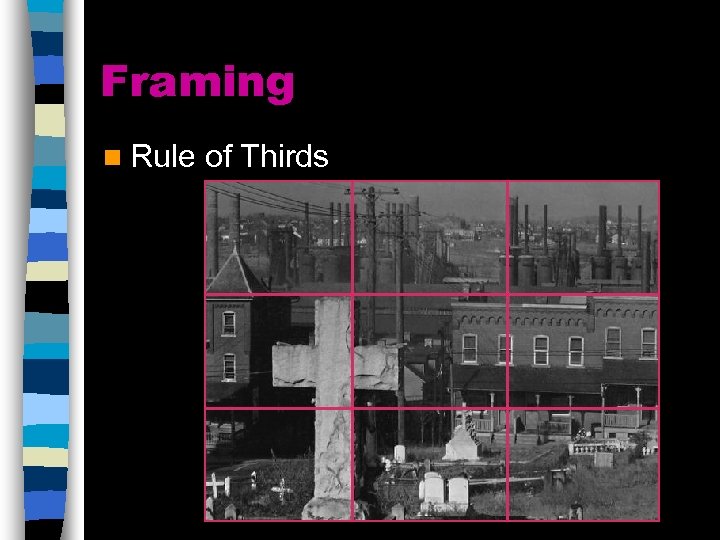 Framing n Rule of Thirds
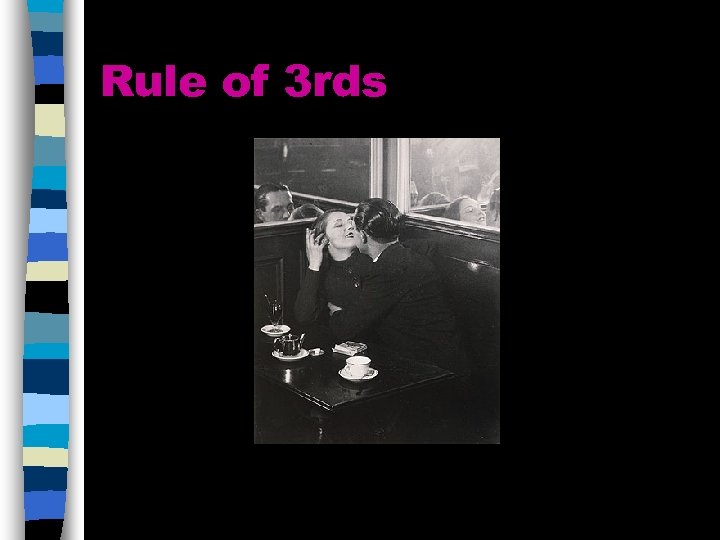 Rule of 3 rds
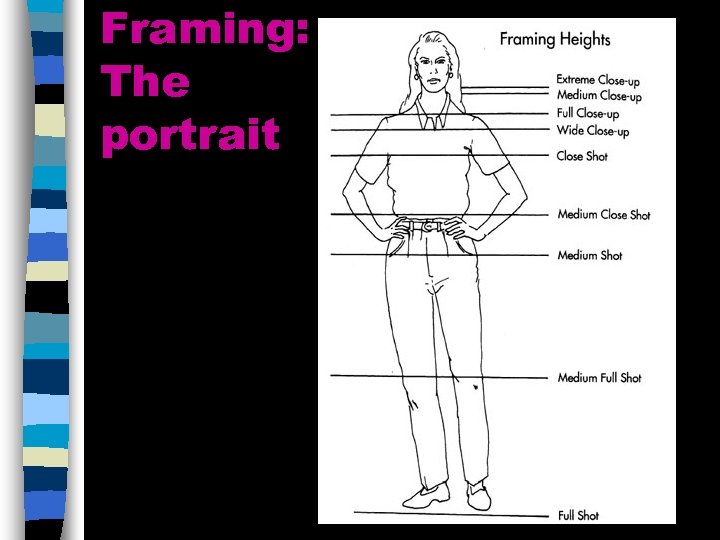 Framing: The portrait
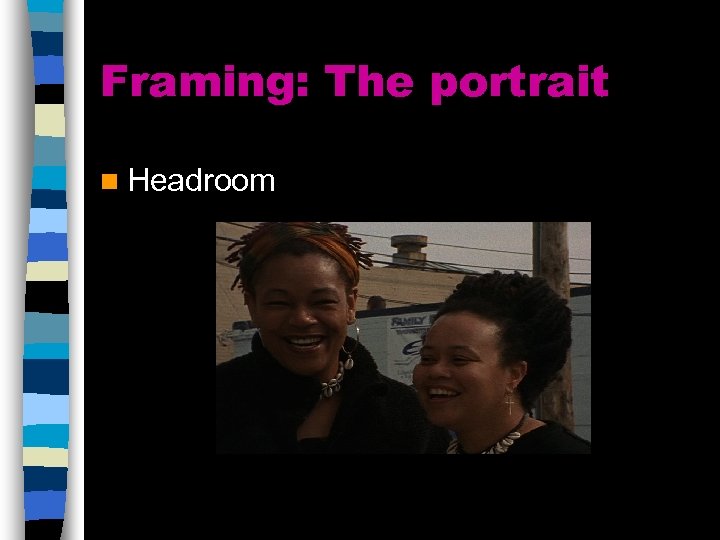 Framing: The portrait n Headroom
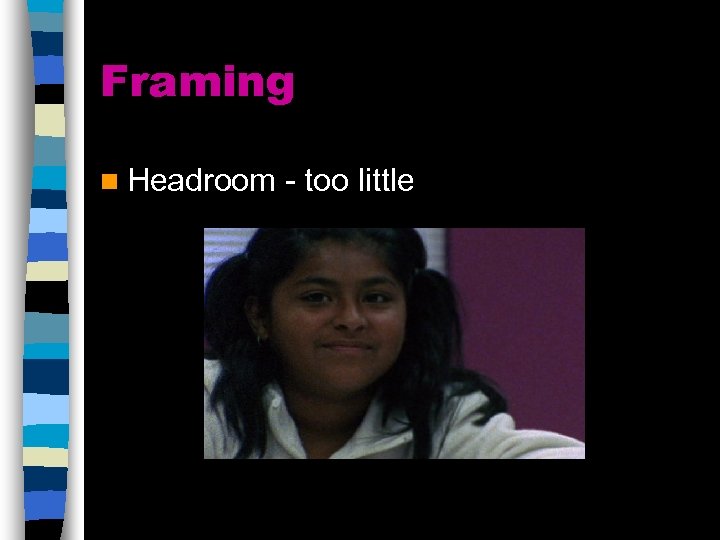 Framing n Headroom - too little
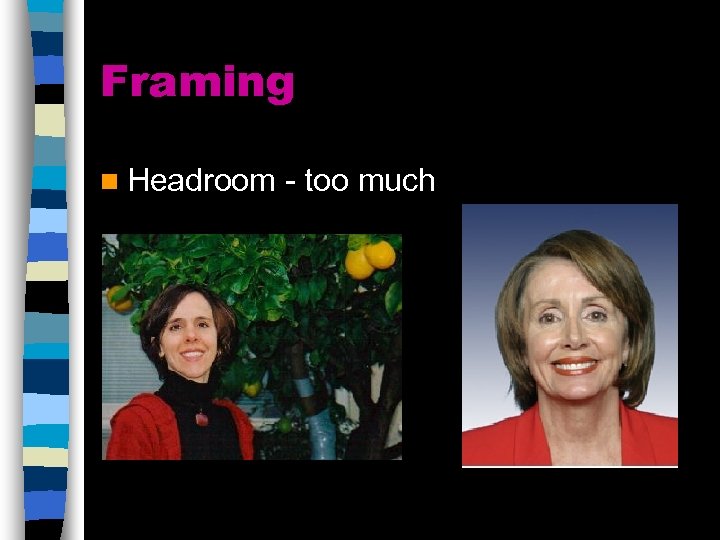 Framing n Headroom - too much
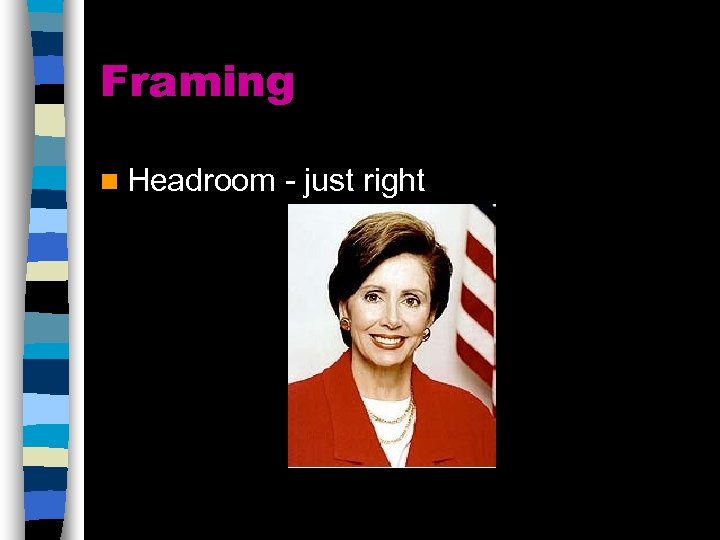 Framing n Headroom - just right
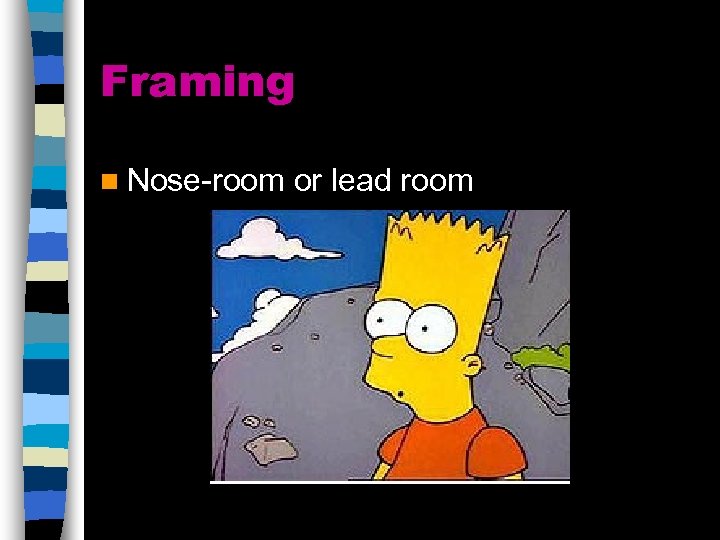 Framing n Nose-room or lead room
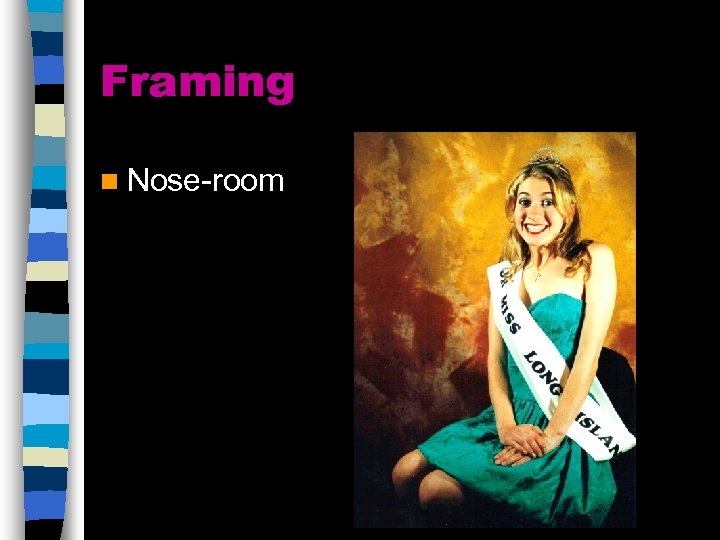 Framing n Nose-room
 Close-up Offset
 Close-up Offset: Wider Aspect Ratio
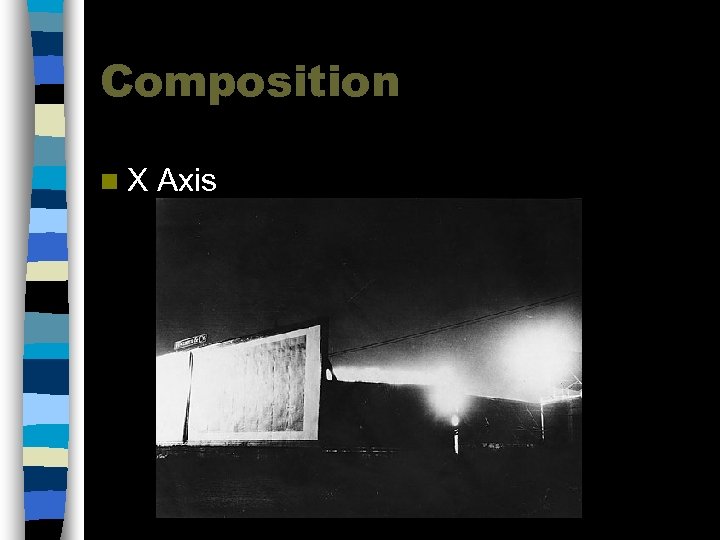 Composition n. X Axis
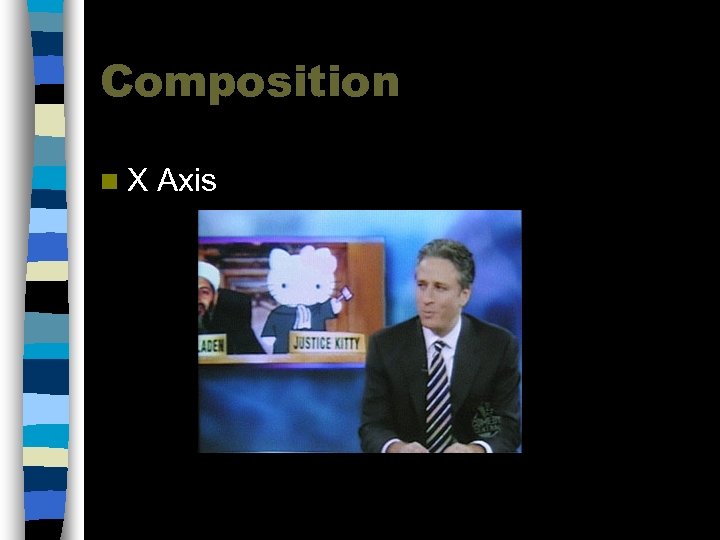 Composition n. X Axis
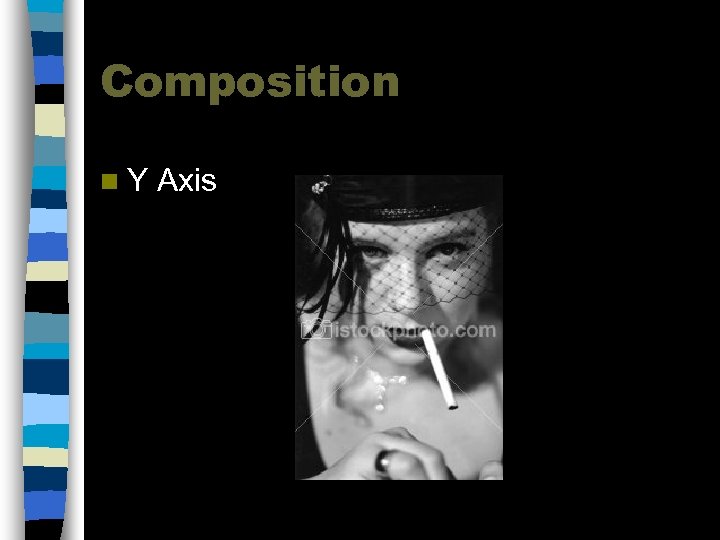 Composition n. Y Axis
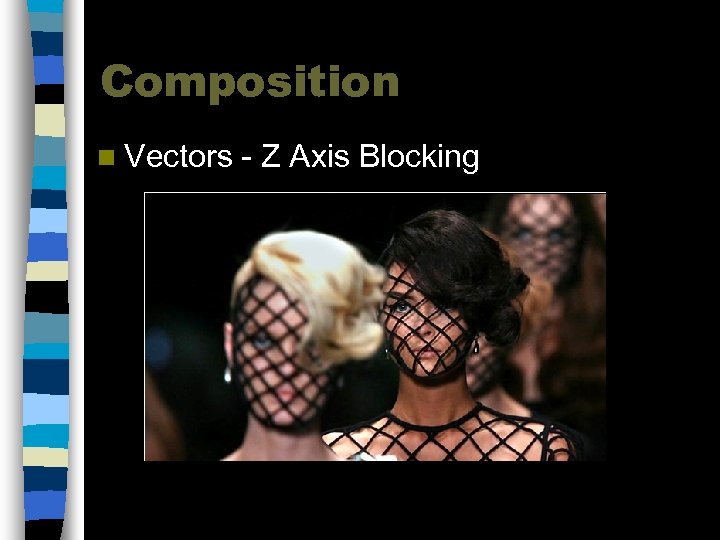 Composition n Vectors - Z Axis Blocking
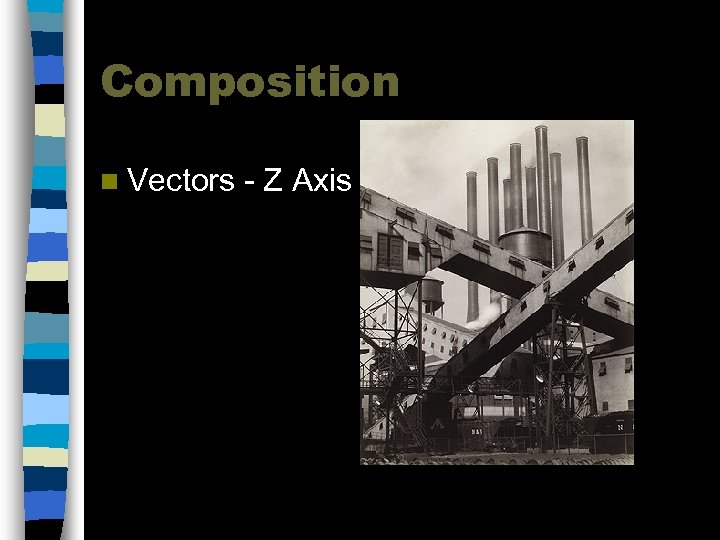 Composition n Vectors - Z Axis
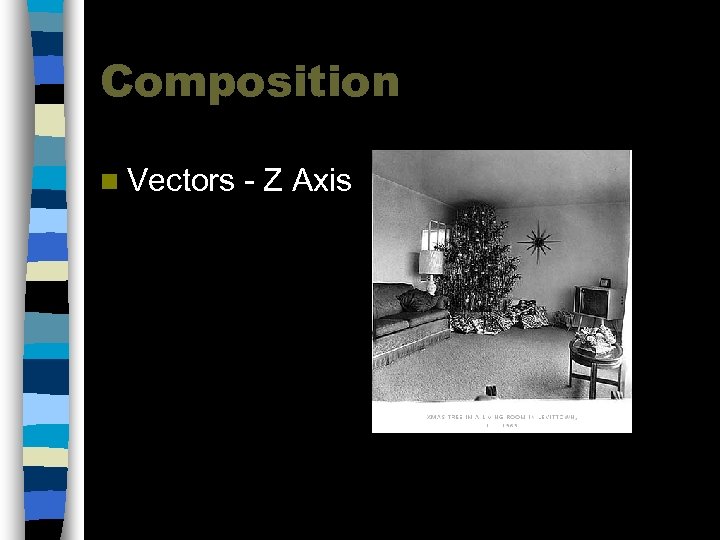 Composition n Vectors - Z Axis
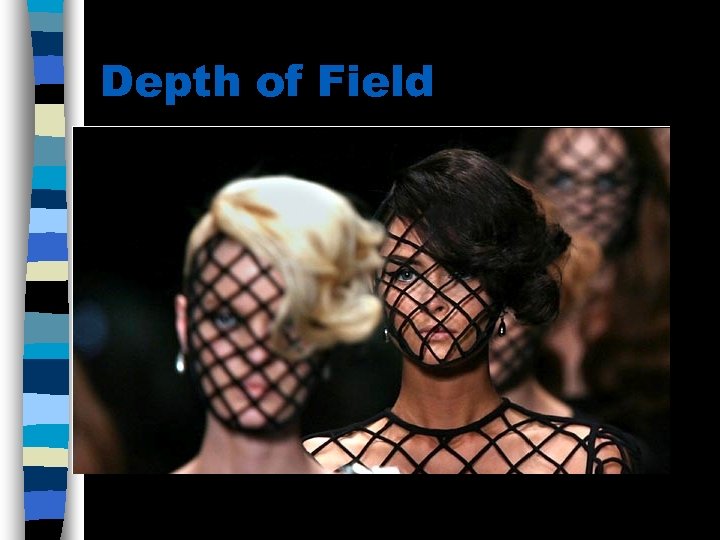
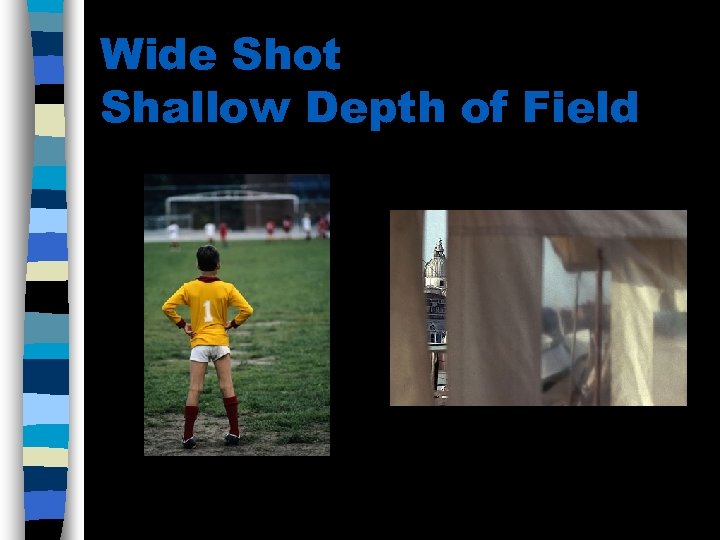
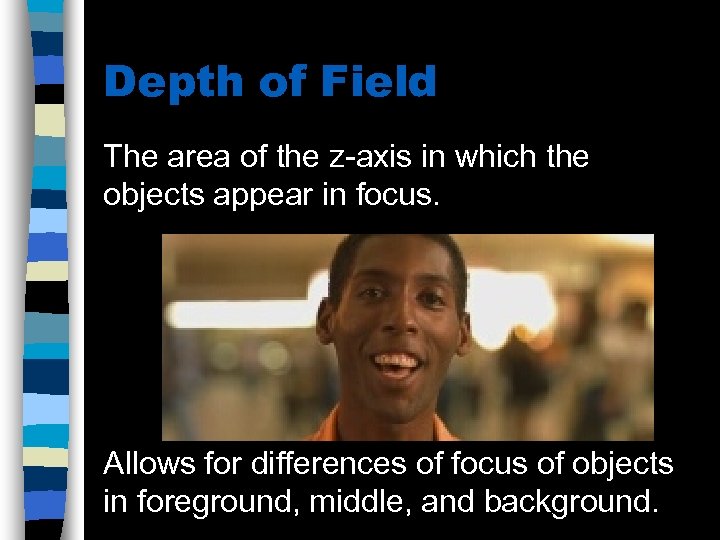 Depth of Field The area of the z-axis in which the objects appear in focus. Allows for differences of focus of objects in foreground, middle, and background.
 Depth of Field Ways to decrease depth of field: § Telephoto lens setting § Subject closer to camera § Open Iris (letting more light into the camera) Lower F-stop.
 Depth of Field
 Wide Shot Shallow Depth of Field
 Wide Angle Shot
 Medium Shot
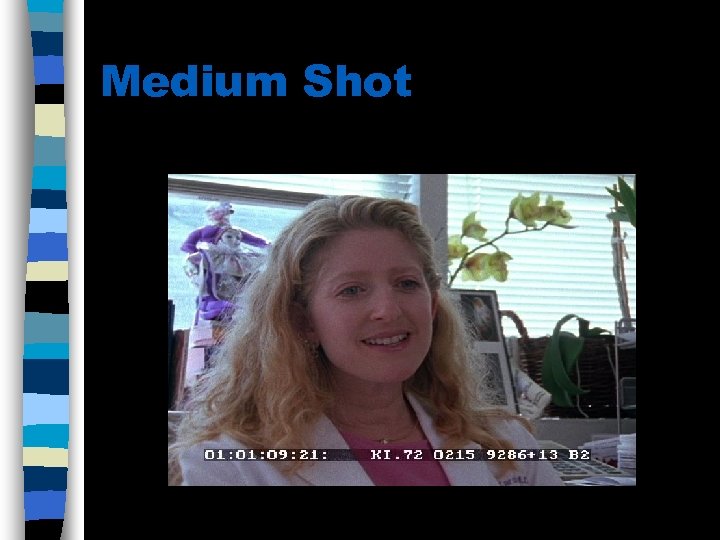 Medium Shot
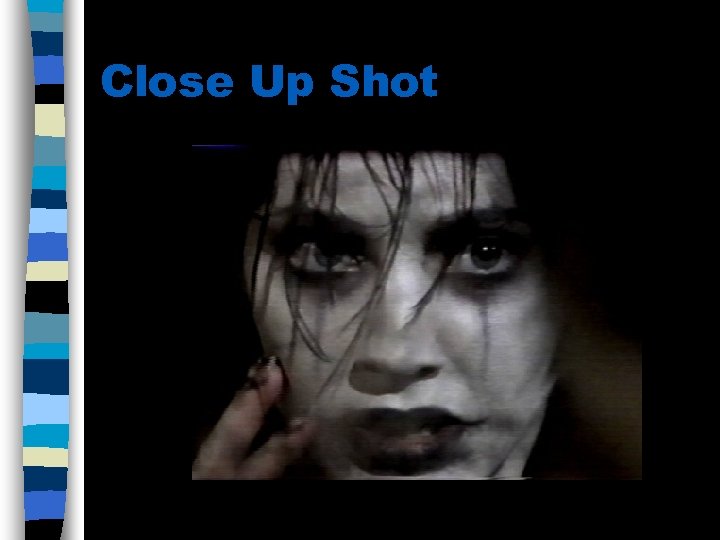 Close Up Shot
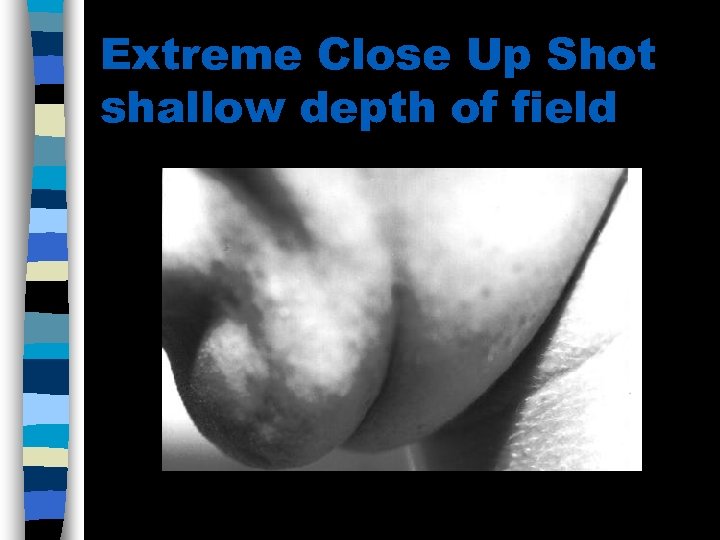 Extreme Close Up Shot shallow depth of field
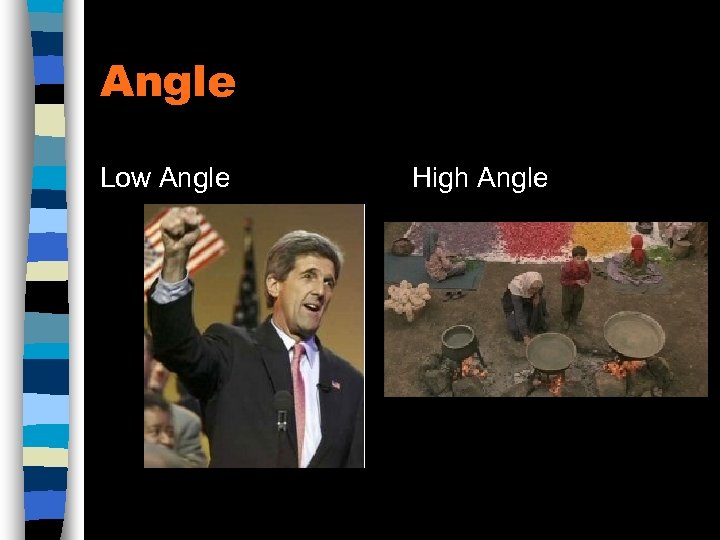 Angle Low Angle High Angle
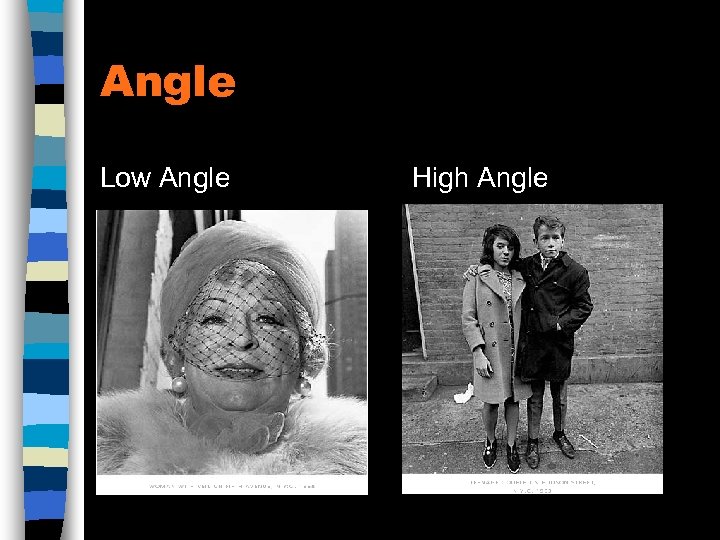 Angle Low Angle High Angle
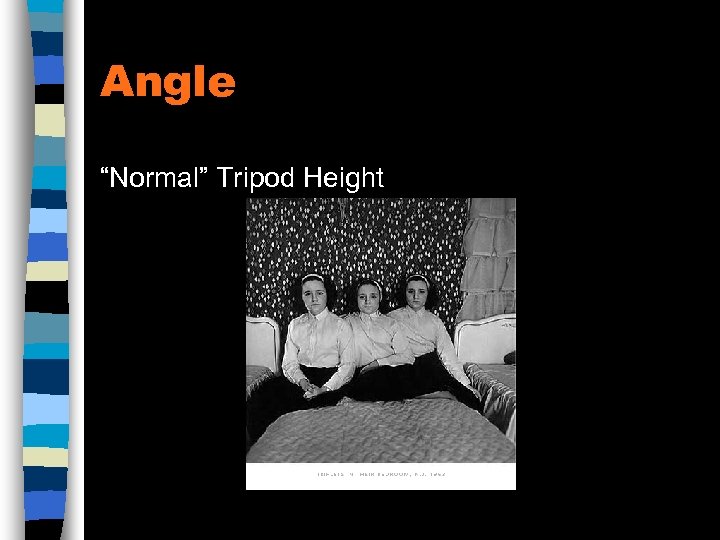 Angle “Normal” Tripod Height
 Lighting Terms we use: n High key n Low key n Soft light n Hard light n n n Contrast Fill Flat Direct Indirect
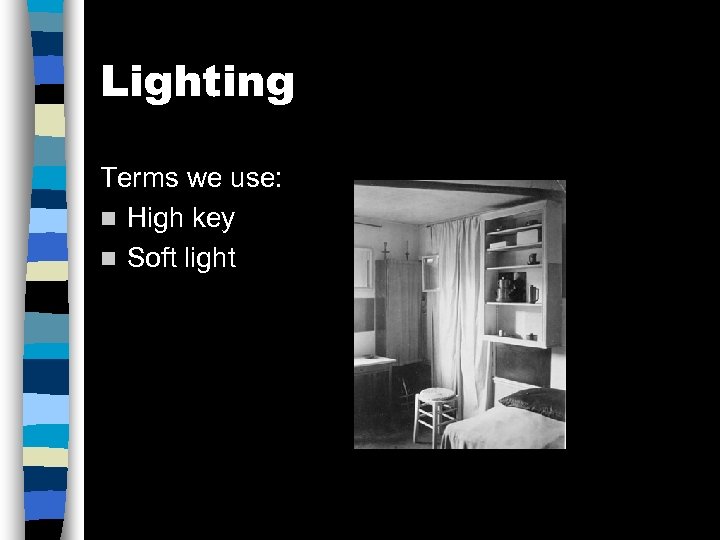 Lighting Terms we use: n High key n Soft light
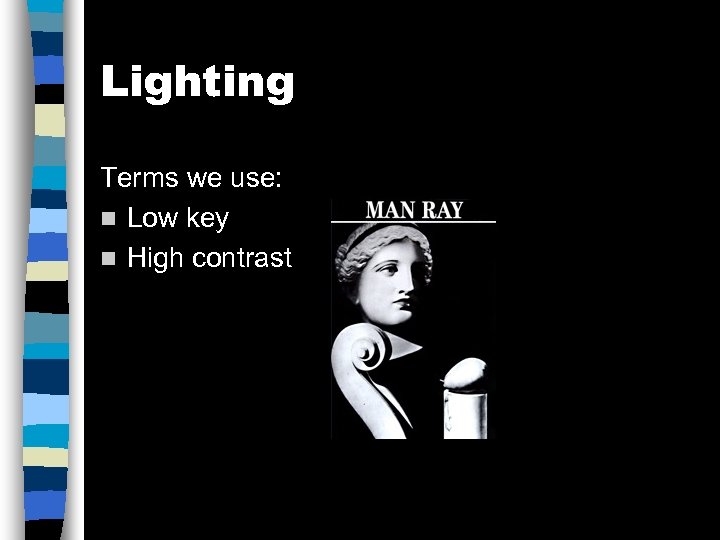 Lighting Terms we use: n Low key n High contrast
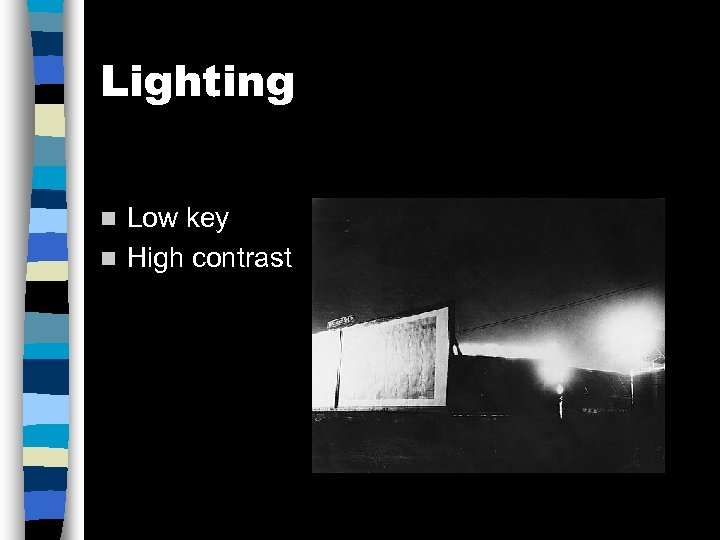 Lighting Low key n High contrast n
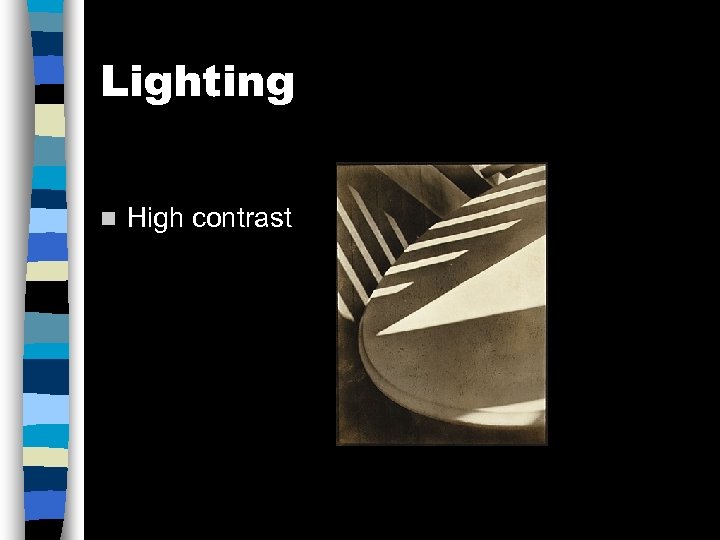 Lighting n High contrast
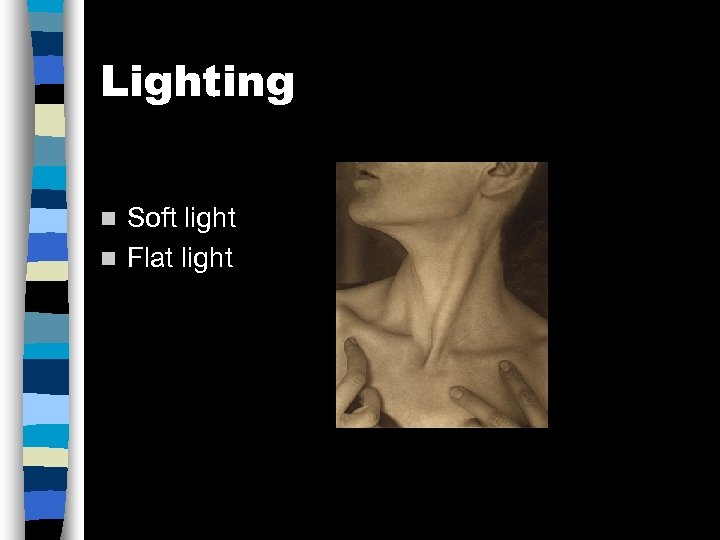 Lighting Soft light n Flat light n
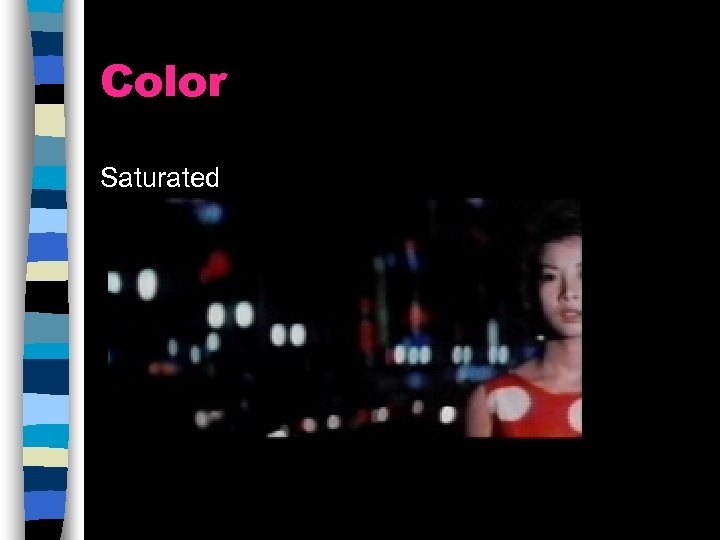 Color Saturated
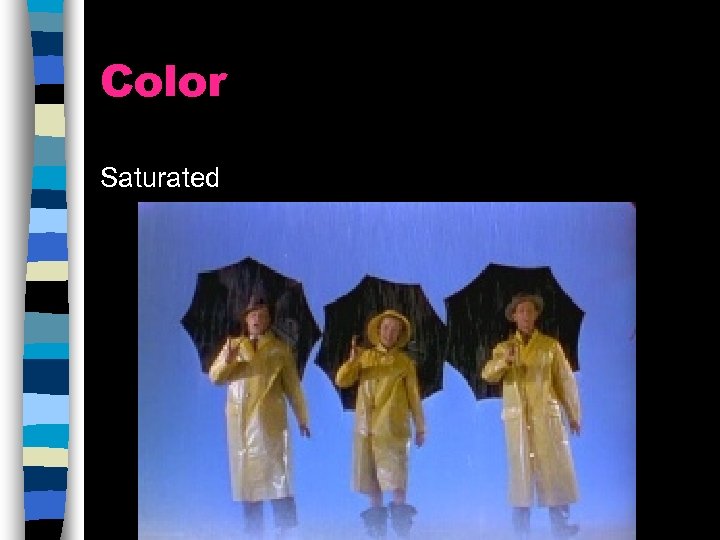 Color Saturated
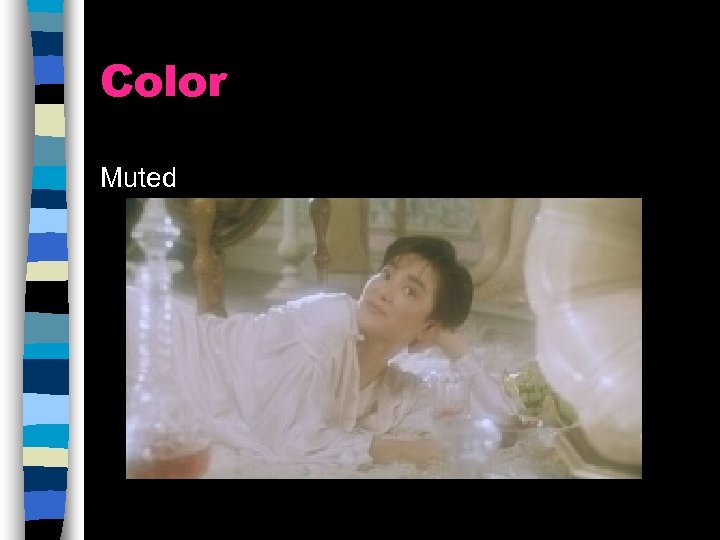 Color Muted
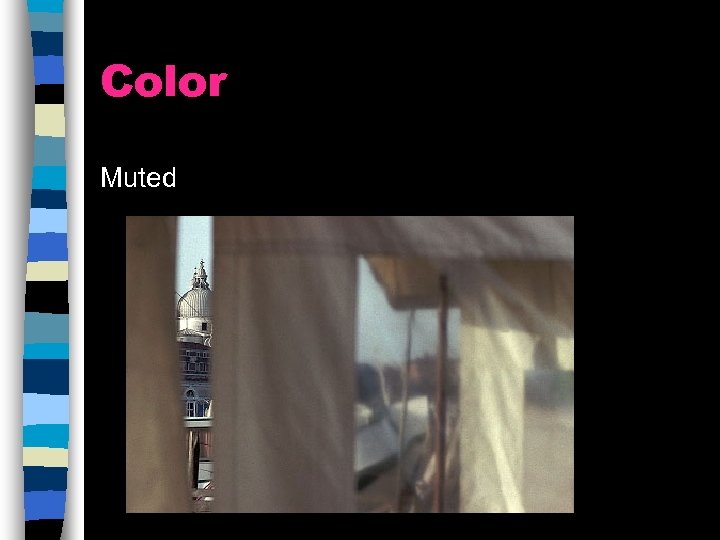 Color Muted
 Color Temperature--refers to the spectrum of light illuminating a scene (not the color of objects in the scene) n Exterior light - 5400 K BLUE n Interior (tungsten set lights) - 3200 K ORANGE n Fluorescent - GREEN n Sunset exterior - blue/orange n Mid day sun exterior - bright blue White Balance: video camera adjustment to compensate for color temperature.
 Color Temperature Clips from Traffic (Steven Soderbergh, 2001) Scenes in San Diego - white balanced normal n Scenes in Tijuana - color balanced orange n Scenes with Drug Tsar and family - color balanced blue n
 The Most Beautiful Man in the World Alicia Duffy , UK, 2002, Short independent/art film. n Consider aspects of photography n How is composition used to convey ideas or emotions? n
 Still Image Checklist n n n n Framing: Centered, use of rule of 3’rds Tripod height: High, medium or low angle Wide, medium, close up shot Hard or soft lighting Focus and Depth of Field Direct or indirect lighting Colors in the frame