 Скачать презентацию Cobourg Ontario Canada s Mason-Dixon Community Marsha Ann Tate
31e878e53274fd3ae433b9e34c10fe08.ppt
- Количество слайдов: 17



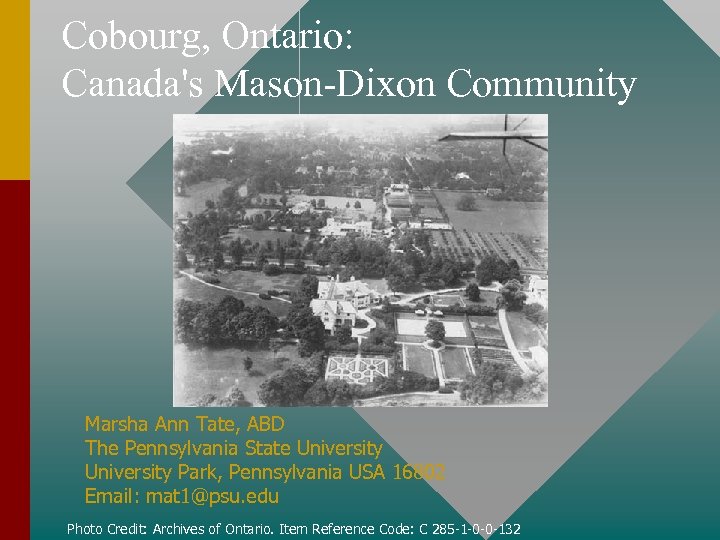
Cobourg, Ontario: Canada's Mason-Dixon Community Marsha Ann Tate, ABD The Pennsylvania State University Park, Pennsylvania USA 16802 Email: mat 1@psu. edu Photo Credit: Archives of Ontario. Item Reference Code: C 285 -1 -0 -0 -132
Introduction In the years following the Civil War: • Cobourg Ontario, emerged as one of the most popular resort communities in North America. • A number of the seasonal Cobourg residents from the United States later constructed large mansions throughout the town and its environs. • Cobourg remained a popular destination for both southern and northern U. S. families until the early decades of the 20 th century.
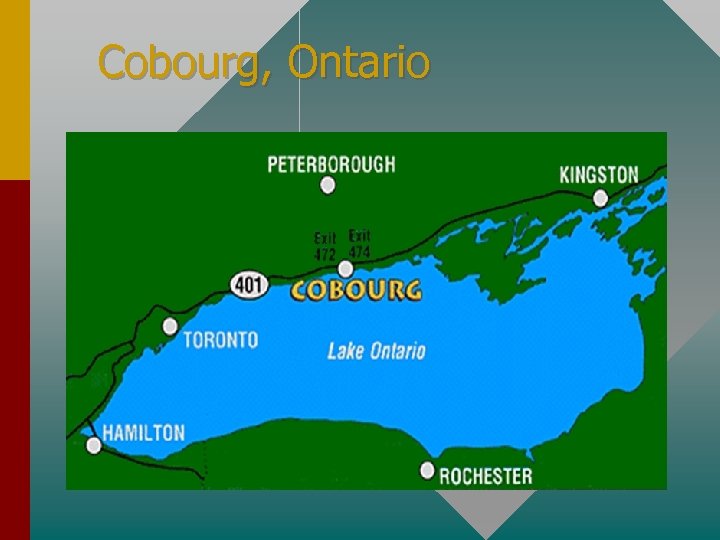
Cobourg, Ontario
Research Questions • What specific factors contributed to Cobourg's popularity with both southern and northern families from the United States? • What types, if any, of economic and social relationships existed between the northern and southern U. S. families living in Cobourg? • What types of economic and social relationships existed between the American families and Cobourg's permanent Canadian residents? • What factors contributed to Cobourg's loss of favor as a summer residence for the Americans?
Cobourg: Early History • Cedar swamp – Originally avoided by settlers • Early settlers (1797 -1820’s) – United Empire Loyalists – Retired fur traders – British “official class” • ‘Half-pay’ officers • Strong military tradition
Cobourg 1850 -1865: Prosperity to Poverty • 1850’s: Prosperity – Town population=6000 • Fifth largest center in the province and ‘most important central Lake Ontario port’ – 1856: Opening of the Grand Trunk Railway • 1860’s: Near Bankruptcy – Failure of the Cobourg to Peterborough Railway – Cost of town hall
From Iron & Steel to Rest & Relaxation • Late 1860’s George K. Shoenberger & his Pittsburgh associates assume control of: – Marmora Iron Mines • 50 miles north of Cobourg – The Cobourg, Peterborough, and Marmora Railway and Mining Company • The Pittsburgh industrialists use Cobourg as their Canadian base of operations – The industrialists begin bringing their families and friends with them on their “business” trips
Establishment of American Summer Colony • Colonel William Chambliss – Son-in-law of George K. Shoenberger – The “Ozone” tour • Arlington Hotel – George Shoenberger & William Chambliss • “Friends and family” in North and South
Reasons for Cobourg’s Popularity with Southern and Northern U. S. Families • Southern families – Cool and hospitable climate – Not required to spend vacation money in the northern United States. • Northern families – “High quality ozone” – Business interests (e. g. , iron and coal)
Additional Factors • Geographic Location – Relatively close proximity to growing urban centers in the United States (e. g. , Pittsburgh, Cincinnati, Buffalo, Rochester) • Transportation infrastructure – Readily accessible from the US via rail and water routes • Ontario Car Ferry Company: Ferries carried coal, other goods and passengers • Marketing • Accommodations
Cobourg’s US Visitors: • Wealthy – Built large estates and often stayed from May until early September – The “American summer colony” • Middle and lower classes – Weekend excursions (Early part of 20 th century) • Cobourg visit normally lasted only a few hours
Cobourg Summer Colony: From Hotels to Estates • 1867 -1880 s – Activities slower paced than later decades – Activities hotel oriented • Most dances, ‘hops’ or soirees were in the hotel • Guests included prominent local and American families • 1880’s-1920’s – Large estates built – Activities often “estate focused”
![Ontario Car Ferry in Cobourg Harbour [ca. 1919] Source: Archives of Ontario, Item reference](https://present5.com/presentation/31e878e53274fd3ae433b9e34c10fe08/image-13.jpg "Ontario Car Ferry in Cobourg Harbour [ca. 1919] Source: Archives of Ontario, Item reference")
Ontario Car Ferry in Cobourg Harbour [ca. 1919] Source: Archives of Ontario, Item reference code C 285 -1 -0 -0 -140
Economic Ties • Railroads – Ontario Car Ferry Company • Infrastructure – Hospital, roads, water system • Recreational facilities – Cobourg Golf Club • Hotels & other tourist-related businesses
Social Ties • Marriages between members of southern US families with members of northern US families – Marriages were highlights of the colony’s summer season • Marriages between Americans and Canadian families
Social Events • Plays • Dances (e. g. , hops) • Band concerts (e. g. , Shriners from New York state) • Regattas • Horse shows/races
Twilight of the American Colony • World War I – Major social and economic transitions in both Canada and the United States • Prohibition • The Depression • World War II
Скачать презентацию Cobourg Ontario Canada s Mason-Dixon Community Marsha Ann Tate
31e878e53274fd3ae433b9e34c10fe08.ppt