


 Скачать презентацию CO 2 Reduction Measures in Freight Sector in
cd54dc56b027fc4b84a038d622f9056a.ppt
- Количество слайдов: 14
 CO 2 Reduction Measures in Freight Sector in Japan by Shinji NAKAGAWA Ministry of Transport Japan
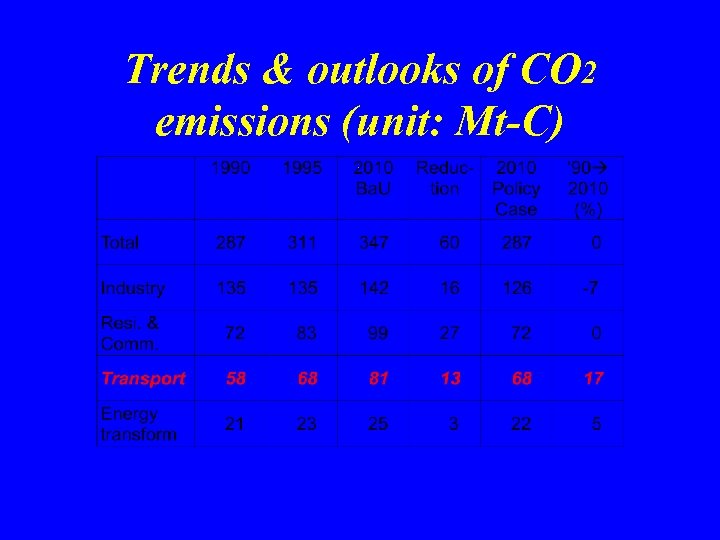 Trends & outlooks of CO 2 emissions (unit: Mt-C)
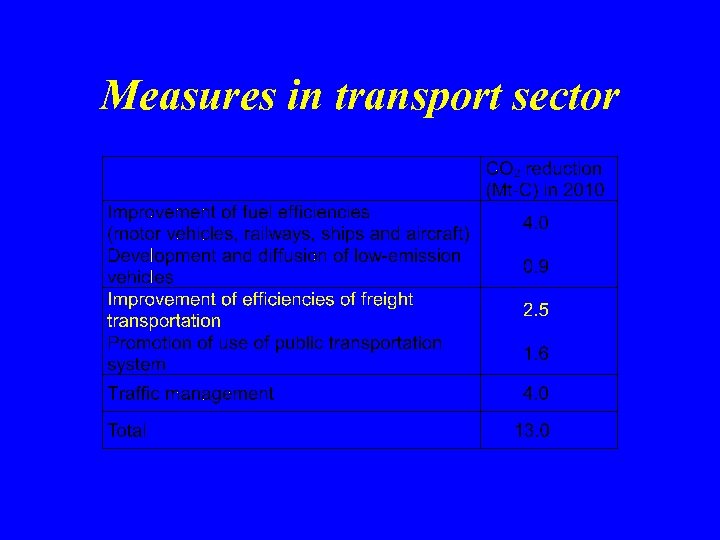 Measures in transport sector
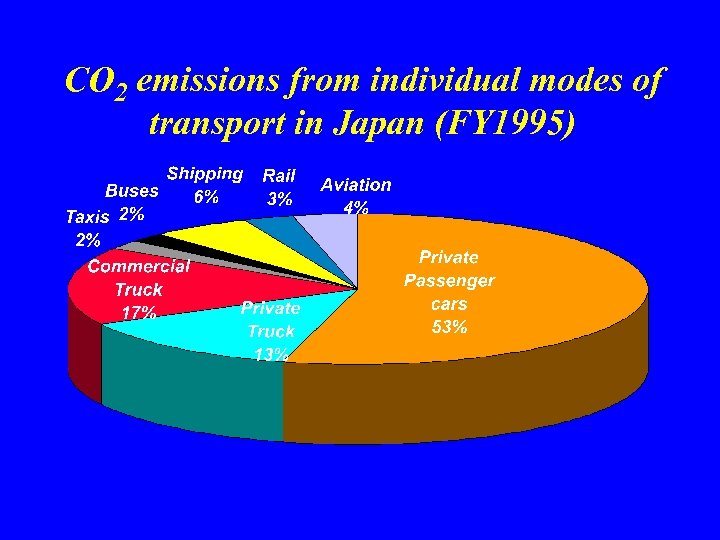 CO 2 emissions from individual modes of transport in Japan (FY 1995)
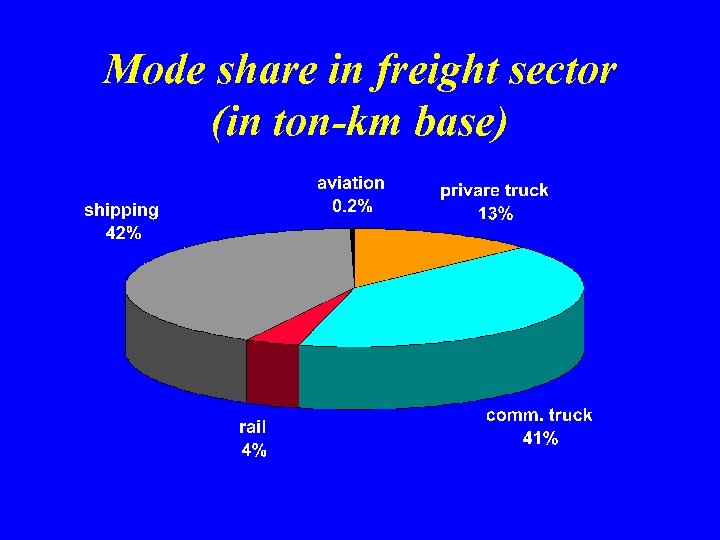 Mode share in freight sector (in ton-km base)
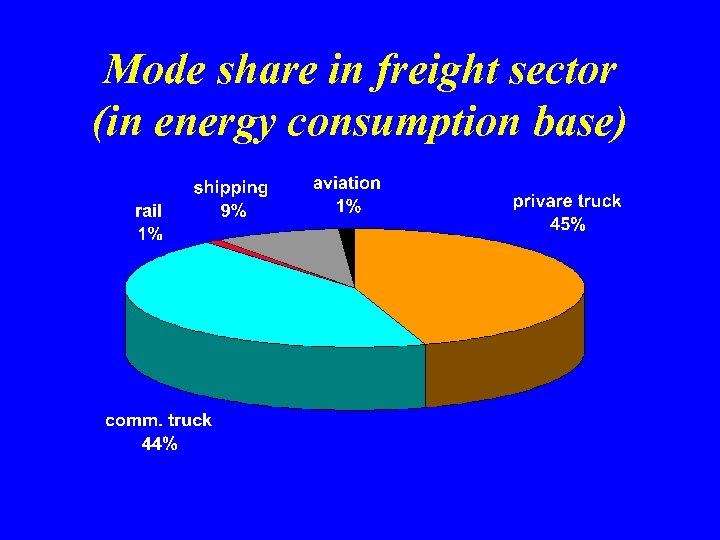 Mode share in freight sector (in energy consumption base)
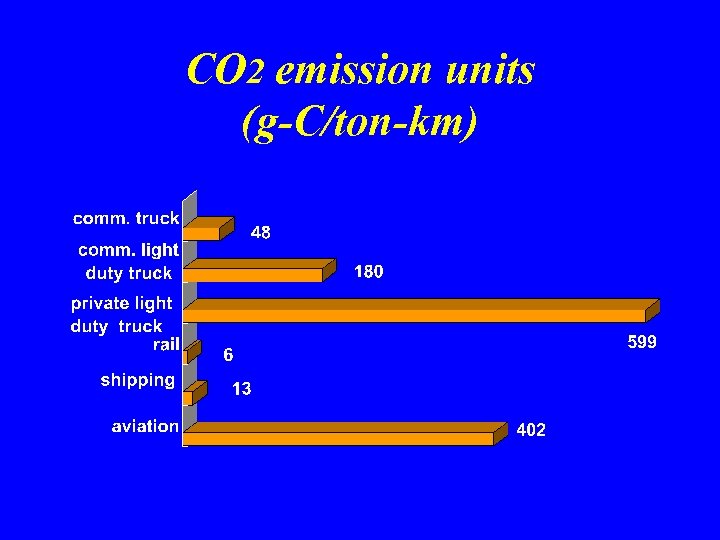 CO 2 emission units (g-C/ton-km)
 Characteristics of freight transport in Japan • Large share of coastal shipping • Concentration of international container freight at 3 area (Tokyo, Ise and Osaka Bays) • Large number of private trucks (~ 87% of 1 million units) – shorter transport distance, lower load factor • Large number of small-sized trucking company (~70% of 50, 000 )
 Basic concept in CO 2 reduction from freight transport • modal shift from trucks to rail and shipping • improvement of energy intensity in each mode of freight transport – improvement in technical efficiency – reduction of inland transport distance of international container freight – improvement of loading factor of each truck – increase the use of trailer and larger trucks
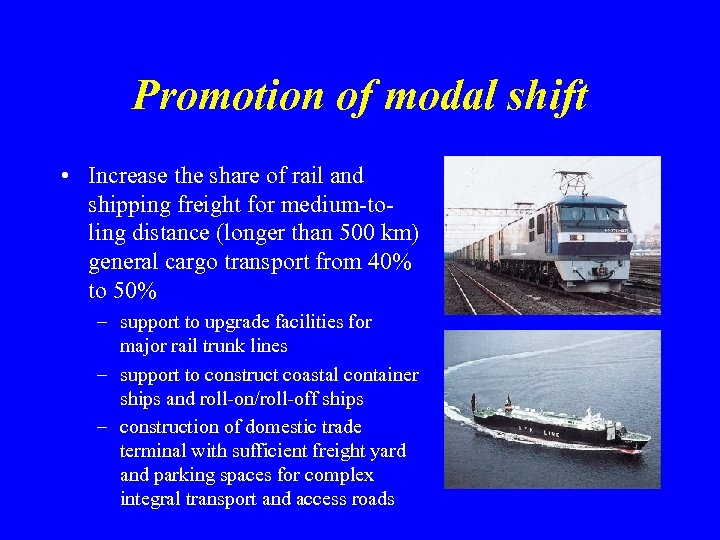 Promotion of modal shift • Increase the share of rail and shipping freight for medium-toling distance (longer than 500 km) general cargo transport from 40% to 50% – support to upgrade facilities for major rail trunk lines – support to construct coastal container ships and roll-on/roll-off ships – construction of domestic trade terminal with sufficient freight yard and parking spaces for complex integral transport and access roads
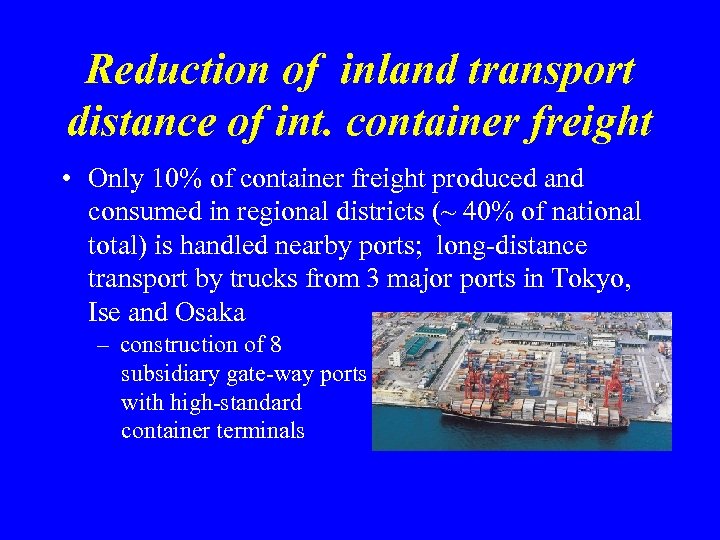 Reduction of inland transport distance of int. container freight • Only 10% of container freight produced and consumed in regional districts (~ 40% of national total) is handled nearby ports; long-distance transport by trucks from 3 major ports in Tokyo, Ise and Osaka – construction of 8 subsidiary gate-way ports with high-standard container terminals
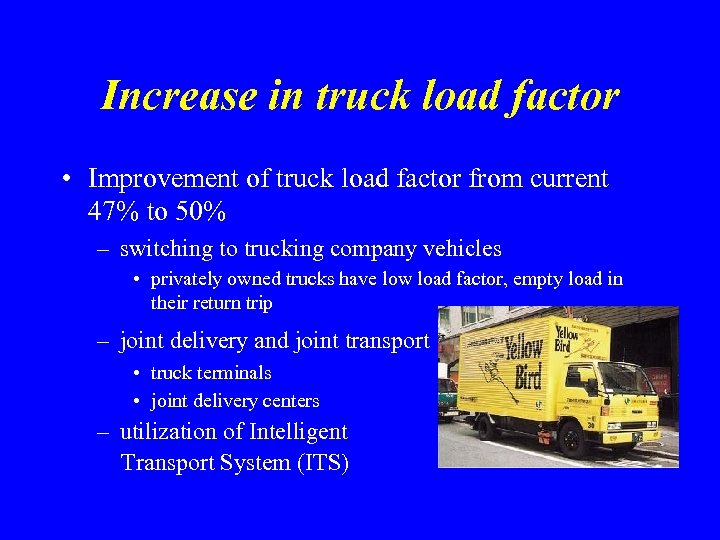 Increase in truck load factor • Improvement of truck load factor from current 47% to 50% – switching to trucking company vehicles • privately owned trucks have low load factor, empty load in their return trip – joint delivery and joint transport • truck terminals • joint delivery centers – utilization of Intelligent Transport System (ITS)
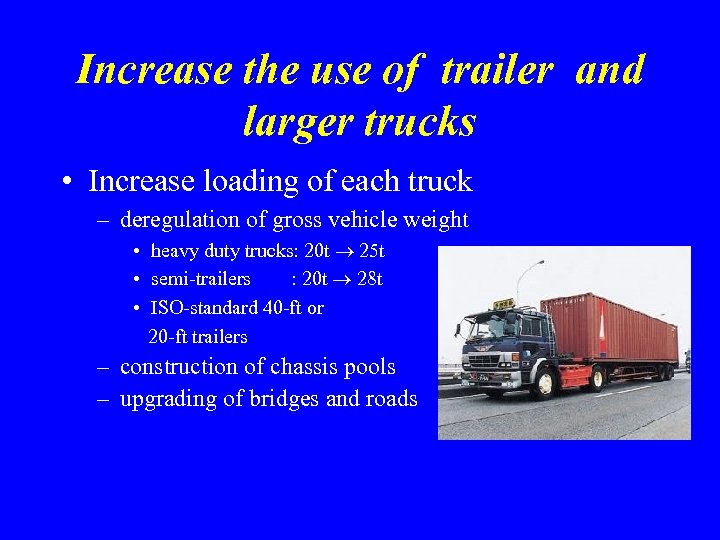 Increase the use of trailer and larger trucks • Increase loading of each truck – deregulation of gross vehicle weight • heavy duty trucks: 20 t 25 t • semi-trailers : 20 t 28 t • ISO-standard 40 -ft or 20 -ft trailers – construction of chassis pools – upgrading of bridges and roads
 Future actions • development of methods to monitor and quantify the progress of each measure • support for the improvement of infrastructure, especially to facilitate the use of state-of-the-art information system • consideration of other optional measures to achieve the current and future, possibly stricter, reduction targets