 Скачать презентацию CNGI CERNET 2 update MA Yan CERNET BUPT APAN 19
f64000a6a82d6e5cc03d0ef55f2fefb4.ppt
- Количество слайдов: 40



CNGI/CERNET 2 update MA Yan, CERNET/BUPT APAN 19, Bangkok Jan. 26, 2005
Agenda • • Background info Backbone of CNGI/CERNET 2 Members connected Operation Research Application Future plan
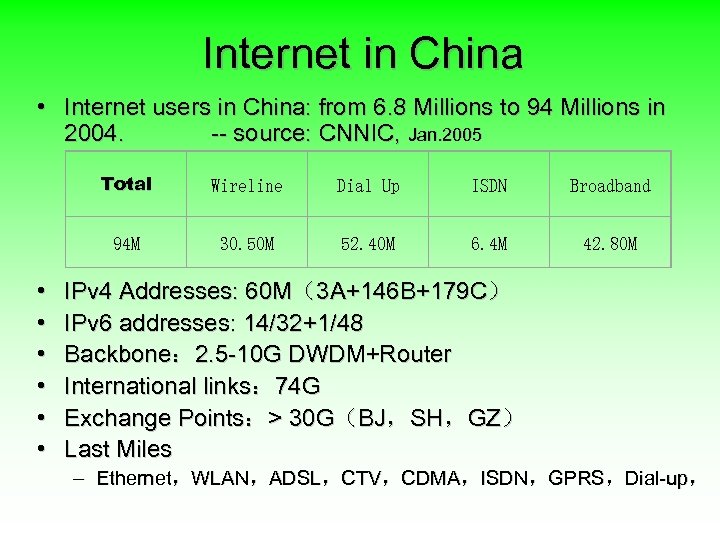
Internet in China • Internet users in China: from 6. 8 Millions to 94 Millions in 2004. -- source: CNNIC, Jan. 2005 Total Dial Up ISDN Broadband 94 M • • • Wireline 30. 50 M 52. 40 M 6. 4 M 42. 80 M IPv 4 Addresses: 60 M(3 A+146 B+179 C) IPv 6 addresses: 14/32+1/48 Backbone: 2. 5 -10 G DWDM+Router International links: 74 G Exchange Points:> 30 G(BJ,SH,GZ) Last Miles – Ethernet,WLAN,ADSL,CTV,CDMA,ISDN,GPRS,Dial-up,
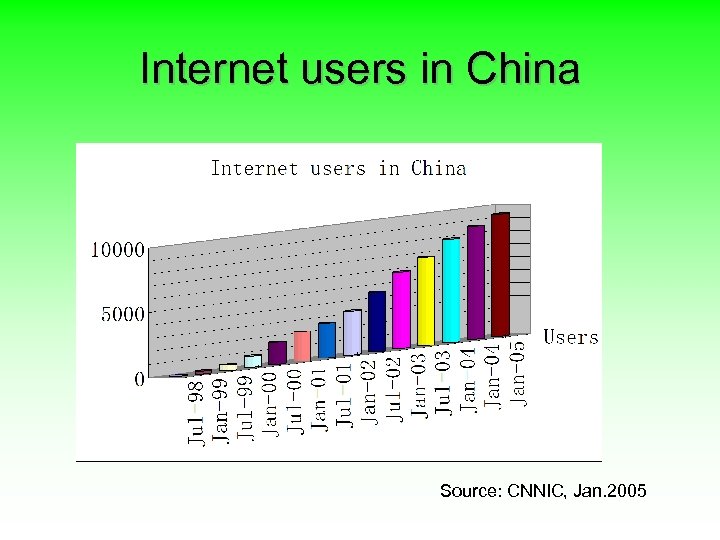
Internet users in China Source: CNNIC, Jan. 2005
What is the next generation Internet we needed • Internet have been an important infrastructure today and still deploy very fast • Major characteristics of next generation Internet: – – – Large scale network: IPv 6 address End to end high performance Secure and trustworthy network Qo. S control network Mobility • There is not unify definition for next generation Internet but IPv 6 should be an important part of NGI
Why is IPv 6 needed? • Much larger address space –IPv 6 Addresses: 3. 4 X 1038 • Trustworthy network: real IP address access • Improved routing –Route aggregation reduces the size of routing tables –Simplified header reduces router processing loads • Enhanced security and Qo. S –Mandatory IPsec support all fully IPv 6 compliant devices • Improved support for mobile IP and mobile computing devices –IP is everywhere –Data, Voice, Audio and Video integration is a Reality –Regional Registries apply a strict allocation control
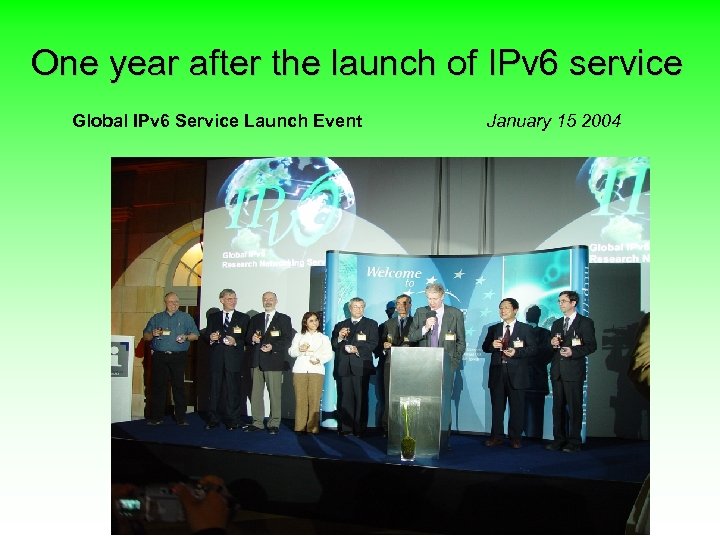
One year after the launch of IPv 6 service Global IPv 6 Service Launch Event January 15 2004
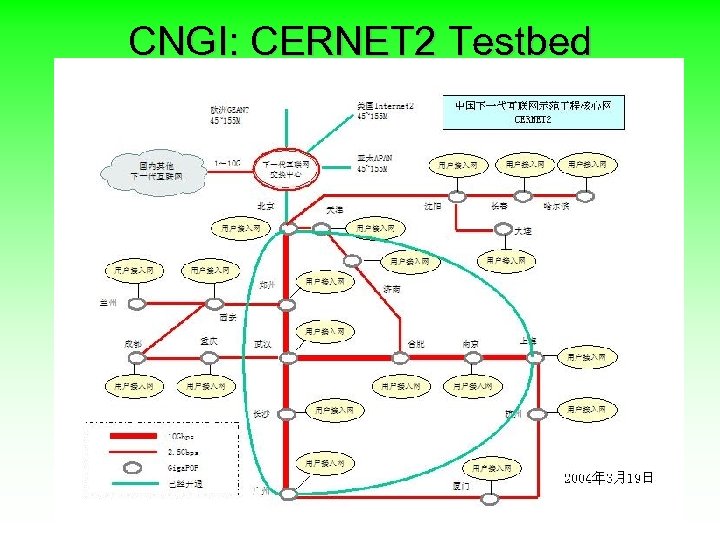
Research Networks in China • CERNET: China Education and Research Network – 1994, Managed by MOE – Nation wide backbone – 1300+ Universities and institutes, over 15 Millions users • CSTNET: China Science and Technology Network – 1994, Managed by CAS – Nation wide connections – 100+ institutes, Users round 1 Millions • NSFCNET: – 2000, Supported by NSFC – 6 nodes in Beijing city – IPv 4/IPv 6 • CNGI / CERNET 2 – – – 25 backbone gigapop in 20 major cities Pure IPv 6 backbone Dual stack campus network access
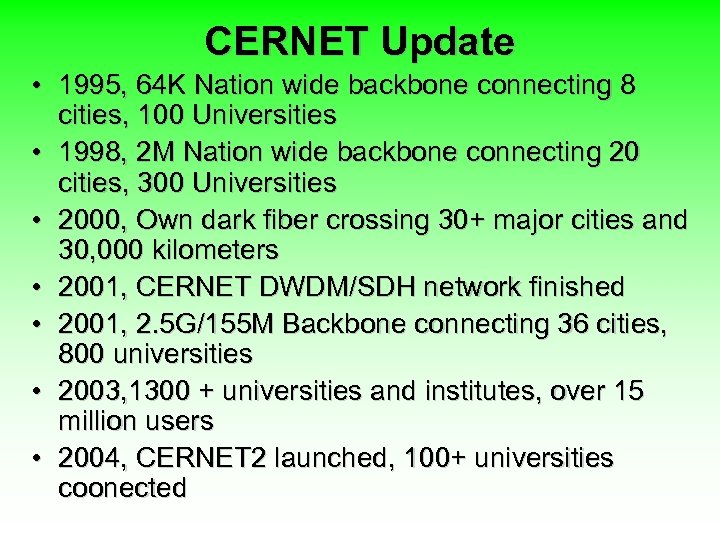
CERNET Update • 1995, 64 K Nation wide backbone connecting 8 cities, 100 Universities • 1998, 2 M Nation wide backbone connecting 20 cities, 300 Universities • 2000, Own dark fiber crossing 30+ major cities and 30, 000 kilometers • 2001, CERNET DWDM/SDH network finished • 2001, 2. 5 G/155 M Backbone connecting 36 cities, 800 universities • 2003, 1300 + universities and institutes, over 15 million users • 2004, CERNET 2 launched, 100+ universities coonected
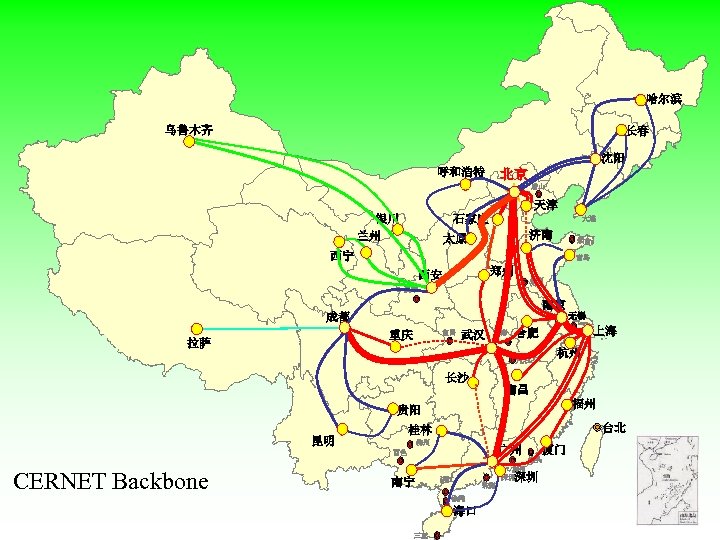
哈尔滨 乌鲁木齐 长春 沈阳 呼和浩特 北京 唐山 天津 银川 兰州 石家庄 大连 济南 太原 烟台 西宁 青岛 郑州 西安 徐州 汉中 南京 成都 无锡 重庆 拉萨 宜昌 武汉 黄梅 九江 长沙 上海 合肥 杭州 南昌 福州 贵阳 台北 桂林 昆明 柳州 广州 百色 厦门 汕头 CERNET Backbone 南宁 湛江 徐闻 海口 三亚 惠州 深圳 珠海 深圳
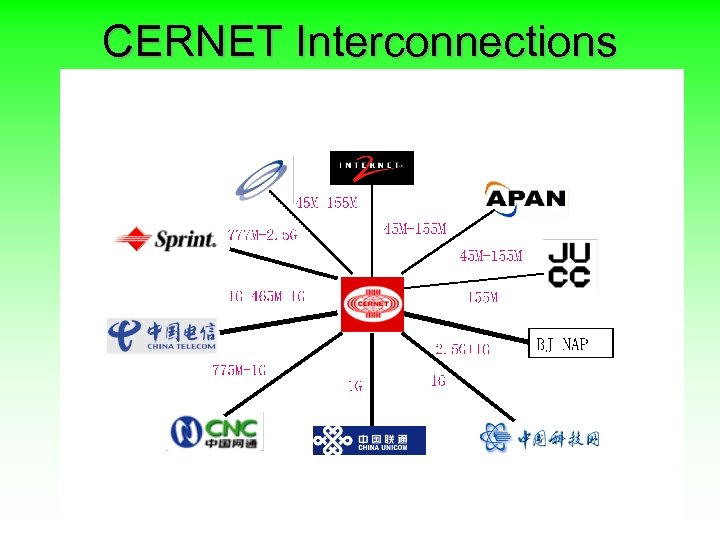
CERNET Interconnections
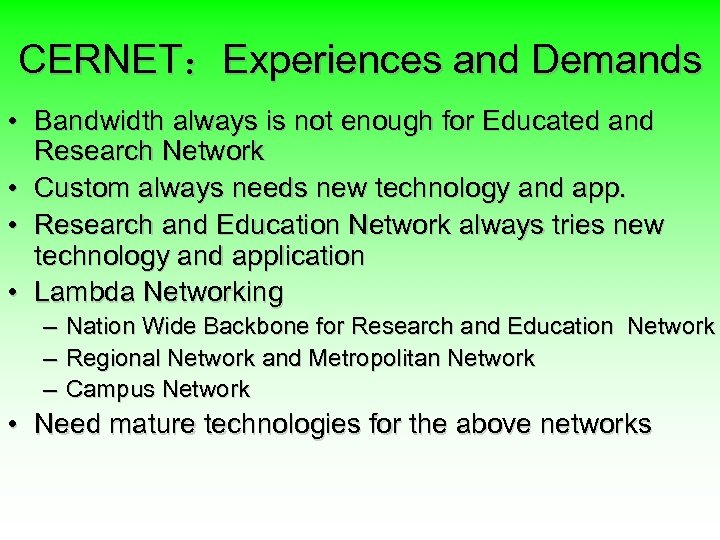
CERNET:Experiences and Demands • Bandwidth always is not enough for Educated and Research Network • Custom always needs new technology and app. • Research and Education Network always tries new technology and application • Lambda Networking – Nation Wide Backbone for Research and Education Network – Regional Network and Metropolitan Network – Campus Network • Need mature technologies for the above networks
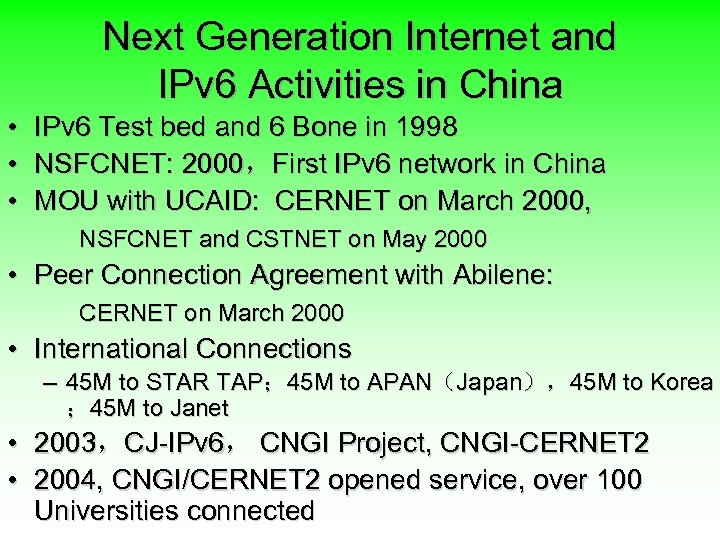
Next Generation Internet and IPv 6 Activities in China • IPv 6 Test bed and 6 Bone in 1998 • NSFCNET: 2000,First IPv 6 network in China • MOU with UCAID: CERNET on March 2000, NSFCNET and CSTNET on May 2000 • Peer Connection Agreement with Abilene: CERNET on March 2000 • International Connections – 45 M to STAR TAP; 45 M to APAN(Japan),45 M to Korea ; 45 M to Janet • 2003,CJ-IPv 6, CNGI Project, CNGI-CERNET 2 • 2004, CNGI/CERNET 2 opened service, over 100 Universities connected
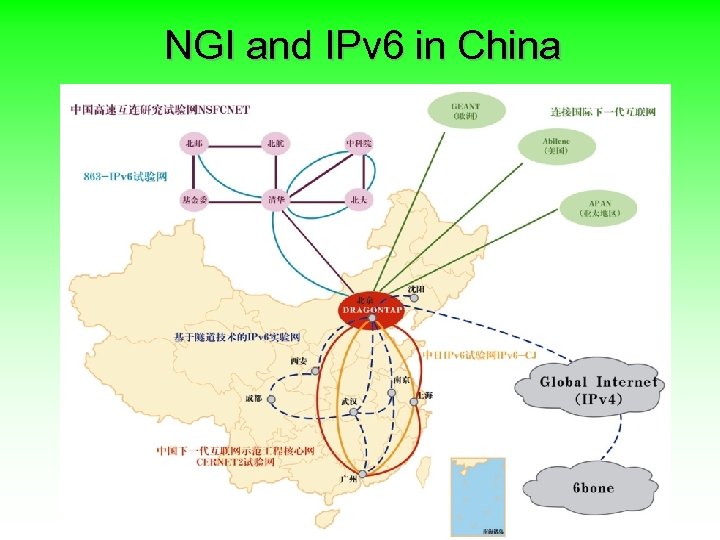
NGI and IPv 6 in China
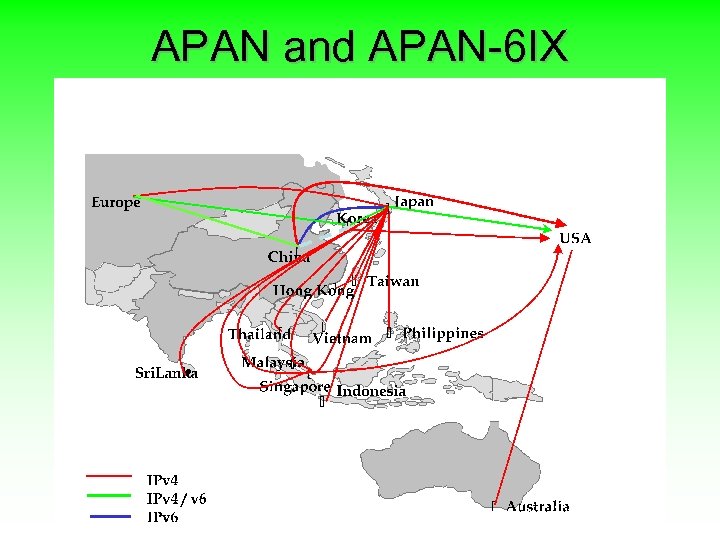
APAN and APAN-6 IX
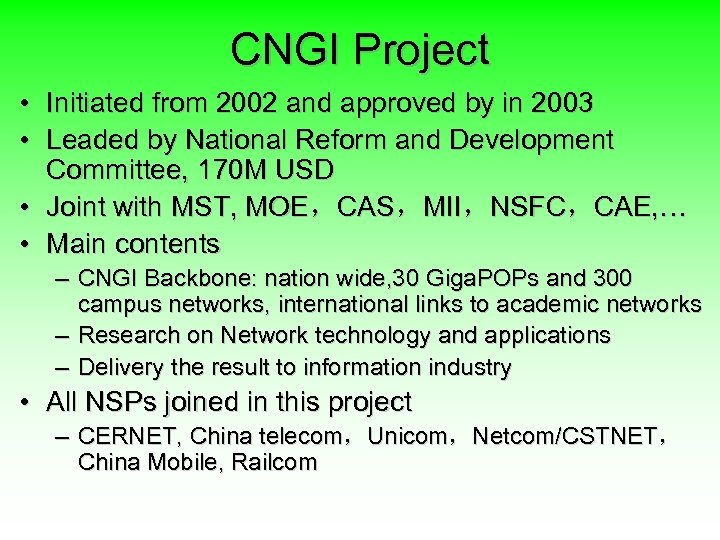
CNGI Project • Initiated from 2002 and approved by in 2003 • Leaded by National Reform and Development Committee, 170 M USD • Joint with MST, MOE,CAS,MII,NSFC,CAE, … • Main contents – CNGI Backbone: nation wide, 30 Giga. POPs and 300 campus networks, international links to academic networks – Research on Network technology and applications – Delivery the result to information industry • All NSPs joined in this project – CERNET, China telecom,Unicom,Netcom/CSTNET, China Mobile, Railcom
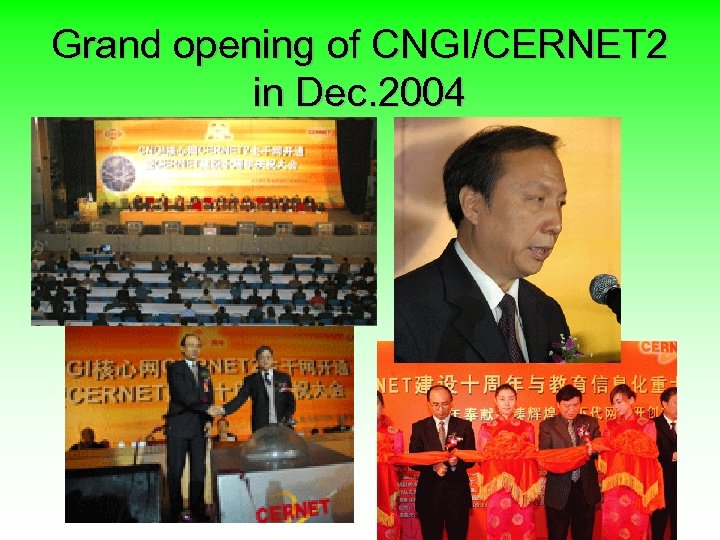
Grand opening of CNGI/CERNET 2 in Dec. 2004
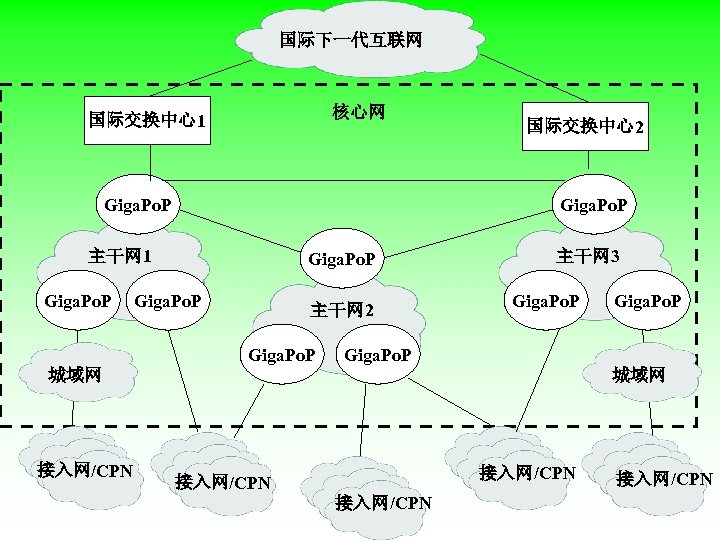
国际下一代互联网 核心网 国际交换中心1 Giga. Po. P 主干网 1 Giga. Po. P 国际交换中心2 Giga. Po. P 主干网 3 Giga. Po. P 城域网 接入网/CPN 接入网/CPN
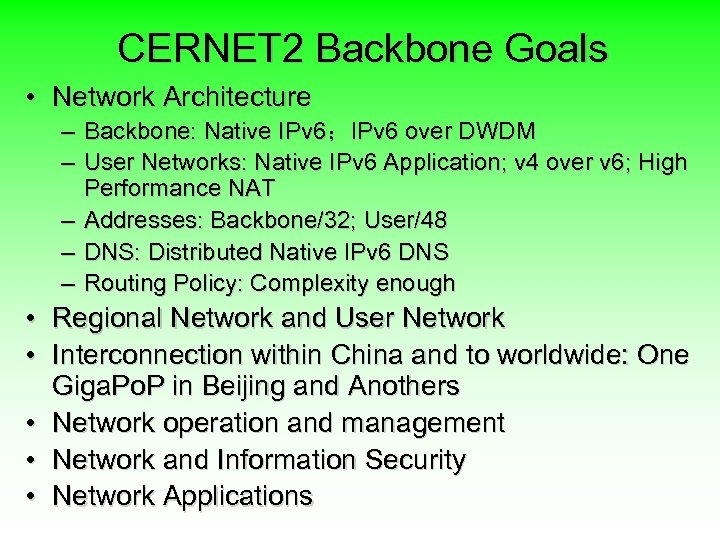
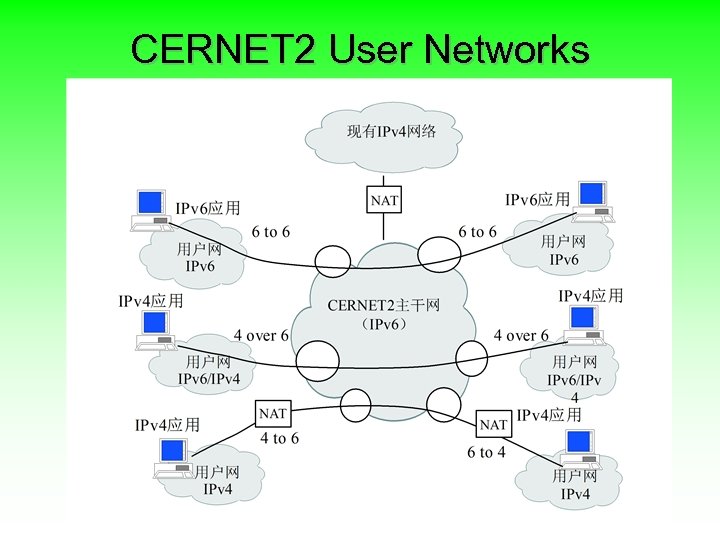
CERNET 2 Backbone Goals • Network Architecture – Backbone: Native IPv 6;IPv 6 over DWDM – User Networks: Native IPv 6 Application; v 4 over v 6; High Performance NAT – Addresses: Backbone/32; User/48 – DNS: Distributed Native IPv 6 DNS – Routing Policy: Complexity enough • Regional Network and User Network • Interconnection within China and to worldwide: One Giga. Po. P in Beijing and Anothers • Network operation and management • Network and Information Security • Network Applications
![IPv 6 address assigned • • 6 BONE: [3 ffe: 3200: : /24] CERNET:](https://present5.com/presentation/f64000a6a82d6e5cc03d0ef55f2fefb4/image-20.jpg "IPv 6 address assigned • • 6 BONE: [3 ffe: 3200: : /24] CERNET:")
IPv 6 address assigned • • 6 BONE: [3 ffe: 3200: : /24] CERNET: [2001: 250: : /32] IPv 6 CJ: [2001: 251: : /32] CNGI-CERNET 2 [2001: da 8: : /32]
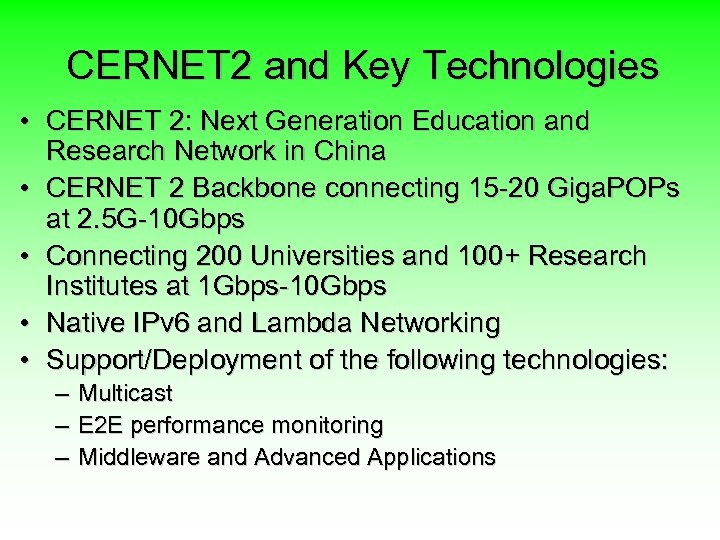
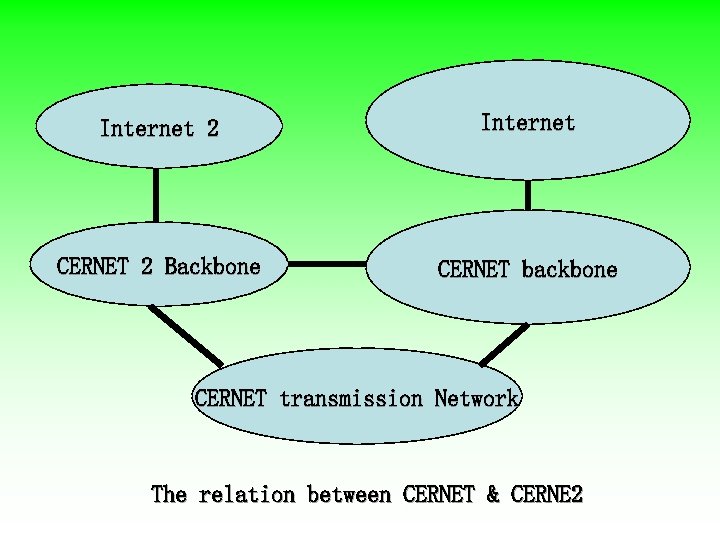
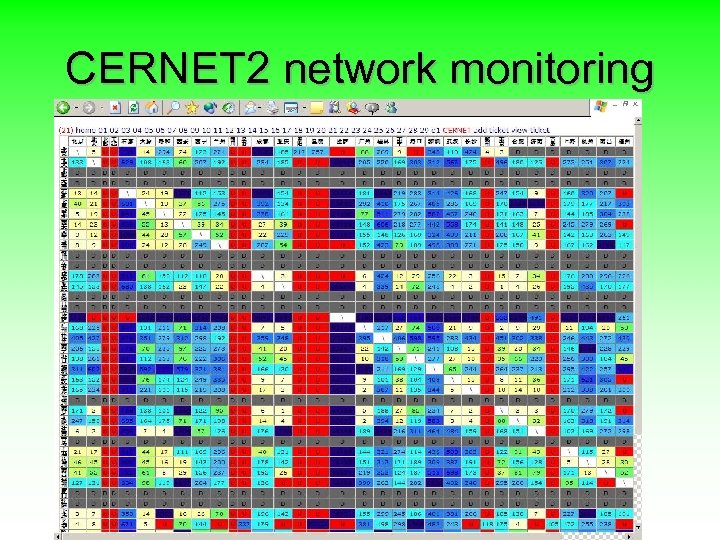
CERNET 2 and Key Technologies • CERNET 2: Next Generation Education and Research Network in China • CERNET 2 Backbone connecting 15 -20 Giga. POPs at 2. 5 G-10 Gbps • Connecting 200 Universities and 100+ Research Institutes at 1 Gbps-10 Gbps • Native IPv 6 and Lambda Networking • Support/Deployment of the following technologies: – Multicast – E 2 E performance monitoring – Middleware and Advanced Applications
CERNET 2 User Networks
Internet 2 Internet CERNET 2 Backbone CERNET backbone CERNET transmission Network The relation between CERNET & CERNE 2
CNGI: CERNET 2 Testbed
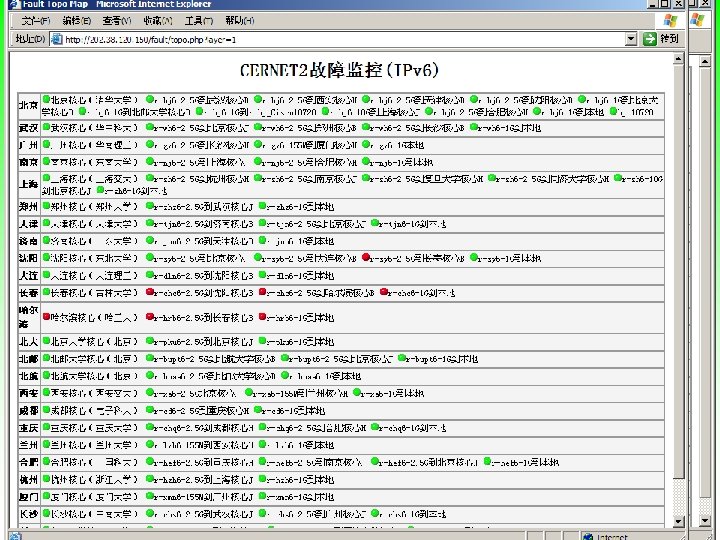
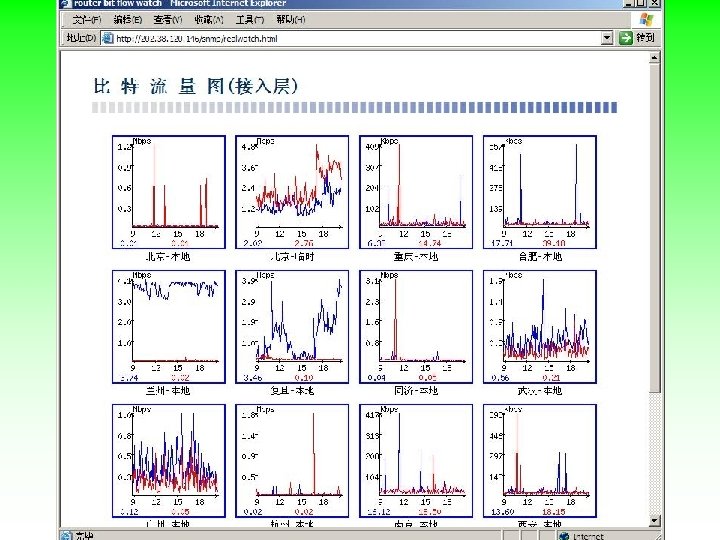
CERNET 2 network monitoring
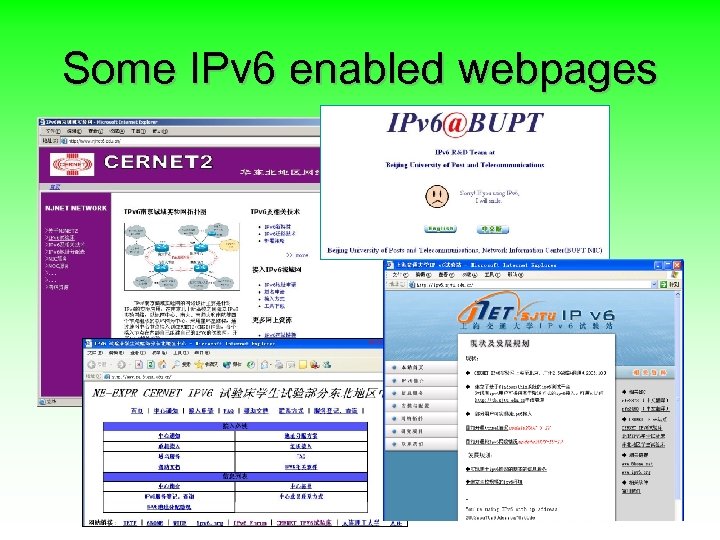
Some IPv 6 enabled webpages
Research topics • • • • • Mobile IPv 6 enabled multimedia terminal IPv 4/IPv 6 Transition Gateway Broadband wireless system IP 4/IPv 6 dual-stack IDS system Security infrastructural design and implementation Testing and monitoring system for Next generation Internet Sensor network node and controller Home-network device P 2 P resilient network node Qo. S ensurence technology Multimedia and multicast testing and application IPv 6 enabled NTP system New type of Distance learning system ITS system TV over IP for NGI Grid system …
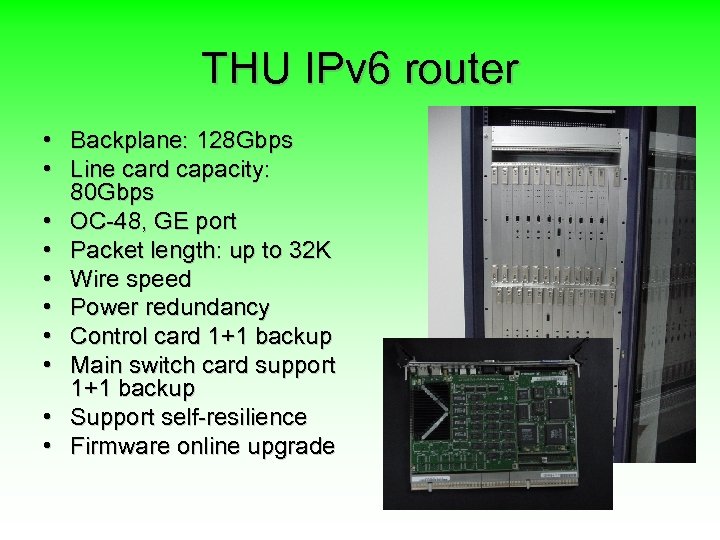
THU IPv 6 router • Backplane: 128 Gbps • Line card capacity: 80 Gbps • OC-48, GE port • Packet length: up to 32 K • Wire speed • Power redundancy • Control card 1+1 backup • Main switch card support 1+1 backup • Support self-resilience • Firmware online upgrade
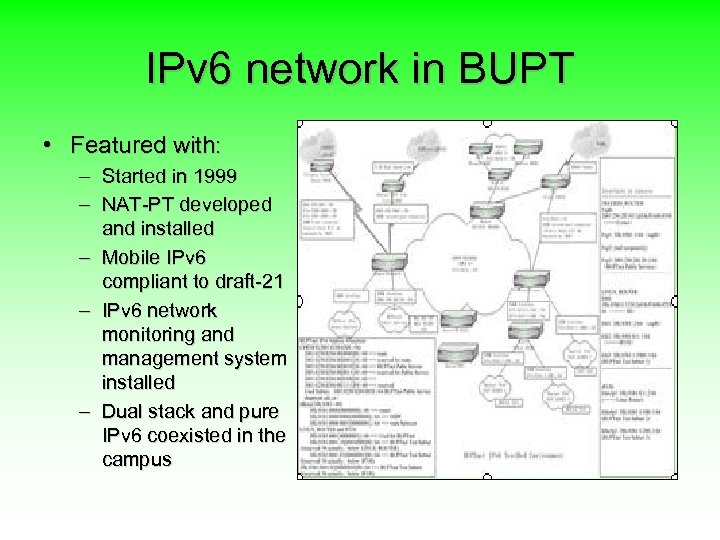
IPv 6 network in BUPT • Featured with: – Started in 1999 – NAT-PT developed and installed – Mobile IPv 6 compliant to draft-21 – IPv 6 network monitoring and management system installed – Dual stack and pure IPv 6 coexisted in the campus
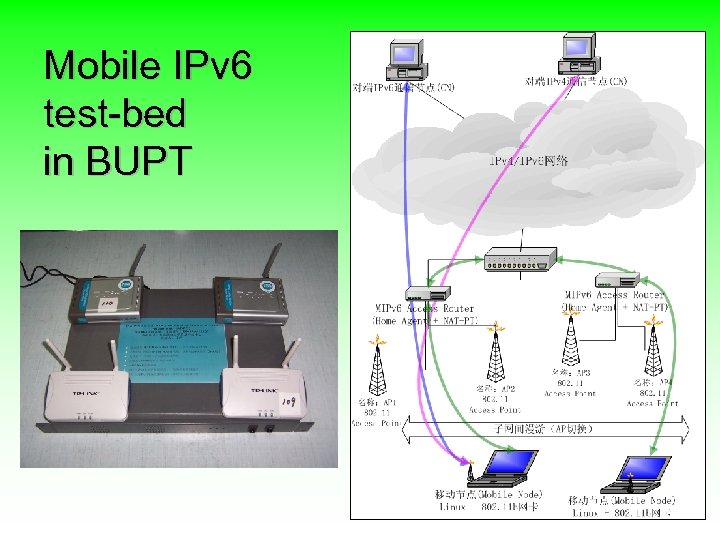
Mobile IPv 6 test-bed in BUPT
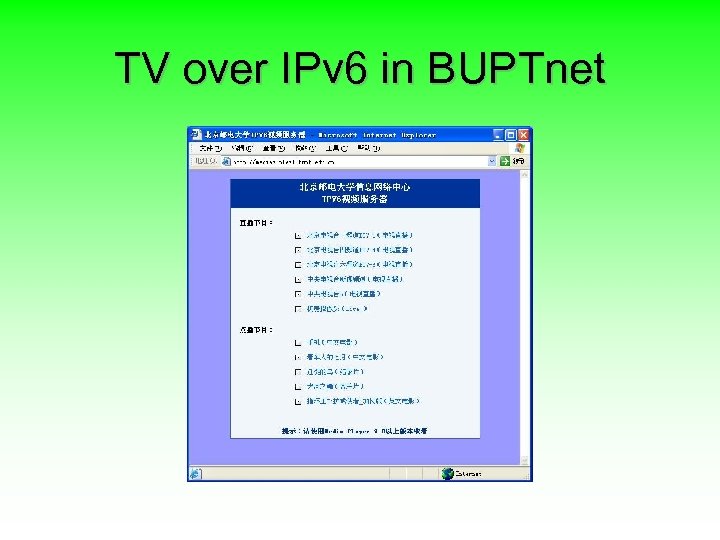
TV over IPv 6 in BUPTnet
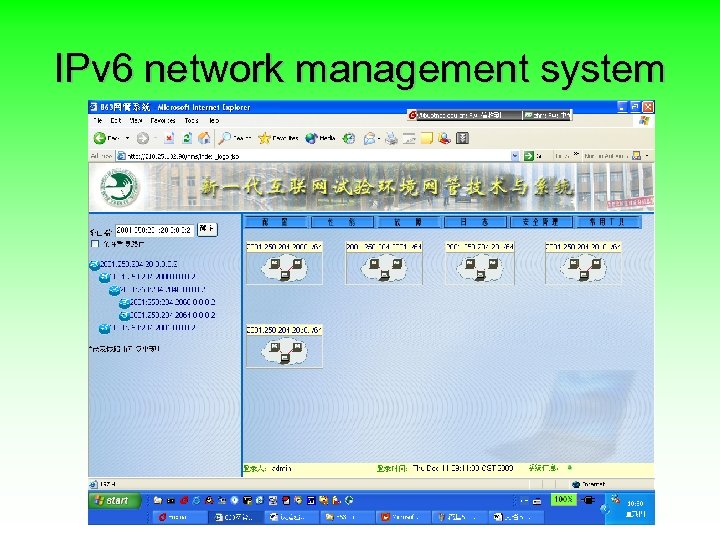
IPv 6 network management system
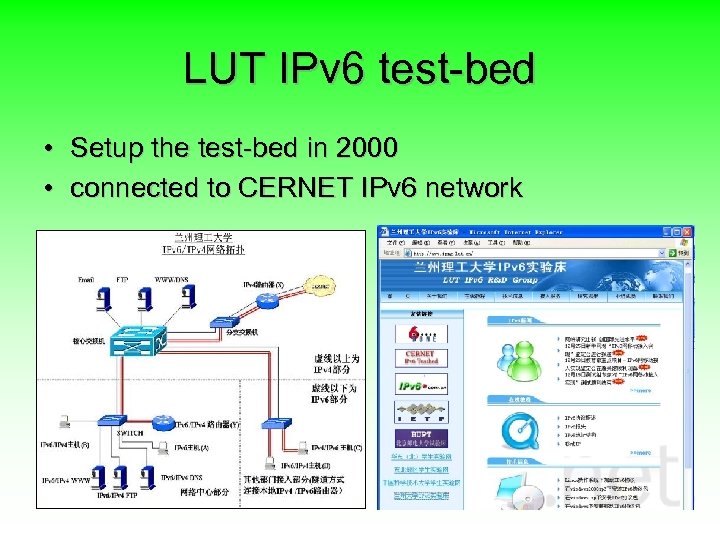
LUT IPv 6 test-bed • Setup the test-bed in 2000 • connected to CERNET IPv 6 network
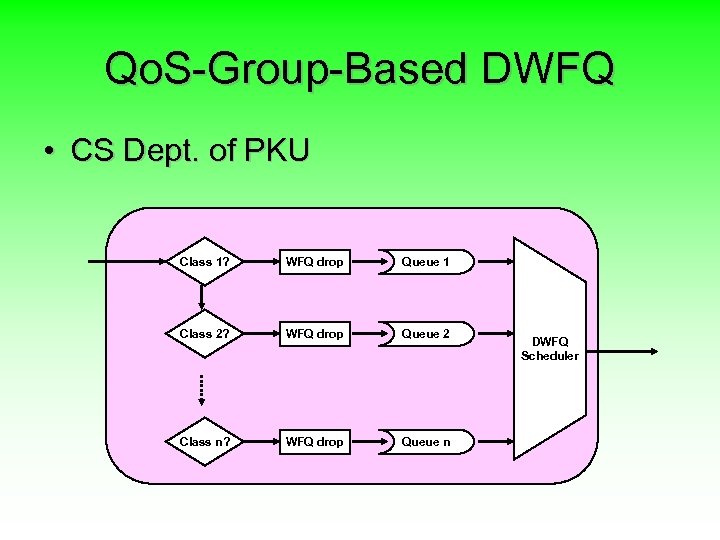
Qo. S-Group-Based DWFQ • CS Dept. of PKU Class 1? WFQ drop Queue 1 Class 2? WFQ drop Queue 2 Class n? WFQ drop Queue n DWFQ Scheduler
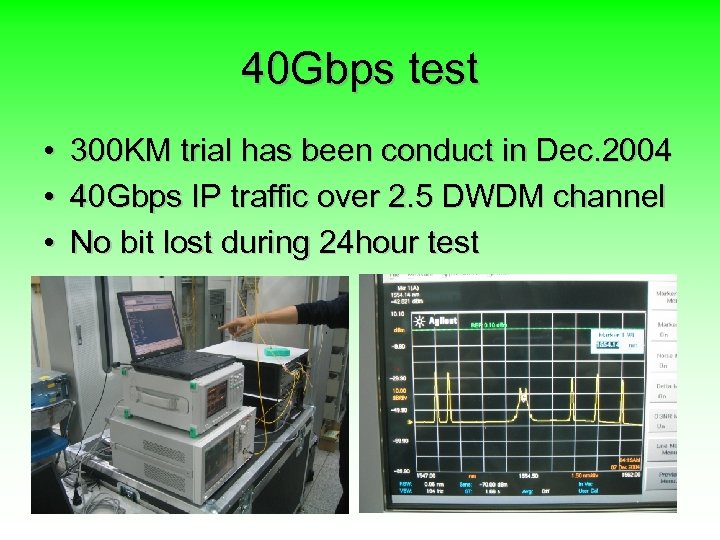
40 Gbps test • • • 300 KM trial has been conduct in Dec. 2004 40 Gbps IP traffic over 2. 5 DWDM channel No bit lost during 24 hour test
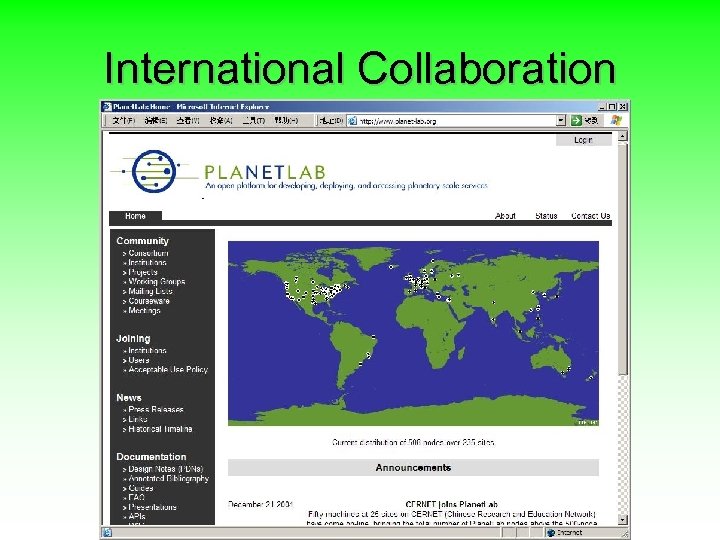
International Collaboration
Future works • • We start research project recently Training and Education International collaborations More information will be report to APAN member in earlier next year.

Thanks !
Скачать презентацию CNGI CERNET 2 update MA Yan CERNET BUPT APAN 19
f64000a6a82d6e5cc03d0ef55f2fefb4.ppt