


 Скачать презентацию Cloud Computing in the Enterprise From Enterprise IT
61a6f5f2bc016651a3f00208cd957742.ppt
- Количество слайдов: 36
 Cloud Computing in the Enterprise From Enterprise IT in the Cloud Computing Era New IT Models for Business Growth & Innovation, Frank Gens, SVP & Chief Analyst, IDC Cloud Services Architecture: Making sense of *aa. S, ben. reid@. com
 (Good Luck) Defining Cloud Computing • Software-as-a-Service – “My customer resource management (CRM) system is out on the Internet!” • Grids vs. Clouds – Shared Virtual Resources – Batch Jobs vs. Online Applications – Different Approaches to State Management • Network Diagrams – A service is “on a cloud somewhere” • Virtualization Platforms & APIs – Hardware can be manipulated with software
 What problems are we trying to solve? 1. Cost 2. Scalability 3. Flexibility 4. Availability 5. Portability 6. Collaboration 7. Enable new stuff that we couldn't do before!
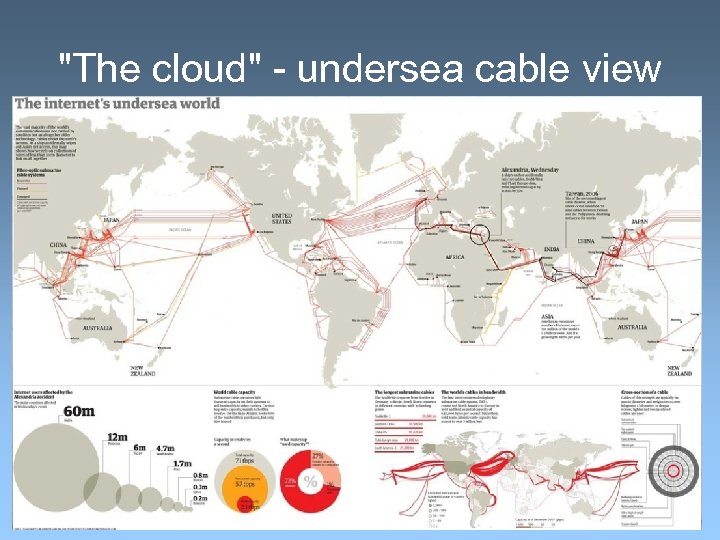 "The cloud" - undersea cable view
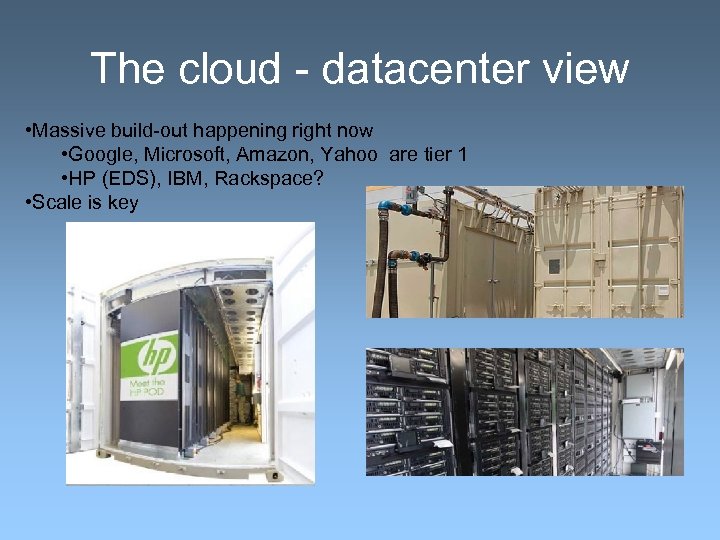 The cloud - datacenter view • Massive build-out happening right now • Google, Microsoft, Amazon, Yahoo are tier 1 • HP (EDS), IBM, Rackspace? • Scale is key
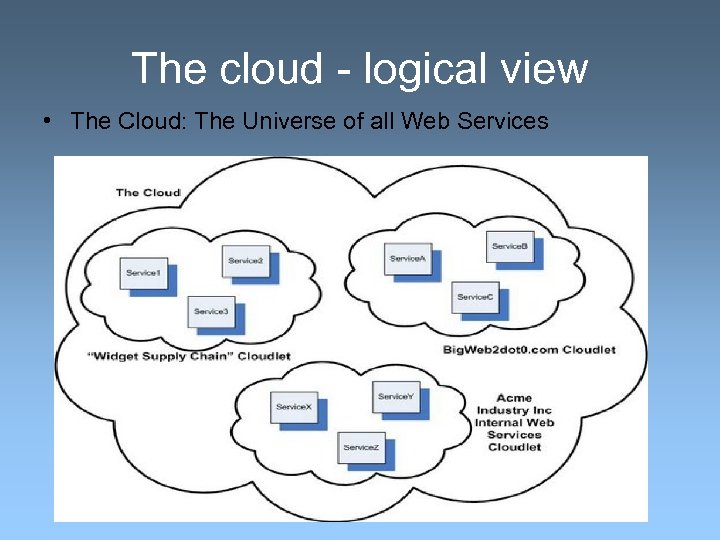 The cloud - logical view • The Cloud: The Universe of all Web Services
 The "cloud" - definitions and hype Is the "cloud": • Infrastructure aa. S? – Grid / utility / "on demand" computing – Shared utility – eg Amazon EC 2 • Platform aa. S? – Ready-for-deployment scalable application platform – Google apps, Force. com, Heroku, Bungee Labs – Microsoft! (Azure) • Software aa. S? – Used to be called "application service providers" – Multitenanted architectures: Sales. Force. com, Xero –. . . many, many others (3000 worldwide at least) • Wide area SOA? – "Universe of all (web) services" – WS-* and REST (and Etch? ) standards – Data as a service? (Strike. Iron) • *aa. S? – "Universe of all economic services" – Can traditional "services" (law, accountancy, plumbing) be included in the logical Cloud?
 IDC Definitions (Sept 2008) Cloud Services = Consumer and Business products, Services, and solutions that are delivered and consumed in real-time over the Internet Cloud Computing = an emerging IT development, deployment and delivery model, enabling real-time delivery of products, services and solutions over the Internet (i. e. , enabling cloud services) (From http: //blogs. idc. com/ie/? p=190)
 Key cloud services attributes • • Off-site, third-party provider Accessed via Internet Minimal/no IT skills needed to implement Provisioning: – Self-service requesting – Near-real-time deployment – Dynamic and fine-grained scaling Pricing model: – Fine-grained – Usage-based (at least available as an option) User interface: browsers and their successors System interface: Web services APIs Shared resources/common versions (customization "around" the shared resources) According to research firm IDC
 Cloud business models • Consumption – Pay-per-use – Perpetual license – Renewable license / Subscription • Advertising funded • "Bits to objects" • Value-add for existing products – Build a user community
 What's out there right now – Iaa. S (Infrastructure as a Service) • Amazon – Infrastructure web services • EC 2 (Elastic Compute Cloud) - now with Windows (99. 95% availability!) • S 3 (Simple Storage Service) • Simple. DB • SQS (Simple Queue Service) – – Payments and Billing On-demand workforce (Mechanical Turk) Search (Alexa) Fulfilment web service • Rackspace – Mosso – Jungle. Disk – Slice. Host
 What's out there right now – Paa. S (Platform as a Service) • Google Apps – Python only – Big. Table • Heroku – Ruby on Rails hosted on EC 2 • Force. com – Apex • Bungee Connect – Bungee Logic (a C-family language similar to C#) • Microsoft! – Azure -. NET hosted in MS datacentres
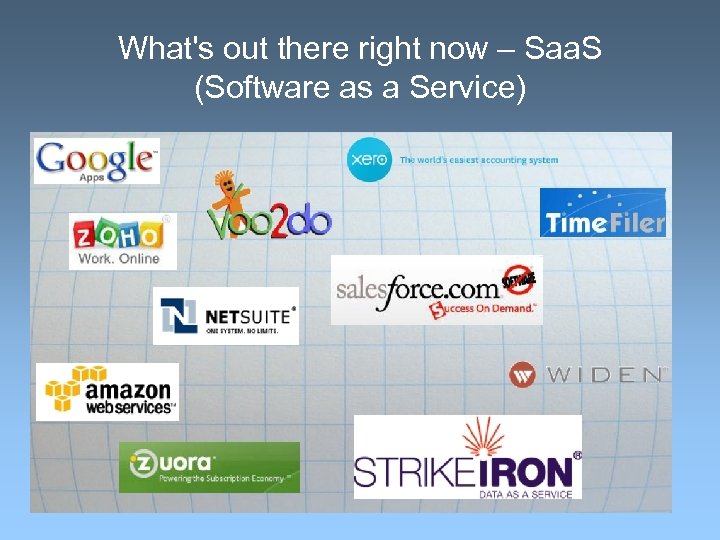 What's out there right now – Saa. S (Software as a Service)
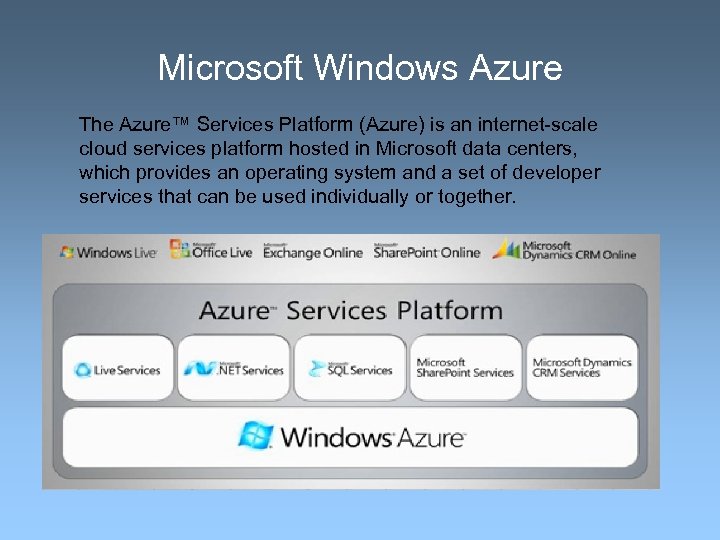 Microsoft Windows Azure The Azure™ Services Platform (Azure) is an internet-scale cloud services platform hosted in Microsoft data centers, which provides an operating system and a set of developer services that can be used individually or together.
 What problems will come up? 1. Regulatory Issues 2. Legislative Issues 3. Geopolitical 4. Security Vulnerabilities 5. Application Architecture 6. Hardware dependencies 7. Control over your servers 8. Cost of the cloud 9. If it Ain’t Broke Don’t Fix it
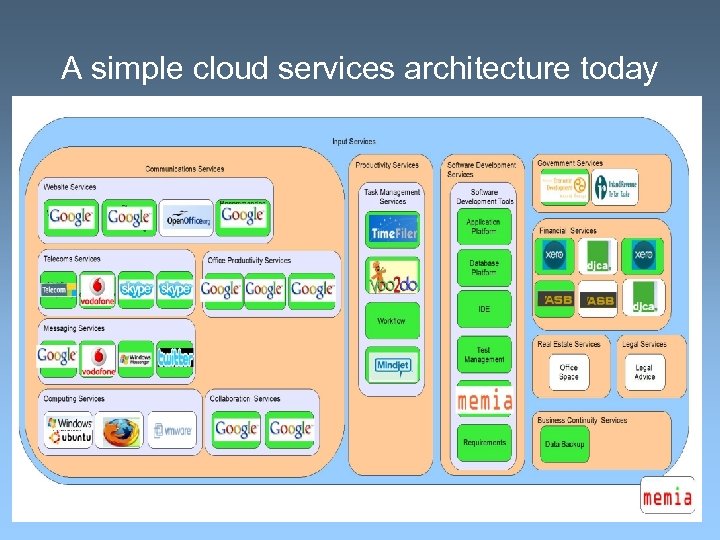 A simple cloud services architecture today
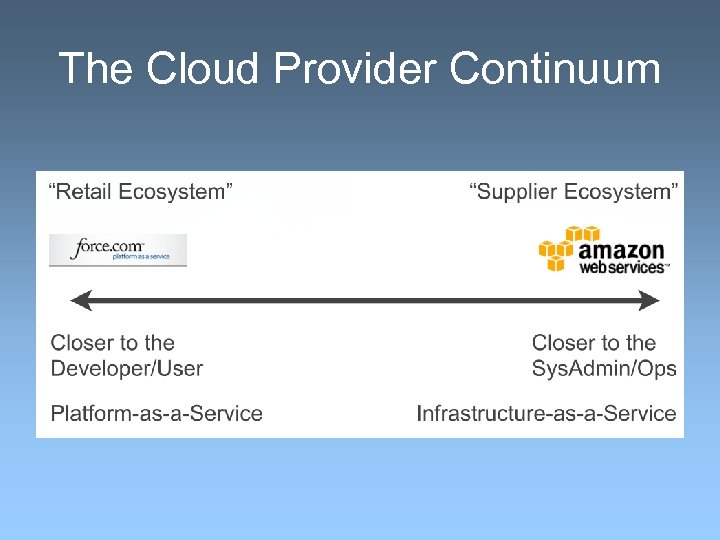 The Cloud Provider Continuum
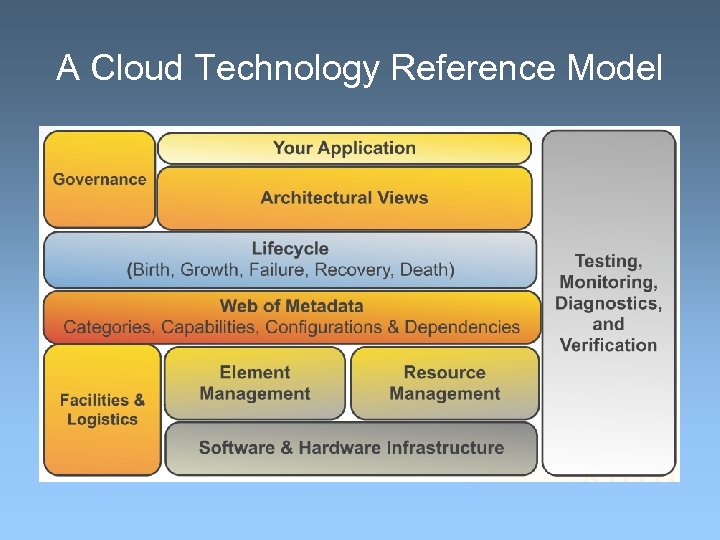
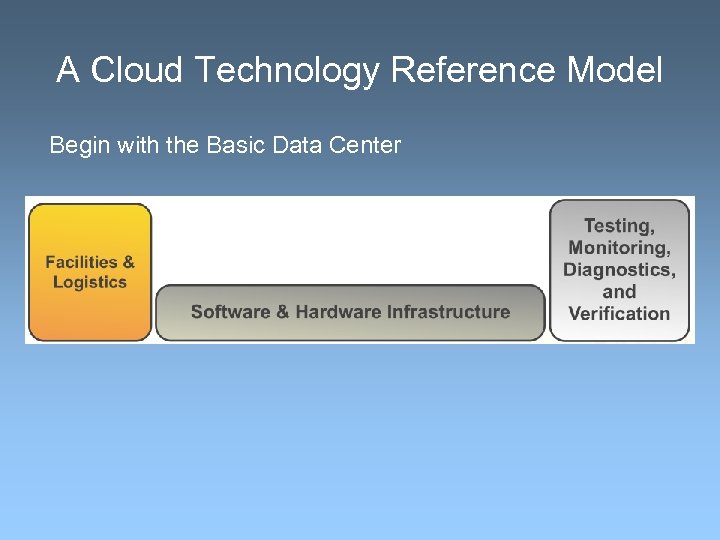 A Cloud Technology Reference Model Begin with the Basic Data Center
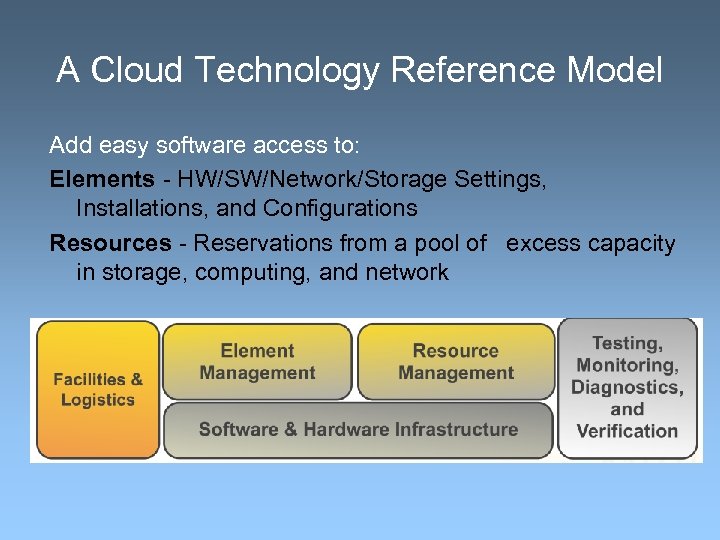 A Cloud Technology Reference Model Add easy software access to: Elements - HW/SW/Network/Storage Settings, Installations, and Configurations Resources - Reservations from a pool of excess capacity in storage, computing, and network
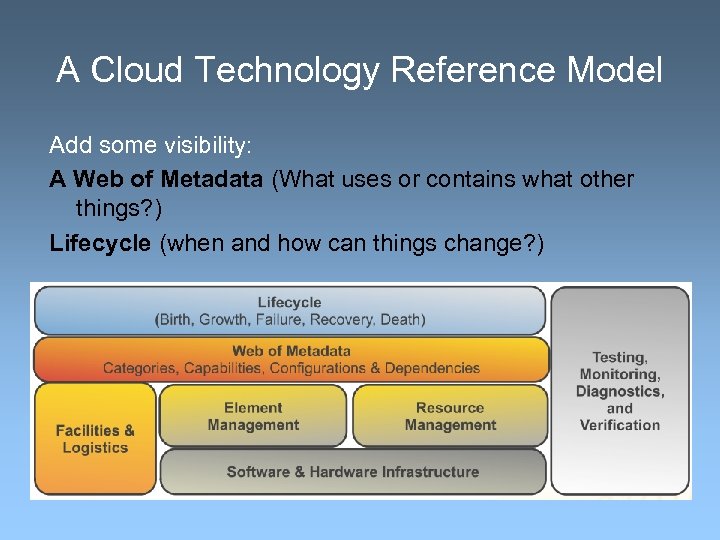 A Cloud Technology Reference Model Add some visibility: A Web of Metadata (What uses or contains what other things? ) Lifecycle (when and how can things change? )
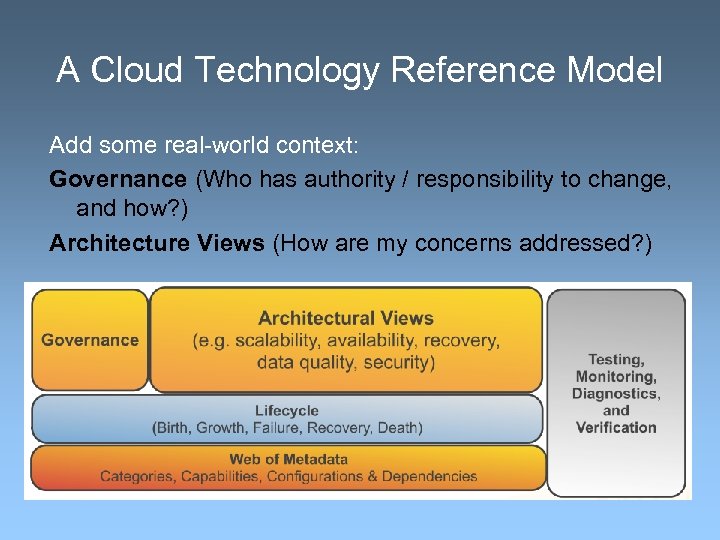 A Cloud Technology Reference Model Add some real-world context: Governance (Who has authority / responsibility to change, and how? ) Architecture Views (How are my concerns addressed? )
 A Cloud Technology Reference Model
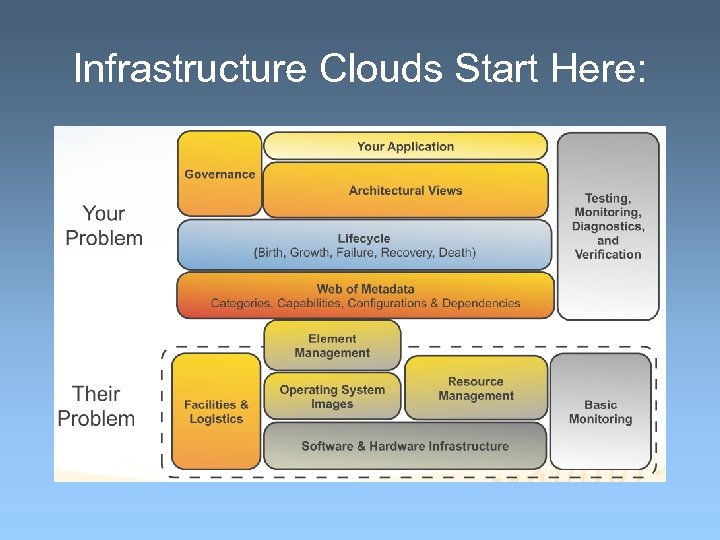 Infrastructure Clouds Start Here:
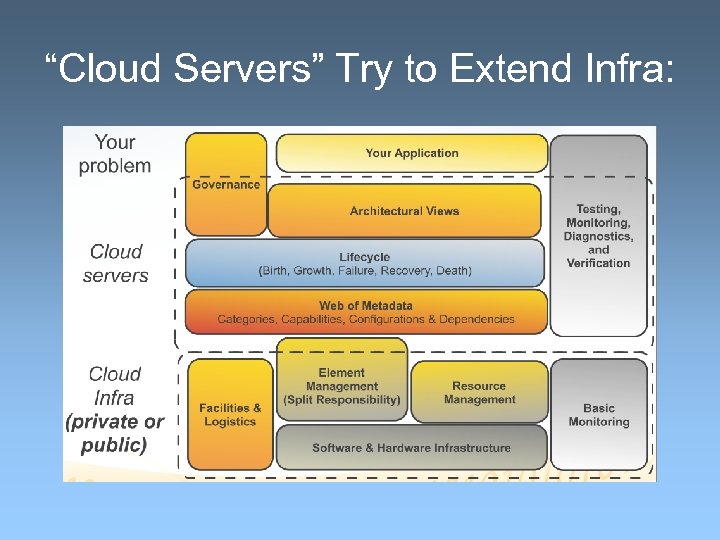 “Cloud Servers” Try to Extend Infra:
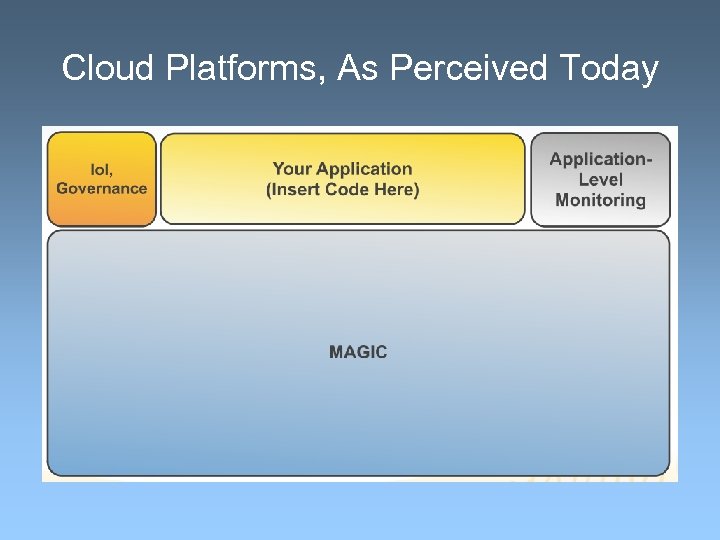 Cloud Platforms, As Perceived Today
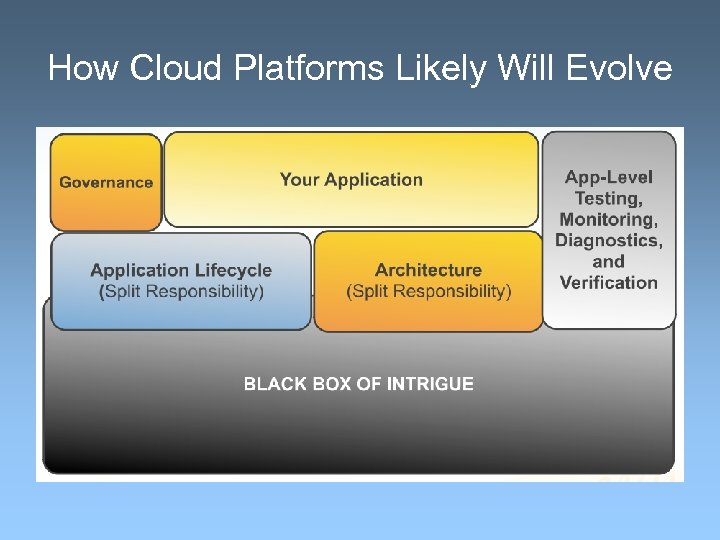 How Cloud Platforms Likely Will Evolve
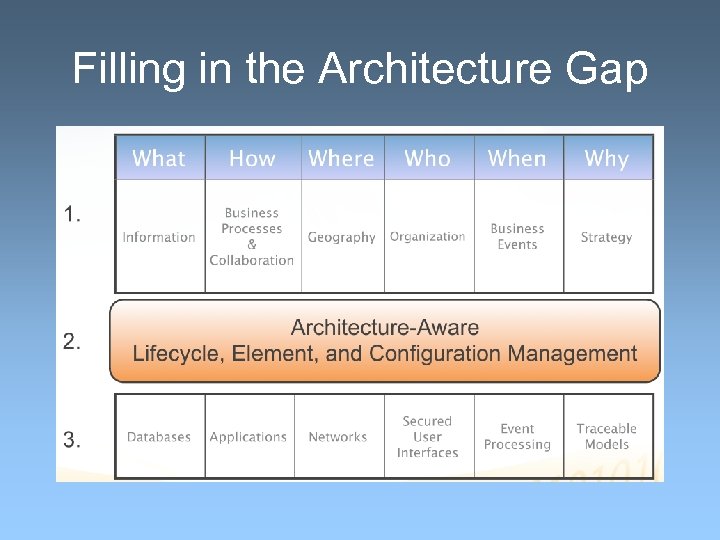 Filling in the Architecture Gap
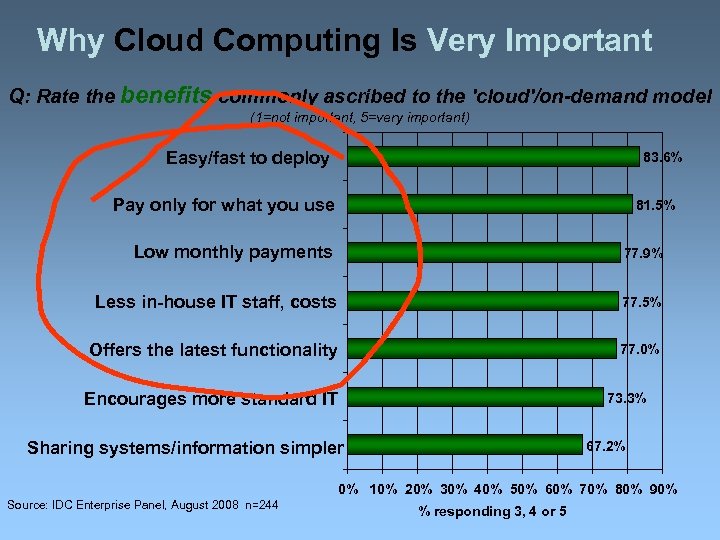 Why Cloud Computing Is Very Important Q: Rate the benefits commonly ascribed to the 'cloud'/on-demand model (1=not important, 5=very important) Easy/fast to deploy 83. 6% Pay only for what you use 81. 5% Low monthly payments 77. 9% Less in-house IT staff, costs 77. 5% Offers the latest functionality 77. 0% Encourages more standard IT 73. 3% Sharing systems/information simpler 67. 2% 0% 10% 20% 30% 40% 50% 60% 70% 80% 90% Source: IDC Enterprise Panel, August 2008 n=244 % responding 3, 4 or 5
 When to Bring Cloud Computing Into Plans?
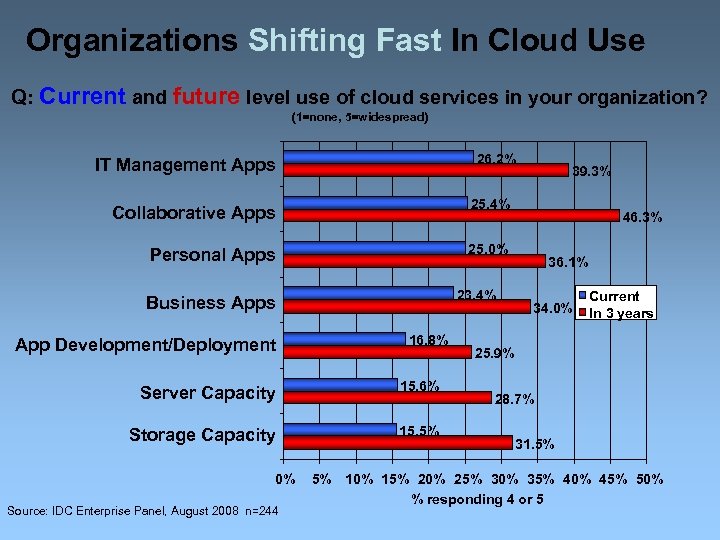 Organizations Shifting Fast In Cloud Use Q: Current and future level use of cloud services in your organization? (1=none, 5=widespread) 26. 2% IT Management Apps Collaborative Apps 25. 4% Personal Apps 39. 3% 25. 0% 23. 4% Business App Development/Deployment 16. 8% Server Capacity 15. 6% Storage Capacity 15. 5% 0% Source: IDC Enterprise Panel, August 2008 n=244 46. 3% 36. 1% 34. 0% Current In 3 years 25. 9% 28. 7% 31. 5% 5% 10% 15% 20% 25% 30% 35% 40% 45% 50% % responding 4 or 5
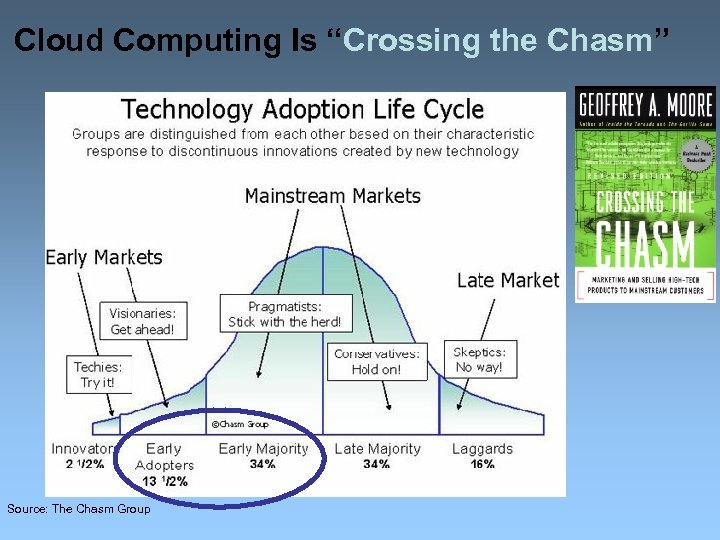 Cloud Computing Is “Crossing the Chasm” Source: The Chasm Group
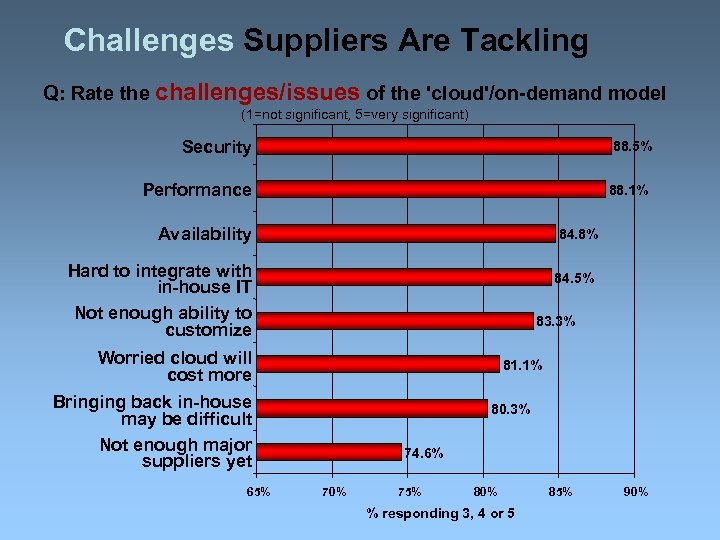 Challenges Suppliers Are Tackling Q: Rate the challenges/issues of the 'cloud'/on-demand model (1=not significant, 5=very significant) Security 88. 5% Performance 88. 1% Availability 84. 8% Hard to integrate with in-house IT Not enough ability to customize 84. 5% 83. 3% Worried cloud will cost more Bringing back in-house may be difficult Not enough major suppliers yet 65% 81. 1% 80. 3% 74. 6% 70% 75% 80% % responding 3, 4 or 5 85% 90%
 • Implications for IT Strategy & Organization
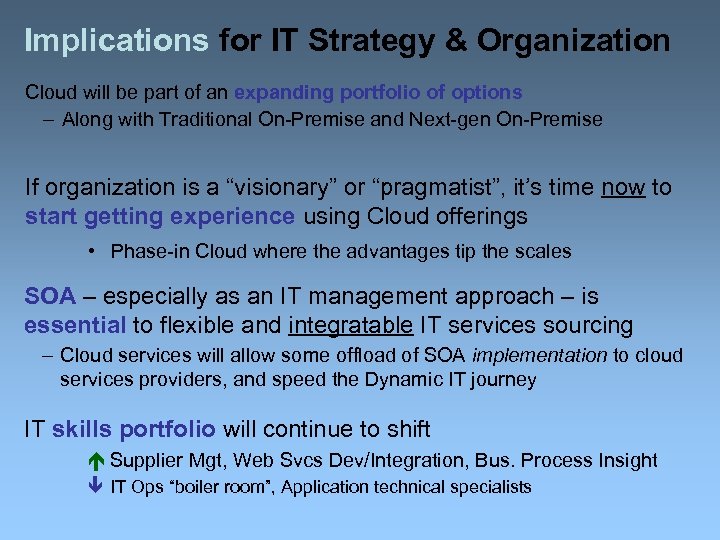 Implications for IT Strategy & Organization Cloud will be part of an expanding portfolio of options – Along with Traditional On-Premise and Next-gen On-Premise If organization is a “visionary” or “pragmatist”, it’s time now to start getting experience using Cloud offerings • Phase-in Cloud where the advantages tip the scales SOA – especially as an IT management approach – is essential to flexible and integratable IT services sourcing – Cloud services will allow some offload of SOA implementation to cloud services providers, and speed the Dynamic IT journey IT skills portfolio will continue to shift é Supplier Mgt, Web Svcs Dev/Integration, Bus. Process Insight ê IT Ops “boiler room”, Application technical specialists
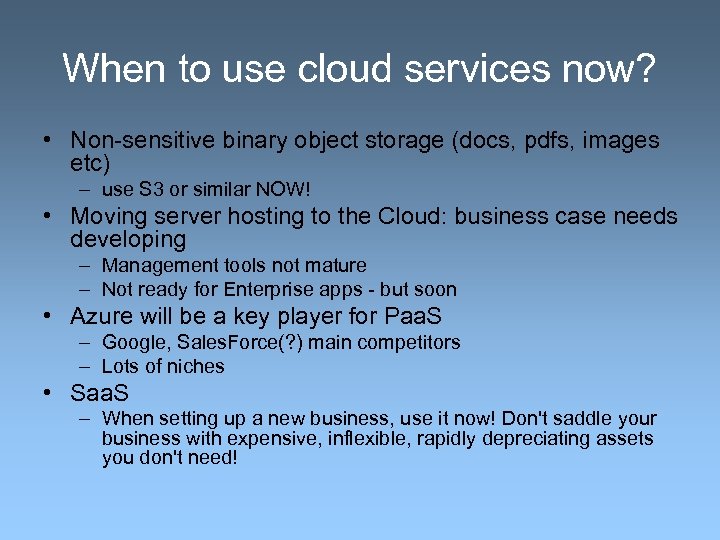 When to use cloud services now? • Non-sensitive binary object storage (docs, pdfs, images etc) – use S 3 or similar NOW! • Moving server hosting to the Cloud: business case needs developing – Management tools not mature – Not ready for Enterprise apps - but soon • Azure will be a key player for Paa. S – Google, Sales. Force(? ) main competitors – Lots of niches • Saa. S – When setting up a new business, use it now! Don't saddle your business with expensive, inflexible, rapidly depreciating assets you don't need!