


 Скачать презентацию Clinical Terminology Alan Rector School of Computer Science
88e7c32515a8cde21dce9389a2d05c24.ppt
- Количество слайдов: 48
 Clinical Terminology Alan Rector School of Computer Science / Northwest Institute of Bio-Health Informatics rector@cs. man. ac. uk Dr Jeremy Rogers Senior Clinical Fellow in Health Informatics Northwest Institute of Bio-Health Informatics www. co-ode. org www. clinical-escience. org www. opengalen. org
 Terminology What’s it for? Where did it come from? Where might it go?
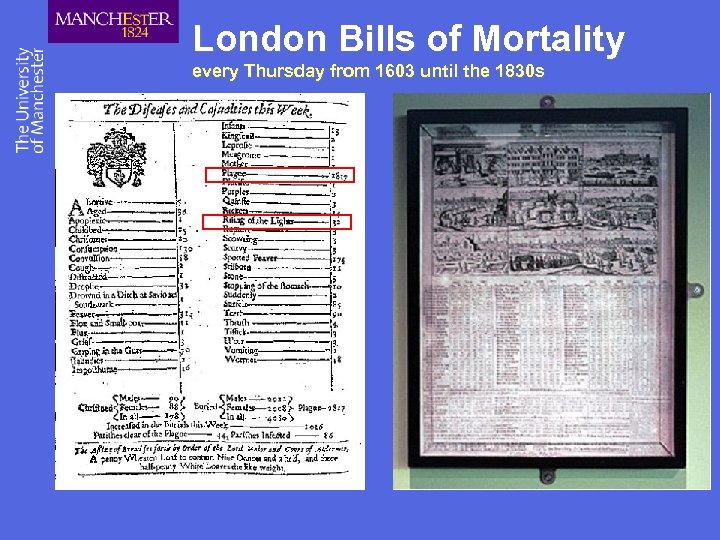 London Bills of Mortality every Thursday from 1603 until the 1830 s
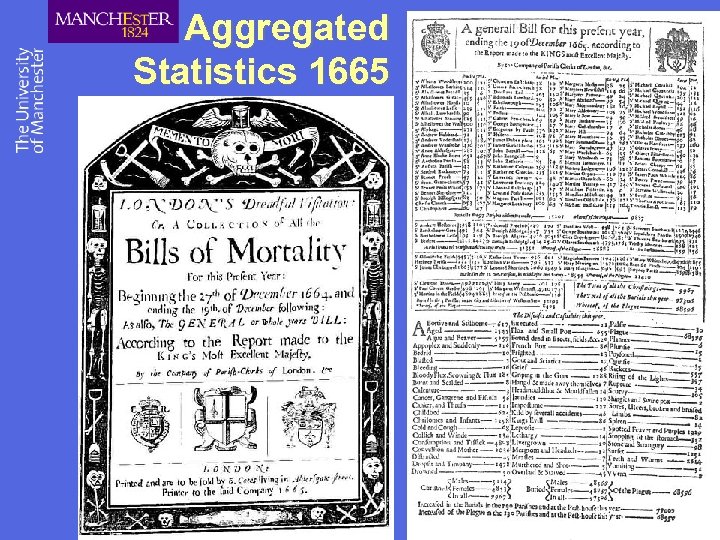 Aggregated Statistics 1665
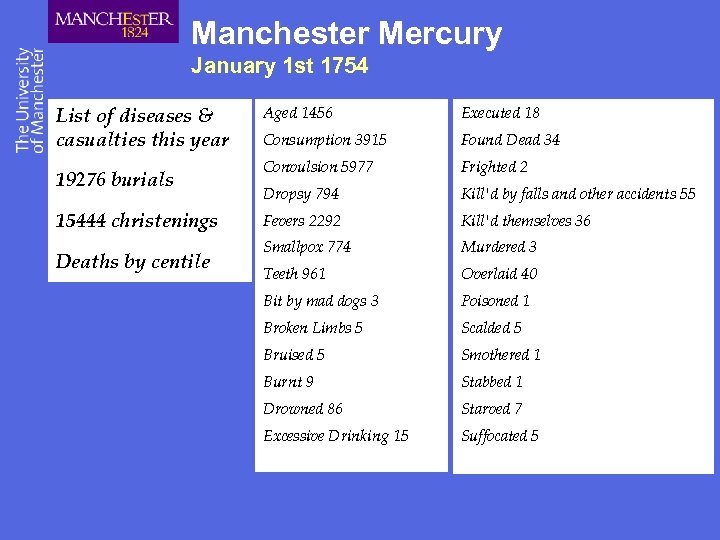 Manchester Mercury January 1 st 1754 List of diseases & casualties this year 19276 burials 15444 christenings Deaths by centile Aged 1456 Executed 18 Consumption 3915 Found Dead 34 Convulsion 5977 Frighted 2 Dropsy 794 Kill'd by falls and other accidents 55 Fevers 2292 Kill'd themselves 36 Smallpox 774 Murdered 3 Teeth 961 Overlaid 40 Bit by mad dogs 3 Poisoned 1 Broken Limbs 5 Scalded 5 Bruised 5 Smothered 1 Burnt 9 Stabbed 1 Drowned 86 Starved 7 Excessive Drinking 15 Suffocated 5
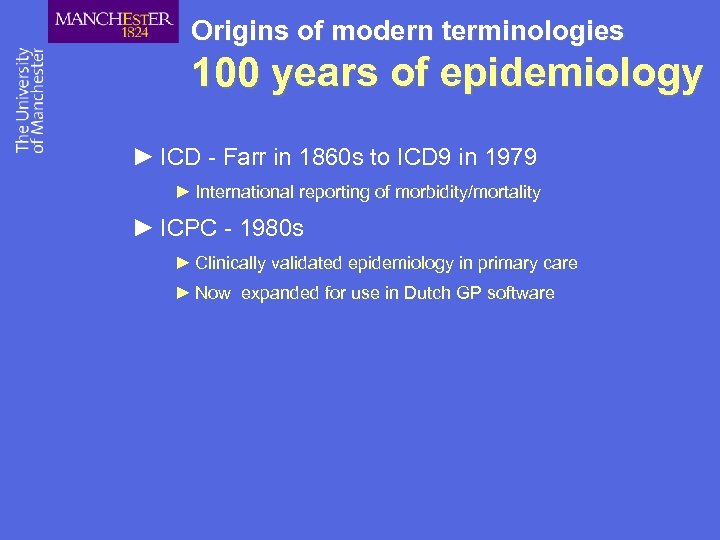 Origins of modern terminologies 100 years of epidemiology ► ICD - Farr in 1860 s to ICD 9 in 1979 ► International reporting of morbidity/mortality ► ICPC - 1980 s ► Clinically validated epidemiology in primary care ► Now expanded for use in Dutch GP software
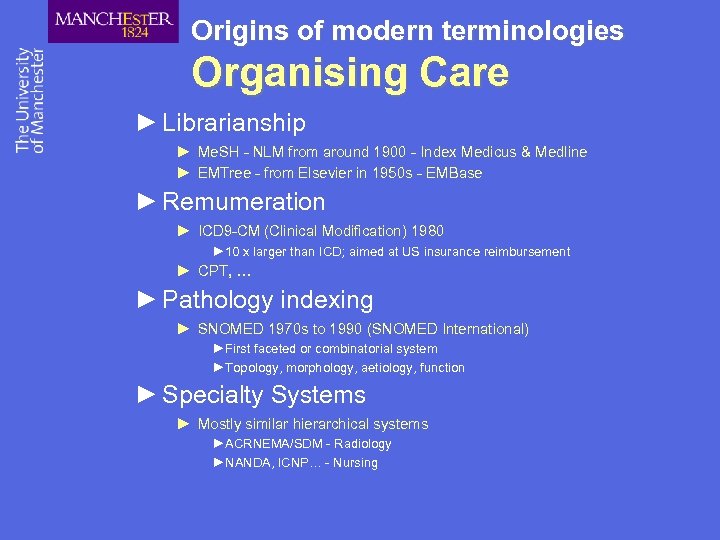 Origins of modern terminologies Organising Care ► Librarianship ► Me. SH - NLM from around 1900 - Index Medicus & Medline ► EMTree - from Elsevier in 1950 s - EMBase ► Remumeration ► ICD 9 -CM (Clinical Modification) 1980 ► 10 x larger than ICD; aimed at US insurance reimbursement ► CPT, … ► Pathology indexing ► SNOMED 1970 s to 1990 (SNOMED International) ►First faceted or combinatorial system ►Topology, morphology, aetiology, function ► Specialty Systems ► Mostly similar hierarchical systems ►ACRNEMA/SDM - Radiology ►NANDA, ICNP… - Nursing
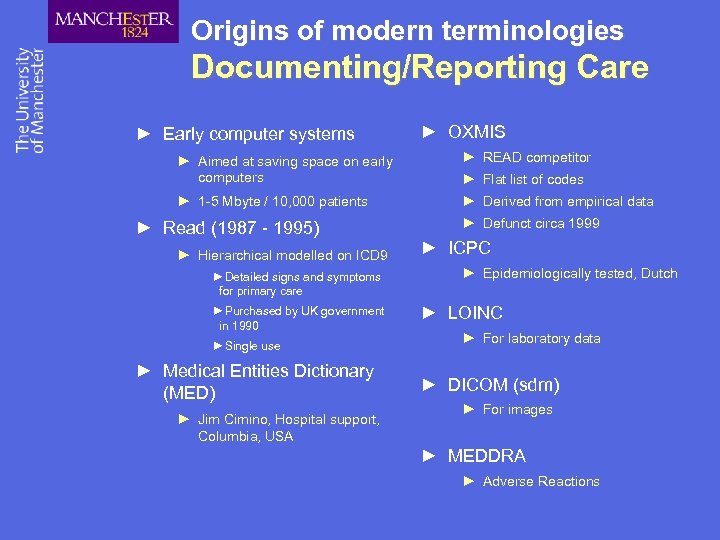 Origins of modern terminologies Documenting/Reporting Care ► Early computer systems ► OXMIS ► Aimed at saving space on early computers ► READ competitor ► 1 -5 Mbyte / 10, 000 patients ► Derived from empirical data ► Read (1987 - 1995) ► Hierarchical modelled on ICD 9 ►Detailed signs and symptoms for primary care ►Purchased by UK government in 1990 ►Single use ► Medical Entities Dictionary (MED) ► Jim Cimino, Hospital support, Columbia, USA ► Flat list of codes ► Defunct circa 1999 ► ICPC ► Epidemiologically tested, Dutch ► LOINC ► For laboratory data ► DICOM (sdm) ► For images ► MEDDRA ► Adverse Reactions
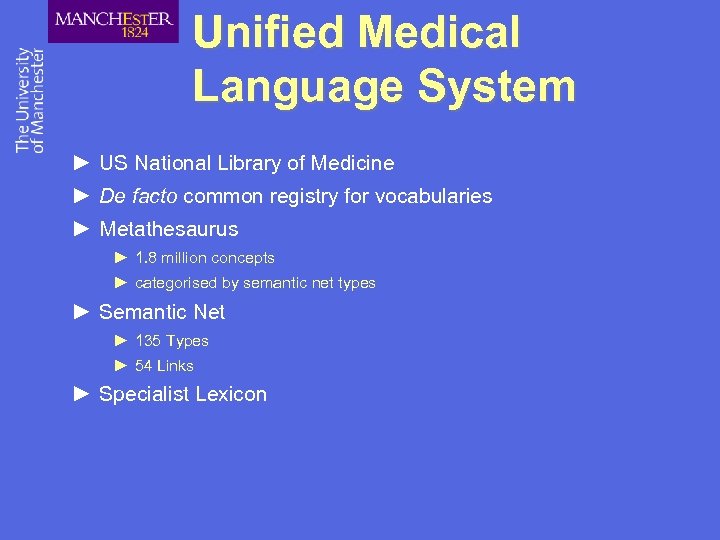 Unified Medical Language System ► US National Library of Medicine ► De facto common registry for vocabularies ► Metathesaurus ► 1. 8 million concepts ► categorised by semantic net types ► Semantic Net ► 135 Types ► 54 Links ► Specialist Lexicon
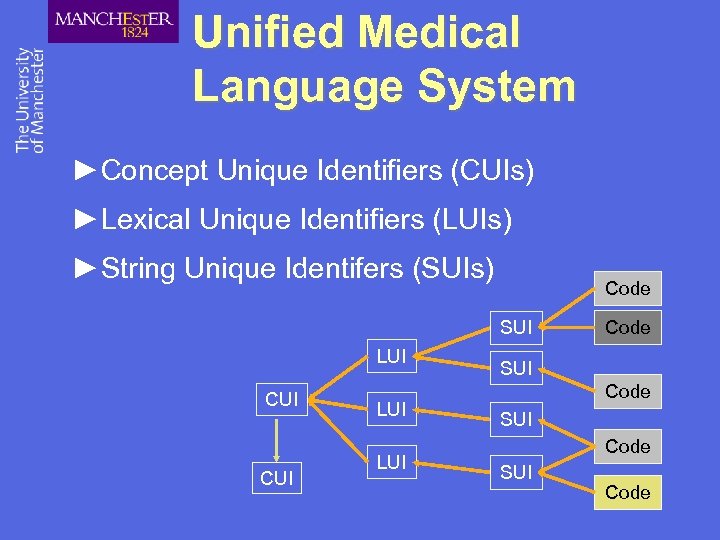 Unified Medical Language System ►Concept Unique Identifiers (CUIs) ►Lexical Unique Identifiers (LUIs) ►String Unique Identifers (SUIs) Code SUI LUI CUI LUI Code SUI Code
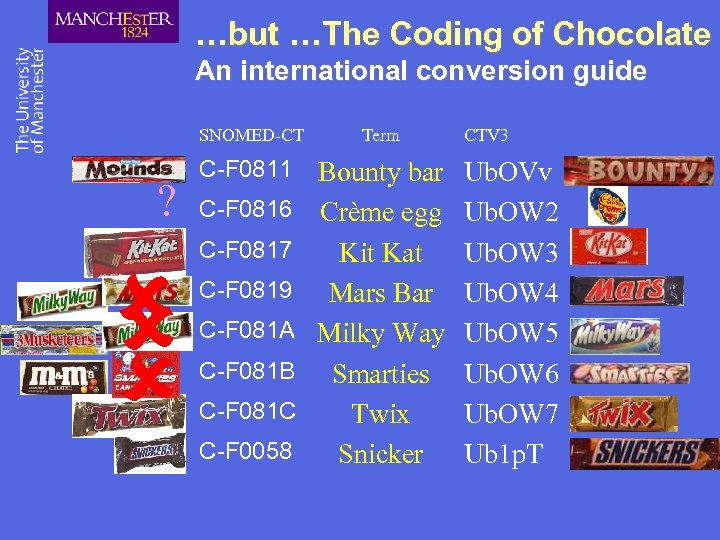 …but …The Coding of Chocolate An international conversion guide SNOMED-CT ? C-F 0811 C-F 0816 C-F 0817 C-F 0819 C-F 081 A C-F 081 B C-F 081 C C-F 0058 Term Bounty bar Crème egg Kit Kat Mars Bar Milky Way Smarties Twix Snicker CTV 3 Ub. OVv Ub. OW 2 Ub. OW 3 Ub. OW 4 Ub. OW 5 Ub. OW 6 Ub. OW 7 Ub 1 p. T
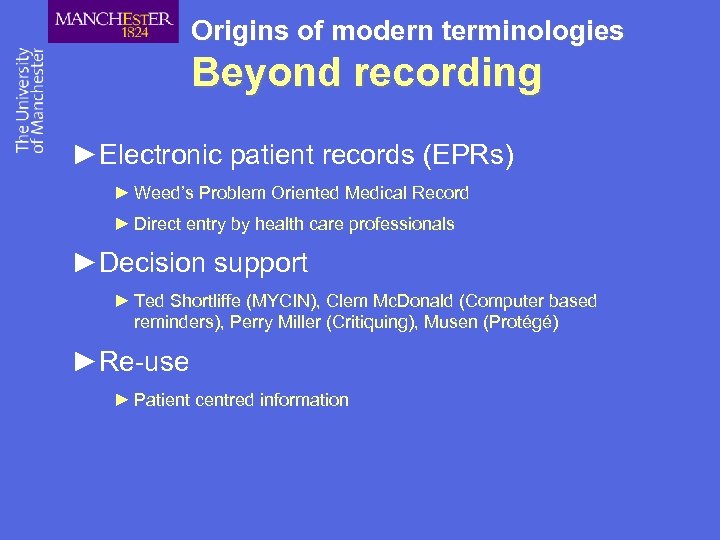 Origins of modern terminologies Beyond recording ►Electronic patient records (EPRs) ► Weed’s Problem Oriented Medical Record ► Direct entry by health care professionals ►Decision support ► Ted Shortliffe (MYCIN), Clem Mc. Donald (Computer based reminders), Perry Miller (Critiquing), Musen (Protégé) ►Re-use ► Patient centred information
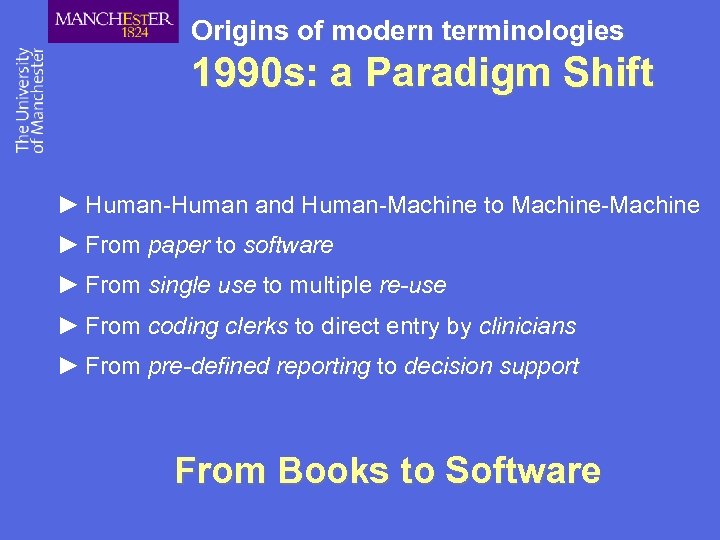 Origins of modern terminologies 1990 s: a Paradigm Shift ► Human-Human and Human-Machine to Machine-Machine ► From paper to software ► From single use to multiple re-use ► From coding clerks to direct entry by clinicians ► From pre-defined reporting to decision support From Books to Software
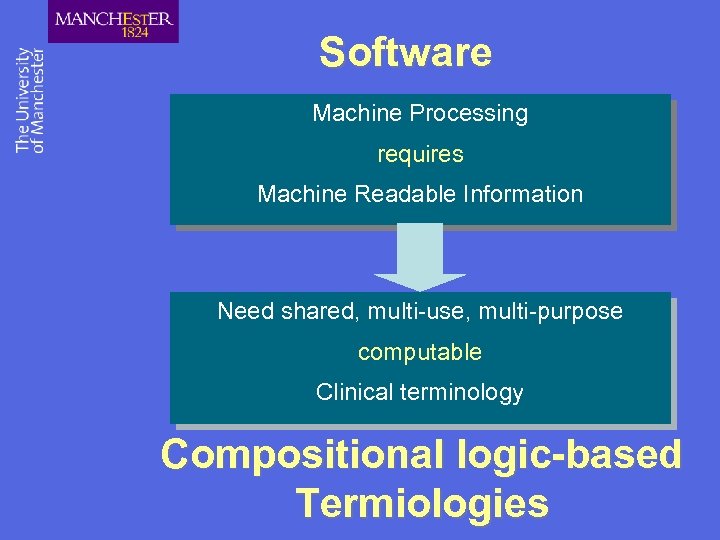 Software Machine Processing requires Machine Readable Information Need shared, multi-use, multi-purpose computable Clinical terminology Compositional logic-based Termiologies
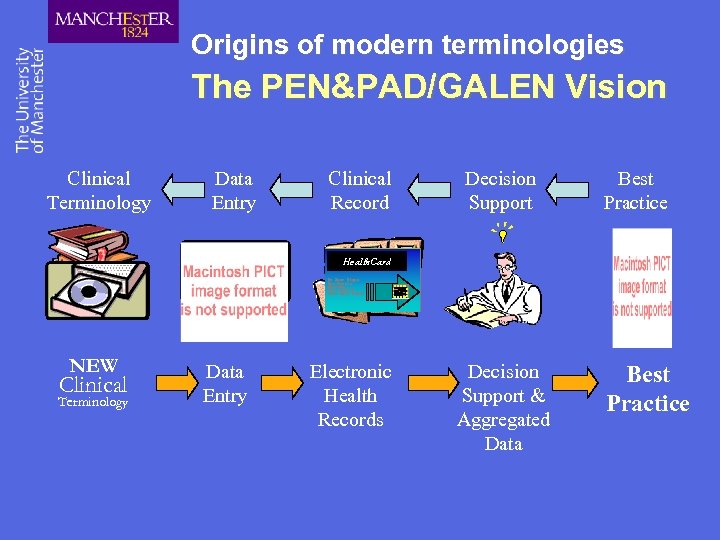 Origins of modern terminologies The PEN&PAD/GALEN Vision Clinical Terminology Data Entry Clinical Record Decision Support Best Practice Health. Card Mr Ivor Bigun Dun Roamin Anytown Any country 4431 3654 90273 NEW Clinical Terminology Data Entry Electronic Health Records Decision Support & Aggregated Data Best Practice
 Fundamental problems: Enumeration doesn’t scale
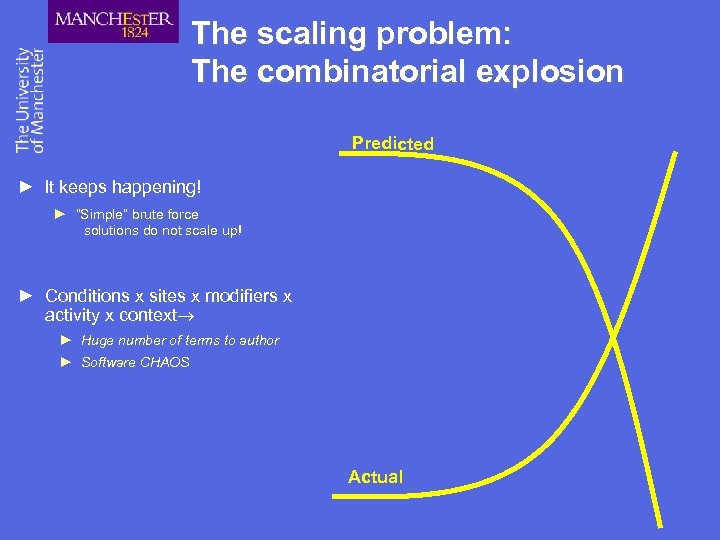 The scaling problem: The combinatorial explosion Predicted ► It keeps happening! ► “Simple” brute force solutions do not scale up! ► Conditions x sites x modifiers x activity x context ► Huge number of terms to author ► Software CHAOS Actual
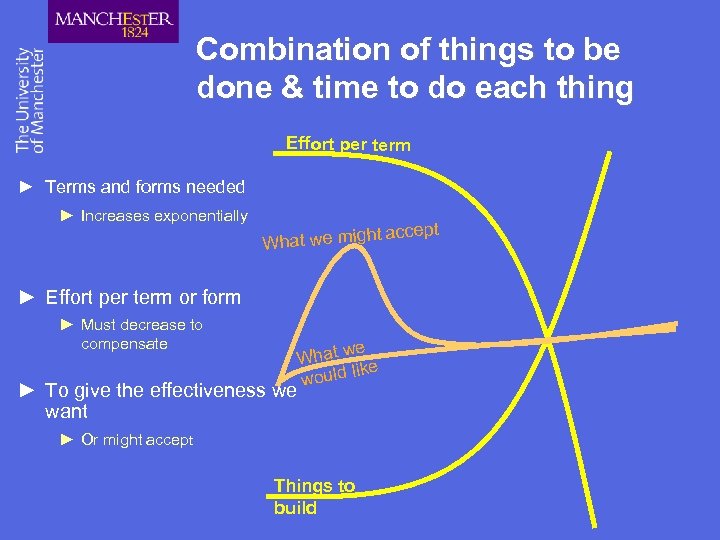 Combination of things to be done & time to do each thing Effort per term ► Terms and forms needed ► Increases exponentially ccept ht a What we mig ► Effort per term or form ► Must decrease to compensate ► To give the effectiveness we want e What w e lik would ► Or might accept Things to build
 The exploding bicycle ► 1972 ICD-9 (E 826) 8 ► READ-2 (T 30. . ) 81 ► READ-3 87 ► 1999 ICD-10 ……
 1999 ICD 10: 587 codes • V 31. 22 Occupant of three-wheeled motor vehicle injured in collision with pedal cycle, person on outside of vehicle, nontraffic accident, while working for income • W 65. 40 Drowning and submersion while in bath-tub, street and highway, while engaged in sports activity • X 35. 44 Victim of volcanic eruption, street and highway, while resting, sleeping, eating or engaging in other vital activities
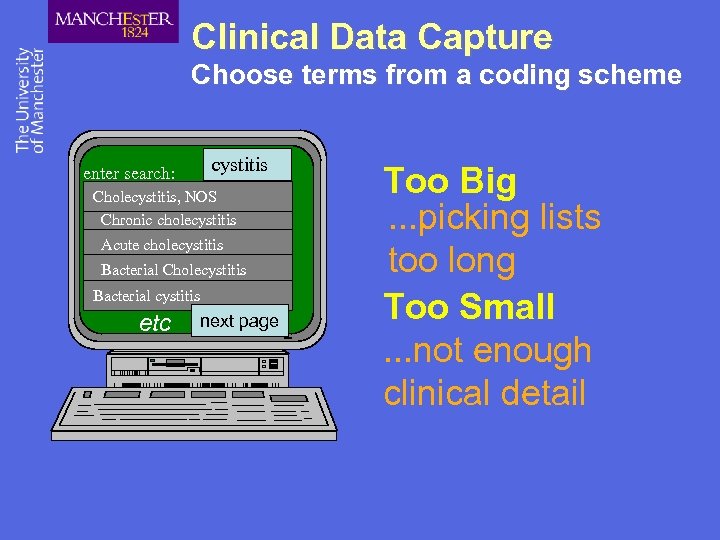 Clinical Data Capture Choose terms from a coding scheme enter search: cystitis Cholecystitis, Iatrogenic cystitis Cystitis, NOS Acute cystitis Chronic cholecystitis Chemical cystitis Subacute cystitis, NOS Acute cholecystitis Postoperative cystitis Follicular cystitis Bacterial Cholecystitis Drug induced cystitis Bacterial cystitis Idiopathiccystitis Radiation cystitis etc next page Too Big. . . picking lists too long Too Small. . . not enough clinical detail
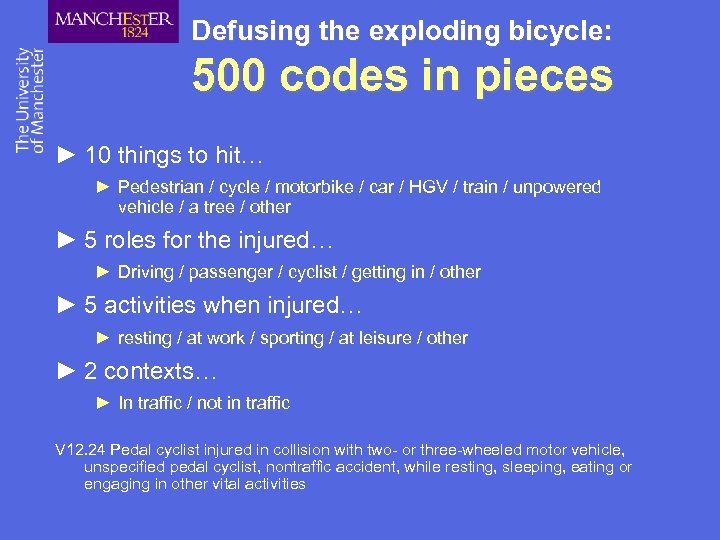 Defusing the exploding bicycle: 500 codes in pieces ► 10 things to hit… ► Pedestrian / cycle / motorbike / car / HGV / train / unpowered vehicle / a tree / other ► 5 roles for the injured… ► Driving / passenger / cyclist / getting in / other ► 5 activities when injured… ► resting / at work / sporting / at leisure / other ► 2 contexts… ► In traffic / not in traffic V 12. 24 Pedal cyclist injured in collision with two- or three-wheeled motor vehicle, unspecified pedal cyclist, nontraffic accident, while resting, sleeping, eating or engaging in other vital activities
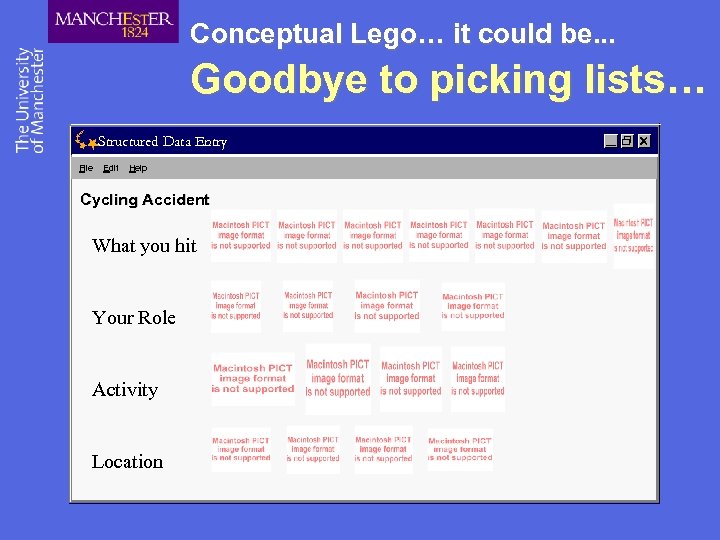 Conceptual Lego… it could be. . . Goodbye to picking lists… Structured Data Entry File Edit Help Cycling Accident What you hit Your Role Activity Location
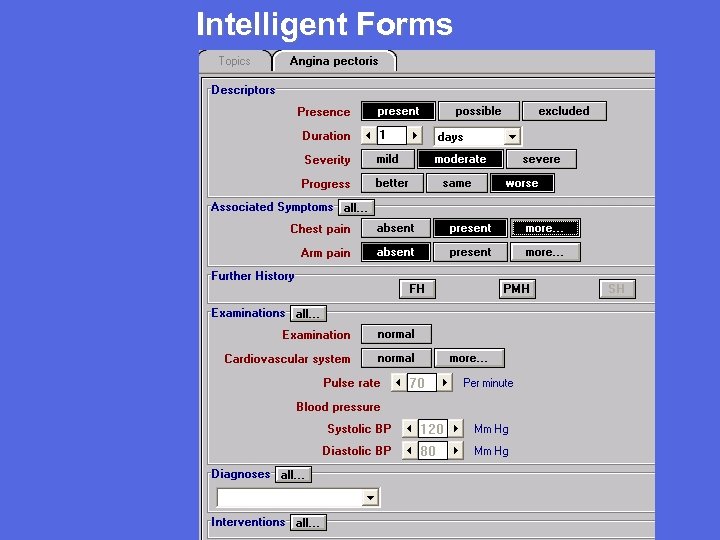 Intelligent Forms
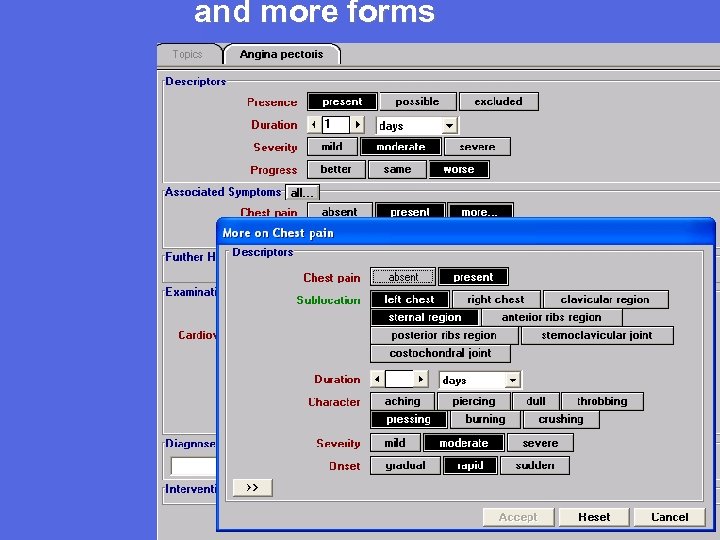 and more forms
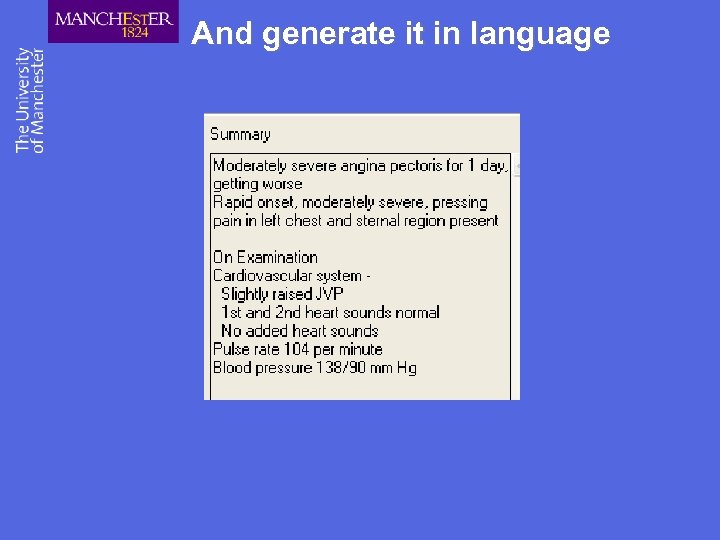 And generate it in language
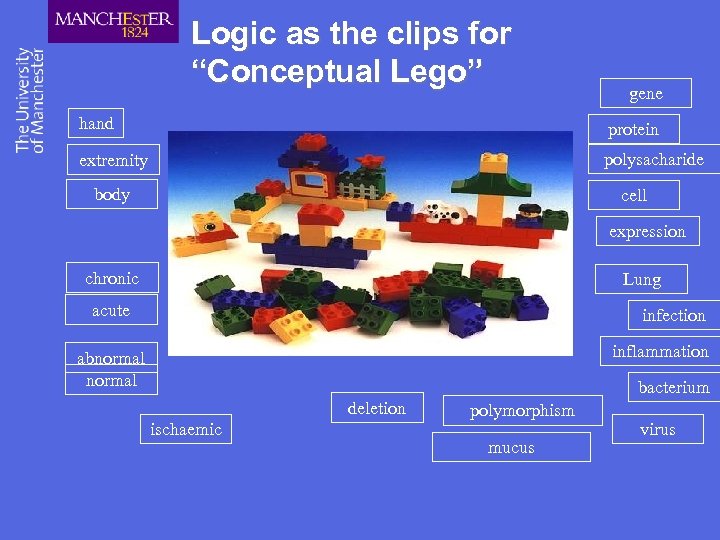 Logic as the clips for “Conceptual Lego” gene hand protein extremity polysacharide body cell expression chronic Lung acute infection inflammation abnormal bacterium deletion ischaemic polymorphism mucus virus
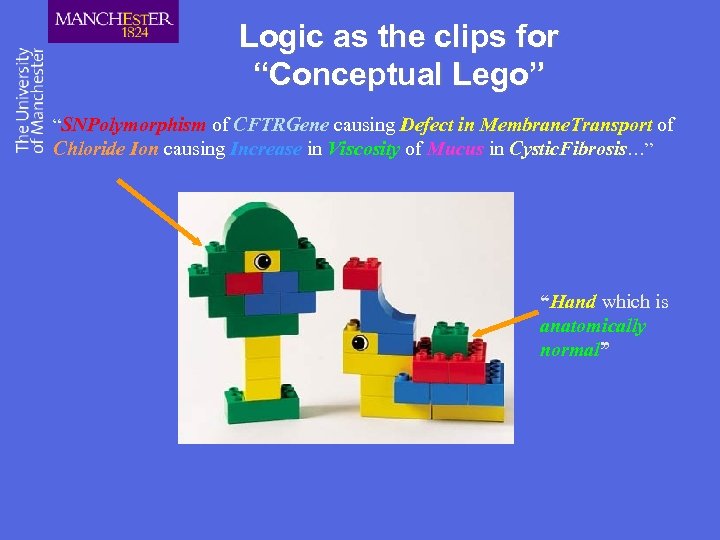 Logic as the clips for “Conceptual Lego” “SNPolymorphism of CFTRGene causing Defect in Membrane. Transport of Chloride Ion causing Increase in Viscosity of Mucus in Cystic. Fibrosis…” “Hand which is anatomically normal”
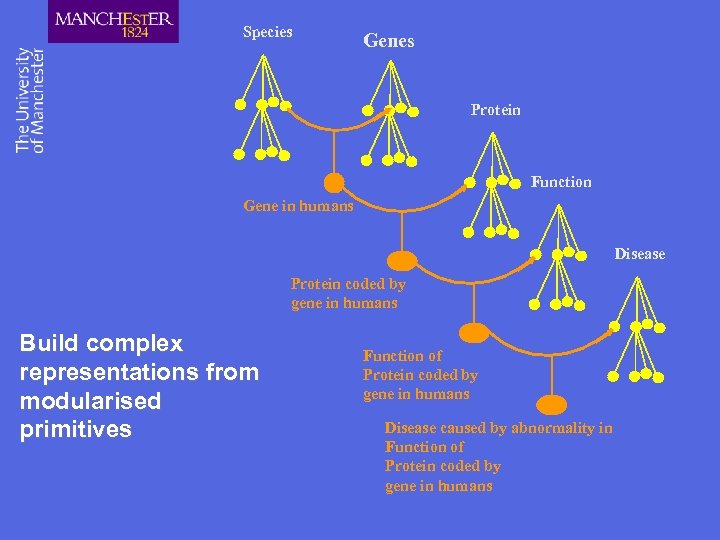 Species Genes Protein Function Gene in humans Disease Protein coded by gene in humans Build complex representations from modularised primitives Function of Protein coded by gene in humans Disease caused by abnormality in Function of Protein coded by gene in humans
 Problem: System may be perfect …but Users still fallible
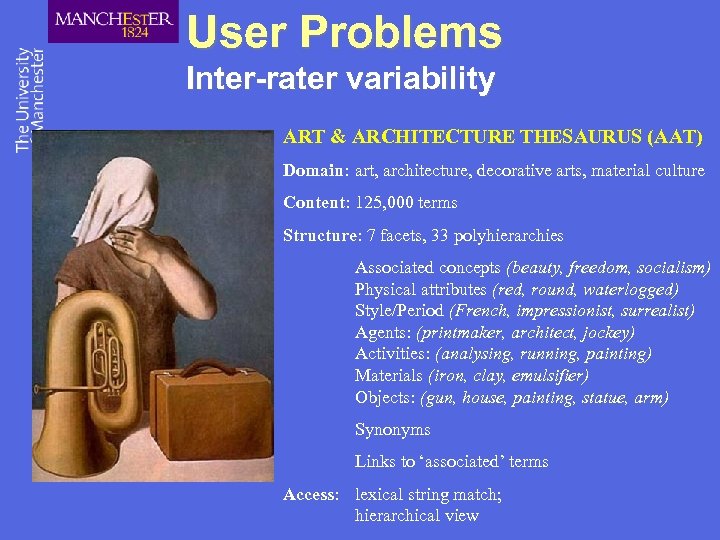 User Problems Inter-rater variability ART & ARCHITECTURE THESAURUS (AAT) Domain: art, architecture, decorative arts, material culture Content: 125, 000 terms Structure: 7 facets, 33 polyhierarchies Associated concepts (beauty, freedom, socialism) Physical attributes (red, round, waterlogged) Style/Period (French, impressionist, surrealist) Agents: (printmaker, architect, jockey) Activities: (analysing, running, painting) Materials (iron, clay, emulsifier) Objects: (gun, house, painting, statue, arm) Synonyms Links to ‘associated’ terms Access: lexical string match; hierarchical view
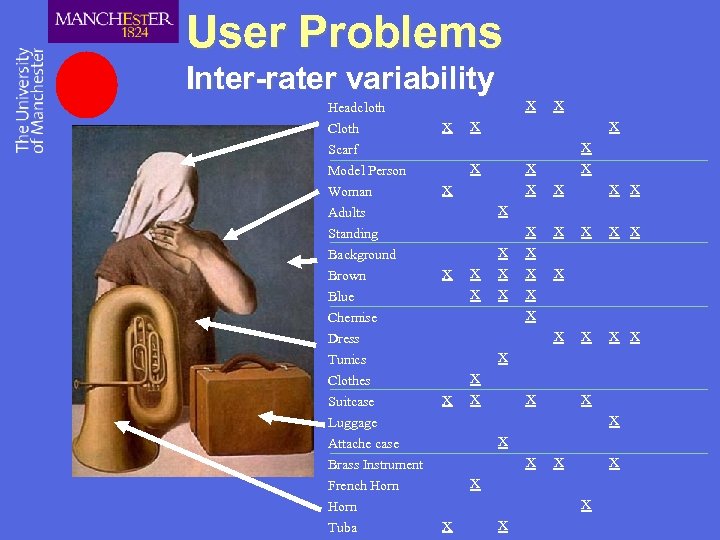 User Problems Inter-rater variability Headcloth Cloth Scarf Model Person Woman Adults Standing Background Brown Blue Chemise Dress Tunics Clothes Suitcase Luggage Attache case Brass Instrument French Horn Tuba X X X X X X X X X X X X X
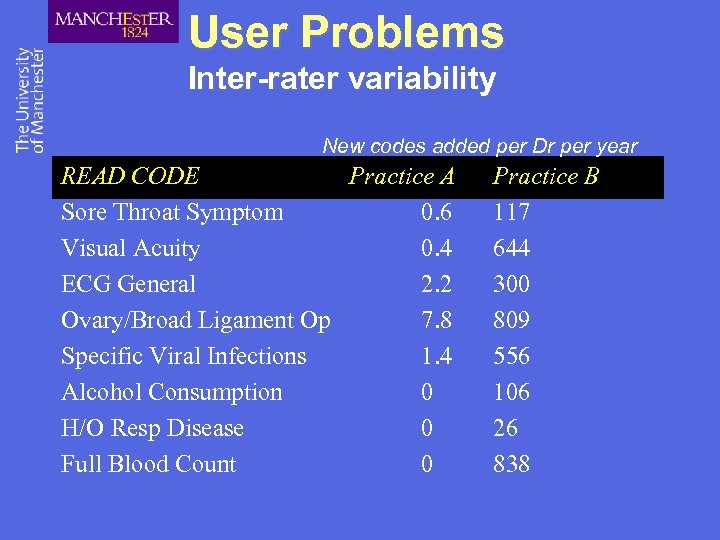 User Problems Inter-rater variability New codes added per Dr per year READ CODE Practice A Sore Throat Symptom 0. 6 Visual Acuity 0. 4 ECG General 2. 2 Ovary/Broad Ligament Op 7. 8 Specific Viral Infections 1. 4 Alcohol Consumption 0 H/O Resp Disease 0 Full Blood Count 0 Practice B 117 644 300 809 556 106 26 838
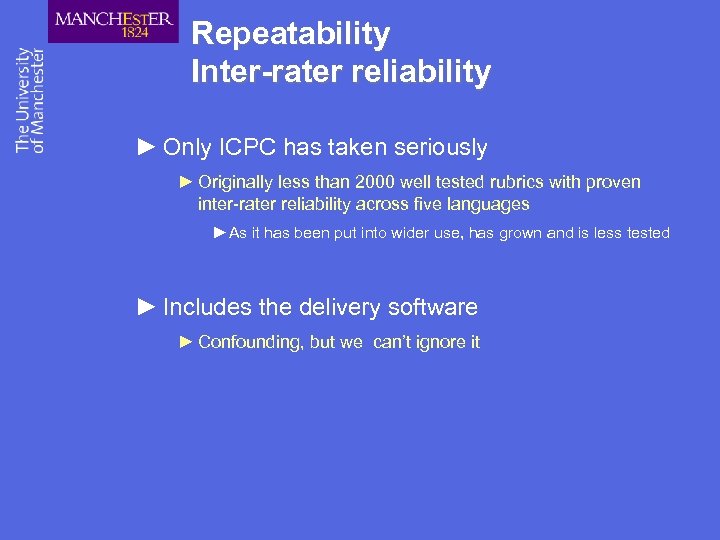 Repeatability Inter-rater reliability ► Only ICPC has taken seriously ► Originally less than 2000 well tested rubrics with proven inter-rater reliability across five languages ►As it has been put into wider use, has grown and is less tested ► Includes the delivery software ► Confounding, but we can’t ignore it
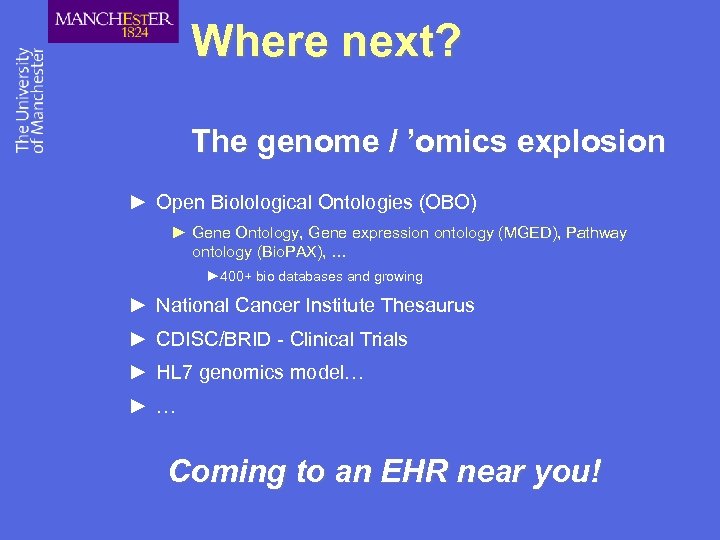 Where next? The genome / ’omics explosion ► Open Biolological Ontologies (OBO) ► Gene Ontology, Gene expression ontology (MGED), Pathway ontology (Bio. PAX), … ► 400+ bio databases and growing ► National Cancer Institute Thesaurus ► CDISC/BRID - Clinical Trials ► HL 7 genomics model… ►… Coming to an EHR near you!
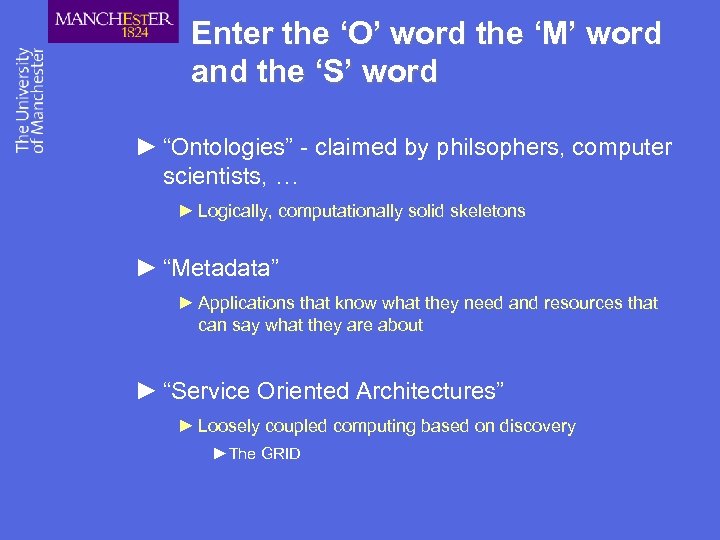 Enter the ‘O’ word the ‘M’ word and the ‘S’ word ► “Ontologies” - claimed by philsophers, computer scientists, … ► Logically, computationally solid skeletons ► “Metadata” ► Applications that know what they need and resources that can say what they are about ► “Service Oriented Architectures” ► Loosely coupled computing based on discovery ►The GRID
 … and the Semantic Web / GRID … and E-Science / E-Health … and digital libraries … and ► RDF, RDFS, OWL, SWRL, WSDL, Web Services, … ► W 3 C Healthcare and Life Sciences Special Interest Group ► ISO 11179 ► Dublin Core ► SKOS ► “Metadata and ontologies with everything” ► Google & web mining ► Text Processing ► Open Directory & Wikipedia - “Folksonomies” & social computing ►… It’s a big open world out there!
 Key issue 1: Creating an open community ► Terminologies have succeeded for three reasons ► Coercion - use them or don’t get paid ►ICD-CM, CPT, MEDDRA, Read 2 ► They belonged to the community and were useful or key to software ►LOINC, HL 7 v 2, Gene Ontology, Read 1 … ► They gave access to a key resource ►Me. SH, BNF, …
 Logic + Web liberates users Open ‘Just-in-time Terminology’ ► If you can test the consequences then you can give users the freedom to develop ► New compositions ► New additions to established lists ► Hide the complexity ► “Close to user forms” ►GALEN’s “Intermediate Representation” ►Training time down from 3 months to 3 days! ►The logic is the assembly language ► Move the development to the community ► Look at Open. Directory, Wikipedia, FLKR, etc. ►Social computing ► Requires more and better tools ► Requires a different style of curation
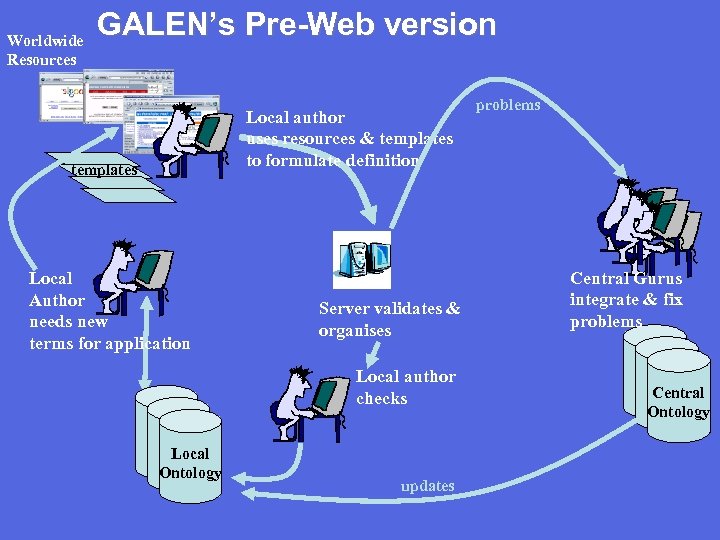 Worldwide Resources GALEN’s Pre-Web version Local author uses resources & templates to formulate definition templates Local Author needs new terms for application Server validates & organises Local author checks Local Ontology updates problems Central Gurus integrate & fix problems Central Ontology
 Key issue II: Applications centric development ► If it is built for everything it will be fit for nothing! ►Must have a way to see if it works ► If it is built for just one thing it will not be fit even for that ►Change is the only constant ► Cannot predict which abstractions needed in advance ► Even very large ontologies tend to be missing 50% or more of terms in practice ►Compose them when you need them and share ► Is there a optimal ‘ 90 -10’ point? ► You can only tell against a specific application
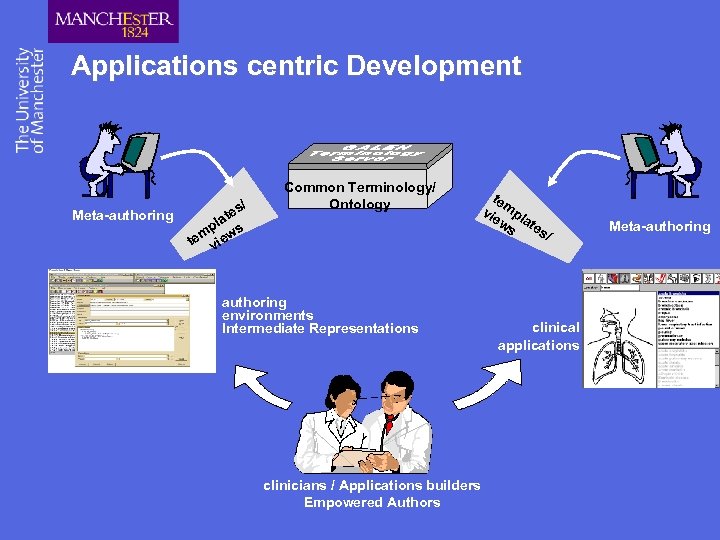 Applications centric Development Meta-authoring s/ te a pl m ews te vi Common Terminology/ Ontology te vie mpl ws ate s/ authoring environments Intermediate Representations clinicians / Applications builders Empowered Authors clinical applications Meta-authoring
 Key issue III: Binding to the EHR ► HL 7 v 3 + SNOMED = Chaos ► Unless we can formalise the mutual constraints ►The documentation is beyond human capacity ►To write or to understand ► Templates/Archetypes + SNOMED = Missed opportunities ► Unless we avoid trivialising terminology … or chaos if we attempt to use the terminology ► Requires new tools ► Formalisms probably adequate
 Key issue IV: Decision support ►Meaningful decision support is still rare ► Terminology is not the only problem ►But it is a barrier ► Ontology should be the scaffolding ►But requires the terminology to be computable ►SNOMED still too idiosyncratic to use easily ► Inter-rater reliability crucial ►Can we afford GIGO for patient management? ► Semantics of combined EHR+Terminology must be well defined
 Key issue V: Avoiding “Pregacy” ► Prebuilt legacy ► Errors built in from the beginning ► ≤. 01% of SNOMED coded data to be held in 10 years time has been collected ► Fixes now will be less expensive than fixes later ► Rigorous schemas rigorously adhered to ► Conformance and Regression testing ►Cannot depend on people to do it right ►Must be formally verifiable ► It’s software - Let’s have some basic software engineering!
 Key issue VI: Empirical data ► Need empirical data on ► What’s worth doing - what’s esssential ►Language used by doctors ►Terms used ► What works ►Reliability of terms used - errors made ►Effect on Decision Support and other applications ► What scales ►What are the consequences of design decisions ► Effort required to develop software ►Usability of development tools ► Effort required by users ►Usability of interfaces and clinical systems ► Where is the science base for our work?
 Key issue VII: Human Factors. Helping with a humanly impossible task ► Language technology will help ► But will always have limitations ► Tailored forms will help ► But we must beet the combinatorial explosion ► …but the key issues are organisational, social & clinical ► …and needs empirical data Requires serious investment and Commitment
 Summary: Lessons & Directions ► Understand scaling and the combinatorial explosion ► All lists are too big and too small ► Too many niches to cope with one by one ► Focus on applications ► Answer “What’s it for? ” ► Bind terminology to EHR and Decision support ► An open world changing rapidly ► Especially basic biology ► Avoid Pregacy ► Gather empirical data ► Human factors are critical