 Скачать презентацию Clinical Quality Safety A Progress Report October
948c7059d934ed5b022388ef0121f6af.ppt
- Количество слайдов: 47



Clinical Quality & Safety A Progress Report October 4, 2010 Mayer Brezis, MD MPH Professor of Medicine Center for Clinical Quality & Safety
(I) Ventilator-Associated Pneumonia (VAP) (II) Medication Reconciliation (Med-Rec) (III) Follow Up on a few other projects
Ventilator-Associated Pneumonia (VAP) Project aim: reduce VAP incidence at Hadassah Inna Apelbaum, Nurit Katz, Dr. Philip Levine, Dr. Shmulick Benenson, Carmela Shwartz, Prof. Colin Block, Lois Gordon, Prof. Mayer Brezis General Intensive Care, Unit for Infection Control and the Center for Clinical Quality and Safety
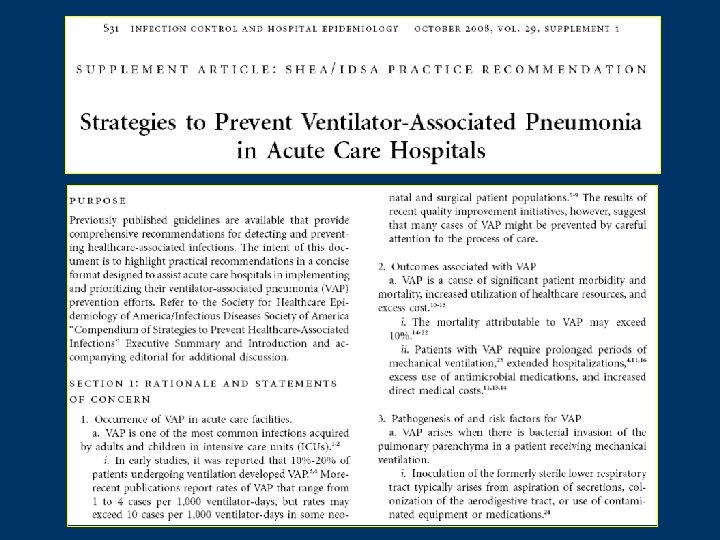
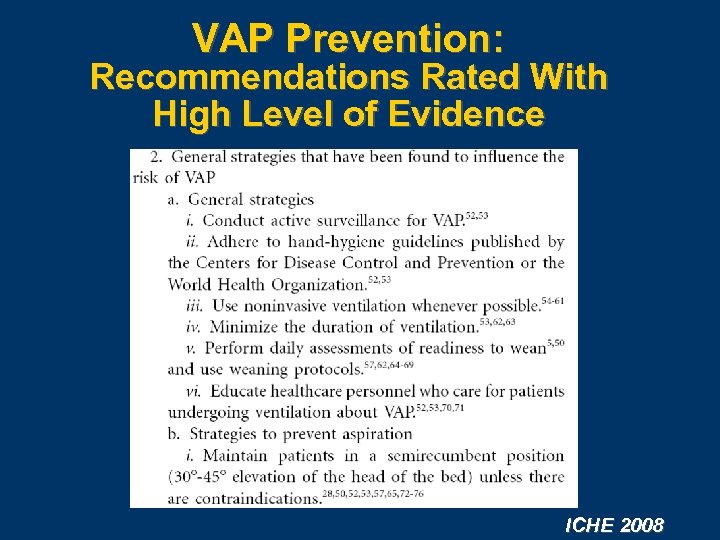
VAP Prevention: Recommendations Rated With High Level of Evidence ICHE 2008
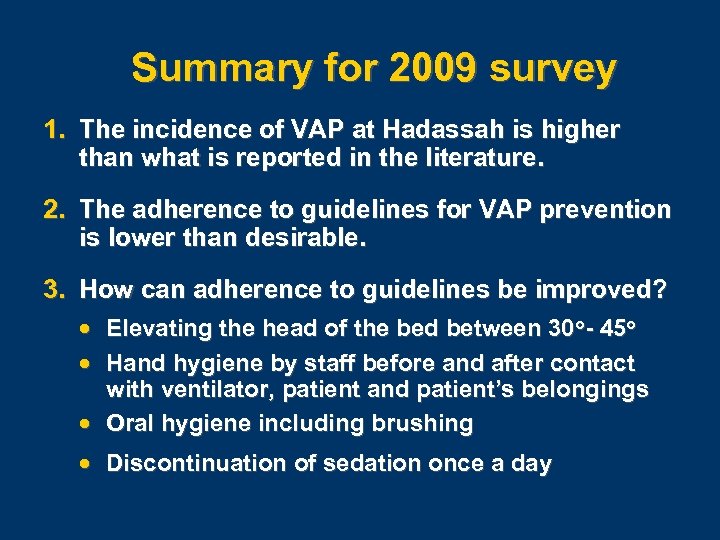
Summary for 2009 survey 1. The incidence of VAP at Hadassah is higher than what is reported in the literature. 2. The adherence to guidelines for VAP prevention is lower than desirable. 3. How can adherence to guidelines be improved? · Elevating the head of the bed between 30 o- 45 o · Hand hygiene by staff before and after contact with ventilator, patient and patient’s belongings · Oral hygiene including brushing · Discontinuation of sedation once a day
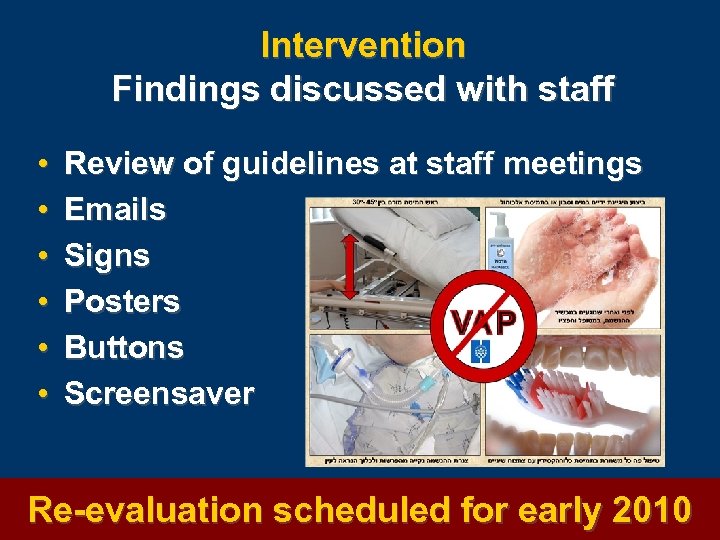
Intervention Findings discussed with staff • • • Review of guidelines at staff meetings Emails Signs Posters Buttons Screensaver Re-evaluation scheduled for early 2010
Survey results Periods of observation: Pre Intervention: February – March 2009 Post Intervention: February – March 2010
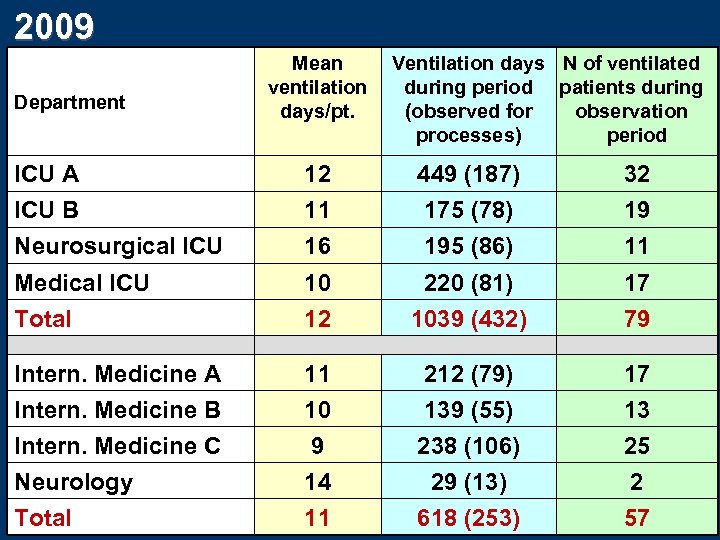
2009 Department Mean ventilation days/pt. Ventilation days N of ventilated during period patients during (observed for observation processes) period ICU A 12 449 (187) 32 ICU B Neurosurgical ICU 11 16 175 (78) 195 (86) 19 11 Medical ICU Total 10 12 220 (81) 1039 (432) 17 79 Intern. Medicine A Intern. Medicine B Intern. Medicine C Neurology Total 11 10 9 14 11 212 (79) 139 (55) 238 (106) 29 (13) 618 (253) 17 13 25 2 57
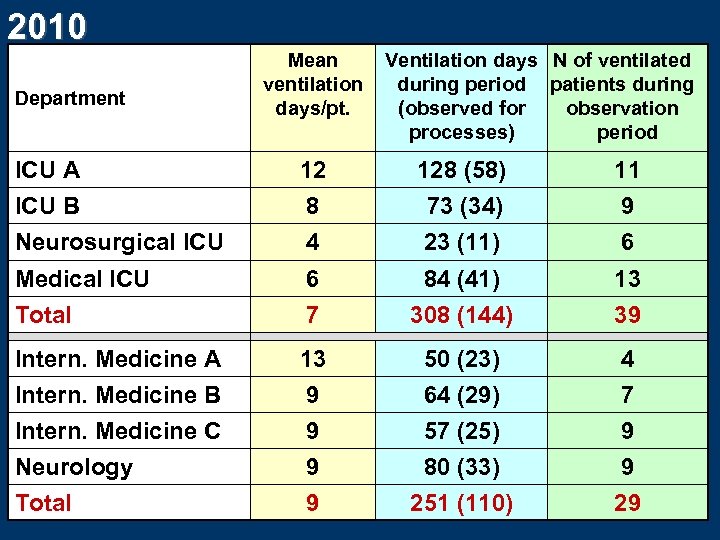
2010 Department Mean ventilation days/pt. Ventilation days N of ventilated during period patients during (observed for observation processes) period ICU A 12 128 (58) 11 ICU B Neurosurgical ICU 8 4 73 (34) 23 (11) 9 6 Medical ICU Total 6 7 84 (41) 308 (144) 13 39 Intern. Medicine A Intern. Medicine B Intern. Medicine C Neurology Total 13 9 9 50 (23) 64 (29) 57 (25) 80 (33) 251 (110) 4 7 9 9 29
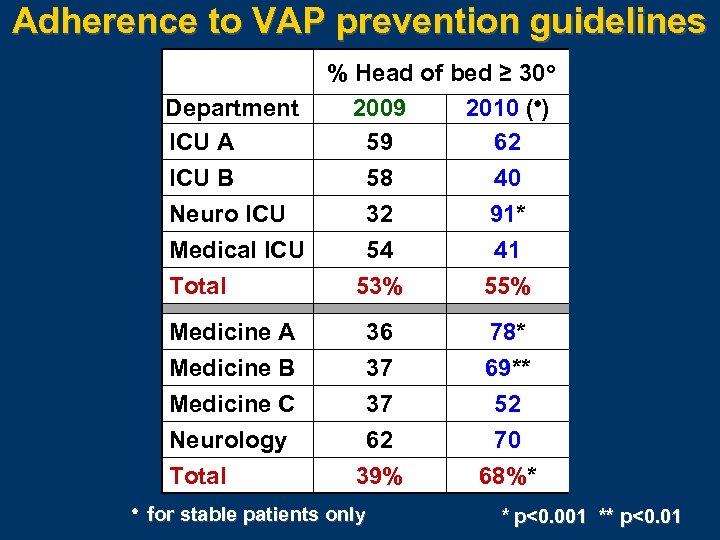
Adherence to VAP prevention guidelines Department ICU A ICU B % Head of bed ≥ 30 o % Ventilator 2009 2010 ( ) 2009 59 62 74 58 40 75 Neuro ICU Medical ICU Total 91* 41 55% 68 72 72% Medicine A Medicine B Medicine C Neurology Total 32 54 53% 36 37 37 62 39% 78* 69** 52 70 68%* 71 68 69 92 75% for stable patients only * p<0. 001 ** p<0. 01
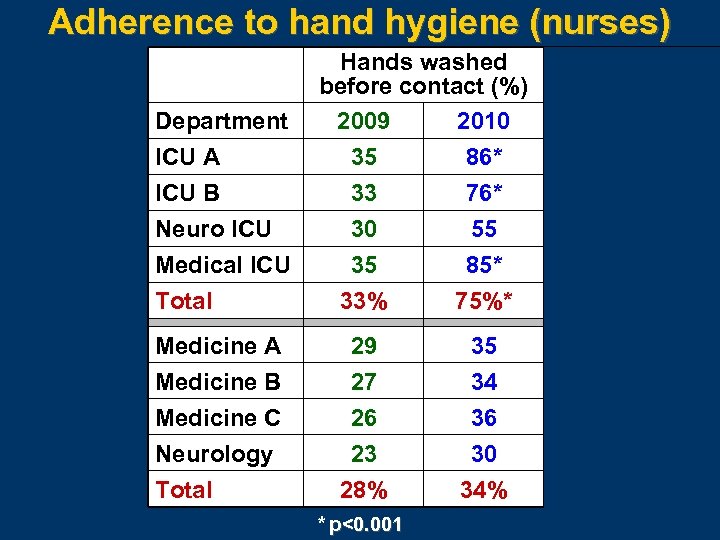
Adherence to hand hygiene (nurses) Department ICU A Hands washed before contact (%) contact (% 2009 2010 2009 20 35 86* 54 91 ICU B Neuro ICU Medical ICU Total 33 30 35 33% 76* 55 85* 75%* 52 39 47 47% 91 82 93 91 Medicine A Medicine B Medicine C Neurology Total 29 27 26 23 28% 35 34 36 30 34% 39 37 38 62 39% 5 62 68 4 58 * p<0. 001 ** p<0. 01
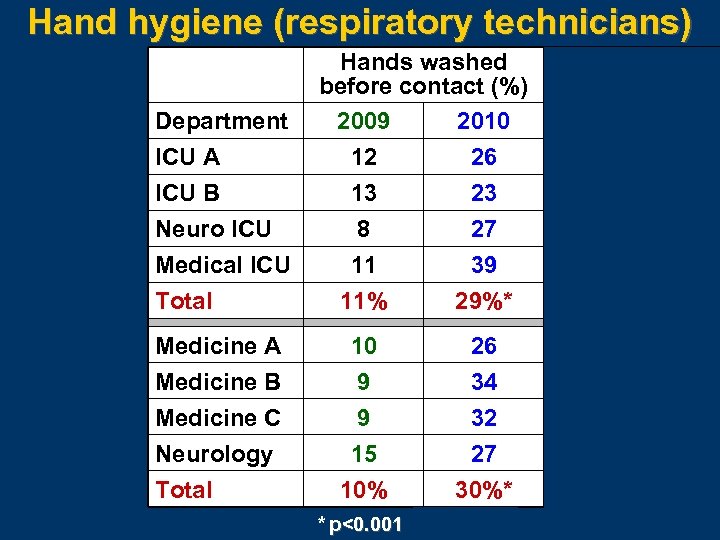
Hand hygiene (respiratory technicians) Department ICU A Hands washed before contact (%) contact (% 2009 2010 2009 20 12 26 58 5 ICU B Neuro ICU Medical ICU Total 13 8 11 11% 23 27 39 29%* 59 45 55 54% 6 6 7 63% Medicine A Medicine B Medicine C Neurology Total 10 9 9 15 10% 26 34 32 27 30%* 48 46 47 38 47% 6 6 7 6 66 * p<0. 001 ** p<0. 05
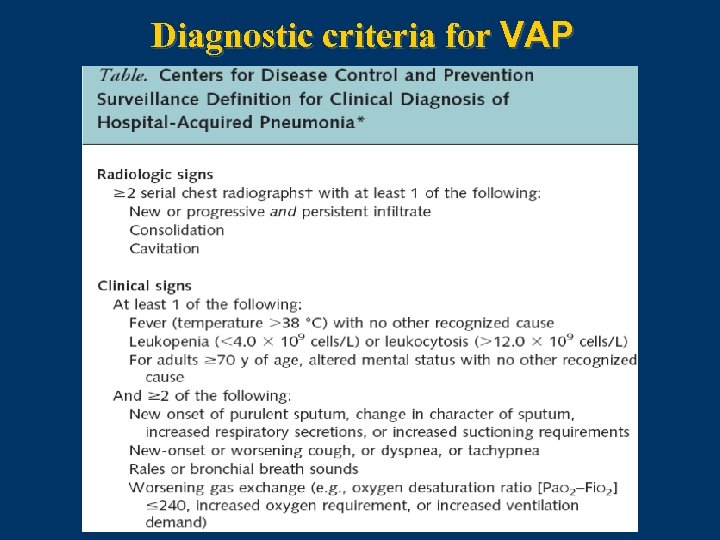
Diagnostic criteria for VAP
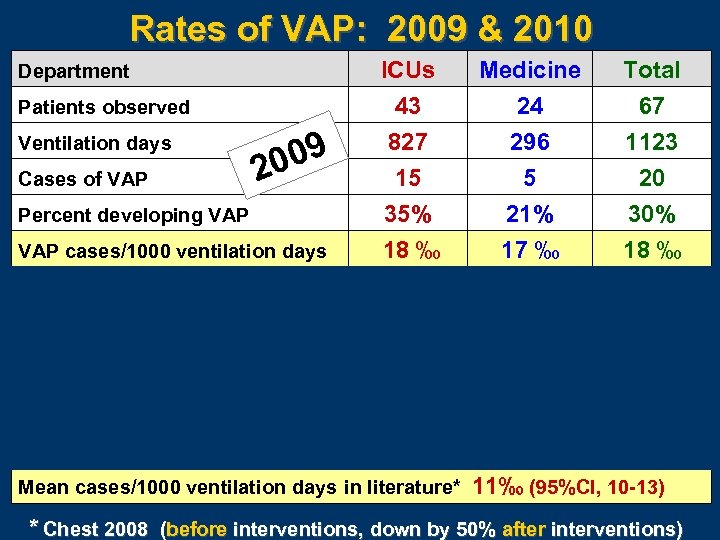
Rates of VAP: 2009 & 2010 09 20 ICUs 43 827 15 Medicine 24 296 5 Total 67 1123 20 VAP cases/1000 ventilation days 35% 18 ‰ 21% 17 ‰ 30% 18 ‰ 10 20 Percent developing VAP 41 711 13 32% 19 383 7 37% 60 1094 20 33% VAP cases/1000 ventilation days 18 ‰ Department Patients observed Ventilation days Cases of VAP Percent developing VAP Patients observed Ventilation days Cases of VAP Mean cases/1000 ventilation days in literature* 11‰ (95%CI, 10 -13) * Chest 2008 (before interventions, down by 50% after interventions)
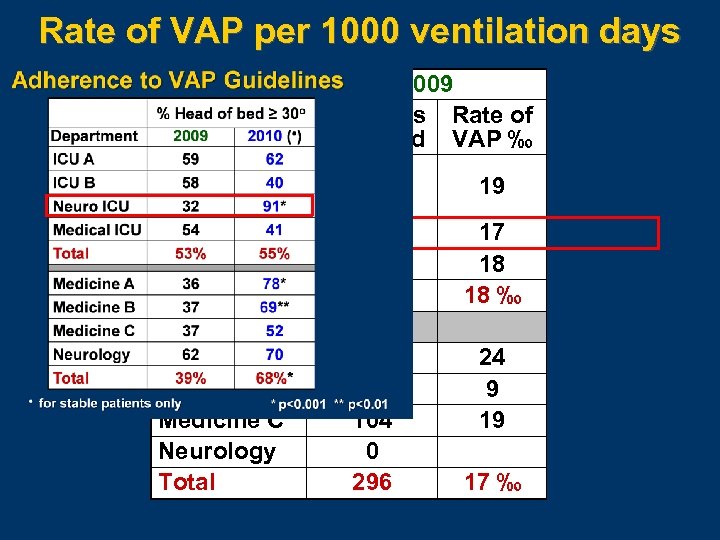
Rate of VAP per 1000 ventilation days Department ICU A ICU B Neuro ICU Medical ICU Total Medicine A Medicine B Medicine C Neurology Total 2009 N of days Rate of observed VAP ‰ 594 19 176 57 827 17 18 18 ‰ 84 108 104 0 296 24 9 19 17 ‰ 2010 N of days Ra observed VA 252 2 124 53 282 2 711 18 48 75 95 165 383 2 1 18
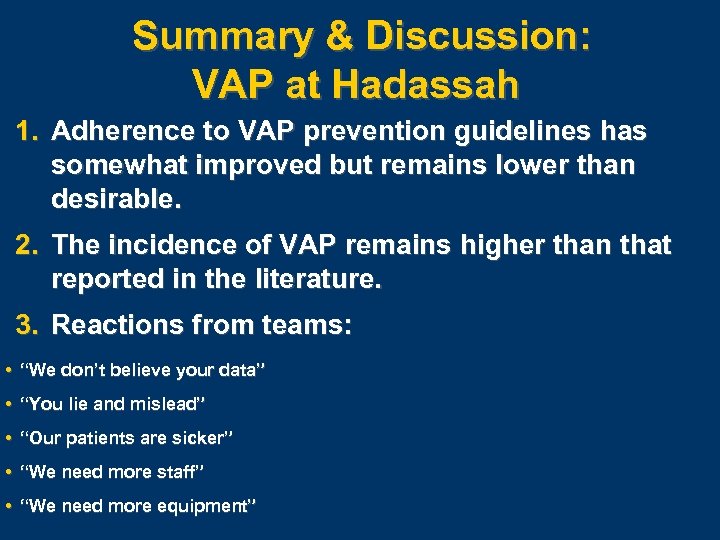
Summary & Discussion: VAP at Hadassah 1. Adherence to VAP prevention guidelines has somewhat improved but remains lower than desirable. 2. The incidence of VAP remains higher than that reported in the literature. 3. Reactions from teams: • “We don’t believe your data” • “We need to look into this issue” • “You lie and mislead” • “We should have a checklist to increase adherence to guidelines” • “Our patients are sicker” • “We need more staff” • “We should introduce a protocol of daily sedation cessation” • “We need more equipment” • “We will build an algorithm for VAP diagnosis”
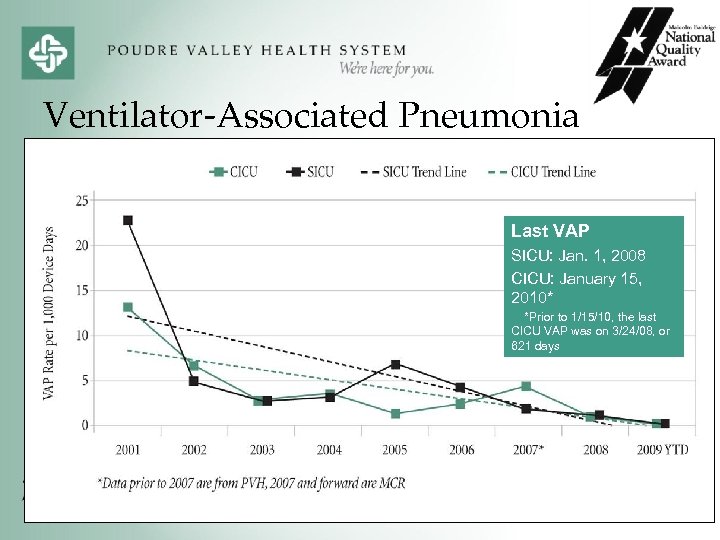
Ventilator-Associated Pneumonia Last VAP SICU: Jan. 1, 2008 CICU: January 15, 2010* *Prior to 1/15/10, the last CICU VAP was on 3/24/08, or 621 days
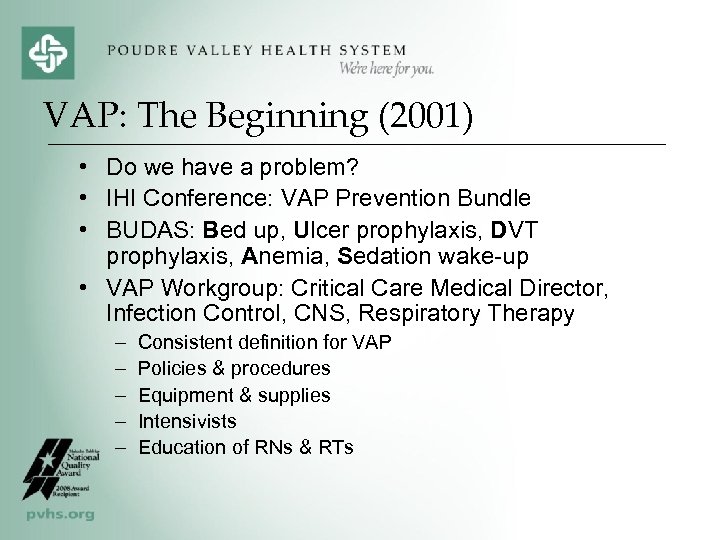
VAP: The Beginning (2001) • Do we have a problem? • IHI Conference: VAP Prevention Bundle • BUDAS: Bed up, Ulcer prophylaxis, DVT prophylaxis, Anemia, Sedation wake-up • VAP Workgroup: Critical Care Medical Director, Infection Control, CNS, Respiratory Therapy – – – Consistent definition for VAP Policies & procedures Equipment & supplies Intensivists Education of RNs & RTs
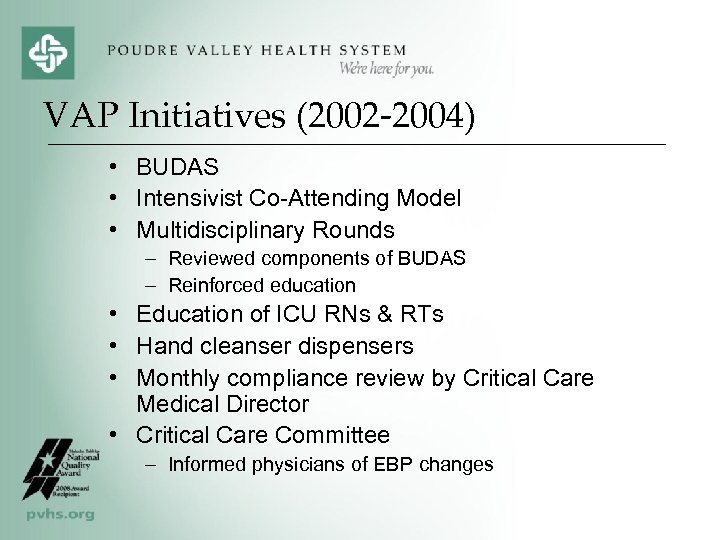
VAP Initiatives (2002 -2004) • BUDAS • Intensivist Co-Attending Model • Multidisciplinary Rounds – Reviewed components of BUDAS – Reinforced education • Education of ICU RNs & RTs • Hand cleanser dispensers • Monthly compliance review by Critical Care Medical Director • Critical Care Committee – Informed physicians of EBP changes
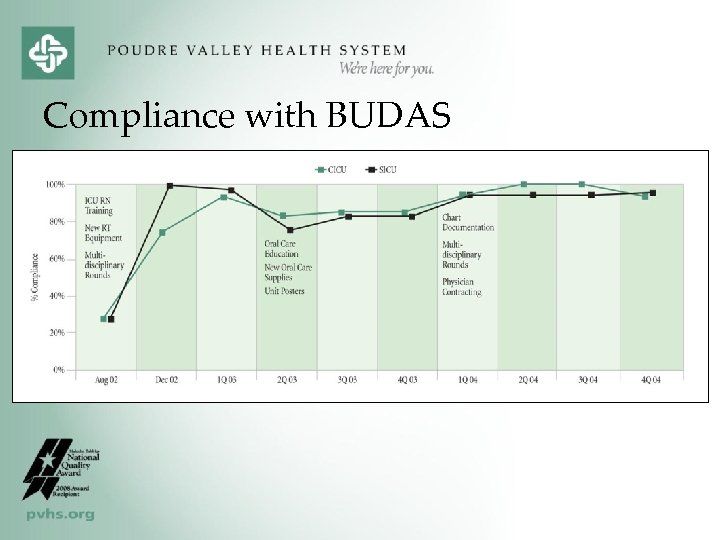
Compliance with BUDAS
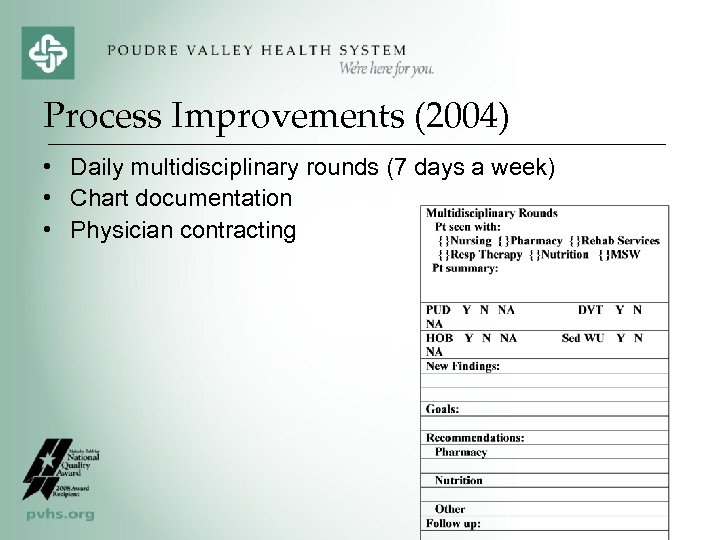
Process Improvements (2004) • Daily multidisciplinary rounds (7 days a week) • Chart documentation • Physician contracting
Cycles of Improvement 2005 Reported BUDAS compliance by individual component 2006 Improved oral care, added chlorhexidine rinse 2007 Opened MCR with best practices from PVH Switched to oral gastric tubes 2008 Reinforced standard procedure, chlorhexidine has to be after toothbrushing, storage of Yankauer, deep oralpharyngeal suctioning 2009 Introduced silver-coated endotracheal ETT (IHI 5 Million Lives Campaign) New approach: Root cause analysis for each VAP
Lessons Learned • Small incremental improvements based on audit data, literature & outcomes • Education, education – Posters, case studies, self-learning packets, face to face • Physician engagement – Partner with physician champion • Staff engagement – Engage staff in solving problem – Post rates in each ICU – Rates = reflection of THEIR practice
Medication Reconciliation Roni Cohen, B. Sc. , Inbal Yifrach-Damari, M. Sc. * Dr. Meir Frankel, Prof. Mayer Brezis Hadassah-Hebrew University Hospital, Jerusalem, Israel * Clinical Pharmacist, Hadassah Pharmacy Services Ph. D student, School of Pharmacy, Hebrew University With Help From Joint Commission International
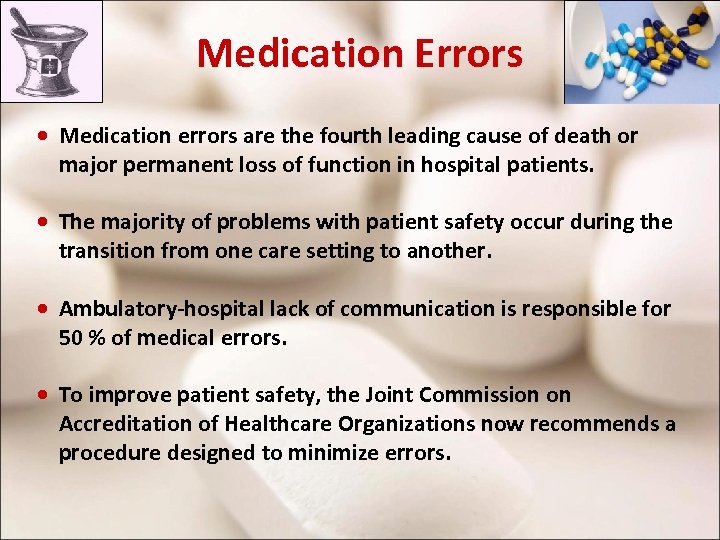
Medication Errors · Medication errors are the fourth leading cause of death or major permanent loss of function in hospital patients. · The majority of problems with patient safety occur during the transition from one care setting to another. · Ambulatory-hospital lack of communication is responsible for 50 % of medical errors. · To improve patient safety, the Joint Commission on Accreditation of Healthcare Organizations now recommends a procedure designed to minimize errors.
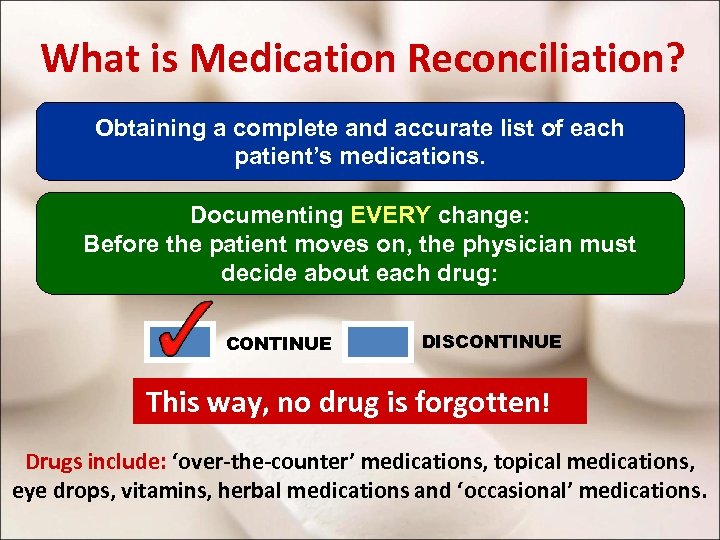
What is Medication Reconciliation? Obtaining a complete and accurate list of each patient’s medications. Documenting EVERY change: Before the patient moves on, the physician must decide about each drug: CONTINUE DISCONTINUE This way, no drug is forgotten! Drugs include: ‘over-the-counter’ medications, topical medications, eye drops, vitamins, herbal medications and ‘occasional’ medications.
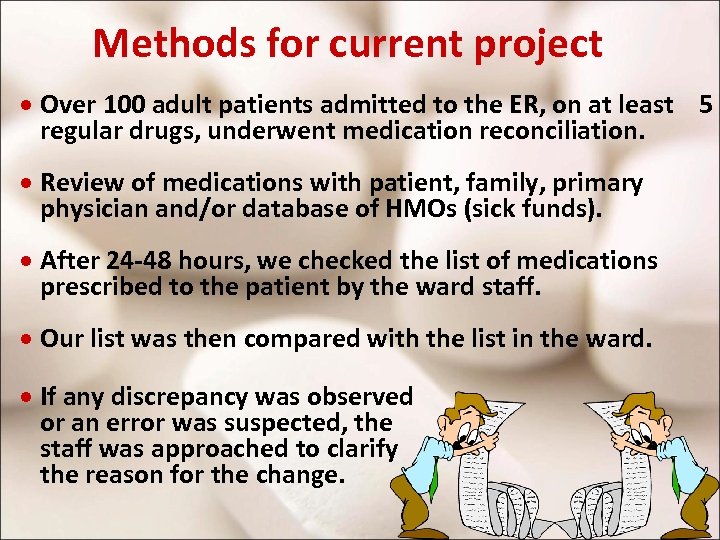
Methods for current project · Over 100 adult patients admitted to the ER, on at least 5 regular drugs, underwent medication reconciliation. · Review of medications with patient, family, primary physician and/or database of HMOs (sick funds). · After 24 -48 hours, we checked the list of medications prescribed to the patient by the ward staff. · Our list was then compared with the list in the ward. · If any discrepancy was observed or an error was suspected, the staff was approached to clarify the reason for the change.
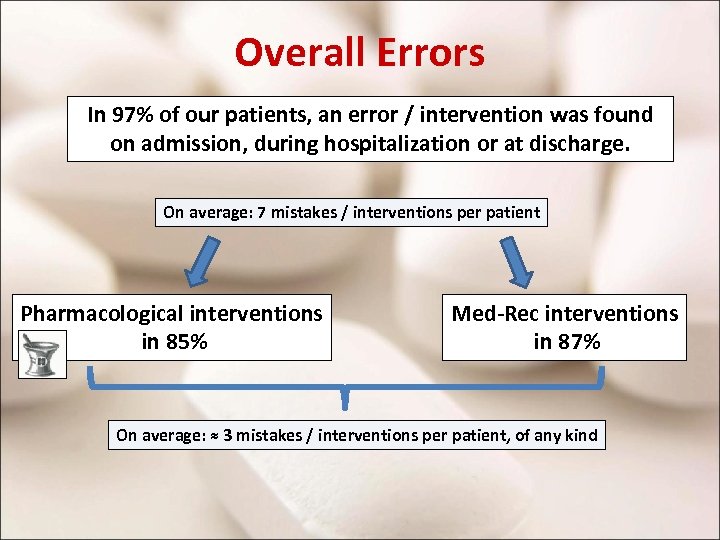
Overall Errors In 97% of our patients, an error / intervention was found on admission, during hospitalization or at discharge. On average: 7 mistakes / interventions per patient Pharmacological interventions in 85% Med-Rec interventions in 87% On average: ≈ 3 mistakes / interventions per patient, of any kind
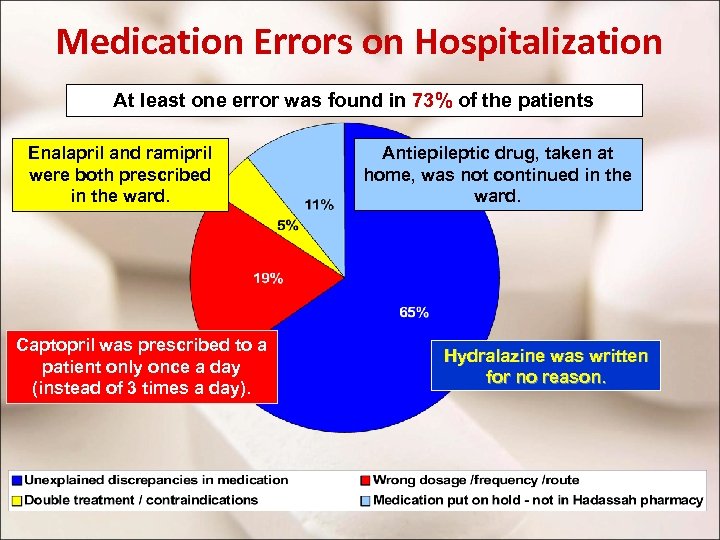
Medication Errors on Hospitalization At least one error was found in 73% of the patients Enalapril and ramipril were both prescribed in the ward. Captopril was prescribed to a patient only once a day (instead of 3 times a day). Antiepileptic drug, taken at home, was not continued in the ward. Hydralazine was written for no reason.
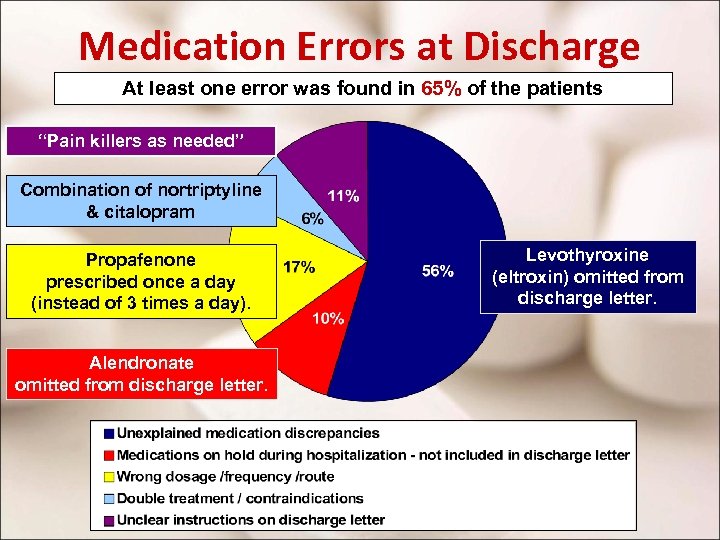
Medication Errors at Discharge At least one error was found in 65% of the patients “Pain killers as needed” Combination of nortriptyline & citalopram Propafenone prescribed once a day (instead of 3 times a day). Alendronate omitted from discharge letter. Levothyroxine (eltroxin) omitted from discharge letter.
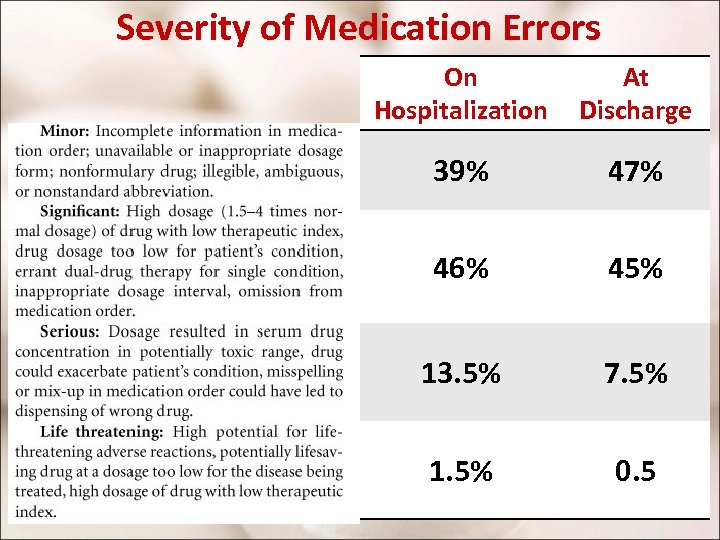
Severity of Medication Errors On Hospitalization At Discharge 39% 47% 46% 45% 13. 5% 7. 5% 1. 5% 0. 5
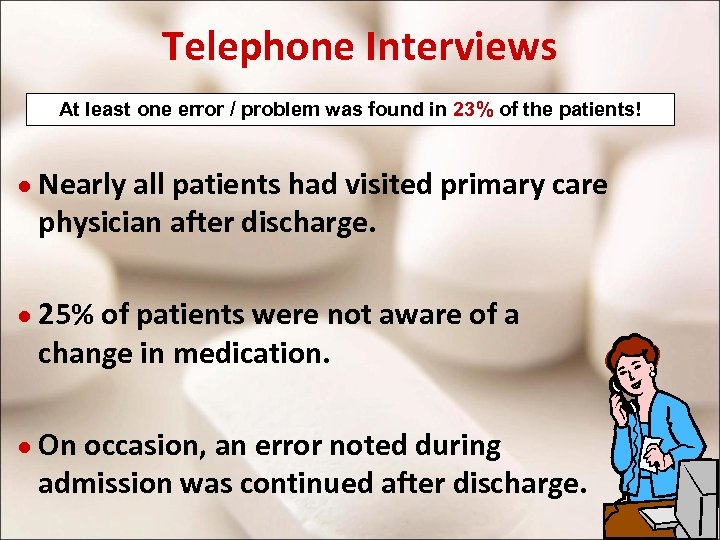
Telephone Interviews At least one error / problem was found in 23% of the patients! ● Nearly all patients had visited primary care physician after discharge. ● 25% of patients were not aware of a change in medication. ● On occasion, an error noted during admission was continued after discharge.
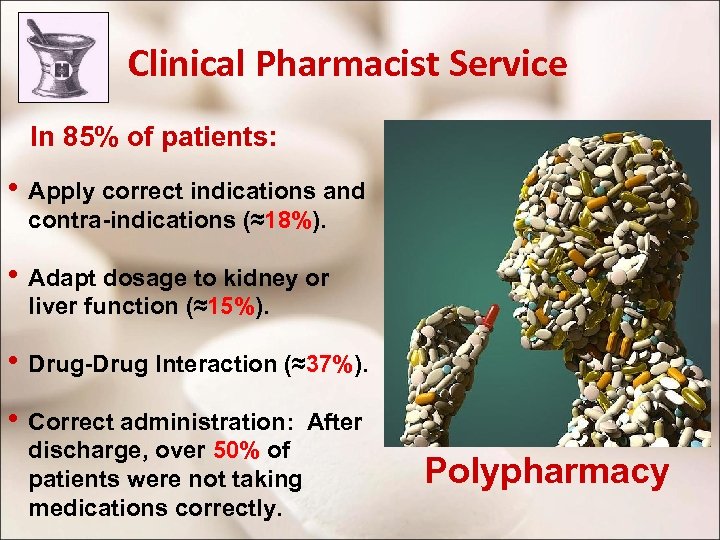
Clinical Pharmacist Service In 85% of patients: • Apply correct indications and contra-indications (≈18%). • Adapt dosage to kidney or liver function (≈15%). • Drug-Drug Interaction (≈37%). • Correct administration: discharge, over 50% of patients were not taking medications correctly. After Polypharmacy
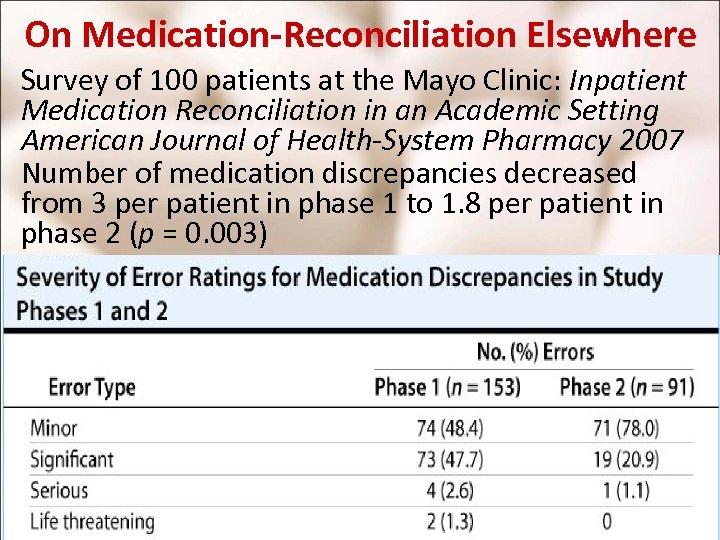
On Medication-Reconciliation Elsewhere Survey of 100 patients at the Mayo Clinic: Inpatient Medication Reconciliation in an Academic Setting American Journal of Health-System Pharmacy 2007 Number of medication discrepancies decreased from 3 per patient in phase 1 to 1. 8 per patient in phase 2 (p = 0. 003) Survey of 180 patients at Brigham and Women’s Hospital, in Boston: Classifying and Predicting Errors of Inpatient Medication Reconciliation. J Gen Intern Med 2008. Average of 1. 5 error per patient with potential for harm. Solutions included development of special software for adapting prescription to the patient’s provider preferred medications outside hospital.
Discussion • Avoidable mistakes in medications are very common. About 1% can be life threatening. • Drug lists, in the community and in hospitals, are not updated and often fail to reflect the medications that the patient actually takes. • A correct medical history can identify errors and can sometimes even shed new light on the cause of hospitalization. • Critical changes in medications made during hospitalization are often not implemented after discharge.
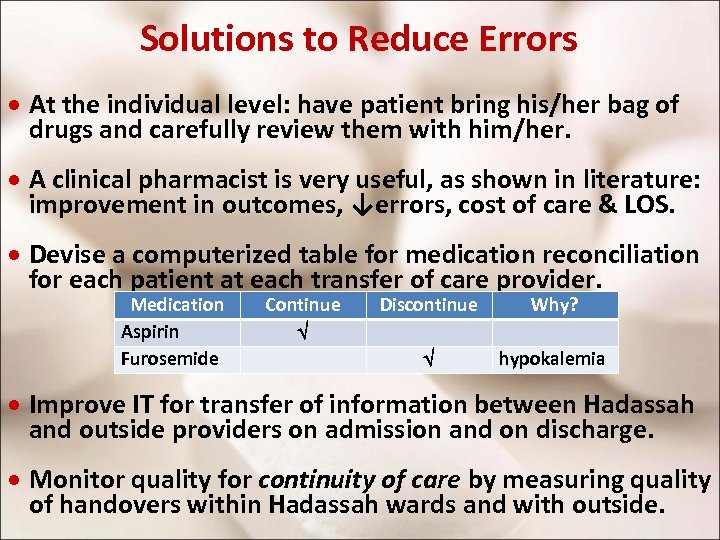
Solutions to Reduce Errors · At the individual level: have patient bring his/her bag of drugs and carefully review them with him/her. · A clinical pharmacist is very useful, as shown in literature: improvement in outcomes, ↓errors, cost of care & LOS. · Devise a computerized table for medication reconciliation for each patient at each transfer of care provider. Medication Aspirin Furosemide Continue Discontinue Why? hypokalemia · Improve IT for transfer of information between Hadassah and outside providers on admission and on discharge. · Monitor quality for continuity of care by measuring quality of handovers within Hadassah wards and with outside.
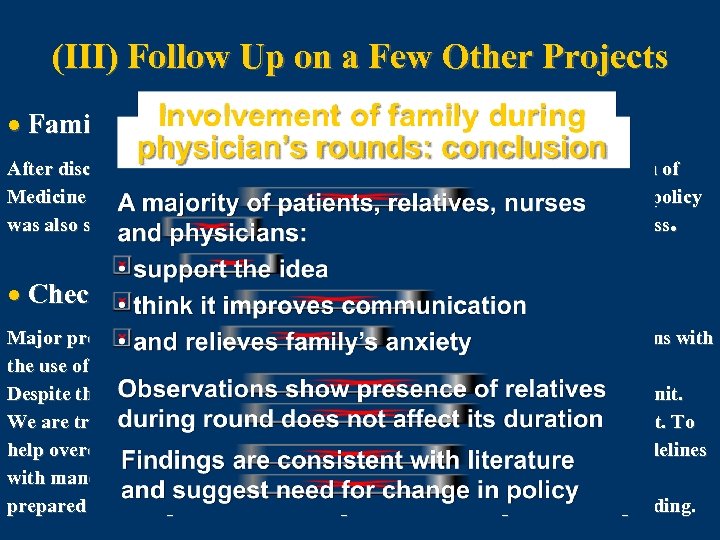
(III) Follow Up on a Few Other Projects · Family’s Involvement during Physician’s Rounds After discussion of survey findings, a new policy was enacted by the Division of Medicine to allow one relative to be present during physician’s round. This policy was also suggested to other departments by Ein Kerem Director, Dr. Y. Weiss. · Checklist to reduce central lines infections Major project at Hadassah showed a 65% reduction in central lines infections with the use of a checklist (as shown by Pronovost et al, NEJM 2006). Despite this success, checklist has not been adopted in routine work in any unit. We are trying to introduce at least routine recording of insertion in the chart. To help overcome inertia, we proposed to the Ministry of Health to publish guidelines with mandatory use and documentation of a checklist. The guidelines were prepared based in part on Hadassah experience and their publication is pending.

(III) Follow Up on a Few Other Projects ·Leadership for Quality & Safety A survey on leadership at Hadassah, * showed that 70% of departments heads and 80% of head nurses, thought it would be appropriate to use as criteria for appointment (or re- appointment) of a department head, presentation of initiatives on clinical quality & safety. Such a policy is worthwhile to consider as it would enhance participation of clinical heads in quality & safety and facilitate implementation of improvement initiatives such as on VAP and central line infections. * Dr. Nurit Porat. The Relationship between the Leadership Style of Hospital Department Head, Cooperation with Head Nurse, and Climate of Quality and Patient Safety in General Hospital. Ph. D thesis, BGU, 2010.
(III) Follow Up on a Few Other Projects · Disruptive Behavior
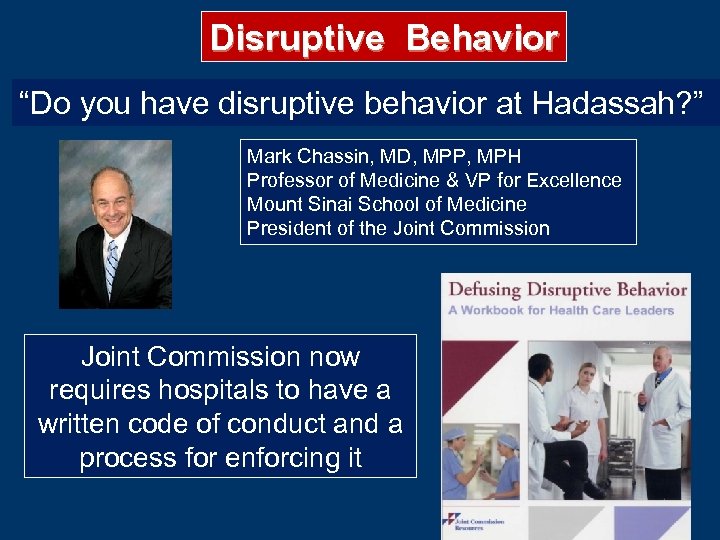
Disruptive Behavior “Do you have disruptive behavior at Hadassah? ” Mark Chassin, MD, MPP, MPH Professor of Medicine & VP for Excellence Mount Sinai School of Medicine President of the Joint Commission now requires hospitals to have a written code of conduct and a process for enforcing it
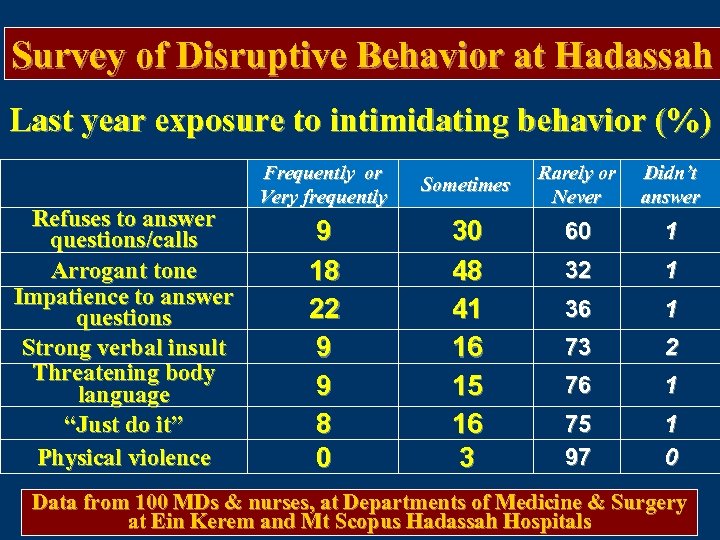
Survey of Disruptive Behavior at Hadassah Last year exposure to intimidating behavior (%) Refuses to answer questions/calls Arrogant tone Impatience to answer questions Strong verbal insult Threatening body language “Just do it” Physical violence Frequently or Very frequently Sometimes 9 18 22 9 9 8 0 30 48 41 16 15 16 3 Rarely or Never Didn’t answer 60 1 32 1 36 1 73 2 76 1 75 97 1 0 Data from 100 MDs & nurses, at Departments of Medicine & Surgery at Ein Kerem and Mt Scopus Hadassah Hospitals
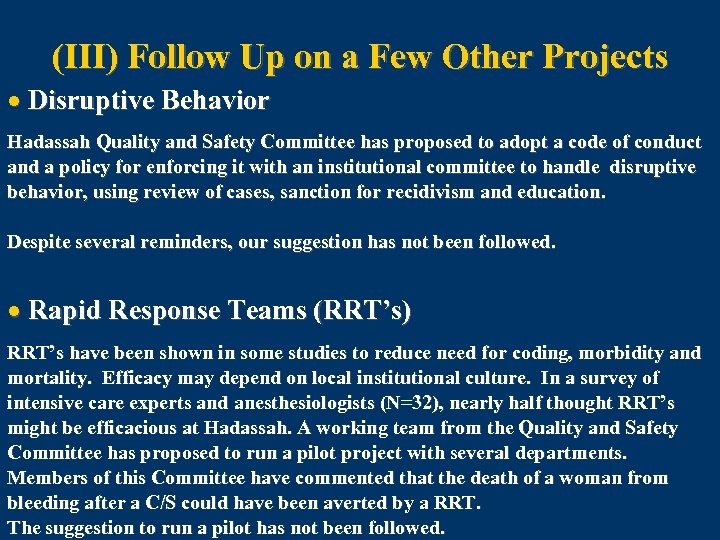
(III) Follow Up on a Few Other Projects · Disruptive Behavior Hadassah Quality and Safety Committee has proposed to adopt a code of conduct and a policy for enforcing it with an institutional committee to handle disruptive behavior, using review of cases, sanction for recidivism and education. Despite several reminders, our suggestion has not been followed. · Rapid Response Teams (RRT’s) RRT’s have been shown in some studies to reduce need for coding, morbidity and mortality. Efficacy may depend on local institutional culture. In a survey of intensive care experts and anesthesiologists (N=32), nearly half thought RRT’s might be efficacious at Hadassah. A working team from the Quality and Safety Committee has proposed to run a pilot project with several departments. Members of this Committee have commented that the death of a woman from bleeding after a C/S could have been averted by a RRT. The suggestion to run a pilot has not been followed.
(III) Follow Up on a Few Other Projects · Transparency Recent studies suggest that an open disclosure policy after a medical error is useful to restore trust, reduce anger and liability costs and to enhance safety improvement efforts.
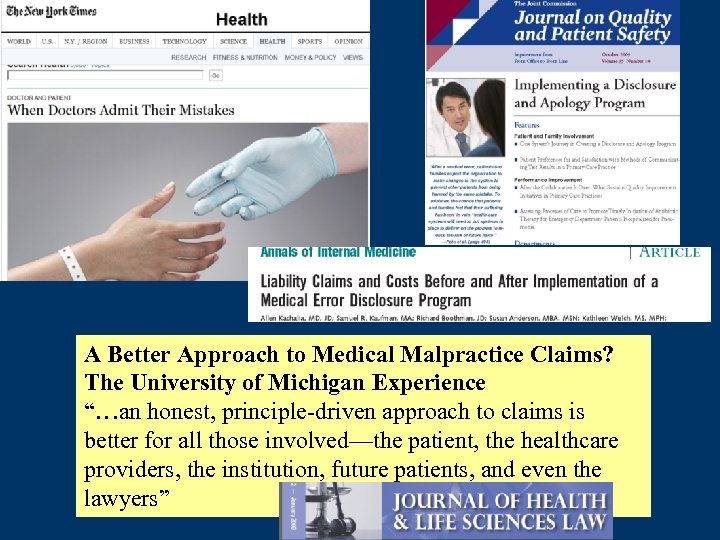
A Better Approach to Medical Malpractice Claims? The University of Michigan Experience “…an honest, principle-driven approach to claims is better for all those involved—the patient, the healthcare providers, the institution, future patients, and even the lawyers”
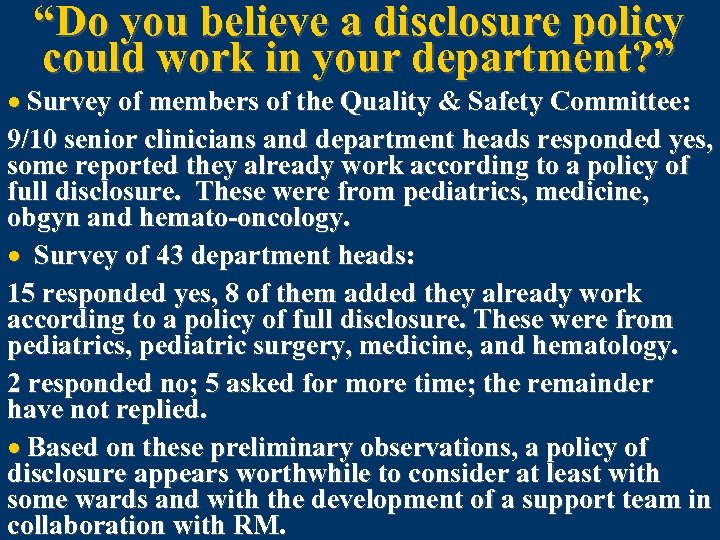
“Do you believe a disclosure policy could work in your department? ” · Survey of members of the Quality & Safety Committee: 9/10 senior clinicians and department heads responded yes, some reported they already work according to a policy of full disclosure. These were from pediatrics, medicine, obgyn and hemato-oncology. · Survey of 43 department heads: 15 responded yes, 8 of them added they already work according to a policy of full disclosure. These were from pediatrics, pediatric surgery, medicine, and hematology. 2 responded no; 5 asked for more time; the remainder have not replied. · Based on these preliminary observations, a policy of disclosure appears worthwhile to consider at least with some wards and with the development of a support team in collaboration with RM.
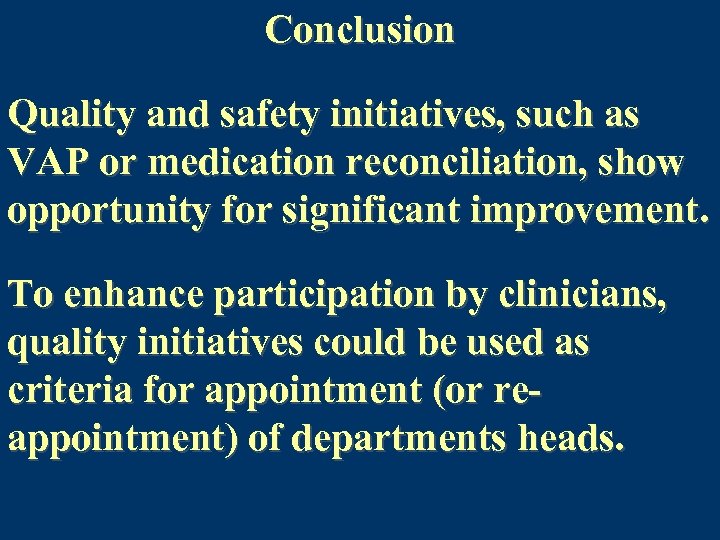
Conclusion Quality and safety initiatives, such as VAP or medication reconciliation, show opportunity for significant improvement. To enhance participation by clinicians, quality initiatives could be used as criteria for appointment (or reappointment) of departments heads.
Скачать презентацию Clinical Quality Safety A Progress Report October
948c7059d934ed5b022388ef0121f6af.ppt