


 Скачать презентацию Clinical Chemistry Clinical Pathology K Canga RVT
24f931297ee51cb42ab8e81af71fc0e7.ppt
- Количество слайдов: 94
 Clinical Chemistry Clinical Pathology, K. Canga, RVT
 Reading and Assignment Laboratory Procedures for Veterinary Technicians, pp: 75 – 113 Study Guide as desired
 Sample Collection & Handling Most chemical analyses require collection and preparation of _______ samples Whole blood or blood plasma may be used for some test methods or with specific types of equipment ◦ Do not use _____; ______ is usually the best choice for clinical chemistry samples Most adverse affects on sample quality can be avoided by careful sample __________ and ________.
 Sample Collection & Handling Specific blood collection protocols vary depending on patient _______, volume of blood needed, method of restraint, and type of sample needed Collect blood samples for chemical testing _______ beginning treatment. _____________ samples are preferred; postprandial samples may produce inaccurate results. Label sample tube with _____ and time of collection, _______ (owner’s and patient’s), and patient’s ______number.
 Serum Sample Collection Blood should be collected from _____, fasted animal when possible Avoid ________ by selecting needles of the correct size. Place blood in a tube that contains no ___________. (Serum Separator tubes can also be used. ) Allow blood to clot at room temperature for 20 to 30 minutes. (If SST used, gently invert before clotting) Gently separate clot by “_______” with a wooden stick around the inside of the tube. Replace top and centrifuge at 2000 to 3000 rpm for 10 minutes. Remove ______ with a pipette and transfer to appropriate container.
 Factors Influencing Results ________: may result when a blood sample is: ◦ ◦ ◦ drawn into a moist syringe drawn in through too _____ of a needle drawn too _______ in to needle mixed too _________ after collection forced through a ______ when being transferred to a tube ◦ _________ as a whole blood sample Hemolysis can also occur when excess ______ is used to clean the skin and not allowed to dry prior to drawing blood.
 Hemolysis Fluid from ________ blood cells can dilute the sample, resulting in falsely ______ concentrations of constituents present in the animal. Certain constituents, normally not found in high concentrations in serum or plasma, escape from ruptured blood cells, causing falsely elevated concentrations in the sample. Hemolysis may elevate levels of _______, organic phosphorus, and certain _______ in the blood Hemolysis also interferes with _____ activity and ________ determinations.
 Factors Influencing Results _________ contamination: collection tubes must be chemically pure Improper _______: label all tubes properly. _________ influences: obtain samples from a _______animal ◦ Postprandial samples may have increased blood _______ levels and decreased inorganic phosphorus. ◦ ________ results in turbid or cloudy serum ◦ _________ assays affected due to increase in GFR after eating.
 Factors Influencing Results Improper Sample Handling: complete chemical analysis within _____ of sample collection. ◦ Do not allow samples to become too _____. ◦ Thoroughly mix serum or plasma that has been frozen after thawing to avoid __________ gradients.
 Reference Ranges Reference ranges are a range of values derived when a _________ has repeatedly assayed samples from a significant number of clinically _______ animals of a given species using specific test methods.
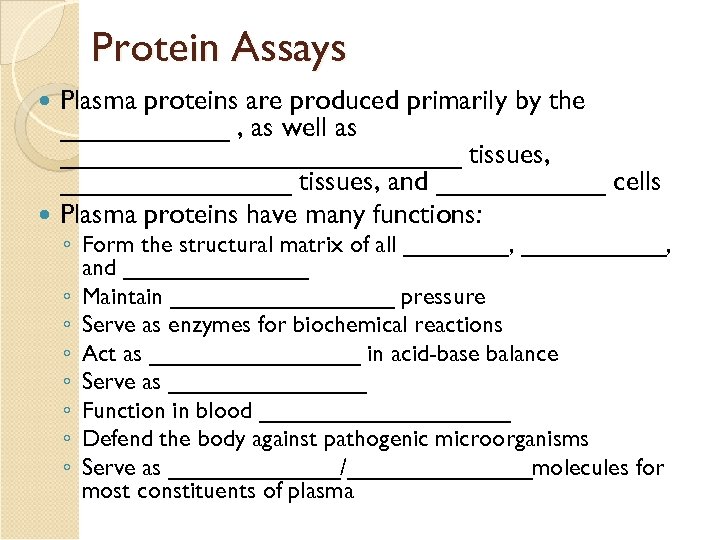 Protein Assays Plasma proteins are produced primarily by the ______ , as well as _____________ tissues, and ______ cells Plasma proteins have many functions: ◦ Form the structural matrix of all ____, ______, and _______ ◦ Maintain _________ pressure ◦ Serve as enzymes for biochemical reactions ◦ Act as ________ in acid-base balance ◦ Serve as ________ ◦ Function in blood __________ ◦ Defend the body against pathogenic microorganisms ◦ Serve as _______/_______molecules for most constituents of plasma
 Protein Assays Total Plasma Protein Total Serum Protein Albumin Globulins Albumin/Globulin Ratio Fibrinogen
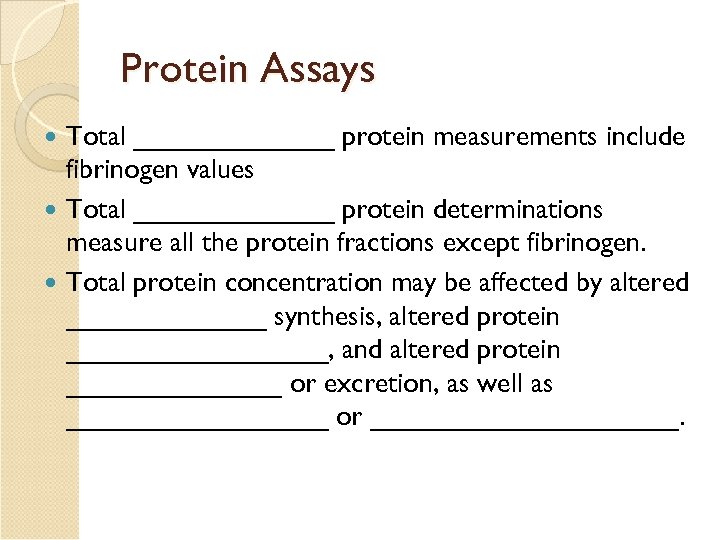 Protein Assays Total _______ protein measurements include fibrinogen values Total _______ protein determinations measure all the protein fractions except fibrinogen. Total protein concentration may be affected by altered _______ synthesis, altered protein _________, and altered protein _______ or excretion, as well as _________ or __________.
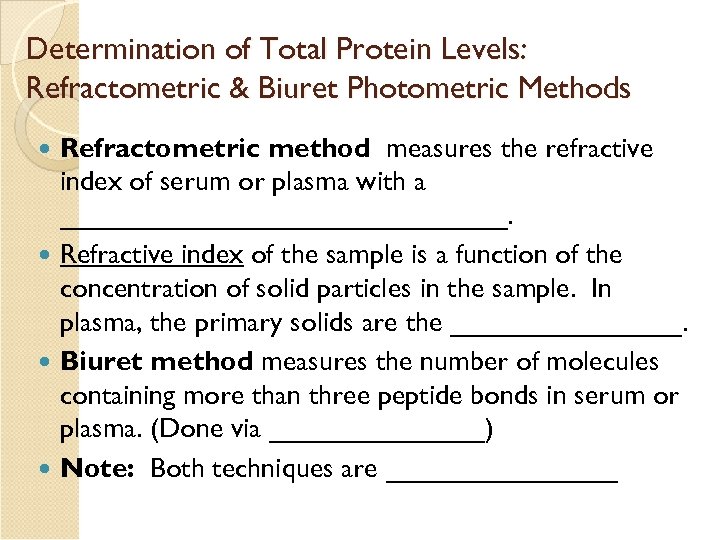 Determination of Total Protein Levels: Refractometric & Biuret Photometric Methods Refractometric method measures the refractive index of serum or plasma with a _______________. Refractive index of the sample is a function of the concentration of solid particles in the sample. In plasma, the primary solids are the ________. Biuret method measures the number of molecules containing more than three peptide bonds in serum or plasma. (Done via _______) Note: Both techniques are ________
 Albumin comprises 35% to 50% of the total plasma ________ in most animals. Significant _______________ is most likely caused by albumin loss. ___________ disease, dietary intake, and intestinal protein ________ may influence the plasma albumin level.
 Globulins: Complex Group of _______ globulins are synthesized in the ______ and primarily transport and bind proteins. _____ globulins include complement (C 3 & C 4), transferrin, and ferritin ________ globulins (immunobulins) are synthesized by ______ cells Concentration is calculated by determining difference between total protein and albumin concentrations.
 Albumin/globulin (A/G) ratio Alteration in the normal ratio is frequently the first indication of a protein abnormality Determined by dividing the albumin concentration by the globulin concentration.
 Fibrinogen 3% to 6% of the total plasma protein content Most common method of fibrinogen evaluation is the heat precipitation test (If you would like to know more about this, please reference chapter 2, pg 71).
 Hepatobiliary Assays Liver functions include: ◦ _________ of amino acids, carbohydrates, and lipids ◦ ________ of albumin, cholesterol, plasma protein, and clotting factors ◦ __________ and ________ of nutrients related to bile formation ◦ secretion of _______, or bile ◦ _________, such as detoxification of toxins and ________of certain drugs
 Hepatobiliary Assays The _________ is closely associated with the liver, both anatomically and functionally; its primary function is as a storage site for _____. More than 100 different types of tests can be used to evaluate liver function Liver disease is usually greatly ________ before clinical signs appear. Damage to one _____ of the liver may not affect all liver functions.
 Hepatobiliary Assays Liver function tests are designed to measure substances ________ by the liver, modified by the liver, _________ when _________ are damaged, or those enzymes with altered serum concentrations as a result of _________. Liver function tests are usually done with serial determinations and several different types of liver tests completed to assist in verifying functional status.
 Enzymes Released from Damaged Hepatocytes Alanine aminotransferase (ALT) Aspartate aminotransferase (AST) Sorbitol dehydrogenase Glutamate dehydrogenase
 Alanine Aminotransferase (ALT) Enzyme found free in the cytoplasm of hepatocytes Considered a ____-specific enzyme in dogs, cats, and primates ______, ruminants, ____, and ______ do not have enough ALT in the hepatocytes for this enzyme to be considered liver specific Other sources of ALT are _____ cells, _______ muscle, and the ________.
 ALT (cont’d) Used as a _________ test for liver disease because it is not precise enough to identify specific liver diseases Increases are usually seen within _____ hours of hepatocyte damage and peak levels in 24 to 48 hours Serum levels will return to reference ranges within a few weeks unless _______ liver damage is present.
 Aspartate Aminotransferase (AST) Found free in the cytoplasm of hepatocytes and bound to the _________ membrane. Levels tend to rise more ______ than ALT and return to normal levels within a day if chronic liver insult is not present Found in _________ amounts in many other tissues, including _______, cardiac muscle, ______________, and pancreas
 AST (cont’d) Increased blood level may indicate ________ liver damage or be caused by strenuous exercise or intramuscular injection Assess ____________ activity to rule out muscle damage before attributing an AST increase to liver damage.
 Sorbitol Dehydrogenase Found in liver, kidney, small intestine, skeletal muscle, and RBCs Especially useful for evaluating liver damage in ______ animals such as ________, ______, and ______. Plasma level rises _____ with __________ damage or ______. Assays can be used in all species to detect hepatocellular damage or necrosis ◦ Tests not readily available to average vet. lab.
 Glutamate dehydrogenase Mitochondrial-bound enzyme found in high concentrations in the hepatocytes of cattle, sheep, and goats No standardized test method has been developed for use in a veterinary practice laboratory
 Enzymes Associated with Cholestasis Alkaline phosphatase (AP) Gamma glutamyltransferase (GGT)
 Alkaline Phosphatase (AP) Present as isoenzymes in _________ in bone, and as __________ in cartilage, intestine, placenta, and cells of the hepatobilary system in the liver. Isoenzymes of AP remain in circulation for approximately 2 to 3 days, with the exception of intestinal isoenzyme, which circulates for just a few hours. A corticosteroid isoenzyme of AP has been identified in dogs with exposure to increased endogenous or exogenous _______________.
 AP (cont’d) Source of an isoenzyme or location of the damaged tissue is determined by electrophoresis and other tests performed in commercial or research laboratories. In older animals, nearly all circulating AP comes from the ______ as _____ development stabilizes.
 AP (cont’d) Assay in a practice laboratory determines the total blood concentration. Concentrations used to detect _________ in adult dogs and cats Not a useful test for detecting cholestasis in cattle and sheep because of wide fluctuations in ______blood levels in these species.
 Gamma glutamyltransferase (GGT) Also called gamma glutamyltranspeptidase Primary source is ______ Also found in _____ , _______, and _______, epithelia, as well as in the kidneys, pancreas, intestine, and muscle cells Cattle, horses, sheep, goats, and birds have ______blood activity than dogs and cats Blood level is evaluated with liver disease, especially _________disease.
 Hepatocyte Function Tests Bilirubin Bile acids Cholesterol Others (dye excretion, ammonia tolerance, caffeine clearance)
 Hepatocyte Function Tests Evaluated substances are taken up, modified, produced, and/or secreted by the liver, primarily _______ and _____ acids; other tests include albumin, ammonia, and cholesterol.
 Bilirubin Derived from the breakdown of __________ by macrophages in the _______ Measurements of the circulating levels of these various populations of bilirubin can help pinpoint the cause of ________. Assays can directly measure _____ bilirubin (______ bilirubin plus ________ bilirubin), and ________ bilirubin
 Bilirubin (cont’d) Blood levels of ________ bilirubin are elevated with _________ damage or bile duct injury/obstruction Blood levels of __________ bilirubin are elevated with excessive erythrocyte _________ or defects in the transport mechanism that allow bilirubin to enter hepatocytes for conjugation.
 Bile Acids Aid in ______ absorption and modulate cholesterol levels Synthesized by hepatocytes from cholesterol and conjugated with glycine or taurine Conjugated bile acids are secreted across the ________ membrane and reach the duodenum by the biliary system Gallbladder stores ____ acids (except in the ______) until contraction associated with feeding.
 Bile Acids (cont’d) Any process that impairs the hepatocellular, biliary, or portal enterohepatic circulation of bile acids results in elevated serum levels. Serum level is normally _______ after a meal because the gallbladder has contracted and released increased amounts of _______ into the _________. Paired serum samples performed after 12 hours of fasting and 2 hours postprandial are needed to perform the test. ◦ Difference in concentration of the samples is reported ◦ Only a single sample is tested in horses.
 Bile Acids (cont’d) Inadequate _______ or spontaneous __________ contraction can increase fasting bile acids; prolonged fasting and ________ decreases bile acids Most commonly used method for determination of bile acids is an enzymatic method measured by machine Bile acid test that uses immunologic methods (ELISA) is available for use in the veterinary clinic.
 Cholesterol Produced primarily in the _____ and ingested in food. _________ causes an increase in serum cholesterol in some species Some automated analyzers provide cholesterol and other lipoprotein values Fluoride and oxalate anticoagulants may _______ enzymatic method results
 Cholesterol (cont’d) Assay is sometimes used as a screening test for ____________ ◦ ________ hormone controls _________ and ___________ of cholesterol in the body Other diseases associated with hypercholesterolemia include _______________, ________, and nephrotic syndrome. Administration of __________ may also cause an elevated blood cholesterol concentration.
 Other Tests of Liver Function Dye excretion: bromsulfophthalein excretion and indocyanine green excretion tests require administration of a dye that binds to a protein in serum. Ammonia tolerance: any condition that reduces the uptake of ammonia or conversion of ammonia to urea can lead to increased plasma ammonia concentration. Caffeine clearance: test used in human medicine; few experimental studies have been performed in canine species.
 Kidney Assays Kidney functions: ◦ ________ or ______water and electrolytes in times of imbalance. ◦ Excrete or conserve _____ ions to maintain blood _______ within normal limits. ◦ Conserve ________ ◦ Remove end products of _______ metabolism ◦ Produce renin, _______, and prostaglandins ◦ Lower blood pressure ◦ Regulate acid secretion in the stomach ◦ Aid in regulation of body temperature and platelet aggregation ◦ Aid in vitamin D activation
 Kidney Assays Kidneys receive blood from the _____ arteries; blood enters the ________ of the _______where nearly all water and small dissolved solutes pass into the collecting tubules. Each nephron contains sections that function to _______ or ______specific solutes. ◦ Resorption of glucose occurs in the _______ ◦ Secretion and reabsorption of mineral salts occurs in the ascending limb of the loop of _____ and in the _____.
 Kidney Assays (cont’d) Nephron has a specific reabsorptive capability for each substance called the _____________. Blood returns from the _______ to the rest of the body through the renal _____, which connect to the caudal ___________. _______ and ______ may be analyzed to evaluate kidney function.
 Kidney Assays (cont’d) Primary serum chemistry tests for kidney function: __________ and _______. Other tests are designed to evaluate the rate and efficiency of _________ filtration.
 Blood Urea Nitrogen (BUN) Also called serum urea nitrogen Urea is the principal end product of _________ breakdown in mammals. Urea passes through the glomerulus and enters the renal tubules Approximately _____ the urea is reabsorbed in the tubules and the remainder excreted in the urine ◦ If the kidneys do not remove sufficient urea from the plasma, BUN levels _________. Contamination of the blood sample with urease-producing bacteria may result in decomposition of urea and decreased BUN levels. ◦ Staphylococcus aureus, Proteus spp. and Klebsiella spp.
 BUN (cont’d) Several photometric tests are available to measure urea nitrogen _________ results in increased retention of urea in the blood (________) High-_______ diets and strenuous exercise may cause elevated BUN levels because of increased ___________ breakdown.
 Serum Creatinine Formed from creatine found in ______ muscle as part of muscle metabolism Creatine diffuses out of muscle cells and into most body fluids, including ______ Amount of creatine metabolized to creatinine usually remains ________, as does blood level of creatinine Total amount of _______ is a function of the animal’s total muscle mass.
 Creatinine (cont’d) Serum creatinine is filtered through the ________ and eliminated in urine ◦ Any condition that ______ glomerular filtration rate alters serum ______ level Nearly ____% of kidney tissue must be _________ before blood creatinine levels rise. _________ decreases in creatinine occur from transient increase in glomerular filtration rate after a meal.
 Creatinine (cont’d) Increased serum creatinine levels are seen when there is a lack of functional ________ Serum creatinine concentrations are influenced by: ◦ Fluid and ________ levels ◦ _______ factors, such as shock ◦ _________ factors, such as bladder and urethral obstructions Used to evaluate _________ function
 BUN/Creatinine Ratio Both measurements have a wide range of reference intervals Used in human medicine for diagnosis of renal disease BUN and creatinine have an ______ logarithmic relation.
 Urine Protein/Creatinine Ratio Mathematical method that compares urine _______ level with urine ___________ levels in a single urine sample 5 to 10 m. L of urine collected via ____________. Sample is centrifuged and __________ used to determine both concentrations for each sample by photometric methods.
 Pancreas Assays The pancreas has both _______ and _________ functions. ◦ Pancreatic endocrine function involves production of ______ and ______. Diabetes mellitus, or a deficiency of ______ resulting in hyperglycemia, is the most common endocrine disorder of the pancreas. ◦ Pancreatic exocrine function involves the production of ______, _______, and ______. Most pancreatic disturbances occur in the exocrine function of the pancreas. ______ seem to have a greater incidence than ______.
 Pancreas Assays Exocrine pancreas: also referred to as the acinar pancreas. Secretes enzymes necessary for ______ into the small intestine Primary pancreatic enzymes are trypsin, amylase, and lipase Trauma to pancreatic tissue is often associated with pancreatic duct __________ that results in a back-up of digestive enzymes into peripheral circulation.
 Pancreas Assays Endocrine Pancreas: interspersed within the exocrine pancreatic tissue are the _____ of _________ Four types of islet cells present; designated as α(_____), β(_____), δ(____), and ____ cells. Delta and PP cells comprise less than 1% of the islet cells and secrete somatostatin and pancreatic polypeptide, respectively. Beta cells comprise approximately _____% of the islet cells and secrete _______. 20% consists of alpha cells that secrete glucagon and somatostatin.
 Pancreas Assays Diseases of the pancreas may result in inflammation and cellular damage that causes leakage of _______ enzymes or insufficient __________ or __________of enzymes. Primary _______ pancreas tests are amylase and lipase; trypsinlike immunoreactivity and pancreatic lipase immunoreactivity
 Amylase Primary source is the pancreas, but also produced in the _______ glands and small intestine. Increases in serum amylase are nearly always caused by pancreatic disease (_________), especially when accompanied by increased lipase levels _______, intestinal obstruction, or intestinal __________may also result in increased serum amylase from increased absorption of intestinal amylase into bloodstream.
 Amylase (cont’d) Animals have a greater serum amylase activity level than humans (___ times greater in dog and cat) so it is recommended to dilute the serum with normal saline before testing if using tests designed for human samples. _______, ________, and calcium cheleating anticoagulants will affect results.
 Lipase Nearly all serum lipase is derived from the __________. Excess lipase is normally filtered through the ________, so lipase levels tend to remain normal in the early stages of pancreatic disease. Increased lipase is also seen in ______ failure, hyperadrenocorticism, dexamethasone treatment, and bile tract disease. Manual methods for testing are cumbersome, easier to use automated or SNAP test.
 Trypsinlike Immunoreactivity (TLI) Considered the test of choice, TLI is highly specific and sensitive in detecting _________ insufficiency in dogs. Radioimmunoassay using antibodies to trypsin that can detect both trypsinogen and trypsin Antibodies are species specific Trypsin and trypsinogen are produced only in the pancreas Serum TLI decreases in parallel with functional pancreatic mass Decreased _______filtration rate increases TLI Important to fast animal for ___ hours prior to collecting sample.
 Serum Pancreatic Lipase Immunoreactivity (PLI) Serum feline PLI is specific for __________ and is recommended instead of the previously validated serum feline TLI to diagnose cats with symptoms of pancreatitis. Cats must also be fasted for ___ hours prior to drawing blood sample.
 Pancreas Assays Endocrine Pancreas Tests Primary test is blood _____; others include fructosamine, beta-hydroxybutyrate, glycosylated hemoglobin, serum cholesterol, and triglyceride
 Glucose Pancreatic islets respond directly to blood glucose concentrations and release ______ (from the beta cells) or _______ (from the alpha cells) as needed. Blood glucose level is used as an indicator of ___________ metabolism in the body and as a measure of _________ function of the ________. Some tests for blood glucose react with only glucose, whereas others may quantify all sugars in the blood.
 Glucose (cont’d) Ideally, samples should be taken from an animal that has been fasted for ___ to ___ hours (ruminants should not be fasted) ______ is preferred It is essential to centrifuge sample and transfer serum to another tube immediately because blood continues to use glucose at a rate of 7% to 10% per hour if allowed to remain in contact with the serum or plasma.
 Glucose (cont’d) ____________ may result from _______, or any of several nonpancreatic causes such as stress and hyperadrenocorticism (_______ disease) *Diagnosis of diabetes mellitus is not made unless _________ accompanies hyperglycemia. ____________ may result from malabsorption, severe liver disease, or prolonged contact of the _____ or _____ with the cellular component of blood.
 Fructosamine Represents irreversible reaction of glucose bound to protein, particularly _______. Increased fructosamine indicates persistent __________.
 Glucose Tolerance Test Sometimes referred to as “glucose curve” Challenge the pancreas with a glucose load and measure ______ effect by blood or urine glucose concentrations; used to rule out ____________. IV test is preferred over oral because oral test is affected by abnormal intestinal function such as _______ or hypermotility, and excitement.
 Glucose Tolerance Test (cont’d) Glucose is injected after a 12 - to 16 -hour fast (except in ruminants) Blood glucose is subsequently checked and progress mapped as a tolerance curve. Results are standardized as disappearance half-lives or glucose turnover rates expressed as percent/minute
 Insulin Tolerance Test Probes causes of diabetes mellitus Serum glucose levels are measured in blood samples obtained before _____ injection (fasting blood glucose) and every ___ minutes after injection for __ hours.
 Other Endocrine Pancreas Tests Glucagon tolerance: indicated when repeated borderline results are obtained. Insulin/glucose ratio: involves simultaneous measurements in a fasting animal. Miscellaneous tests of insulin release: glucose, epinephrine, leucine, tolbutamide, or calcium challenges may be attempted.
 Other Endocrine System Assays Adrenocortical Function Tests Thyroid Assays Pituitary Function Tests
 Adrenocortical Function Tests Brain or pituitary ______ leading to secondary bilateral adrenal ______, idiopathic adrenal hyperplasia, or neoplasia may cause excessive ______ release and _____________. (Cushing’s disease) Misuse of _____________ is the most common cause of cortisol excess. ______________, (Addison’s disease) includes mineralocorticoid deficiency, which does not occur in iatrogenic disease from rapid withdrawal of _____________.
 Adrenocortical Function Tests (cont’d) Addison’s disease also may result from Lysodren (Rx for adrenal hyperplasia) or from __________ causes. Dogs with nonadrenal disease such as diabetes mellitus, liver disease, or renal disease may have false -positive results _____________ hormone (ACTH) and _______ concentrations may be a helpful diagnostic aid in differentiating primary (adrenal-dependent) from secondary (pituitarydependent) hypoadrenocorticism.
 Adrenocortical Function Tests (cont’d) Measurements taken as _______ data and compared with data obtained from challenge to the adrenal gland with ACTH or dexamethasone. Low to undetectable ACTH concentrations occur in secondary Addison’s disease, whereas normal (or increased) concentrations are expected in primary Addison’s disease. Refer to pp 100 -101 in your textbook for step-bystep instructions on performing ACTH stim. and Dex. suppression tests!
 Thyroid Assays Baseline thyroxine (T 4) concentrations are used diagnostically, but normal values vary dramatically Semiquantitative immunologic tests are available to measure T 4 concentrations ____ response test is used on small animals (except _________ cats) and horses and provides a reliable diagnostic separation of patients with normal versus abnormal thyroid function.
 Thyroid Assays (cont’d) Free T 4 test measures the fraction of thyroxine not bound to protein; levels are less influenced by nonthyroidal diseases or drugs than are total T 4 concentrations. Triiodothyronine (T 3) suppression test: based on the expected __________ regulation of TSH; induced by high concentrations of circulating thyroid hormone.
 Pituitary Function Tests Diagnosis of canine _______ may be based on documentation of elevated ______ hormone (GH).
 Electrolyte Assays Electrolytes: negative ions, or ______, and positive ions, or ______, of elements found in all body fluids of all organisms. Functions of electrolytes include: ◦ ◦ maintenance of ____ balance, fluid ______ pressure, and normal ______ and ______ functions. Also function in the maintenance and activation of several enzyme systems and in acid-base regulation Acid-base status depends on _________ and should be interpreted together.
 Electrolyte Assays ______, _______, and ________ are the four electrolytes in plasma. Minerals of importance are _____, _______, and _______. These two groups together are often simply called “________”
 Electrolyte Assays Calcium Inorganic Phosphorus Sodium Potassium Magnesium Chloride Bicarbonate
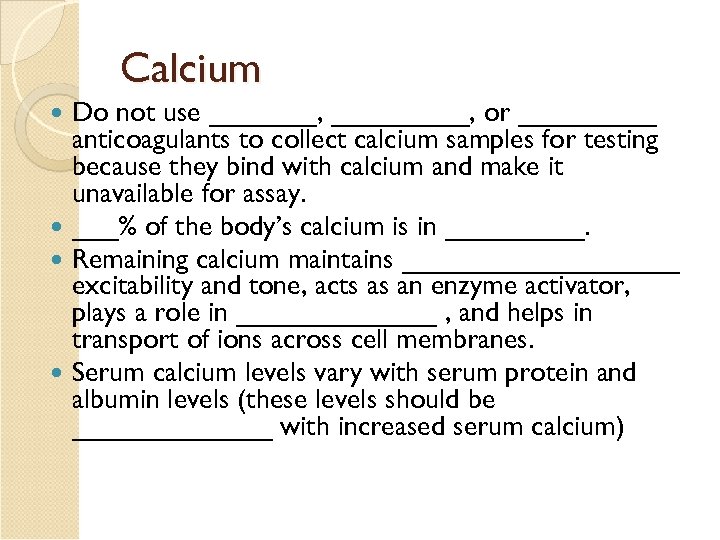 Calcium Do not use _______, or _____ anticoagulants to collect calcium samples for testing because they bind with calcium and make it unavailable for assay. ___% of the body’s calcium is in _____. Remaining calcium maintains _________ excitability and tone, acts as an enzyme activator, plays a role in _______ , and helps in transport of ions across cell membranes. Serum calcium levels vary with serum protein and albumin levels (these levels should be _______ with increased serum calcium)
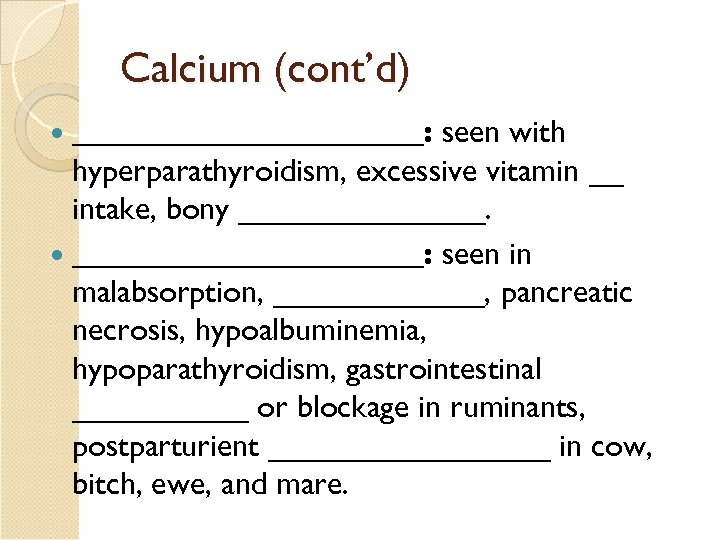 Calcium (cont’d) ___________: seen with hyperparathyroidism, excessive vitamin __ intake, bony ___________: seen in malabsorption, ______, pancreatic necrosis, hypoalbuminemia, hypoparathyroidism, gastrointestinal _____ or blockage in ruminants, postparturient ________ in cow, bitch, ewe, and mare.
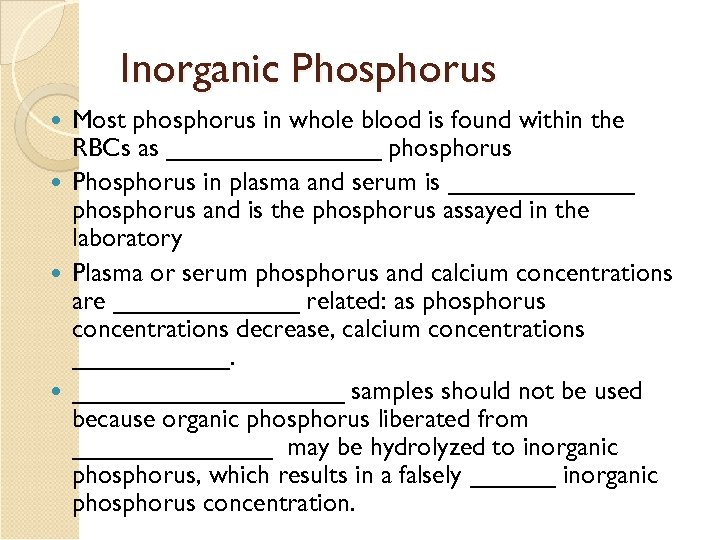 Inorganic Phosphorus Most phosphorus in whole blood is found within the RBCs as ________ phosphorus Phosphorus in plasma and serum is _______ phosphorus and is the phosphorus assayed in the laboratory Plasma or serum phosphorus and calcium concentrations are _______ related: as phosphorus concentrations decrease, calcium concentrations __________ samples should not be used because organic phosphorus liberated from _______ may be hydrolyzed to inorganic phosphorus, which results in a falsely ______ inorganic phosphorus concentration.
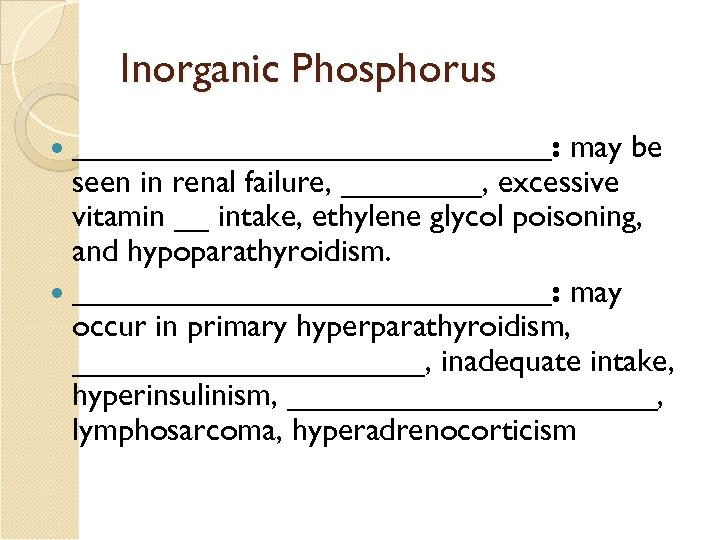 Inorganic Phosphorus _______________: may be seen in renal failure, ____, excessive vitamin __ intake, ethylene glycol poisoning, and hypoparathyroidism. _______________: may occur in primary hyperparathyroidism, __________, inadequate intake, hyperinsulinism, ___________, lymphosarcoma, hyperadrenocorticism
 Sodium Most abundant _______ cation that plays a major role in the distribution of ______ and the maintenance of _______ pressure of fluids in the body. If ____ is retained, _____ is retained. Sodium heparin should not be used as an anticoagulant because it may falsely _____ results.
 Sodium (cont’d) ____________ is rare unless the animal is deprived of ____________ is quite common and is seen in such conditions as ____ failure, _____, or diarrhea; use of diuretics; excessive ____; congestive heart failure; water toxicity; or excessive ____ administration.
 Potassium Major ________ cation; important for normal ________ function, nerve impulse transmission, and ________ metabolism. _____ levels are so ____ that measurement of serum potassium does not give much information about the body’s potassium levels. ______ is the preferred sample because platelets may release potassium during the clotting process (elevating K+ levels). _______ releases potassium into plasma (elevating K+ levels).
 Potassium (cont’d) ___________: will be seen in adrenal cortical hypofunction, ______, or late-stage ____ failure. ___________: will be seen in ______, ______ therapy, or excess fluid _____ due to diuretics, vomiting, and diarrhea.
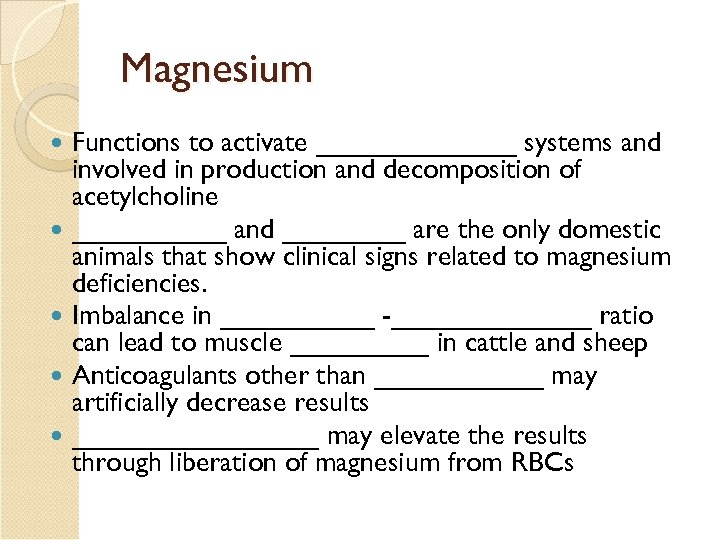 Magnesium Functions to activate _______ systems and involved in production and decomposition of acetylcholine _____ and ____ are the only domestic animals that show clinical signs related to magnesium deficiencies. Imbalance in _____ -_______ ratio can lead to muscle _____ in cattle and sheep Anticoagulants other than ______ may artificially decrease results ________ may elevate the results through liberation of magnesium from RBCs
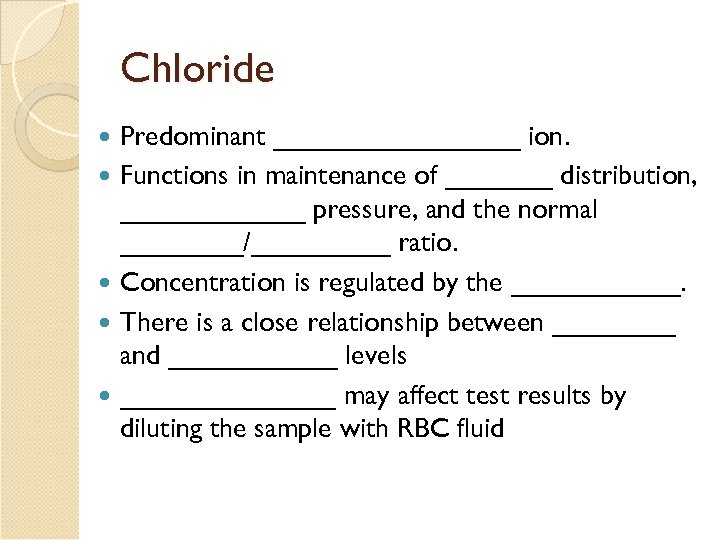 Chloride Predominant ________ ion. Functions in maintenance of _______ distribution, ______ pressure, and the normal ____/_____ ratio. Concentration is regulated by the ______. There is a close relationship between ____ and ______ levels _______ may affect test results by diluting the sample with RBC fluid
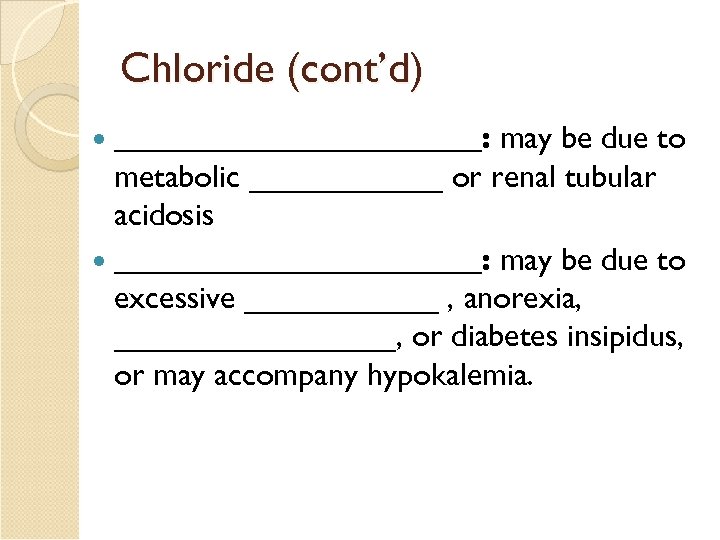 Chloride (cont’d) ____________: may be due to metabolic ______ or renal tubular acidosis ____________: may be due to excessive ______ , anorexia, ________, or diabetes insipidus, or may accompany hypokalemia.
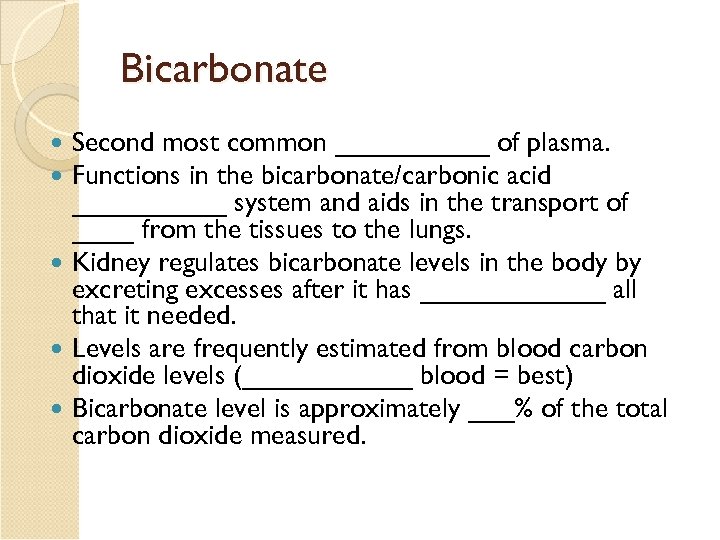 Bicarbonate Second most common _____ of plasma. Functions in the bicarbonate/carbonic acid _____ system and aids in the transport of ____ from the tissues to the lungs. Kidney regulates bicarbonate levels in the body by excreting excesses after it has ______ all that it needed. Levels are frequently estimated from blood carbon dioxide levels (______ blood = best) Bicarbonate level is approximately ___% of the total carbon dioxide measured.