 Скачать презентацию Climate Services in China Zhiqiang Gong Beijing Climate
b4ece4cf85312efece1b9e57de6001bb.ppt
- Количество слайдов: 50



Climate Services in China Zhiqiang Gong Beijing Climate Center, CMA 2017 Beijing
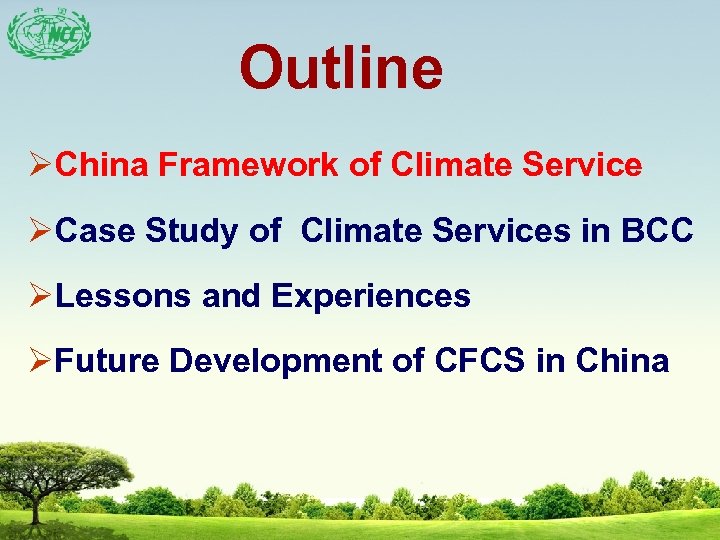
Outline ØChina Framework of Climate Service ØCase Study of Climate Services in BCC ØLessons and Experiences ØFuture Development of CFCS in China
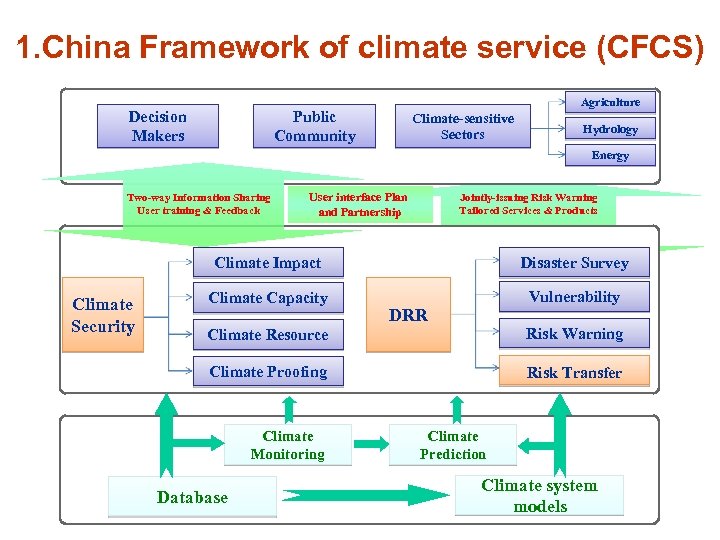
1. China Framework of climate service (CFCS) Decision Makers Agriculture Public Community Climate-sensitive Sectors Hydrology Energy Two-way Information Sharing User training & Feedback User interface Plan and Partnership Jointly-issuing Risk Warning Tailored Services & Products Climate Impact Climate Security Disaster Survey Climate Capacity Vulnerability DRR Climate Resource Risk Warning Climate Proofing Risk Transfer Climate Monitoring Database Climate Prediction Climate system models
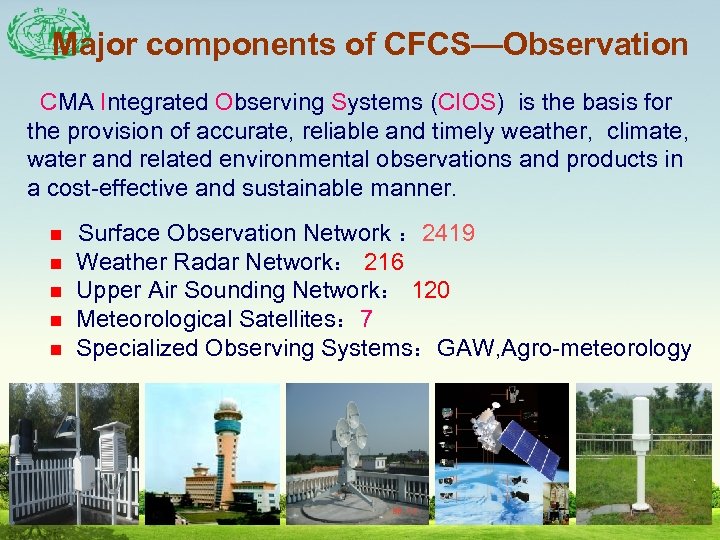
Major components of CFCS—Observation CMA Integrated Observing Systems (CIOS) is the basis for the provision of accurate, reliable and timely weather, climate, water and related environmental observations and products in a cost-effective and sustainable manner. n n n Surface Observation Network : 2419 Weather Radar Network: 216 Upper Air Sounding Network: 120 Meteorological Satellites: 7 Specialized Observing Systems:GAW, Agro-meteorology o k
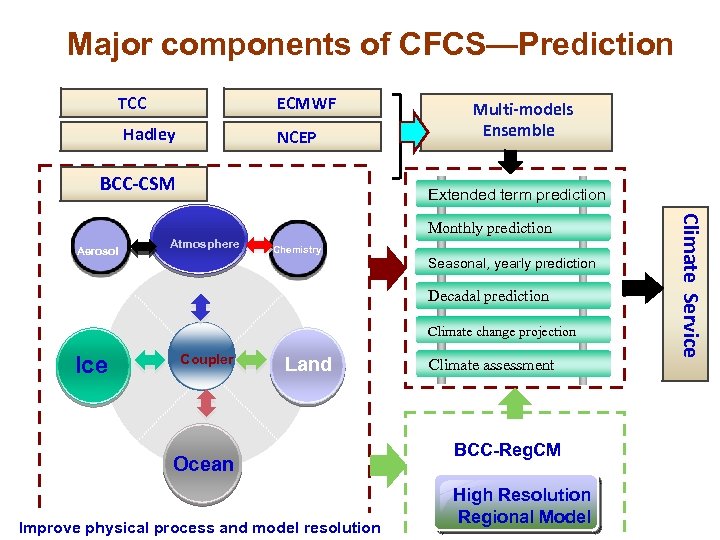
Major components of CFCS—Prediction TCC ECMWF Hadley NCEP BCC-CSM Multi-models Ensemble Extended term prediction Aerosol Chemistry Seasonal, yearly prediction Decadal prediction Climate change projection Ice Coupler Land Ocean Improve physical process and model resolution Climate assessment BCC-Reg. CM High Resolution Regional Model Climate Service Monthly prediction Atmosphere
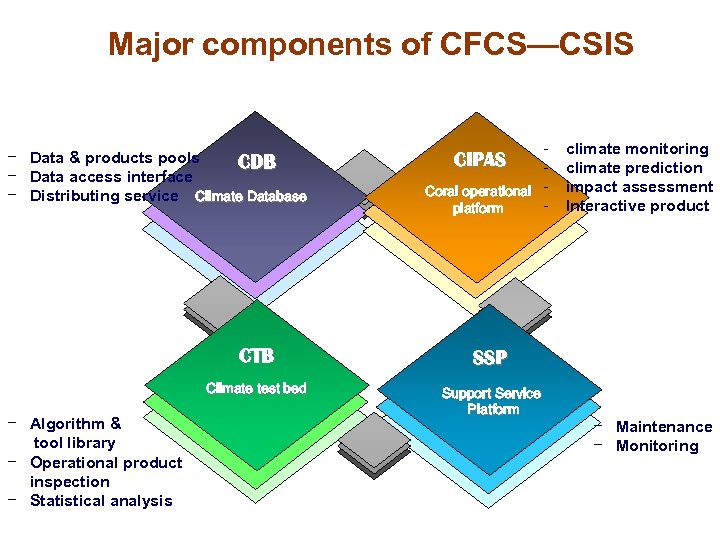
Major components of CFCS—CSIS − Data & products pools CDB − Data access interface − Distributing service Climate Database Coral operational platform CIPAS CTB − Algorithm & tool library − Operational product inspection − Statistical analysis SSP Climate test bed Support Service Platform climate monitoring climate prediction impact assessment Interactive product − Maintenance − Monitoring
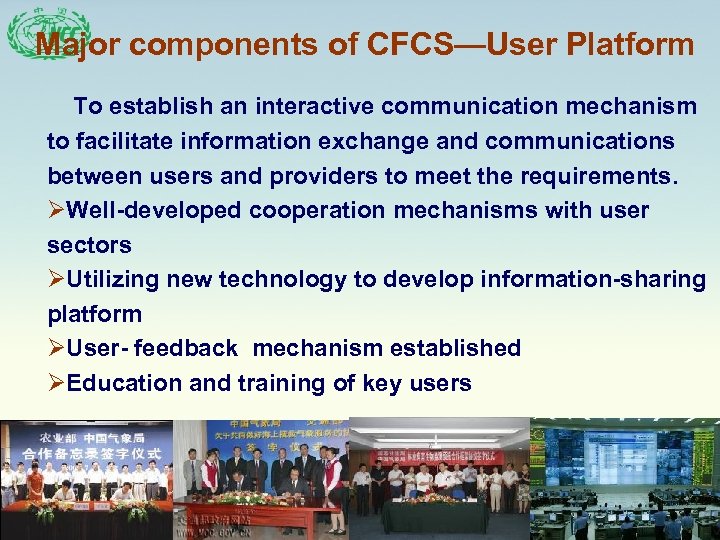
Major components of CFCS—User Platform To establish an interactive communication mechanism to facilitate information exchange and communications between users and providers to meet the requirements. ØWell-developed cooperation mechanisms with user sectors ØUtilizing new technology to develop information-sharing platform ØUser- feedback mechanism established ØEducation and training of key users
Major components of CFCS—Capacity Building To enhance existing capabilities to provide climate services more effectively by establishing the mechanism and workflow in the areas such as improving the data sharing and collaborative products releasing, deepening the cooperation and exchange between different sectors, strengthening cooperative R&D activities and joint training, and optimizing the operational service system and distribution. ØForum on Regional Climate Monitoring, Assessment and Prediction for Asia (FOCRAII) ØInternational Seminar on Climate System and Climate Change (ISCS) ØInternational Training Seminar on Methods for Short-term Climate Prediction ØInternational training workshop for climate service ØTraining and International Visiting Scholar Programme
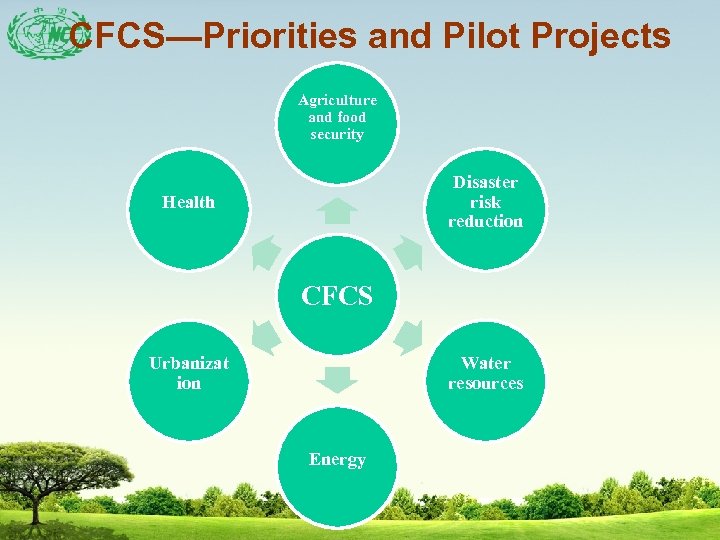
CFCS—Priorities and Pilot Projects Agriculture and food security Disaster risk reduction Health CFCS Urbanizat ion Water resources Energy
Outline ØChina Framework of Climate Service ØCase Study of Climate Services in BCC ØLessons and Experiences ØFuture Development of CFCS in China
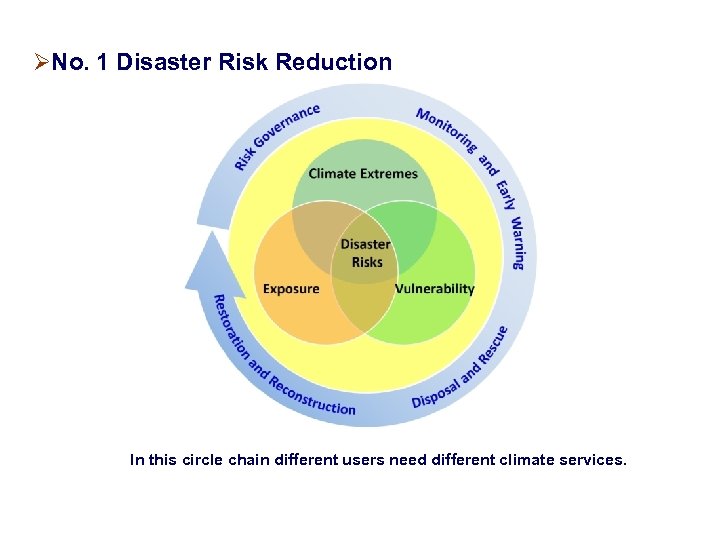
ØNo. 1 Disaster Risk Reduction In this circle chain different users need different climate services.
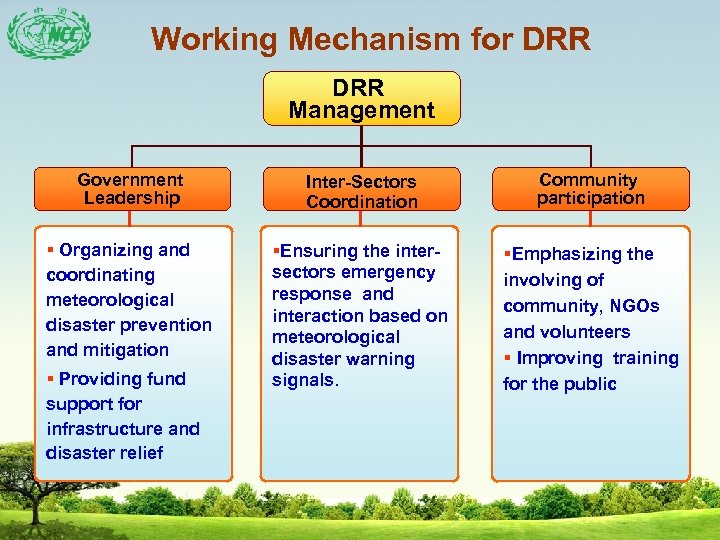
Working Mechanism for DRR Management Government Leadership Inter-Sectors Coordination Community participation § Organizing and coordinating meteorological disaster prevention and mitigation §Ensuring the intersectors emergency response and interaction based on meteorological disaster warning signals. §Emphasizing the involving of community, NGOs and volunteers § Improving training for the public § Providing fund support for infrastructure and disaster relief
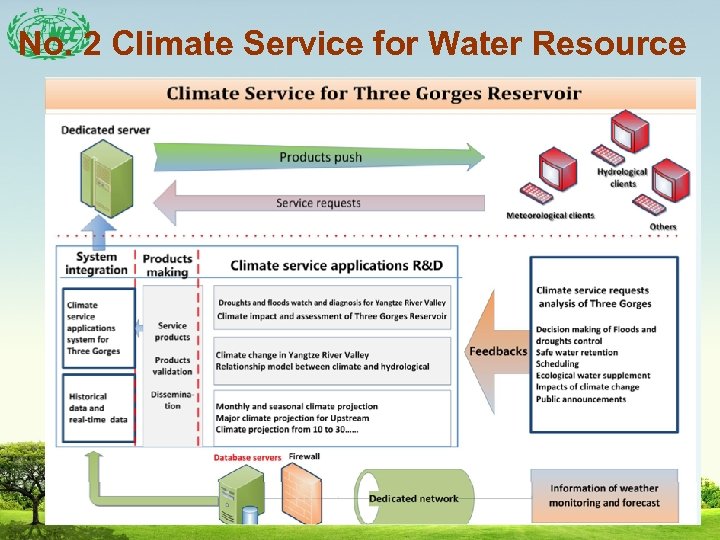
No. 2 Climate Service for Water Resource
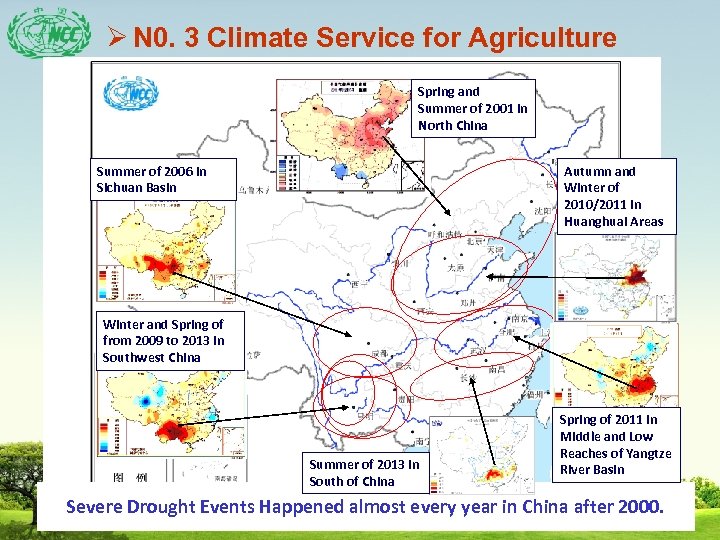
Ø N 0. 3 Climate Service for Agriculture Spring and Summer of 2001 in North China Summer of 2006 in Sichuan Basin Autumn and Winter of 2010/2011 in Huanghuai Areas Winter and Spring of from 2009 to 2013 in Southwest China Summer of 2013 in South of China Spring of 2011 in Middle and Low Reaches of Yangtze River Basin Severe Drought Events Happened almost every year in China after 2000.
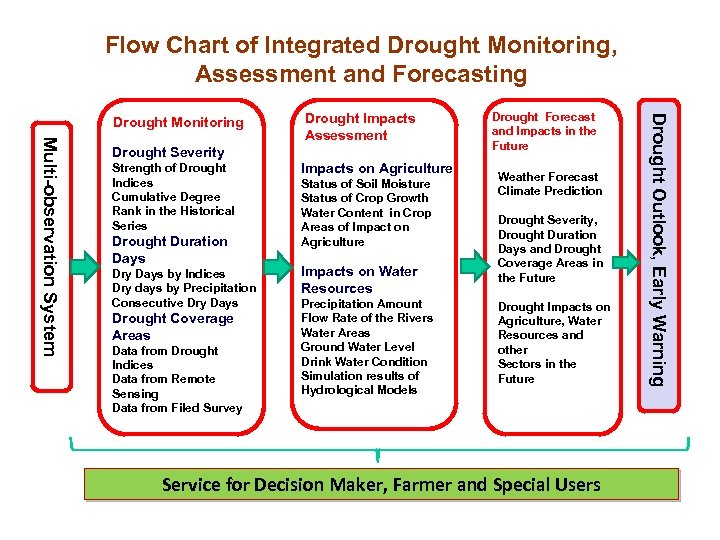
Flow Chart of Integrated Drought Monitoring, Assessment and Forecasting Multi-observation System Drought Impacts Assessment Drought Severity Strength of Drought Indices Cumulative Degree Rank in the Historical Series Drought Duration Days Dry Days by Indices Dry days by Precipitation Consecutive Dry Days Drought Coverage Areas Data from Drought Indices Data from Remote Sensing Data from Filed Survey Impacts on Agriculture Status of Soil Moisture Status of Crop Growth Water Content in Crop Areas of Impact on Agriculture Impacts on Water Resources Precipitation Amount Flow Rate of the Rivers Water Areas Ground Water Level Drink Water Condition Simulation results of Hydrological Models Drought Forecast and Impacts in the Future Weather Forecast Climate Prediction Drought Severity, Drought Duration Days and Drought Coverage Areas in the Future Drought Impacts on Agriculture, Water Resources and other Sectors in the Future Service for Decision Maker, Farmer and Special Users Drought Outlook, Early Warning Drought Monitoring
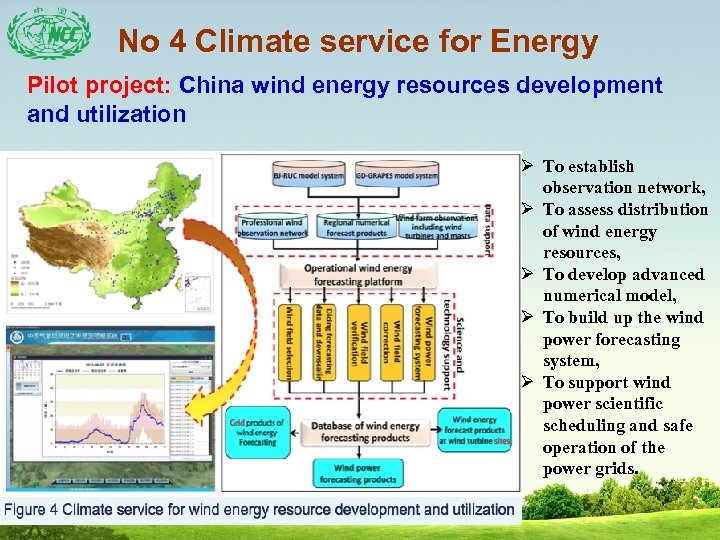
No 4 Climate service for Energy Pilot project: China wind energy resources development and utilization Ø To establish observation network, Ø To assess distribution of wind energy resources, Ø To develop advanced numerical model, Ø To build up the wind power forecasting system, Ø To support wind power scientific scheduling and safe operation of the power grids.
Outline ØChina Framework of Climate Service ØCase Study of Climate Services in BCC ØLessons and Experiences ØFuture Development of CFCS in China
1. Why a National Framework for Climate Services? It will enable greater integration and coordination across disciplines, actors and sectors in the climate services agenda for better use of existing infrastructure, technical capabilities (and resources…) for improved outcomes in climatesensitive sectors. A Framework for Climate Services will build on existing capacities and leverage these through coordination to address shortcomings.
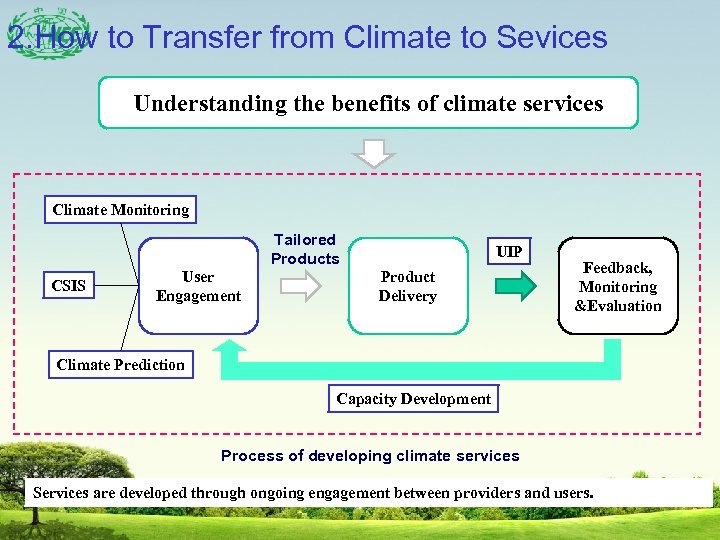
2. How to Transfer from Climate to Sevices Understanding the benefits of climate services Climate Monitoring Tailored Products CSIS User Engagement UIP Product Delivery Feedback, Monitoring &Evaluation Climate Prediction Capacity Development Process of developing climate services Services are developed through ongoing engagement between providers and users.
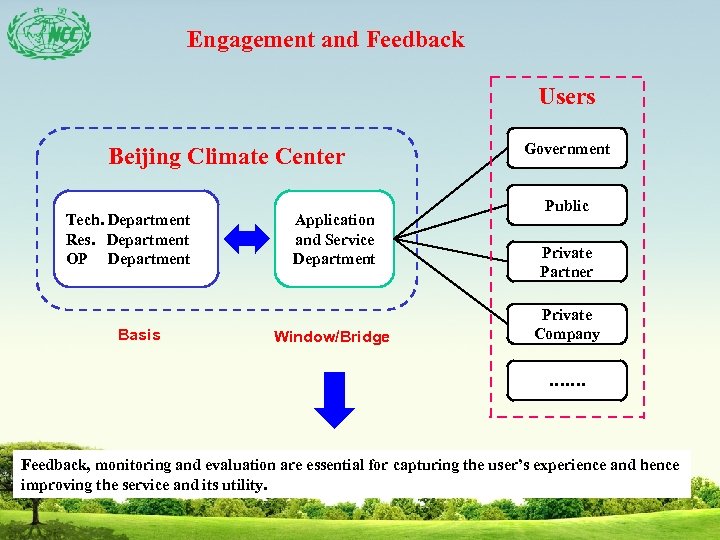
Engagement and Feedback Users Beijing Climate Center Tech. Department Res. Department OP Department Basis Application and Service Department Window/Bridge Government Public Private Partner Private Company ……. Feedback, monitoring and evaluation are essential for capturing the user’s experience and hence improving the service and its utility.
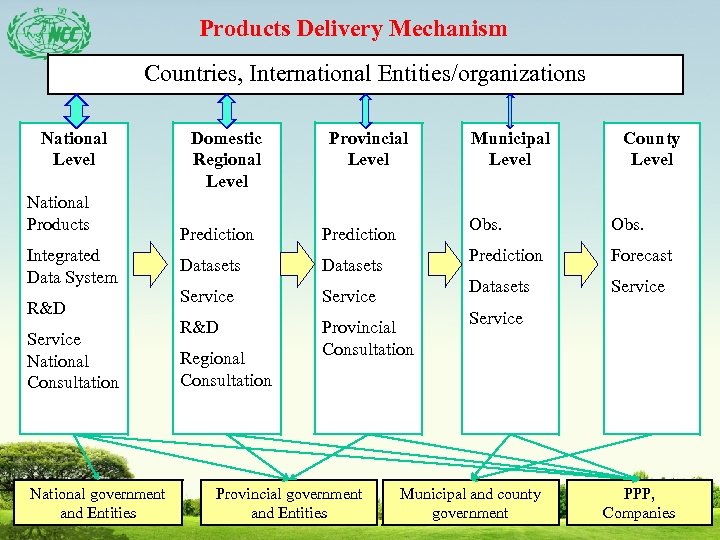
Products Delivery Mechanism Countries, International Entities/organizations National Level National Products Integrated Data System R&D Service National Consultation National government and Entities Domestic Regional Level Provincial Level Datasets Service R&D Provincial Consultation Forecast Datasets Obs. Prediction Provincial government and Entities County Level Obs. Prediction Regional Consultation Municipal Level Service Municipal and county government PPP, Companies
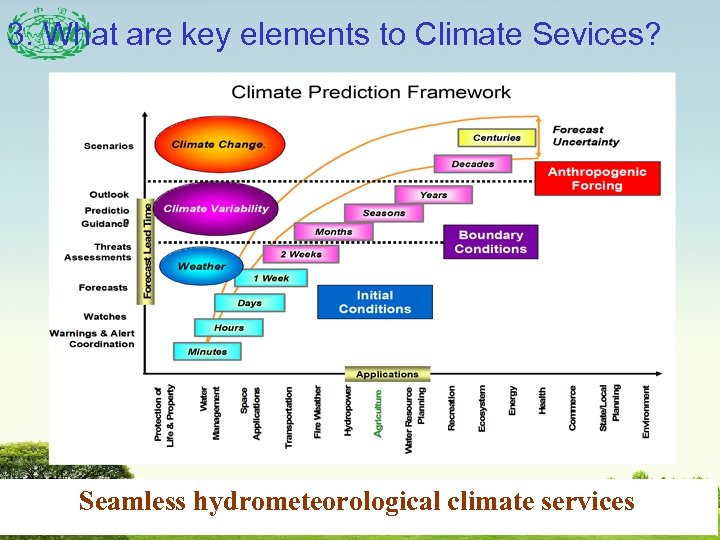
3. What are key elements to Climate Sevices? Seamless hydrometeorological climate services Weather • Climate • Water 22
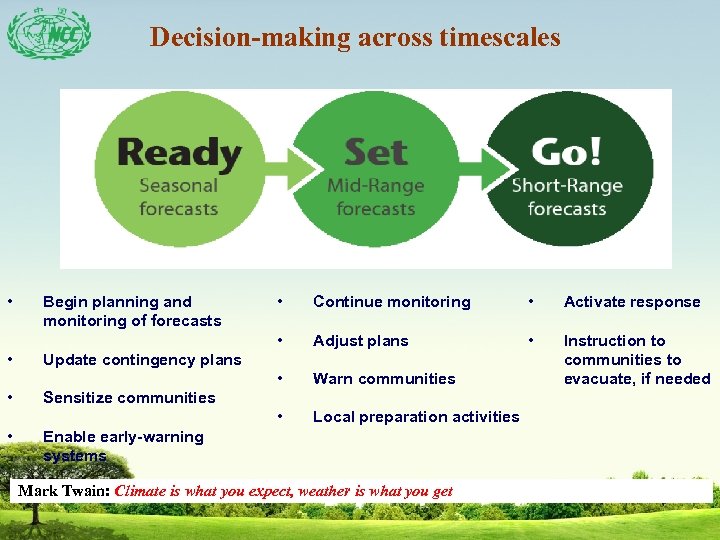
Decision-making across timescales • • • Activate response Adjust plans • Warn communities Instruction to communities to evacuate, if needed • • Continue monitoring • • Begin planning and monitoring of forecasts Local preparation activities Update contingency plans Sensitize communities Enable early-warning systems Mark Twain: Climate is what you expect, weather is what you get
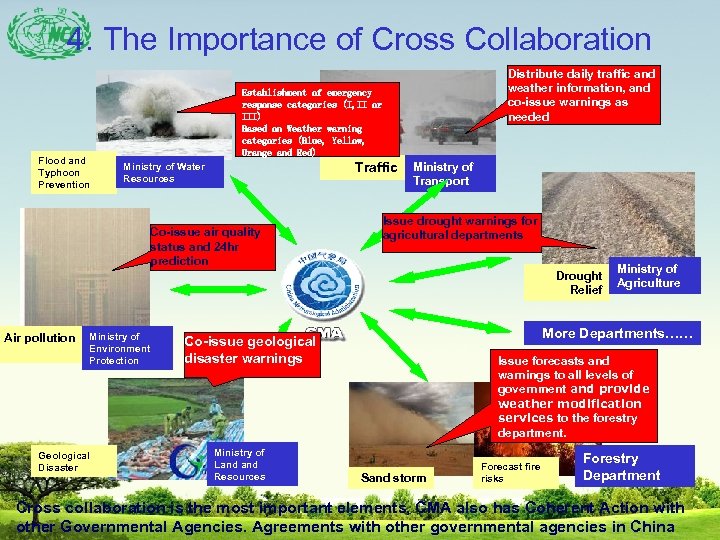
4. The Importance of Cross Collaboration Flood and Typhoon Prevention Establishment of emergency response categories (I, II or III) Based on Weather warning categories (Blue, Yellow, Orange and Red) Traffic Ministry of Water Resources Co-issue air quality status and 24 hr prediction Air pollution Ministry of Environment Protection Geological Disaster Distribute daily traffic and weather information, and co-issue warnings as needed Ministry of Transport Issue drought warnings for agricultural departments Ministry of Drought Agriculture Relief More Departments…… Co-issue geological disaster warnings Ministry of Land Resources Issue forecasts and warnings to all levels of government and provide weather modification services to the forestry department. Sand storm Forecast fire risks Forestry Department Cross collaboration is the most important elements, CMA also has Coherent Action with other Governmental Agencies. Agreements with other governmental agencies in China
Outline ØChina Framework of Climate Service ØCase Study of Climate Services in BCC ØLessons and Experiences ØFuture Development of CFCS in China
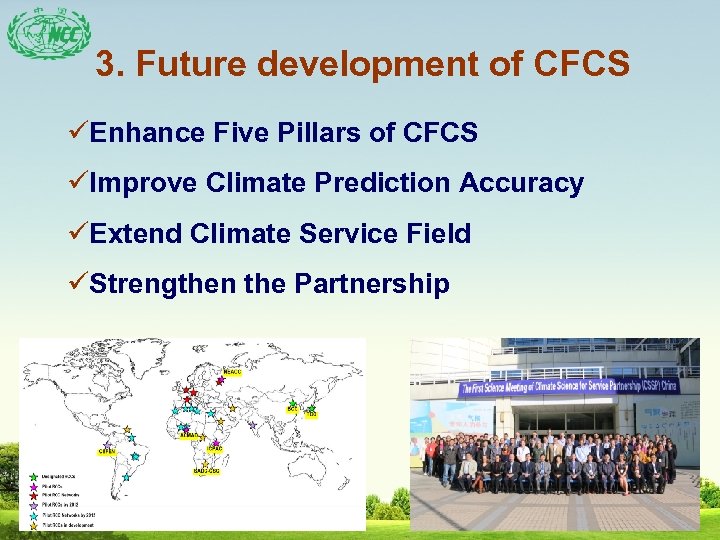
3. Future development of CFCS üEnhance Five Pillars of CFCS üImprove Climate Prediction Accuracy üExtend Climate Service Field üStrengthen the Partnership

Thank you
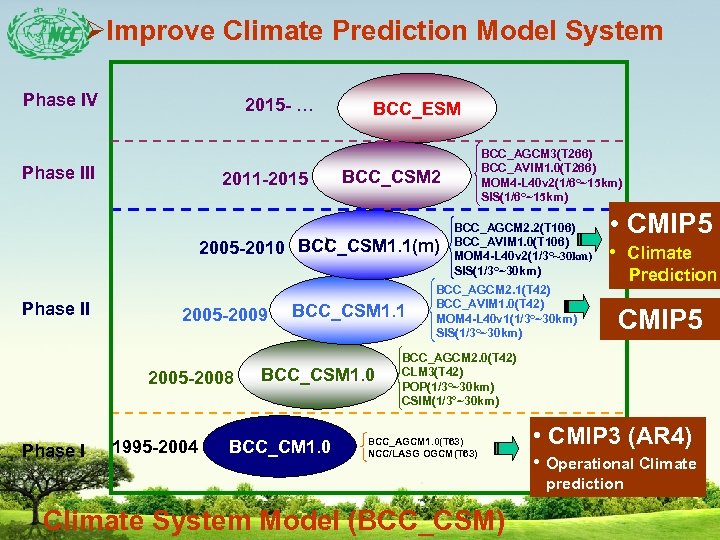
ØImprove Climate Prediction Model System Phase IV 2015 - … Phase III 2011 -2015 BCC_ESM BCC_CSM 2 2005 -2010 BCC_CSM 1. 1(m) Phase II 2005 -2009 2005 -2008 Phase I 1995 -2004 BCC_CSM 1. 1 BCC_CSM 1. 0 BCC_CM 1. 0 BCC_AGCM 3(T 266) BCC_AVIM 1. 0(T 266) MOM 4 -L 40 v 2(1/6°~15 km) SIS(1/6°~15 km) BCC_AGCM 2. 2(T 106) BCC_AVIM 1. 0(T 106) MOM 4 -L 40 v 2(1/3°~30 km) SIS(1/3°~30 km) BCC_AGCM 2. 1(T 42) BCC_AVIM 1. 0(T 42) MOM 4 -L 40 v 1(1/3°~30 km) SIS(1/3°~30 km) • CMIP 5 • Climate Prediction CMIP 5 BCC_AGCM 2. 0(T 42) CLM 3(T 42) POP(1/3°~30 km) CSIM(1/3°~30 km) BCC_AGCM 1. 0(T 63) NCC/LASG OGCM(T 63) • CMIP 3 (AR 4) • Operational Climate prediction Climate System Model (BCC_CSM)
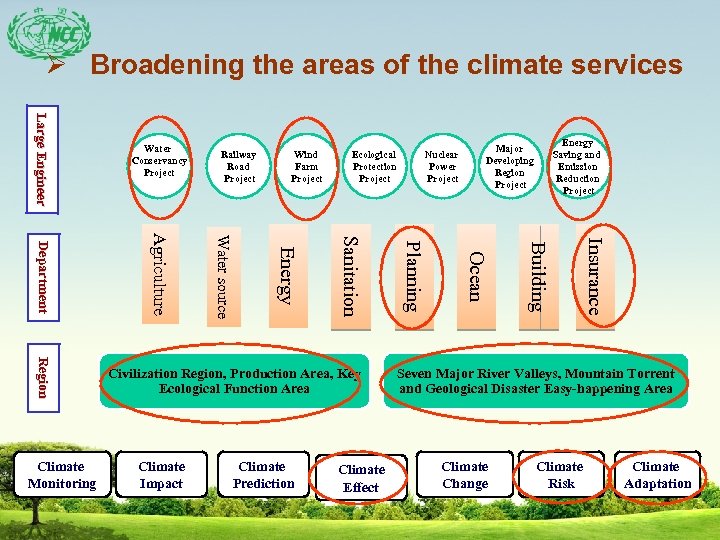
Ø Broadening the areas of the climate services Large Engineer Railway Road Project Wind Farm Project Ecological Protection Project Climate Effect Energy Saving and Emission Reduction Project Insurance Climate Prediction Building Climate Impact Major Developing Region Project Ocean Region Civilization Region, Production Area, Key Ecological Function Area Nuclear Power Project Planning Sanitation Energy Water source Agriculture Department Climate Monitoring Water Conservancy Project Seven Major River Valleys, Mountain Torrent and Geological Disaster Easy-happening Area Climate Change Climate Risk Climate Adaptation
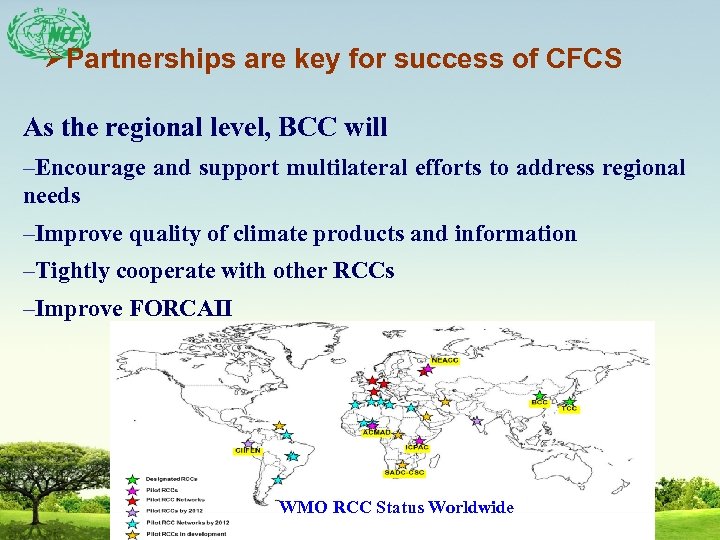
ØPartnerships are key for success of CFCS As the regional level, BCC will –Encourage and support multilateral efforts to address regional needs –Improve quality of climate products and information –Tightly cooperate with other RCCs –Improve FORCAII WMO RCC Status Worldwide
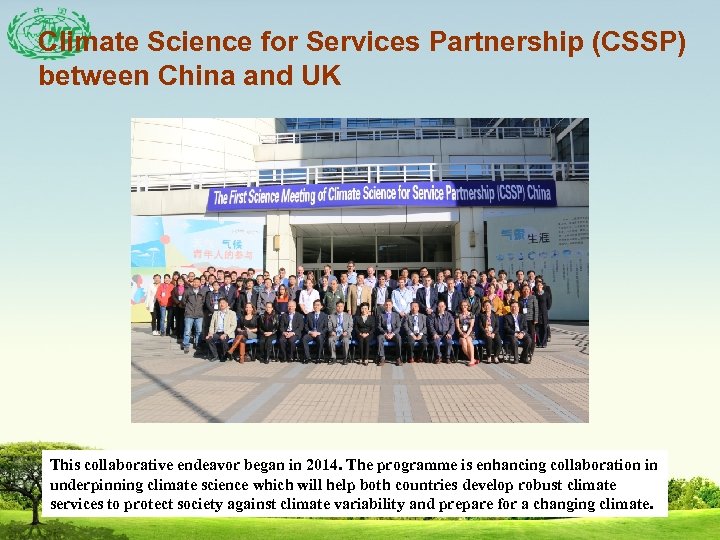
Climate Science for Services Partnership (CSSP) between China and UK This collaborative endeavor began in 2014. The programme is enhancing collaboration in underpinning climate science which will help both countries develop robust climate services to protect society against climate variability and prepare for a changing climate.
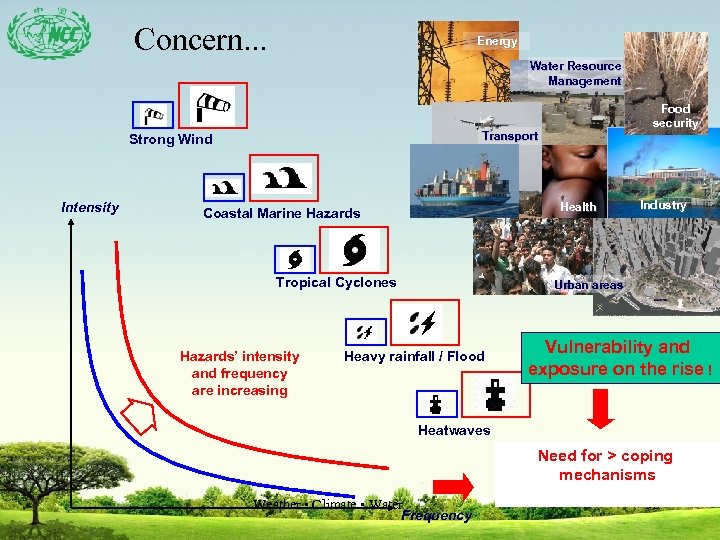
Concern. . . Energy Water Resource Management Transport Strong Wind Intensity Food security Health Coastal Marine Hazards Tropical Cyclones Hazards’ intensity and frequency are increasing Industry Urban areas Heavy rainfall / Flood Vulnerability and exposure on the rise ! Heatwaves Need for > coping mechanisms Weather • Climate • Water Frequency 32
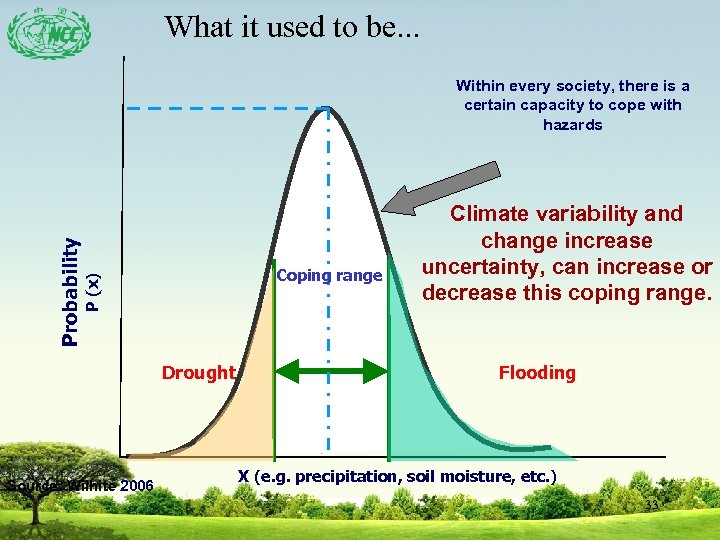
What it used to be. . . Probability Within every society, there is a certain capacity to cope with hazards P (x) Coping range Drought Source: Wilhite 2006 Climate variability and change increase uncertainty, can increase or decrease this coping range. Flooding X (e. g. precipitation, soil moisture, etc. ) 33
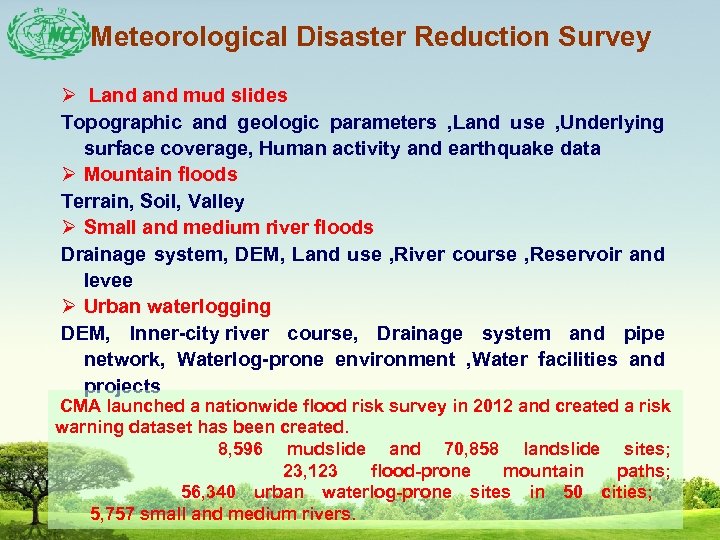
Meteorological Disaster Reduction Survey Ø Land mud slides Topographic and geologic parameters , Land use , Underlying surface coverage, Human activity and earthquake data Ø Mountain floods Terrain, Soil, Valley Ø Small and medium river floods Drainage system, DEM, Land use , River course , Reservoir and levee Ø Urban waterlogging DEM, Inner-city river course, Drainage system and pipe network, Waterlog-prone environment , Water facilities and projects CMA launched a nationwide flood risk survey in 2012 and created a risk warning dataset has been created. 8, 596 mudslide and 70, 858 landslide sites; 23, 123 flood-prone mountain paths; 56, 340 urban waterlog-prone sites in 50 cities; 5, 757 small and medium rivers.
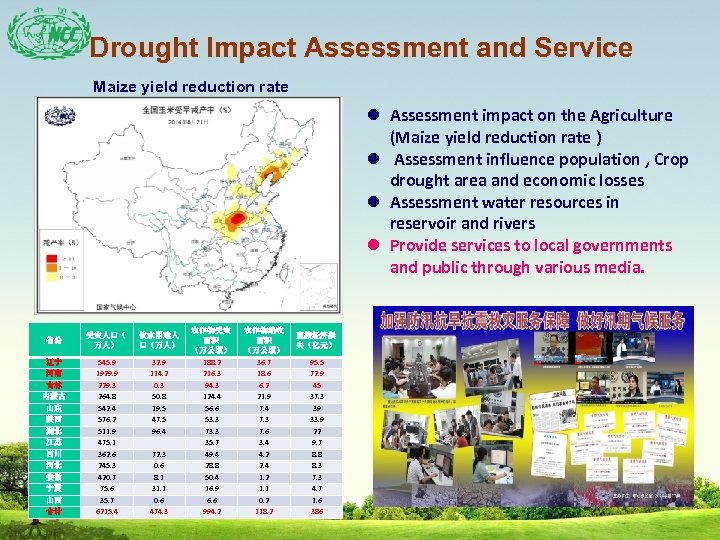
Drought Impact Assessment and Service Maize yield reduction rate l Assessment impact on the Agriculture (Maize yield reduction rate ) l Assessment influence population , Crop drought area and economic losses l Assessment water resources in reservoir and rivers l Provide services to local governments and public through various media. 省份 受灾人口( 万人) 饮水困难人 口(万人) 辽宁 河南 吉林 内蒙古 山东 陕西 湖北 江苏 四川 河北 安徽 宁夏 山西 合计 545. 9 1929. 9 229. 3 264. 8 542. 4 576. 2 511. 9 475. 1 362. 6 245. 3 420. 7 75. 6 35. 7 6215. 4 32. 9 114. 2 0. 3 50. 8 19. 5 47. 5 96. 4 72. 3 0. 6 8. 1 31. 1 0. 6 474. 3 农作物受灾 面积 (万公顷) 188. 2 216. 3 94. 3 124. 4 56. 6 53. 3 73. 3 35. 7 49. 4 28. 8 50. 4 16. 9 6. 6 994. 2 农作物绝收 面积 (万公顷) 36. 7 18. 6 6. 2 21. 9 7. 4 7. 3 7. 6 3. 4 4. 2 2. 4 1. 2 1. 1 0. 2 118. 2 直接经济损 失(亿元) 95. 5 72. 9 45 37. 3 39 33. 9 22 9. 7 8. 8 8. 3 7. 3 4. 7 1. 6 386
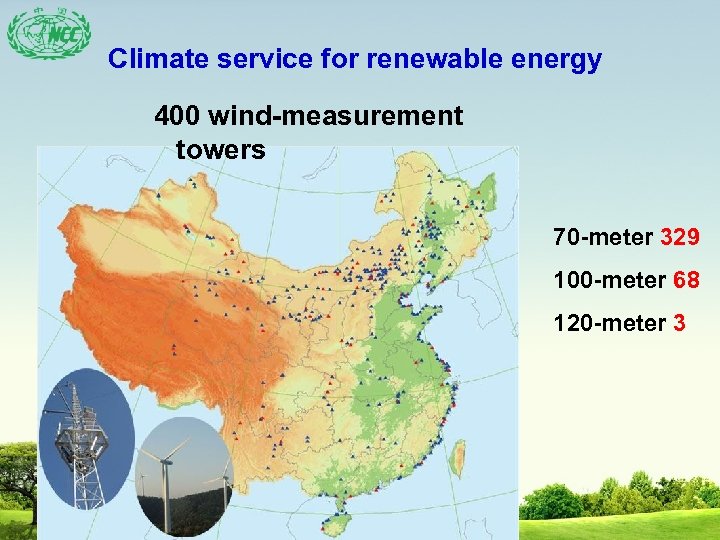
Climate service for renewable energy 400 wind-measurement towers 70 -meter 329 100 -meter 68 120 -meter 3
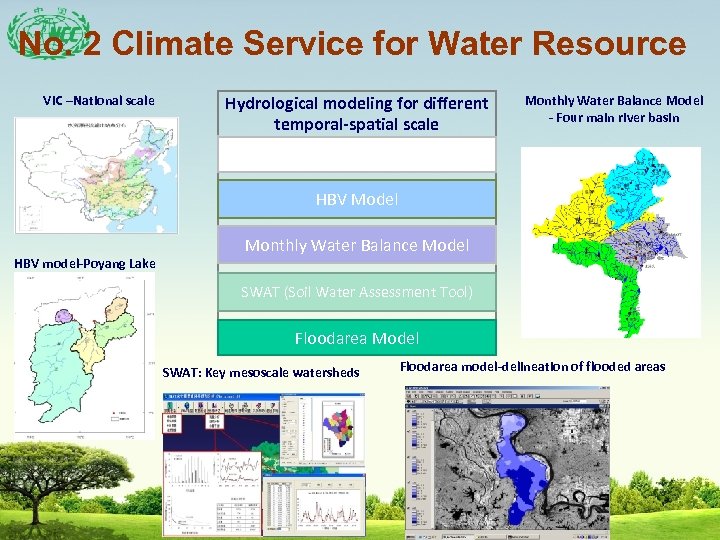
No. 2 Climate Service for Water Resource VIC –National scale Hydrological modeling for different temporal-spatial scale Monthly Water Balance Model - Four main river basin VIC (Variable Infiltration Capacity) HBV Model HBV model-Poyang Lake Monthly Water Balance Model SWAT (Soil Water Assessment Tool) Floodarea Model SWAT: Key mesoscale watersheds Floodarea model-delineation of flooded areas
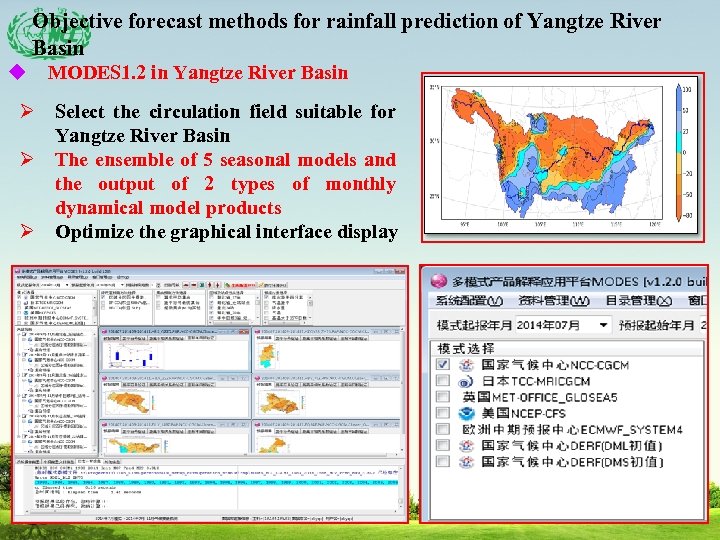
Objective forecast methods for rainfall prediction of Yangtze River Basin u MODES 1. 2 in Yangtze River Basin Ø Select the circulation field suitable for Yangtze River Basin Ø The ensemble of 5 seasonal models and the output of 2 types of monthly dynamical model products Ø Optimize the graphical interface display
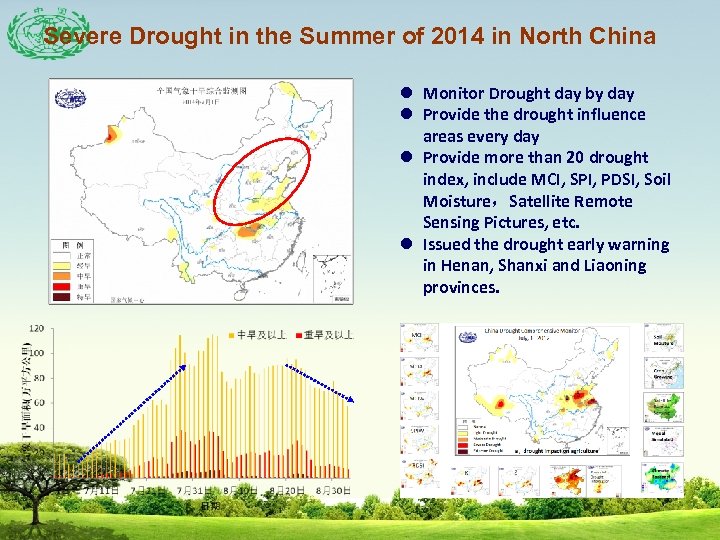
Severe Drought in the Summer of 2014 in North China l Monitor Drought day by day l Provide the drought influence areas every day l Provide more than 20 drought index, include MCI, SPI, PDSI, Soil Moisture,Satellite Remote Sensing Pictures, etc. l Issued the drought early warning in Henan, Shanxi and Liaoning provinces.
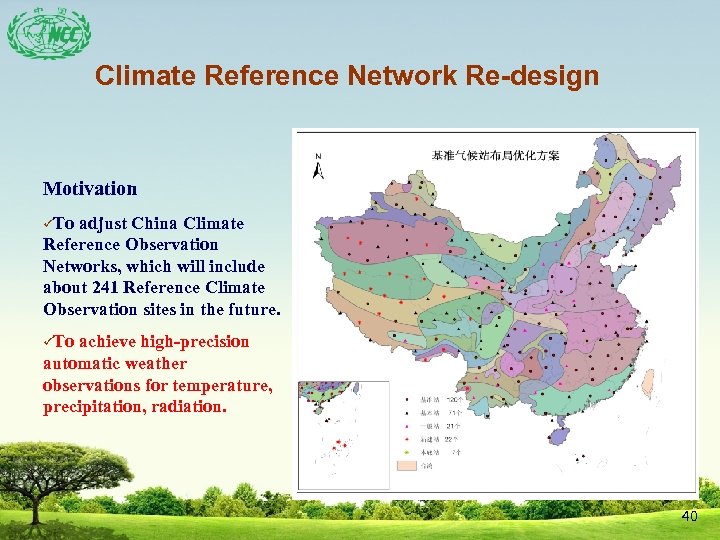
Climate Reference Network Re-design Motivation üTo adjust China Climate Reference Observation Networks, which will include about 241 Reference Climate Observation sites in the future. üTo achieve high-precision automatic weather observations for temperature, precipitation, radiation. 40
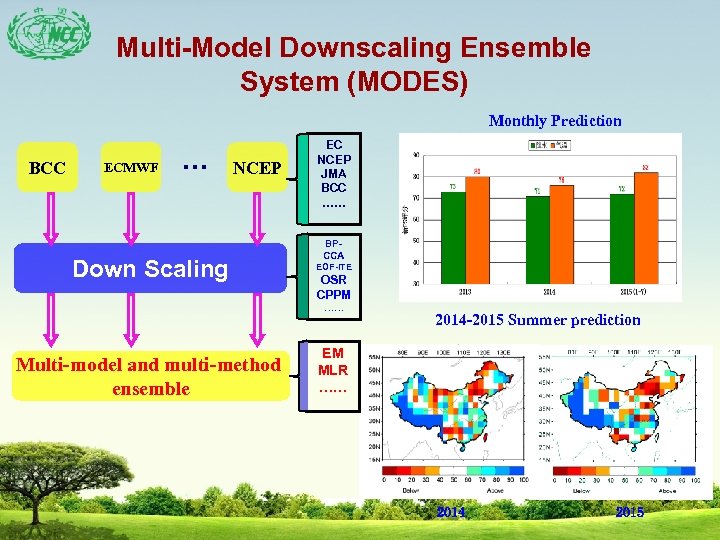
Multi-Model Downscaling Ensemble System (MODES) Monthly Prediction BCC ECMWF … NCEP Down Scaling EC NCEP JMA BCC …… BPCCA EOF-ITE OSR CPPM …… Multi-model and multi-method ensemble 2014 -2015 Summer prediction EM MLR …… 2014 2015
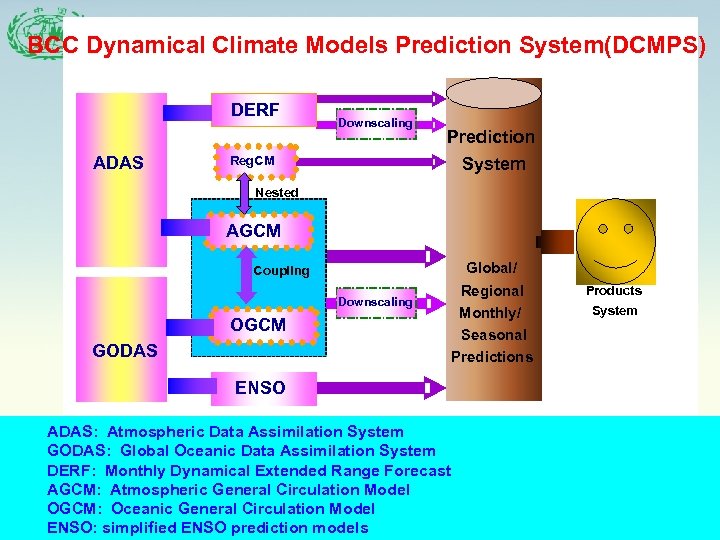
BCC Dynamical Climate Models Prediction System(DCMPS) DERF ADAS Downscaling Reg. CM Prediction System Nested AGCM Coupling Downscaling OGCM GODAS ENSO ADAS: Atmospheric Data Assimilation System GODAS: Global Oceanic Data Assimilation System DERF: Monthly Dynamical Extended Range Forecast AGCM: Atmospheric General Circulation Model OGCM: Oceanic General Circulation Model ENSO: simplified ENSO prediction models Global/ Regional Monthly/ Seasonal Predictions Products System
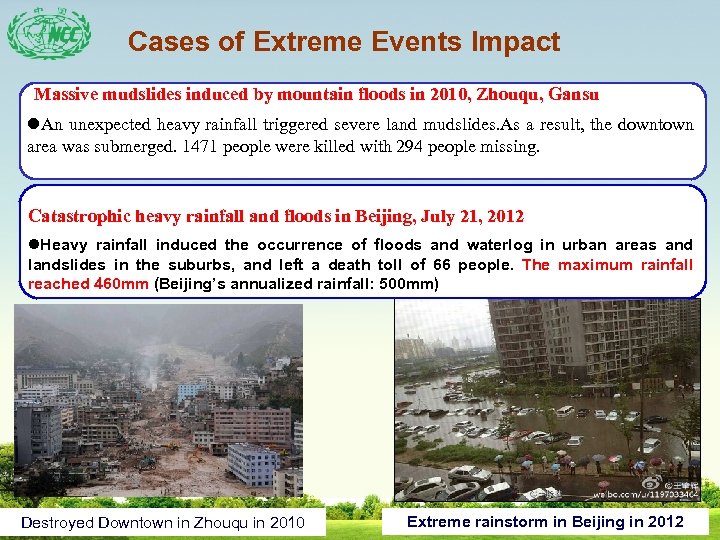
Cases of Extreme Events Impact Massive mudslides induced by mountain floods in 2010, Zhouqu, Gansu l. An unexpected heavy rainfall triggered severe land mudslides. As a result, the downtown area was submerged. 1471 people were killed with 294 people missing. Catastrophic heavy rainfall and floods in Beijing, July 21, 2012 l. Heavy rainfall induced the occurrence of floods and waterlog in urban areas and landslides in the suburbs, and left a death toll of 66 people. The maximum rainfall reached 460 mm (Beijing’s annualized rainfall: 500 mm) Destroyed Downtown in Zhouqu in 2010 Extreme rainstorm in Beijing in 2012
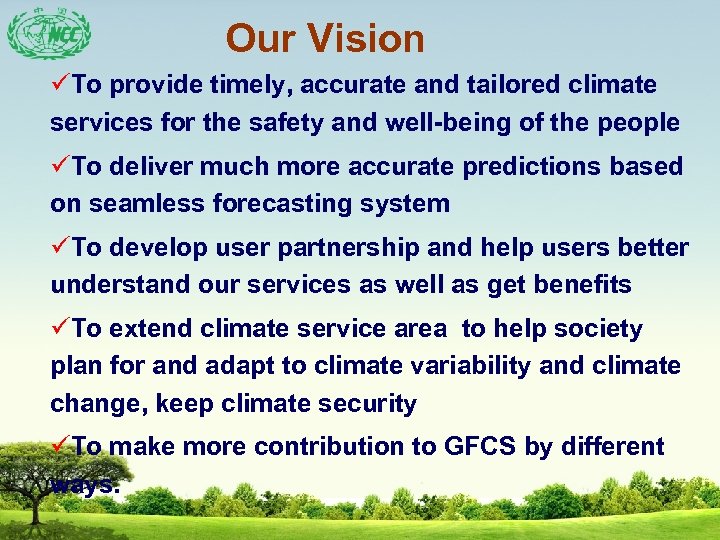
Our Vision üTo provide timely, accurate and tailored climate services for the safety and well-being of the people üTo deliver much more accurate predictions based on seamless forecasting system üTo develop user partnership and help users better understand our services as well as get benefits üTo extend climate service area to help society plan for and adapt to climate variability and climate change, keep climate security üTo make more contribution to GFCS by different ways.
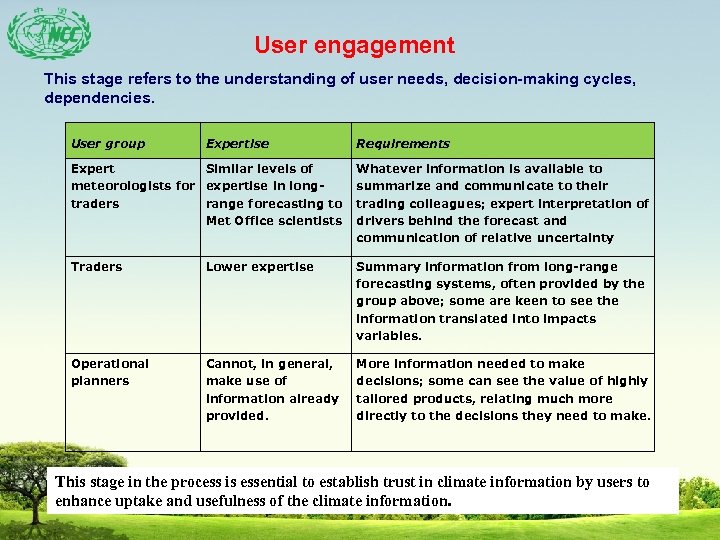
User engagement This stage refers to the understanding of user needs, decision-making cycles, dependencies. User group Expertise Requirements Expert Similar levels of meteorologists for expertise in longtraders range forecasting to Met Office scientists Whatever information is available to summarize and communicate to their trading colleagues; expert interpretation of drivers behind the forecast and communication of relative uncertainty Traders Lower expertise Summary information from long-range forecasting systems, often provided by the group above; some are keen to see the information translated into impacts variables. Operational planners Cannot, in general, make use of information already provided. More information needed to make decisions; some can see the value of highly tailored products, relating much more directly to the decisions they need to make. This stage in the process is essential to establish trust in climate information by users to enhance uptake and usefulness of the climate information.
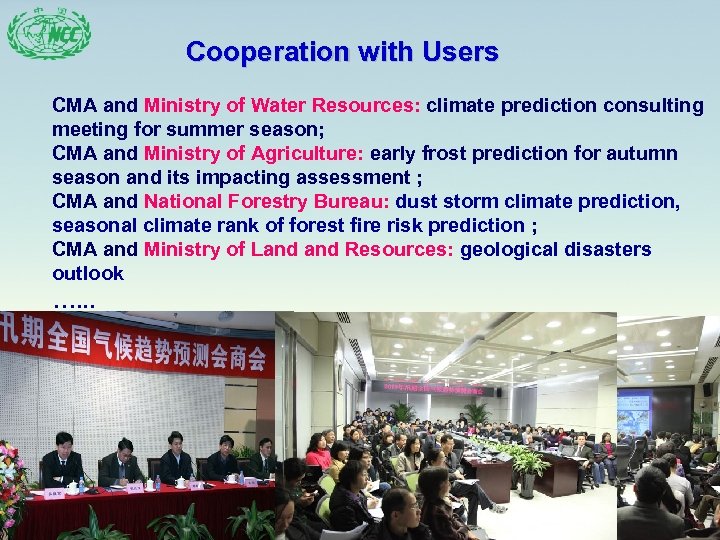
Cooperation with Users CMA and Ministry of Water Resources: climate prediction consulting meeting for summer season; CMA and Ministry of Agriculture: early frost prediction for autumn season and its impacting assessment ; CMA and National Forestry Bureau: dust storm climate prediction, seasonal climate rank of forest fire risk prediction ; CMA and Ministry of Land Resources: geological disasters outlook …. . .
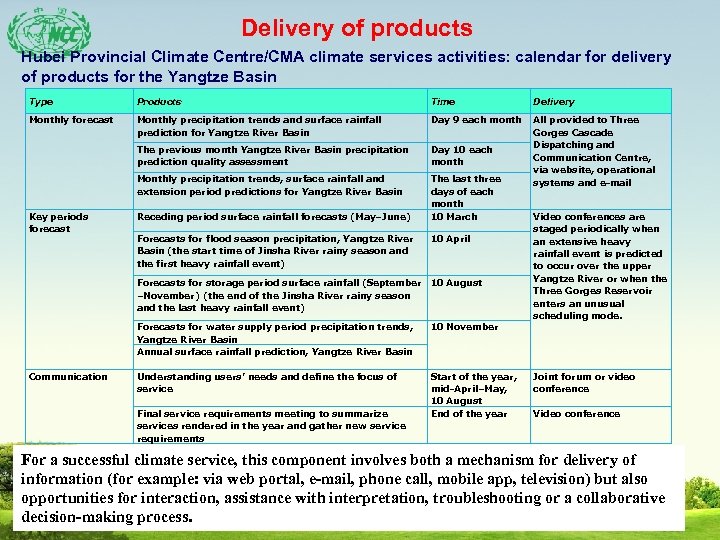
Delivery of products Hubei Provincial Climate Centre/CMA climate services activities: calendar for delivery of products for the Yangtze Basin Type Products Time Delivery Monthly forecast Monthly precipitation trends and surface rainfall prediction for Yangtze River Basin Day 9 each month The previous month Yangtze River Basin precipitation prediction quality assessment Day 10 each month Monthly precipitation trends, surface rainfall and extension period predictions for Yangtze River Basin The last three days of each month 10 March All provided to Three Gorges Cascade Dispatching and Communication Centre, via website, operational systems and e-mail Key periods forecast Receding period surface rainfall forecasts (May–June) Forecasts for flood season precipitation, Yangtze River Basin (the start time of Jinsha River rainy season and the first heavy rainfall event) 10 April Forecasts for storage period surface rainfall (September 10 August –November) (the end of the Jinsha River rainy season and the last heavy rainfall event) Forecasts for water supply period precipitation trends, Yangtze River Basin Annual surface rainfall prediction, Yangtze River Basin Communication 10 November Understanding users’ needs and define the focus of service Start of the year, mid-April–May, 10 August End of the year Video conferences are staged periodically when an extensive heavy rainfall event is predicted to occur over the upper Yangtze River or when the Three Gorges Reservoir enters an unusual scheduling mode. Final service requirements meeting to summarize services rendered in the year and gather new service requirements Joint forum or video conference Video conference For a successful climate service, this component involves both a mechanism for delivery of information (for example: via web portal, e-mail, phone call, mobile app, television) but also opportunities for interaction, assistance with interpretation, troubleshooting or a collaborative decision-making process.
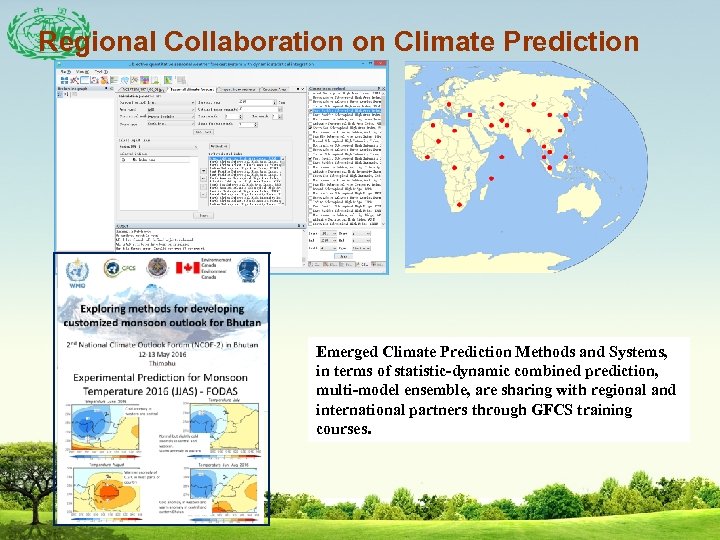
Regional Collaboration on Climate Prediction Emerged Climate Prediction Methods and Systems, in terms of statistic-dynamic combined prediction, multi-model ensemble, are sharing with regional and international partners through GFCS training courses.
Mission Ø To monitor and diagnose global atmospheric and oceanic conditions, as well as extreme climate events , especially in East Asia Ø To issue global climate predictions and impact assessments at monthly, seasonal and inter-annual time scales, particularly in East Asia Ø To implement GFCS in China Ø To do research on climate and climate change issues
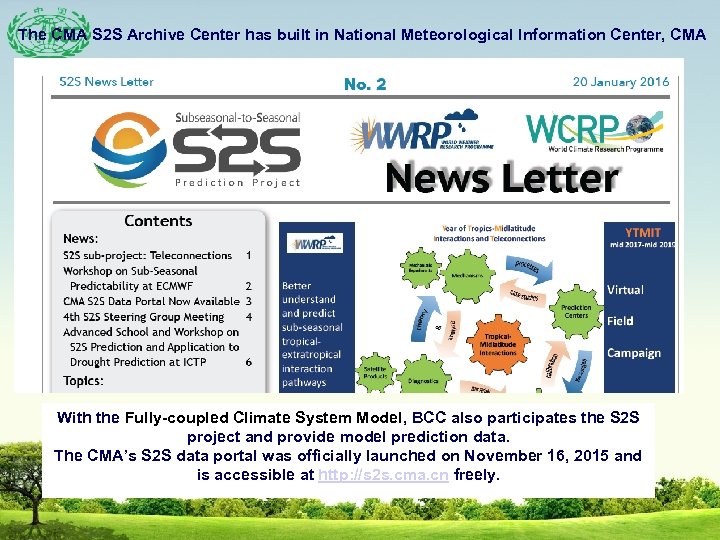
The CMA S 2 S Archive Center has built in National Meteorological Information Center, CMA With the Fully-coupled Climate System Model, BCC also participates the S 2 S project and provide model prediction data. The CMA’s S 2 S data portal was officially launched on November 16, 2015 and is accessible at http: //s 2 s. cma. cn freely.
Скачать презентацию Climate Services in China Zhiqiang Gong Beijing Climate
b4ece4cf85312efece1b9e57de6001bb.ppt