


 Скачать презентацию Climate Change Goals for the Metropolitan Washington Area
34d6a790f9891ebaa1eb8001509fc2ca.ppt
- Количество слайдов: 26
 Climate Change Goals for the Metropolitan Washington Area Climate Change Steering Committee February 27, 2008 Joan Rohlfs, MWCOG/DEP 1
 Regional Goals & Ways to Get There n Propose Short-Term Goal (2012) n n Interim Goal for 2020: 20% Below 2005 n n Low Hanging Fruit Actions to Reach Goal Adoption of Long Term Goals (2050) n Policies to Reach Goal 2
 3
3
 Regional Short Term Goal: 2012 4
 Long Term and Short Term Goals n Long Term Goals Needed to Stabilize Climate n Spur investment in new technology n Incentive for technological innovation n Short Term Goals to Insure Immediate Progress n Analyze strategies using existing technology n Nearer term year is easier to comprehend, anticipate 5
 Local Government Short Term Goals n Cool Counties agreement : Stop emissions growth in 2010 n Mayors’ Agreement: Reduce 7% below 1990 by 2012 6
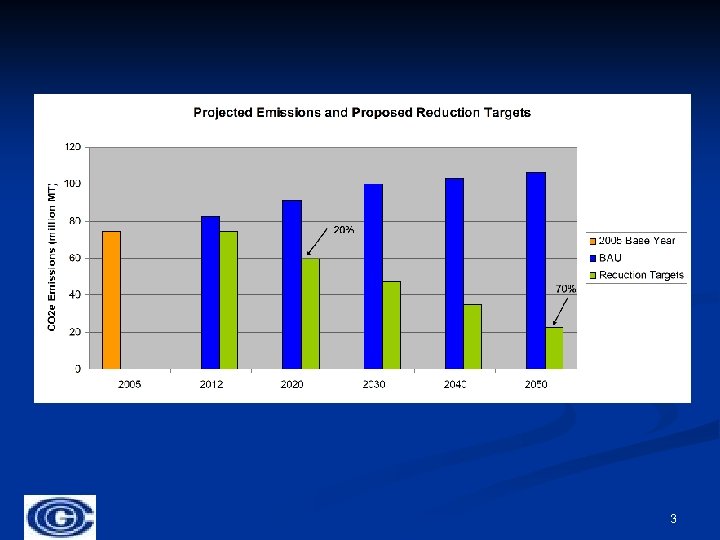
 Proposed Short Term Goal: 2012 n Proposed goal: Reduce 7% by 2012 n 2005 -2012 Emissions expected to increase by 7% n Achievement of 7% reduction goal by 2012 would return regional emissions to 2005 levels 7
 Low Hanging Fruit 8
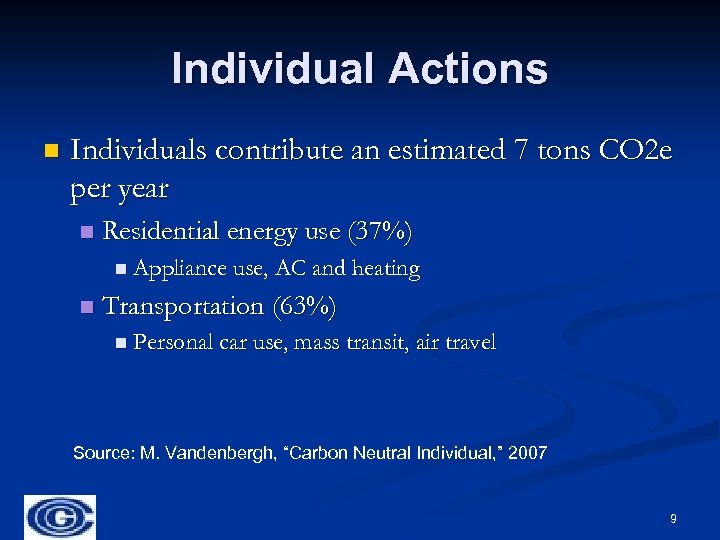 Individual Actions n Individuals contribute an estimated 7 tons CO 2 e per year n Residential energy use (37%) n Appliance use, AC and heating n Transportation (63%) n Personal car use, mass transit, air travel Source: M. Vandenbergh, “Carbon Neutral Individual, ” 2007 9
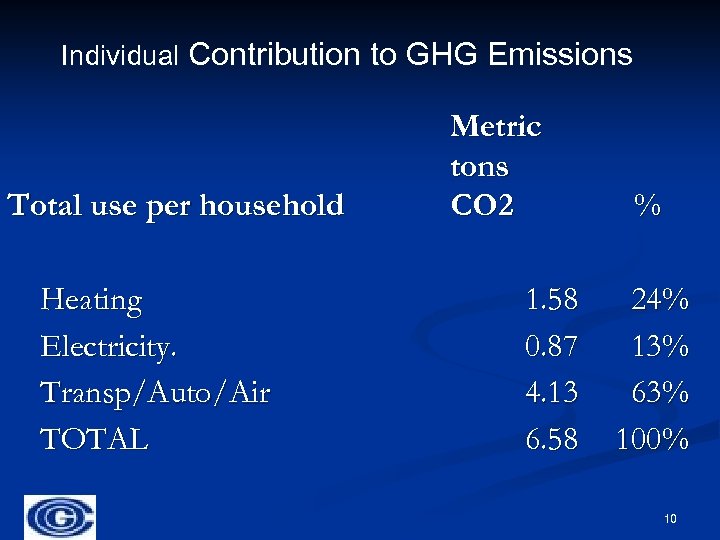 Individual Contribution to GHG Emissions Total use per household Heating Electricity. Transp/Auto/Air TOTAL Metric tons CO 2 1. 58 0. 87 4. 13 6. 58 % 24% 13% 63% 100% 10
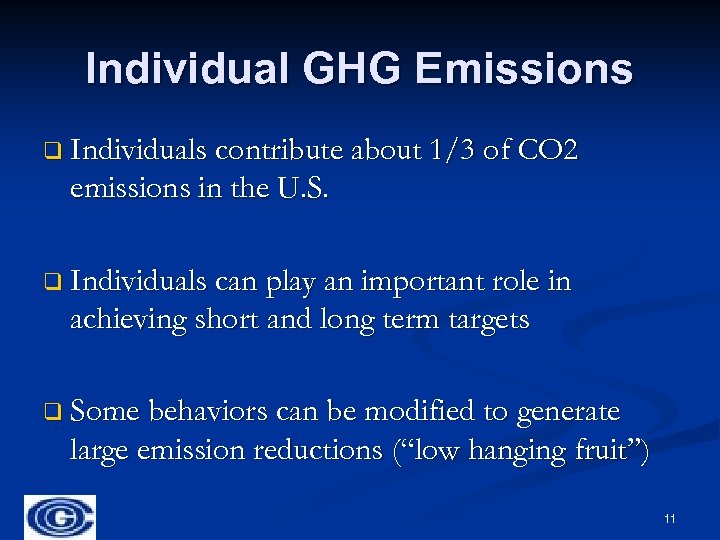 Individual GHG Emissions q Individuals contribute about 1/3 of CO 2 emissions in the U. S. q Individuals can play an important role in achieving short and long term targets q Some behaviors can be modified to generate large emission reductions (“low hanging fruit”) 11
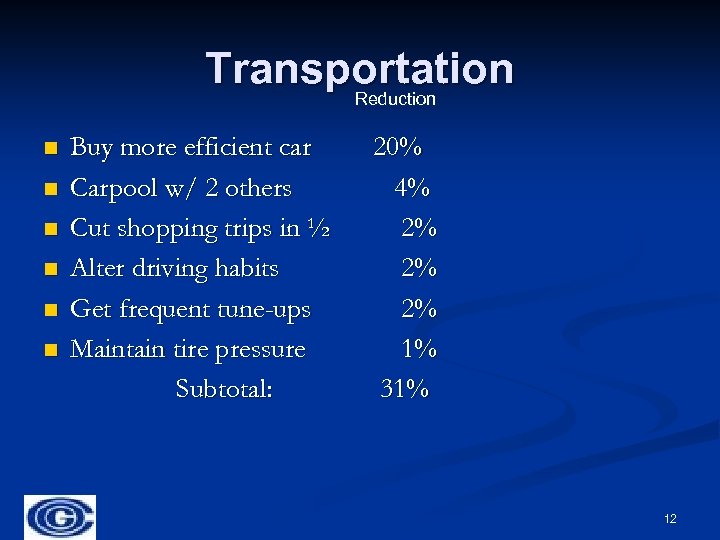 Transportation Reduction n n n Buy more efficient car Carpool w/ 2 others Cut shopping trips in ½ Alter driving habits Get frequent tune-ups Maintain tire pressure Subtotal: 20% 4% 2% 2% 2% 1% 31% 12
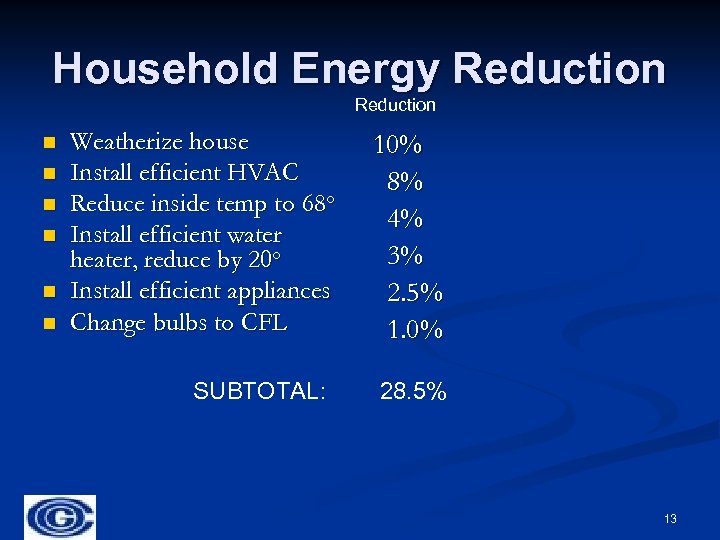 Household Energy Reduction n n n Weatherize house Install efficient HVAC Reduce inside temp to 68 o Install efficient water heater, reduce by 20 o Install efficient appliances Change bulbs to CFL SUBTOTAL: 10% 8% 4% 3% 2. 5% 1. 0% 28. 5% 13
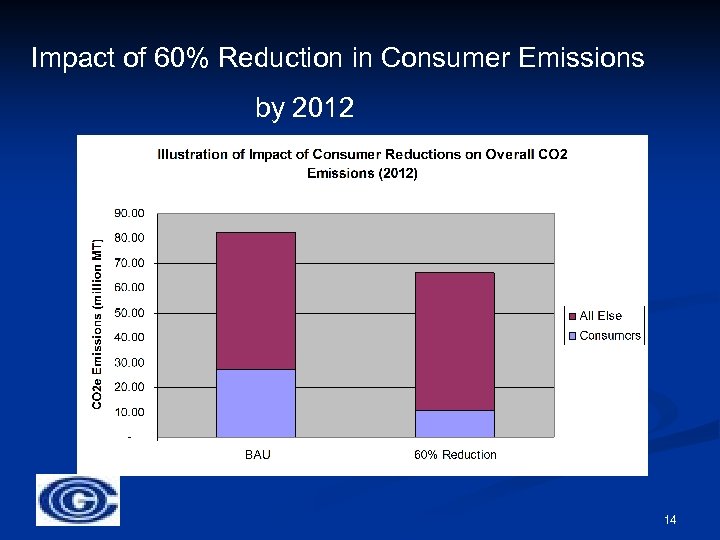 Impact of 60% Reduction in Consumer Emissions by 2012 / 14
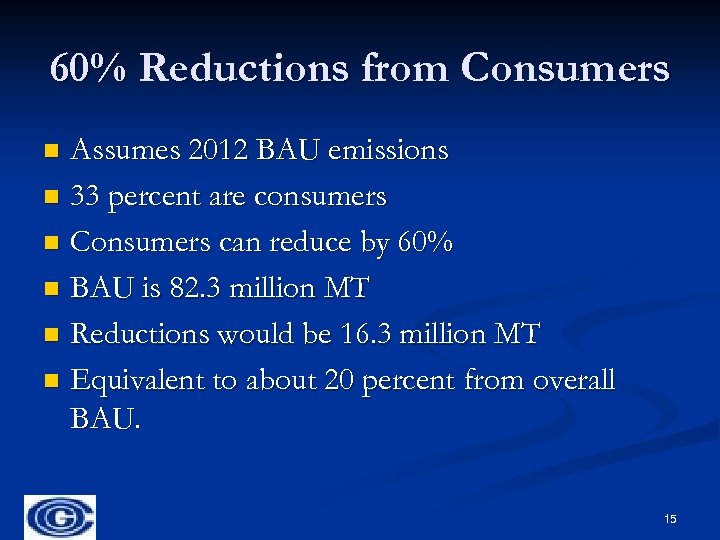 60% Reductions from Consumers Assumes 2012 BAU emissions n 33 percent are consumers n Consumers can reduce by 60% n BAU is 82. 3 million MT n Reductions would be 16. 3 million MT n Equivalent to about 20 percent from overall BAU. n 15
 Midterm Goal: 2020 How to get there… 16
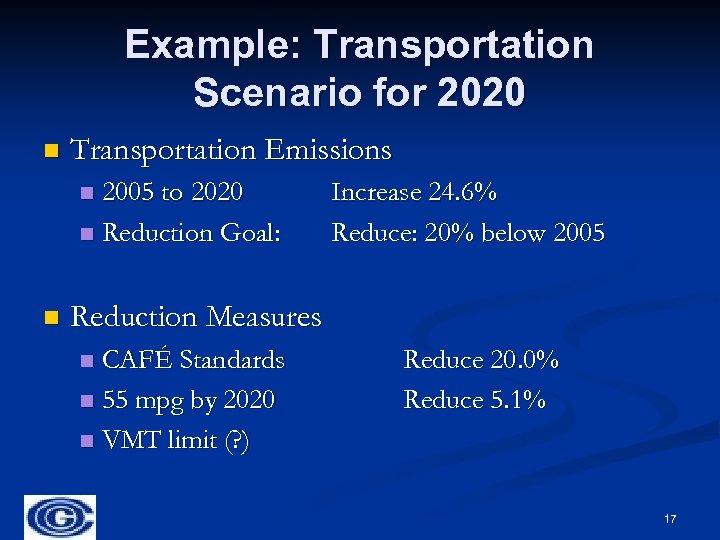 Example: Transportation Scenario for 2020 n Transportation Emissions 2005 to 2020 n Reduction Goal: n n Increase 24. 6% Reduce: 20% below 2005 Reduction Measures CAFÉ Standards n 55 mpg by 2020 n VMT limit (? ) n Reduce 20. 0% Reduce 5. 1% 17
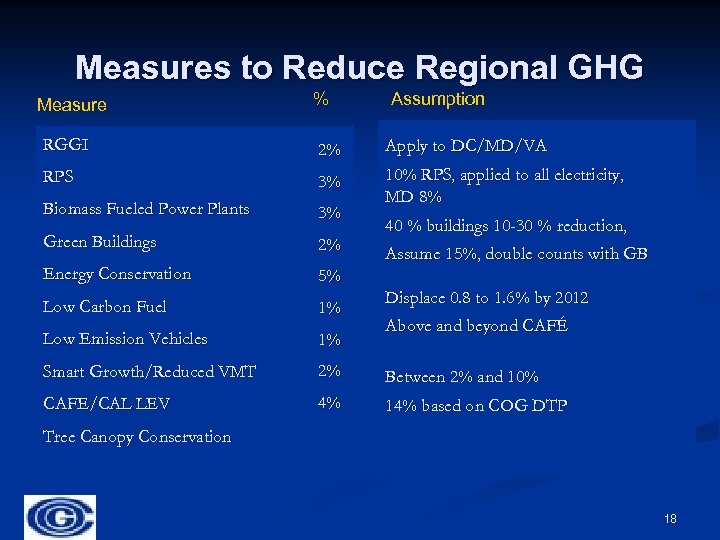 Measures to Reduce Regional GHG % Measure Assumption RGGI 2% Apply to DC/MD/VA RPS 3% Biomass Fueled Power Plants 3% 10% RPS, applied to all electricity, MD 8% Green Buildings 2% Energy Conservation 5% Low Carbon Fuel 1% Low Emission Vehicles 1% Smart Growth/Reduced VMT 2% Between 2% and 10% CAFE/CAL LEV 4% 14% based on COG DTP Tree Canopy Conservation 40 % buildings 10 -30 % reduction, Assume 15%, double counts with GB Displace 0. 8 to 1. 6% by 2012 Above and beyond CAFÉ 18
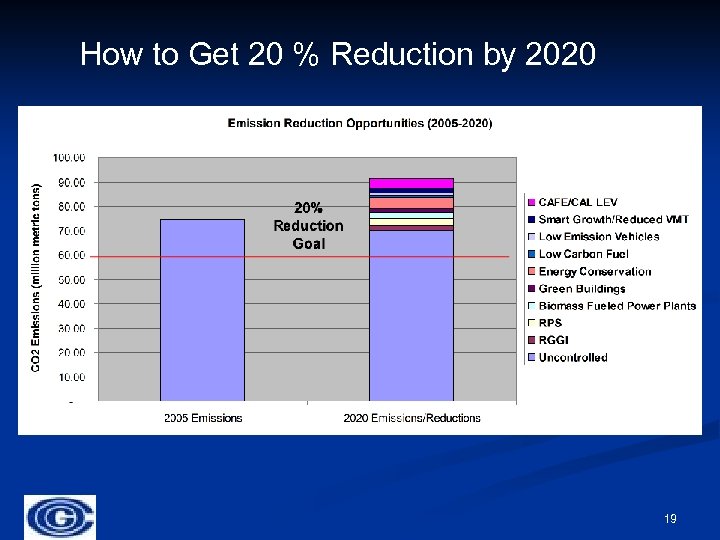 How to Get 20 % Reduction by 2020 19
 Long Term Goal: 2050 20
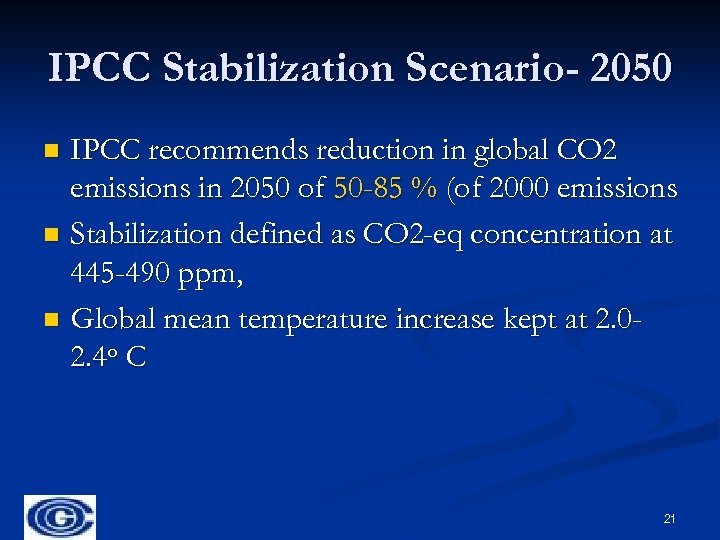 IPCC Stabilization Scenario- 2050 IPCC recommends reduction in global CO 2 emissions in 2050 of 50 -85 % (of 2000 emissions n Stabilization defined as CO 2 -eq concentration at 445 -490 ppm, n Global mean temperature increase kept at 2. 02. 4 o C n 21
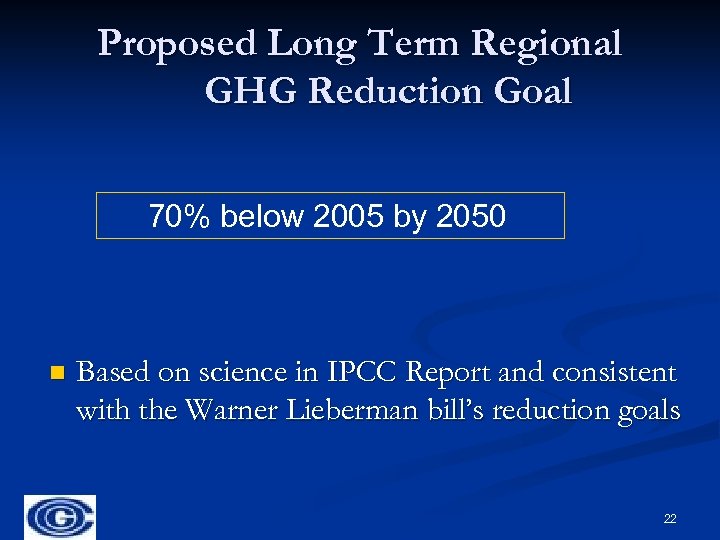 Proposed Long Term Regional GHG Reduction Goal 70% below 2005 by 2050 n Based on science in IPCC Report and consistent with the Warner Lieberman bill’s reduction goals 22
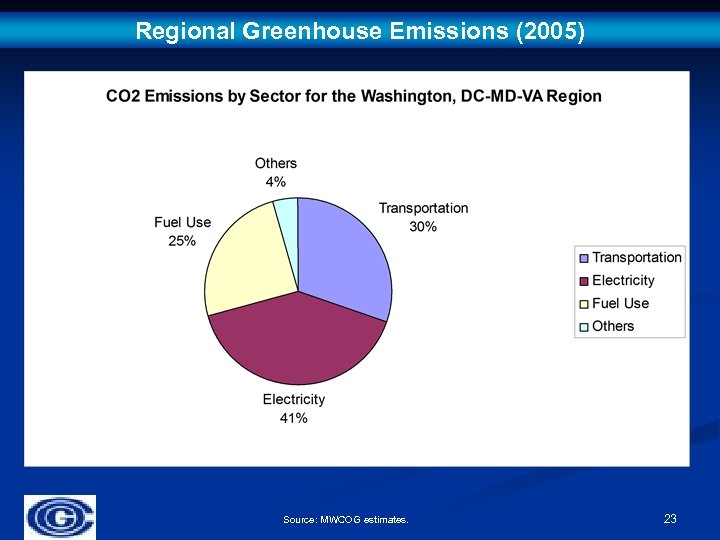 Regional Greenhouse Emissions (2005) Source: MWCOG estimates. 23
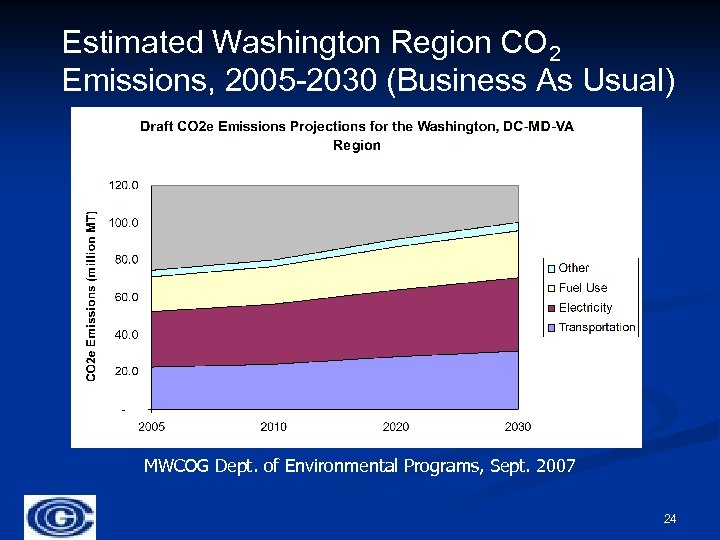 Estimated Washington Region CO 2 Emissions, 2005 -2030 (Business As Usual) MWCOG Dept. of Environmental Programs, Sept. 2007 24
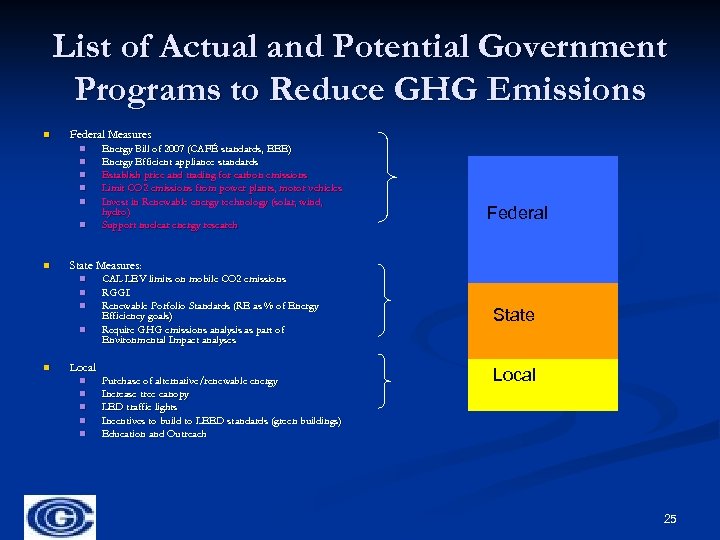 List of Actual and Potential Government Programs to Reduce GHG Emissions n Federal Measures n n n Energy Bill of 2007 (CAFÉ standards, EEE) Energy Efficient appliance standards Establish price and trading for carbon emissions Limit CO 2 emissions from power plants, motor vehicles Invest in Renewable energy technology (solar, wind, hydro) Support nuclear energy research n State Measures: n n n CAL LEV limits on mobile CO 2 emissions RGGI Renewable Porfolio Standards (RE as % of Energy Efficiency goals) Require GHG emissions analysis as part of Environmental Impact analyses Local n n n Purchase of alternative/renewable energy Increase tree canopy LED traffic lights Incentives to build to LEED standards (green buildings) Education and Outreach Federal n State Local 25
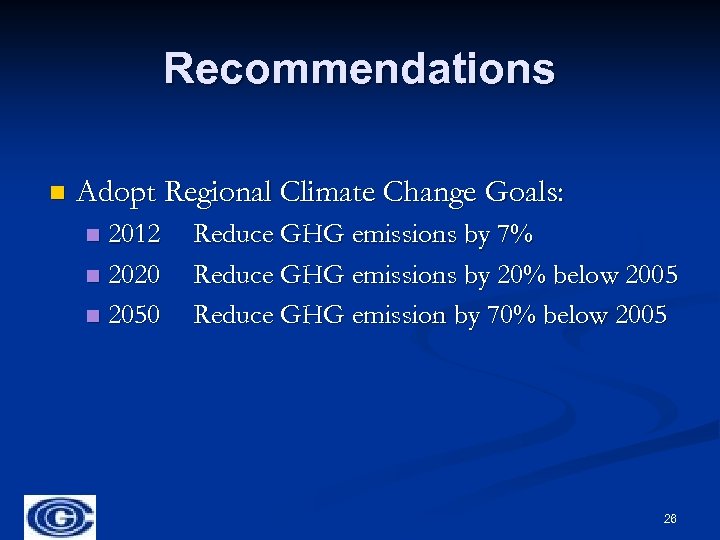 Recommendations n Adopt Regional Climate Change Goals: 2012 n 2020 n 2050 n Reduce GHG emissions by 7% Reduce GHG emissions by 20% below 2005 Reduce GHG emission by 70% below 2005 26