


 Скачать презентацию Climate Applications and Agriculture CGIAR Efforts Capacities and
1946fb58858160452e1f28cf768a6ae5.ppt
- Количество слайдов: 30
 Climate Applications and Agriculture: CGIAR Efforts, Capacities and Partner Opportunities
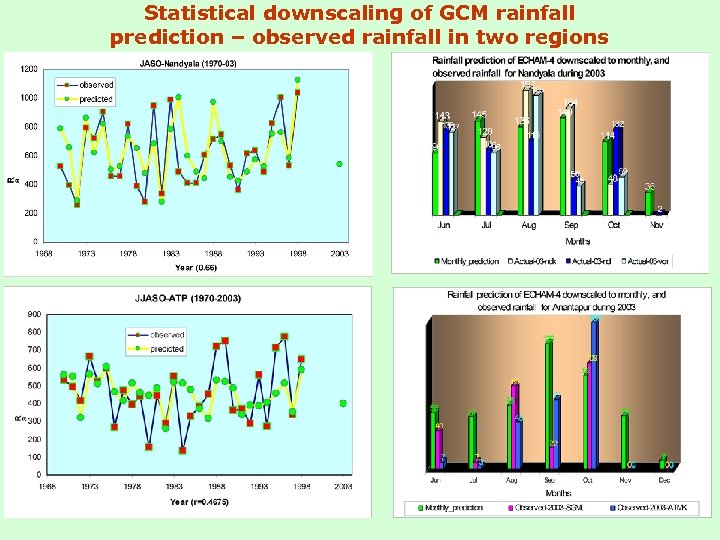 Statistical downscaling of GCM rainfall prediction – observed rainfall in two regions
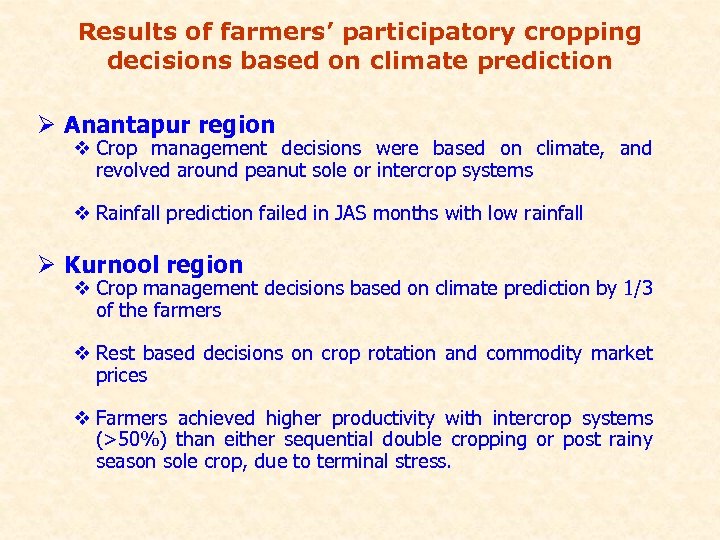 Results of farmers’ participatory cropping decisions based on climate prediction Ø Anantapur region v Crop management decisions were based on climate, and revolved around peanut sole or intercrop systems v Rainfall prediction failed in JAS months with low rainfall Ø Kurnool region v Crop management decisions based on climate prediction by 1/3 of the farmers v Rest based decisions on crop rotation and commodity market prices v Farmers achieved higher productivity with intercrop systems (>50%) than either sequential double cropping or post rainy season sole crop, due to terminal stress.
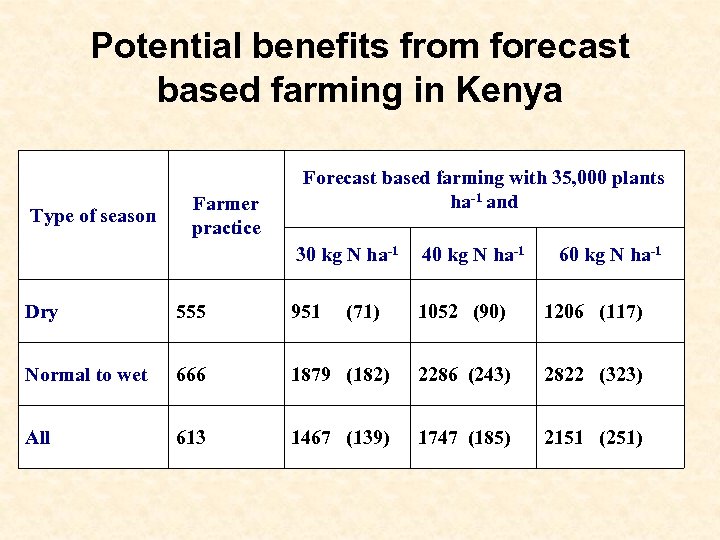 Potential benefits from forecast based farming in Kenya Type of season Farmer practice Forecast based farming with 35, 000 plants ha-1 and 30 kg N ha-1 40 kg N ha-1 1052 (90) 1206 (117) (71) 60 kg N ha-1 Dry 555 951 Normal to wet 666 1879 (182) 2286 (243) 2822 (323) All 613 1467 (139) 1747 (185) 2151 (251)
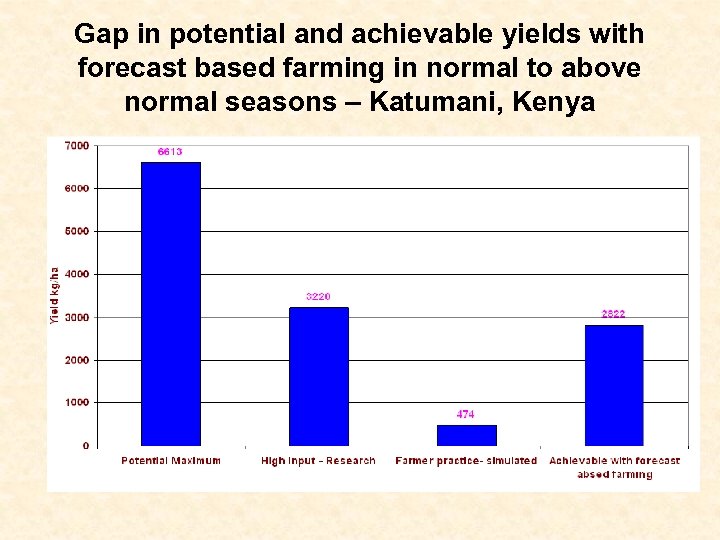 Gap in potential and achievable yields with forecast based farming in normal to above normal seasons – Katumani, Kenya
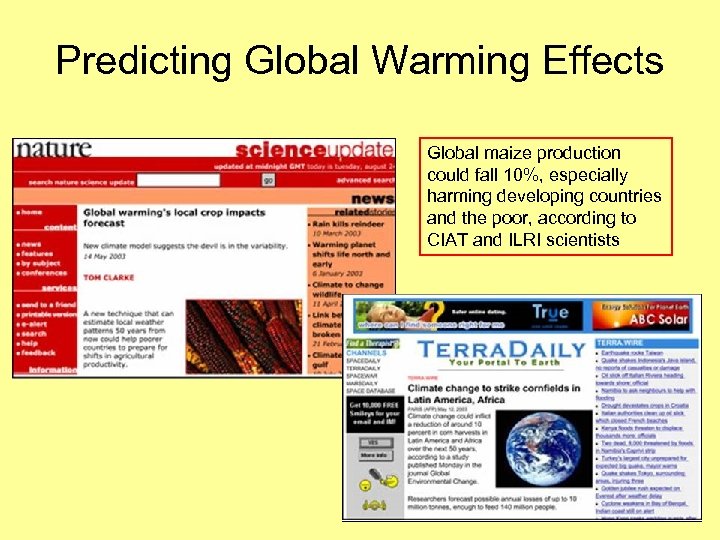 Predicting Global Warming Effects Global maize production could fall 10%, especially harming developing countries and the poor, according to CIAT and ILRI scientists
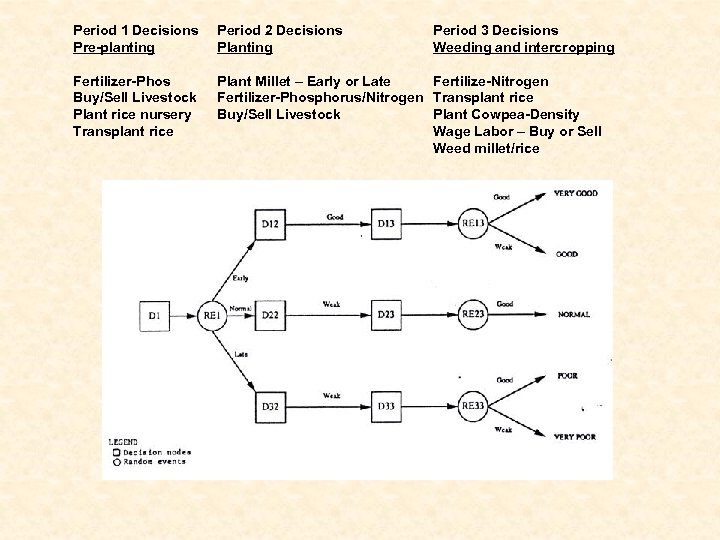 Period 1 Decisions Pre-planting Period 2 Decisions Planting Fertilizer-Phos Buy/Sell Livestock Plant rice nursery Transplant rice Plant Millet – Early or Late Fertilize-Nitrogen Fertilizer-Phosphorus/Nitrogen Transplant rice Buy/Sell Livestock Plant Cowpea-Density Wage Labor – Buy or Sell Weed millet/rice Period 3 Decisions Weeding and intercropping
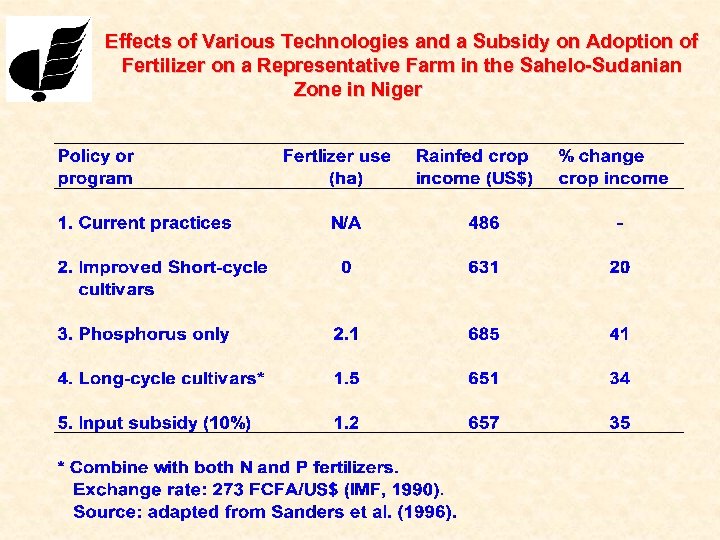 Effects of Various Technologies and a Subsidy on Adoption of Fertilizer on a Representative Farm in the Sahelo-Sudanian Zone in Niger
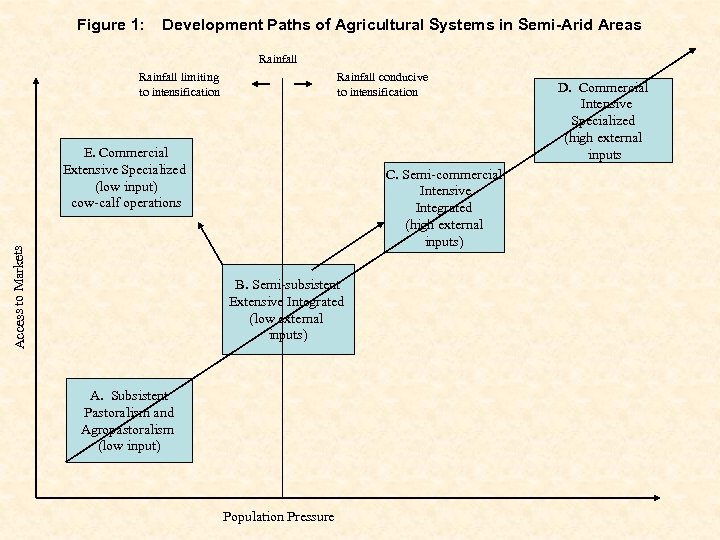 Figure 1: Development Paths of Agricultural Systems in Semi-Arid Areas Rainfall limiting to intensification Rainfall conducive to intensification Access to Markets E. Commercial Extensive Specialized (low input) cow-calf operations C. Semi-commercial Intensive Integrated (high external inputs) B. Semi-subsistent Extensive Integrated (low external inputs) A. Subsistent Pastoralism and Agropastoralism (low input) Population Pressure D. Commercial Intensive Specialized (high external inputs
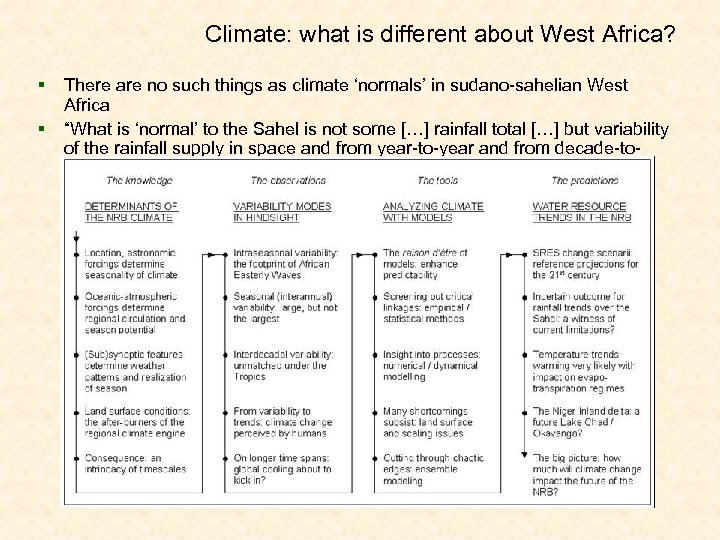 Climate: what is different about West Africa? § § There are no such things as climate ‘normals’ in sudano-sahelian West Africa “What is ‘normal’ to the Sahel is not some […] rainfall total […] but variability of the rainfall supply in space and from year-to-year and from decade-todecade” (Hulme, 2001)
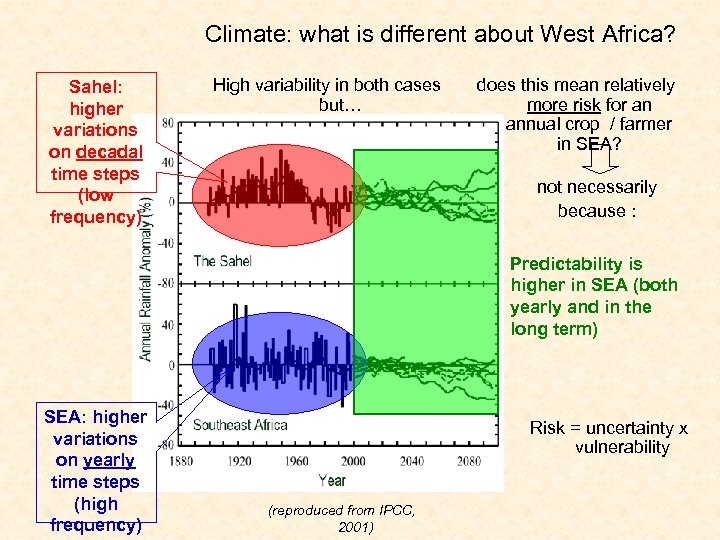 Climate: what is different about West Africa? Sahel: higher variations on decadal time steps (low frequency) High variability in both cases but… does this mean relatively more risk for an annual crop / farmer in SEA? not necessarily because : Predictability is higher in SEA (both yearly and in the long term) SEA: higher variations on yearly time steps (high frequency) Risk = uncertainty x vulnerability (reproduced from IPCC, 2001)
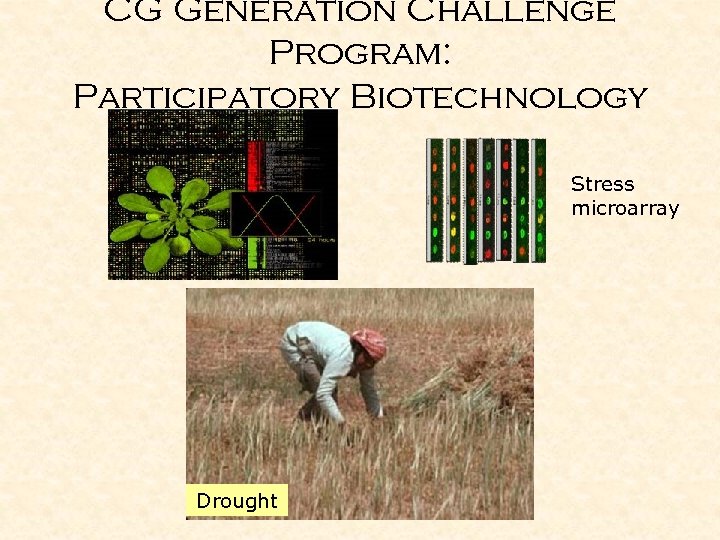 CG Generation Challenge Program: Participatory Biotechnology Stress microarray Drought
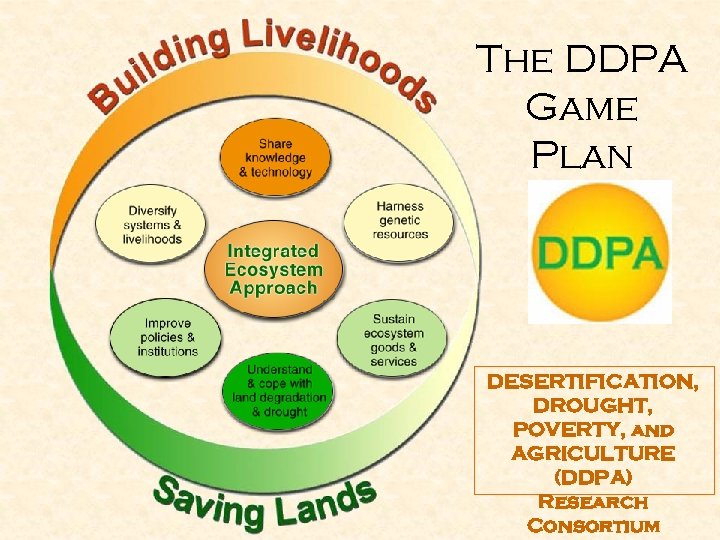 The DDPA Game Plan DESERTIFICATION, DROUGHT, POVERTY, and AGRICULTURE (DDPA) Research Consortium
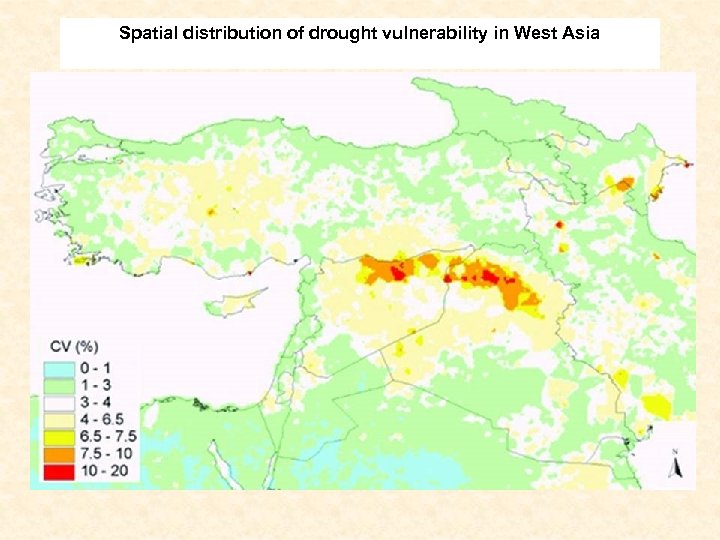 Spatial distribution of drought vulnerability in West Asia
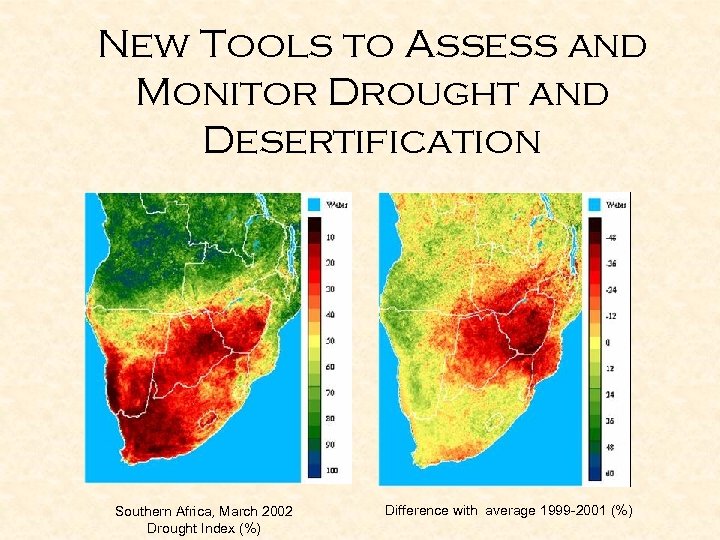 New Tools to Assess and Monitor Drought and Desertification Southern Africa, March 2002 Drought Index (%) Difference with average 1999 -2001 (%)
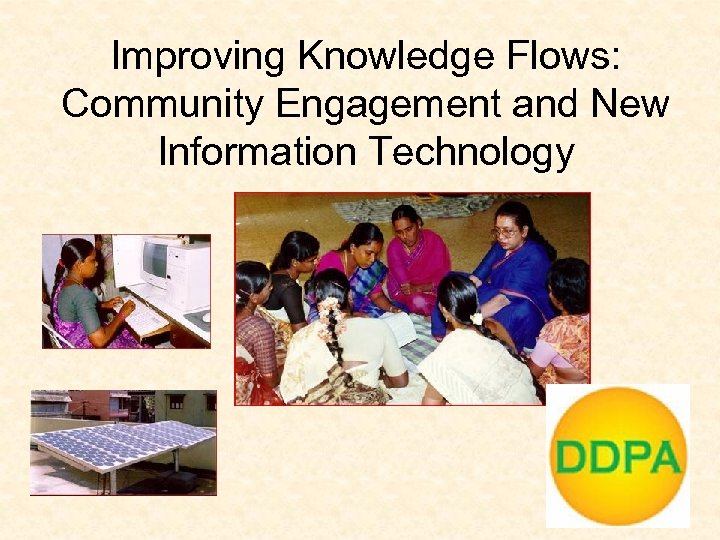 Improving Knowledge Flows: Community Engagement and New Information Technology
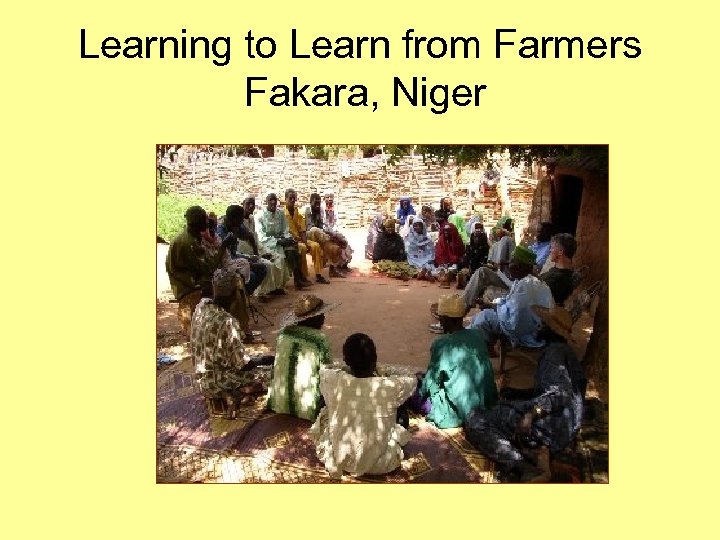 Learning to Learn from Farmers Fakara, Niger
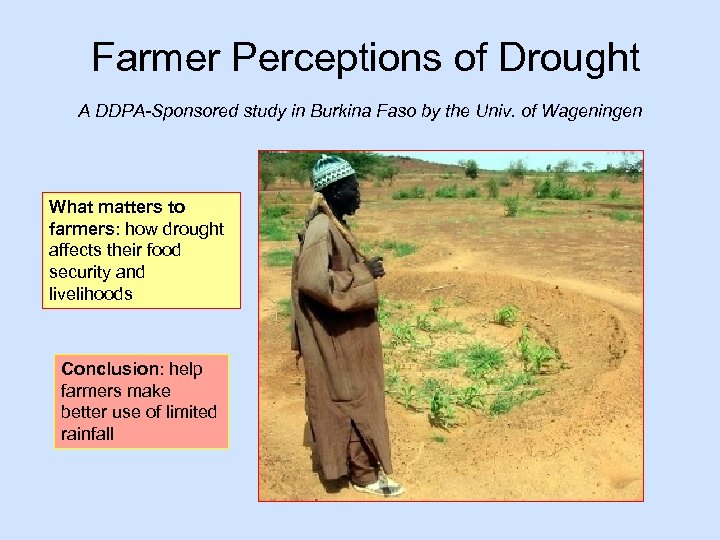 Farmer Perceptions of Drought A DDPA-Sponsored study in Burkina Faso by the Univ. of Wageningen What matters to farmers: how drought affects their food security and livelihoods Conclusion: help farmers make better use of limited rainfall
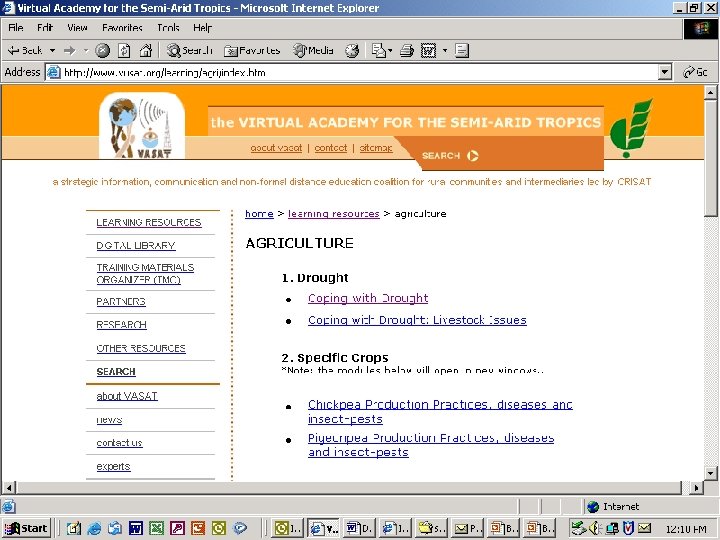
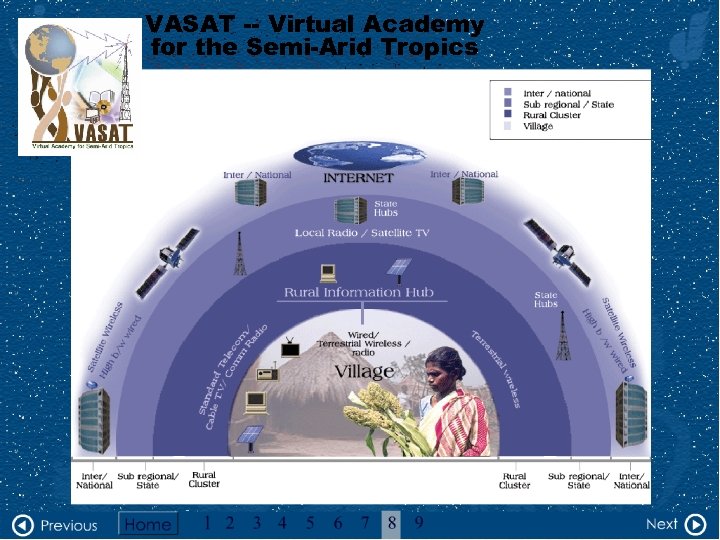 VASAT -- Virtual Academy for the Semi-Arid Tropics
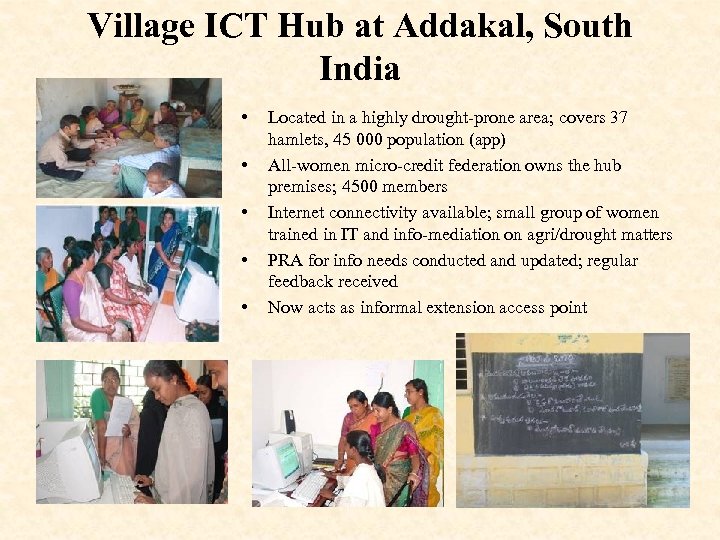 Village ICT Hub at Addakal, South India • • • Located in a highly drought-prone area; covers 37 hamlets, 45 000 population (app) All-women micro-credit federation owns the hub premises; 4500 members Internet connectivity available; small group of women trained in IT and info-mediation on agri/drought matters PRA for info needs conducted and updated; regular feedback received Now acts as informal extension access point
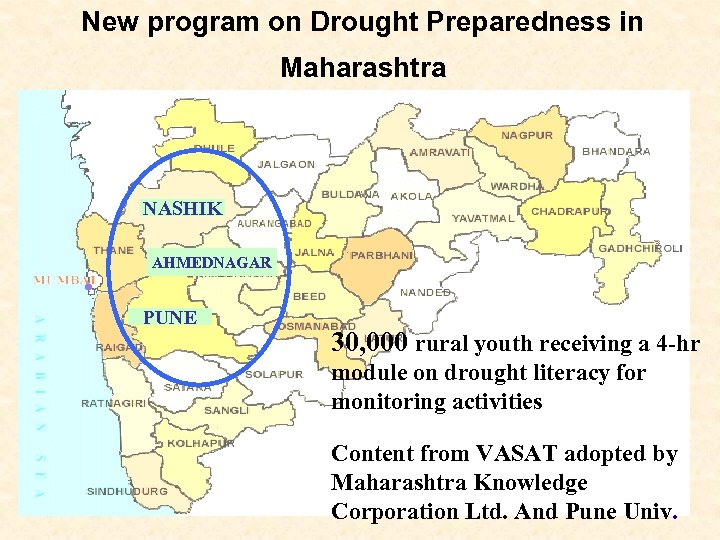 New program on Drought Preparedness in Maharashtra NASHIK AHMEDNAGAR PUNE 30, 000 rural youth receiving a 4 -hr module on drought literacy for monitoring activities Content from VASAT adopted by Maharashtra Knowledge Corporation Ltd. And Pune Univ.
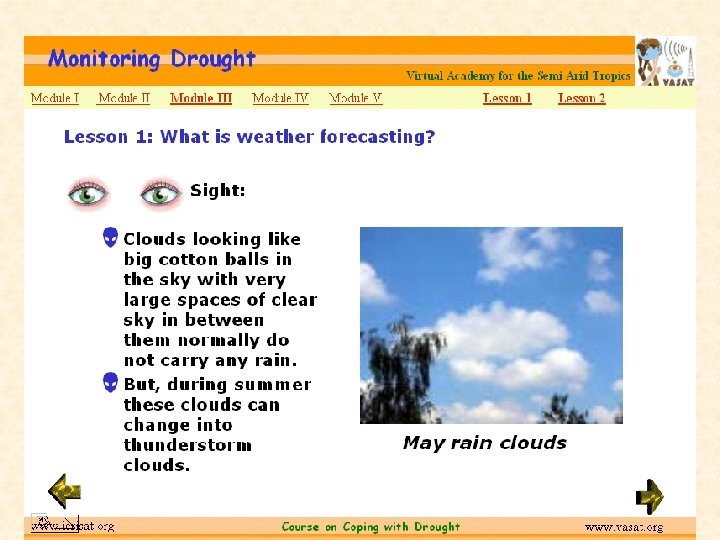
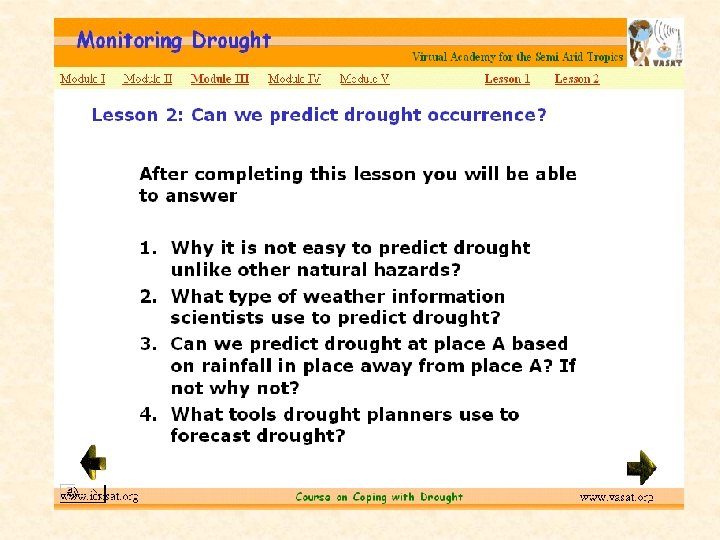
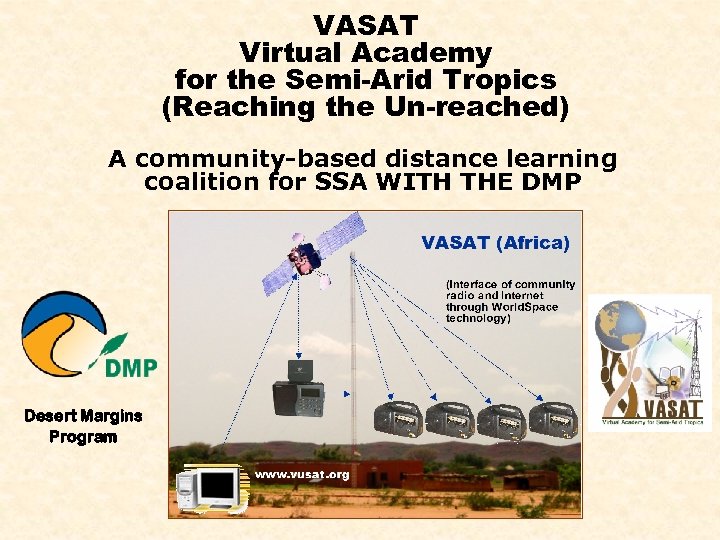 VASAT Virtual Academy for the Semi-Arid Tropics (Reaching the Un-reached) A community-based distance learning coalition for SSA WITH THE DMP Desert Margins Program
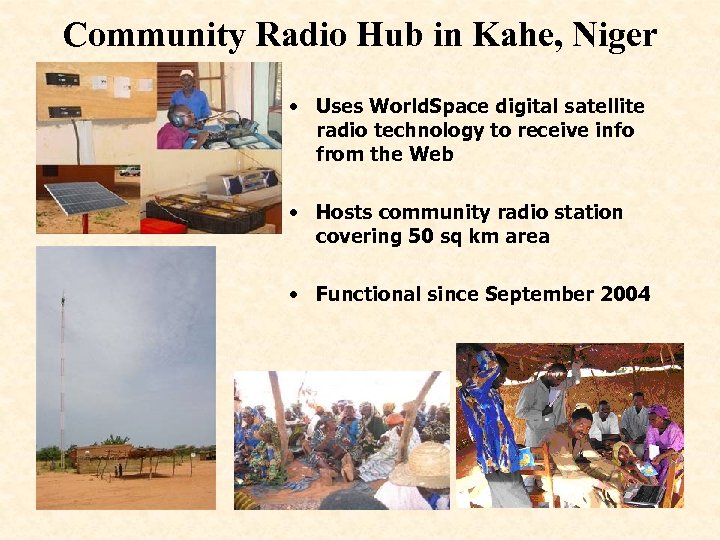 Community Radio Hub in Kahe, Niger • Uses World. Space digital satellite radio technology to receive info from the Web • Hosts community radio station covering 50 sq km area • Functional since September 2004
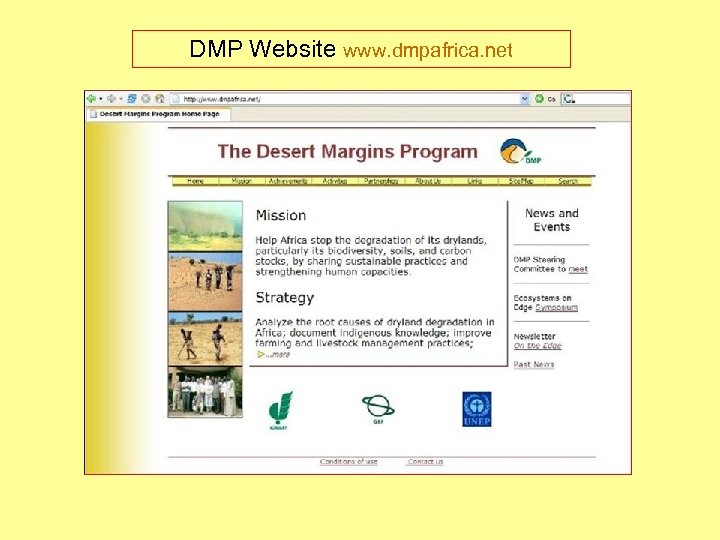 DMP Website www. dmpafrica. net
 CGIAR’s assets to institutionalize and further operationalize climate applications • • Major repository of dynamic knowledge on Gx. E (genotype x environment) interactions can be activated to target farmer-friendly biotech interventions for improved management of climate variability and change (CIMMYT, CIP, ICRISAT, IITA, IRRI…) Existing poverty mapping expertise can be expanded to address climate risk management following the [risk = uncertainty x vulnerability] paradigm, e. g. to determine priority focus regions for applications of climate forecasting (CIAT, IFPRI, ILRI…) Strong capacity building and ICT/KM capacity can be mobilized to help solve communication bottlenecks linked to user understanding of the abstract, probabilistic nature of forecasts (VASAT, …) Combination of highly decentralized, network structure and international mandate can help tailor options for local climate management while ensuring standardized, science-based methodologies that allow for regional and global assessments of climate management impacts
 Future CG Contributions • Combining indigenous and science-generated knowledge • Advancing knowledge on Gx. E [genotype x environment] interactions • Building climate science & monitoring capacity • Using ICT 4 D to communicate climate information to farmers • Combining bio-economic modeling and advanced computing power to improve use and impact of adaptive recommendations • Combining poverty and climate variability mapping [risk = uncertainty x vulnerability] • CG very good at networking
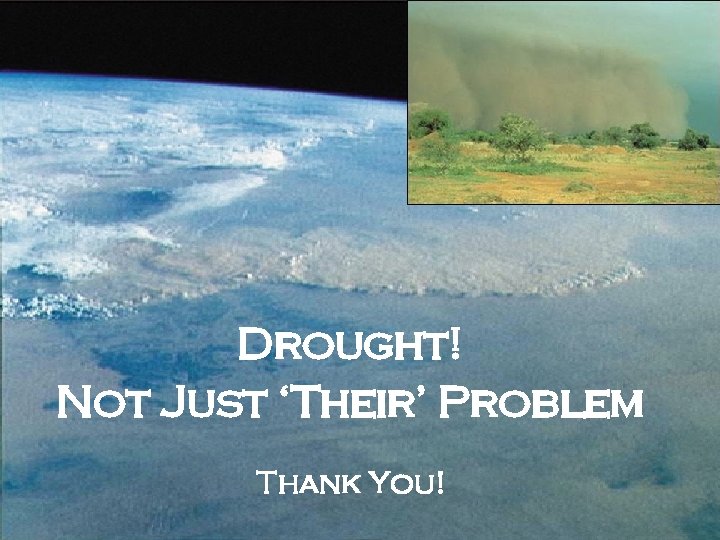 Drought! Not Just ‘Their’ Problem Thank You!