


 Скачать презентацию Climate and Health Effects of Regional Nuclear War
3c95f23ffb40b6d6566827a3c4e0034c.ppt
- Количество слайдов: 62
 Climate and Health Effects of Regional Nuclear War How sudden global cooling could produce a “nuclear famine” International Physicians for the Prevention of Nuclear War
 Overview 1. Preventing nuclear war is a medical imperative 2. Thousands of nuclear explosions would cause a nuclear winter 3. Even a regional nuclear war using a small fraction of the world’s arsenal, would have devastating global climate effects 4. Abolishing these instruments of mass extermination through a Nuclear Weapons Convention is the only responsible way to address this threat to our common security and survival International Physicians for the Prevention of Nuclear War
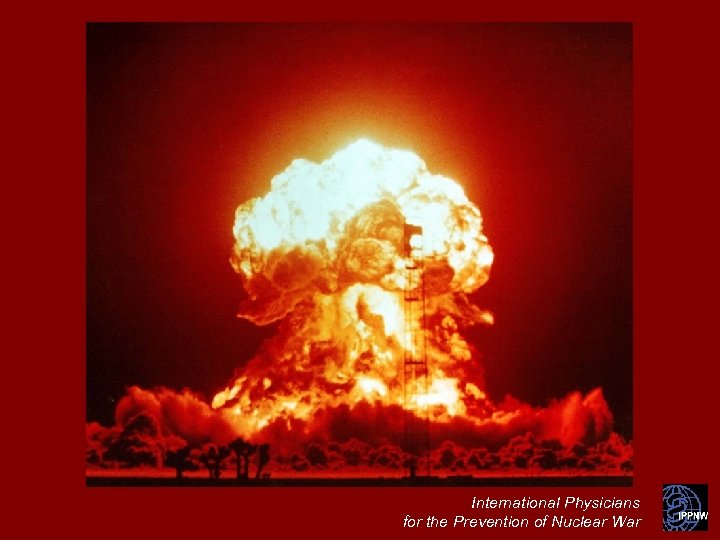
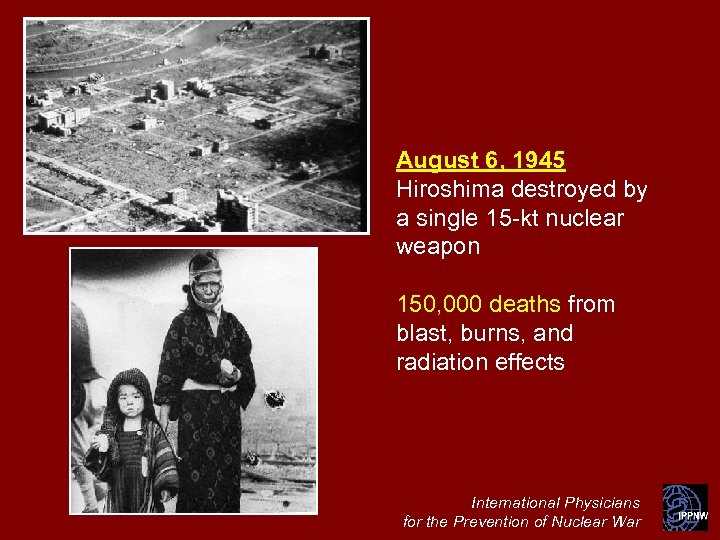 August 6, 1945 Hiroshima destroyed by a single 15 -kt nuclear weapon 150, 000 deaths from blast, burns, and radiation effects International Physicians for the Prevention of Nuclear War
 Medical Consequences of Nuclear War Effects of a 10 - to 20 -kiloton nuclear weapon, detonated at an altitude of 1 km include: § Temperatures of ~7, 000 degrees C beneath fireball ignite fires in cities and industrial targets; intense winds fuel firestorms § Tens of thousands of immediate deaths § Tens of thousands of burns; thousands of crush and impact injuries § Thousands of survivors blinded and deafened § Physicians and other health workers killed; hospitals destroyed § Acute radiation injuries and long-term radiation-related illnesses International Physicians for the Prevention of Nuclear War
 Nuclear Winter § Massive amounts of smoke and soot from fires rise into the upper atmosphere § Sunlight reflected back into space § Rapid, large drops in global surface temperatures § Collapse of basic, life-sustaining ecosystems International Physicians for the Prevention of Nuclear War
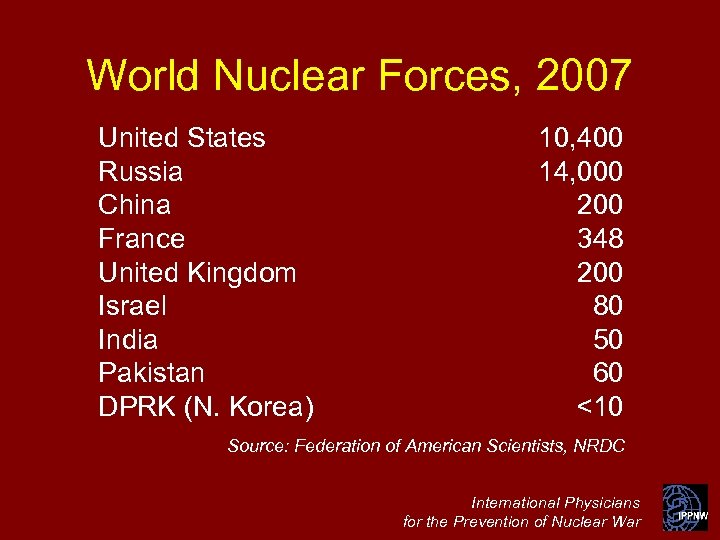 World Nuclear Forces, 2007 United States Russia China France United Kingdom Israel India Pakistan DPRK (N. Korea) 10, 400 14, 000 200 348 200 80 50 60 <10 Source: Federation of American Scientists, NRDC International Physicians for the Prevention of Nuclear War
 International Physicians for the Prevention of Nuclear War
 Nuclear War in South Asia § 20, 000 deaths in major cities in India and Pakistan § Radioactive contamination throughout both countries and in Nepal, Bangladesh, Sri Lanka, Tibet, China, and other neighbors § Global climate disruption from smoke and soot International Physicians for the Prevention of Nuclear War
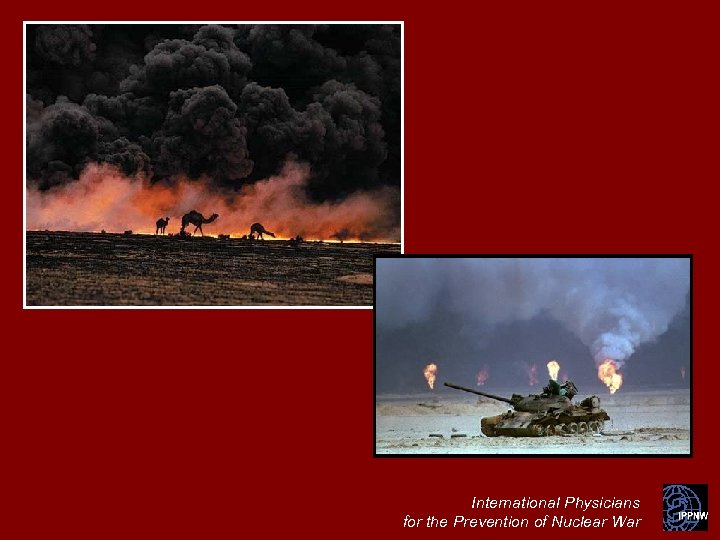
 Nuclear War in South Asia § Nuclear explosions ignite fires that burn whole cities § Soot lofted high into the atmosphere absorbs incoming sunlight § Dramatic decrease in amount of light reaching the surface § Large, rapid drops in surface temperature International Physicians for the Prevention of Nuclear War
 International Physicians for the Prevention of Nuclear War
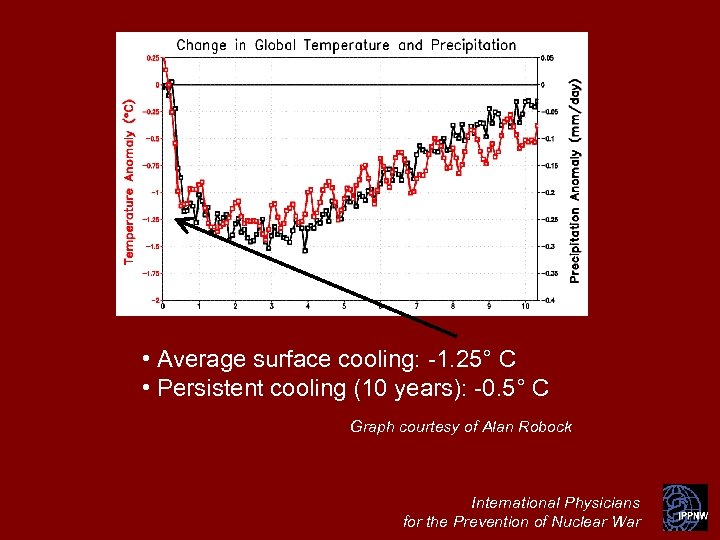 • Average surface cooling: -1. 25° C • Persistent cooling (10 years): -0. 5° C Graph courtesy of Alan Robock International Physicians for the Prevention of Nuclear War
 Graph courtesy of Alan Robock International Physicians for the Prevention of Nuclear War
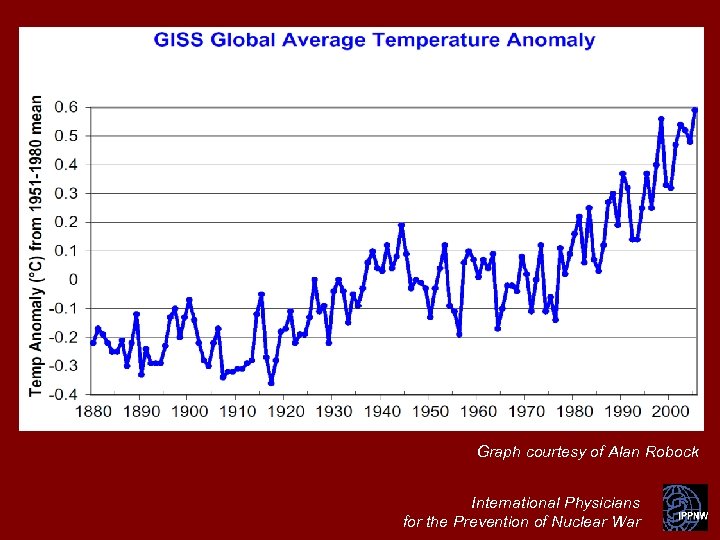
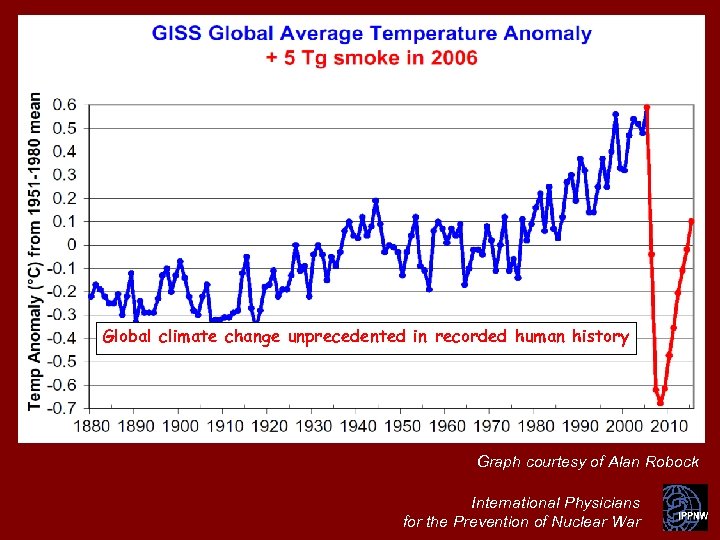 Global climate change unprecedented in recorded human history Graph courtesy of Alan Robock International Physicians for the Prevention of Nuclear War
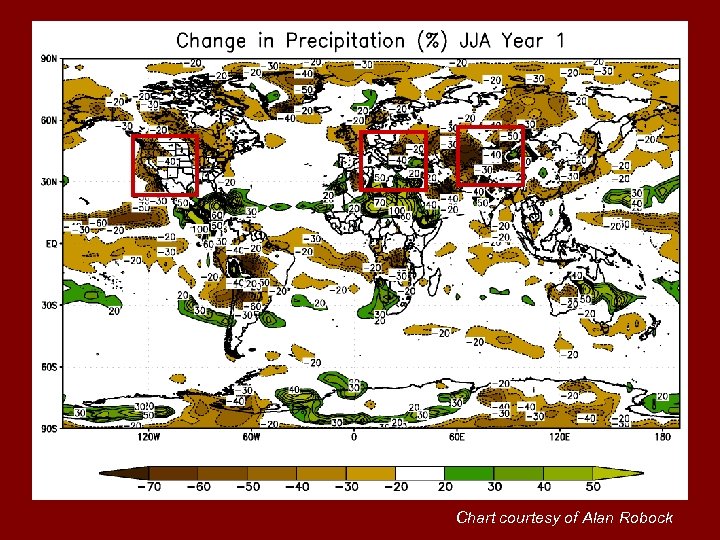 Chart courtesy of Alan Robock
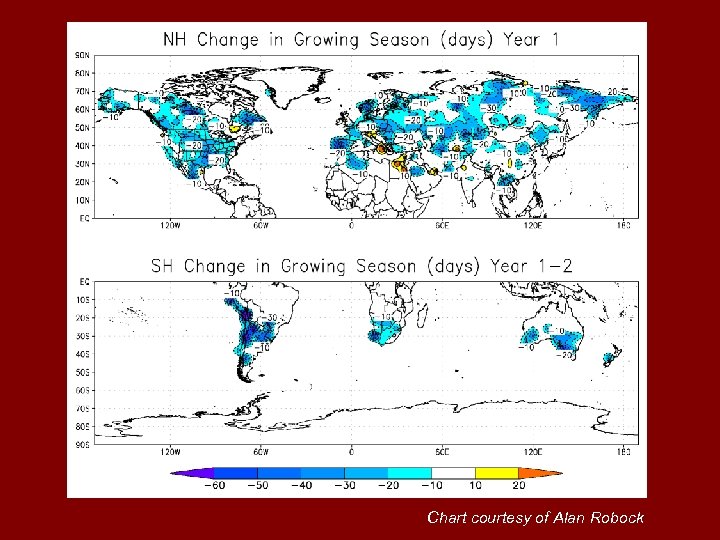 Chart courtesy of Alan Robock
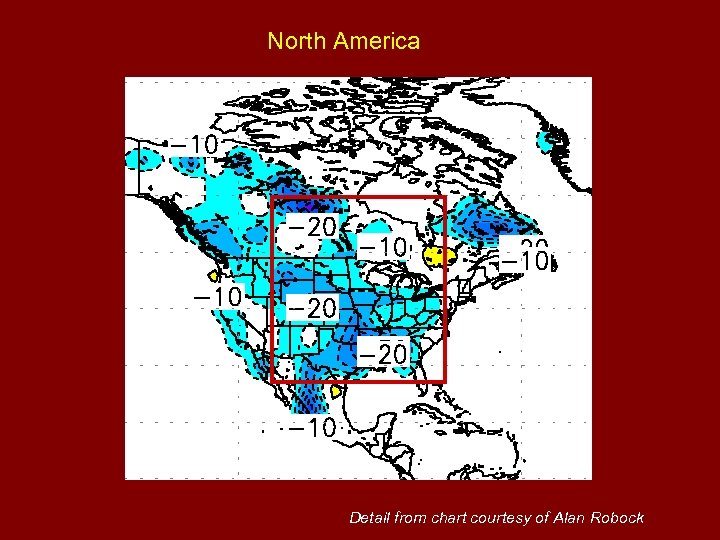 North America Detail from chart courtesy of Alan Robock
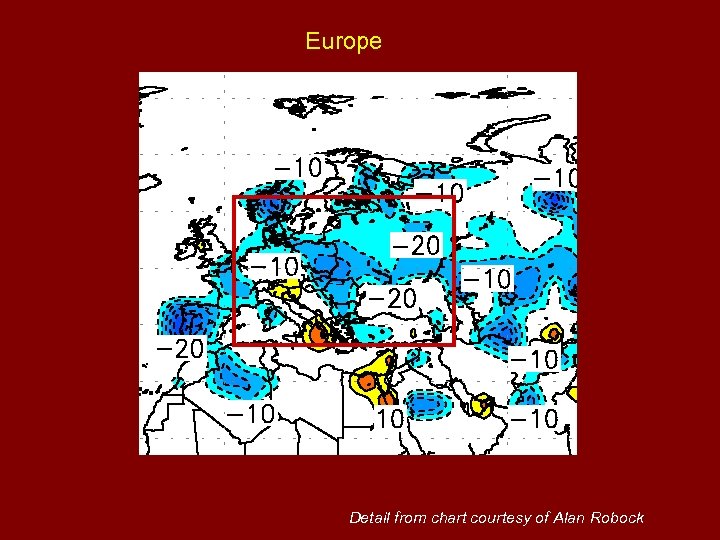 Europe Detail from chart courtesy of Alan Robock
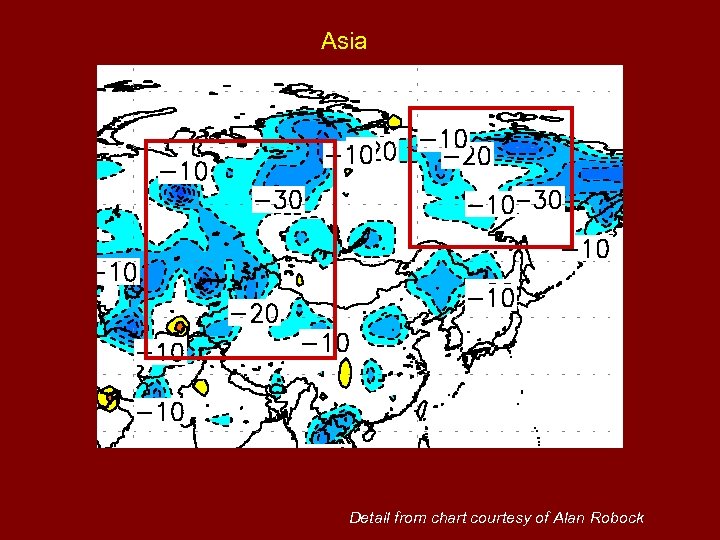 Asia Detail from chart courtesy of Alan Robock
 Volcanoes and Global Cooling § Large volcanic eruption in Indonesia § Prolonged cooling (536 -554 AD) § Extensive crop failures § Drought § Severe famine International Physicians for the Prevention of Nuclear War
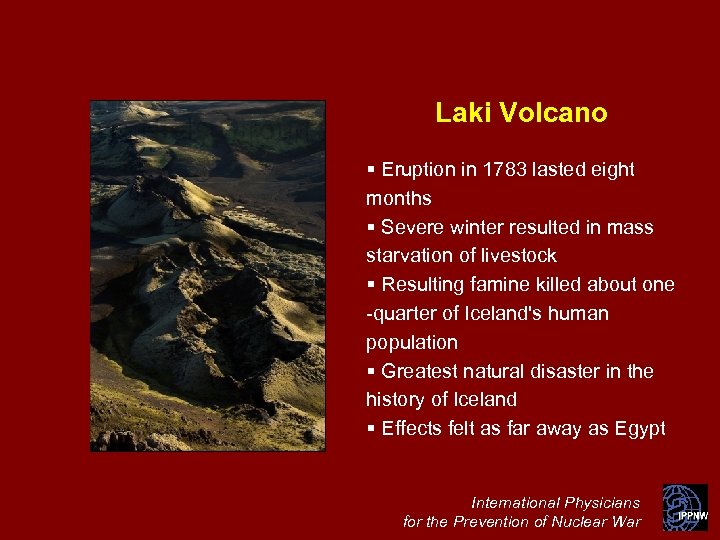 Laki Volcano § Eruption in 1783 lasted eight months § Severe winter resulted in mass starvation of livestock § Resulting famine killed about one -quarter of Iceland's human population § Greatest natural disaster in the history of Iceland § Effects felt as far away as Egypt International Physicians for the Prevention of Nuclear War
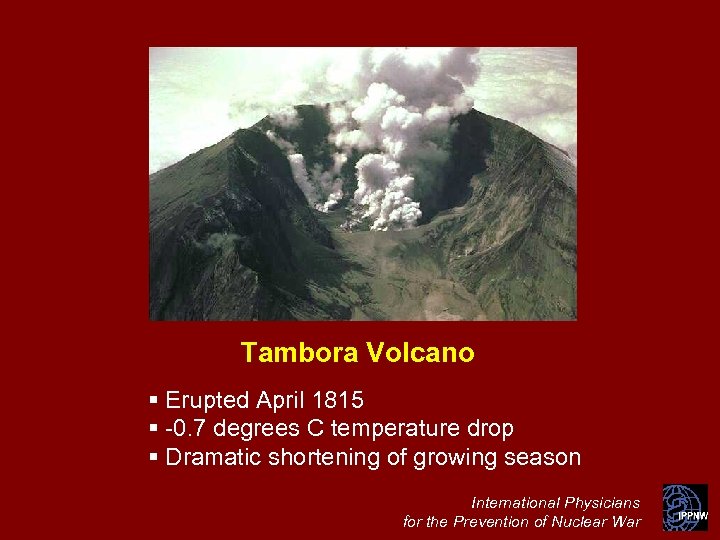 Tambora Volcano § Erupted April 1815 § -0. 7 degrees C temperature drop § Dramatic shortening of growing season International Physicians for the Prevention of Nuclear War
 1816 — The Year Without a Summer § Four major frosts in US and Canada § June snowstorm in New England § Extensive crop damage § Grain prices doubled § Famine in Ireland, Germany, Switzerland, France, India International Physicians for the Prevention of Nuclear War
 Nuclear War: The Impact on Agriculture § Sudden cooling, decreased sunlight, less rainfall shortens growing seasons; reduces crop yields § Stratospheric ozone depletion damages crops sensitive to UV-B § Disruption of petroleum supplies affects use of farm machinery and fertilizer and pesticide production § Radioactive and toxic contamination takes farmland out of production § Collapse of distribution system International Physicians for the Prevention of Nuclear War
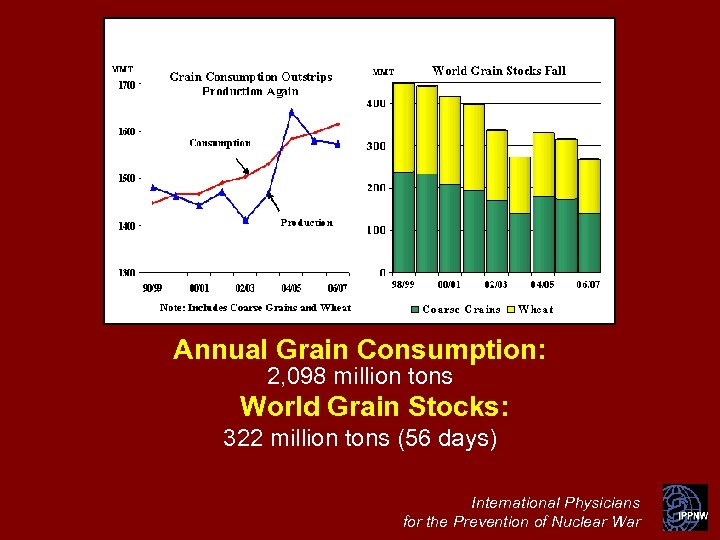 Annual Grain Consumption: 2, 098 million tons World Grain Stocks: 322 million tons (56 days) International Physicians for the Prevention of Nuclear War
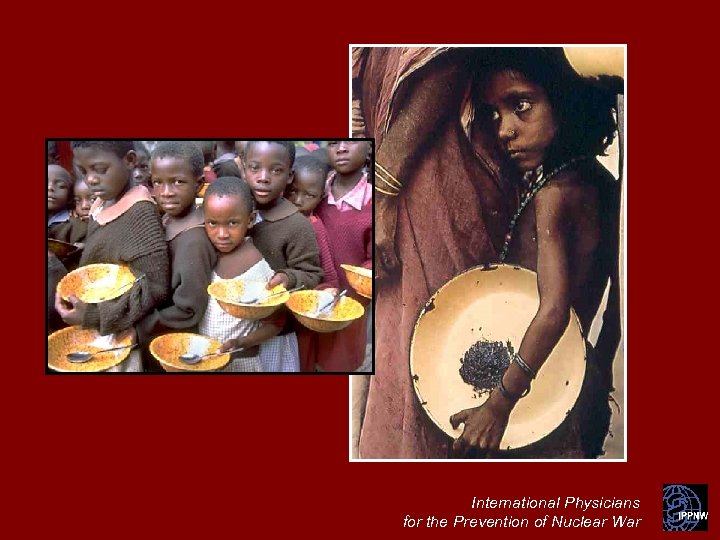
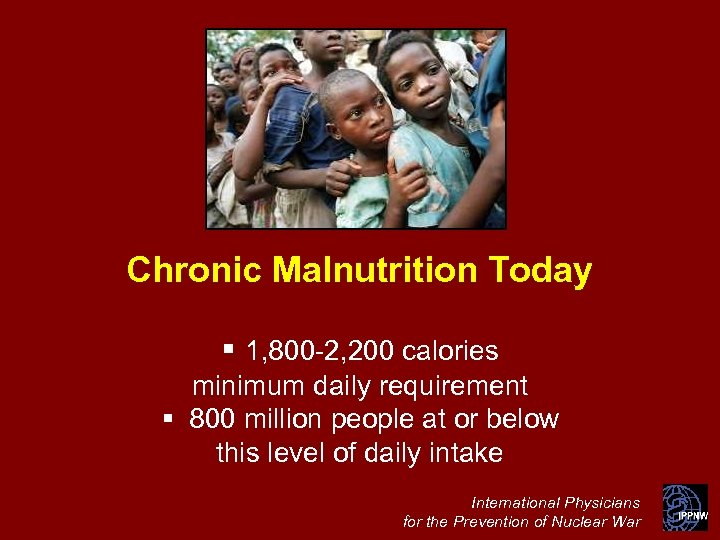 Chronic Malnutrition Today § 1, 800 -2, 200 calories minimum daily requirement § 800 million people at or below this level of daily intake International Physicians for the Prevention of Nuclear War
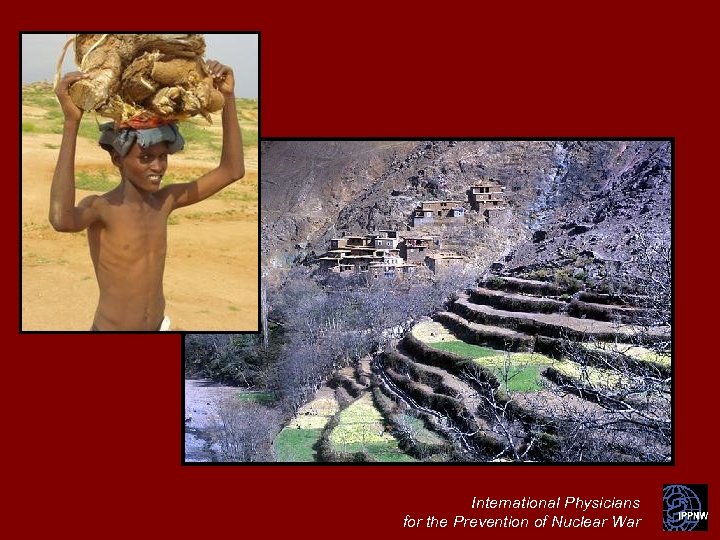
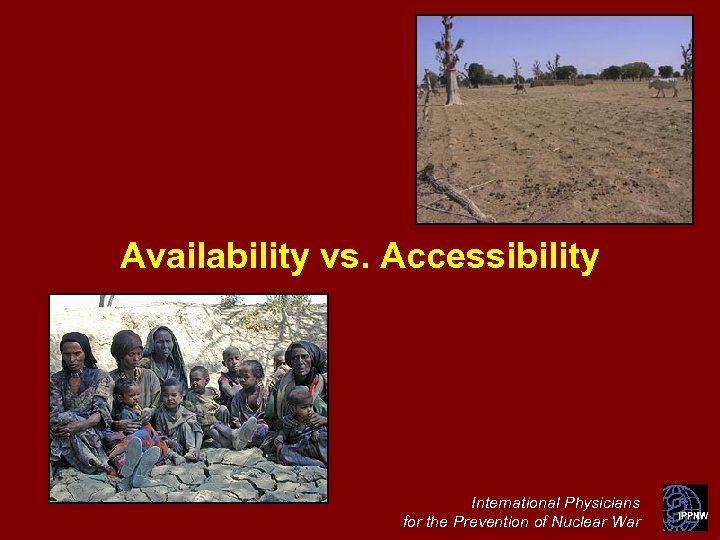 Availability vs. Accessibility International Physicians for the Prevention of Nuclear War
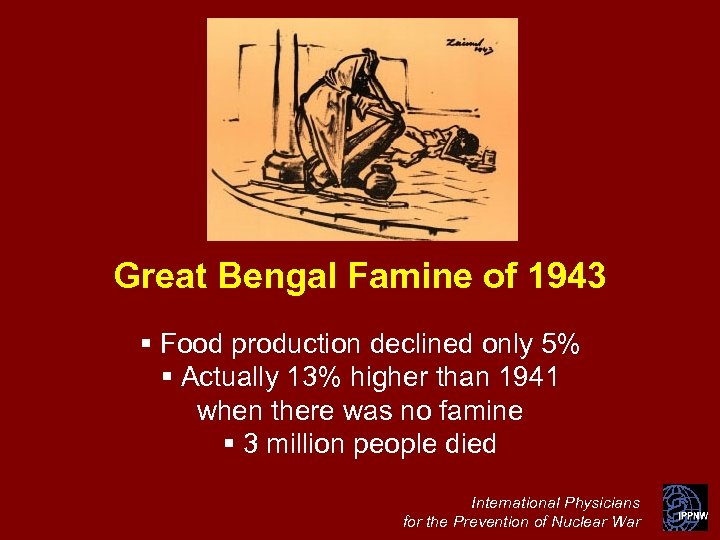 Great Bengal Famine of 1943 § Food production declined only 5% § Actually 13% higher than 1941 when there was no famine § 3 million people died International Physicians for the Prevention of Nuclear War
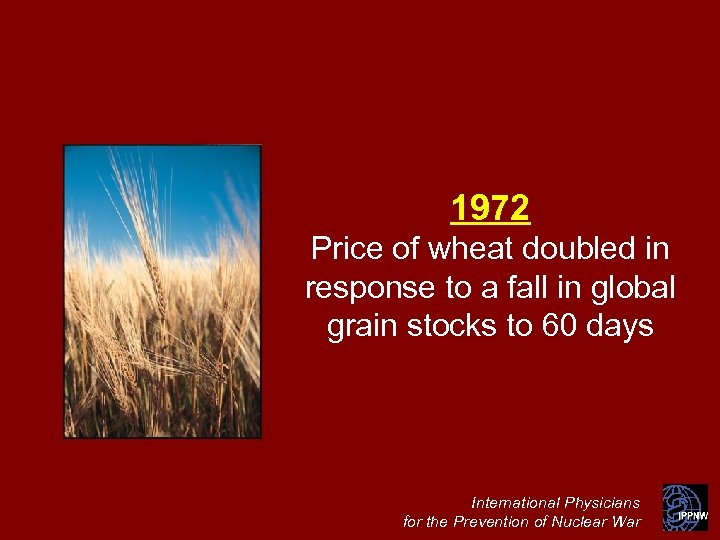 1972 Price of wheat doubled in response to a fall in global grain stocks to 60 days International Physicians for the Prevention of Nuclear War
 International Physicians for the Prevention of Nuclear War
 International Physicians for the Prevention of Nuclear War
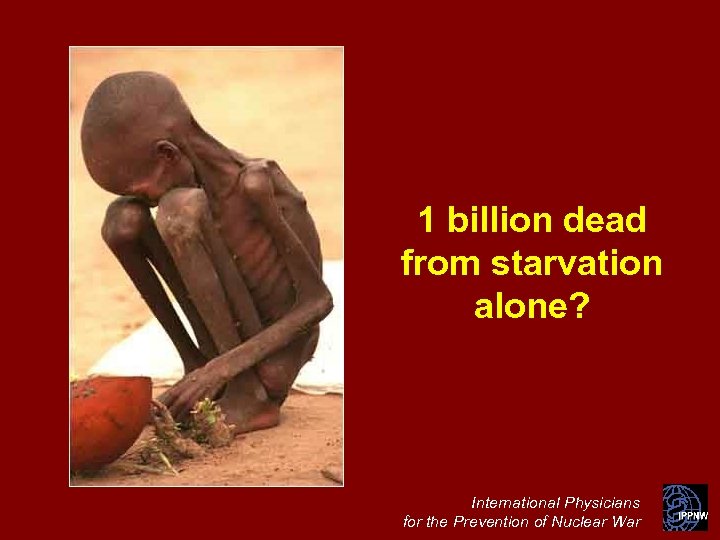 1 billion dead from starvation alone? International Physicians for the Prevention of Nuclear War
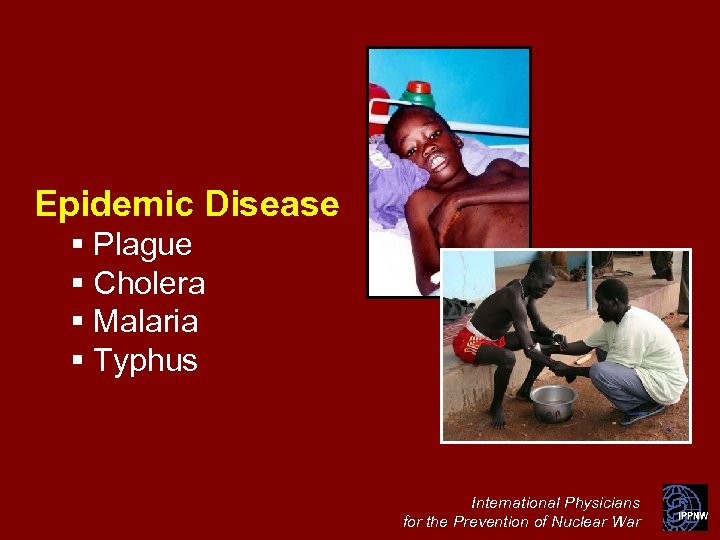 Epidemic Disease § Plague § Cholera § Malaria § Typhus International Physicians for the Prevention of Nuclear War
 War and Civil Conflict § Food riots § Civil wars § Wars between nations… International Physicians for the Prevention of Nuclear War
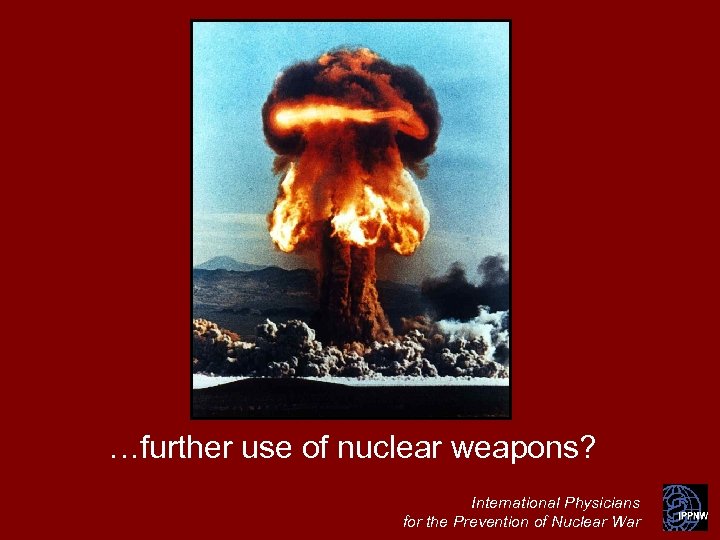 …further use of nuclear weapons? International Physicians for the Prevention of Nuclear War
 International Physicians for the Prevention of Nuclear War
 International Physicians for the Prevention of Nuclear War
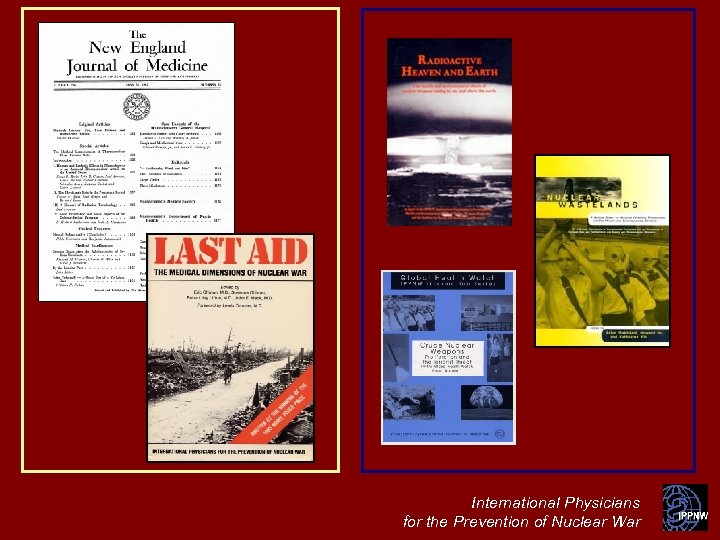 International Physicians for the Prevention of Nuclear War
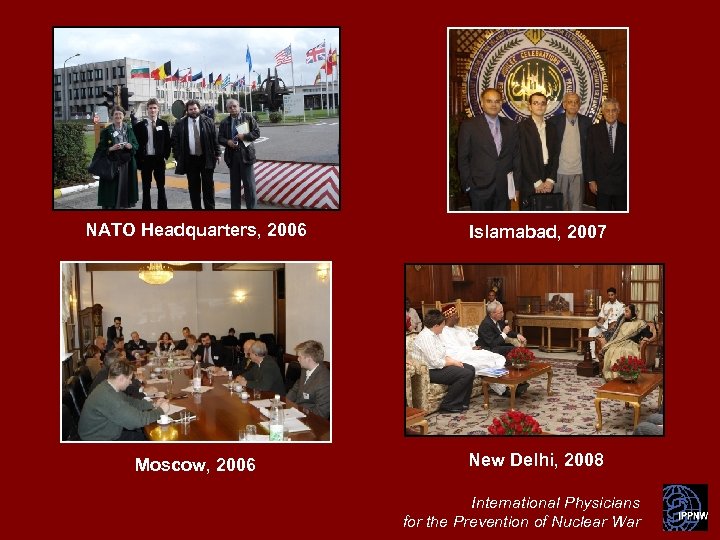 NATO Headquarters, 2006 Islamabad, 2007 Moscow, 2006 New Delhi, 2008 International Physicians for the Prevention of Nuclear War
 The ICAN Action Plan § Build awareness among public, health professionals, and decision makers about growing nuclear dangers, including Nuclear Famine, and urgent need for abolition § Promote Nuclear Weapons Convention at the UNGA, NPT, and other disarmament forums § Promote removal of highly-enriched uranium (HEU) from production of medical isotopes § Build diverse civil society partnerships International Physicians for the Prevention of Nuclear War
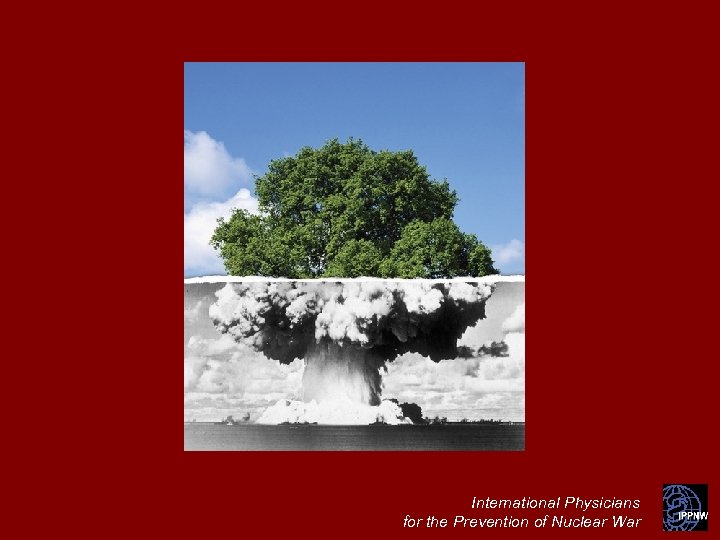 International Physicians for the Prevention of Nuclear War
 Acknowledgments IPPNW gratefully acknowledges the research published by Alan Robock, Ph. D, Department of Environmental Sciences, Rutgers University (http: //envsci. rutgers. edu/~robock); Owen B. Toon, Ph. D, Department of Atmospheric & Oceanic Science, University of Colorado at Boulder and their colleagues, upon which portions of this presentation are based. International Physicians for the Prevention of Nuclear War
 Selected Bibliography § O. B. Toon, R. P. Turco, A. Robock, C. Bardeen, L. Oman, and G. L. Stenchikov, 2007: Atmospheric effects and societal consequences of regional scale nuclear conflicts and acts of individual nuclear terrorism. Atm. Chem. Phys. , 7, 1973 -2002. § A. Robock, L. Oman, G. L. Stenchikov, O. B. Toon, C. Bardeen, and R. P. Turco, 2007: Climatic consequences of regional nuclear conflicts. Atm. Chem. Phys. , 7, 2003 -2012. § M. J. Mills, O. B. Toon, R. P. Turco, D. E. Kinnison, and R. R. Garcia. Massive global ozone loss predicted following regional nuclear conflict. Proceedings of the National Academy of Sciences. 2008; 105: 5307– 5312. § I. Helfand. An assessment of the extent of projected global famine resulting from limited, regional nuclear war. IPPNW. Cambridge, MA. October 2007. (www. ippnw. org) Complete list of relevant articles and additional resources at: http: //climate. envsci. rutgers. edu/nuclear International Physicians for the Prevention of Nuclear War
 Steps to Safety • Take Nuclear Weapons off of High Alert • Reduce U. S. /Russian Nuclear Arsenals to 1000, as first step to deeper reductions on way to global elimination • Ratify the CTBT • Secure all “loose” nuclear material in 4 years • Negotiate a ban on production of nuclear weapon (fissile) material 44
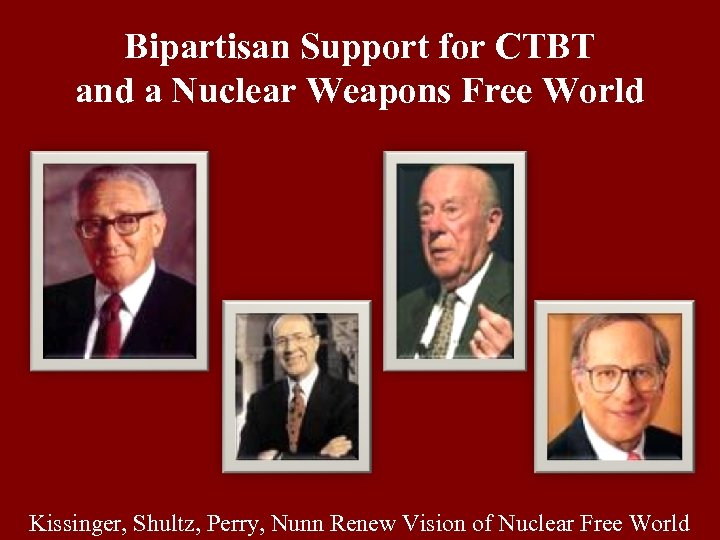 Bipartisan Support for CTBT and a Nuclear Weapons Free World Kissinger, Shultz, Perry, Nunn Renew Vision of Nuclear Free World
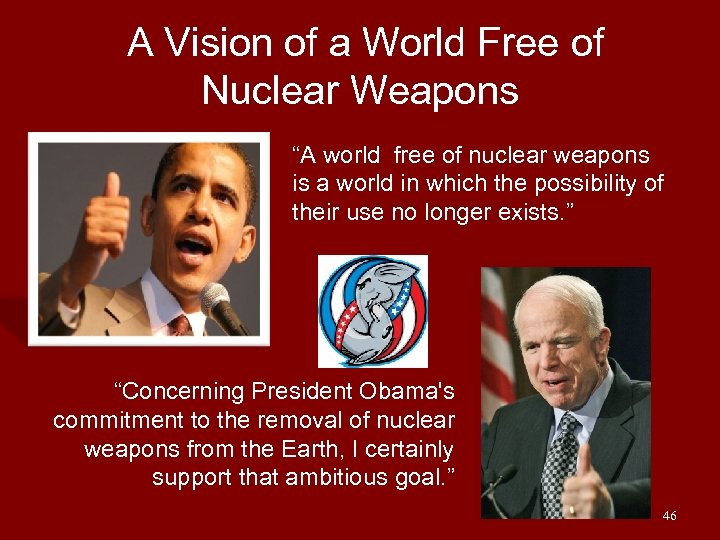 A Vision of a World Free of Nuclear Weapons “A world free of nuclear weapons is a world in which the possibility of their use no longer exists. ” “Concerning President Obama's commitment to the removal of nuclear weapons from the Earth, I certainly support that ambitious goal. ” Mc. Cain, April 2009 Press Conference 46
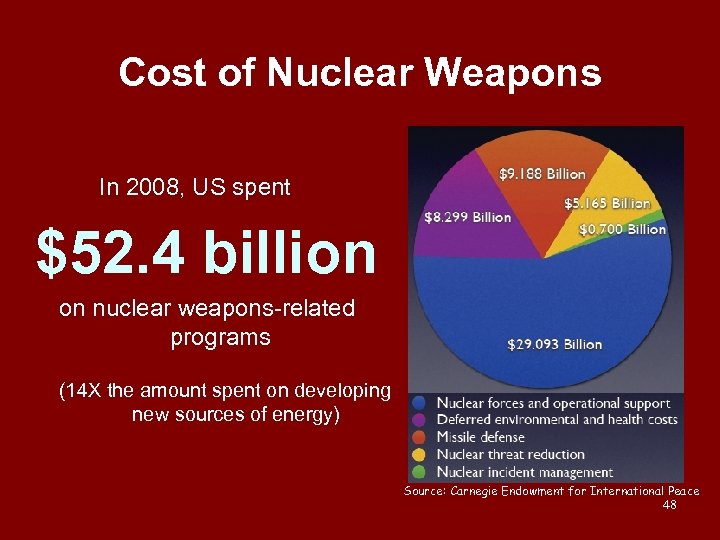 Cost of Nuclear Weapons In 2008, US spent $52. 4 billion on nuclear weapons-related programs (14 X the amount spent on developing new sources of energy) Source: Carnegie Endowment for International Peace 48
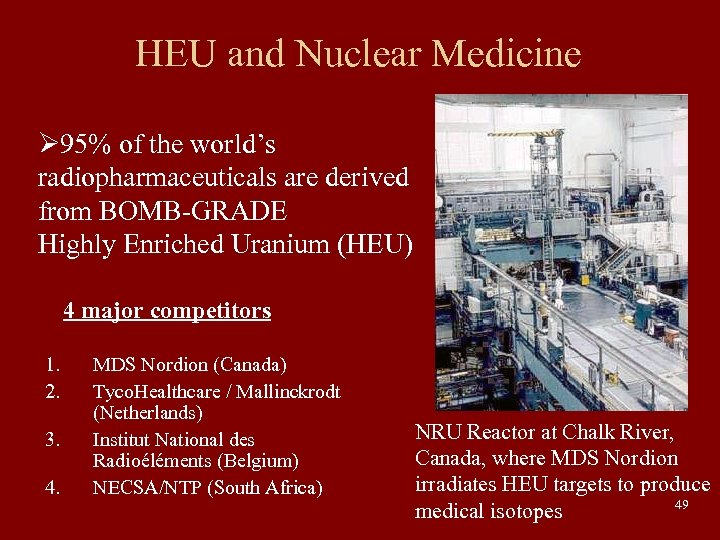 HEU and Nuclear Medicine Ø 95% of the world’s radiopharmaceuticals are derived from BOMB-GRADE Highly Enriched Uranium (HEU) 4 major competitors 1. 2. 3. 4. MDS Nordion (Canada) Tyco. Healthcare / Mallinckrodt (Netherlands) Institut National des Radioéléments (Belgium) NECSA/NTP (South Africa) NRU Reactor at Chalk River, Canada, where MDS Nordion irradiates HEU targets to produce 49 medical isotopes
 Conversion • Conversion from HEU to LEU is possible • No future needs for HEU identified • Current conversion programmes: successful Ø IPPNW proposed resolution to World Health Assembly: Reducing the contribution of the health sector to nuclear proliferation and terrorist risks by eliminating HEU from production of radiopharmaceuticals 50
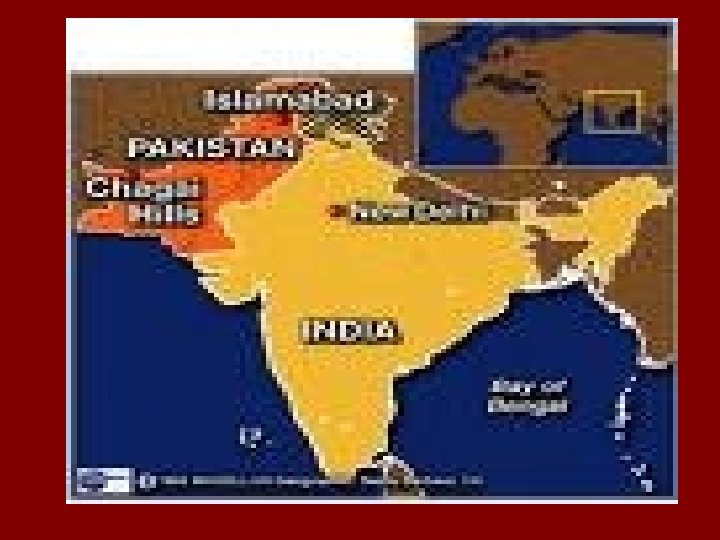
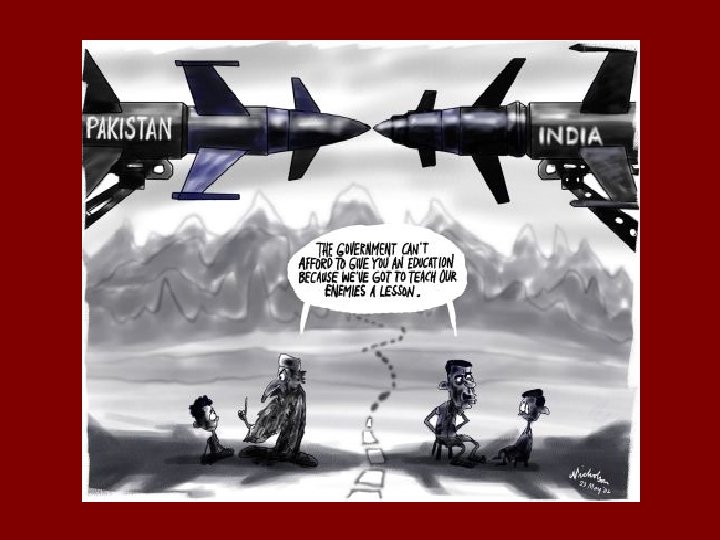
 India -Pakistan • Historical ongoing conflict between India and Pakistan on Kashmir • The nuclear arm race between them since 1998 • The crunch of resources for health, education and food is the reality
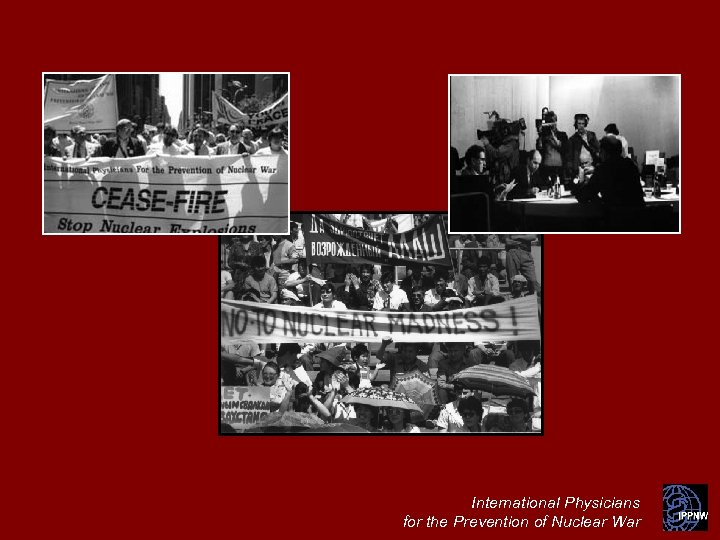
 The Medical Measures • The confidence building measures (CBMs) between them • Indian/Pakistani Doctors for Peace and Development (IDPD) and PDPD and their student chapters playing role in enhancing CBMs • Engaging the leaders and the future leaders in dialogue • Organizing events for the public awareness including march and demonstrations
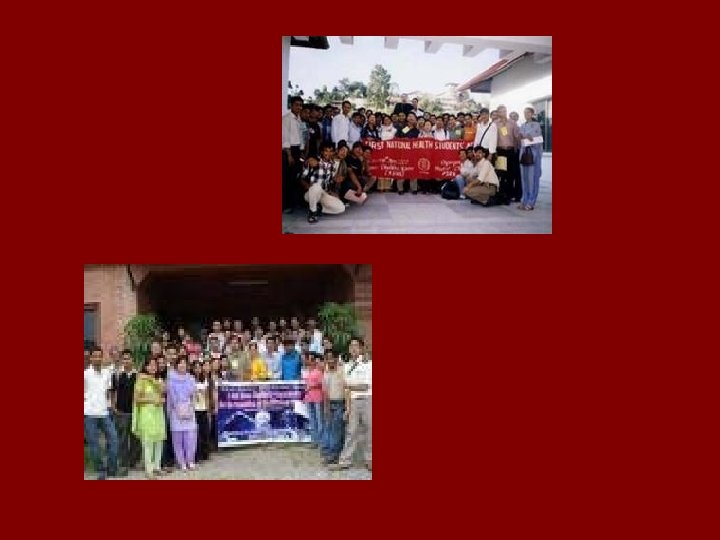
 The Role of Medical Students • Organizing Hiroshima and Nagasaki Days • NWIP (Nuclear Weapons Inheritance Project) • Demonstrations, workshops and presentations • The concept of regional cooperation • North-South gap bridging • Nuclear weapons free: my cup of tea • Nuclear weapons: not our future
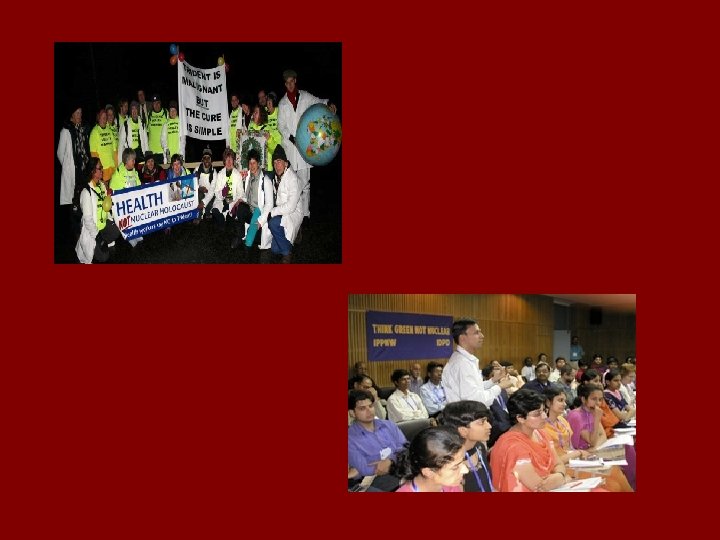
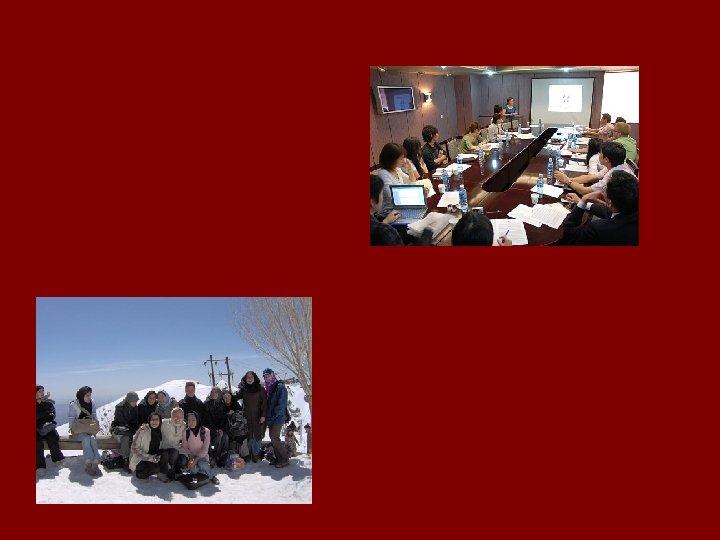
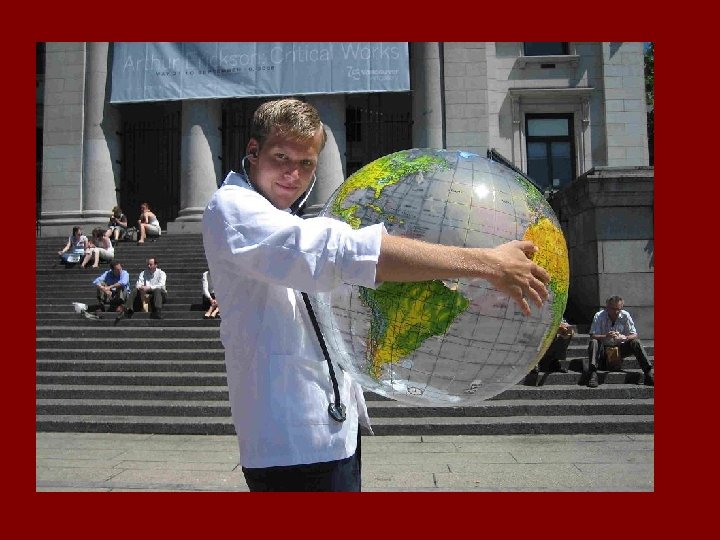
 Nuclear Weapons Inheritance Project (NWIP) • • • Medical students to medical students Delegations and presentations Confidence building Street action and Target X Youths and doctors in training in the peacebuilding
 Peace through Health: Nepal’s Lessons • Recent historical movement • Constituent Assembly elections and republican system • Conflicts - regional and local • Physicians and medical students’ roles in peace-building • Peace through health and health through peace
 www. ippnw. org