 Скачать презентацию Client Status Presentation Team Members Tom
b3cd77db0791fe0fb97f96488df664e1.ppt
- Количество слайдов: 21



Client Status Presentation • Team Members: – Tom Hamilton – Kevin Harkins – Alan Kinnaman – Robert Napper – Bill Okyere Treasurer Document Coordinator Team Leader Liaison Secretary Presented by: Alan Kinnaman
Presentation Overview • Problem Statement • Requirements & Specifications • Design Plan – Philosophy – Approach – Deliverables • Schedule Presented by: Alan Kinnaman
Problem Statement • In a fast-paced clinic, administrators feel the need to upgrade to a modern automated system. • Inexpensive systems exist, but lack capabilities. • Complex systems cost more, and require significant design for each application. • Our goal is to design an affordable, modular electronic system that will effectively improve a typical medical clinic’s workflow. Presented by: Alan Kinnaman
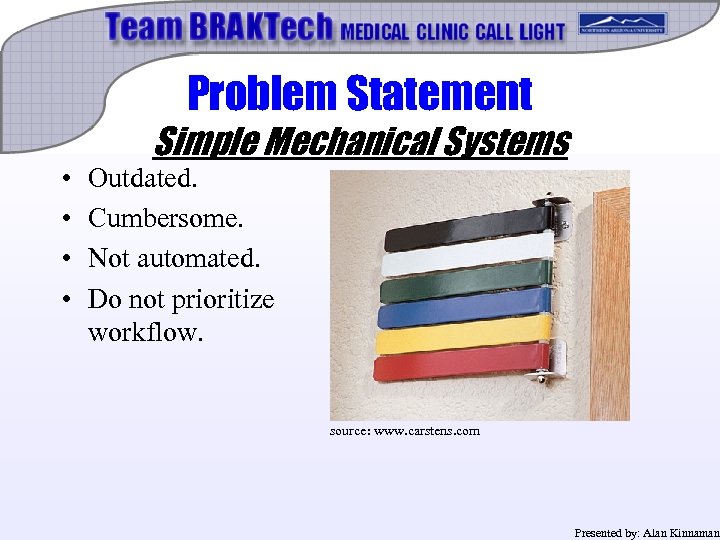
Problem Statement • • Simple Mechanical Systems Outdated. Cumbersome. Not automated. Do not prioritize workflow. source: www. carstens. com Presented by: Alan Kinnaman
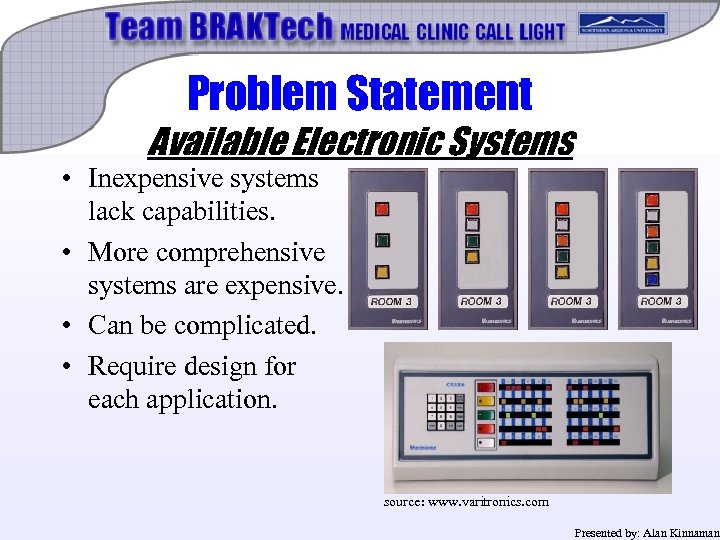
Problem Statement Available Electronic Systems • Inexpensive systems lack capabilities. • More comprehensive systems are expensive. • Can be complicated. • Require design for each application. source: www. varitronics. com Presented by: Alan Kinnaman
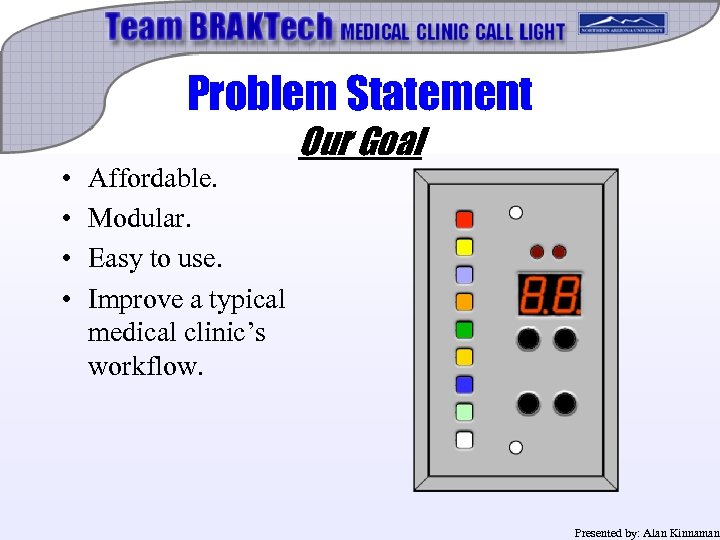
Problem Statement • • Affordable. Modular. Easy to use. Improve a typical medical clinic’s workflow. Our Goal Presented by: Alan Kinnaman
Requirements • Temperature Environment – Must not build up excessive heat within the box. – Will be designed to meet microcontroller specifications. • Humidity – Must tolerate excessive moisture within the wall. – Must use fuses or circuit breaker. • Vibration/Shock – Must withstand wall vibrations. Presented by: Tom Hamilton
Requirements • Size Mechanical – Single gang electrical outlet box. – Made from a simple outlet box blank. • Weight – Each station will be mounted in an electrical outlet box, which is where it will be permanently installed and will not pose a constraint. • Packaging – Proper electrical grounding and isolation. Presented by: Tom Hamilton
Requirements Documentation • User’s Manual – System configuration. – Day to day operation. • Maintenance Manual – Maintenance and installation procedures. – Design documents. Presented by: Tom Hamilton
Requirements • Microcontroller Electrical – Electrical requirements pertain to the specifications. • Power – One or more power supplies. • Interfacing – Reliable communication link and protocol. – Each unit contain its own microprocessor. • Safety – Must meet all electrical codes and regulations. Presented by: Tom Hamilton
Specifications Absolute Maximum Temperature +125°C Size of electronics component Must not be greater than the following Height = 2¾″ Width = 2″ Depth = 2¾″ Size of control panel Typical electrical outlet blank Height = 4½″ Width = 2¾″ Weight No pertinent constraint Interconnection Multiple twisted paired telephone cable or thermostat cable Protection Electrically isolated from ESD and if a metallic blank is used then it must be properly grounded. Controls Pushbuttons must be durable to withstand years of daily use. Microprocessor Type Microchip PIC 16 F 877 Voltage Rating 2. 0 to 5. 5 Volts Communication Link Type 13 -pair cable Communication Protocol RS-485 Electrical Guidelines The National Electric Code Presented by: Tom Hamilton
Design Plan Philosophy • System Performance – – Must not rely on a single controller. Units are modular and interconnected. Failure of a unit shouldn’t affect others. Superior to switch-based logic systems. • Ease of Operation – Simple for new users to learn. – Improve the workflow. Presented by: Kevin Harkins
Design Plan • Installation Philosophy – Wiring should be simple. – Should not require extensive programming. – Automatic communication between units. • Quality – Meets needs of a fast-paced and demanding workplace. – User-friendly alternative to existing office technologies. Presented by: Kevin Harkins
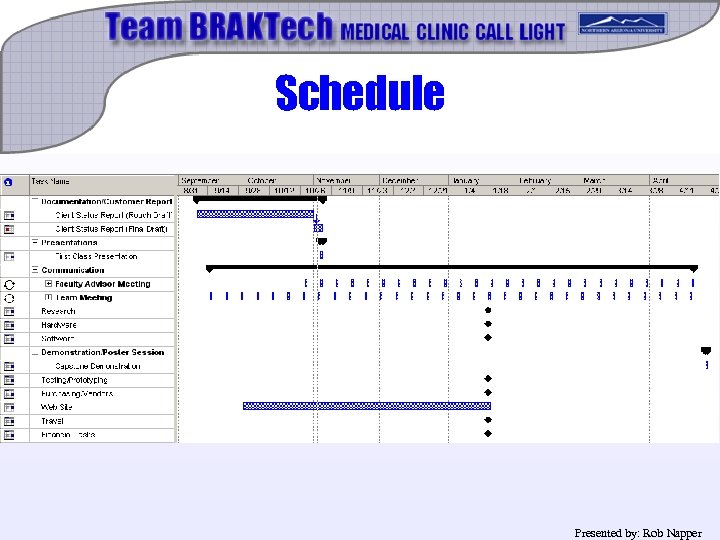
Design Plan • Schedule Philosophy – Four stages of design process: • Requirements • Proposal • Design • Implementation phase – Capstone design conference: April 25 th, 2004 Presented by: Kevin Harkins
Design Plan • Cost Analysis Philosophy – Minimize costs associated with final product. – Report costs to client. – Overall costs must remain within our client’s means. • Design Safety – Safety issues are incorporated in our design. – Will be safe to the user, patients, doctors. • Maintainability – Doesn’t need substantial amount of maintenance. Presented by: Kevin Harkins
Design Plan • Goals Approach – Communication within medical clinic. • • Patient-doctor Doctor-medical assistant Doctor-front desk Cleaning attendant – Provide a modular design for ease of upgrading. – Able to be marketable to other doctors offices. Presented by: Bill Okyere
Design Plan • Subsystems Approach – Basic functionality – Hardware • Interface chip with output lights. • Interface chip with power supply. • Interface communication chips with each other. – Software – Networking Presented by: Bill Okyere
Design Plan Approach • Team Organization – Each problem should be distributed according to a group or team member based upon a team member’s strengths. Presented by: Bill Okyere
Design Plan • • • Deliverables Client Status Report Proposal Document Status Report Final Product, Installed Capstone Design Conference Final Report Presented by: Rob Napper
Schedule Presented by: Rob Napper

Questions? Presented by: Rob Napper
Скачать презентацию Client Status Presentation Team Members Tom
b3cd77db0791fe0fb97f96488df664e1.ppt