 Скачать презентацию Cleanliness Bathing An upper-class woman in
f5572dc5438c96723364e22fb9d6171a.ppt
- Количество слайдов: 28




Cleanliness
Bathing ► An upper-class woman in 1799 tells her journal, “I am gathering the courage to try the family shower, ” although they have owned it for over a year.
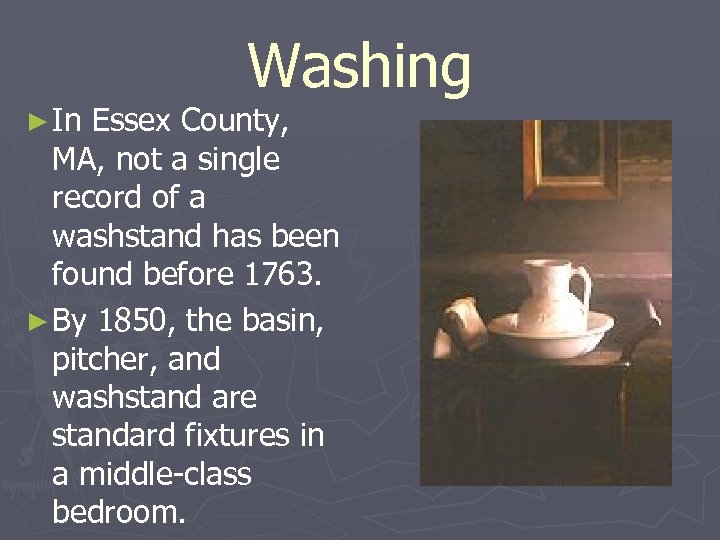
► In Washing Essex County, MA, not a single record of a washstand has been found before 1763. ► By 1850, the basin, pitcher, and washstand are standard fixtures in a middle-class bedroom.
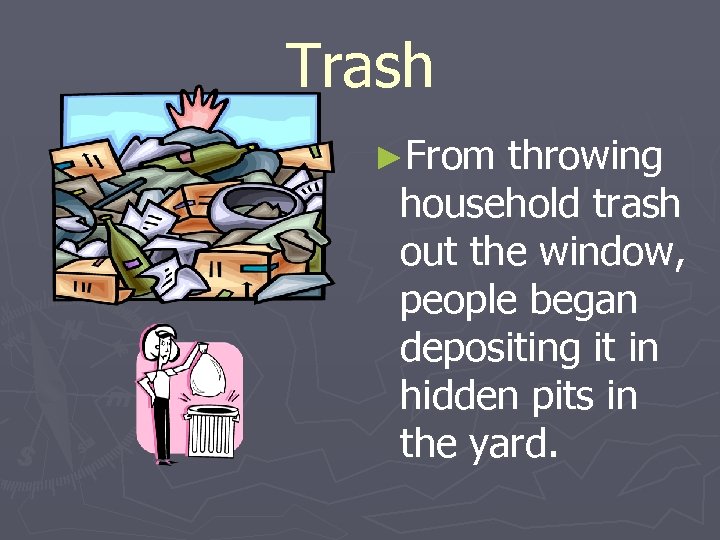
Trash ►From throwing household trash out the window, people began depositing it in hidden pits in the yard.
Civilization ► Early nineteenth century medical wisdom: “The more a country is civilized, the more they consult this part of politeness”— cleanliness.
American obsession ► “It were better to wash twenty times a day, than to allow a dirty spot to remain on any part of the skin” 1840 s ► “he who neglects his person and dress will be found lower in the scale of morals, other things being equal, than he who pays due regard to cleanliness” 1830 s
► Cleanliness “is an emblem, if not a characteristic, of purity of thought and propriety of conduct” 1844 ► “One drop” of African blood kept a person from being white
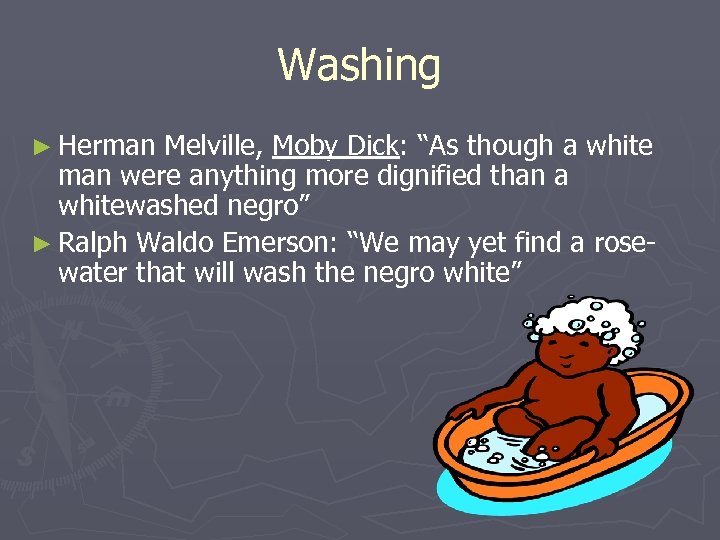
Washing ► Herman Melville, Moby Dick: “As though a white man were anything more dignified than a whitewashed negro” ► Ralph Waldo Emerson: “We may yet find a rosewater that will wash the negro white”
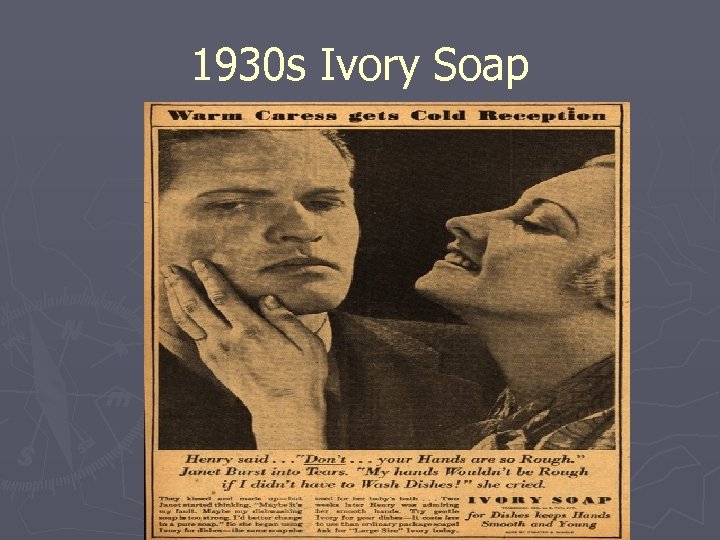
1930 s Ivory Soap
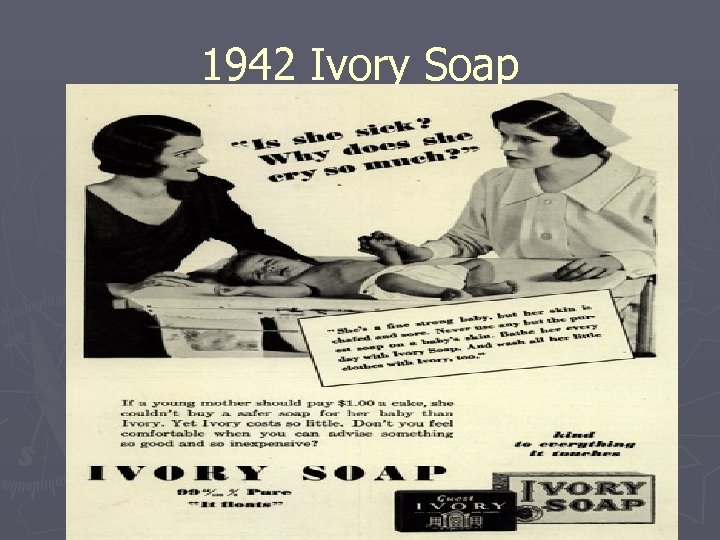
1942 Ivory Soap
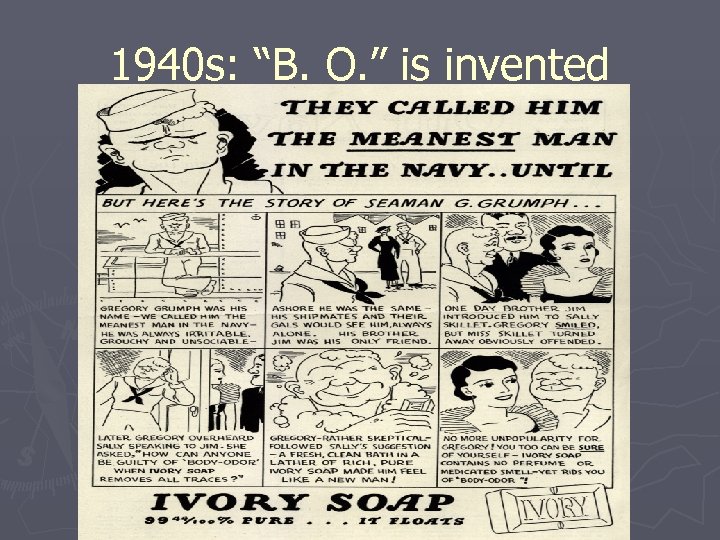
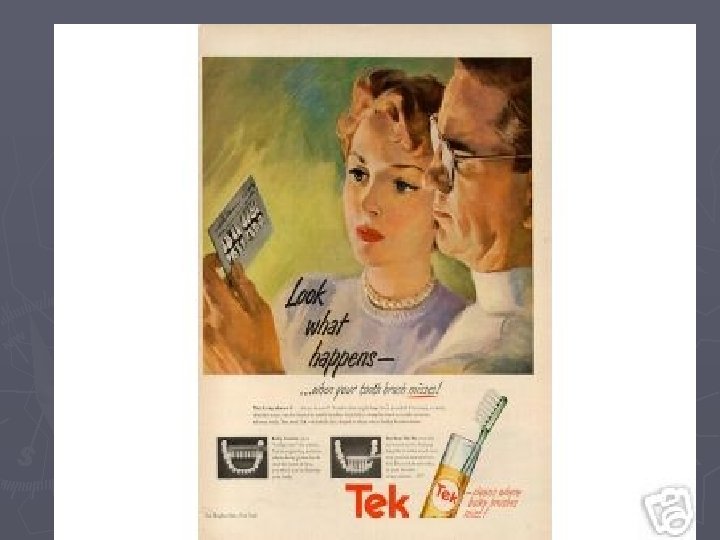
1940 s: “B. O. ” is invented
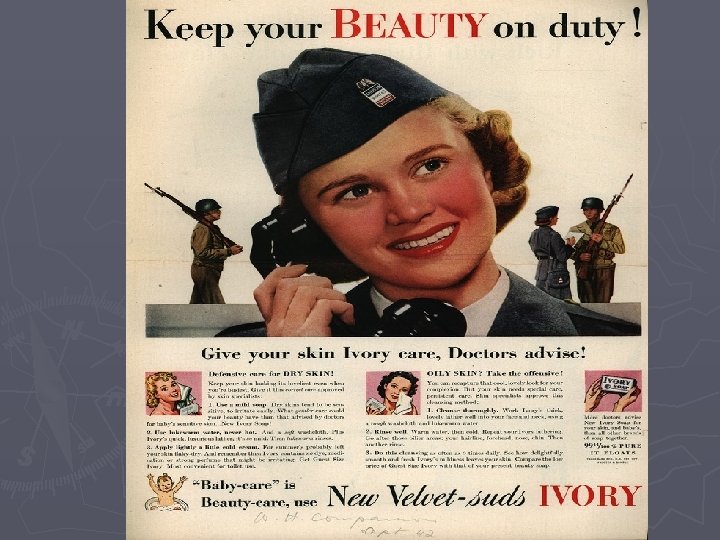
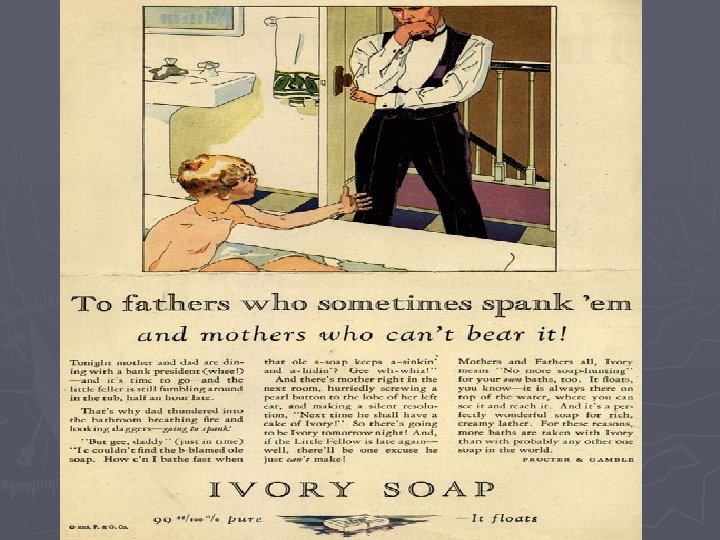
1960 s
But slaves…(according to owners) habits of the ►“I would not negro are filthy and if I could give careless” ► Slaves “should not be you or any permitted in these friend of mine filthy, though very natural, propensities” an idea of ► They are a [this slave “proverbially filthy house’s] race” ► “The fetidness”
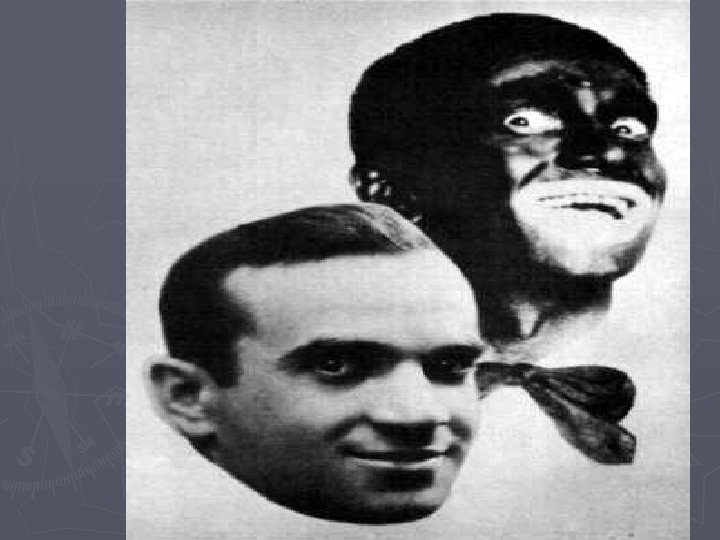
Make-up ► In the nineteenth century: ► “Face-painting” represented deceit: everyone should be able to read your emotions from your blush, and your social class from your pale skin.
What was allowed: ►Lotions, creams, and powders ►Skin whiteners ► But: ►One wearing face paint (make-up) was immoral or ridiculous; she was pretending to be higher class
After the Civil War ►Lower-class women (usually) using lead-based face paint, but of course denying it to doctors, sometimes died of lead poisoning
Complexions ►White skin was the style before the 1920 s, but it was not allowed to be achieved through cosmetics. ► Journals mocked lower-class women wearing white make-up: “It is quite funny to see that smeared smooth white face, and red wrists emerging from one button pale gloves”
Still in the 1850 s… ►When African-Americans wore make-up, it was viewed as an attempt to look “white” ►A journal states that these “Beautiful black and brown faces…assume unnatural tints, like the vivid hue of painted corpses”
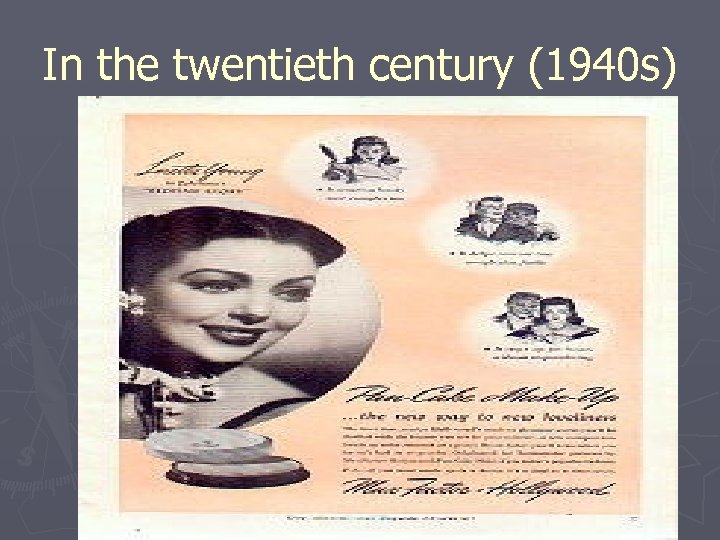
In the twentieth century (1940 s)
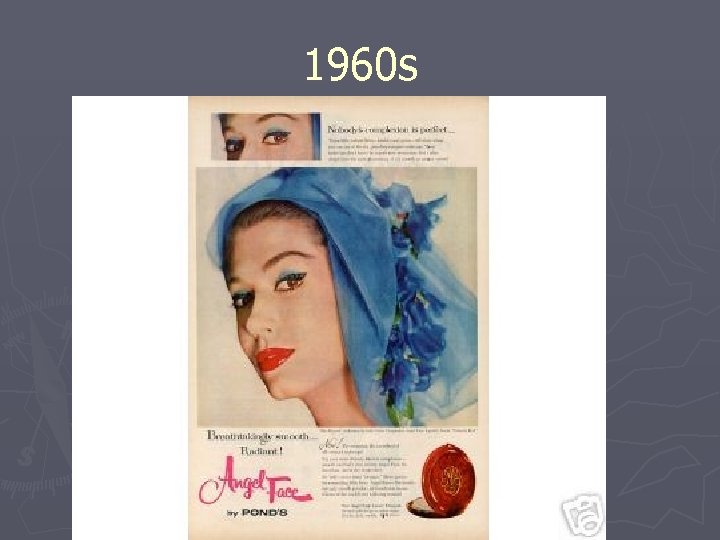
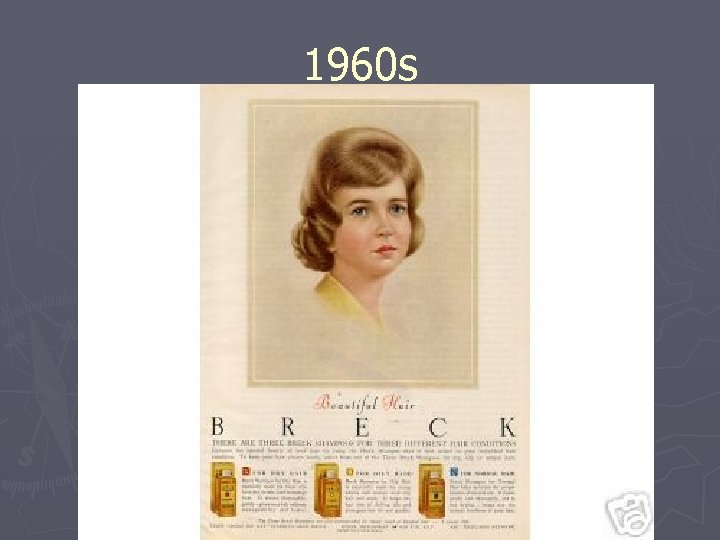
1960 s

http: //www. californiatan. com/tanbasic/history _of_tan. ehtm
2000 s ► Beautiful Body Bronzer We may never have the rocks that she's got, but copping J. Lo's sun-kissed look is now achievable with Glow by J. Lo Bronzing Body Moisturizer, $25. It's a light, tinted shimmery lotion that'll make your own bod bling. Buy it at Macy's (Cosmopolitan Magazine)

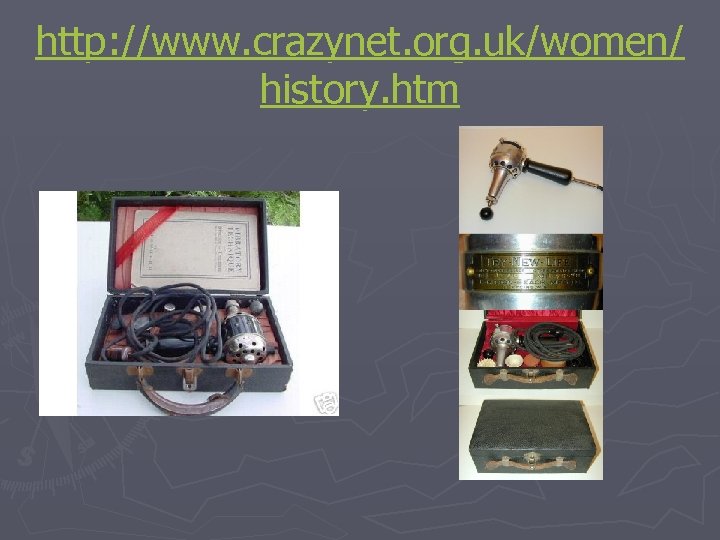
http: //www. crazynet. org. uk/women/ history. htm
Скачать презентацию Cleanliness Bathing An upper-class woman in
f5572dc5438c96723364e22fb9d6171a.ppt