


 Скачать презентацию CLEAN DEVELOPMENT MECHANISM OPPORTUNITIES FOR THE PHILIPPINES Climate
2bab7ba1b3db1e3455d4bb8c261d4535.ppt
- Количество слайдов: 51
 CLEAN DEVELOPMENT MECHANISM: OPPORTUNITIES FOR THE PHILIPPINES Climate Change Information Center Manila Observatory Ateneo de Manila University
 OUTLINE 1. Introduction to Climate Change 2. The UNFCCC and the Kyoto Protocol 3. The Clean Development Mechanism
 MODULE 1 Introduction to Climate Change
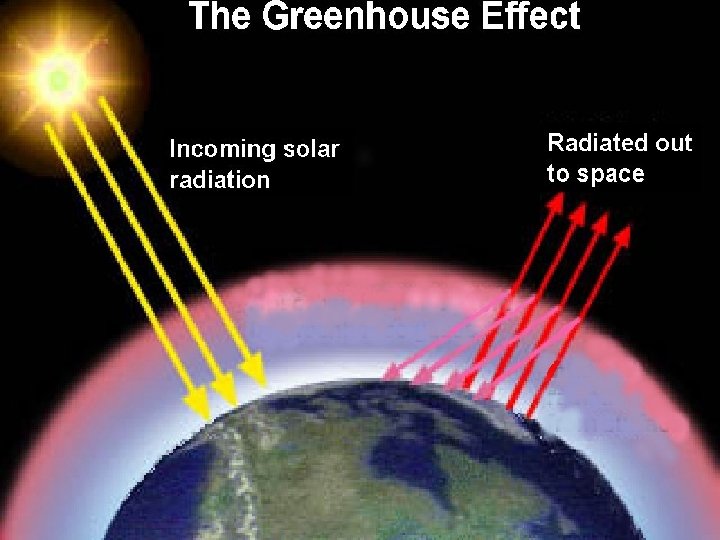
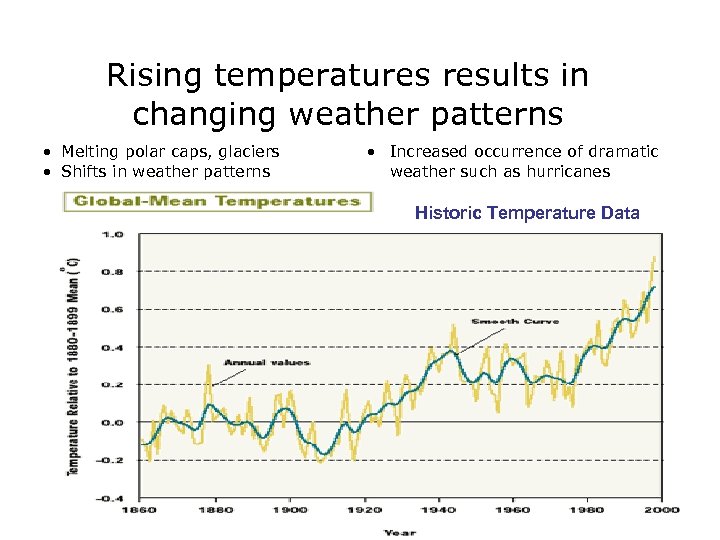 Rising temperatures results in changing weather patterns • Melting polar caps, glaciers • Shifts in weather patterns • Increased occurrence of dramatic weather such as hurricanes Historic Temperature Data
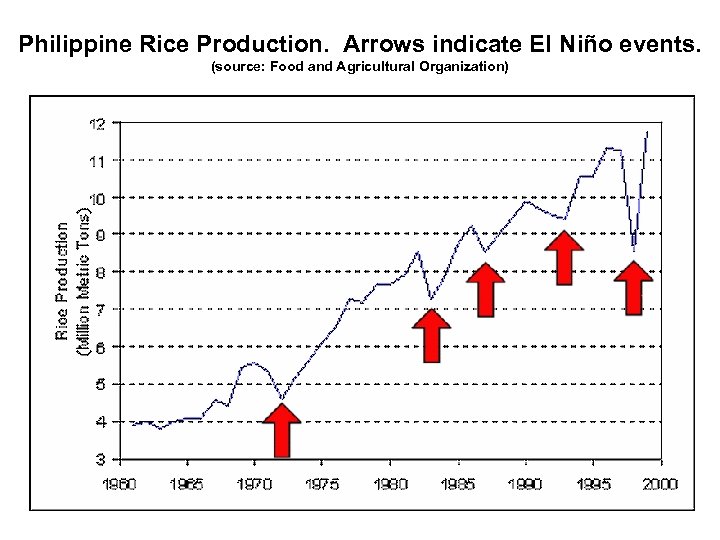 Philippine Rice Production. Arrows indicate El Niño events. (source: Food and Agricultural Organization)
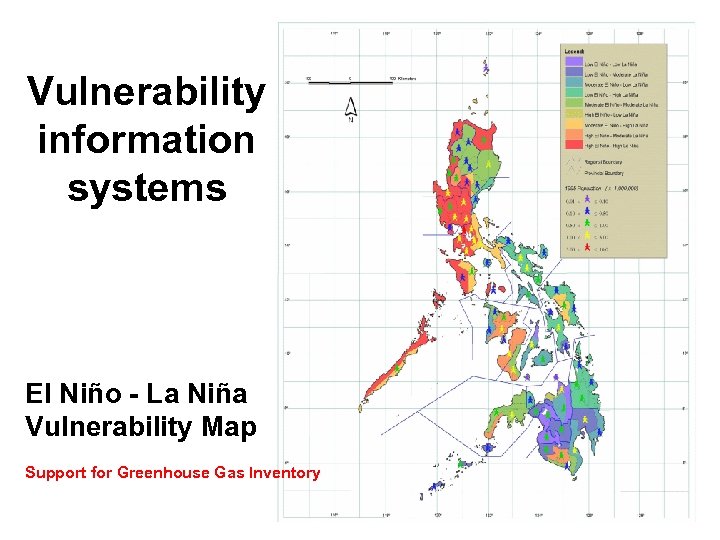 Vulnerability information systems El Niño - La Niña Vulnerability Map Support for Greenhouse Gas Inventory
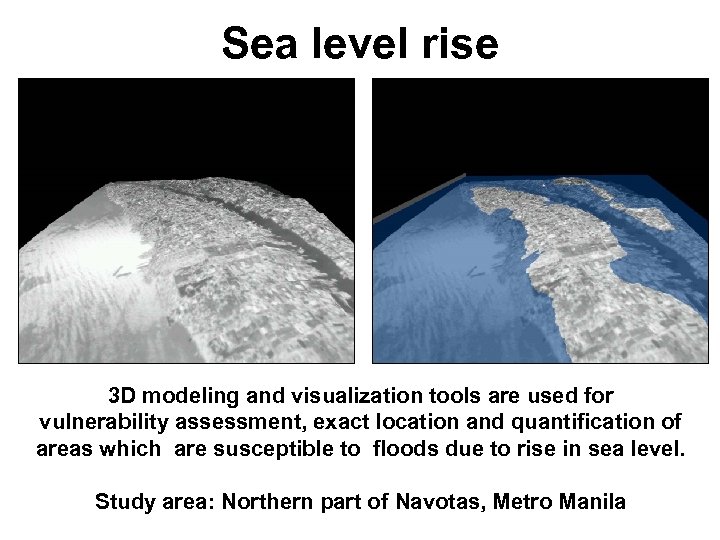 Sea level rise 3 D modeling and visualization tools are used for vulnerability assessment, exact location and quantification of areas which are susceptible to floods due to rise in sea level. Study area: Northern part of Navotas, Metro Manila
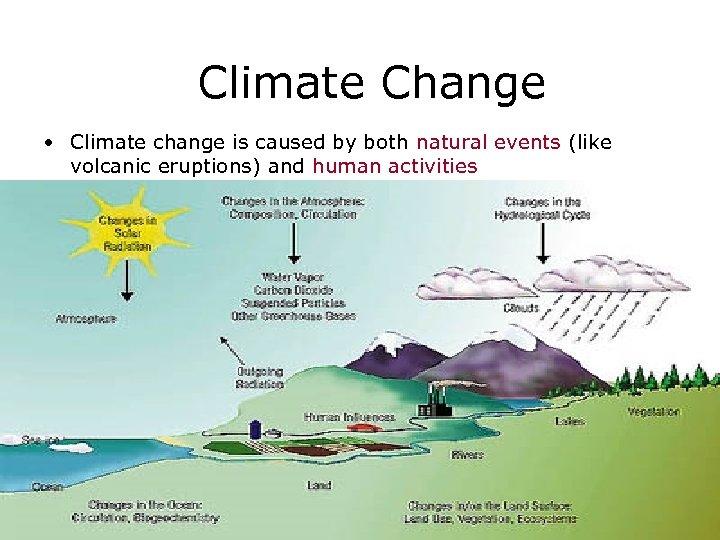 Climate Change • Climate change is caused by both natural events (like volcanic eruptions) and human activities
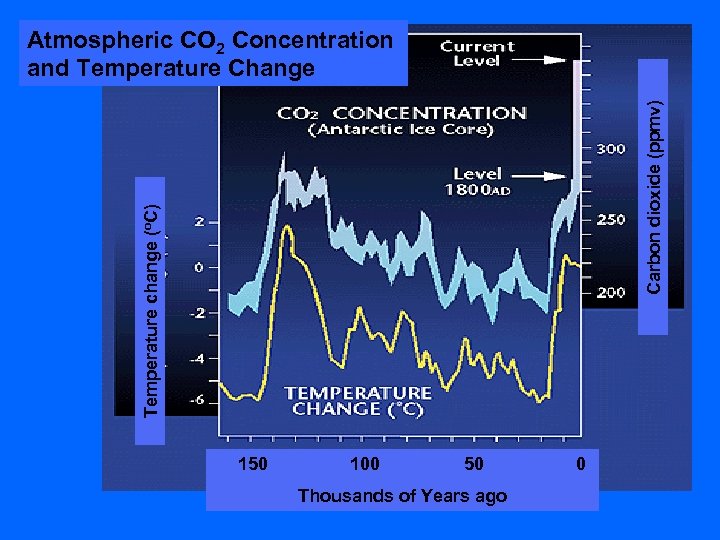 Temperature change (o. C) Carbon dioxide (ppmv) Atmospheric CO 2 Concentration and Temperature Change 150 100 50 Thousands of Years ago 0
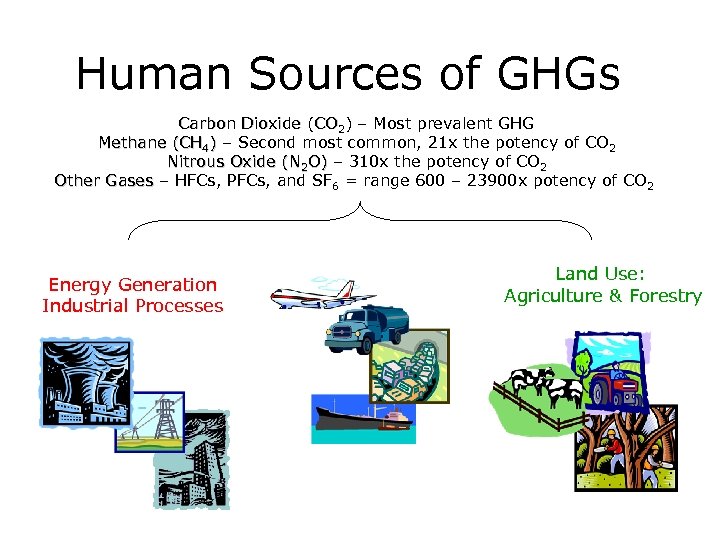 Human Sources of GHGs Carbon Dioxide (CO 2) – Most prevalent GHG Methane (CH 4) – Second most common, 21 x the potency of CO 2 Nitrous Oxide (N 2 O) – 310 x the potency of CO 2 Other Gases – HFCs, PFCs, and SF 6 = range 600 – 23900 x potency of CO 2 Transportation Energy Generation Industrial Processes Land Use: Agriculture & Forestry
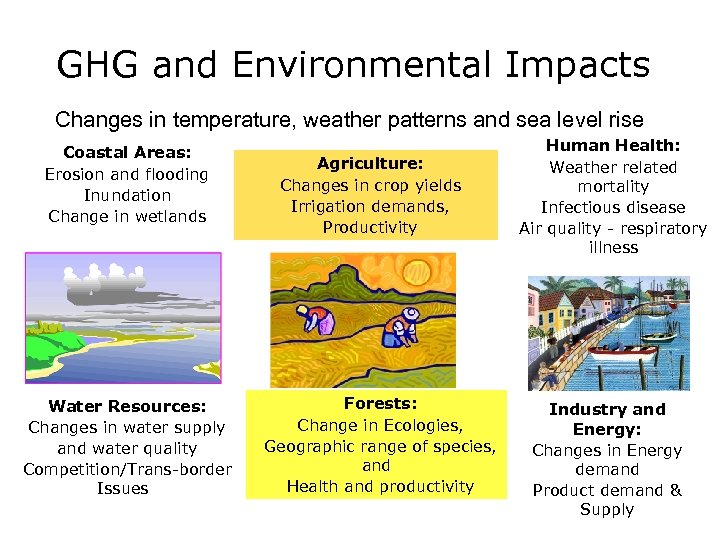 GHG and Environmental Impacts Changes in temperature, weather patterns and sea level rise Coastal Areas: Erosion and flooding Inundation Change in wetlands Water Resources: Changes in water supply and water quality Competition/Trans-border Issues Agriculture: Changes in crop yields Irrigation demands, Productivity Forests: Change in Ecologies, Geographic range of species, and Health and productivity Human Health: Weather related mortality Infectious disease Air quality - respiratory illness Industry and Energy: Changes in Energy demand Product demand & Supply
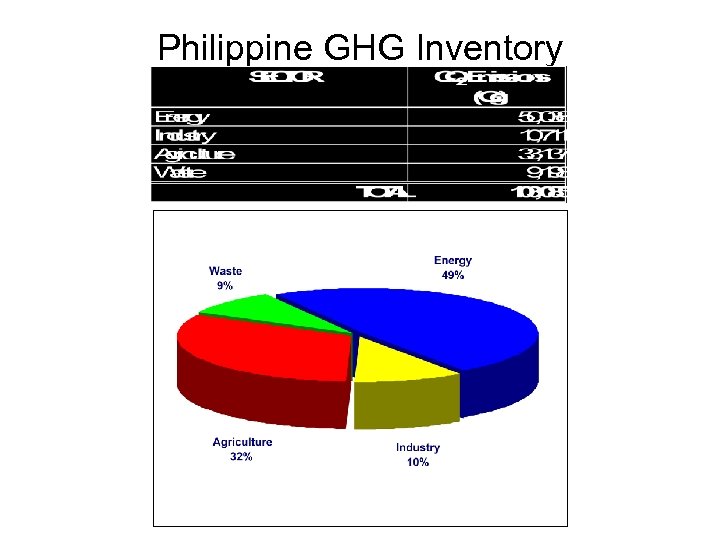 Philippine GHG Inventory
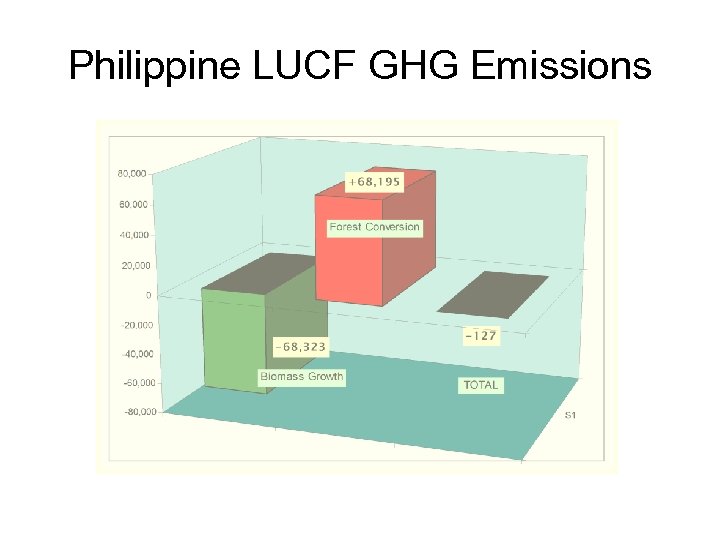 Philippine LUCF GHG Emissions
 MODULE 2 THE UNFCCC and the KYOTO PROTOCOL
 United Nations Framework Convention on Climate Change Objective of the Convention “Stabilization of greenhouse gas concentrations in the atmosphere at a level that would prevent dangerous anthropogenic interference with the climate system. Such a level should be achieved within a time frame sufficient to allow ecosystems to adapt naturally to climate change, to ensure that food production is not threatened, and to enable economic development to proceed in a sustainable manner. ”
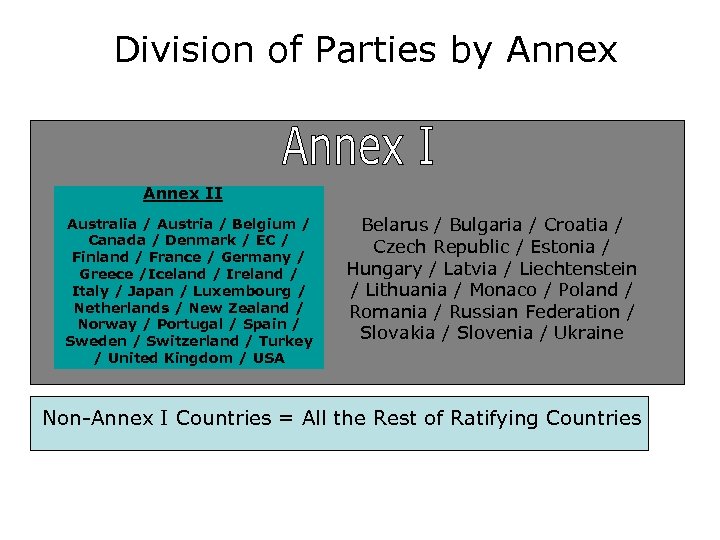 Division of Parties by Annex II Australia / Austria / Belgium / Canada / Denmark / EC / Finland / France / Germany / Greece /Iceland / Ireland / Italy / Japan / Luxembourg / Netherlands / New Zealand / Norway / Portugal / Spain / Sweden / Switzerland / Turkey / United Kingdom / USA Belarus / Bulgaria / Croatia / Czech Republic / Estonia / Hungary / Latvia / Liechtenstein / Lithuania / Monaco / Poland / Romania / Russian Federation / Slovakia / Slovenia / Ukraine Non-Annex I Countries = All the Rest of Ratifying Countries
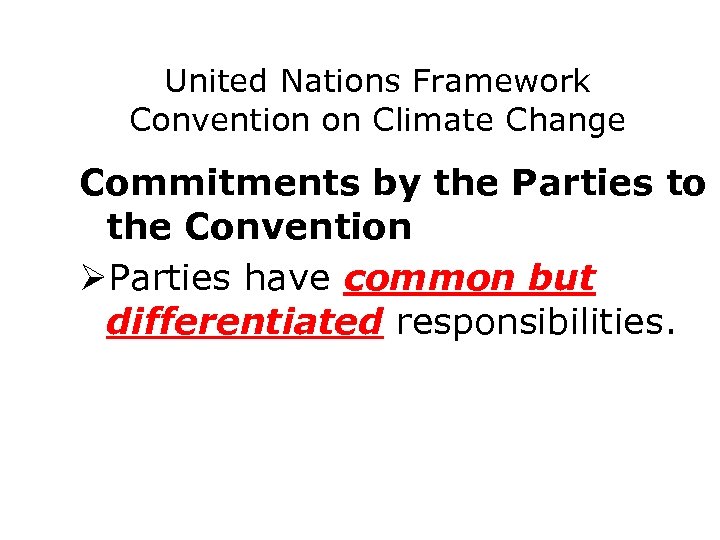 United Nations Framework Convention on Climate Change Commitments by the Parties to the Convention ØParties have common but differentiated responsibilities.
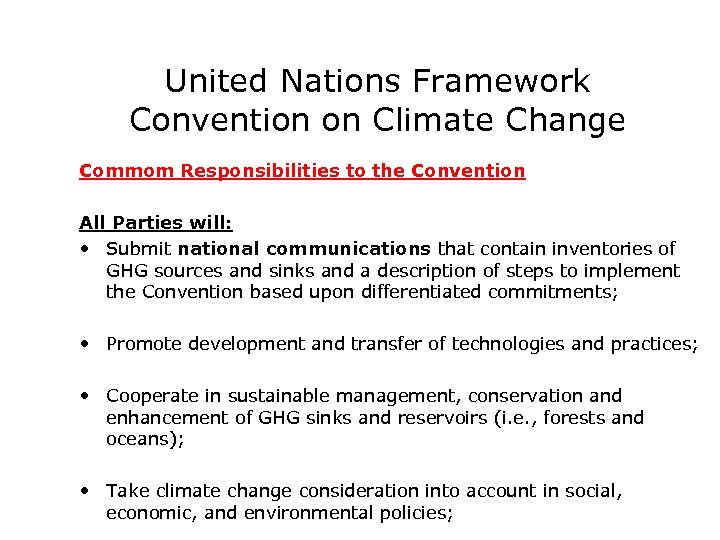 United Nations Framework Convention on Climate Change Commom Responsibilities to the Convention All Parties will: • Submit national communications that contain inventories of GHG sources and sinks and a description of steps to implement the Convention based upon differentiated commitments; • Promote development and transfer of technologies and practices; • Cooperate in sustainable management, conservation and enhancement of GHG sinks and reservoirs (i. e. , forests and oceans); • Take climate change consideration into account in social, economic, and environmental policies;
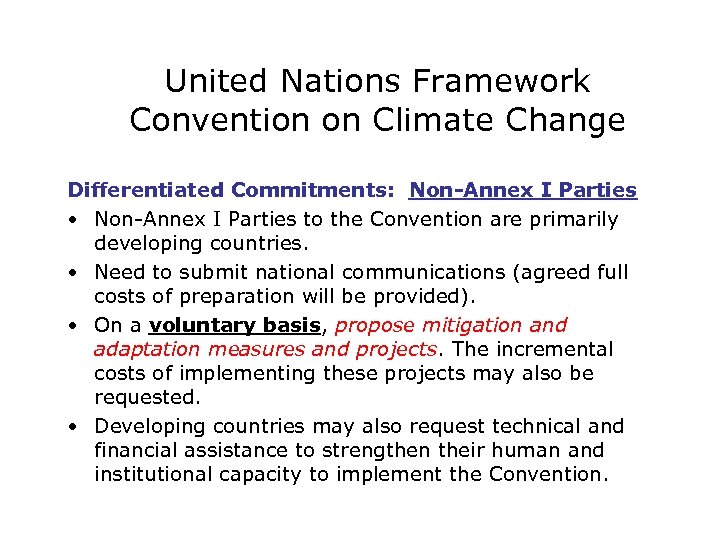 United Nations Framework Convention on Climate Change Differentiated Commitments: Non-Annex I Parties • Non-Annex I Parties to the Convention are primarily developing countries. • Need to submit national communications (agreed full costs of preparation will be provided). • On a voluntary basis, propose mitigation and adaptation measures and projects. The incremental costs of implementing these projects may also be requested. • Developing countries may also request technical and financial assistance to strengthen their human and institutional capacity to implement the Convention.
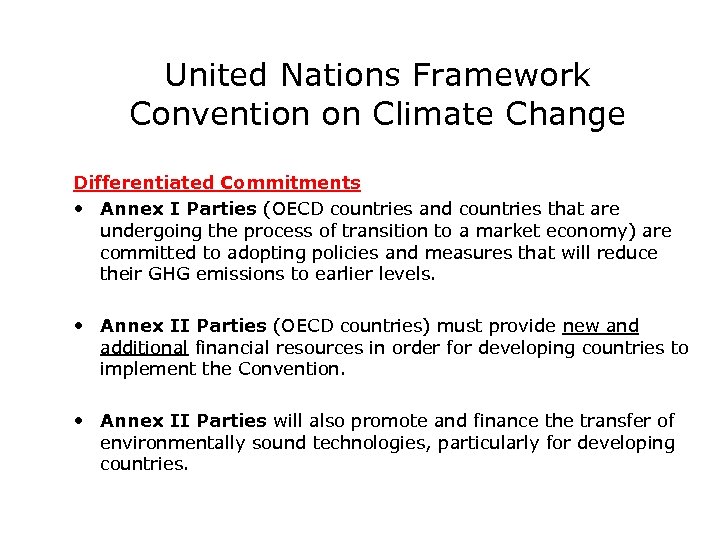 United Nations Framework Convention on Climate Change Differentiated Commitments • Annex I Parties (OECD countries and countries that are undergoing the process of transition to a market economy) are committed to adopting policies and measures that will reduce their GHG emissions to earlier levels. • Annex II Parties (OECD countries) must provide new and additional financial resources in order for developing countries to implement the Convention. • Annex II Parties will also promote and finance the transfer of environmentally sound technologies, particularly for developing countries.
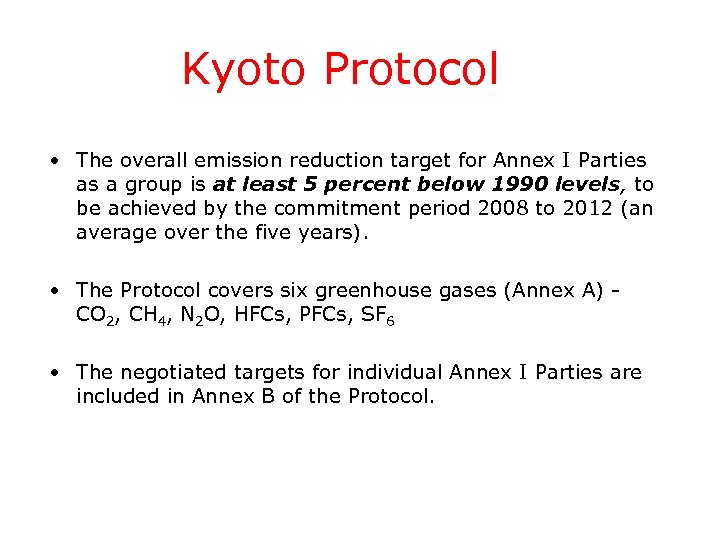 Kyoto Protocol • The overall emission reduction target for Annex I Parties as a group is at least 5 percent below 1990 levels, to be achieved by the commitment period 2008 to 2012 (an average over the five years). • The Protocol covers six greenhouse gases (Annex A) CO 2, CH 4, N 2 O, HFCs, PFCs, SF 6 • The negotiated targets for individual Annex I Parties are included in Annex B of the Protocol.
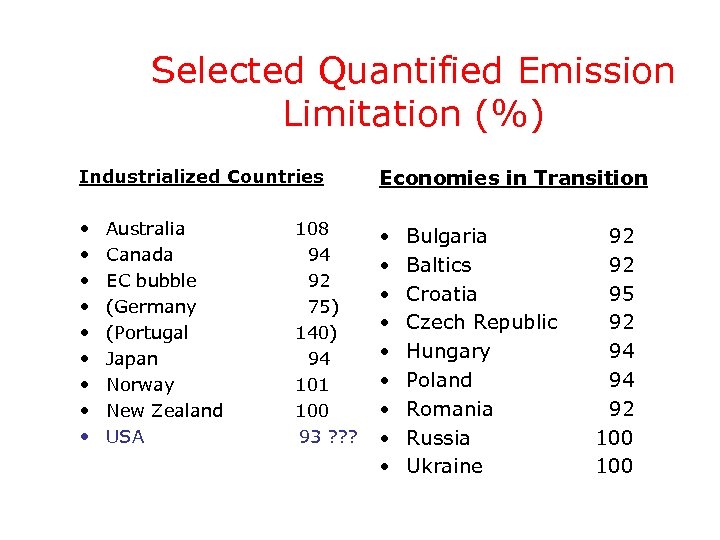 Selected Quantified Emission Limitation (%) Industrialized Countries Economies in Transition • • • • • Australia Canada EC bubble (Germany (Portugal Japan Norway New Zealand USA 108 94 92 75) 140) 94 101 100 93 ? ? ? Bulgaria Baltics Croatia Czech Republic Hungary Poland Romania Russia Ukraine 92 92 95 92 94 94 92 100
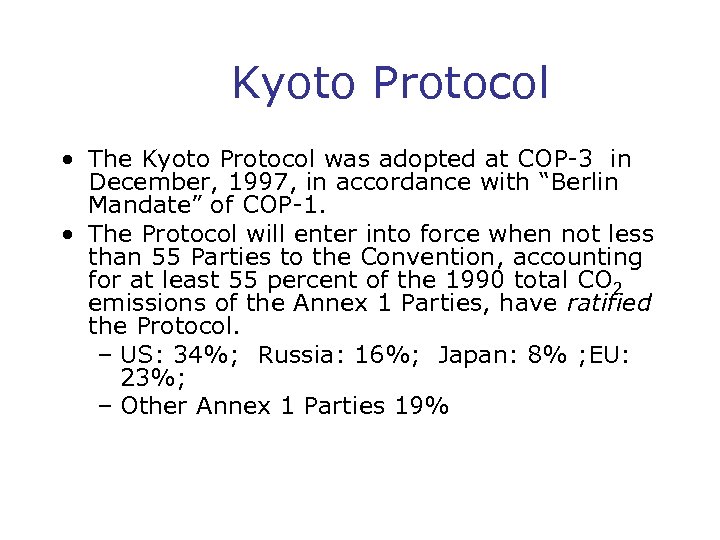 Kyoto Protocol • The Kyoto Protocol was adopted at COP-3 in December, 1997, in accordance with “Berlin Mandate” of COP-1. • The Protocol will enter into force when not less than 55 Parties to the Convention, accounting for at least 55 percent of the 1990 total CO 2 emissions of the Annex 1 Parties, have ratified the Protocol. – US: 34%; Russia: 16%; Japan: 8% ; EU: 23%; – Other Annex 1 Parties 19%
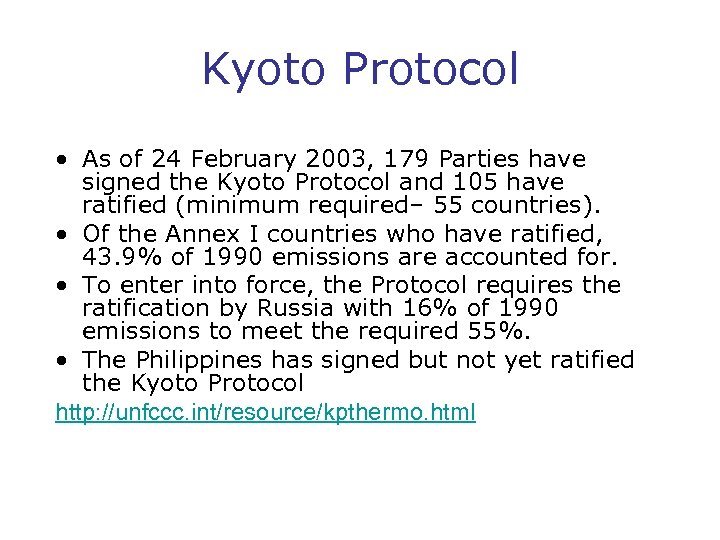 Kyoto Protocol • As of 24 February 2003, 179 Parties have signed the Kyoto Protocol and 105 have ratified (minimum required– 55 countries). • Of the Annex I countries who have ratified, 43. 9% of 1990 emissions are accounted for. • To enter into force, the Protocol requires the ratification by Russia with 16% of 1990 emissions to meet the required 55%. • The Philippines has signed but not yet ratified the Kyoto Protocol http: //unfccc. int/resource/kpthermo. html
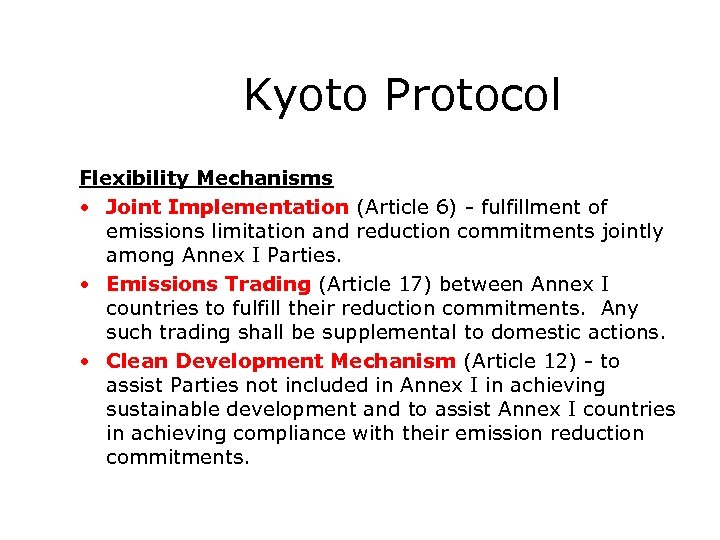 Kyoto Protocol Flexibility Mechanisms • Joint Implementation (Article 6) - fulfillment of emissions limitation and reduction commitments jointly among Annex I Parties. • Emissions Trading (Article 17) between Annex I countries to fulfill their reduction commitments. Any such trading shall be supplemental to domestic actions. • Clean Development Mechanism (Article 12) - to assist Parties not included in Annex I in achieving sustainable development and to assist Annex I countries in achieving compliance with their emission reduction commitments.
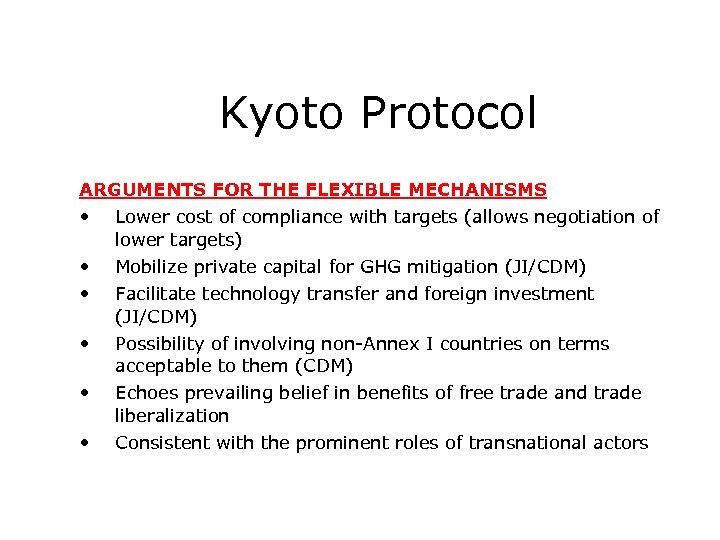 Kyoto Protocol ARGUMENTS FOR THE FLEXIBLE MECHANISMS • • • Lower cost of compliance with targets (allows negotiation of lower targets) Mobilize private capital for GHG mitigation (JI/CDM) Facilitate technology transfer and foreign investment (JI/CDM) Possibility of involving non-Annex I countries on terms acceptable to them (CDM) Echoes prevailing belief in benefits of free trade and trade liberalization Consistent with the prominent roles of transnational actors
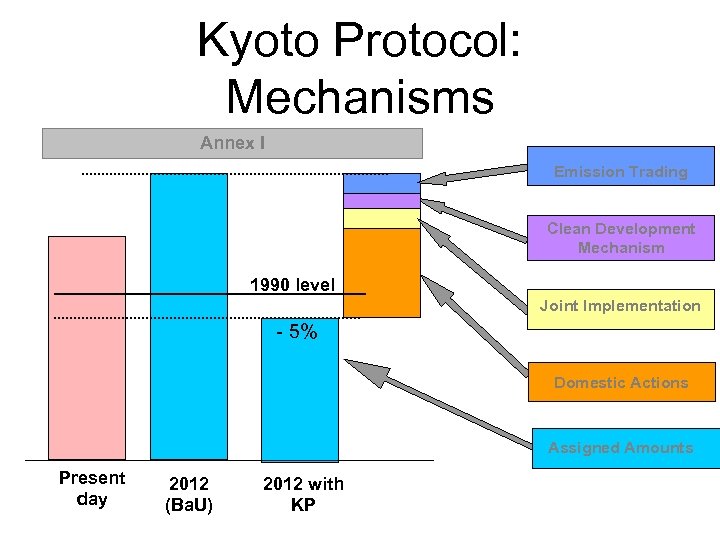 Kyoto Protocol: Mechanisms Annex I Emission Trading Clean Development Mechanism 1990 level Joint Implementation - 5% Domestic Actions Assigned Amounts Present day 2012 (Ba. U) 2012 with KP
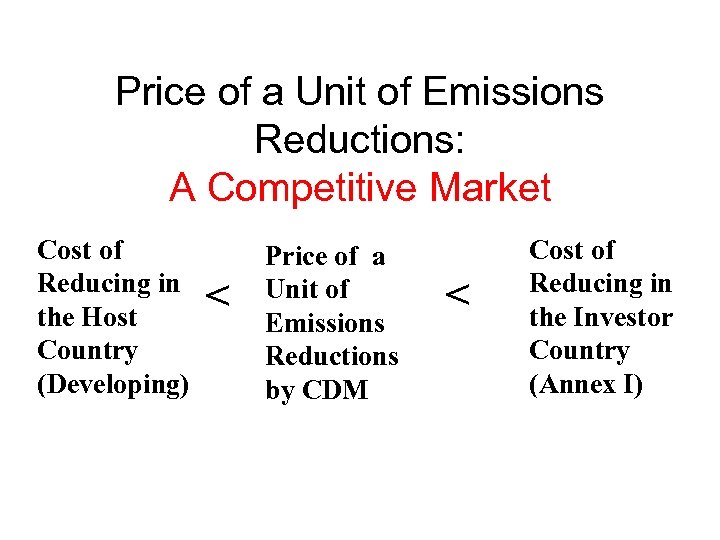 Price of a Unit of Emissions Reductions: A Competitive Market Cost of Reducing in the Host Country (Developing) < Price of a Unit of Emissions Reductions by CDM < Cost of Reducing in the Investor Country (Annex I)
 MODULE 3 THE CLEAN DEVELOPMENT MECHANISM
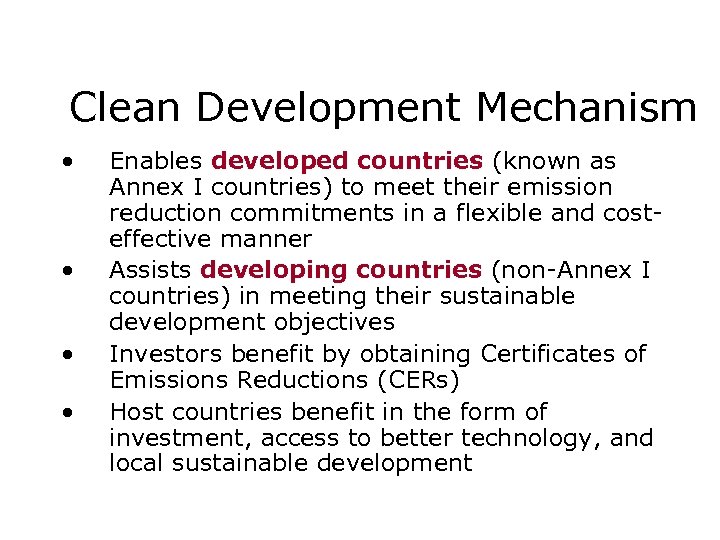 Clean Development Mechanism • • Enables developed countries (known as Annex I countries) to meet their emission reduction commitments in a flexible and costeffective manner Assists developing countries (non-Annex I countries) in meeting their sustainable development objectives Investors benefit by obtaining Certificates of Emissions Reductions (CERs) Host countries benefit in the form of investment, access to better technology, and local sustainable development
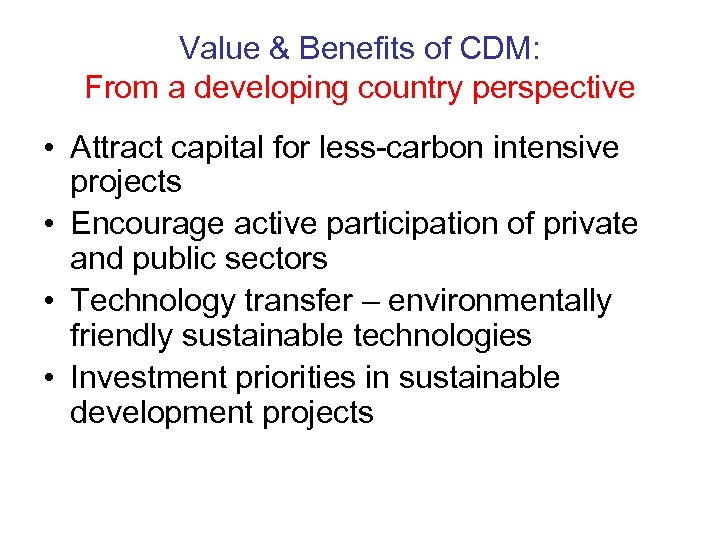 Value & Benefits of CDM: From a developing country perspective • Attract capital for less-carbon intensive projects • Encourage active participation of private and public sectors • Technology transfer – environmentally friendly sustainable technologies • Investment priorities in sustainable development projects
 CDM contributions to Sustainable Development objectives • Transfer of technology and financial resources • Sustainable ways of energy production • Increasing energy efficiency & conservation • Poverty alleviation through income and employment generation • Local environmental side benefits
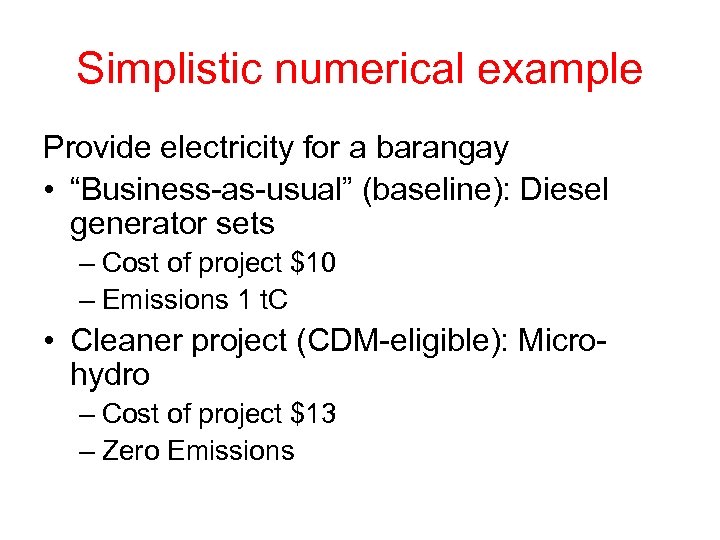 Simplistic numerical example Provide electricity for a barangay • “Business-as-usual” (baseline): Diesel generator sets – Cost of project $10 – Emissions 1 t. C • Cleaner project (CDM-eligible): Microhydro – Cost of project $13 – Zero Emissions
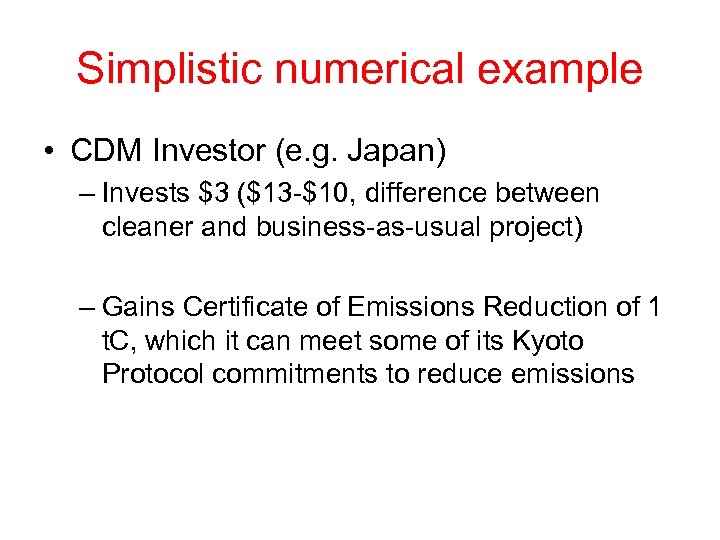 Simplistic numerical example • CDM Investor (e. g. Japan) – Invests $3 ($13 -$10, difference between cleaner and business-as-usual project) – Gains Certificate of Emissions Reduction of 1 t. C, which it can meet some of its Kyoto Protocol commitments to reduce emissions
 Simplistic numerical example WIN – WIN • WIN for the host country – Sustainable development benefit: Cleaner energy production technology • WIN for the Annex I country – Credits for emissions reduction • WIN for the Global Environment – Emissions reduction
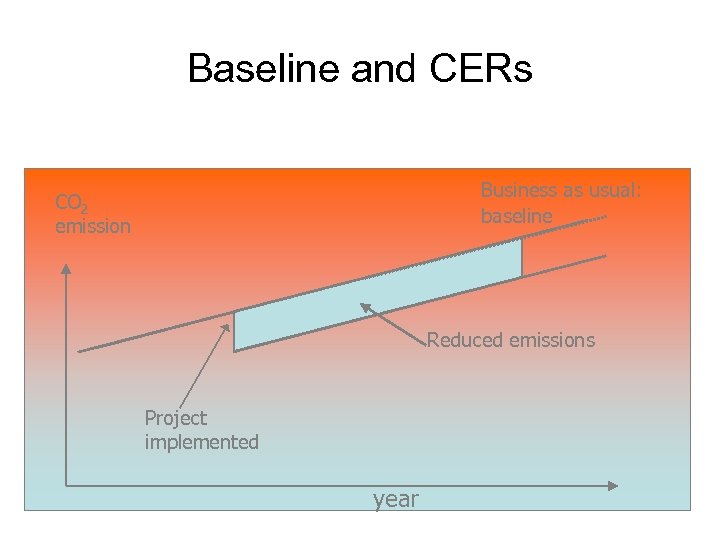 Baseline and CERs Business as usual: baseline CO 2 emission Reduced emissions Project implemented year
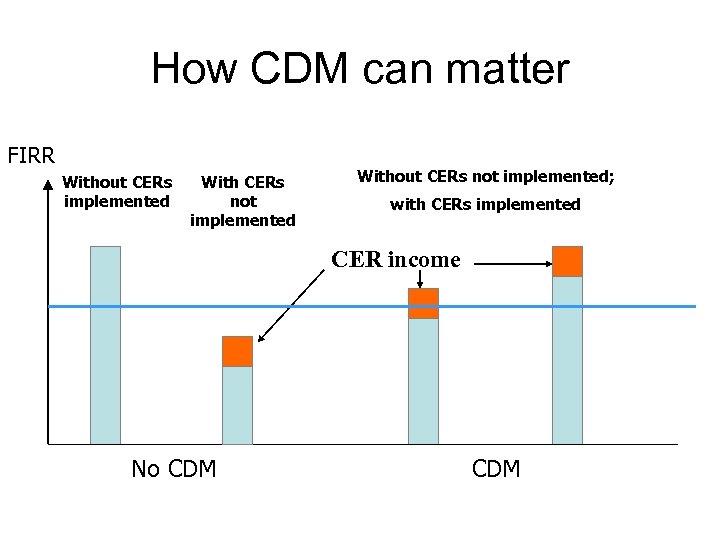 How CDM can matter FIRR Without CERs implemented With CERs not implemented Without CERs not implemented; with CERs implemented CER income No CDM
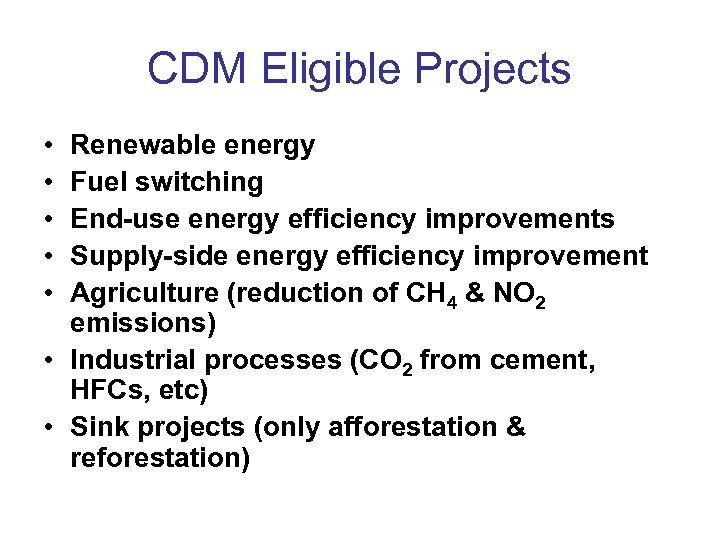 CDM Eligible Projects • • • Renewable energy Fuel switching End-use energy efficiency improvements Supply-side energy efficiency improvement Agriculture (reduction of CH 4 & NO 2 emissions) • Industrial processes (CO 2 from cement, HFCs, etc) • Sink projects (only afforestation & reforestation)
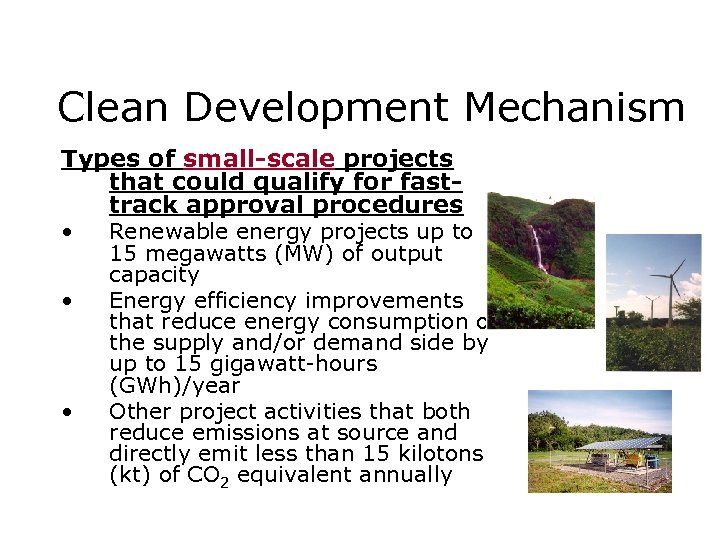 Clean Development Mechanism Types of small-scale projects that could qualify for fasttrack approval procedures • • • Renewable energy projects up to 15 megawatts (MW) of output capacity Energy efficiency improvements that reduce energy consumption on the supply and/or demand side by up to 15 gigawatt-hours (GWh)/year Other project activities that both reduce emissions at source and directly emit less than 15 kilotons (kt) of CO 2 equivalent annually
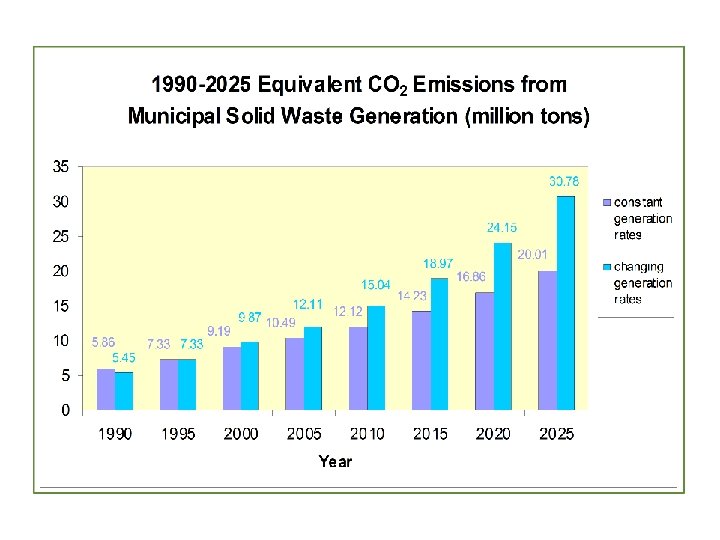
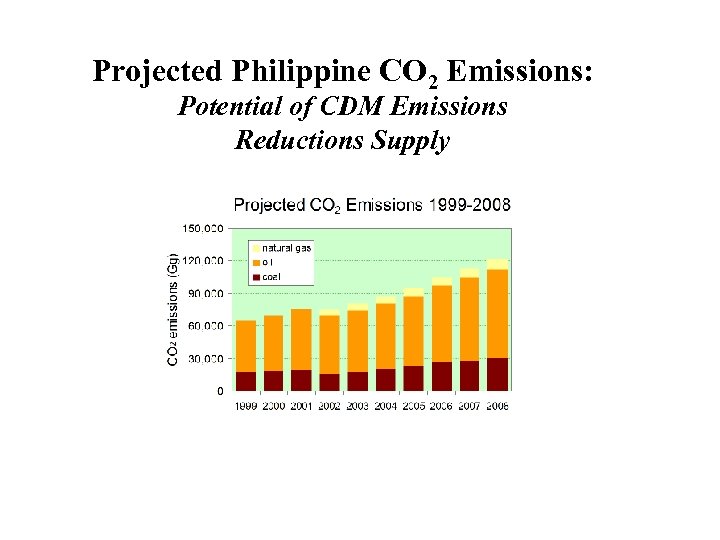 Projected Philippine CO 2 Emissions: Potential of CDM Emissions Reductions Supply
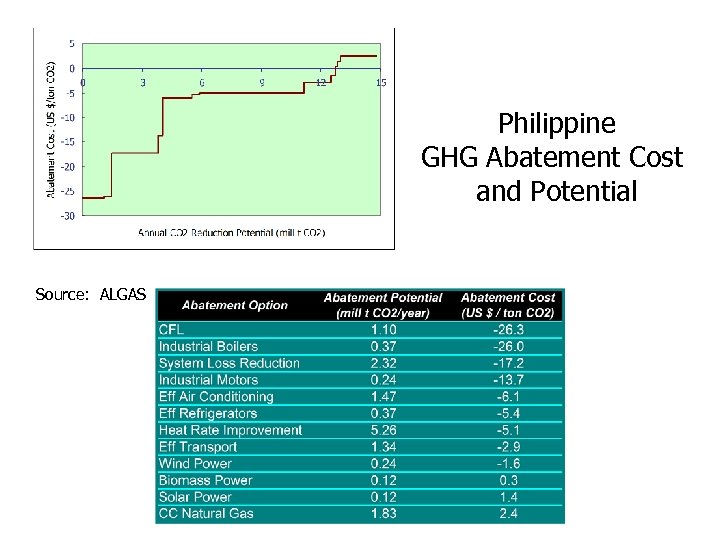 Philippine GHG Abatement Cost and Potential Source: ALGAS
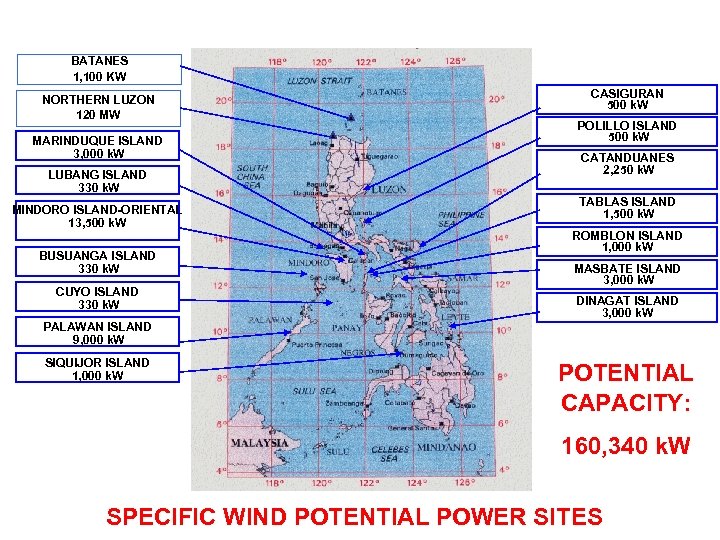 BATANES 1, 100 KW NORTHERN LUZON 120 MW MARINDUQUE ISLAND 3, 000 k. W LUBANG ISLAND 330 k. W MINDORO ISLAND-ORIENTAL 13, 500 k. W BUSUANGA ISLAND 330 k. W CUYO ISLAND 330 k. W CASIGURAN 500 k. W POLILLO ISLAND 500 k. W CATANDUANES 2, 250 k. W TABLAS ISLAND 1, 500 k. W ROMBLON ISLAND 1, 000 k. W MASBATE ISLAND 3, 000 k. W DINAGAT ISLAND 3, 000 k. W PALAWAN ISLAND 9, 000 k. W SIQUIJOR ISLAND 1, 000 k. W POTENTIAL CAPACITY: 160, 340 k. W SPECIFIC WIND POTENTIAL POWER SITES
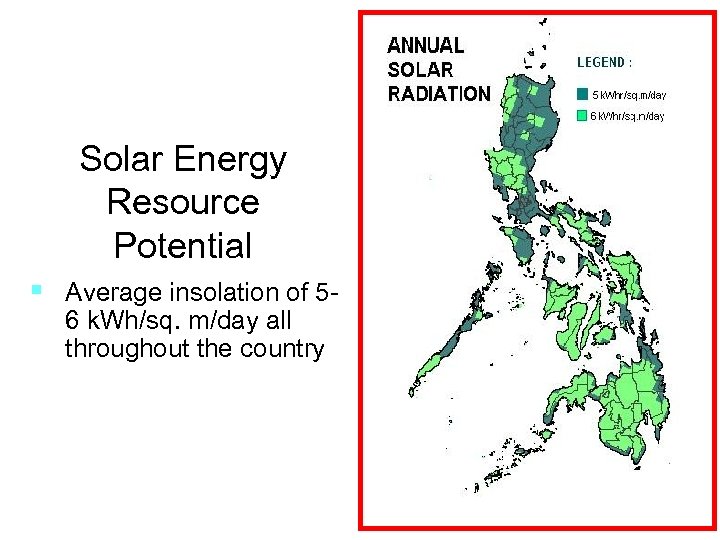 Solar Energy Resource Potential § Average insolation of 5 - 6 k. Wh/sq. m/day all throughout the country
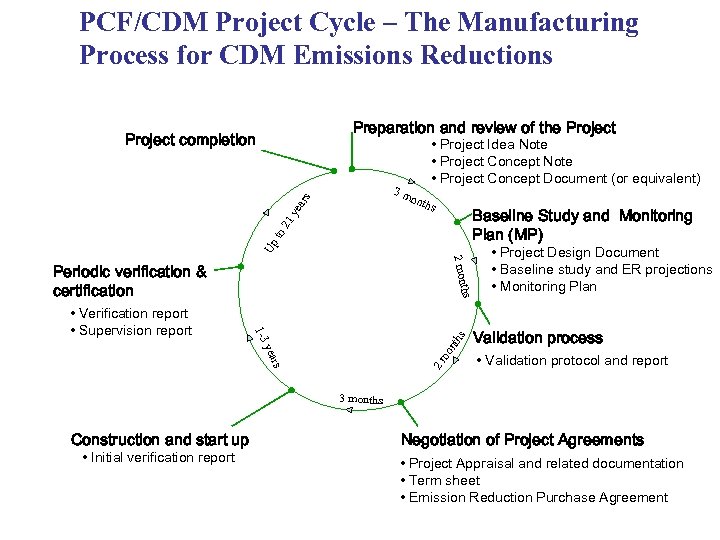 PCF/CDM Project Cycle – The Manufacturing Process for CDM Emissions Reductions Preparation and review of the Project • Project Idea Note • Project Concept Document (or equivalent) 3 m ont hs Baseline Study and Monitoring Plan (MP) Up to 21 ye ars Project completion 2 mon rs 2 m yea on th s 1 -3 • Verification report • Supervision report ths Periodic verification & certification • Project Design Document • Baseline study and ER projections • Monitoring Plan Validation process • Validation protocol and report 3 months Construction and start up • Initial verification report Negotiation of Project Agreements • Project Appraisal and related documentation • Term sheet • Emission Reduction Purchase Agreement
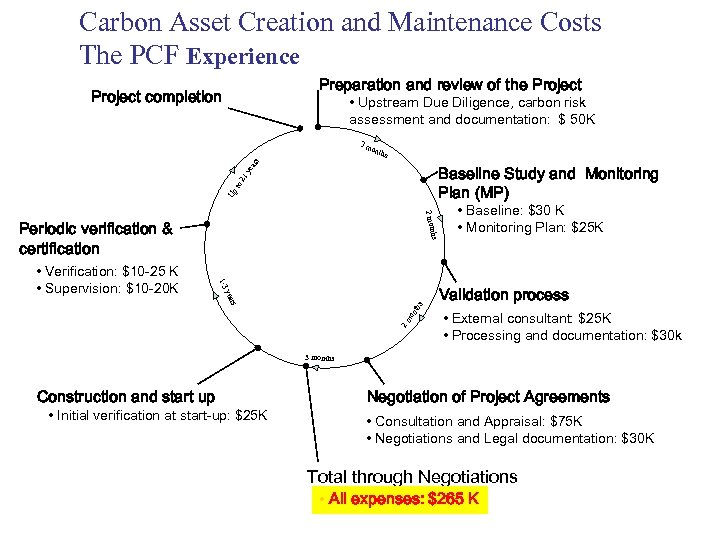 Carbon Asset Creation and Maintenance Costs The PCF Experience Preparation and review of the Project completion • Upstream Due Diligence, carbon risk assessment and documentation: $ 50 K 3 m ont ars hs Up to 21 ye Baseline Study and Monitoring Plan (MP) 2 mon 1 -3 2 m on ths rs yea • Verification: $10 -25 K • Supervision: $10 -20 K ths Periodic verification & certification • Baseline: $30 K • Monitoring Plan: $25 K Validation process • External consultant: $25 K • Processing and documentation: $30 k 3 months Construction and start up • Initial verification at start-up: $25 K Negotiation of Project Agreements • Consultation and Appraisal: $75 K • Negotiations and Legal documentation: $30 K Total through Negotiations • All expenses: $265 K
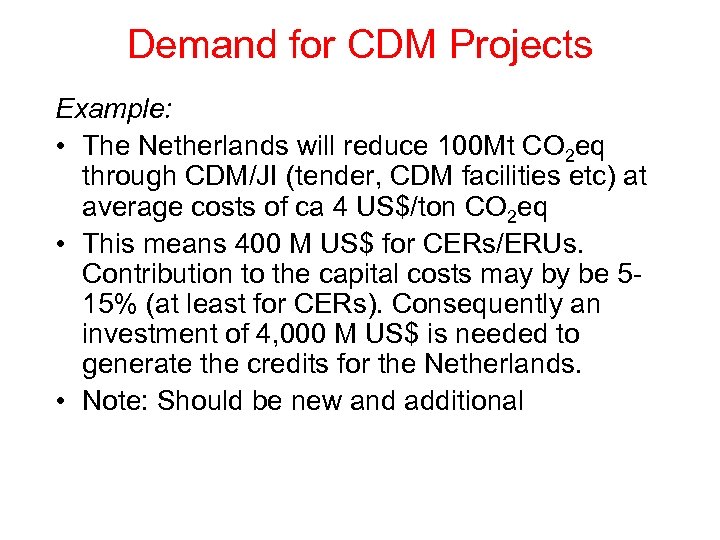 Demand for CDM Projects Example: • The Netherlands will reduce 100 Mt CO 2 eq through CDM/JI (tender, CDM facilities etc) at average costs of ca 4 US$/ton CO 2 eq • This means 400 M US$ for CERs/ERUs. Contribution to the capital costs may by be 515% (at least for CERs). Consequently an investment of 4, 000 M US$ is needed to generate the credits for the Netherlands. • Note: Should be new and additional
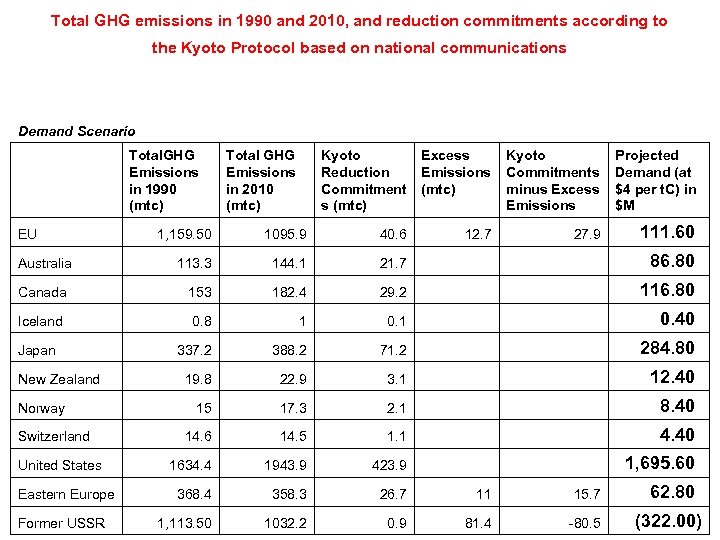 Total GHG emissions in 1990 and 2010, and reduction commitments according to the Kyoto Protocol based on national communications Demand Scenario EU Total. GHG Emissions in 1990 (mtc) Total GHG Emissions in 2010 (mtc) Kyoto Reduction Commitment s (mtc) Excess Emissions (mtc) Kyoto Commitments minus Excess Emissions Projected Demand (at $4 per t. C) in $M 12. 7 27. 9 111. 60 1, 159. 50 1095. 9 40. 6 113. 3 144. 1 21. 7 86. 80 Canada 153 182. 4 29. 2 116. 80 Iceland 0. 8 1 0. 1 0. 40 337. 2 388. 2 71. 2 284. 80 19. 8 22. 9 3. 1 12. 40 15 17. 3 2. 1 8. 40 14. 6 14. 5 1. 1 4. 40 1634. 4 1943. 9 423. 9 1, 695. 60 368. 4 358. 3 26. 7 11 15. 7 62. 80 1, 113. 50 1032. 2 0. 9 81. 4 -80. 5 (322. 00) Australia Japan New Zealand Norway Switzerland United States Eastern Europe Former USSR
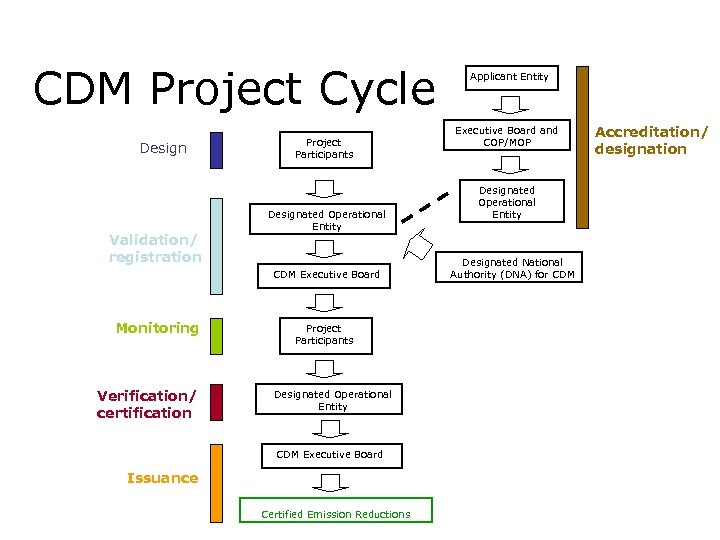 CDM Project Cycle Design Validation/ registration Project Participants Designated Operational Entity CDM Executive Board Monitoring Verification/ certification Project Participants Designated Operational Entity CDM Executive Board Issuance Certified Emission Reductions Applicant Entity Executive Board and COP/MOP Designated Operational Entity Designated National Authority (DNA) for CDM Accreditation/ designation
 Roberto C. Yap, S. J. , Ph. D. Environmental Economist Climate Change Information Center Manila Observatory Ateneo de Manila University Tel +63 2 426 -6144 Fax +63 2 426 -6070 rcyapsj@observatory. ph