


 Скачать презентацию Clauses Vishesh Zira S S Master GMS Holanwali
ce4d12cd4f64af7471f641a1409328d3.ppt
- Количество слайдов: 13
 Clauses Vishesh Zira S. S. Master GMS Holanwali Block Zira 2 Ferozepur 13/12/11
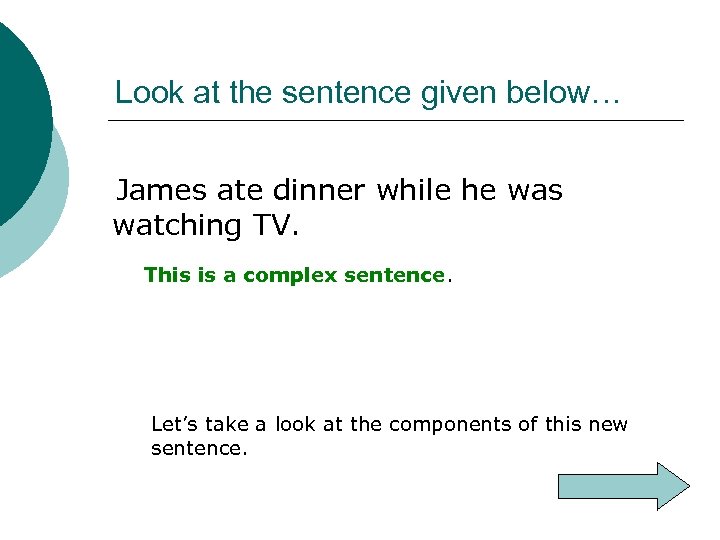 Look at the sentence given below… James ate dinner while he was watching TV. This is a complex sentence. Let’s take a look at the components of this new sentence.
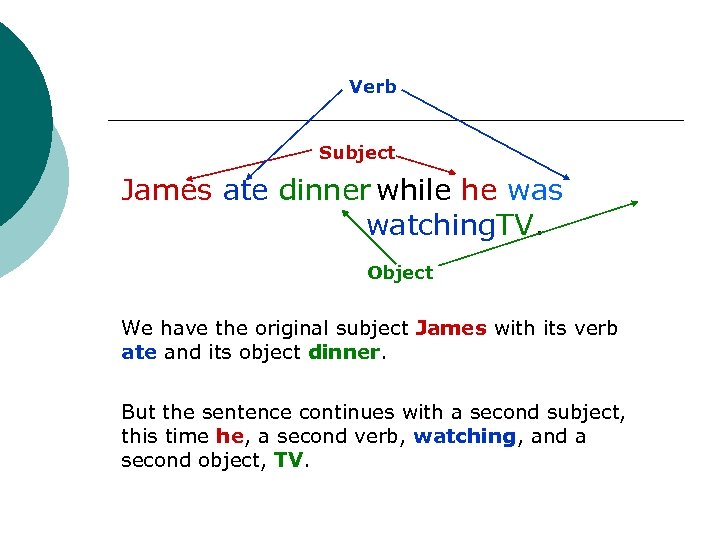 Verb Subject James ate dinner while he was watching. TV. Object We have the original subject James with its verb ate and its object dinner. But the sentence continues with a second subject, this time he, a second verb, watching, and a second object, TV.
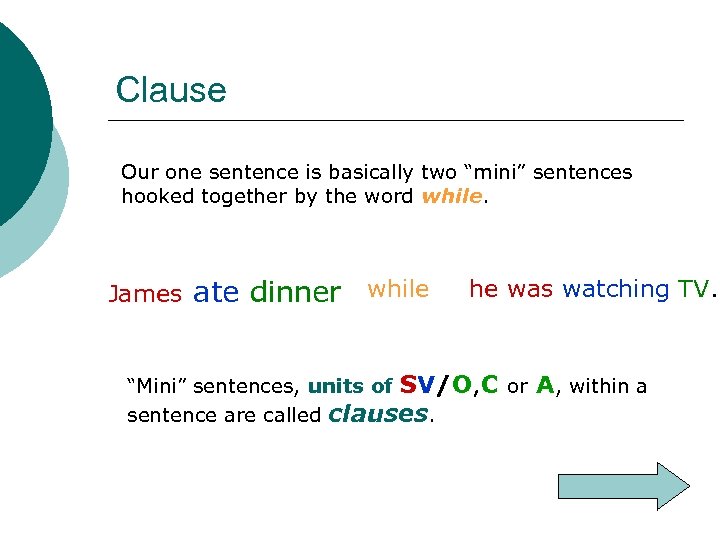 Clause Our one sentence is basically two “mini” sentences hooked together by the word while. James ate dinner. while he was watching TV. “Mini” sentences, units of SV/O, C or sentence are called clauses. A, within a
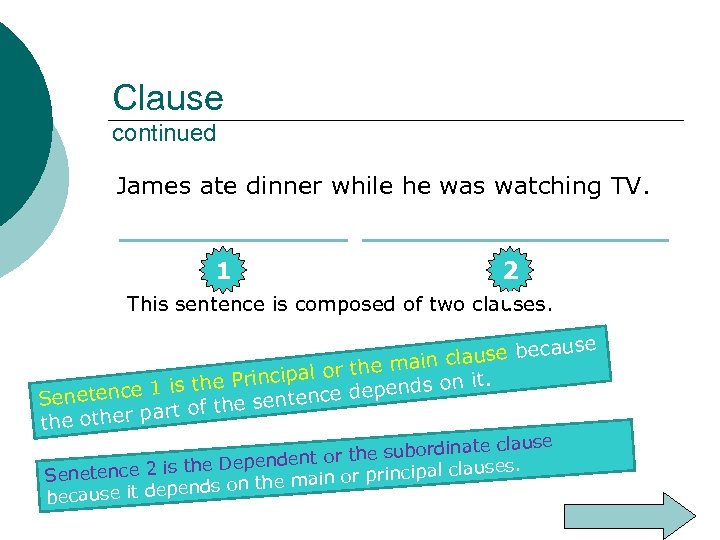 Clause continued James ate dinner while he was watching TV. 1 2 1 This sentence is composed of two clauses. use ause beca in cl l or the ma incipa n it. 1 is the Pr depends o nce tence Senete of the sen art the other p clause e subordinate dent or th uses. 2 is the Depen Senetence or principal cla n the main se it depends o becau
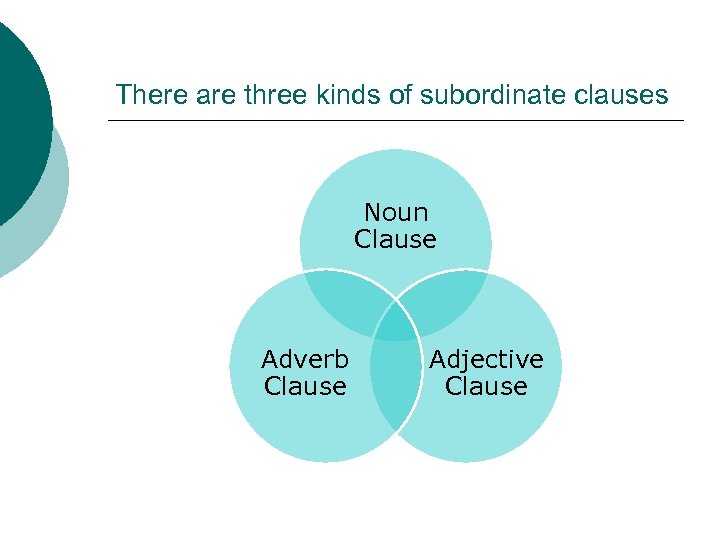 There are three kinds of subordinate clauses Noun Clause Adverb Clause Adjective Clause
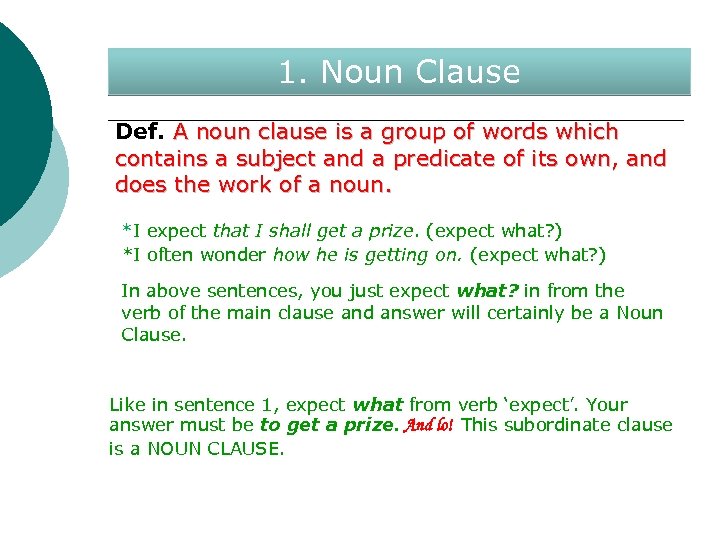 1. Noun Clause Def. A noun clause is a group of words which contains a subject and a predicate of its own, and does the work of a noun. *I expect that I shall get a prize. (expect what? ) *I often wonder how he is getting on. (expect what? ) In above sentences, you just expect what? in from the verb of the main clause and answer will certainly be a Noun Clause. Like in sentence 1, expect what from verb ‘expect’. Your answer must be to get a prize. And lo! This subordinate clause is a NOUN CLAUSE.
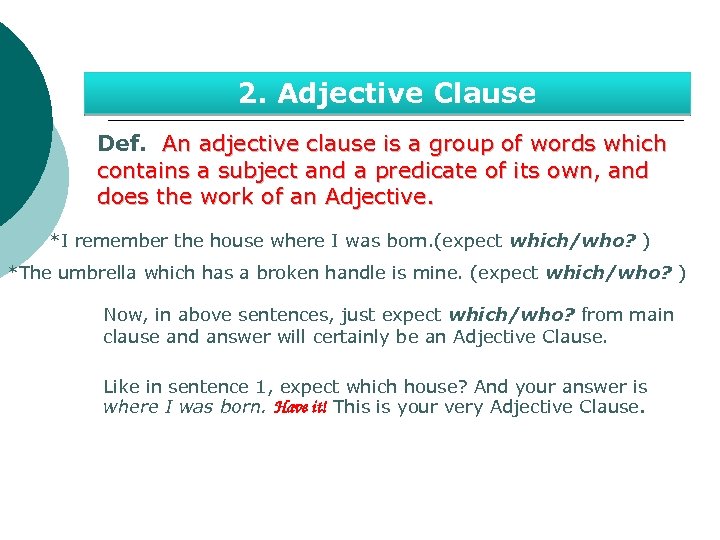 2. Adjective Clause Def. An adjective clause is a group of words which contains a subject and a predicate of its own, and does the work of an Adjective. *I remember the house where I was born. (expect which/who? ) *The umbrella which has a broken handle is mine. (expect which/who? ) Now, in above sentences, just expect which/who? from main clause and answer will certainly be an Adjective Clause. Like in sentence 1, expect which house? And your answer is where I was born. Have it! This is your very Adjective Clause.
 3. Adverb Clause Def. An adverb clause is a group of words which contains a subject and a predicate of its own, and does the work of an Adverb. Now, Adverb Clause do has trick to be identified. But now this depends upon the kinds of adverb e. g. adverbs of time adverbs of place adverbs of reason adverbs of manner adverbs of condition adverbs of contrast etc.
 Adverb Clause (cntd. ) You need expect when, where, why, how, if and your answer will definitely be an Adverb clause. See the following sentences: *Make hay while the sun shines. (expect when? ) *The boat sailed where the wind took it. (expect where? ) *I am glad that I have completed my work. (expect why? ) *He talks as if he were mad. (expect how? )
 Using Clauses and Phrases Once identifying clauses and phrases becomes easy for you, you will begin to notice how good writers put their sentences together. Additionally, once you become comfortable finding clauses and phrases in writing, you can begin to work with the punctuation rules for correctly and effectively putting clauses and phrases together. For now, simply test out your knowledge of sentences, clauses and phrases.
 Exercise 1. The house that I live in belongs to my father. 2. It was so dark that you could not see your hand. 3. You may sit wherever you like. 4. I earn whatever I can. 5. This exercise is so easy that all of u can do it. 6. Since you have already decided, why do you ask my opinion? 7. If you do not hurry, you will miss the train. 8. I believe what she says. 9. They never fail who die for a great cause. 10. He laughs best who laughs last.
 ਜ਼ ਦਗ ਜ਼ ਦ ਬ ਦ !