 Скачать презентацию Classroom assessment minute-by-minute and day-to-day Session 1249 T
32fc1721ae20e8dcc71e8a6109397945.ppt
- Количество слайдов: 54



Classroom assessment: minute-by-minute and day-to-day Session 1249 T: ASCD Annual Conference 2007 17 March 2007; Anaheim, CA Dylan Wiliam, Institute of Education, University of London www. dylanwiliam. net
Overview of presentation Why raising achievement is important Why investing in teachers is the answer Why assessment for learning should be the focus Why teacher learning communities should be the mechanism How we can put this into practice 22
Raising achievement matters For individuals Increased lifetime salary Improved health For society Lower criminal justice costs Lower health-care costs Increased economic growth 33
Where’s the solution? Structure Small high schools K-8 schools Alignment Curriculum reform Textbook replacement Governance Charter schools Vouchers Technology 44
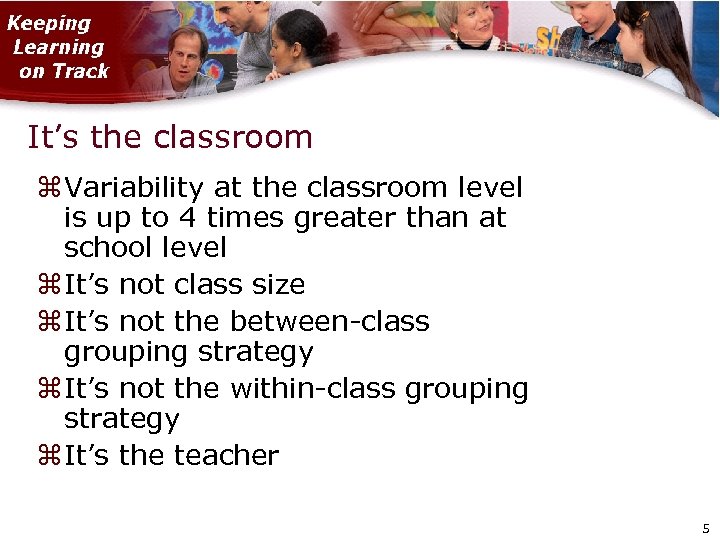
It’s the classroom Variability at the classroom level is up to 4 times greater than at school level It’s not class size It’s not the between-class grouping strategy It’s not the within-class grouping strategy It’s the teacher 55
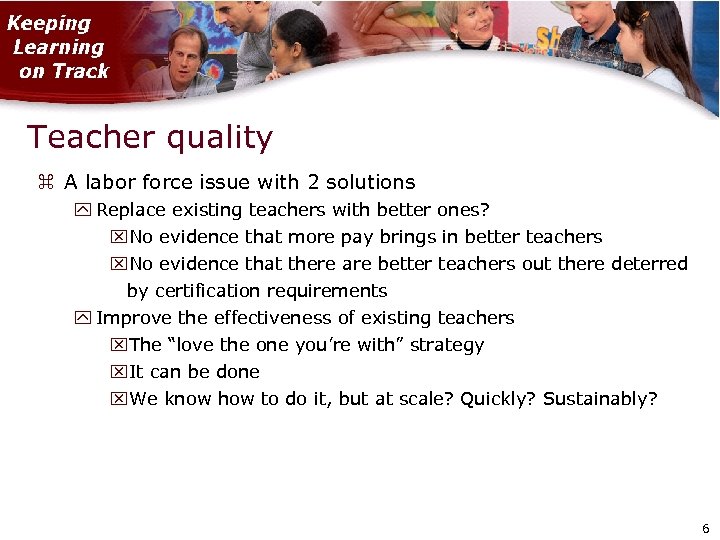
Teacher quality A labor force issue with 2 solutions Replace existing teachers with better ones? No evidence that more pay brings in better teachers No evidence that there are better teachers out there deterred by certification requirements Improve the effectiveness of existing teachers The “love the one you’re with” strategy It can be done We know how to do it, but at scale? Quickly? Sustainably? 66
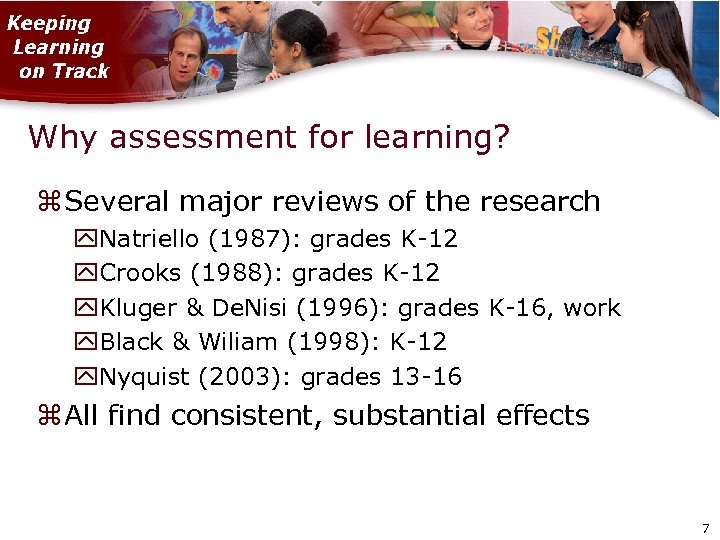
Why assessment for learning? Several major reviews of the research Natriello (1987): grades K-12 Crooks (1988): grades K-12 Kluger & De. Nisi (1996): grades K-16, work Black & Wiliam (1998): K-12 Nyquist (2003): grades 13 -16 All find consistent, substantial effects 77
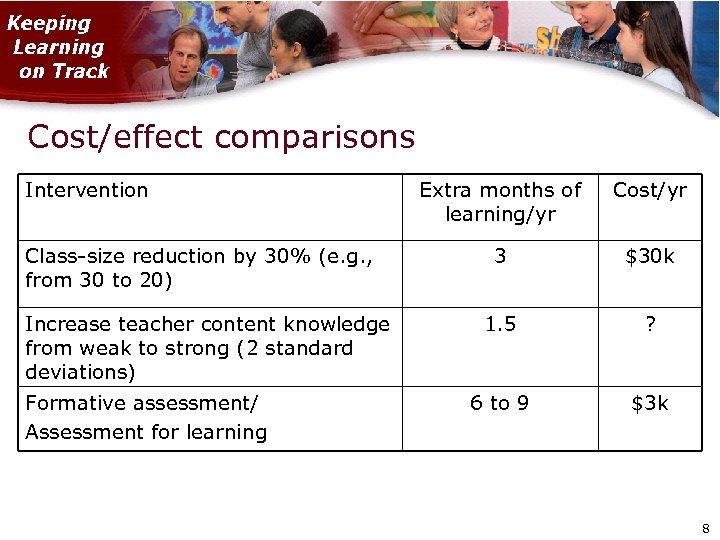
Cost/effect comparisons Intervention Class-size reduction by 30% (e. g. , from 30 to 20) Increase teacher content knowledge from weak to strong (2 standard deviations) Formative assessment/ Assessment for learning Extra months of learning/yr Cost/yr 3 $30 k 1. 5 ? 6 to 9 $3 k 88
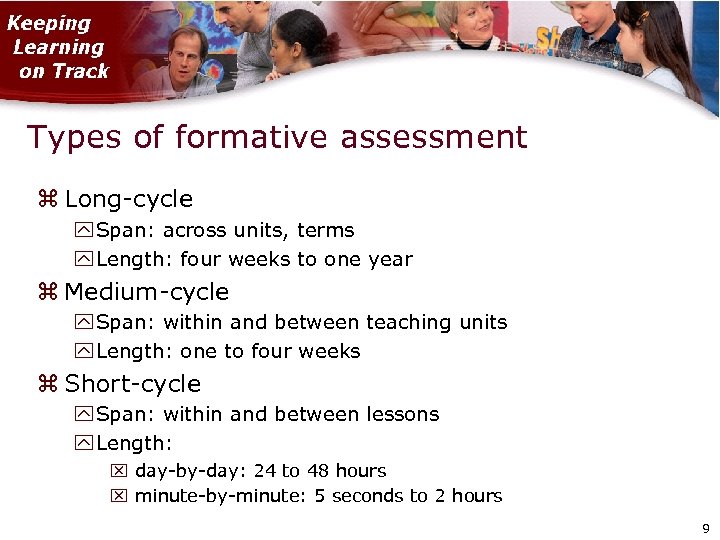
Types of formative assessment Long-cycle Span: across units, terms Length: four weeks to one year Medium-cycle Span: within and between teaching units Length: one to four weeks Short-cycle Span: within and between lessons Length: day-by-day: 24 to 48 hours minute-by-minute: 5 seconds to 2 hours 99
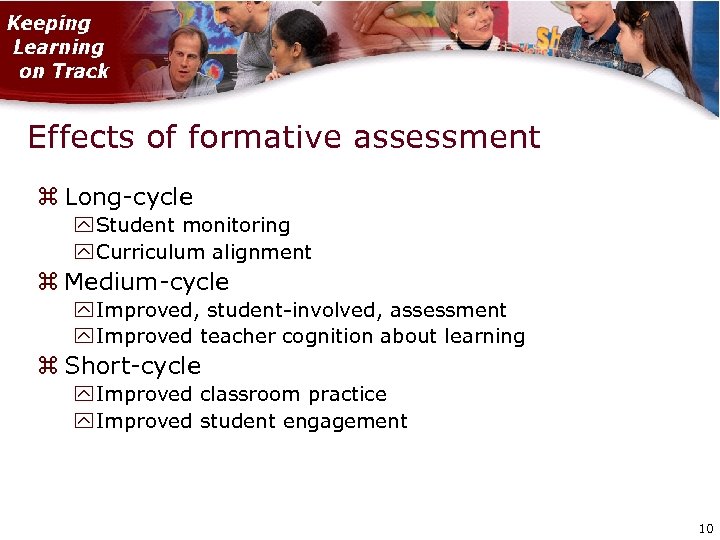
Effects of formative assessment Long-cycle Student monitoring Curriculum alignment Medium-cycle Improved, student-involved, assessment Improved teacher cognition about learning Short-cycle Improved classroom practice Improved student engagement 10 10
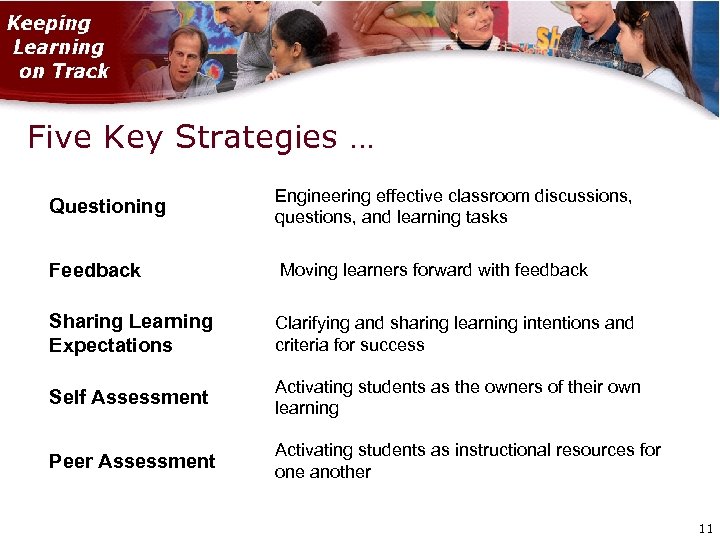
Five Key Strategies … Questioning Engineering effective classroom discussions, questions, and learning tasks Feedback Moving learners forward with feedback Sharing Learning Expectations Clarifying and sharing learning intentions and criteria for success Self Assessment Activating students as the owners of their own learning Peer Assessment Activating students as instructional resources for one another 11 11
…and one big idea Use evidence about learning to adapt instruction to meet student needs 12 12
Keeping Learning on Track (KLT) A pilot guides a plane or boat toward its destination by taking constant readings and making careful adjustments in response to wind, currents, weather, etc. A KLT teacher does the same: Plans a carefully chosen route ahead of time (in essence building the track) Takes readings along the way Changes course as conditions dictate 13 13

Eliciting evidence of student achievement by engineering effective classroom discussions, questions and learning tasks
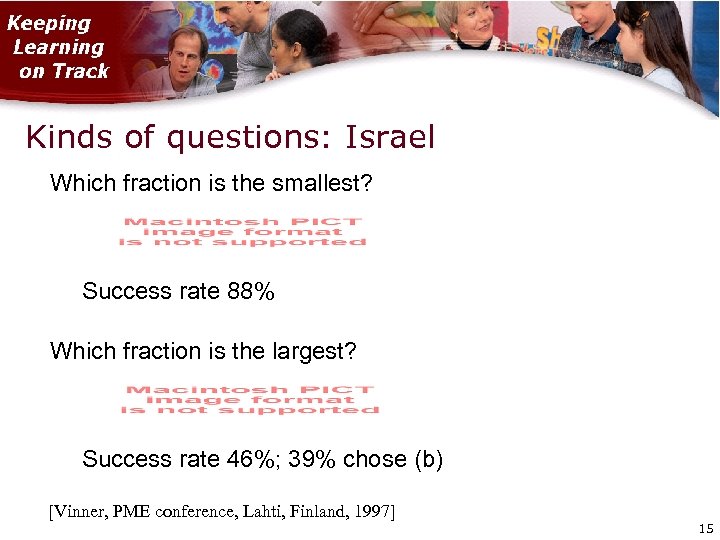
Kinds of questions: Israel Which fraction is the smallest? Success rate 88% Which fraction is the largest? Success rate 46%; 39% chose (b) [Vinner, PME conference, Lahti, Finland, 1997] 15 15
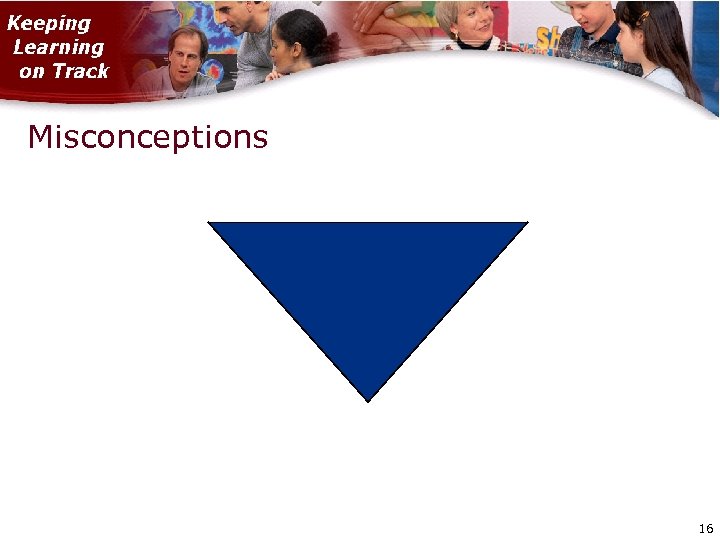
Misconceptions 16 16
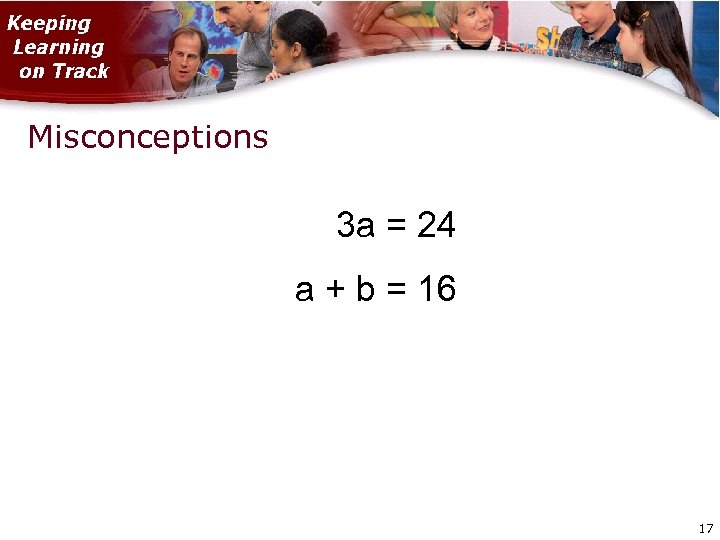
Misconceptions 3 a = 24 a + b = 16 17 17
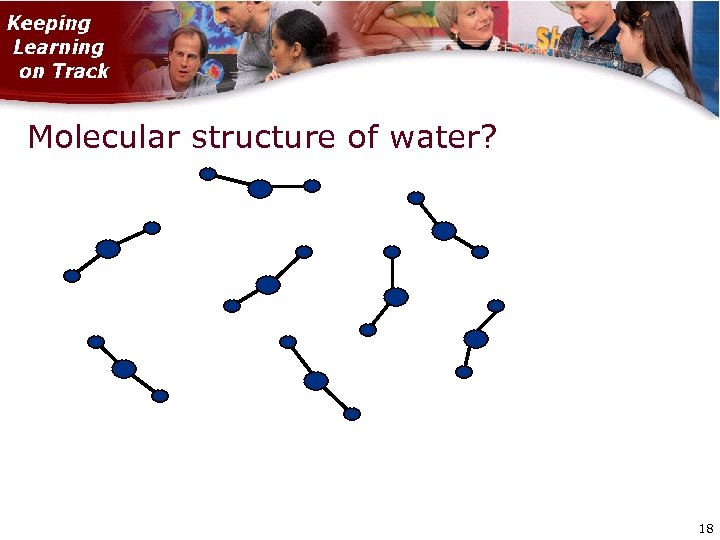
Molecular structure of water? 18 18
Moving learners forward with feedback
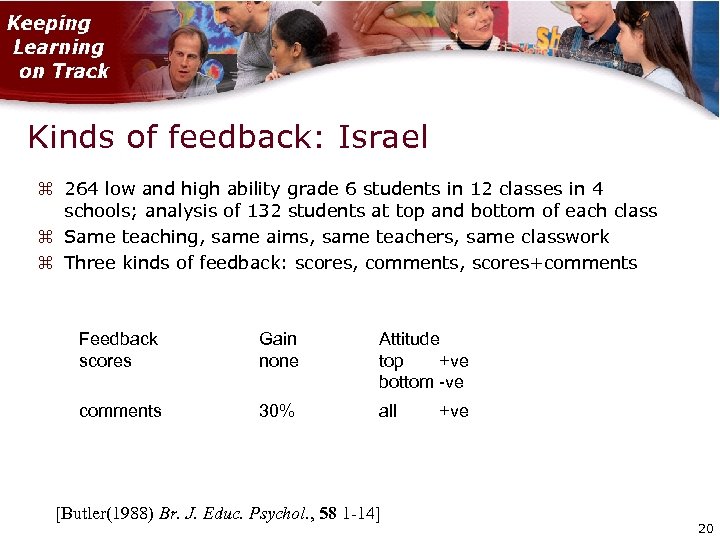
Kinds of feedback: Israel 264 low and high ability grade 6 students in 12 classes in 4 schools; analysis of 132 students at top and bottom of each class Same teaching, same aims, same teachers, same classwork Three kinds of feedback: scores, comments, scores+comments Feedback scores Gain none Attitude top +ve bottom -ve comments 30% all [Butler(1988) Br. J. Educ. Psychol. , 58 1 -14] +ve 20 20
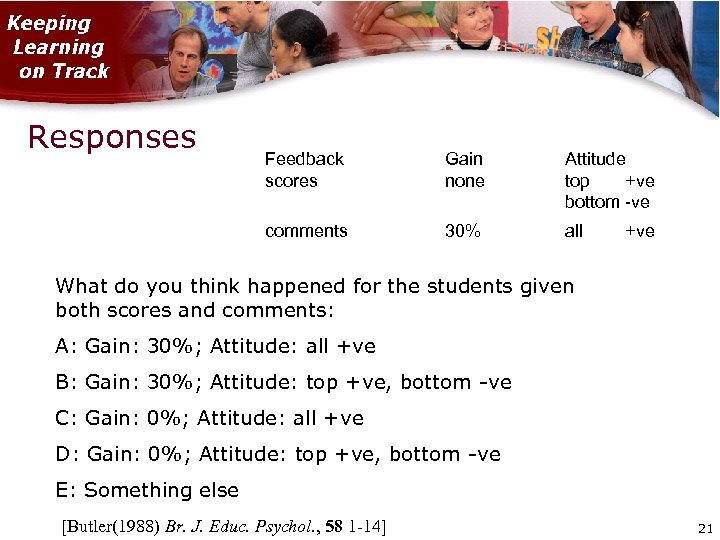
Responses Feedback scores Gain none Attitude top +ve bottom -ve comments 30% all +ve What do you think happened for the students given both scores and comments: A: Gain: 30%; Attitude: all +ve B: Gain: 30%; Attitude: top +ve, bottom -ve C: Gain: 0%; Attitude: all +ve D: Gain: 0%; Attitude: top +ve, bottom -ve E: Something else [Butler(1988) Br. J. Educ. Psychol. , 58 1 -14] 21 21
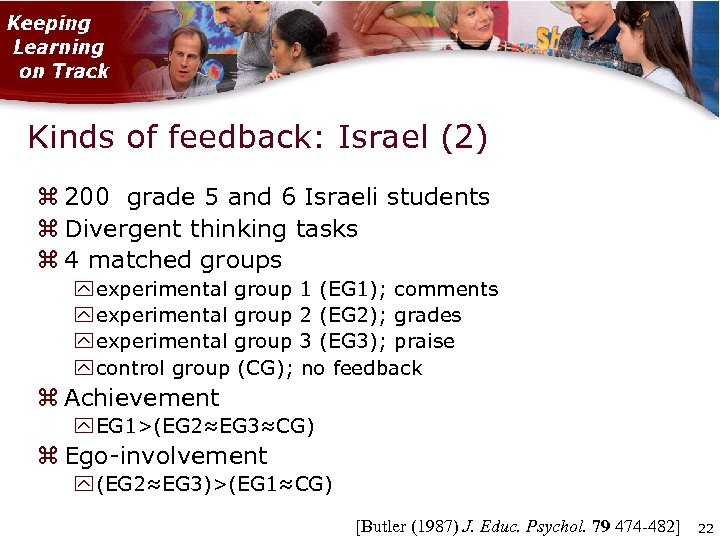
Kinds of feedback: Israel (2) 200 grade 5 and 6 Israeli students Divergent thinking tasks 4 matched groups experimental group 1 (EG 1); comments experimental group 2 (EG 2); grades experimental group 3 (EG 3); praise control group (CG); no feedback Achievement EG 1>(EG 2≈EG 3≈CG) Ego-involvement (EG 2≈EG 3)>(EG 1≈CG) [Butler (1987) J. Educ. Psychol. 79 474 -482] 22 22
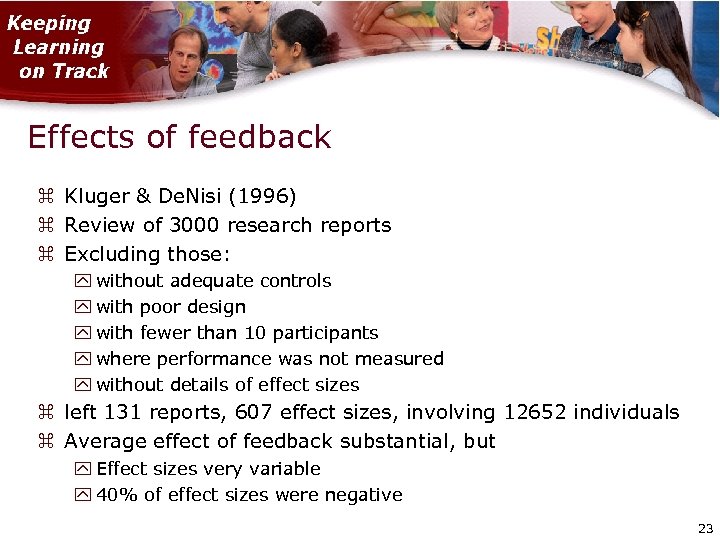
Effects of feedback Kluger & De. Nisi (1996) Review of 3000 research reports Excluding those: without adequate controls with poor design with fewer than 10 participants where performance was not measured without details of effect sizes left 131 reports, 607 effect sizes, involving 12652 individuals Average effect of feedback substantial, but Effect sizes very variable 40% of effect sizes were negative 23 23
Sharing learning intentions and success criteria Activating students as owners of their own learning Activating students as instructional resources for one another
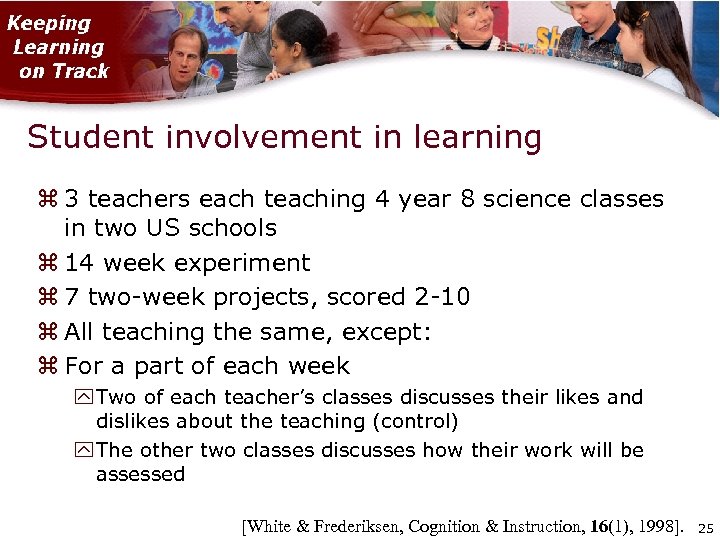
Student involvement in learning 3 teachers each teaching 4 year 8 science classes in two US schools 14 week experiment 7 two-week projects, scored 2 -10 All teaching the same, except: For a part of each week Two of each teacher’s classes discusses their likes and dislikes about the teaching (control) The other two classes discusses how their work will be assessed [White & Frederiksen, Cognition & Instruction, 16(1), 1998]. 25 25
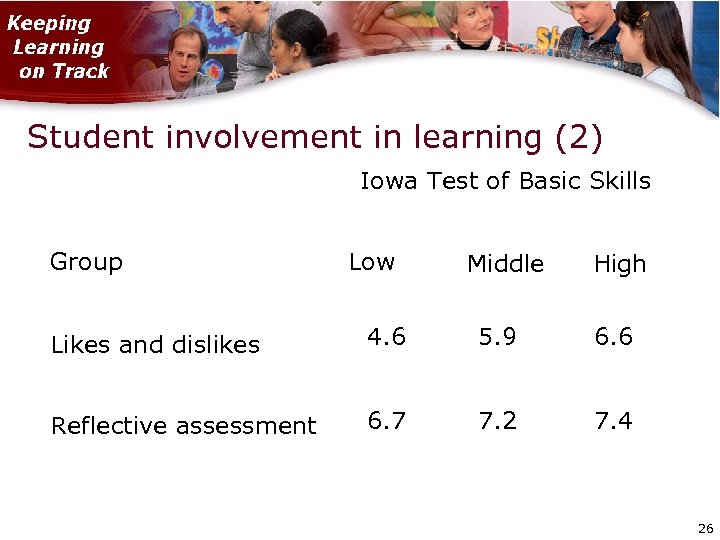
Student involvement in learning (2) Iowa Test of Basic Skills Group Low Middle High Likes and dislikes 4. 6 5. 9 6. 6 Reflective assessment 6. 7 7. 2 7. 4 26 26
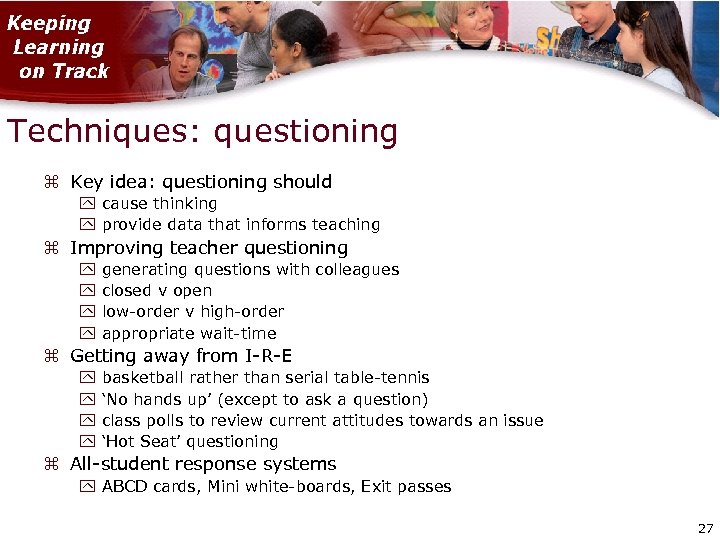
Techniques: questioning Key idea: questioning should cause thinking provide data that informs teaching Improving teacher questioning generating questions with colleagues closed v open low-order v high-order appropriate wait-time Getting away from I-R-E basketball rather than serial table-tennis ‘No hands up’ (except to ask a question) class polls to review current attitudes towards an issue ‘Hot Seat’ questioning All-student response systems ABCD cards, Mini white-boards, Exit passes 27 27
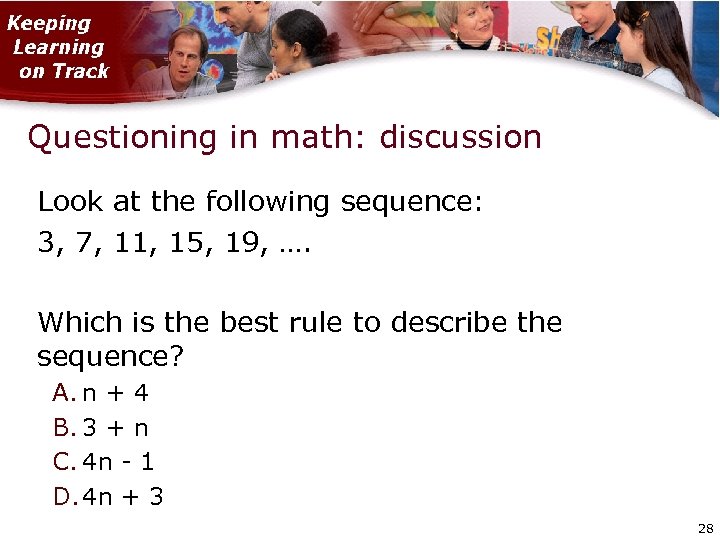
Questioning in math: discussion Look at the following sequence: 3, 7, 11, 15, 19, …. Which is the best rule to describe the sequence? A. n + 4 B. 3 + n C. 4 n - 1 D. 4 n + 3 28 28
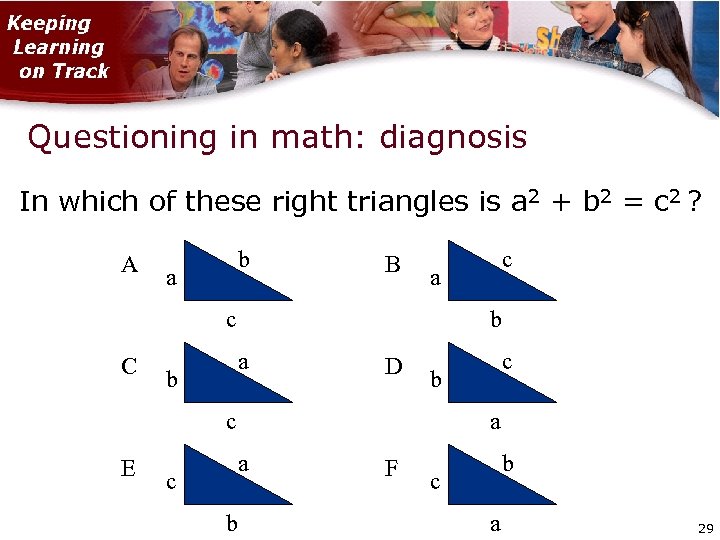
Questioning in math: diagnosis In which of these right triangles is a 2 + b 2 = c 2 ? A b a B a c C b a b D c c b c E c a a b F b c a 29 29
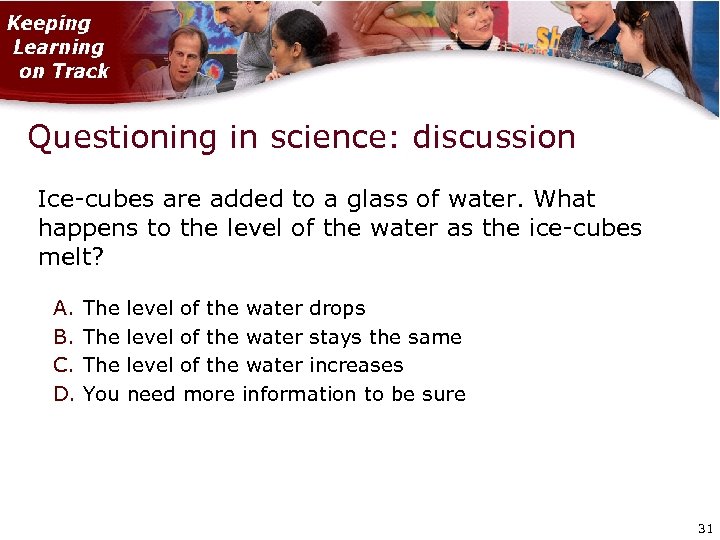
Questioning in science: discussion Ice-cubes are added to a glass of water. What happens to the level of the water as the ice-cubes melt? A. B. C. D. The The You level of the water drops level of the water stays the same level of the water increases need more information to be sure 31 31
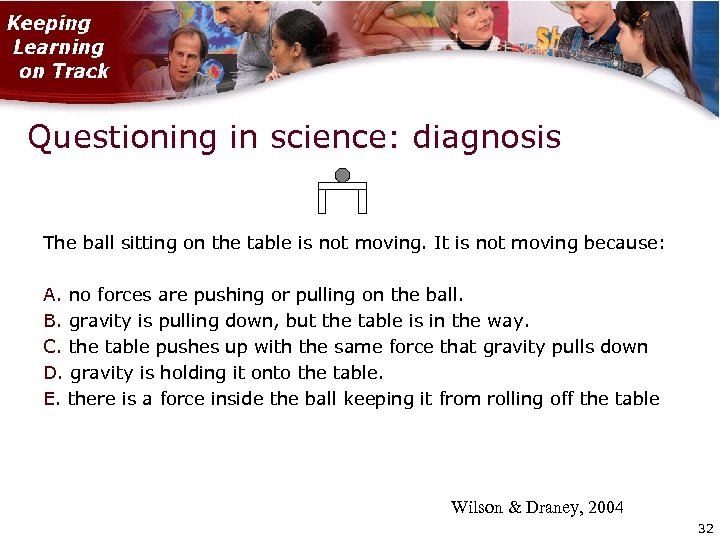
Questioning in science: diagnosis The ball sitting on the table is not moving. It is not moving because: A. no forces are pushing or pulling on the ball. B. gravity is pulling down, but the table is in the way. C. the table pushes up with the same force that gravity pulls down D. gravity is holding it onto the table. E. there is a force inside the ball keeping it from rolling off the table Wilson & Draney, 2004 32 32
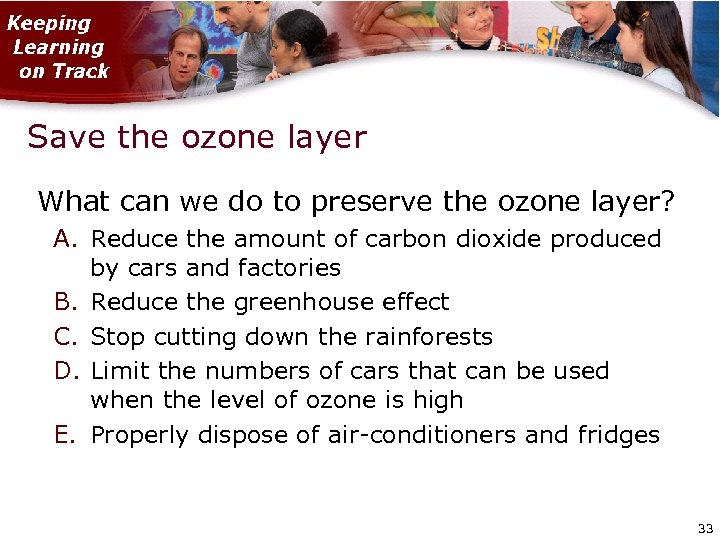
Save the ozone layer What can we do to preserve the ozone layer? A. Reduce the amount of carbon dioxide produced by cars and factories B. Reduce the greenhouse effect C. Stop cutting down the rainforests D. Limit the numbers of cars that can be used when the level of ozone is high E. Properly dispose of air-conditioners and fridges 33 33
Questioning in English: discussion Macbeth: mad or bad? 34 34
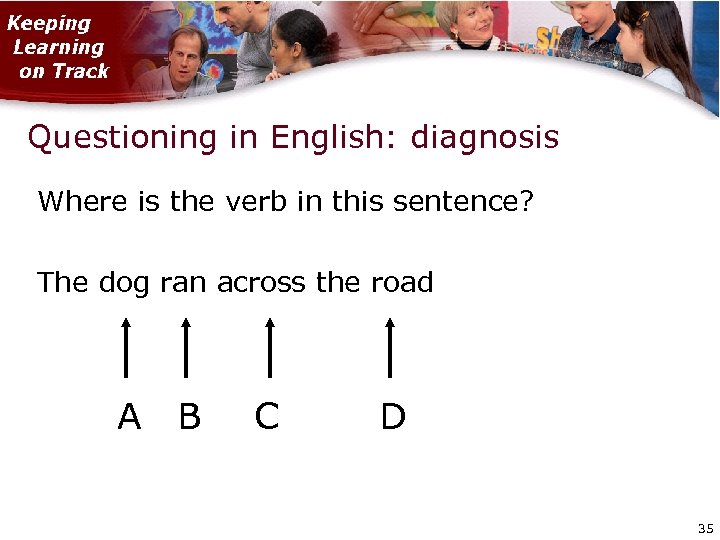
Questioning in English: diagnosis Where is the verb in this sentence? The dog ran across the road A B C D 35 35
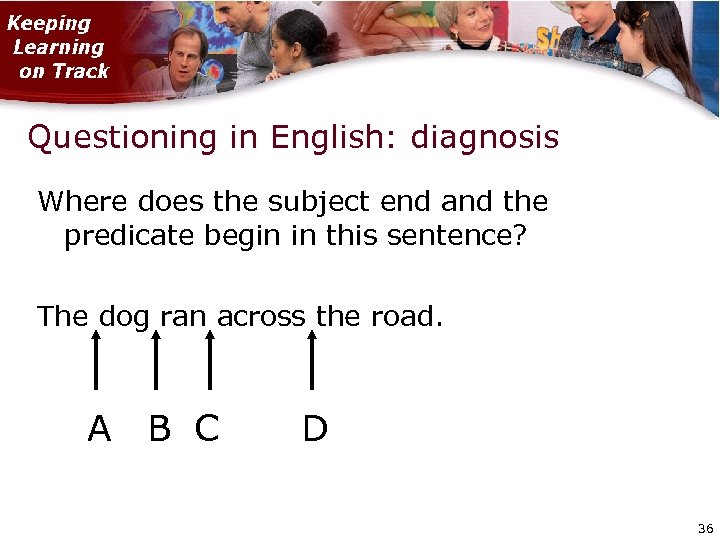
Questioning in English: diagnosis Where does the subject end and the predicate begin in this sentence? The dog ran across the road. A B C D 36 36
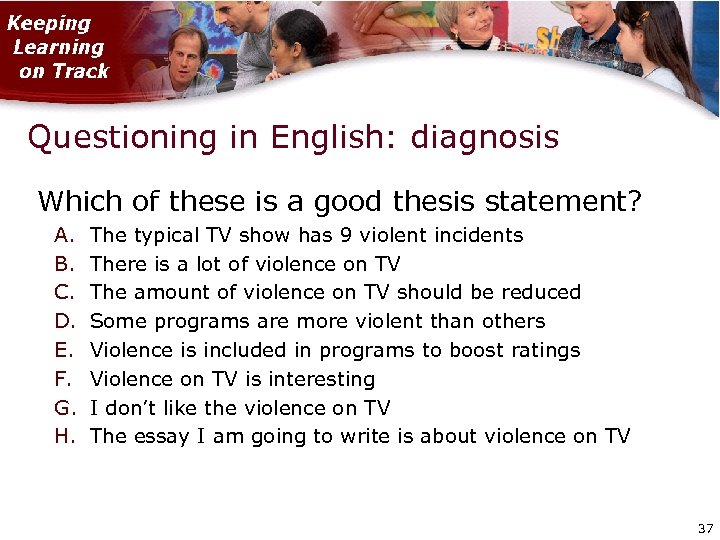
Questioning in English: diagnosis Which of these is a good thesis statement? A. B. C. D. E. F. G. H. The typical TV show has 9 violent incidents There is a lot of violence on TV The amount of violence on TV should be reduced Some programs are more violent than others Violence is included in programs to boost ratings Violence on TV is interesting I don’t like the violence on TV The essay I am going to write is about violence on TV 37 37
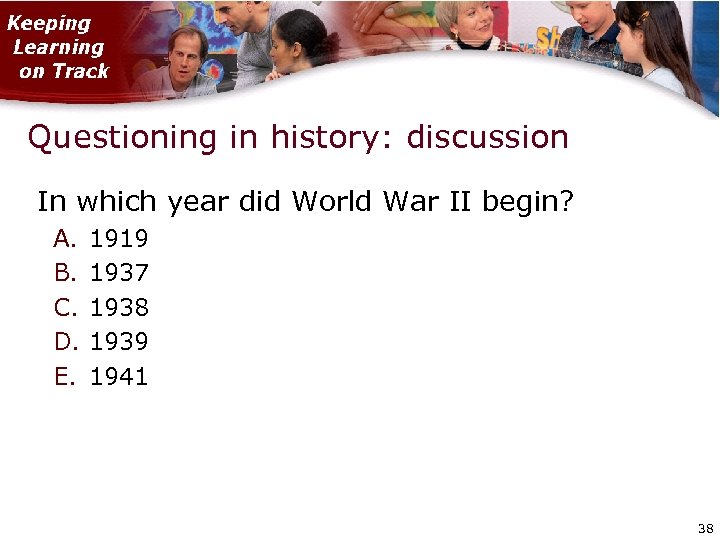
Questioning in history: discussion In which year did World War II begin? A. B. C. D. E. 1919 1937 1938 1939 1941 38 38
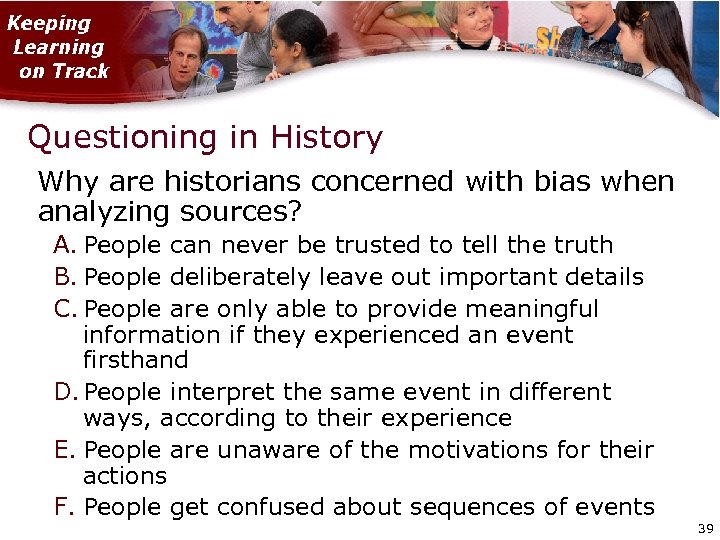
Questioning in History Why are historians concerned with bias when analyzing sources? A. People can never be trusted to tell the truth B. People deliberately leave out important details C. People are only able to provide meaningful information if they experienced an event firsthand D. People interpret the same event in different ways, according to their experience E. People are unaware of the motivations for their actions F. People get confused about sequences of events 39 39
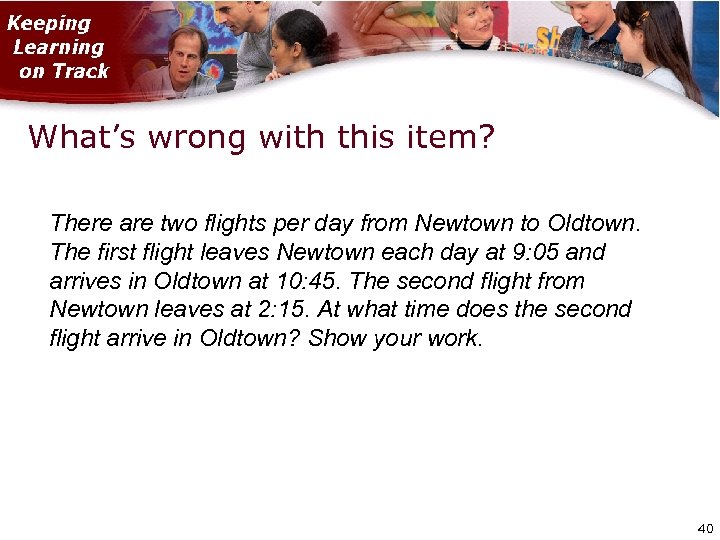
What’s wrong with this item? There are two flights per day from Newtown to Oldtown. The first flight leaves Newtown each day at 9: 05 and arrives in Oldtown at 10: 45. The second flight from Newtown leaves at 2: 15. At what time does the second flight arrive in Oldtown? Show your work. 40 40
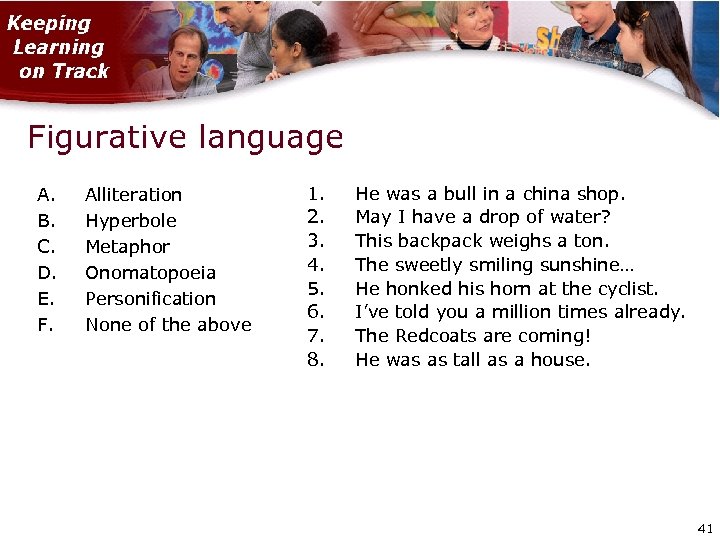
Figurative language A. B. C. D. E. F. Alliteration Hyperbole Metaphor Onomatopoeia Personification None of the above 1. 2. 3. 4. 5. 6. 7. 8. He was a bull in a china shop. May I have a drop of water? This backpack weighs a ton. The sweetly smiling sunshine… He honked his horn at the cyclist. I’ve told you a million times already. The Redcoats are coming! He was as tall as a house. 41 41
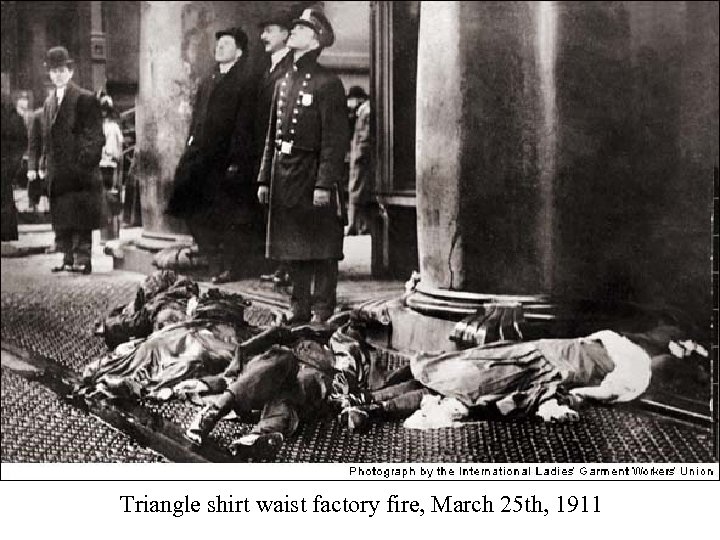
Triangle shirt waist factory fire, March 25 th, 1911
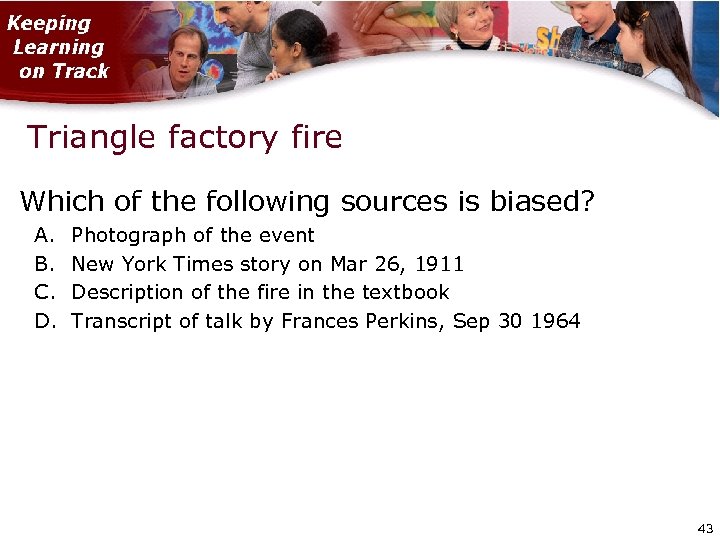
Triangle factory fire Which of the following sources is biased? A. B. C. D. Photograph of the event New York Times story on Mar 26, 1911 Description of the fire in the textbook Transcript of talk by Frances Perkins, Sep 30 1964 43 43
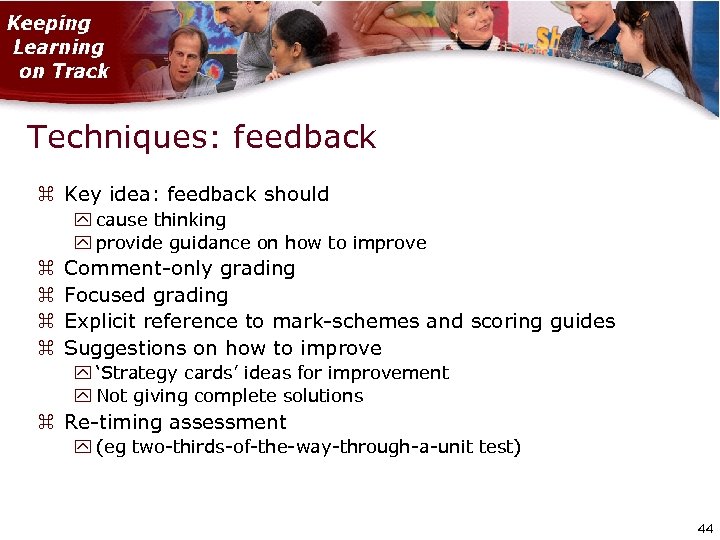
Techniques: feedback Key idea: feedback should cause thinking provide guidance on how to improve Comment-only grading Focused grading Explicit reference to mark-schemes and scoring guides Suggestions on how to improve ‘Strategy cards’ ideas for improvement Not giving complete solutions Re-timing assessment (eg two-thirds-of-the-way-through-a-unit test) 44 44
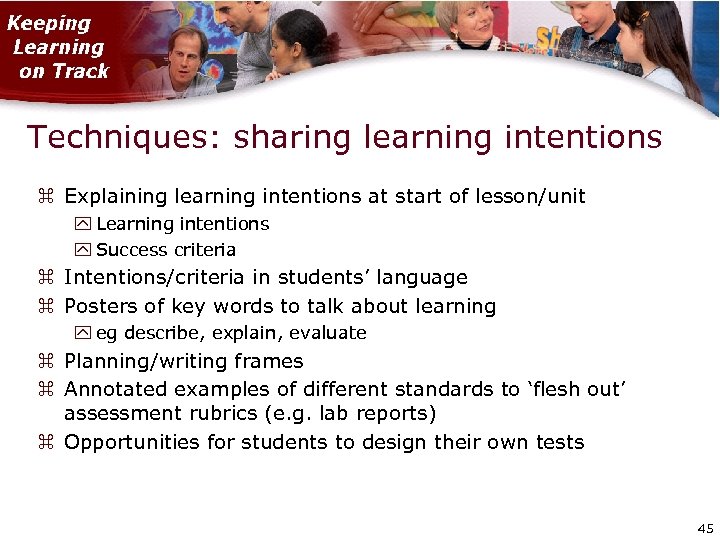
Techniques: sharing learning intentions Explaining learning intentions at start of lesson/unit Learning intentions Success criteria Intentions/criteria in students’ language Posters of key words to talk about learning eg describe, explain, evaluate Planning/writing frames Annotated examples of different standards to ‘flesh out’ assessment rubrics (e. g. lab reports) Opportunities for students to design their own tests 45 45
Practical techniques: peer and self-assessment Students assessing their own/peers’ work with rubrics with exemplars “two stars and a wish” Training students to pose questions/identifying group weaknesses Self-assessment of understanding Traffic lights Red/green discs End-of-lesson students’ review 46 46
Putting it into practice
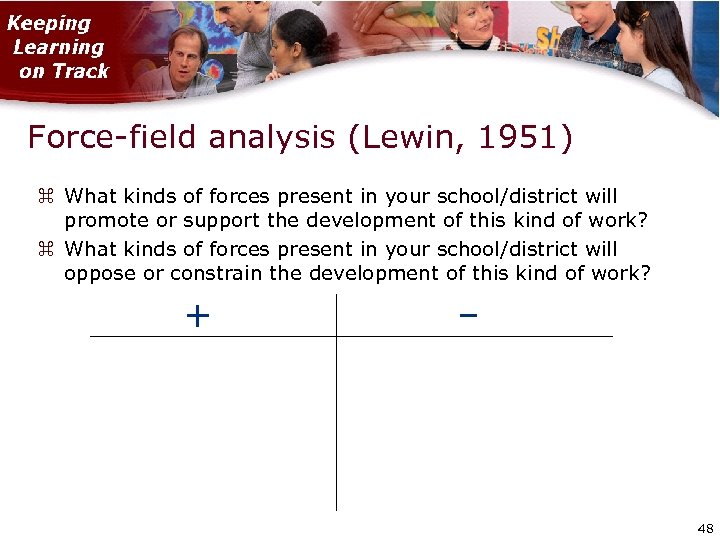
Force-field analysis (Lewin, 1951) What kinds of forces present in your school/district will promote or support the development of this kind of work? What kinds of forces present in your school/district will oppose or constrain the development of this kind of work? + – 48 48
A model for teacher learning Content (what we want teachers to change) Evidence Ideas (strategies and techniques) Process (how to go about change) Choice Flexibility Small steps Accountability Support 49 49

Supporting Teachers and Schools to Change through Teacher Learning Communities
Implementing Af. L requires changing habits, not adding knowledge Teachers “know” most of this already So the problem is not a lack of knowledge It’s a lack of understanding what it means to do Af. L That’s why telling teachers what to do doesn’t work Experience alone is not enough—if it were, then the most experienced teachers would be the best teachers—we know that’s not true (Hanushek, 2005) People need to reflect on their experiences in systematic ways that build their accessible knowledge base, learn from mistakes, etc. (Bransford, Brown & Cocking, 1999) 51 51
That’s what TLCs are for: TLCs contradict teacher isolation TLCs reprofessionalize teaching by valuing teacher expertise TLCs deprivatize teaching so that teachers’ strengths and struggles become known TLCs offer a steady source of support for struggling teachers They grow expertise by providing a regular space, time, and structure for that kind of systematic reflecting on practice They facilitate sharing of untapped expertise residing in individual teachers They build the collective knowledge base in a school 52 52
The synergy Content: assessment for learning Process: teacher learning communities Components of a model Initial workshops Support for TLC leaders Monthly TLC meetings Peer observations ‘Drip-feed’ resources Web-site Writings New ideas 53 53
Summary Raising achievement is important Raising achievement requires improving teacher quality Improving teacher quality requires teacher professional development To be effective, teacher professional development must address What teachers do in the classroom How teachers change what they do in the classroom Af. L + TLCs A point of (uniquely? ) high leverage A “Trojan Horse” into wider issues of pedagogy, psychology, and curriculum 54 54
Скачать презентацию Classroom assessment minute-by-minute and day-to-day Session 1249 T
32fc1721ae20e8dcc71e8a6109397945.ppt