 Скачать презентацию Class 2 b Natural Resources and Energy
3a551a18b7f89ae41ab88033da63cb2e.ppt
- Количество слайдов: 37



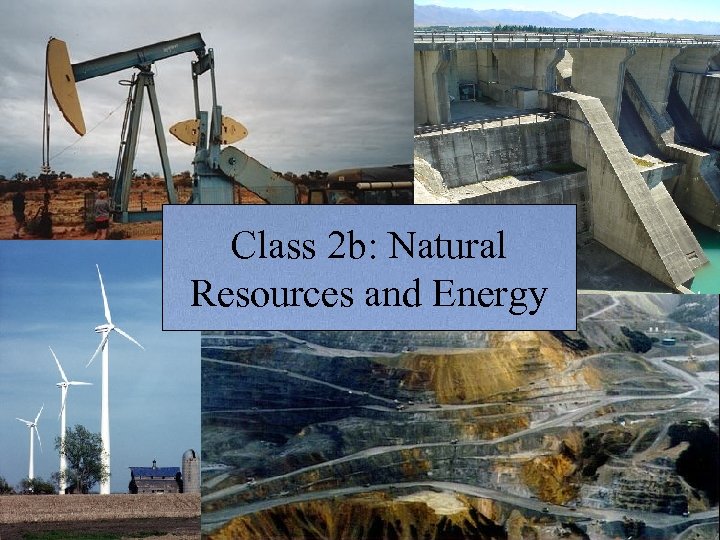
Class 2 b: Natural Resources and Energy
Today’s class • What is a resource? • Ecological footprints • Natural resources and resource-based economies • Example: Gabon • Energy and oil
What is a resource? • • Naturally occurring material Useful to society Able to be exploited (used) Availability depends on: – Physical characteristics of the resource – Economic and technological condition of society
Renewable resources • Regenerated as fast as they’re used • Energy sources • Potentially renewable: must be carefully managed – Water – Forests – Soils
Nonrenewable resources • Finite on a human time scale • All minerals • Fossil fuels – Generated like sedimentary rocks – Coal, oil, natural gas
Tragedy of the commons • • Resources held in common; free access Wealth measured by resource use No incentive to conserve Tragedy is inevitable: an individual will overuse public resources when it is in his or her best interests • Solutions?
Example: Atlantic cod • • Grand Banks off Canadian East Coast For 500 years, rich commercial fishery 1950 s technology led to 4 x catch rate Population crashed in 1980 s; 70% decrease in catch • Now moratorium on Northern Cod
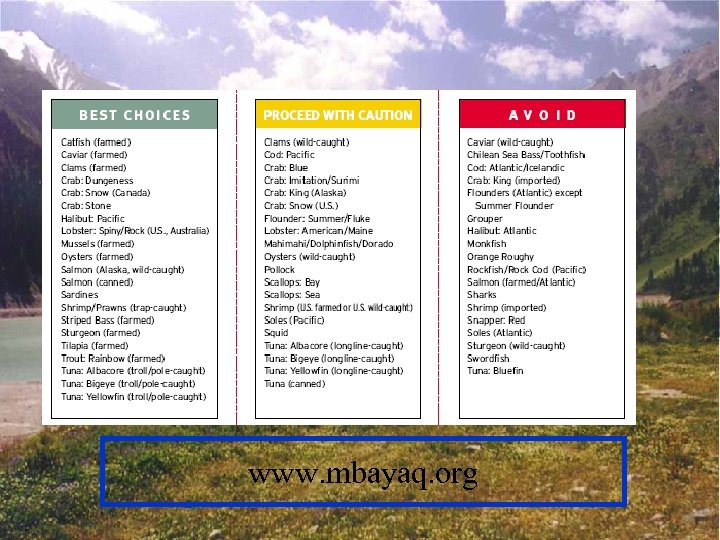
www. mbayaq. org
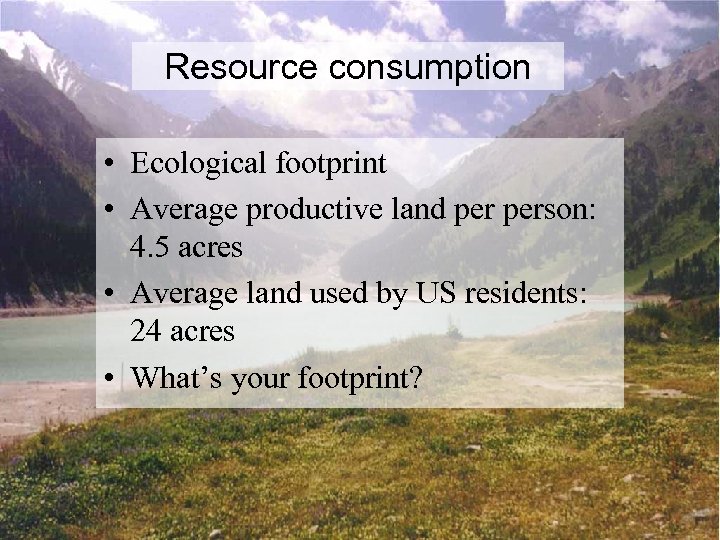
Resource consumption • Ecological footprint • Average productive land person: 4. 5 acres • Average land used by US residents: 24 acres • What’s your footprint?
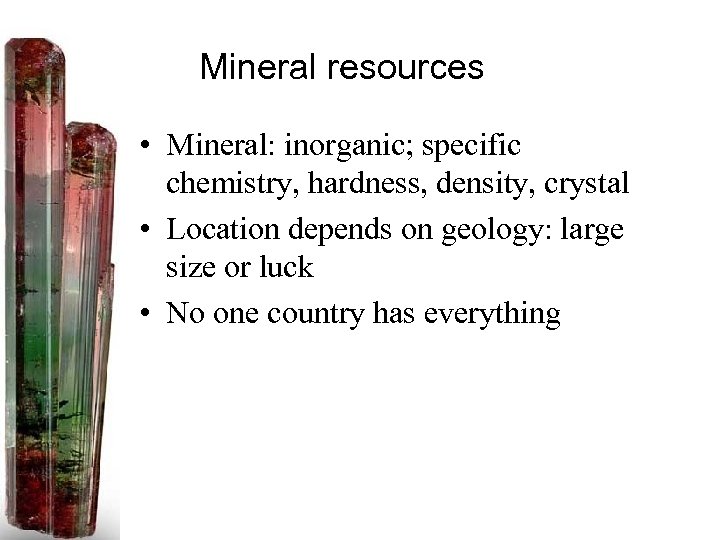
Mineral resources • Mineral: inorganic; specific chemistry, hardness, density, crystal • Location depends on geology: large size or luck • No one country has everything
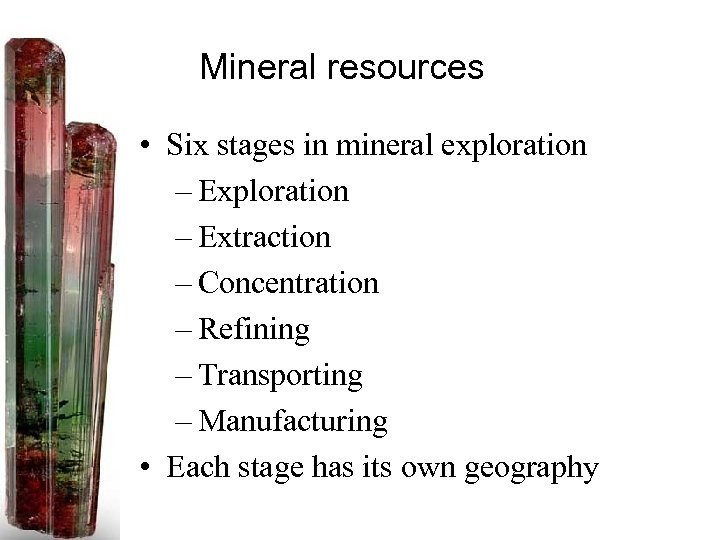
Mineral resources • Six stages in mineral exploration – Extraction – Concentration – Refining – Transporting – Manufacturing • Each stage has its own geography
Mineral exploration • Where does exploration take place? – Geology – Politics – Economics – Technology • The less risk and cost, the better • Exploration determines where reserves are
Resource reserves • Estimated vs. proven • Remember: economics and technology
Resource reserves • Estimated vs. proven • Remember: economics and technology
Mineral extraction • Where does extraction take place? See Step 1!
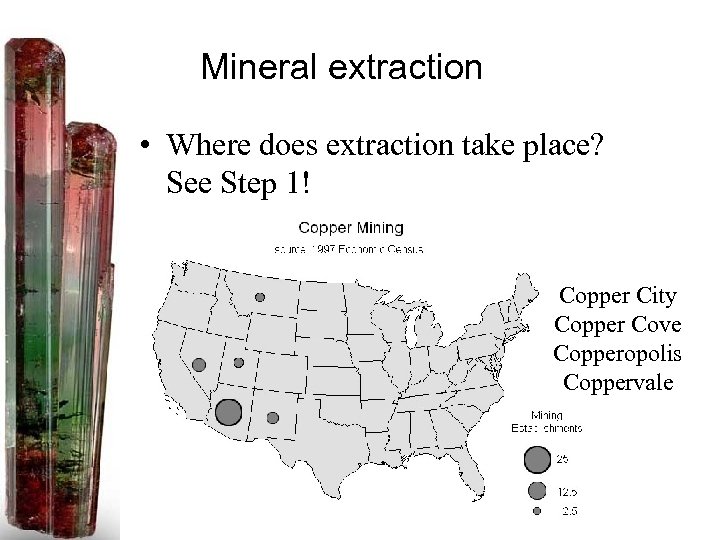
Mineral extraction • Where does extraction take place? See Step 1! Copper City Copper Cove Copperopolis Coppervale
Mineral concentration and refining • Two similar stages • Ex: Copper uses 0. 5% ore: where? • Near the extraction site
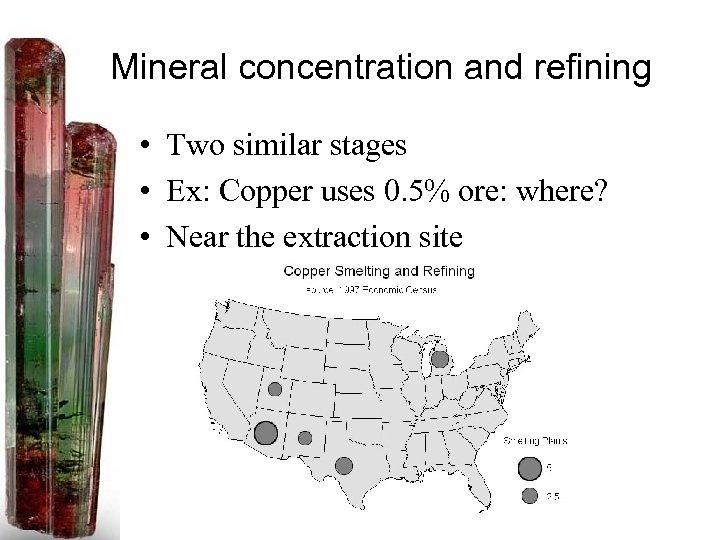
Mineral concentration and refining • Two similar stages • Ex: Copper uses 0. 5% ore: where? • Near the extraction site
Mineral processing/manufacturing • Depends on the mineral: small or large quantities? • Ex: Copper in small pieces: where?
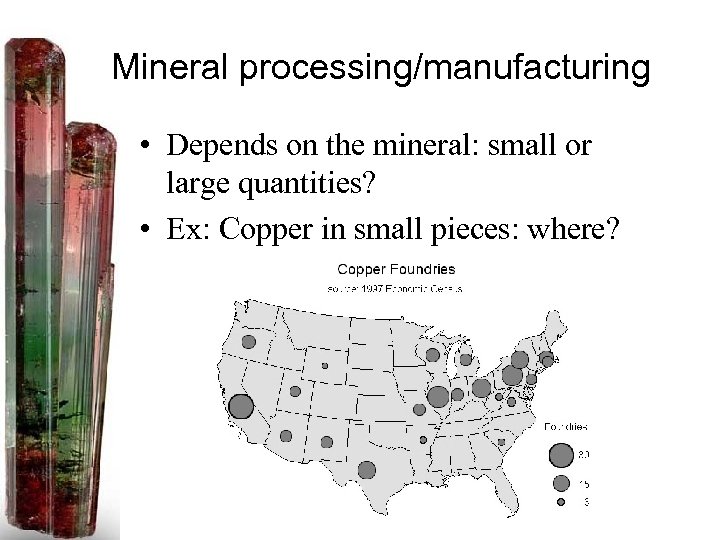
Mineral processing/manufacturing • Depends on the mineral: small or large quantities? • Ex: Copper in small pieces: where?
Example: Gold • Long history as a valuable metal – Conducts electricity; ductile – Used as currency – Aesthetic value • Occurs everywhere, even in seawater • Placer vs. lode gold – Weathered gold washed downstream – Veins under the surface
Example: California Gold Rush • Geologically right: former seabed • Politically right: just transferred from Mexico • Technology evolved to extract more gold – Initially placer mining – Then hydraulic mining – Then cyanide heap leaching
Example: California Gold Rush • • Gold helped Union win Civil War Population boom made CA a state in 2 years Agriculture began to boom San Francisco as gateway • Massive amounts of erosion and deposition – More flooding in Sacramento • Processing involved mercury and arsenic • Don’t eat American River fish!
Example: Coltan • Mineral that includes tantalum • Used in cell phones, laptops, etc. • Found in Australia, Central Africa
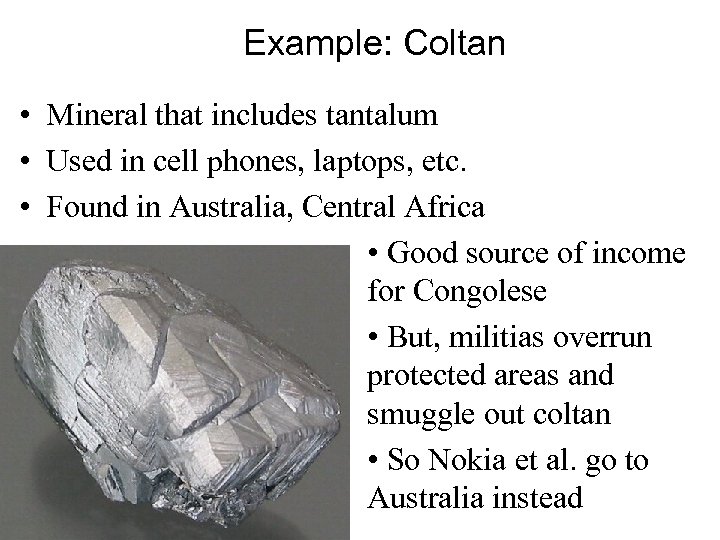
Example: Coltan • Mineral that includes tantalum • Used in cell phones, laptops, etc. • Found in Australia, Central Africa • Good source of income for Congolese • But, militias overrun protected areas and smuggle out coltan • So Nokia et al. go to Australia instead
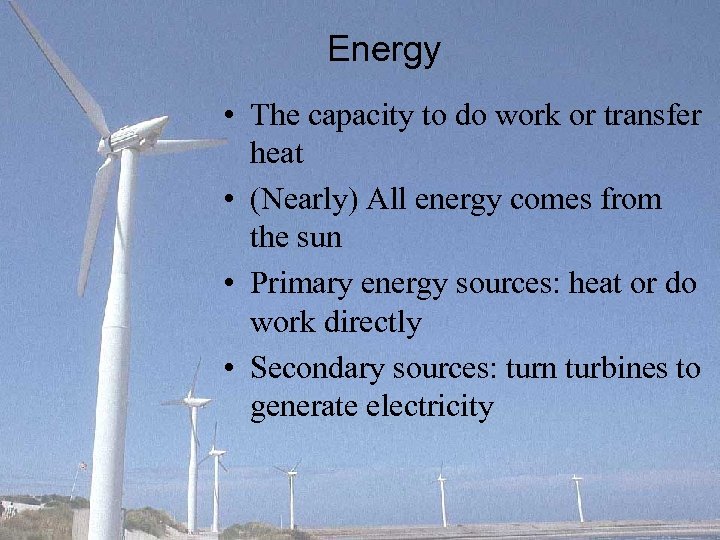
Energy • The capacity to do work or transfer heat • (Nearly) All energy comes from the sun • Primary energy sources: heat or do work directly • Secondary sources: turn turbines to generate electricity
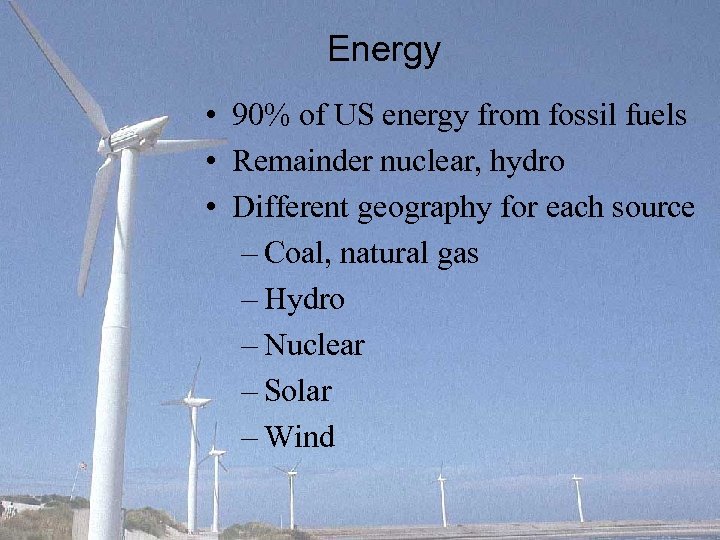
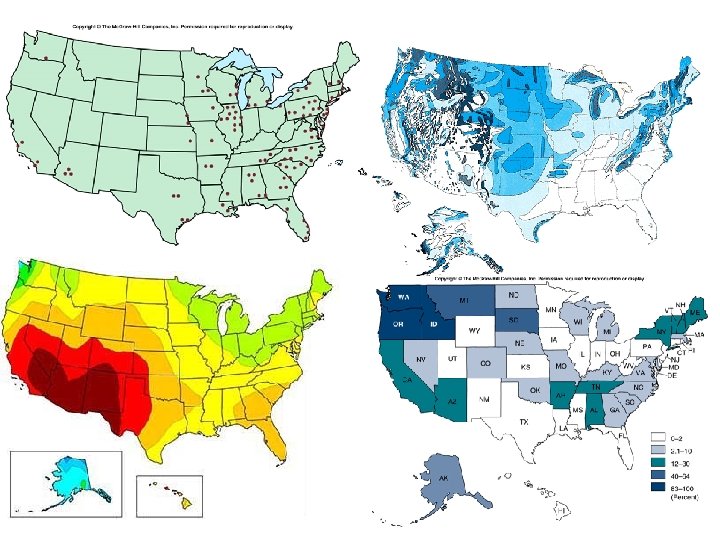
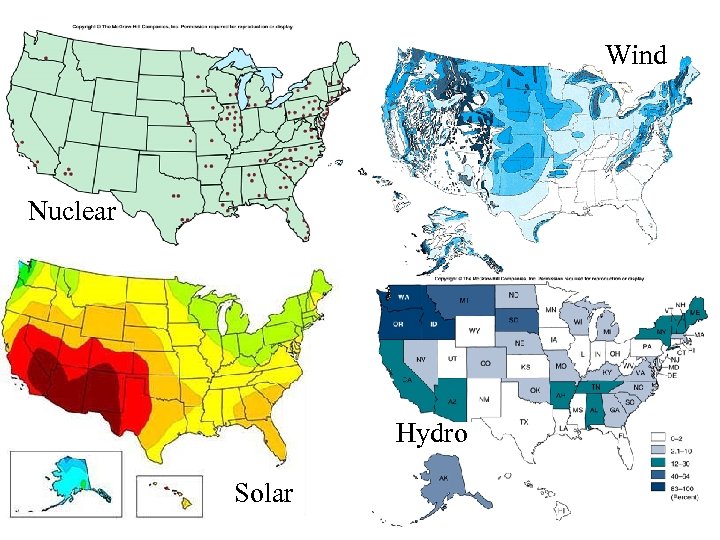
Energy • 90% of US energy from fossil fuels • Remainder nuclear, hydro • Different geography for each source – Coal, natural gas – Hydro – Nuclear – Solar – Wind
Wind Nuclear Hydro Solar
Oil • Worldwide and in US, 40% of energy • 2/3 of US use is transportation • Cheaper to import oil than extract it here (60% imported) • Depends on relationships with exporters • 2002: Canada, Saudi Arabia, Mexico, Venezuela, Nigeria, Iraq
OPEC • Organization of Petroleum Exporting Countries • Cartel that sets oil prices and supply – Formed to resist European companies – Holds 70% of reserves • Iran, Iraq, Kuwait, Qatar, Saudi Arabia, UAE; Algeria, Libya, Nigeria; Venezuela; Indonesia
1970 oil crises • 1973 Israel fights off Egypt and Syria • OPEC wanted to punish Israel’s allies • Plus frustration with 6% of population using 33% of energy • Quadrupled oil prices • Led to gas shortages, efficiency improvements • Today, conservation no longer a concern
Oil reserves • When will we run out? No, when will production decline? • 10% rule: production is about 10% of reserves • New discoveries needed to keep production high • In 2003, 25 billion barrels were used, but only 8 billion were discovered • And consumption is only increasing
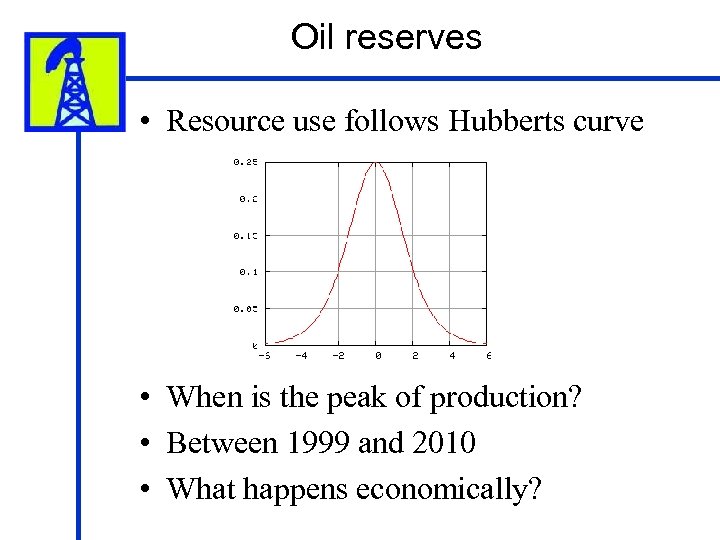
Oil reserves • Resource use follows Hubberts curve • When is the peak of production? • Between 1999 and 2010 • What happens economically?
Solutions? • • Technological improvements Substitutions Taking oil by force New sites of exploration – Less environmentally friendly – New parts of the world
 Скачать презентацию Class 2 b Natural Resources and Energy
3a551a18b7f89ae41ab88033da63cb2e.ppt