


 Скачать презентацию Clans and Tartans The origin It could
Clans and Tartans.pptx
- Количество слайдов: 10
 Clans and Tartans
 The origin It could have come from: the Irish “tarsna”which meant crosswise the Scottish Gaelic “tarsuinn” meaning across. it could simply mean cloth, from the old French “tartaine” Long before there were individual Scottish clans and tartans, the Celts loved bright colors and patterned cloth. Later the Scots incorporated this love for color into a unique plaid cloth
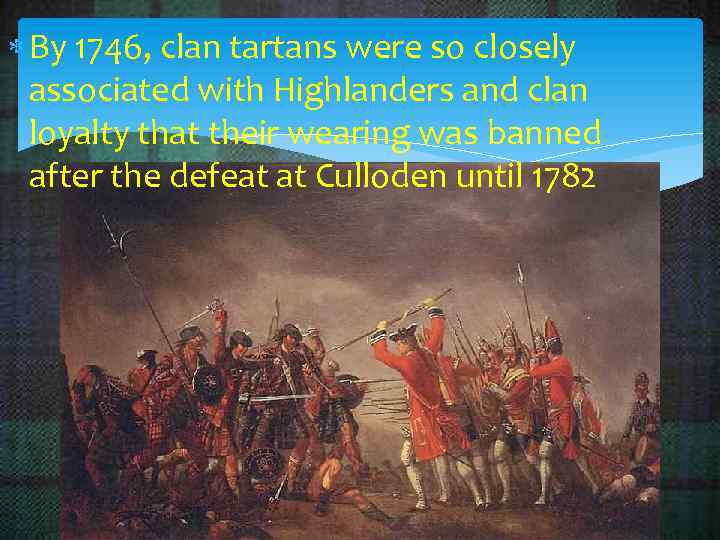 By 1746, clan tartans were so closely associated with Highlanders and clan loyalty that their wearing was banned after the defeat at Culloden until 1782
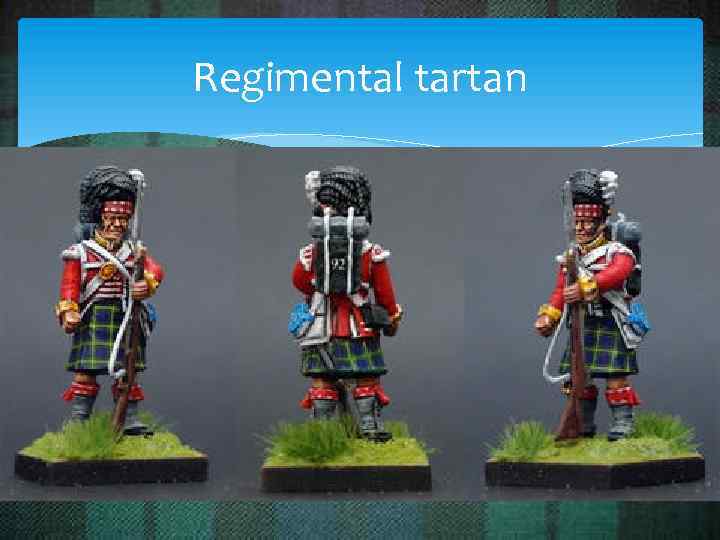 Regimental tartan
 When the wearing of the tartan was again permitted, there developed a keen interest in reestablishing or reinventing family tartans, beginning with the Highlanders and later spreading to all of Scotland
 the Origin of the Word "Clan The word "clan" is derived from the Scots Gaelic word "clann" meaning the children, offspring or descendants. !!!Not all surnames in Scotland or even in the Highlands became "clans“ There is no hard and fast rule but a "clan" is usually of a sufficient size to have established a territory and is likely to have a clan chief.
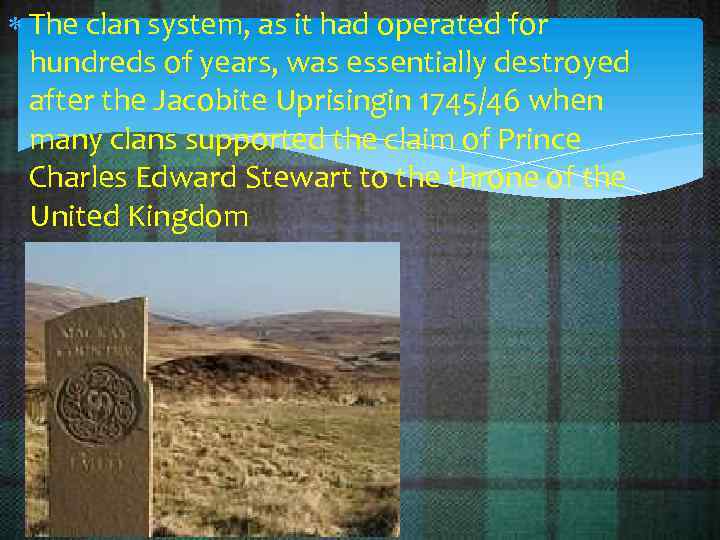 The clan system, as it had operated for hundreds of years, was essentially destroyed after the Jacobite Uprisingin 1745/46 when many clans supported the claim of Prince Charles Edward Stewart to the throne of the United Kingdom
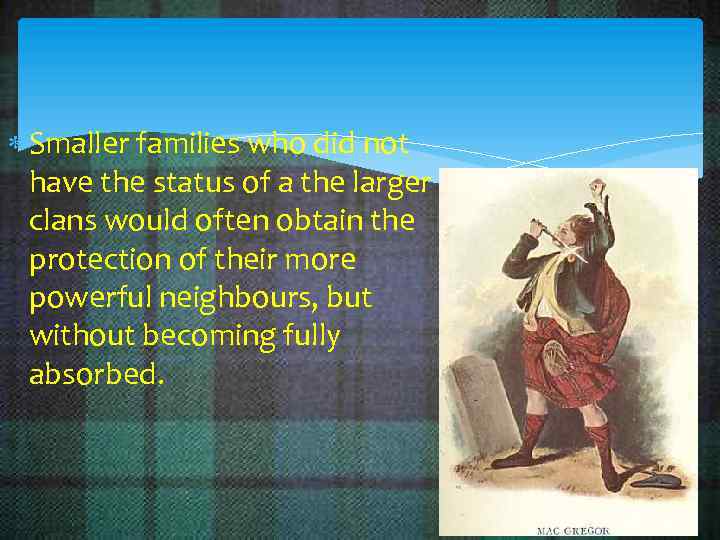 Smaller families who did not have the status of a the larger clans would often obtain the protection of their more powerful neighbours, but without becoming fully absorbed.
 What is the Difference Between "Mac" and "M'"? "Mac" is from the Gaelic word for "son of". Over the centuries it has been written as Mac or Mc or even M' - the last version is more common in Ireland
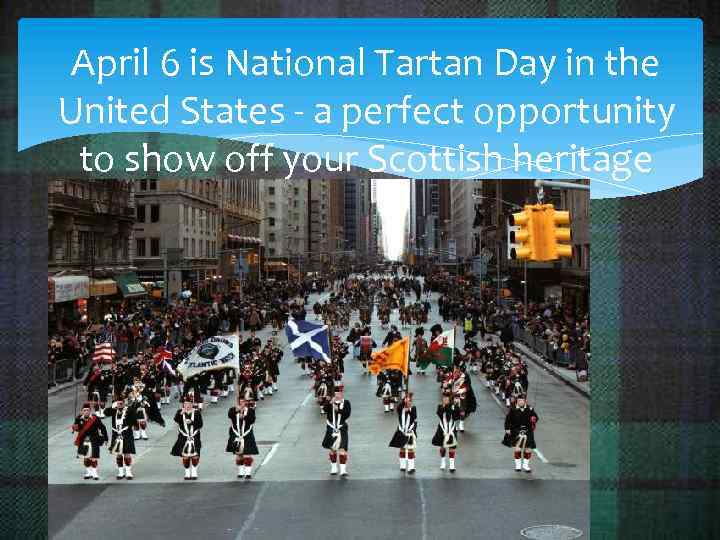 April 6 is National Tartan Day in the United States - a perfect opportunity to show off your Scottish heritage