


 Скачать презентацию City- Region Example of Warsaw and Poland
9644a84c2501ad46eab84ed441999e8c.ppt
- Количество слайдов: 15
 City- Region Example of Warsaw and Poland
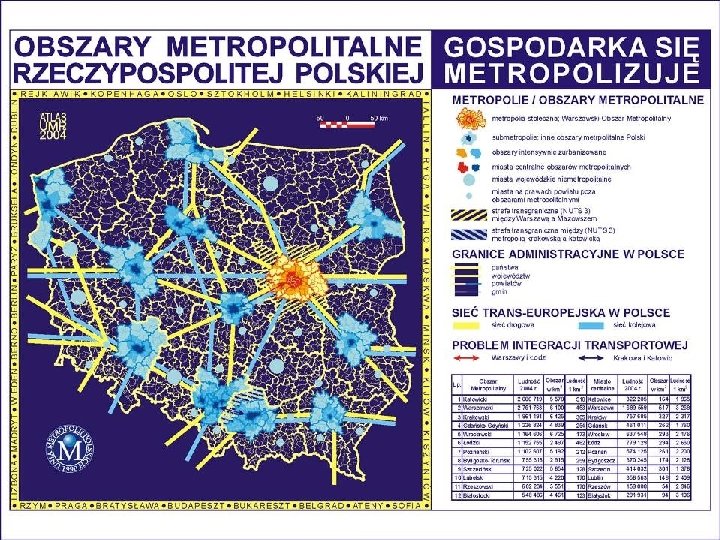 Przepływy ludności związane z zatrudnieniem: Warszawa Na podstawie badania Głównego Urzędu Statystycznego Opracowanie: Alicja Papierowska Wydział Badań i Analiz Centrum Komunikacji Społecznej Styczeń 2010 r.
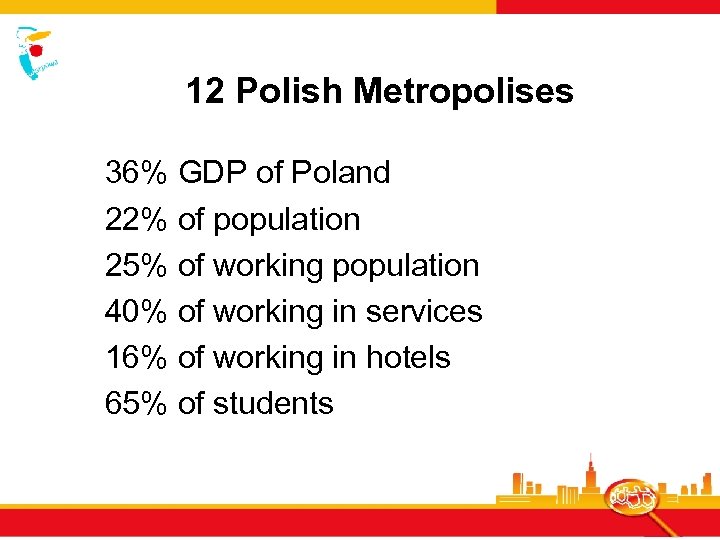 12 Polish Metropolises 36% GDP of Poland 22% of population 25% of working population 40% of working in services 16% of working in hotels 65% of students
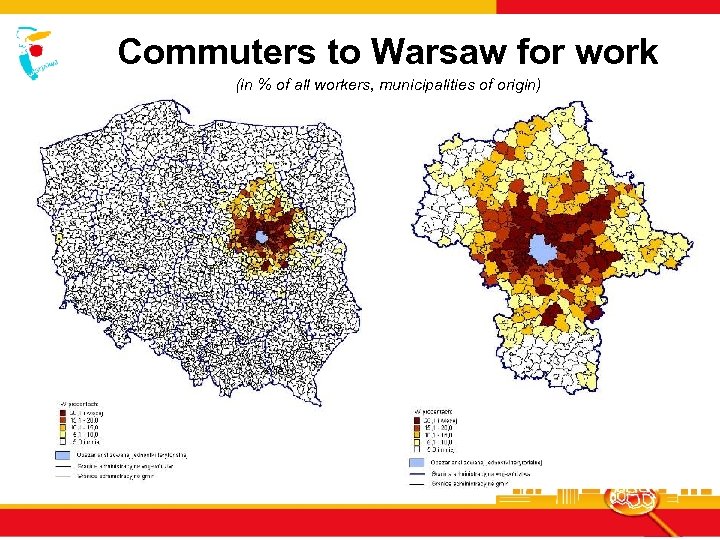 Commuters to Warsaw for work (in % of all workers, municipalities of origin)
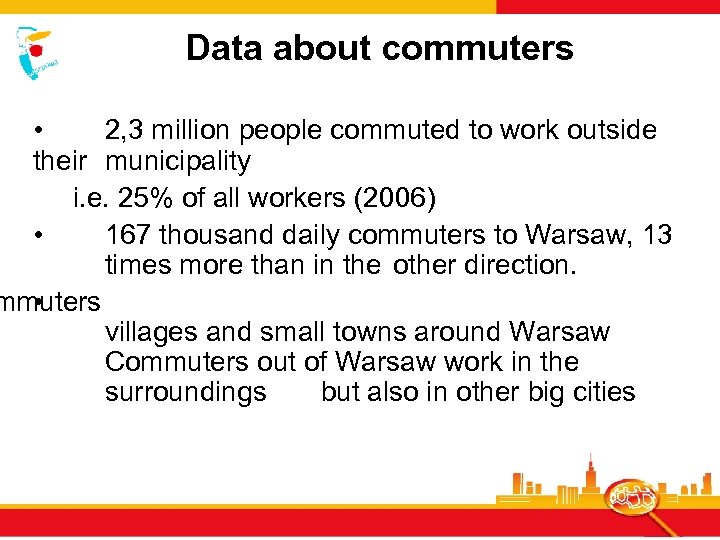 Data about commuters • 2, 3 million people commuted to work outside their municipality i. e. 25% of all workers (2006) • 167 thousand daily commuters to Warsaw, 13 times more than in the other direction. mmuters • villages and small towns around Warsaw Commuters out of Warsaw work in the surroundings but also in other big cities
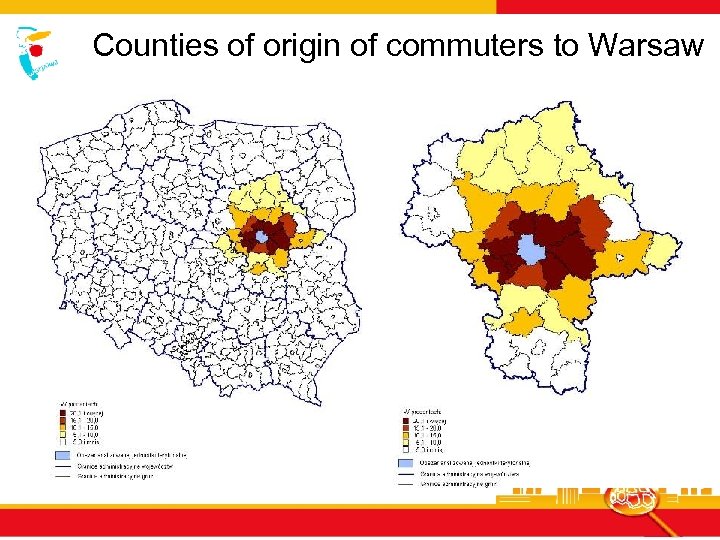 Counties of origin of commuters to Warsaw
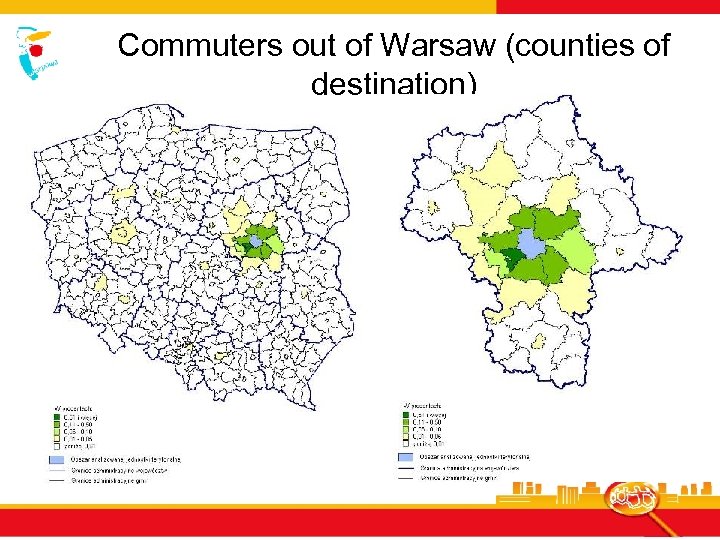 Commuters out of Warsaw (counties of destination)
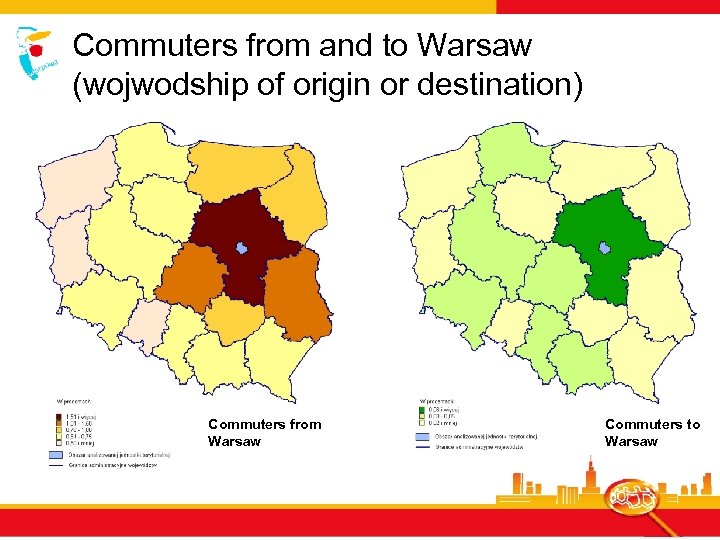 Commuters from and to Warsaw (wojwodship of origin or destination) Commuters from Warsaw Commuters to Warsaw
 Warsaw centre of a functional labour market area: • - Working in Warsaw, paying taxes and spending earnings outside Warsaw (Warsaw driver of development? ) • part of a network of metropolises: - Mainly high quality services (Warsaw source of knowledge and innovation? )
 Warsaw’s cooperation at cities region level • no administrative structure for the metropolitan area • no metropolitan statistics • no systematic statistics about functional flows • Some kind of metropolitan planning by the Mazovia region
 Warsaw’s cooperation at cities region level • one governmental police structure for the whole metropolitan area • Joint ticket for public transport, cofinanced by municipalities within the metropolitan area • Commuter trains cofinanced by municipalities within the metropolitan area • Association of municipalities within the metropolitan area
 Polish government plans (Poland 2030) Polarisation- diffusion model: combine competitiveness with territorial solidarity • Polish metropolises drivers of development of Poland •
 Preconditions of success: • • internationally competitive metropolises internationally well connected metropolises internally well connected metropolises good accessibility of the metropolises within functional areas good human and social capital good quality of urban and metropolitan space good quality of metropolitan planning and management etc
 Urgent needs investments in rail and road infrastructure and its modernisation ( 2 km motorways pro 100 thsd inhabitants, 21% of rails allow a speed above 120 km) • investments in IT infrastructure • metropolitan and functional flow statistics • metropolitan area authority for joint planning, implementation and management (law under preparation) • strengthening social capital (multilevel governance and partnerships • investments in the quality of metropolitan space • social innovation and inclusion • economic innovation and promotion •
 Thank you Franz Thun Mayor’s Office Warsaw City Hall fthun@um. warszawa. pl