


 Скачать презентацию CIM April 2011 Governing the Firm in Hard
ea5b27d20a8be19a5c93723f55bcad98.ppt
- Количество слайдов: 60
 CIM April 2011 ‘Governing the Firm in Hard Times: The Role of Internal Marketing’ Professor Howard Gospel King’s College University of London and Said Business School Oxford 1
 A further brief introduction • Academic background University – Oxford, LSE, King’s College London • Practical experience Government – DTI / BIS, UKCES Consultancy e. g. Unilever, P&G • My areas of specialism Human Resource Management Corporate Governance But, … provide a Marketing spin 2
 Outline 1. Hard Times – ‘The Great Recession’ 2. Governing the Firm – relationship to Marketing 3. Governing the Firm: Employees 4. Governing the Firm: Owners, Investors, Lenders 5. Conclusions 3
 1. Hard Times: ‘The Great Recession’ 4
 ‘The Great Recession’ • How did we get here? • Where are we going? • What are the risks? • What are the consequences? 5
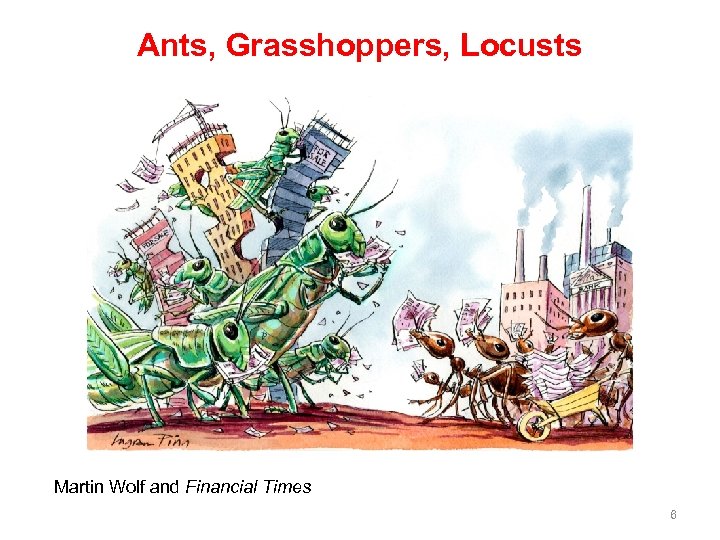 Ants, Grasshoppers, Locusts Martin Wolf and Financial Times 6
 How did we get here? • Ants industrious and save – some countries e. g. China, Japan, Germany trade surpluses and foreign exchange reserves • Grasshoppers spend – some countries and households e. g. US, UK, Spain → big global imbalances • Locusts – make money out of intermediating between the two, take risks innovate financially e. g. sub-prime, derivatives … but can leave ruin behind • = background to crisis of private debt / credit crunch, and asset market collapse • which has spilt over into public debt crisis – expenditures rise, taxes fall, spotlight effect on some weaker countries 7
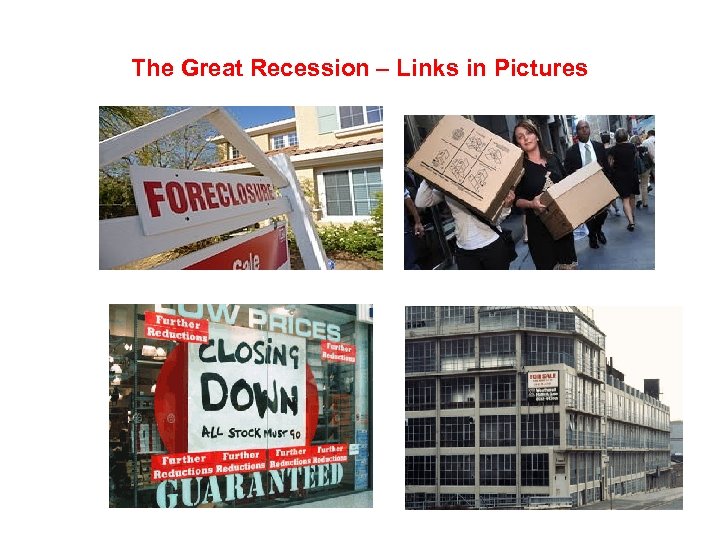 The Great Recession – Links in Pictures
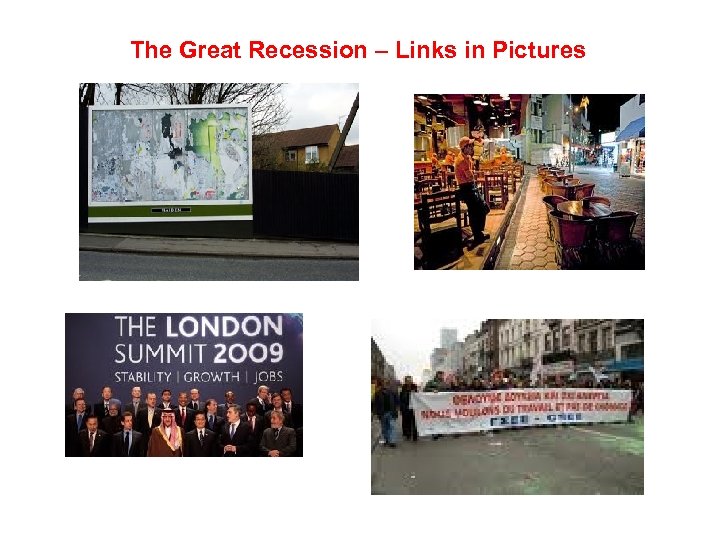 The Great Recession – Links in Pictures
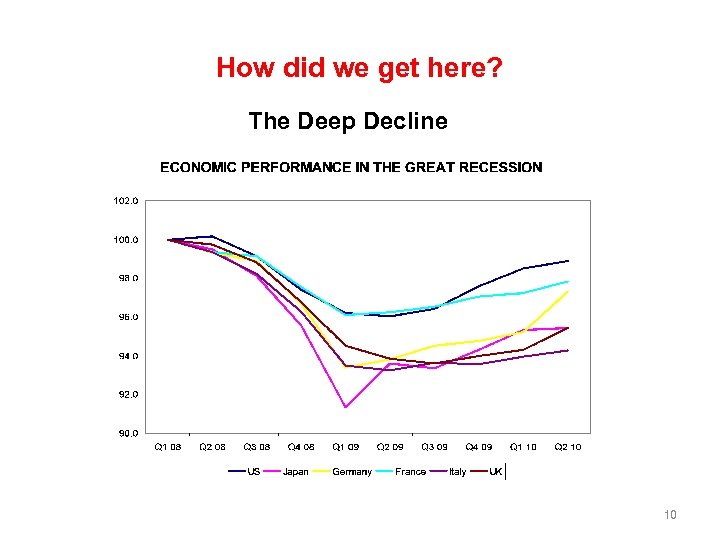 How did we get here? The Deep Decline 10
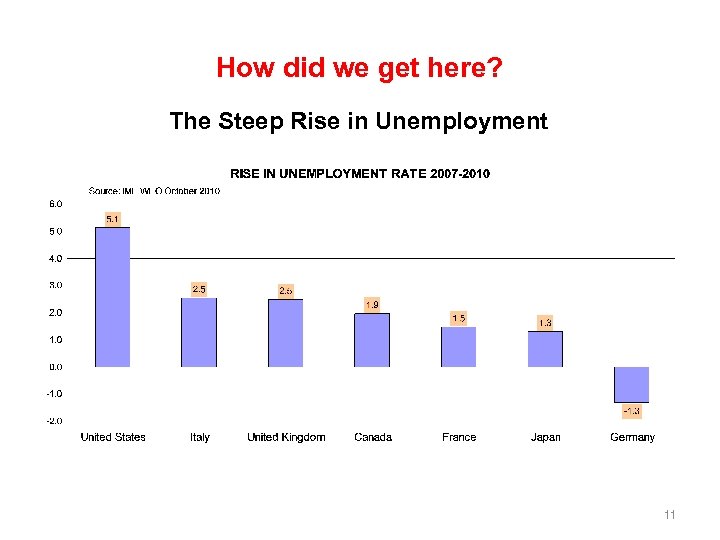 How did we get here? The Steep Rise in Unemployment 11
 Where are we going? • Rescue very expensive □ bail-outs □ unprecedented monetary policy • It largely worked… □ world trade has recovered □ especially in emerging markets, Asia • But … big problems remain □ recovery fragile, especially in Europe □ fiscal hangover e. g. UK □ big challenge of returning to stable growth □ new shocks / ‘black swans’ – natural disasters, revolution, war 12
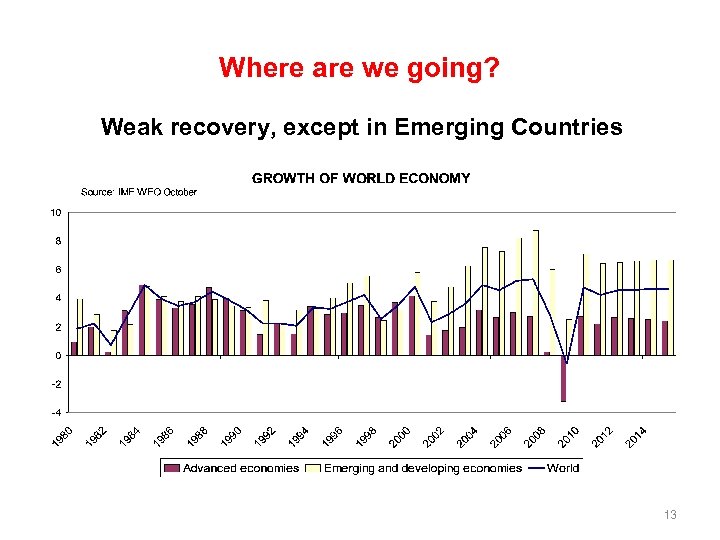 Where are we going? Weak recovery, except in Emerging Countries 13
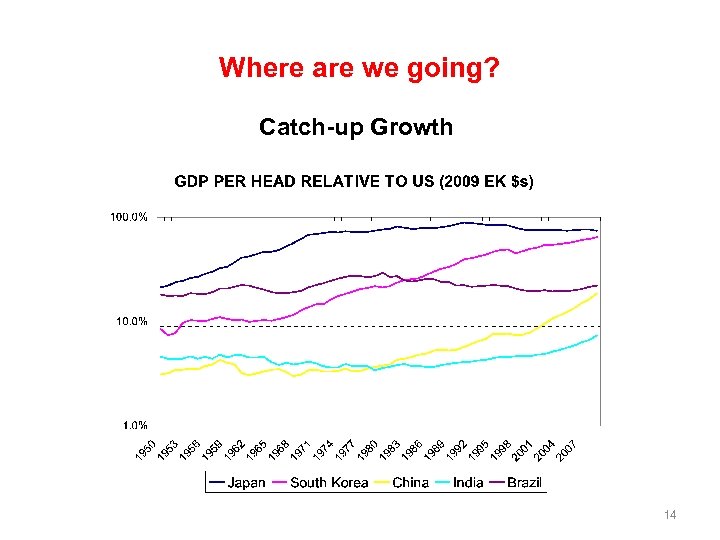 Where are we going? Catch-up Growth 14
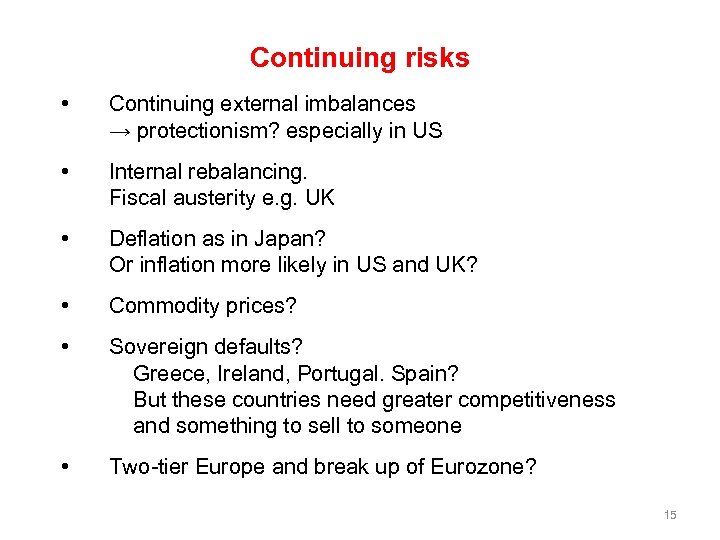 Continuing risks • Continuing external imbalances → protectionism? especially in US • Internal rebalancing. Fiscal austerity e. g. UK • Deflation as in Japan? Or inflation more likely in US and UK? • Commodity prices? • Sovereign defaults? Greece, Ireland, Portugal. Spain? But these countries need greater competitiveness and something to sell to someone • Two-tier Europe and break up of Eurozone? 15
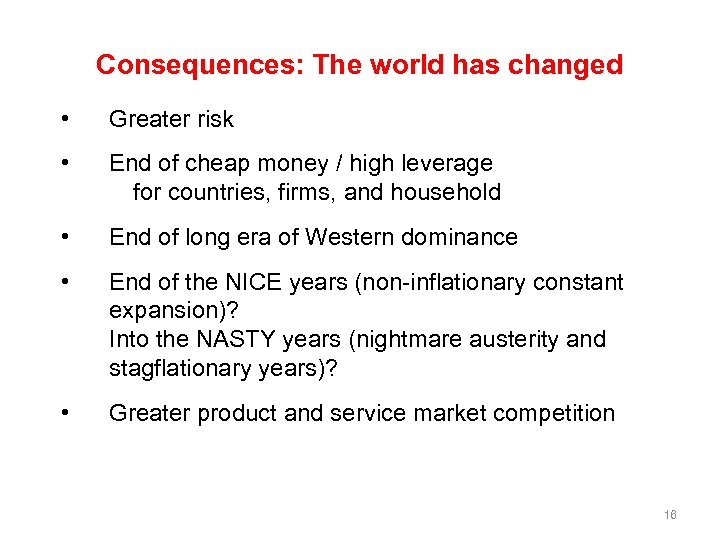 Consequences: The world has changed • Greater risk • End of cheap money / high leverage for countries, firms, and household • End of long era of Western dominance • End of the NICE years (non-inflationary constant expansion)? Into the NASTY years (nightmare austerity and stagflationary years)? • Greater product and service market competition 16
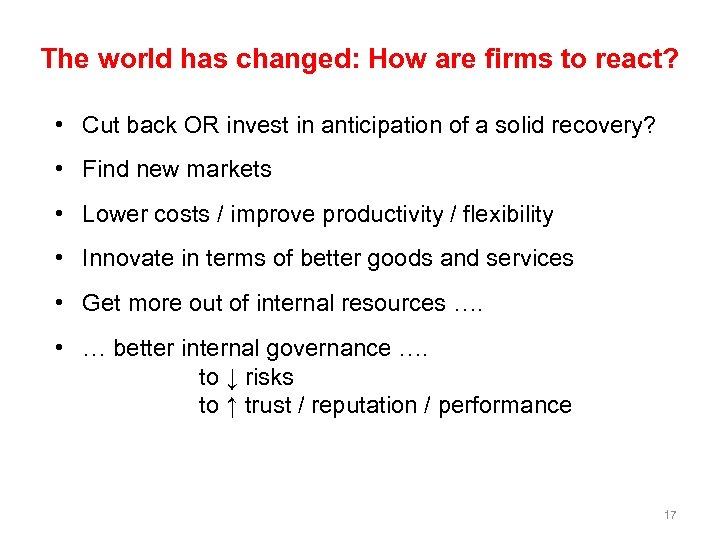 The world has changed: How are firms to react? • Cut back OR invest in anticipation of a solid recovery? • Find new markets • Lower costs / improve productivity / flexibility • Innovate in terms of better goods and services • Get more out of internal resources …. • … better internal governance …. to ↓ risks to ↑ trust / reputation / performance 17
 2. Governing the Firm 18
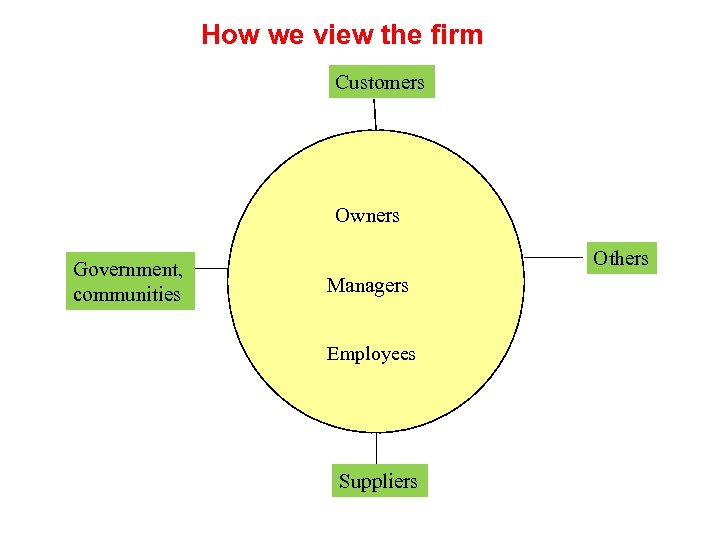
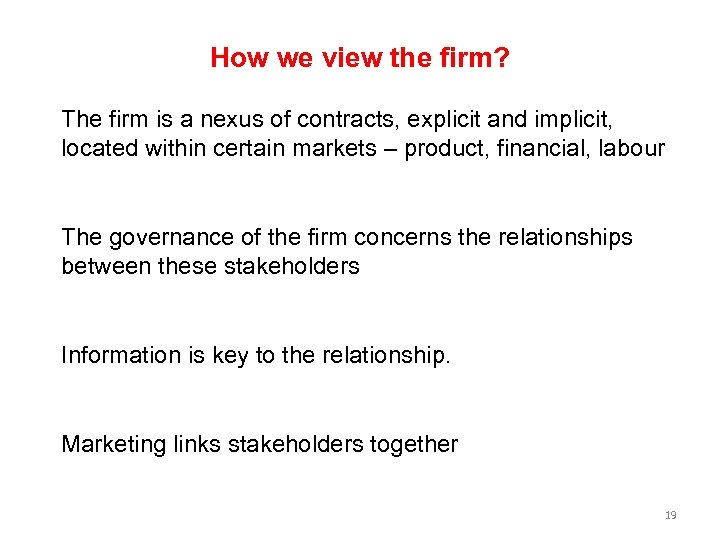 How we view the firm? The firm is a nexus of contracts, explicit and implicit, located within certain markets – product, financial, labour The governance of the firm concerns the relationships between these stakeholders Information is key to the relationship. Marketing links stakeholders together 19
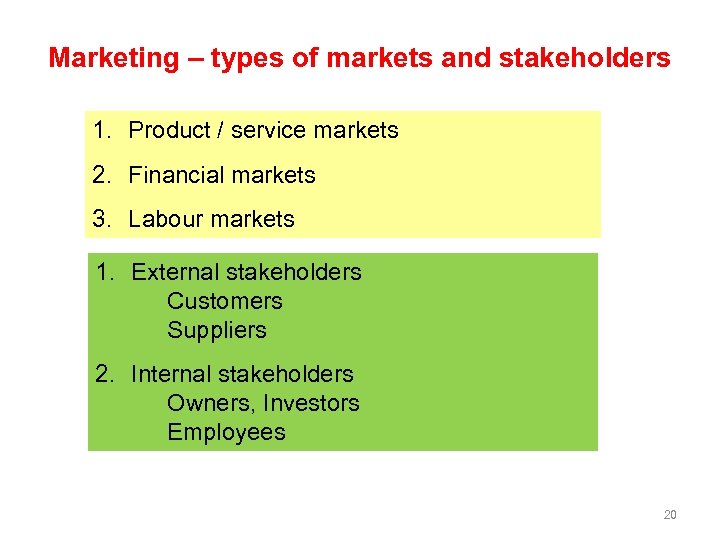 Marketing – types of markets and stakeholders 1. Product / service markets 2. Financial markets 3. Labour markets 1. External stakeholders Customers Suppliers 2. Internal stakeholders Owners, Investors Employees 20
 How we view the firm Customers Owners Government, communities Others Managers Employees Suppliers
 My Focus is on Internal Marketing • Internal stakeholders • Use of marketing within the organisation to align interest of internal stakeholders with those of the firm and with external stakeholders • The organisation is an internal market with its own suppliers and buyers • ‘If internal stakeholders aren’t sold, don’t buy in, … then customers won’t either’ • Multiple-stakeholder marketing Berry 1981, 1983: Rafiq and Ahmed, 2000; Varey and Lewis 2006 22
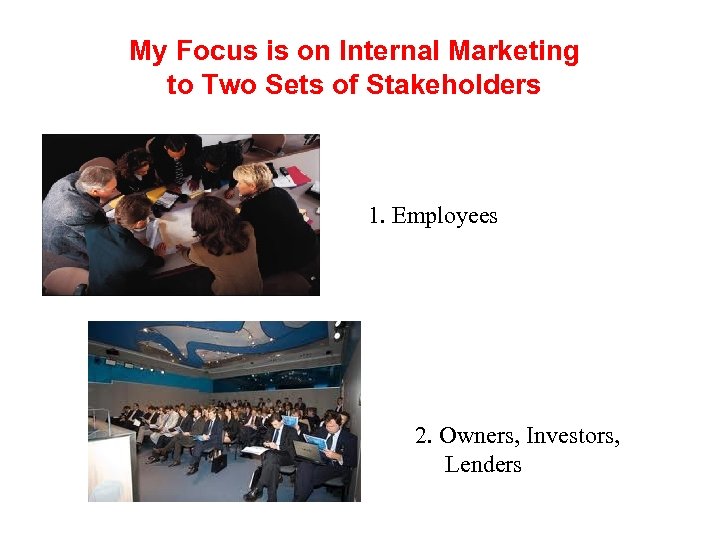 My Focus is on Internal Marketing to Two Sets of Stakeholders 1. Employees 2. Owners, Investors, Lenders
 3. Governing the Firm: Employees 24
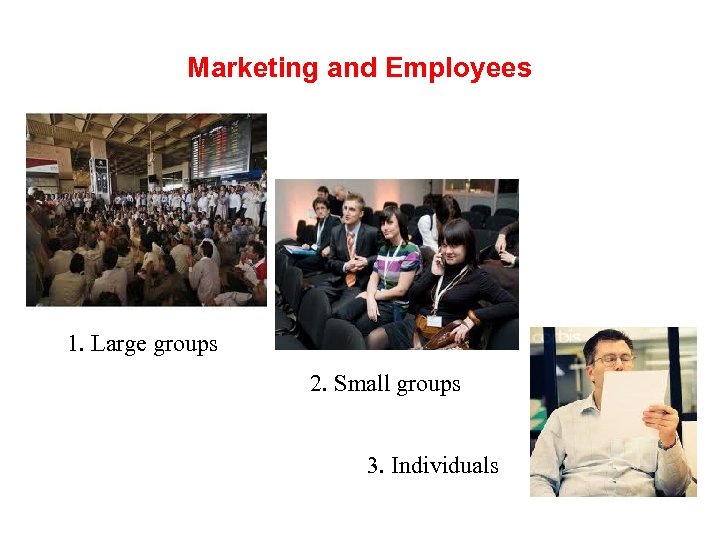 Marketing and Employees 1. Large groups 2. Small groups 3. Individuals
 Marketing and Employees • Marketing the firm to present and potential employees viz. attract and retain, get best out of • Stage 1. ‘Employer Branding’ Selling the firm to employees Getting ‘buy-in’ To serve each other and to serve the customer • Premise: ‘You need satisfied employees to have satisfied customers’ Theory: staff satisfaction → staff motivation → customer orientation → customer satisfaction → better performance Berry 1981, 1983: Varey and Lewis 2006; Edwards 2005 26
 Employees marketing the firm on… • Stage 2. ‘Employee branding’ • Using image and competence of employees to sell product or service • Empowering employees to sell product or service • ‘All staff are front-line staff’ • ‘Walking talking brands’ • Of course, given Hard Times, e. g. lay-offs, pay cuts, all this may be different Adapted from Edwards (2005, 010) 27
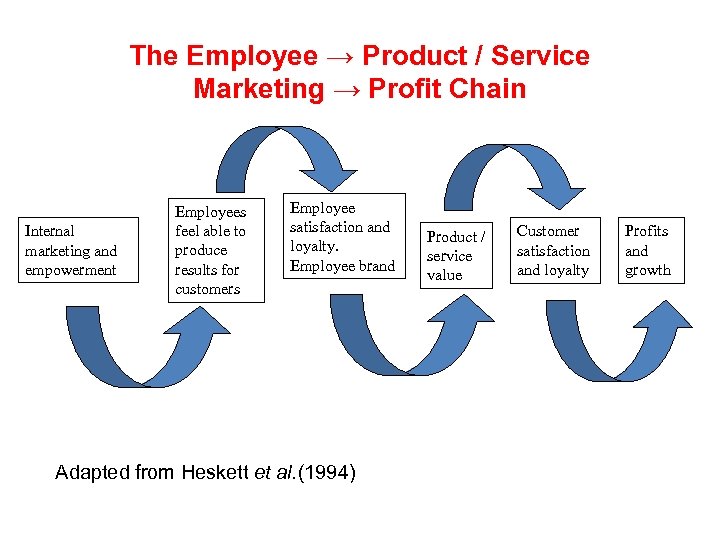 The Employee → Product / Service Marketing → Profit Chain Internal marketing and empowerment Employees feel able to produce results for customers Employee satisfaction and loyalty. Employee brand Adapted from Heskett et al. (1994) Product / service value Customer satisfaction and loyalty Profits and growth
 Does it work / pay off? Evidence • Macro statistical • Micro mini case studies – 1 big, 1 small 29
 Macro Evidence • My study – 1, 000 + firms. Data on information provided to employees on financial matters, investment plans, marketing plans, tasks, … • High variance • Determinants □ Size* □ Listed * □ Management sophistication ** □ Shared values *** □ Direct participation *** □ Path dependence *** • Outcomes □ + effect on employee commitment * □ + effect on quality * □ + effect on financial performance * • Financial performance not a predictor, but an outcome Peccei, Bewley, Gospel, Willman 2005, 2008, 2010 30
 Micro Evidence – Case studies • Mc. Donalds • Paul Ltd. 31
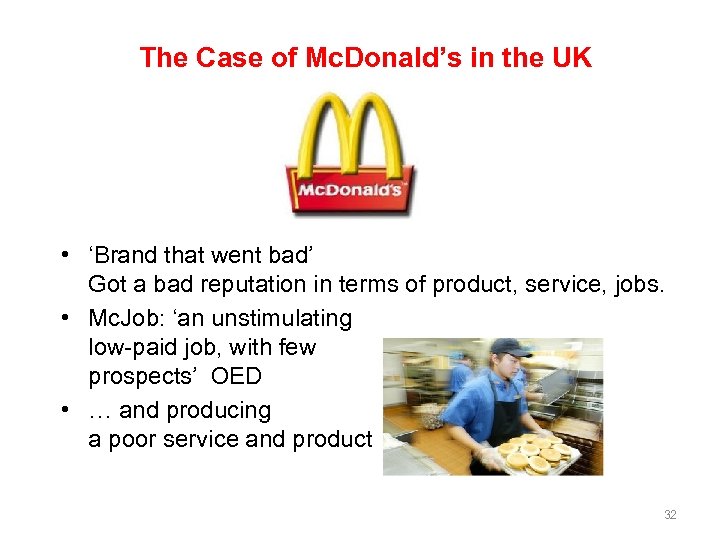 The Case of Mc. Donald’s in the UK • ‘Brand that went bad’ Got a bad reputation in terms of product, service, jobs. • Mc. Job: ‘an unstimulating low-paid job, with few prospects’ OED • … and producing a poor service and product 32
 The Case of Mc. Donald’s in the UK • Established Corporate Reputation Team Work on branding and employer / employee branding Work with Marketing, HR, Training, agencies • Your Viewpoint Survey need for engagement need to work for a socially responsible employer • Lancaster University analysis e. g. restaurants with more mix of employees (50+), 20% higher customer satisfaction e. g. restaurants with higher commitment scores, higher customer orientation (20%) e. g. restaurants with highest commitment scores, make 25% more sales. 33
 The Case of Mc. Donald’s in the UK • Recruitment campaign including more older workers • Offer bundle of practices □ Basic skills training □ Apprenticeship programme – 6, 000 staff. □ Foundation Degree: 2 -year. Talent management for restaurant managers and beyond – MMU accredited □ Can log on in staffroom and at home • Job applications ↑ Pride in working for company ↑ Absenteeism and Turnover ↓ – not just becos of recession Self image of employer ↑ 34
 The Case of Mc. Donald’s in the UK • Enters Sunday Times ‘ 25 Best Companies to Work For’ as number 22. • At same time invested in refurbishment introduced new menus introduced free wi-fi • Sales ↑ New restaurants opened in motorway services • The old ‘Mc. Job label is out-of-date, lazy, and snobbish’ 35
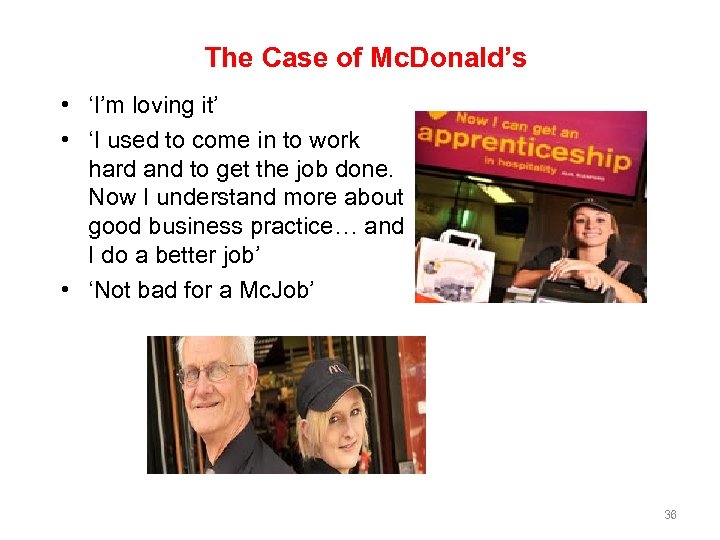 The Case of Mc. Donald’s • ‘I’m loving it’ • ‘I used to come in to work hard and to get the job done. Now I understand more about good business practice… and I do a better job’ • ‘Not bad for a Mc. Job’ 36
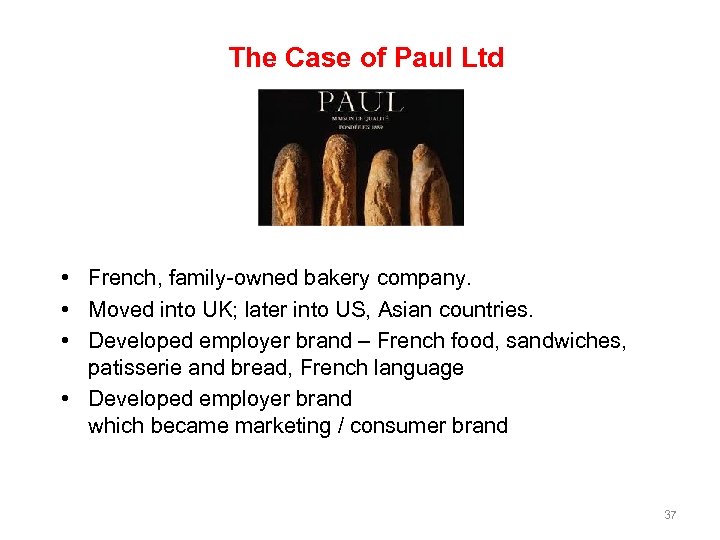 The Case of Paul Ltd • French, family-owned bakery company. • Moved into UK; later into US, Asian countries. • Developed employer brand – French food, sandwiches, patisserie and bread, French language • Developed employer brand which became marketing / consumer brand 37
 The Case of Paul Ltd • • • Advertises on web e. g. Gumtree, You. Tube, Facebook Offer package □ 12 days on-the-job training □ Advancement through the Paul Academy □ Career path – specialisms, team leader, shop manager etc. □ Recognition e. g. celebrations, pins □ Pay for experience scales and bonuses ‘Breakfasts’ and ‘supper clubs’ with higher management Newsletter and ‘speak out’ 3 -way communication – top-down, bottom-up, horizontal Tried to create bigger jobs Encourage cross boundary working Team working – ‘serve each other to better serve customers’ Job applicants ↑ Absenteeism and turnover ↓ Successful expansion in UK 38
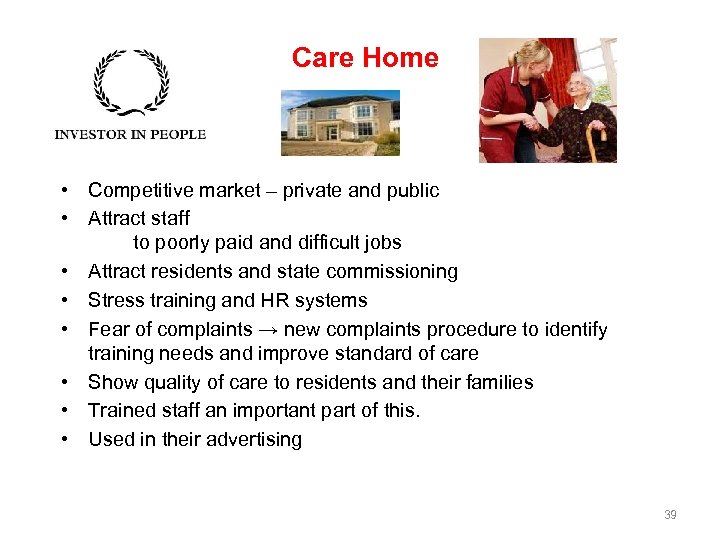 Care Home • Competitive market – private and public • Attract staff to poorly paid and difficult jobs • Attract residents and state commissioning • Stress training and HR systems • Fear of complaints → new complaints procedure to identify training needs and improve standard of care • Show quality of care to residents and their families • Trained staff an important part of this. • Used in their advertising 39
 4. Governing the Firm: Owners, Investors, Lenders 40
 Owners, investors, lenders • Always important But, more important in Hard times - money tight Investors demand higher return • New owners more demanding less patient • Firms having to think more about start-up finance on-going finance going public maintaining share price bond issue 41
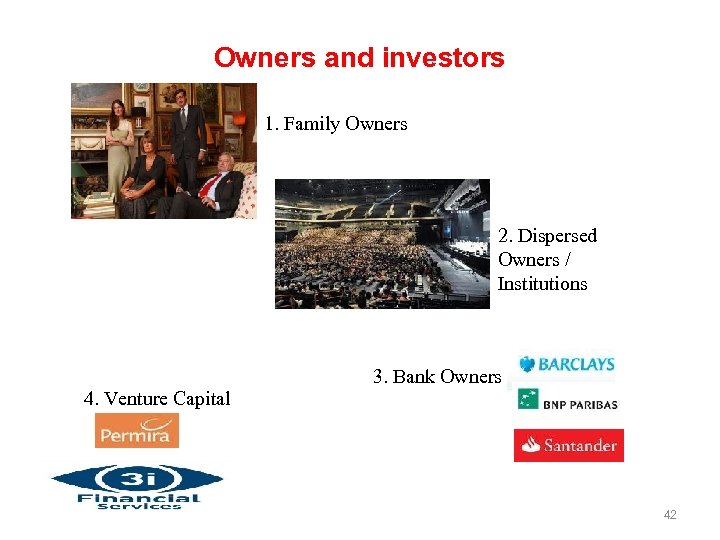 Owners and investors 1. Family Owners 2. Dispersed Owners / Institutions 4. Venture Capital 3. Bank Owners 42
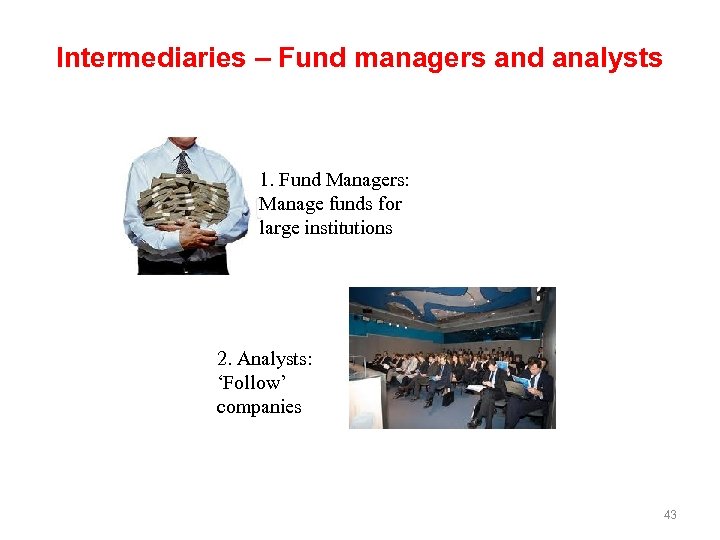 Intermediaries – Fund managers and analysts 1. Fund Managers: Manage funds for large institutions 2. Analysts: ‘Follow’ companies 43
 Marketing to owners, investors etc. • New literature on ‘Investor Relations’ Mainly Finance literature But some on ‘Investor Marketing’ • Need to market yourself to raise finance start-up expansion Initial Public Offering (IPO) new share issue or bond issues maintain share price • Providers of capital / investors have buying decisions ‘Why buy a share? ’ ‘Why hold onto a share? ’
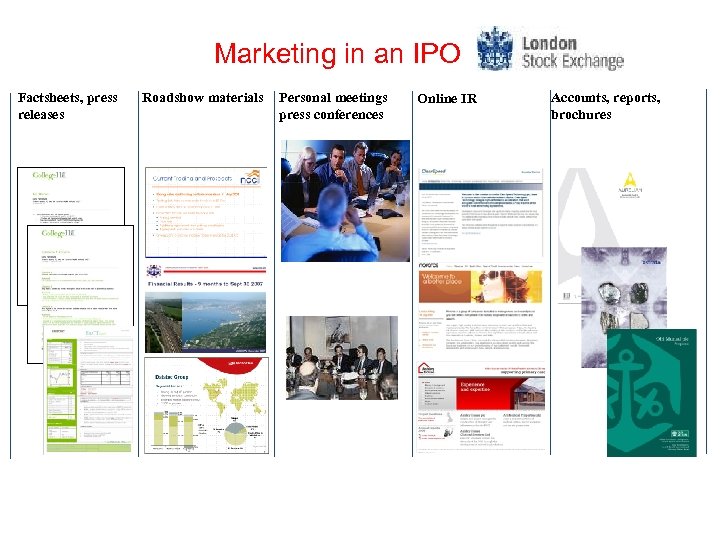 Marketing in an IPO Factsheets, press releases Roadshow materials Personal meetings press conferences Online IR Accounts, reports, brochures
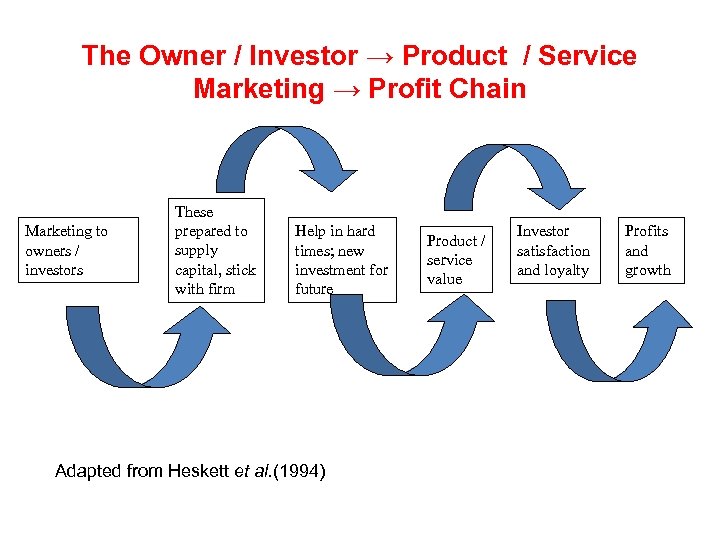 The Owner / Investor → Product / Service Marketing → Profit Chain Marketing to owners / investors These prepared to supply capital, stick with firm Help in hard times; new investment for future Adapted from Heskett et al. (1994) Product / service value Investor satisfaction and loyalty Profits and growth
 Does it work / pay off? Evidence • Macro statistical • Micro case studies – 1 big, 1 small 47
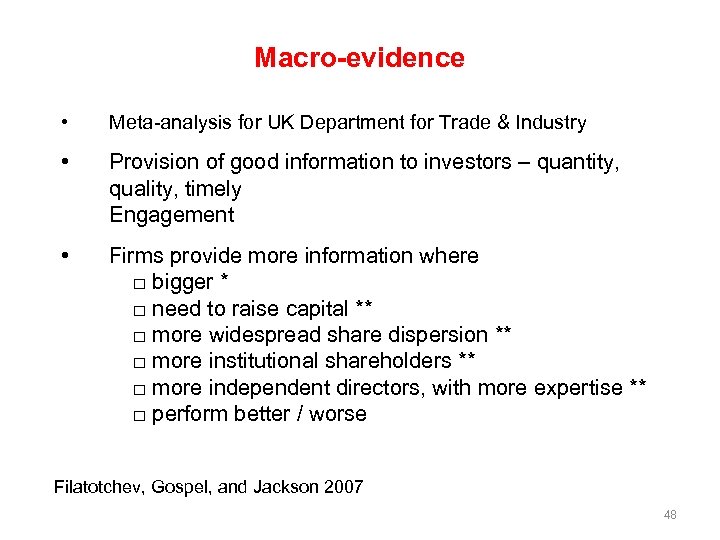 Macro-evidence • Meta-analysis for UK Department for Trade & Industry • Provision of good information to investors – quantity, quality, timely Engagement • Firms provide more information where □ bigger * □ need to raise capital ** □ more widespread share dispersion ** □ more institutional shareholders ** □ more independent directors, with more expertise ** □ perform better / worse Filatotchev, Gospel, and Jackson 2007 48
 Macro-evidence • Firms which provide more information / better engaged Reduce the so-called ‘lemons’ problem – purchasers know where they are Reduce uncertainty • As a result □ Easier to raise capital ** □ Lower cost of borrowing capital (equity and debt) ** □ Reduces volatility in share price ** □ Attracts institutional investors ** □ Reduces under-pricing in IPOs ** • But also costs – administrative, proprietary • But benefits outweigh costs 49
 Micro Evidence – Case studies • Infosys • BTF 50
 Micro-evidence – the Case of Infosys • India’s largest software company Established 1981, with $1, 000 Now employs 122, 000 • India a bit of a backwater in terms of marketing, corporate governance, and information provision. • Infosys set out to do it differently Khanna and Palepu, 2004 51
 Micro-evidence – The case of Infosys • Given increasing opening up of economy and competiton • Set out to market itself • Felt some need to raise capital, in India and overseas • Felt need to attract top talent • To gain credibility with customers especially foreign customers especially given negative image of India • Signal high quality 52
 Micro-evidence – The case of Infosys • How did it do it? □ Good corporate governance e. g. board, directors □ Listed in Bombay (1993) and NY (1999) □ Provided more and better information than required ‘when in doubt disclose’ ‘becos you tell us in good and bad time, we trust you’ □ Recruited top talent – branded its HR most desirable place to work and great employees trained its talent • Results □ Confidence in company □ Able to raise finance □ Positive growth for company in India and overseas □ Positive externalities on Indian software industry 53
 Micro-evidence – the case of BTF • Small Australian biotech company Founded by two professors • 1 st financial marketing: raise capital from university + development agency • Grew … but needed more capital • Considered banks Considered IPO • But then approached a group of venture capital companies Hirshorn et al. 2011 54
 Micro-evidence – The case of BTF • 2 nd marketing: had to market itself – factsheets, reports, ‘roadshow’ • ‘Beauty contest’ • Aim to raise highest sum of money but giving away least in terms of ownership and control. • Successful – innovation and growth • 3 rd stage approach to venture capitalists again • 4 th stage: became subject of interest by other firms Sold itself to a French company 55
 5. Conclusions 56
 Conclusions • Hard Times: we live in a new and tougher world □ less cheap money □ NICE to NASTY? □ increased competition □ other changes e. g. demographics • Firms will look to multiple strategies □ new markets, new products, □ low road – cost cuttng, □ high road – investment □ get more out of internal resources • Greater emphasis on marketing to external and internal □ benefits □ costs 57
 Conclusions • Information provision is key Engagement is key • Honest, not manipulative ‘Substance not spin’ • Long-term relational exchanges, not transactional , with stakeholders wherever possible. • Not shareholder value, but shared value for employees, customers, shareholder • Will not get rid of conflicts Conflict can be productive • Will not get rid of risks, but will reduce 58
 Conclusions • Danger of breach of formal and informal contracts • In Hard Times e. g. lay-offs, pay cuts, cuts in dividends, …. all this make it more difficult. • Fit, ‘bundles’ of practices, holistic approach. • Remember always: internal marketing to meet needs of external customers • Pay-offs, but not all do…. Why? 59
 CIM April 2011 ‘Governing the Firm in Hard Times: The Role of Internal Marketing’ Professor Howard Gospel King’s College University of London and Said Business School Oxford 60