 Скачать презентацию Chlamydia Presented by Afsa Manzoor Group 442
chlamydia AFSA.ppt
- Количество слайдов: 41



Chlamydia Presented by Afsa Manzoor Group : 442 Checked by Antonava Galena. A 1
Chlamydia Curriculum main I. III. IV. V. VI. Epidemiology Pathogenesis Clinical manifestations Diagnosis Patient management Prevention 2
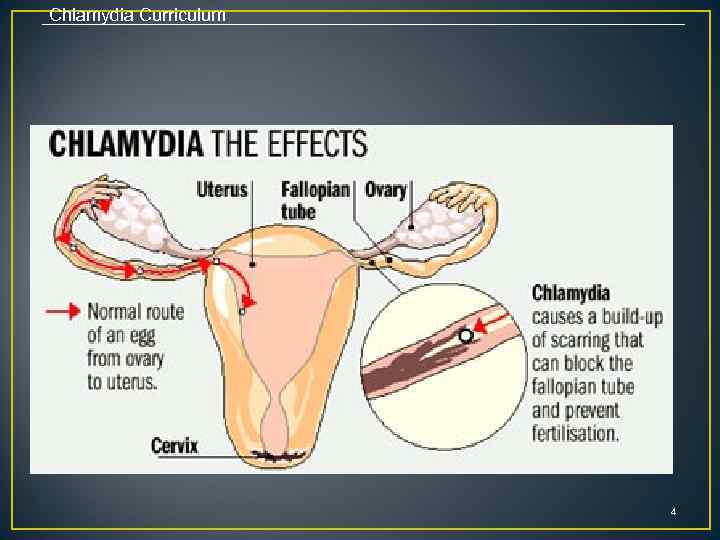
Chlamydia Curriculum DEFINITION • WHAT IS CHLAMYDIA? • You may have heard of chlamydia, but many people are not sure what it is. Chlamydia (klah MIH dee ah) is an infection caused by a kind of bacteria that is passed during sexual contact. It is the most common sexually transmitted bacterial infection in the United States. About three million American women and men become infected with chlamydia every year. It is especially common among women and men under 25. • Chlamydia is • more than three times as common as gonorrhea • more than 50 times as common as syphilis • Chlamydia can infect the penis, vagina, cervix, anus, urethra, eye, or throat 3
Chlamydia Curriculum 4
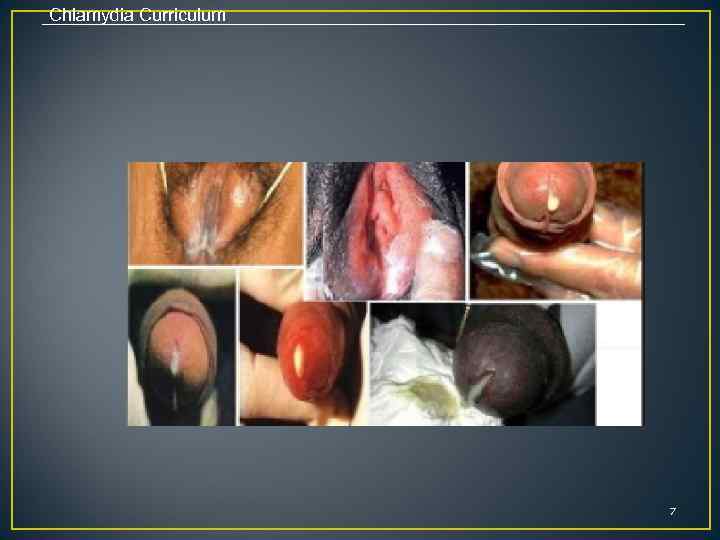
Chlamydia Curriculum SYMPTOMS • • • When women have chlamydia symptoms, they may experience abdominal pain abnormal vaginal discharge bleeding between menstrual periods low-grade fever painful intercourse pain or a burning feeling while urinating swelling inside the vagina or around the anus the urge to urinate more than usual vaginal bleeding after intercourse a yellowish discharge from the cervix that may have a strong smell 5
Chlamydia Curriculum • • • When MEN have symptoms, they may experience pain or a burning feeling while urinating pus or watery or milky discharge from the penis swollen or tender testicles swelling around the anus 6
Chlamydia Curriculum 7

Epidemiology 8
Chlamydia Curriculum Epidemiology Incidence • Estimated 3 million cases in U. S. annually • Most frequently reported STD in U. S. • Reported rates 3 times higher in females than in males 9
Chlamydia Curriculum Epidemiology Risk Factors • • • Adolescence New or multiple sex partners History of STD infection Presence of another STD Oral contraceptive user Lack of barrier contraception 10
Chlamydia Curriculum Epidemiology Transmission • • Transmission is sexual or vertical Highly transmissible Incubation period 7 -21 days Significant asymptomatic reservoir exists in the population • Re-infection is common • Perinatal transmission results in neonatal conjunctivitis in 30%-50% of exposed babies 11

Pathogenesis 12
Chlamydia Curriculum Pathology Microbiology • Obligatory intracellular bacteria • Infect columnar epithelial cells • Survive by replication that results in the death of the cell • Takes on two forms in its life cycle: • Elementary body (EB) • Reticulate body (RB) 13
Chlamydia Curriculum Clinical Manifestations 14
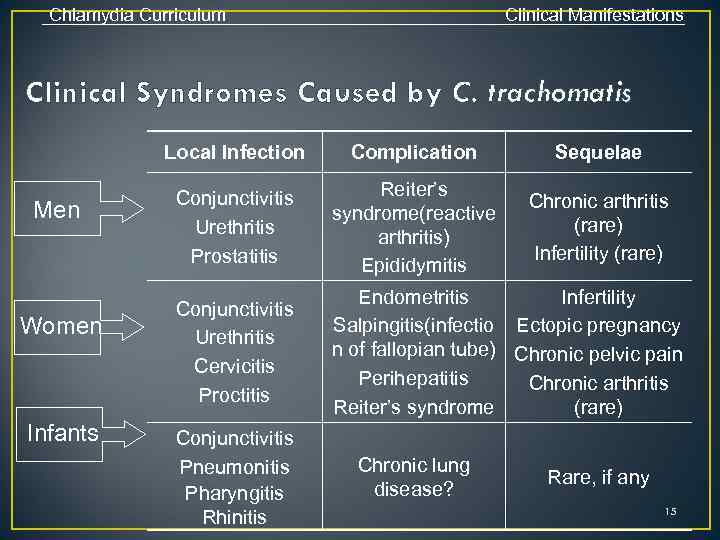
Chlamydia Curriculum Clinical Manifestations Clinical Syndromes Caused by C. trachomatis Local Infection Men Women Infants Complication Sequelae Conjunctivitis Urethritis Prostatitis Reiter’s syndrome(reactive arthritis) Epididymitis Chronic arthritis (rare) Infertility (rare) Conjunctivitis Urethritis Cervicitis Proctitis Endometritis Infertility Salpingitis(infectio Ectopic pregnancy n of fallopian tube) Chronic pelvic pain Perihepatitis Chronic arthritis Reiter’s syndrome (rare) Conjunctivitis Pneumonitis Pharyngitis Rhinitis Chronic lung disease? Rare, if any 15
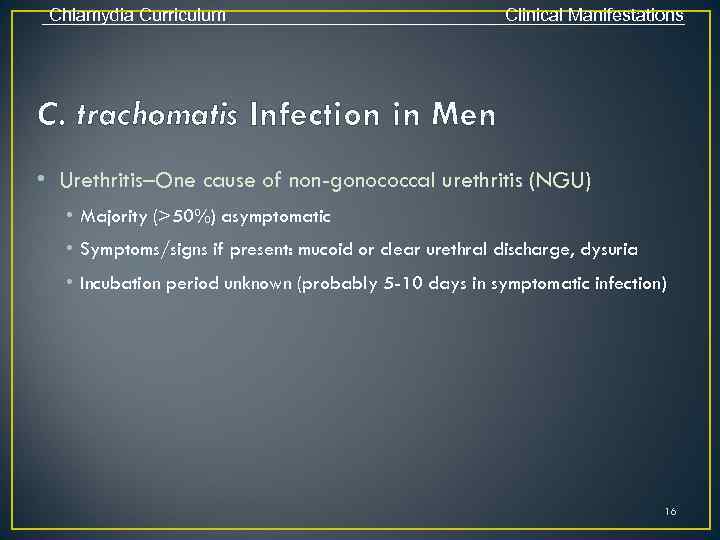
Chlamydia Curriculum Clinical Manifestations C. trachomatis Infection in Men • Urethritis–One cause of non-gonococcal urethritis (NGU) • Majority (>50%) asymptomatic • Symptoms/signs if present: mucoid or clear urethral discharge, dysuria • Incubation period unknown (probably 5 -10 days in symptomatic infection) 16
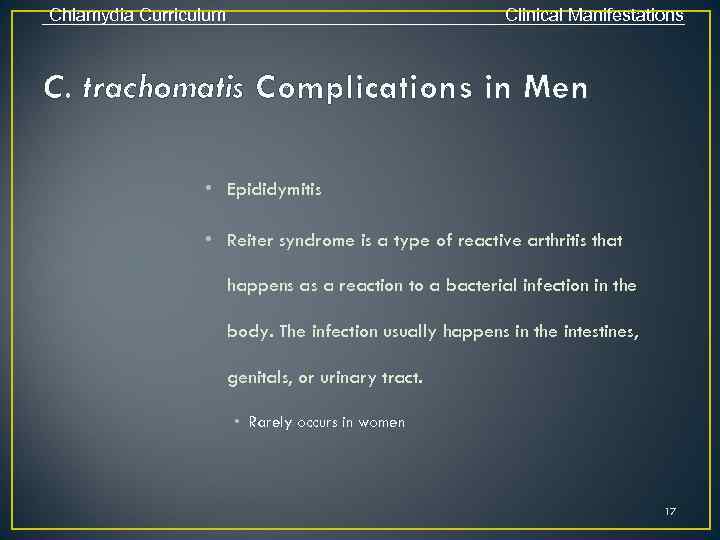
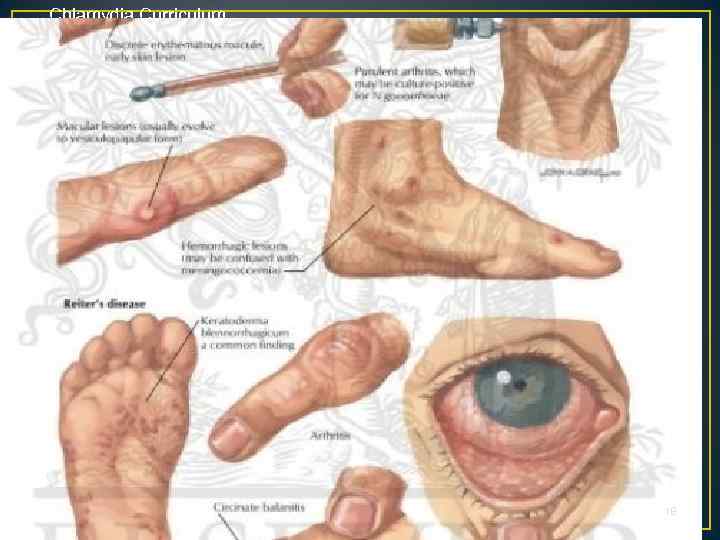
Chlamydia Curriculum Clinical Manifestations C. trachomatis Complications in Men • Epididymitis • Reiter syndrome is a type of reactive arthritis that happens as a reaction to a bacterial infection in the body. The infection usually happens in the intestines, genitals, or urinary tract. • Rarely occurs in women 17
Chlamydia Curriculum 18
Chlamydia Curriculum Clinical Manifestations C. trachomatis Infections in Women • Cervicitis • Majority (70%-80%) are asymptomatic • Local signs of infection, when present, include: • Mucopurulent endocervical discharge • Edematous cervical ectopy with erythema and friability • Urethritis • Usually asymptomatic • Signs/symptoms, when present, include dysuria, frequency, pyuria 19
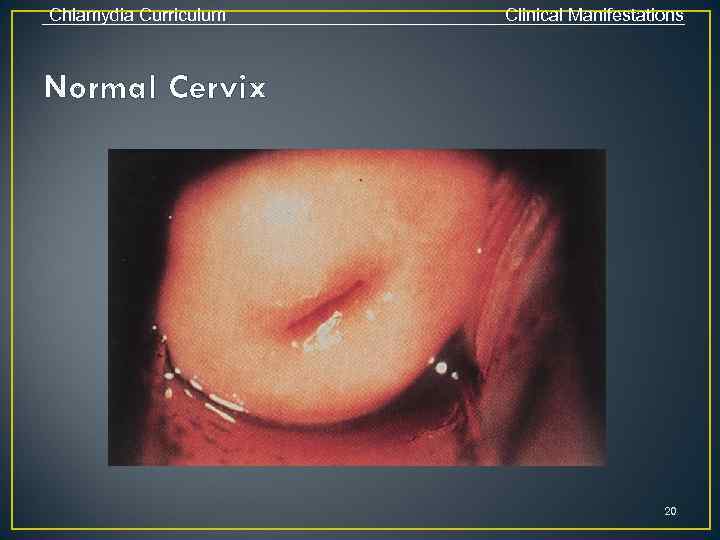
Chlamydia Curriculum Clinical Manifestations Normal Cervix 20
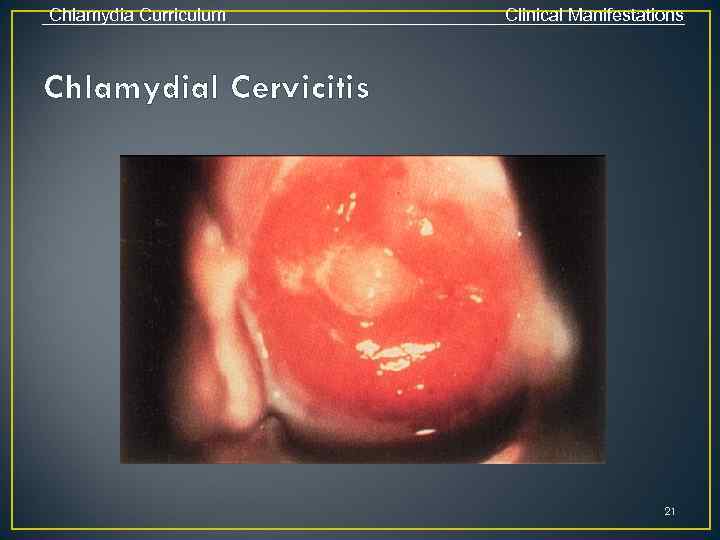
Chlamydia Curriculum Clinical Manifestations Chlamydial Cervicitis 21
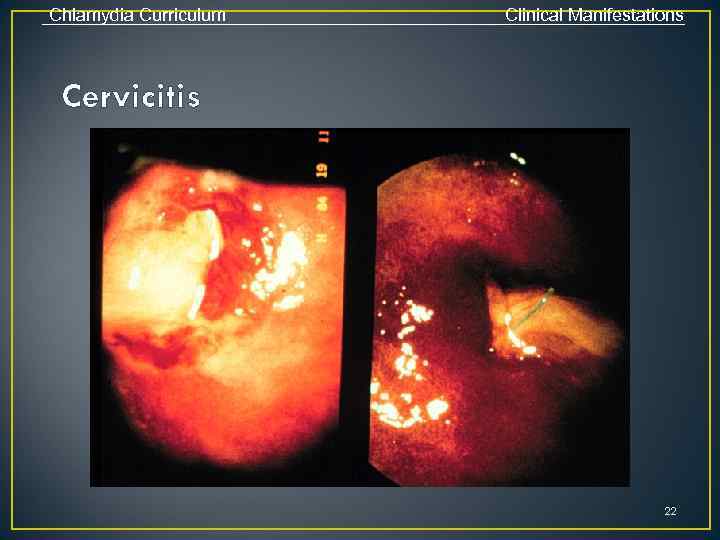
Chlamydia Curriculum Clinical Manifestations Cervicitis 22
Chlamydia Curriculum Clinical Manifestations C. trachomatis Complications in Women • Pelvic Inflammatory Disease (PID) • Salpingitis • Endometritis • Perihepatitis (Fitz-Hugh-Curtis Syndrome) inflammation of the membrane lining the stomach (peritoneum) and the tissues surrounding the liver (perihepatitis) • Reiter’s Syndrome 23
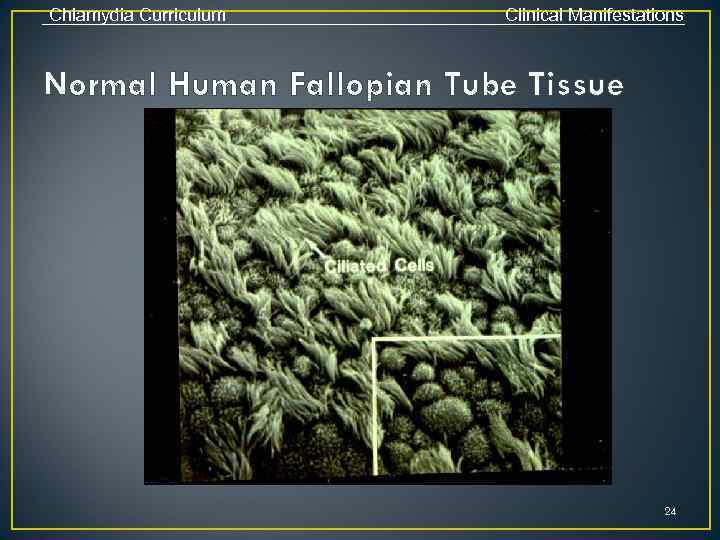
Chlamydia Curriculum Clinical Manifestations Normal Human Fallopian Tube Tissue 24
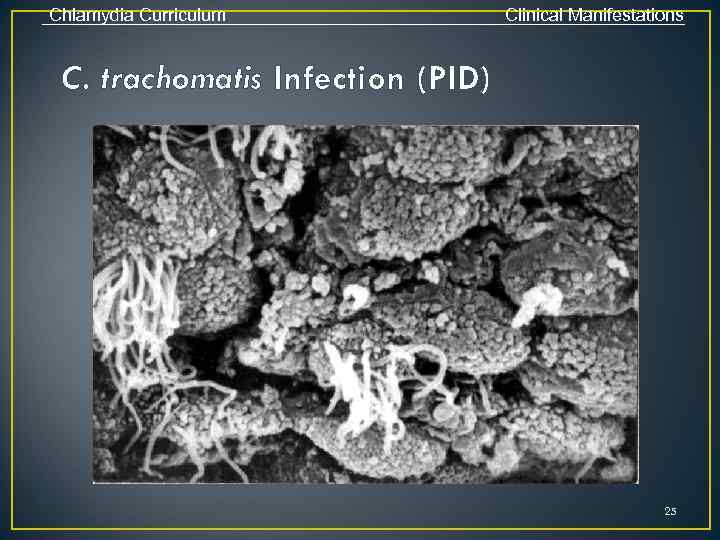
Chlamydia Curriculum Clinical Manifestations C. trachomatis Infection (PID) 25
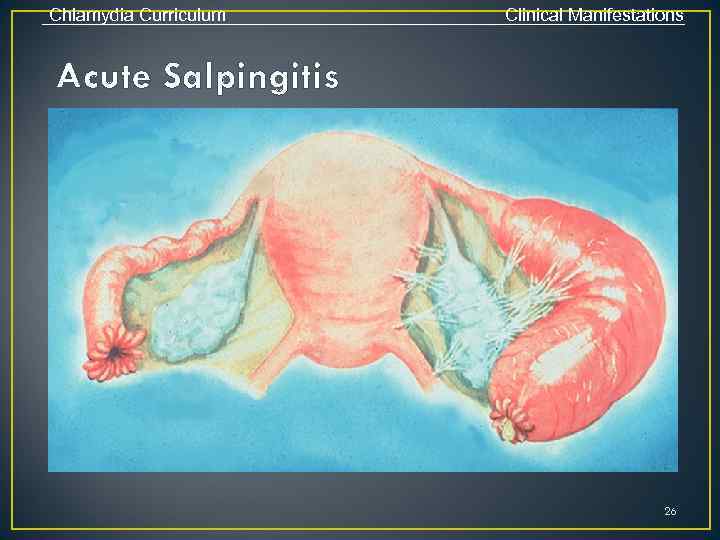
Chlamydia Curriculum Clinical Manifestations Acute Salpingitis 26
Chlamydia Curriculum Clinical Manifestations C. trachomatis Syndromes Seen in Men or Women • Non-LGV serovars • Conjunctivitis • Proctitis • Reiter’s Syndrome • LGV serovars • Lymphogranuloma venereum 27
Chlamydia Curriculum Clinical Manifestations C. trachomatis Infections in Infants • Perinatal clinical manifestations: • Inclusion conjunctivitis • Pneumonia 28
Chlamydia Curriculum Clinical Manifestations C. trachomatis Infections in Children • Pre-adolescent males and females: • Urogenital infections • Usually asymptomatic • Vertical transmission • Sexual abuse 29
Chlamydia Curriculum Diagnosis 30
Chlamydia Curriculum Diagnosis Testing Technologies • Culture • Non-culture tests • Nucleic Acid Amplification Tests (NAATs) • Non-Nucleic Acid Amplification Tests (Non-NAATs) • Serology 31
Chlamydia Curriculum Diagnosis Culture the “gold standard” • Historically • • Variable sensitivity (50%-80%) High specificity Use in legal investigations Not suitable for widespread screening 32
Chlamydia Curriculum Diagnosis NAATs • NAATs amplify and detect organism-specific genomic or plasmid DNA or r. RNA • FDA cleared for urethral swabs from men/women, cervical swabs from women, and urine from both 33
Chlamydia Curriculum Diagnosis NAATs • Commercially available NAATs include: • Becton Dickinson BDProbe. Tec® • Gen-Probe Amp. CT, Aptima® • Roche Amplicor® • Significantly more sensitive than other tests 34
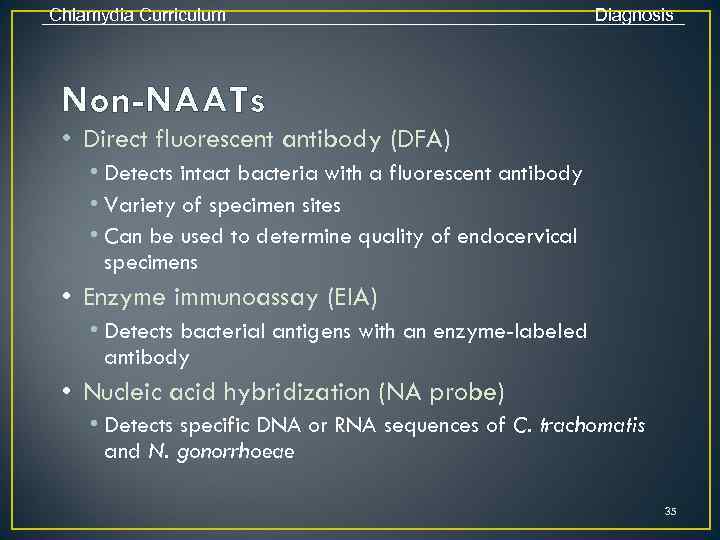
Chlamydia Curriculum Diagnosis Non-NAATs • Direct fluorescent antibody (DFA) • Detects intact bacteria with a fluorescent antibody • Variety of specimen sites • Can be used to determine quality of endocervical specimens • Enzyme immunoassay (EIA) • Detects bacterial antigens with an enzyme-labeled antibody • Nucleic acid hybridization (NA probe) • Detects specific DNA or RNA sequences of C. trachomatis and N. gonorrhoeae 35
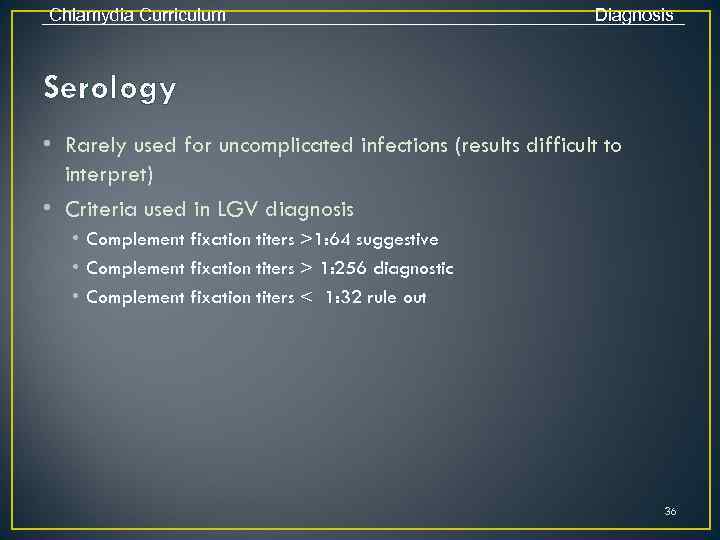
Chlamydia Curriculum Diagnosis Serology • Rarely used for uncomplicated infections (results difficult to interpret) • Criteria used in LGV diagnosis • Complement fixation titers >1: 64 suggestive • Complement fixation titers > 1: 256 diagnostic • Complement fixation titers < 1: 32 rule out 36

Chlamydia Curriculum Patient Management 37
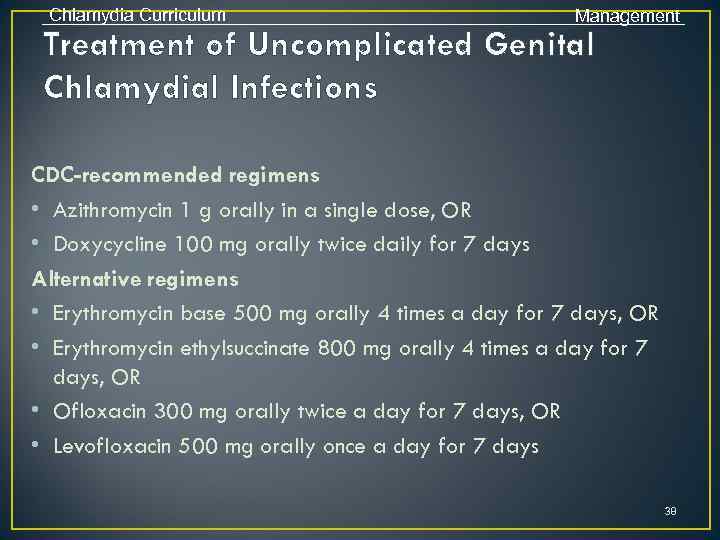
Chlamydia Curriculum Management Treatment of Uncomplicated Genital Chlamydial Infections CDC-recommended regimens • Azithromycin 1 g orally in a single dose, OR • Doxycycline 100 mg orally twice daily for 7 days Alternative regimens • Erythromycin base 500 mg orally 4 times a day for 7 days, OR • Erythromycin ethylsuccinate 800 mg orally 4 times a day for 7 days, OR • Ofloxacin 300 mg orally twice a day for 7 days, OR • Levofloxacin 500 mg orally once a day for 7 days 38
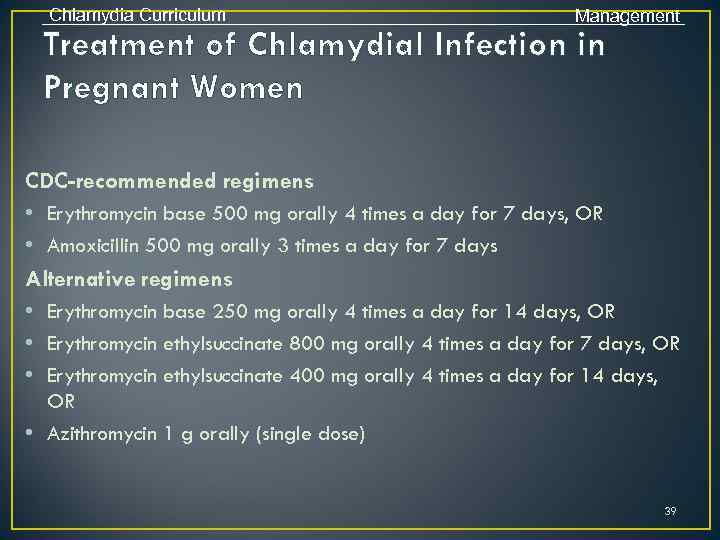
Chlamydia Curriculum Management Treatment of Chlamydial Infection in Pregnant Women CDC-recommended regimens • Erythromycin base 500 mg orally 4 times a day for 7 days, OR • Amoxicillin 500 mg orally 3 times a day for 7 days Alternative regimens • Erythromycin base 250 mg orally 4 times a day for 14 days, OR • Erythromycin ethylsuccinate 800 mg orally 4 times a day for 7 days, OR • Erythromycin ethylsuccinate 400 mg orally 4 times a day for 14 days, OR • Azithromycin 1 g orally (single dose) 39
Chlamydia Curriculum Management Treatment of Neonatal Conjunctivitis and/or Pneumonia CDC-recommended regimen • Erythromycin base or ethylsuccinate 50 mg/kg/day orally divided into 4 doses daily for 14 days 40
Chlamydia Curriculum Thanks for your attention 41
Скачать презентацию Chlamydia Presented by Afsa Manzoor Group 442
chlamydia AFSA.ppt