 Скачать презентацию Chinatown Community Development Center Chinatown s Affordable Housing Stock
fe6274bcc4e077e5abeeffa57aed16c2.ppt
- Количество слайдов: 25



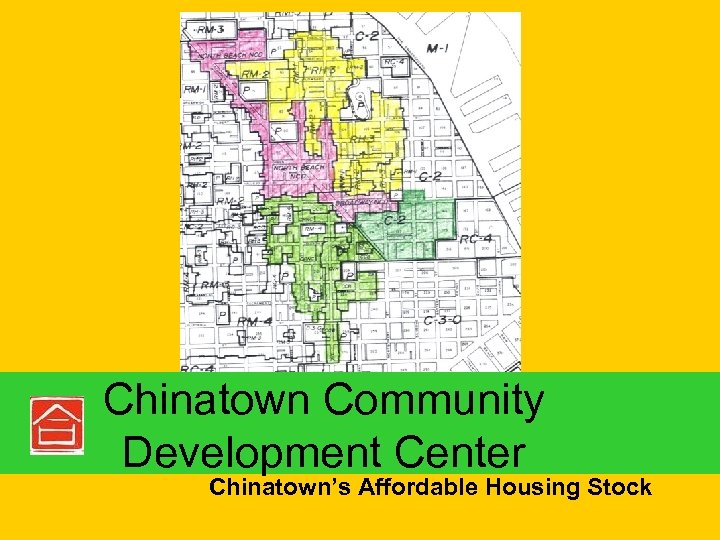
Chinatown Community Development Center Chinatown’s Affordable Housing Stock
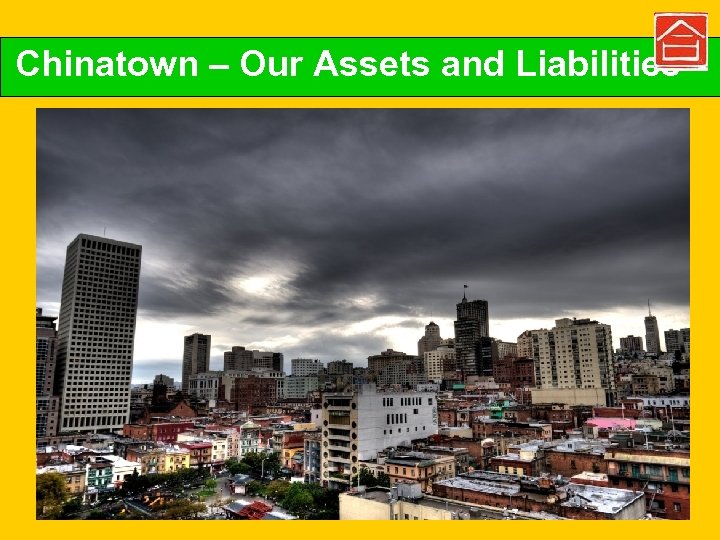
Chinatown – Our Assets and San Francisco’s Chinatown Liabilities
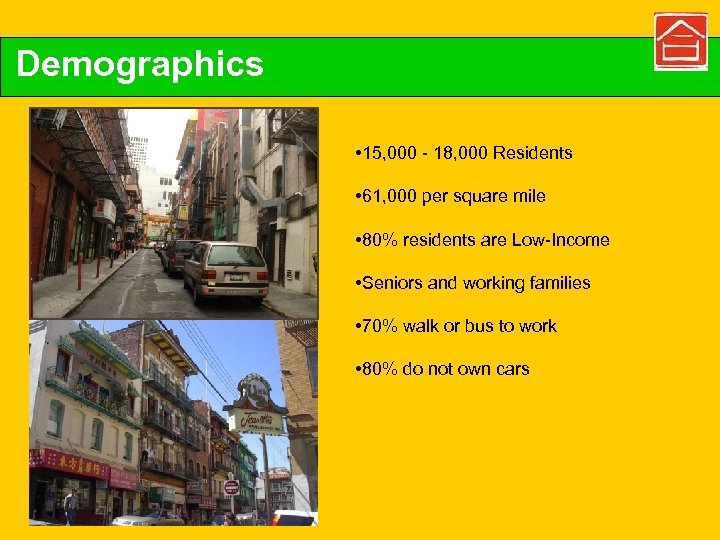
Demographics San Francisco’s Chinatown • 15, 000 - 18, 000 Residents • 61, 000 per square mile • 80% residents are Low-Income • Seniors and working families • 70% walk or bus to work • 80% do not own cars
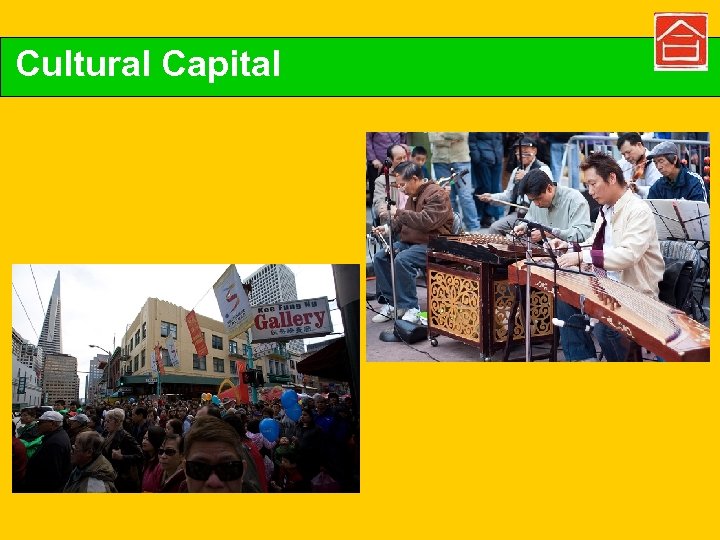
Cultural Capital
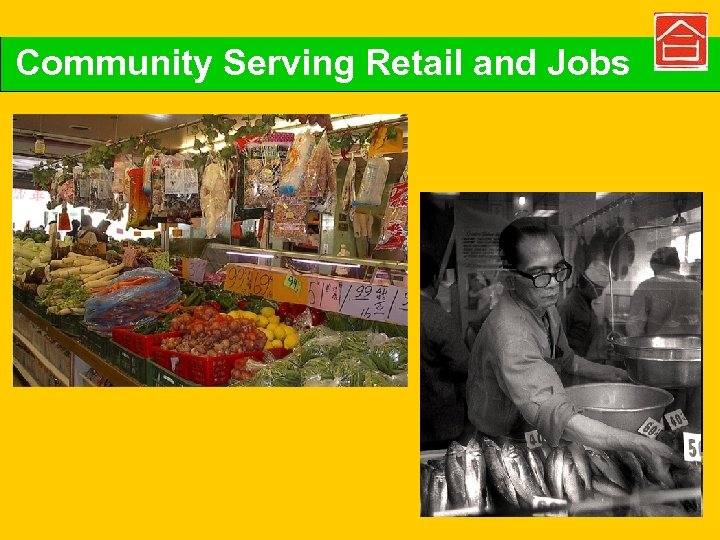
Community Serving Retail and Jobs
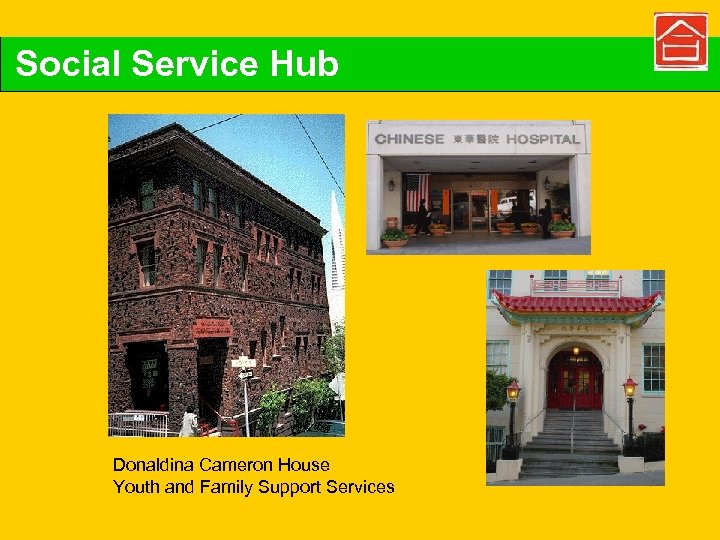
Social Service Hub Donaldina Cameron House Youth and Family Support Services
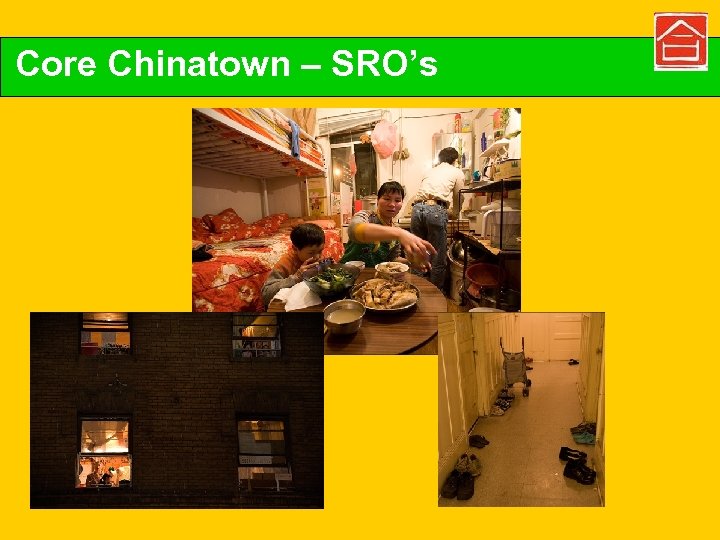
Core Chinatown – SRO’s
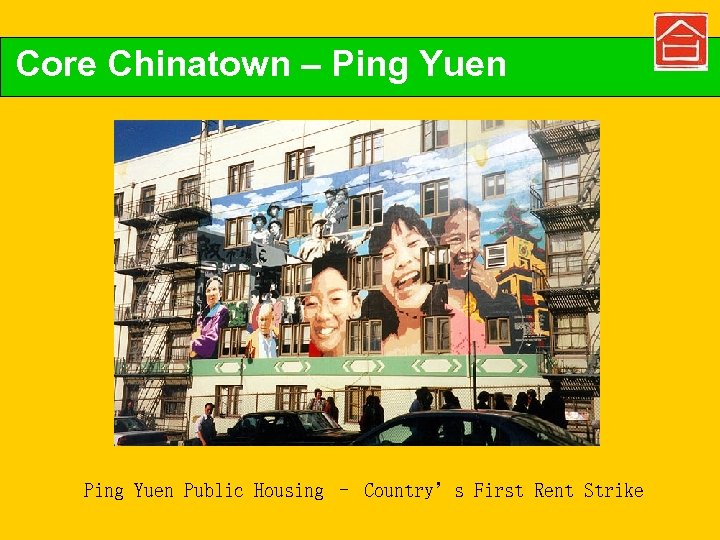
Core Chinatown – Ping Yuen Public Housing – Country’s First Rent Strike
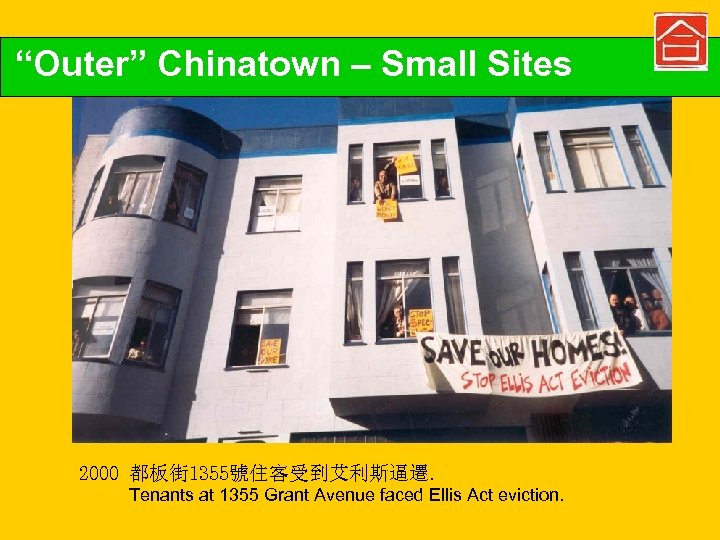
“Outer” Chinatown – Small Sites 2000 都板街 1355號住客受到艾利斯逼遷. Tenants at 1355 Grant Avenue faced Ellis Act eviction.
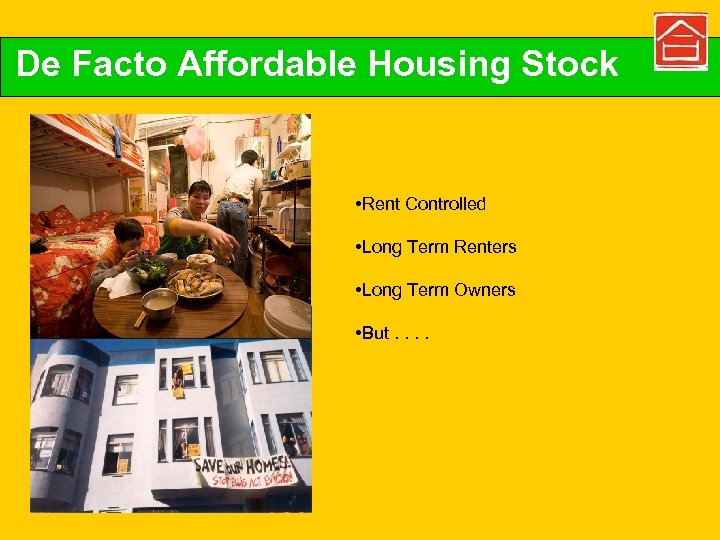
De Facto Affordable Housing Stock • Rent Controlled • Long Term Renters • Long Term Owners • But. .
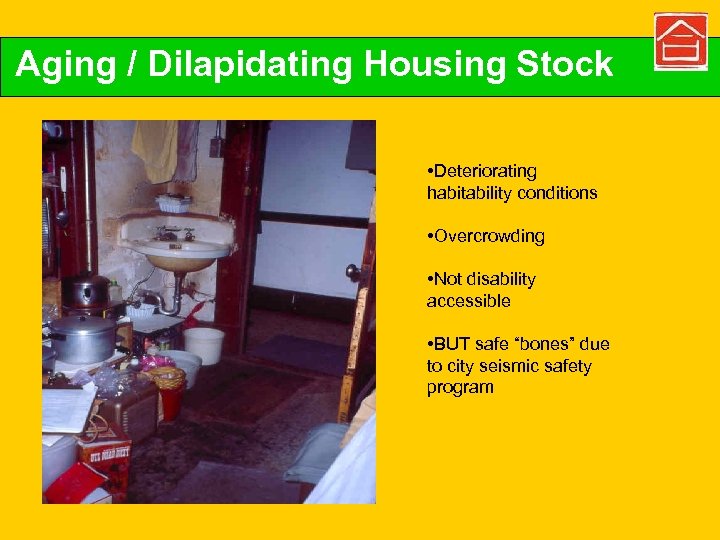
Aging / Dilapidating Housing Stock • Deteriorating habitability conditions • Overcrowding • Not disability accessible • BUT safe “bones” due to city seismic safety program
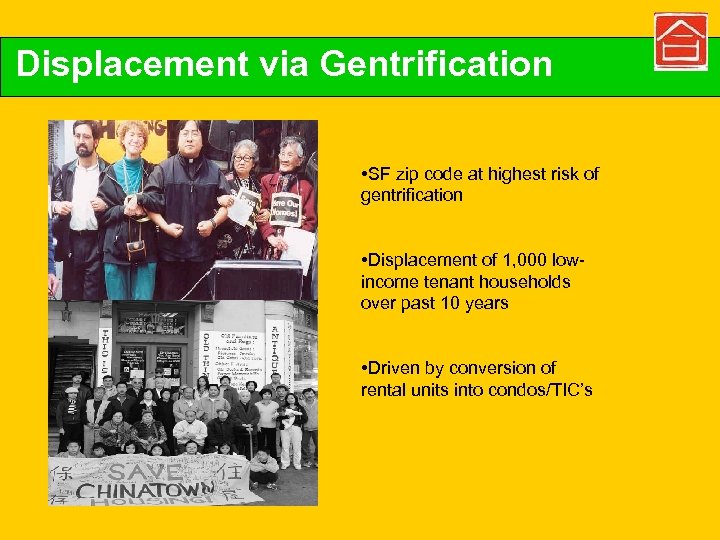
Displacement via Gentrification • SF zip code at highest risk of gentrification • Displacement of 1, 000 lowincome tenant households over past 10 years • Driven by conversion of rental units into condos/TIC’s
“Sustainable Communities” San Francisco’s Chinatown. . “We are at the end of a 60 year cycle in land use planning. White flight is at an end. Reverse white flight back into urban areas has already begun. . . ” -- Carl Anthony, Professor and Land Use Activist
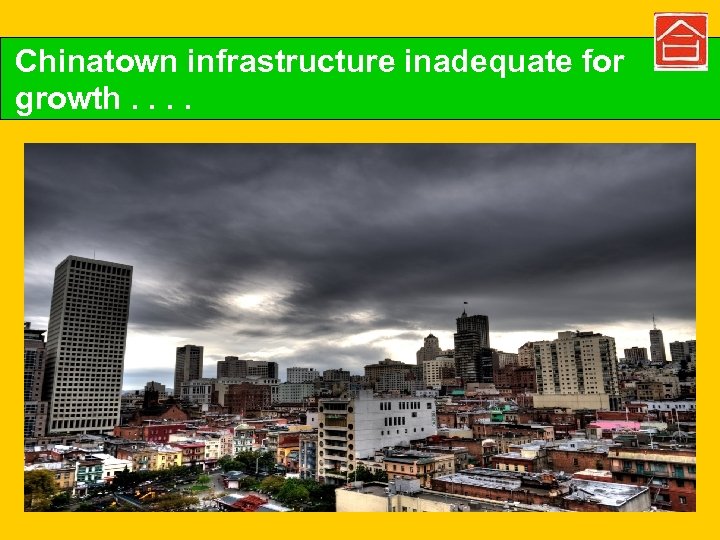
Chinatown infrastructure inadequate for Looking toward the Future growth. .

What do we do now?
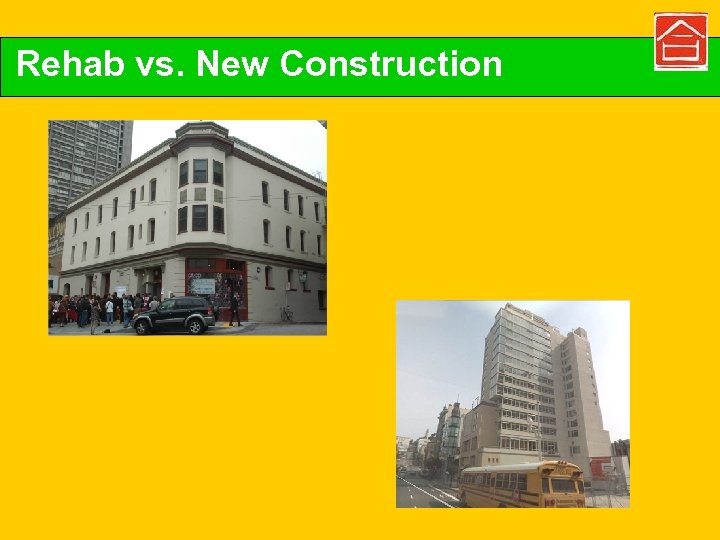
Rehab vs. New Construction
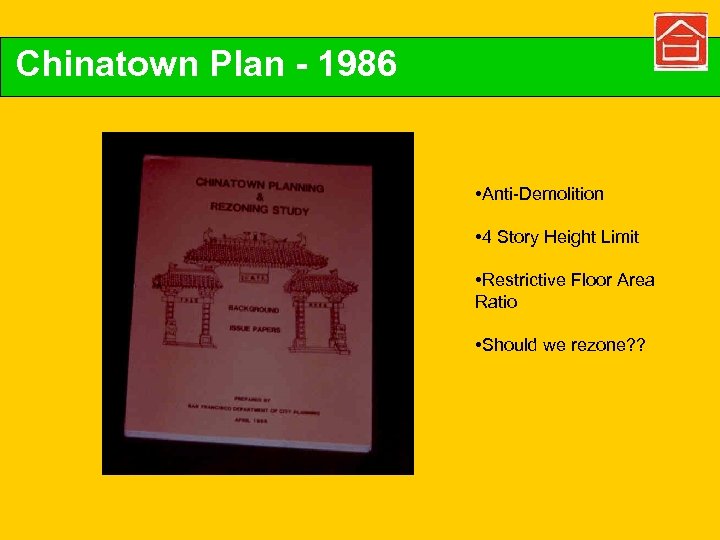
Chinatown Plan - 1986 • Anti-Demolition • 4 Story Height Limit • Restrictive Floor Area Ratio • Should we rezone? ?
Upzoning and Rebuilding Means • Demolition – Which means displacement • Which means relocation – Which means nobody moves back. . • Carbon Footprint – SIGNIFICANT
Upzoning and Rebuilding Means • Mixed Income and Mixed Use Projects • Replace affordable 1 for 1 and add market rate • Market Rate will Subsidize “Affordable” • Increased Density. .
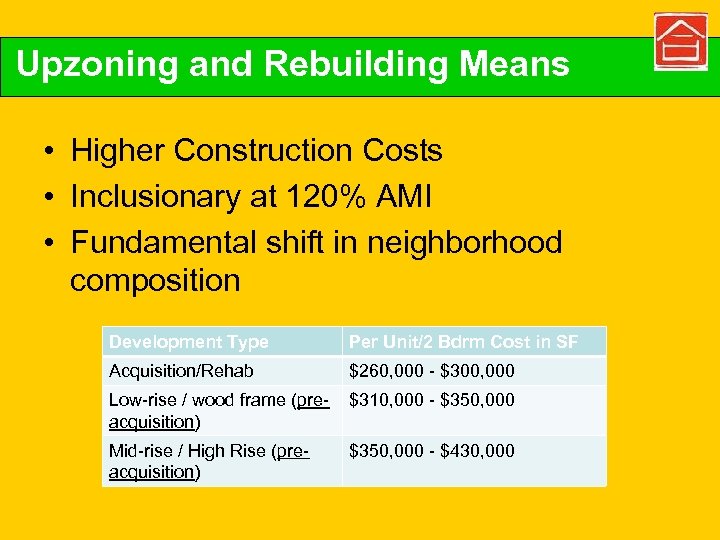
Upzoning and Rebuilding Means • Higher Construction Costs • Inclusionary at 120% AMI • Fundamental shift in neighborhood composition Development Type Per Unit/2 Bdrm Cost in SF Acquisition/Rehab $260, 000 - $300, 000 Low-rise / wood frame (preacquisition) $310, 000 - $350, 000 Mid-rise / High Rise (preacquisition) $350, 000 - $430, 000
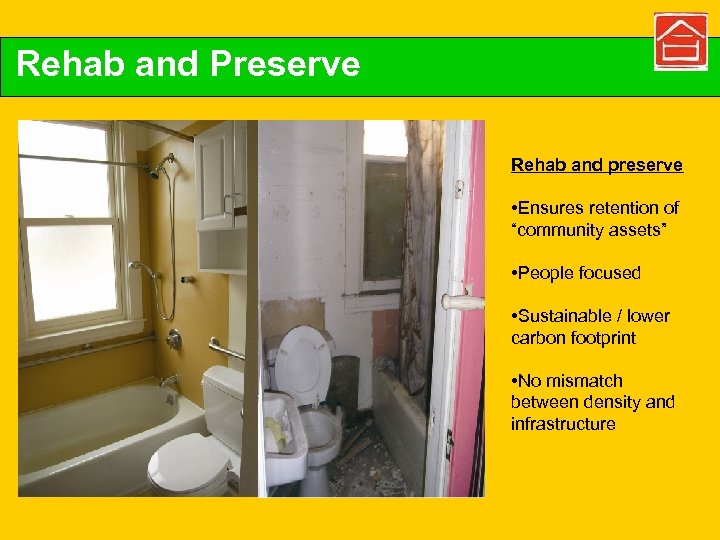
Rehab and Preserve Rehab and preserve • Ensures retention of “community assets” • People focused • Sustainable / lower carbon footprint • No mismatch between density and infrastructure
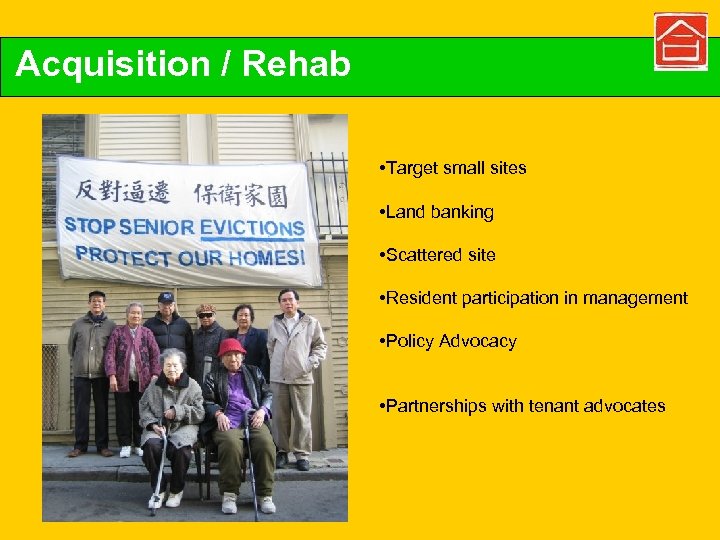
Acquisition / Rehab • Target small sites • Land banking • Scattered site • Resident participation in management • Policy Advocacy • Partnerships with tenant advocates
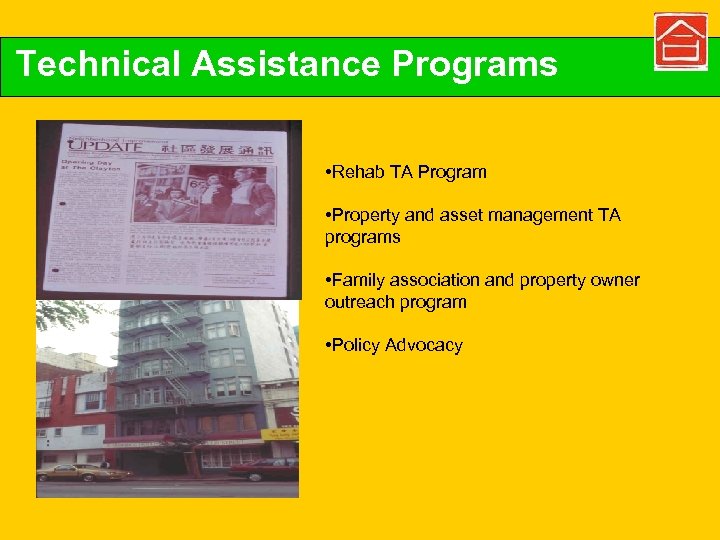
Technical Assistance Programs • Rehab TA Program • Property and asset management TA programs • Family association and property owner outreach program • Policy Advocacy

What haven’t we covered • What about new construction projects? • What to do about Ping Yuen?
Contact Information Malcolm Yeung Public Policy Manager Chinatown Community Development Center 1525 Grant Avenue San Francisco, California 94133 (v) 415. 984. 2749 (e) myeung@chinatowncdc. org http: //www. chinatowncdc. org
Скачать презентацию Chinatown Community Development Center Chinatown s Affordable Housing Stock
fe6274bcc4e077e5abeeffa57aed16c2.ppt