


 Скачать презентацию Chemistry teacher education for future Department of
09c805434bc9c45af8546b803679de9b.ppt
- Количество слайдов: 20
 Chemistry teacher education for future
 Department of Chemistry University of Jyväskylä LUMA-KS Prof. Jan Lundell Head of the Department of Chemistry Director of Central Finland STEM centre Chairman of Section of Chemistry Education of the Finnish Chemical Society
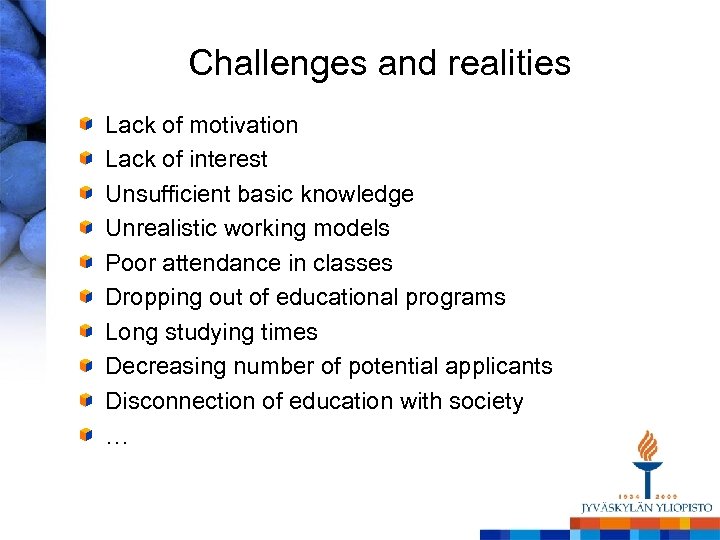 Challenges and realities Lack of motivation Lack of interest Unsufficient basic knowledge Unrealistic working models Poor attendance in classes Dropping out of educational programs Long studying times Decreasing number of potential applicants Disconnection of education with society …
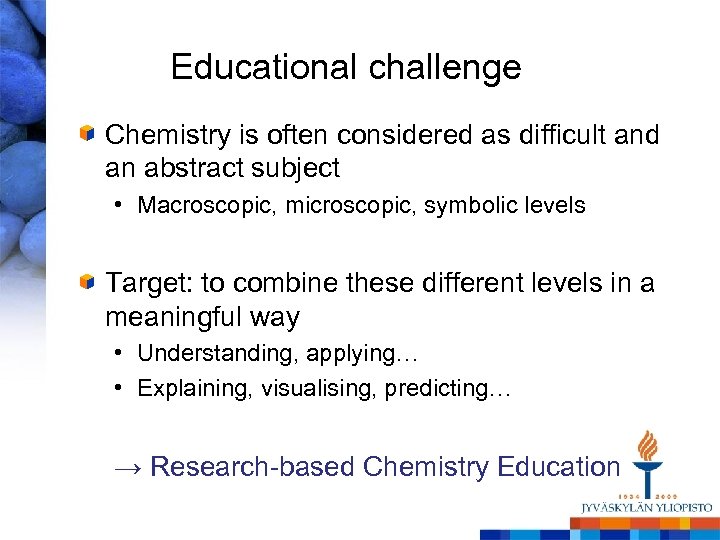 Educational challenge Chemistry is often considered as difficult and an abstract subject • Macroscopic, microscopic, symbolic levels Target: to combine these different levels in a meaningful way • Understanding, applying… • Explaining, visualising, predicting… → Research-based Chemistry Education
 Research-based chemistry education Theory-based Based on data collected Data is analysed by accepted protocols It produces generalisable results The goal of chemistry education is to enhance the transmission and understanding chemistry Conceptions, metacognitive skills Constructing knowledge in a social context - How do THEY learn? - How do WE teach them?
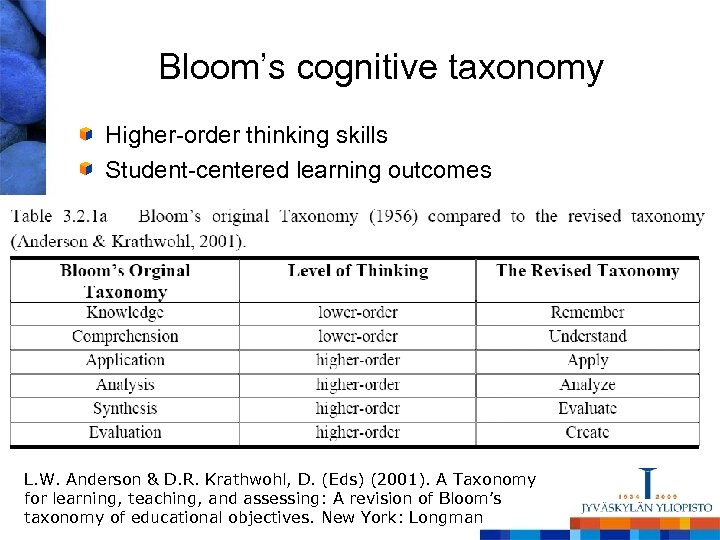 Bloom’s cognitive taxonomy Higher-order thinking skills Student-centered learning outcomes L. W. Anderson & D. R. Krathwohl, D. (Eds) (2001). A Taxonomy for learning, teaching, and assessing: A revision of Bloom’s taxonomy of educational objectives. New York: Longman
 Areas of development: JYU-Chem Students as active learners: increased testing of own mental models and ideas • Working in pairs and small groups; collaborative learning • Problem-based learning, inquiry-based instruction • Diverse assessment methods Combination of representational levels to support understanding Enhanced practical and communication skills Enhanced studying skills In-house teacher training within teacher education
 Focusing on skills and competences JYU: pedagogy and quality - Interactive learning and teaching - e. Education - Pedagogical qualifications Department of Chemistry: – – – – University teachers as an asset Blended learning Collaboration, communication, problem-solving Chemistry in context Skills and capabilities of working life In-house assessment for development ”alkukeitos” (starting soup)
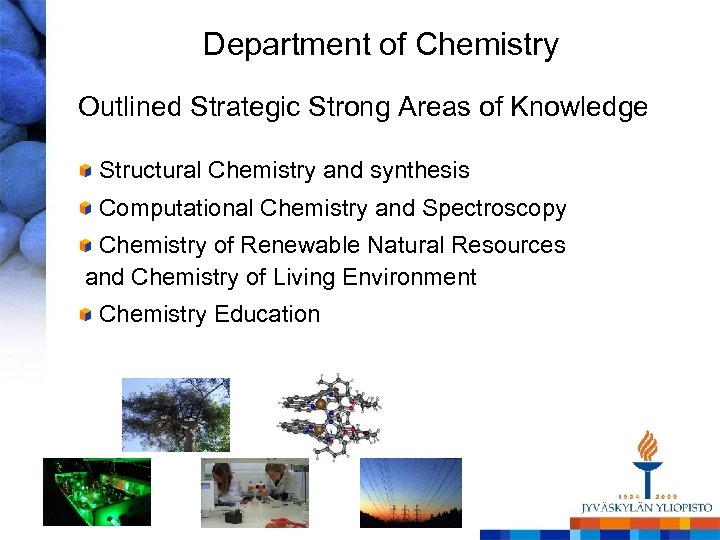 Department of Chemistry Outlined Strategic Strong Areas of Knowledge Structural Chemistry and synthesis Computational Chemistry and Spectroscopy Chemistry of Renewable Natural Resources and Chemistry of Living Environment Chemistry Education
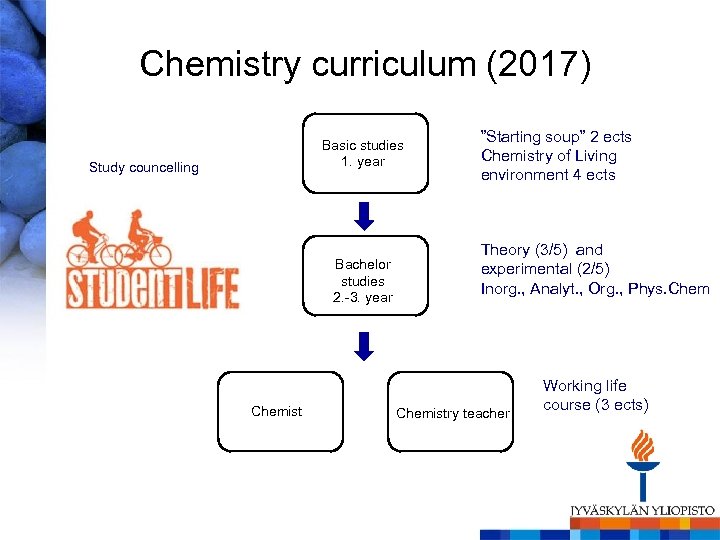 Chemistry curriculum (2017) Basic studies 1. year Study councelling Bachelor studies 2. -3. year Chemist ”Starting soup” 2 ects Chemistry of Living environment 4 ects Theory (3/5) and experimental (2/5) Inorg. , Analyt. , Org. , Phys. Chemistry teacher Working life course (3 ects)
 Teacher Education in Chemistry Motivated and enthusiastic chemistry teachers – Content knowledge - ”they know their science…” – Pedagogical content knowledge – ”how and why science is learned? ” – ”how to guide learning science? ” – Diverse training – Different learning environment – Role of experiments and ICT – Scientific breakthroughs
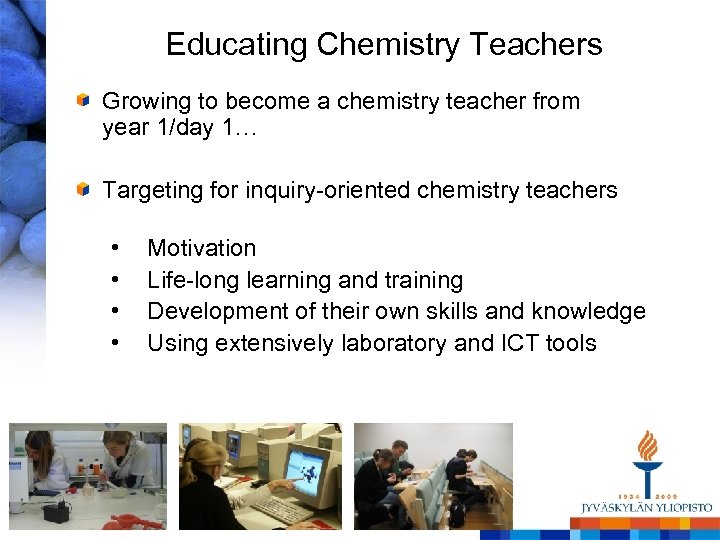 Educating Chemistry Teachers Growing to become a chemistry teacher from year 1/day 1… Targeting for inquiry-oriented chemistry teachers • • Motivation Life-long learning and training Development of their own skills and knowledge Using extensively laboratory and ICT tools
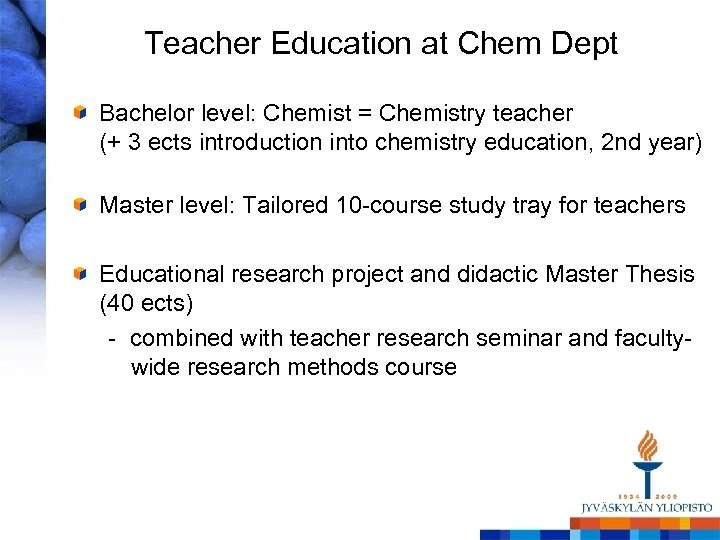 Teacher Education at Chem Dept Bachelor level: Chemist = Chemistry teacher (+ 3 ects introduction into chemistry education, 2 nd year) Master level: Tailored 10 -course study tray for teachers Educational research project and didactic Master Thesis (40 ects) - combined with teacher research seminar and facultywide research methods course
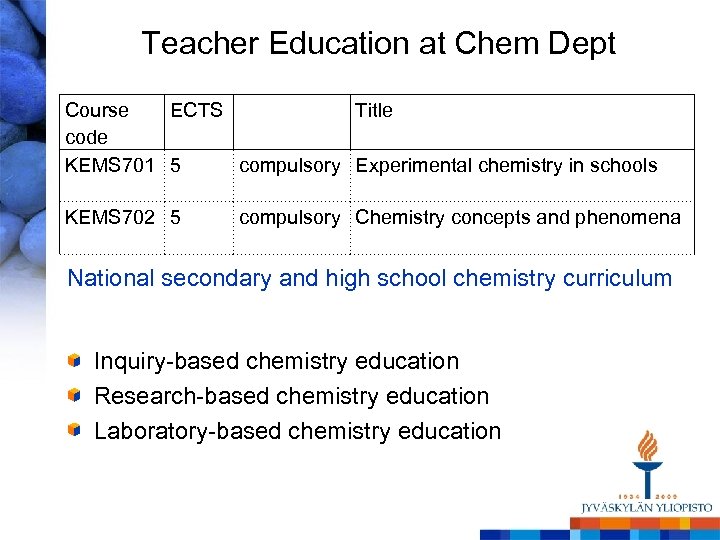 Teacher Education at Chem Dept Course ECTS Title code KEMS 701 5 compulsory Experimental chemistry in schools KEMS 702 5 compulsory Chemistry concepts and phenomena National secondary and high school chemistry curriculum Inquiry-based chemistry education Research-based chemistry education Laboratory-based chemistry education
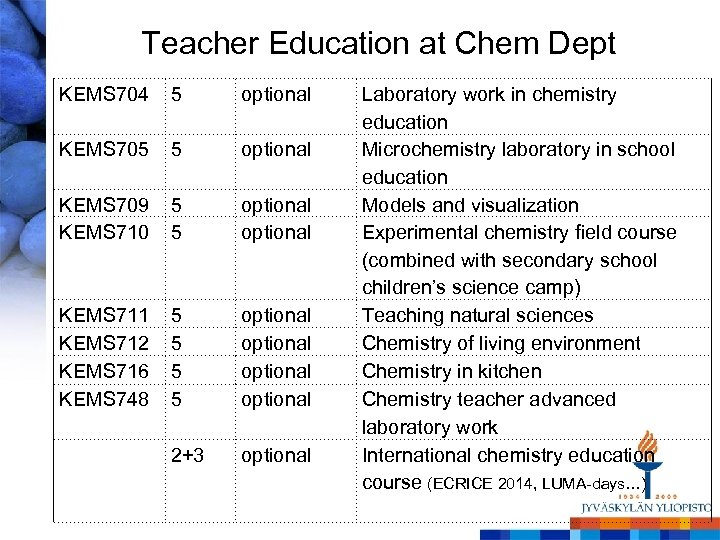 Teacher Education at Chem Dept KEMS 704 5 optional KEMS 705 5 optional KEMS 709 KEMS 710 5 5 optional KEMS 711 KEMS 712 KEMS 716 KEMS 748 5 5 optional 2+3 optional Laboratory work in chemistry education Microchemistry laboratory in school education Models and visualization Experimental chemistry field course (combined with secondary school children’s science camp) Teaching natural sciences Chemistry of living environment Chemistry in kitchen Chemistry teacher advanced laboratory work International chemistry education course (ECRICE 2014, LUMA-days…)
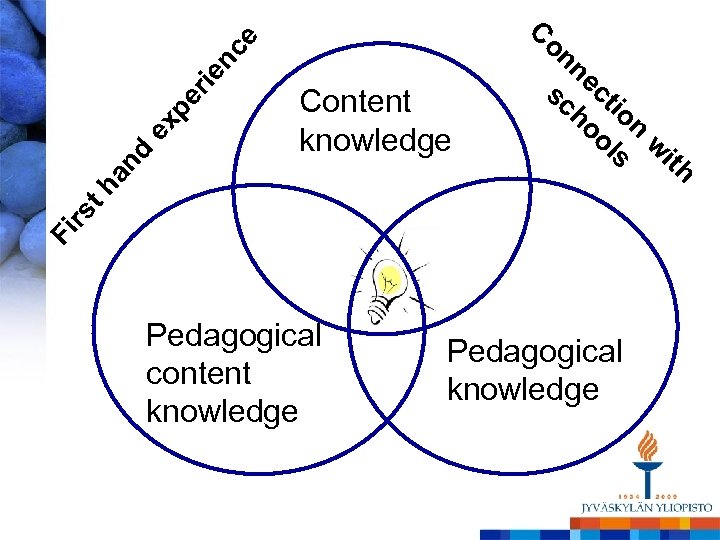 Content knowledge on ne sc ct ho ion ol w s ith Fi rs th an d ex pe rie nc e C Pedagogical content knowledge Pedagogical knowledge
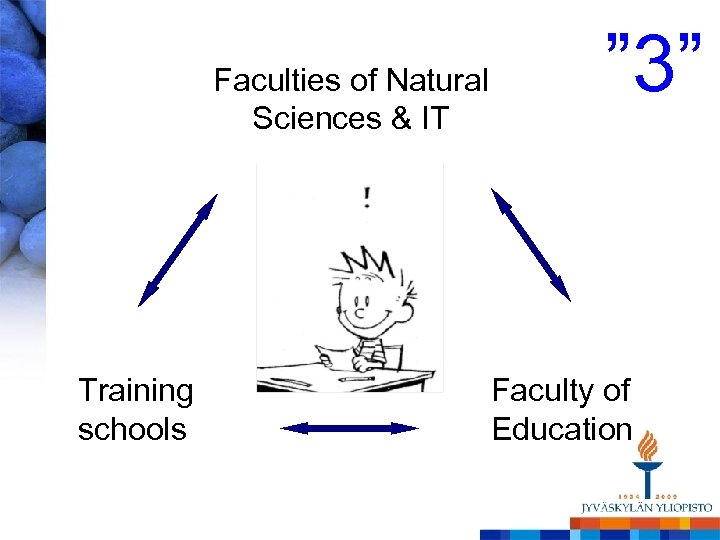 Faculties of Natural Sciences & IT Training schools ” 3” Faculty of Education
 Connection with society Training in-field teachers and scientists • Qualitative employment • Advancements and novelty • Educational research Collaboration with schools – all levels Advancement of general knowledge • LUMA-centre network in Finland Making an impact in public discussions • Popularisation of science • Opinion writings Connection with policy makers and policy making
 Challenges & Opportunities Future teachers and their skills Subject combinations Societal impact Life-long training of teachers Science education for children National LUMA-centres (LUMA-Finland) www. luma. fi Integration of teacher education with Department’s ”in-house” staff training and educational development
 Thank You for Your Attention !