 Скачать презентацию Chemistry 125 Lecture 52 February 16 2011 Transition
bb73008f530cc01203ffdb5f0494bfa4.ppt
- Количество слайдов: 28



Chemistry 125: Lecture 52 February 16, 2011 Transition Metal Catalysis: Hydrogenation & Polymerization Additions by Radicals & Electrophilic Carbon; Isoprenoids; Tuning Polymer Properties This For copyright notice see final page of this file
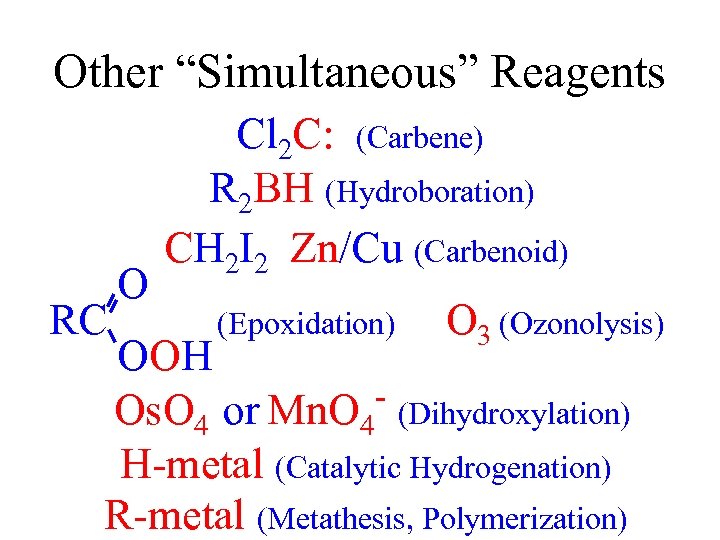
Other “Simultaneous” Reagents RC O Cl 2 C: (Carbene) R 2 BH (Hydroboration) CH 2 I 2 Zn/Cu (Carbenoid) (Epoxidation) O 3 (Ozonolysis) OOH - (Dihydroxylation) Os. O 4 or Mn. O 4 H-metal (Catalytic Hydrogenation) R-metal (Metathesis, Polymerization)
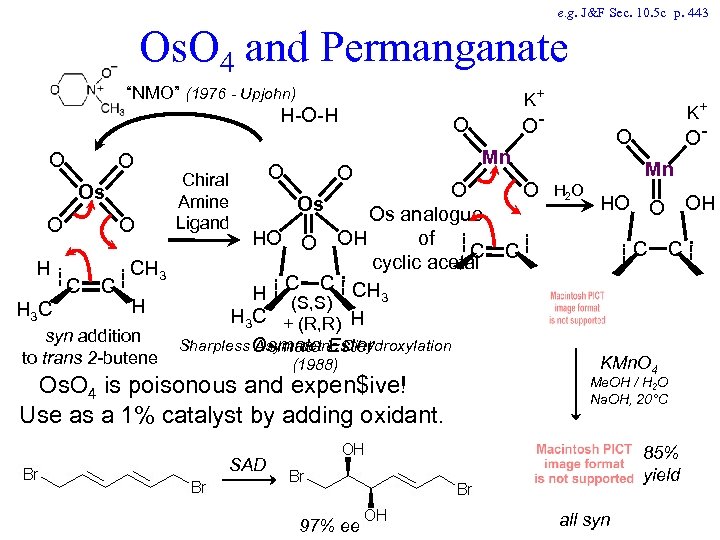
e. g. J&F Sec. 10. 5 c p. 443 Os. O 4 and Permanganate “NMO” (1976 - Upjohn) H 2 O 2 (1936) H-O-H O O Chiral Amine Ligand O O K+ O- O to trans 2 -butene (1988) Os. O 4 is poisonous and expen$ive! Use as a 1% catalyst by adding oxidant. O Mn O Os Os analogue O O HO O OH of C cyclic acetal H CH 3 C C H C C CH 3 (S, S) H H 3 C H 3 C + (R, R) H syn addition Sharpless Osmate Ester Asymmetric Dihydroxylation Os O K+ O- Mn H 2 O HO O C C OH C KMn. O 4 Me. OH / H 2 O Na. OH, 20°C 85% yield SAD 97% ee all syn
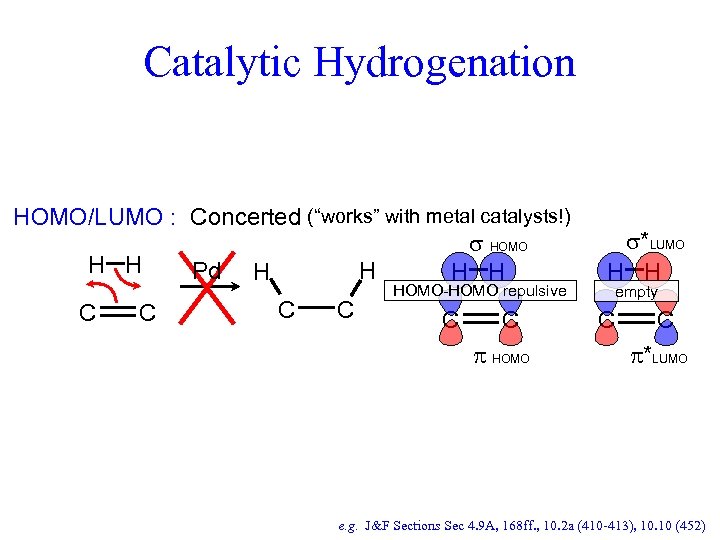
Catalytic Hydrogenation HOMO/LUMO : Concerted (“works” with metal catalysts!) *LUMO *HOMO LUMO HOMO H H H Pd H H H orthogonal H H C C HOMO-HOMO repulsive C C HOMO empty C C *LUMO e. g. J&F Sections Sec 4. 9 A, 168 ff. , 10. 2 a (410 -413), 10. 10 (452)
Orbital Variety from Metals
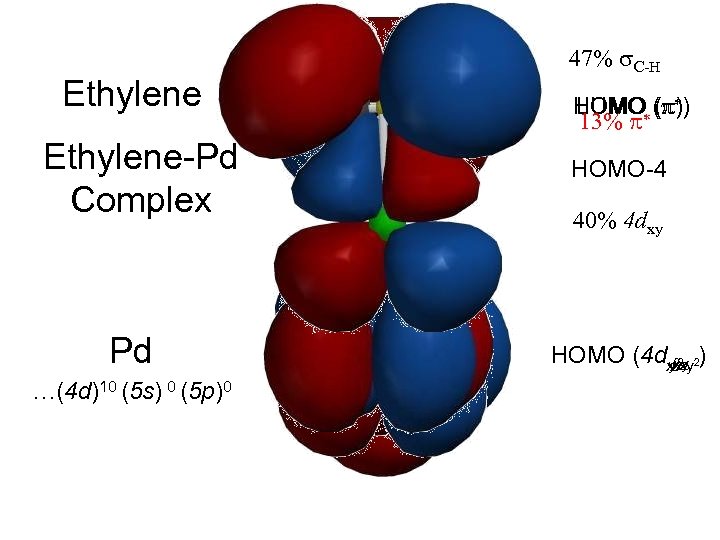
Ethylene-Pd Complex Pd …(4 d)10 (5 s) 0 (5 p)0 47% C-H HOMO ( )) LUMO ( 13% HOMO-4 40% 4 dxy HOMO (4 dxz 22 -y 2) xy yz xz
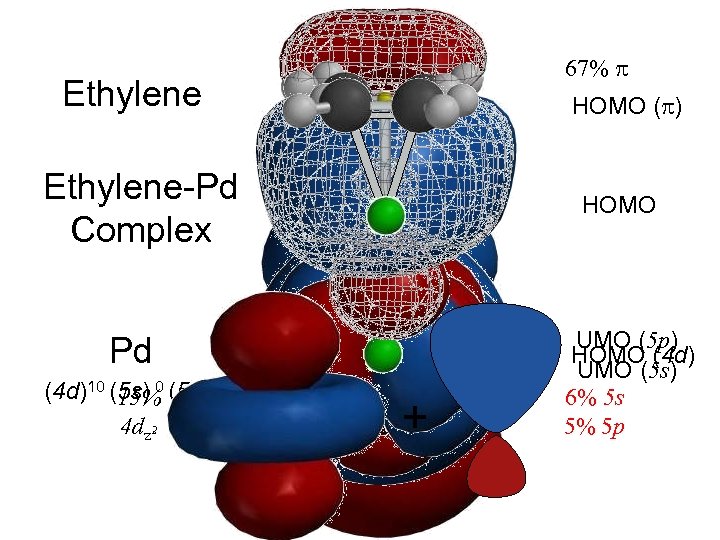
67% Ethylene HOMO ( ) Ethylene-Pd Complex HOMO Pd (4 d)10 (5 s) 0 (5 p)0 15% 4 dz 2 + UMO (5 p) HOMO (4 d) UMO (5 s) 6% 5 s 5% 5 p
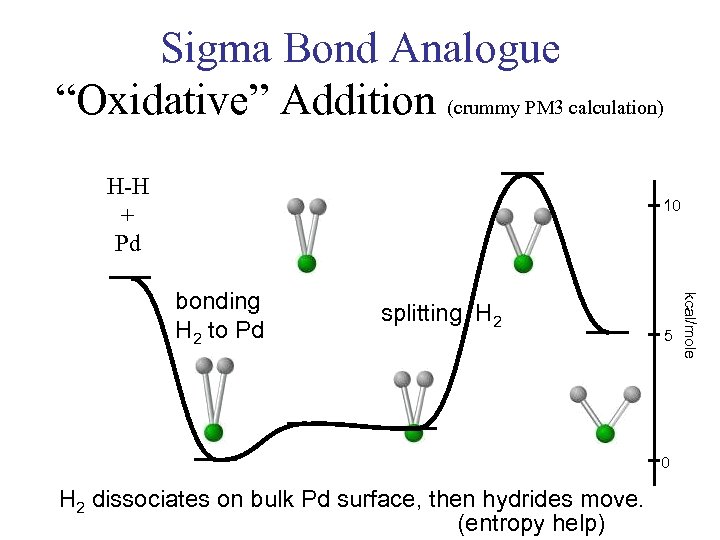
Sigma Bond Analogue “Oxidative” Addition (crummy PM 3 calculation) H-H + Pd 10 splitting H 2 5 0 H 2 dissociates on bulk Pd surface, then hydrides move. (entropy help) kcal/mole bonding H 2 to Pd
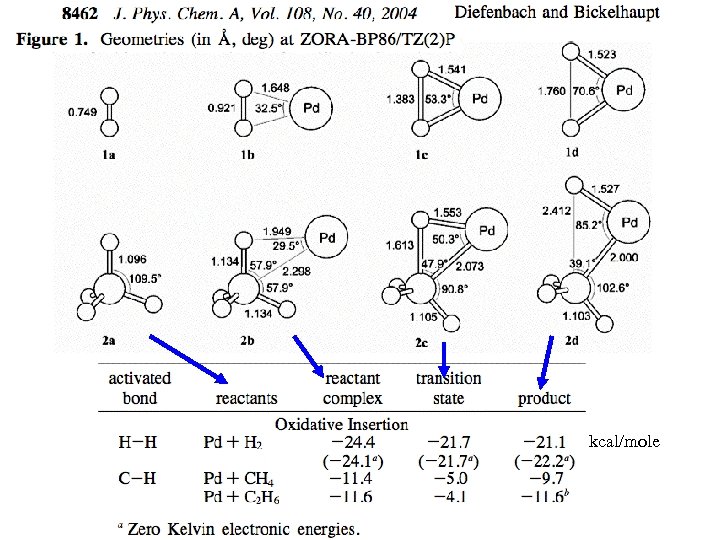
kcal/mole
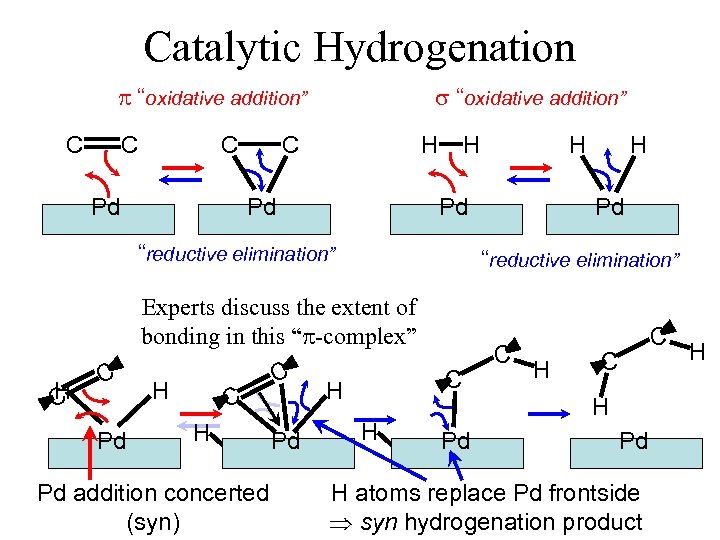
Catalytic Hydrogenation “oxidative addition” C C C Pd “oxidative addition” C H Pd “reductive elimination” H C Pd Pd addition concerted (syn) H Pd “reductive elimination” Experts discuss the extent of bonding in this “ -complex” C H C C H H Pd Pd H atoms replace Pd frontside syn hydrogenation product
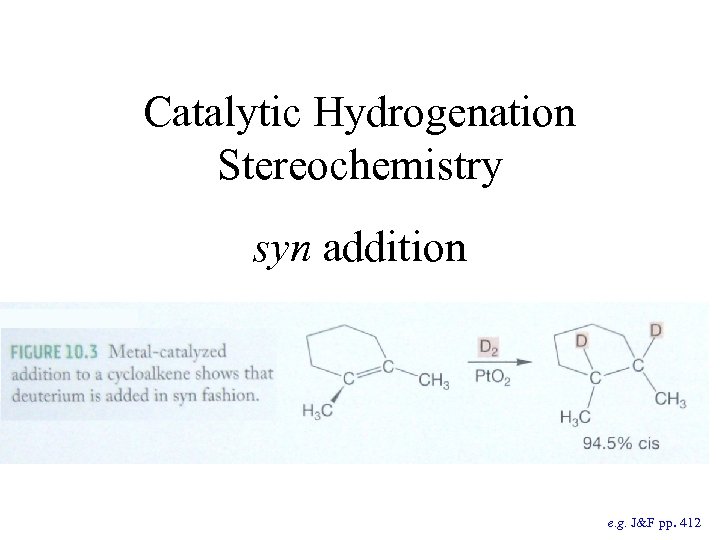
Catalytic Hydrogenation Stereochemistry syn addition e. g. J&F pp. 412
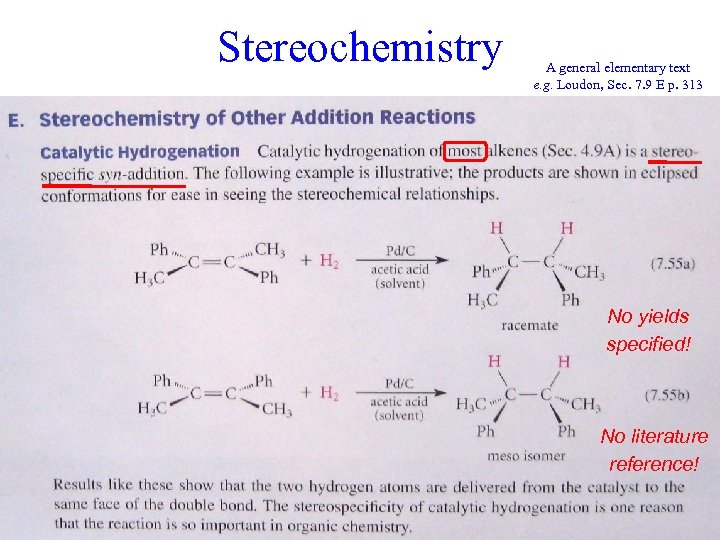
Stereochemistry A general elementary text e. g. Loudon, Sec. 7. 9 E p. 313 No yields specified! No literature reference!
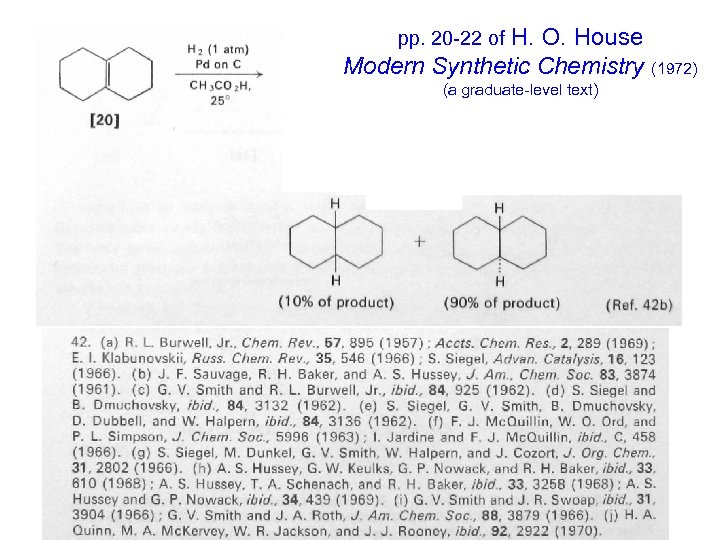
pp. 20 -22 of H. O. House Modern Synthetic Chemistry (1972) (a graduate-level text)
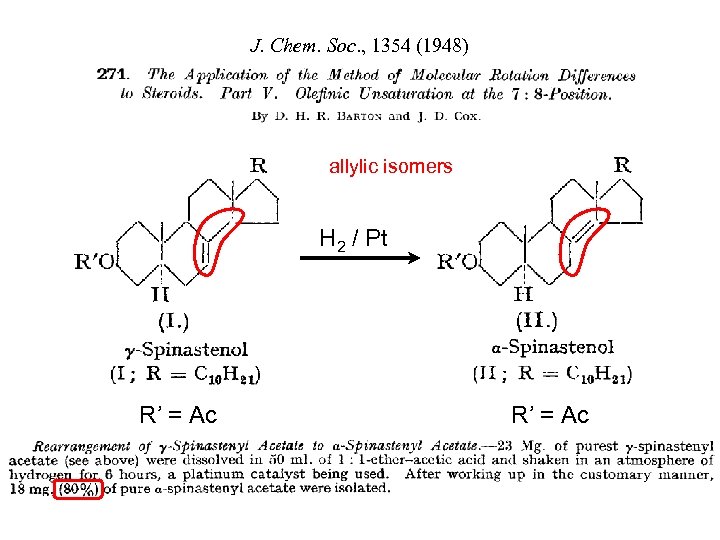
J. Chem. Soc. , 1354 (1948) allylic isomers H 2 / Pt R’ = Ac
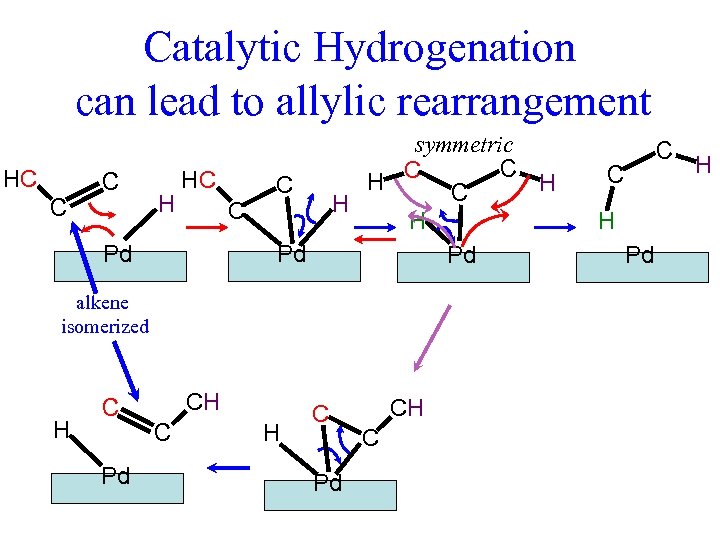
Catalytic Hydrogenation Suppose there is an allylic H in the alkene: can lead to allylic rearrangement HC H C C H HC C Pd symmetric C C H H Pd Pd alkene isomerized H C Pd CH C C C H Pd H
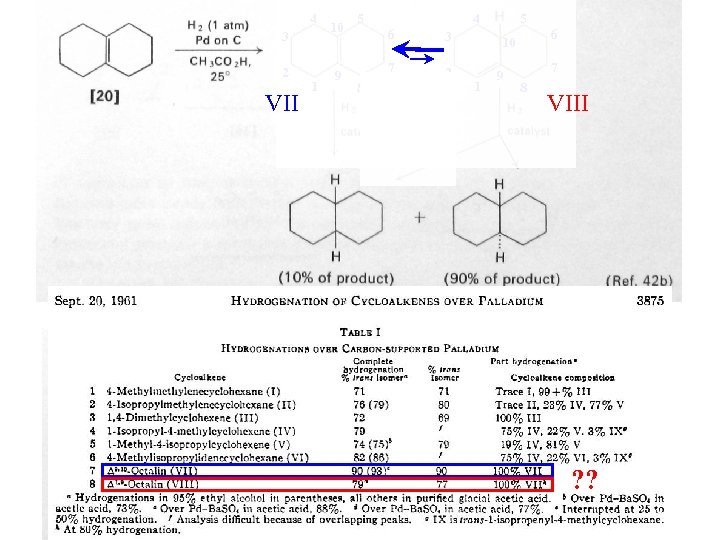
4 3 2 VII 1 10 9 5 4 6 7 8 3 2 5 6 10 1 9 7 8 VIII ? ?
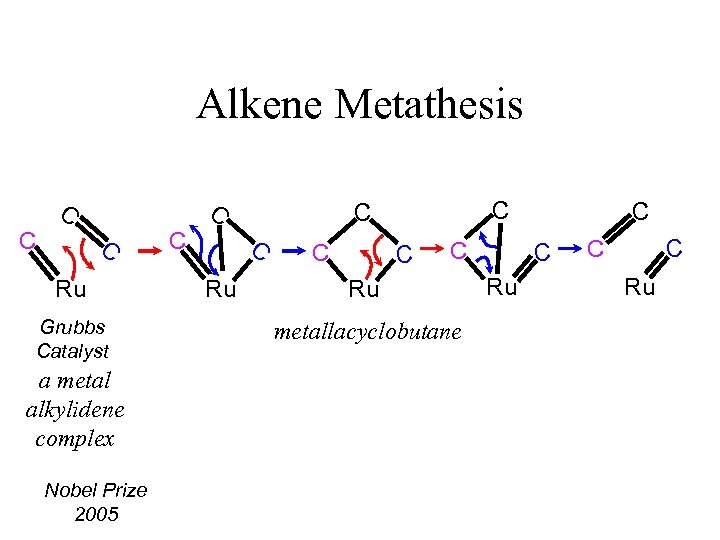
Alkene Metathesis C C Ru Grubbs Catalyst a metal alkylidene complex Nobel Prize 2005 C C Ru C C C Ru metallacyclobutane C C Ru
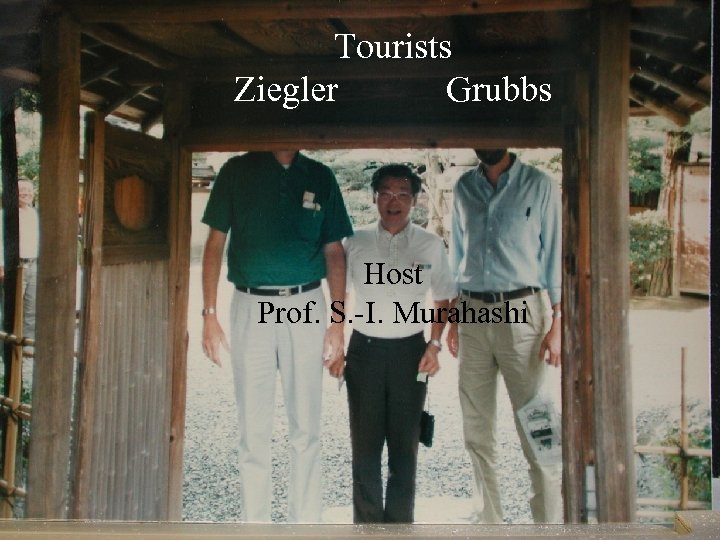
Tourists Ziegler Grubbs Host Prof. S. -I. Murahashi Tall Prof. F. Ziegler (not Prof. Karl Ziegler) with Prof. R. Grubbs
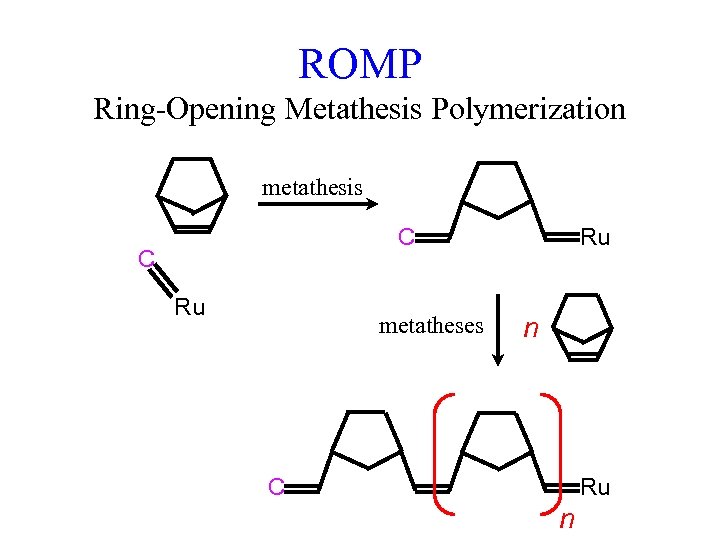
ROMP Ring-Opening Metathesis Polymerization metathesis Ru C C Ru metatheses n C Ru n
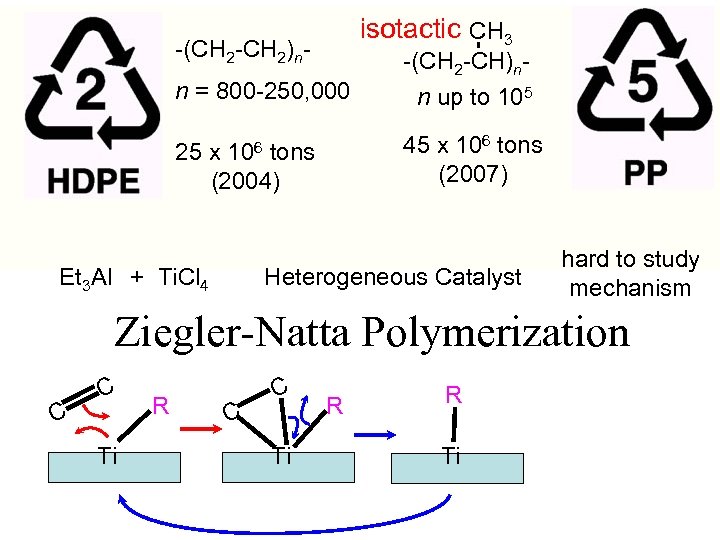
isotactic CH 3 -(CH -CH ) Catalytic- Hydrogenation -(CH -CH) 2 H C 2 n n = 800 -250, 000 C C H C 6 tons H 25 x 10 (2004) Pd Pd Et 3 Al + Ti. Cl 4 2 n n up to 105 C H C 6 45 x 10 tons H (2007) Pd C C H Pd hard to study mechanism Heterogeneous Catalyst Ziegler-Natta Polymerization C C Ti R R C R Ti C H R
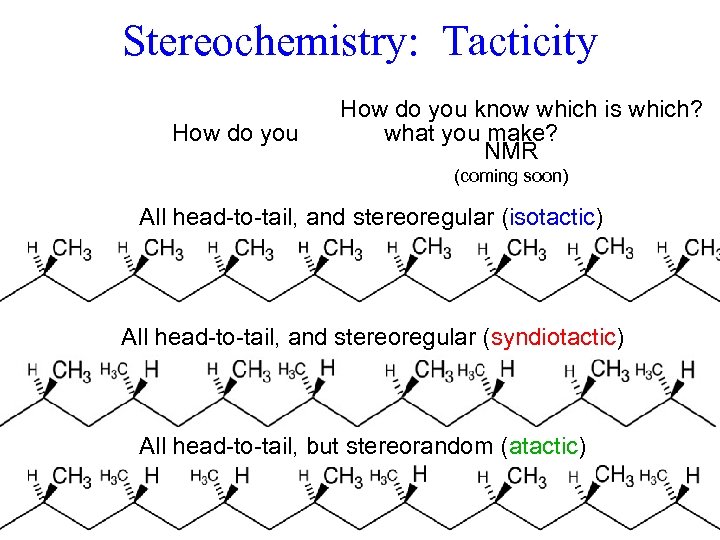
Stereochemistry: Tacticity How do you know which is which? How do you control what you make? NMR (coming soon) All head-to-tail, and stereoregular (isotactic) All head-to-tail, and stereoregular (syndiotactic) All head-to-tail, but stereorandom (atactic)
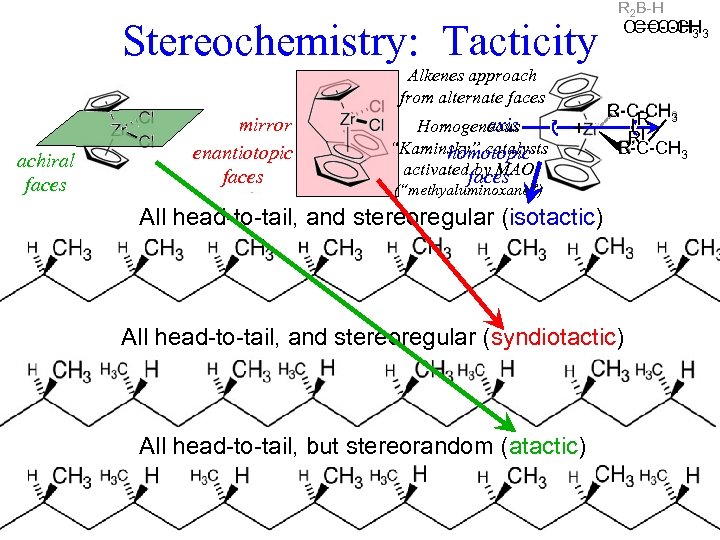
Stereochemistry: Tacticity Alkenes approach from alternate faces achiral faces mirror enantiotopic faces axis Homogeneous “Kaminsky” catalysts homotopic activatedfaces by MAO + R 2 B-H C=C-CH 3 3 C=C-CH C-C-CH 3 C-C-CH R R R’ C-C-CH 3 R’ (“methyaluminoxane”) All head-to-tail, and stereoregular (isotactic) All head-to-tail, and stereoregular (syndiotactic) All head-to-tail, but stereorandom (atactic)
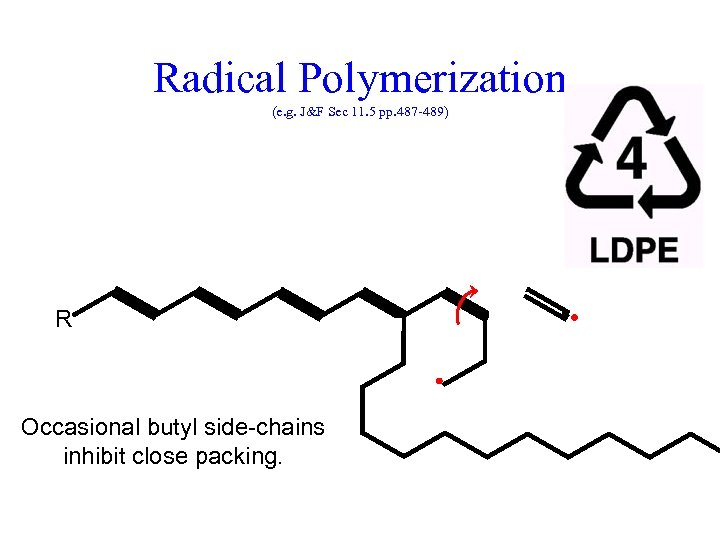
Radical Polymerization (e. g. J&F Sec 11. 5 pp. 487 -489) R H Occasional butyl side-chains inhibit close packing.
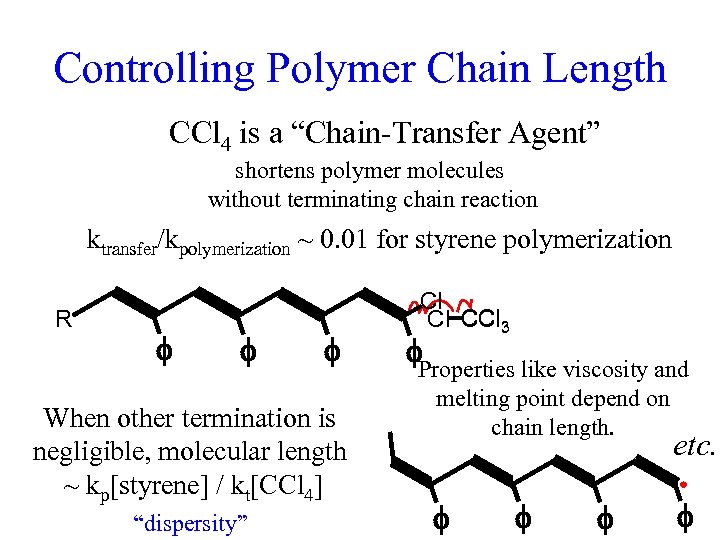
Controlling Polymer Chain Length CCl 4 is a “Chain-Transfer Agent” shortens polymer molecules without terminating chain reaction ktransfer/kpolymerization ~ 0. 01 for styrene polymerization R When other termination is negligible, molecular length ~ kp[styrene] / kt[CCl 4] “dispersity” Cl Cl CCl 3 Properties like viscosity and melting point depend on chain length. etc.
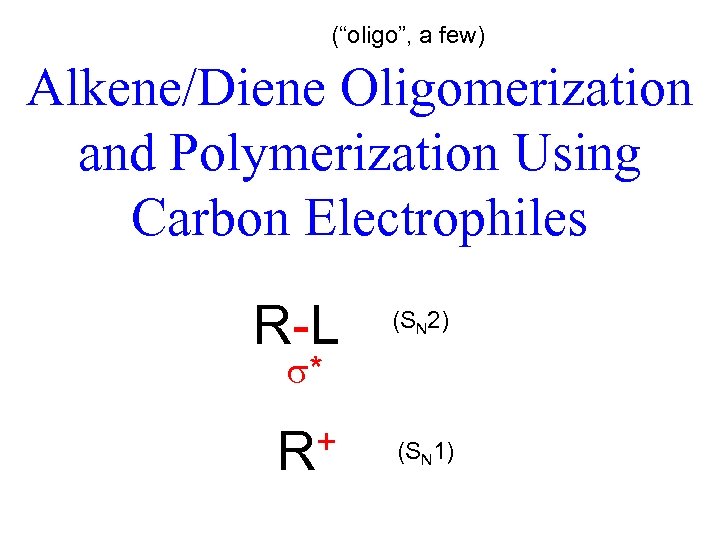
(“oligo”, a few) Alkene/Diene Oligomerization and Polymerization Using Carbon Electrophiles R-L (SN 2) + R (SN 1) *
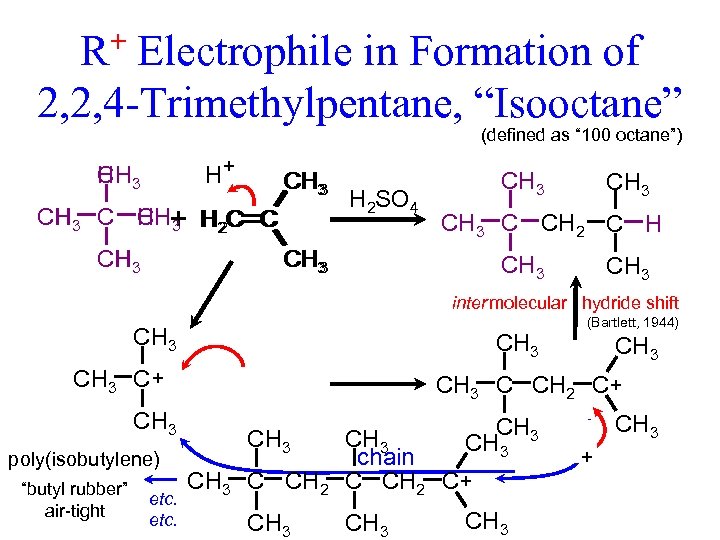
+ R Electrophile in Formation of 2, 2, 4 -Trimethylpentane, “Isooctane” (defined as “ 100 octane”) CH H 3 H+ CH 3 C CH+ H 2 C C H 3 H 2 C C CH 3 H 2 SO 4 CH 3 CH 3 C CH 2 C H CH 3 inter molecular hydride shift CH 3 C + CH 3 poly(isobutylene) “butyl rubber” etc. air-tight etc. (Bartlett, 1944) CH 3 C CH 2 C+ CH 3 C CH 2 CH 3 chain C CH 2 C+ CH 3 +
+ R-L and R * Electrophiles in Terpene/Steroid Biogenesis e. g. J&F Sec. 12. 13 pp. 554 -562
End of Lecture 52 February 16, 2011 Copyright © J. M. Mc. Bride 2011. Some rights reserved. Except for cited third-party materials, and those used by visiting speakers, all content is licensed under a Creative Commons License (Attribution-Non. Commercial-Share. Alike 3. 0). Use of this content constitutes your acceptance of the noted license and the terms and conditions of use. Materials from Wikimedia Commons are denoted by the symbol . Third party materials may be subject to additional intellectual property notices, information, or restrictions. The following attribution may be used when reusing material that is not identified as third-party content: J. M. Mc. Bride, Chem 125. License: Creative Commons BY-NC-SA 3. 0
Скачать презентацию Chemistry 125 Lecture 52 February 16 2011 Transition
bb73008f530cc01203ffdb5f0494bfa4.ppt