


 Скачать презентацию Chemistry 125 Lecture 23 Valence Theory and Constitutional
9f9560014ce2372387e1083b12886140.ppt
- Количество слайдов: 49
 Chemistry 125: Lecture 23 Valence Theory and Constitutional Structure (1858) Youthful chemists Couper and Kekulé replaced radical and type theories with a new approach involving atomic valence and molecular structure, and based on the tetravalence and self-linking of carbon. Valence structures offered the first explanation for isomerism, and led to the invention of nomenclature, notation, and molecular models closely related to those in use today. Synchronize when the speaker finishes saying “We started with Lavoisier. ” Synchrony can be adjusted by using the pause(||) and run(>) controls. For copyright notice see final page of this file
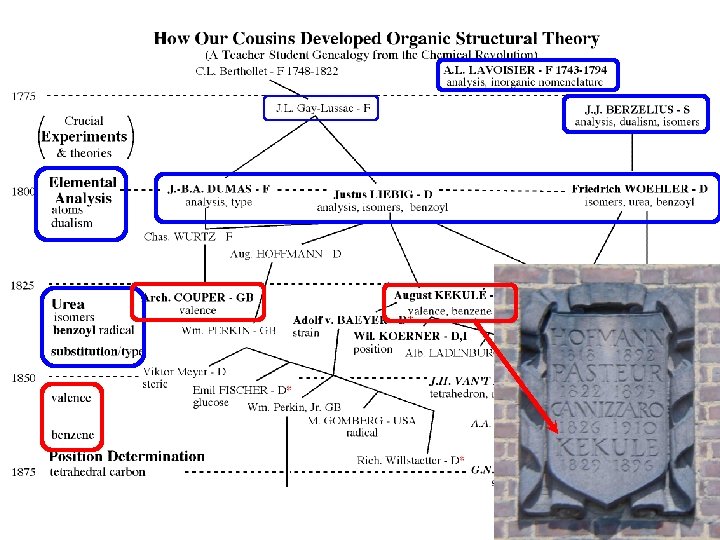 Genealogy Top
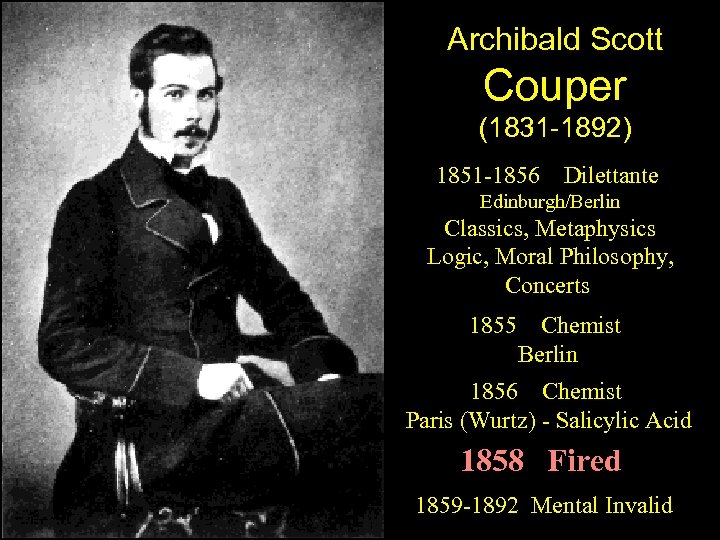 Archibald Scott Couper (1831 -1892) 1851 -1856 Dilettante Edinburgh/Berlin Classics, Metaphysics Logic, Moral Philosophy, Concerts 1855 Chemist Berlin 1856 Chemist Paris (Wurtz) - Salicylic Acid 1858 Fired 1859 -1892 Mental Invalid
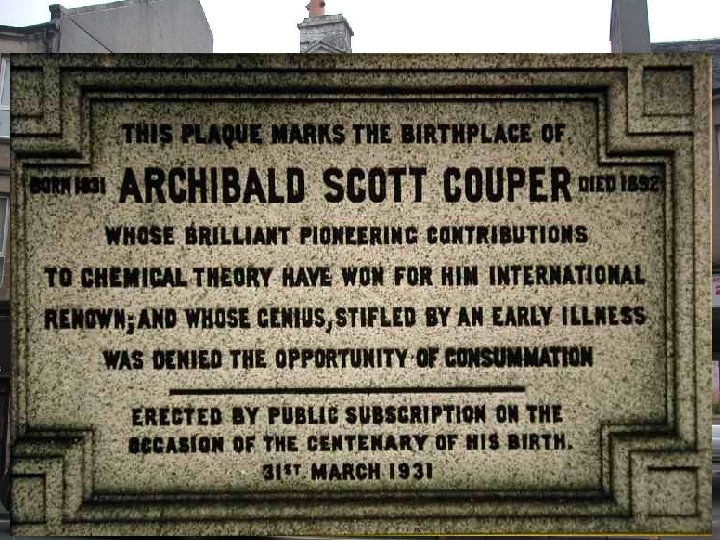 Kirkintilloch (near Glasgow)
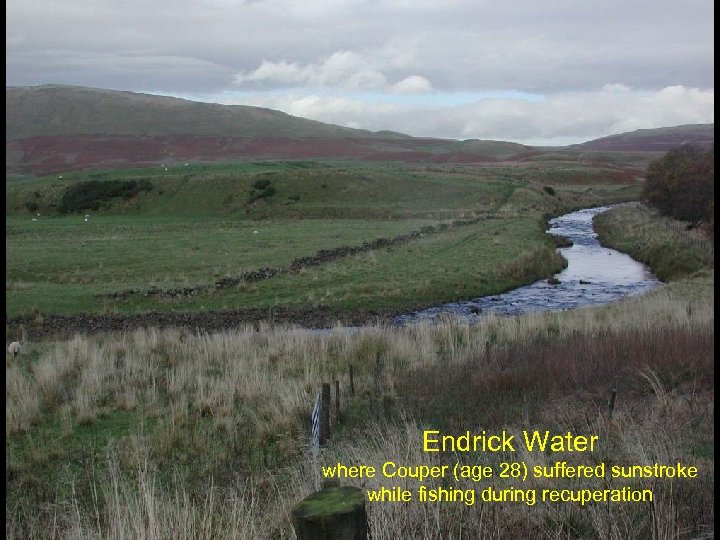 Endrick Water where Couper (age 28) suffered sunstroke while fishing during recuperation
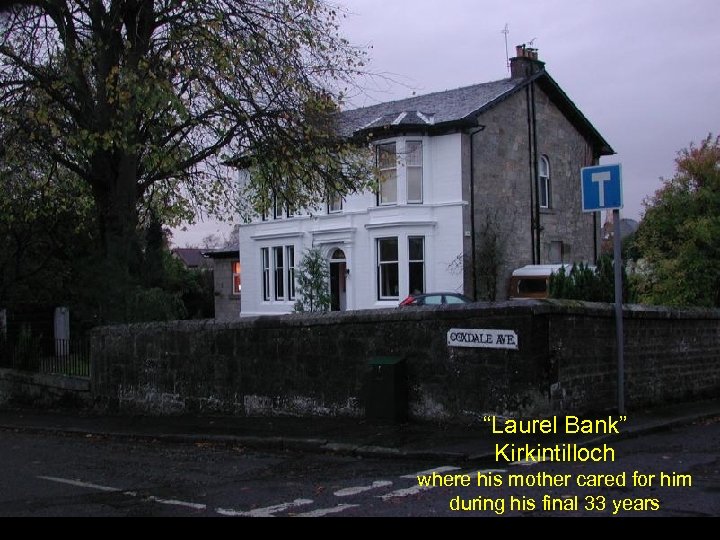 “Laurel Bank” Kirkintilloch where his mother cared for him during his final 33 years
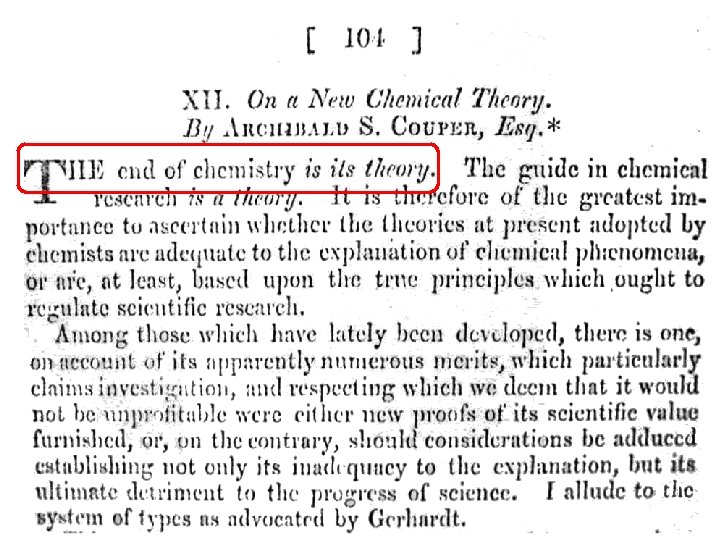 Theory and Types
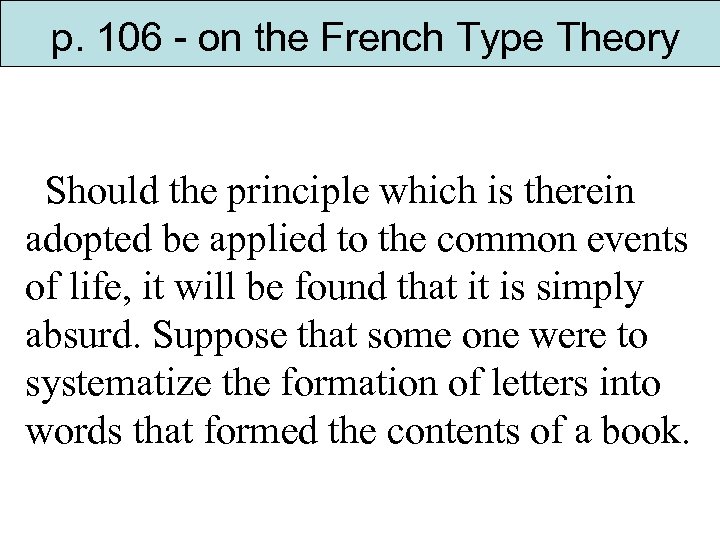 p. 106 - on the French Type Theory Should the principle which is therein adopted be applied to the common events of life, it will be found that it is simply absurd. Suppose that some one were to systematize the formation of letters into words that formed the contents of a book.
 p. 106 - on the French Type Theory Were he to begin by saying that he had discovered a certain word which would serve as a type, and from which by substitution and double decomposition all the others are to be derived, - that he by this means not only could form new words, but new books, and books almost an infinitum, - he would state certainly an empirical truth.
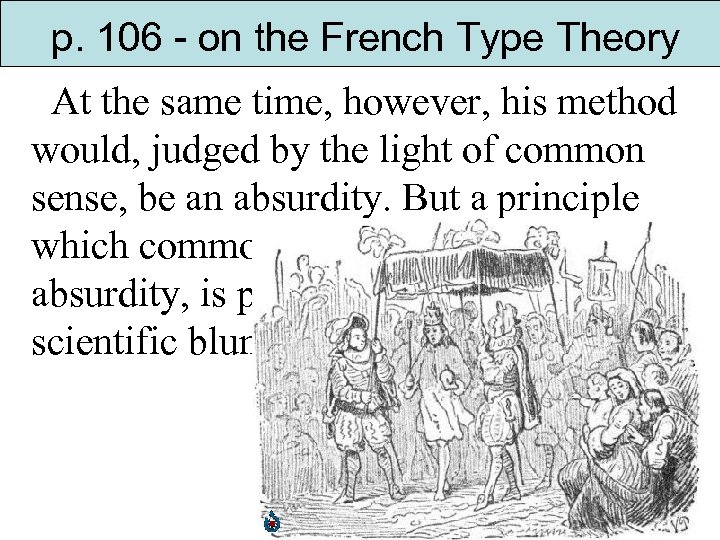 p. 106 - on the French Type Theory At the same time, however, his method would, judged by the light of common sense, be an absurdity. But a principle which common sense brands with absurdity, is philosophically false and a scientific blunder.
 p. 107 - on the German Radical Theory I can only remark that it is not merely an unprofitable figure of language, but is injurious to science, inasmuch as it tends to arrest scientific inquiry by adopting the notion that these quasi elements contain some unknown and ultimate power which it is impossible to explain.
 p. 107 - on the German Radical Theory It stifles inquiry at the very point where an explanation is demanded, by putting the seal of elements, of ultimate powers, on bodies which are known to be anything but this. Absolutely true but stated undiplomatically, especially for a newcomer.
 p. 108 - Look to the Elements Science demands the strict adherence to a principle in direct contradiction to this view. That first principle, without which research cannot advance a step, dare not be ignored; namely, that a whole is simply a derivative of its parts. [? ]
 p. 108 - Look to the Elements As a consequence of this, it follows that it is absolutely necessary to scientific unity and research to consider these bodies as entirely derivative, and as containing no secret ultimate power whatever, and that the properties which these so-called quasi elements possess are a direct consequence of the properties of the individual elements of which they are made up.
 p. 109 - Focus on Carbon In applying this method, I propose at present to consider the single element carbon. This body is found to have two highly distinguishing characteristics: 1. It combines with equal numbers of hydrogen, chlorine, oxygen, sulfur, &c. 2. It enters into chemical union with itself. These two properties, in my opinion, explain all that is characteristic of organic chemistry.
 1858 Tetravalence and Self-Linking of Carbon
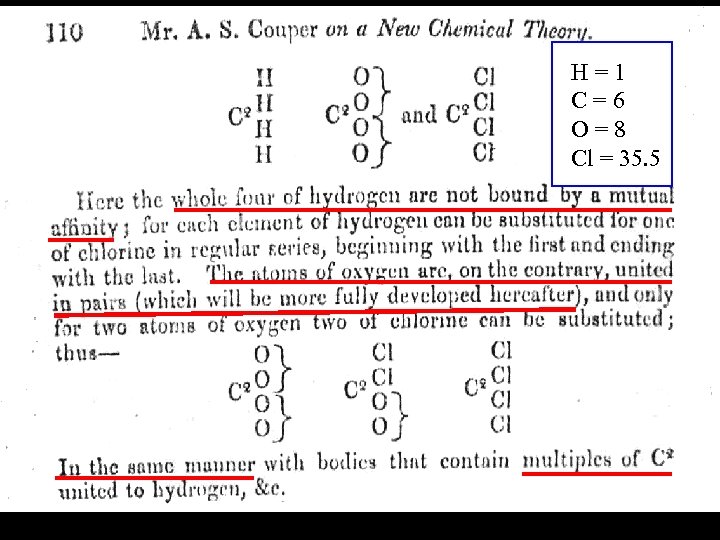 C 2 as nucleus H=1 C=6 O=8 Cl = 35. 5
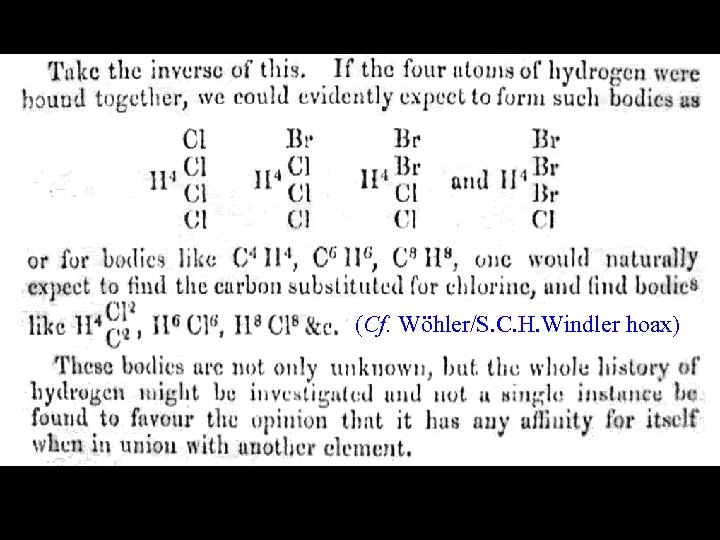 (Cf. Wöhler/S. C. H. Windler hoax)
 "Structural" Formulae
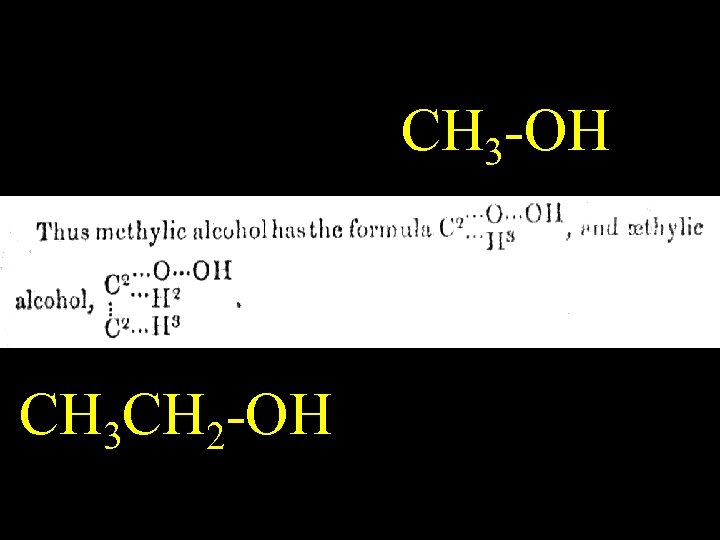 CH 3 -OH CH 3 CH 2 -OH
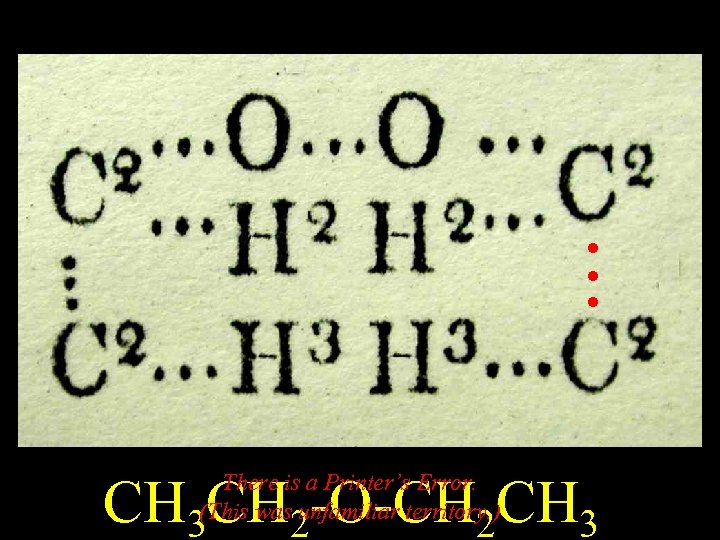 Ethyl Ether . . . There is a Printer’s Error. (This was unfamiliar territory. ) CH 3 CH 2 -O-CH 2 CH 3
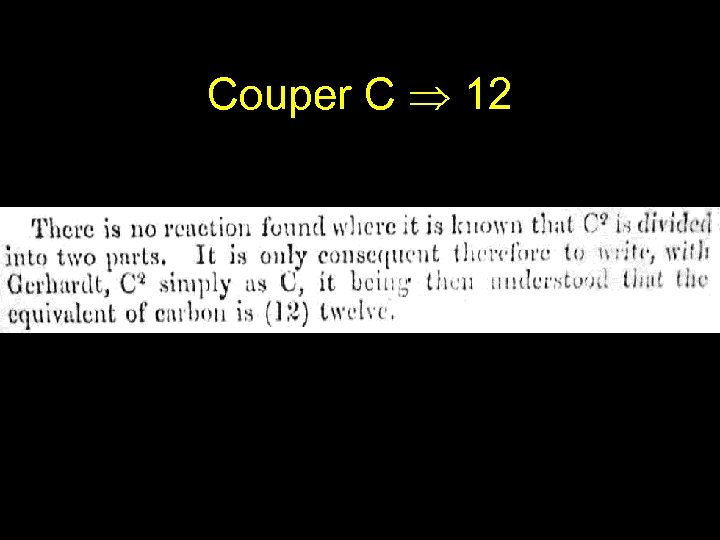 Couper C 12
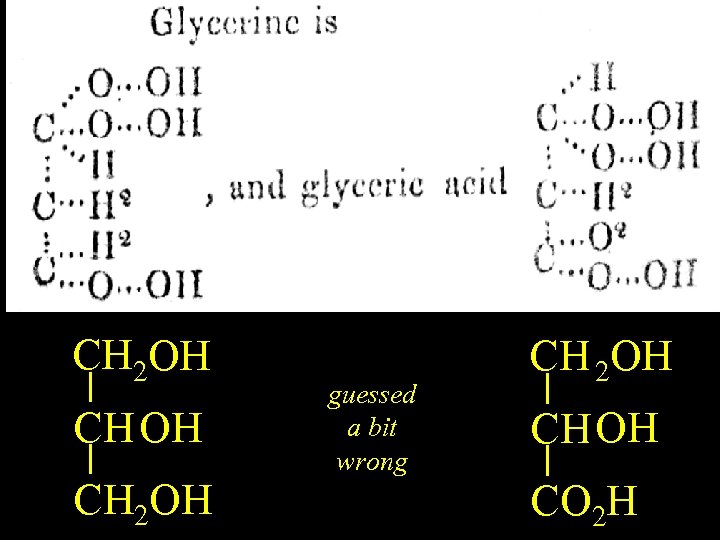 Glycerine CH(OH)2 2 OH CH 2 OH guessed a bit wrong CH(OH)2 2 OH OH CH 2 CO 2 H
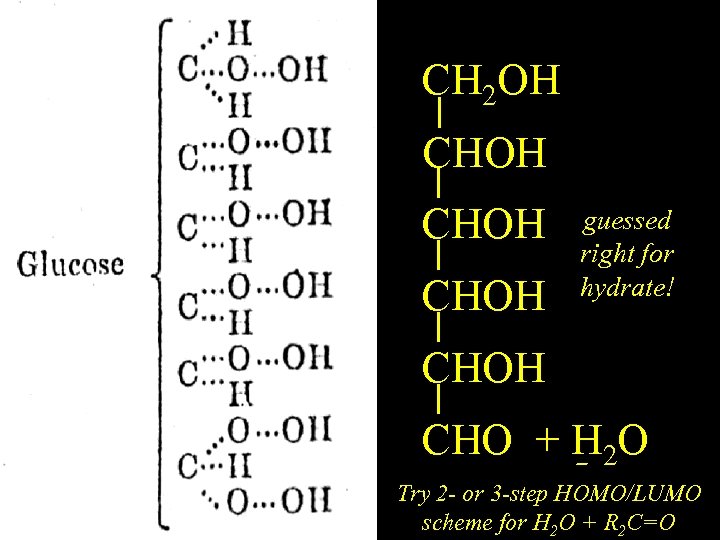 CH 2 OH English Glucose CHOH guessed right for hydrate! CHOH O +2 CH(OH)H 2 O Try 2 - or 3 -step HOMO/LUMO scheme for H 2 O + R 2 C=O
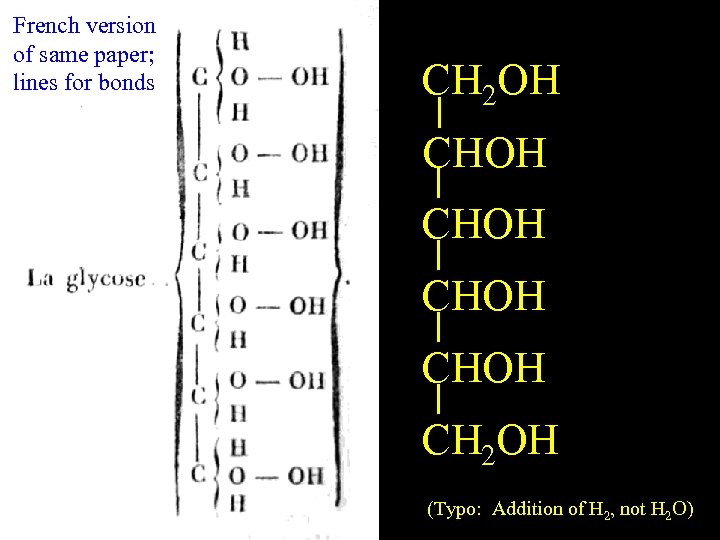 French version of same paper; lines for bonds CH 2 OH English Glucose CHOH CH 2 OH (Typo: Addition of H 2, not H 2 O)
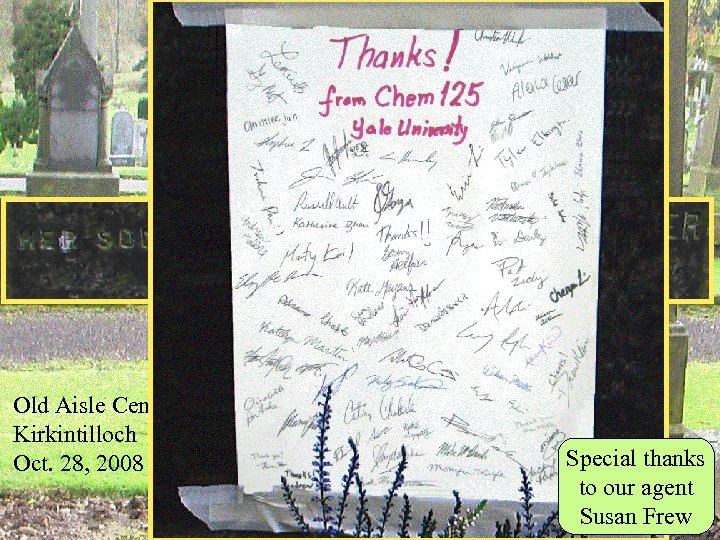 Old Aisle Cemetery Kirkintilloch Oct. 28, 2008 Special thanks to our agent Susan Frew
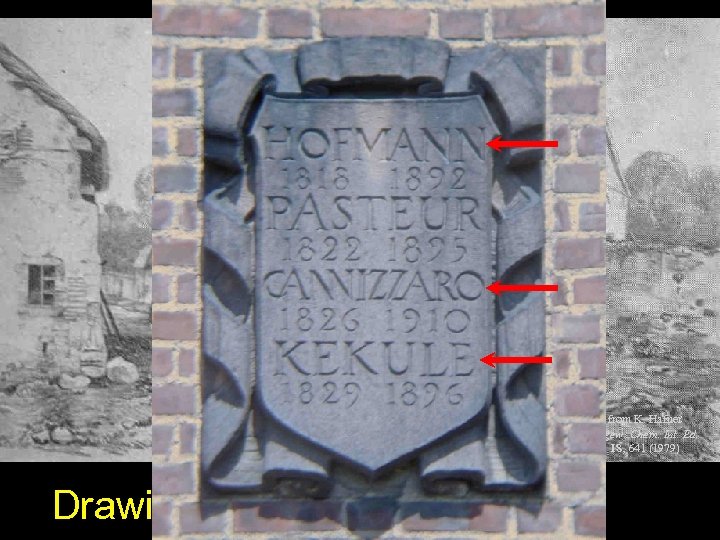 from K. Hafner Angew. Chem. Int. Ed. 18, 641 (1979) Drawing by Kekulé age 13
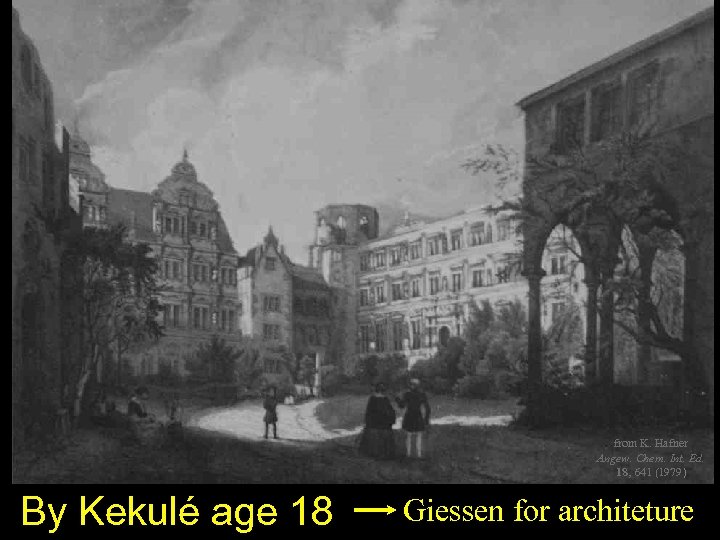 from K. Hafner Angew. Chem. Int. Ed. 18, 641 (1979) By Kekulé age 18 Giessen for architeture
 Liebig's advice to Paris-bound graduate August Kekulé (1851) There you will broaden your horizons, there you will learn a new language, there you will learn to know the life of a great city, but there you will not learn chemistry!
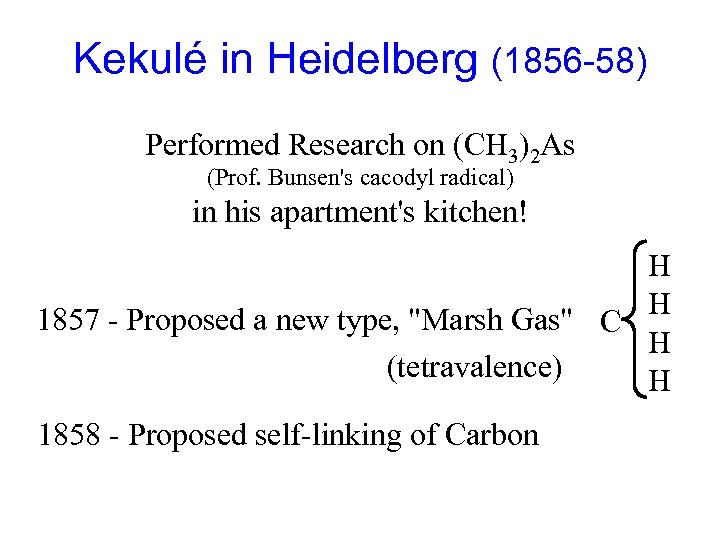 Kekulé in Heidelberg (1856 -58) Performed Research on (CH 3)2 As (Prof. Bunsen's cacodyl radical) in his apartment's kitchen! H H 1857 - Proposed a new type, "Marsh Gas" C H (tetravalence) H 1858 - Proposed self-linking of Carbon
 Kekulé Claims Priority (1858) Observations on Mr. Couper's New Chemical Theory "In fact, in two memoirs which have appeared in Liebig's Annalen. . . I have put forward different views, which, in my opinion, should furnish a clearer insight into the constitution of chemical compounds. I may be allowed to indicate that [my first paper] lays down the principle…which I have called the basicity of atoms [we would say 'valence']. If Mr. Couper thinks he has discovered the cause of this difference of basicity in the existence of a special kind of affinity, I am the first to admit that I have no right to contest his priority in this. "
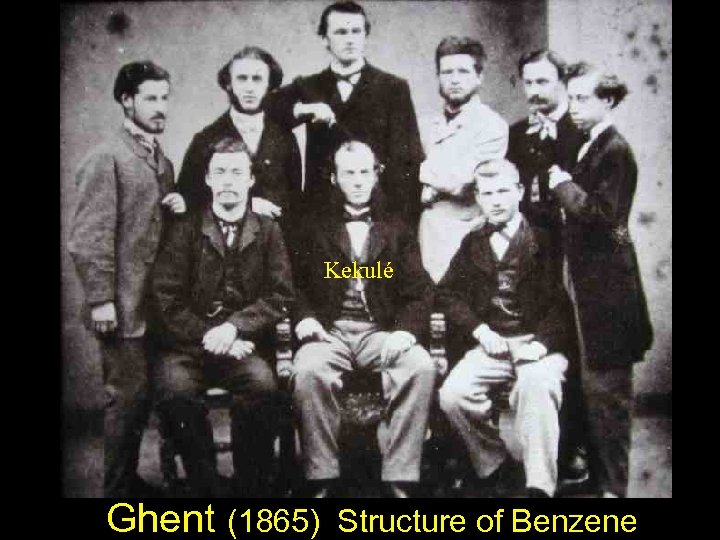 Kekulé Ghent (1865) Structure of Benzene
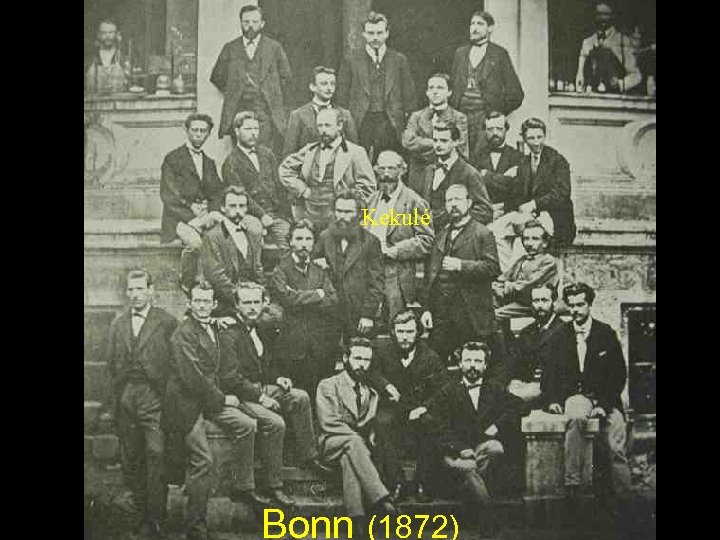 Kekulé Bonn (1872)
 Facts, Ideas, and Words Nomenclature Notation Models
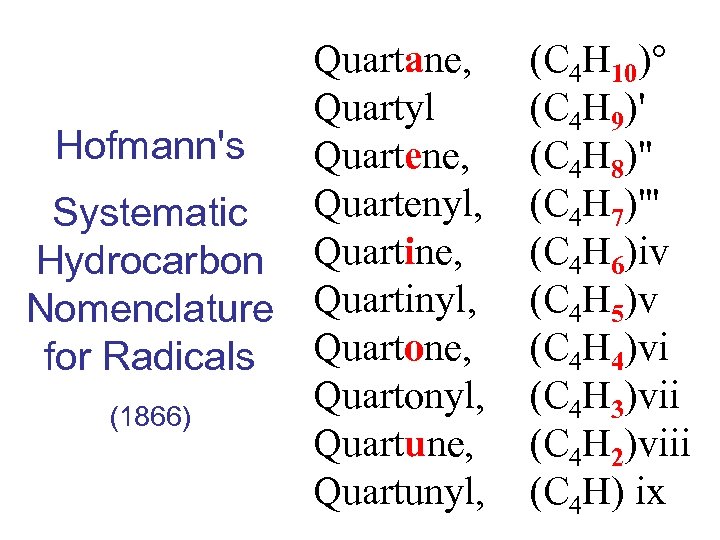 Quartane, Quartyl Hofmann's Quartene, Quartenyl, Systematic Hydrocarbon Quartine, Nomenclature Quartinyl, for Radicals Quartone, Quartonyl, (1866) Quartune, Quartunyl, (C 4 H 10)° (C 4 H 9)' (C 4 H 8)'' (C 4 H 7)''' (C 4 H 6)iv (C 4 H 5)v (C 4 H 4)vi (C 4 H 3)vii (C 4 H 2)viii (C 4 H) ix
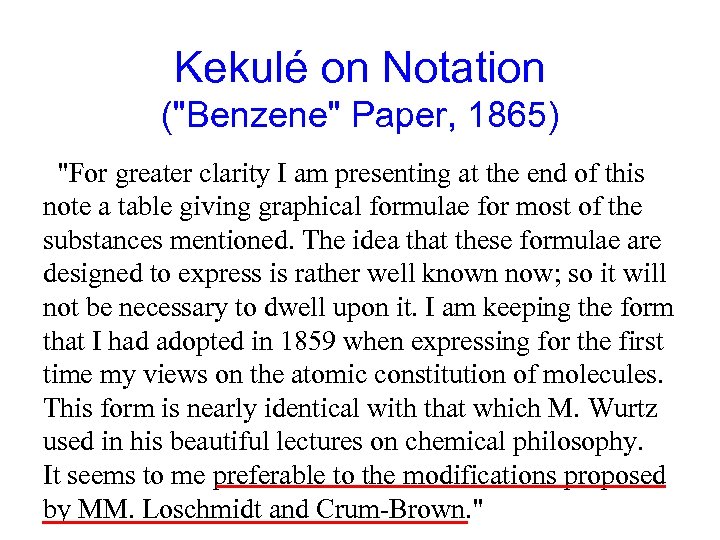 Kekulé on Notation ("Benzene" Paper, 1865) "For greater clarity I am presenting at the end of this note a table giving graphical formulae for most of the substances mentioned. The idea that these formulae are designed to express is rather well known now; so it will not be necessary to dwell upon it. I am keeping the form that I had adopted in 1859 when expressing for the first time my views on the atomic constitution of molecules. This form is nearly identical with that which M. Wurtz used in his beautiful lectures on chemical philosophy. It seems to me preferable to the modifications proposed by MM. Loschmidt and Crum-Brown. "
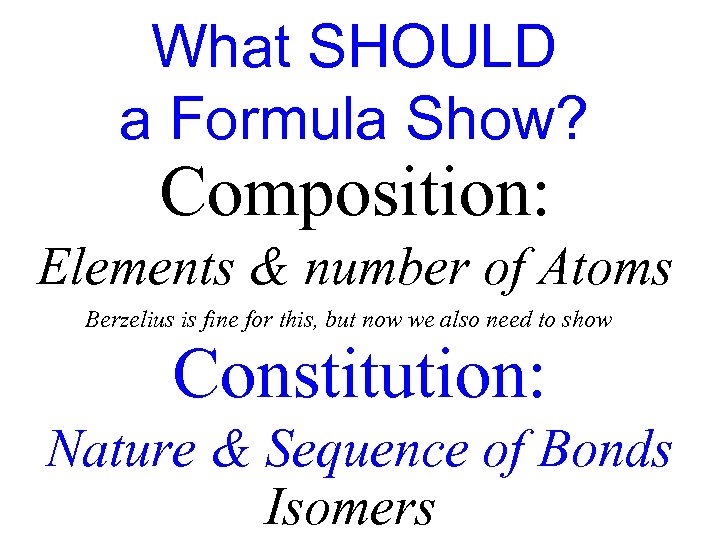 What SHOULD a Formula Show? Composition: Elements & number of Atoms Berzelius is fine for this, but now we also need to show Constitution: Nature & Sequence of Bonds Isomers
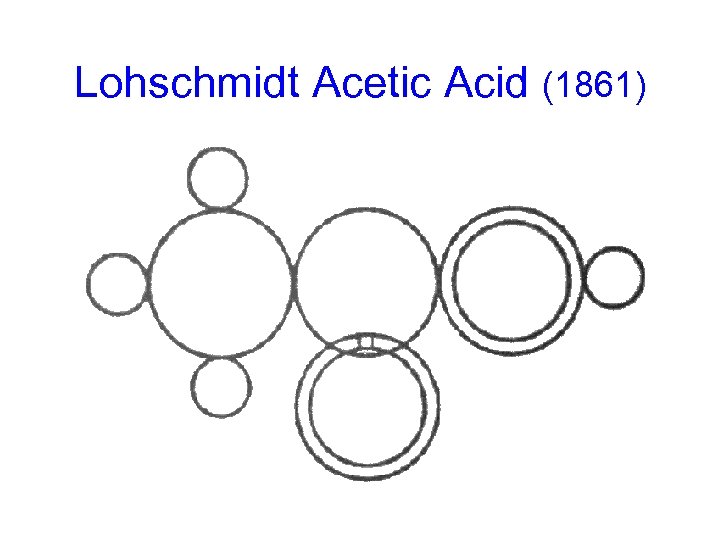 Lohschmidt Acetic Acid (1861)
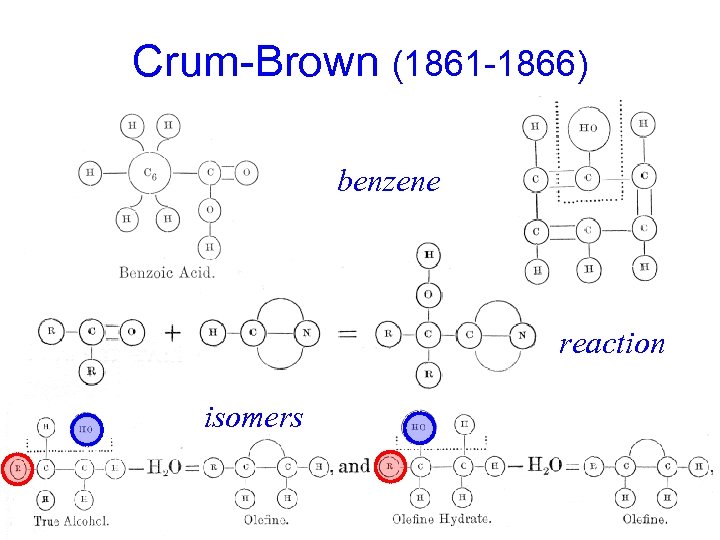 Crum-Brown (1861 -1866) benzene reaction isomers
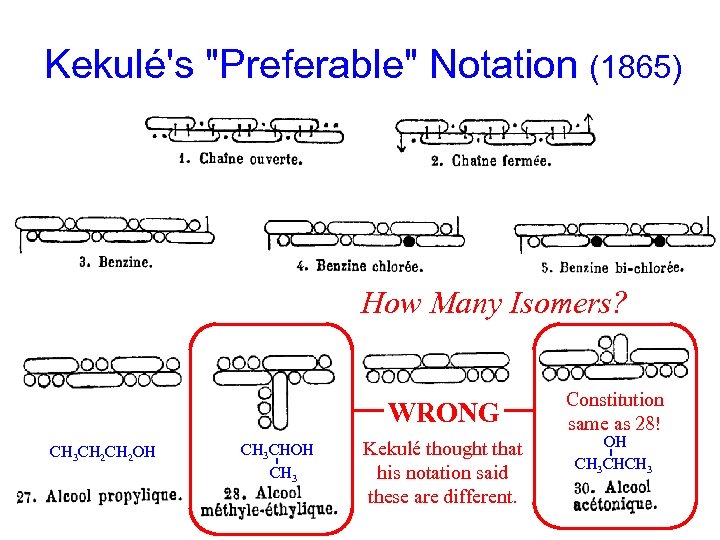 Kekulé's "Preferable" Notation (1865) How Many Isomers? What do you think Kekulé thought? O Kekulé thought that CH 3 CCH his notation 3 said these are different. = CH 3 CHOH CH 3 - CH 3 CH 2 OH OH CH 3 CHCH 3 - WRONG Constitution same as 28!
 Molecular Models
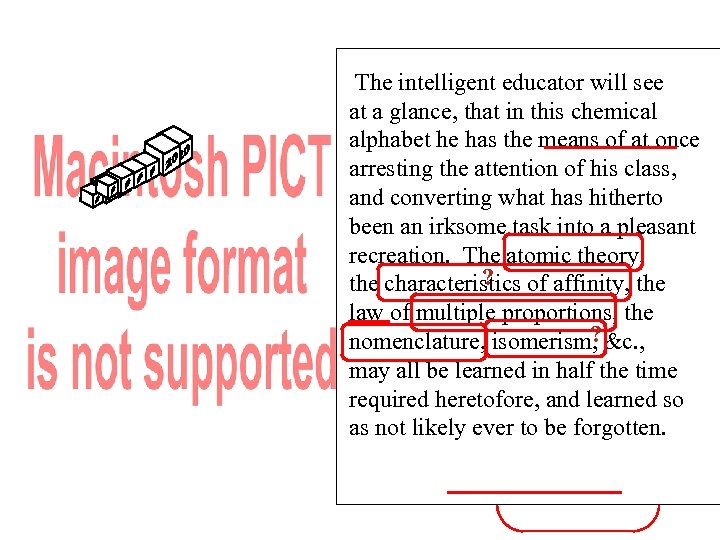 Another class educator will see to Now, if apupil may then be asked at The intelligent thus instructed be giveglance, that in this chemical thearecitation bench, and one of them is at the proximate analysis for carbonate to form carbonicof at he requestedhe has theand the cubesonce alphabet of lime, means acid, before him will indicate the answer will walk the attention oftableclass, arresting quickly to the his in front, and fix it box what has hitherto where thein hisis open, and place on converting memory: “It is composed of onetask intomarked 6, one of the shelvesequivalentpleasant been an irksome a cube a of carbonic acid, (22)–and theory, and two marked atomic one of lime, recreation. The 8 carbon, one, (28). ” Another requested to form oxygen, two. ? may be requested to If the characteristics of affinity, the giveof multiple proportions, thea the lime, the will place on the shelf bycube law he ultimate analysis, and ? same means heisomerism, another marked 20, (calcium, ) and &c. , the nomenclature, is furnished with answer: be learned in half composed marked 8, (oxygen, ) these the time may all “Carbonic acid is being the of one atom lime. These cubes being elements heretofore, and learned so required of of carbon and two of oxygen, and ever to and the pupil all not likely contact, be forgotten. of as placed in the lime is composed one atom of “What and we of being asked, calciumhave one now? ” oxygen. ” answers, “Carbonate of lime. ” Gaines Models
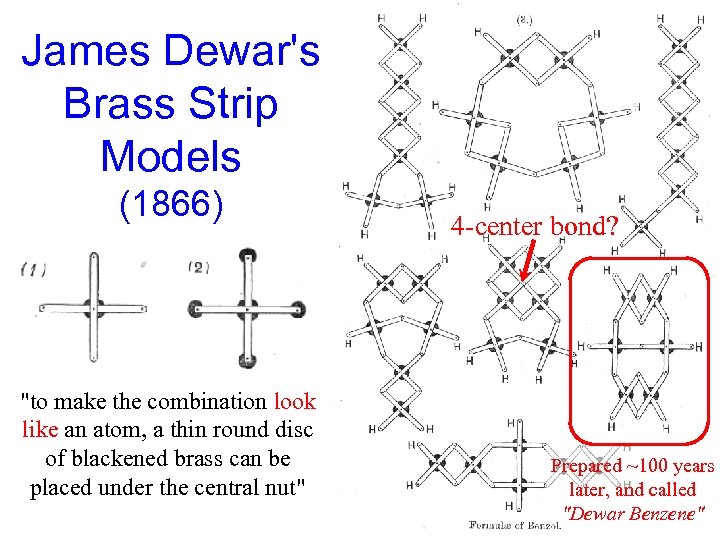 James Dewar's Brass Strip Models (1866) "to make the combination look like an atom, a thin round disc of blackened brass can be placed under the central nut" 4 -center bond? Prepared ~100 years later, and called "Dewar Benzene"
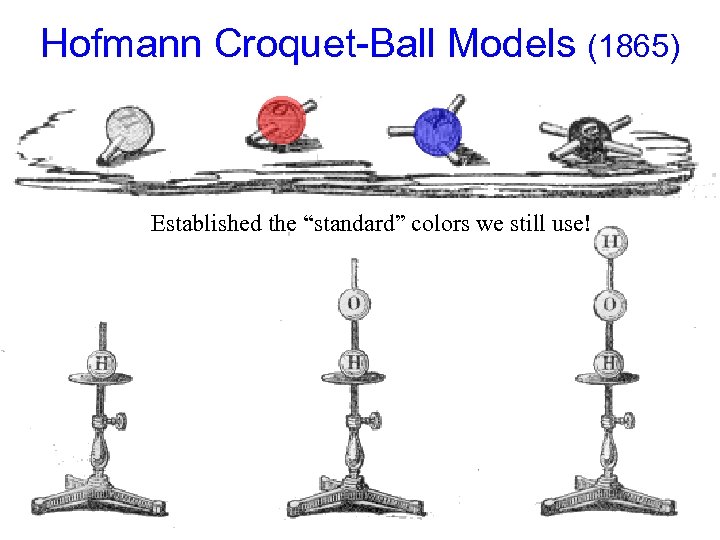 Hofmann Croquet-Ball Models (1865) Established the “standard” colors we still use! “CPK” Model of Alanine an amino acid
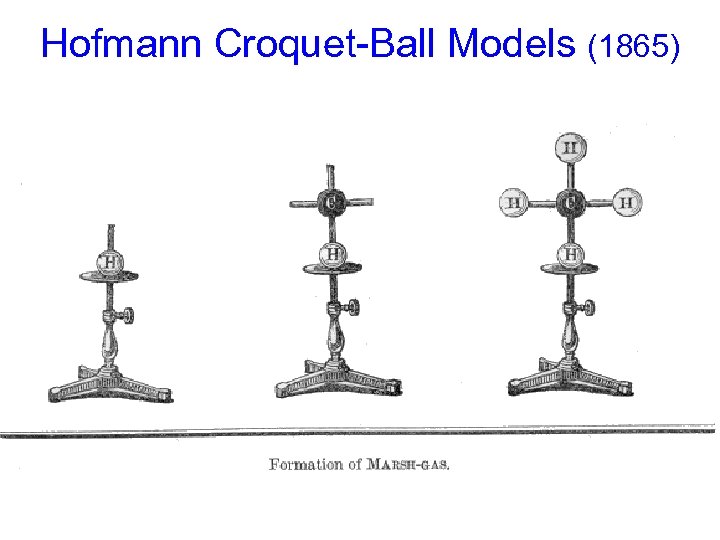 Hofmann Croquet-Ball Models (1865)
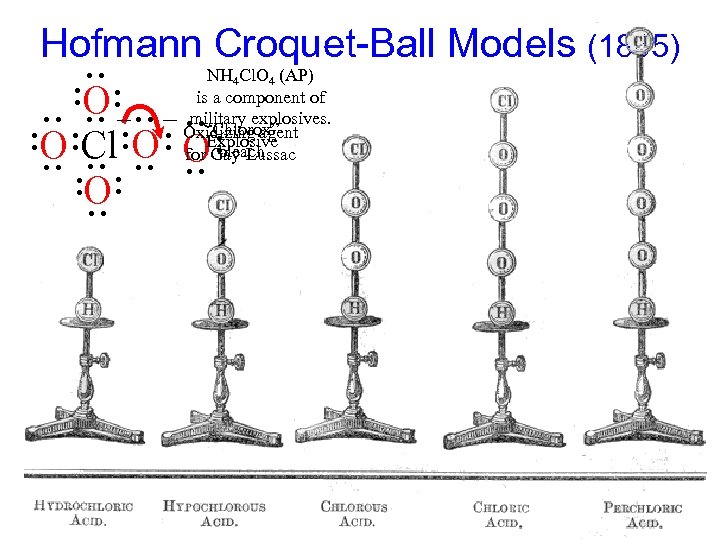 • • 4 • • • • Hofmann Croquet-Ball Models (1865) NH Cl. O (AP) • • is a component of O _ • • _ • military explosives. • • • “Chlorox” Oxidizing agent bleach O Cl O OExplosive for Gay-Lussac • • O • • 4
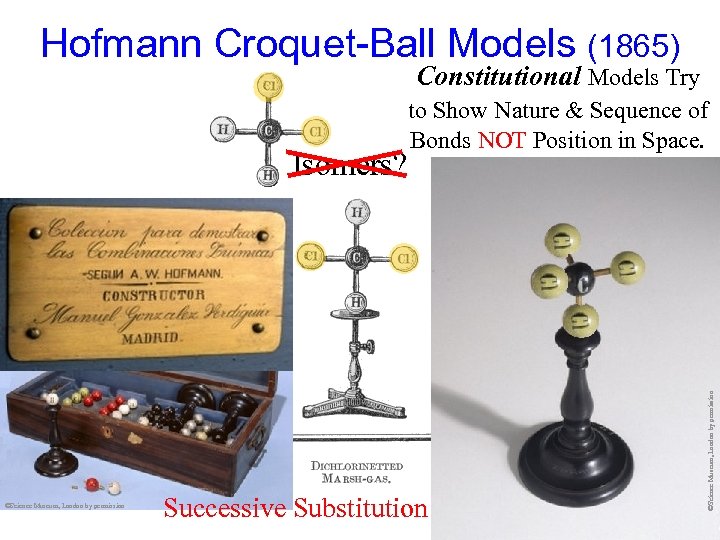 Hofmann Croquet-Ball Models (1865) Constitutional Models Try Science Museum, London by permission Successive Substitution Products Science Museum, London by permission Isomers? to Show Nature & Sequence of Bonds NOT Position in Space.
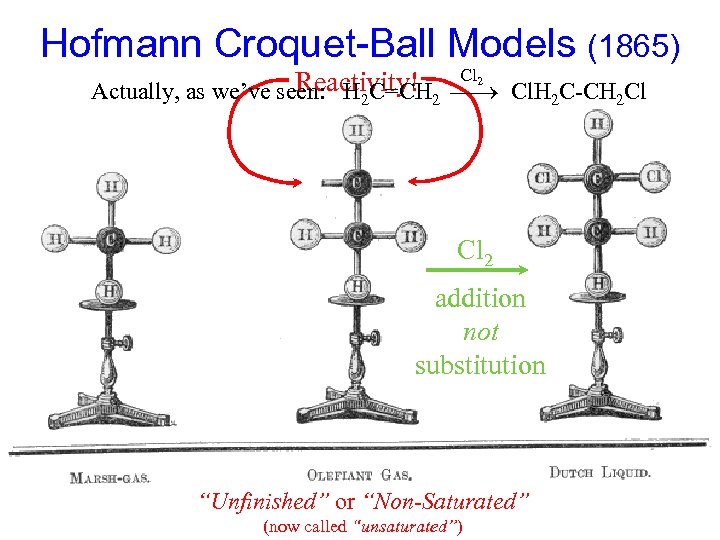 Hofmann Croquet-Ball Models (1865) Cl 2 Reactivity! Cl. H C-CH Cl Actually, as we’ve seen: H 2 C=CH 2 2 2 Cl 2 addition not substitution “Unfinished” or “Non-Saturated” (now called “unsaturated”)
 End of Lecture 23 Oct. 29, 2008 Copyright © J. M. Mc. Bride 2009. Some rights reserved. Except for cited third-party materials, and those used by visiting speakers, all content is licensed under a Creative Commons License (Attribution-Non. Commercial-Share. Alike 3. 0). Use of this content constitutes your acceptance of the noted license and the terms and conditions of use. Materials from Wikimedia Commons are denoted by the symbol . Third party materials may be subject to additional intellectual property notices, information, or restrictions. The following attribution may be used when reusing material that is not identified as third-party content: J. M. Mc. Bride, Chem 125. License: Creative Commons BY-NC-SA 3. 0