


 Скачать презентацию Chemical Reaction Engineering Asynchronous Video Series Chapter 4
303ac074c9c9acf5b76b343ed1c0e3d0.ppt
- Количество слайдов: 29
 Chemical Reaction Engineering Asynchronous Video Series Chapter 4, Part 3: Pressure Drop in a Packed Bed Reactor H. Scott Fogler, Ph. D.
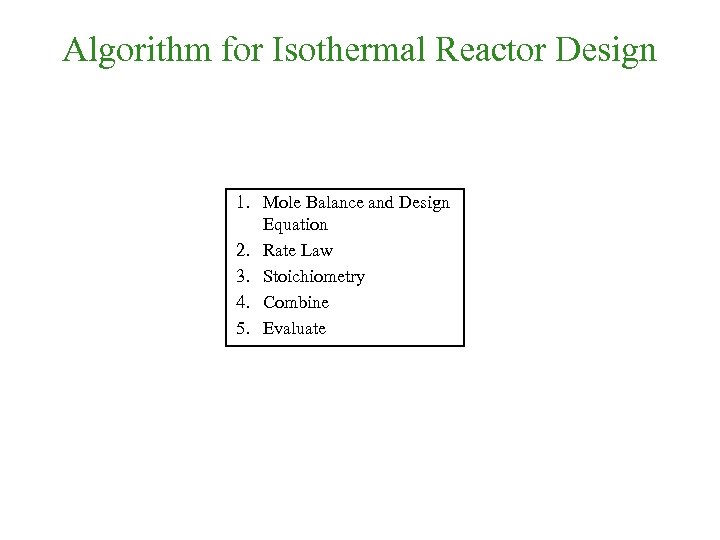 Algorithm for Isothermal Reactor Design 1. Mole Balance and Design Equation 2. Rate Law 3. Stoichiometry 4. Combine 5. Evaluate
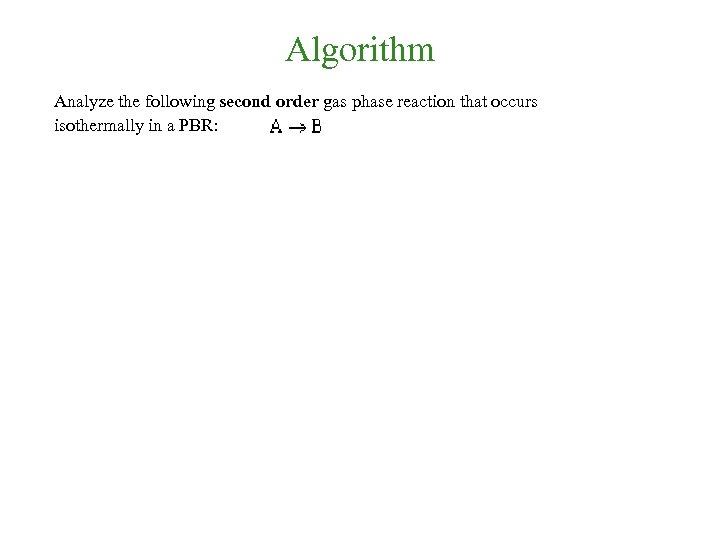 Algorithm Analyze the following second order gas phase reaction that occurs isothermally in a PBR:
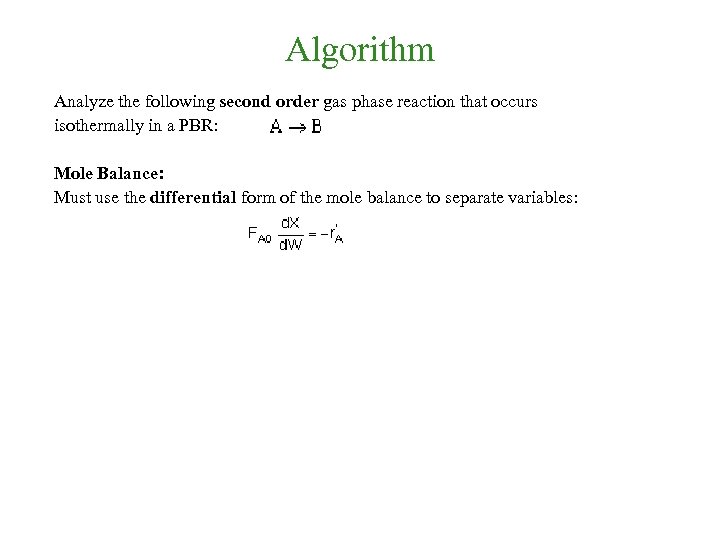 Algorithm Analyze the following second order gas phase reaction that occurs isothermally in a PBR: Mole Balance: Must use the differential form of the mole balance to separate variables:
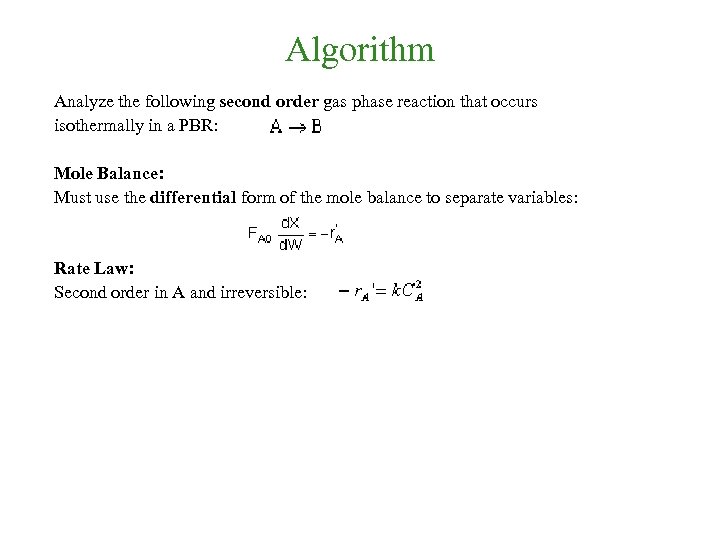 Algorithm Analyze the following second order gas phase reaction that occurs isothermally in a PBR: Mole Balance: Must use the differential form of the mole balance to separate variables: Rate Law: Second order in A and irreversible:
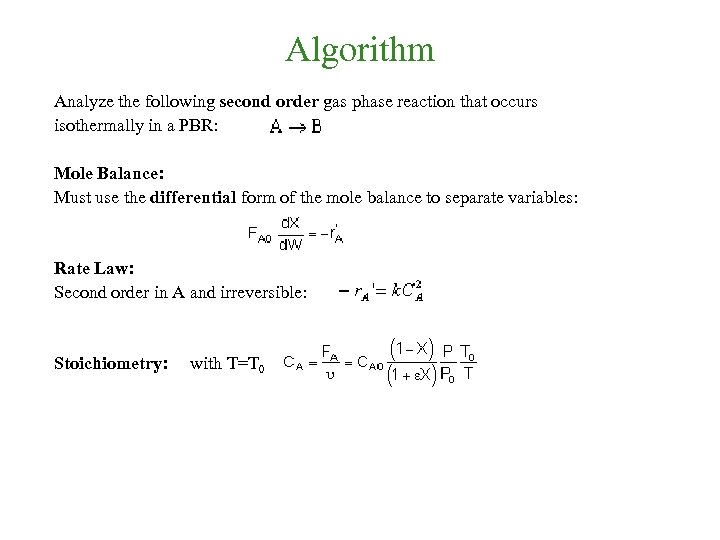 Algorithm Analyze the following second order gas phase reaction that occurs isothermally in a PBR: Mole Balance: Must use the differential form of the mole balance to separate variables: Rate Law: Second order in A and irreversible: Stoichiometry: with T=T 0
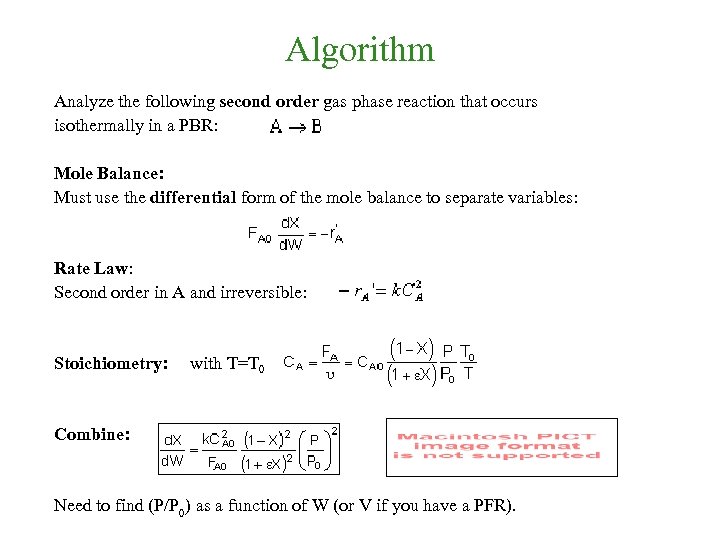 Algorithm Analyze the following second order gas phase reaction that occurs isothermally in a PBR: Mole Balance: Must use the differential form of the mole balance to separate variables: Rate Law: Second order in A and irreversible: Stoichiometry: with T=T 0 Combine: Need to find (P/P 0) as a function of W (or V if you have a PFR).
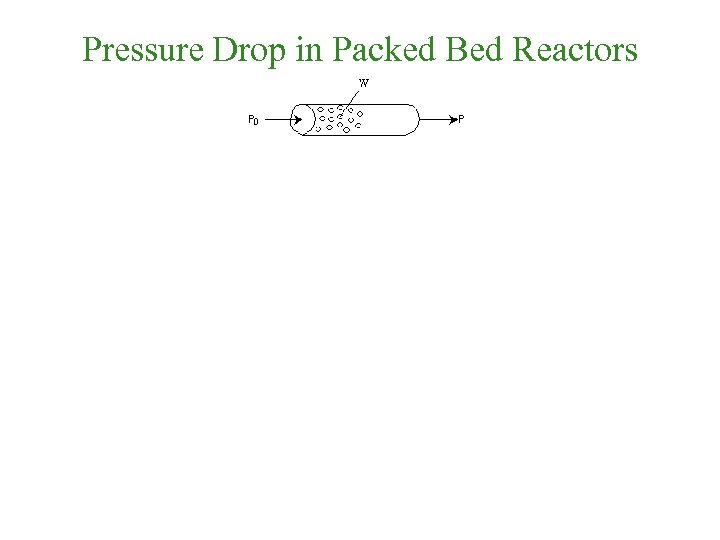 Pressure Drop in Packed Bed Reactors
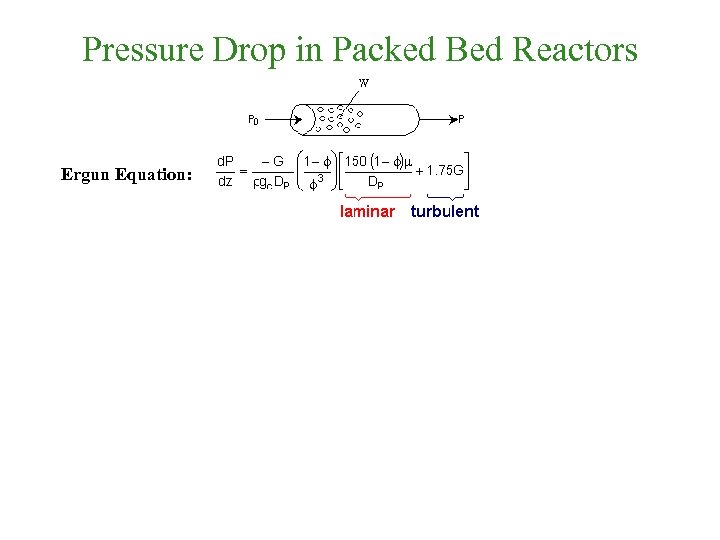 Pressure Drop in Packed Bed Reactors Ergun Equation:
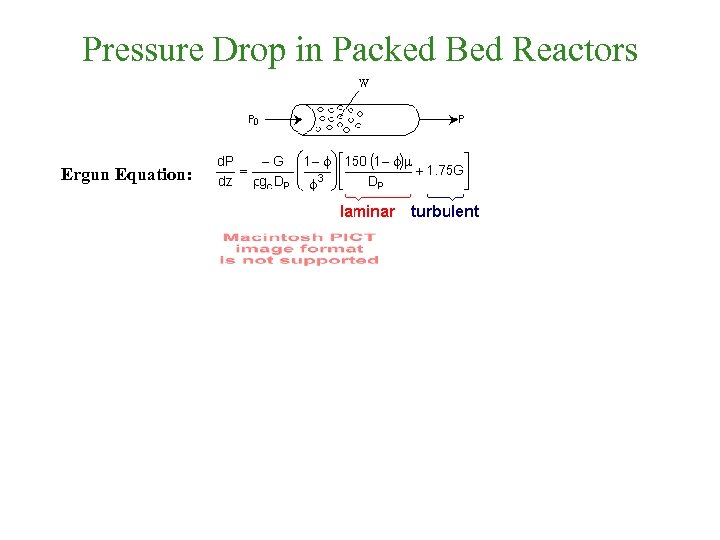 Pressure Drop in Packed Bed Reactors Ergun Equation:
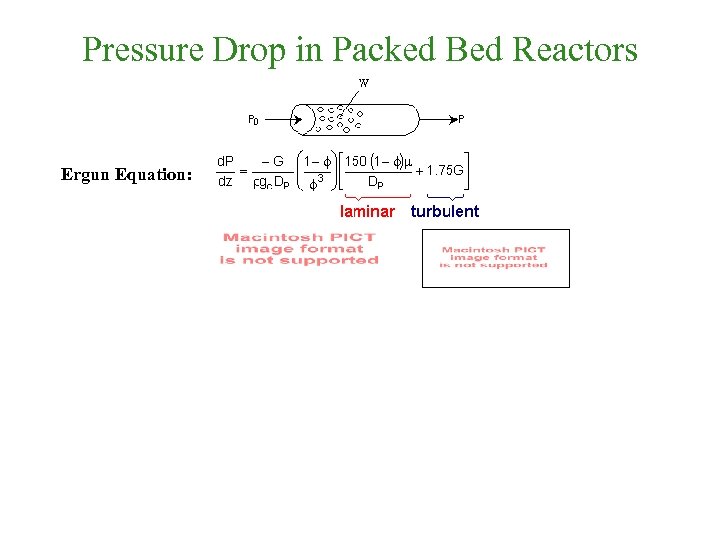 Pressure Drop in Packed Bed Reactors Ergun Equation:
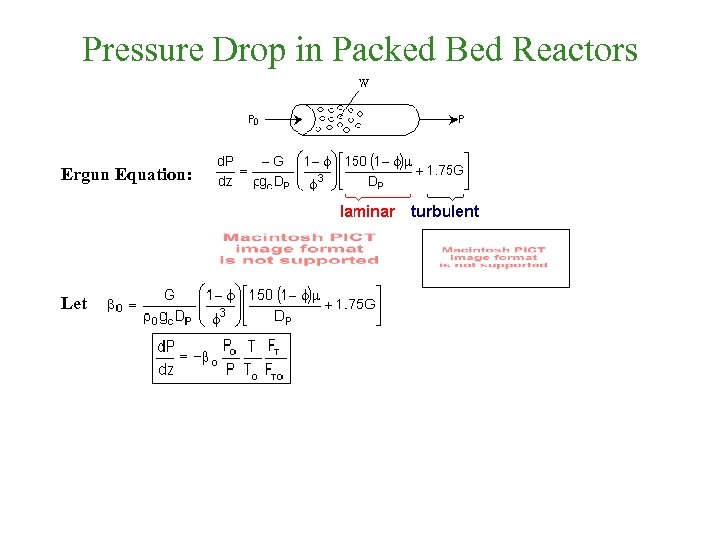 Pressure Drop in Packed Bed Reactors Ergun Equation: Let
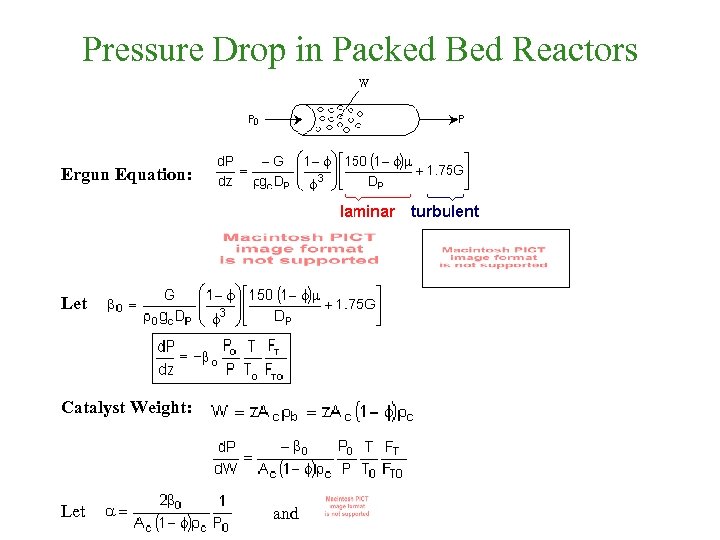 Pressure Drop in Packed Bed Reactors Ergun Equation: Let Catalyst Weight: Let and
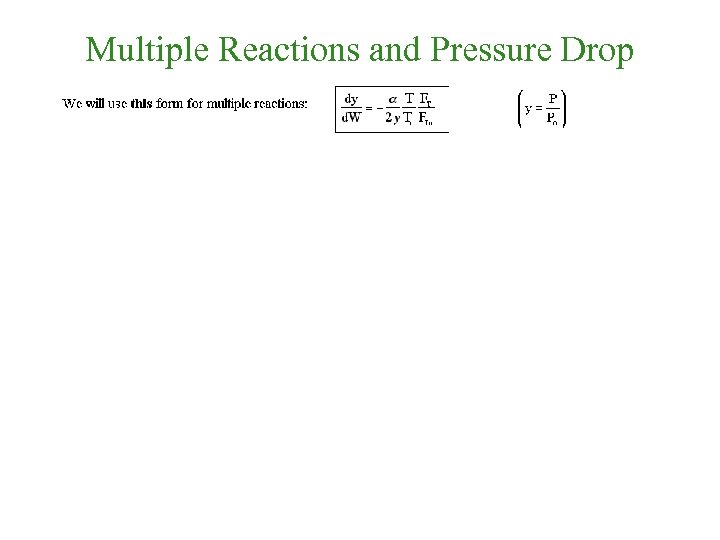 Multiple Reactions and Pressure Drop
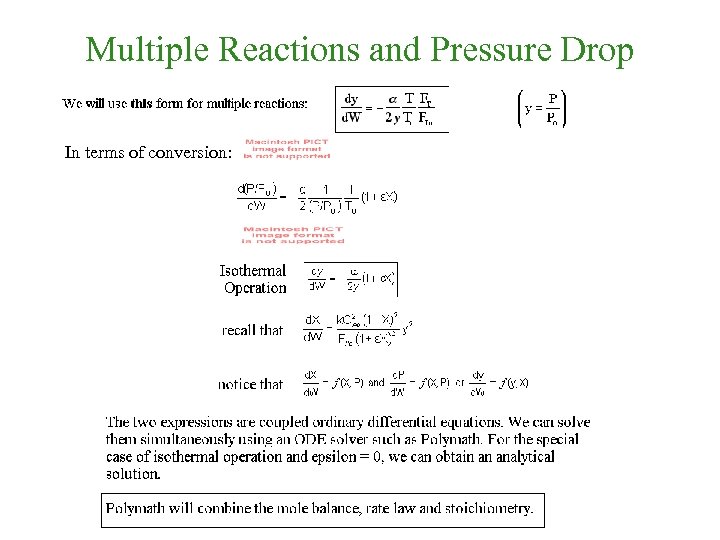
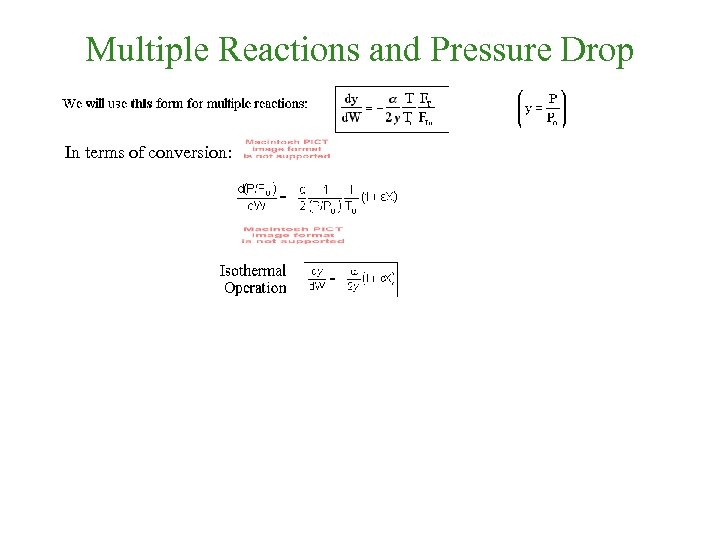 Multiple Reactions and Pressure Drop In terms of conversion:
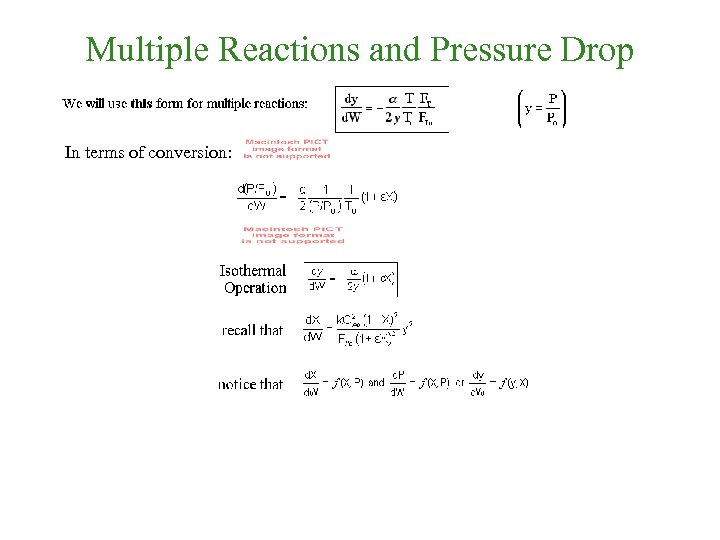 Multiple Reactions and Pressure Drop In terms of conversion:
 Multiple Reactions and Pressure Drop In terms of conversion:
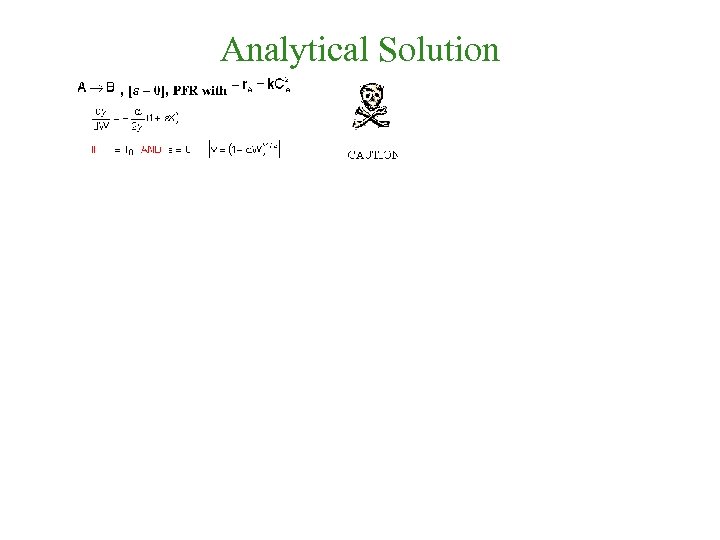 Analytical Solution
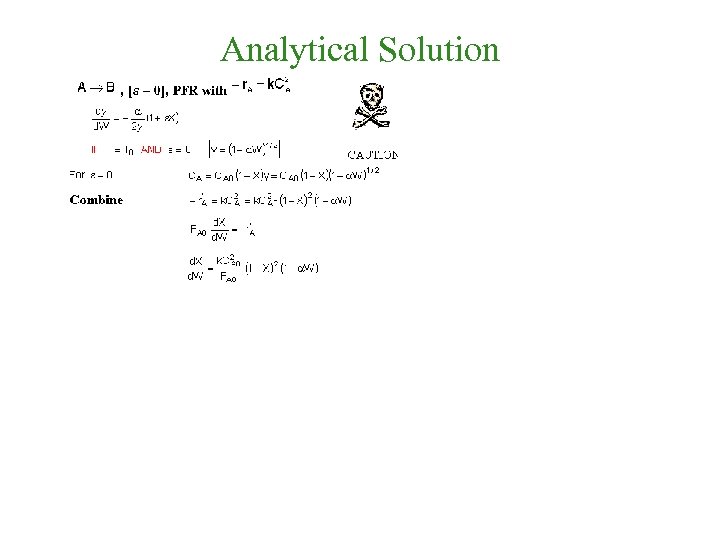 Analytical Solution
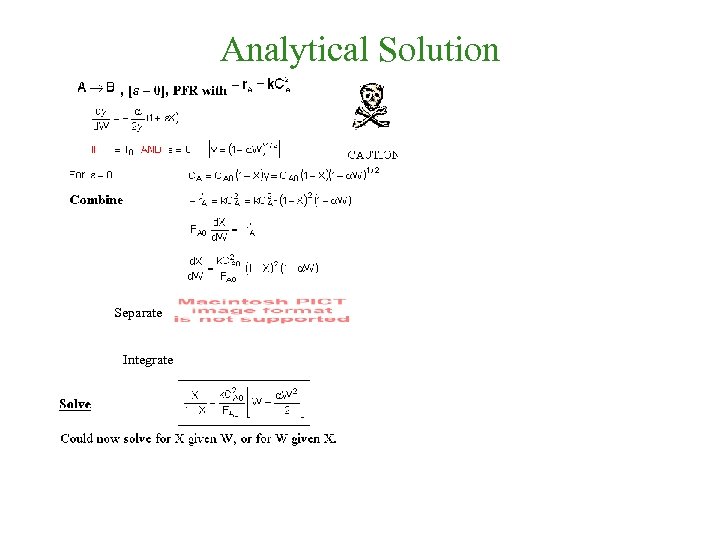 Analytical Solution Separate Integrate
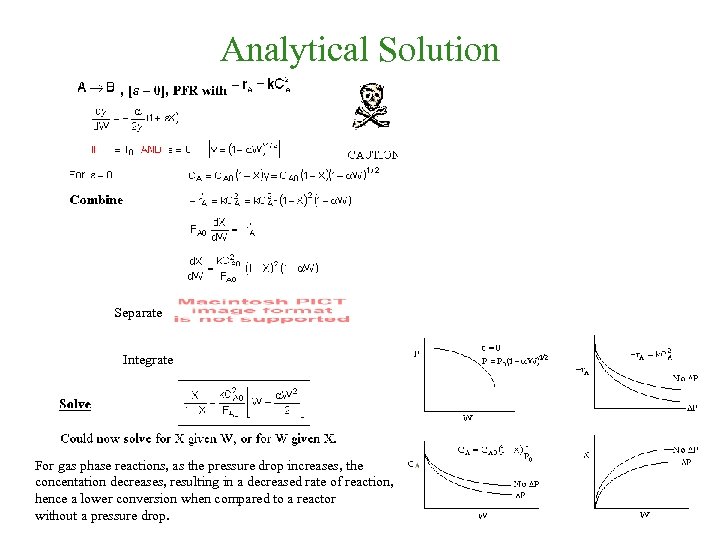 Analytical Solution Separate Integrate For gas phase reactions, as the pressure drop increases, the concentation decreases, resulting in a decreased rate of reaction, hence a lower conversion when compared to a reactor without a pressure drop.
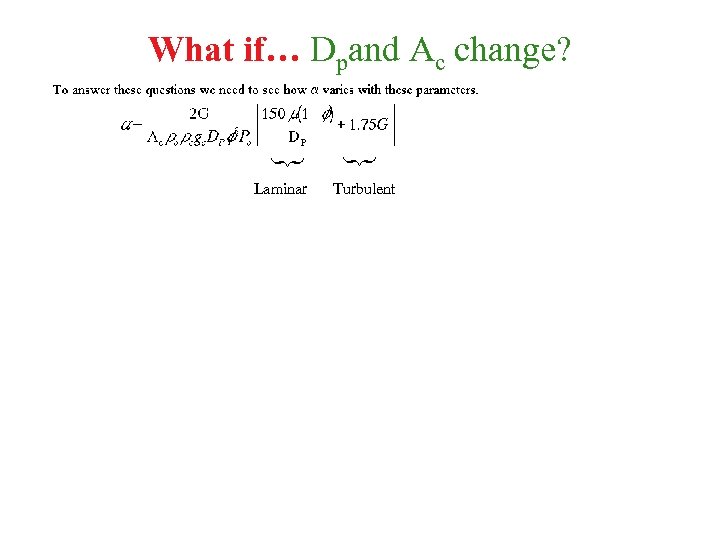 What if… Dpand Ac change? } } Laminar Turbulent
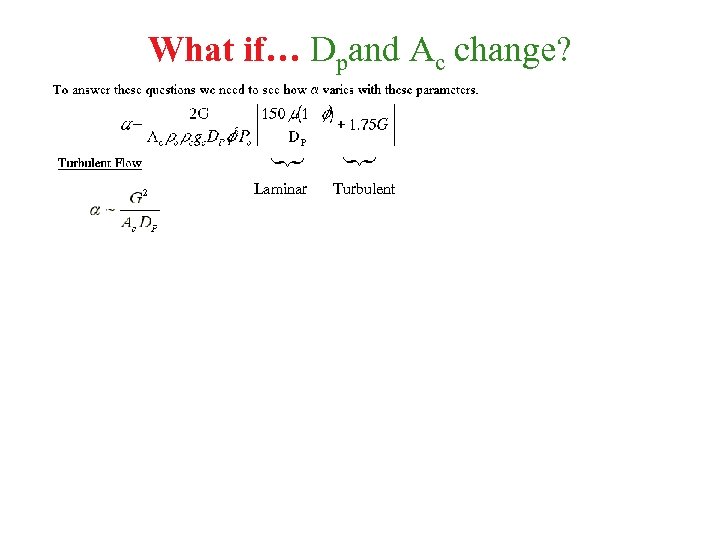 What if… Dpand Ac change? } } Laminar Turbulent
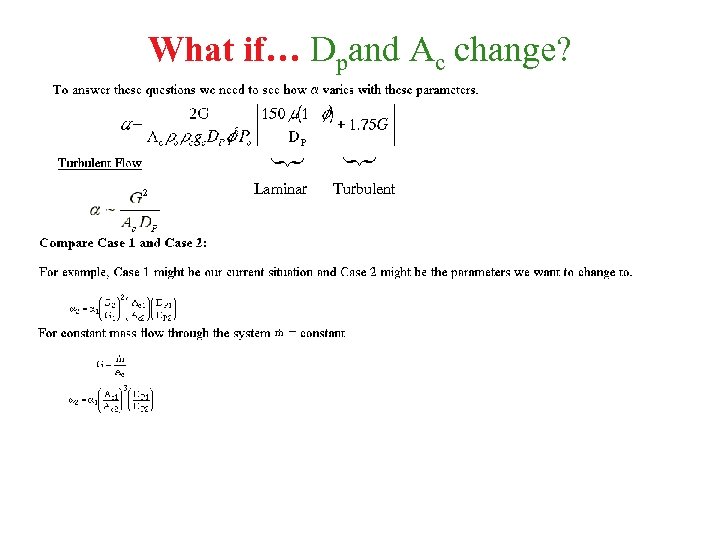 What if… Dpand Ac change? } } Laminar Turbulent
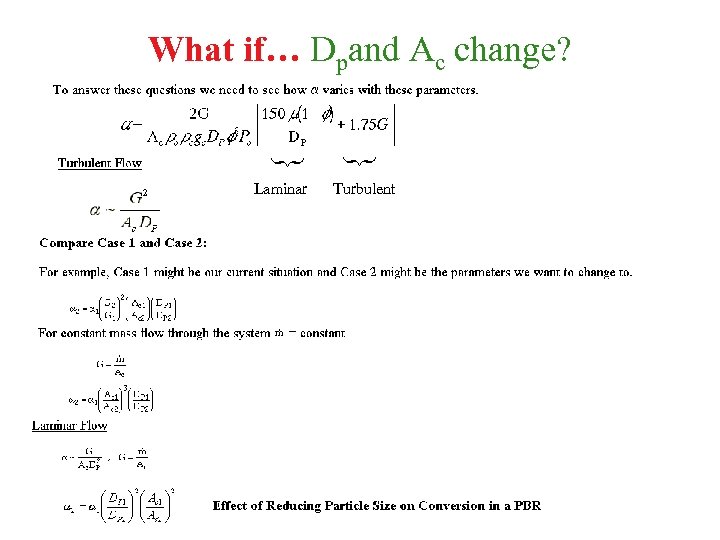 What if… Dpand Ac change? } } Laminar Turbulent
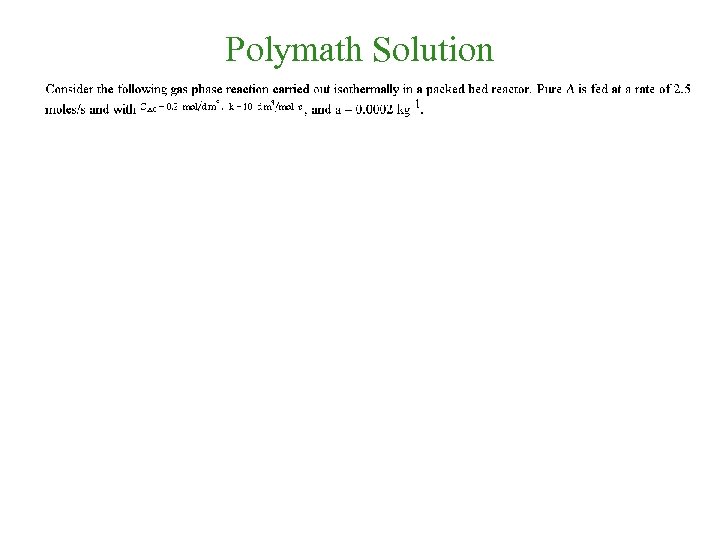 Polymath Solution
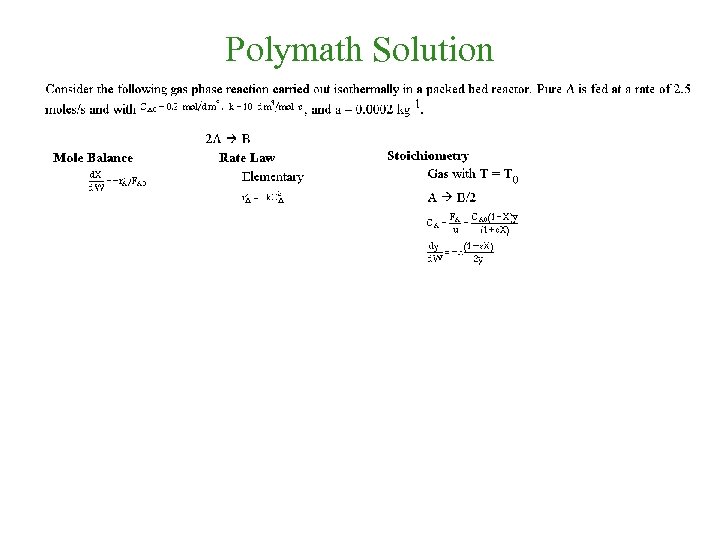 Polymath Solution
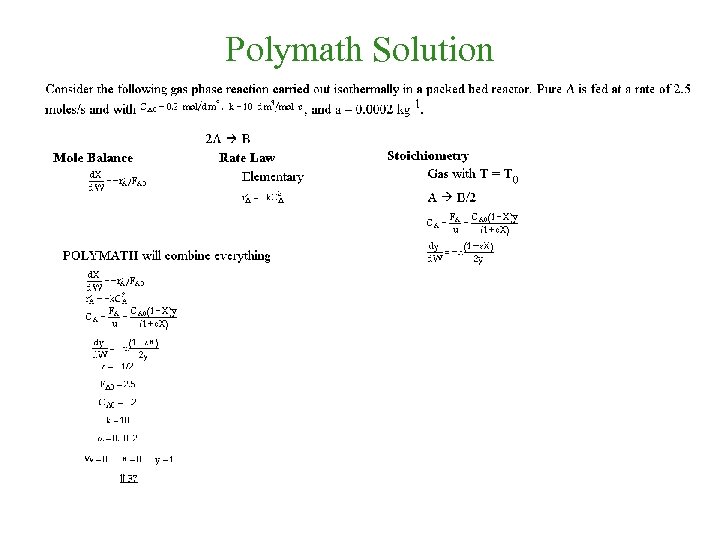 Polymath Solution
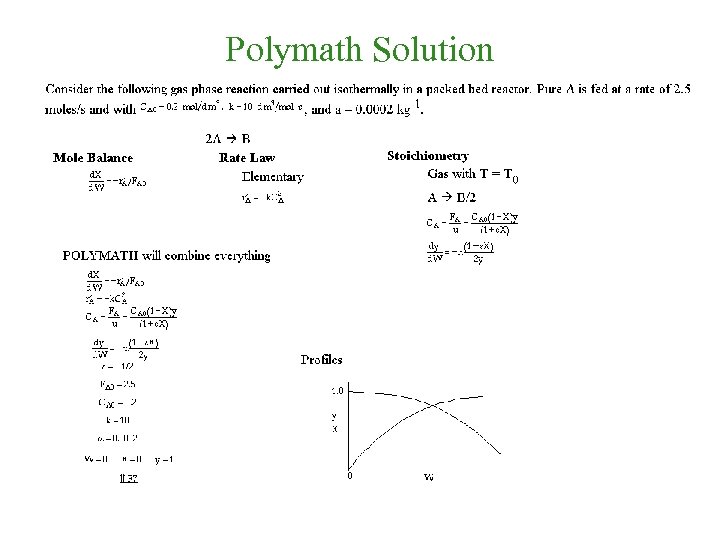 Polymath Solution