


 Скачать презентацию Chemical Control of the Erythrina Wiliwili Gall Wasp
b3e96e87c61beedc14396e092b489eac.ppt
- Количество слайдов: 33
 Chemical Control of the Erythrina (Wiliwili) Gall Wasp (EGW), Quadrastichus erythrinae: Trials and Tribulations Arnold H. Hara 1, Christopher M. Jacobsen 1, and Dick M. Tsuda 2 University of Hawaii at Manoa College of Tropical Agriculture and Human Resources 1 Beaumont Agricultural Research Center, 875 Komohana St, Hilo, HI 96720 2 Department of Plant and Environmental Protection Sciences, 3050 Maile Way, Honolulu, HI 96822 E-mail=arnold@hawaii. edu
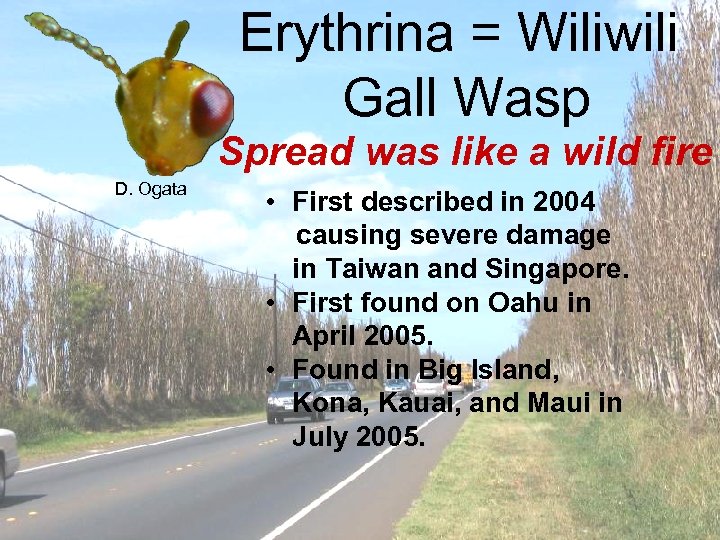 Erythrina = Wiliwili Gall Wasp Spread was like a wild fire D. Ogata • First described in 2004 causing severe damage in Taiwan and Singapore. • First found on Oahu in April 2005. • Found in Big Island, Kona, Kauai, and Maui in July 2005.
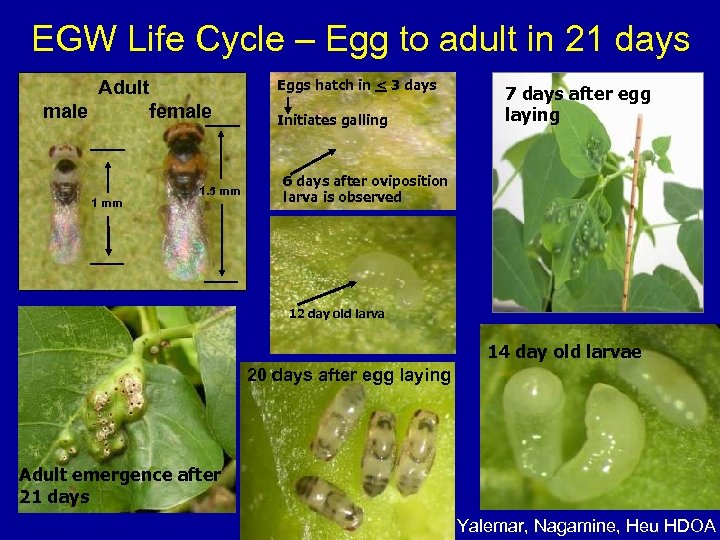 EGW Life Cycle – Egg to adult in 21 days Eggs hatch in < 3 days Adult male female 1 mm 1. 5 mm Initiates galling 7 days after egg laying 6 days after oviposition larva is observed 12 day old larva 14 day old larvae 20 days after egg laying Adult emergence after 21 days Yalemar, Nagamine, Heu HDOA
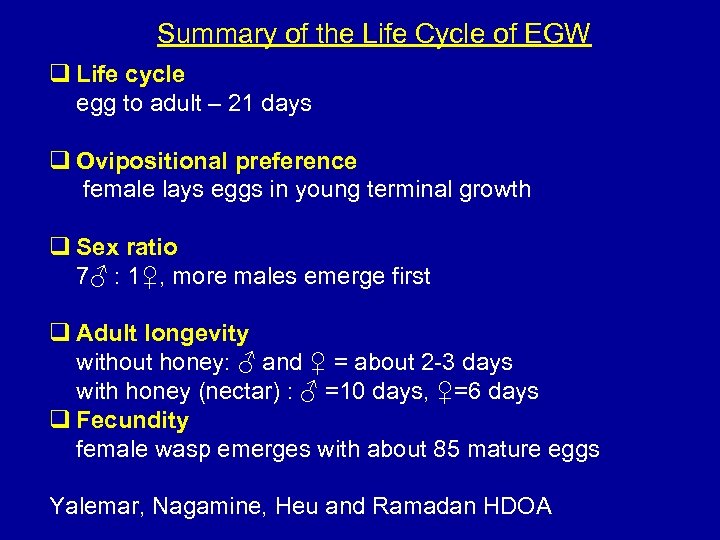 Summary of the Life Cycle of EGW q Life cycle egg to adult – 21 days q Ovipositional preference female lays eggs in young terminal growth q Sex ratio 7♂ : 1♀, more males emerge first q Adult longevity without honey: ♂ and ♀ = about 2 -3 days with honey (nectar) : ♂ =10 days, ♀=6 days q Fecundity female wasp emerges with about 85 mature eggs Yalemar, Nagamine, Heu and Ramadan HDOA
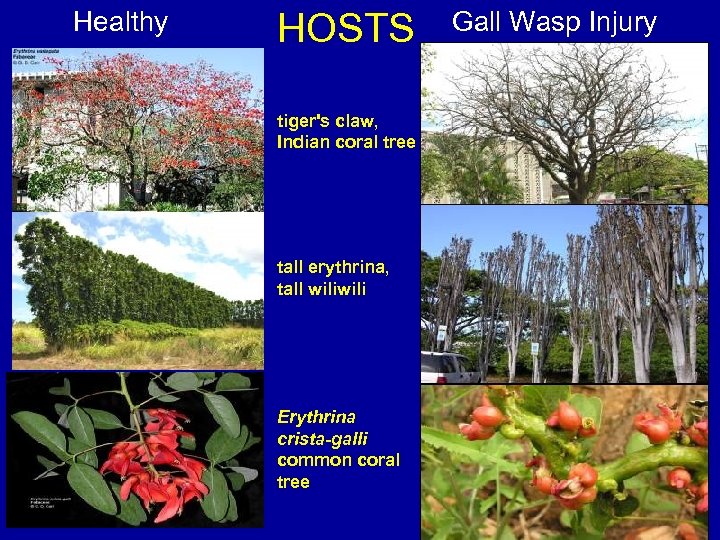 Healthy HOSTS tiger's claw, Indian coral tree tall erythrina, tall wili Erythrina crista-galli common coral tree Gall Wasp Injury
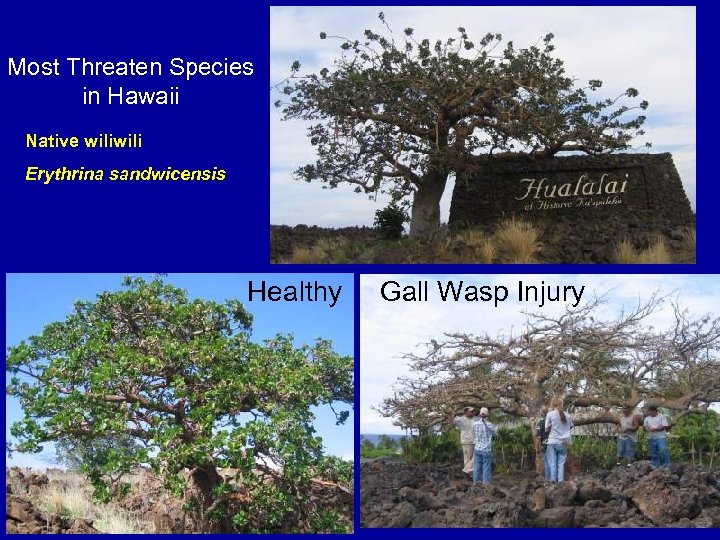 Most Threaten Species in Hawaii Native wili Erythrina sandwicensis Healthy Gall Wasp Injury
 Major Control Strategies Short Term: Chemical Control UH-CTAHR Long Term: Biological Control HDOA, UH-CTAHR
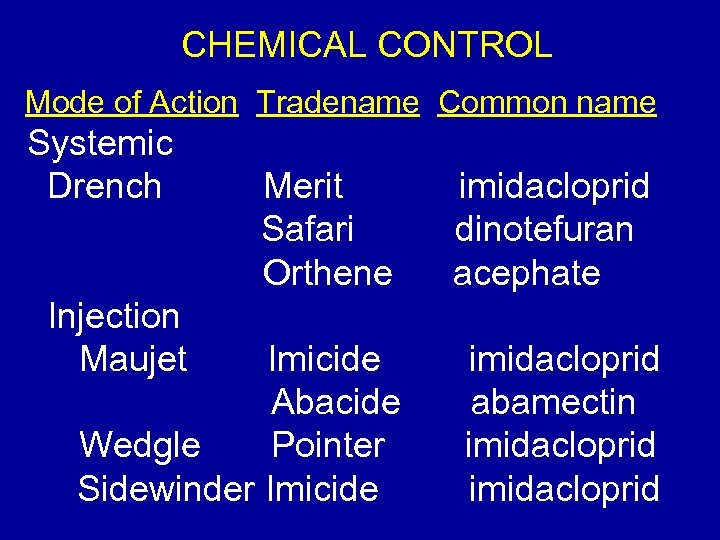 CHEMICAL CONTROL Mode of Action Tradename Common name Systemic Drench Merit imidacloprid Safari dinotefuran Orthene acephate Injection Maujet Imicide imidacloprid Abacide abamectin Wedgle Pointer imidacloprid Sidewinder Imicide imidacloprid
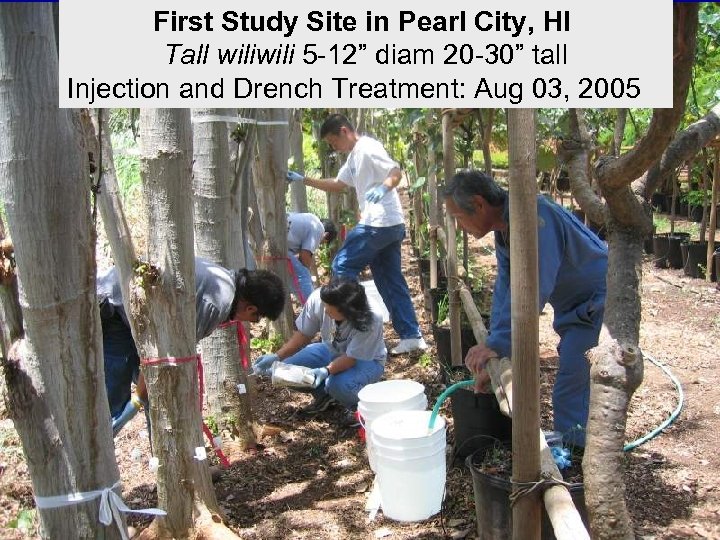 First Study Site in Pearl City, HI Tall wili 5 -12” diam 20 -30” tall Injection and Drench Treatment: Aug 03, 2005
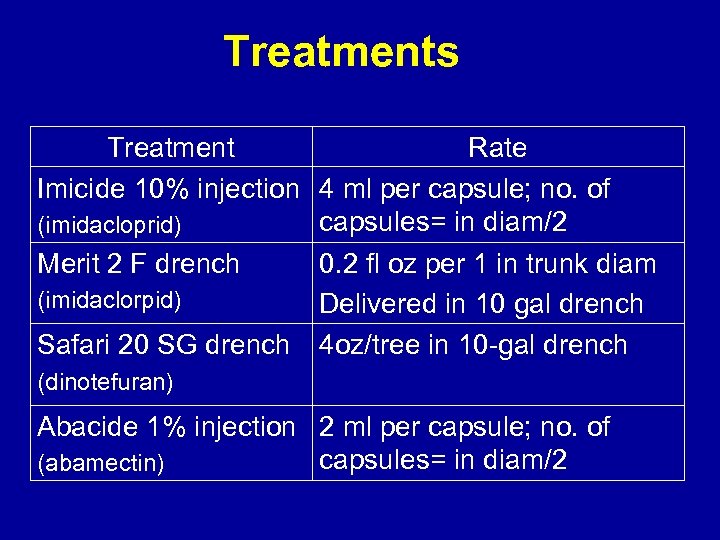 Treatments Treatment Rate Imicide 10% injection 4 ml per capsule; no. of capsules= in diam/2 (imidacloprid) Merit 2 F drench 0. 2 fl oz per 1 in trunk diam (imidaclorpid) Delivered in 10 gal drench Safari 20 SG drench 4 oz/tree in 10 -gal drench (dinotefuran) Abacide 1% injection 2 ml per capsule; no. of capsules= in diam/2 (abamectin)
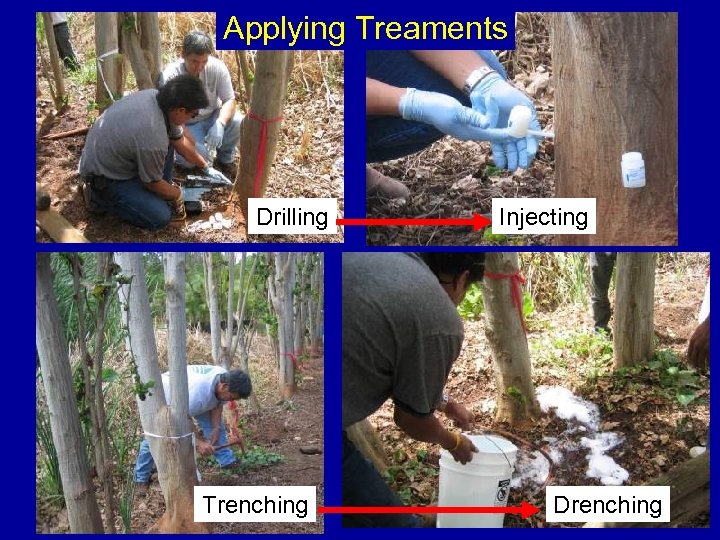 Applying Treaments Drilling Trenching Injecting Drenching
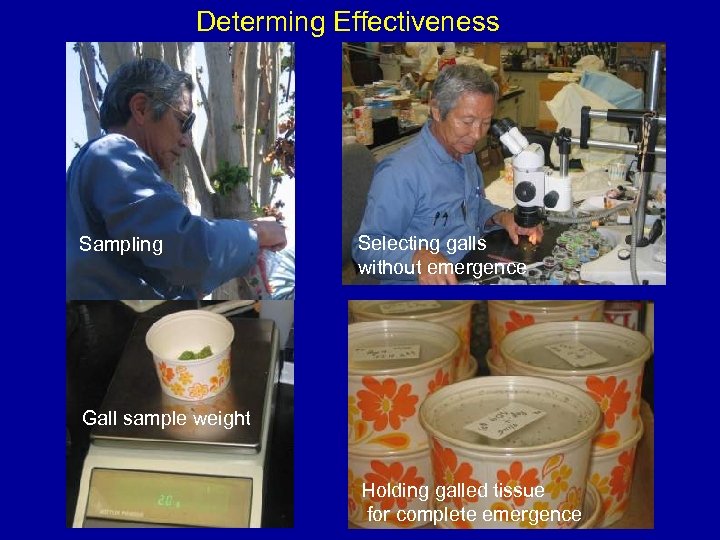 Determing Effectiveness Sampling Selecting galls without emergence Gall sample weight Holding galled tissue for complete emergence
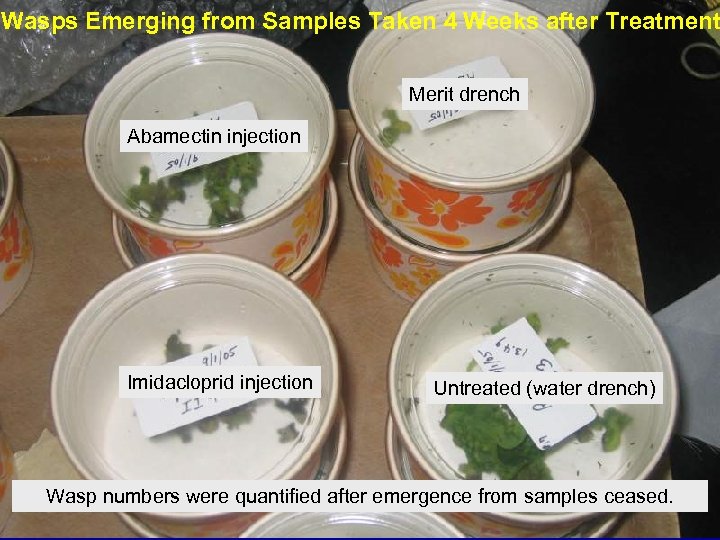 Wasps Emerging from Samples Taken 4 Weeks after Treatment Merit drench Abamectin injection Imidacloprid injection Untreated (water drench) Wasp numbers were quantified after emergence from samples ceased.
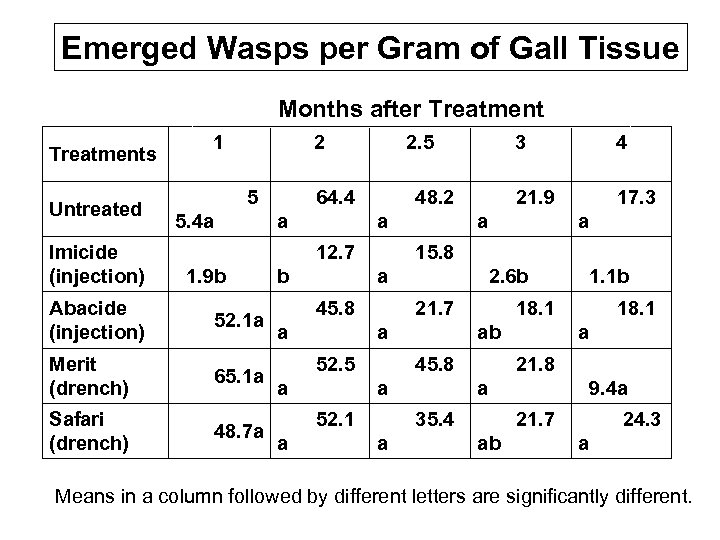 Emerged Wasps per Gram of Gall Tissue Months after Treatments Untreated Imicide (injection) 1 2 5 5. 4 a 2. 5 64. 4 a a Abacide (injection) 52. 1 a Merit (drench) 65. 1 a Safari (drench) 48. 7 a b 2. 6 b 21. 7 a 52. 5 ab a 18. 1 a 21. 8 a 35. 4 a 1. 1 b 18. 1 45. 8 52. 1 a a 15. 8 45. 8 a 17. 3 a a a 4 21. 9 48. 2 12. 7 1. 9 b 3 9. 4 a 21. 7 ab 24. 3 a Means in a column followed by different letters are significantly different.
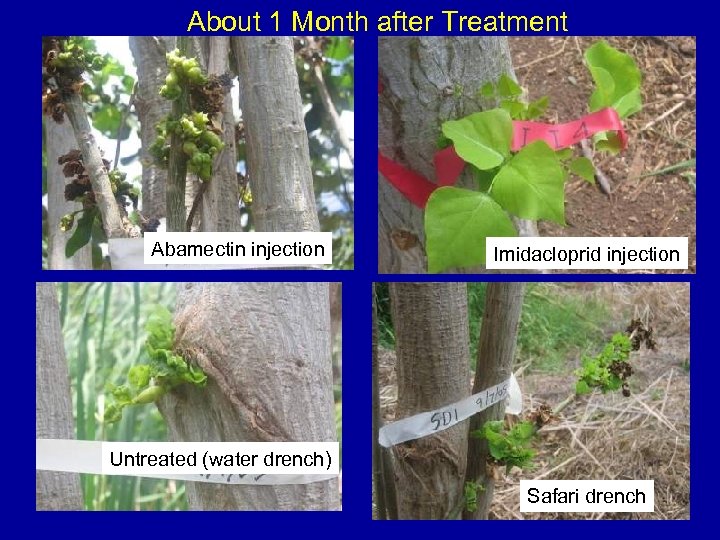 About 1 Month after Treatment Abamectin injection Imidacloprid injection Untreated (water drench) Safari drench
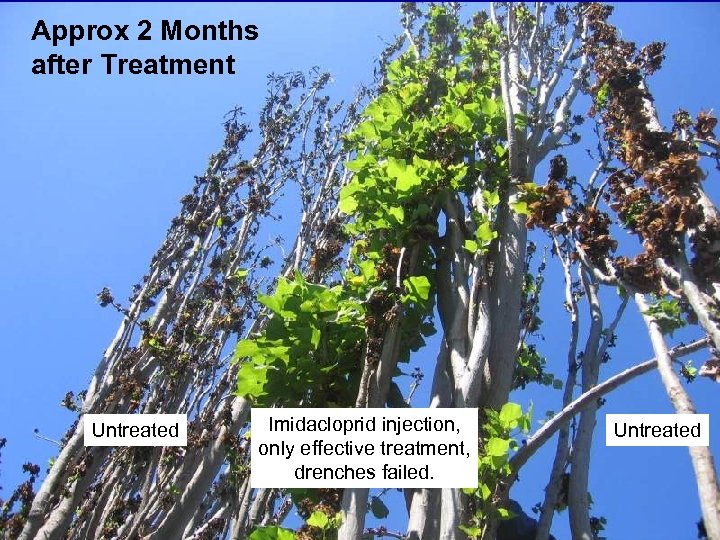 Approx 2 Months after Treatment Untreated Imidacloprid injection, only effective treatment, drenches failed. Untreated
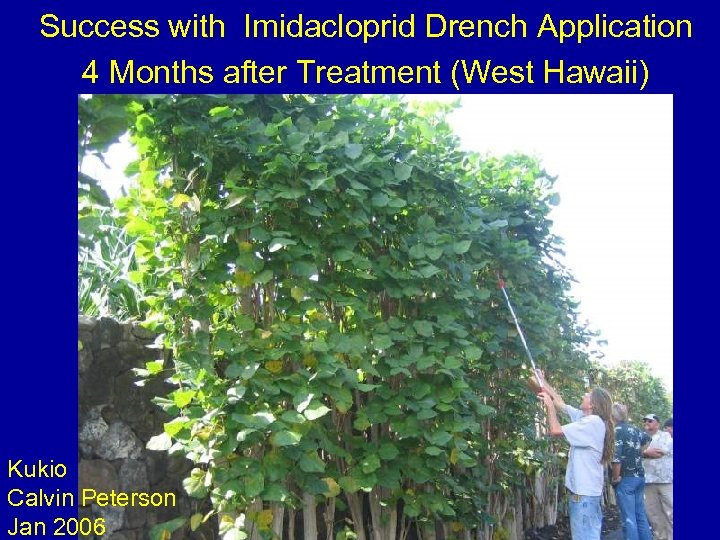 Success with Imidacloprid Drench Application 4 Months after Treatment (West Hawaii) Kukio Calvin Peterson Jan 2006
 Factors Conributing to Successful Merit Drench *Trees were irrigated regularly and imidacloprid was applied at point of irrigation. *Merit 2 F was applied in conjunction with a liquid fertilizer to optimize uptake and increase plant vigor. *Merit took >3 weeks to become effective. *Merit drench is still effective 4 months after treatment with no emergence from the few new galls that were found.
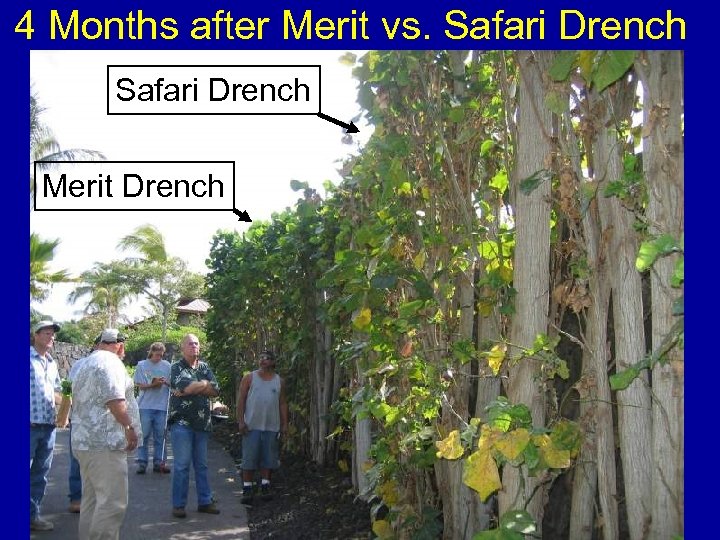 4 Months after Merit vs. Safari Drench Merit Drench
 Safari Drench Quick Efficacy-Shorter Residual as compared with Merit *Safari (dinotefuran) was applied to regularly irrigated trees at point of irrigation. *Safari was applied together with a liquid fertilizer. *Within 2. 5 weeks efficacy was found. From two large samples of galled leaves only 1 male emerged from galls. *Severe damage reoccurred in <4 months. *Safari is much more water soluble than Merit.
 Experiences with Trunk Injection Systems Arbor Systems Wedgle Direct-Inject Mauget Tree Injectors Sidewinder Precision Injectors Arborjet System – not yet evaluated
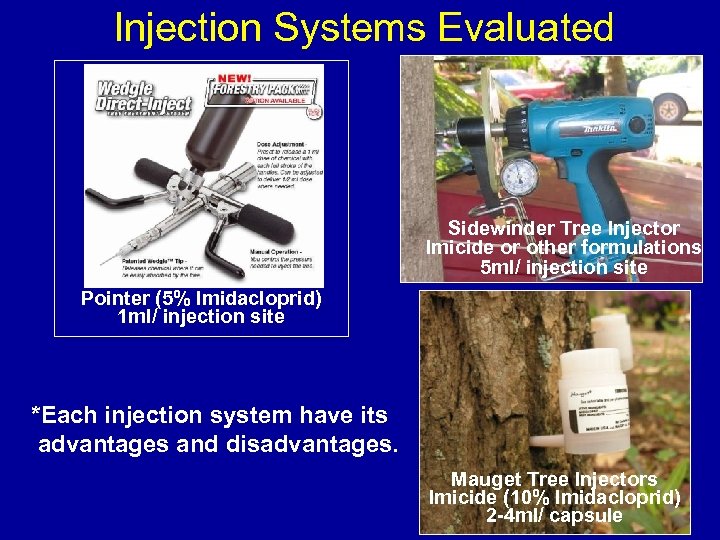 Injection Systems Evaluated Sidewinder Tree Injector Imicide or other formulations 5 ml/ injection site Pointer (5% Imidacloprid) 1 ml/ injection site *Each injection system have its advantages and disadvantages. Mauget Tree Injectors Imicide (10% Imidacloprid) 2 -4 ml/ capsule
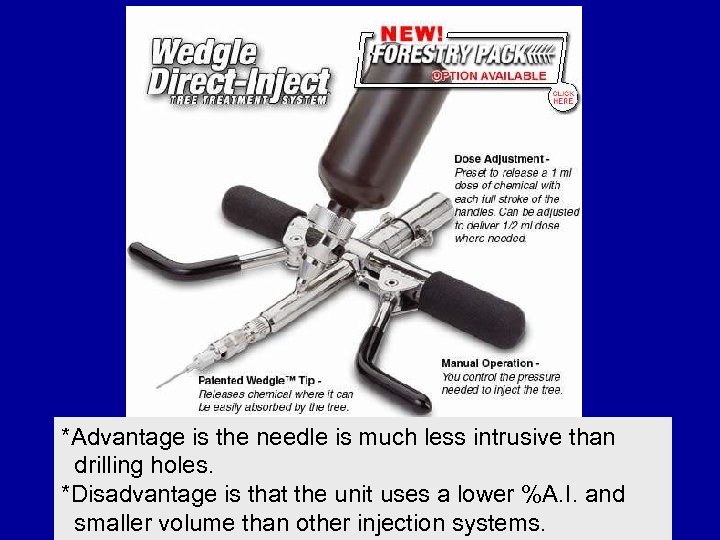 *Advantage is the needle is much less intrusive than drilling holes. *Disadvantage is that the unit uses a lower %A. I. and smaller volume than other injection systems.
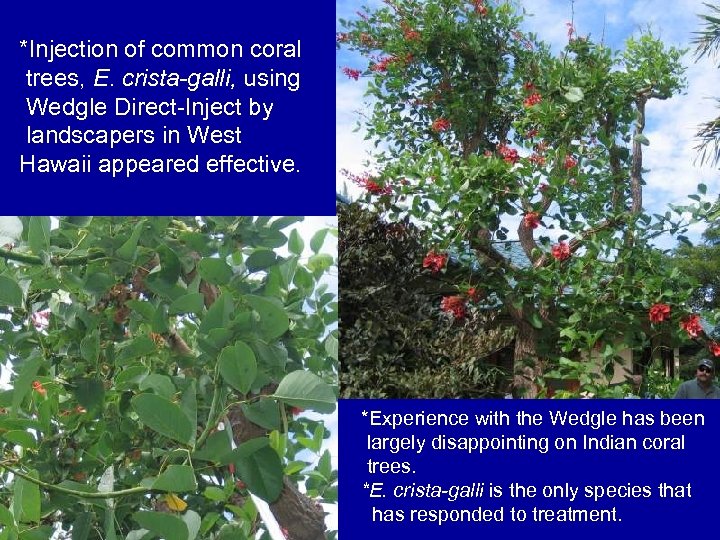 *Injection of common coral trees, E. crista-galli, using Wedgle Direct-Inject by landscapers in West Hawaii appeared effective. *Experience with the Wedgle has been largely disappointing on Indian coral trees. *E. crista-galli is the only species that has responded to treatment.
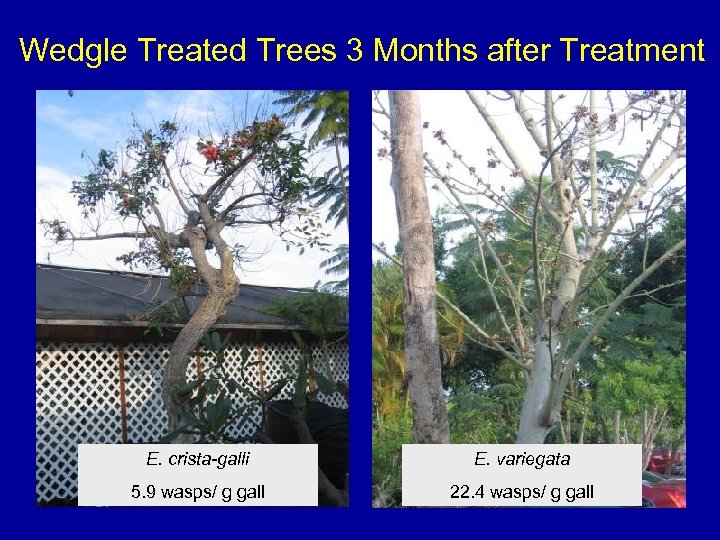 Wedgle Treated Trees 3 Months after Treatment E. crista-galli E. variegata 5. 9 wasps/ g gall 22. 4 wasps/ g gall
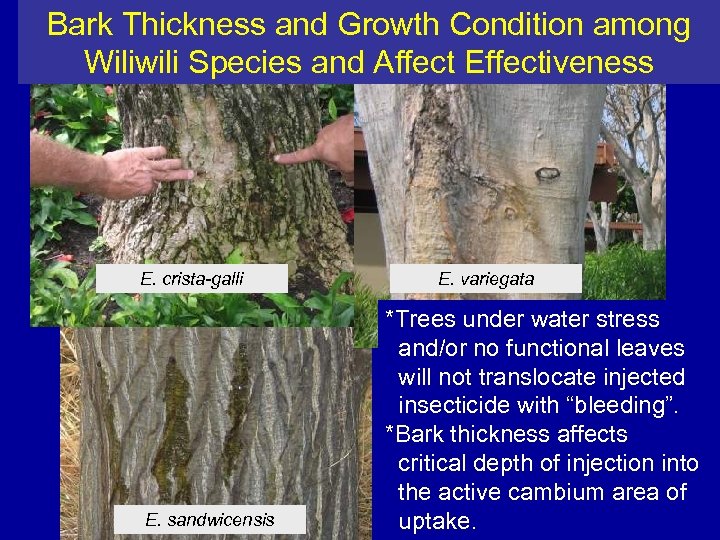 Bark Thickness and Growth Condition among Wiliwili Species and Affect Effectiveness E. crista-galli E. sandwicensis E. variegata *Trees under water stress and/or no functional leaves will not translocate injected insecticide with “bleeding”. *Bark thickness affects critical depth of injection into the active cambium area of uptake.
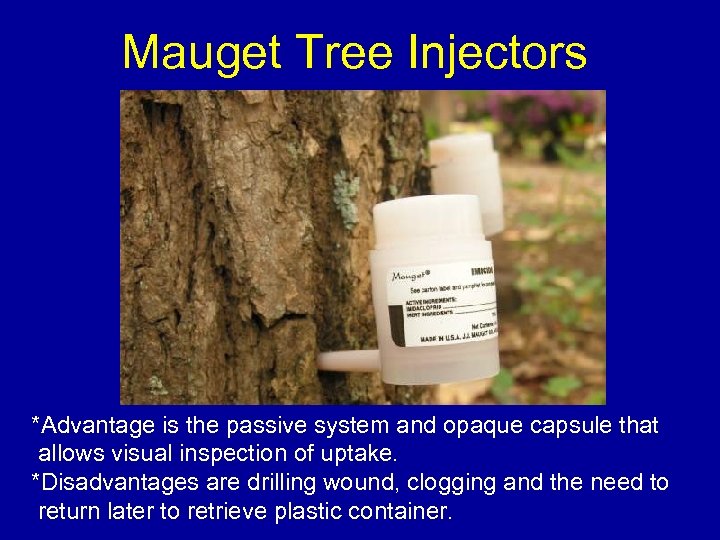 Mauget Tree Injectors *Advantage is the passive system and opaque capsule that allows visual inspection of uptake. *Disadvantages are drilling wound, clogging and the need to return later to retrieve plastic container.
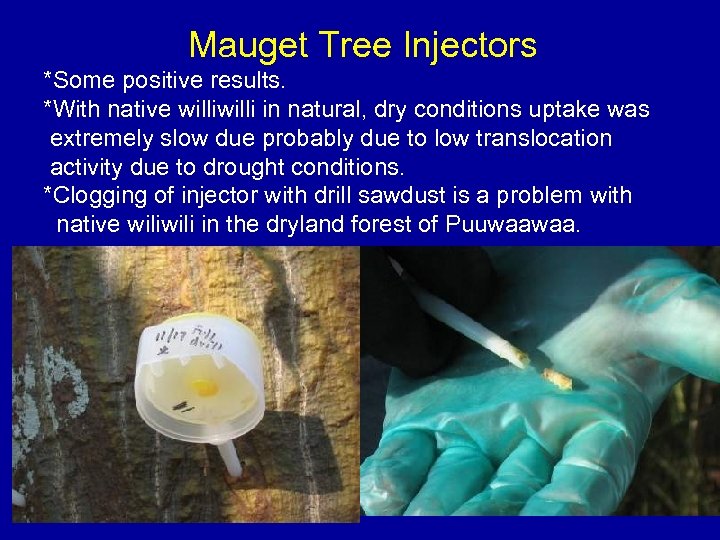 Mauget Tree Injectors *Some positive results. *With native willi in natural, dry conditions uptake was extremely slow due probably due to low translocation activity due to drought conditions. *Clogging of injector with drill sawdust is a problem with native wili in the dryland forest of Puuwaawaa.
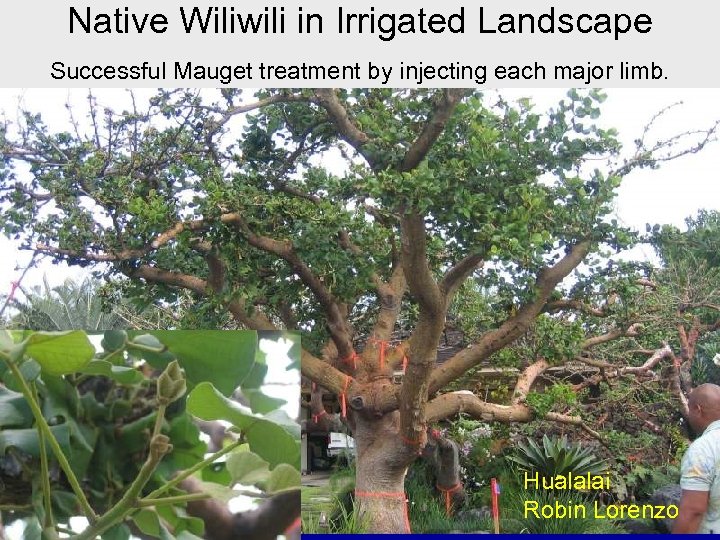 Native Wiliwili in Irrigated Landscape Successful Mauget treatment by injecting each major limb. Hualalai Robin Lorenzo
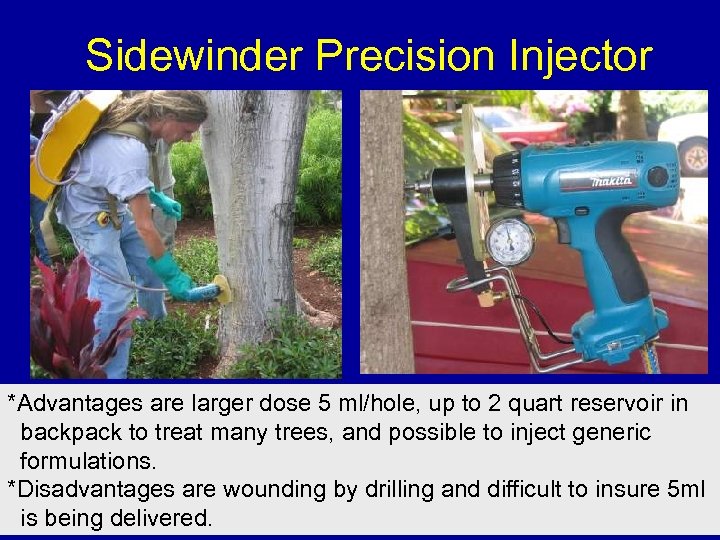 Sidewinder Precision Injector *Advantages are larger dose 5 ml/hole, up to 2 quart reservoir in backpack to treat many trees, and possible to inject generic formulations. *Disadvantages are wounding by drilling and difficult to insure 5 ml is being delivered.
 What’s Next? *Additional trials with Merit/Safari drenches and Sidewinder, Maujet and Wedgle injections are in progress in the landscape and dryland forests in West Hawaii. *Chemical analyses of galled and un-galled leaves from treated trees are in progress by UH-CTAHR chemists. *Exploratory searches for natural enemies of the wili gall wasp have been conducted by Hawaii Dept. of Agriculture and UH-CTAHR in Africa and offers the long term control strategy.
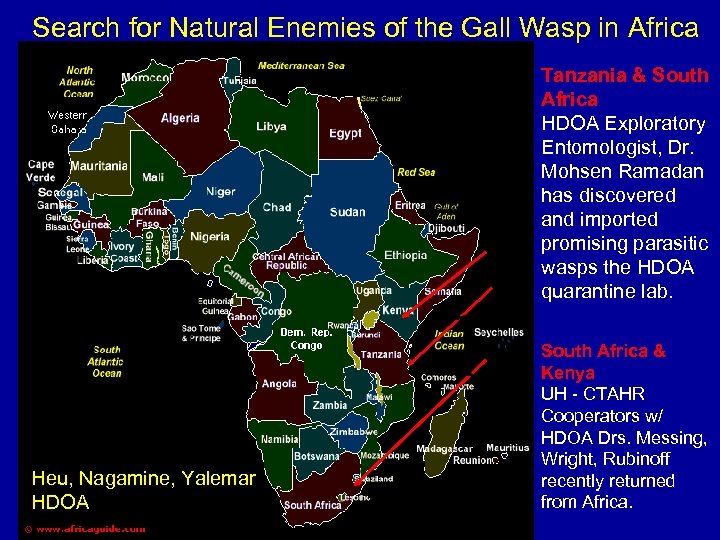 Search for Natural Enemies of the Gall Wasp in Africa Tanzania & South Africa HDOA Exploratory Entomologist, Dr. Mohsen Ramadan has discovered and imported promising parasitic wasps the HDOA quarantine lab. Heu, Nagamine, Yalemar HDOA South Africa & Kenya UH - CTAHR Cooperators w/ HDOA Drs. Messing, Wright, Rubinoff recently returned from Africa.
 Derek Arakaki Becky Azama Pete Ballerini Mike Donoho Robert Hauff Hawaii Land Care Guy Hera Ronald Heu A BIG THANK YOU! Clyde Hirayama Anne-Marie La. Rosa Robin Lorenzo Mike Matsukawa Ty Mc. Donald George Nakashima Ruth Niino-Duponte Ken Ogawa Kyle Onuma Calvin Peterson Juliana Yalemar A BIG THANK YOU!