 Скачать презентацию Chemical components of the cell Arnat Balabiyev Ph
Bonds.pptx
- Количество слайдов: 23



Chemical components of the cell Arnat Balabiyev Ph. D Student Arizona State University
Chemical bonds • Chemical bonds occur between atoms (identical or different) • An atom= nucleus+electrons • Nucleus = protons+neutrons • Protons-positively charged particles (+) • Neutrons – uncharged particles (0) • Electrons – negatively charged particles (-)
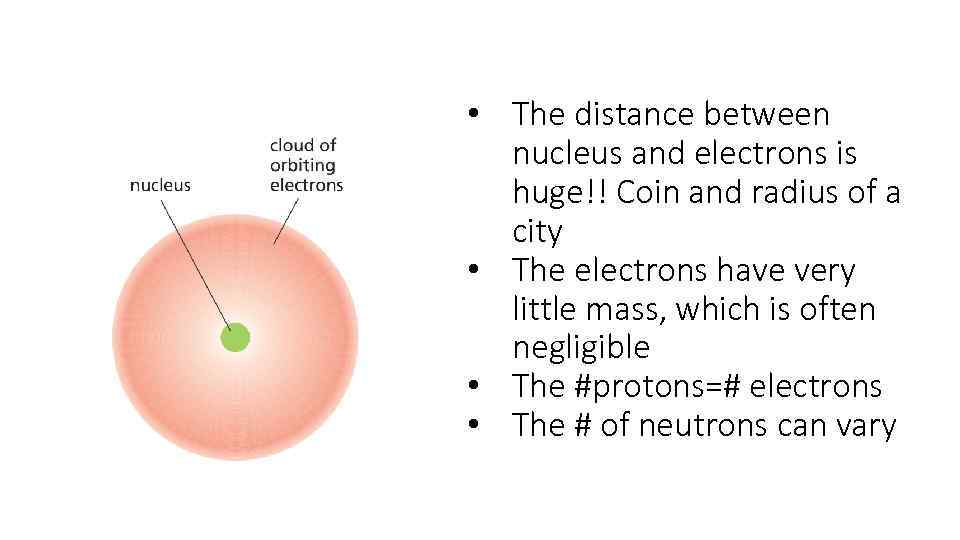
• The distance between nucleus and electrons is huge!! Coin and radius of a city • The electrons have very little mass, which is often negligible • The #protons=# electrons • The # of neutrons can vary
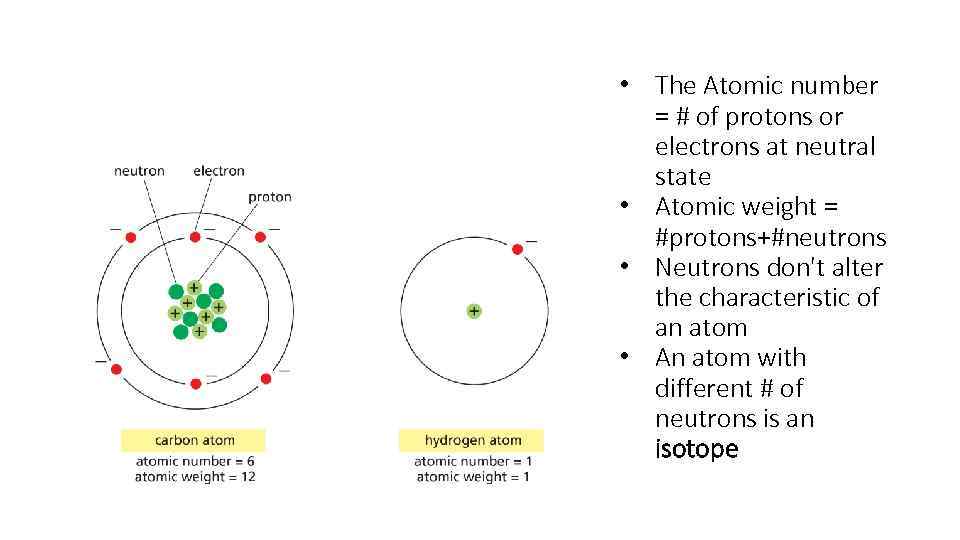
• The Atomic number = # of protons or electrons at neutral state • Atomic weight = #protons+#neutrons • Neutrons don't alter the characteristic of an atom • An atom with different # of neutrons is an isotope
Other properties of the atom • Atomic weight/Molecular weight is defined in daltons. • Atomic weight of hydrogen is 1 dalton. • The mass of hydrogen atom is 1/6*10^23 gram. So 1 gram of hydrogen contains 6*10^23 atoms of hydrogen. • Mole = mass (g)/ molecular weight • Ex: 1 mole of H = 1 gram / 1 dalton(in periodic table) • It means that 1 mole of any atom/molecule has 6*10^23 of that substance
Molarity • If we put 1 mole of glucose in 1 liter of water, we obtain 1 molar solution of glucose. • It means we have 6*10^23(avagardo#) of glucose molecules in 1 liter of water. • 1 mole=Avagardo# of atom/molecule

Atom electron shells • The electrons occupy a specific shell around nucleus • The 1 st shell can hold only 2 electrons and 2 nd only 8 electrons, the third 18 electrons… • If the outer shell is fully filled, the atom becomes unreactive • Closer the electron to the nucleus, stronger the attraction of an electron to the nucleus
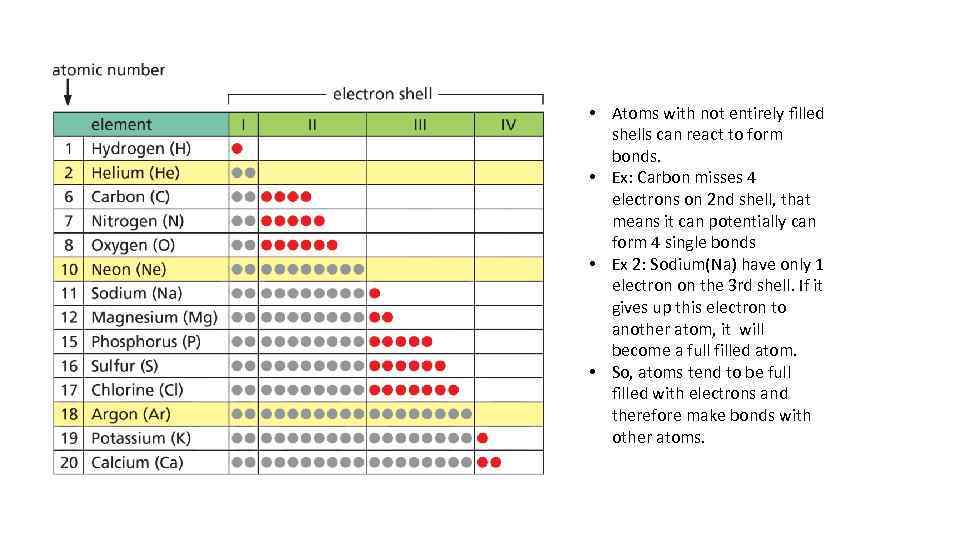
• Atoms with not entirely filled shells can react to form bonds. • Ex: Carbon misses 4 electrons on 2 nd shell, that means it can potentially can form 4 single bonds • Ex 2: Sodium(Na) have only 1 electron on the 3 rd shell. If it gives up this electron to another atom, it will become a full filled atom. • So, atoms tend to be full filled with electrons and therefore make bonds with other atoms.
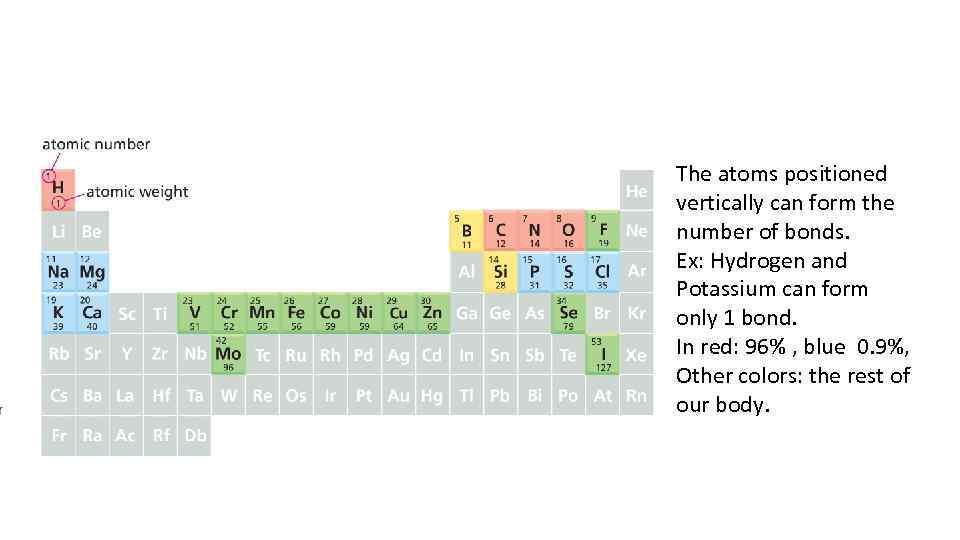
The atoms positioned vertically can form the number of bonds. Ex: Hydrogen and Potassium can form only 1 bond. In red: 96% , blue 0. 9%, Other colors: the rest of our body.
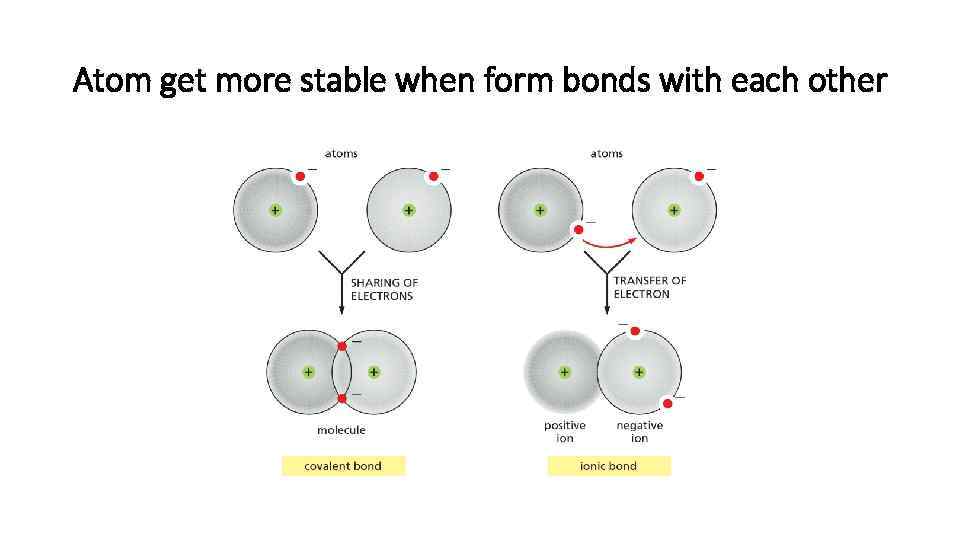
Atom get more stable when form bonds with each other
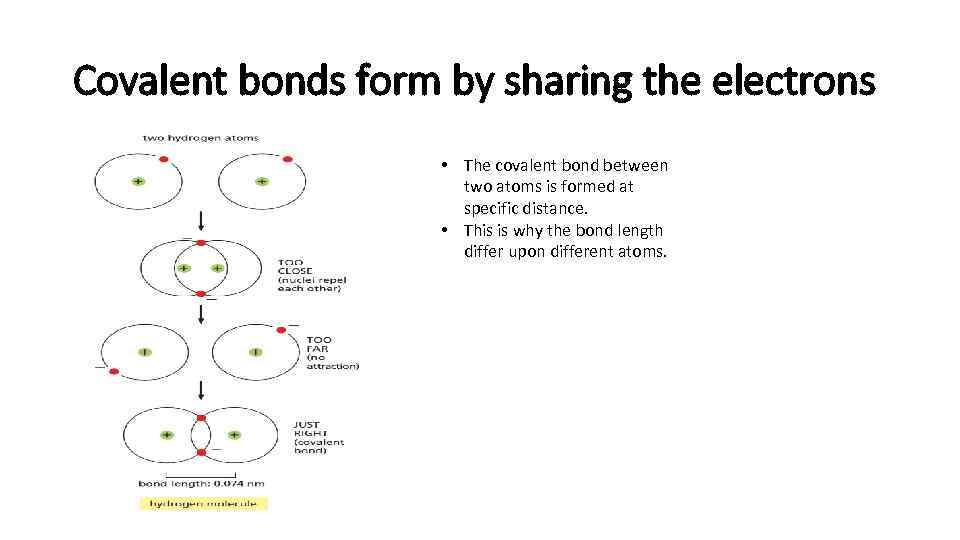
Covalent bonds form by sharing the electrons • The covalent bond between two atoms is formed at specific distance. • This is why the bond length differ upon different atoms.
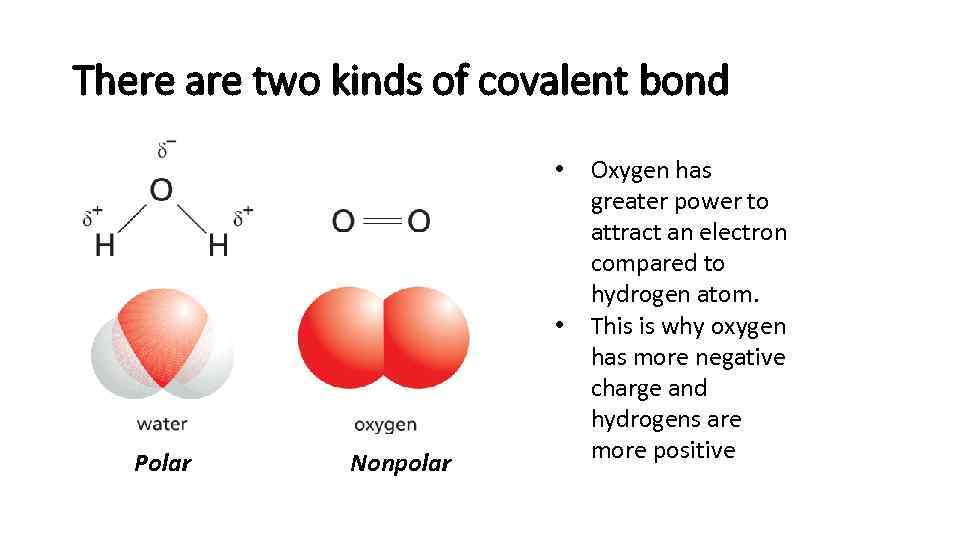
There are two kinds of covalent bond • • Polar Nonpolar Oxygen has greater power to attract an electron compared to hydrogen atom. This is why oxygen has more negative charge and hydrogens are more positive
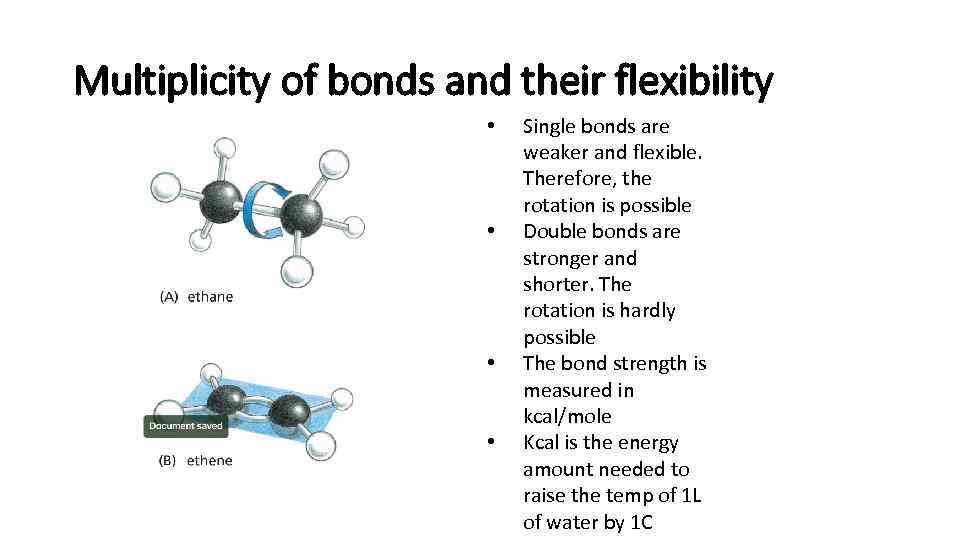
Multiplicity of bonds and their flexibility • • Single bonds are weaker and flexible. Therefore, the rotation is possible Double bonds are stronger and shorter. The rotation is hardly possible The bond strength is measured in kcal/mole Kcal is the energy amount needed to raise the temp of 1 L of water by 1 C
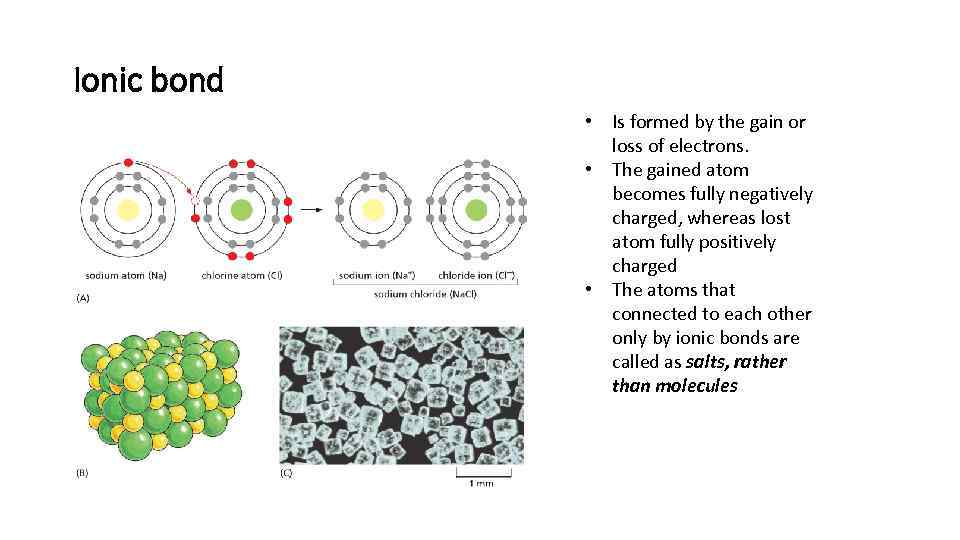
Ionic bond • Is formed by the gain or loss of electrons. • The gained atom becomes fully negatively charged, whereas lost atom fully positively charged • The atoms that connected to each other only by ionic bonds are called as salts, rather than molecules
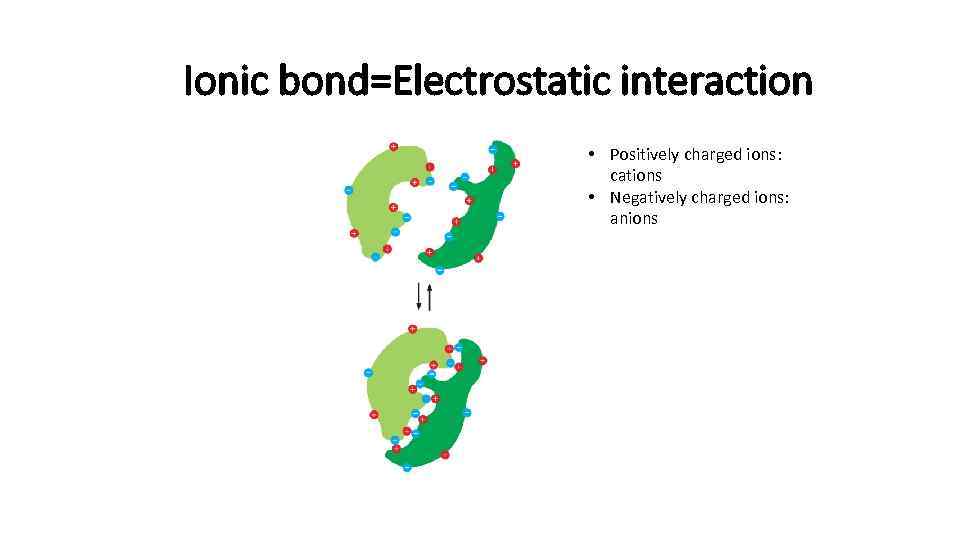
Ionic bond=Electrostatic interaction • Positively charged ions: cations • Negatively charged ions: anions
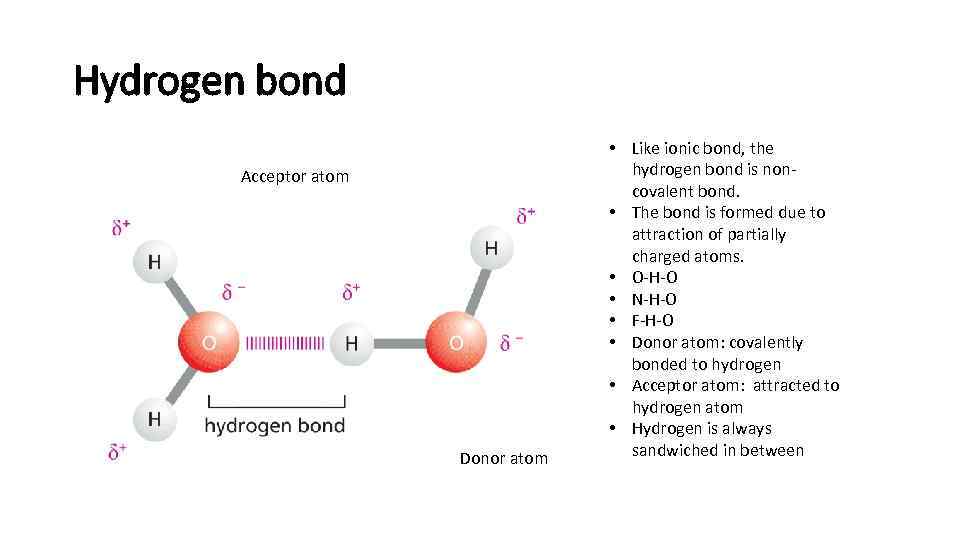
Hydrogen bond Acceptor atom Donor atom • Like ionic bond, the hydrogen bond is noncovalent bond. • The bond is formed due to attraction of partially charged atoms. • O-H-O • N-H-O • F-H-O • Donor atom: covalently bonded to hydrogen • Acceptor atom: attracted to hydrogen atom • Hydrogen is always sandwiched in between
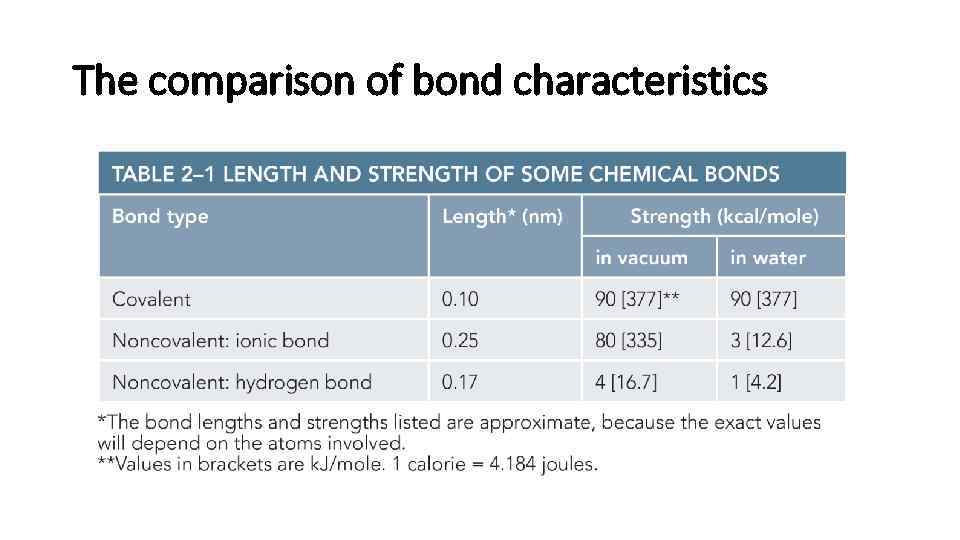
The comparison of bond characteristics
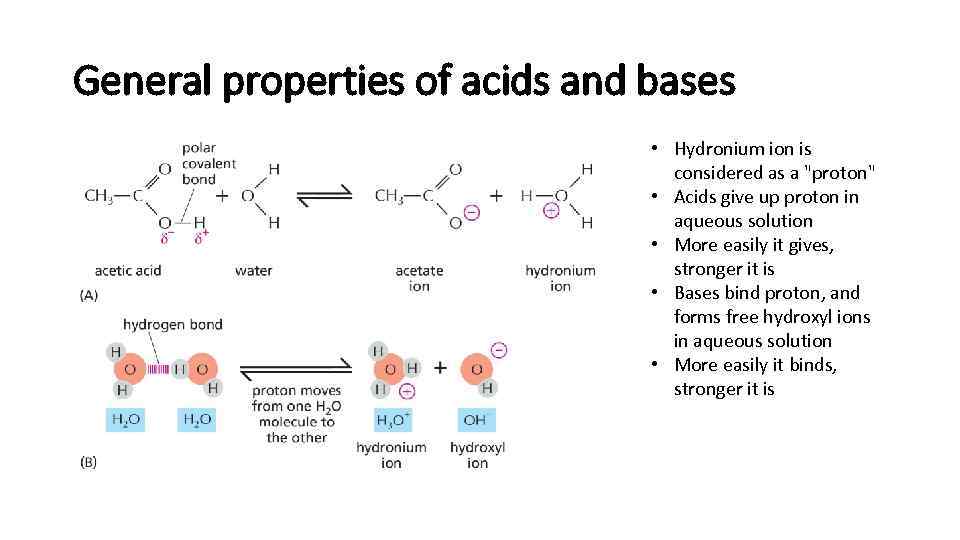
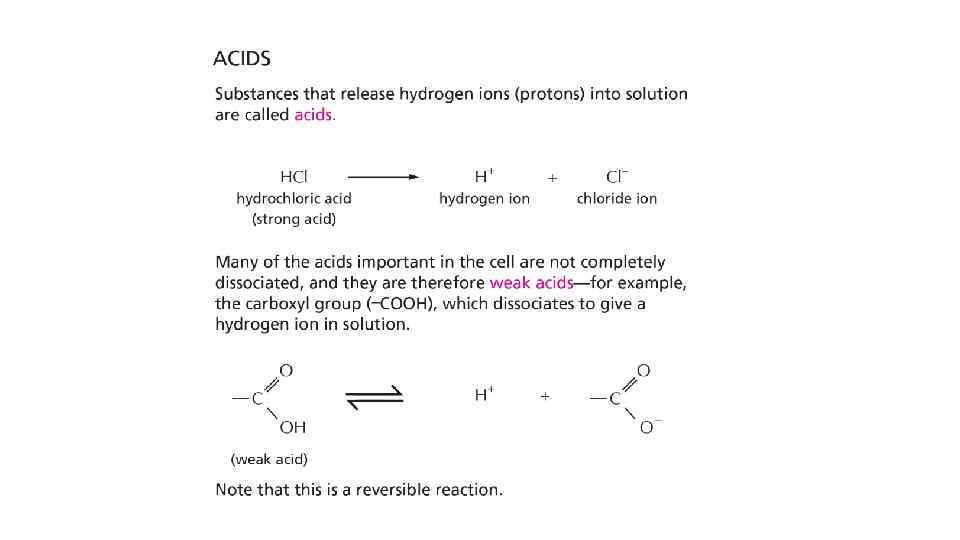
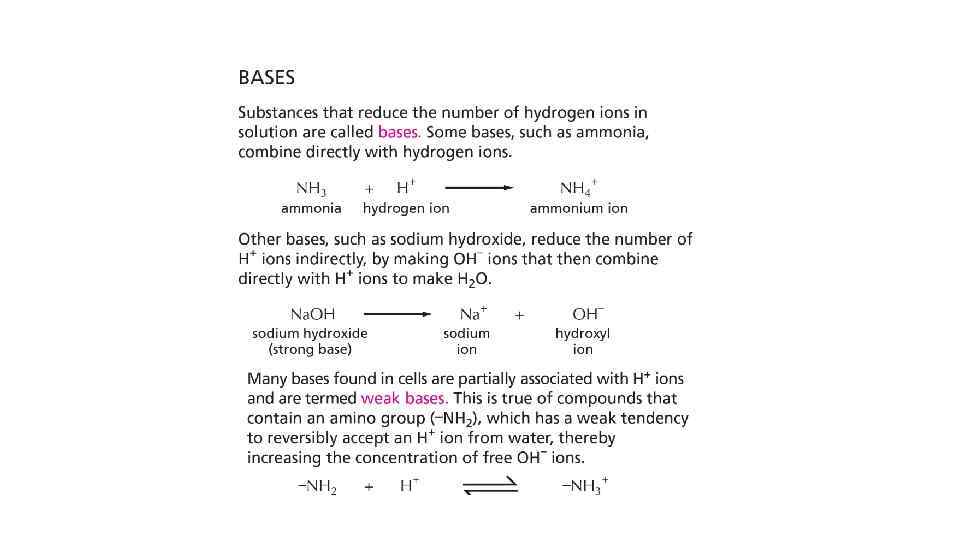
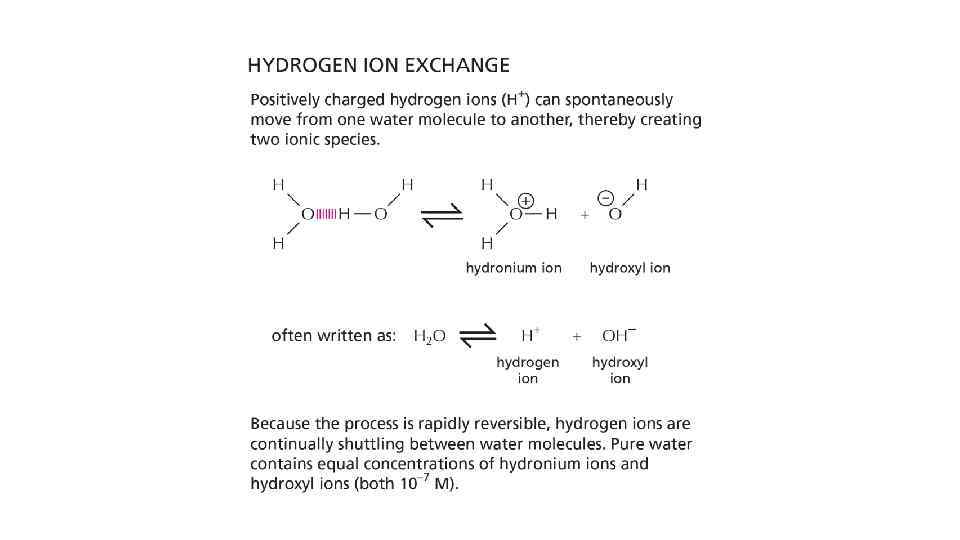
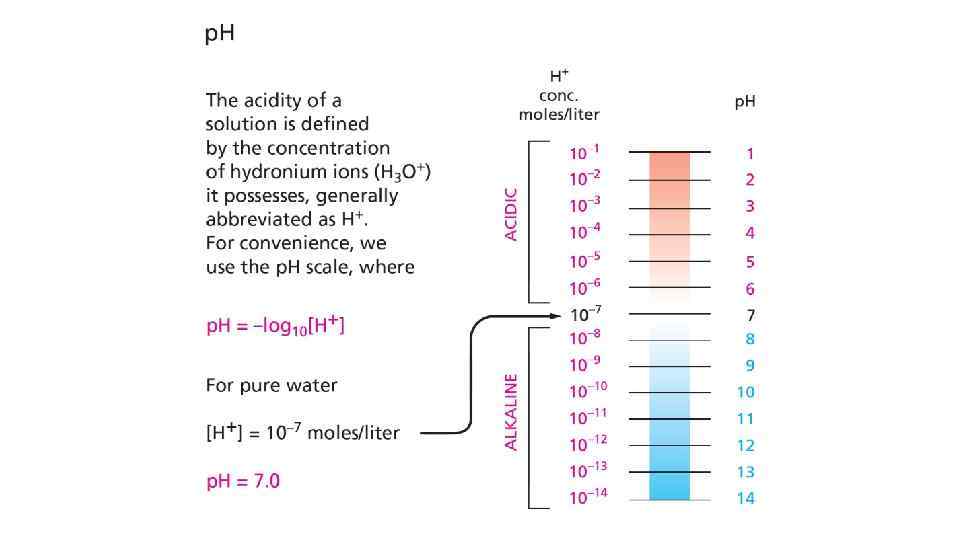
General properties of acids and bases • Hydronium ion is considered as a "proton" • Acids give up proton in aqueous solution • More easily it gives, stronger it is • Bases bind proton, and forms free hydroxyl ions in aqueous solution • More easily it binds, stronger it is
Reference • Essential Cell Biology: Chapter 2, Page 39 -50
Скачать презентацию Chemical components of the cell Arnat Balabiyev Ph
Bonds.pptx