


 Скачать презентацию Chemical and Physical Features of Seawater and the
6c0c3b192db00a78ac8bceb6620c8d9f.ppt
- Количество слайдов: 130
 Chemical and Physical Features of Seawater and the World Ocean
 The “Weather” of the Marine Environment • • • Wind Waves Tides Currents Temperature Salt
 • Where organisms are found in the marine environment is determined by the chemical and physical factors • To understand the biology of marine organisms, we must know something about the environment in which they live
 The Waters of the Ocean
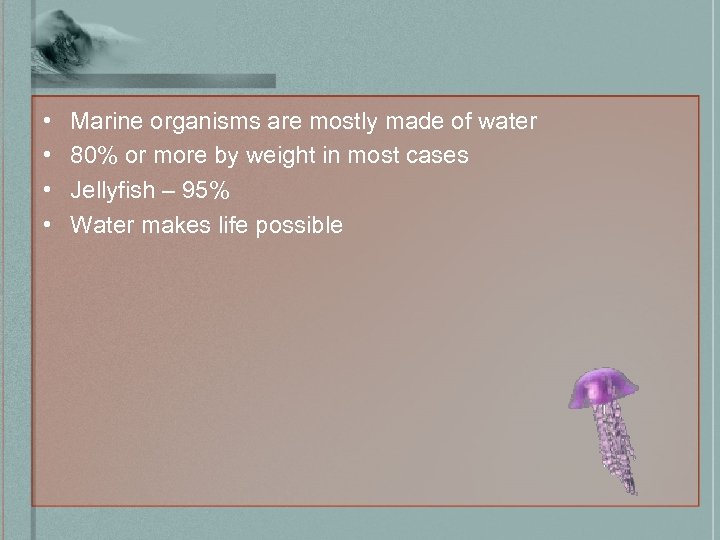 • • Marine organisms are mostly made of water 80% or more by weight in most cases Jellyfish – 95% Water makes life possible
 The Unique Nature of Pure Water • All matter is made of atoms • Elements – made of a single kind of element • Molecules – two or more atoms joined together – ex. Water • Water molecules stick together because of their polarity • These weak bonds are known as hydrogen bonds
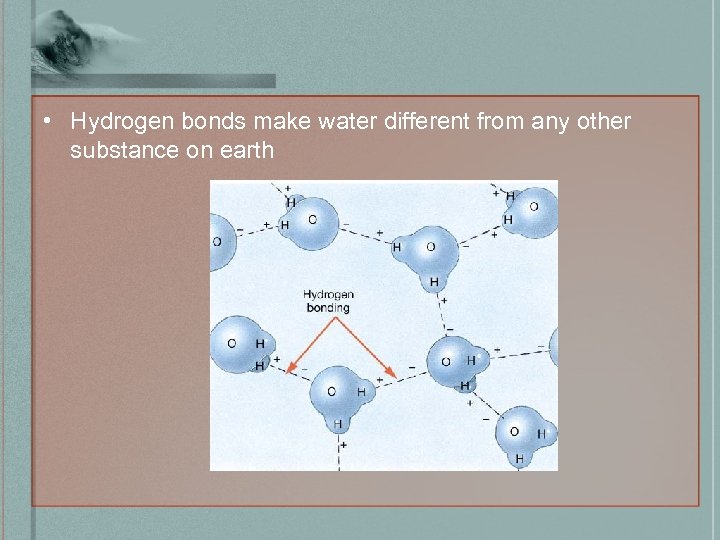 • Hydrogen bonds make water different from any other substance on earth
 Three States of Matter • Solid, liquid, gas • Water is the only substance that naturally occurs in all three states on earth
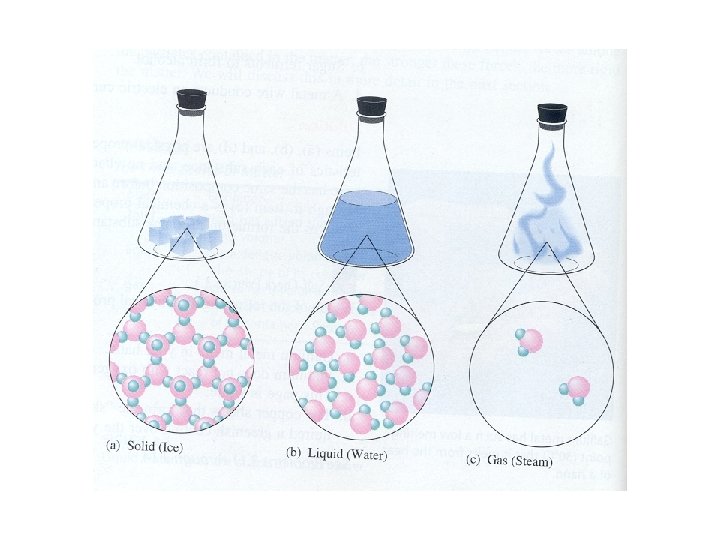
 Special Characteristics of Water • In liquid water hydrogen bonds hold most of the molecules together in small groups • Temperature is a reflection of the average speed of the molecules – faster they move the higher the temperature • When the molecules move fast enough they escape the hydrogen bonds and enter the gaseous phase (evaporation)
 • In water vapor the molecules are not held together by hydrogen bonds • As water cools the molecules pack closer together and take up less space • Therefore the density of water increases as water cools until it reaches 4 o. C • Below 4 o. C water becomes less dense • Cool seawater will sink since it is denser
 • Once water cools hydrogen bonds reform • Ice crystals (solid made of regular patterns of molecules) • Water molecules are spaced farther apart than in liquid water making ice less dense than water • Ice will float on top of water – special property that makes life in the water possible – insulates water below
 Heat and Water • It takes a large amount of heat to melt ice • As heat energy is added and the temperature of ice rises, the molecules vibrate faster, breaking some of the hydrogen bonds that hold the crystal together
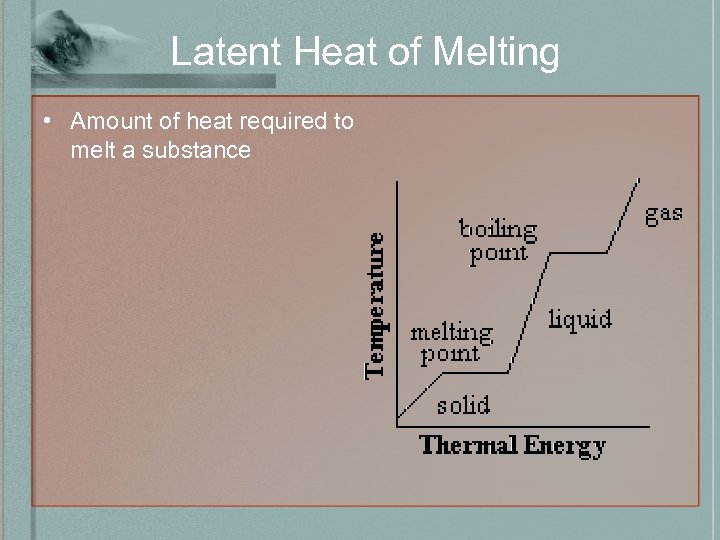 Latent Heat of Melting • Amount of heat required to melt a substance
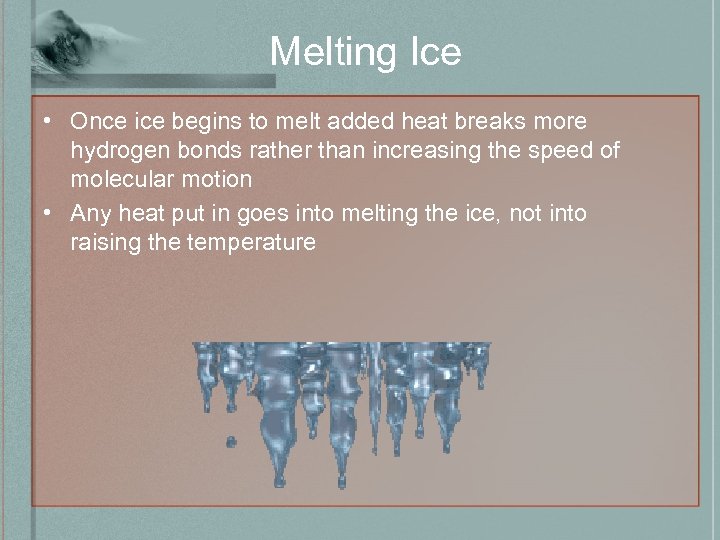 Melting Ice • Once ice begins to melt added heat breaks more hydrogen bonds rather than increasing the speed of molecular motion • Any heat put in goes into melting the ice, not into raising the temperature
 Heat Capacity • Amount of heat needed to raise a substance’s temperature by a given amount • How much heat a substance can absorb • Water has one of the highest heat capacities of any substance
 Importance of Water’s High Heat Capacity • Most marine organisms are not subjected to the rapid and sometimes drastic temperature changes that occur on land
 Latent Heat of Evaporation • The amount of heat energy that is needed to evaporate a substance • Change from a liquid to a gas • Water absorbs a great deal of heat when it evaporates
 Water as a Solvent • Universal solvent • Especially good at dissolving salts • Salts are made of combinations of particles that have opposite electrical charges • The polarity of water allows it to break down the salts
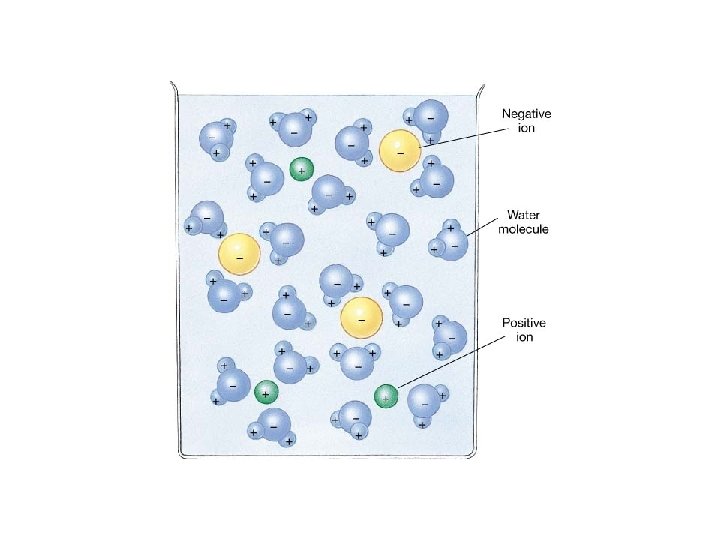
 • Ion – electrically charged particles • Ions have stronger charges than the ends of water molecules • When a salt enters water the ions break apart and become surround by water molecules which break there hydrogen bonds to surround the ion • Ions pull apart or dissociate and the salt dissolves
 Seawater • Characteristics of seawater are due both to the nature of the pure water and to the material dissolved in it
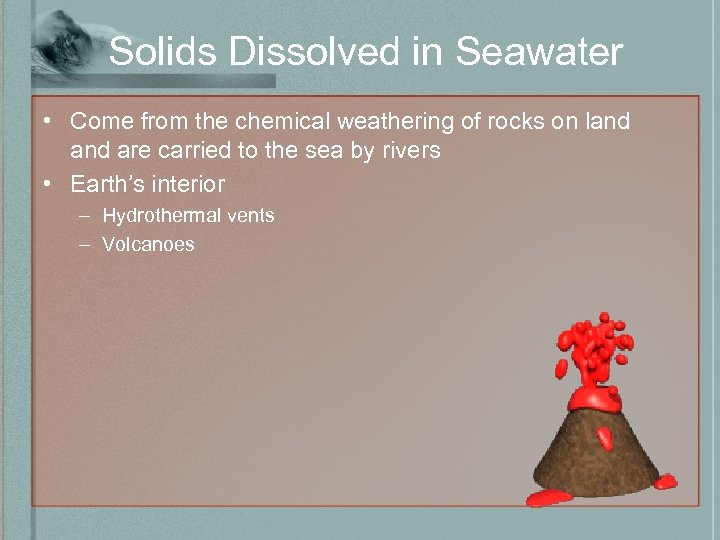 Solids Dissolved in Seawater • Come from the chemical weathering of rocks on land are carried to the sea by rivers • Earth’s interior – Hydrothermal vents – Volcanoes
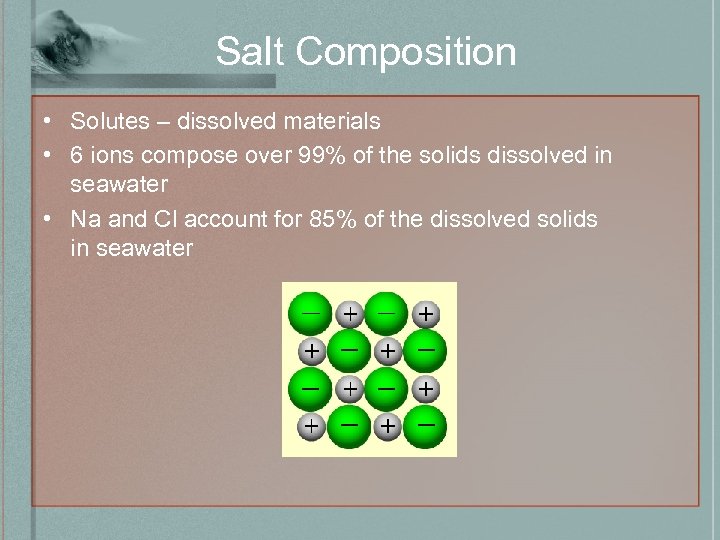 Salt Composition • Solutes – dissolved materials • 6 ions compose over 99% of the solids dissolved in seawater • Na and Cl account for 85% of the dissolved solids in seawater
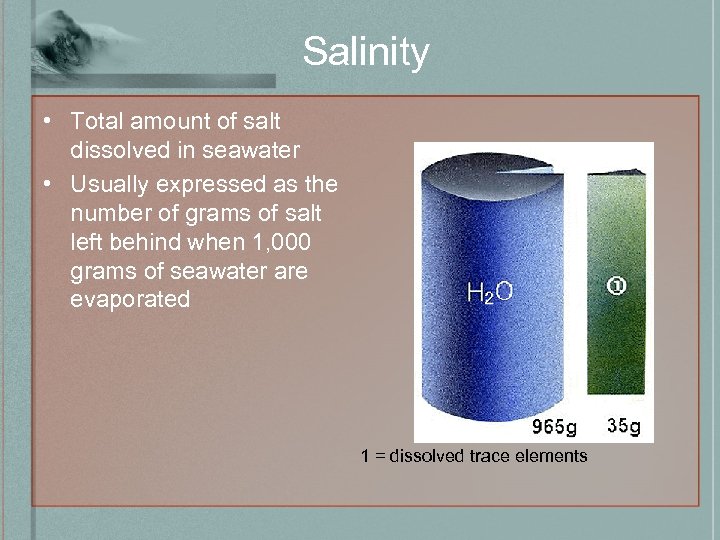 Salinity • Total amount of salt dissolved in seawater • Usually expressed as the number of grams of salt left behind when 1, 000 grams of seawater are evaporated 1 = dissolved trace elements
 • Ions are good conductors of electricity • Electrical conductivity of seawater therefore reflects the concentration of dissolved ions • Practical Salinity Units – psu – measurement of salinity determined from conductivity measurements
 Importance of Salinity • Salinity of water greatly affects the organisms that in it
 Rule of Constant Proportions • Percentage of various ions in seawater remains constant even though the total amount of salt in the water can vary slightly
 • Oceans are chemically well mixed and ocean salinity varies almost entirely as a result of the addition or removal of pure water rather than the addition or removal of salt
 Addition and Removal of Water • Water is removed from the ocean primarily by evaporation and to a lesser extent by freezing • Water is added to the ocean by precipitation
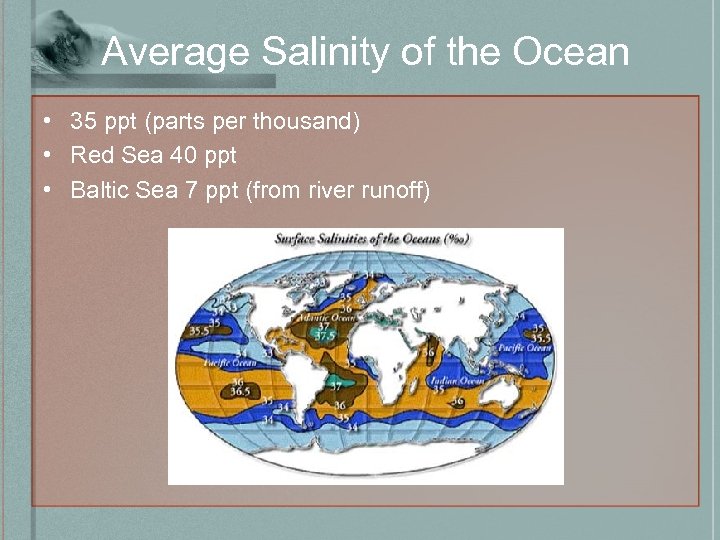 Average Salinity of the Ocean • 35 ppt (parts per thousand) • Red Sea 40 ppt • Baltic Sea 7 ppt (from river runoff)
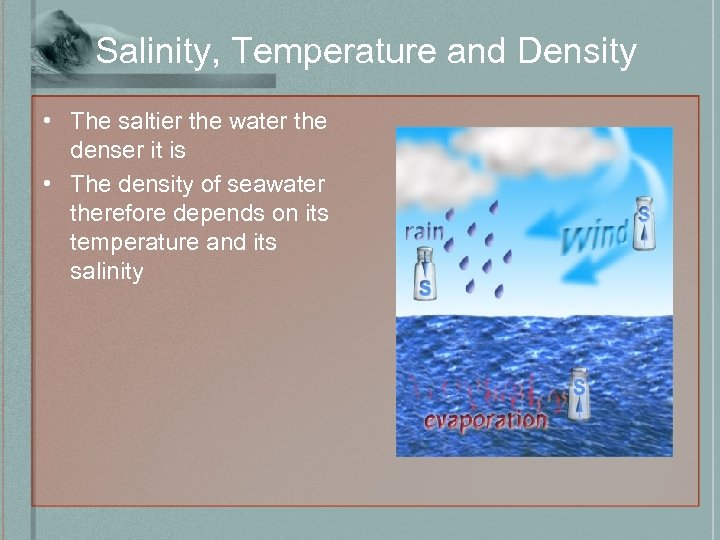 Salinity, Temperature and Density • The saltier the water the denser it is • The density of seawater therefore depends on its temperature and its salinity
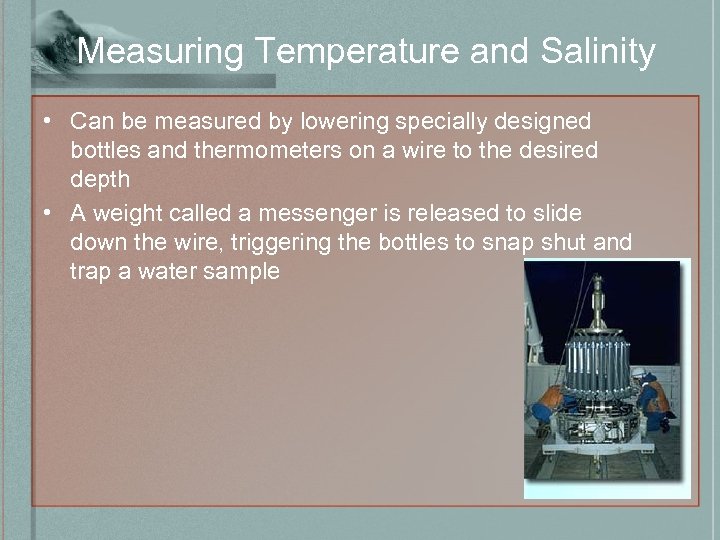 Measuring Temperature and Salinity • Can be measured by lowering specially designed bottles and thermometers on a wire to the desired depth • A weight called a messenger is released to slide down the wire, triggering the bottles to snap shut and trap a water sample
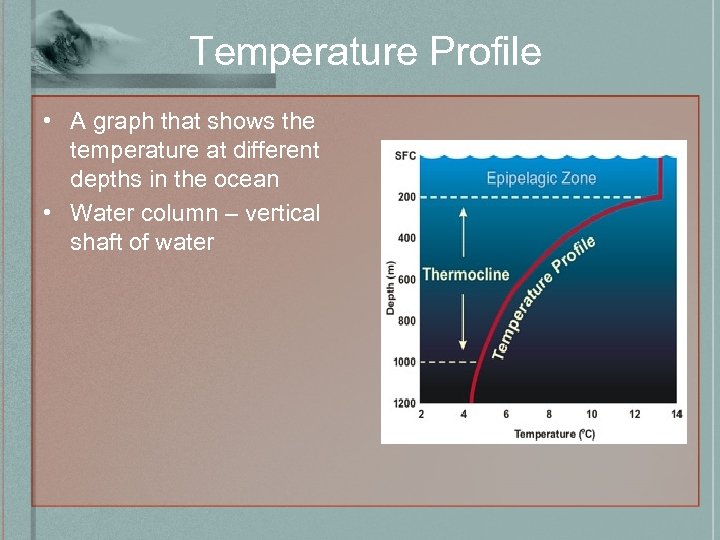 Temperature Profile • A graph that shows the temperature at different depths in the ocean • Water column – vertical shaft of water
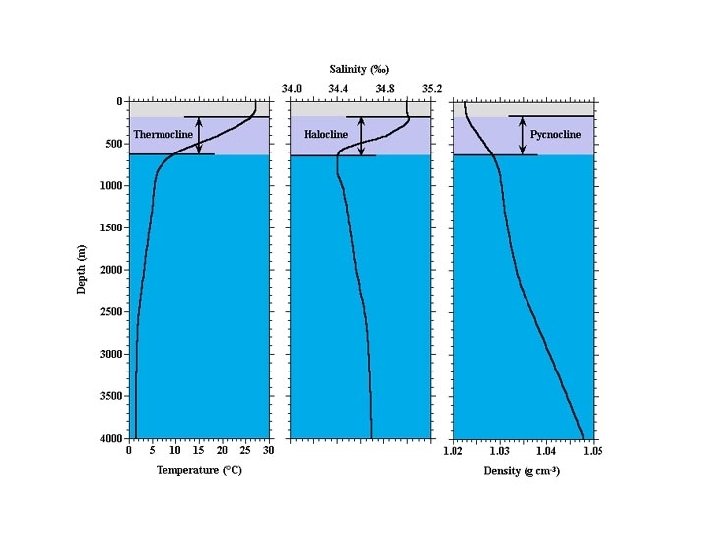
 Modern Technology • Oceanographers usually use electronic sensors to quickly and accurately record salinity, temperature and depth throughout the water column, rather than at certain depths • CTDs – Conductivity Temperature Depth meters • XBTs – Expendable bathythermographs – measure temperature
 Problem • Measurements can only be made at one place at one time – difficult to get information over a large area • Ship had to move to a new place to make more measurements • Conditions change because of currents or weather • Many ships would help but it is expensive
 Part Solution • Make measurements with automated instruments that are left in the ocean • Satellites can measure surface conditions
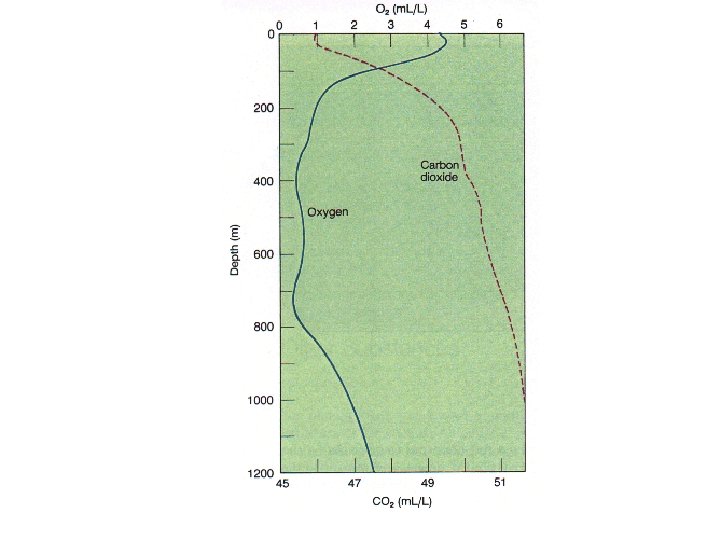
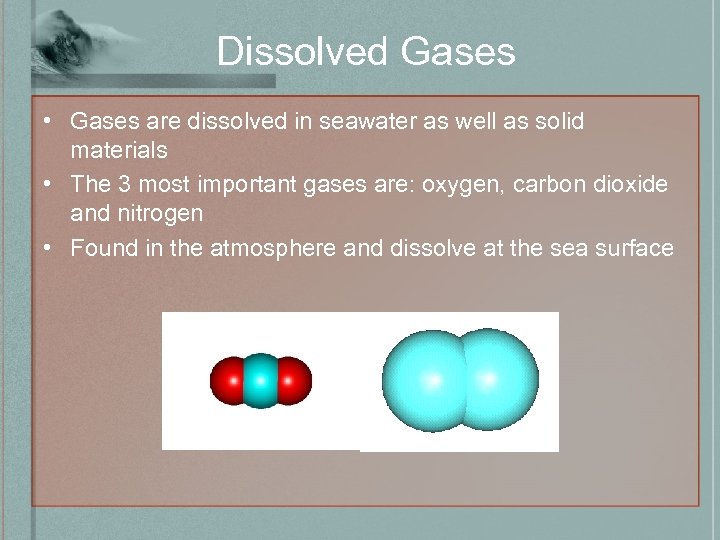 Dissolved Gases • Gases are dissolved in seawater as well as solid materials • The 3 most important gases are: oxygen, carbon dioxide and nitrogen • Found in the atmosphere and dissolve at the sea surface
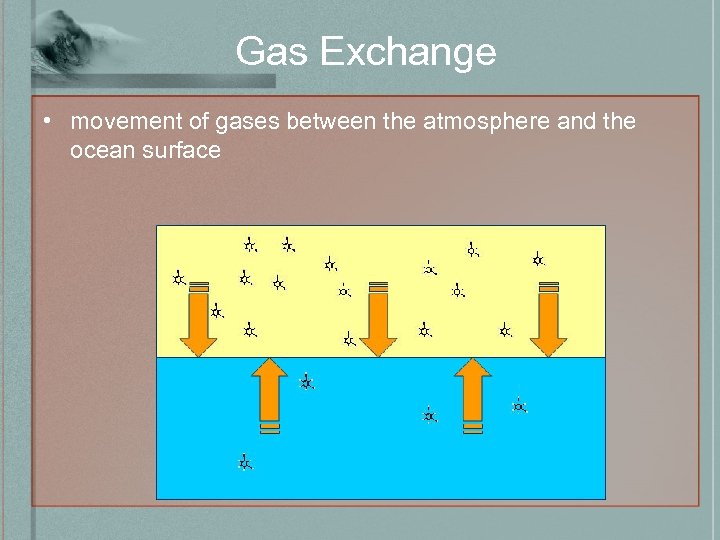 Gas Exchange • movement of gases between the atmosphere and the ocean surface
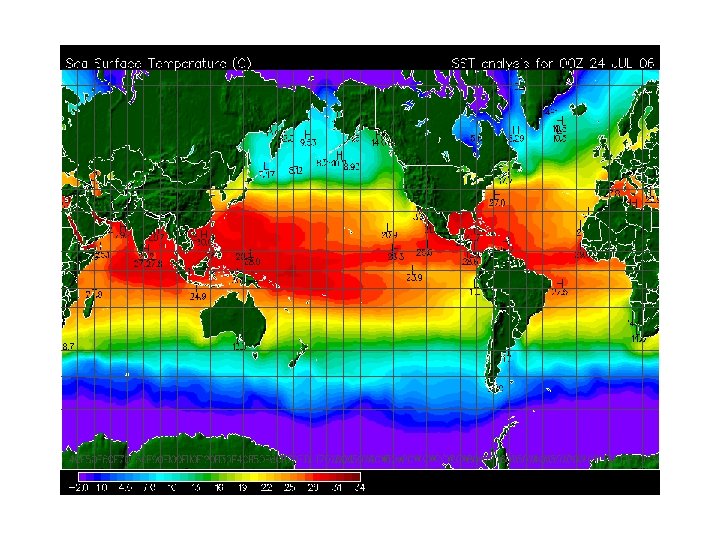
 • Gases dissolve better in cold than warm water • Dissolved gas concentrations are higher in polar waters than in the tropics
 Oxygen • • Not very soluble 0 to 8 milliliters per liter of seawater On average 4 to 6 ml/L Air has 210 ml/L
 Carbon Dioxide • More soluble than oxygen because it reacts chemically when it dissolves • 80% of the dissolved gas in the ocean • . 04% in air • Stores more than 50 times as much total CO 2 as the atmosphere
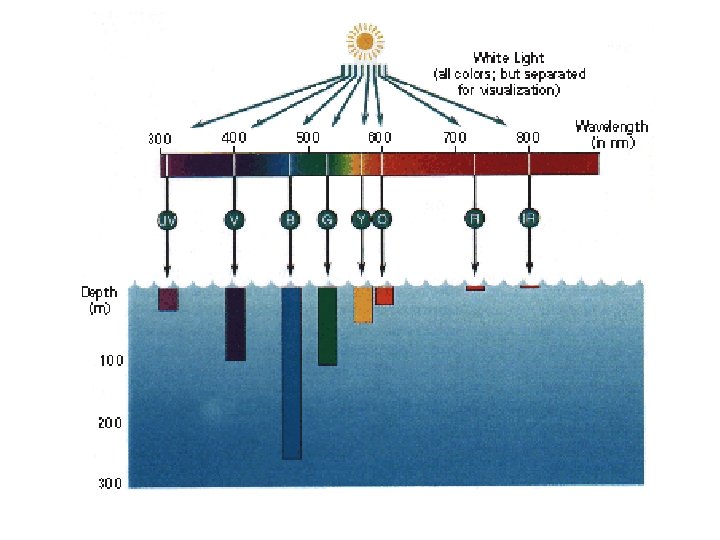
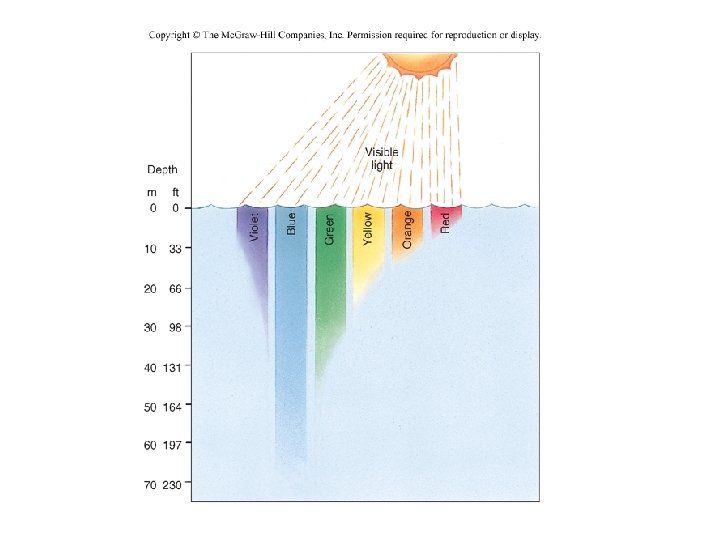
 Transparency • • • Biologically important property Sunlight can penetrate into the ocean Allows for photosynthesis Not all colors penetrate seawater equally well Water is most transparent to blue light
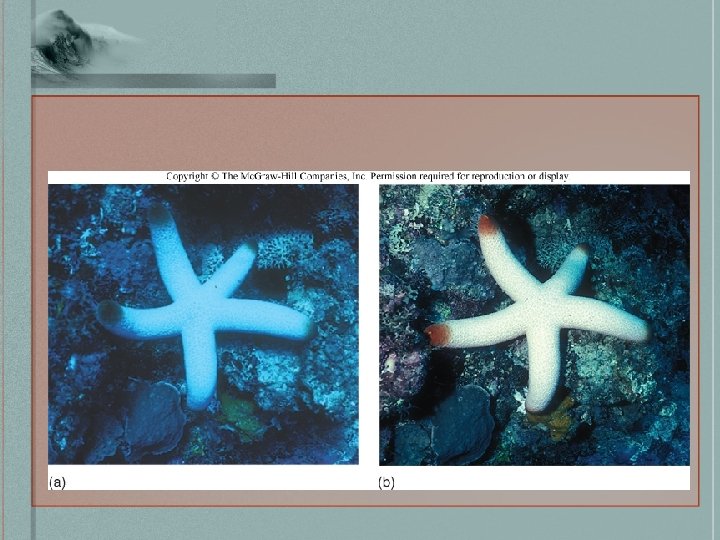
 • As depth increases more colors are filtered out • Red is the first to be filtered out • Something that is red at the surface looks black or gray at depth because there is no red light to reflect off them and be seen • At depths of 1000 m or 3300 ft there is total darkness
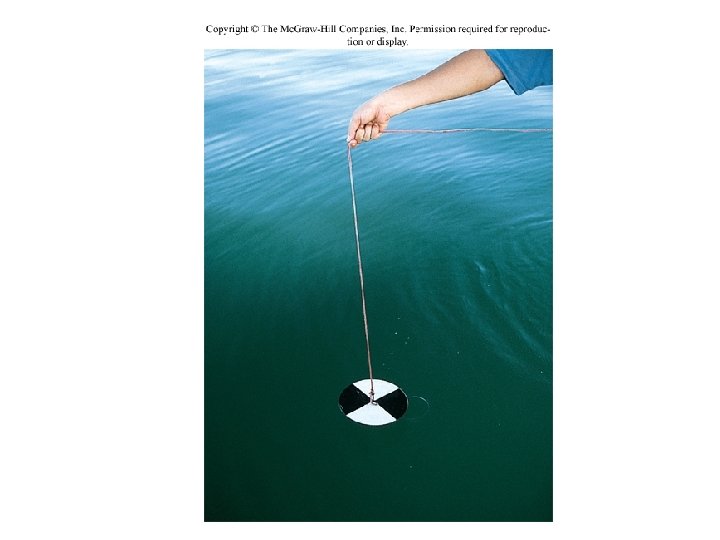
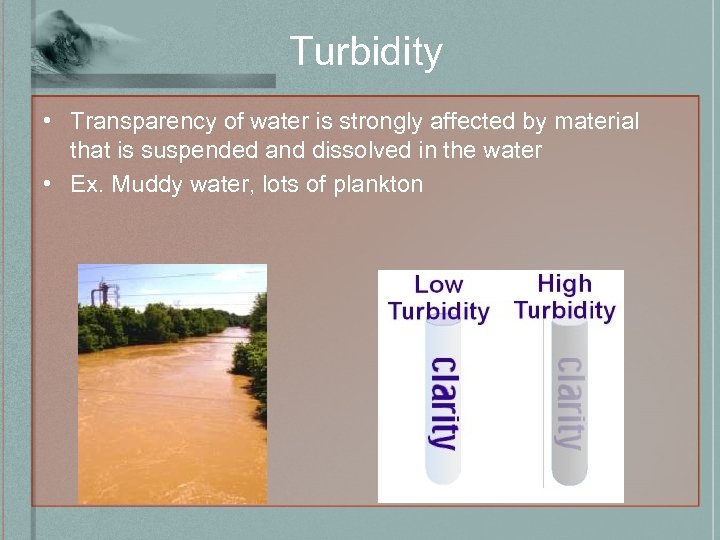 Turbidity • Transparency of water is strongly affected by material that is suspended and dissolved in the water • Ex. Muddy water, lots of plankton
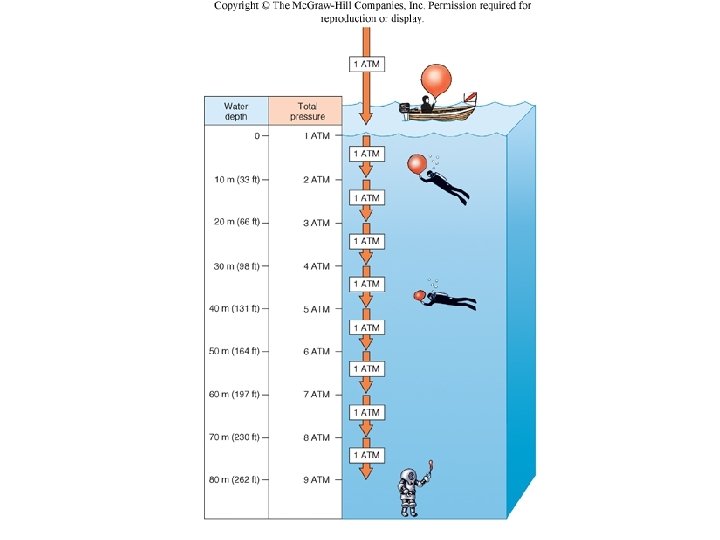
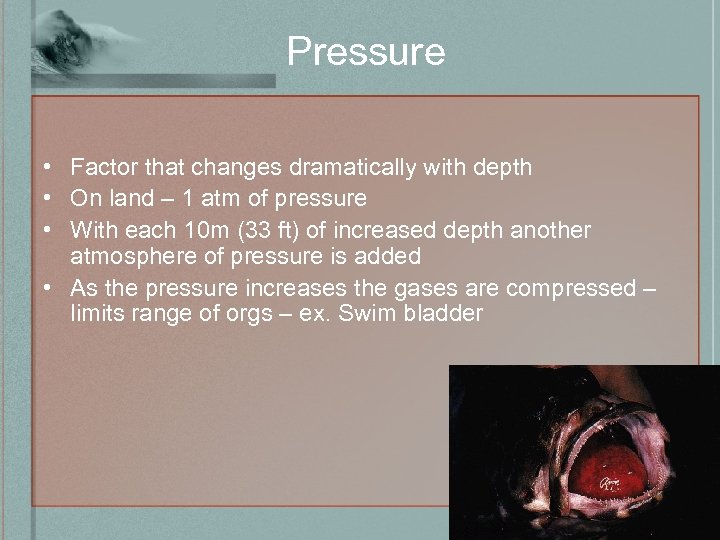 Pressure • Factor that changes dramatically with depth • On land – 1 atm of pressure • With each 10 m (33 ft) of increased depth another atmosphere of pressure is added • As the pressure increases the gases are compressed – limits range of orgs – ex. Swim bladder
 Water Density and the Three Layered Ocean
 • Much of the three dimensional structure of the sea, especially in relation to depth is controlled by the density of the water
 Stability and Overturn • Densest water sinks so the ocean is usually layered or stratified • Deep water – cold and dense • Surface water – warm and light
 Water Column Stability • Stable Water Column - Less dense on top, dense on bottom • Low stability – surface water is only slightly less dense • Highly stable – large density difference • Unstable – surface water more dense than bottom water
 • Downwelling – when surface water sinks • Overturn – when dense surface water displaces deeper water • Temperature and density profiles are vertical straight lines for water columns experiencing overturn
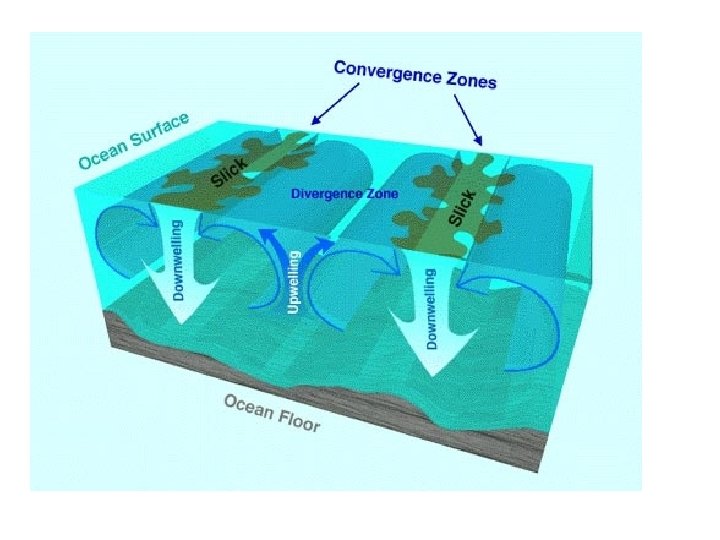
 • Overturn usually occurs in temperate and polar regions during the winter when the surface water cools • The water descends to a depth determined by its density
 • The processes that change salinity in the open ocean (precipitation, evaporation and freezing) occur only at the surface • Temperature changes occur only at the surface
 Water Mass • Once surface water has sunk its properties do not change • The volume of water has a “fingerprint”, a characteristic combination of temperature and salinity • Oceanographers can tract the movement or circulation of water masses
 Thermohaline Circulation • Circulation driven by changes in density which in turn is determined by temperature and salinity • Extend throughout the ocean depths • Important in regulating earth’s climate and chemically mixing the oceans • Brings dissolved oxygen to the deep sea • Helps determine the abundance of life in the deep sea
 The Three. Layered Ocean
 Surface Layer • 100 to 200 m thick (330 to 660 ft) • Mixed by wind, waves and currents • Also known as the mixed layer
 Thermocline • Sudden changes in temperature over small depth intervals • seasonal
 Intermediate Layer • Below the surface layer of around 1500 m ft) • Contains the main thermocline (5000
 Main Thermocline • zone of transition between warm surface water and cold water below • lies in the intermediate layer • rarely breaks down • feature of the open ocean
 Deep and bottom layers • Below 1, 500 m or (5, 000 ft) • Uniformly cold o o • Typically less than 4 C (39 F)
 Motion in the Ocean
 Surface Circulation • Most intense motion of the ocean occurs at the surface in the form of surface currents and waves • Driven by wind which is driven by heat from the sun • Coriolis effect also strongly influences
 Coriolis Effect • Earth is round and rotating so anything that moves over its surface tends to turn a little rather than moving in a single straight line • Mostly effects winds and ocean currents that move over large distances
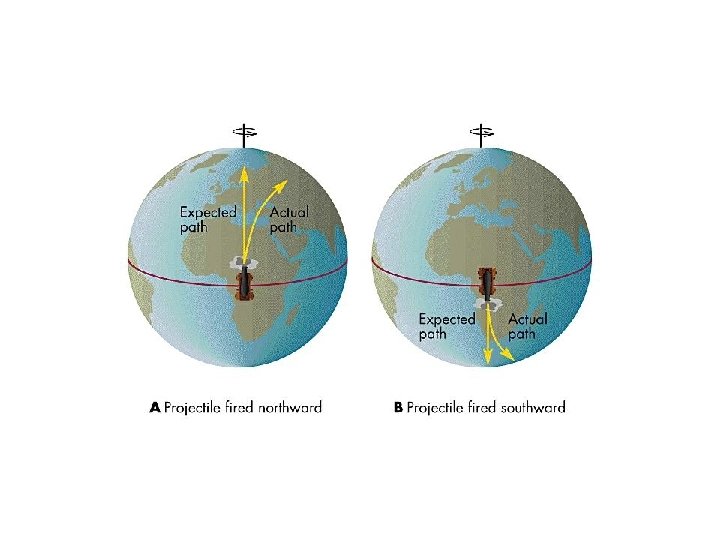
 • Northern Hemisphere – deflects things to the right • Southern Hemisphere – deflects things to the left
 Winds Patterns • Winds in our atmosphere are driven by heat energy from the sun • Most of the solar energy is absorbed near the equator • Warm air rises at the equator • Air from adjacent areas gets sucked in to replace the rising equatorial air creating wind
 • The wind does not move straight to the equator but are bent by the Coriolis effect – approach at a 45 angle
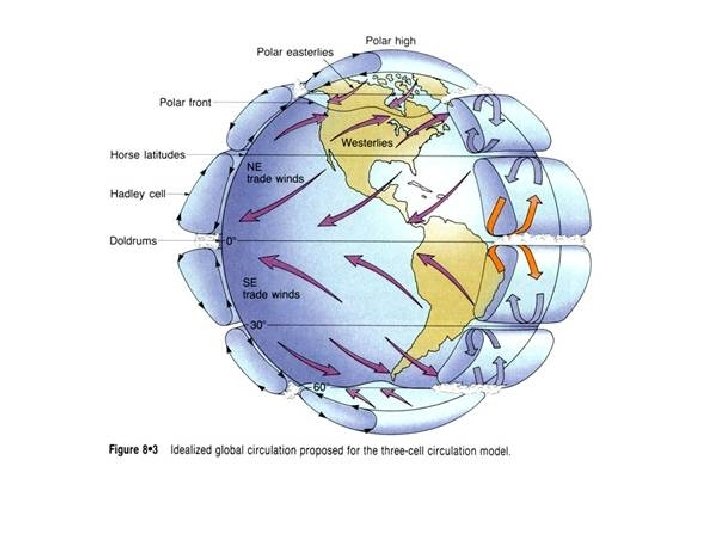
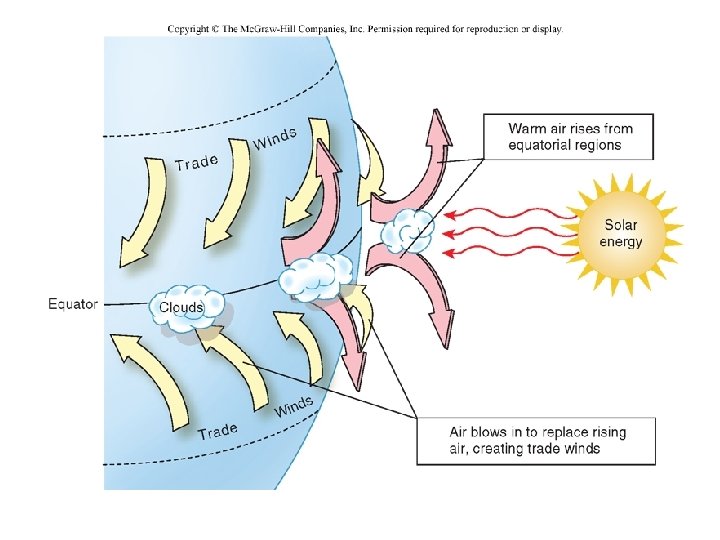
 Trade Winds • winds near the equator (northeast and the southeast) • steadiest winds on earth • between 0 and 30 degrees
 Westerlies • • driven by solar energy more variable between 30 and 60 degrees move in the opposite direction to the trade winds
 Polar Easterlies • Most variable • Between 60 and 90 degrees
 Surface Currents • The major wind fields of the atmosphere push the sea surface creating currents • All major surface currents of the open ocean are driven by the wind
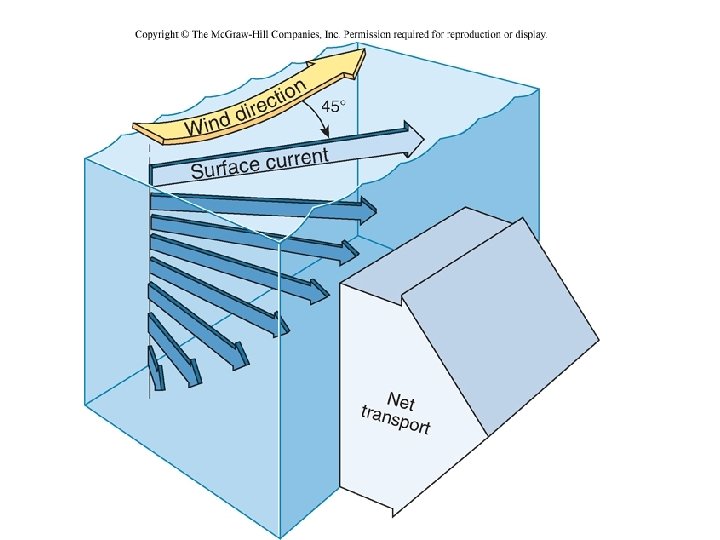
 • When pushed by the wind the uppermost layer of water begins to move • The water does not move in the same direction as o the wind but at a 45 angle because of the Coriolis effect • The top layer pushes the water below but at a 45 o angle and so on
 Ekman Spiral • Spiral change in the movement in the water column when the water is pushed by the wind • At a depth of a few hundred meters the wind in not felt at all • Ekman Layer – upper part of the water column that is affected by the wind
 • Ekman transport – taken as a whole the Ekman layer moves at 90 o from the wind direction
 Consequence of the Coriolis Effect • Trade winds move towards the equatorial currents that these winds produce move parallel to the equator
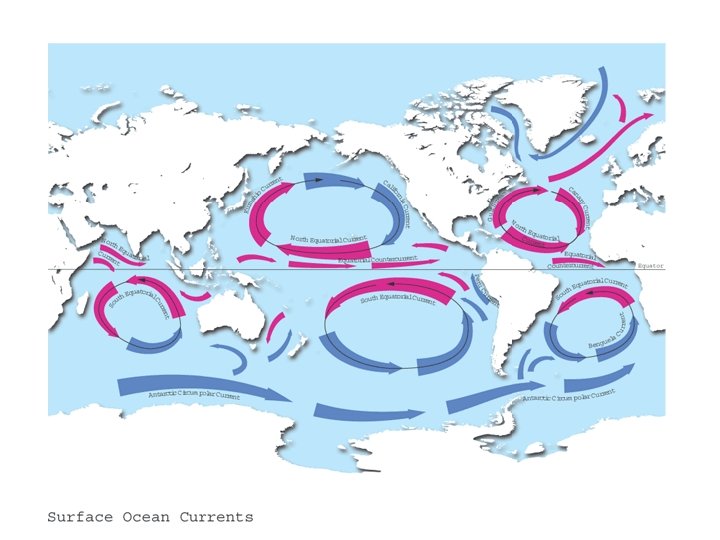
 Gyres • Wind driven surface currents combined into huge more less circular systems • Under the influence of the Coriolis Effect
 Transportation of Solar Heat • Warm currents on the western sides of the gyres carry vast amounts of solar heat from the equator to higher latitudes • Cold currents flow in opposite direction on the eastern sides • Ocean currents act as a giant thermostat warming the poles and cooling the tropics
 • Large scale fluctuations in current patterns can dramatically effect weather around the world - El Nino
 Role of Surface Currents • Surface water temperatures are higher on the western sides of the oceans where currents carry warm water away from the equator
 Waves
Waves
 Waves • Wind causes • Most familiar of all ocean phenomena • Affect the organisms that live on the shore
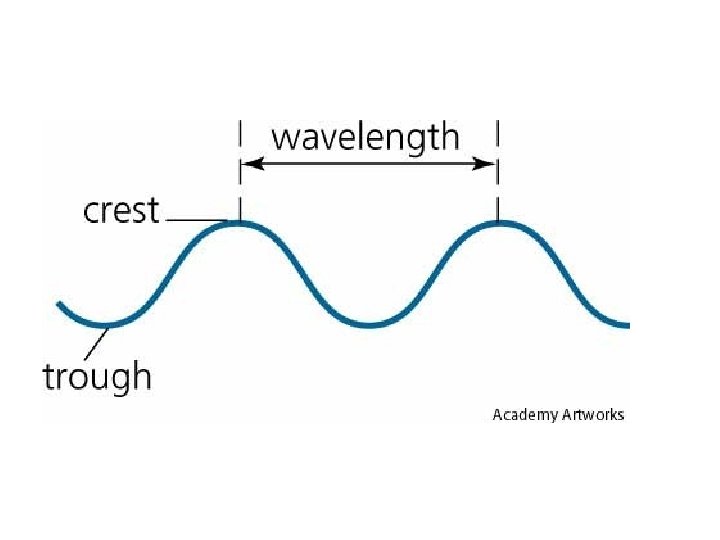
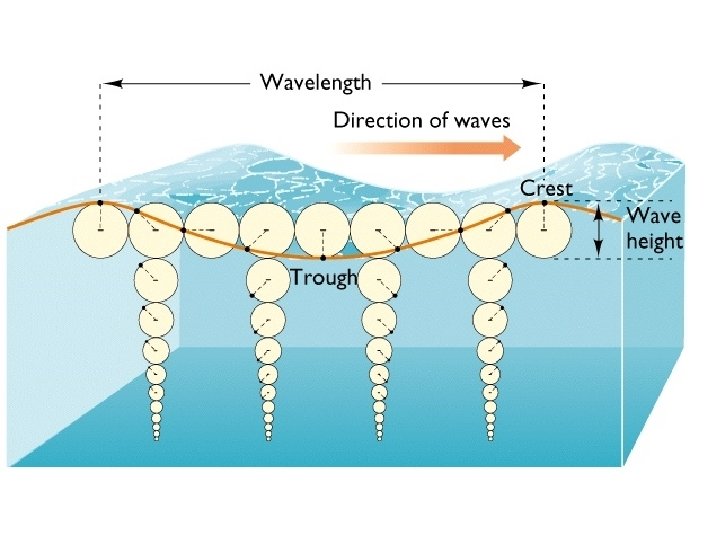
 Wave Parts • Crest – highest part of a wave • Trough – lowest part of a wave • Wave Height – vertical distance between trough and crest • Wavelength – distance between two successive crests or troughs • Period – time a waves takes to go by any given point
 Water Movement • In a wave crest, water moves up and forward • In a wave trough, water moves down and back • On the whole water particles do not go anywhere at all – just move in circles • Waves carry energy across the surface, not water
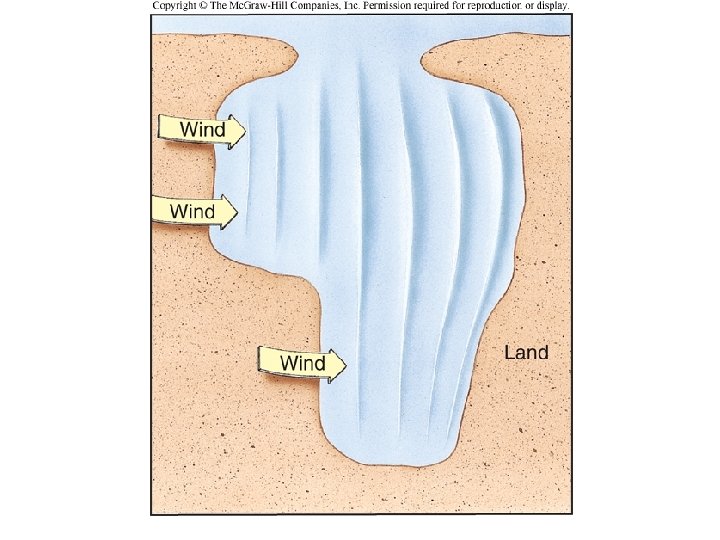
 Formation of waves • Begins when the wind starts to blow • The faster and longer the wind blows the larger the waves get • Fetch – span of open water over which the wind blows – determines size of waves
 Seas • waves that have sharp peaks and relatively flat wave troughs
 Swells • Waves with smooth rounded crests and troughs • Similar to ideal waves
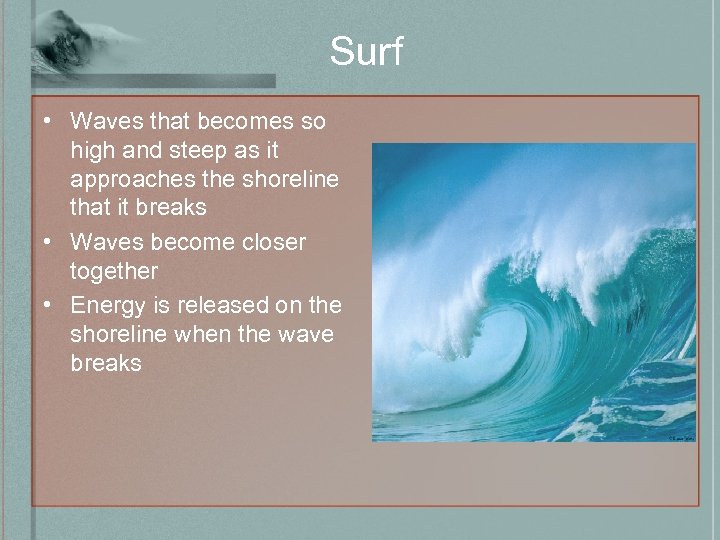 Surf • Waves that becomes so high and steep as it approaches the shoreline that it breaks • Waves become closer together • Energy is released on the shoreline when the wave breaks
 Tsunamis • Deadly waves • Japanese word for “harbor wave” • Produced by earthquakes, landslides, volcanoes, and other disturbances of the sea floor • Tidal waves – properly called – seismic sea waves
 • Long fast moving waves • Wavelengths of 240 km (150 mi) • Travel 700 km/hr (435 mi/hr) – as fast as a jet plane • Open ocean – not very high – 1 m
 Warning • Worldwide network of seismic monitoring stations that provide instant notice of an earthquake or other seismic disturbance • System has saved lives but is far from perfect • Can’t predict which earthquakes produce killer tsunamis • Also many people in developing countries do not get the warnings
 Tides
Tides
 Tides • • Dominant influence on near shore sea life Expose and submerge organisms on the shore Drive the circulation of bays and estuaries Triggers spawning
 Causes of the Tides • Caused by the gravitational pull of the moon and sun by rotations of the earth moon and sun • Earth and the moon rotate around a common point (their combined center of mass) • This rotation produces a centrifugal force
 • The centrifugal force just balances the gravitational attraction between earth and the moon • The centrifugal force and the moon’s gravity are not in perfect balance everywhere on earth’s surface
 • On the side nearest the moon, the moon’s gravity is stronger and pulls the water toward the moon • On the side away from the moon the centrifugal force dominates and pushes the water away from the moon
 • If earth were completely covered with water, the water would form two bulges on opposite sides of the planet • Water would be deep under the bulges and shallower away from the bulges
 • Earth is spinning like a top on its own axis • As it does this any given point would be under the bulge and then away from the bulge • High tide occurs when a point is under a bulge and low tide occurs when it is away from a bulge
 • The earth rotates on its axis every 24 hours so a point will have two high tides and two low tides • The moon advances on it orbit each day so a full tidal cycle takes 24 hours and 50 minutes
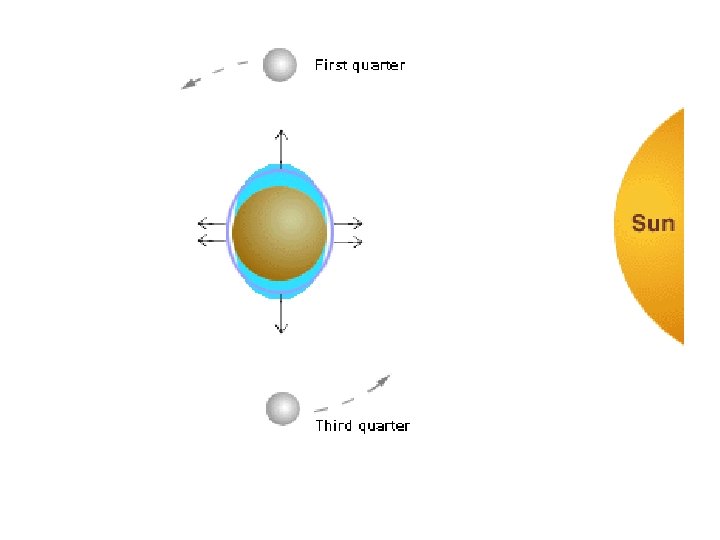
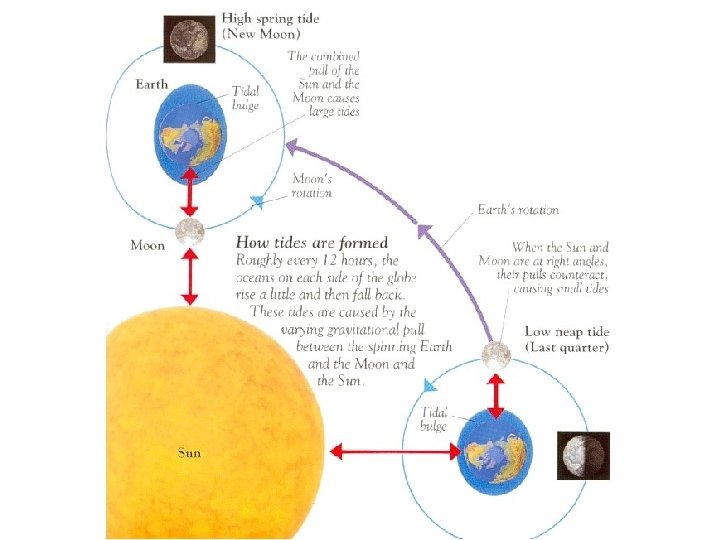
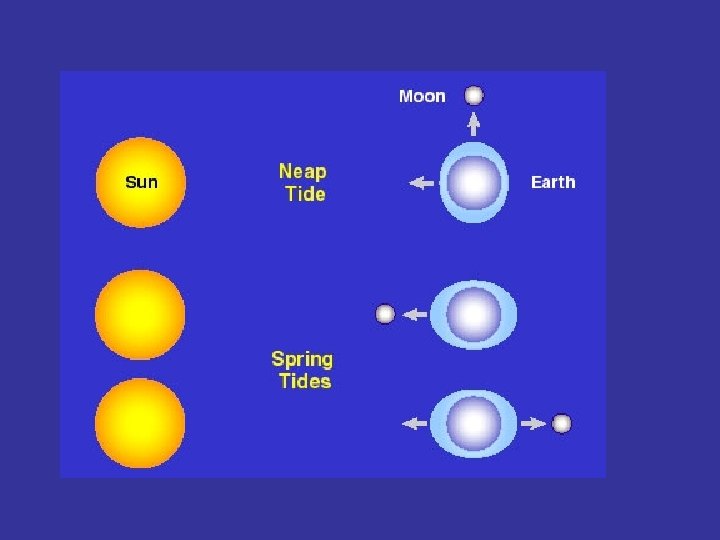
 The Sun’s Bulge • Sun produces a bulge like the moon but is it smaller • When the sun and the moon are in line there bulges add up and when they are at right angle to one another they cancel each other out
 Tidal Range • Difference in water level between successive high and low tides
 Spring Tide • When the sun and moon bulge add together • High high tides and low tides • Named because they seem to surge up like spring water • Occur when there is a full or new moon
 Neap Tide • Occur when sun and moon are at right angles to one another • Moon is in the 1 st and 3 rd quarters • Average tides • Low high tide and a high low tide
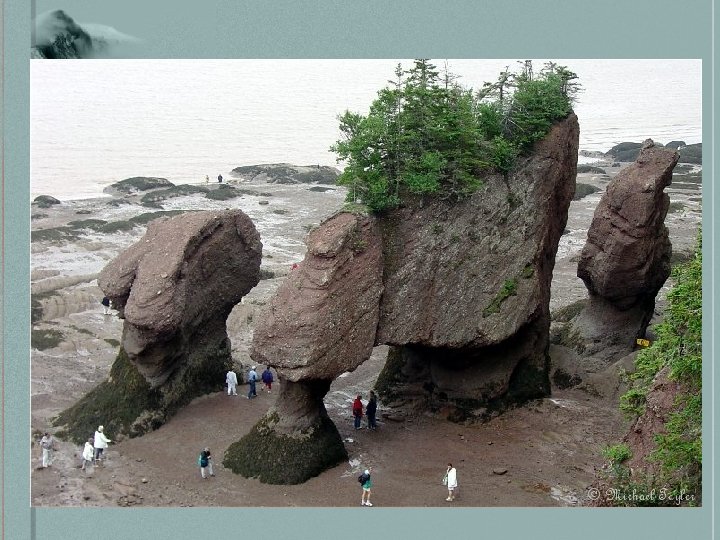
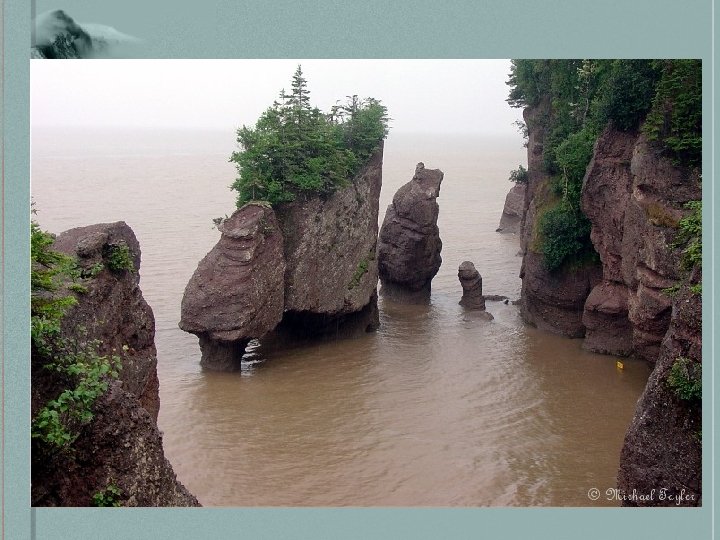
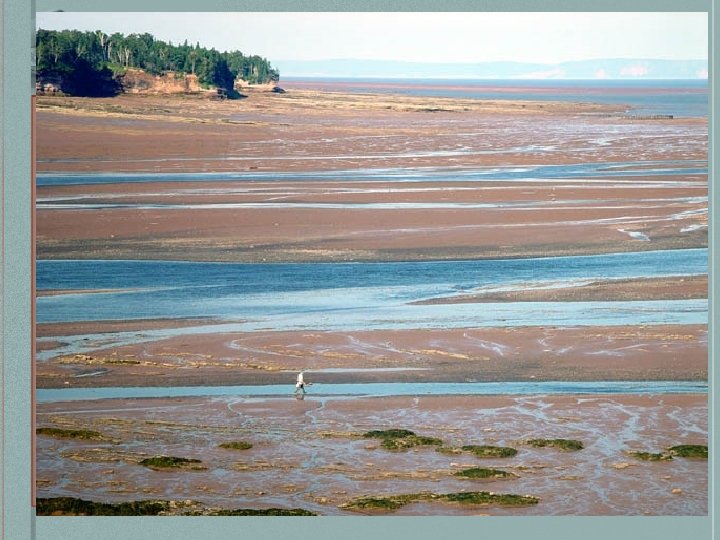
 Variations in Tides • Tides vary from place to place depending on the location and on the shape and depth of the basin
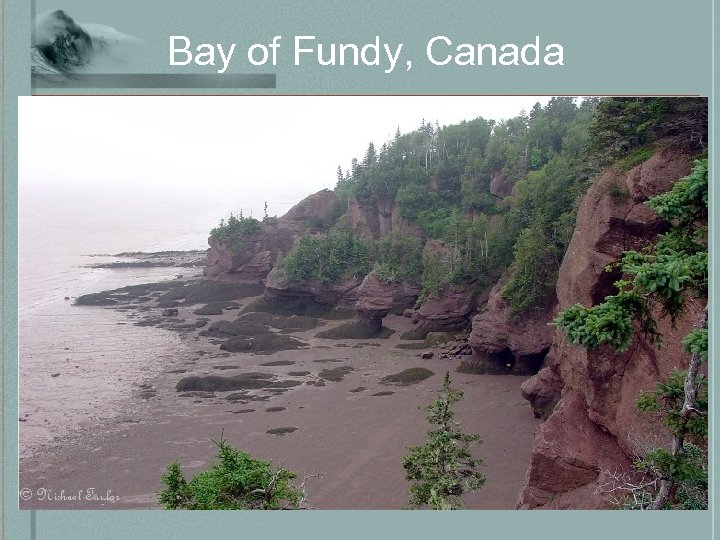 Bay of Fundy, Canada
 Tide Terms • Semidiurnal tides – two high and two low tides • Mixed semidiurnal tides- successive high tides of different height • Diurnal Tides – one high and one low uncommon
 Tide Tables • Give the predicted time and height of high and low tides • Very accurate
 The End