


 Скачать презентацию Check in homework The 1920 s
341396ed152408da58b0d23bbc0cf805.ppt
- Количество слайдов: 105
 • Check in homework – “The 1920’s Bring Social Change” • Go over homework • Begin PPT “Manners and Morals Change”
 Manner and Morals Change in the 1920’s WW I brought many changes Two ways of life exist in America Rural and Urban
 City people & small town rural people • Standards of conduct were more relaxed in the cities • City people were more tolerant of drinking and gambling • Social relations between men and women were less carefully regulated • Small town people believed city life would lead to moral decay • City people felt behavior was matter of personal choice rather than public decision
 City life was exciting • Many things to do: museums, art exhibits, plays, athletic events, trade expositions • New ideas in science were examined and accepted in the cities • People were judged by their accomplishments rather than their social background • Young men and women went to cities to find jobs • After WW I, the United States was becoming an urban nation
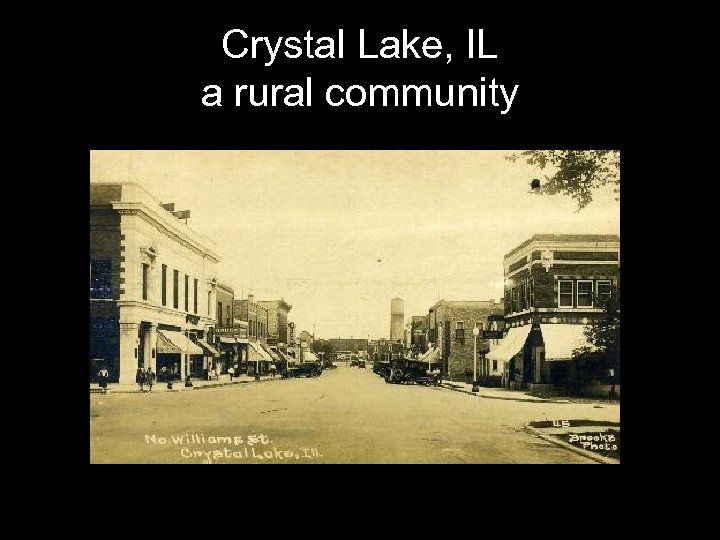 Crystal Lake, IL a rural community
 • • During the late 1800's and early 1900's, Crystal Lake enjoyed nationwide fame through the manufacturing of architectural terra cotta and TECO pottery. Downtown Crystal Lake has several buildings adorned with locally produced terra cotta. Ice harvesting was also big business in Crystal Lake during this time, shipping ice by rail to nearby Chicago. The advent of refrigeration brought about the decline of the ice business. Crystal Lake served as a favorite vacation and weekend spot for many Chicagoans. They arrived regularly by train to stay at the resort hotels at or near the lake. Some prominent citizens chose Crystal Lake as their full time home. Charles S. Dole, of Amour and Dole, was one of them, building an elaborate mansion on 1, 000 acres overlooking the lake. The mansion was later used as headquarters for several ice companies. After laying vacant for several years, the property was sold in 1922 to the Lake Development Company with Mrs. Al "Lou" Ringling as one of the principal investors. She was the widow of the oldest Ringling Brother, of circus fame. The mansion was rejuvenated, the huge annex was constructed and thus the property was converted into the first Crystal Lake Country Club.
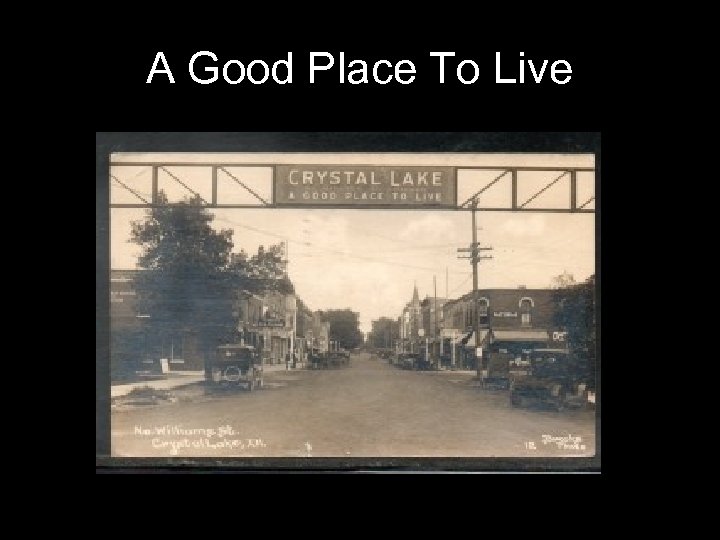 A Good Place To Live
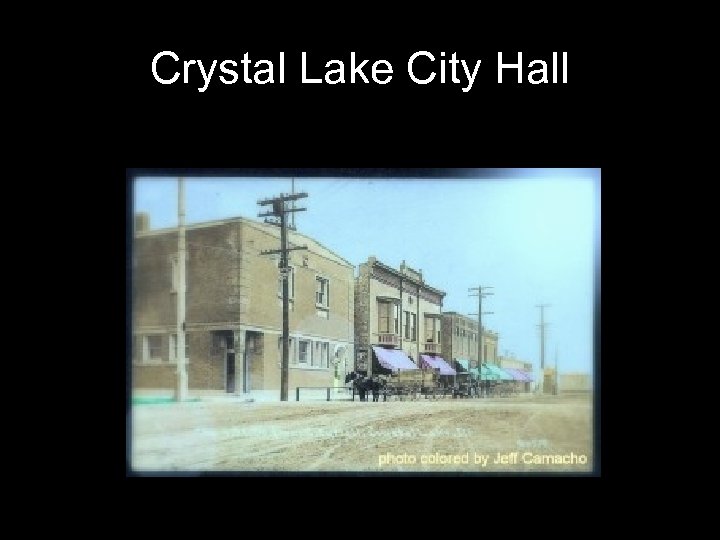 Crystal Lake City Hall
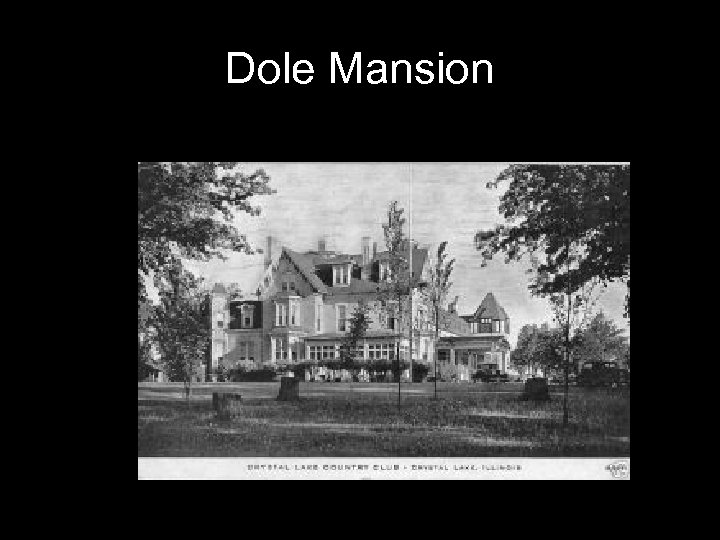 Dole Mansion
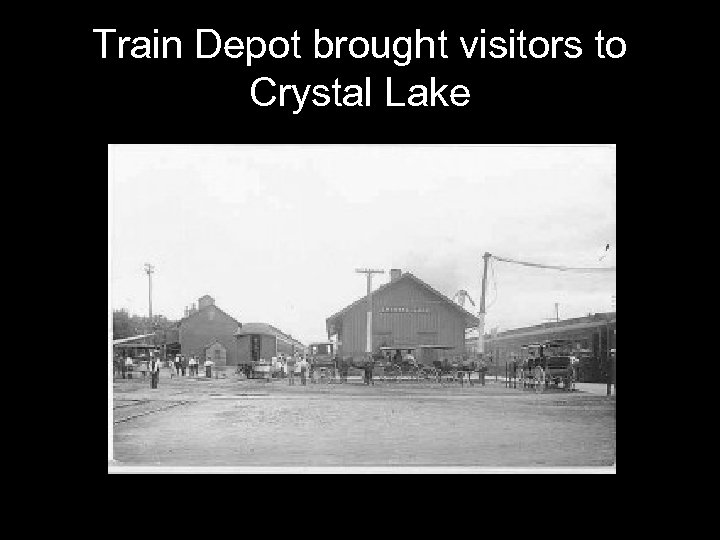 Train Depot brought visitors to Crystal Lake
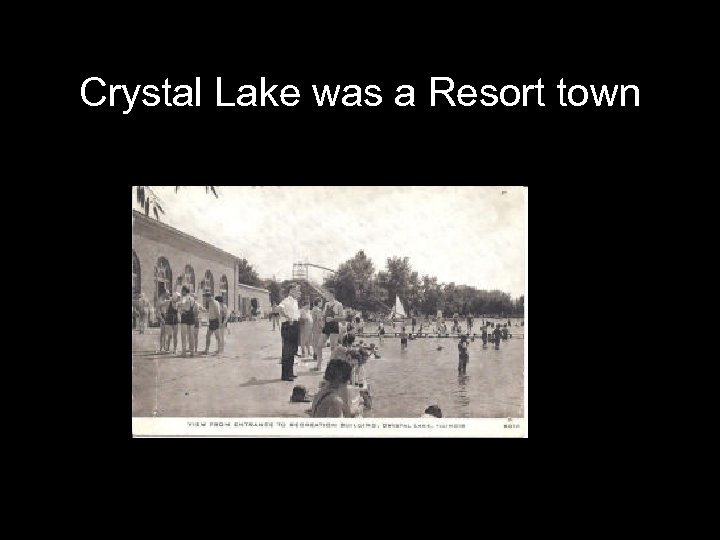 Crystal Lake was a Resort town
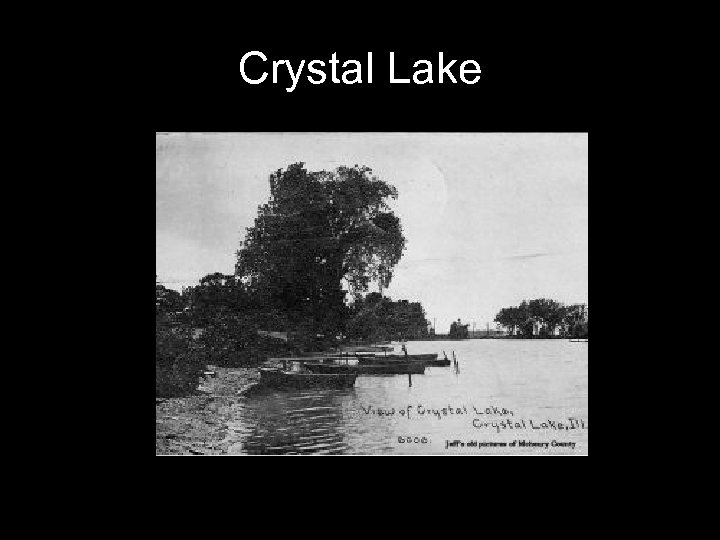 Crystal Lake
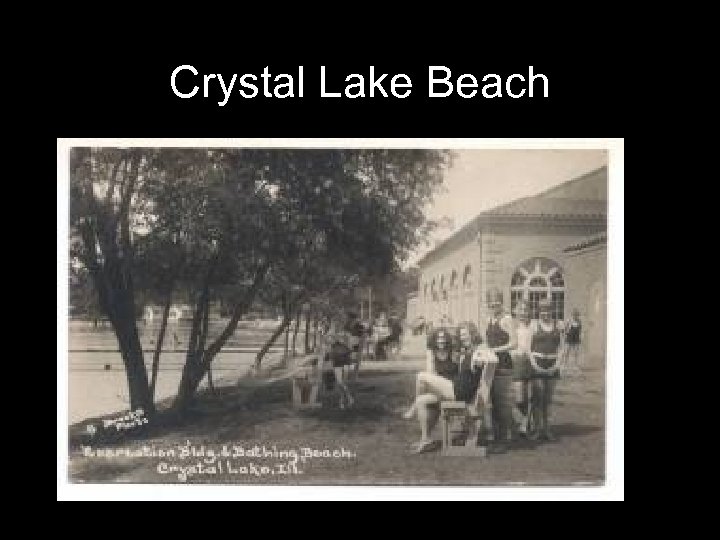 Crystal Lake Beach
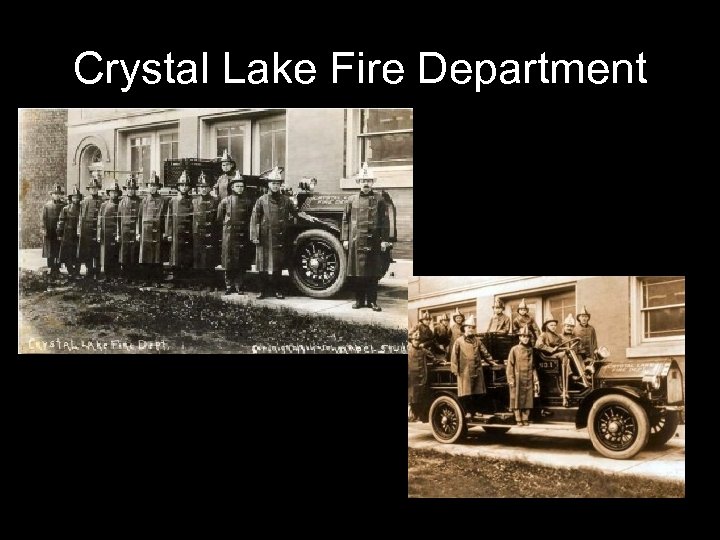 Crystal Lake Fire Department
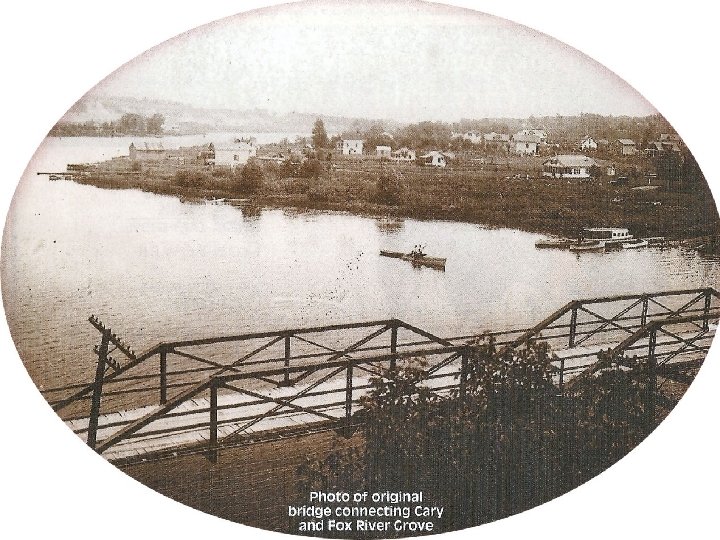
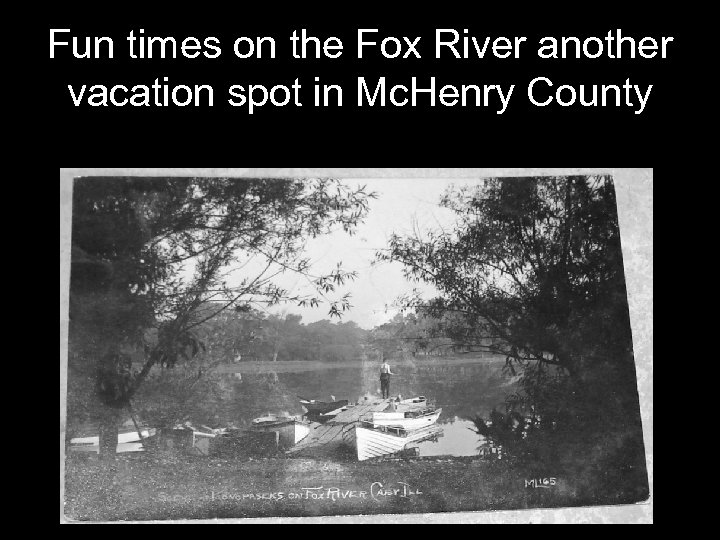 Fun times on the Fox River another vacation spot in Mc. Henry County
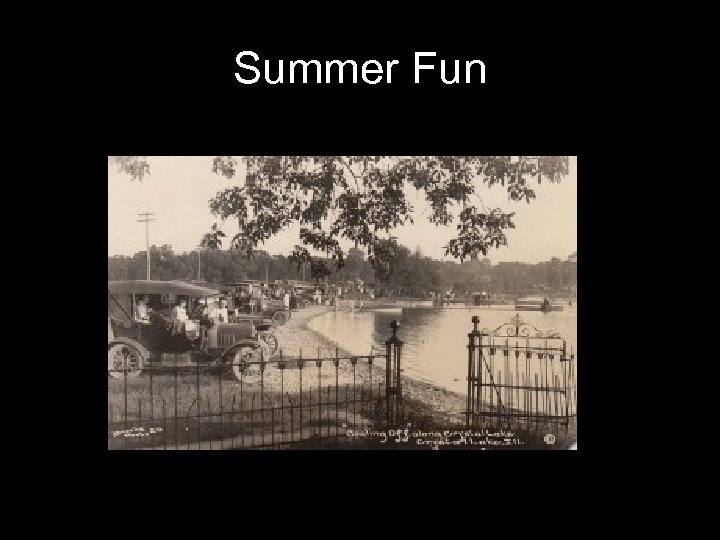 Summer Fun
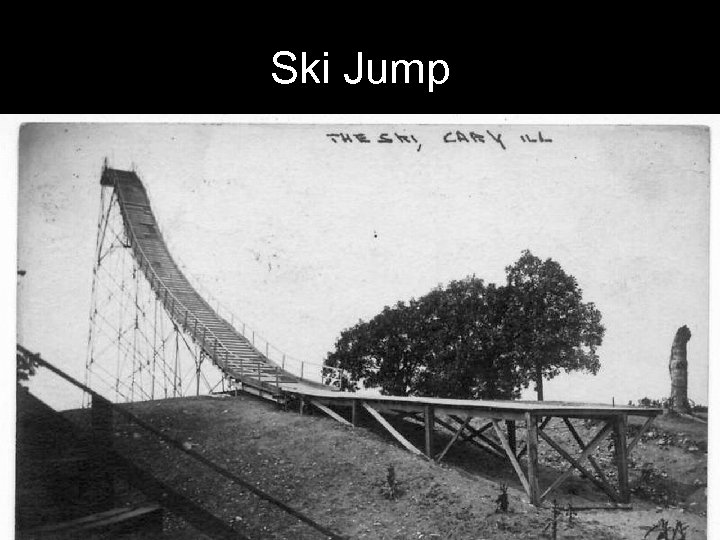 Ski Jump
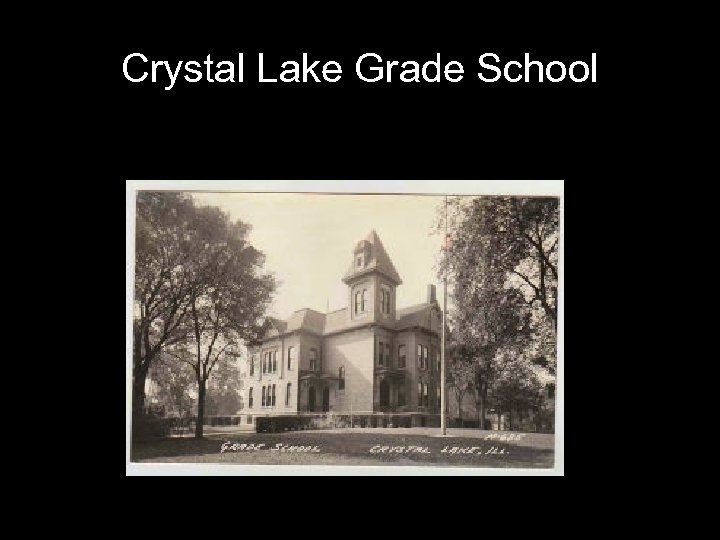 Crystal Lake Grade School
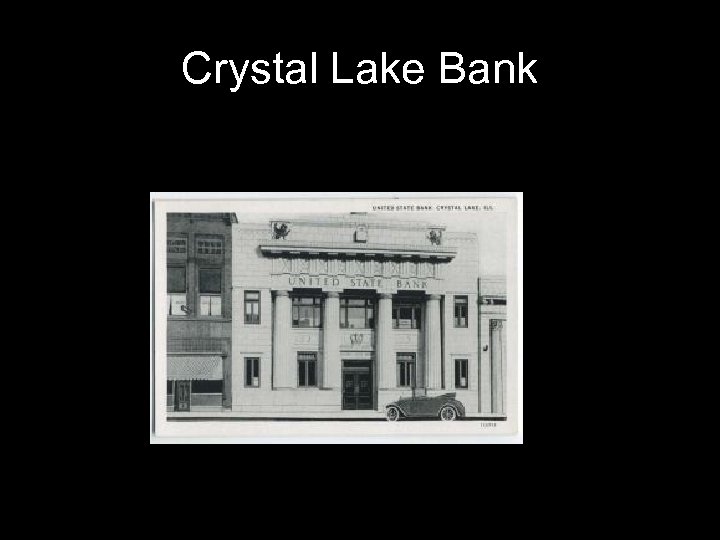 Crystal Lake Bank
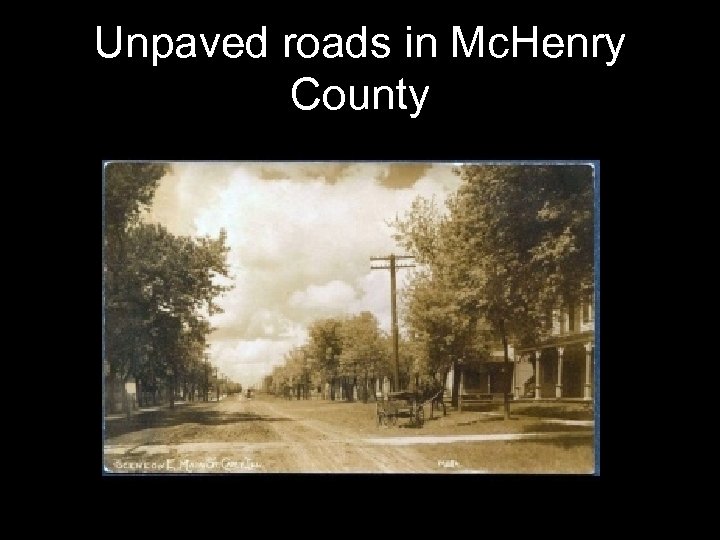 Unpaved roads in Mc. Henry County
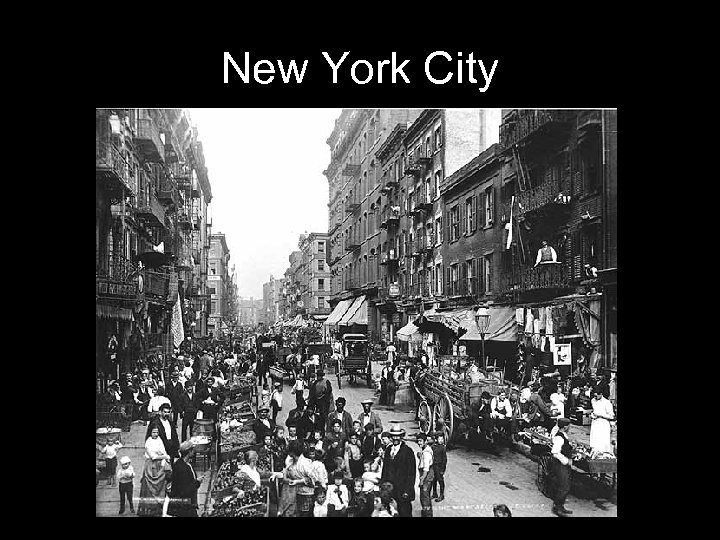 New York City
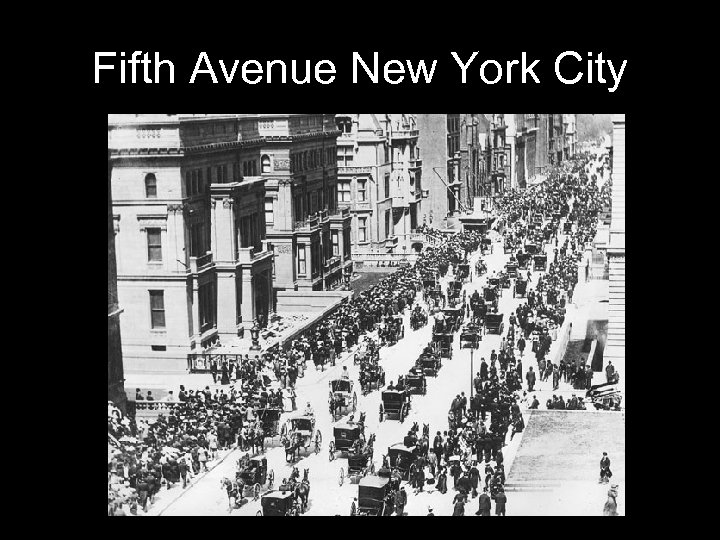 Fifth Avenue New York City
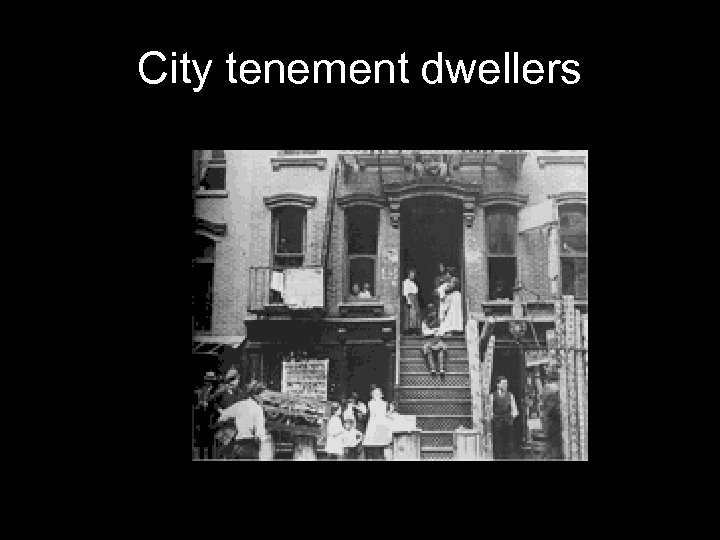 City tenement dwellers
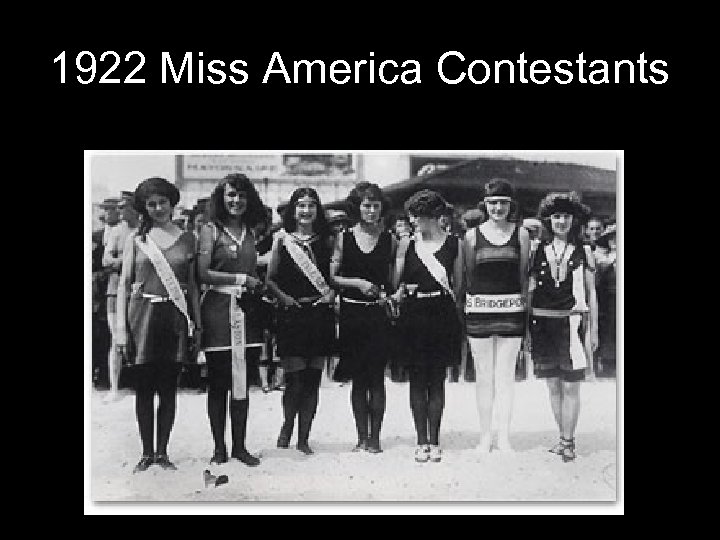 1922 Miss America Contestants
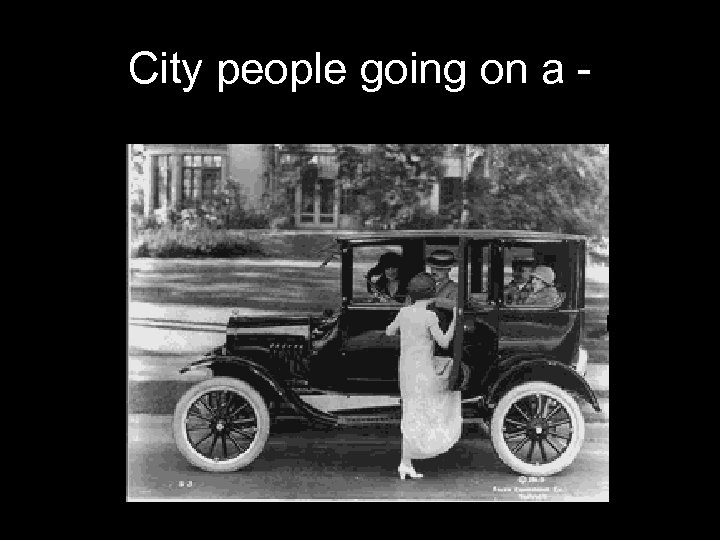 City people going on a -
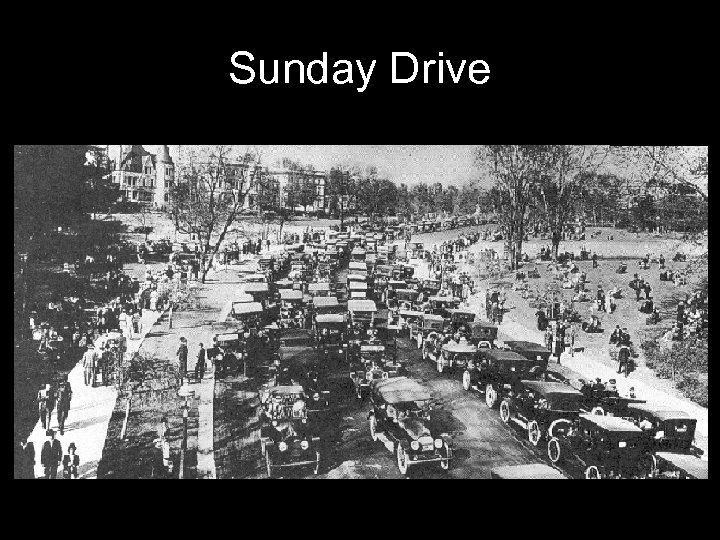 Sunday Drive
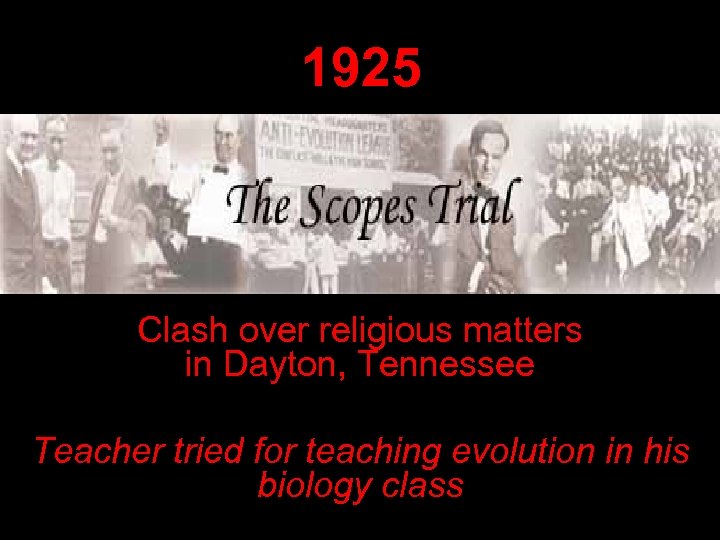 1925 Clash over religious matters in Dayton, Tennessee Teacher tried for teaching evolution in his biology class
 • John T. Scopes was tried for teaching evolution in his high school biology class • Tennessee law forbid the teaching of evolution Darwin’s theory that humans evolved from lower life forms (apes) • Fundamentalists (Creationists) who believe in a literal interpretation of the Bible were furious since they believed in the Bible’s Creation story (6 days 1 day of rest) • Today this is referred to as Intelligent Design • ACLU – American Civil Liberties Union hired the defense attorney(s) for Scopes • The case was suppose to hinge on a teacher’s freedom to teach
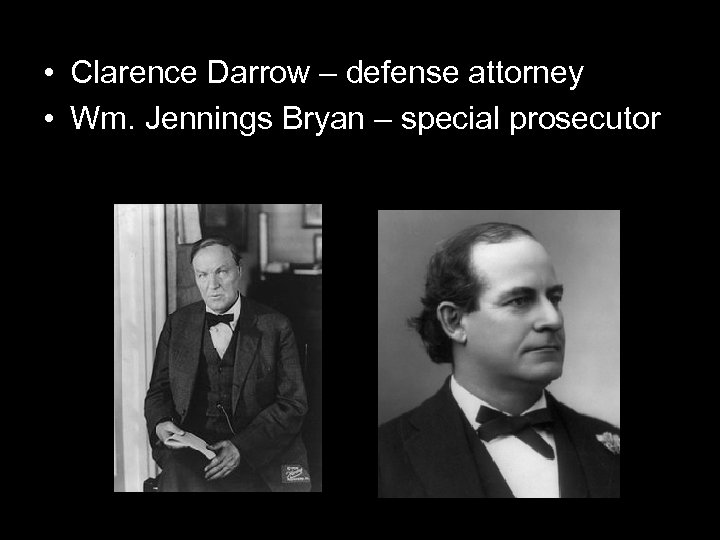 • Clarence Darrow – defense attorney • Wm. Jennings Bryan – special prosecutor
 William Jennings Bryan 1860 - 1925 • Ran for president 3 times as a Democrat • Secretary of State 1913 -1915 • Cared deeply about equality, worried that Darwin’s theories were being used by supporters of a growing eugenic movement that advocated the sterilization of “inferior stock” • Evolution would also undermine the traditional religious values • Bryan and his followers succeeded in getting 15 states to ban the teaching of evolution. • Died six days after the trial
 Williams Jennings Bryan • In 1920, he told the World Brotherhood Congress theory of evolution was "the most paralyzing influence with which civilization has had to deal in the last century" and that Nietzsche, in carrying theory of evolution to its logical conclusion, "promulgated a philosophy that condemned democracy, . . . denounced Christianity, . . . denied the existence of God, overturned all concepts of morality, . . . and endeavored to substitute the worship of the superhuman for the worship of Jehovah. "
 Clarence Darrow 1857 - 1938 • Corporate lawyer before becoming a labor lawyer and later a criminal lawyer • Chicago attorney who also had an office in Harvard, IL for a brief time • Famous “Leopold and Loeb” case where two wealthy Chicago teenagers (19 & 18) were accused of kidnapping and killing a 14 -year-old boy • Darrow argued against the death penalty for the teens and got them a life sentence.
 Clarence Darrow • He began taking criminal cases, because he had become convinced that we are used to describing as 'the criminal-justice system' was a gigantic fraud that ruined real people's lives because they had no representation capable of defending them properly against it. • “I am an agnostic; I do not pretend to know what many ignorant men are sure of”. • He was 70 when he defended Scopes
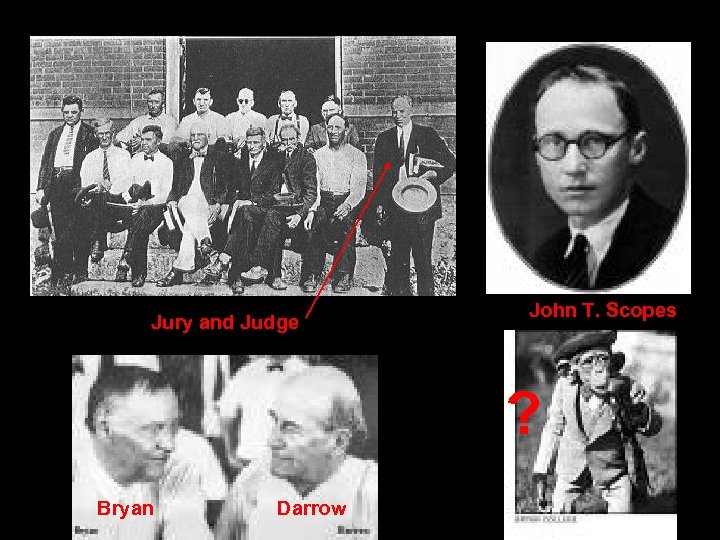 Jury and Judge John T. Scopes ? Bryan Darrow
 The Trial and the result • Reporters and photographers from big cities came to make fun of rural values and made the trial look like a circus • The trial became a battle of wits between fundamentalist William Jennings Bryan, the special prosecutor and the agnostic defense attorney, Clarence Darrow • Scopes was found guilty and fined $100 • The verdict was later set aside by the Tennessee Supreme Court on a technicality
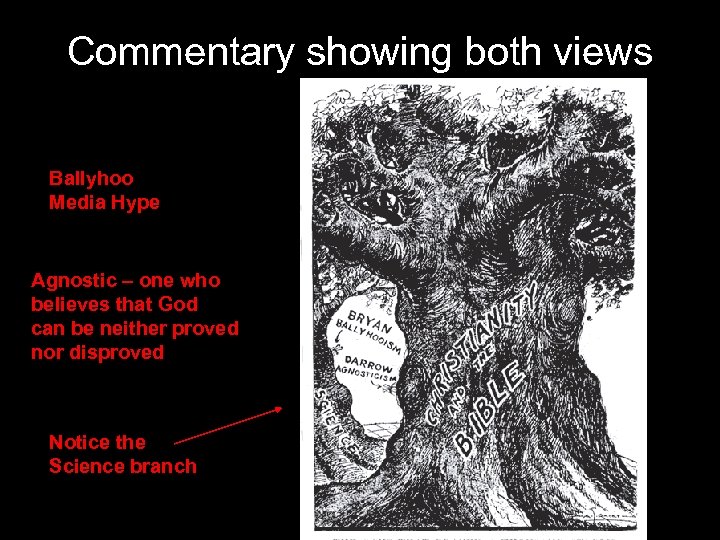 Commentary showing both views Ballyhoo Media Hype Agnostic – one who believes that God can be neither proved nor disproved Notice the Science branch
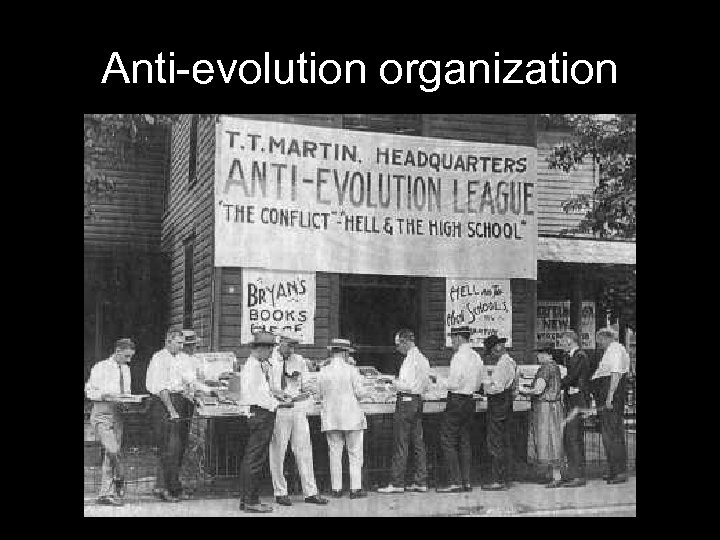 Anti-evolution organization
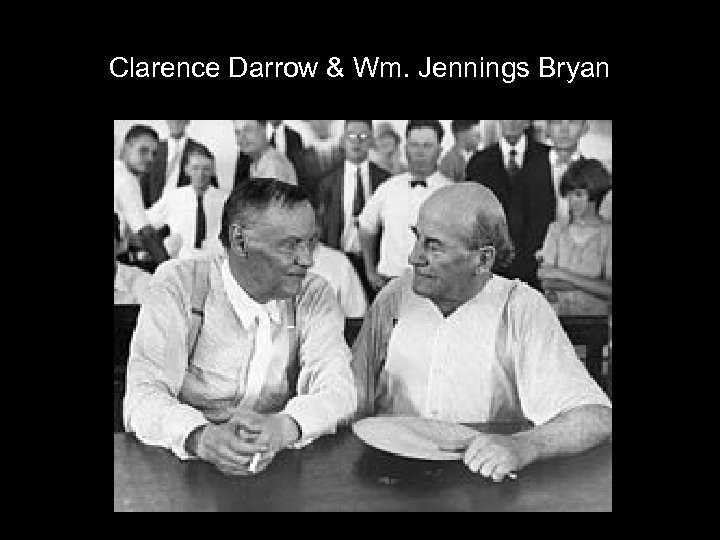 Clarence Darrow & Wm. Jennings Bryan
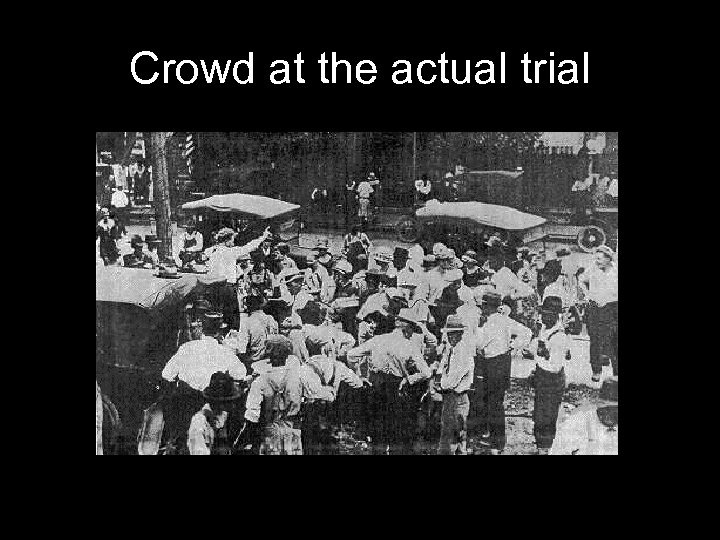 Crowd at the actual trial
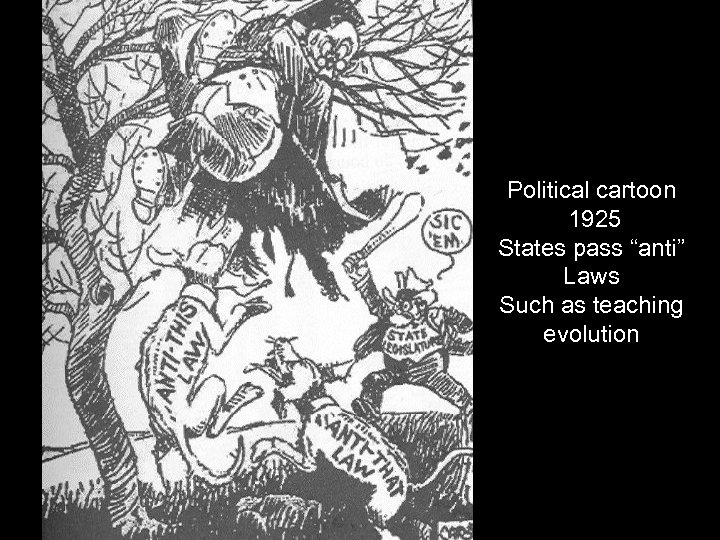 Political cartoon 1925 States pass “anti” Laws Such as teaching evolution
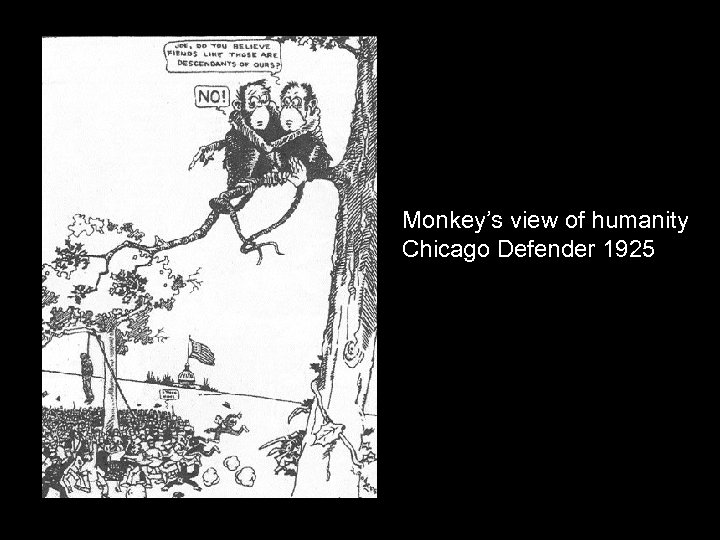 Monkey’s view of humanity Chicago Defender 1925
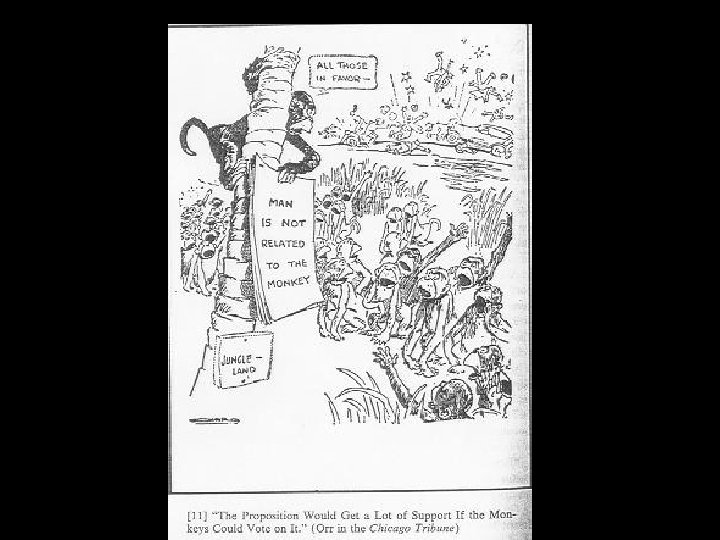
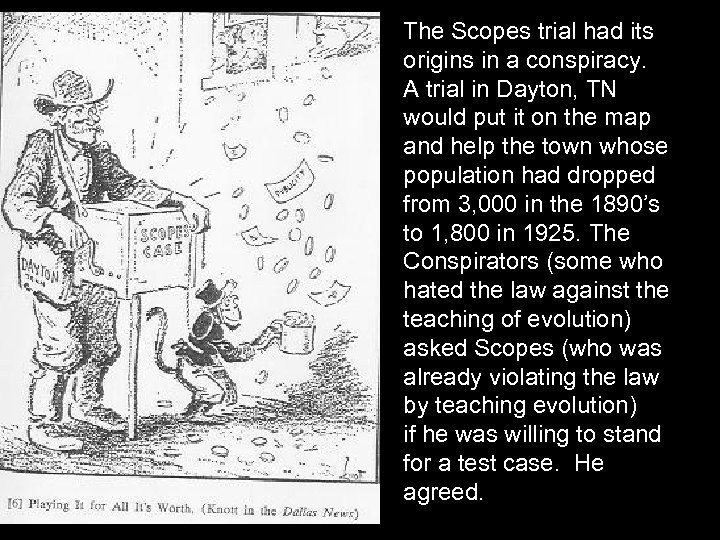 The Scopes trial had its origins in a conspiracy. A trial in Dayton, TN would put it on the map and help the town whose population had dropped from 3, 000 in the 1890’s to 1, 800 in 1925. The Conspirators (some who hated the law against the teaching of evolution) asked Scopes (who was already violating the law by teaching evolution) if he was willing to stand for a test case. He agreed.
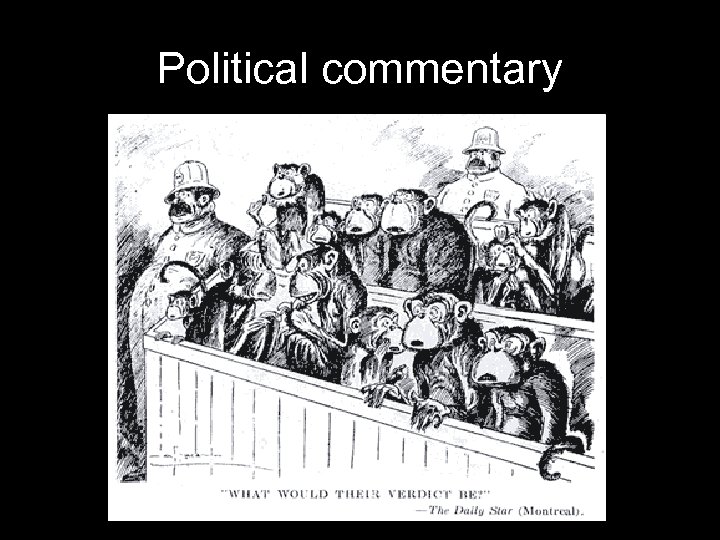 Political commentary
 Prohibition The noble experiment An example of legislating (making laws) about morality (values) which did not allow people to use alcohol
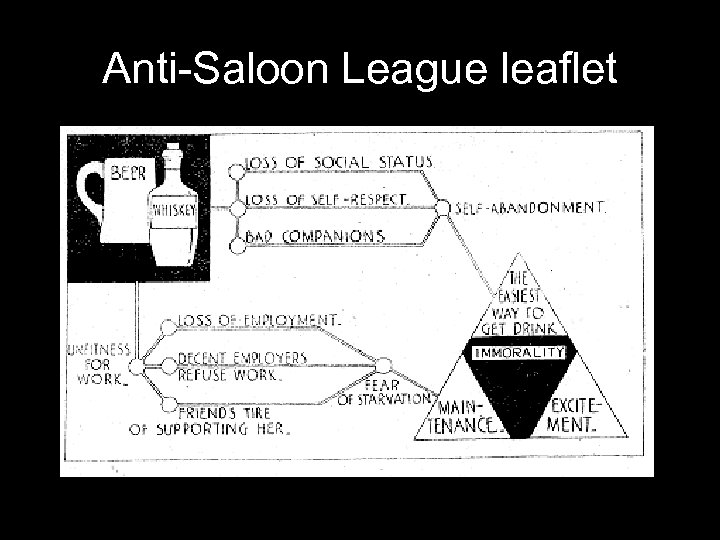 Anti-Saloon League leaflet
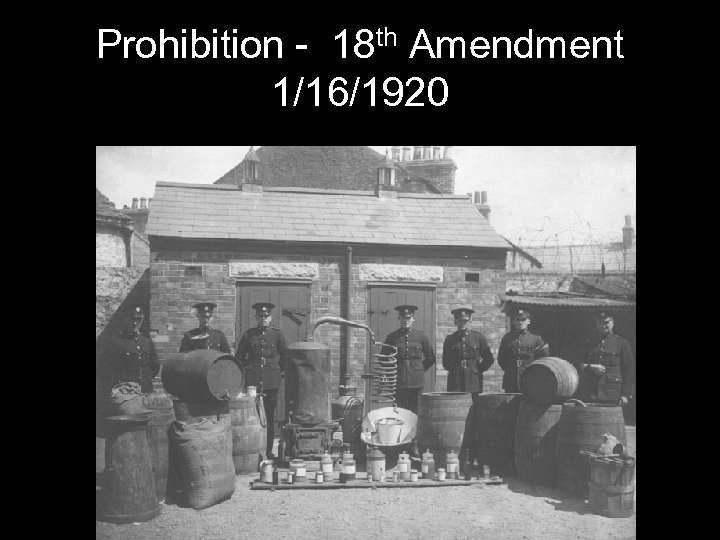 Prohibition - 18 th Amendment 1/16/1920
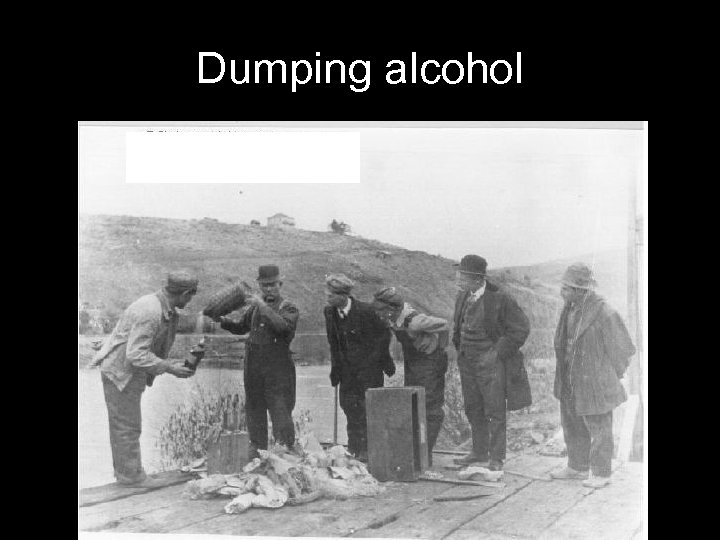 Dumping alcohol
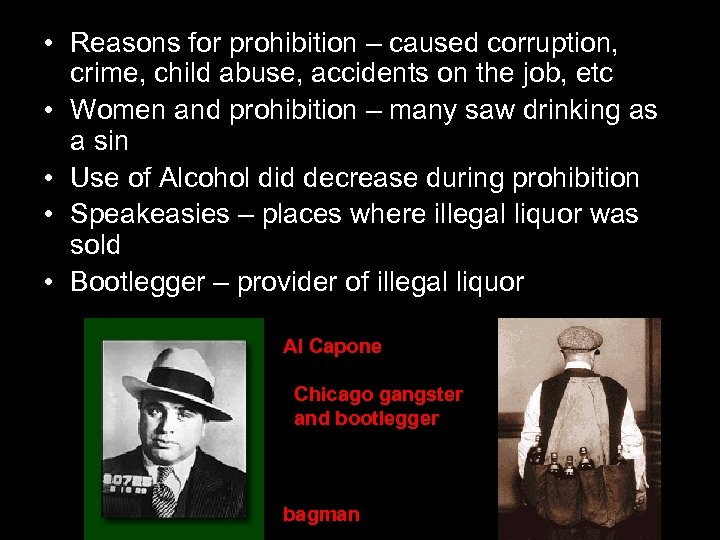 • Reasons for prohibition – caused corruption, Prohibition: the Nobleon the job, etc crime, child abuse, accidents Experiment • Women and prohibition – many saw drinking as a sin • Use of Alcohol did decrease during prohibition • Speakeasies – places where illegal liquor was sold • Bootlegger – provider of illegal liquor Al Capone Chicago gangster and bootlegger bagman
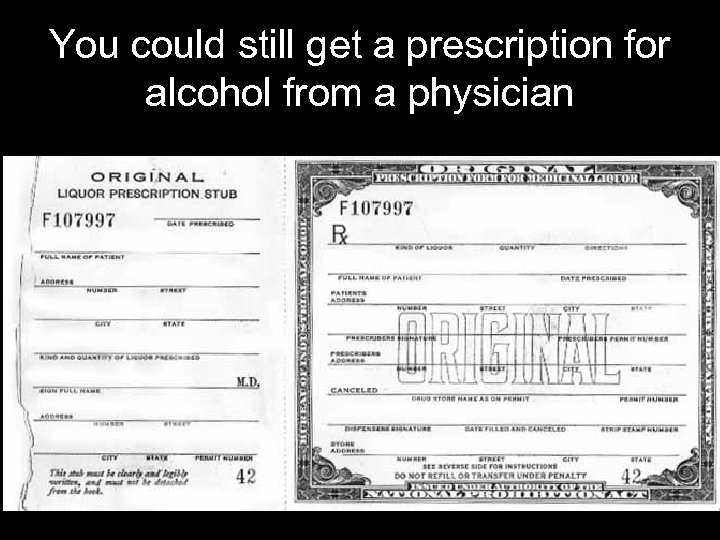 You could still get a prescription for alcohol from a physician
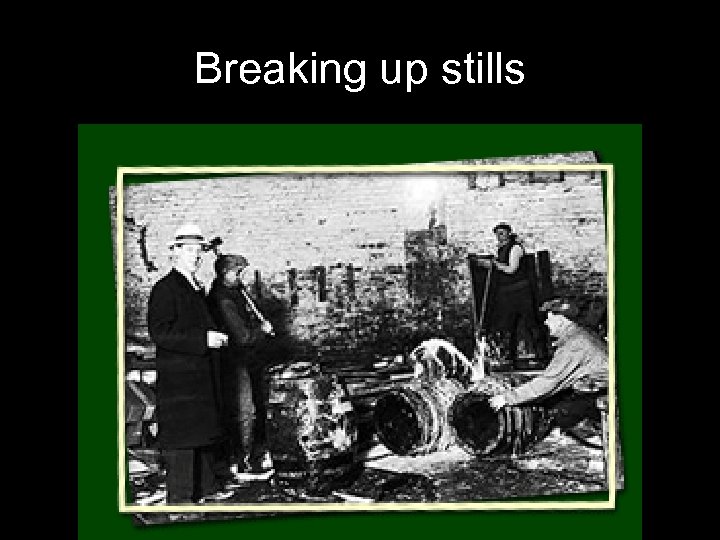 Breaking up stills
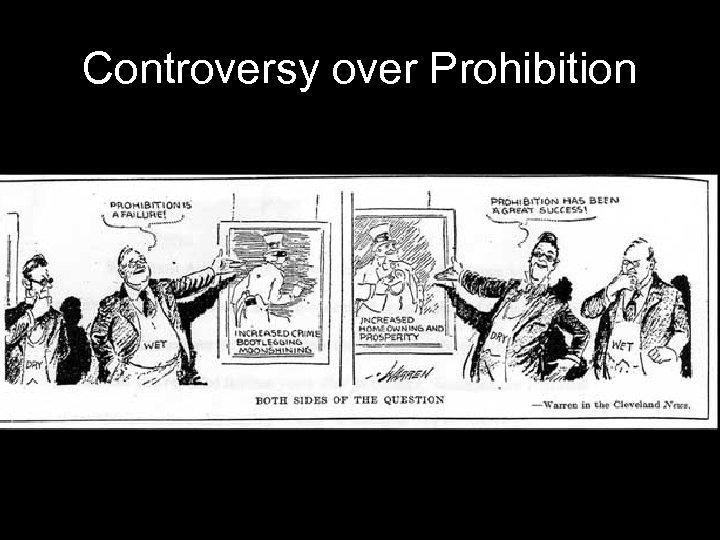 Controversy over Prohibition
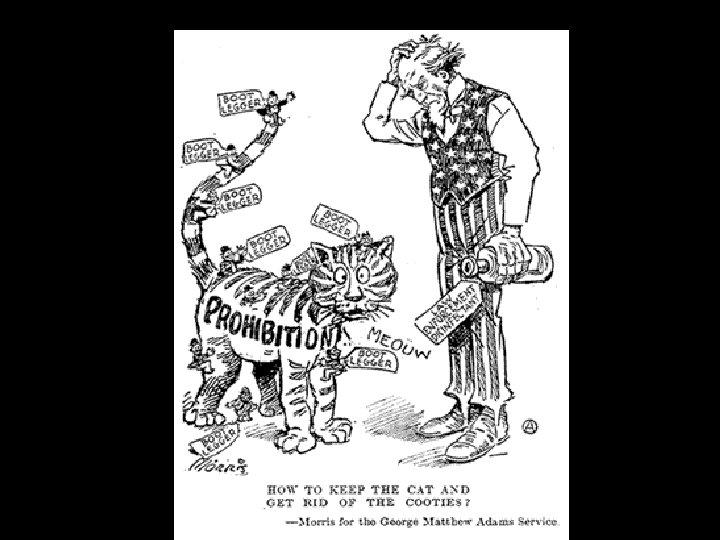
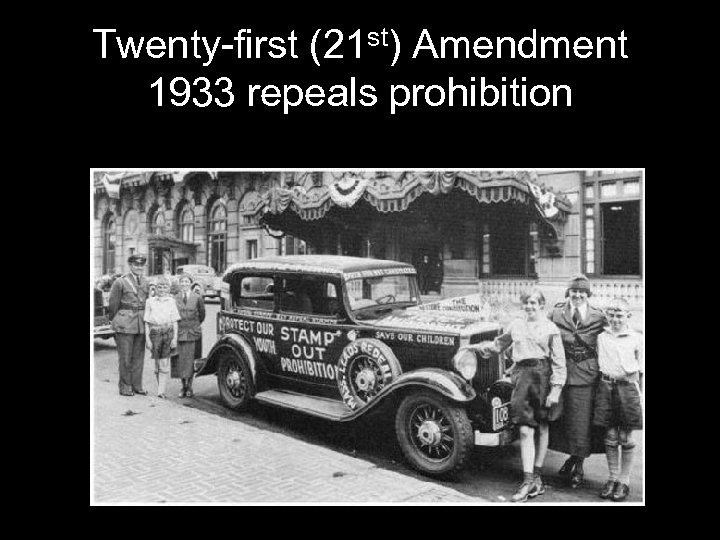 Twenty-first (21 st) Amendment 1933 repeals prohibition
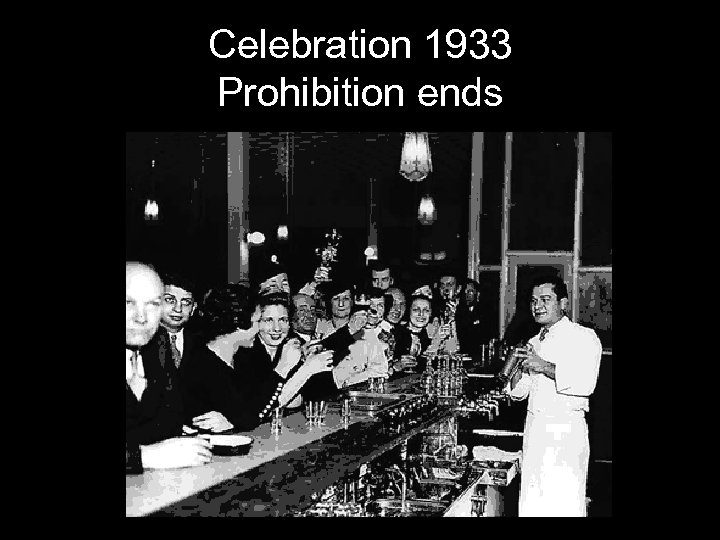 Celebration 1933 Prohibition ends
 Reasons for the repeal • Organized crime grew • Disrespect for the law increased • Law too expensive to enforce (rise in taxes) • Many felt prohibition invaded their individual rights
 Women’s Suffrage Winning the Vote (suffrage means to vote)
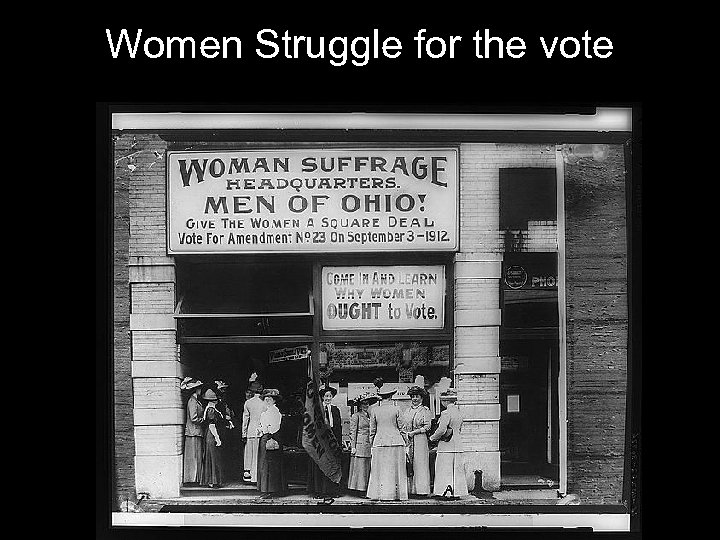 Women Struggle for the vote
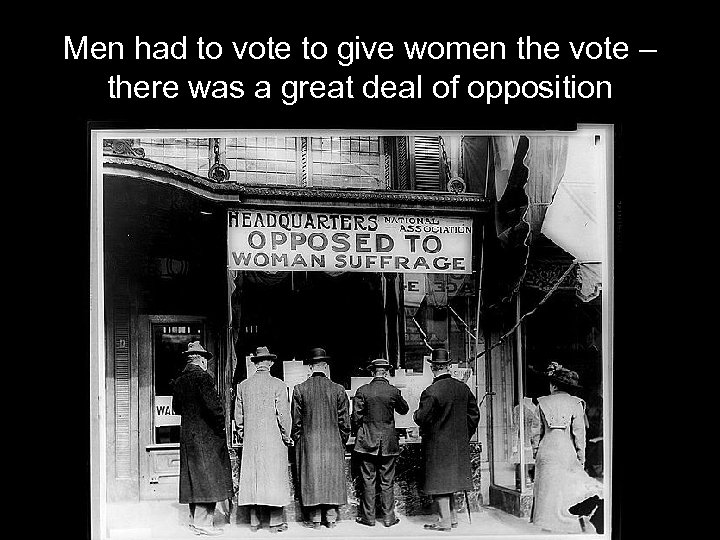 Men had to vote to give women the vote – there was a great deal of opposition
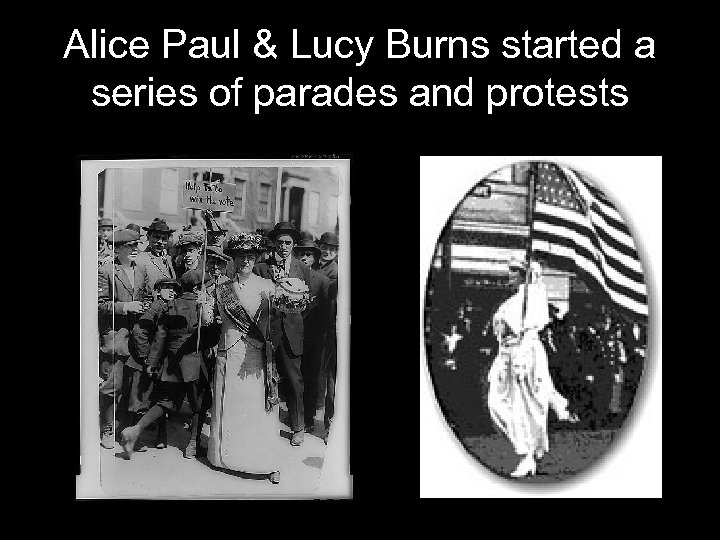 Alice Paul & Lucy Burns started a series of parades and protests
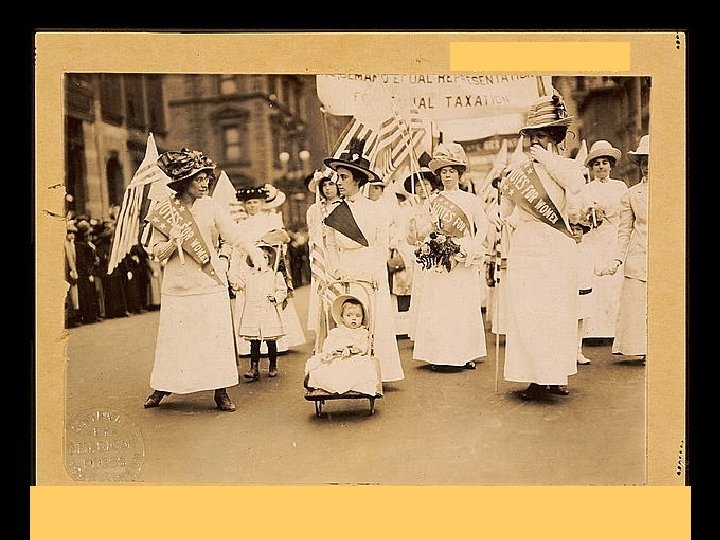
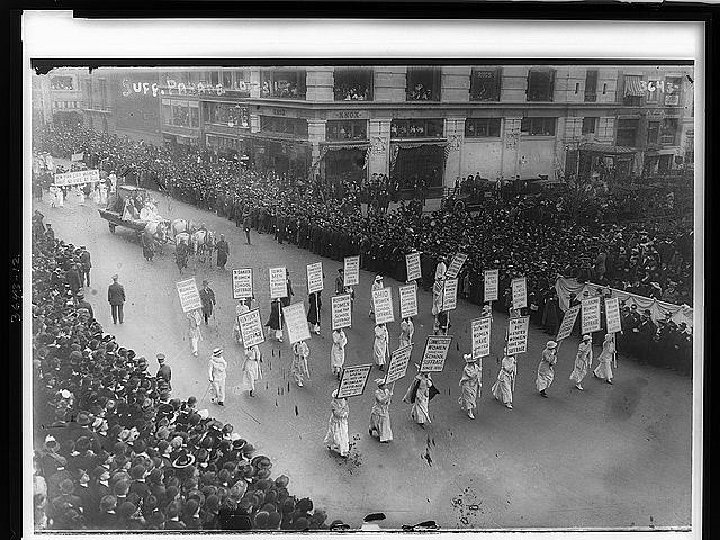
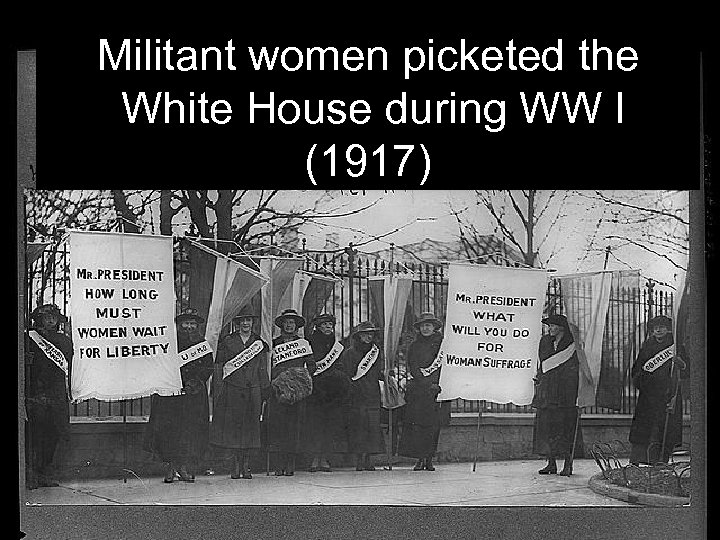 Militant women picketed the White House during WW I (1917)
 Nineteenth Amendment August 26, 1920 • Some states like Wyoming had already given women the vote • The Anthony (19 th) Amendment gave all women the vote • Women could now be elected to public office • Women took new jobs but did not receive equal pay
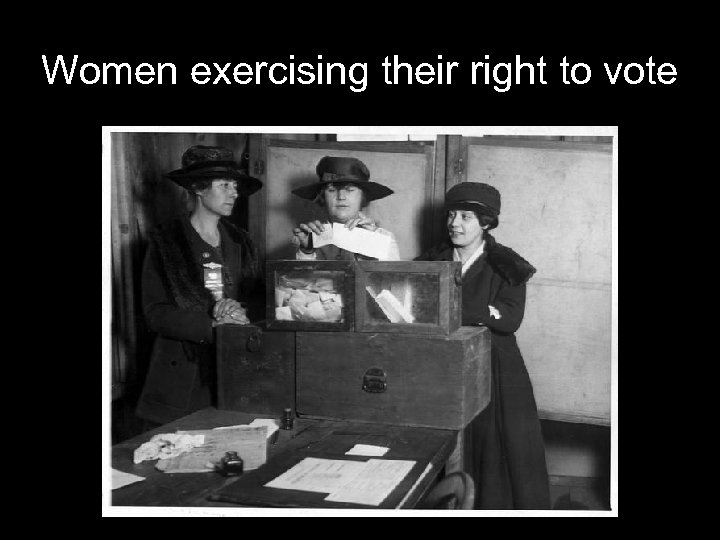 Women exercising their right to vote
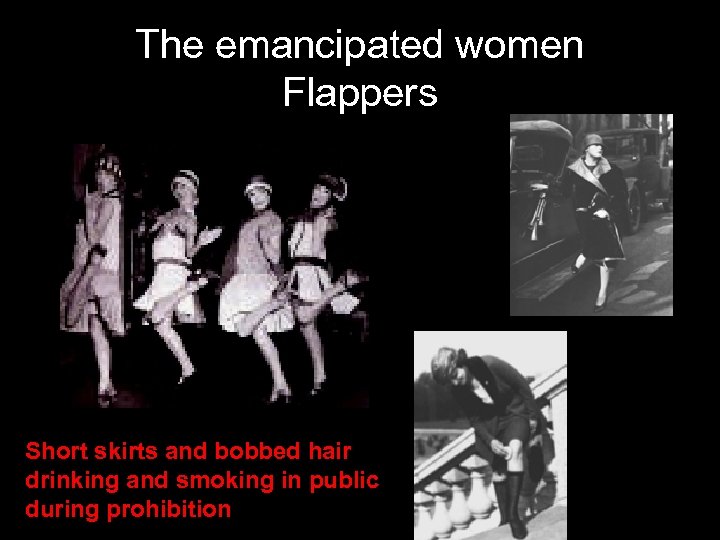 The emancipated women Flappers Short skirts and bobbed hair drinking and smoking in public during prohibition
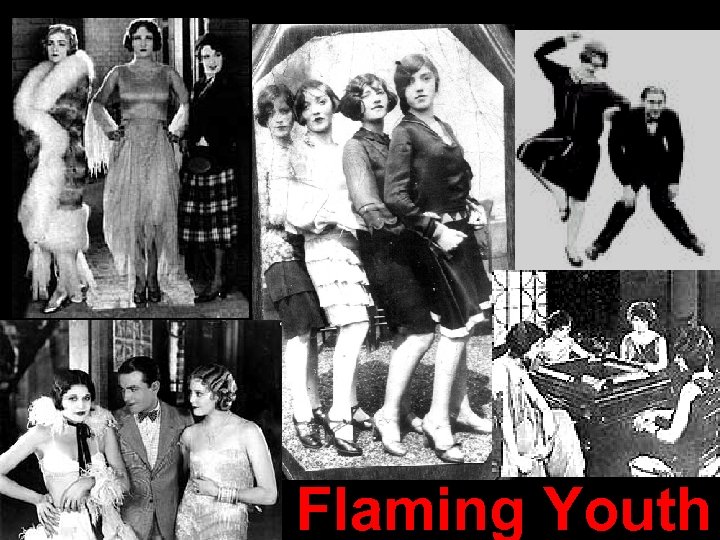 Flaming Youth
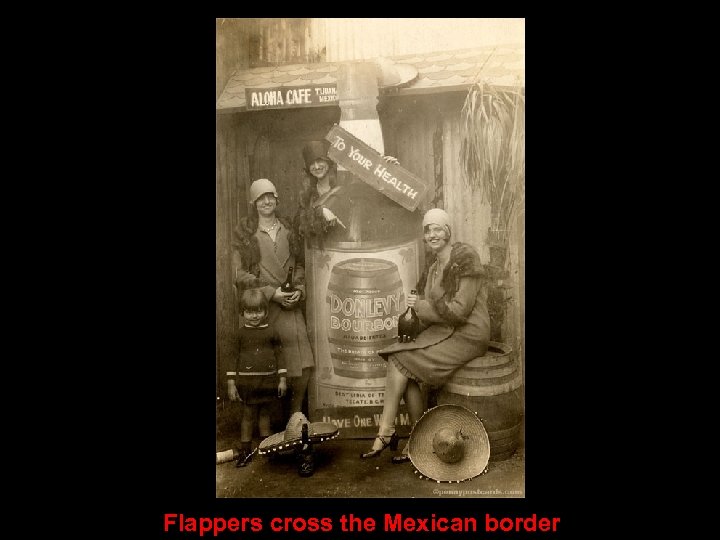 Flappers cross the Mexican border
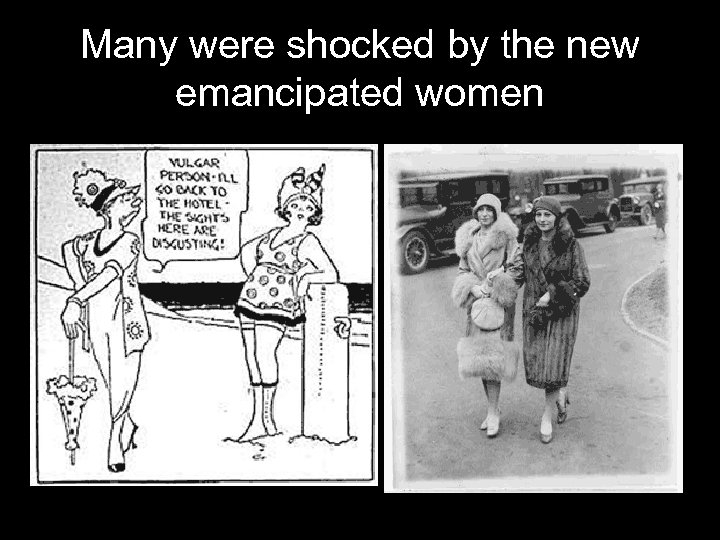 Many were shocked by the new emancipated women
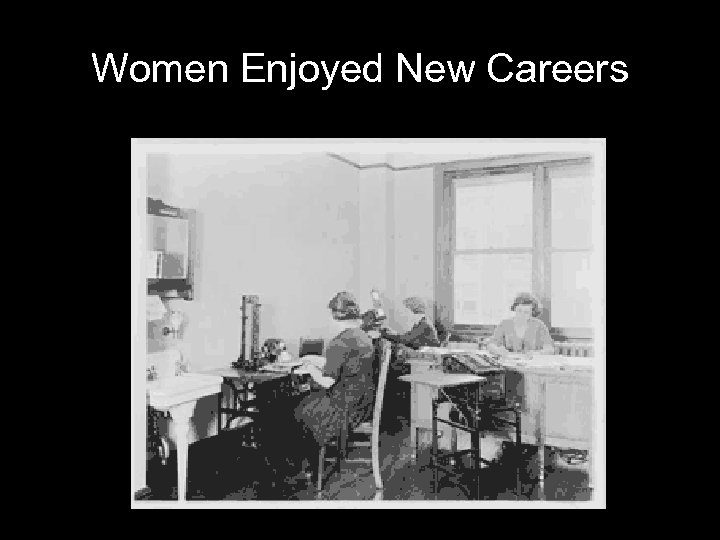 Women Enjoyed New Careers
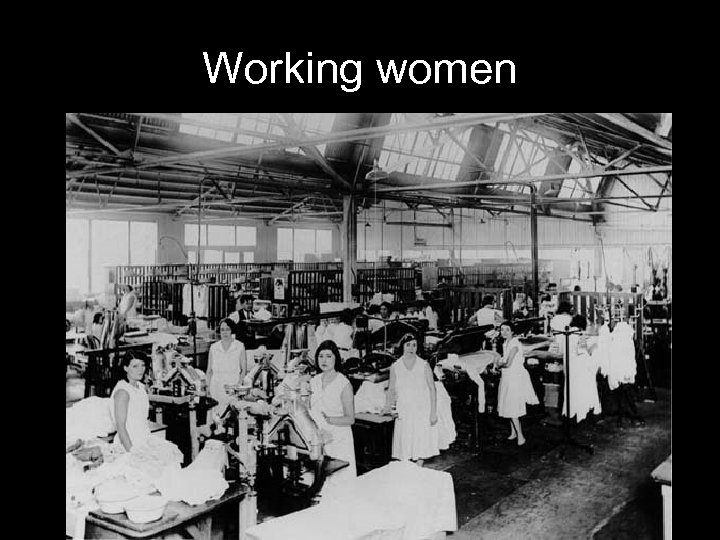 Working women
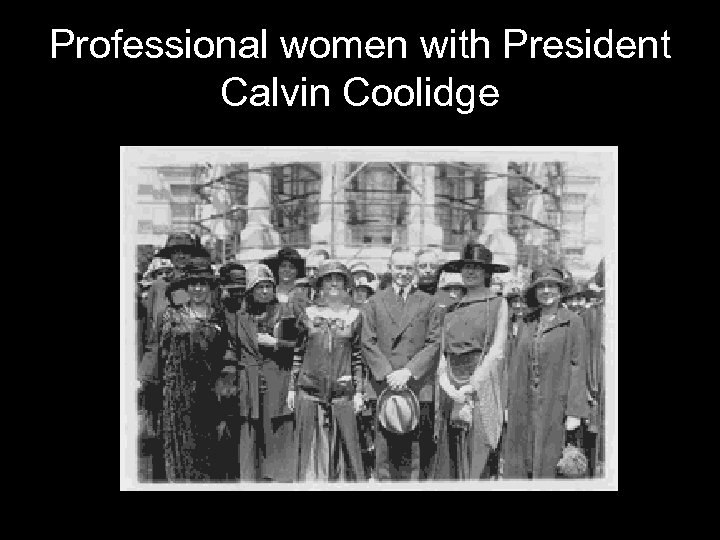 Professional women with President Calvin Coolidge
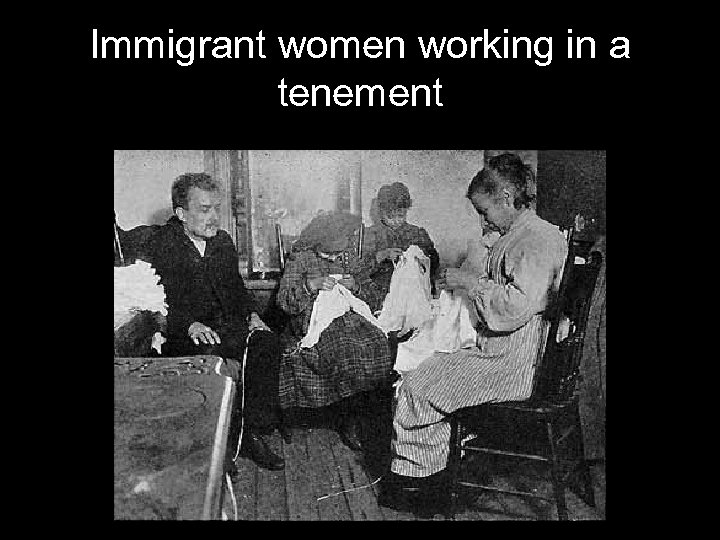 Immigrant women working in a tenement
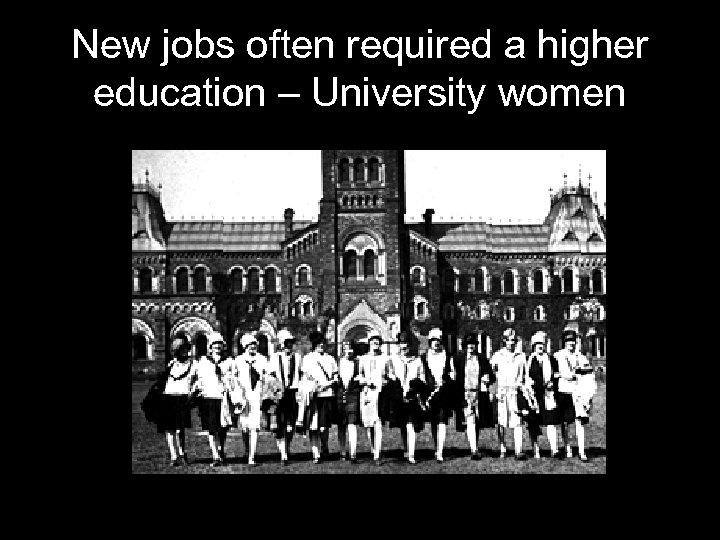 New jobs often required a higher education – University women
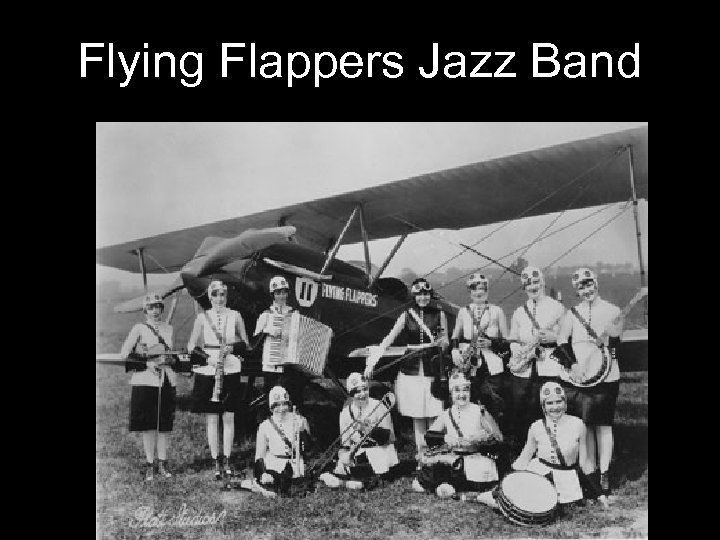 Flying Flappers Jazz Band
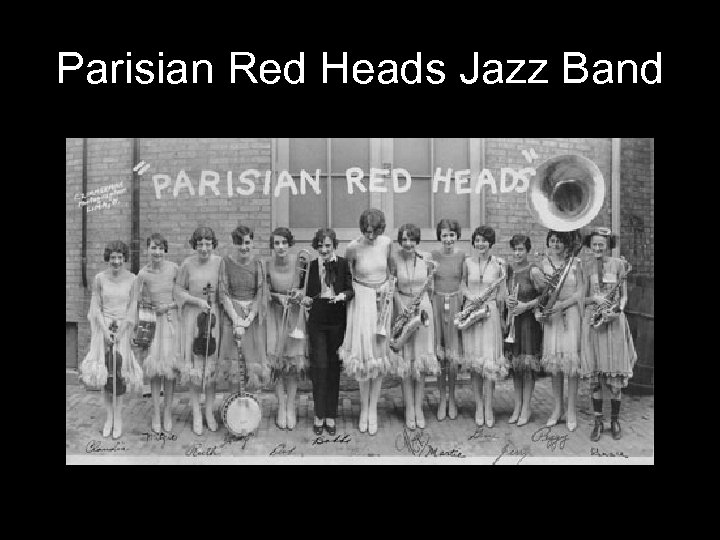 Parisian Red Heads Jazz Band
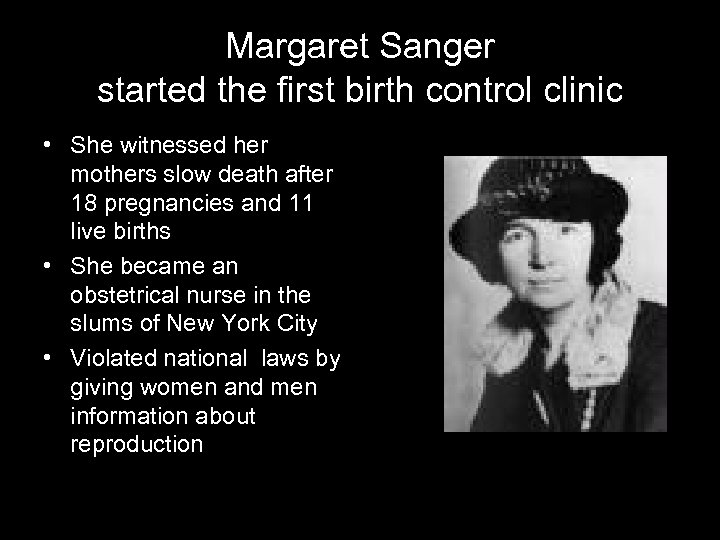 Margaret Sanger started the first birth control clinic • She witnessed her mothers slow death after 18 pregnancies and 11 live births • She became an obstetrical nurse in the slums of New York City • Violated national laws by giving women and men information about reproduction
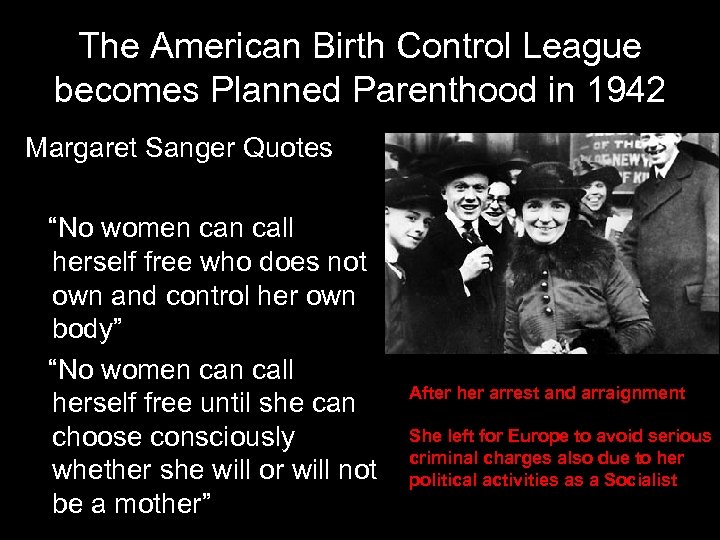 The American Birth Control League becomes Planned Parenthood in 1942 Margaret Sanger Quotes “No women call herself free who does not own and control her own body” “No women call herself free until she can choose consciously whether she will or will not be a mother” After her arrest and arraignment She left for Europe to avoid serious criminal charges also due to her political activities as a Socialist
 African American move to northern cities during WW I
 During WW I many blacks moved to northern cities to work in factories • 1. 8 million blacks moved north • Blacks faced considerable prejudice, discrimination, and racism in their new surroundings • Blacks competed with white workers for the same jobs and were often used as strikebreakers in northern industries
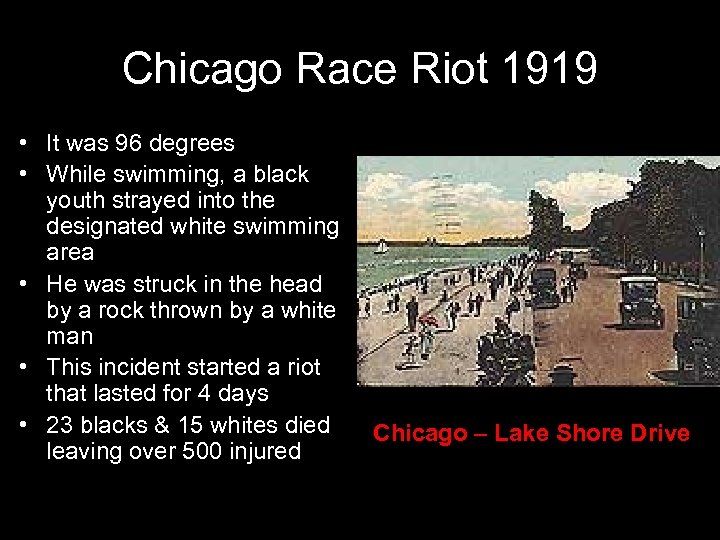 Chicago Race Riot 1919 • It was 96 degrees • While swimming, a black youth strayed into the designated white swimming area • He was struck in the head by a rock thrown by a white man • This incident started a riot that lasted for 4 days • 23 blacks & 15 whites died leaving over 500 injured Chicago – Lake Shore Drive
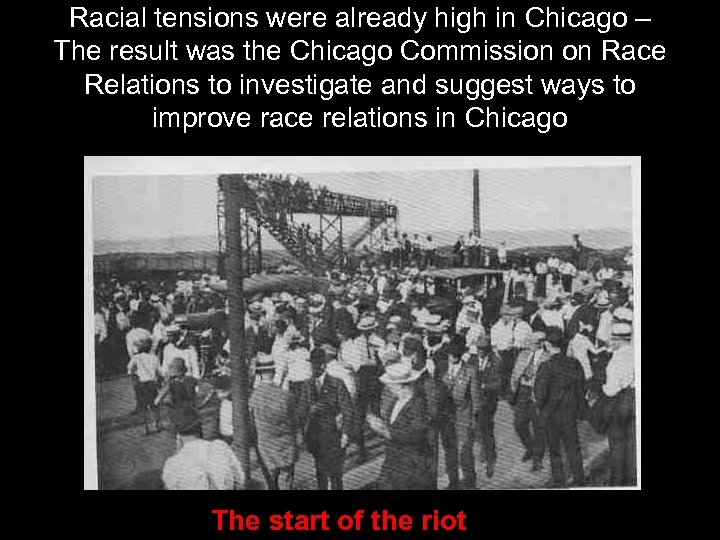 Racial tensions were already high in Chicago – The result was the Chicago Commission on Race Relations to investigate and suggest ways to improve race relations in Chicago The start of the riot
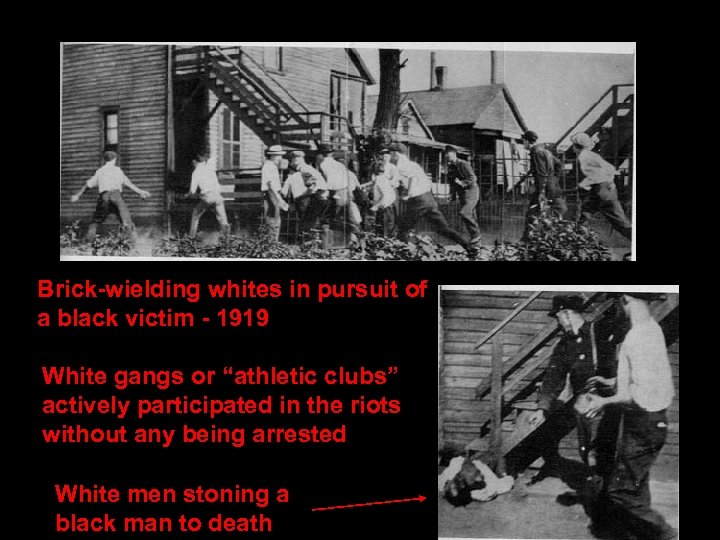 Brick-wielding whites in pursuit of a black victim - 1919 White gangs or “athletic clubs” actively participated in the riots without any being arrested White men stoning a black man to death
 National Association for the Advancement of Colored People
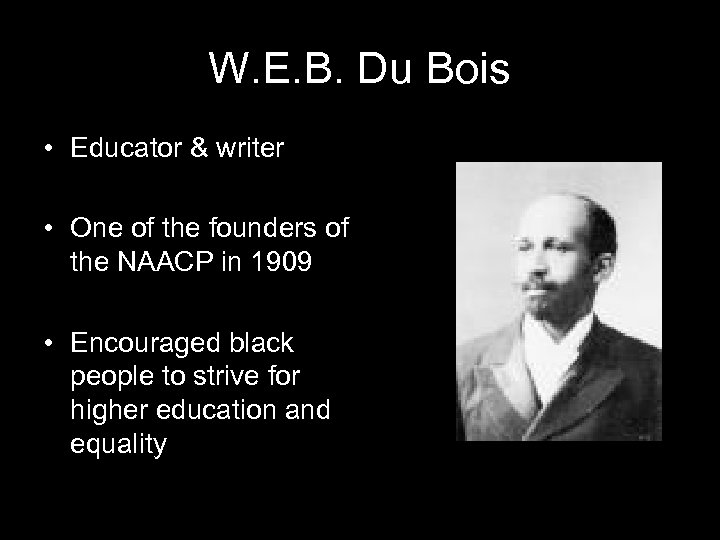 W. E. B. Du Bois • Educator & writer • One of the founders of the NAACP in 1909 • Encouraged black people to strive for higher education and equality
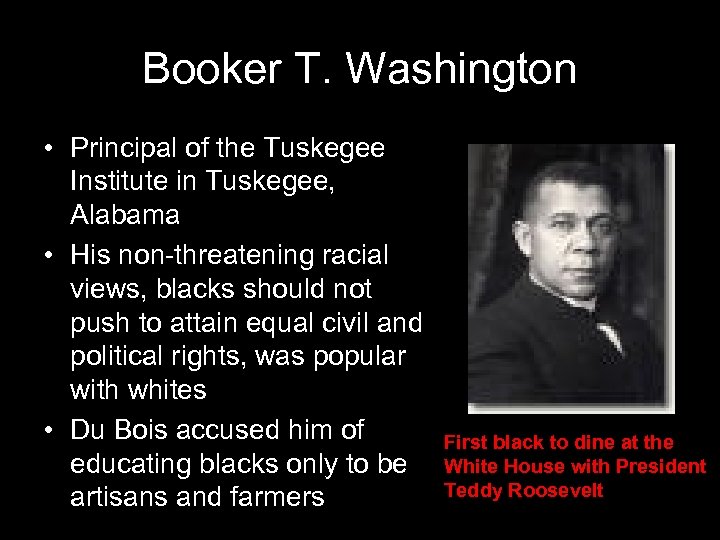 Booker T. Washington • Principal of the Tuskegee Institute in Tuskegee, Alabama • His non-threatening racial views, blacks should not push to attain equal civil and political rights, was popular with whites • Du Bois accused him of educating blacks only to be artisans and farmers First black to dine at the White House with President Teddy Roosevelt
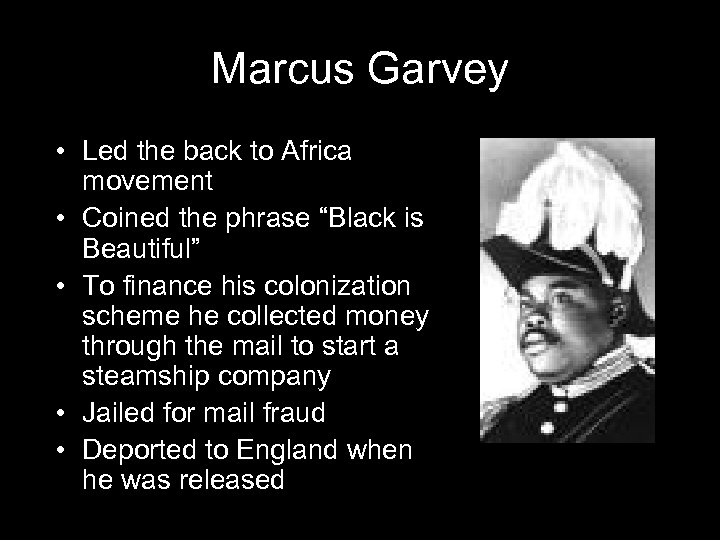 Marcus Garvey • Led the back to Africa movement • Coined the phrase “Black is Beautiful” • To finance his colonization scheme he collected money through the mail to start a steamship company • Jailed for mail fraud • Deported to England when he was released
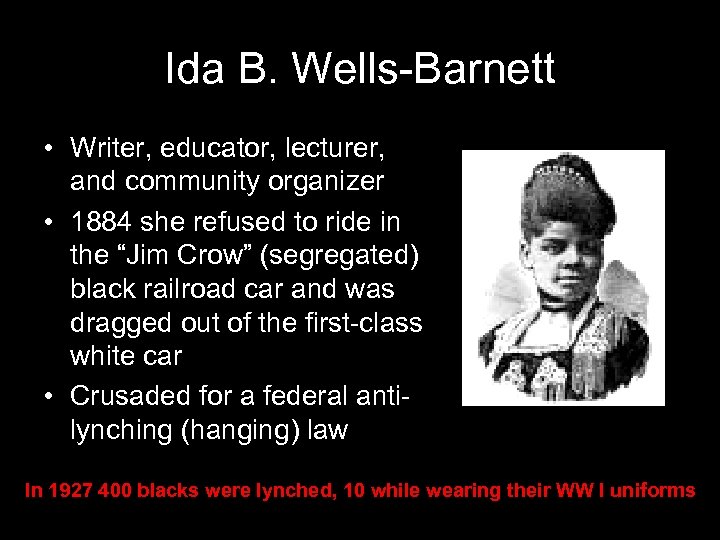 Ida B. Wells-Barnett • Writer, educator, lecturer, and community organizer • 1884 she refused to ride in the “Jim Crow” (segregated) black railroad car and was dragged out of the first-class white car • Crusaded for a federal antilynching (hanging) law In 1927 400 blacks were lynched, 10 while wearing their WW I uniforms
 Harlem Renaissance • Nickname given to the black cultural and creative movement that developed in slum areas such as Harlem in New York City • Great achievements were made in literature, art, music, dance, and drama • Jazz found its way from New Orleans to Chicago spreading quickly through the nation
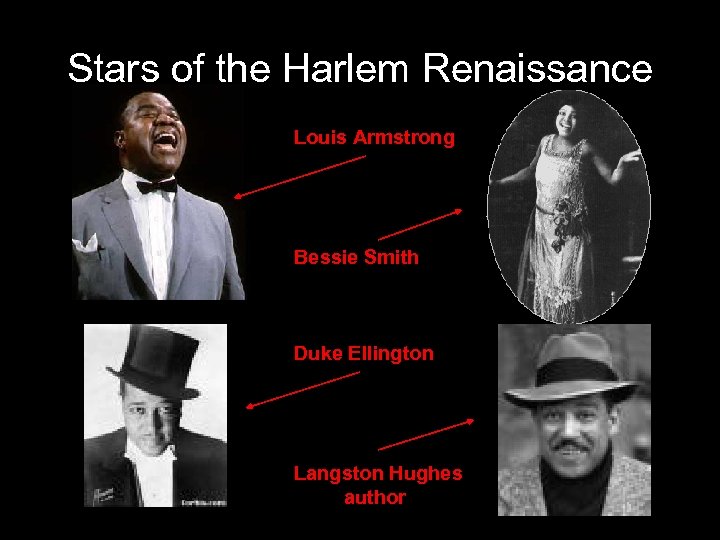 Stars of the Harlem Renaissance Louis Armstrong Bessie Smith Duke Ellington Langston Hughes author
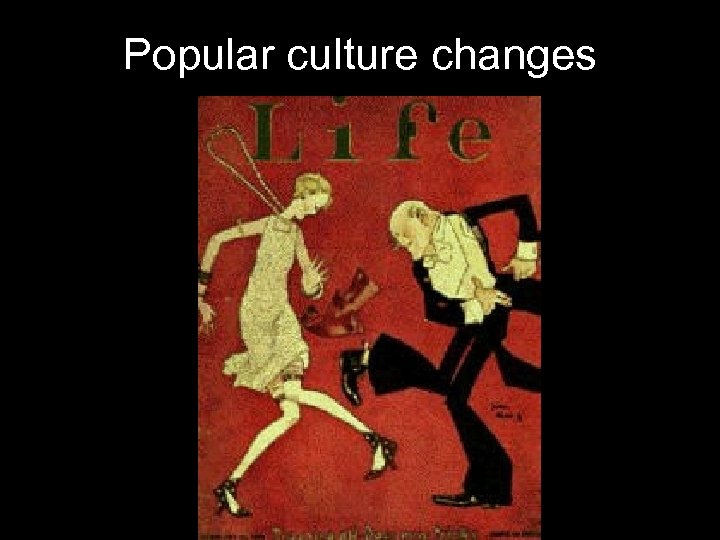 Popular culture changes
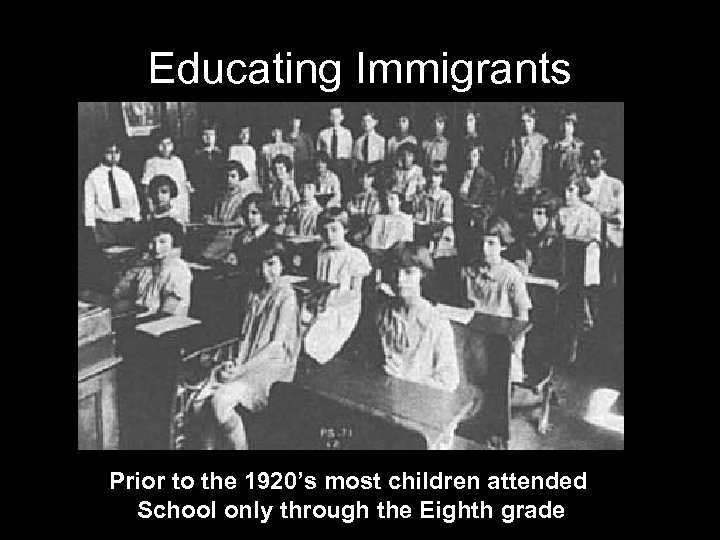 Educating Immigrants Prior to the 1920’s most children attended School only through the Eighth grade
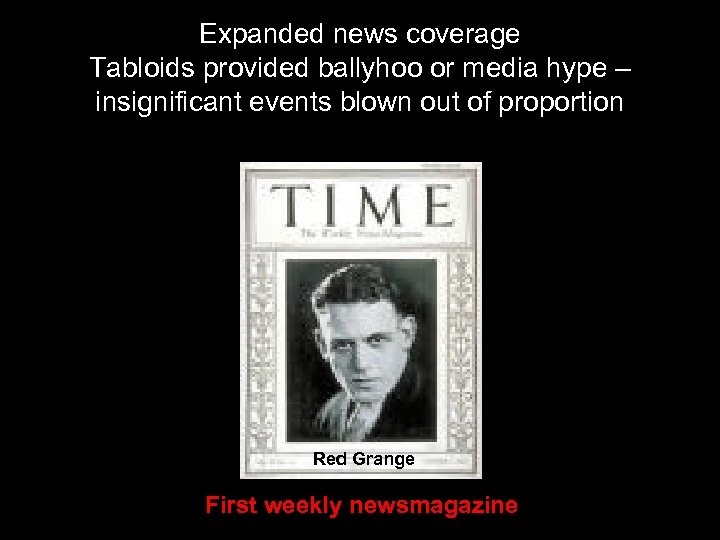 Expanded news coverage Tabloids provided ballyhoo or media hype – insignificant events blown out of proportion Red Grange First weekly newsmagazine
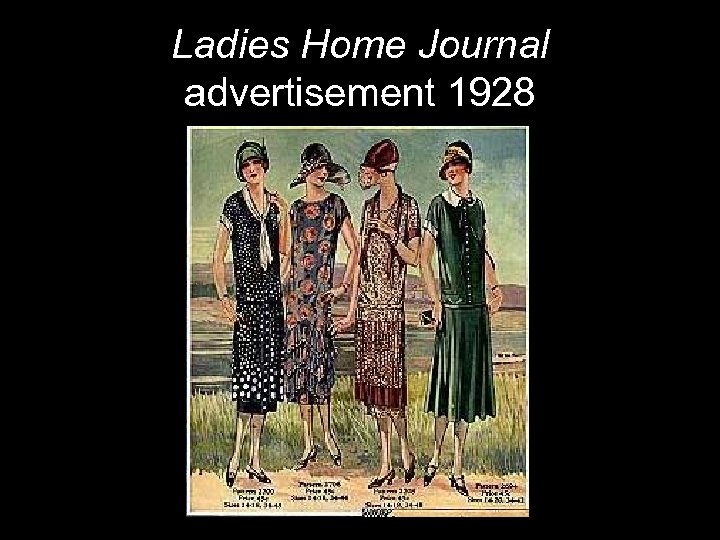 Ladies Home Journal advertisement 1928
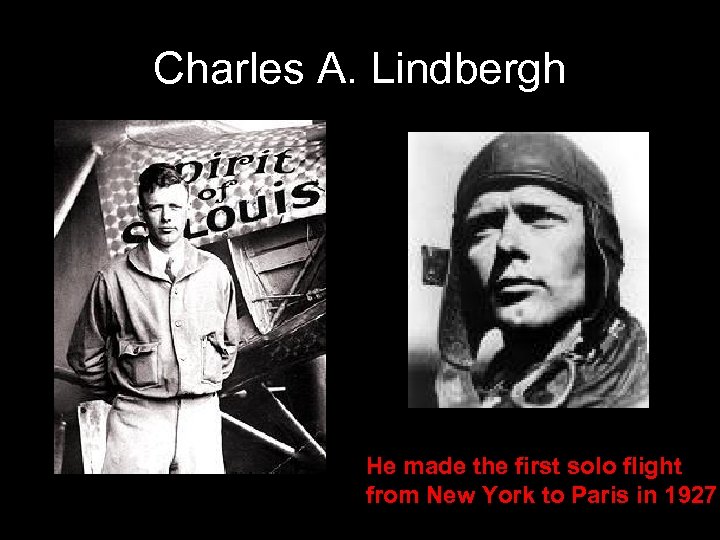 Charles A. Lindbergh He made the first solo flight from New York to Paris in 1927
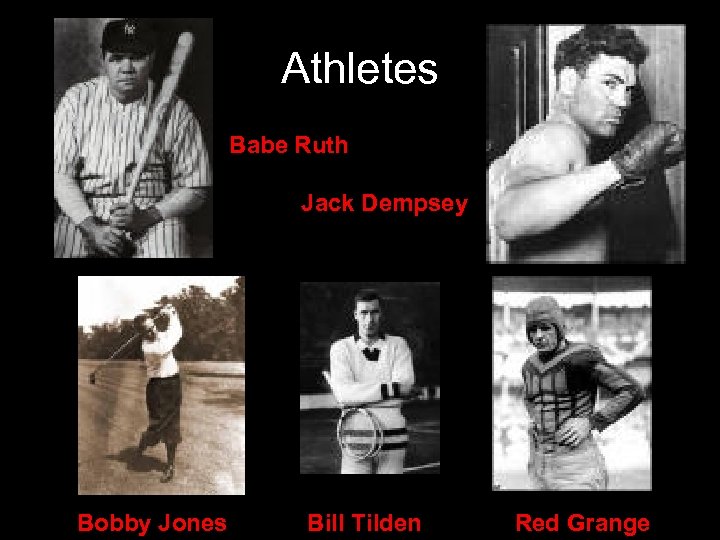 Athletes Babe Ruth Jack Dempsey Bobby Jones Bill Tilden Red Grange
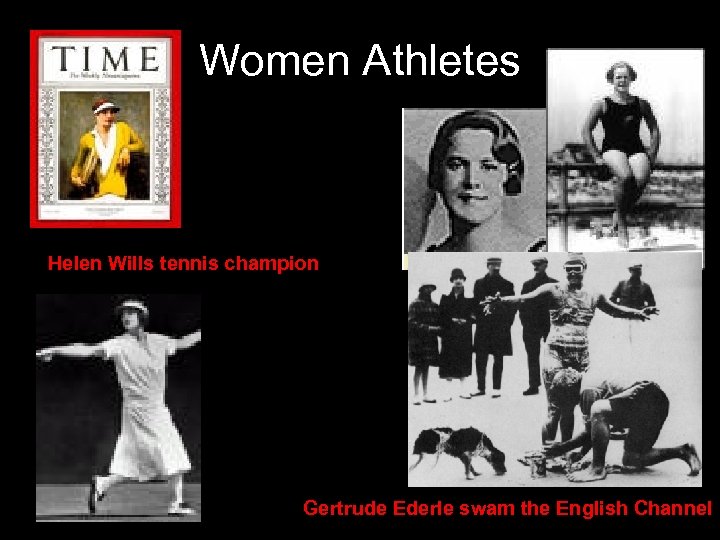 Women Athletes Helen Wills tennis champion Gertrude Ederle swam the English Channel
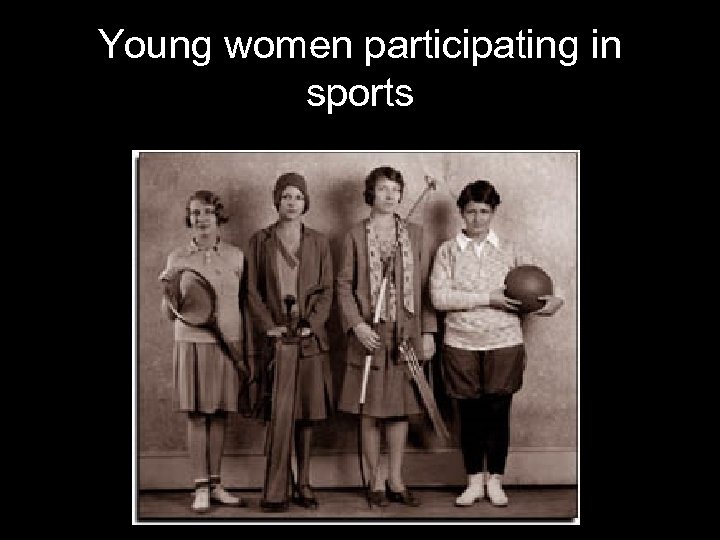 Young women participating in sports
 Man-of-War Horse racing was a popular spectator sport
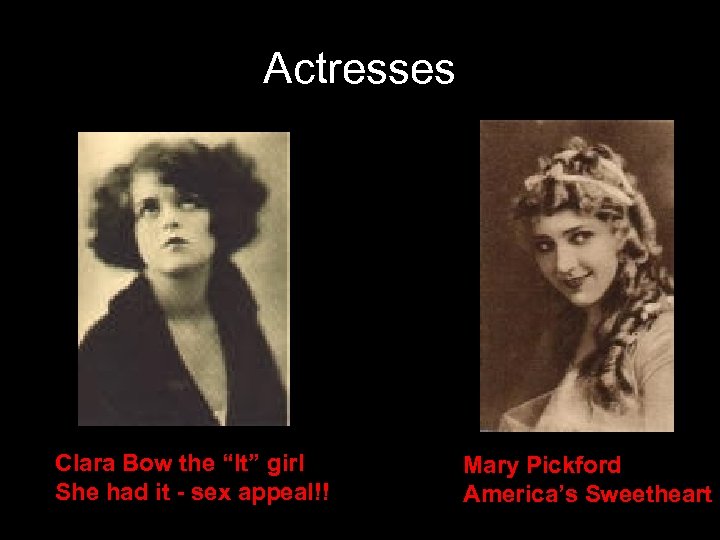 Actresses Clara Bow the “It” girl She had it - sex appeal!! Mary Pickford America’s Sweetheart
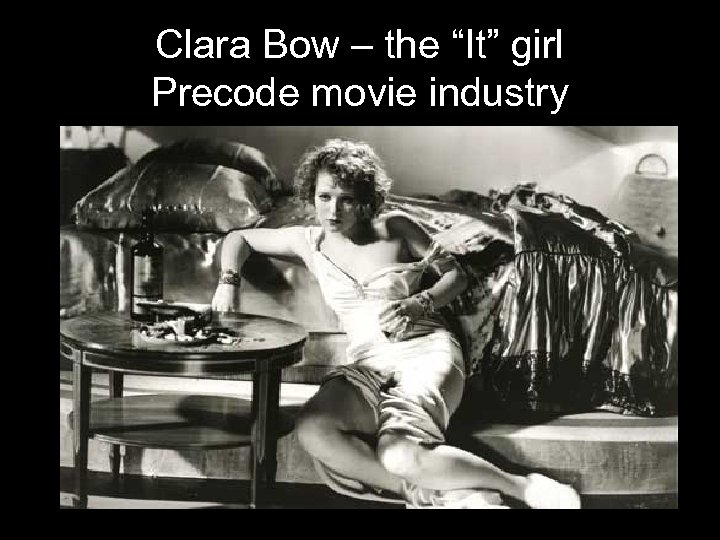 Clara Bow – the “It” girl Precode movie industry
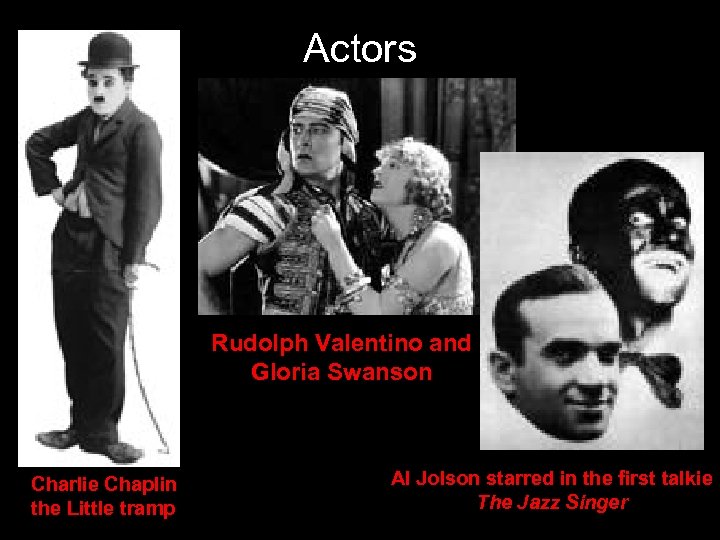 Actors Rudolph Valentino and Gloria Swanson Charlie Chaplin the Little tramp Al Jolson starred in the first talkie The Jazz Singer
 Materialism • The single minded pursuit of money and possessions • The 1920’s had brought massive industrialization and the opportunity to purchase many new products and to make money • Authors of the period criticized materialism
 Authors of the 1920’s • Sinclair Lewis – First American to win the Nobel Prize for literature – outspoken critic of the 1920’s (Main Street & Babbitt) • F. Scott Fitzgerald – known as the spokesman for the “Jazz Age” as he revealed the negative side of the 1920’s gaiety and freedom (The Great Gatsby) • Ernest Hemingway – wounded during WWI he became the best known “expatriate author”. In A Farewell to Arms, he criticized the glorification of war