 Скачать презентацию Charts Financial Stability 1 08 Summary Chart
040a901284b90de2abbee4534687111a.ppt
- Количество слайдов: 94



Charts Financial Stability 1/08
Summary
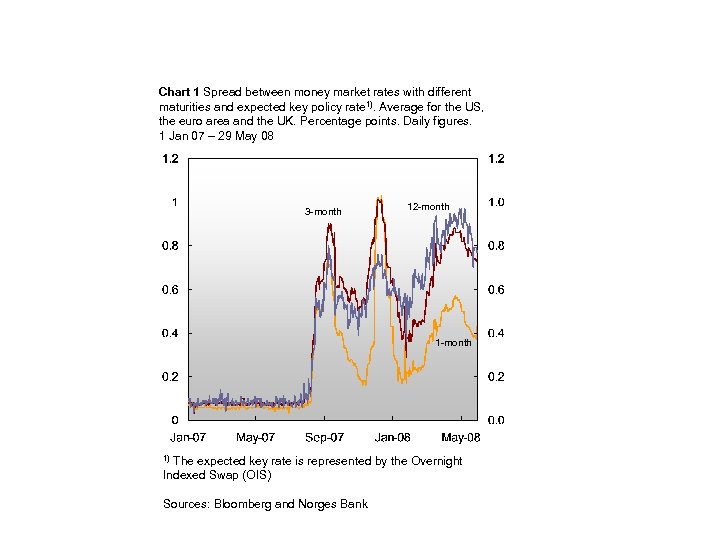
Chart 1 Spread between money market rates with different maturities and expected key policy rate 1). Average for the US, the euro area and the UK. Percentage points. Daily figures. 1 Jan 07 – 29 May 08 3 -month 12 -month 1 -month The expected key rate is represented by the Overnight Indexed Swap (OIS) 1) Sources: Bloomberg and Norges Bank
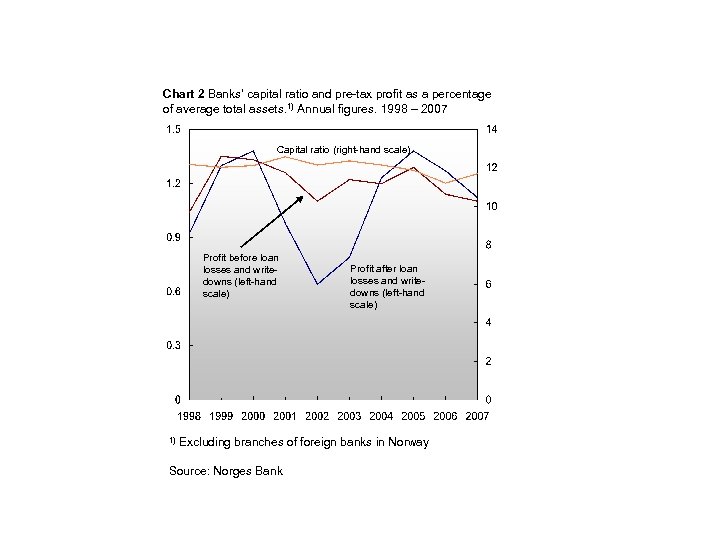
Chart 2 Banks’ capital ratio and pre-tax profit as a percentage of average total assets. 1) Annual figures. 1998 – 2007 Capital ratio (right-hand scale) Profit before loan losses and writedowns (left-hand scale) 1) Profit after loan losses and writedowns (left-hand scale) Excluding branches of foreign banks in Norway Source: Norges Bank
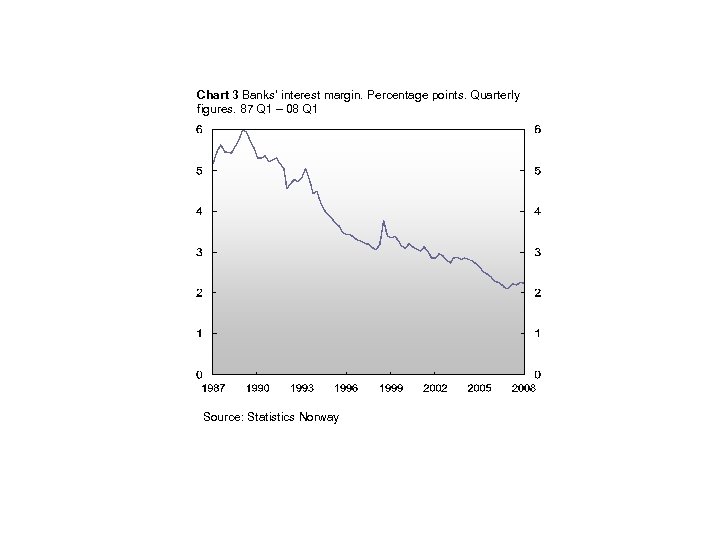
Chart 3 Banks’ interest margin. Percentage points. Quarterly figures. 87 Q 1 – 08 Q 1 Source: Statistics Norway
Chart 4 Market value for offices in Oslo 1). Price per square metre at constant 2007 NOK. Output gap 2). Per cent. Annual figures. 1983 – 2010 Market value at December 2007 Output gap (right-hand scale) Market value (left-hand scale) Average value for high-standard offices in central Oslo. Value as at June. 2) Projections for 2007 – 2010 1) Sources: OPAK and Norges Bank
Chart 5 12 -month growth in credit to mainland Norway. Per cent. Jan 1997 – Mar 2008 Non-financial enterprises 1) Households 2) Total credit 1) All foreign credit to mainland Norway is assumed granted to enterprises 2) Household domestic credit Source: Statistics Norway
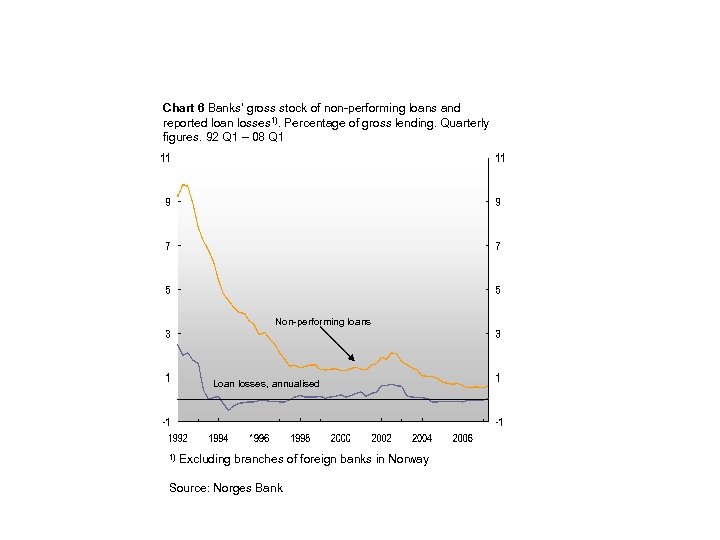
Chart 6 Banks’ gross stock of non-performing loans and reported loan losses 1). Percentage of gross lending. Quarterly figures. 92 Q 1 – 08 Q 1 Non-performing loans Loan losses, annualised 1) Excluding branches of foreign banks in Norway Source: Norges Bank
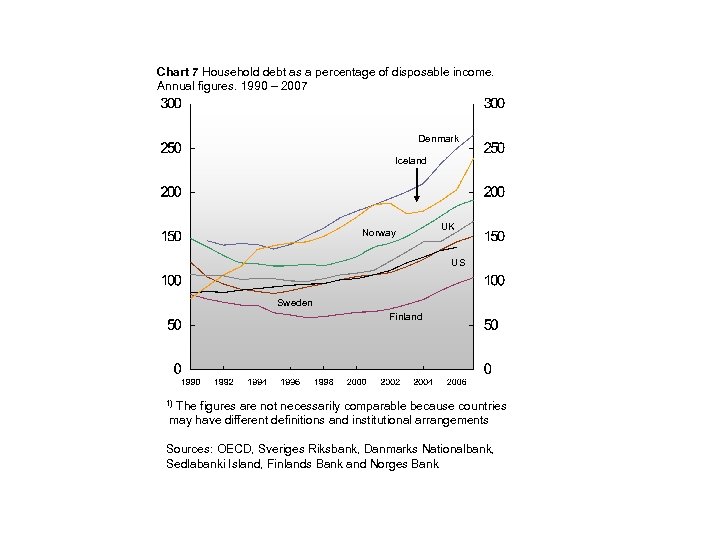
Chart 7 Household debt as a percentage of disposable income. Annual figures. 1990 – 2007 Denmark Iceland Norway UK US Sweden Finland The figures are not necessarily comparable because countries may have different definitions and institutional arrangements 1) Sources: OECD, Sveriges Riksbank, Danmarks Nationalbank, Sedlabanki Island, Finlands Bank and Norges Bank
1 International banks and financial markets
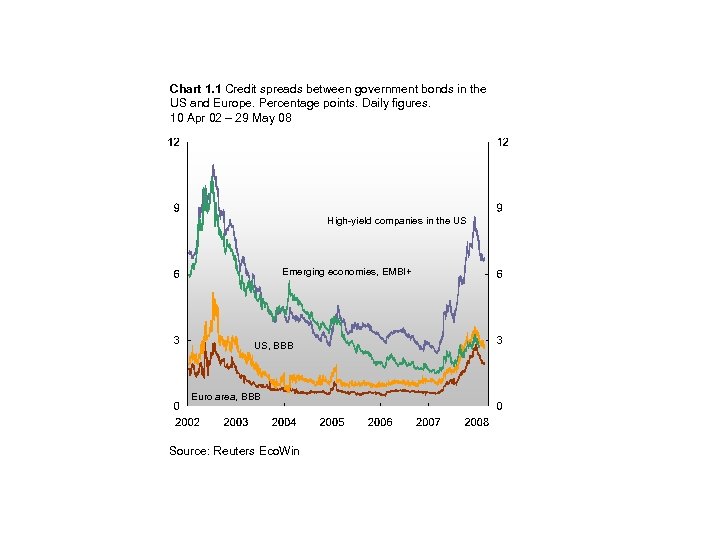
Chart 1. 1 Credit spreads between government bonds in the US and Europe. Percentage points. Daily figures. 10 Apr 02 – 29 May 08 High-yield companies in the US Emerging economies, EMBI+ US, BBB Euro area, BBB Source: Reuters Eco. Win
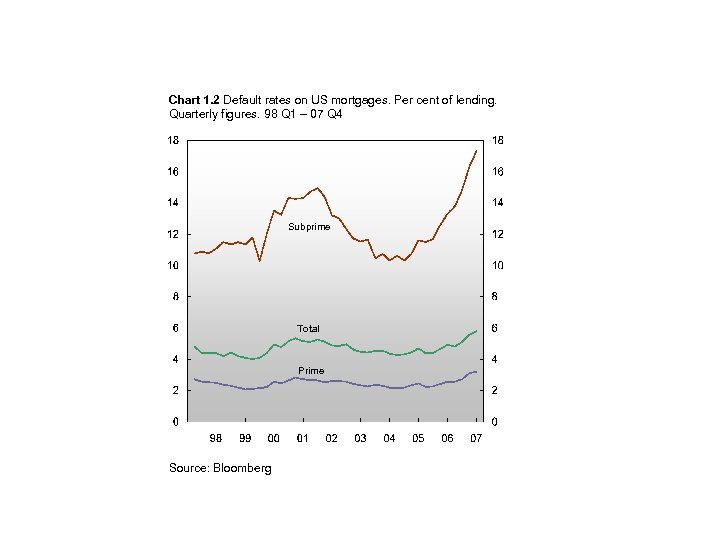
Chart 1. 2 Default rates on US mortgages. Per cent of lending. Quarterly figures. 98 Q 1 – 07 Q 4 Subprime Total Prime Source: Bloomberg
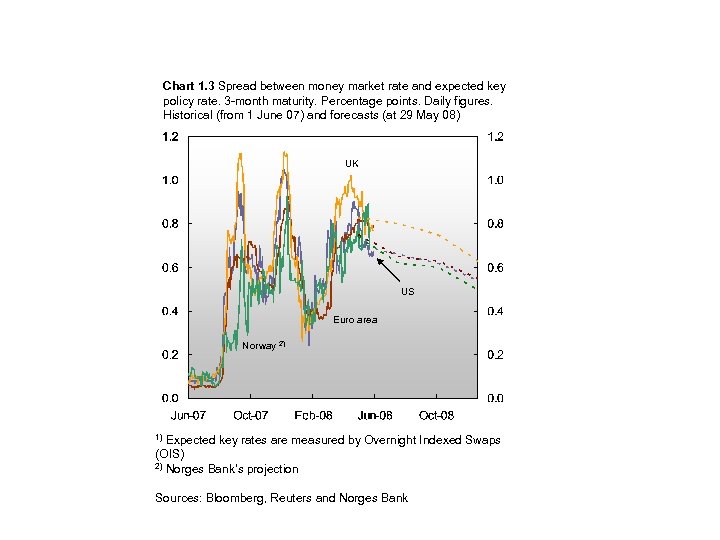
Chart 1. 3 Spread between money market rate and expected key policy rate. 3 -month maturity. Percentage points. Daily figures. Historical (from 1 June 07) and forecasts (at 29 May 08) UK US Euro area Norway 2) Expected key rates are measured by Overnight Indexed Swaps (OIS) 2) Norges Bank’s projection 1) Sources: Bloomberg, Reuters and Norges Bank
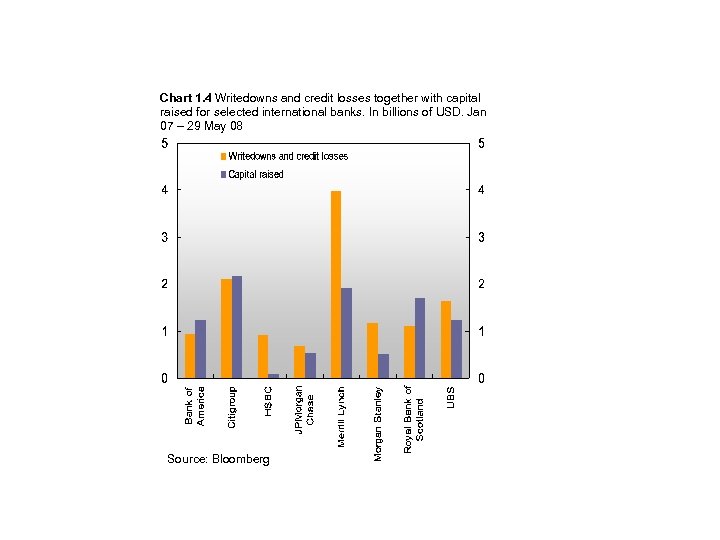
Chart 1. 4 Writedowns and credit losses together with capital raised for selected international banks. In billions of USD. Jan 07 – 29 May 08 Source: Bloomberg
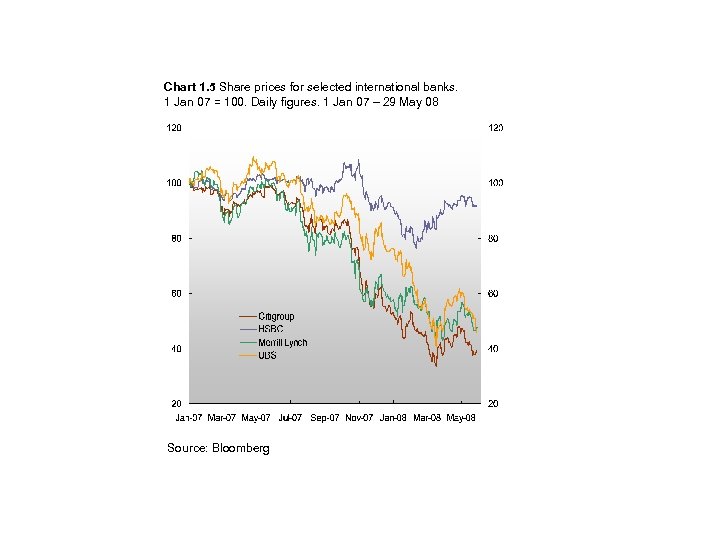
Chart 1. 5 Share prices for selected international banks. 1 Jan 07 = 100. Daily figures. 1 Jan 07 – 29 May 08 Source: Bloomberg
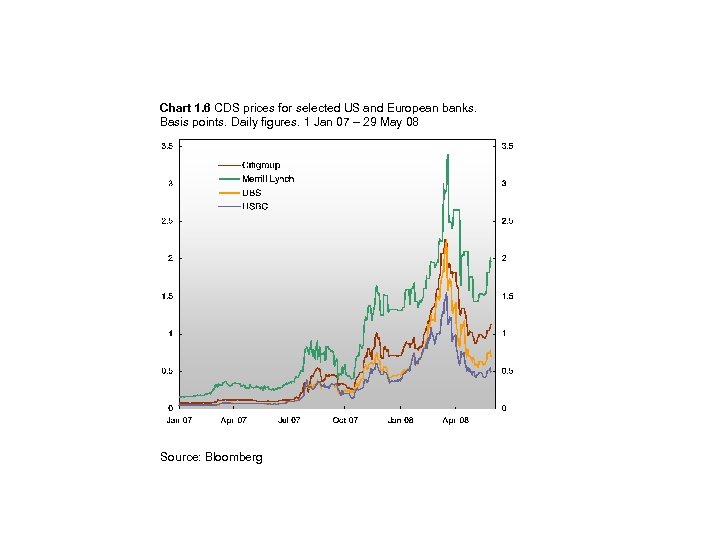
Chart 1. 6 CDS prices for selected US and European banks. Basis points. Daily figures. 1 Jan 07 – 29 May 08 Source: Bloomberg
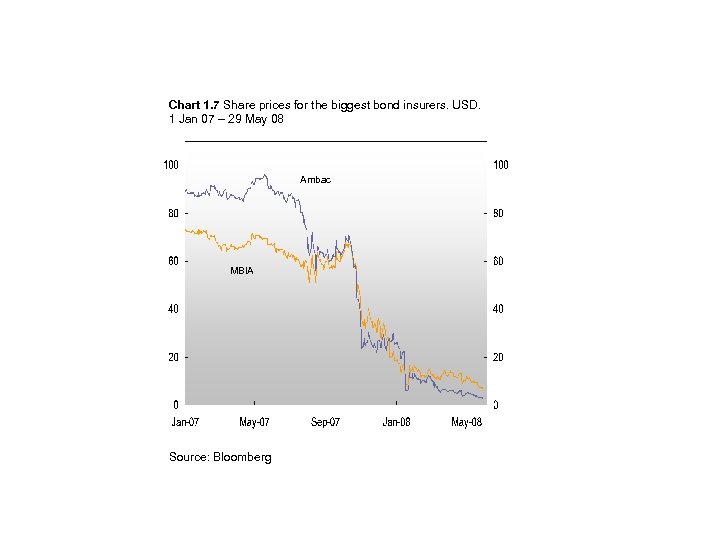
Chart 1. 7 Share prices for the biggest bond insurers. USD. 1 Jan 07 – 29 May 08 Ambac MBIA Source: Bloomberg
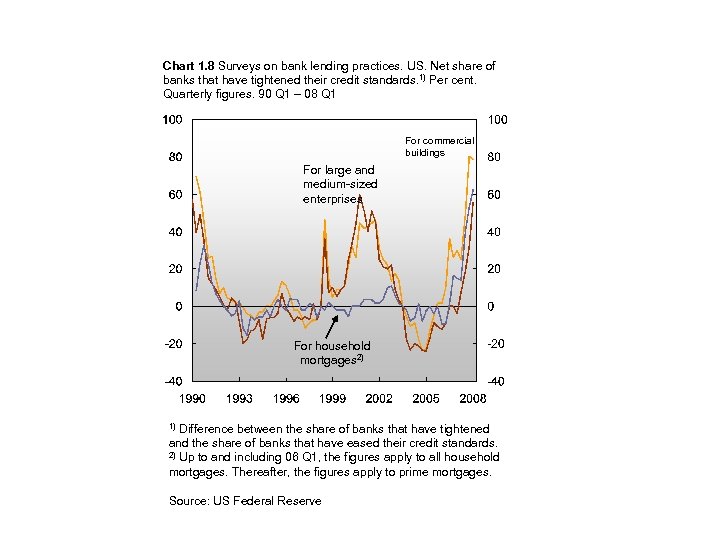
Chart 1. 8 Surveys on bank lending practices. US. Net share of banks that have tightened their credit standards. 1) Per cent. Quarterly figures. 90 Q 1 – 08 Q 1 For commercial buildings For large and medium-sized enterprises For household mortgages 2) Difference between the share of banks that have tightened and the share of banks that have eased their credit standards. 2) Up to and including 06 Q 1, the figures apply to all household mortgages. Thereafter, the figures apply to prime mortgages. 1) Source: US Federal Reserve
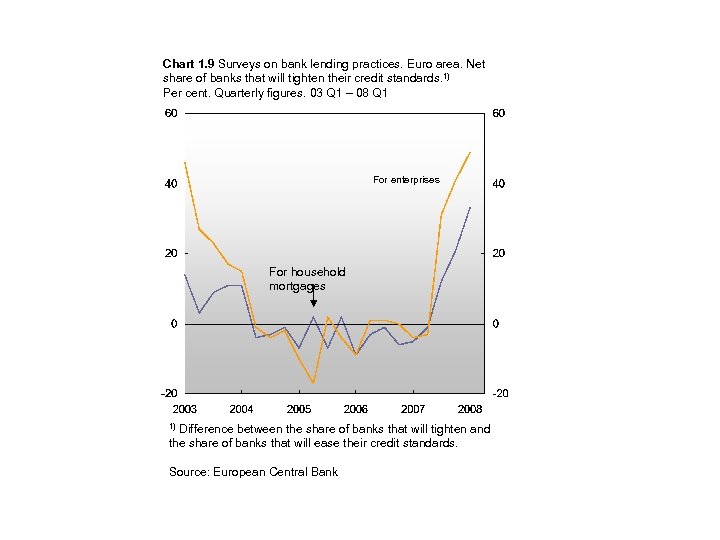
Chart 1. 9 Surveys on bank lending practices. Euro area. Net share of banks that will tighten their credit standards. 1) Per cent. Quarterly figures. 03 Q 1 – 08 Q 1 For enterprises For household mortgages Difference between the share of banks that will tighten and the share of banks that will ease their credit standards. 1) Source: European Central Bank
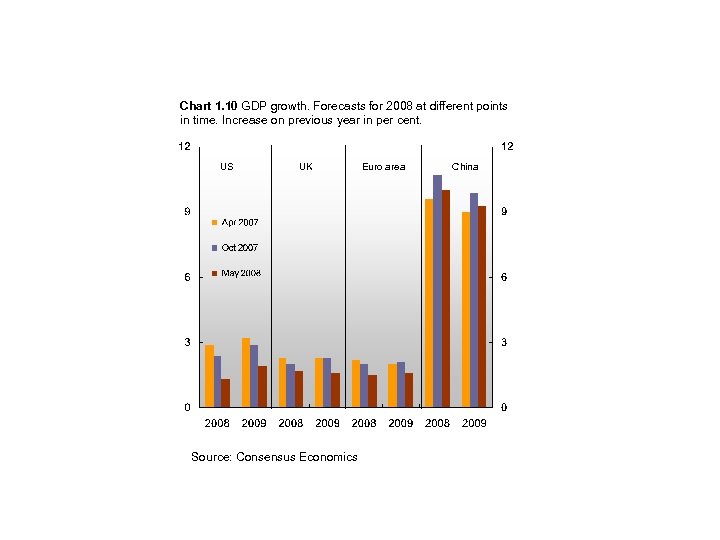
Chart 1. 10 GDP growth. Forecasts for 2008 at different points in time. Increase on previous year in per cent. US UK Source: Consensus Economics Euro area China
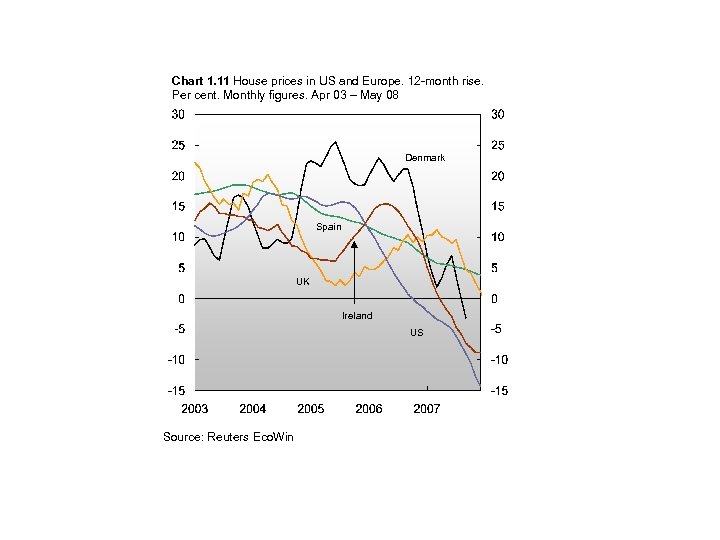
Chart 1. 11 House prices in US and Europe. 12 -month rise. Per cent. Monthly figures. Apr 03 – May 08 Denmark Spain UK Ireland US Source: Reuters Eco. Win
2 Norwegian financial institutions
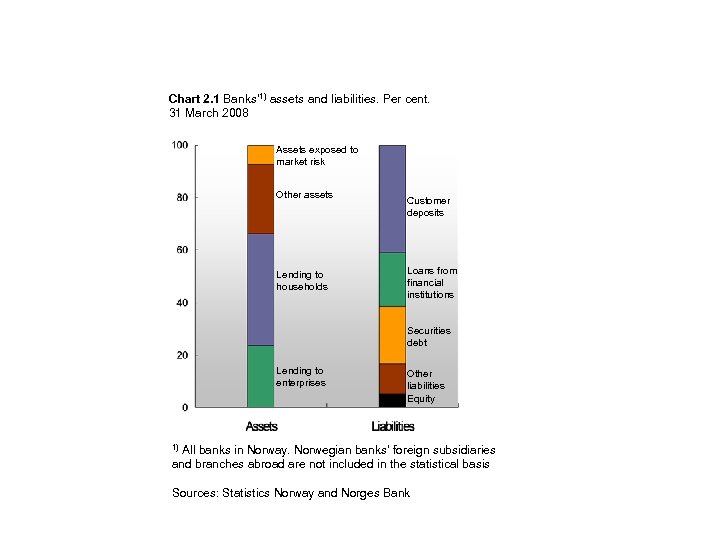
Chart 2. 1 Banks’ 1) assets and liabilities. Per cent. 31 March 2008 Assets exposed to market risk Other assets Lending to households Customer deposits Loans from financial institutions Securities debt Lending to enterprises Other liabilities Equity All banks in Norway. Norwegian banks’ foreign subsidiaries and branches abroad are not included in the statistical basis 1) Sources: Statistics Norway and Norges Bank
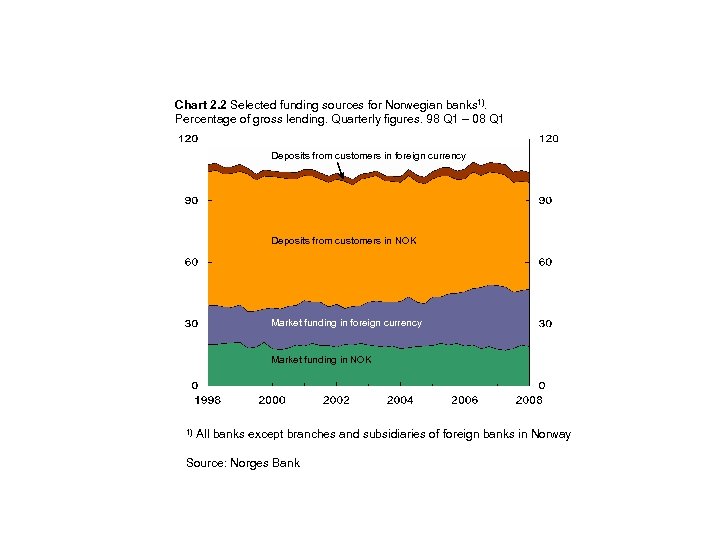
Chart 2. 2 Selected funding sources for Norwegian banks 1). Percentage of gross lending. Quarterly figures. 98 Q 1 – 08 Q 1 Deposits from customers in foreign currency Deposits from customers in NOK Market funding in foreign currency Market funding in NOK 1) All banks except branches and subsidiaries of foreign banks in Norway Source: Norges Bank
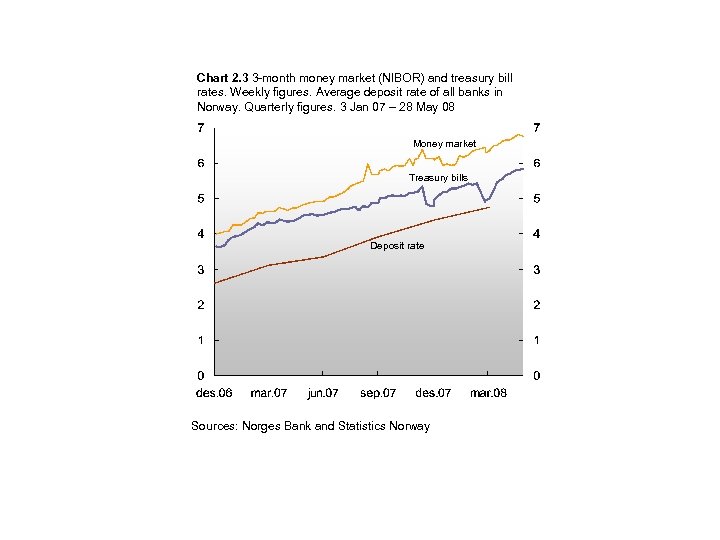
Chart 2. 3 3 -month money market (NIBOR) and treasury bill rates. Weekly figures. Average deposit rate of all banks in Norway. Quarterly figures. 3 Jan 07 – 28 May 08 Money market Treasury bills Deposit rate Sources: Norges Bank and Statistics Norway
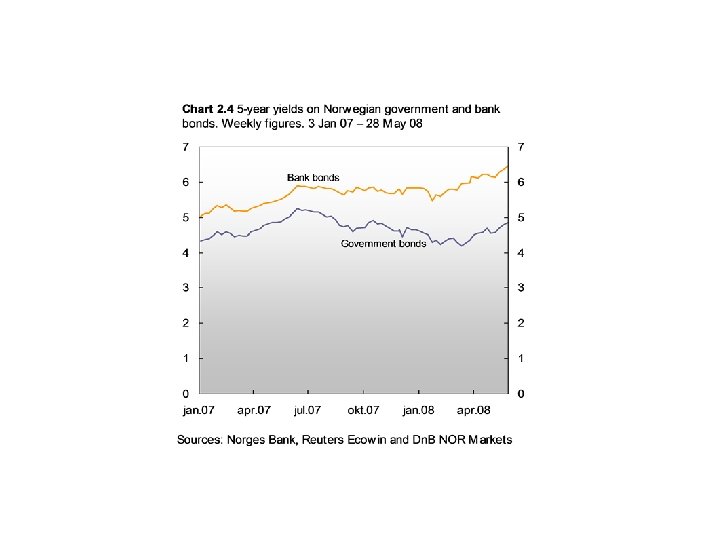
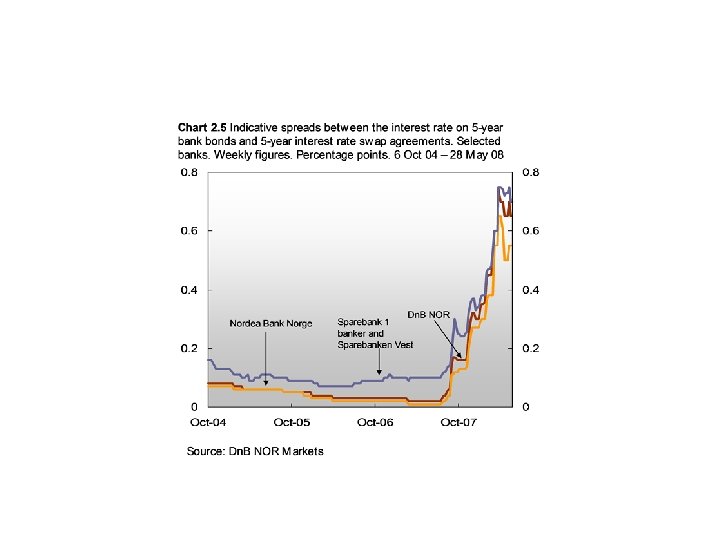
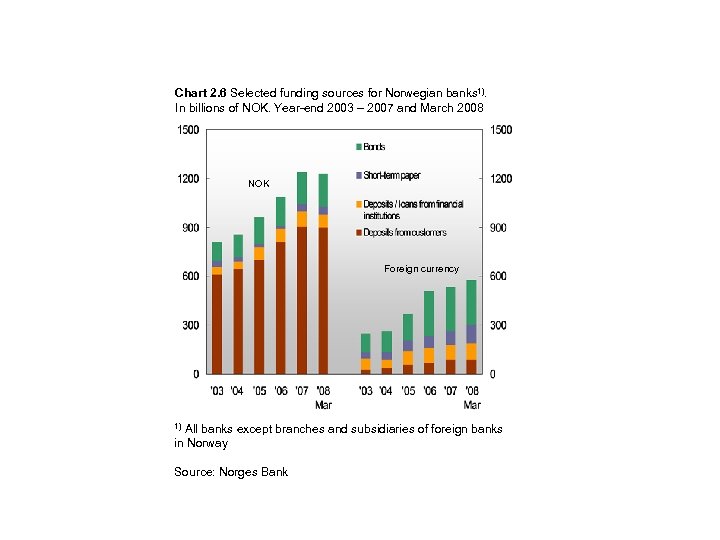
Chart 2. 6 Selected funding sources for Norwegian banks 1). In billions of NOK. Year-end 2003 – 2007 and March 2008 NOK Foreign currency All banks except branches and subsidiaries of foreign banks in Norway 1) Source: Norges Bank
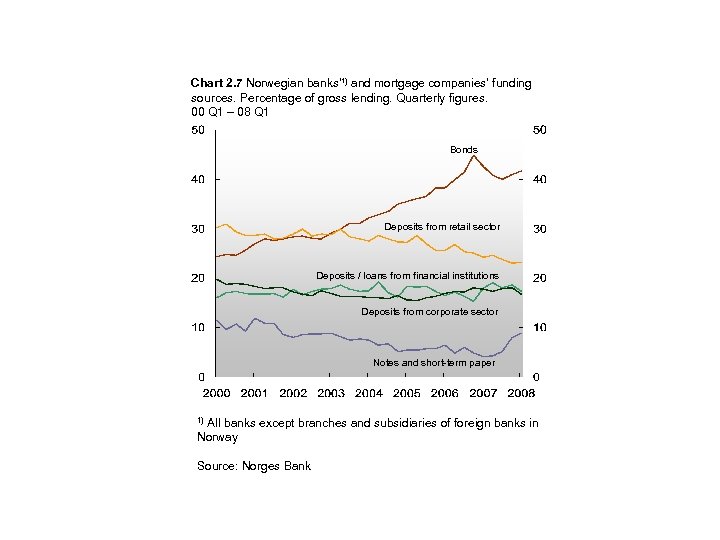
Chart 2. 7 Norwegian banks’¹) and mortgage companies’ funding sources. Percentage of gross lending. Quarterly figures. 00 Q 1 – 08 Q 1 Bonds Deposits from retail sector Deposits / loans from financial institutions Deposits from corporate sector Notes and short-term paper All banks except branches and subsidiaries of foreign banks in Norway 1) Source: Norges Bank
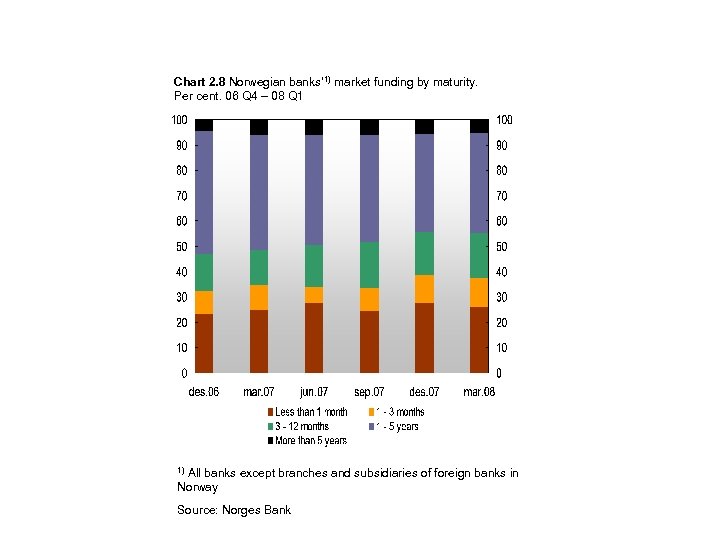
Chart 2. 8 Norwegian banks’ 1) market funding by maturity. Per cent. 06 Q 4 – 08 Q 1 All banks except branches and subsidiaries of foreign banks in Norway 1) Source: Norges Bank
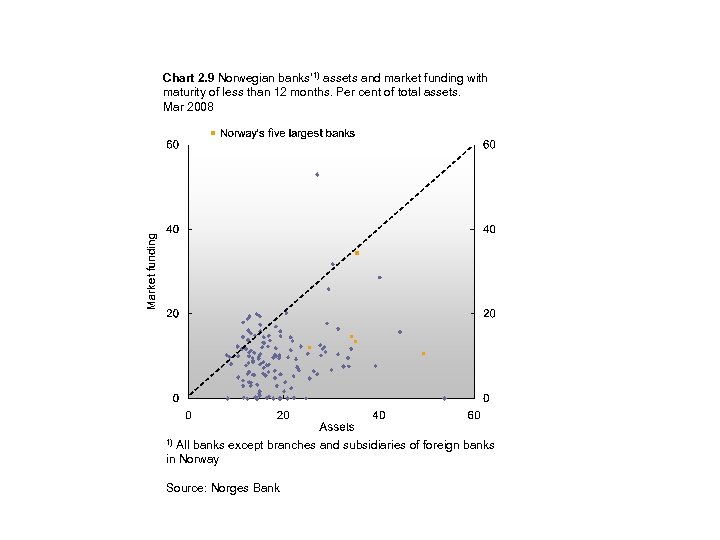
Chart 2. 9 Norwegian banks’ 1) assets and market funding with maturity of less than 12 months. Per cent of total assets. Mar 2008 All banks except branches and subsidiaries of foreign banks in Norway 1) Source: Norges Bank
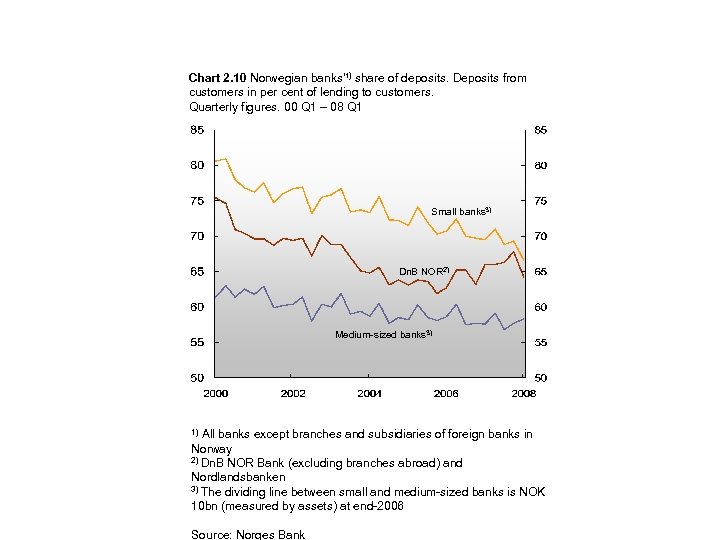
Chart 2. 10 Norwegian banks’¹) share of deposits. Deposits from customers in per cent of lending to customers. Quarterly figures. 00 Q 1 – 08 Q 1 Small banks 3) Dn. B NOR 2) Medium-sized banks 3) All banks except branches and subsidiaries of foreign banks in Norway 2) Dn. B NOR Bank (excluding branches abroad) and Nordlandsbanken 3) The dividing line between small and medium-sized banks is NOK 10 bn (measured by assets) at end-2006 1) Source: Norges Bank
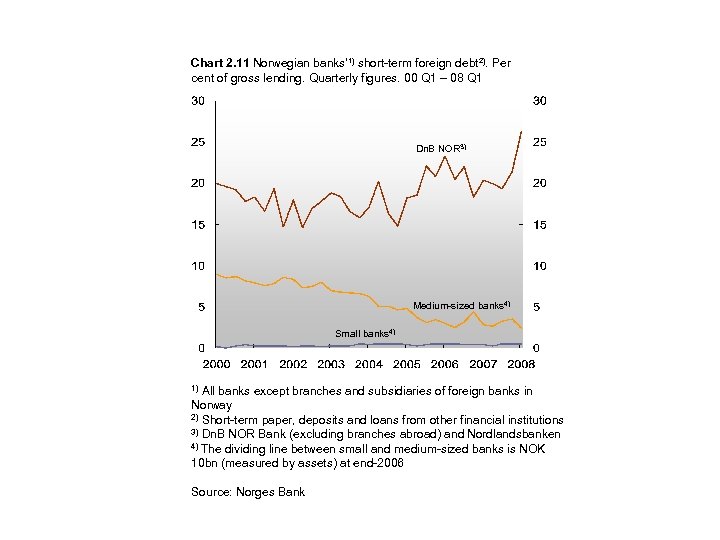
Chart 2. 11 Norwegian banks’¹) short-term foreign debt²). Per cent of gross lending. Quarterly figures. 00 Q 1 – 08 Q 1 Dn. B NOR 3) Medium-sized banks 4) Small banks 4) All banks except branches and subsidiaries of foreign banks in Norway 2) Short-term paper, deposits and loans from other financial institutions 3) Dn. B NOR Bank (excluding branches abroad) and Nordlandsbanken 4) The dividing line between small and medium-sized banks is NOK 10 bn (measured by assets) at end-2006 1) Source: Norges Bank
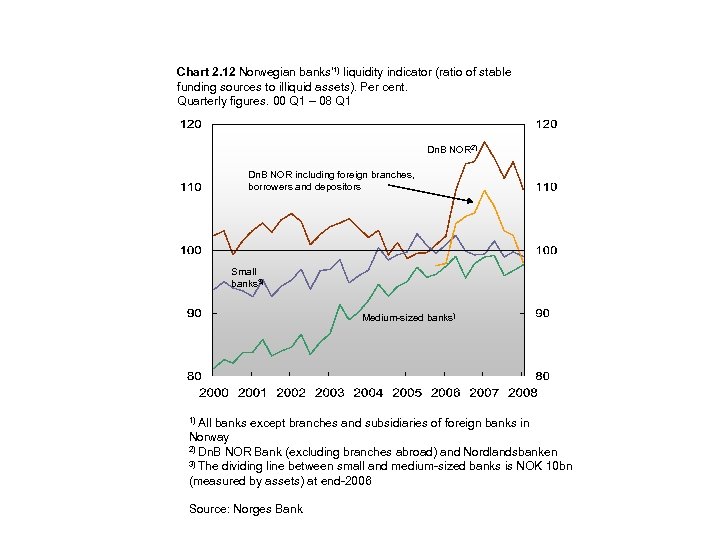
Chart 2. 12 Norwegian banks’¹) liquidity indicator (ratio of stable funding sources to illiquid assets). Per cent. Quarterly figures. 00 Q 1 – 08 Q 1 Dn. B NOR 2) Dn. B NOR including foreign branches, borrowers and depositors Small banks 3) Medium-sized banks) 1) All banks except branches and subsidiaries of foreign banks in Norway 2) Dn. B NOR Bank (excluding branches abroad) and Nordlandsbanken 3) The dividing line between small and medium-sized banks is NOK 10 bn (measured by assets) at end-2006 Source: Norges Bank
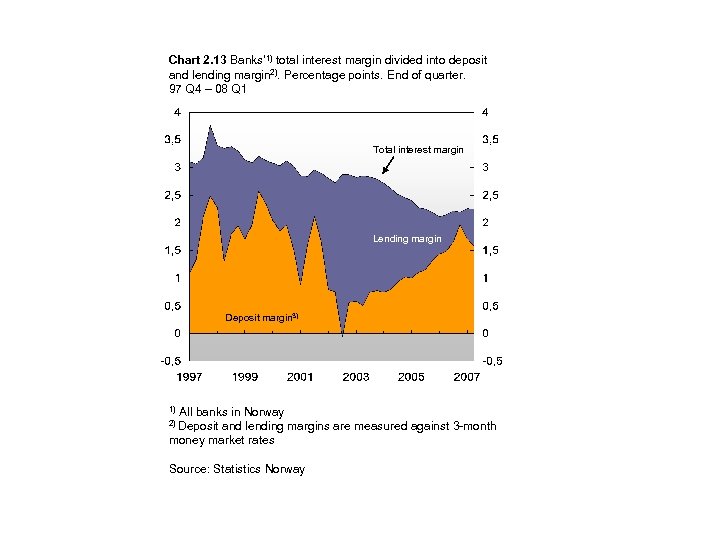
Chart 2. 13 Banks’ 1) total interest margin divided into deposit and lending margin 2). Percentage points. End of quarter. 97 Q 4 – 08 Q 1 Total interest margin Lending margin Deposit margin 3) All banks in Norway and lending margins are measured against 3 -month money market rates 1) 2) Deposit Source: Statistics Norway
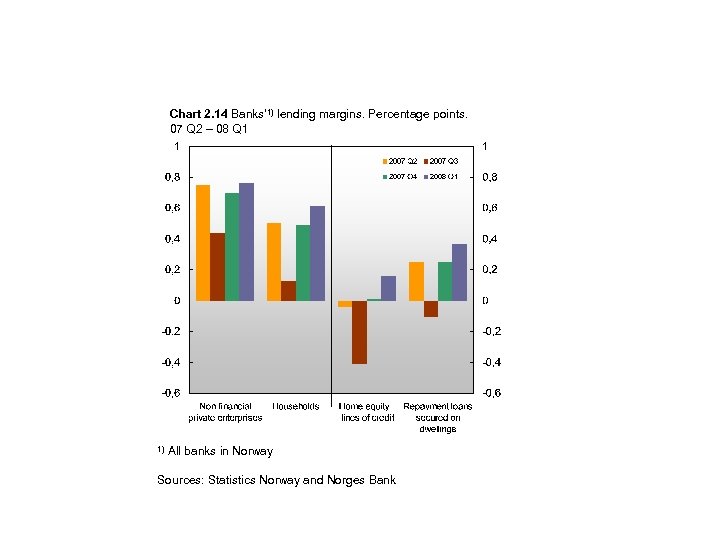
Chart 2. 14 Banks’ 1) lending margins. Percentage points. 07 Q 2 – 08 Q 1 1) All banks in Norway Sources: Statistics Norway and Norges Bank
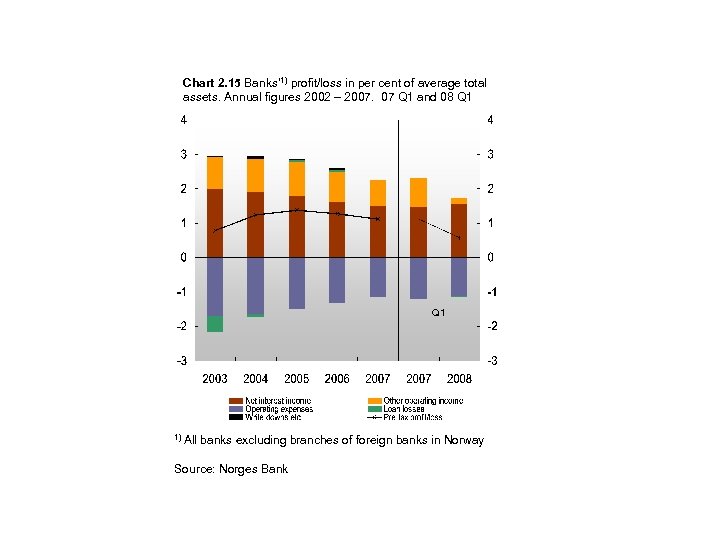
Chart 2. 15 Banks’ 1) profit/loss in per cent of average total assets. Annual figures 2002 – 2007. 07 Q 1 and 08 Q 1 1) All banks excluding branches of foreign banks in Norway Source: Norges Bank
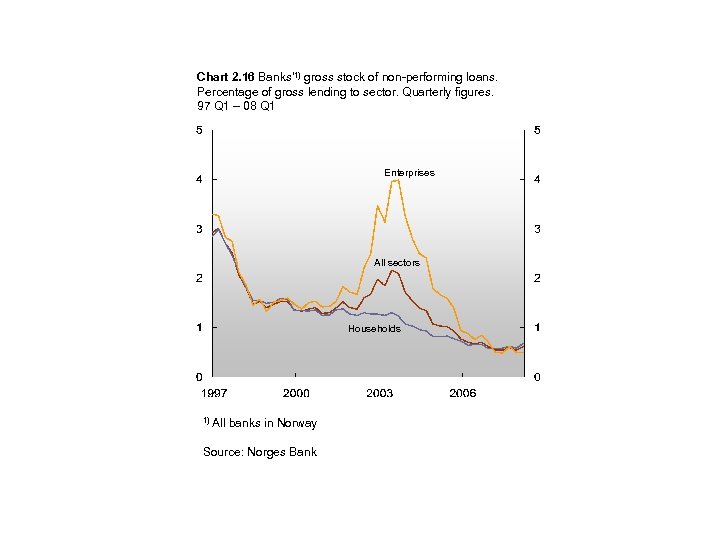
Chart 2. 16 Banks’ 1) gross stock of non-performing loans. Percentage of gross lending to sector. Quarterly figures. 97 Q 1 – 08 Q 1 Enterprises All sectors Households 1) All banks in Norway Source: Norges Bank
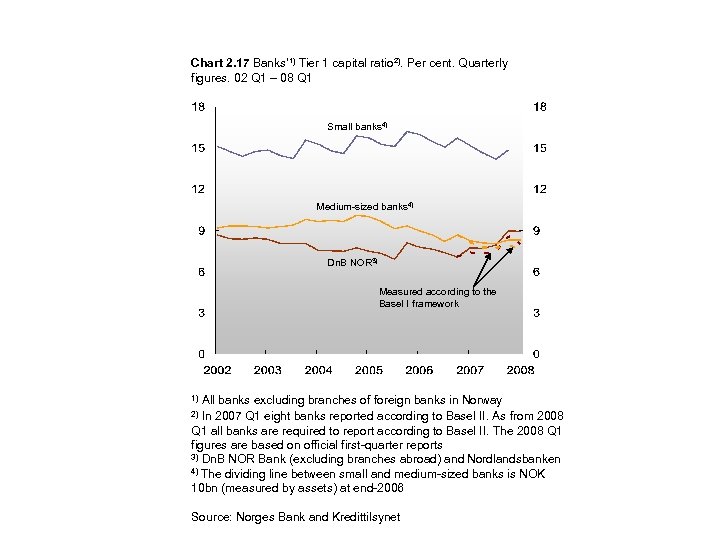
Chart 2. 17 Banks’¹) Tier 1 capital ratio²). Per cent. Quarterly figures. 02 Q 1 – 08 Q 1 Small banks 4) Medium-sized banks 4) Dn. B NOR 3) Measured according to the Basel I framework All banks excluding branches of foreign banks in Norway In 2007 Q 1 eight banks reported according to Basel II. As from 2008 Q 1 all banks are required to report according to Basel II. The 2008 Q 1 figures are based on official first-quarter reports 3) Dn. B NOR Bank (excluding branches abroad) and Nordlandsbanken 4) The dividing line between small and medium-sized banks is NOK 10 bn (measured by assets) at end-2006 1) 2) Source: Norges Bank and Kredittilsynet
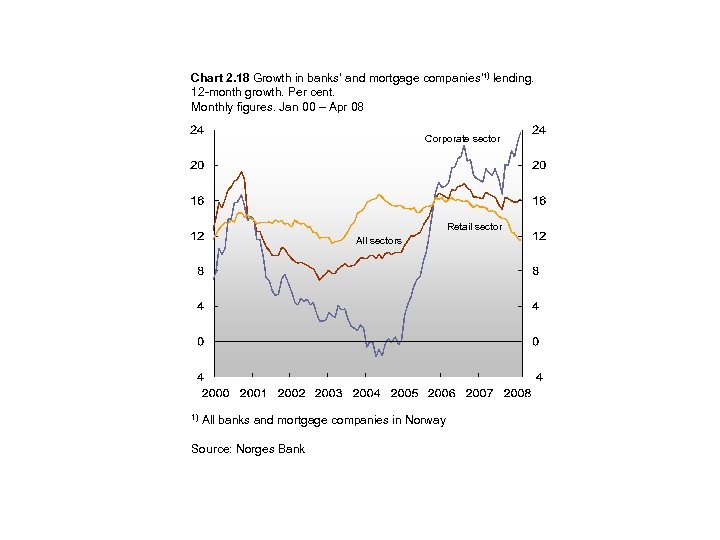
Chart 2. 18 Growth in banks’ and mortgage companies’¹) lending. 12 -month growth. Per cent. Monthly figures. Jan 00 – Apr 08 Corporate sector Retail sector All sectors 1) All banks and mortgage companies in Norway Source: Norges Bank
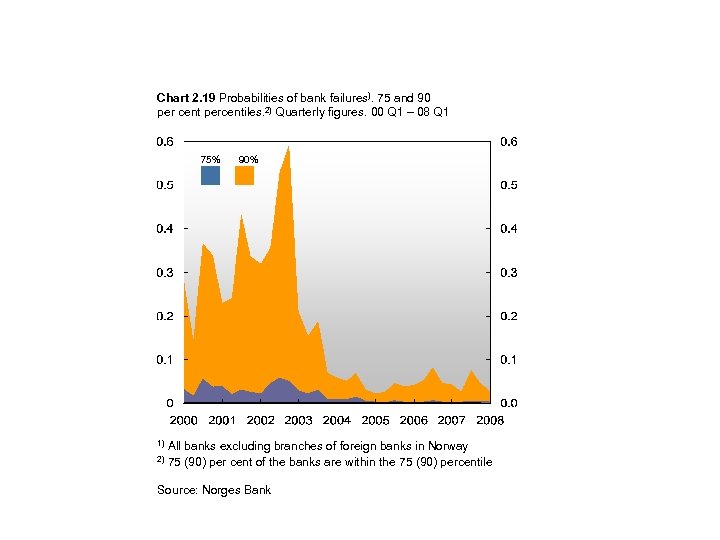
Chart 2. 19 Probabilities of bank failures). 75 and 90 per cent percentiles. 2) Quarterly figures. 00 Q 1 – 08 Q 1 75% 1) 2) 90% All banks excluding branches of foreign banks in Norway 75 (90) per cent of the banks are within the 75 (90) percentile Source: Norges Bank
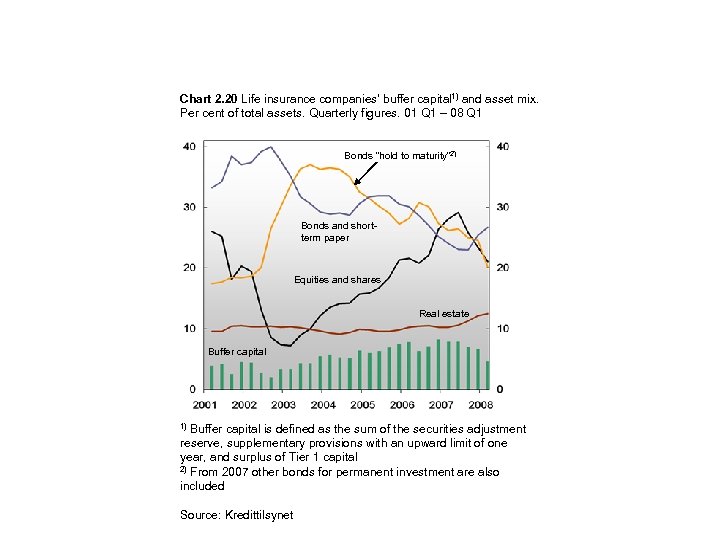
Chart 2. 20 Life insurance companies’ buffer capital 1) and asset mix. Per cent of total assets. Quarterly figures. 01 Q 1 – 08 Q 1 Bonds "hold to maturity“ 2) Bonds and shortterm paper Equities and shares Real estate Buffer capital is defined as the sum of the securities adjustment reserve, supplementary provisions with an upward limit of one year, and surplus of Tier 1 capital 2) From 2007 other bonds for permanent investment are also included 1) Source: Kredittilsynet
3 The Norwegian macrofinancial environment
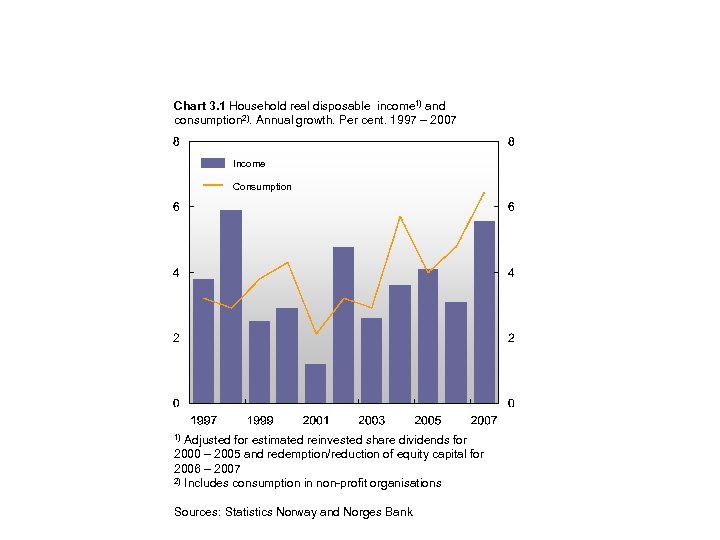
Chart 3. 1 Household real disposable income 1) and consumption 2). Annual growth. Per cent. 1997 – 2007 Income Consumption Adjusted for estimated reinvested share dividends for 2000 – 2005 and redemption/reduction of equity capital for 2006 – 2007 2) Includes consumption in non-profit organisations 1) Sources: Statistics Norway and Norges Bank
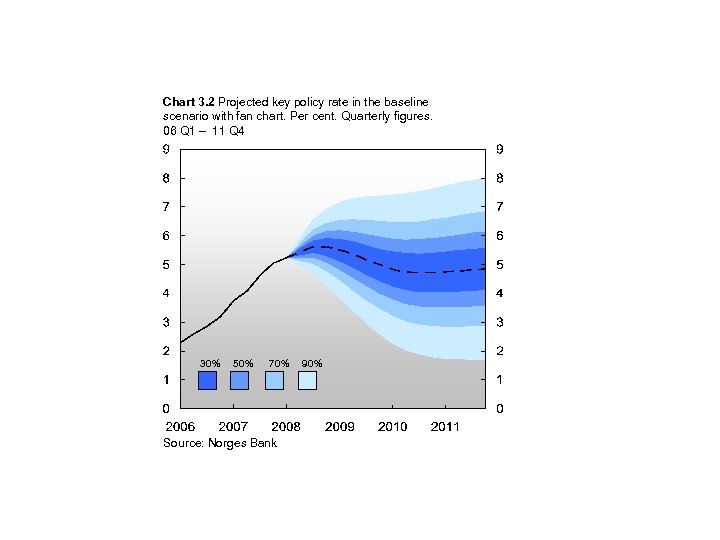
Chart 3. 2 Projected key policy rate in the baseline scenario with fan chart. Per cent. Quarterly figures. 06 Q 1 – 11 Q 4 30% 50% 70% Source: Norges Bank 90%
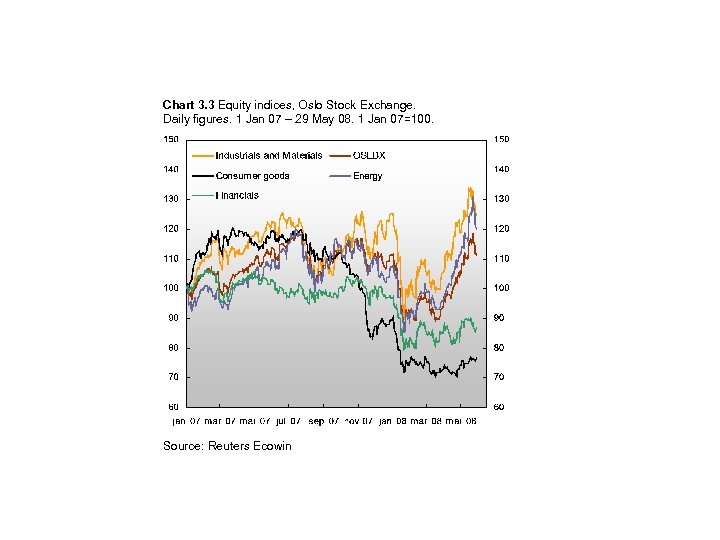
Chart 3. 3 Equity indices, Oslo Stock Exchange. Daily figures. 1 Jan 07 – 29 May 08. 1 Jan 07=100. Source: Reuters Ecowin
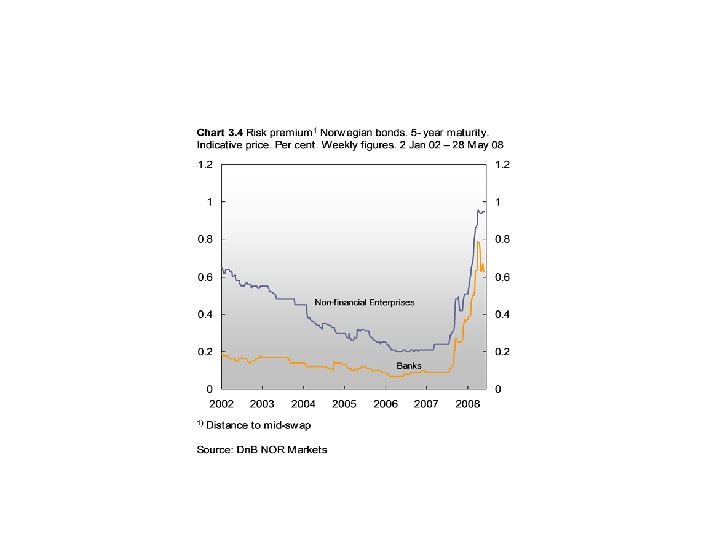
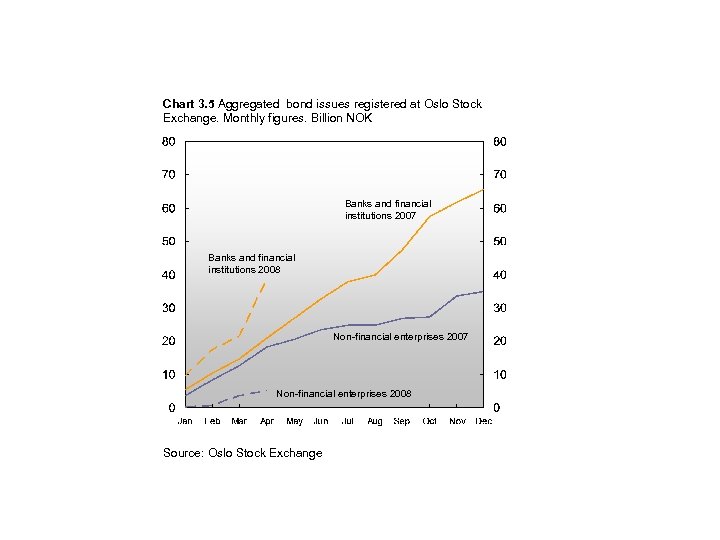
Chart 3. 5 Aggregated bond issues registered at Oslo Stock Exchange. Monthly figures. Billion NOK Banks and financial institutions 2007 Banks and financial institutions 2008 Non-financial enterprises 2007 Non-financial enterprises 2008 Source: Oslo Stock Exchange
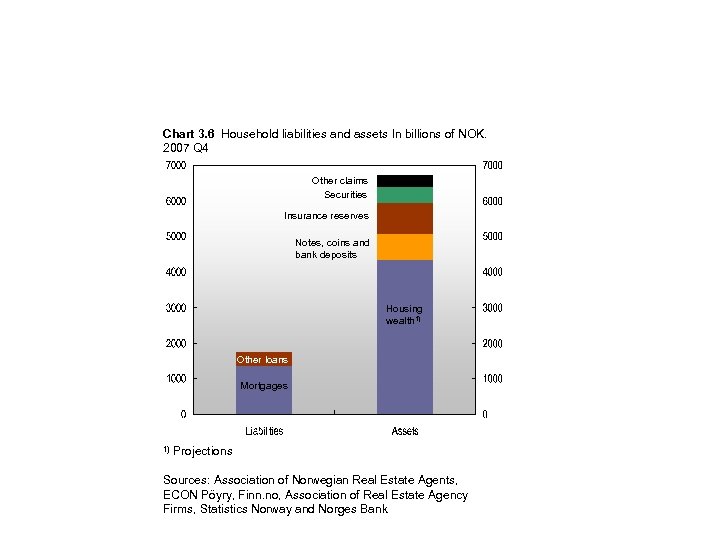
Chart 3. 6 Household liabilities and assets In billions of NOK. 2007 Q 4 Other claims Securities Insurance reserves Notes, coins and bank deposits Housing wealth 1) Other loans Mortgages 1) Projections Sources: Association of Norwegian Real Estate Agents, ECON Pöyry, Finn. no, Association of Real Estate Agency Firms, Statistics Norway and Norges Bank
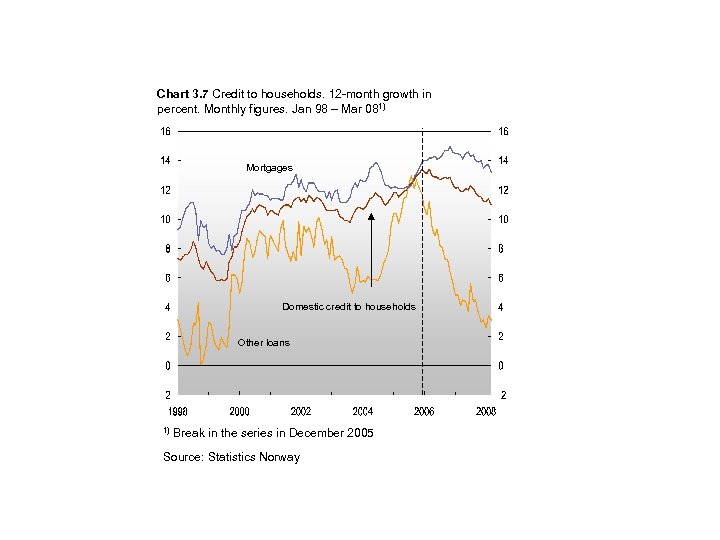
Chart 3. 7 Credit to households. 12 -month growth in percent. Monthly figures. Jan 98 – Mar 081) Mortgages Domestic credit to households Other loans 1) Break in the series in December 2005 Source: Statistics Norway
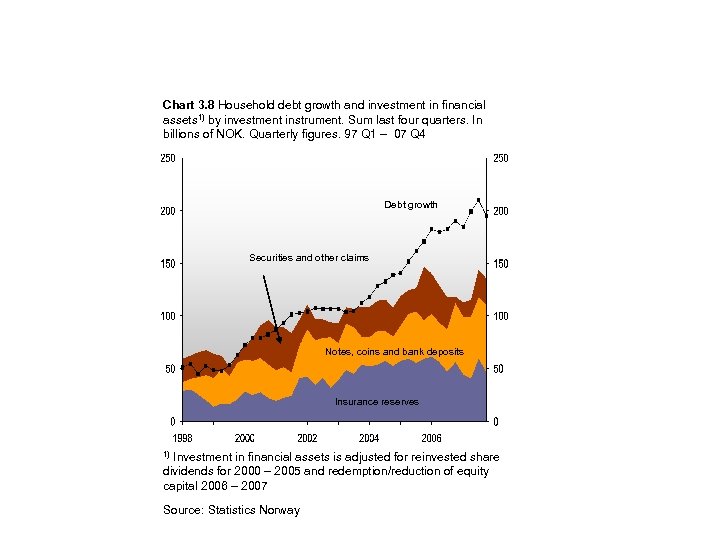
Chart 3. 8 Household debt growth and investment in financial assets 1) by investment instrument. Sum last four quarters. In billions of NOK. Quarterly figures. 97 Q 1 – 07 Q 4 Debt growth Securities and other claims Notes, coins and bank deposits Insurance reserves Investment in financial assets is adjusted for reinvested share dividends for 2000 – 2005 and redemption/reduction of equity capital 2006 – 2007 1) Source: Statistics Norway
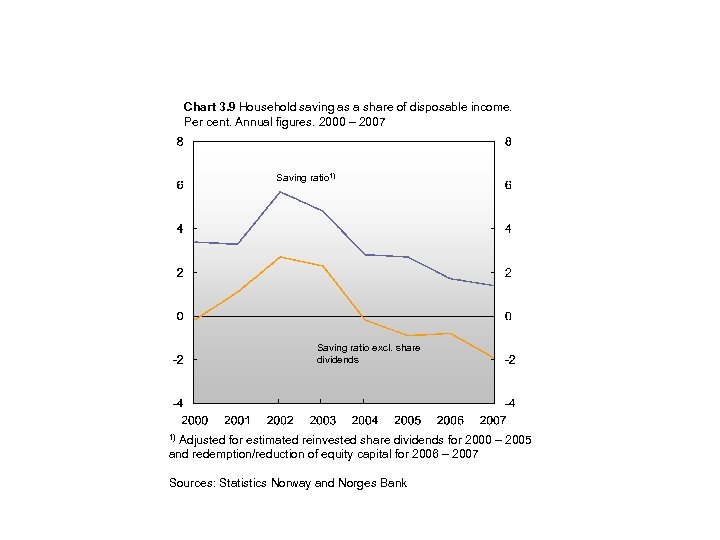
Chart 3. 9 Household saving as a share of disposable income. Per cent. Annual figures. 2000 – 2007 Saving ratio 1) Saving ratio excl. share dividends Adjusted for estimated reinvested share dividends for 2000 – 2005 and redemption/reduction of equity capital for 2006 – 2007 1) Sources: Statistics Norway and Norges Bank
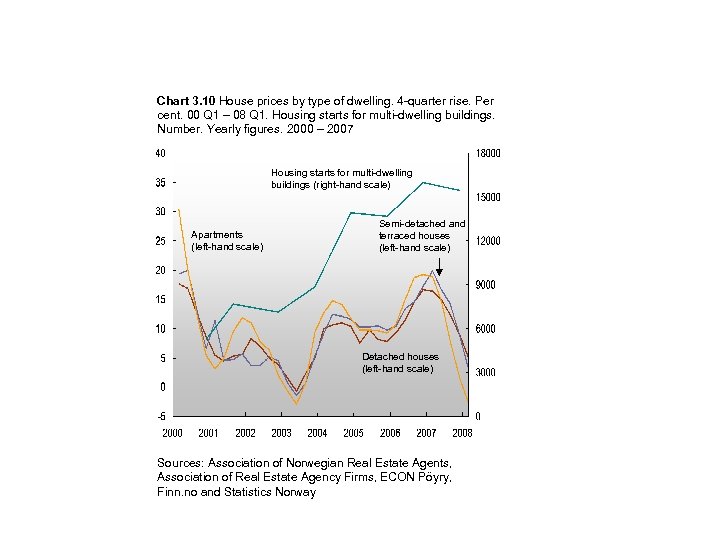
Chart 3. 10 House prices by type of dwelling. 4 -quarter rise. Per cent. 00 Q 1 – 08 Q 1. Housing starts for multi-dwelling buildings. Number. Yearly figures. 2000 – 2007 Housing starts for multi-dwelling buildings (right-hand scale) Apartments (left-hand scale) Semi-detached and terraced houses (left-hand scale) Detached houses (left-hand scale) Sources: Association of Norwegian Real Estate Agents, Association of Real Estate Agency Firms, ECON Pöyry, Finn. no and Statistics Norway
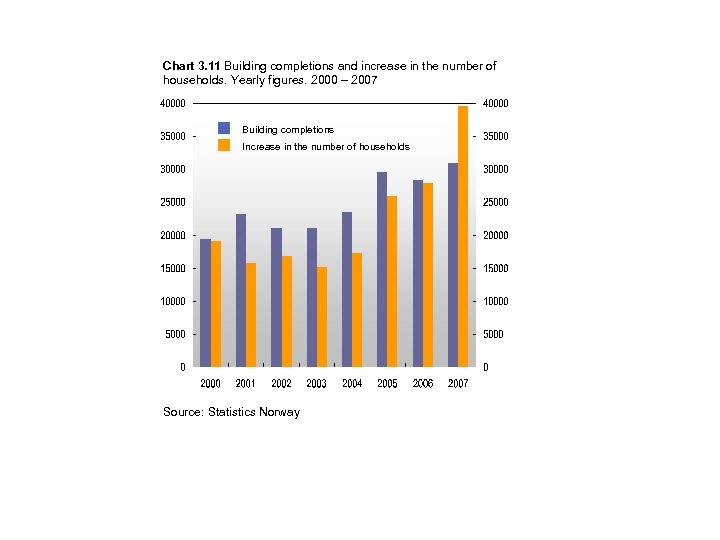
Chart 3. 11 Building completions and increase in the number of households. Yearly figures. 2000 – 2007 Building completions Increase in the number of households Source: Statistics Norway
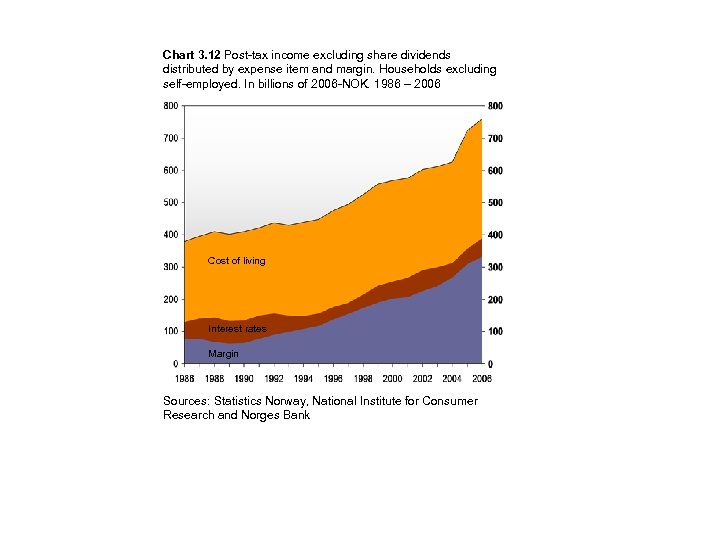
Chart 3. 12 Post-tax income excluding share dividends distributed by expense item and margin. Households excluding self-employed. In billions of 2006 -NOK. 1986 – 2006 Cost of living Interest rates Margin Sources: Statistics Norway, National Institute for Consumer Research and Norges Bank
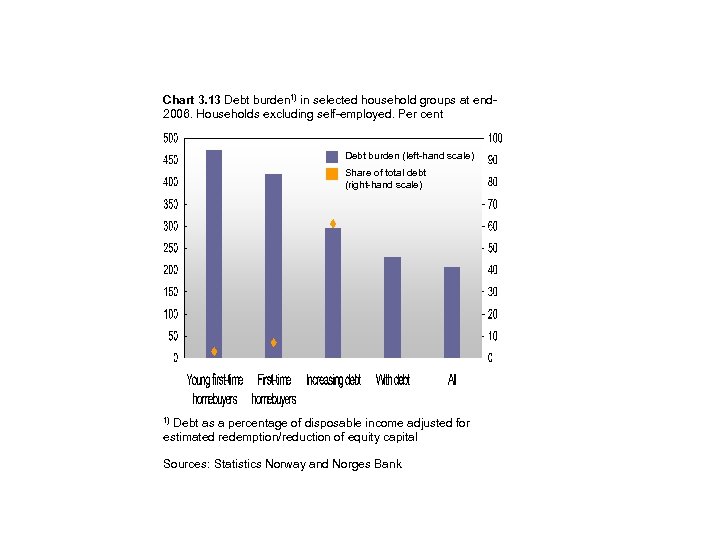
Chart 3. 13 Debt burden 1) in selected household groups at end 2006. Households excluding self-employed. Per cent Debt burden (left-hand scale) Share of total debt (right-hand scale) Debt as a percentage of disposable income adjusted for estimated redemption/reduction of equity capital 1) Sources: Statistics Norway and Norges Bank
Chart 3. 14 Distribution of gross financial wealth and related debt at end-2006. Households excluding self-employed. Per cent Gross financial wealth Debt Sources: Statistics Norway and Norges Bank
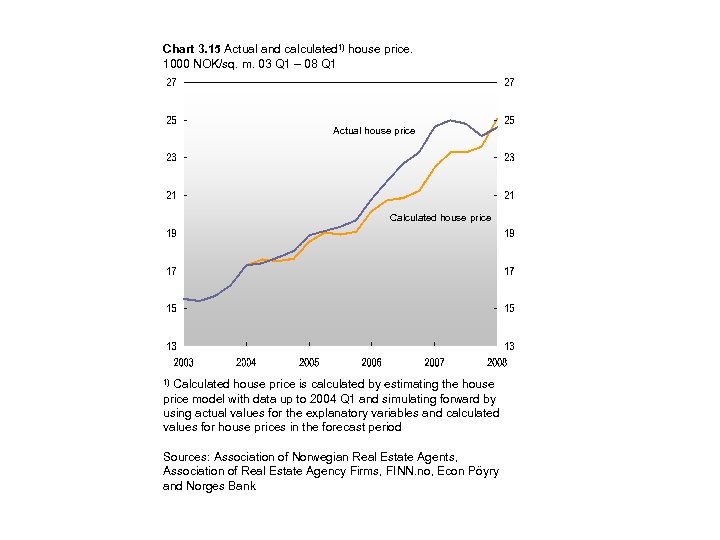
Chart 3. 15 Actual and calculated 1) house price. 1000 NOK/sq. m. 03 Q 1 – 08 Q 1 Actual house price Calculated house price is calculated by estimating the house price model with data up to 2004 Q 1 and simulating forward by using actual values for the explanatory variables and calculated values for house prices in the forecast period 1) Sources: Association of Norwegian Real Estate Agents, Association of Real Estate Agency Firms, FINN. no, Econ Pöyry and Norges Bank
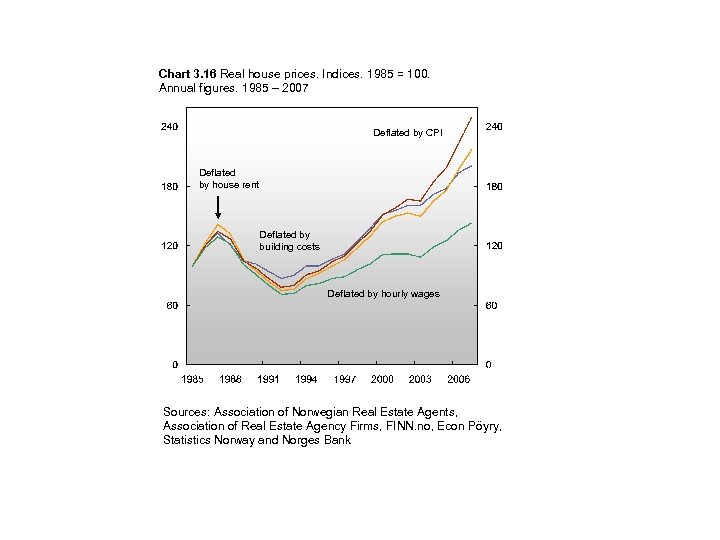
Chart 3. 16 Real house prices. Indices. 1985 = 100. Annual figures. 1985 – 2007 Deflated by CPI Deflated by house rent Deflated by building costs Deflated by hourly wages Sources: Association of Norwegian Real Estate Agents, Association of Real Estate Agency Firms, FINN. no, Econ Pöyry, Statistics Norway and Norges Bank
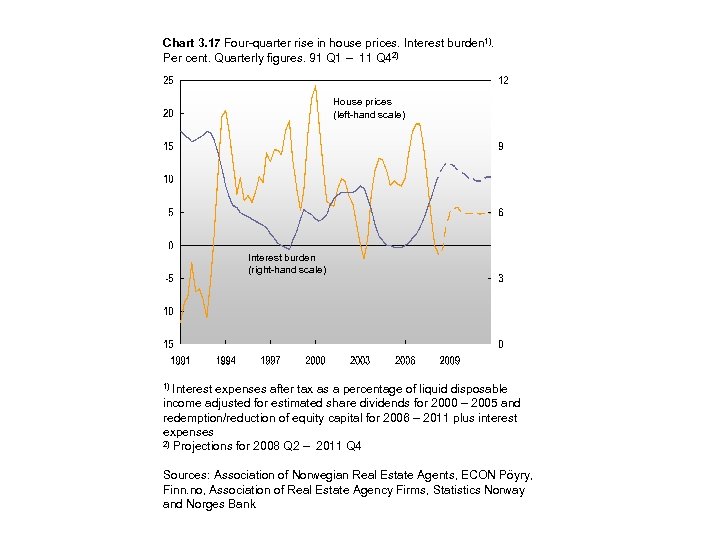
Chart 3. 17 Four-quarter rise in house prices. Interest burden 1). Per cent. Quarterly figures. 91 Q 1 – 11 Q 42) House prices (left-hand scale) Interest burden (right-hand scale) 1) Interest expenses after tax as a percentage of liquid disposable income adjusted for estimated share dividends for 2000 – 2005 and redemption/reduction of equity capital for 2006 – 2011 plus interest expenses 2) Projections for 2008 Q 2 – 2011 Q 4 Sources: Association of Norwegian Real Estate Agents, ECON Pöyry, Finn. no, Association of Real Estate Agency Firms, Statistics Norway and Norges Bank
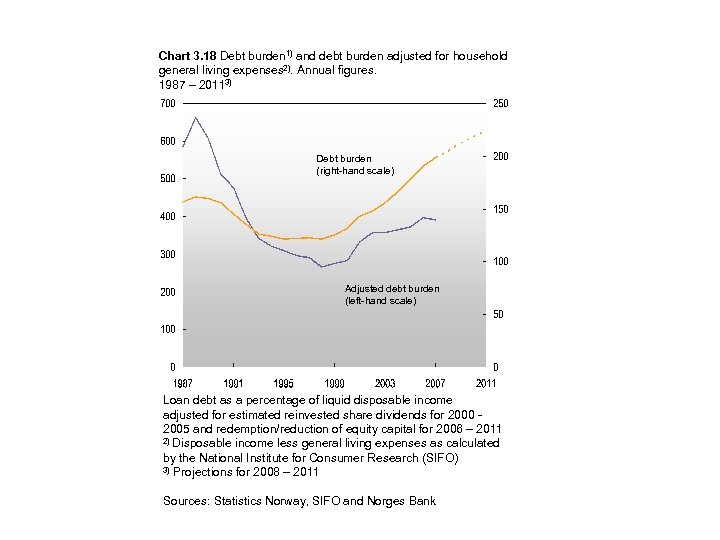
Chart 3. 18 Debt burden 1) and debt burden adjusted for household general living expenses 2). Annual figures. 1987 – 20113) Debt burden (right-hand scale) Adjusted debt burden (left-hand scale) Loan debt as a percentage of liquid disposable income adjusted for estimated reinvested share dividends for 2000 2005 and redemption/reduction of equity capital for 2006 – 2011 2) Disposable income less general living expenses as calculated by the National Institute for Consumer Research (SIFO) 3) Projections for 2008 – 2011 Sources: Statistics Norway, SIFO and Norges Bank
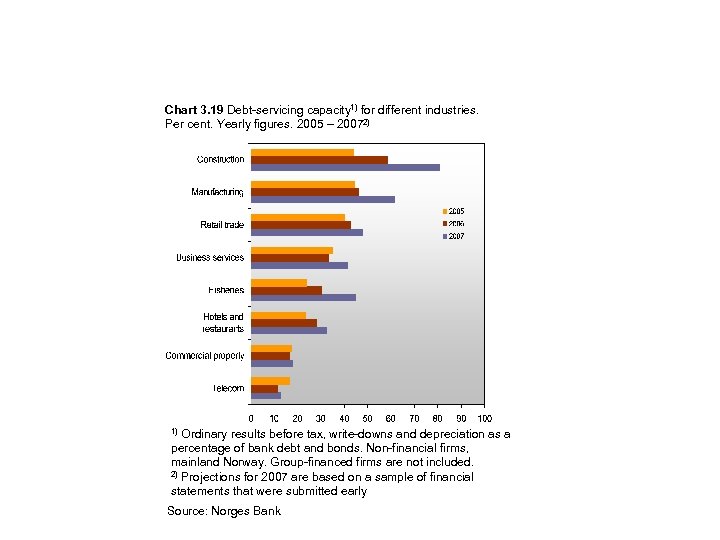
Chart 3. 19 Debt-servicing capacity 1) for different industries. Per cent. Yearly figures. 2005 – 20072) Ordinary results before tax, write-downs and depreciation as a percentage of bank debt and bonds. Non-financial firms, mainland Norway. Group-financed firms are not included. 2) Projections for 2007 are based on a sample of financial statements that were submitted early 1) Source: Norges Bank
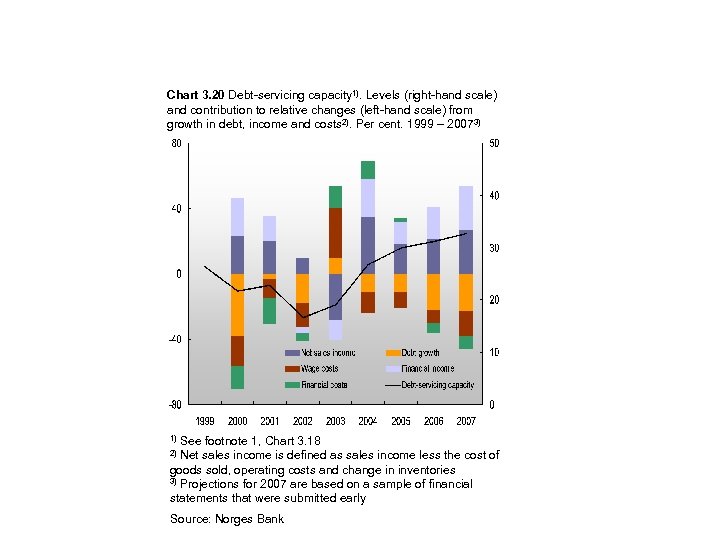
Chart 3. 20 Debt-servicing capacity 1). Levels (right-hand scale) and contribution to relative changes (left-hand scale) from growth in debt, income and costs 2). Per cent. 1999 – 20073) See footnote 1, Chart 3. 18 Net sales income is defined as sales income less the cost of goods sold, operating costs and change in inventories 3) Projections for 2007 are based on a sample of financial statements that were submitted early 1) 2) Source: Norges Bank
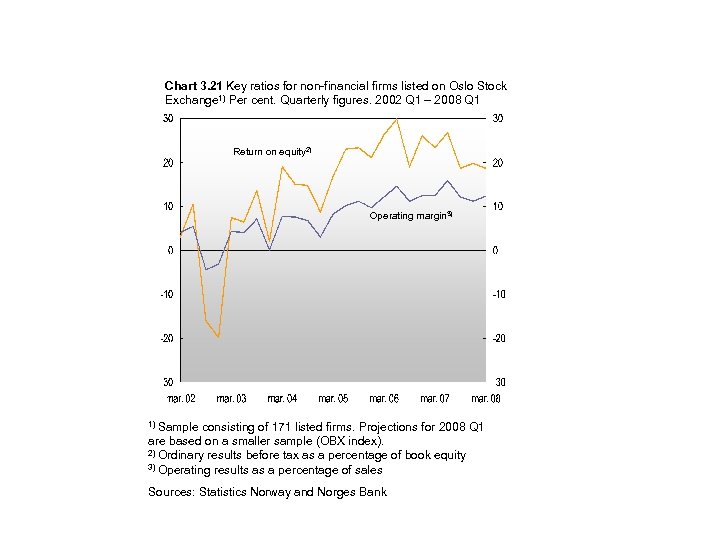
Chart 3. 21 Key ratios for non-financial firms listed on Oslo Stock Exchange 1) Per cent. Quarterly figures. 2002 Q 1 – 2008 Q 1 Return on equity 2) Operating margin 3) 1) Sample consisting of 171 listed firms. Projections for 2008 Q 1 are based on a smaller sample (OBX index). 2) Ordinary results before tax as a percentage of book equity 3) Operating results as a percentage of sales Sources: Statistics Norway and Norges Bank
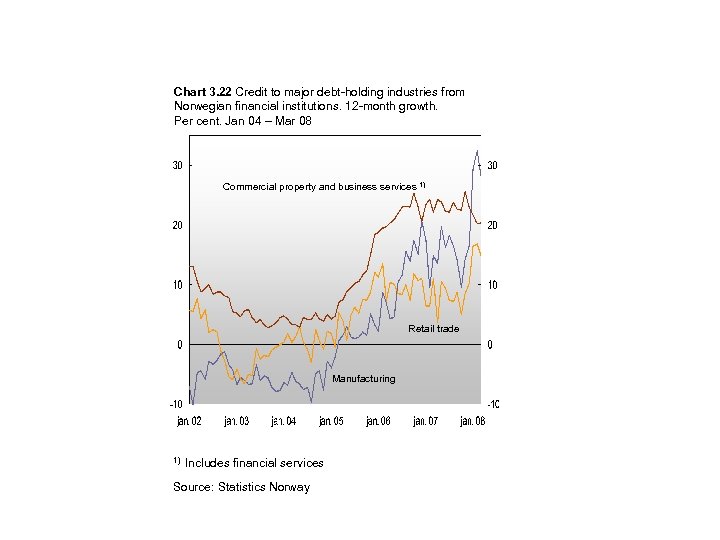
Chart 3. 22 Credit to major debt-holding industries from Norwegian financial institutions. 12 -month growth. Per cent. Jan 04 – Mar 08 Commercial property and business services 1) Retail trade Manufacturing 1) Includes financial services Source: Statistics Norway
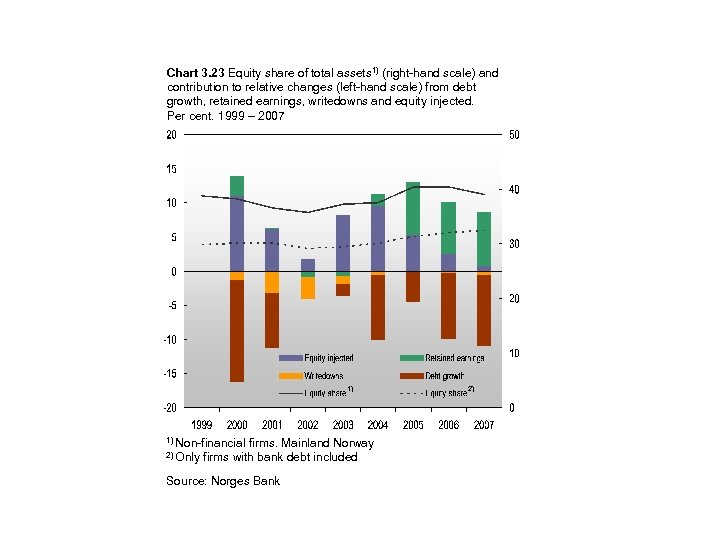
Chart 3. 23 Equity share of total assets 1) (right-hand scale) and contribution to relative changes (left-hand scale) from debt growth, retained earnings, writedowns and equity injected. Per cent. 1999 – 2007 1) 1) Non-financial 2) Only firms. Mainland Norway firms with bank debt included Source: Norges Bank 2)
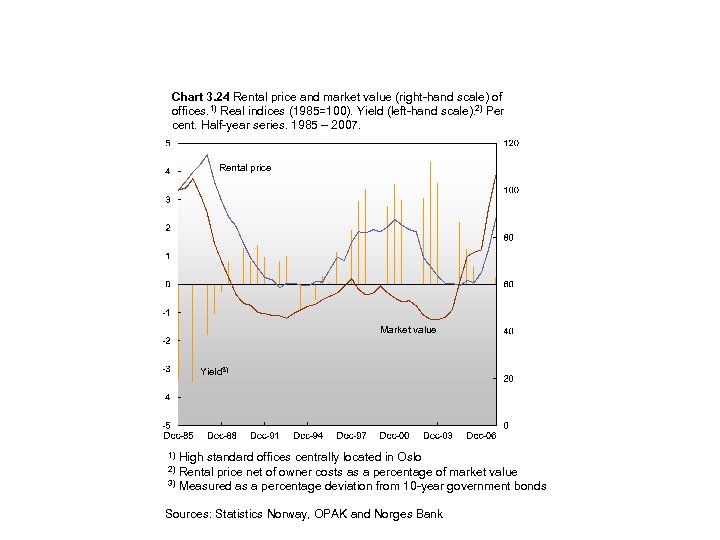
Chart 3. 24 Rental price and market value (right-hand scale) of offices. 1) Real indices (1985=100). Yield (left-hand scale). 2) Per cent. Half-year series. 1985 – 2007. Rental price Market value Yield 3) High standard offices centrally located in Oslo Rental price net of owner costs as a percentage of market value 3) Measured as a percentage deviation from 10 -year government bonds 1) 2) Sources: Statistics Norway, OPAK and Norges Bank
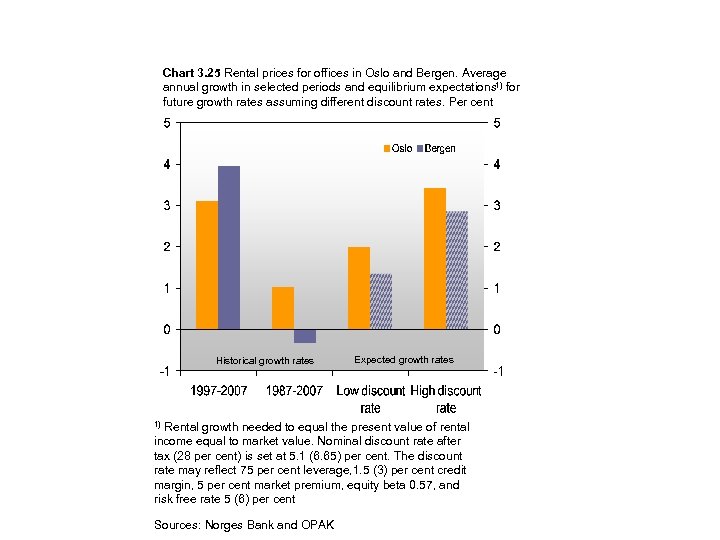
Chart 3. 25 Rental prices for offices in Oslo and Bergen. Average annual growth in selected periods and equilibrium expectations 1) for future growth rates assuming different discount rates. Per cent Historical growth rates Expected growth rates Rental growth needed to equal the present value of rental income equal to market value. Nominal discount rate after tax (28 per cent) is set at 5. 1 (6. 65) per cent. The discount rate may reflect 75 per cent leverage, 1. 5 (3) per cent credit margin, 5 per cent market premium, equity beta 0. 57, and risk free rate 5 (6) per cent 1) Sources: Norges Bank and OPAK
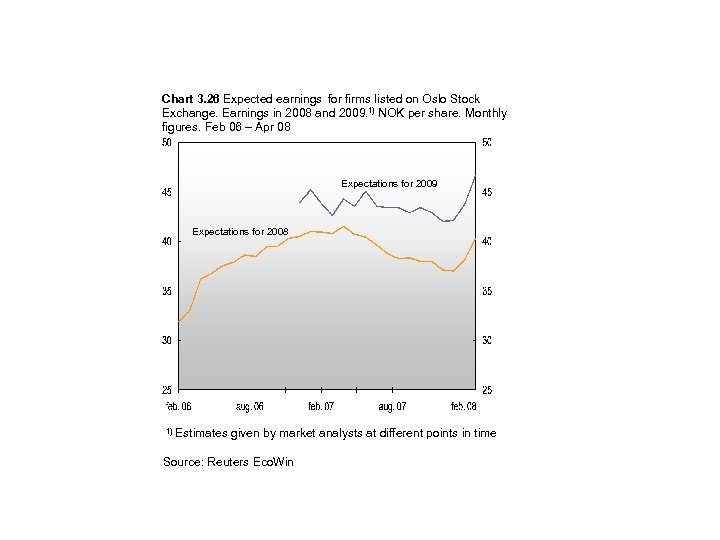
Chart 3. 26 Expected earnings for firms listed on Oslo Stock Exchange. Earnings in 2008 and 2009. 1) NOK per share. Monthly figures. Feb 06 – Apr 08 Expectations for 2009 Expectations for 2008 1) Estimates given by market analysts at different points in time Source: Reuters Eco. Win
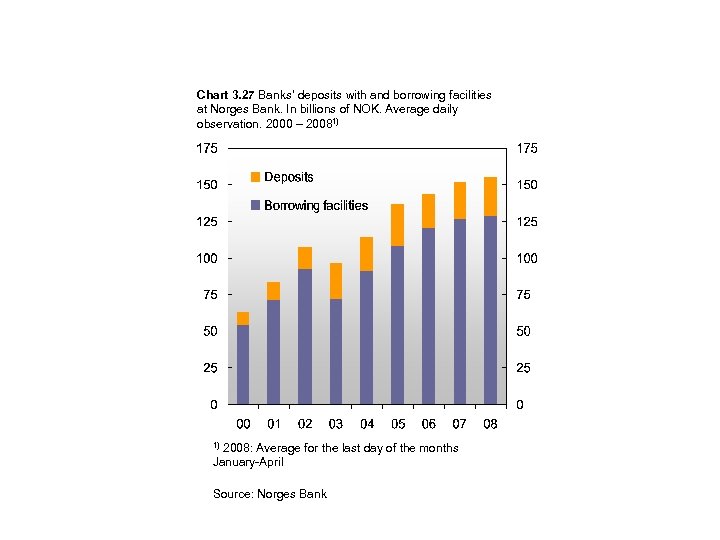
Chart 3. 27 Banks’ deposits with and borrowing facilities at Norges Bank. In billions of NOK. Average daily observation. 2000 – 20081) 2008: Average for the last day of the months January-April 1) Source: Norges Bank

4 Outlook and challenges
Chart 4. 1 Credit risk premium on corporate bonds rated BBB. 5 -year maturity. Percentage points. 1 Jan 2007 – 29 May 2008 US Europe Source: Reuters Eco. Win
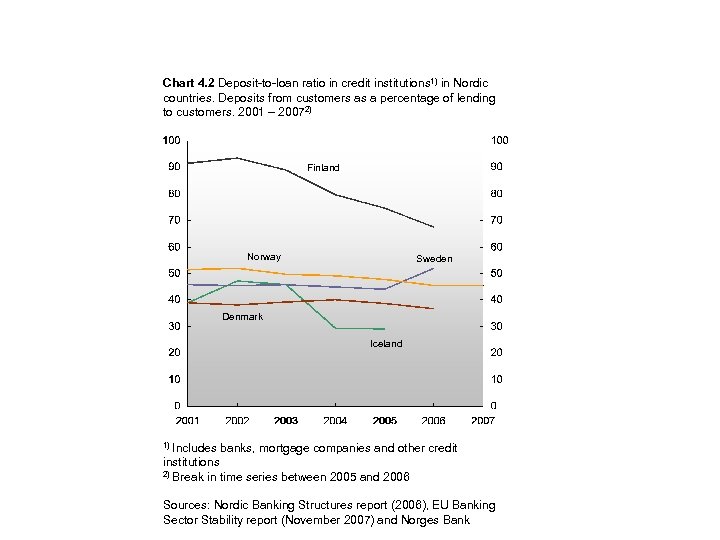
Chart 4. 2 Deposit-to-loan ratio in credit institutions 1) in Nordic countries. Deposits from customers as a percentage of lending to customers. 2001 – 20072) Finland Norway Sweden Denmark Iceland 1) Includes banks, mortgage companies and other credit institutions 2) Break in time series between 2005 and 2006 Sources: Nordic Banking Structures report (2006), EU Banking Sector Stability report (November 2007) and Norges Bank
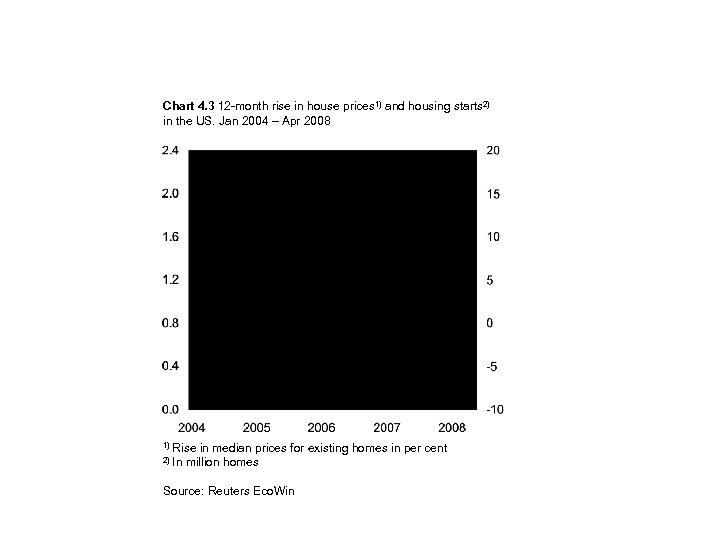
Chart 4. 3 12 -month rise in house prices 1) and housing starts 2) in the US. Jan 2004 – Apr 2008 Housing starts (lefthand scale) House prices (right-hand scale) 1) Rise 2) In in median prices for existing homes in per cent million homes Source: Reuters Eco. Win
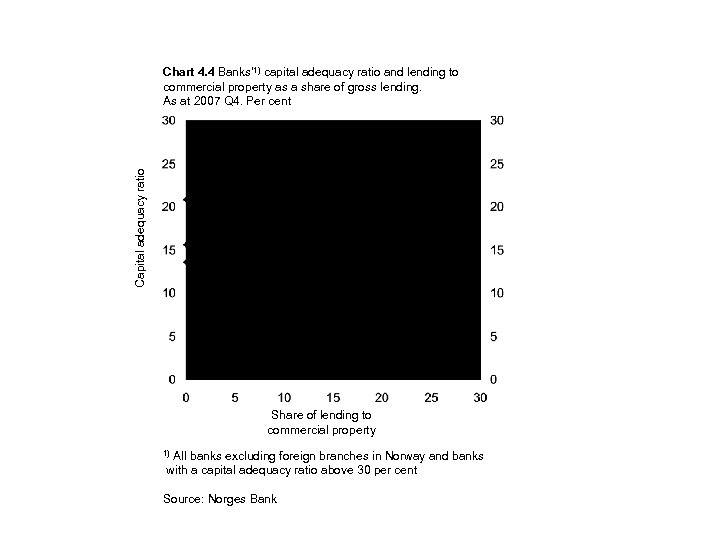
Capital adequacy ratio Chart 4. 4 Banks’ 1) capital adequacy ratio and lending to commercial property as a share of gross lending. As at 2007 Q 4. Per cent Lower bound for capital adequacy ratio Share of lending to commercial property All banks excluding foreign branches in Norway and banks with a capital adequacy ratio above 30 per cent 1) Source: Norges Bank
Boxes
Stress testing of banks losses and results
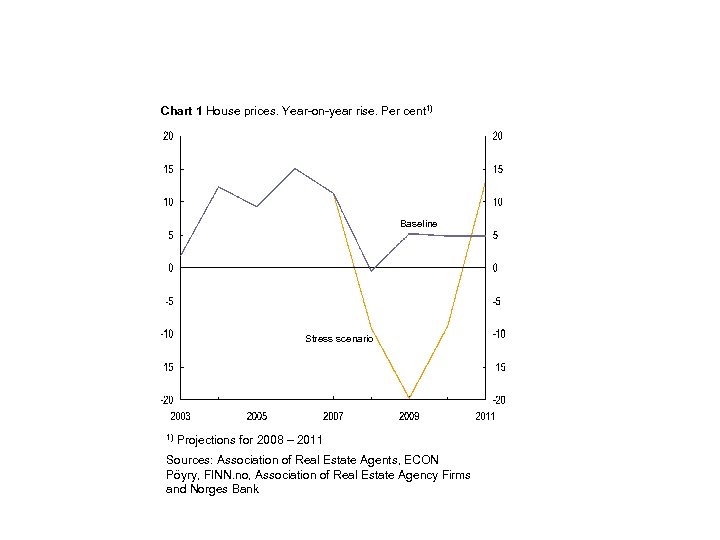
Chart 1 House prices. Year-on-year rise. Per cent 1) Baseline Stress scenario 1) Projections for 2008 – 2011 Sources: Association of Real Estate Agents, ECON Pöyry, FINN. no, Association of Real Estate Agency Firms and Norges Bank
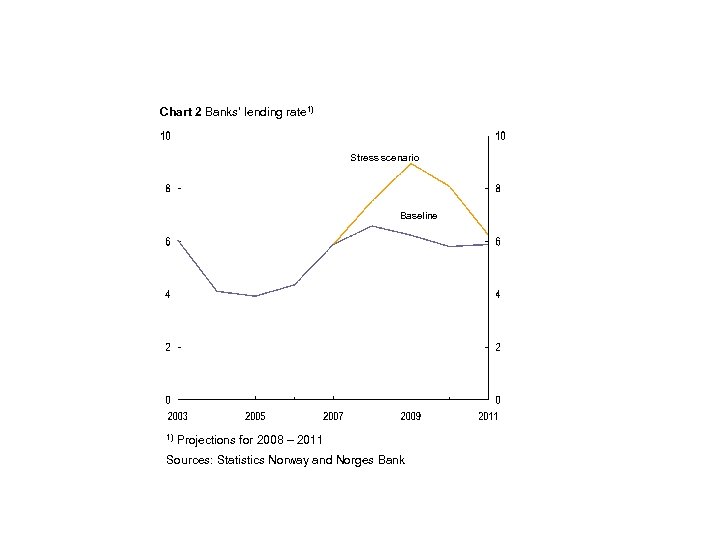
Chart 2 Banks’ lending rate 1) Stress scenario Baseline 1) Projections for 2008 – 2011 Sources: Statistics Norway and Norges Bank
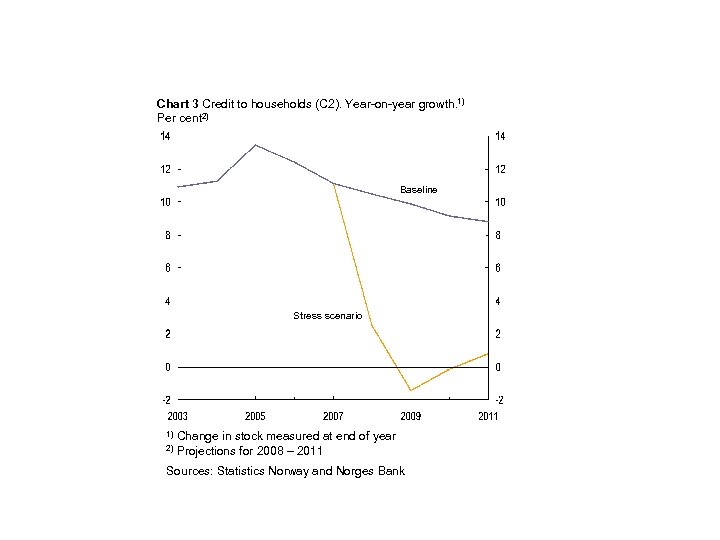
Chart 3 Credit to households (C 2). Year-on-year growth. 1) Per cent 2) Baseline Stress scenario 1) 2) Change in stock measured at end of year Projections for 2008 – 2011 Sources: Statistics Norway and Norges Bank
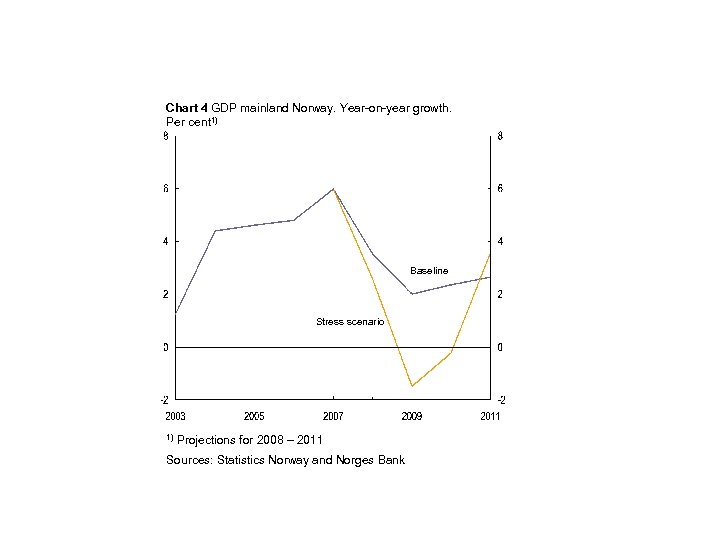
Chart 4 GDP mainland Norway. Year-on-year growth. Per cent 1) Baseline Stress scenario 1) Projections for 2008 – 2011 Sources: Statistics Norway and Norges Bank
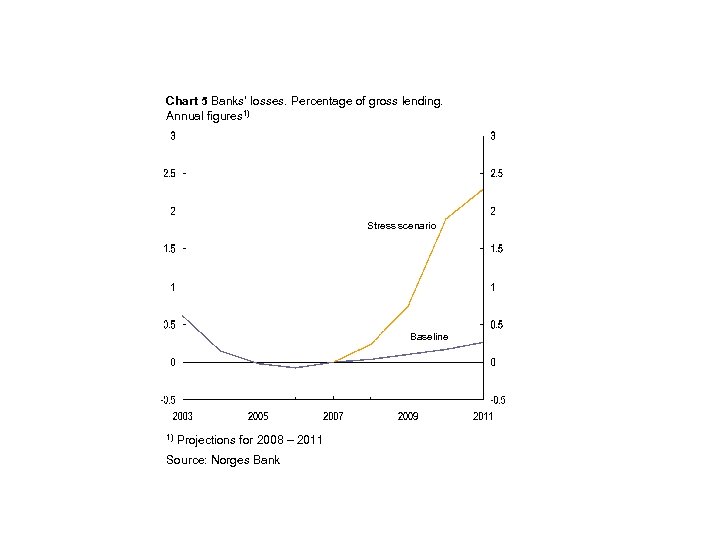
Chart 5 Banks’ losses. Percentage of gross lending. Annual figures 1) Stress scenario Baseline 1) Projections for 2008 – 2011 Source: Norges Bank
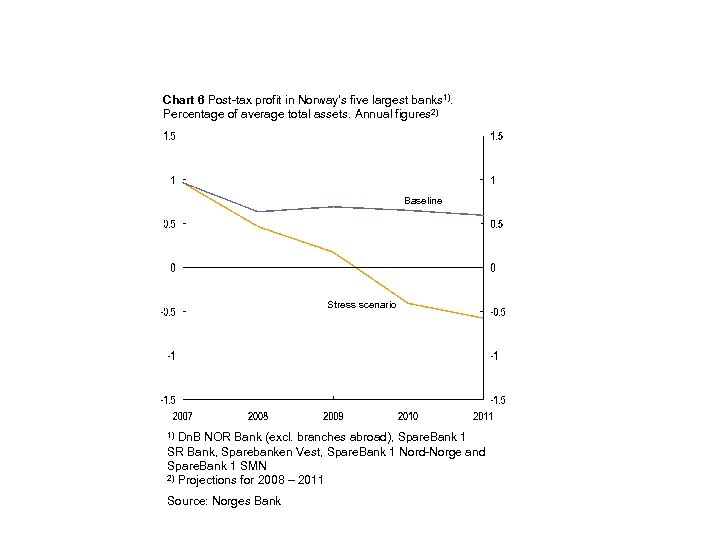
Chart 6 Post-tax profit in Norway’s five largest banks 1). Percentage of average total assets. Annual figures 2) Baseline Stress scenario Dn. B NOR Bank (excl. branches abroad), Spare. Bank 1 SR Bank, Sparebanken Vest, Spare. Bank 1 Nord-Norge and Spare. Bank 1 SMN 2) Projections for 2008 – 2011 1) Source: Norges Bank
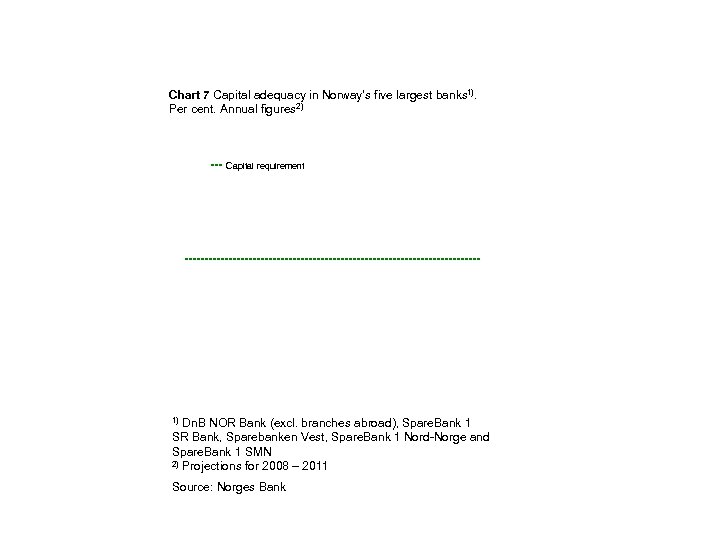
Chart 7 Capital adequacy in Norway’s five largest banks 1). Per cent. Annual figures 2) Capital requirement Dn. B NOR Bank (excl. branches abroad), Spare. Bank 1 SR Bank, Sparebanken Vest, Spare. Bank 1 Nord-Norge and Spare. Bank 1 SMN 2) Projections for 2008 – 2011 1) Source: Norges Bank
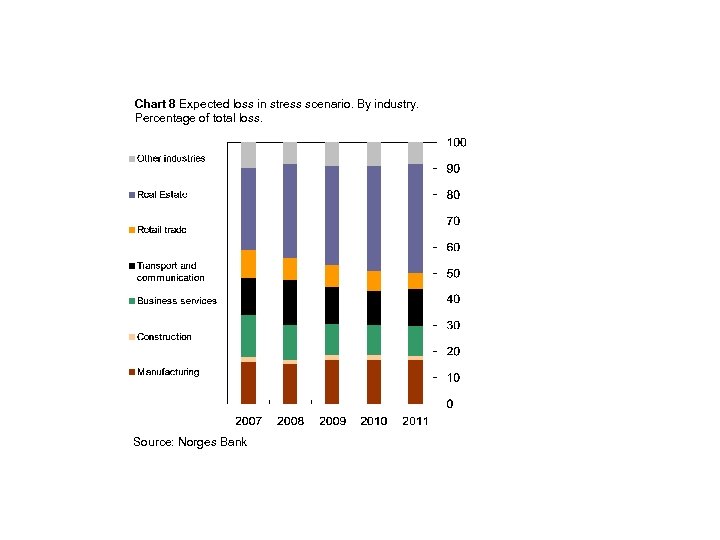
Chart 8 Expected loss in stress scenario. By industry. Percentage of total loss. Source: Norges Bank
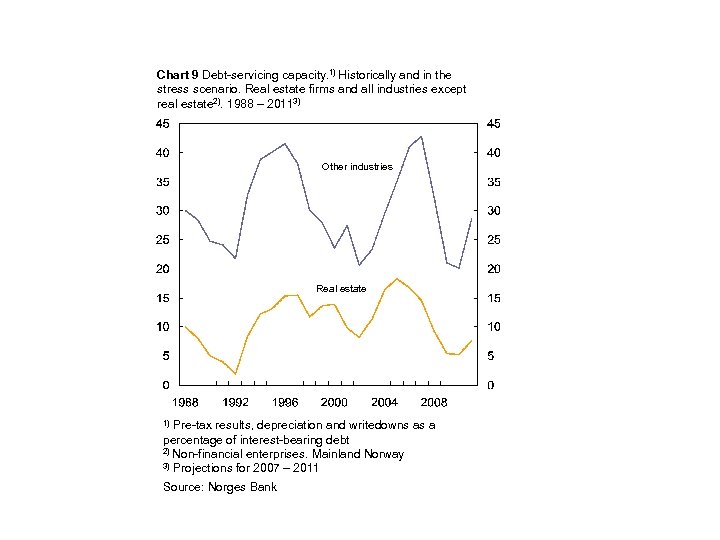
Chart 9 Debt-servicing capacity. 1) Historically and in the stress scenario. Real estate firms and all industries except real estate 2). 1988 – 20113) Other industries Real estate Pre-tax results, depreciation and writedowns as a percentage of interest-bearing debt 2) Non-financial enterprises. Mainland Norway 3) Projections for 2007 – 2011 1) Source: Norges Bank
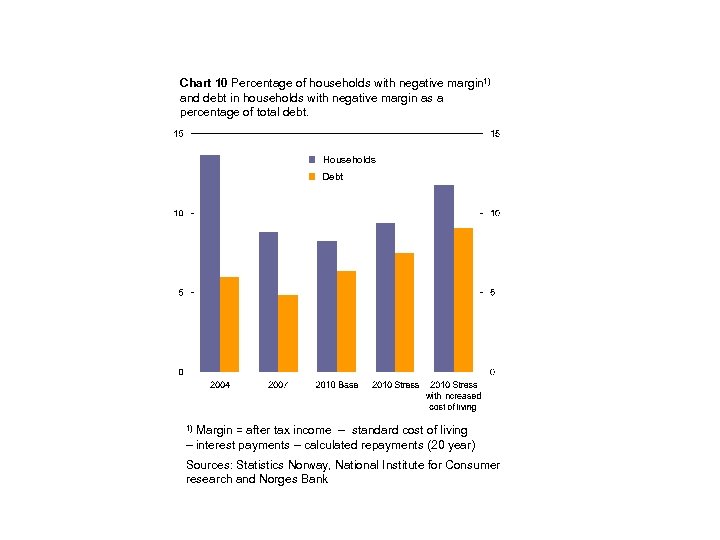
Chart 10 Percentage of households with negative margin 1) and debt in households with negative margin as a percentage of total debt. Households Debt Margin = after tax income – standard cost of living – interest payments – calculated repayments (20 year) 1) Sources: Statistics Norway, National Institute for Consumer research and Norges Bank
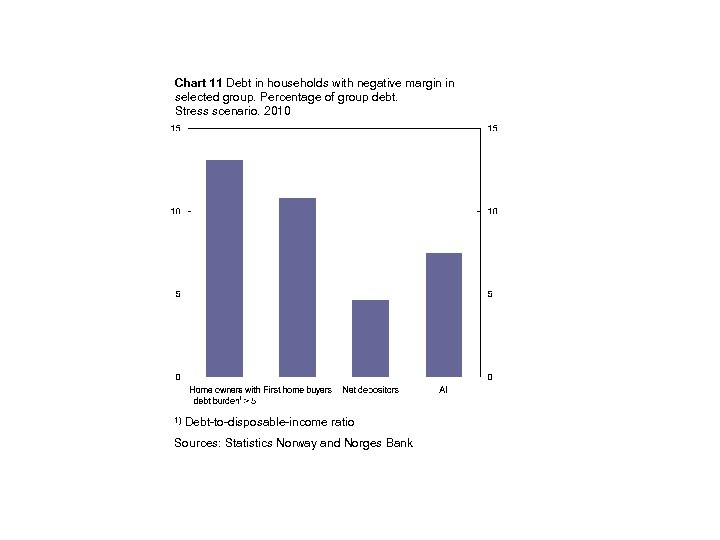
Chart 11 Debt in households with negative margin in selected group. Percentage of group debt. Stress scenario. 2010 1 1) Debt-to-disposable-income ratio Sources: Statistics Norway and Norges Bank
Norges Bank’s survey of Bank Lending
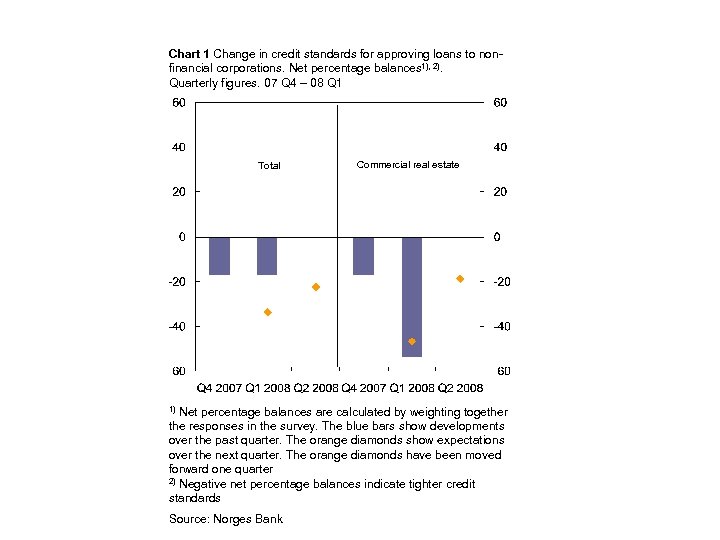
Chart 1 Change in credit standards for approving loans to nonfinancial corporations. Net percentage balances 1), 2). Quarterly figures. 07 Q 4 – 08 Q 1 Total Commercial real estate Net percentage balances are calculated by weighting together the responses in the survey. The blue bars show developments over the past quarter. The orange diamonds show expectations over the next quarter. The orange diamonds have been moved forward one quarter 2) Negative net percentage balances indicate tighter credit standards 1) Source: Norges Bank
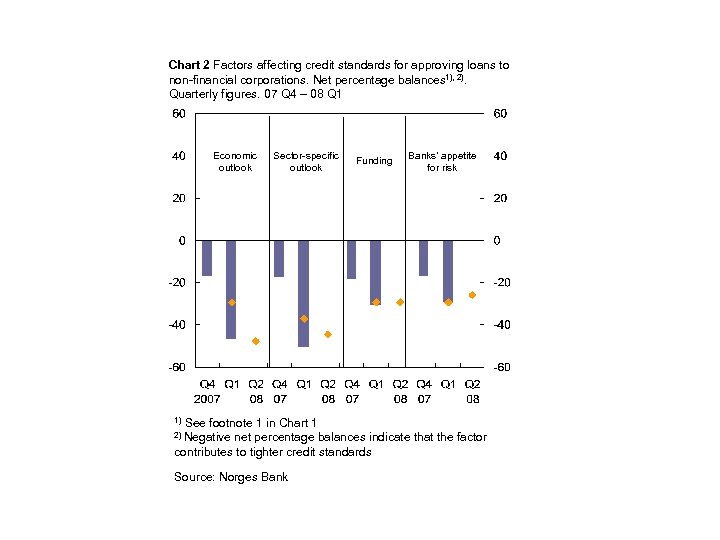
Chart 2 Factors affecting credit standards for approving loans to non-financial corporations. Net percentage balances 1), 2). Quarterly figures. 07 Q 4 – 08 Q 1 Economic outlook Sector-specific outlook Funding Banks’ appetite for risk See footnote 1 in Chart 1 net percentage balances indicate that the factor contributes to tighter credit standards 1) 2) Negative Source: Norges Bank
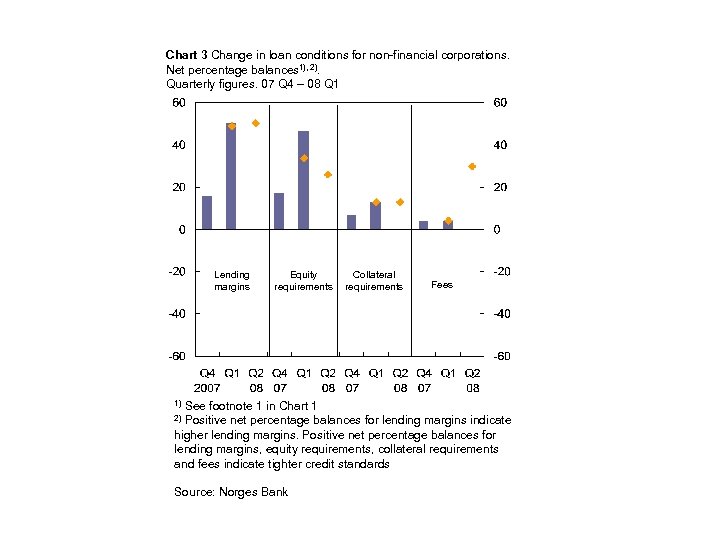
Chart 3 Change in loan conditions for non-financial corporations. Net percentage balances 1), 2). Quarterly figures. 07 Q 4 – 08 Q 1 Lending margins Equity requirements Collateral requirements Fees See footnote 1 in Chart 1 Positive net percentage balances for lending margins indicate higher lending margins. Positive net percentage balances for lending margins, equity requirements, collateral requirements and fees indicate tighter credit standards 1) 2) Source: Norges Bank
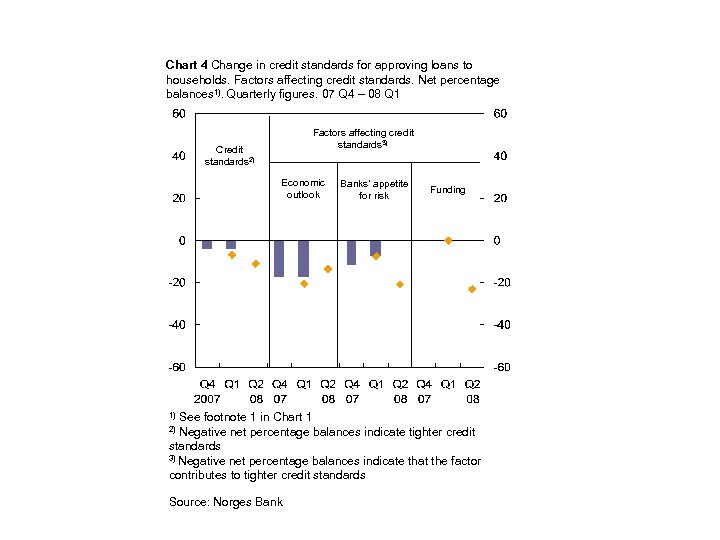
Chart 4 Change in credit standards for approving loans to households. Factors affecting credit standards. Net percentage balances 1). Quarterly figures. 07 Q 4 – 08 Q 1 Factors affecting credit standards 3) Credit standards 2) Economic outlook Banks’ appetite for risk Funding See footnote 1 in Chart 1 Negative net percentage balances indicate tighter credit standards 3) Negative net percentage balances indicate that the factor contributes to tighter credit standards 1) 2) Source: Norges Bank
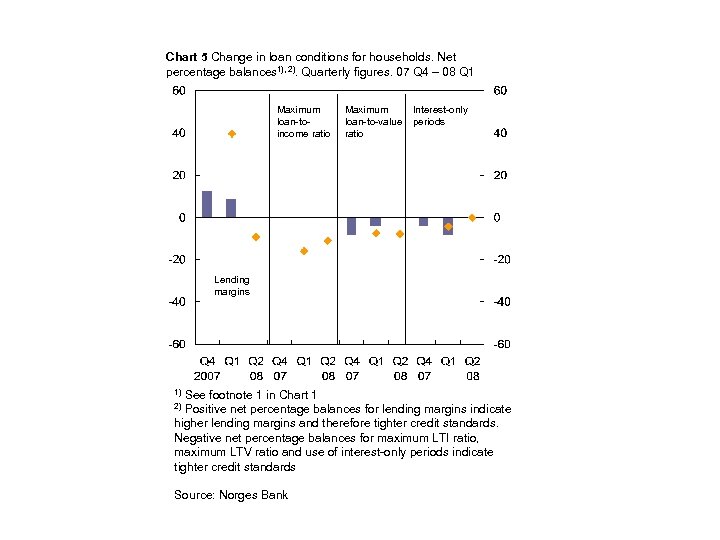
Chart 5 Change in loan conditions for households. Net percentage balances 1), 2). Quarterly figures. 07 Q 4 – 08 Q 1 Maximum loan-toincome ratio Maximum loan-to-value ratio Interest-only periods Lending margins See footnote 1 in Chart 1 Positive net percentage balances for lending margins indicate higher lending margins and therefore tighter credit standards. Negative net percentage balances for maximum LTI ratio, maximum LTV ratio and use of interest-only periods indicate tighter credit standards 1) 2) Source: Norges Bank
Скачать презентацию Charts Financial Stability 1 08 Summary Chart
040a901284b90de2abbee4534687111a.ppt