


 Скачать презентацию Characters and characterizations Antipova Julia 32 group
character.pptx
- Количество слайдов: 10
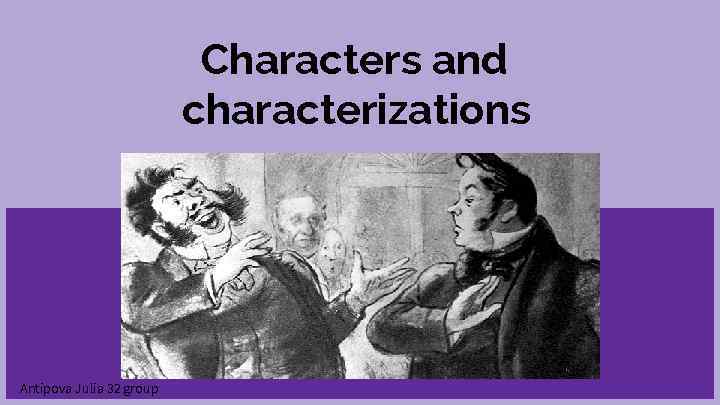 Characters and characterizations Antipova Julia 32 group
 Characters - Character is a person in a narrative work of art (such as novel, play, film or television series) - Character can be defined as any person, animal or figure represented in a literary work
 Types of characters - protagonist and antagonist - dynamic and static characters - round and flat characters - stock character
 Protagonist and antagonist Protagonist is the main person in a story, he or she is faced with a conflict that must be resolved. Antagonist is the character that represents the opposition against the protagonist. It is a barrier that the protagonist must overcome.
 Dynamic and static characters A dynamic character is a person who changes over time, usually as a result of dealing a main conflict or facing a major crisis. E. x. Romeo from Romeo and Julliet A static character is someone who does not changes over time, his or her personality does not evolve through a story. E. x. Anthena from The Odyssey
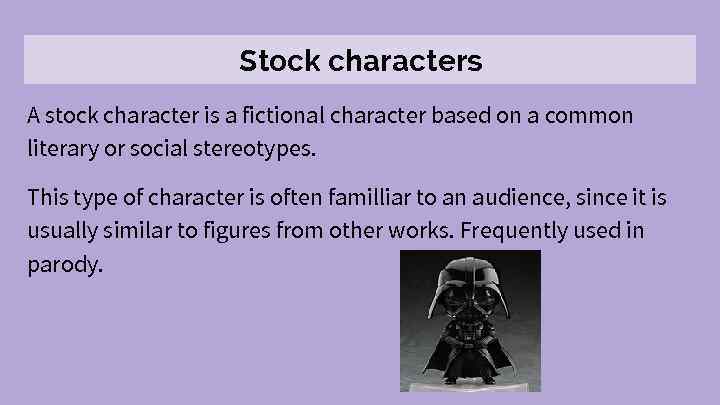 Stock characters A stock character is a fictional character based on a common literary or social stereotypes. This type of character is often familliar to an audience, since it is usually similar to figures from other works. Frequently used in parody.
 Characterizations Characterization is a literary device in literature that is used to denote and explain the detailes about a character in a story. It includes introduction of a character, the exrpession of his or her feelings and thoughts, behavior, opinions and ideas, and conversations with the rest of the characters
 Types of characterizations Direct (explicit) characterization- a direct approach towards building the character Indirect (implicit) characterization -the audience has to deduce for themselves the characteristics by remark thought process, speech, way of behavior and etc.
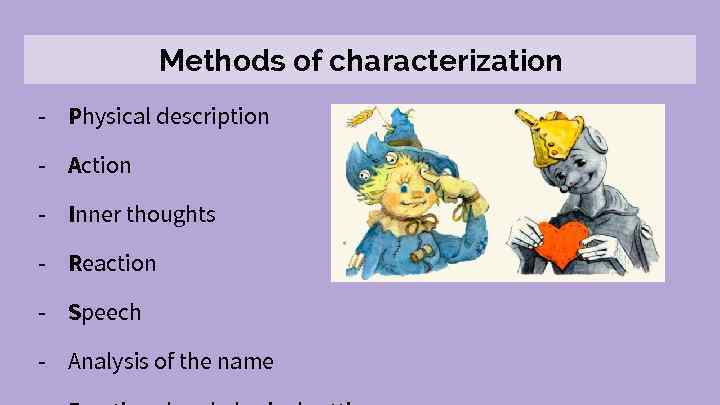 Methods of characterization - Physical description - Action - Inner thoughts - Reaction - Speech - Analysis of the name
 Thank you for your attention!