

Characteristics of INDIA Сalling card The area of

 Скачать презентацию Characteristics of INDIA Сalling card The area of
28522-india.ppt
- Количество слайдов: 21
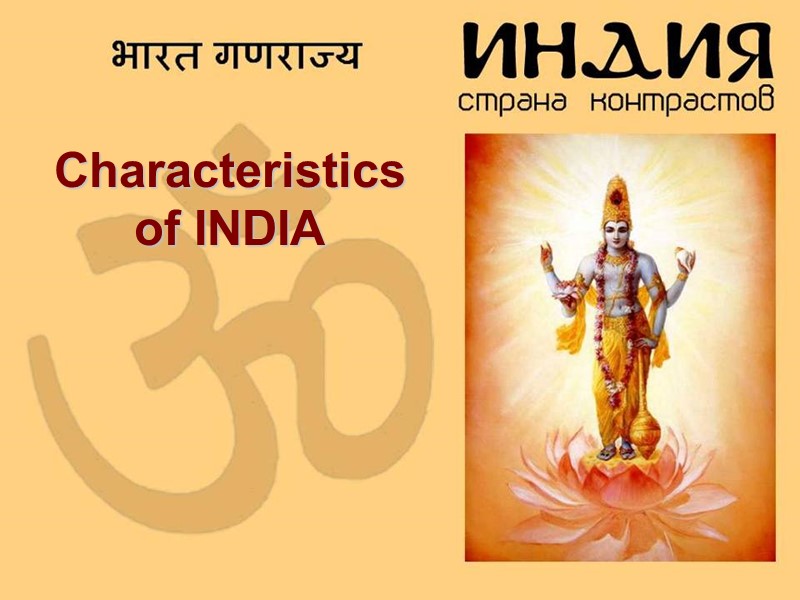
Characteristics of INDIA
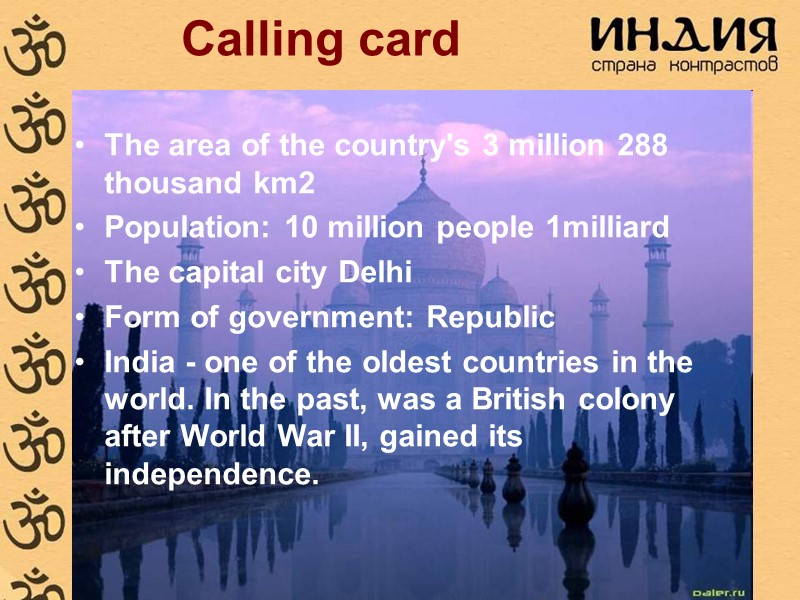
Сalling card The area of the country's 3 million 288 thousand km2 Population: 10 million people 1milliard The capital city Delhi Form of government: Republic India - one of the oldest countries in the world. In the past, was a British colony after World War II, gained its independence.
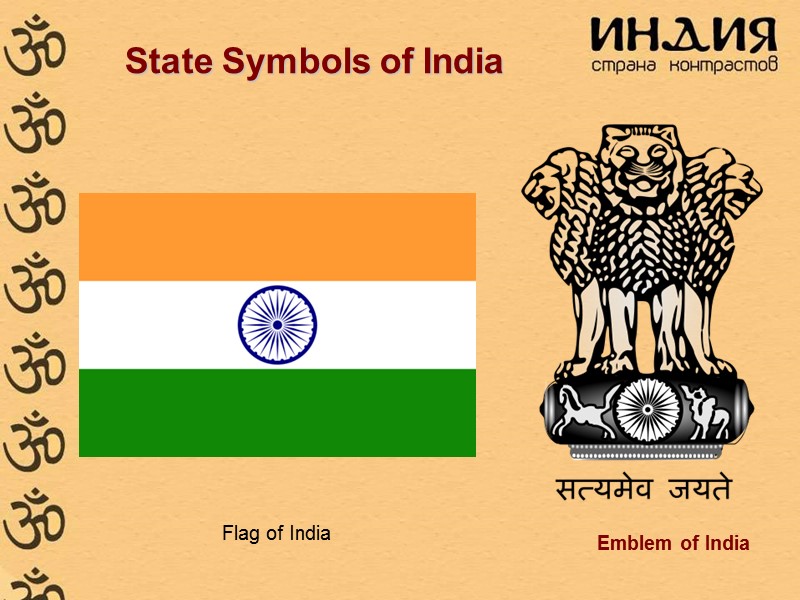
State Symbols of India Emblem of India Flag of India
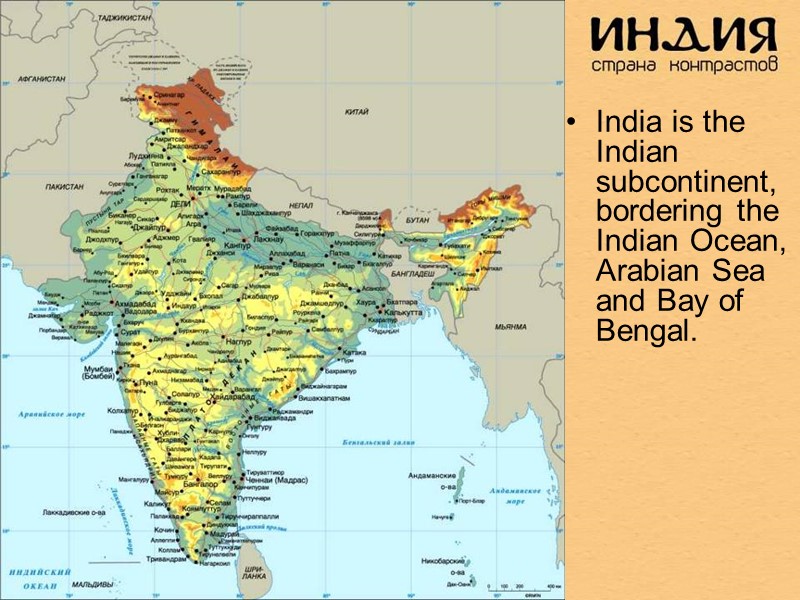
India is the Indian subcontinent, bordering the Indian Ocean, Arabian Sea and Bay of Bengal.
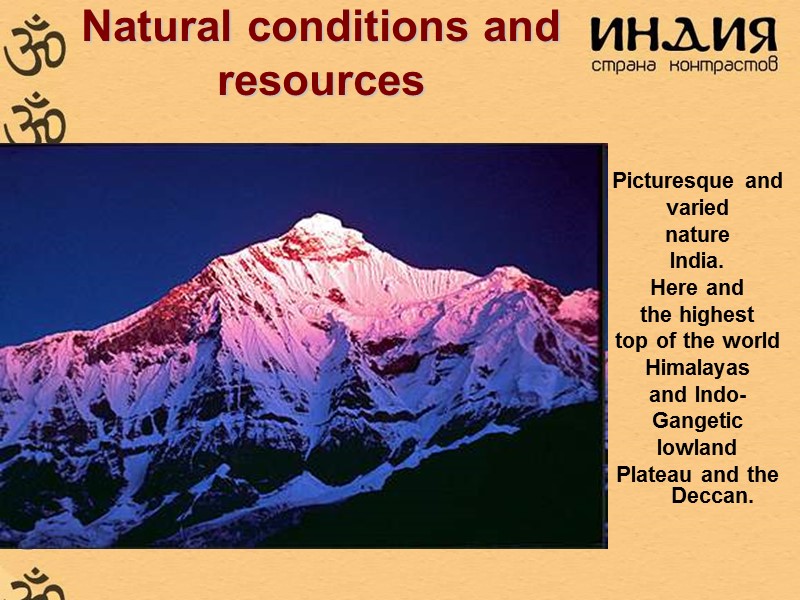
Natural conditions and resources Picturesque and varied nature India. Here and the highest top of the world Himalayas and Indo- Gangetic lowland Plateau and the Deccan.
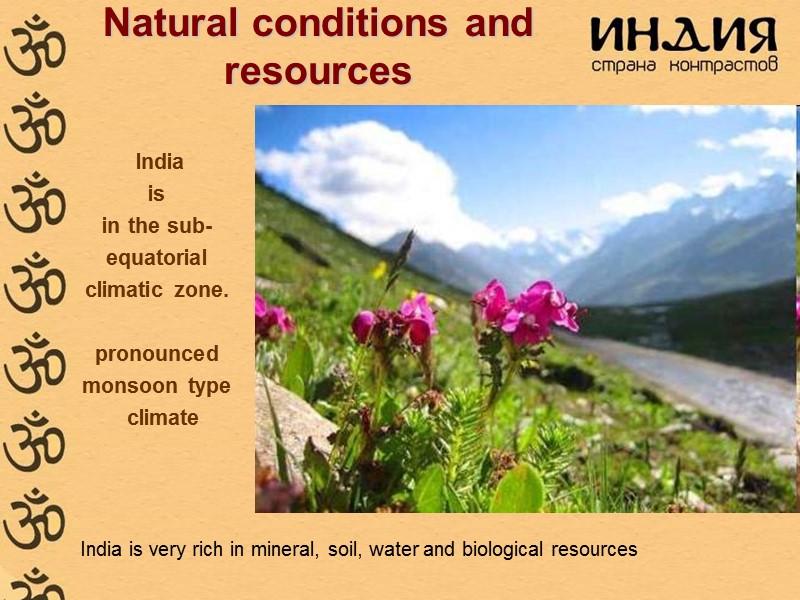
Natural conditions and resources India is in the sub- equatorial climatic zone. pronounced monsoon type climate India is very rich in mineral, soil, water and biological resources
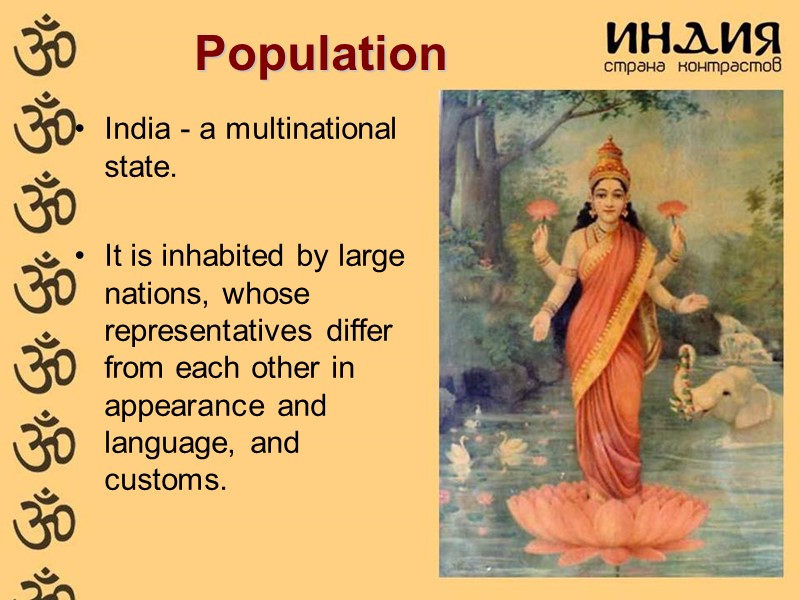
Population India - a multinational state. It is inhabited by large nations, whose representatives differ from each other in appearance and language, and customs.
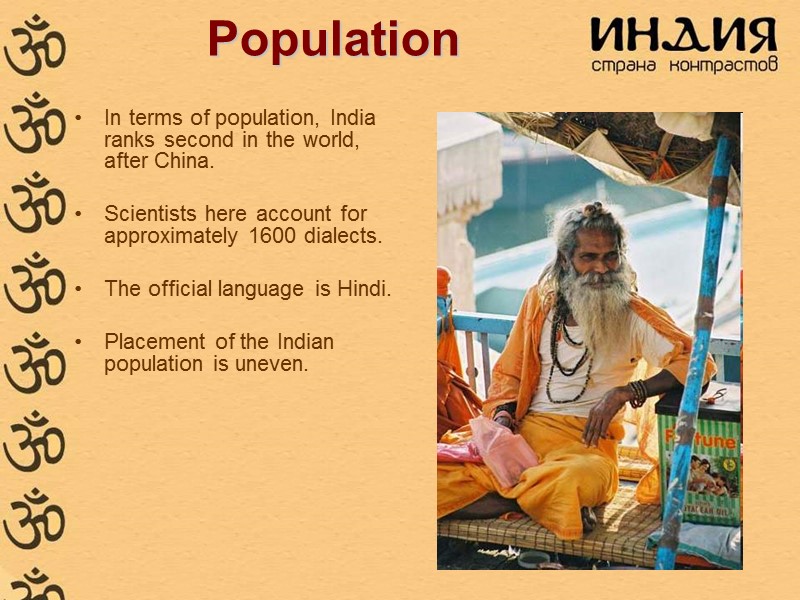
Population In terms of population, India ranks second in the world, after China. Scientists here account for approximately 1600 dialects. The official language is Hindi. Placement of the Indian population is uneven.
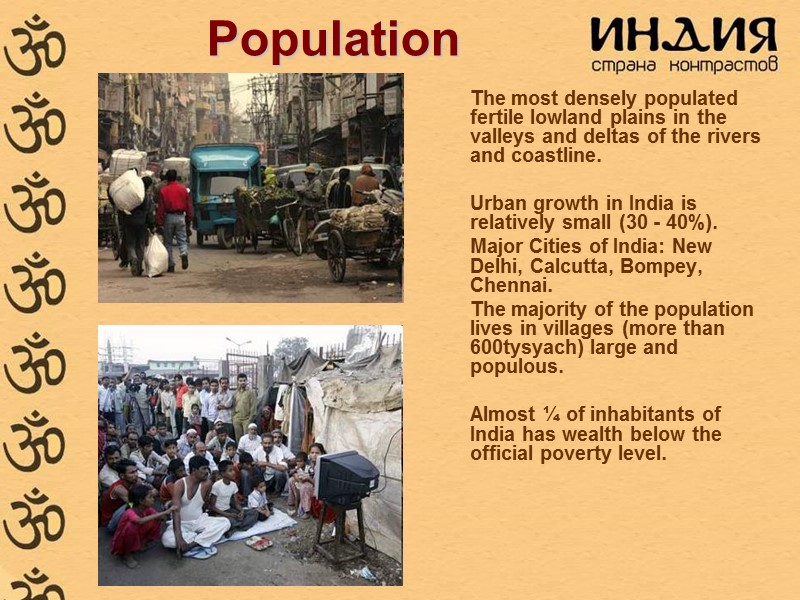
Population The most densely populated fertile lowland plains in the valleys and deltas of the rivers and coastline. Urban growth in India is relatively small (30 - 40%). Major Cities of India: New Delhi, Calcutta, Bompey, Chennai. The majority of the population lives in villages (more than 600tysyach) large and populous. Almost ¼ of inhabitants of India has wealth below the official poverty level.
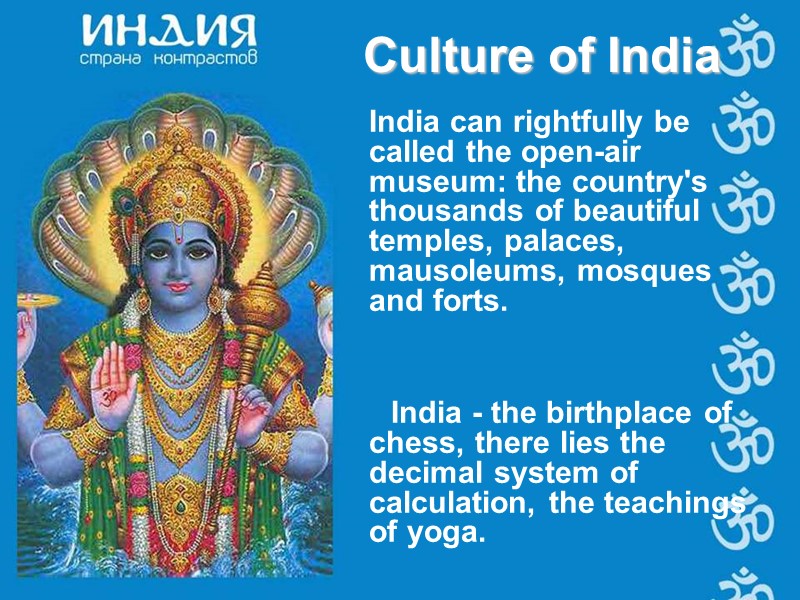
India can rightfully be called the open-air museum: the country's thousands of beautiful temples, palaces, mausoleums, mosques and forts. India - the birthplace of chess, there lies the decimal system of calculation, the teachings of yoga. Culture of India
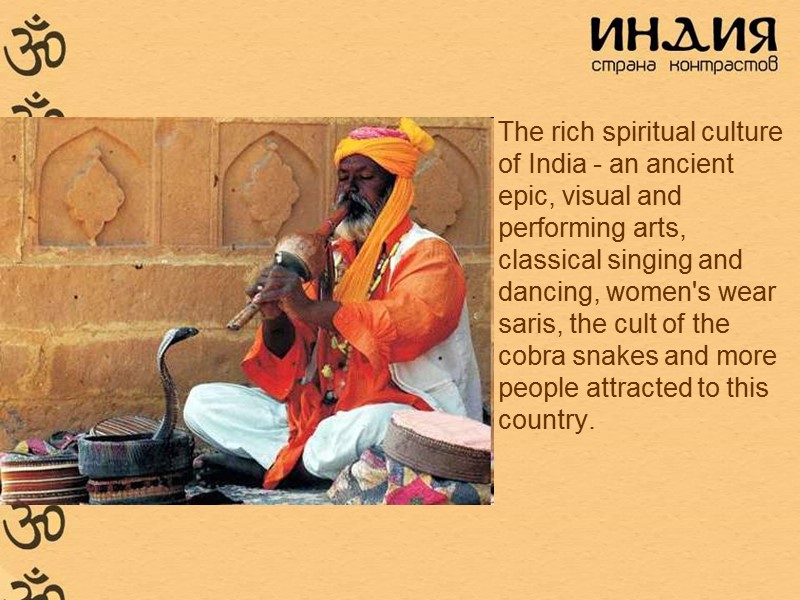
The rich spiritual culture of India - an ancient epic, visual and performing arts, classical singing and dancing, women's wear saris, the cult of the cobra snakes and more people attracted to this country.
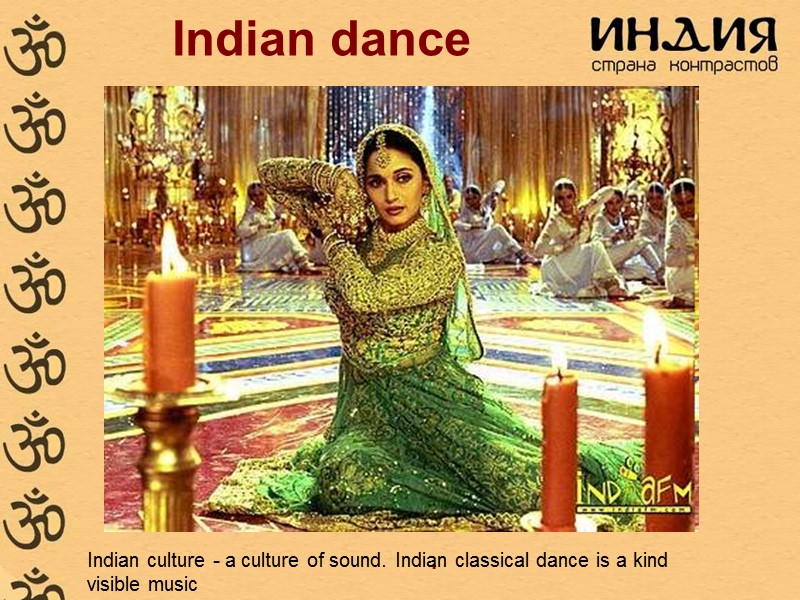
Indian dance . Indian culture - a culture of sound. Indian classical dance is a kind visible music
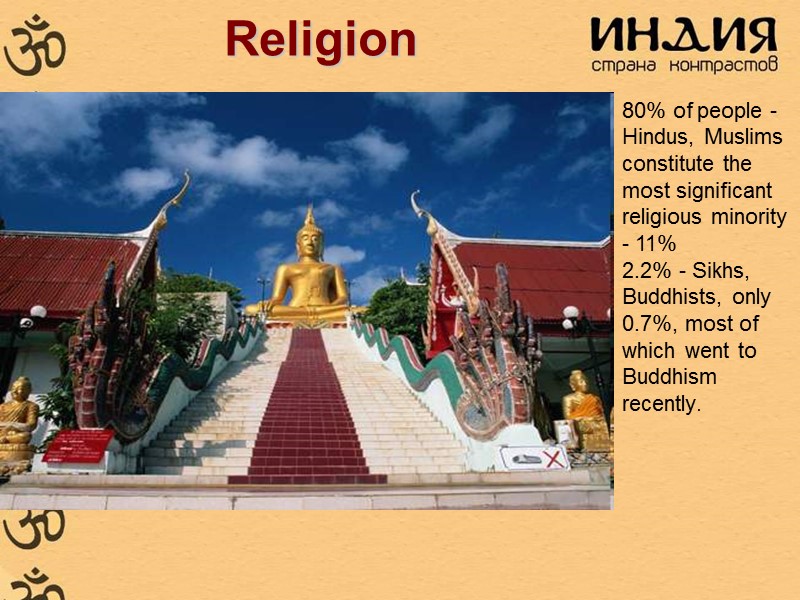
Religion 80% of people - Hindus, Muslims constitute the most significant religious minority - 11% 2.2% - Sikhs, Buddhists, only 0.7%, most of which went to Buddhism recently.
The economy of India Industry Developed for ferrous and nonferrous metallurgy. India produces machine tools, locomotives, automobiles, as well as the latest electronic equipment, equipment for nuclear and space research.
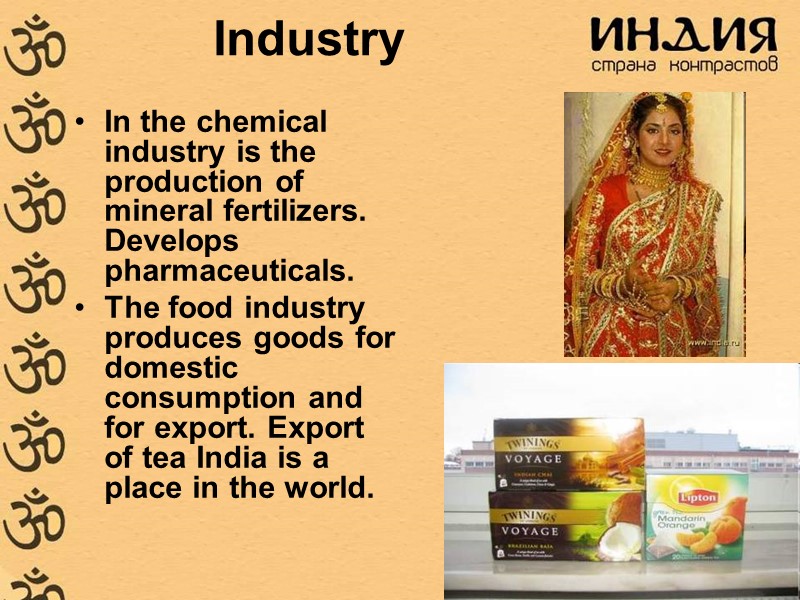
Industry In the chemical industry is the production of mineral fertilizers. Develops pharmaceuticals. The food industry produces goods for domestic consumption and for export. Export of tea India is a place in the world.
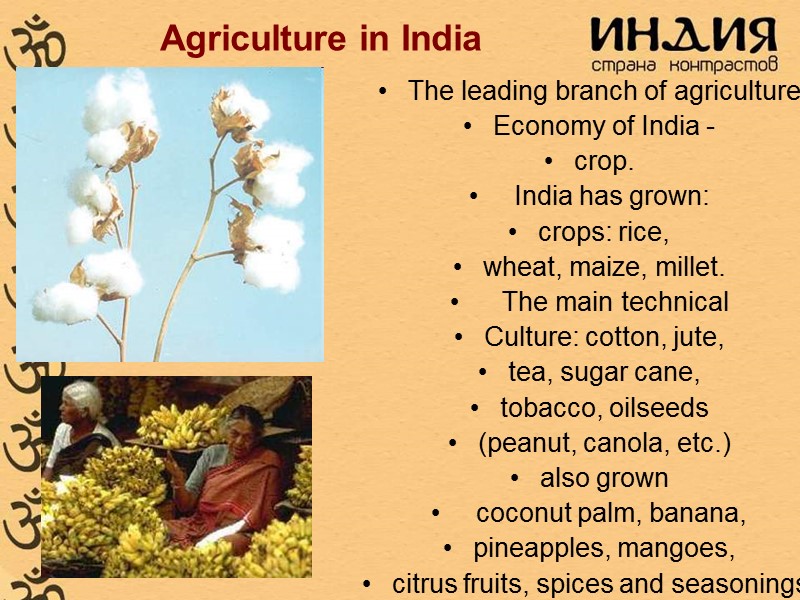
Agriculture in India The leading branch of agriculture Economy of India - crop. India has grown: crops: rice, wheat, maize, millet. The main technical Culture: cotton, jute, tea, sugar cane, tobacco, oilseeds (peanut, canola, etc.) also grown coconut palm, banana, pineapples, mangoes, citrus fruits, spices and seasonings.
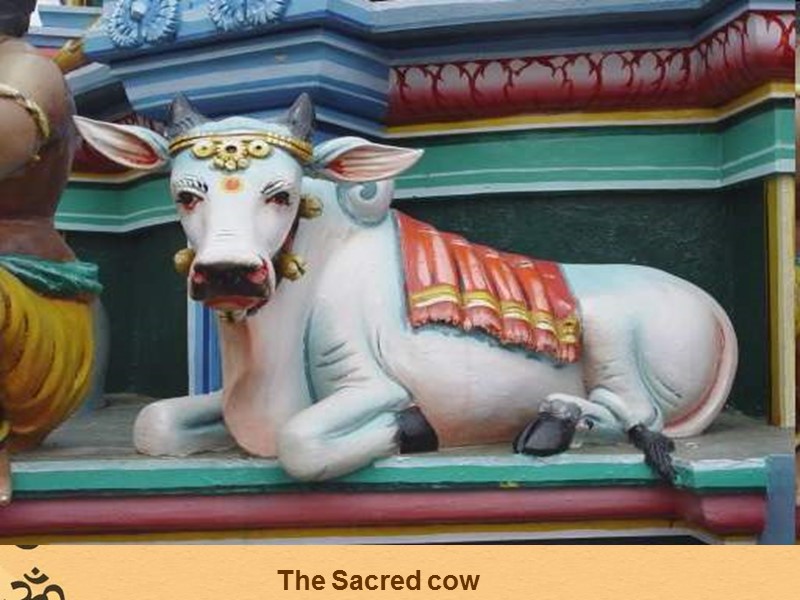
Animal husbandry Livestock is the second most important agricultural crop in India, much inferior crop. India leads the world in the number of cattle and one of the most recent consumption of meat products as well as religious beliefs of Hinduism support vegetarianism, prohibit eating beef and kill cows.
The Sacred cow
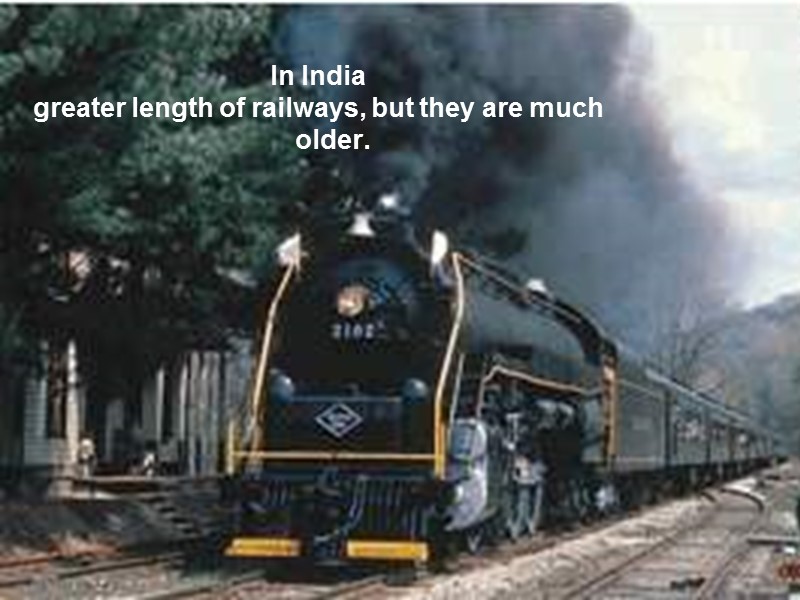
In India greater length of railways, but they are much older.
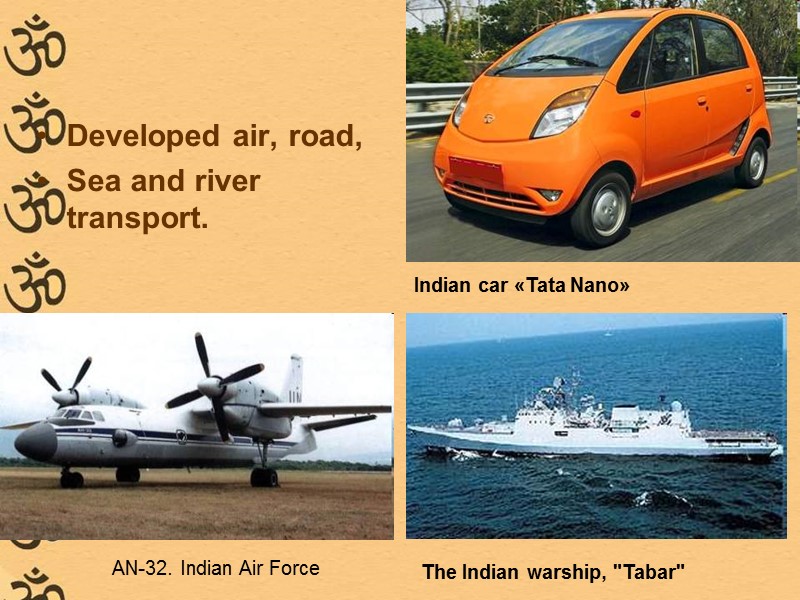
Developed air, road, Sea and river transport. Indian car «Tata Nano» AN-32. Indian Air Force The Indian warship, "Tabar"
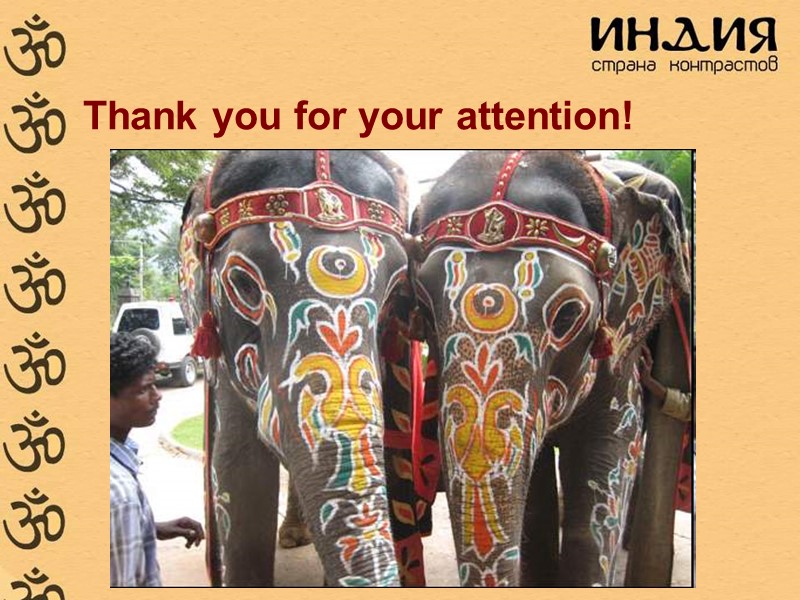
Thank you for your attention!