


 Скачать презентацию Chapter Nine Applying the Competitive Model Topics
55b81f47aa02c081bad9c8cf4db1d1a4.ppt
- Количество слайдов: 57
 Chapter Nine Applying the Competitive Model
 Topics § § § Consumer Welfare. Producer Welfare. Competition Maximizes Welfare. Policies That Shift Supply Curves. Policies That Create a Wedge Between Supply and Demand. § Comparing Both Types of Policies: Imports. © 2009 Pearson Addison-Wesley. All rights reserved. 2
 Measuring Consumer Welfare Using a Demand Curve § Consumer welfare from a good is the benefit a consumer gets from consuming that good minus what the consumer paid to buy the good. § The demand curve reflects a consumer’s marginal willingness to pay: © 2009 Pearson Addison-Wesley. All rights reserved. 3
 Measuring Consumer Welfare Using a Demand Curve § The demand curve reflects a consumer’s marginal willingness to pay: w the maximum amount a consumer will spend for an extra unit. w the marginal value the consumer places on the last unit of output. © 2009 Pearson Addison-Wesley. All rights reserved. 4
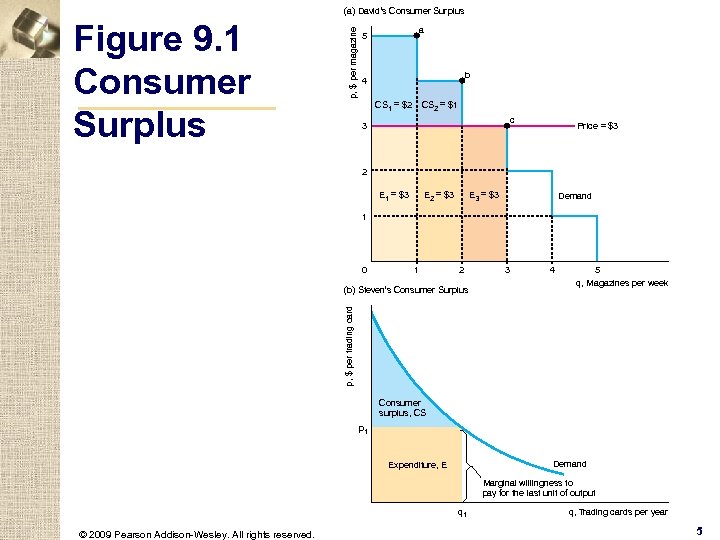 Figure 9. 1 Consumer Surplus p, $ per magazine (a) David’s Consumer Surplus a 5 b 4 CS 1 = $2 CS 2 = $1 c 3 Price = $3 2 E 1 = $3 E 2 = $3 E 3 = $3 Demand 1 0 1 2 4 5 q, Magazines per week p, $ per trading card (b) Steven’s Consumer Surplus 3 Consumer surplus, CS p 1 Demand Expenditure, E Marginal willingness to pay for the last unit of output q 1 © 2009 Pearson Addison-Wesley. All rights reserved. q, Trading cards per year 5
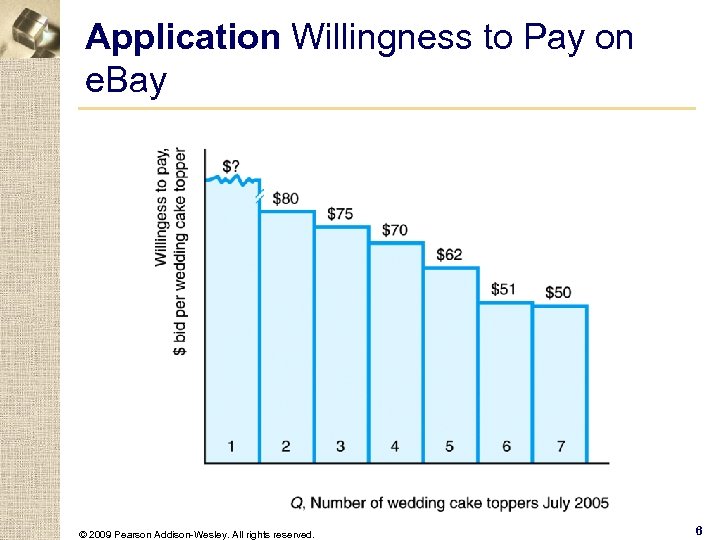 Application Willingness to Pay on e. Bay © 2009 Pearson Addison-Wesley. All rights reserved. 6
 Consumer Surplus. § consumer surplus (CS) - the monetary difference between what a consumer is willing to pay for the quantity of the good purchased and what the good actually costs. w an individual’s consumer surplus is the area under the demand curve and above the market price up to the quantity the consumer buys. © 2009 Pearson Addison-Wesley. All rights reserved. 7
 Consumer Surplus. § consumer surplus (CS) - the monetary difference between what a consumer is willing to pay for the quantity of the good purchased and what the good actually costs. w Market consumer surplus is the area under the market demand curve above the market price up to the quantity consumers buy. © 2009 Pearson Addison-Wesley. All rights reserved. 8
 Effect of a Price Change on Consumer Surplus § If the supply curve shifts upward or a government imposes a new sales tax, the equilibrium price rises, reducing consumer surplus. © 2009 Pearson Addison-Wesley. All rights reserved. 9
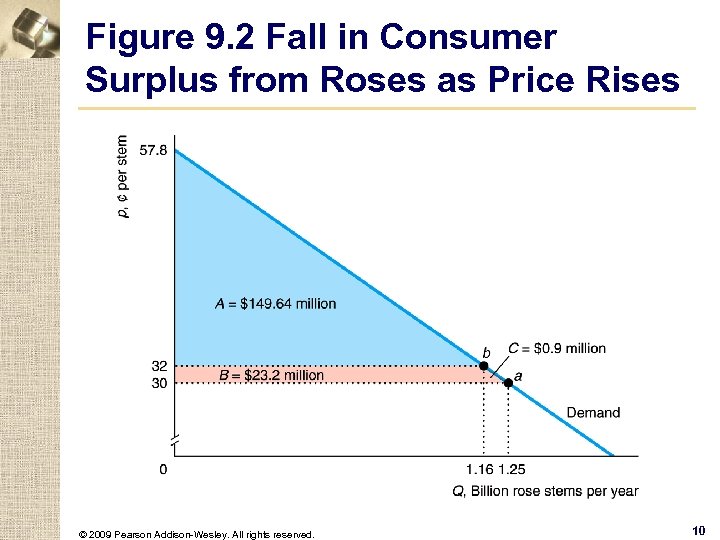 Figure 9. 2 Fall in Consumer Surplus from Roses as Price Rises © 2009 Pearson Addison-Wesley. All rights reserved. 10
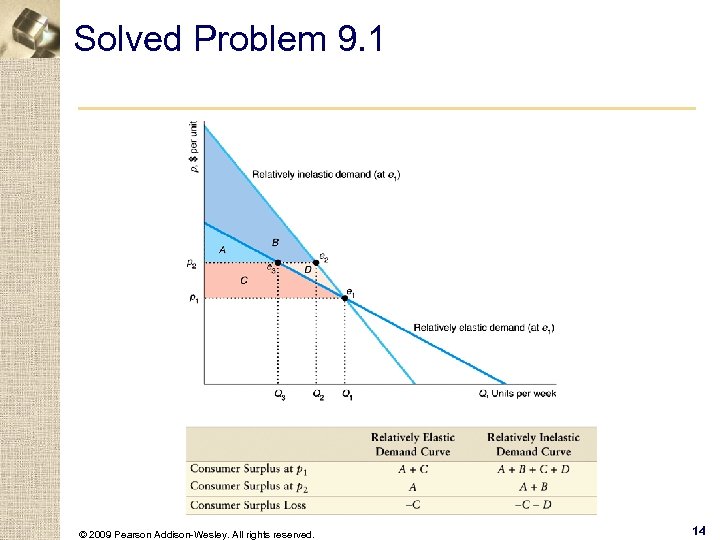
 Markets in Which Consumer Surplus Losses Are Large. § In general, as the price increases, consumer surplus falls more: 1. the greater the initial revenues spent on the good and 2. the less elastic the demand curve © 2009 Pearson Addison-Wesley. All rights reserved. 11
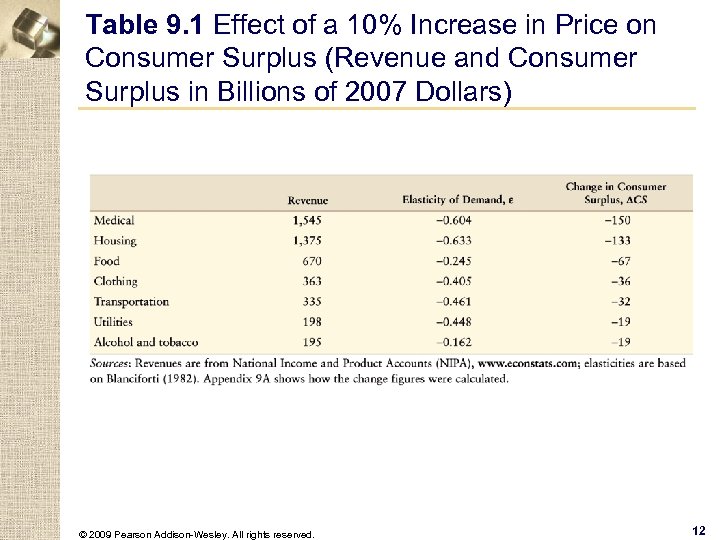 Table 9. 1 Effect of a 10% Increase in Price on Consumer Surplus (Revenue and Consumer Surplus in Billions of 2007 Dollars) © 2009 Pearson Addison-Wesley. All rights reserved. 12
 Solved Problem 9. 1 § Suppose that two linear demand curves go through the initial equilibrium, e 1. One demand curve is less elastic than the other at e 1. For which demand curve will a price increase cause the larger consumer surplus loss? © 2009 Pearson Addison-Wesley. All rights reserved. 13
 Solved Problem 9. 1 © 2009 Pearson Addison-Wesley. All rights reserved. 14
 Producer Welfare § producer surplus (PS) - the difference between the amount for which a good sells and the minimum amount necessary for the seller to be willing to produce the good © 2009 Pearson Addison-Wesley. All rights reserved. 15
 Measuring Producer Surplus Using a Supply Curve § The total producer surplus is the area above the supply curve and below the market price up to the quantity actually produced. PS = R − VC. w Thus, the difference between producer surplus and profit is fixed cost, F. © 2009 Pearson Addison-Wesley. All rights reserved. 16
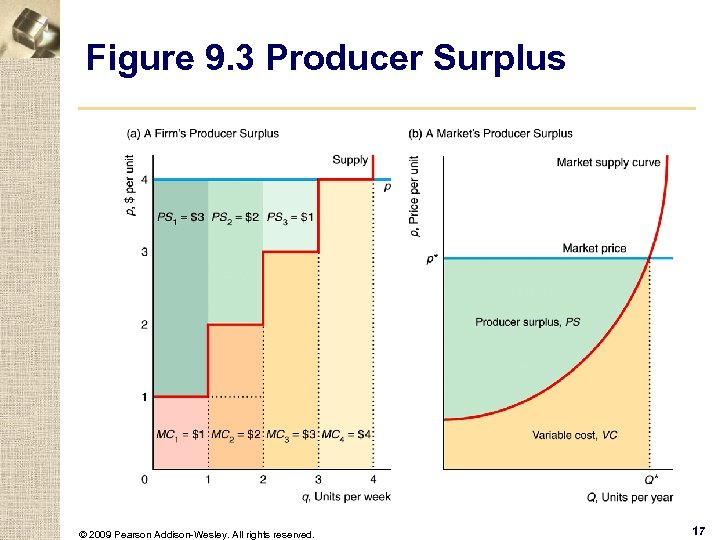 Figure 9. 3 Producer Surplus © 2009 Pearson Addison-Wesley. All rights reserved. 17
 Solved Problem 9. 2 § If the estimated supply curve for roses is linear, how much producer surplus is lost when the price of roses falls from 30¢ to 21¢ per stem (so that the quantity sold falls from 1. 25 billion to 1. 16 billion rose stems per year)? © 2009 Pearson Addison-Wesley. All rights reserved. 18
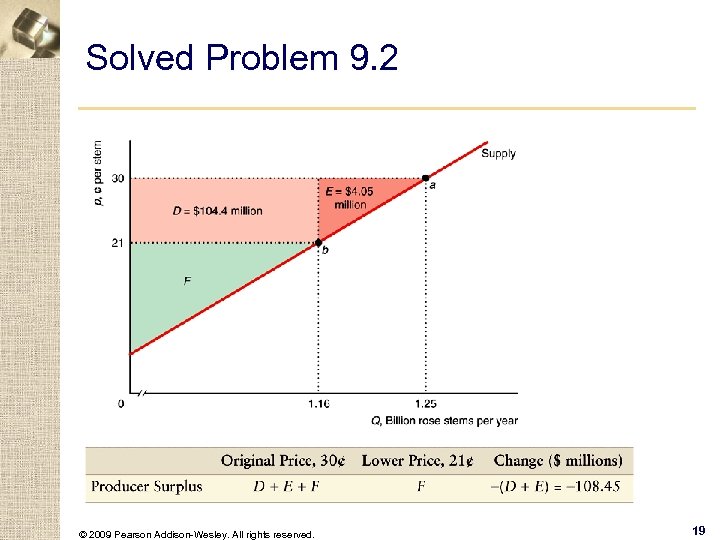 Solved Problem 9. 2 © 2009 Pearson Addison-Wesley. All rights reserved. 19
 Competition Maximizes Welfare § One commonly used measure of the welfare of society, W, is the sum of consumer surplus producer surplus: W = CS + PS. © 2009 Pearson Addison-Wesley. All rights reserved. 20
 Deadweight Loss (DWL) § deadweight loss (DWL) - the net reduction in welfare from a loss of surplus by one group that is not offset by a gain to another group from an action that alters a market equilibrium. w The deadweight loss results because consumers value extra output by more than the marginal cost of producing it. © 2009 Pearson Addison-Wesley. All rights reserved. 21
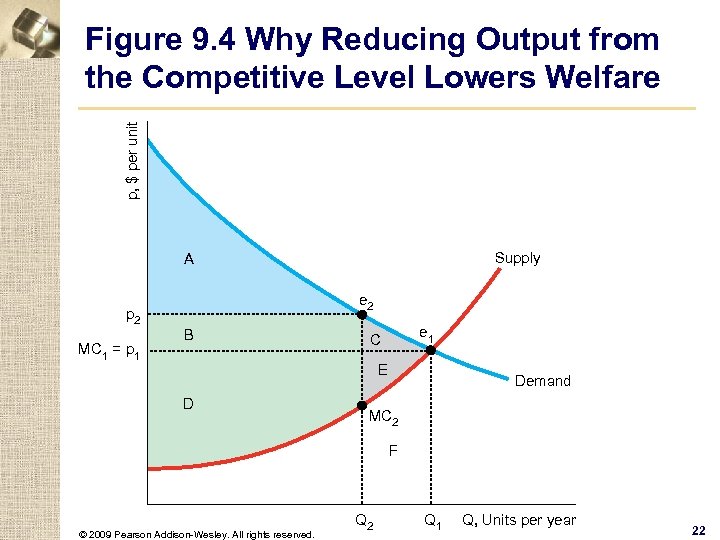 p, $ per unit Figure 9. 4 Why Reducing Output from the Competitive Level Lowers Welfare Supply A p 2 MC 1 = p 1 e 2 B e 1 C E D Demand MC 2 F © 2009 Pearson Addison-Wesley. All rights reserved. Q 2 Q 1 Q, Units per year 22
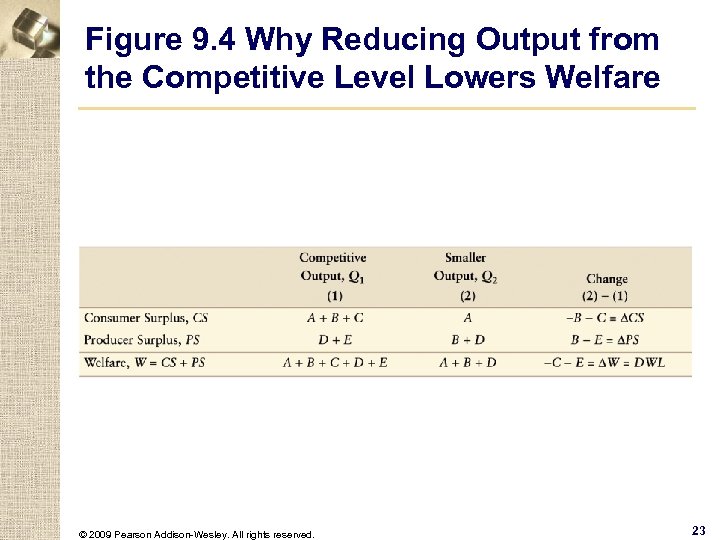 Figure 9. 4 Why Reducing Output from the Competitive Level Lowers Welfare © 2009 Pearson Addison-Wesley. All rights reserved. 23
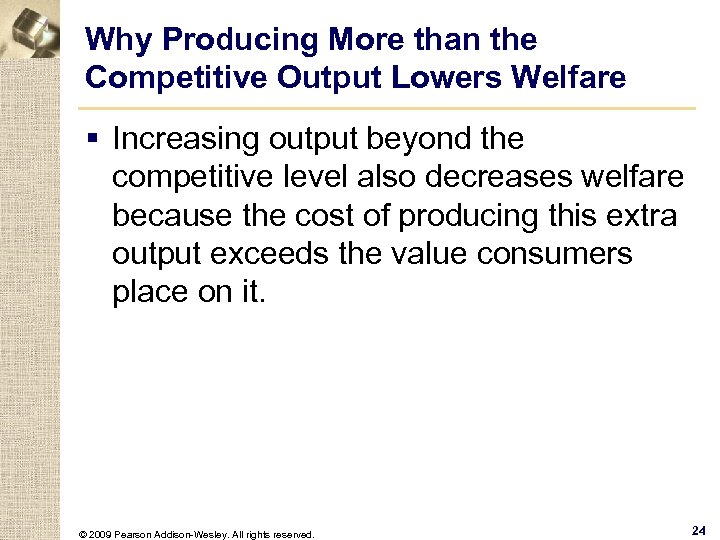 Why Producing More than the Competitive Output Lowers Welfare § Increasing output beyond the competitive level also decreases welfare because the cost of producing this extra output exceeds the value consumers place on it. © 2009 Pearson Addison-Wesley. All rights reserved. 24
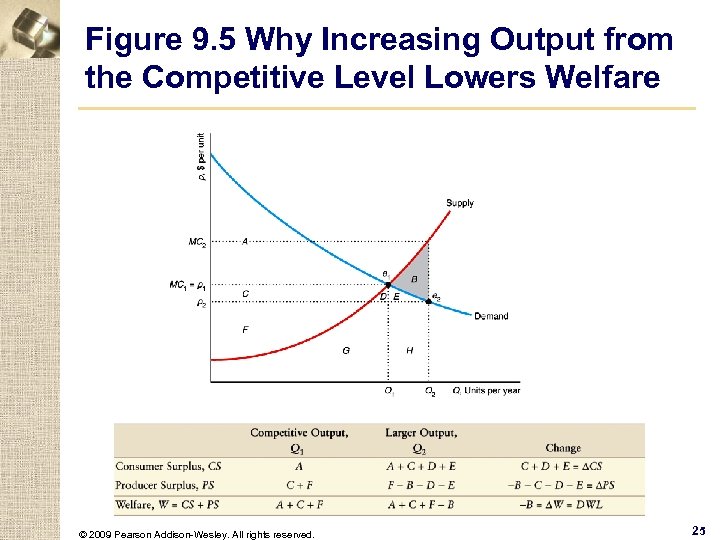 Figure 9. 5 Why Increasing Output from the Competitive Level Lowers Welfare © 2009 Pearson Addison-Wesley. All rights reserved. 25
 Why Producing More than the Competitive Output Lowers Welfare (cont). § The reason that competition maximizes welfare is that price equals marginal cost at the competitive equilibrium. § market failure - inefficient production or consumption, often because a price exceeds marginal cost © 2009 Pearson Addison-Wesley. All rights reserved. 26
 Policies That Shift Supply Curves § Welfare tools are helpful in predicting the impact of government policies and other events that alter a competitive equilibrium. © 2009 Pearson Addison-Wesley. All rights reserved. 27
 Policies That Shift Supply Curves (cont). § All government actions affect a competitive equilibrium in one of two ways. 1. by shifting the supply or demand curve. 2. by creating create a wedge between price and marginal cost so that they are not equal, as they were in the original competitive equilibrium. © 2009 Pearson Addison-Wesley. All rights reserved. 28
 Policies That Shift Supply Curves (cont). § The two most common types of government policies that shift the supply curve are: w limits on the number of firms in a market and w quotas or other limits on the amount of output that firms may produce. © 2009 Pearson Addison-Wesley. All rights reserved. 29
 Policies That Shift Supply Curves (cont). § Governments, other organizations, and social pressures limit the number of firms in at least three ways: w explicitly in some markets, such as the one for taxi service. w barring some members of society from owning firms or performing certain jobs or services. w by raising the cost of entry. © 2009 Pearson Addison-Wesley. All rights reserved. 30
 Restricting the Number of Firms § A limit on the number of firms causes a shift of the supply curve to the left, which raises the equilibrium price and reduces the equilibrium quantity. w Consumers are harmed since they don’t buy as much as they would at lower prices. w Firms that are in the market when the limits are first imposed benefit from higher profits. © 2009 Pearson Addison-Wesley. All rights reserved. 31
 Restricting the Number of Firms: Example § Regulation of taxicabs. w Countries throughout the world regulate taxicabs. To operate a cab in these cities legally, you must possess a city-issued permit, which may be a piece of paper or a medallion. © 2009 Pearson Addison-Wesley. All rights reserved. 32
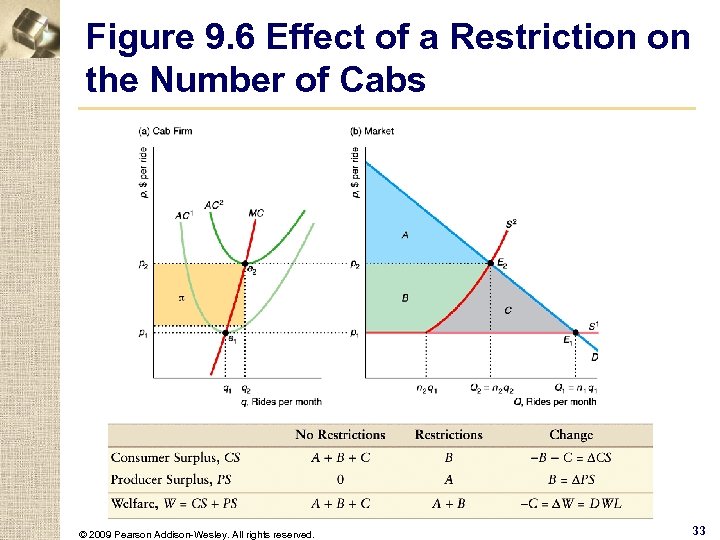 Figure 9. 6 Effect of a Restriction on the Number of Cabs © 2009 Pearson Addison-Wesley. All rights reserved. 33
 Raising Entry and Exit Costs § Barrier to entry - an explicit restriction or a cost that applies only to potential new firms—existing firms are not subject to the restriction or do not bear the cost w Costs incurred by both incumbents and entrants do not discourage potential firms from entering a market if existing firms are making money. © 2009 Pearson Addison-Wesley. All rights reserved. 34
 Raising Entry and Exit Costs (cont). § Large sunk costs can be barriers to entry under two conditions: w First, if capital markets do not work well, so new firms have difficulty raising money, new firms may be unable to enter profitable markets. w Second, if a firm must incur a large sunk cost, which makes the loss if it exits great, the firm may be reluctant to enter a market in which it is uncertain of success. © 2009 Pearson Addison-Wesley. All rights reserved. 35
 Raising Entry and Exit Costs (cont). § Exit barriers: w Some markets have barriers that make it difficult (though typically not impossible) for a firm to exit by going out of business. © 2009 Pearson Addison-Wesley. All rights reserved. 36
 Welfare Effects of a Sales Tax § A new sales tax: w causes the price consumers pay to rise resulting in a loss of consumer surplus w a fall in the price firms receive resulting in a drop in producer surplus § However, the new tax provides the government with new tax revenue © 2009 Pearson Addison-Wesley. All rights reserved. 37
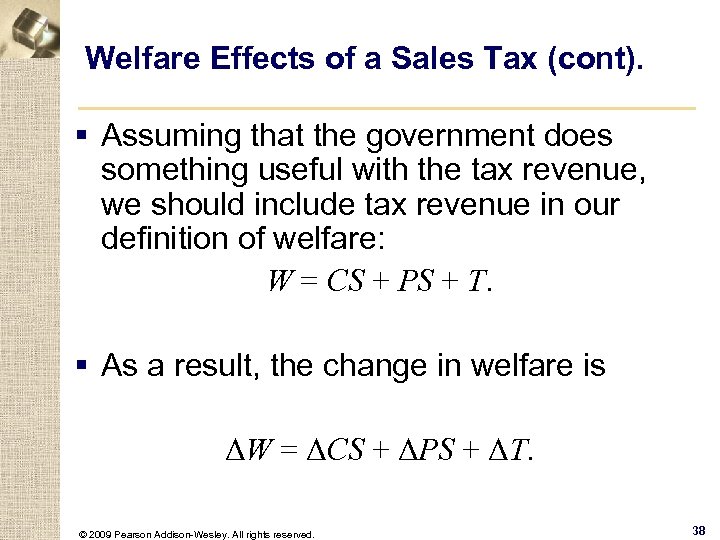 Welfare Effects of a Sales Tax (cont). § Assuming that the government does something useful with the tax revenue, we should include tax revenue in our definition of welfare: W = CS + PS + T. § As a result, the change in welfare is ΔW = ΔCS + ΔPS + ΔT. © 2009 Pearson Addison-Wesley. All rights reserved. 38
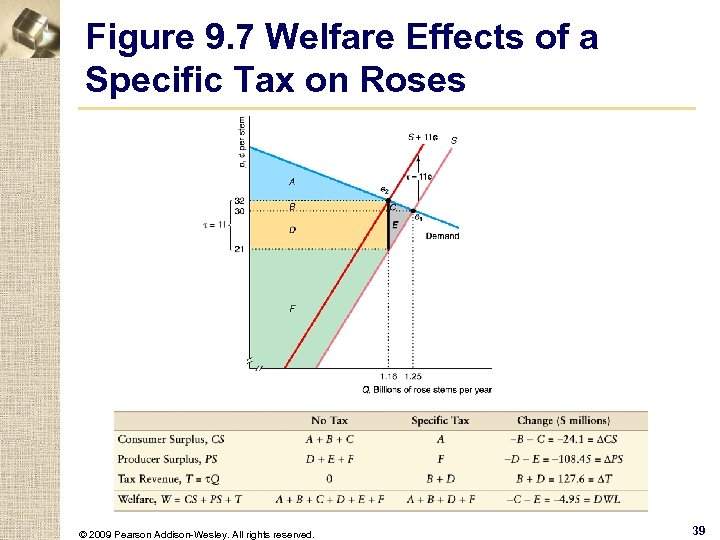 Figure 9. 7 Welfare Effects of a Specific Tax on Roses © 2009 Pearson Addison-Wesley. All rights reserved. 39
 Solved Problem 9. 3 § Suppose that the government gives rose producers a specific subsidy of s = 11¢ per stem. What is the effect of the subsidy on the equilibrium prices and quantity, consumer surplus, producer surplus, government expenditures, welfare, and deadweight loss? (Hint: A subsidy is a negative tax, so we can use the same approach as with a tax. ) © 2009 Pearson Addison-Wesley. All rights reserved. 40
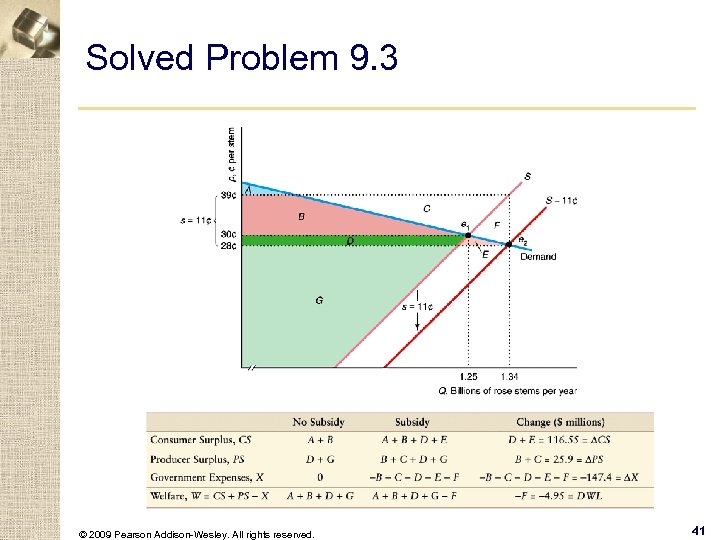 Solved Problem 9. 3 © 2009 Pearson Addison-Wesley. All rights reserved. 41
 Welfare Effects of a Price Ceiling § price ceiling - the highest price that a firm can legally charge. © 2009 Pearson Addison-Wesley. All rights reserved. 42
 Welfare Effects of a Price Ceiling (cont). § If the government sets the ceiling below the precontrol competitive price, w consumers demand more than the precontrol equilibrium quantity and w firms supply less than that quantity Producer surplus must fall because firms receive a lower price and sell fewer units. © 2009 Pearson Addison-Wesley. All rights reserved. 43
 Solved Problem 9. 4 § What are the effects in the soybean market of a $5 -per-bushel price support using a deficiency payment on the equilibrium price and quantity, consumer surplus, producer surplus, and deadweight loss? © 2009 Pearson Addison-Wesley. All rights reserved. 44
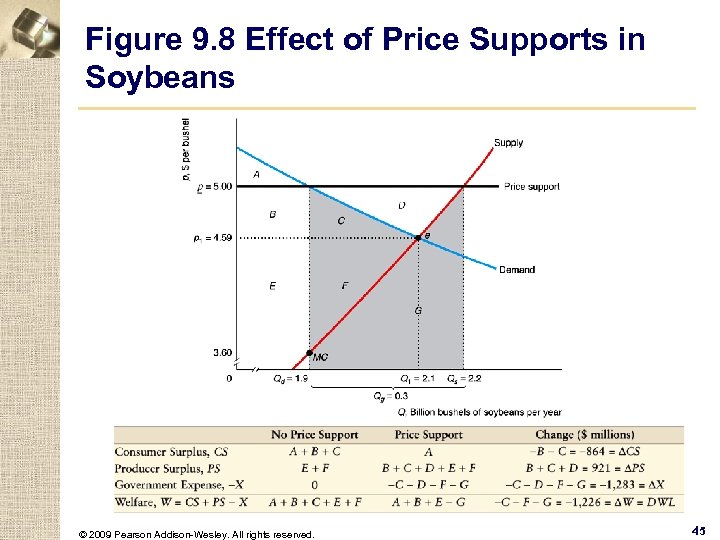 Figure 9. 8 Effect of Price Supports in Soybeans © 2009 Pearson Addison-Wesley. All rights reserved. 45
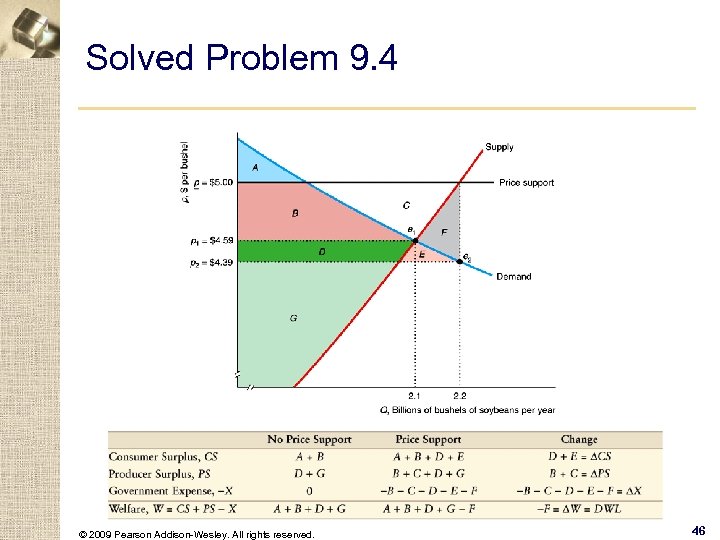 Solved Problem 9. 4 © 2009 Pearson Addison-Wesley. All rights reserved. 46
 Solved Problem 9. 5 § What is the effect on the equilibrium and welfare if the government sets a price ceiling, p below the unregulated competitive equilibrium price? © 2009 Pearson Addison-Wesley. All rights reserved. 47
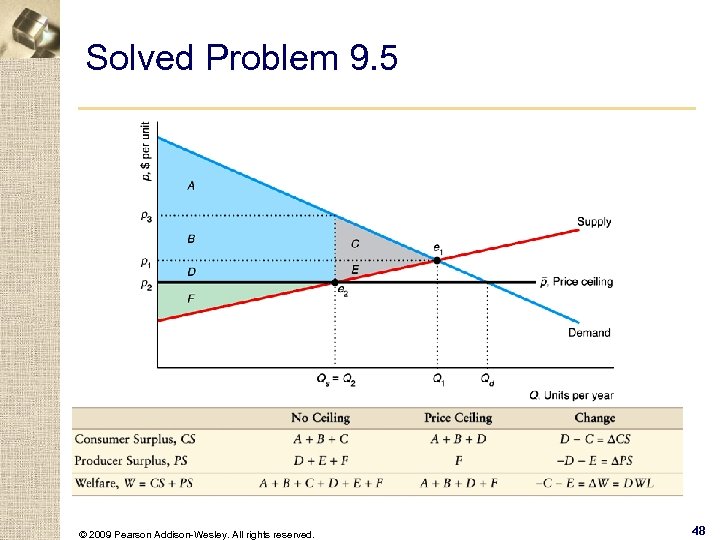 Solved Problem 9. 5 © 2009 Pearson Addison-Wesley. All rights reserved. 48
 Comparing Both Types of Policies: Imports § The government of the (potentially) importing country can use one of four import policies: w Allow free trade. w Ban all imports. w Set a positive quota. w Set a tariff. a tax on only imported goods © 2009 Pearson Addison-Wesley. All rights reserved. 49
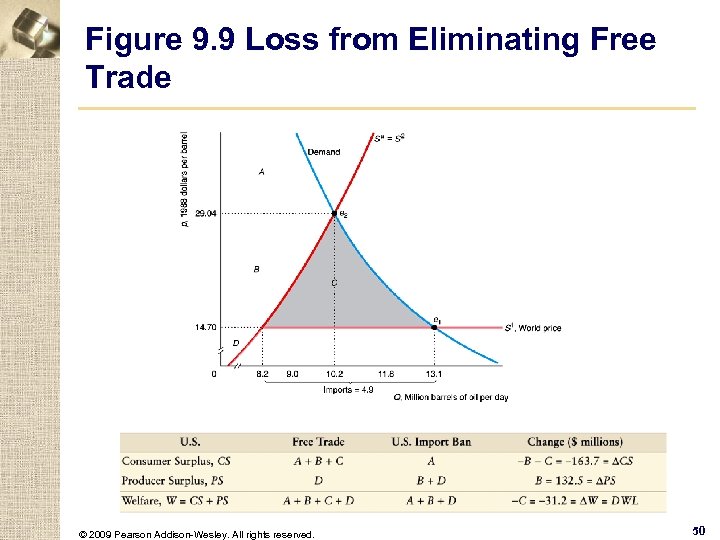 Figure 9. 9 Loss from Eliminating Free Trade © 2009 Pearson Addison-Wesley. All rights reserved. 50
 Free Trade Versus a Tariff § There are two common types of tariffs: w specific tariffs — τ dollars per unit and w ad valorem tariffs — α percent of the sales price. § Tariffs are just taxes. w If the only goods sold were imported, the effect of a tariff in the importing country is the same as we showed for a sales tax. © 2009 Pearson Addison-Wesley. All rights reserved. 51
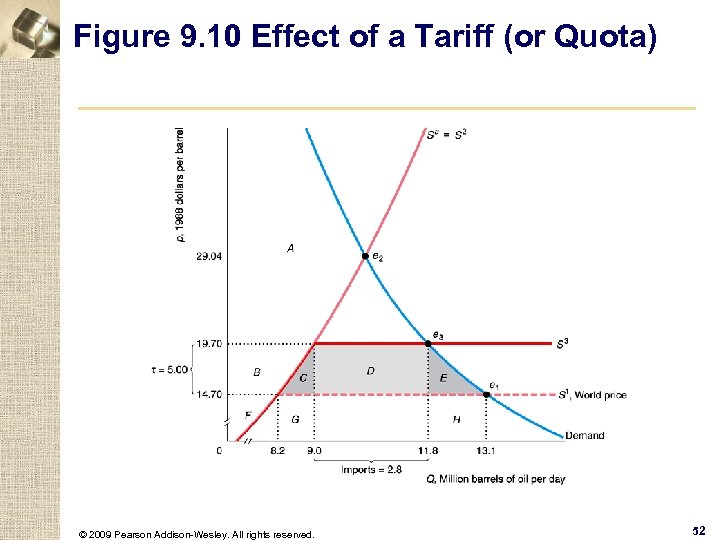 Figure 9. 10 Effect of a Tariff (or Quota) © 2009 Pearson Addison-Wesley. All rights reserved. 52
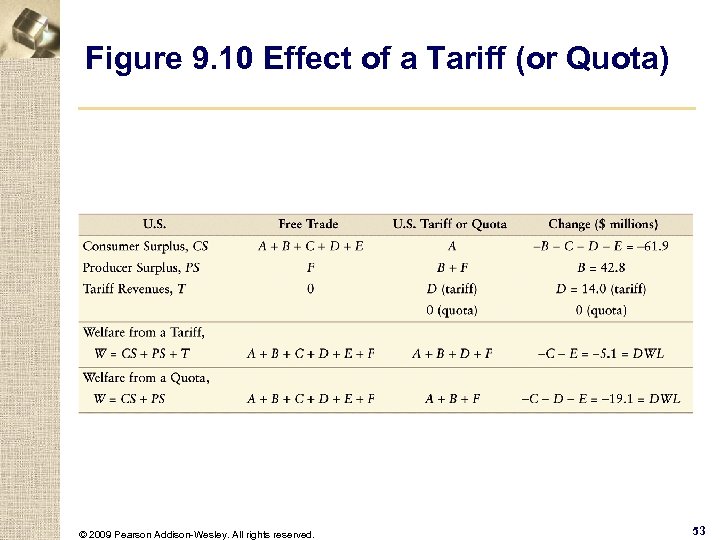 Figure 9. 10 Effect of a Tariff (or Quota) © 2009 Pearson Addison-Wesley. All rights reserved. 53
 Free Trade Versus a Tariff § The tariff protects American producers from foreign competition. w The larger the tariff, the less is imported, hence the higher the price that domestic firms can charge. © 2009 Pearson Addison-Wesley. All rights reserved. 54
 Rent Seeking § Given that tariffs and quotas hurt the importing country, why do the Japanese, U. S. , and other governments impose tariffs, quotas, or other trade barriers? w domestic producers stand to make large gains from such government actions. © 2009 Pearson Addison-Wesley. All rights reserved. 55
 Rent Seeking (cont). § rent seeking - efforts and expenditures to gain a rent or a profit from government actions © 2009 Pearson Addison-Wesley. All rights reserved. 56
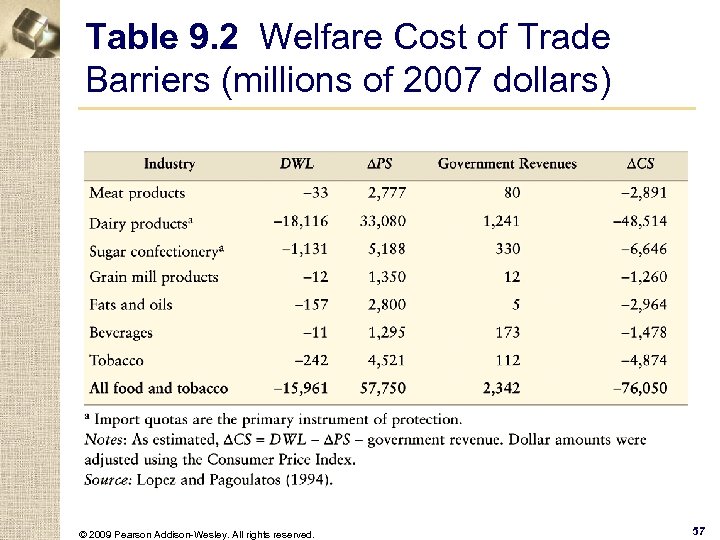 Table 9. 2 Welfare Cost of Trade Barriers (millions of 2007 dollars) © 2009 Pearson Addison-Wesley. All rights reserved. 57