


 Скачать презентацию Chapter Eleven CONGRESS Copyright 2014 Cengage Learning
9165633c006e547581bd3f6514704a46.ppt
- Количество слайдов: 32
 Chapter Eleven CONGRESS Copyright © 2014 Cengage Learning
 Learning Outcomes 2 1. Describe the major powers of the Congress as granted by the Constitution. 2. Explain the differences between the House of Representatives and the Senate with regard to their constituencies, terms of office, powers and political processes. 3. Describe the processes of reapportionment and redistricting. Copyright 2014 Cengage Learning Copyright ©© 2014 Cengage Learning
 Learning Outcomes 3 4. Discuss the importance of committees to the lawmaking process and to the ability of members of the Congress to do their jobs. 5. Describe the leadership structure in each house of Congress, noting the differences between the House and the Senate. 6. Demonstrate how a bill becomes a law and explain how the different processes in the House and the Senate influence legislating. Copyright 2014 Cengage Learning Copyright ©© 2014 Cengage Learning
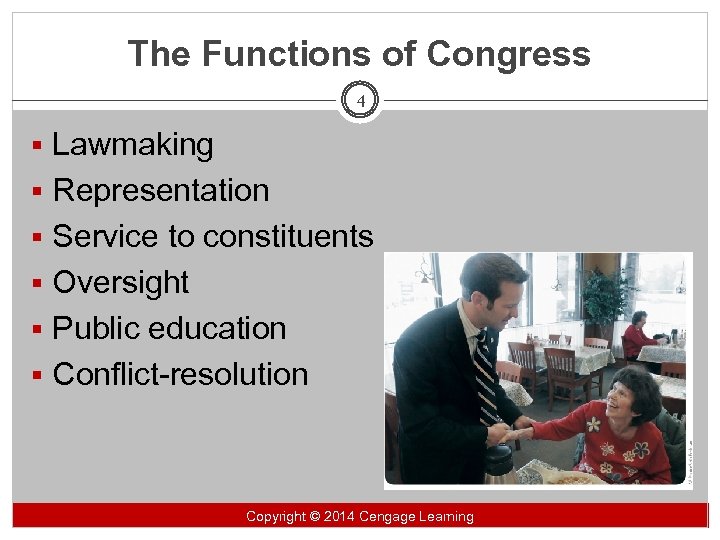 The Functions of Congress 4 § Lawmaking § Representation § Service to constituents § Oversight § Public education § Conflict-resolution Copyright 2014 Cengage Learning Copyright ©© 2014 Cengage Learning
 The Functions of Congress 5 § Representation function: § Often at variance with lawmaking function § Trustee view of representation § Instructed-delegate view of representation § Politico style (combination) Copyright 2014 Cengage Learning Copyright ©© 2014 Cengage Learning
 The Functions of Congress 6 § Service to constituents: § Casework and “hillstyle” § Ombudsperson role § Oversight function: § Committee hearings and investigations § Budgeting § Nomination review § Special commissions Copyright 2014 Cengage Learning Copyright ©© 2014 Cengage Learning
 The Functions of Congress 7 § Public-education function: § Public hearings § Bureaucracy oversight § Debate on major issues § Conflict-resolution function: § Resolves societal conflicts § Interest groups seek help to resolve grievances Copyright 2014 Cengage Learning Copyright ©© 2014 Cengage Learning
 The Powers of Congress 8 § Enumerated Powers § Right to collect taxes and spend § Regulate commerce § Power to declare war § Necessary and Proper Clause § Checks on Congress § Presidential veto § Supreme Court § Elections § House vs. Senate bills Copyright 2014 Cengage Learning Copyright ©© 2014 Cengage Learning
 House-Senate Differences 9 § Size and rules § House = 435 representatives; more formal rules § Senate = 100 senators; looser procedures § Debate and filibustering § Senate has filibuster and cloture § Prestige § Senators generally enjoy more recognition and prestige Copyright 2014 Cengage Learning Copyright ©© 2014 Cengage Learning
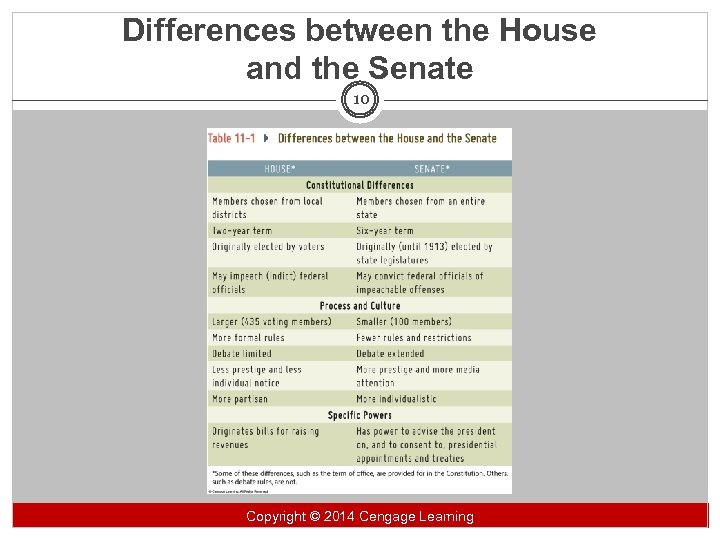 Differences between the House and the Senate 10 Copyright 2014 Cengage Learning Copyright ©© 2014 Cengage Learning
 Congresspersons and the Citizenry: A Comparison 11 § Compared to average Americans, members of Congress are: § § Older Disproportionately white and male High-status occupations Wealthy § But gender and ethnic diversity increasing Copyright 2014 Cengage Learning Copyright ©© 2014 Cengage Learning
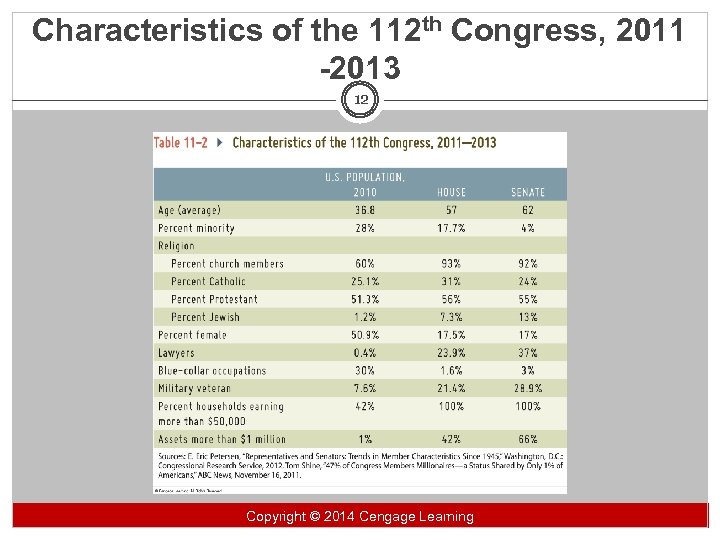 Characteristics of the 112 th Congress, 2011 -2013 12 Copyright 2014 Cengage Learning Copyright ©© 2014 Cengage Learning
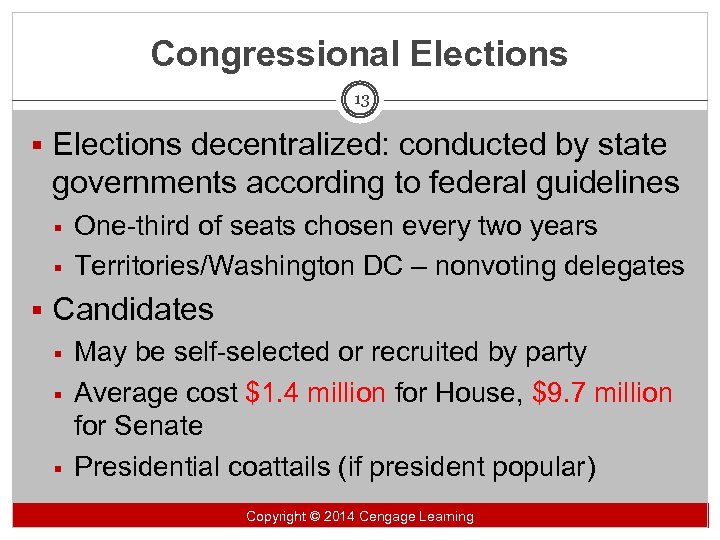 Congressional Elections 13 § Elections decentralized: conducted by state governments according to federal guidelines § § One-third of seats chosen every two years Territories/Washington DC – nonvoting delegates § Candidates § May be self-selected or recruited by party § Average cost $1. 4 million for House, $9. 7 million for Senate § Presidential coattails (if president popular) Copyright 2014 Cengage Learning Copyright ©© 2014 Cengage Learning
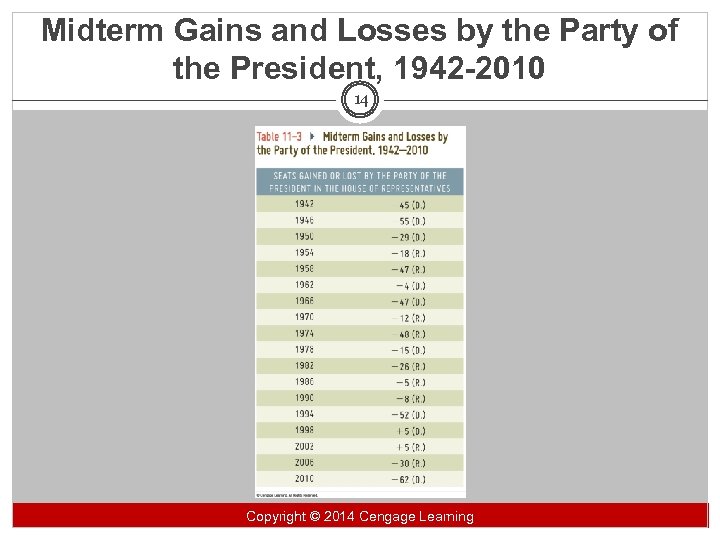 Midterm Gains and Losses by the Party of the President, 1942 -2010 14 Copyright 2014 Cengage Learning Copyright ©© 2014 Cengage Learning
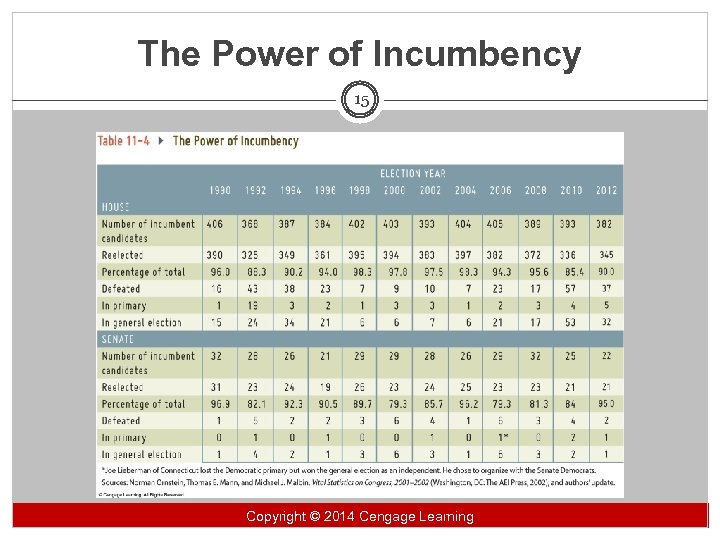 The Power of Incumbency 15 Copyright 2014 Cengage Learning Copyright ©© 2014 Cengage Learning
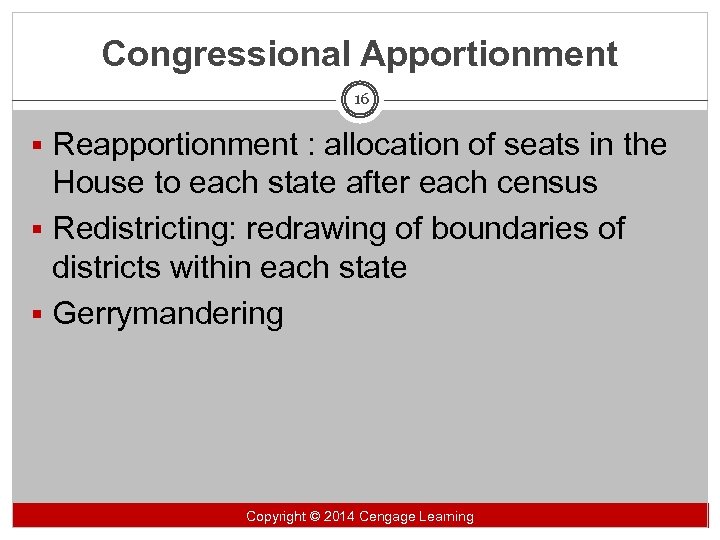 Congressional Apportionment 16 § Reapportionment : allocation of seats in the House to each state after each census § Redistricting: redrawing of boundaries of districts within each state § Gerrymandering Copyright 2014 Cengage Learning Copyright ©© 2014 Cengage Learning
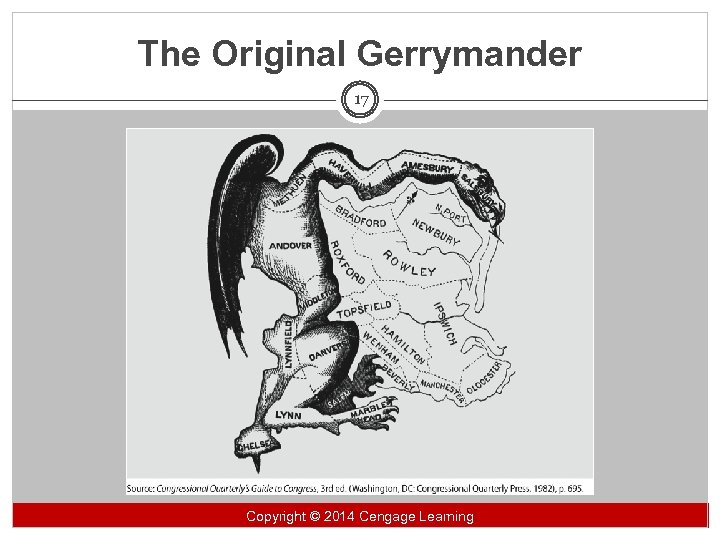 The Original Gerrymander 17 Copyright 2014 Cengage Learning Copyright ©© 2014 Cengage Learning
 Congressional Apportionment 18 § Redistricting after 2010 Census § Controlled mostly by Republicans § Packing and cracking § Nonpartisan redistricting § Predominantly by county § More competitive § “Minority-majority” districts § Constitutional challenges Copyright 2014 Cengage Learning Copyright ©© 2014 Cengage Learning
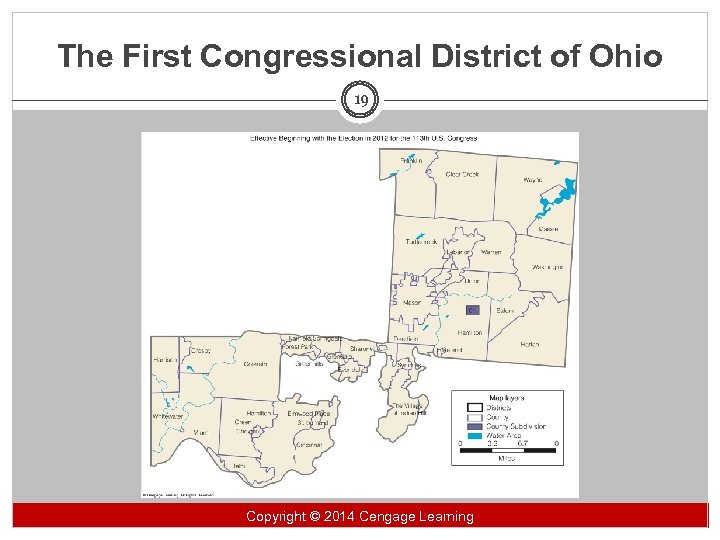 The First Congressional District of Ohio 19 Copyright 2014 Cengage Learning Copyright ©© 2014 Cengage Learning
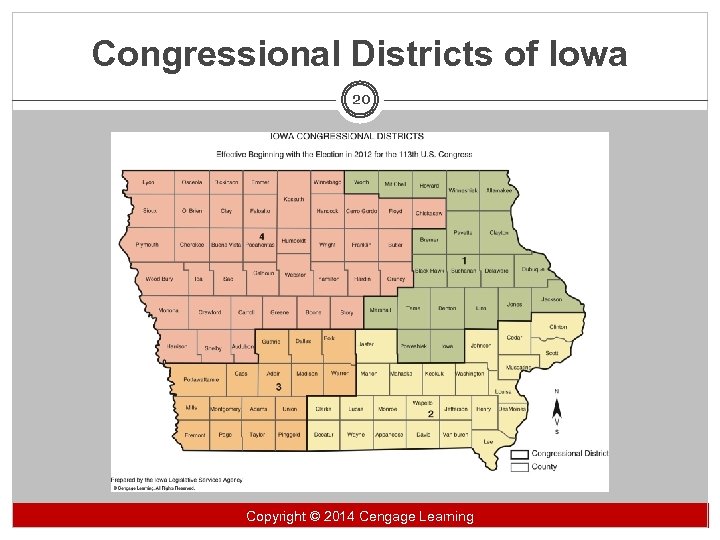 Congressional Districts of Iowa 20 Copyright 2014 Cengage Learning Copyright ©© 2014 Cengage Learning
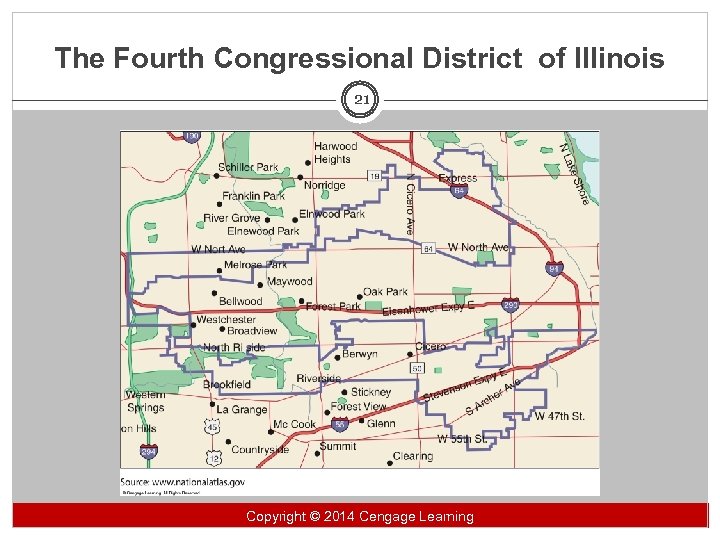 The Fourth Congressional District of Illinois 21 Copyright 2014 Cengage Learning Copyright ©© 2014 Cengage Learning
 Perks and Privileges 22 § Permanent professional staffs § Privileges and immunities § Caucuses: another source of support § Party caucuses most important § Other examples: § § § Democratic Study Group Rust Belt Caucus Congressional Women’s Caucus Copyright 2014 Cengage Learning Copyright ©© 2014 Cengage Learning
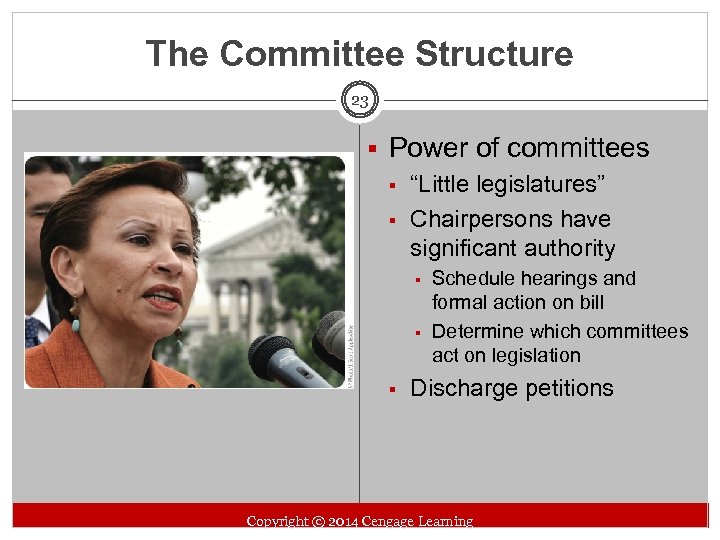 The Committee Structure 23 § Power of committees § “Little legislatures” § Chairpersons have significant authority § § § Schedule hearings and formal action on bill Determine which committees act on legislation Discharge petitions Copyright © 2014 Cengage Learning
 The Committee Structure 24 § Types of committees § Standing Committees § Select Committees § Joint Committees § Conference Committees § House Rules Committee § Selection of committee members § Appointed § Seniority system (informal process) Copyright 2014 Cengage Learning Copyright ©© 2014 Cengage Learning
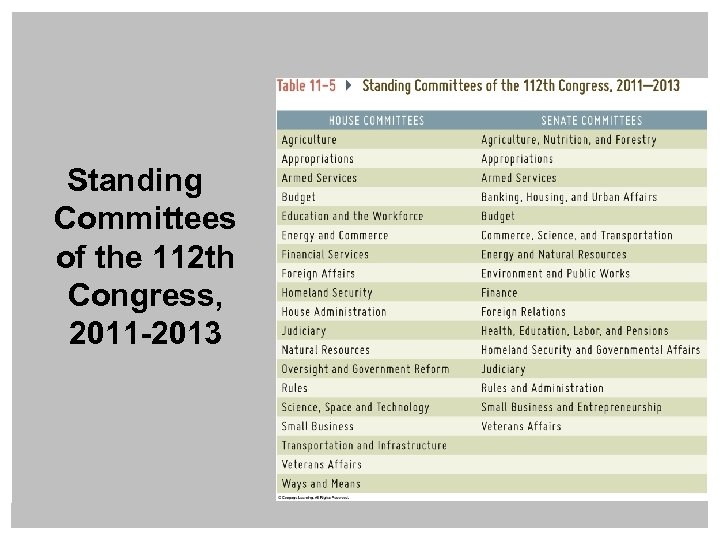 Standing Committees of the 112 th Congress, 2011 -2013 Copyright © 2014 Cengage Learning
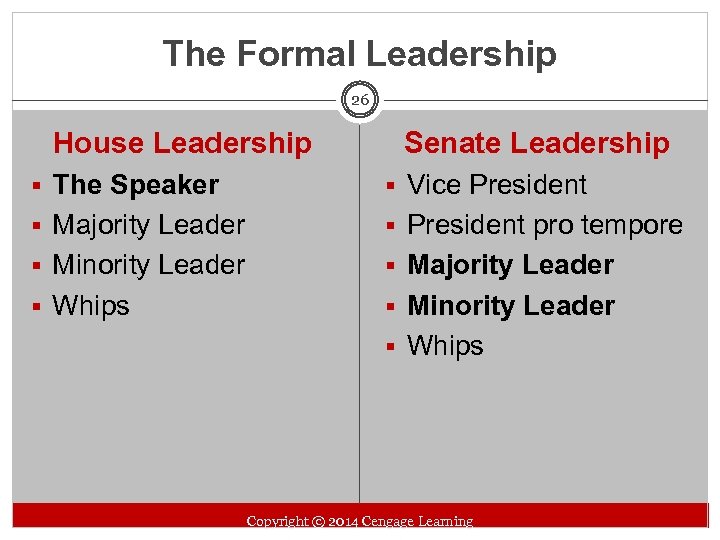 The Formal Leadership 26 House Leadership Senate Leadership § The Speaker § Vice President § Majority Leader § President pro tempore § Minority Leader § Majority Leader § Whips § Minority Leader § Whips Copyright © 2014 Cengage Learning
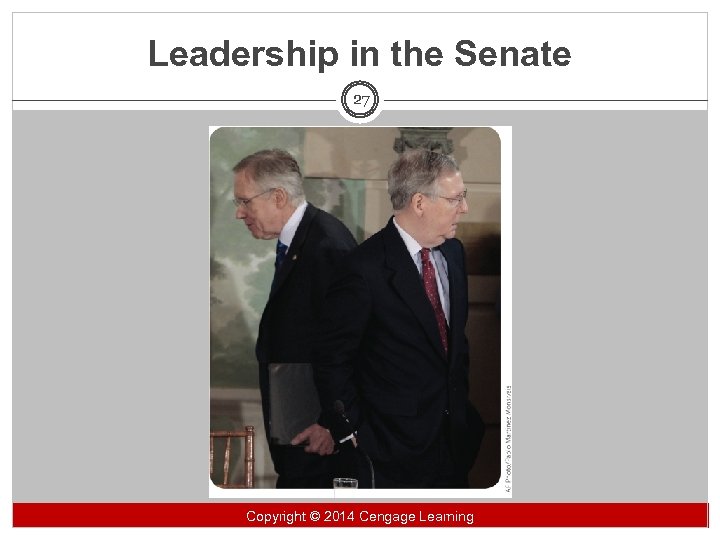 Leadership in the Senate 27 Copyright 2014 Cengage Learning Copyright ©© 2014 Cengage Learning
 How Members of Congress Decide 28 § Party membership is major determinant of how members vote, but not the only factor § Conservative coalition § “Crossing over” § Logrolling, earmarks, and “pork” Copyright 2014 Cengage Learning Copyright ©© 2014 Cengage Learning
 How Members of Congress Decide 29 § How a bill becomes law § Must pass through both houses of Congress § “Money bills” must start in the House § Similar steps in both chambers § § Study, discussion, hearings, markup Scheduling and debate Conference committees Joint resolutions Copyright 2014 Cengage Learning Copyright ©© 2014 Cengage Learning
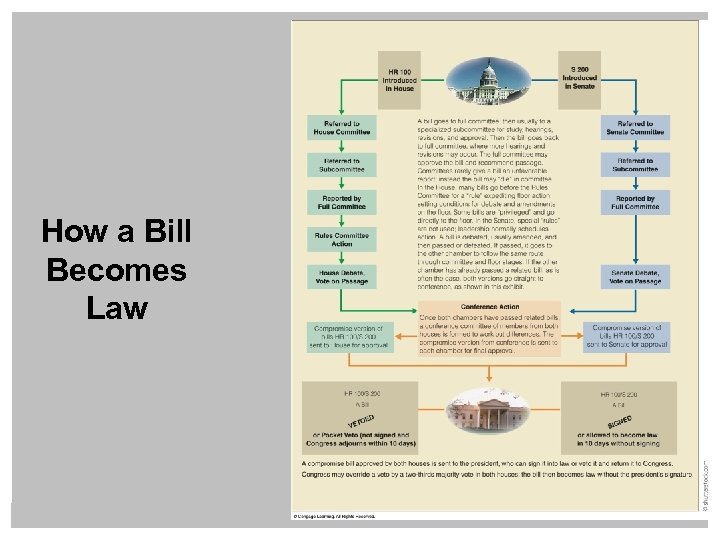 How a Bill Becomes Law Copyright © 2014 Cengage Learning
 How Much Will the Government Spend? 31 § Preparing the budget § Fiscal year cycle (October 1– September 30) § Office of Management and Budget § Congress faces the budget § Authorization § Appropriation § Budget resolutions Copyright 2014 Cengage Learning Copyright ©© 2014 Cengage Learning
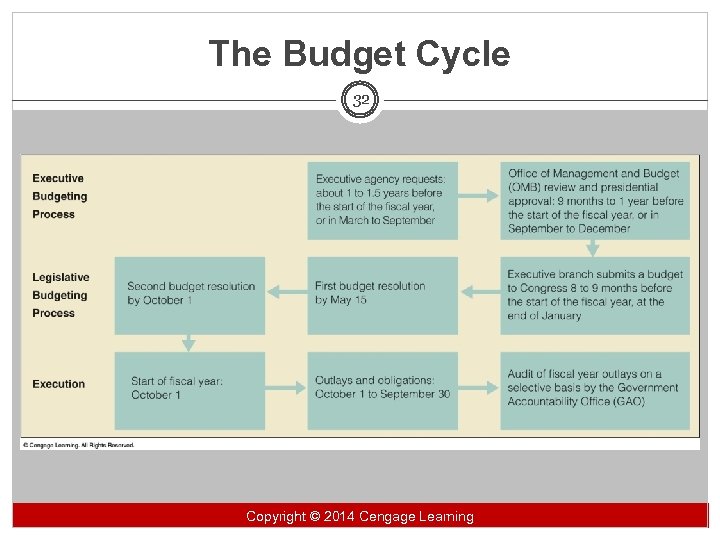 The Budget Cycle 32 Copyright 2014 Cengage Learning Copyright ©© 2014 Cengage Learning