


 Скачать презентацию CHAPTER ELEVEN Attitudes and Influencing Attitudes Mc Graw-Hill Irwin
db1b75e114ecb9783f16836109dd98e8.ppt
- Количество слайдов: 15
 CHAPTER ELEVEN Attitudes and Influencing Attitudes Mc. Graw-Hill/Irwin Copyright © 2004 by The Mc. Graw-Hill Companies, Inc. All rights reserved.
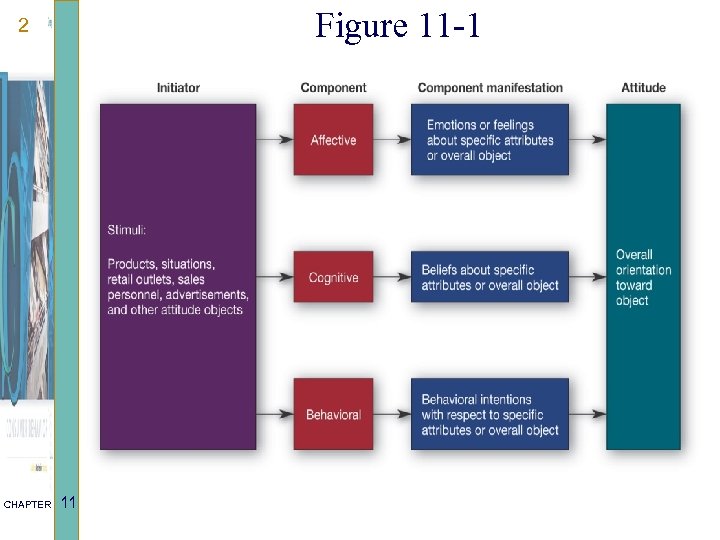 Figure 11 -1 2 CHAPTER 11
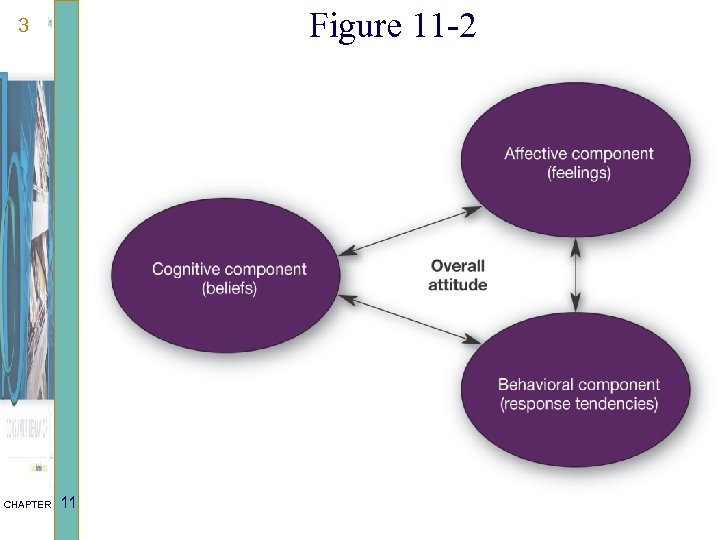 Figure 11 -2 3 CHAPTER 11
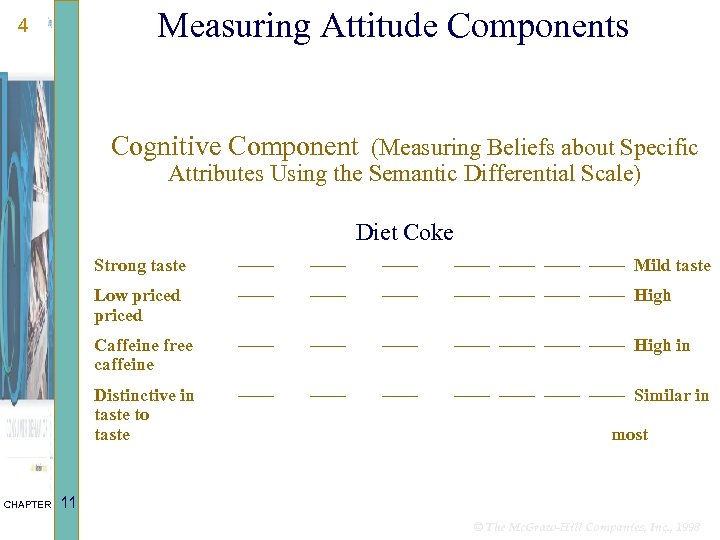 Measuring Attitude Components 4 Cognitive Component (Measuring Beliefs about Specific Attributes Using the Semantic Differential Scale) Diet Coke Strong taste —— —— —— Mild taste Low priced —— —— High Caffeine free caffeine —— —— High in Distinctive in taste to taste CHAPTER —— —— Similar in most 11 © The Mc. Graw-Hill Companies, Inc. , 1998
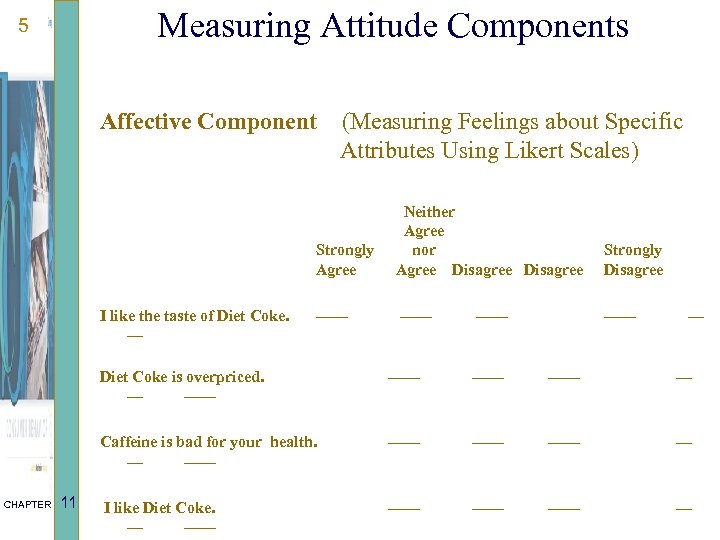 Measuring Attitude Components 5 Affective Component (Measuring Feelings about Specific Attributes Using Likert Scales) Strongly Agree I like the taste of Diet Coke. — Neither Agree nor Agree Disagree Strongly Disagree —— —— — Diet Coke is overpriced. — —— 11 —— —— — Caffeine is bad for your health. — —— CHAPTER —— —— — I like Diet Coke. — —— —— —
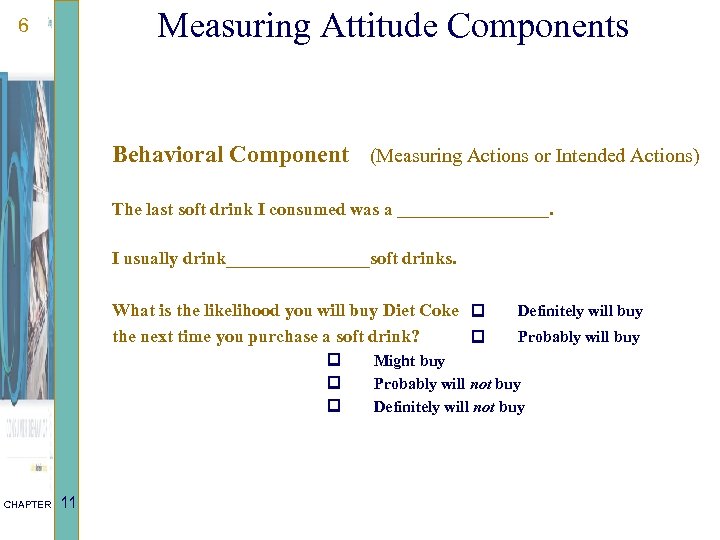 Measuring Attitude Components 6 Behavioral Component (Measuring Actions or Intended Actions) The last soft drink I consumed was a __________. I usually drink________soft drinks. What is the likelihood you will buy Diet Coke the next time you purchase a soft drink? CHAPTER 11 Definitely will buy Probably will buy Might buy Probably will not buy Definitely will not buy
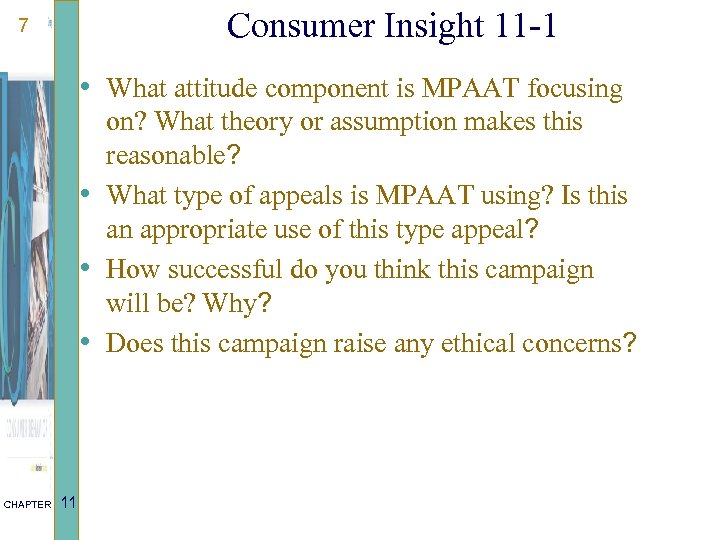 Consumer Insight 11 -1 7 • What attitude component is MPAAT focusing on? What theory or assumption makes this reasonable? • What type of appeals is MPAAT using? Is this an appropriate use of this type appeal? • How successful do you think this campaign will be? Why? • Does this campaign raise any ethical concerns? CHAPTER 11
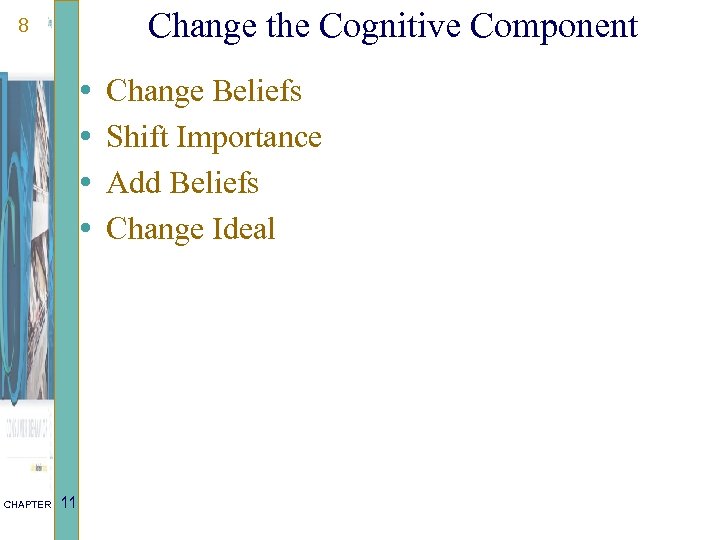 Change the Cognitive Component 8 • • CHAPTER 11 Change Beliefs Shift Importance Add Beliefs Change Ideal
 Change the Affective Component 9 • Classical Conditioning • Affect toward the ad or website • Mere exposure CHAPTER 11
 Change the Behavioral Component 10 Robert Cialdini: Influence • Reciprocity • Door-in-the-face technique (big request first - target • • • CHAPTER 11 refuses, then the communicator “concedes” by asking for a small favor -target agrees) Scarcity - “one-day offer”, “two-days sale”, must suggest better value Authority - expert endorsers Commitment - make the target commit to some small thing • Foot-in-the-door technique (small request first) • Low-balling - to commit to an attractive option first (car deals) • Even-a-penny-will-help technique Liking/compliments - persuasion by favorite or/and similar endorsers Social validation -“statistical advertisements”(85 % of the population)
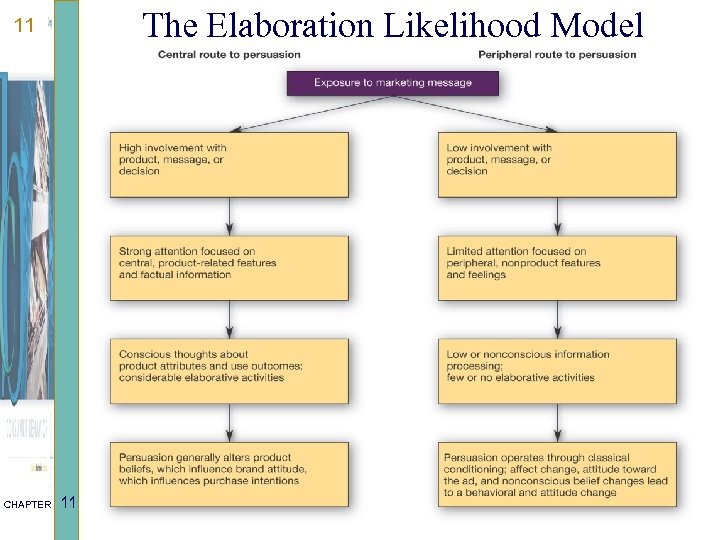 The Elaboration Likelihood Model 11 CHAPTER 11
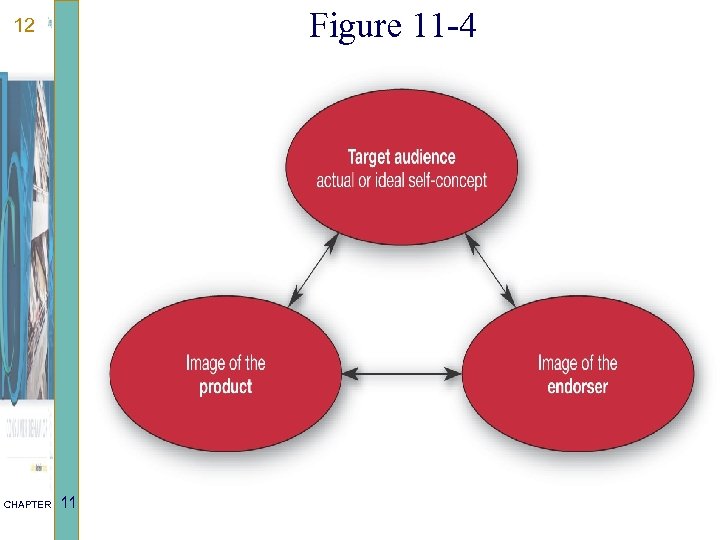 Figure 11 -4 12 CHAPTER 11
 Communication Characteristics 13 • Source Credibility • Celebrity Sources - Congruence • Appeal • Fear, Humor, Emotional • Comparative Ads • Value-Expressive vs. Utilitarian • Message Structure Characteristics • One-Sided vs. Two-Sided • Positive versus Negative Framing • Nonverbal Components CHAPTER 11
 Segmentation and Development 14 • Benefit Segmentation • Feature importance • Group similar benefit seekers • Product Development • Profile ideal level of performance • Create product concept • Translate concept into product CHAPTER 11
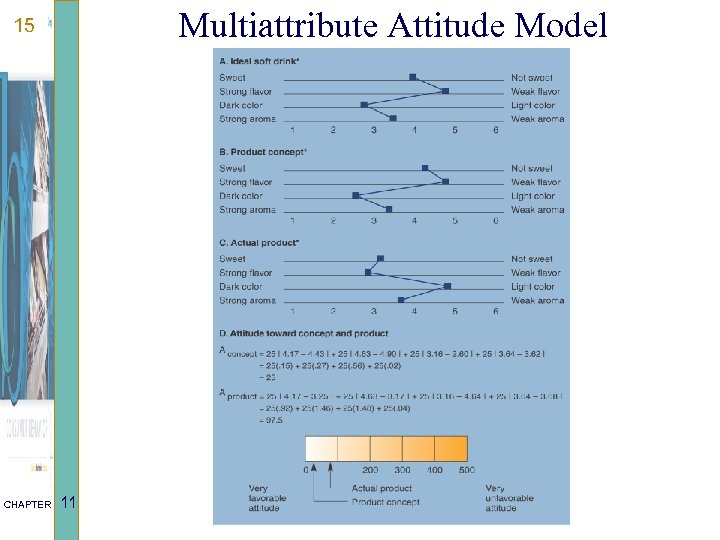 Multiattribute Attitude Model 15 CHAPTER 11