


 Скачать презентацию CHAPTER CHECKLIST When you have completed your study
fc117d7bcbcd01be32ed706a602dd310.ppt
- Количество слайдов: 39
 CHAPTER CHECKLIST When you have completed your study of this chapter, you will be able to 1 2 3 4 Describe the patterns and changes in what goods and services are produced in the United States. Describe the patterns and changes in how goods and services are produced in the United States. Describe for whom goods and services are produced in the United States. Use the circular flow model to provide a picture of how households, firms, and governments interact to determine what, how, and for whom goods and services are produced.
 2. 1 WHAT GOODS ARE PRODUCED? < What We Consume People buy millions of different goods and services. We can describe what people buy and consume only if we classify goods and services in large groups. Let’s look at the items that people spend most on.
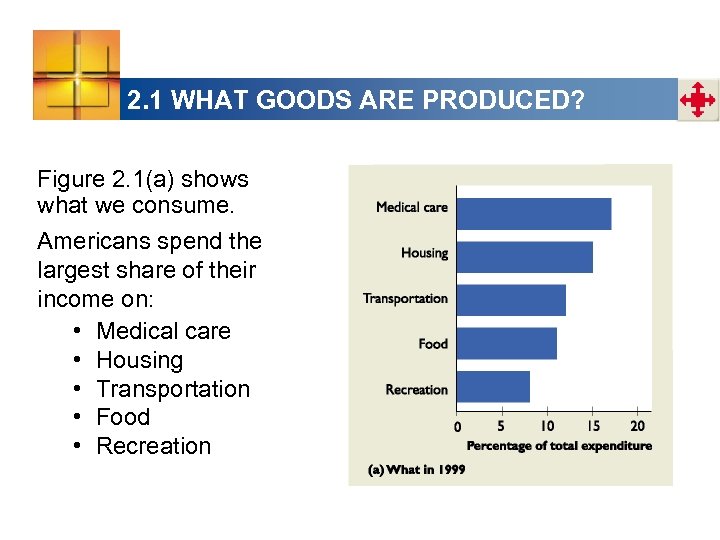 2. 1 WHAT GOODS ARE PRODUCED? Figure 2. 1(a) shows what we consume. Americans spend the largest share of their income on: • Medical care • Housing • Transportation • Food • Recreation
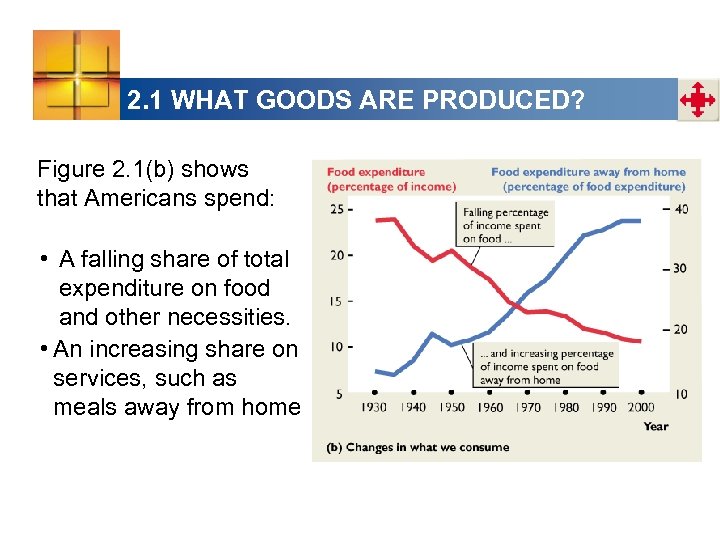 2. 1 WHAT GOODS ARE PRODUCED? Figure 2. 1(b) shows that Americans spend: • A falling share of total expenditure on food and other necessities. • An increasing share on services, such as meals away from home
 2. 1 WHAT GOODS ARE PRODUCED? < What We Produce Businesses located in the United States produce most of the goods and services that people in the United States buy. Businesses in the rest of the world produce goods and services that the United States imports. The largest part of what we produce today is services, not goods.
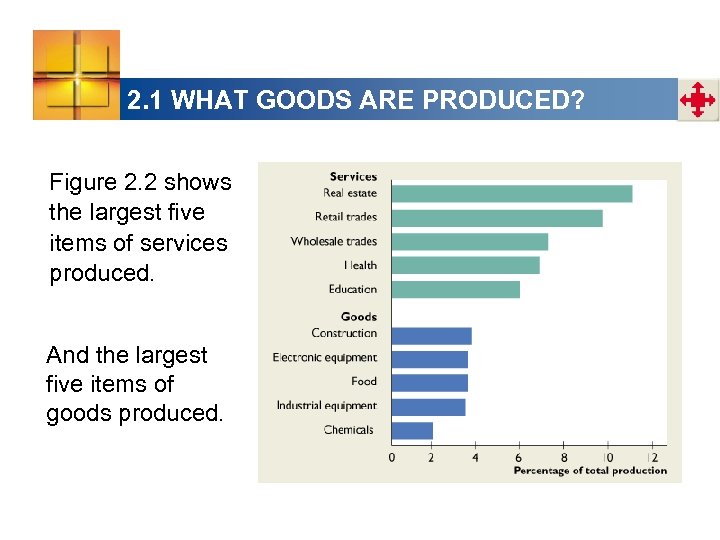 2. 1 WHAT GOODS ARE PRODUCED? Figure 2. 2 shows the largest five items of services produced. And the largest five items of goods produced.
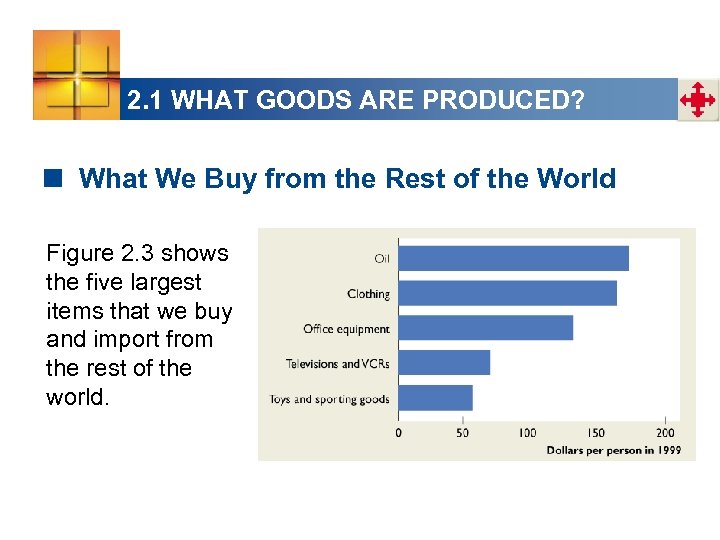 2. 1 WHAT GOODS ARE PRODUCED? < What We Buy from the Rest of the World Figure 2. 3 shows the five largest items that we buy and import from the rest of the world.
 2. 2 HOW ARE GOODS PRODUCED? Factors of production The productive resources used to produce goods and services. Factors of production are grouped into four categories: • Land • Labor • Capital • Entrepreneurship
 2. 2 HOW ARE GOODS PRODUCED? Land The “gifts of nature” that we use to produce goods and services. All the things we call natural resources. Labor Work time and work effort that people devote to producing goods and services
 2. 2 HOW ARE GOODS PRODUCED? Capital Tools, instruments, machines, buildings, and other constructions that have been produced in the past and that businesses now use to produce goods and services. Entrepreneurship The human resource that organizes labor, land, and capital--entrepreneurs come up with ideas about what and how to produce, make business decisions, and bear the risks that arise from these decisions.
 2. 2 HOW ARE GOODS PRODUCED?
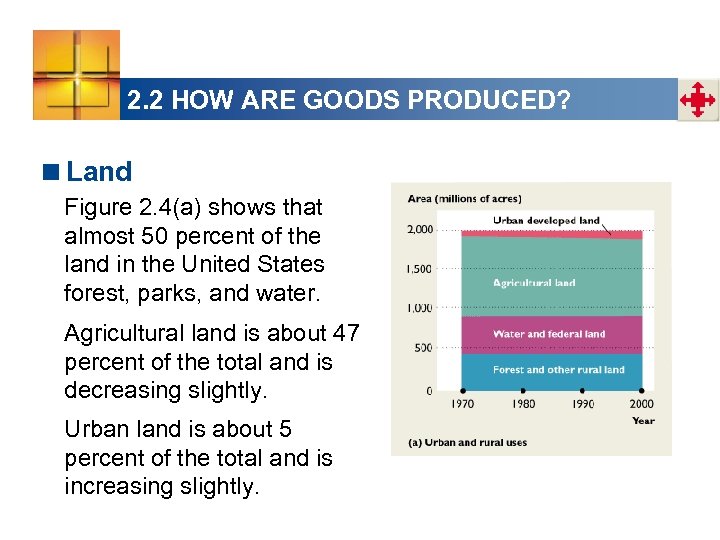
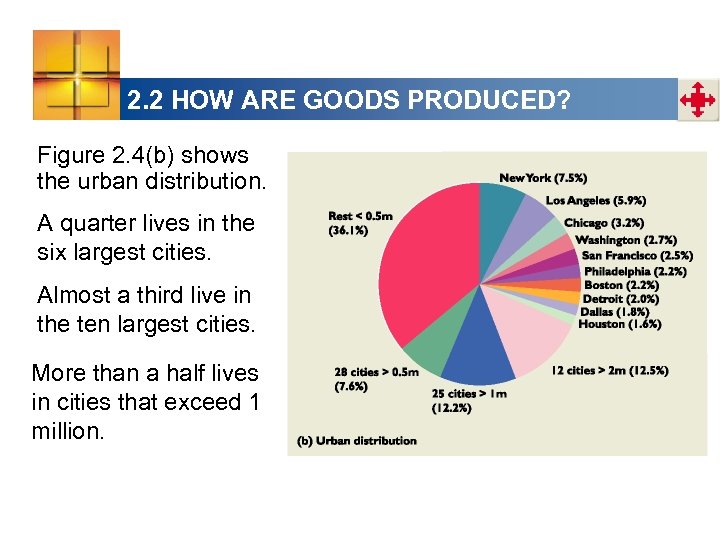 2. 2 HOW ARE GOODS PRODUCED? Figure 2. 4(b) shows the urban distribution. A quarter lives in the six largest cities. Almost a third live in the ten largest cities. More than a half lives in cities that exceed 1 million.
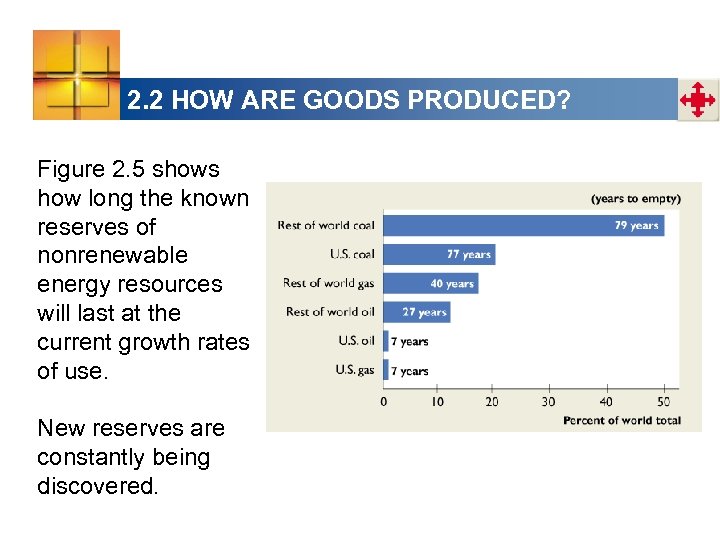 2. 2 HOW ARE GOODS PRODUCED? Figure 2. 5 shows how long the known reserves of nonrenewable energy resources will last at the current growth rates of use. New reserves are constantly being discovered.
 2. 2 HOW ARE GOODS PRODUCED? < Labor The quantity of labor depends on the size of the working age population and the number of people in that age group that decides to take a job. The quality of labor depends on human capital. Human capital The knowledge and skill that people obtain from education, on-the-job training, and work experience.
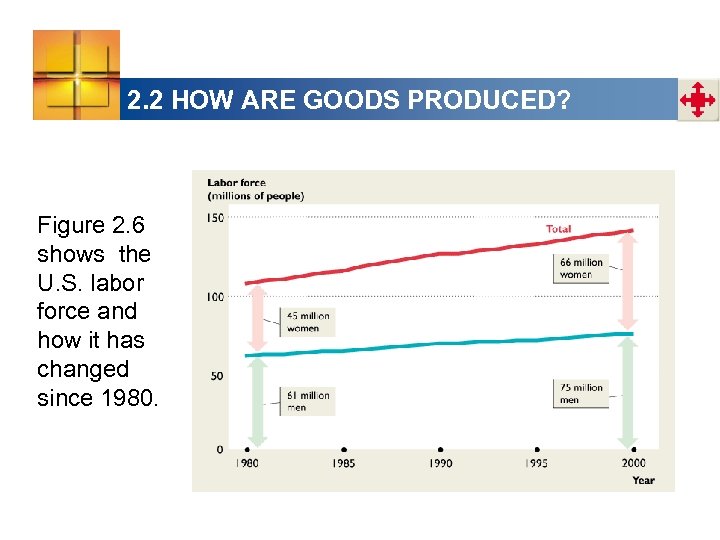 2. 2 HOW ARE GOODS PRODUCED? Figure 2. 6 shows the U. S. labor force and how it has changed since 1980.
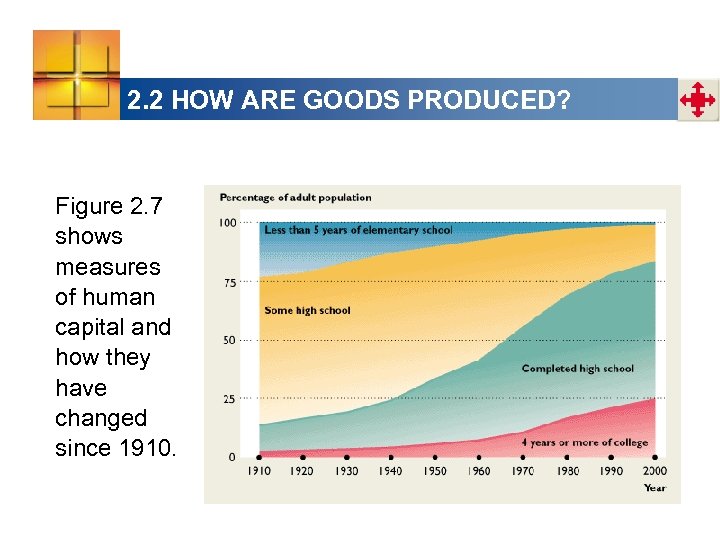 2. 2 HOW ARE GOODS PRODUCED? Figure 2. 7 shows measures of human capital and how they have changed since 1910.
 2. 2 HOW ARE GOODS PRODUCED? < Capital In addition to human capital, economists distinguish between two meanings of capital—financial capital and physical capital. Financial capital consists of the funds that firms use to buy physical capital. The factor of production is physical capital. The value of capital grows steadily over time.
 2. 2 HOW ARE GOODS PRODUCED? < Entrepreneurship The quantity and quality of entrepreneurship is hard to describe and measure. But we can easily recognize brilliant entrepreneurs by their enormous financial success. Sam Walton (Wal-Mart), Bill Gates (Microsoft), and Michael Dell (Dell Computers) are examples of outstanding entreprenuers.
 2. 3 FOR WHOM ARE GOODS PRODUCED? Factors of production are paid incomes: Rent Income paid for the use of land. Wages Income paid for the services of labor. Interest Income paid for the use of capital.
 2. 3 FOR WHOM ARE GOODS PRODUCED? Profit (or loss) Income earned by an entrepreneur for running a business. Functional distribution of income The percentage distribution of income among the factors of production. Personal distribution of income The percentage distribution of income among individual persons.
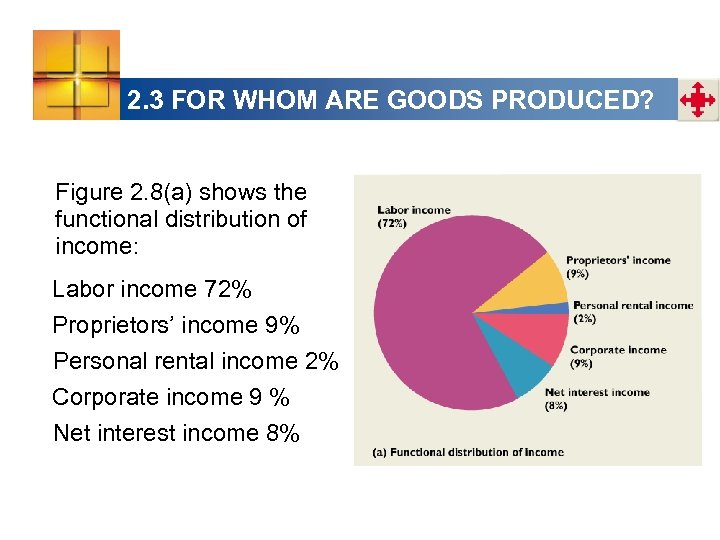 2. 3 FOR WHOM ARE GOODS PRODUCED? Figure 2. 8(a) shows the functional distribution of income: Labor income 72% Proprietors’ income 9% Personal rental income 2% Corporate income 9 % Net interest income 8%
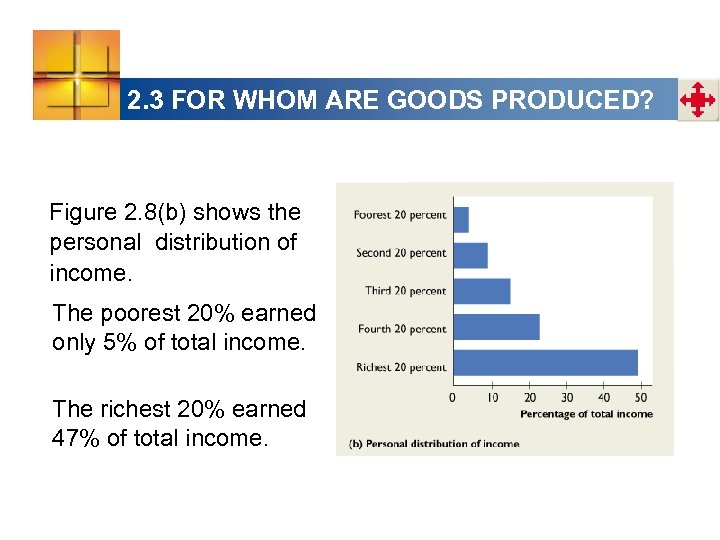 2. 3 FOR WHOM ARE GOODS PRODUCED? Figure 2. 8(b) shows the personal distribution of income. The poorest 20% earned only 5% of total income. The richest 20% earned 47% of total income.
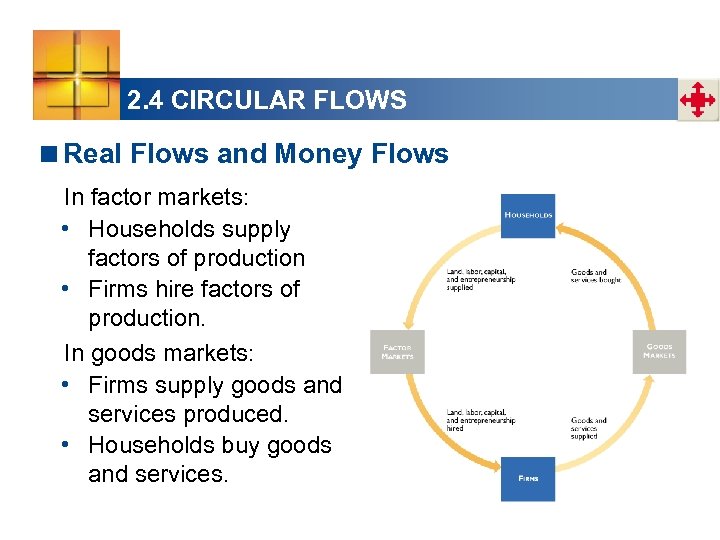
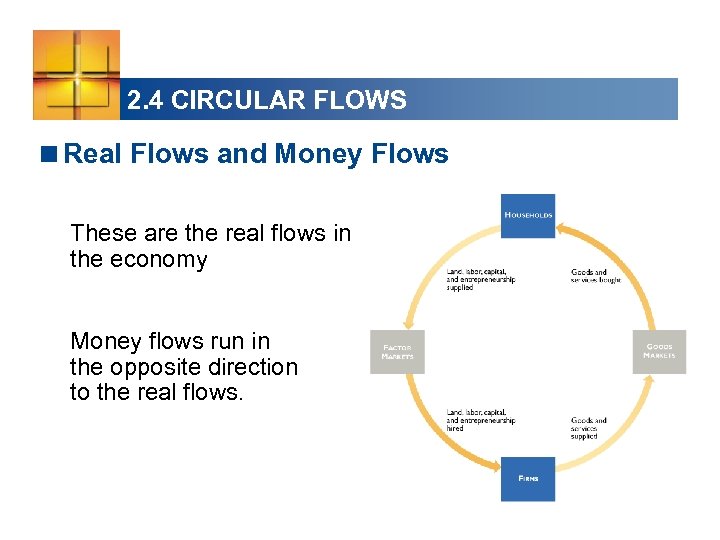
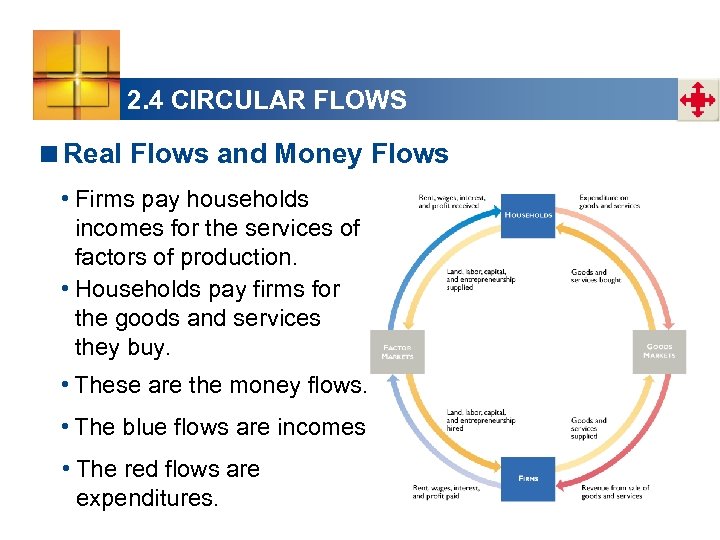
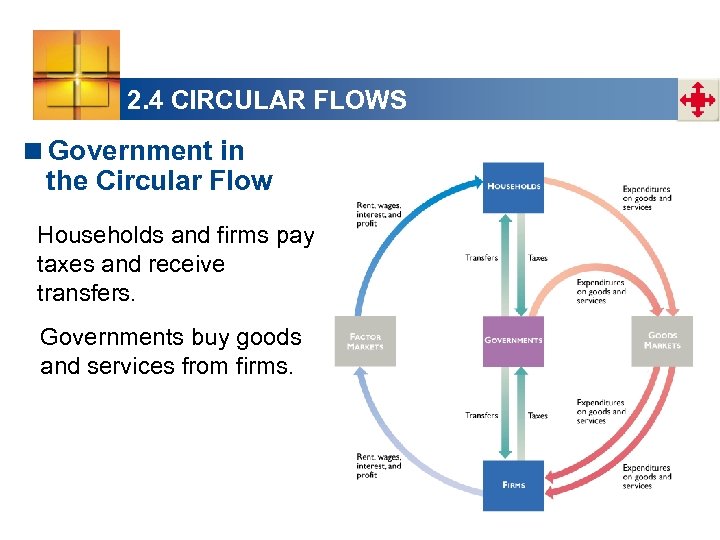
 2. 4 CIRCULAR FLOWS Circular flow model A model of the economy that shows: The circular flow of expenditures and incomes that result from decision makers’ choices and the way those choices interact in markets to determine what, how, and for whom goods and services are produced.
 2. 4 CIRCULAR FLOWS
 2. 4 CIRCULAR FLOWS
 2. 4 CIRCULAR FLOWS
 2. 4 CIRCULAR FLOWS
 2. 4 CIRCULAR FLOWS
 2. 4 CIRCULAR FLOWS
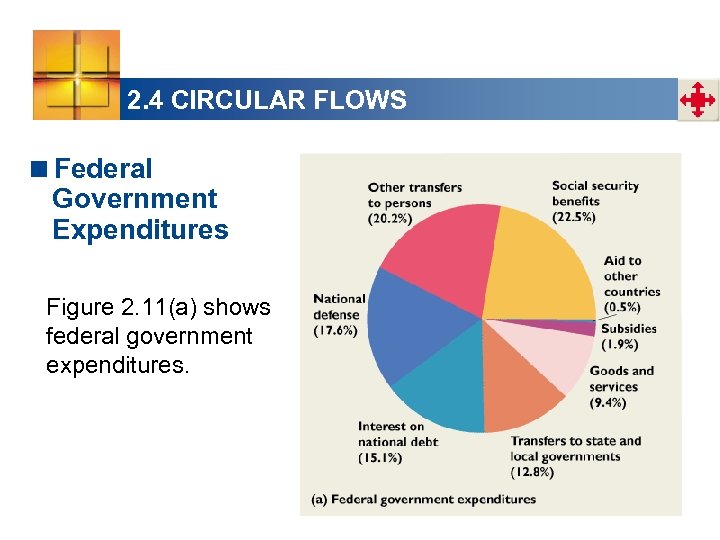
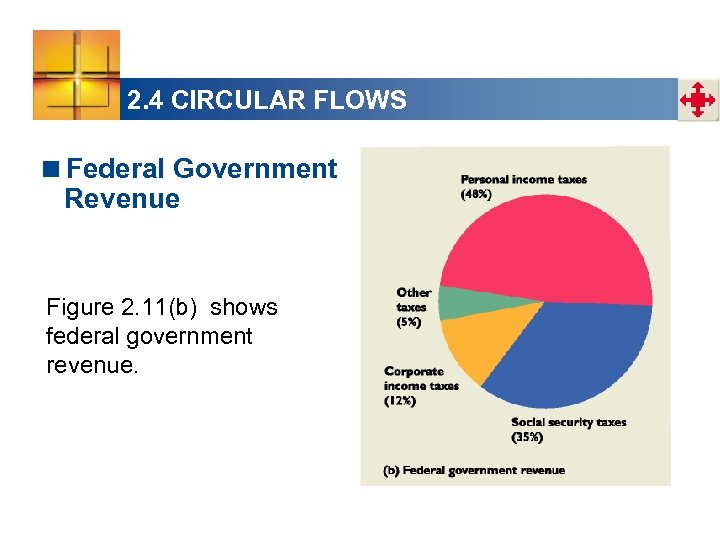
 2. 4 CIRCULAR FLOWS The federal government finances its expenditures by collecting taxes. The main taxes are: 1. Personal income taxes 2. Corporate (business) taxes 3. Social security taxes During the early 2000 s, the federal government is spending and collecting in taxes more than $2 trillion a year—about 20 cents in every dollar earned.
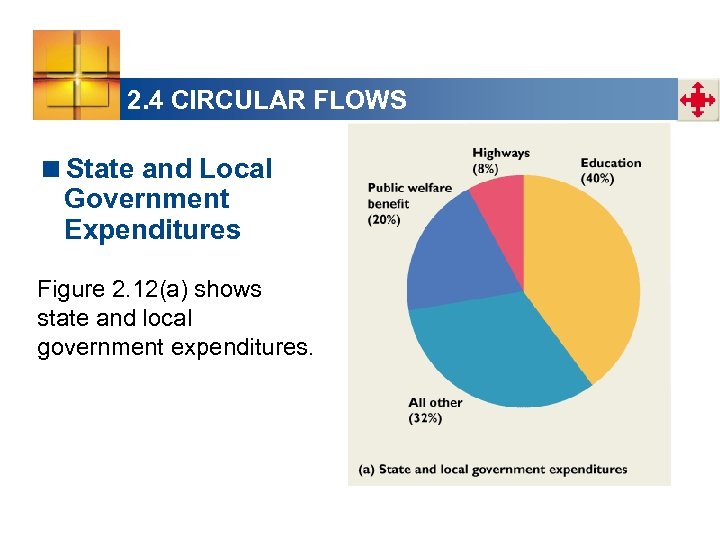
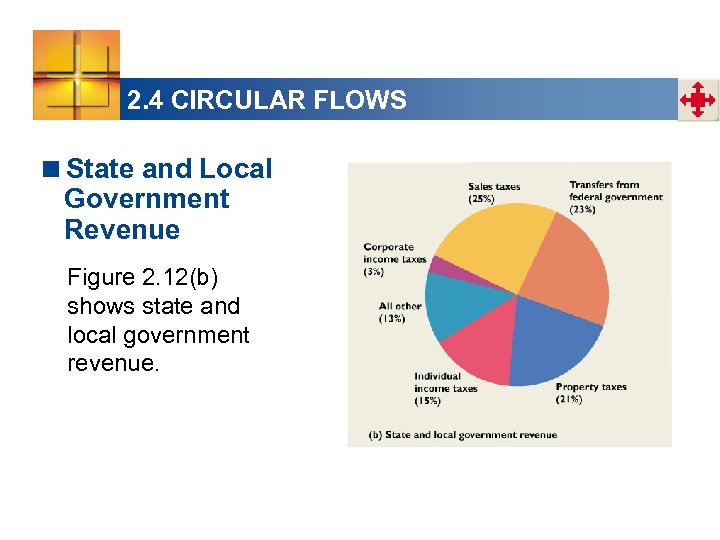
 2. 4 CIRCULAR FLOWS State and Local Governments State and local governments expenditures provide: 1. Goods and services 2. Welfare benefits State and local governments finance these expenditures by collecting taxes. The main taxes levied are: 1. Sales taxes 2. Property taxes 3. State income taxes
 2. 4 CIRCULAR FLOWS
 2. 4 CIRCULAR FLOWS
 2. 4 CIRCULAR FLOWS
 2. 4 CIRCULAR FLOWS
 2. 4 CIRCULAR FLOWS
 2. 4 CIRCULAR FLOWS
 2. 4 CIRCULAR FLOWS