


 Скачать презентацию Chapter 9 Land of Opportunity Immigrants to
51c86329fb5541305c1d465b027481a2.ppt
- Количество слайдов: 68
 Chapter 9 Land of Opportunity
 Immigrants to Kansas n n Immigrant: One who leaves a country to settle in another country Assimilation: The process of absorbing a new group into the culture of those already there Cultural pluralism (acculturation): People keep some of the traditional ways from their immigrant past within the larger common culture Melting Pot vs. Salad Bowl
 Germans Largest European immigrant group to come to KS n Late 1800 s Germany in series of war n KS offered the most opportunity n Many came from other parts of the US n
 Chain migration attracted Germans n Person from a family or town immigrated n Letters to relatives/neighbors n They would immigrate n Process would repeat n
 During WWI, US was at war with Germany n Germans stopped speaking language in public n German culture began to fade n
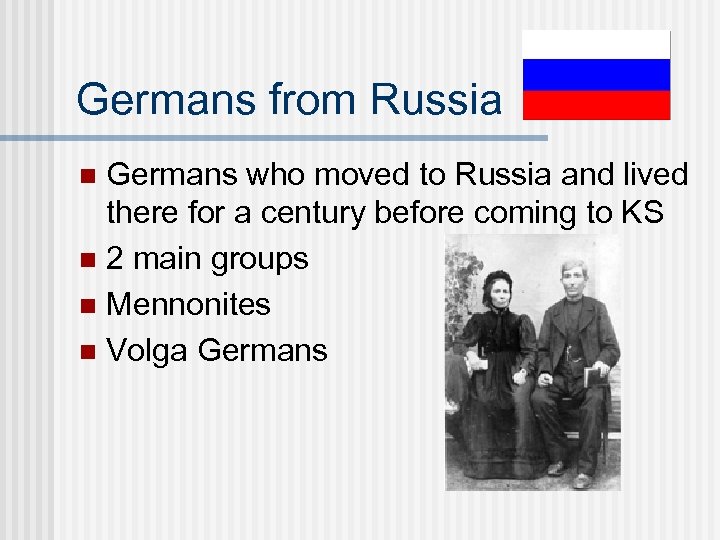 Germans from Russia Germans who moved to Russia and lived there for a century before coming to KS n 2 main groups n Mennonites n Volga Germans n
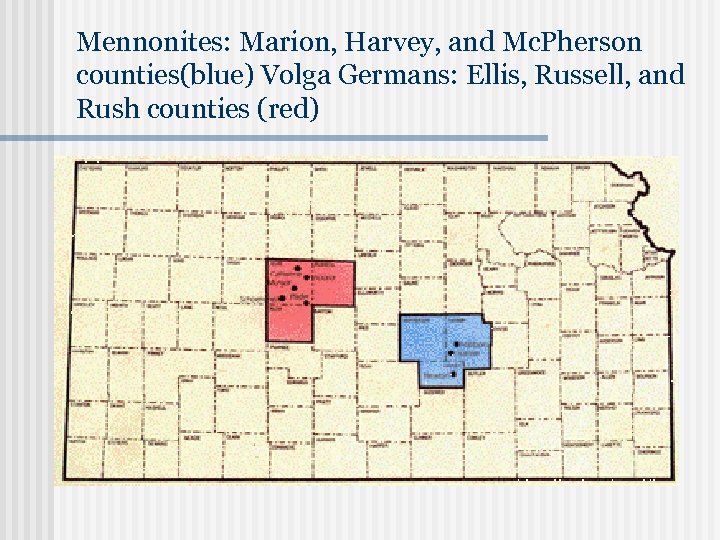 Mennonites: Marion, Harvey, and Mc. Pherson counties(blue) Volga Germans: Ellis, Russell, and Rush counties (red)
 Mennonites Settled in Russia along Black Sea, Crimea n Followers of religious reformer Menno Simmons n Strict pacifists n
 Russian-German immigration 1870’s n Felt Russian gov’t was unfair n KS railroad companies went to Russia and convinced them to settle Kansas n Kansas was similar to the plains of Russia n Mennonites: Santa Fe Railroad n Volga Germans: KS Pacific Railroad n
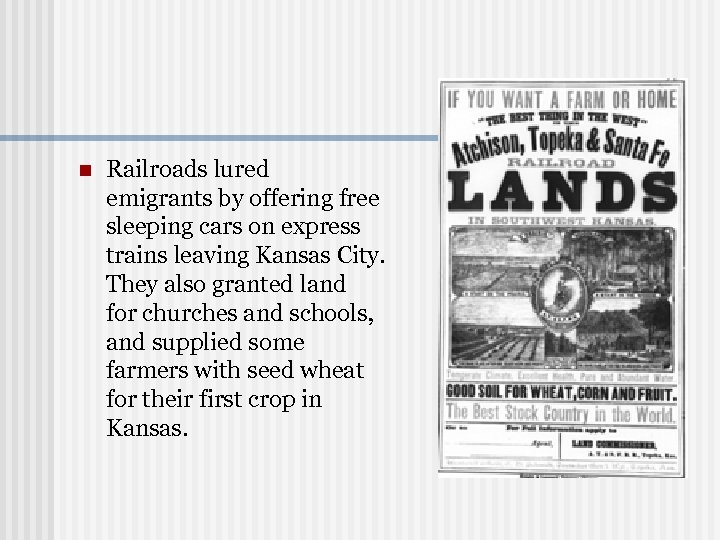 n Railroads lured emigrants by offering free sleeping cars on express trains leaving Kansas City. They also granted land for churches and schools, and supplied some farmers with seed wheat for their first crop in Kansas.
 One-third of all Russian-Germans left Russia, many of them settling in Kansas. By 1879 about 12, 000 Russian-Germans lived in the state. n Unlike most other farmers new to Kansas, they were experienced at prairie-style agriculture. Mennonites often are credited with introducing Turkey red wheat to Kansas. n
 Swedes Most numerous Scandinavian immigrants n Lindsborg, KS n Recruited by Land companies in Chicago n Kansas offered land & business opportunities n
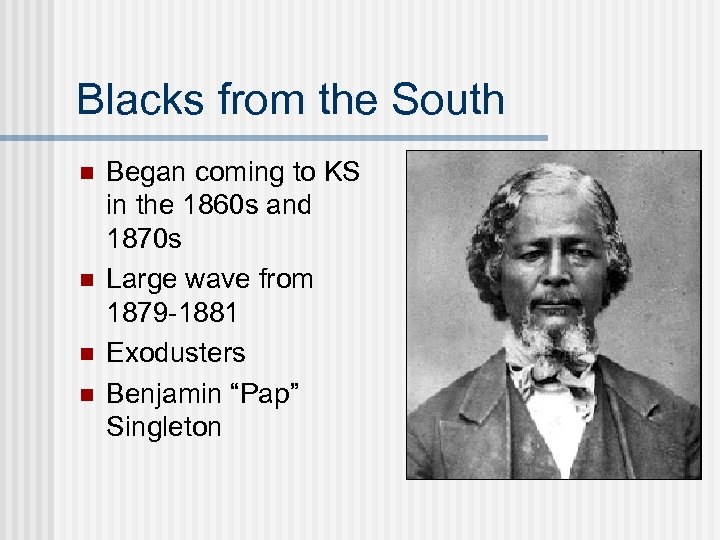 Blacks from the South n n Began coming to KS in the 1860 s and 1870 s Large wave from 1879 -1881 Exodusters Benjamin “Pap” Singleton
 Reasons Life did not improve after war n Impossible to buy land n Former masters gave few opportunities n KS-Rep. /Lincoln-Rep. n They considered the Rep. Party their political friends n
 Settlements Most settled in larger cities n Leavenworth, Topeka, KC n Set up some farm communities n Nicodemus-1877 n
 n "When we got in sight of Nicodemus the men shouted, 'There is Nicodemus!' Being very sick, I hailed this news with gladness. I looked with all the eyes I had. I said, 'Where is Nicodemus? I don't see it yet. ' My husband pointed out various smokes coming out of the ground and said, 'That is Nicodemus. ' The families lived in dugouts. . . The scenery was not at all inviting, and I began to cry. ” -Willina Hickman
 Discrimination: unfair treatment n Segregation: separation from whites n Lasted until the civil rights movement of the 1950’s n Plessy v. Ferguson n Separate but equal – legal segregation n
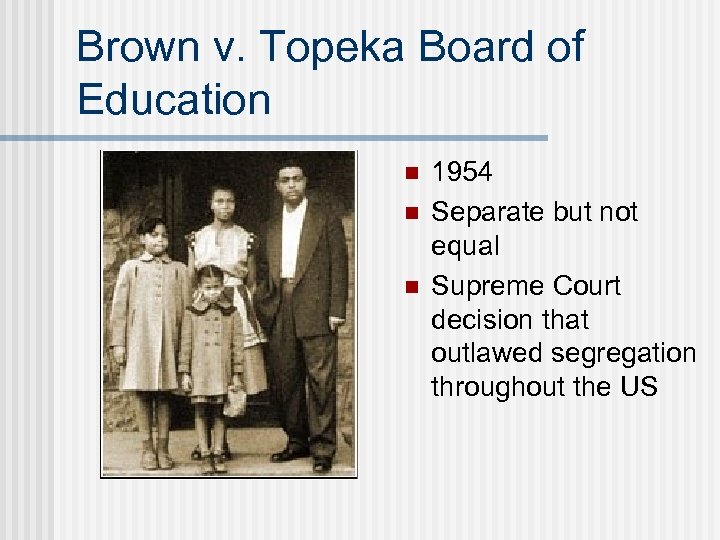 Brown v. Topeka Board of Education n 1954 Separate but not equal Supreme Court decision that outlawed segregation throughout the US
 Mexicans Came too late to claim land n In search of work n 1900’s-1920’s n Men recruited by railroads n Discrimination/segregation n
 1960’s-1980’s n Jobs in meat packing plants n Emporia, Garden City n
 Bohemians/Czechs Founded several communities n Wilson, Jennings n Craftsmen, mechanics, merchants n
 Greeks Came to KS as railroad section hands n Restaurant businesses n
 British Isles No language barrier n George Grant- Black Angus cattle n F. J. S. Turnley- taught farming n
 Little Balkans Southeast KS is the area with the most cultural variety n Reminded people of southeastern Europe n Mining jobs and industry n Austrians, Hungarians, Yugoslavians, Lebanese, Italians n
 What’s the Matter With Kansas?
 Reformers vs. Status Quo n 1891 Senator John Ingalls was angry with reformers n William Allen White: Editor of the Emporia Gazette n Wrote editorial “What’s the Matter With Kansas? ” n 1850’s-1920’s KS was a center for reform movements
 Populist Movement People’s Party/Populist Party 1890 n Formed when farming conditions were poor n
 Farmer’s Alliance Members suffered drought and economic problems n Products bringing low profit n Cost of transportation high n Borrowed money n Most farms were mortgaged (could be taken away if they did not pay debts) n Deflation: amount of money in circulation declines n
 Populist (cont. ) Came out for broad reforms n Honesty in politics n Secret ballots n Direct election of senators n Railroads/big businesses too powerful n Wanted to break up large companies n
 Populist (cont. ) William Peffer: elected to US Senate in 1891 n Jeremiah “Sockless Jerry” Simpson: elected to Congress with little education n Mary Elizabeth Lease: one of the most effective speakers n “Raise less corn and more hell” n
 Populists achieved few reforms Poor political strategy n Poor public image n Lost support after 1900 n
 Prohibition n First tried to regulate saloons but failed n Amended state constitution in 1880 to ban liquor sale n KS-first state to enact prohibition amendment
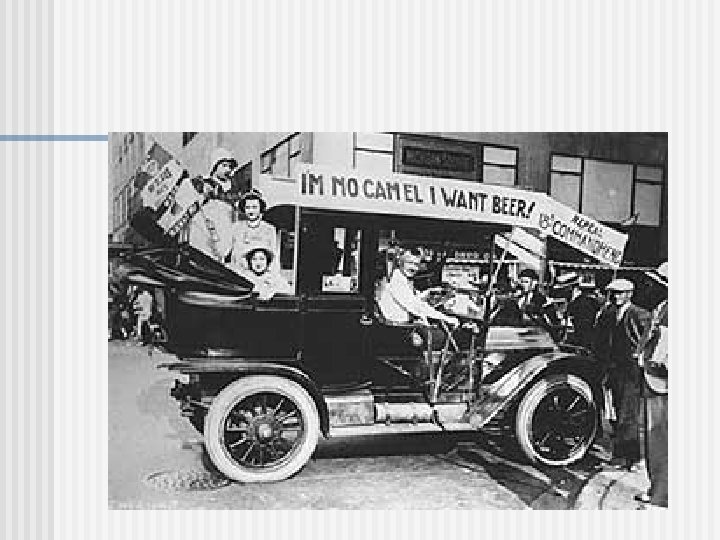
 Kansas Temperance Union Women’s Christian Temperance Union n Pamplets, rallies, lectures n Women particularly active n
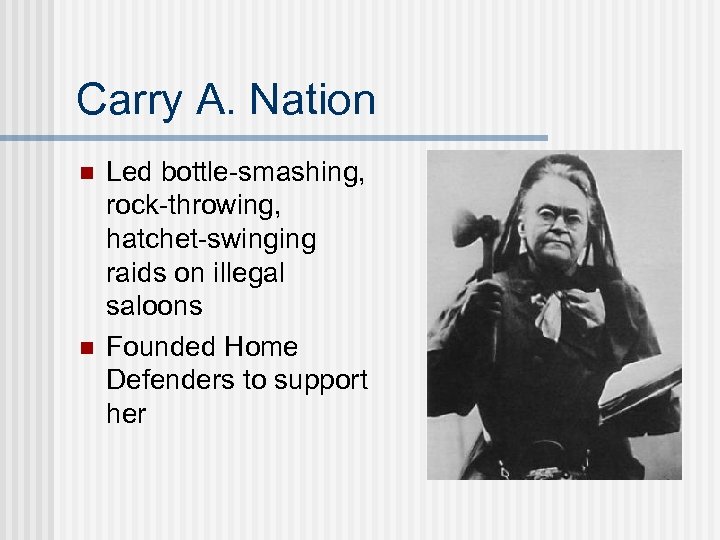 Carry A. Nation n n Led bottle-smashing, rock-throwing, hatchet-swinging raids on illegal saloons Founded Home Defenders to support her
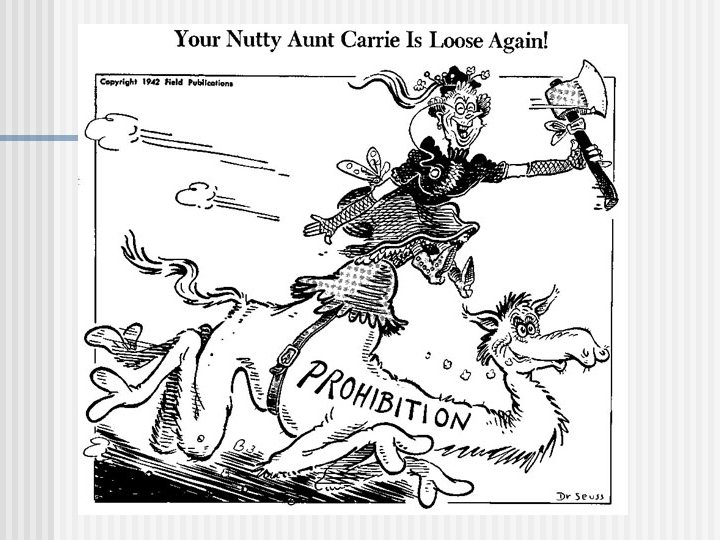
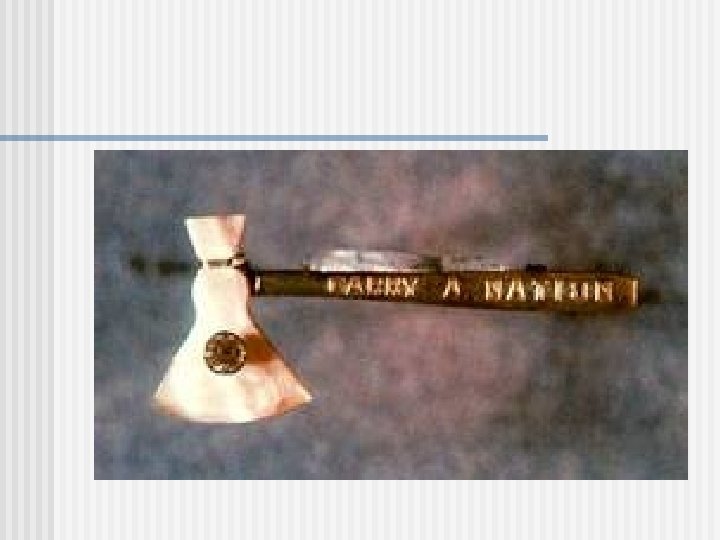
 n n Carry needed money for living expenses, jail fines, railroad fares, and hotel bills. She also supported a home for drunkards' wives in Kansas City, Kansas. While Carry was speaking on the street in Topeka in 1901, a man ran from a candy store and handed her several small pewter hatchets. He suggested that she sell them to pay her expenses. The crowd quickly snatched them up.
 Dr. Charles Gloyd n Heavy drinker n Charles Gloyd died at the age of 29, less than two years after his marriage to Carry n Carry left to support herself, her daughter (Charlien), and her mother-in-law n
 David Nation A minister, lawyer, and newspaper man, Nation was nineteen years older than Carry n In 1901, after 29 years of marriage and at the height of Carry's prohibition activities, David filed for divorce. Claiming, "I married this woman because I needed someone to run my house, " he cited grounds of "desertion. " n
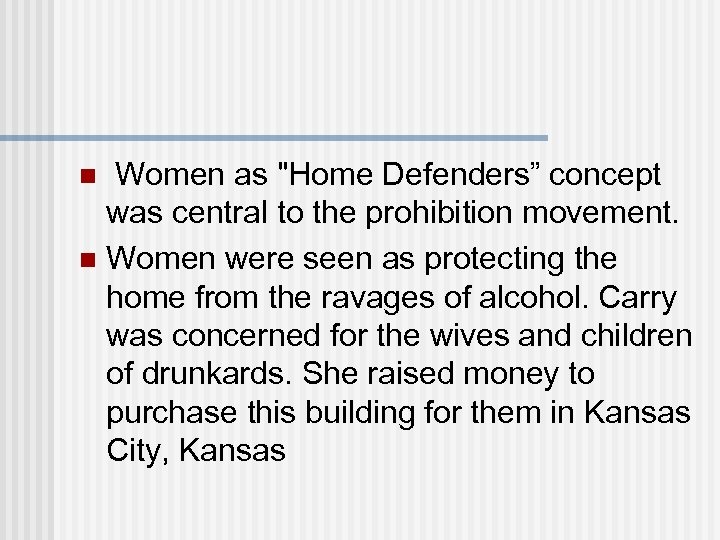 Women as "Home Defenders” concept was central to the prohibition movement. n Women were seen as protecting the home from the ravages of alcohol. Carry was concerned for the wives and children of drunkards. She raised money to purchase this building for them in Kansas City, Kansas n
 n n In 1977 a trunk was discovered by Carry's descendants It was at the house of Callie Moore, Carry Nation's niece, that the trunk was found. The trunk from Callie's house held a bonnet, cape, and shawl frequently worn by Carry and seen in several photographs of her Also, in the trunk, were dentures that may have belonged to Carry
 n In October she was in Colorado, and at Trinidad, on the 13 th, Charles Aiello ejected her from his saloon with such force that her false teeth were knocked down her throat. She finally coughed them up, but before she could close her mouth they fell into the gutter and were broken. For several weeks she could eat nothing but liquids. When her new teeth had been fitted, and she had regained her strength through proper nourishment, she went to Texas, and on December 30 th invaded Houston.
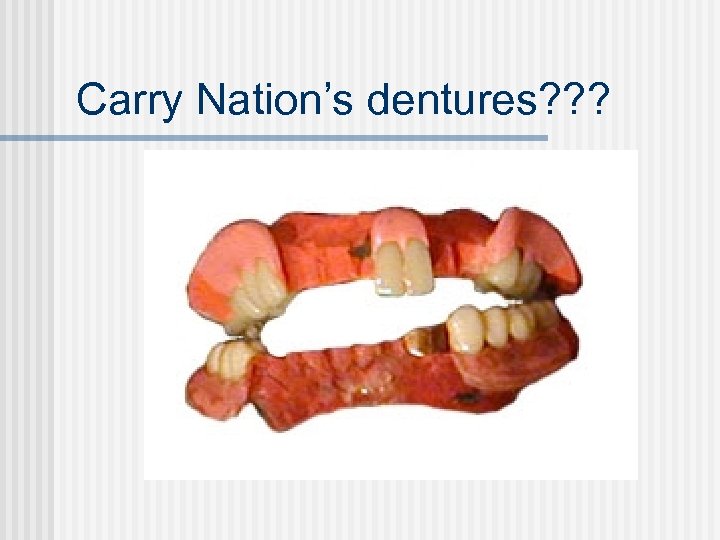 Carry Nation’s dentures? ? ?
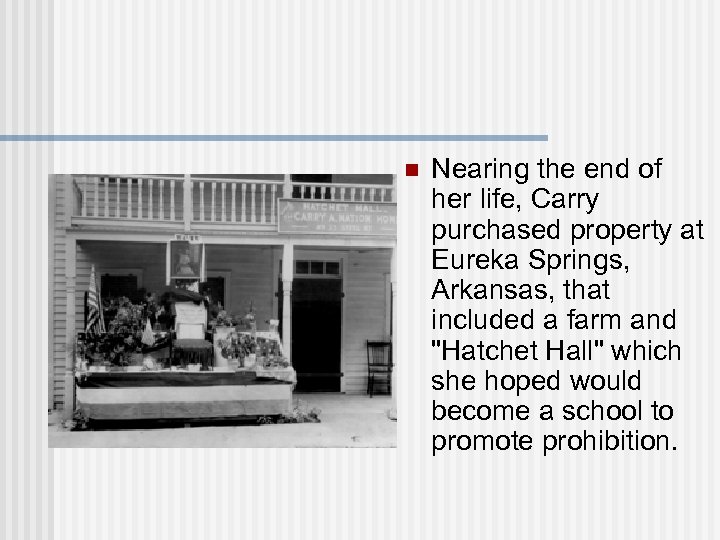 n Nearing the end of her life, Carry purchased property at Eureka Springs, Arkansas, that included a farm and "Hatchet Hall" which she hoped would become a school to promote prohibition.
 n n Carry Nation died June 9, 1911. The funeral service was held in Kansas City, Kansas, and burial was in Belton, Missouri For a time only a board painted white with her name marked her grave. In 1924 the people of Belton raised the funds necessary to place a granite marker on her grave. It bears the epitaph she desired: "She Hath Done What She Could"
 Early 1900’s Governors Edward Hoch and Walter Stubbs worked to stamp out liquor n Entire country became dry in 1920 n Repeal in 1933 n Kansans decided to remain dry n Liquor legalized again 1948 n
 Women’s Reform Organizations WTCU n Women reformers were not radicals n Most organizations were part of the Federated Women’s Clubs of America n
 Extended role as homemakers n Education, child workers, food laws n Traced family problems to society n Poverty, alcoholism n Began to lobby politicians and male voters n Finally, demanded the right to vote n
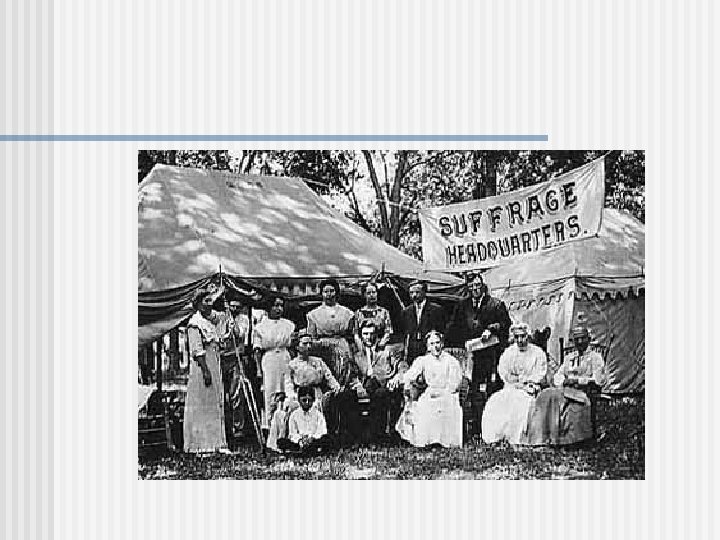
 Women’s Suffrage n Won franchise, right to vote, in KS in 1912 n 1861 - district school elections n 1887 - town elections
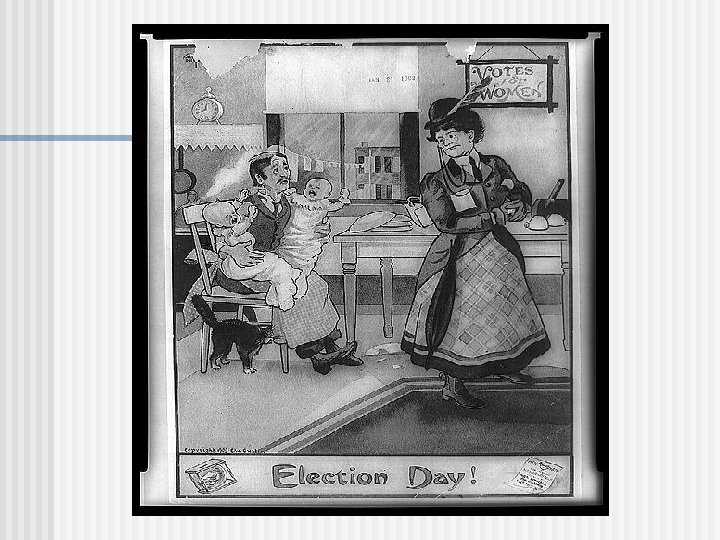
 1894 - state referendum, or popular vote, on women’s suffrage failed n Made sides clear n Rep, Protestant, middle class, teacher, & professionals favored suffrage n Dem, Catholics, immigrants, working class, liquor interests against suffrage n
 1912 - another referendum (only men could vote) n Women won franchise n Women voters did not change politics as much as people predicted n
 Progressive Movement Prohibition/Women’s suffrage part of progressive movement n Progressives- generally middle class, favored reform n Goal was to make govt more democratic and life more fair for all classes of people n
 n Favored direct election of senators n Direct primaries: votes choose party candidates n State regulated business n Supported pure food laws n Better working conditions/help for poor n Worked in state and national progressive movement
 Edward Hoch n Governor 1905 -1909 n Walter Stubbs n Governor 1909 -1913 n Both were Republican leaders of the reform wing in the party n
 Progressives Passed Laws Dealing With…
 Politics Passed laws to clean up politics n Direct primary n No free railroad passes to politicians n Limited campaign donations n Rules for lobbyists n
 Consumers Limited railroad freight rates n Meat inspection n Public Utilities Commission n
 Health and Safety Set max. hours for railroad workers n Juvenile courts n Workmen’s compensation n Illegal cigarettes (unable to enforce) n
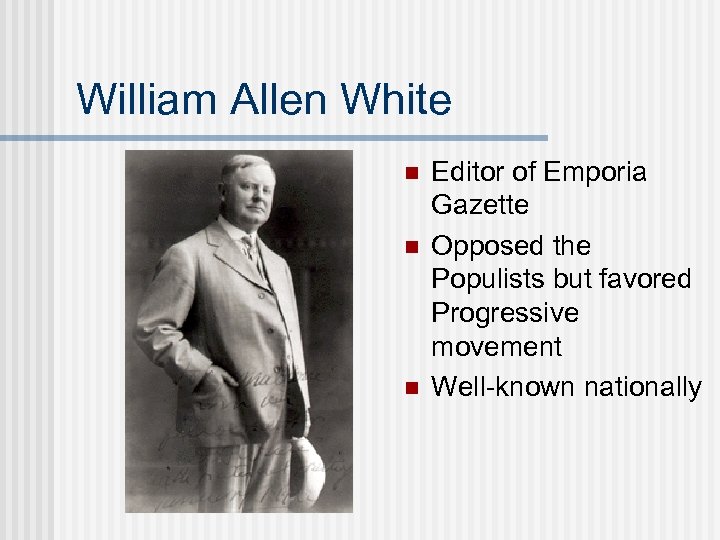 William Allen White n n n Editor of Emporia Gazette Opposed the Populists but favored Progressive movement Well-known nationally
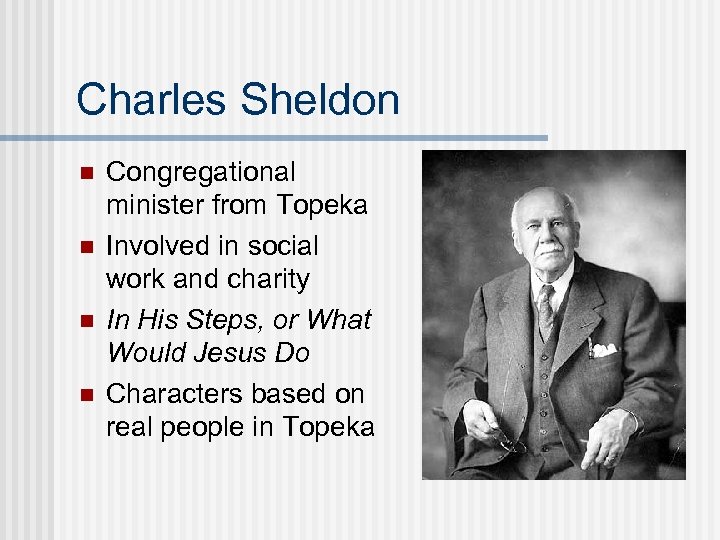 Charles Sheldon n n Congregational minister from Topeka Involved in social work and charity In His Steps, or What Would Jesus Do Characters based on real people in Topeka
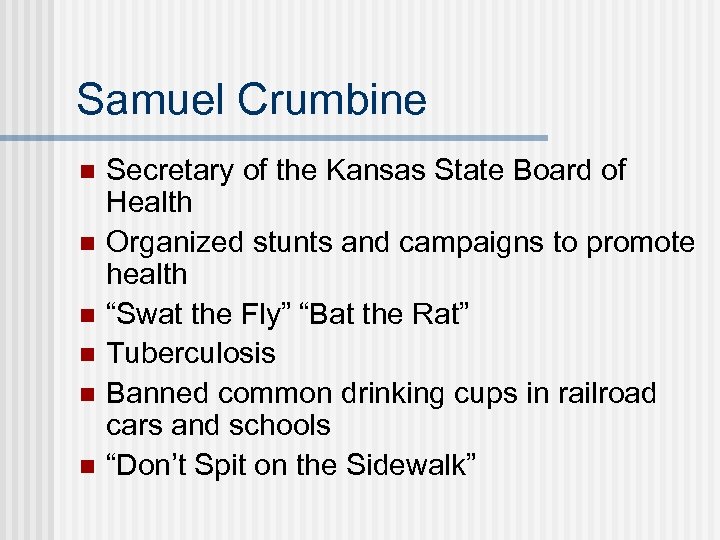 Samuel Crumbine n n n Secretary of the Kansas State Board of Health Organized stunts and campaigns to promote health “Swat the Fly” “Bat the Rat” Tuberculosis Banned common drinking cups in railroad cars and schools “Don’t Spit on the Sidewalk”
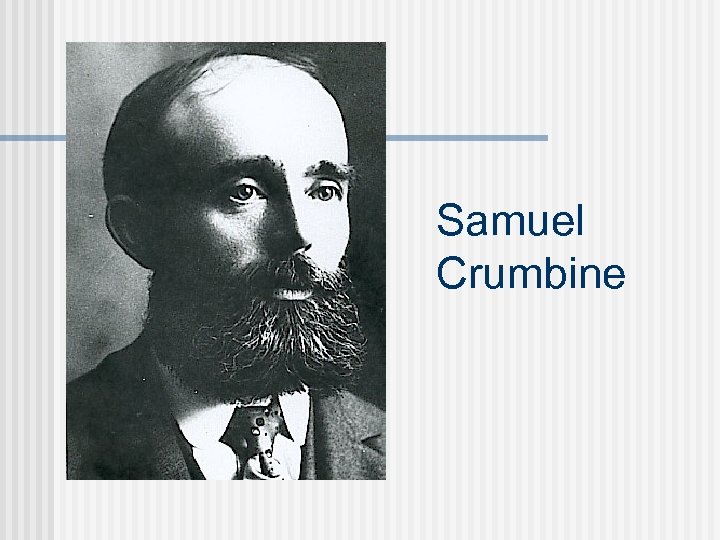 Samuel Crumbine
 WWI: Reform movements declined n After the war, 1920’s, “Business Progressivism” n
 Court of Industrial Relations Governor Henry Allen n Created to handle disputes between labor and management n
 Farming Prices of products declined after war n Senator Arthur Capper n Farm bloc: Meeting in Washington of congressmen and senators from farm states n Worked for laws to help farmers n